Crash of a Beechcraft C-45 Expeditor at Travis AFB: 7 killed

Date & Time: Oct 18, 1961
Type of aircraft:
Flight Phase:
Survivors:
No
Schedule:
Travis – San Francisco
Crew on board:
2
Crew fatalities:
Pax on board:
5
Pax fatalities:
Other fatalities:
Total fatalities:
7
Circumstances:
The twin engine aircraft was performing a flight from Travis AFB to San Francisco, carrying a crew of two and five passengers, among them four US Army Officers who should be transferred to San Francisco. Shortly after takeoff, while in initial climb, the airplane banked left, stalled and crashed in flames. All seven occupants were killed.

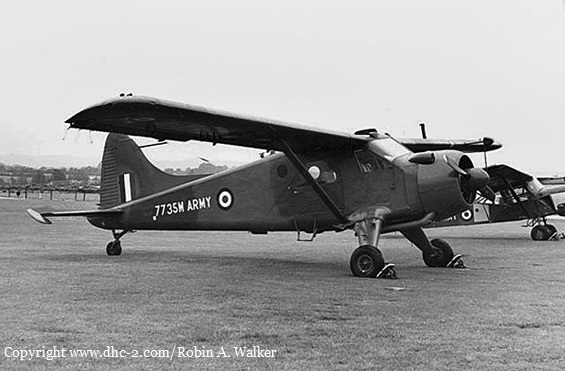
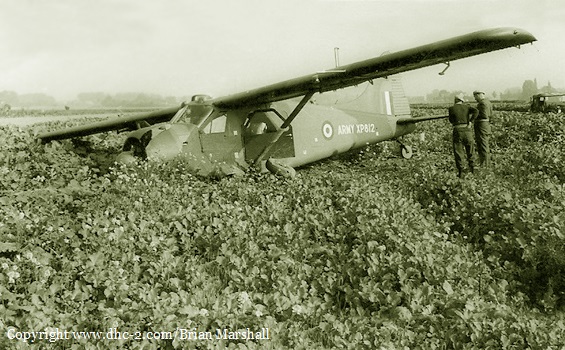
Crash of a De Havilland DHC-2 Beaver AL1 at Bückeburg AFB

Date & Time: Oct 12, 1961
Type of aircraft:
Operator:
Registration:
XP812
Flight Phase:
Flight Type:
Survivors:
Yes
Schedule:
Bückeburg – Middle Wallop
MSN:
1468
YOM:
1961
Country:
Region:
Crew on board:
1
Crew fatalities:
Pax on board:
3
Pax fatalities:
Other fatalities:
Total fatalities:
0
Circumstances:
Just after takeoff from Bückeburg Airbase, while climbing, the engine failed. The pilot attempted an emergency landing in a field and the aircraft crash landed near the airfield, losing its undercarriage during the mishap. All four occupants, among them General James Cassels, were uninjured while the aircraft, delivered last May 2, was considered as damaged beyond repair.
Probable cause:
Engine failure caused by a fuel starvation.

Crash of a Douglas C-47 in Barrackpore: 1 killed

Date & Time: Oct 12, 1961
Operator:
Flight Phase:
Flight Type:
Survivors:
Yes
Country:
Region:
Crew on board:
4
Crew fatalities:
Pax on board:
0
Pax fatalities:
Other fatalities:
Total fatalities:
1
Circumstances:
After takeoff from Barrackpore Airfield, while climbing, both engines lost power simultaneously. Due to the presence of several houses around his position, the captain was able to maintain the control of the airplane until it stall and eventually crashed in a field located few km from the airport. Three crew members were seriously injured and the captain was killed.

Crash of a Handley Page H.P.67 Hastings C.2 in El Adem: 17 killed

Date & Time: Oct 10, 1961
Operator:
Registration:
WD498
Flight Phase:
Flight Type:
Survivors:
Yes
Schedule:
El Adem – Luqa
MSN:
126
YOM:
1951
Country:
Region:
Crew on board:
3
Crew fatalities:
Pax on board:
34
Pax fatalities:
Other fatalities:
Total fatalities:
17
Circumstances:
The aircraft was engaged in a flight from El Adem to Luqa, Malta, carrying 34 members of the Maltese Artillery Contingent and 3 crew members of the 70th Squadron. Shortly after rotation, while in initial climb, the aircraft stalled and banked right. Immediately, the captain elected to regain control but the airplane struck the runway surface, rotated 90° and eventually crashed and burst into flames. A crew member and 16 passengers were killed while 20 other occupants were injured, some of them seriously. The aircraft was destroyed.
Probable cause:
Investigations determined that the loss of control that occurred shortly after takeoff was caused by the movement of the safety catch located on the rails of the copilot's seat that dislodged. This caused the seat to slid on its rails back to the stop. As a result, the copilot involuntarily pull the control column, causing the aircraft to nose up and to stall due to an excessive angle of attack. It was determined that the copilot was flying when control was lost after rotation, which was non compliant as he did not have a licence allowing him to perform a takeoff with passengers on board.

Crash of a Fairchild C-123B-9-FA Provider in Wilmington: 3 killed

Date & Time: Sep 24, 1961
Type of aircraft:
Operator:
Registration:
54-0672
Flight Phase:
Flight Type:
Survivors:
Yes
Schedule:
Wilmington - Wilmington
MSN:
20121
YOM:
1954
Crew on board:
3
Crew fatalities:
Pax on board:
12
Pax fatalities:
Other fatalities:
Total fatalities:
3
Circumstances:
The crew was taking part to an airshow at Wilmington-New Hanover County Airport with six skydivers on board. Shortly after takeoff, while climbing to a height of 300 feet, the airplane stalled and crashed in flames. Three passengers were killed while 12 other occupants were injured.

Crash of an Aero Commander RL-26D at Mackall AAF: 2 killed

Date & Time: Sep 19, 1961
Operator:
Registration:
58-5512
Flight Phase:
Flight Type:
Survivors:
No
MSN:
680-529-199
YOM:
1958
Crew on board:
2
Crew fatalities:
Pax on board:
0
Pax fatalities:
Other fatalities:
Total fatalities:
2
Circumstances:
Shortly after takeoff from Mackall AAF, while climbing, the airplane went out of control and crashed three miles south of the airfield. Both occupants were killed.

Crash of a Lockheed L-188C Electra in Chicago: 37 killed

Date & Time: Sep 17, 1961 at 0857 LT
Type of aircraft:
Operator:
Registration:
N137US
Flight Phase:
Survivors:
No
Schedule:
Milwaukee – Chicago – Tampa – Fort Lauderdale – Miami
MSN:
1142
YOM:
1961
Flight number:
NW706
Crew on board:
5
Crew fatalities:
Pax on board:
32
Pax fatalities:
Other fatalities:
Total fatalities:
37
Captain / Total flying hours:
15898
Captain / Total hours on type:
314.00
Copilot / Total flying hours:
6643
Copilot / Total hours on type:
90
Aircraft flight hours:
614
Circumstances:
At approximately 0855 1, the flight was cleared for takeoff on runway 14R. At this time the aircraft was taxing on a westerly heading in the runup area adjacent to runway 14R. Flight 706 acknowledged the clearance, while continuing toward the runway, and made a running takeoff No witnesses were found who observed the actual lift-off. N137US was observed after lift-off, 3,000 to 4,000 feet down the runway at an estimated altitude of 50 to 75 feet and in a normal climb attitude. At the 8,000-foot marker the altitude of the aircraft was estimated to have been approximately 100 feet, which is a slightly lower altitude than Electra aircraft normally attain at this point during takeoff. Five witnesses noted a change in engine sound during this portion of the flight. Between the 8,000 and the 9,000 foot runway marker the aircraft was observed to commence an apparently coordinated right turn with a slowly increasing rate of bank. When the bank angle was 30 to 45 degrees, the crew made a short, garbled transmission. Immediately thereafter, at a bank angle of 50 to 60 degrees, the aircraft began to lose altitude. The minimum altitude attained in the entire turn was 200 to 300 feet. The right wing near the No. 4 engine struck powerlines adjacent to the Chicago Northwestern Railroad tracks, severing the lines at an angle of about 70 degrees from the horizontal, and causing a bright bluish flash. The aircraft then continued in a direction of about 271 degrees magnetic and, when in a bank of about 85 degrees and a nose-down attitude of about 10 degrees, the right wing of the aircraft struck the railroad embankment. Continuing to roll about its longitudinal axis, the aircraft cartwheeled, the nose crashing into the ground 380 feet beyond the point of first Impact, and landed right side up It then slid tall first another 820 feet. The aircraft disintegrated throughout its path, and wreckage was strewn over an area 200 feet wide and 1,200 feet long. Evidence of ground fire was found at various points along this path. Impact occurred on airport property about 3,800 feet abeam and to the right of the end of runway 14R, about 500 feet north of Irving Park Road. After passing beyond the railroad embankment the aircraft was lost to view by most of the eye witnesses because of trees and other obstructions; immediately thereafter a large mushroom of orange-red flame accompanied by heavy black smoke was seen. Time of impact was established as 0857. The aircraft was demolished by impact and fire. All occupants were fatally injured.
Probable cause:
The Board determines that the probable cause of this accident was a mechanical failure in the aileron primary control system due to an improper replacement of the aileron boost assembly, resulting in a loss of lateral control of the aircraft at an altitude too low to effect recovery.
Final Report:

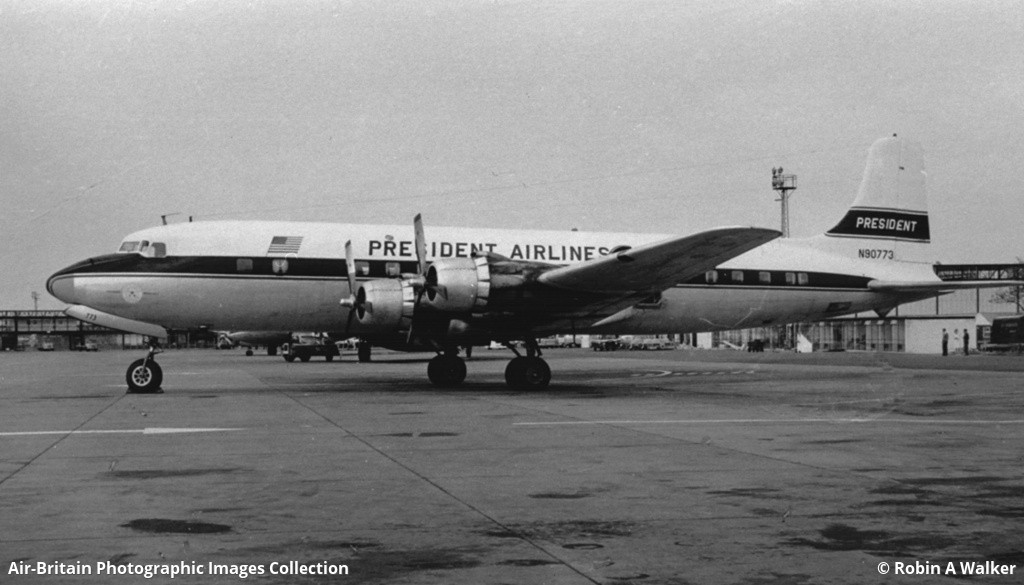
Crash of a Douglas DC-6B in Shannon: 83 killed

Date & Time: Sep 10, 1961 at 0355 LT
Type of aircraft:
Registration:
N90773
Flight Phase:
Survivors:
No
Schedule:
Düsseldorf – Shannon – Gander – Chicago
MSN:
44058
YOM:
1953
Location:
Country:
Region:
Crew on board:
6
Crew fatalities:
Pax on board:
77
Pax fatalities:
Other fatalities:
Total fatalities:
83
Circumstances:
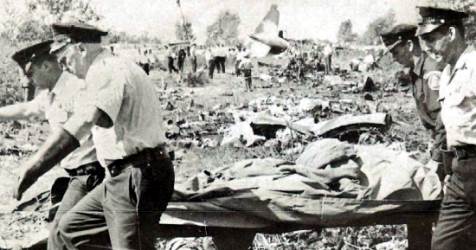
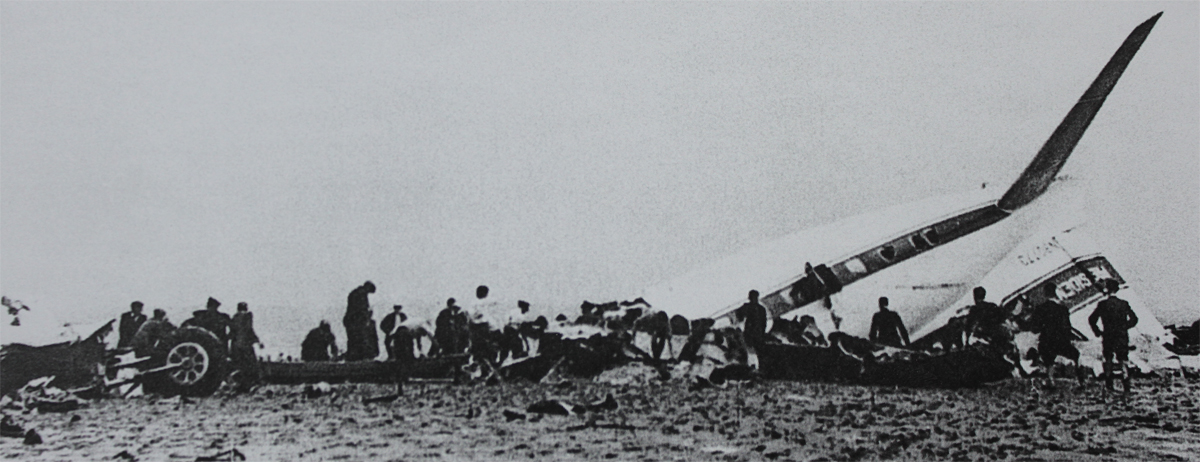
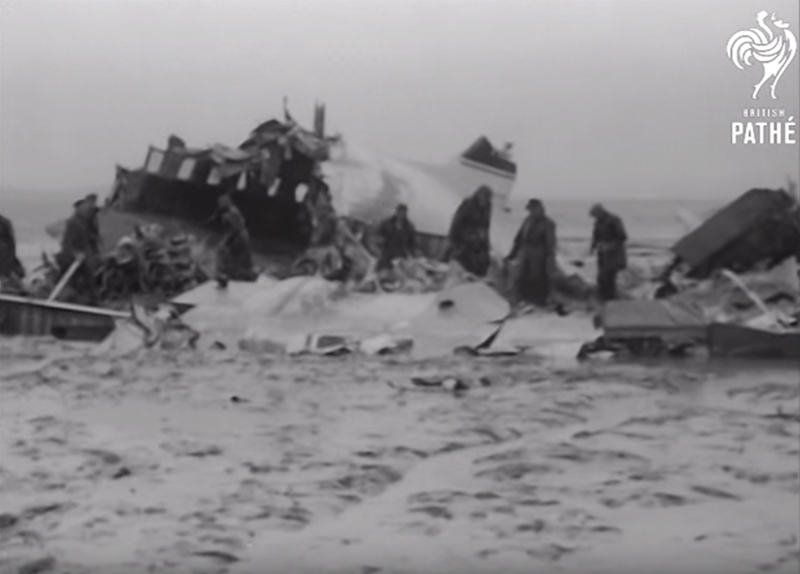
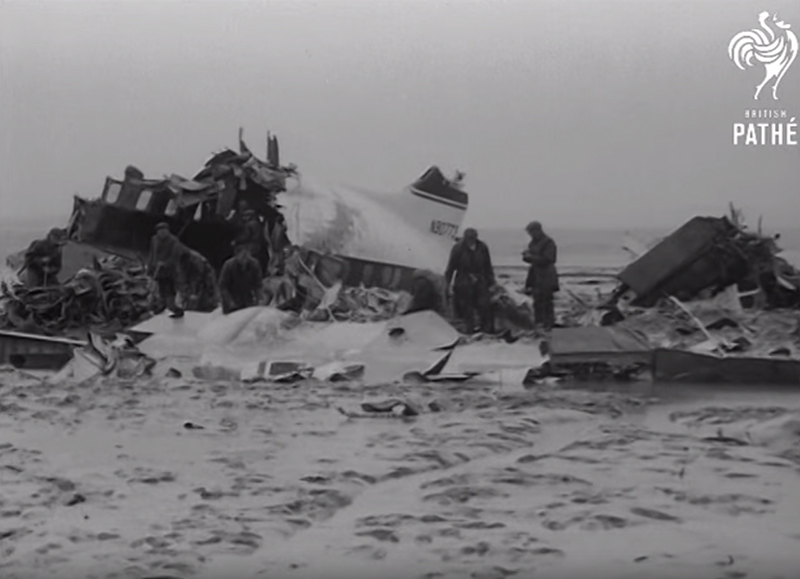
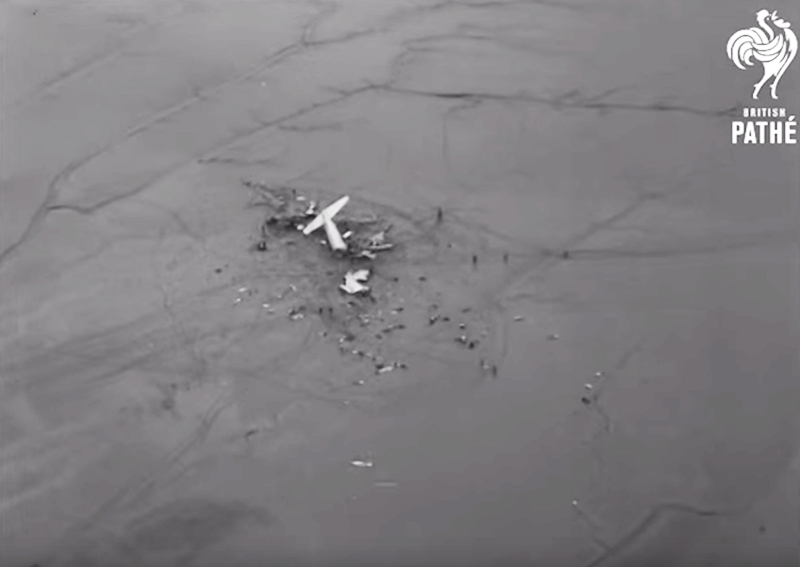
After takeoff by night from runway 24 at Shannon Airport, while climbing, the airplane turn to the left then banked left to an angle of 90° and eventually crashed inverted in the Shannon estuary, about two miles from the airfield. The aircraft was totally destroyed and all 83 occupants were killed. At the time of the accident, the visibility was poor due to the night and mist.
Probable cause:
Failure of the captain to maintain control of the aircraft after becoming airborne due to either:
- A defective artificial horizon and/or
- A fault in the right-hand aileron tabs.
Contributory causes could have been unsuitable weather conditions and possible crew fatigue.
Final Report:

Crash of a Douglas C-47A-25-DK in Sendafa: 5 killed

Date & Time: Sep 5, 1961
Operator:
Registration:
ET-T-16
Flight Phase:
Survivors:
Yes
Schedule:
Addis-Abeba – Asmara
MSN:
13305
YOM:
1944
Location:
Country:
Region:
Crew on board:
3
Crew fatalities:
Pax on board:
16
Pax fatalities:
Other fatalities:
Total fatalities:
5
Aircraft flight hours:
16278
Circumstances:
Few minutes after takeoff from Addis Ababa-Bole Airport, while climbing, the crew encountered problems with both propellers that were turning improperly. The captain decided to reduce his altitude and to attempt an emergency landing when the aircraft stalled and crashed in a prairie located in Sendafa, about 30 km northeast of Bole Airport. One pilot and four passengers were killed while 14 other occupants were injured. The aircraft was destroyed.

Crash of a Lockheed L-049 Constellation in Hinsdale: 78 killed

Date & Time: Sep 1, 1961 at 0205 LT
Operator:
Registration:
N86511
Flight Phase:
Survivors:
No
Schedule:
Boston – New York – Pittsburgh – Chicago – Las Vegas – Los Angeles – San Francisco
MSN:
2035
YOM:
1945
Flight number:
TW529
Crew on board:
5
Crew fatalities:
Pax on board:
73
Pax fatalities:
Other fatalities:
Total fatalities:
78
Captain / Total flying hours:
17011
Captain / Total hours on type:
12633.00
Copilot / Total flying hours:
5344
Copilot / Total hours on type:
1975
Aircraft flight hours:
43112
Circumstances:
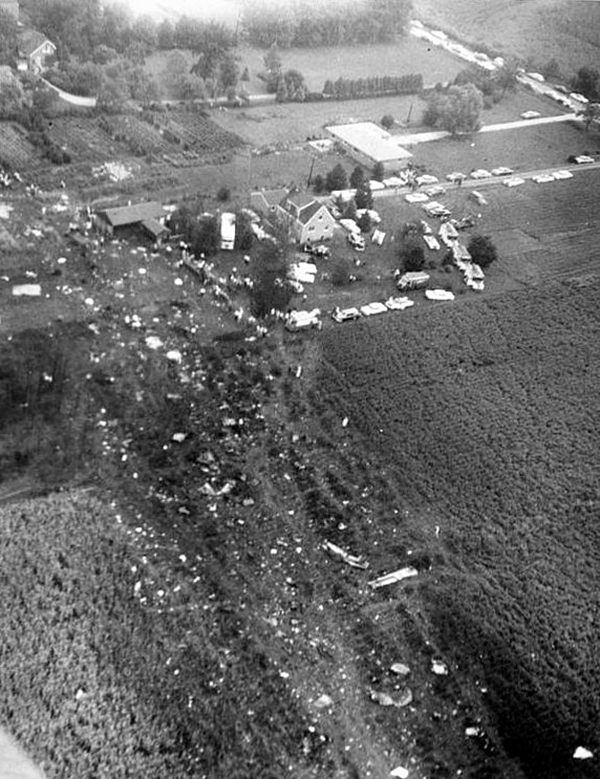
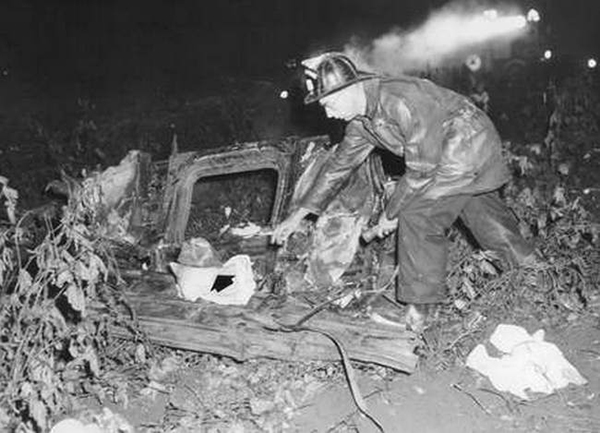
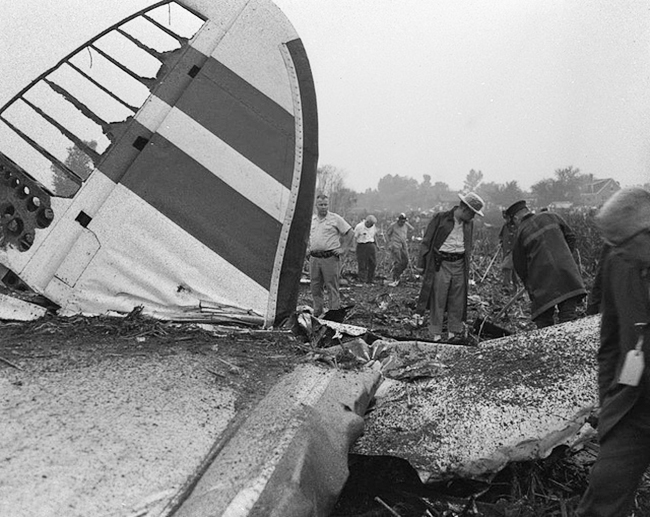
During engine runup, Flight 529 was given its air traffic control clearance which was: "cleared to the Las Vegas Airport via Victor 6 Naperville, Victor 8 flight plan route, maintain 5,000 feet." The clearance was acknowledged correctly and TWA Flight 529 departed on runway 22L at 0200, making a right turn out of traffic. The 0200 Midway Airport weather was: scattered clouds at 10,000 feet; high overcast, visibility three miles in haze and smoke; wind south eight knots. The Chicago O'Hare Airport weather at 0200 was: partial obscuration; scattered clouds 15,000 feet; high overcast; visibility two and one-half miles in ground fog and smoke; wind south six knots. Radar contact was established with the flight one minute and 34 seconds after the flight acknowledged takeoff clearance and as the aircraft proceeded outbound in a right turn. At 0204, Flight 529 was observed on radar by the departure controller to be five miles west of Midway Airport proceeding on course. Northwest Airlines Flight 105 was cleared for takeoff on runway 22L at Midway, and took off Immediately. The ground controller observed a flash west of Midway Airport at this time and asked Flight 105 if he had seen a flash. Flight 105 advised that they had seen a flash fire and would fly over the area. As Flight 105 reported over the fire, the radar range was noted to be nine miles west of Midway Airport and the radar return of TWA. Flight 529 had disappeared from the scope. It was later determined that Flight 529 had crashed at this site and that the observed ground fire was the result of the accident. The airplane disintegrated in a field and all 78 occupants have been killed.
Probable cause:
The Board determines that the probable cause of this accident was the loss of an AN-175-21 nickel steel bolt from the parallelogiam linkage of the elevator boost system, resulting in loss of control of the aircraft.
Final Report: