Country
Operator Image

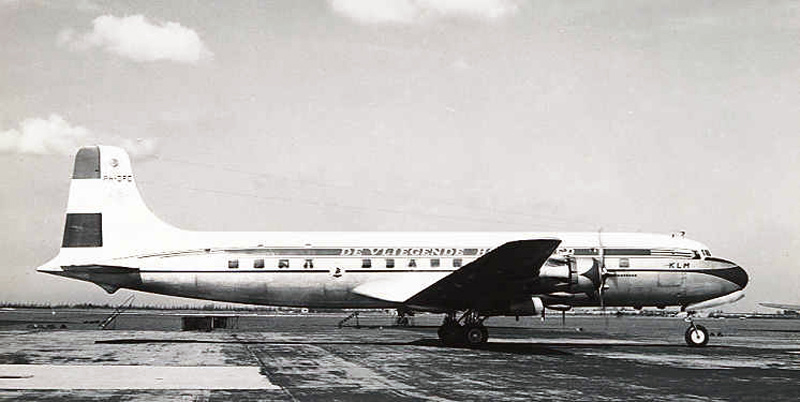
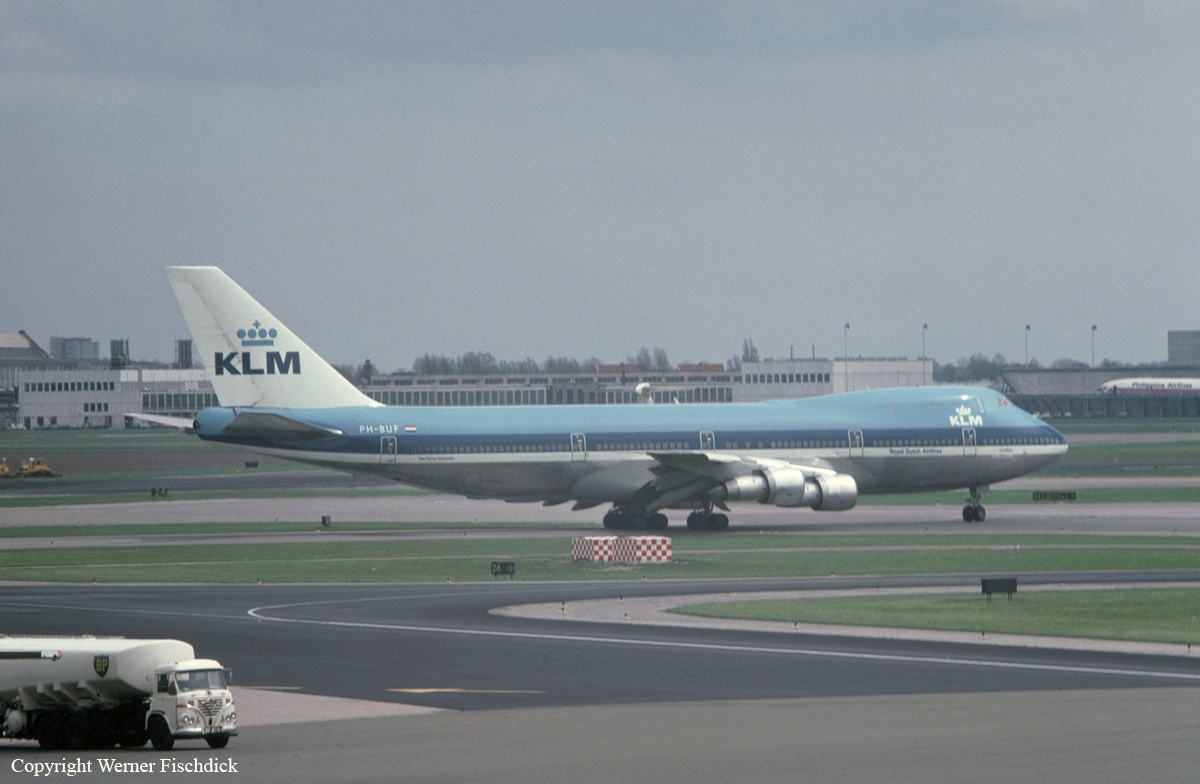
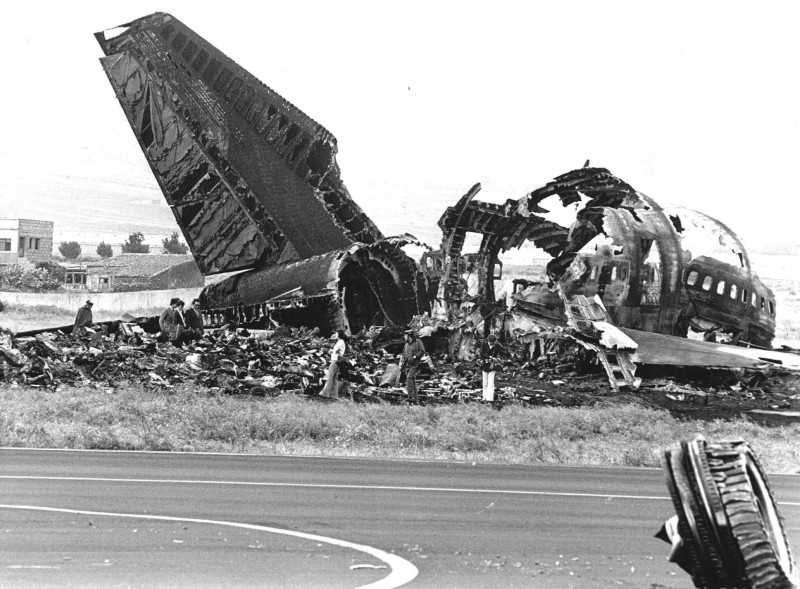
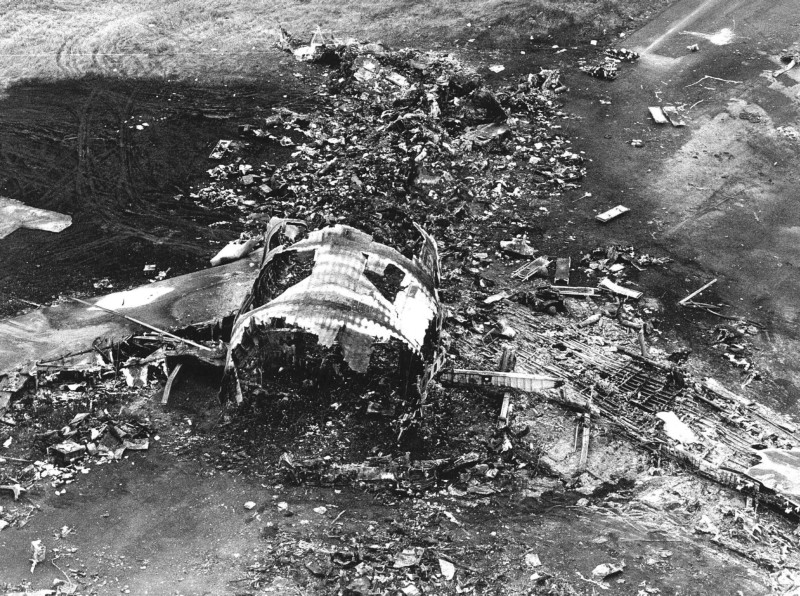
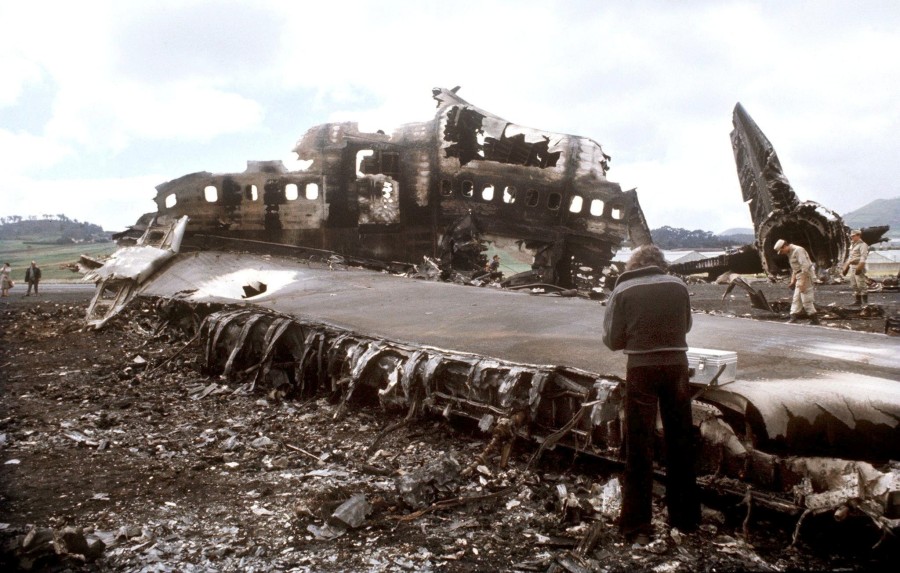
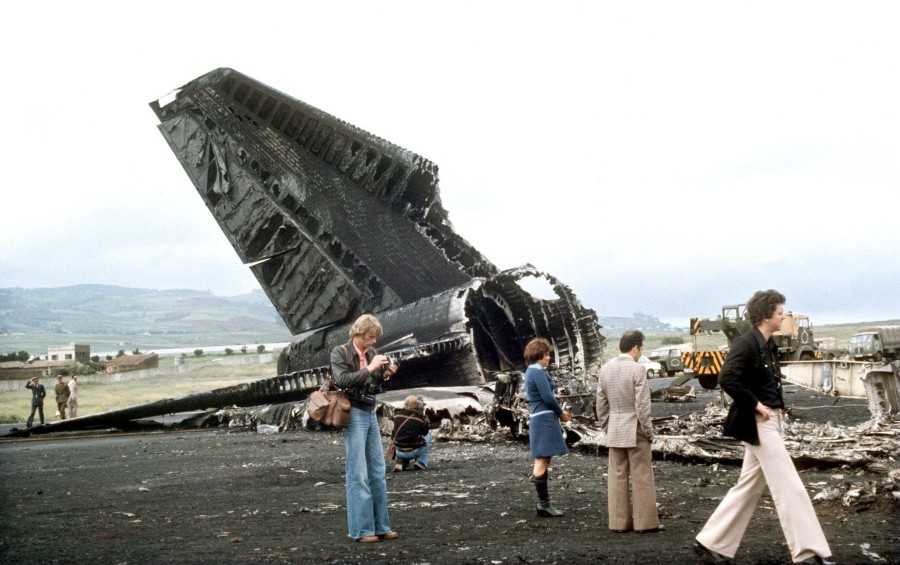
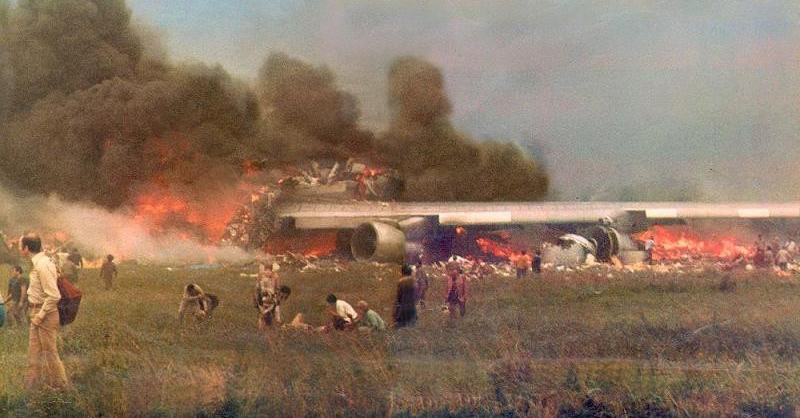
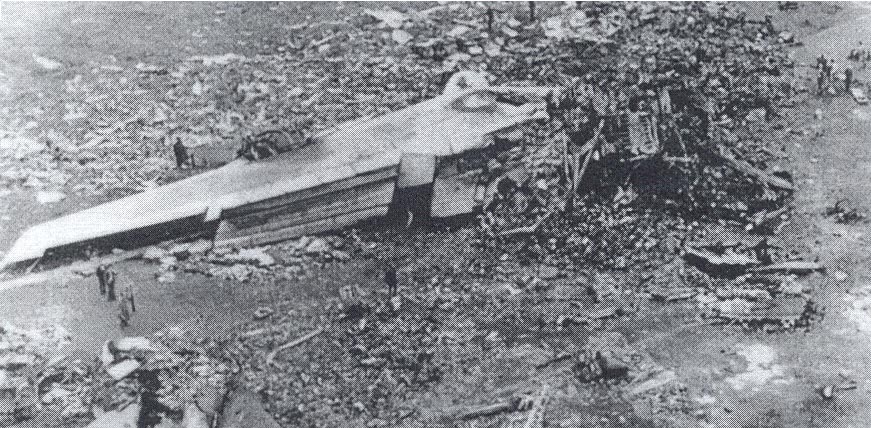
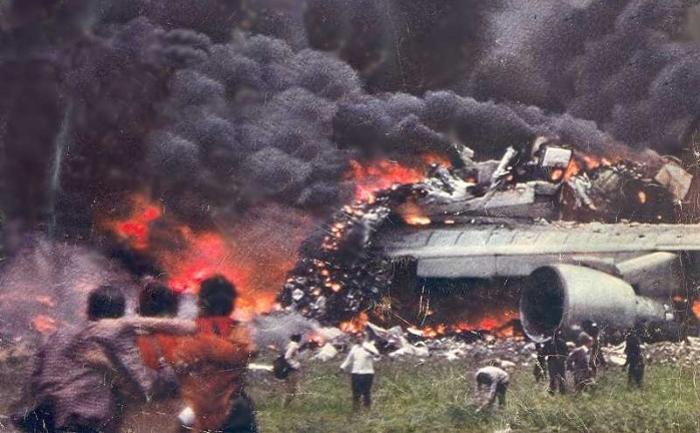
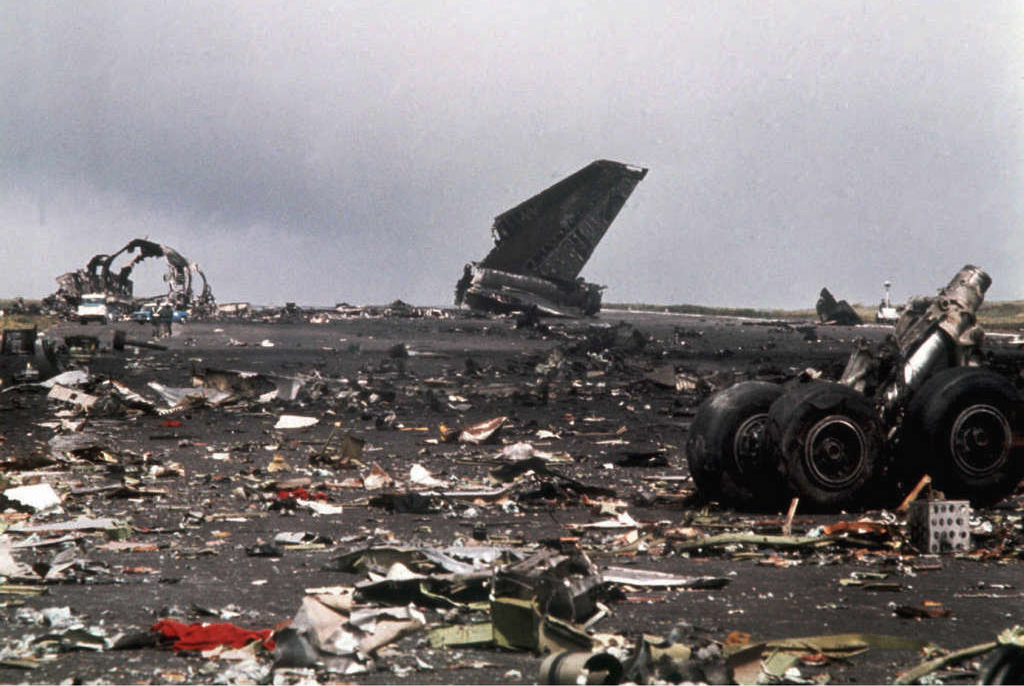
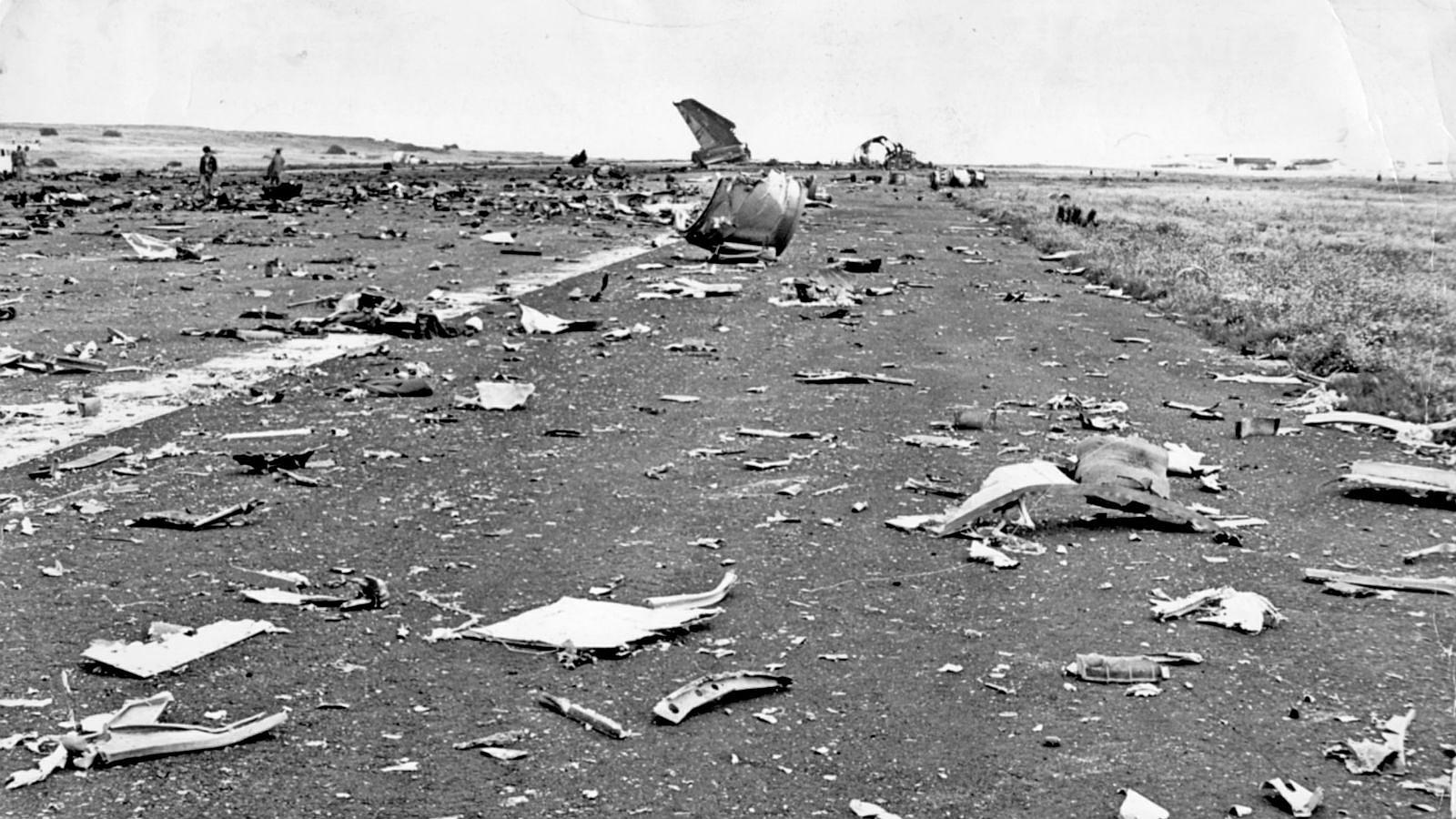
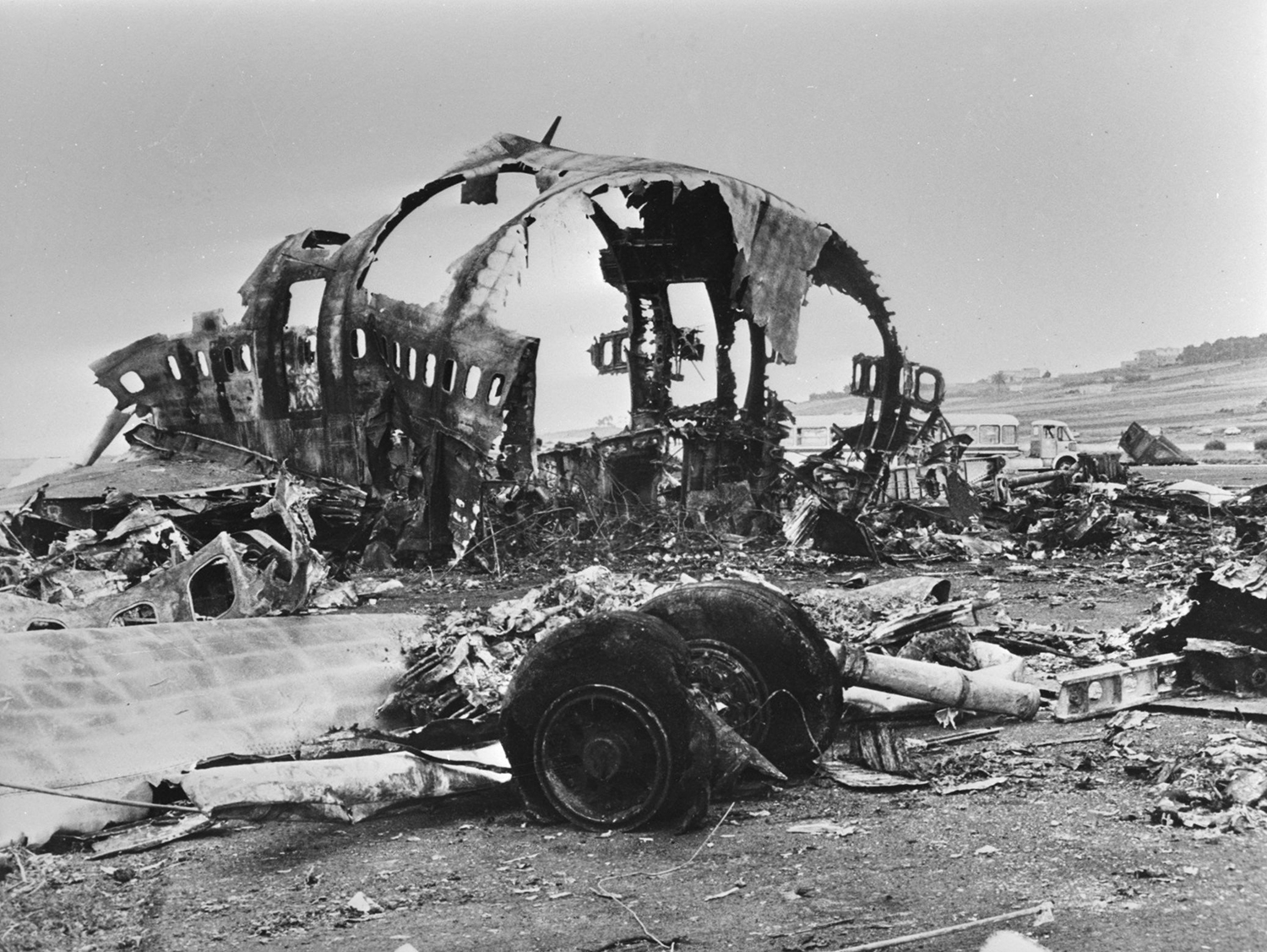
Crash of a Boeing 747-206B in Tenerife: 248 killed
Date & Time:
Mar 27, 1977 at 1706 LT
Operator:
Registration:
PH-BUF
Survivors:
No
Schedule:
Tenerife - Las Palmas
MSN:
20400
YOM:
1971
Flight number:
KL4805
Crew on board:
14
Crew fatalities:
Pax on board:
234
Pax fatalities:
Other fatalities:
Total fatalities:
248
Captain / Total hours on type:
1545.00
Copilot / Total hours on type:
95
Aircraft flight hours:
21195
Aircraft flight cycles:
5202
Circumstances:
The KLM Boeing 747, registration PH-BUF, took off from Schipol Airport (Amsterdam) at 0900 hours on 27 March 1977, en route to Las Palmas de Gran Canaria. This flight was part of the Charter Series KL4805/4806 Amsterdam-Las Palmas (Canary Islands) - Amsterdam operated by KLM on behalf of the Holland International Travel Group (H.I.N.T.), Rijswijk-Z.H. The Boeing 747 registration N736PA, flight number 1736, left Los Angeles International Airport, California, United States, on 26 March 1977, local date, at 0129Z hours, arriving at John F. Kennedy International Airport at 0617Z hours. After the aeroplane was refuelled and a crew change effected, it took off for Las Palmas de Gran Canaria (Spain) at 0742Z. While the aeroplanes were en route to Las Palmas, a bomb exploded in the airport passenger terminal. On account of this incident and of a warning regarding a possible second bomb, the airport was closed. Therefore, KLM 4805 was diverted to Los Rodeos (Tenerife) Airport, arriving at 1338Z on 27 March 1977. For the same reason, PAA1736 proceeded to the same airport, which was its alternate, landing at 1415. At first the KLM passengers were not allowed to leave the aeroplane, but after about twenty minutes they were all transported to the terminal building by bus. On alighting from the bus, they received cards identifying them as passengers in transit on Flight KL 4805. Later, all the passengers boarded KLM 4805 expect the H.I.N.T. Company guide, who remained in Tenerife. When Las Palmas Airport was opened to traffic once more, the PAA 1736 crew prepared to proceed to Las Palmas, which was the flight's planned destination. When they attempted to taxi on the taxiway leading to runway 12, where they had been parked with four other aeroplanes on account of the congestion caused by the number of flights diverted to Tenerife, they discovered that it was blocked by KLM Boeing 747, Flight 4805, which was located between PAA 1736 and the entrance to the active runway. The first officer and the flight engineer left the aeroplane and measured the clearance left by the KLM aircraft, reaching the conclusion that it was insufficient to allow PAA 1736 to pass by, obliging them to writ until the former had started to taxi. The passengers of PAA 1736 did not leave the aeroplane during the whole time that it remained in the airport. KLM 4805 called the tower at 1656 requesting permission to taxi. It was authorized to do so and at 1658 requested to backtrack on runway 12 for take-off on runway 30. The tower controller first cleared the KLM flight to taxi to the holding position for runway 30 by taxiing down the main runway and leaving it by the (third) taxiway to its left. KLM 4805 acknowledged receipt of this message from the tower, stating that it was at that moment taxiing on the runway, which it would leave by the first taxiway in order to proceed to the approach end of runway 30. The tower controller immediately issued an amended clearance, instructing it to continue to taxi to the end of the runway, where it should proceed to backtrack. The KLM flight confirmed that it had received the message, that it would backtrack, and that it was taxiing down tile main runway. The tower signalled its approval, whereupon KLM 4805 immediately asked the tower again if what they had asked it to do was to turn left on taxiway one. The tower replied in the negative and repeated that it should continue on to the end of the runway and there backtrack. Finally, at 1659, KLM 4805 replied, "O.K., sir." At 1702, the PAA aeroplane called the tower to request confirmation that it should taxi down the runway. The tower controller confirmed this, also adding that they should leave the runway by the third taxiway to their left. At 1703:00, in reply to the tower controller's query to KLM 4805 as to how many runway exits they had passed, the latter confirmed that at that moment they were passing by taxiway C4. The tower controller told KLM 4805, "O.K., at the end of the runway make one eighty and report ready for ATC clearance ." In response to a query from KLM 4805, the tower controller advised both aeroplanes - KLM 4805 and PAA 1736 - that the runway centre line lights were out of service. The controller also reiterated to PAA 1736 that they were to leave the main runway via the third taxiway to their left and that they should report leaving the runway. At the times indicated, the following conversations took place between the tower and the KLM 4805 and PAA 1736 aeroplanes. Times taken from KLM CVR.
1705:44.6 KLM 4805: The KLM four eight zero five is now ready for take-off and we are waiting for our ATC clearance. (1705:50.77).
1705:53.41 Tower: KLM eight seven zero five you are cleared to the Papa Beacon, climb to and maintain flight level nine zero, right turn after take-off, proceed with heading four zero until intercepting the three two five radial from Las Palmas VOR. (1706 :08.09).
1706:09.61 KLM 4805: Ah - Roger, sir, we are cleared to the Papa Beacon, flight level nine zero until intercepting the three two five. We are now (at take-off). (1706:17.79).
1706:18.19 Tower : O.K..... Stand by for take-off, I will call you. (1706: 21.79).
Note: A squeal starts at: 1706:19.39 The squeal ends at: 1706:22.06
1706:21.92 PAA 1736: Clipper one seven three six. (1706 : 23.39).
1706:25.47 Tower: Ah - Papa Alpha one seven three six report the runway clear. (1706: 28.89).
1706:29.59 PAA 1736: O.K., will report when we're clear. (1706:30.69).
1706:31.69 Tower: Thank you.
Subsequently, KLM 4805, which had released its brakes to start take-off run 20 seconds before this communication took place, collided with the PAA aeroplane. The control tower received no further communications from PAA 1736, nor from KLM 4805. There were no eyewitnesses to the collision. All 248 occupants on board the KLM 747 were killed. Among the 396 people on board the Pan Am 747, 335 were killed (among them nine crew members) and 61 others were injured.
1705:44.6 KLM 4805: The KLM four eight zero five is now ready for take-off and we are waiting for our ATC clearance. (1705:50.77).
1705:53.41 Tower: KLM eight seven zero five you are cleared to the Papa Beacon, climb to and maintain flight level nine zero, right turn after take-off, proceed with heading four zero until intercepting the three two five radial from Las Palmas VOR. (1706 :08.09).
1706:09.61 KLM 4805: Ah - Roger, sir, we are cleared to the Papa Beacon, flight level nine zero until intercepting the three two five. We are now (at take-off). (1706:17.79).
1706:18.19 Tower : O.K..... Stand by for take-off, I will call you. (1706: 21.79).
Note: A squeal starts at: 1706:19.39 The squeal ends at: 1706:22.06
1706:21.92 PAA 1736: Clipper one seven three six. (1706 : 23.39).
1706:25.47 Tower: Ah - Papa Alpha one seven three six report the runway clear. (1706: 28.89).
1706:29.59 PAA 1736: O.K., will report when we're clear. (1706:30.69).
1706:31.69 Tower: Thank you.
Subsequently, KLM 4805, which had released its brakes to start take-off run 20 seconds before this communication took place, collided with the PAA aeroplane. The control tower received no further communications from PAA 1736, nor from KLM 4805. There were no eyewitnesses to the collision. All 248 occupants on board the KLM 747 were killed. Among the 396 people on board the Pan Am 747, 335 were killed (among them nine crew members) and 61 others were injured.
Probable cause:
The KLM aircraft had taken off without take-off clearance, in the absolute conviction that this clearance had been obtained, which was the result of a misunderstanding between the tower and the KLM aircraft. This misunderstanding had arisen from the mutual use of usual terminology which, however, gave rise to misinterpretation. In combination with a number of other coinciding circumstances, the premature take-off of the KLM aircraft resulted in a collision with the Pan Am aircraft, because the latter was still on the runway since it had missed the correct intersection.
Final Report:




Crash of a Lockheed L-188C Electra in Cairo: 20 killed
Date & Time:
Jun 12, 1961 at 0411 LT
Operator:
Registration:
PH-LLM
Survivors:
Yes
Schedule:
Amsterdam – Munich – Rome – Cairo – Karachi – Kuala Lumpur
MSN:
2019
YOM:
1960
Flight number:
KL823
Crew on board:
7
Crew fatalities:
Pax on board:
29
Pax fatalities:
Other fatalities:
Total fatalities:
20
Captain / Total hours on type:
100.00
Copilot / Total hours on type:
747
Circumstances:
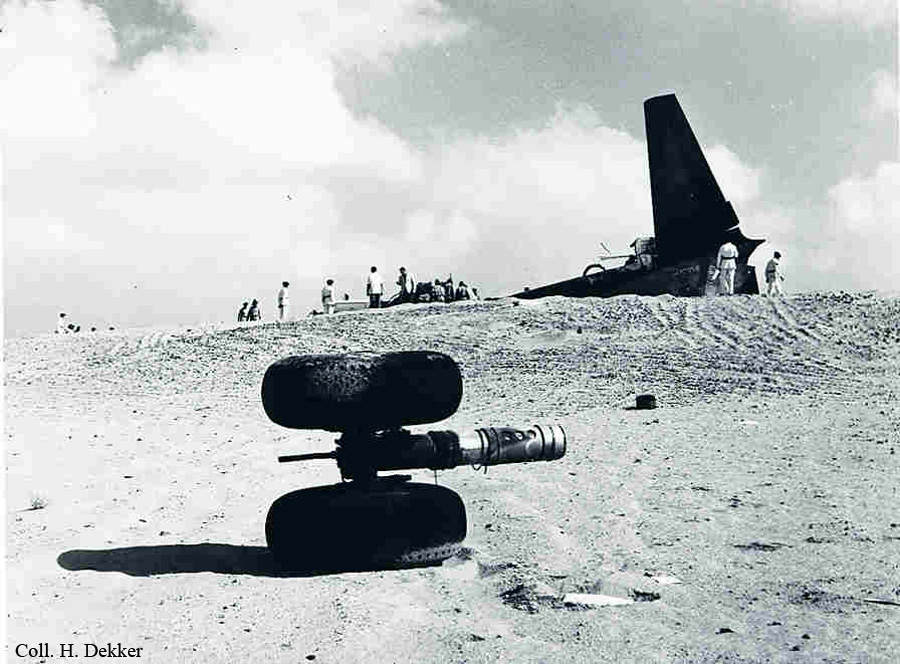
The approach to Cairo-Intl Airport was completed by night. On final, the four engine aircraft struck a hill and crashed 4 km short of runway 34 threshold. Three crew members and 17 passengers were killed while 16 other occupants were injured. The aircraft was destroyed. Following a crew error, the aircraft was below the glide.
Probable cause:
The accident was caused by the pilot-in-command inattention to his instruments.
Final Report:
Crash of a Lockheed L-1049H-01-06-162 Super Constellation into the Atlantic Ocean: 99 killed
Date & Time:
Aug 14, 1958 at 0345 LT
Operator:
Registration:
PH-LKM
Survivors:
No
Schedule:
Amsterdam – Shannon – Gander – New York
MSN:
4841
YOM:
1958
Flight number:
KL607E
Crew on board:
8
Crew fatalities:
Pax on board:
91
Pax fatalities:
Other fatalities:
Total fatalities:
99
Aircraft flight hours:
886
Circumstances:
While cruising at an altitude of 4,000 meters by night, the crew contacted ATC to report his position and all was ok on board. About ten minutes later, the airplane disappeared from radar screens and crashed into the Atlantic Ocean about 180 km northwest of the Irish coast. SAR operations were dispatched on the scene and several debris and bodies were found in the early morning. All operations were suspended after few days and all 99 occupants were considered as deceased.
Probable cause:
On the basis of the evidence available and the investigation of possible serious threats to safety, the Board cannot establish the cause of the accident with certainty. Moreover, investigation of the possibility that the cause of the accident may have been a bomb explosion has yielded no conclusive facts to support such a hypothesis. The statements in the press to this effect have either been based on misunderstandings or else were tendentious. On the other hand, the Board attributes a high degree of probability to hypothesis that the cause of the accident is related to 'overspeeding' of one of the outboard propellers resulting from oil pollution after a gear had been damaged when the supercharger of the corresponding engine was accelerated (shifted). This probably took place close to the time of the accident. The overspeeding of the propeller, owing to the obstruction of metal particles in the regulator valves may have been such as to cause the propeller pitch to decrease and the propeller could not be feathered. The condition might provoke a flight disturbance which could be corrected only by prompt and powerful handling of aileron and rudder controls. in view of the rapidity with which this defect develops and taking into account that recognition of the nature of this malfunction requires a certain time, it is not always possible for the crew to intervene early enough to restore conditions of controlled flight. With respect to the presumed cause of the accident the Board has no grounds to suppose that the occurrence of the presumed malfunction might be attributable to neglect on the part of maintenance personnel or to incorrect measures taken by the crew or that the crew had been at fault in piloting the aircraft after the malfunction had occurred.
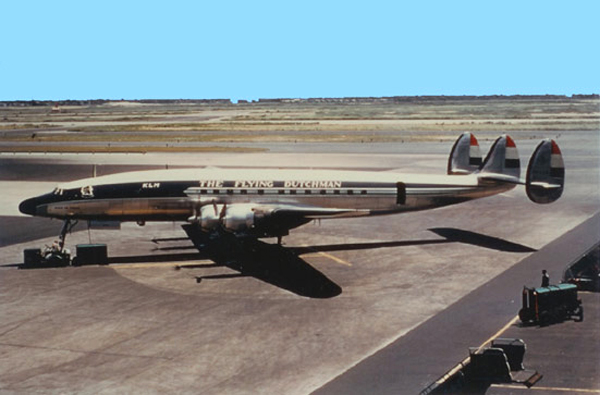
Crash of a Lockheed L-1049C-55-81 Super Constellation off Biak: 58 killed
Date & Time:
Jul 16, 1957 at 0336 LT
Operator:
Registration:
PH-LKT
Survivors:
Yes
Schedule:
Biak – Manila – Calcutta – Karachi – Bahrain – Cairo – Rome – Amsterdam
MSN:
4504
YOM:
1953
Flight number:
KL844
Crew on board:
9
Crew fatalities:
Pax on board:
59
Pax fatalities:
Other fatalities:
Total fatalities:
58
Captain / Total hours on type:
1835.00
Copilot / Total hours on type:
1651
Aircraft flight hours:
11867
Circumstances:
On 16 July at 0332 hours local time (15 July - 1802 hours GMT) the aircraft took off from Mokmer aerodrome on the Island of Biak, on a scheduled transport flight to Manila. It carried nine crew members and fifty-nine passengers. A few minutes after take-off the pilot asked the operator in the control tower to keep the runway lights on. Shortly thereafter he requested permission to make a "low run" over the aerodrome. Both requests were granted, In the meantime, the aircraft had made a turn to the right and a turn to the left and was flying in a westerly direction back towards the aerodrome. During this approach the aircraft lost altitude gradually and at 0336 local time it crashed into the sea one kilometer from the shore. It burst into flames, broke apart and sank immediately. Eleven passengers and one stewardess were rescued.The stewardess and one of the surviving passengers died later in hospital.
Probable cause:
As a result of the foregoing it is concluded that the explanation of the accident lies either in an error on the part of the pilot or in a technical failure. The Board was unable to state whether the accident could have been caused by a combination of both pilot error and technical failure. The Board was of the opinion that low runs should not be made by aircraft on scheduled services. The magnitude of the danger that is inherent in the proximity of the ground on take-off and landing should not be increased unnecessarily by flying at low altitude.
Final Report:

Crash of a Lockheed L-1049C-55-81S Super Constellation off Shannon: 28 killed
Date & Time:
Sep 5, 1954 at 0239 LT
Operator:
Registration:
PH-LKY
Survivors:
Yes
Schedule:
Amsterdam – Shannon – New York
MSN:
4509
YOM:
1953
Flight number:
KL633
Crew on board:
10
Crew fatalities:
Pax on board:
46
Pax fatalities:
Other fatalities:
Total fatalities:
28
Aircraft flight hours:
2498
Circumstances:
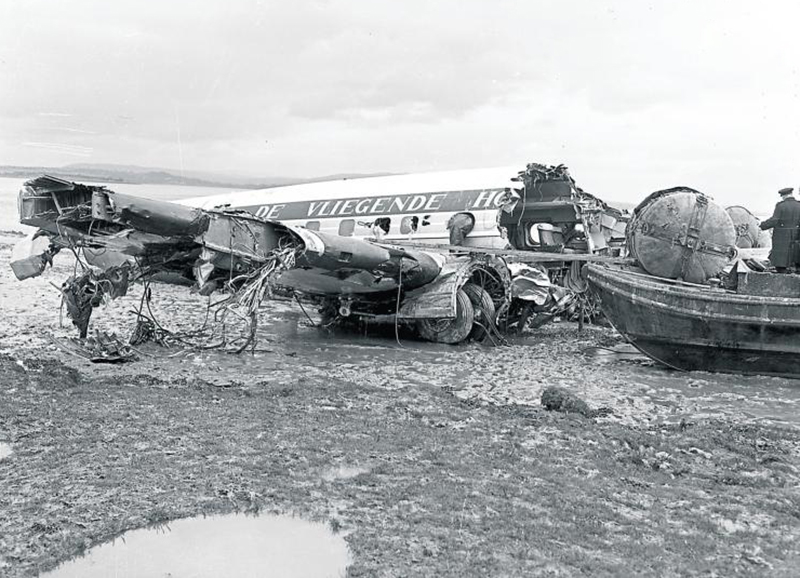
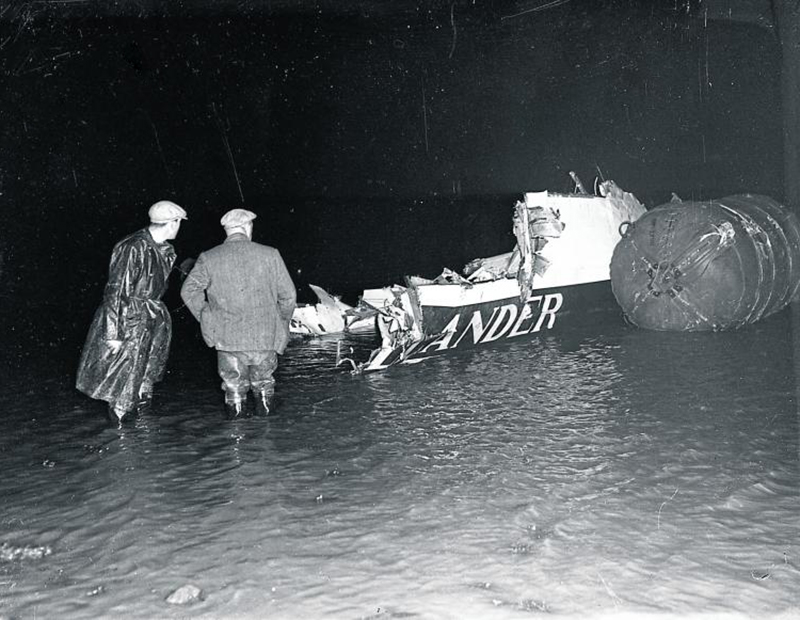
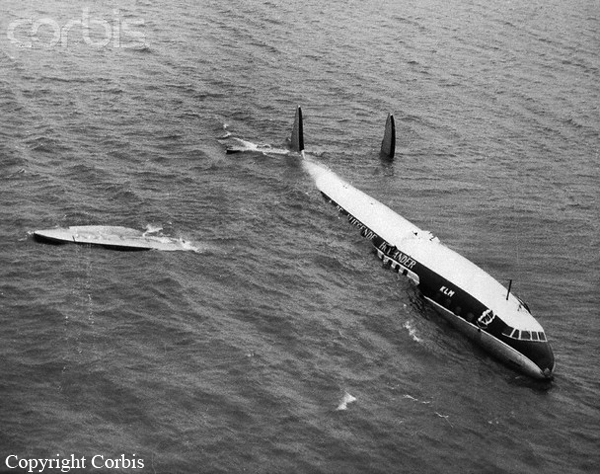
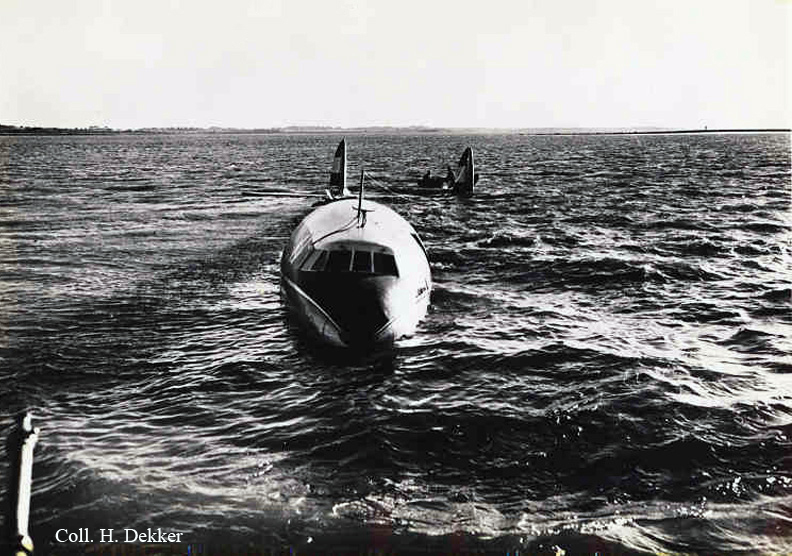
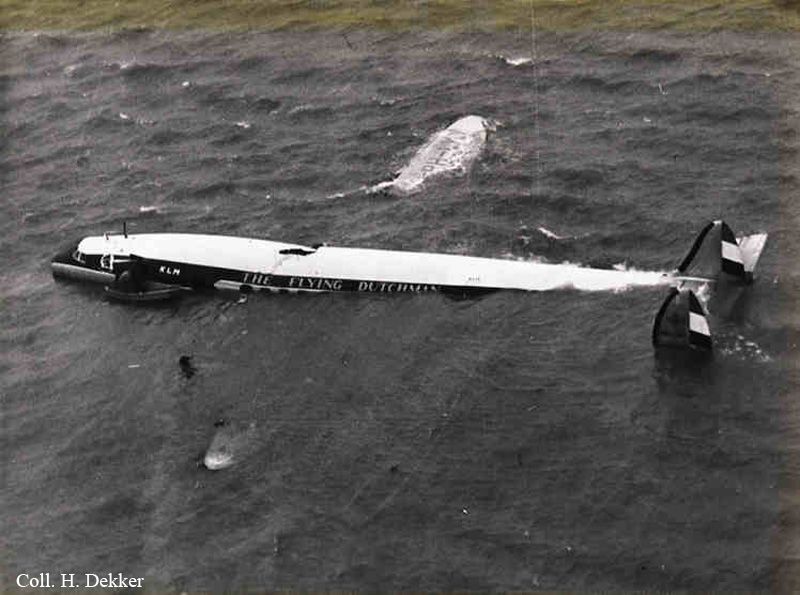
After a night takeoff from runway 32 at Shannon Airport, the four engine aircraft christened 'Triton' climbed to a maximum height of 260 feet and reached the speed of 155 knots when it went into a slight nose down attitude. It then started to descend until it crashed into the Shannon Estuary, about 8,170 feet from the departure end of runway 32. The crashed occurred approximately 35 seconds after liftoff. 28 occupants were killed while 28 others were rescued. The aircraft was destroyed.
Probable cause:
- Failure of the captain to correlate and interpret his instrument indications properly during flap retraction, resulting in necessary action not being taken in sufficient time. This failure was partially accounted for by the effect on instrument indications of inadvertent and unexpected gear re-extension,
- Loss of aircraft performance due to inadvertent landing gear re-extension,
- The captain failed to maintain sufficient climb to give him an opportunity of meeting unexpected occurrences.
- Loss of aircraft performance due to inadvertent landing gear re-extension,
- The captain failed to maintain sufficient climb to give him an opportunity of meeting unexpected occurrences.
Final Report:
Crash of a Douglas DC-6B off Ijmuiden: 21 killed
Date & Time:
Aug 23, 1954 at 1130 LT
Operator:
Registration:
PH-DFO
Survivors:
No
Schedule:
New York – Shannon – Amsterdam
MSN:
43556
YOM:
1952
Flight number:
KL633
Crew on board:
9
Crew fatalities:
Pax on board:
12
Pax fatalities:
Other fatalities:
Total fatalities:
21
Aircraft flight hours:
6308
Circumstances:
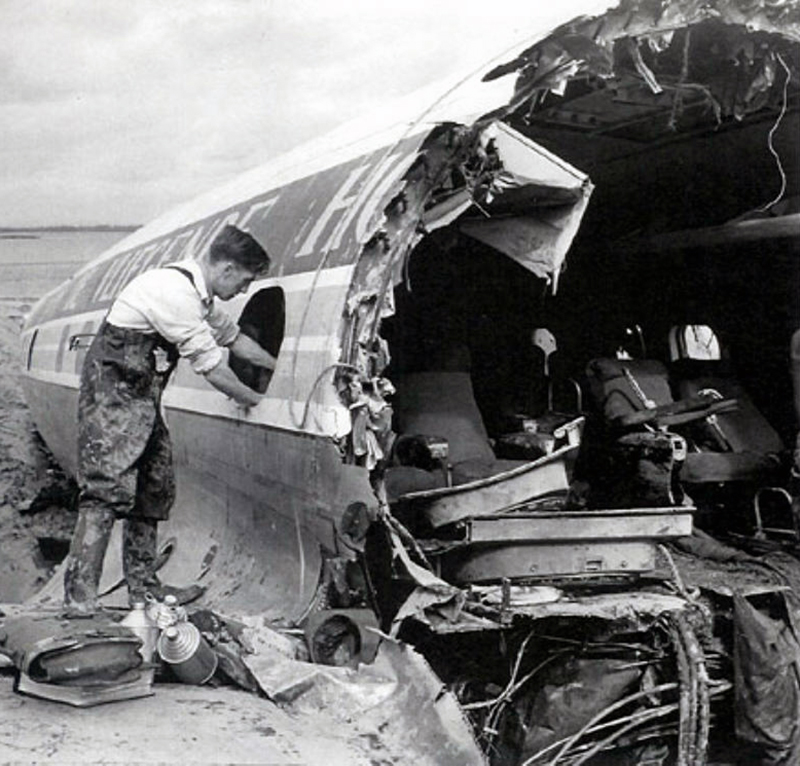
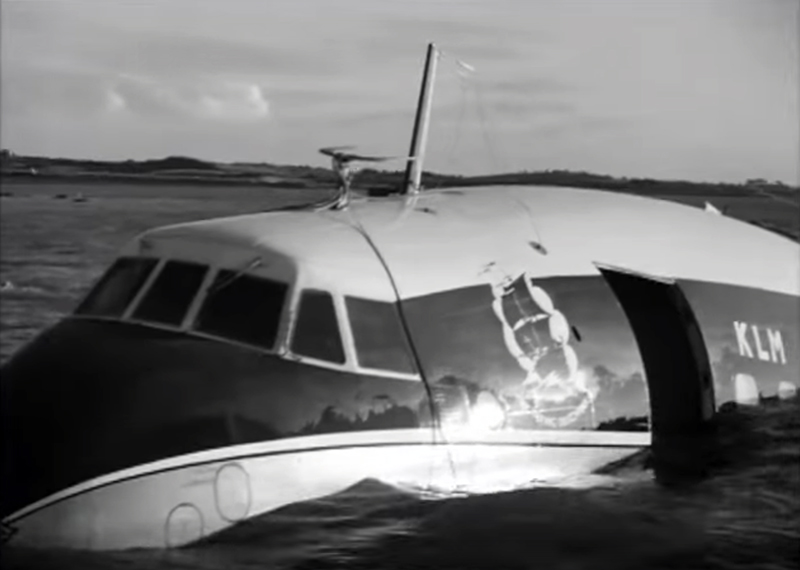
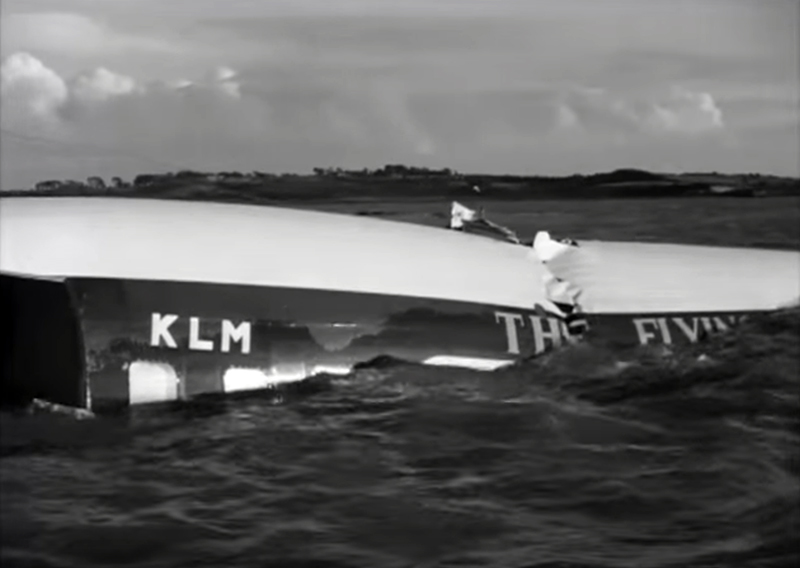
While approaching Amsterdam-Schiphol Airport after an uneventful flight from New York via Shannon, the crew received the permission to descend to 5,500 feet and then 4,500 feet and 3,500 feet respectively. At 1130LT, the four engine aircraft christened 'Willem Bontekoe' disappeared from the radar screens after it crashed into the sea. About five minutes after the disappearance, ATC cleared the crew to descend to 2,500 feet but did not receive any feedback. SAR operations were hampered by poor weather conditions and first debris were found at 1610LT about 37 km northwest of Ijmuiden. None of the 21 occupants survived the crash and less than 50% of the aircraft was recovered.
Probable cause:
Investigations were unable to determine the exact cause of the accident. Nevertheless, a number of hypothesis as to the cause of the accident were developed. Some possibilities considered were:
- overheating of the electric system with heavy smoke development,
- explosion of one of the high pressure bottles,
- failure of a cockpit window,
- failure of the automatic pilot system.
However, no hypothesis could be formulated in which all occurrences and evidence could be made reasonably acceptable. Therefore, in November 1955, after a 15-months' period of intensive investigation, the conclusion had to be drawn that the cause of the accident could not be established.
- overheating of the electric system with heavy smoke development,
- explosion of one of the high pressure bottles,
- failure of a cockpit window,
- failure of the automatic pilot system.
However, no hypothesis could be formulated in which all occurrences and evidence could be made reasonably acceptable. Therefore, in November 1955, after a 15-months' period of intensive investigation, the conclusion had to be drawn that the cause of the accident could not be established.
Final Report: