Crash of a De Havilland DHC-3 Otter in Pluto Lake

Date & Time: Oct 13, 2022 at 0929 LT
Type of aircraft:
Operator:
Registration:
C-FDDX
Survivors:
Yes
Schedule:
Mistissini - Pluto Lake
MSN:
165
YOM:
1956
Country:
Crew on board:
1
Crew fatalities:
Pax on board:
0
Pax fatalities:
Other fatalities:
Total fatalities:
0
Captain / Total flying hours:
1938
Captain / Total hours on type:
600.00
Aircraft flight hours:
17489
Circumstances:
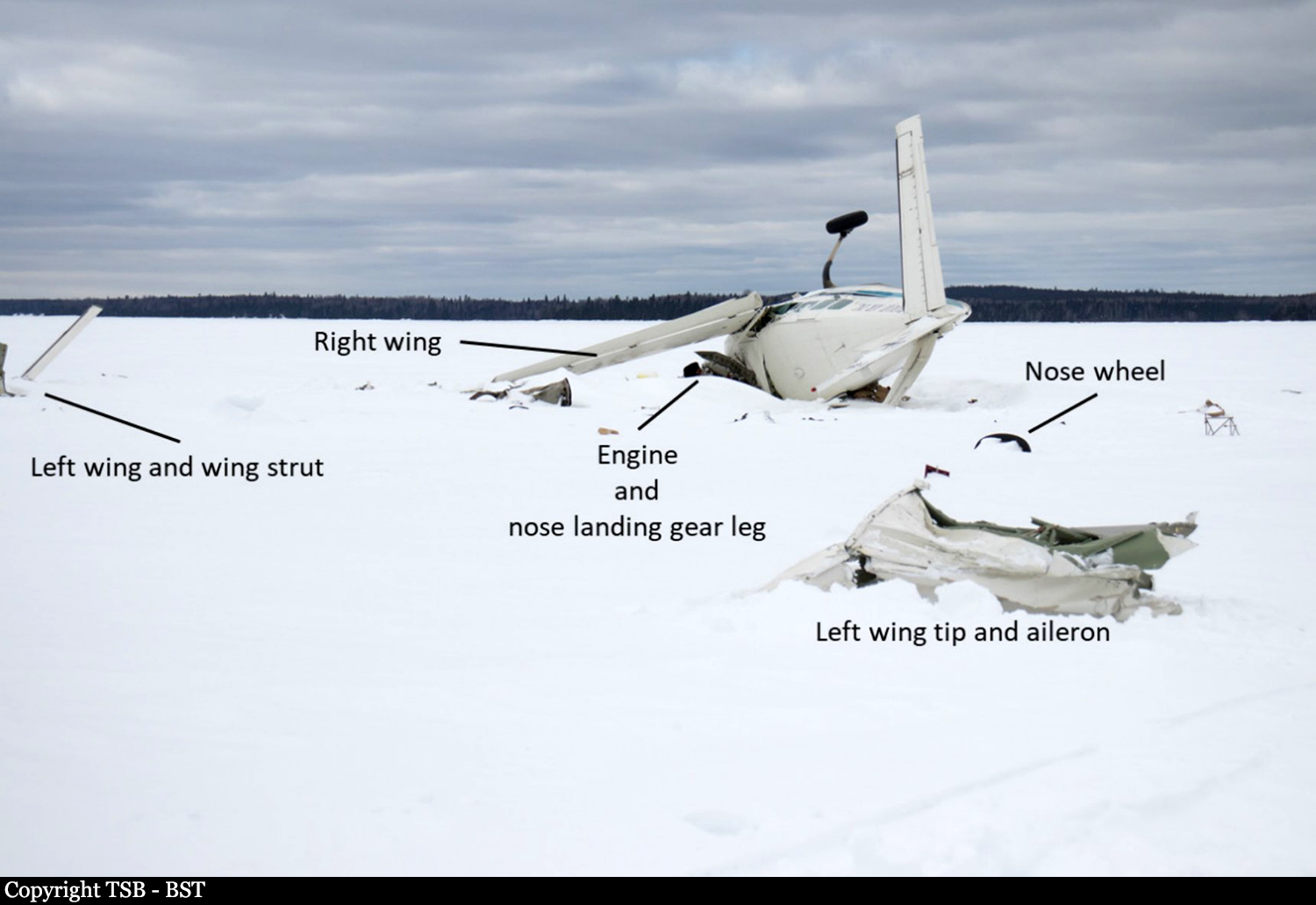
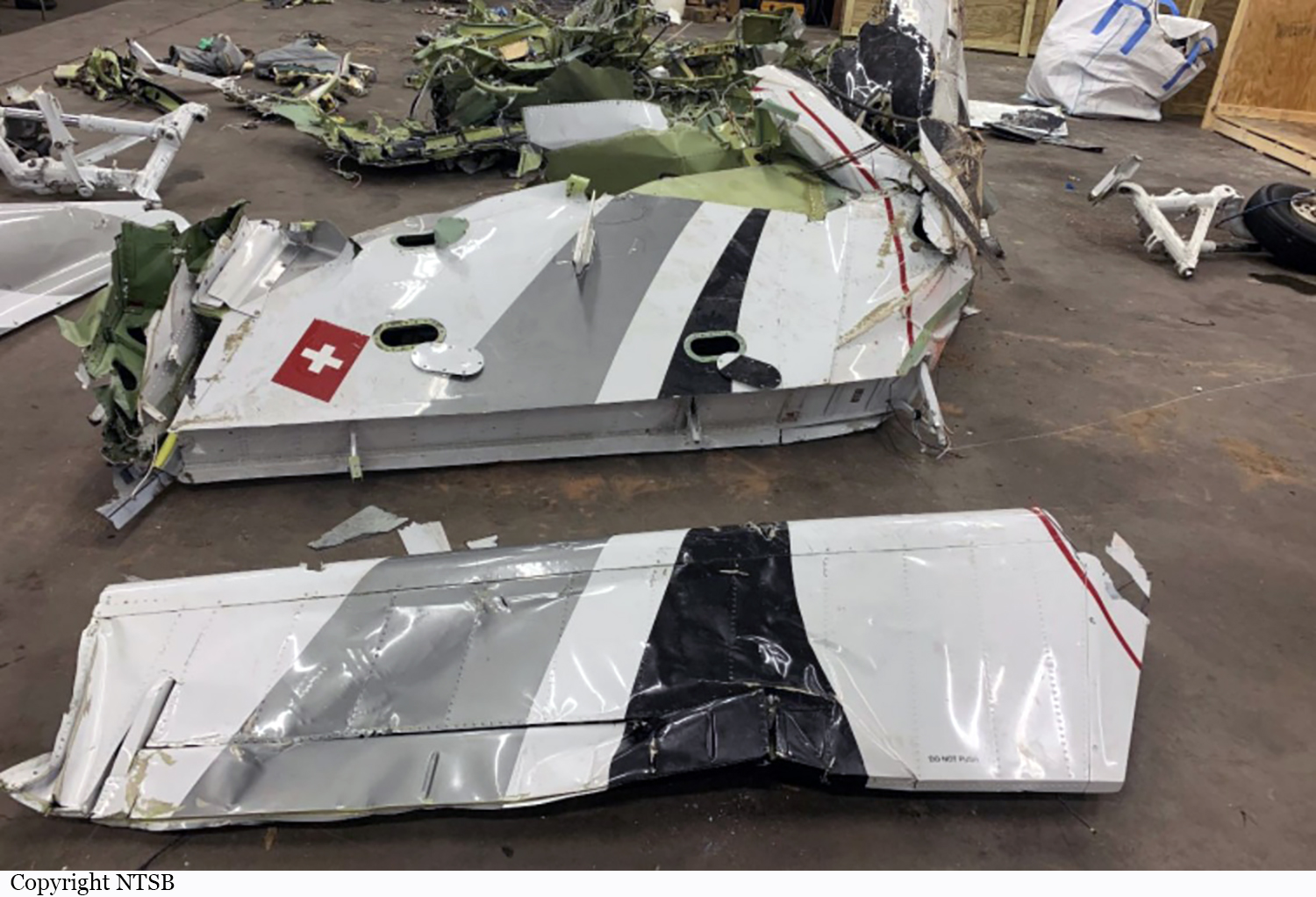
On 12 October 2022, the True North Airways Inc. de Havilland DHC-3 Otter aircraft on floats (registration C-FDDX, serial number 165) was conducting a visual flight rules flight, with 1 pilot on board, from Mistissini Water Aerodrome (CSE6), Quebec, to Pluto Lake, Quebec, where it would deliver cargo and pick up passengers. At approximately 0929 Eastern Daylight Time, while manoeuvring for landing on Pluto Lake, the aircraft collided with the surface of the water. The pilot sustained serious injuries. The passengers, who had been waiting near the lake for the aircraft’s arrival, transported the pilot to a nearby cabin from where he was later taken to hospital by a search and rescue helicopter. The emergency locator transmitter activated. There was significant damage to the aircraft.
Probable cause:
3.1 Findings as to causes and contributing factors
These are conditions, acts or safety deficiencies that were found to have caused or contributed to this occurrence.
Due to the visual cues of the landing area that were visible to the pilot, the close proximity of the landing site where passengers were waiting, and the natural tendency to continue a plan under changing conditions, the pilot continued the approach despite visibility in the local area being below the minimum required for visual flight rules flight.
Owing to the reduced visibility, the pilot’s workload, while he was manoeuvring for landing, was high and his attention was focused predominantly outside the aircraft in order to keep the landing area in sight. As a result, a reduction in airspeed went unnoticed.
During the aircraft’s turn from base to final, the increased wing loading, combined with the reduced airspeed, resulted in a stall at an altitude too low to permit recovery.
The pilot was not wearing the shoulder harness while at the controls and operating the aircraft because he found it uncomfortable and other aircraft he flew were not equipped with one. As a result, during impact with the water, the pilot received serious injuries.

3.2 Findings as to risk
These are conditions, unsafe acts or safety deficiencies that were found not to be a factor in this occurrence but could have adverse consequences in future occurrences.
If aircraft stall warning systems do not provide multiple types of alerts warning the pilot of an impending stall, there is an increased risk that a visual stall warning alone will not be salient enough and go undetected when the pilot’s attention is focused outside the aircraft or during periods of high workload.
If aircraft operators do not ensure that their contact information on file with the Canadian Beacon Registry is accurate, there is a risk that search and rescue operations may be delayed.
If companies do not employ robust flight-following procedures, there is a risk that, after an accident, potentially life-saving search and rescue services will be delayed.

3.3 Other findings
These items could enhance safety, resolve an issue of controversy, or provide a data point for future safety studies.
The occurrence aircraft was carrying dangerous goods on board, even though the operator was not authorized to do so on its DHC-3 Otter aircraft.
For unknown reasons, the pilot encountered difficulty inflating his personal flotation device, and because of his proximity to the shore, he removed it to make it easier to swim.
Final Report:

Crash of a Cessna 551 Citation II/SP off Ventspils: 4 killed

Date & Time: Sep 4, 2022 at 2044 LT
Type of aircraft:
Operator:
Registration:
OE-FGR
Flight Phase:
Flight Type:
Survivors:
No
Schedule:
Jerez - Cologne
MSN:
551-0021
YOM:
1979
Country:
Region:
Crew on board:
2
Crew fatalities:
Pax on board:
2
Pax fatalities:
Other fatalities:
Total fatalities:
4
Captain / Total flying hours:
1700
Captain / Total hours on type:
100.00
Aircraft flight hours:
8000
Circumstances:
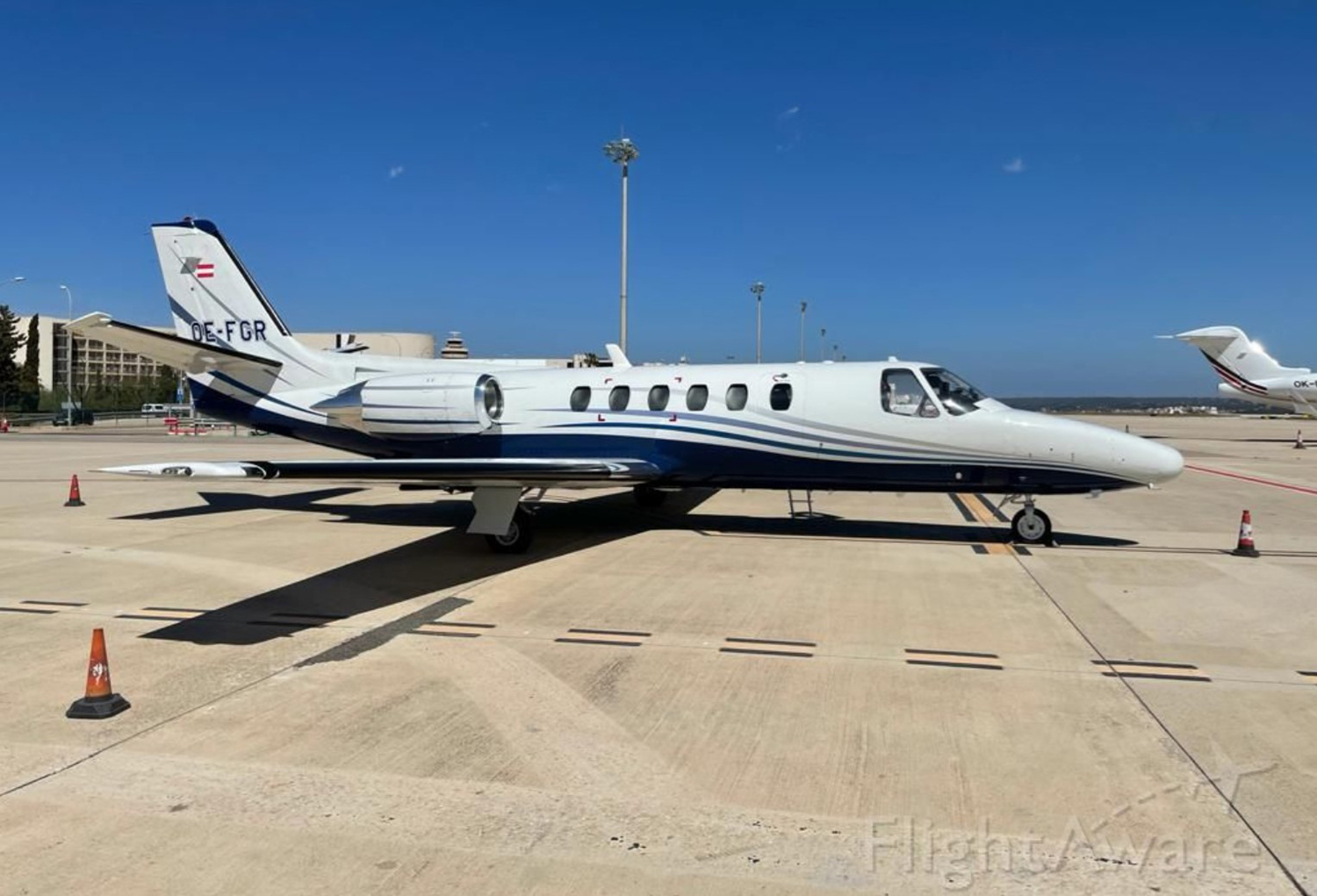
The airplane departed Jerez-La Parra Airport at 1456LT on a flight to Cologne-Bonn Airport with four people on board. It continued at an assigned altitude of 36,000 feet until it entered the German Airspace. German ATC was unable to establish a radio contact with the crew so the decision was taken to send a Panavia Tornado of the Luftwaffe that departed Rostock-Laage AFB and intercepted the Cessna at 1815LT. The military pilot did not see any one in the cockpit and evacuated the area five minutes later. The airplane overflew Germany then entered the Swedish Airspace and continued bound to the northeast without significant change in heading, altitude or speed (365 knots). At 2028LT, the airplane started to descent and initiated a turn to the right three minutes later. At 2040LT, it entered an uncontrolled descent to the left and spiraled to the sea before crashing at 2044LT about 37 km northwest of Ventspils. Few debris and oil were found at the point of impact. The accident was not survivable.
Probable cause:
Cabin pressurization issue suspected.

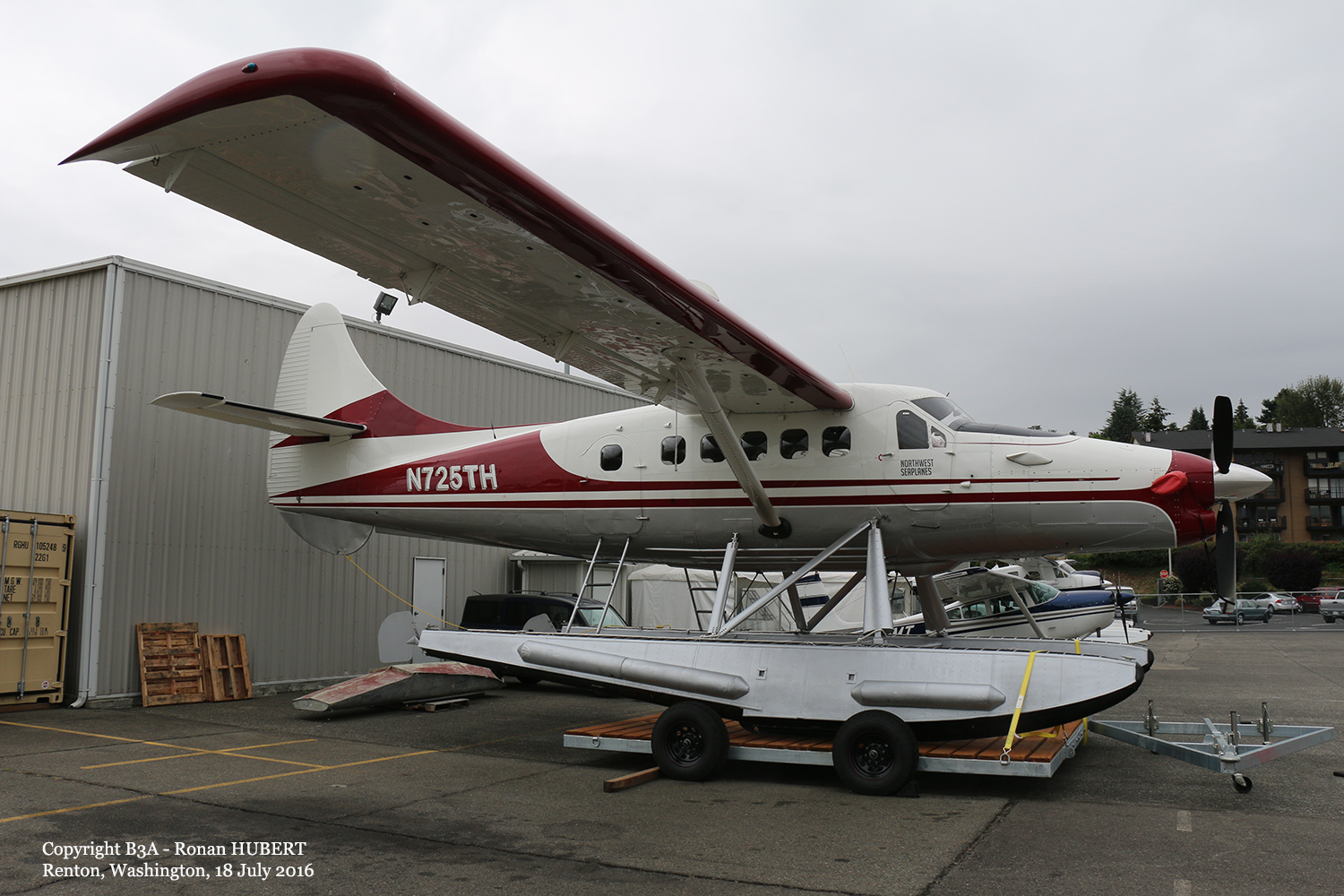
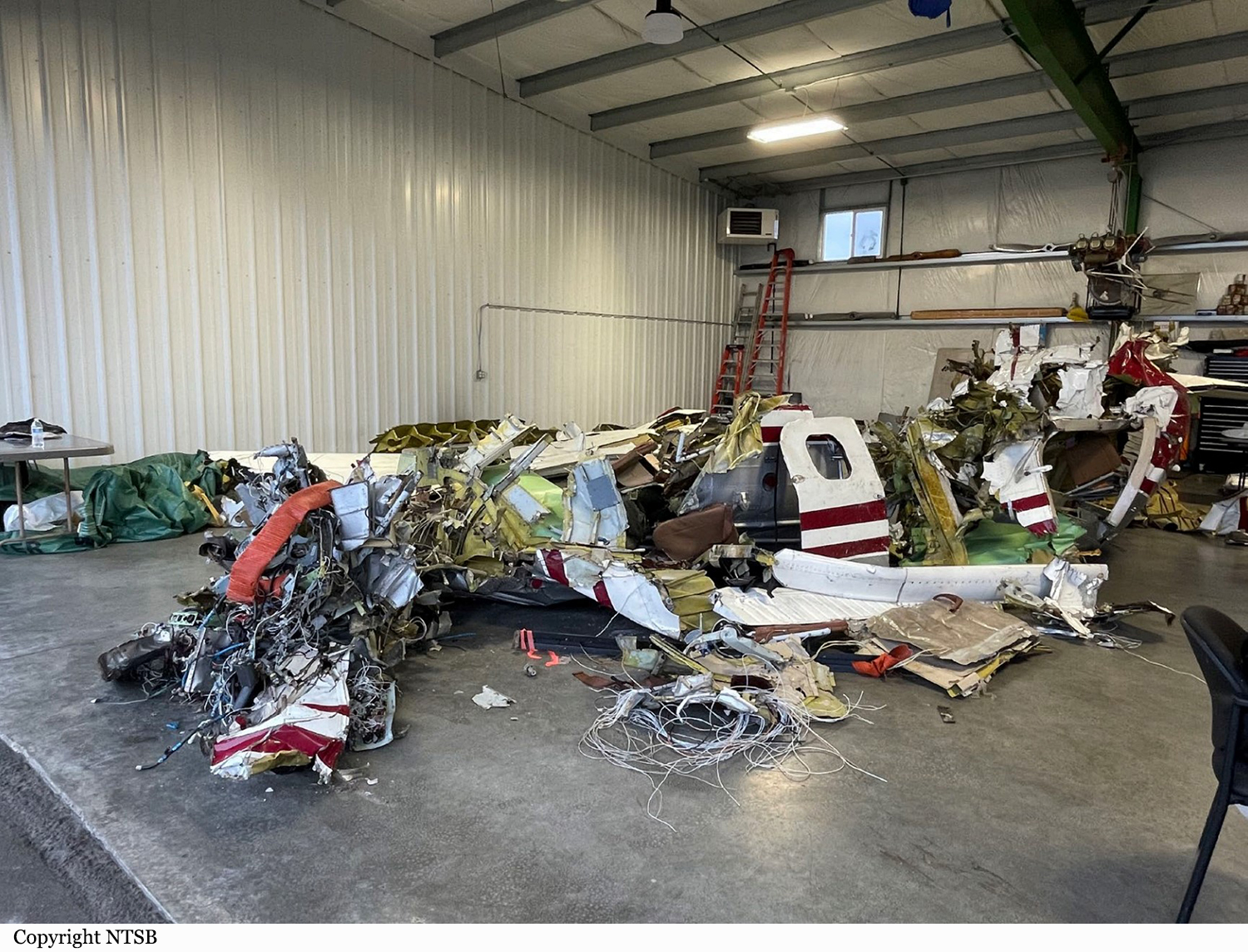
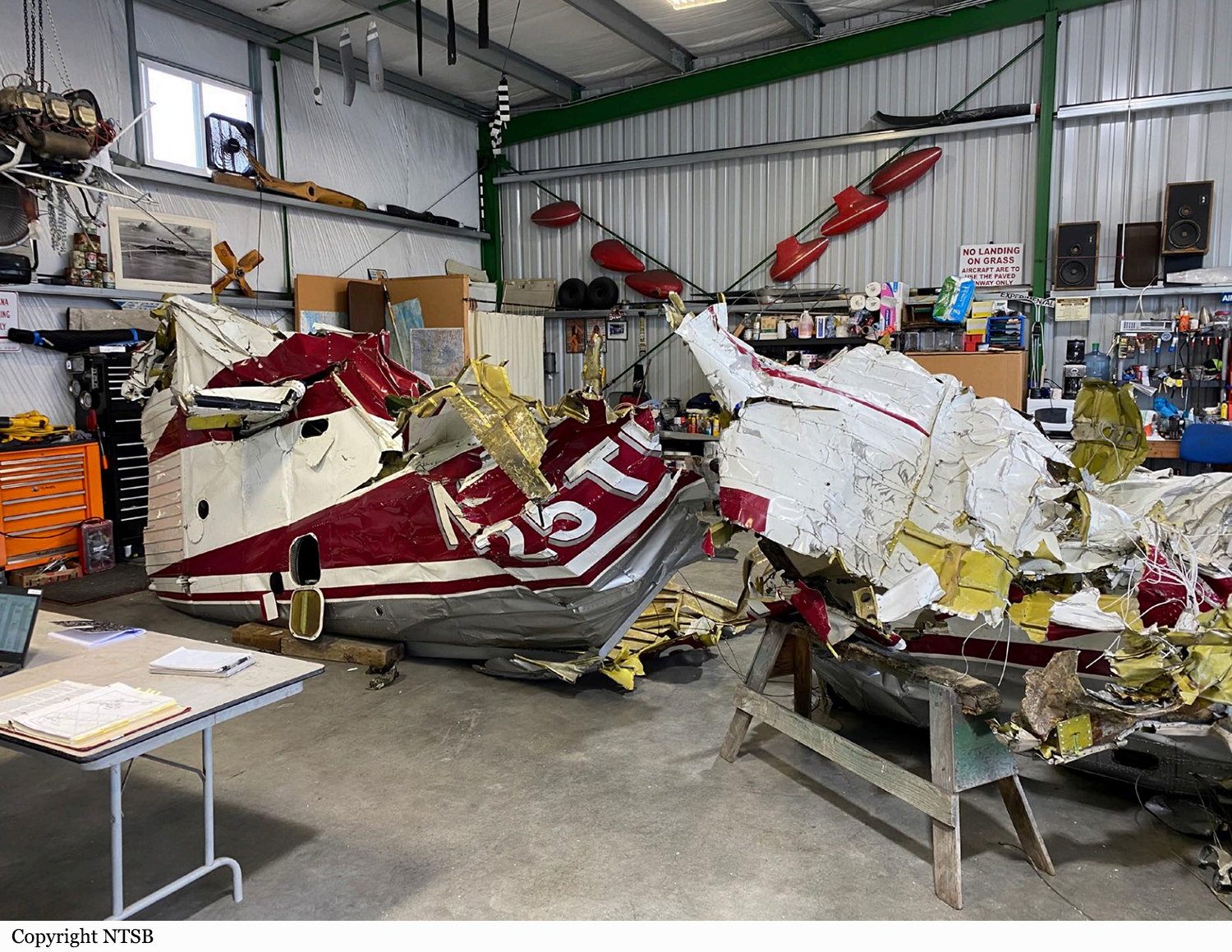
Crash of a De Havilland DHC-3T Otter into the Mutiny Bay: 10 killed

Date & Time: Sep 4, 2022 at 1509 LT
Type of aircraft:
Operator:
Registration:
N725TH
Flight Phase:
Survivors:
No
Schedule:
Friday Harbor – Renton
MSN:
466
YOM:
1967
Crew on board:
1
Crew fatalities:
Pax on board:
9
Pax fatalities:
Other fatalities:
Total fatalities:
10
Captain / Total flying hours:
3686
Captain / Total hours on type:
1300.00
Aircraft flight hours:
24430
Circumstances:
On September 4, 2022, about 1509 Pacific daylight time, a float-equipped de Havilland DHC-3 (Otter), N725TH, was destroyed when it impacted the water in Mutiny Bay, near Freeland, Washington, and sank. The pilot and nine passengers were fatally injured. The airplane was owned by Northwest Seaplanes, Inc., and operated as a Title 14 Code of Federal Regulations (CFR) Part 135 scheduled passenger flight by West Isle Air dba Friday Harbor Seaplanes. The flight originated at Friday Harbor Seaplane Base (W33), Friday Harbor, Washington, with an intended destination of Will Rogers Wiley Post Memorial Seaplane Base (W36), Renton, Washington. Visual meteorological conditions prevailed at the time of the accident. The accident pilot was scheduled to fly the accident airplane on three multiple leg roundtrips on the day of the accident. The first roundtrip flight was uneventful; it departed from W36 about 0930, made four stops, and returned about 1215. The accident occurred during the pilot’s second trip of the day. A review of recorded automatic dependent surveillance–broadcast (ADS-B) data revealed that the second roundtrip departed 36 about 1253 and arrived at Lopez Seaplane Base, (W81), Lopez Island, Washington, about 1328.2 The data showed that the flight then departed W81 and landed at Roche Harbor Seaplane Base (W39) about 1356. The airplane departed W39 about 1432, arrived at W33 about 1438, and departed about 1450. According to ADS-B data, after the airplane departed W33, it flew a southerly heading before turning south-southeast. The en route altitude was between 600 and 1,000 ft above mean sea level (msl), and the groundspeed was between 115 and 135 knots. At 1508:40, the altitude was 1,000 ft msl, and the groundspeed had decreased to 111 knots. Based on performance calculations, at 1508:43, the airplane pitched up about 8° and then abruptly pitched down about 58°. The data ended at 1508:51, when the airplane’s altitude was 600 ft msl and the estimated descent rate was more than 9,500 ft per minute (the flightpath of the airplane is depicted in figure. Witnesses near the accident site reported, and security camera video confirmed, the airplane was in level flight before it entered a slight climb and then pitched down. One witness described the descent as “near vertical” and estimated the airplane was in an 85° nose-down attitude before impact with the water. Several witnesses described the airplane as “spinning,” “rotating,” or “spiraling” during portions of the steep descent. One witness reported hearing the engine/propeller and noted that he did not hear any “pitch change” in the sounds. The airplane continued in a nose-low, near-vertical descent until it impacted water in Mutiny Bay.
Probable cause:
It was determined that the probable cause of this accident was the in-flight unthreading of the clamp nut from the horizontal stabilizer trim actuator barrel due to a missing lock ring, which resulted in the horizontal stabilizer moving to an extreme trailing-edge-down position rendering the airplane’s pitch uncontrollable.
Final Report:

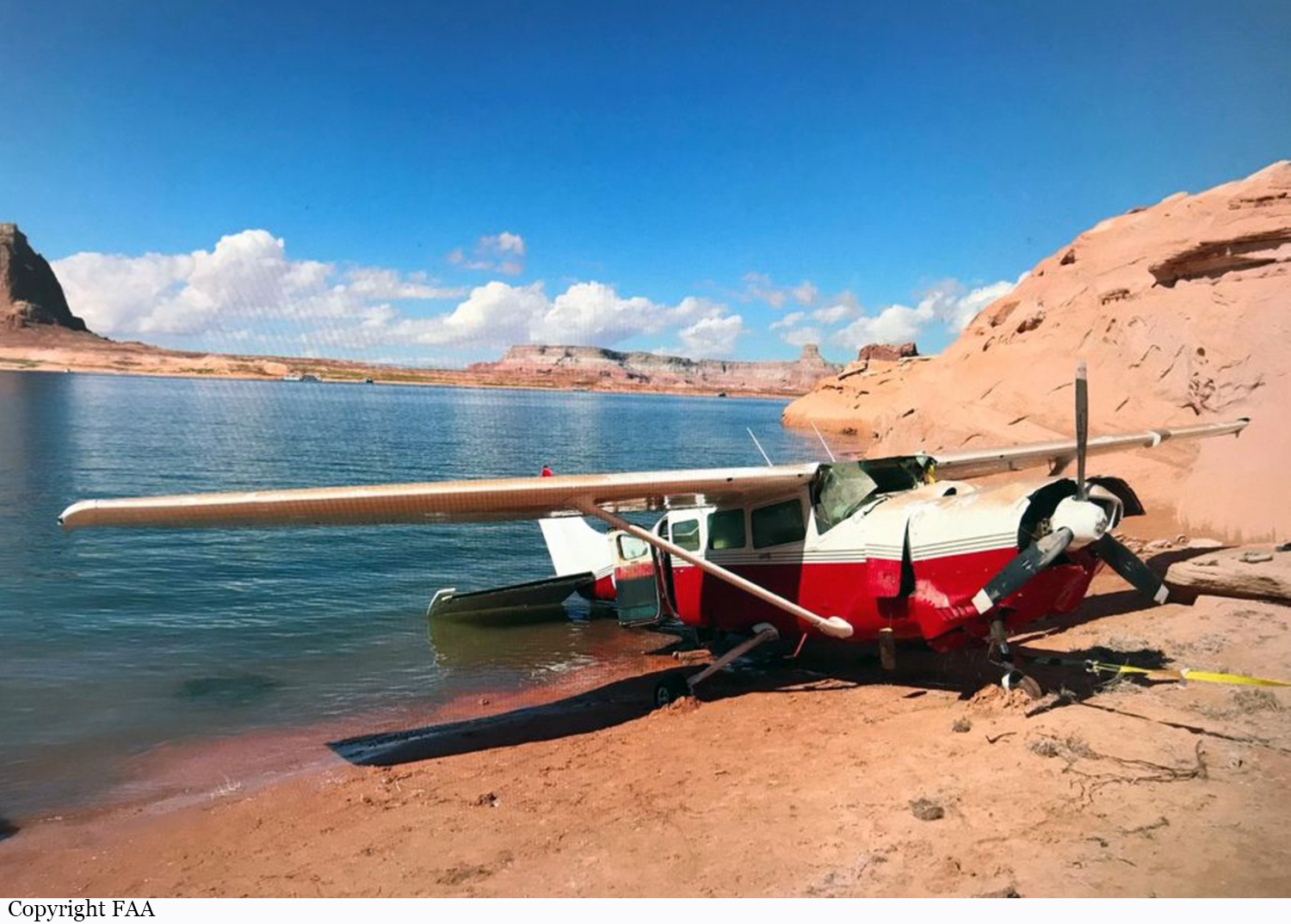
Crash of a Cessna 207A Turbo Stationair 8 into Lake Powell: 2 killed

Date & Time: Aug 13, 2022 at 1619 LT
Operator:
Registration:
N9582M
Flight Phase:
Survivors:
Yes
Schedule:
Page - Page
MSN:
207-0705
YOM:
1981
Crew on board:
1
Crew fatalities:
Pax on board:
6
Pax fatalities:
Other fatalities:
Total fatalities:
2
Captain / Total flying hours:
550
Captain / Total hours on type:
35.00
Aircraft flight hours:
17307
Circumstances:
On August 13, 2022, about 1619 mountain standard time, a Cessna T207A airplane, N9582M, was substantially damaged when it was involved in an accident near Page, Arizona. The pilot received minor injuries, two passengers were fatally injured, two passengers were seriously injured, and one passenger received minor injuries. The airplane was operated as a Title 14 Code of Federal Regulations Part 91 air tour flight. According to witnesses, the accident airplane was the first airplane in a flight of 5 airplanes on a scenic tour of the Lake Powell area at a cruise altitude of about 1,000 ft to 2,000 ft above ground level. After nearly 30 minutes of flight and after making a turn back towards the airport, the accident pilot made a distress call and reported his engine lost power and he was ditching the airplane in Lake Powell. The airplane became submerged in the water and the two passengers who were fatally injured did not exit the airplane. National Park Service boats, several nearby private boats, and a few helicopters responded to the accident site, which was located about 13 miles northeast of the Page Municipal Airport, (PGA), Page, Arizona. The boats assisted the survivors in the water. Once aboard a boat that recovered the survivors, witnesses overheard the pilot on the phone discussing that he had experienced an engine failure. An underwater remote observation vehicle surveyed the accident site a couple of days after the accident. All major components of the airplane were observed, and the airplane came to rest upright at the lake bottom about 100 ft below the surface.
Probable cause:
The total loss of engine power for undetermined reasons during low altitude cruise flight, which resulted in a water ditching. Contributing to the severity of the accident was the pilot’s failure to extend the flaps during the ditching, which increased the impact forces to the occupants.
Final Report:

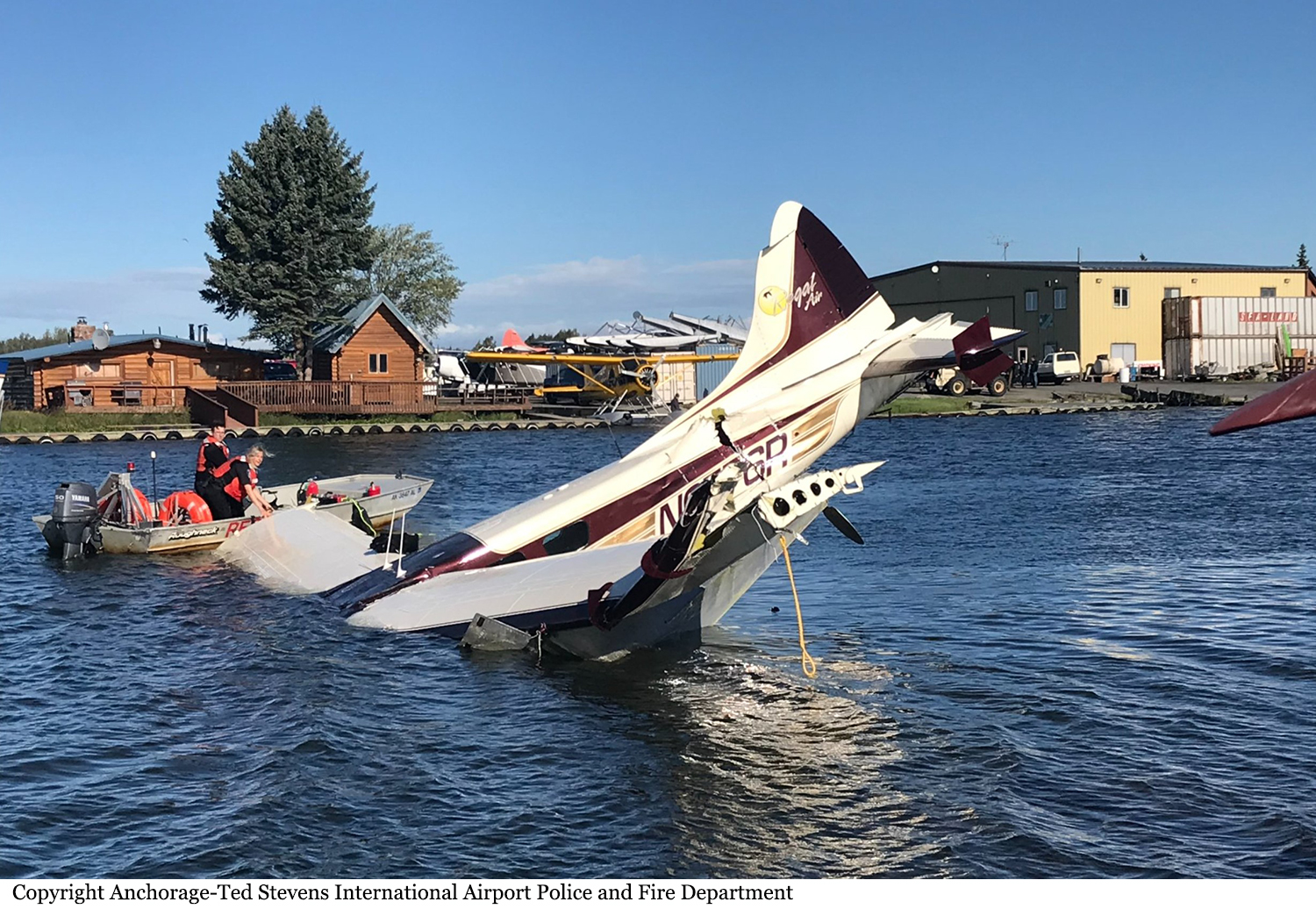
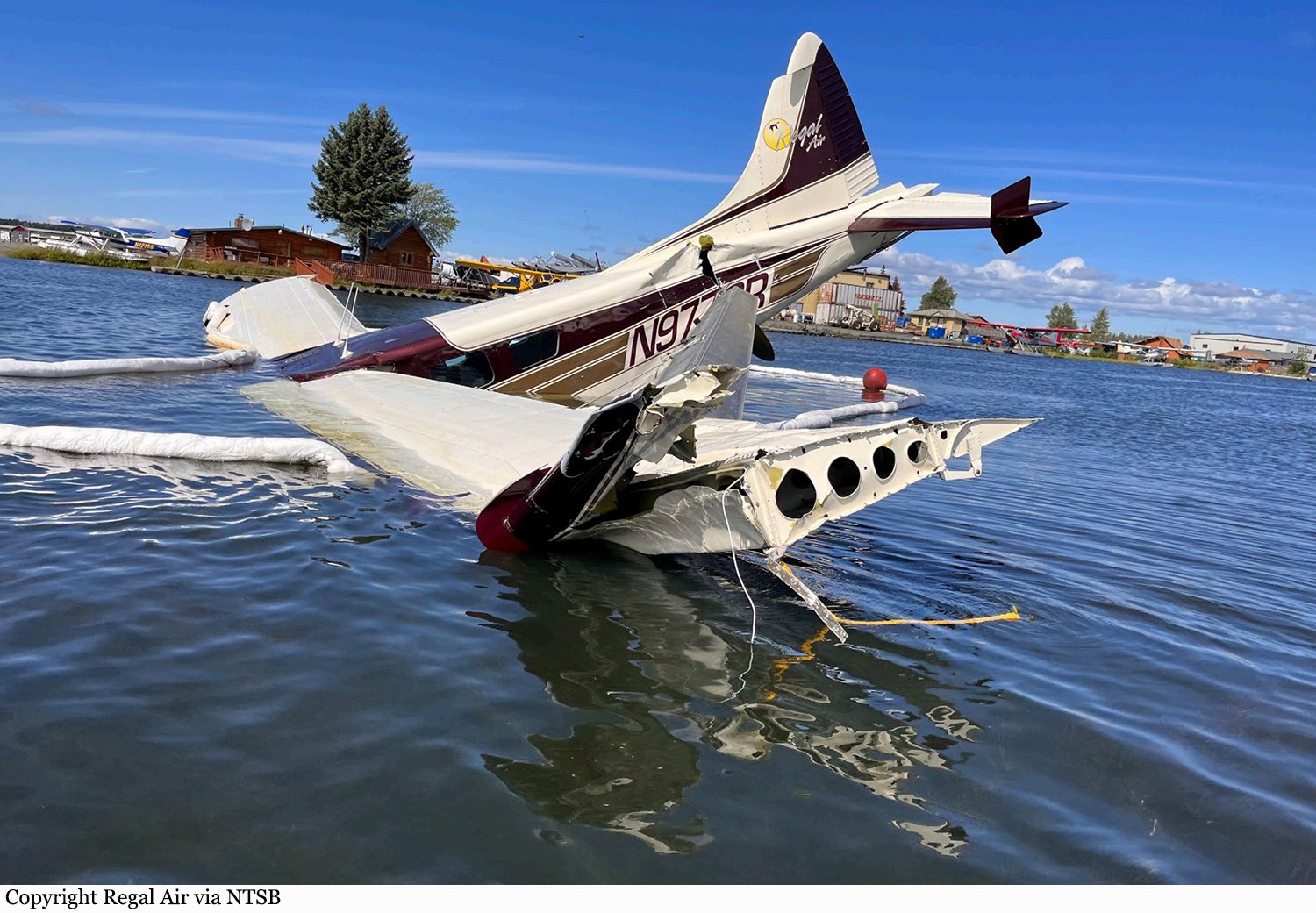
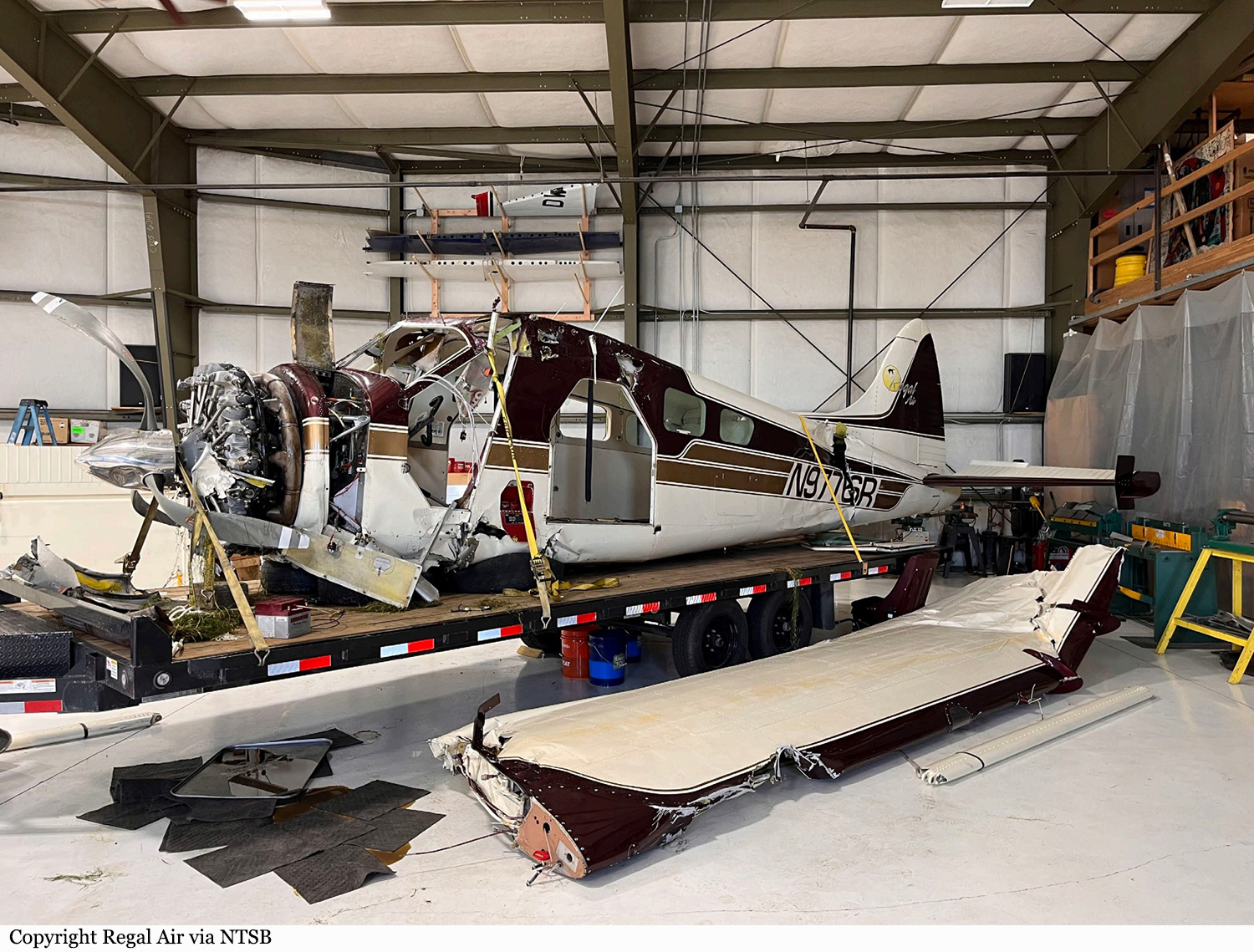
Crash of a De Havilland DHC-2 Beaver I in Anchorage

Date & Time: Jul 26, 2022 at 0915 LT
Type of aircraft:
Operator:
Registration:
N9776R
Flight Phase:
Survivors:
Yes
Schedule:
Anchorage - King Salmon
MSN:
1126
YOM:
1957
Crew on board:
1
Crew fatalities:
Pax on board:
6
Pax fatalities:
Other fatalities:
Total fatalities:
0
Captain / Total flying hours:
1709
Captain / Total hours on type:
142.00
Aircraft flight hours:
16072
Circumstances:
The pilot reported that, he was departing in the float-equipped airplane in strong gusty wind conditions. After accelerating on the water for about 3 seconds, the airplane suddenly became airborne and crabbed into the wind about 60° to 90° from the intended takeoff path and started to climb as it continued to track away from the intended flight path. As the climb continued, the airplane stalled and impacted the water in a nose low attitude which resulted in substantial damage to the wings and fuselage. The pilot reported that there were no preaccident mechanical malfunctions or anomalies that would have precluded normal operation.
Probable cause:
The pilot’s failure to maintain directional control during takeoff in gusting wind conditions which resulted in the wing exceeding its critical angle of attack, a loss of control and impact with the water.
Final Report:

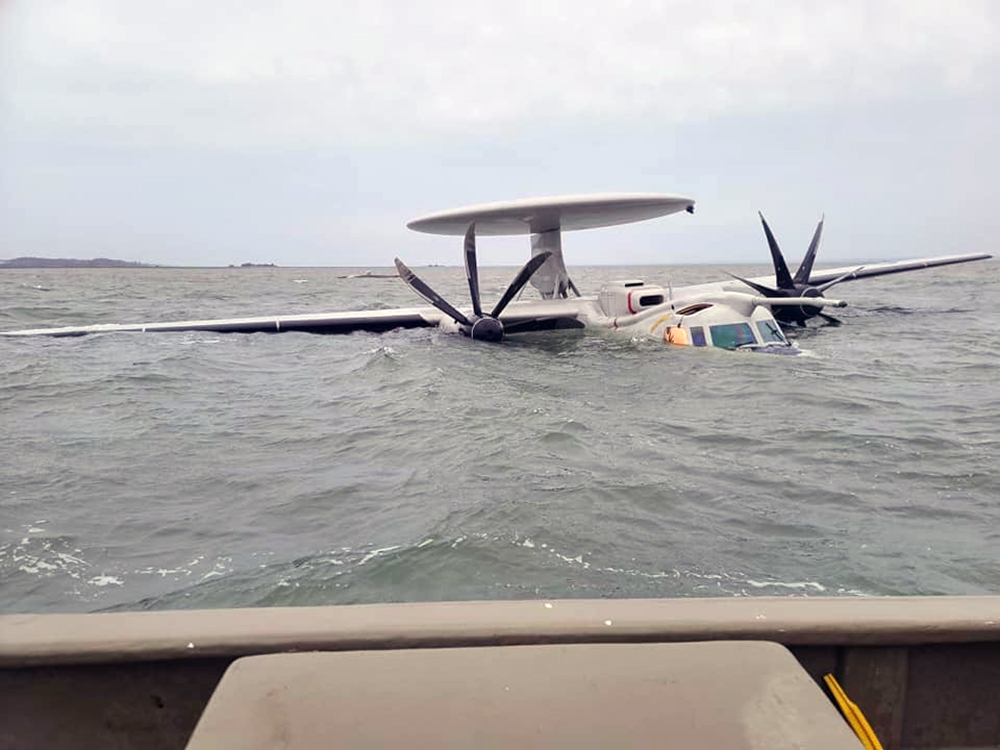
Crash of a Grumman E-2D Hawkeye in the Chincoteague Bay: 1 killed

Date & Time: Mar 30, 2022 at 1930 LT
Type of aircraft:
Operator:
Registration:
169065
Flight Phase:
Flight Type:
Survivors:
Yes
Schedule:
Norfolk - Norfolk
MSN:
AA31
Crew on board:
3
Crew fatalities:
Pax on board:
0
Pax fatalities:
Other fatalities:
Total fatalities:
1
Circumstances:
The crew departed Norfolk-Chambers Field NAS on a local mission. En route, the airplane crashed in unknown circumstances in the Chincoteague Bay, off Wallops Island. The aircraft came to rest partially submerged in shallow waters. Two crew members were rescued while the pilot Lt Hyrum Hanlon was killed.

Crash of a Cessna 208 Caravan I in Lake Seul

Date & Time: Mar 8, 2022 at 1310 LT
Type of aircraft:
Operator:
Registration:
C-GIPR
Flight Phase:
Survivors:
Yes
Schedule:
Sioux Lookout – Springpole Lake
MSN:
208-0343
YOM:
2001
Country:
Crew on board:
1
Crew fatalities:
Pax on board:
1
Pax fatalities:
Other fatalities:
Total fatalities:
0
Captain / Total flying hours:
1315
Captain / Total hours on type:
126.00
Circumstances:
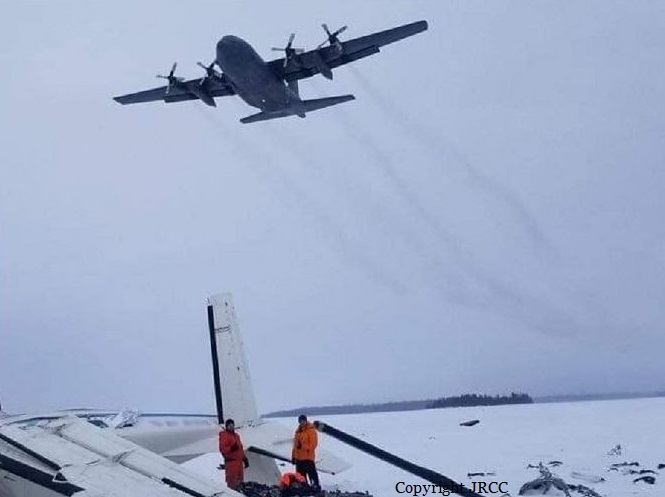
On 08 March 2022, the Bamaji Air Inc. (Bamaji) wheel-equipped Cessna 208 Caravan aircraft (registration C-GIPR, serial number 20800343) was conducting a series of visual flight rules (VFR) flights from Sioux Lookout Airport (CYXL), Ontario. At 1031, after checking the aerodrome forecast (TAF) valid from 0900 to 2000, and the graphic area forecast (GFA) valid from 0600 to 1800, the pilot departed on a flight to an ice runway on Springpole Lake, Ontario, about 78 nautical miles (NM) north-northwest of CYXL. The aircraft returned to CYXL with 2 passengers at 1200. In preparation for a second flight to Springpole Lake, the pilot loaded approximately 900 pounds of freight into the cabin and secured it under a cargo net. The aircraft had 750 pounds of fuel remaining on board, which was sufficient for the planned flight. The pilot and 1 passenger boarded the aircraft. The pilot occupied the left cockpit seat and the passenger occupied the right cockpit seat. Both occupants were wearing the available 5-point-harness safety belt system. At 1250, a snow squall began to move across CYXL, reducing ground visibility. The pilot taxied the aircraft to a position on the apron and waited for the fast-moving snow squall to pass. At 1301, the pilot taxied the aircraft to Runway 34 and took off in visual meteorological conditions. The aircraft climbed to approximately 1800 feet above sea level (ASL), then, once clear of the control zone, it descended to approximately 1600 to 1700 feet ASL, roughly 500 to 600 feet above ground level (AGL), to remain below the overcast ceiling. As the aircraft began to cross Lac Seul, Ontario, the visibility straight ahead and to the west was good. However, when the aircraft was roughly midway across the lake, it encountered turbulence and immediately became enveloped in whiteout conditions generated by a snow squall. The pilot turned his head to inspect the left wing and saw that ice appeared to be accumulating on the leading edge. He turned his attention back to the flight instruments and saw that the altimeter was descending rapidly. He then pulled back on the control column to stop the descent; however, within a few seconds, the aircraft struck the frozen surface of Lac Seul, approximately 17 NM north-northwest of CYXL. The aircraft was substantially damaged. There was no fire. The aircraft occupants received minor injuries. The Artex Model Me406 emergency locator transmitter (ELT) activated on impact and the signal was detected by the Cospas-Sarsat satellite system. The Joint Rescue Coordination Centre in Trenton, Ontario, re-tasked a Royal Canadian Air Force aircraft that was in the area and 3 search and rescue technicians (SAR Techs) parachuted into the site within 1 hour of the accident. The aircraft occupants and the SAR Techs were extracted from the site by a civilian helicopter later that day.
Probable cause:
The accident occurred while the aircraft was crossing a large, frozen, snow-covered lake at low altitude. Other than some small islands and the distant treed shorelines, there were few features to provide visual references. The terrain, coupled with the snow squalls that were passing through the area generated circumstances conducive to the creation of localized whiteout conditions.
Final Report:

Crash of a Cessna 208B Grand Caravan off Mohéli: 14 killed

Date & Time: Feb 26, 2022 at 1230 LT
Type of aircraft:
Operator:
Registration:
5H-MZA
Flight Phase:
Survivors:
No
Schedule:
Moroni - Mohéli
MSN:
208B-5278
YOM:
2016
Flight number:
Y61103
Region:
Crew on board:
2
Crew fatalities:
Pax on board:
12
Pax fatalities:
Other fatalities:
Total fatalities:
14
Circumstances:
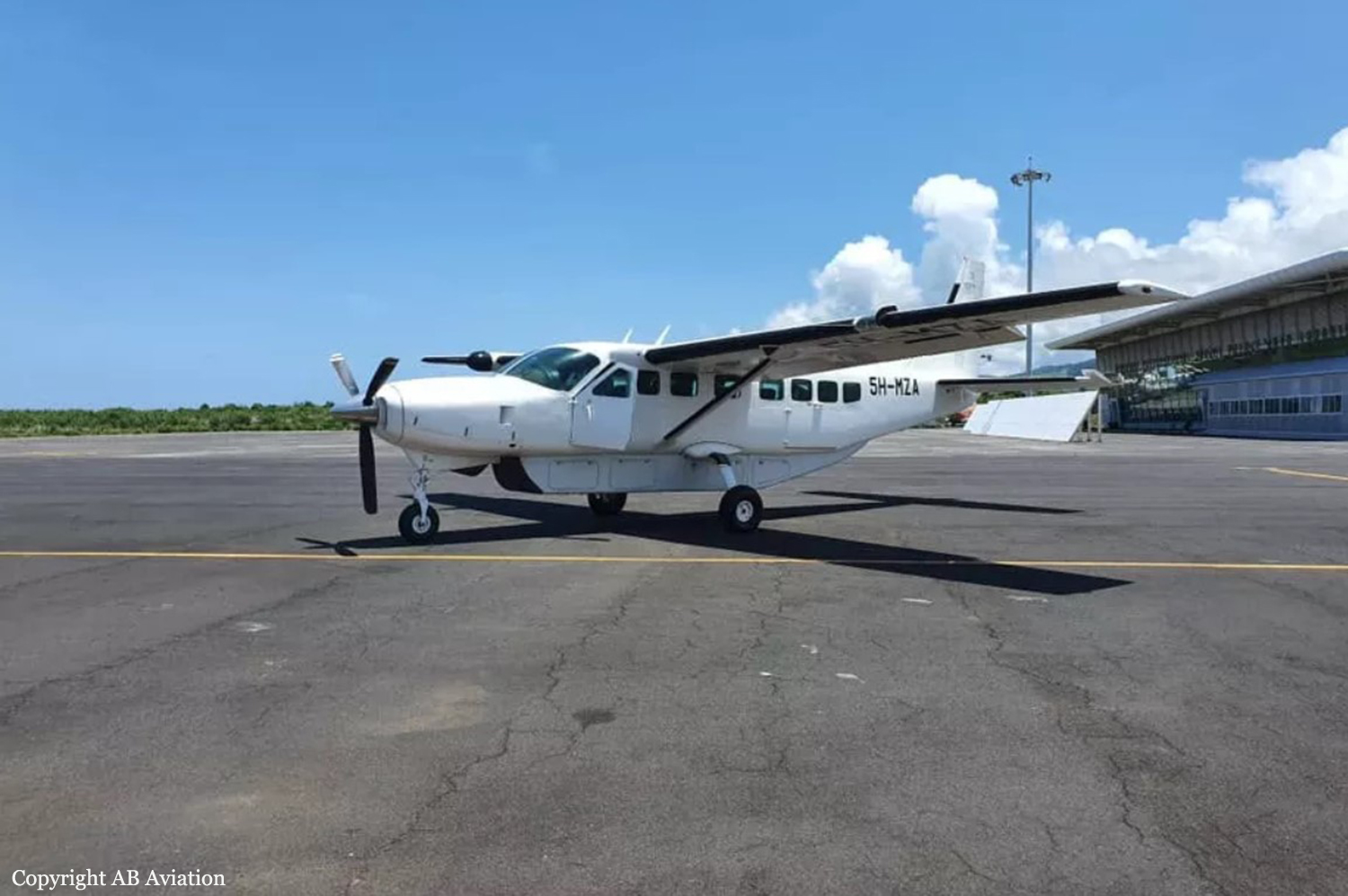
The single engine airplane departed Moroni Airport at 1155LT on a schedule flight to Mohéli, carrying 12 passengers and two pilots. While approaching Mohéli, the crew encountered marginal weather conditions when the aircraft crashed in the sea some 2,5 km northwest of Mohéli-Bander es Eslam Airport. After 24 hours of intense research, only few debris were found floating on water (such a wheel and wing fragments). No trace of the 14 occupants was found.

Crash of a Pilatus PC-12/47E off Beaufort: 8 killed

Date & Time: Feb 13, 2022 at 1402 LT
Type of aircraft:
Registration:
N79NX
Flight Phase:
Flight Type:
Survivors:
No
Schedule:
Engelhard - Beaufort
MSN:
1709
YOM:
2017
Crew on board:
2
Crew fatalities:
Pax on board:
6
Pax fatalities:
Other fatalities:
Total fatalities:
8
Captain / Total flying hours:
3000
Copilot / Total flying hours:
97
Copilot / Total hours on type:
21
Aircraft flight hours:
1367
Circumstances:
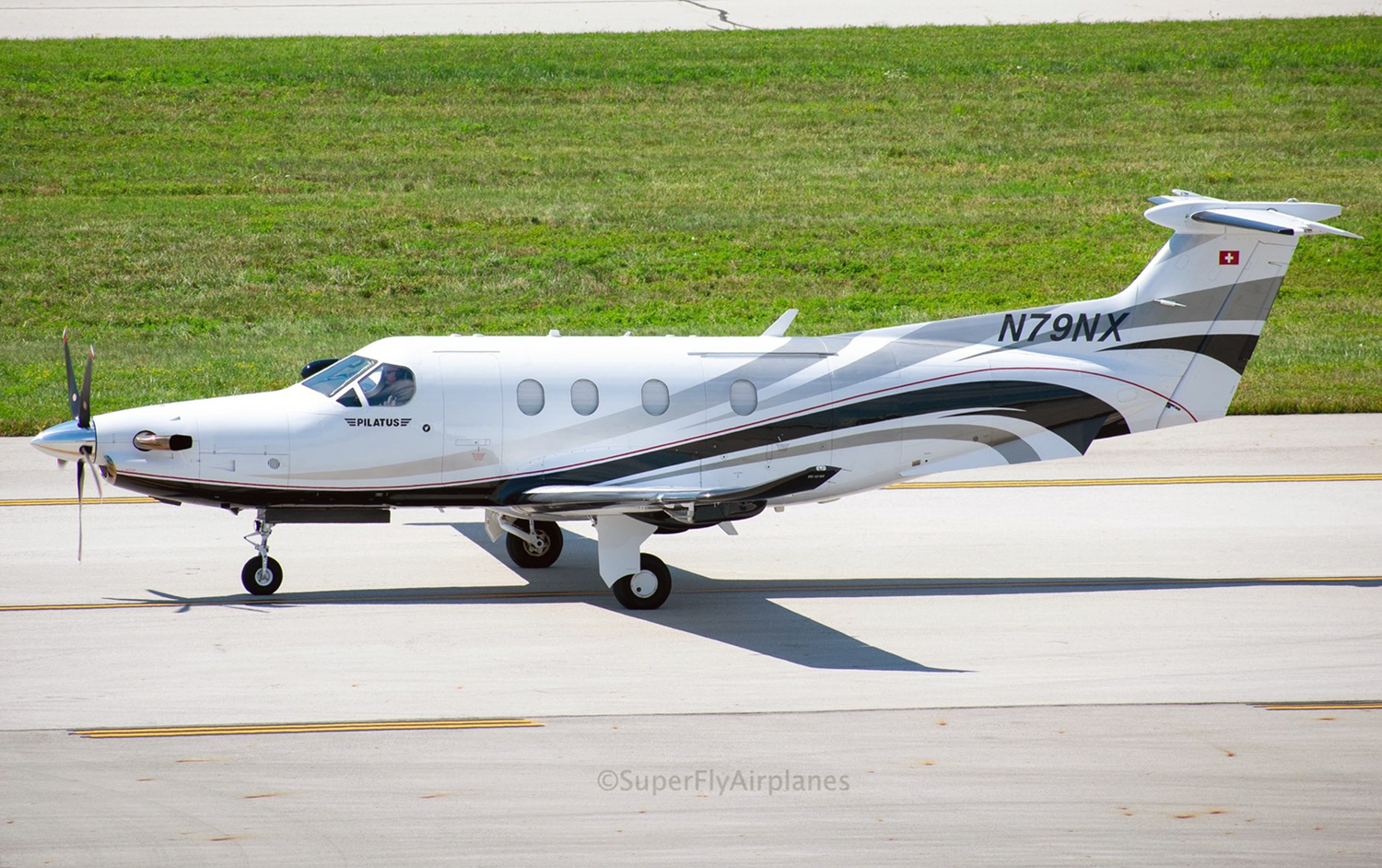
Before departing on the flight, the pilot of the turbo-propeller-equipped, single-engine airplane and student pilot-rated passenger seated in the right front seat of the airplane attempted to enter a flight plan into the airplane’s integrated flight management system. They ultimately did not complete this task prior to takeoff with the pilot remarking, “we’ll get to it later.” The pilot subsequently departed and climbed into instrument meteorological conditions (IMC) without an instrument flight rules (IFR) flight plan. After entering IMC, he contacted air traffic control and asked for visual flight rules (VFR) flight following services and an IFR clearance to the destination airport. From shortly after when the airplane leveled after takeoff through the final seconds of the flight, the pilot attempted to program, delete, reprogram, and activate a flight plan into the airplane’s flight management system as evidenced by his comments recorded on the airplane’s cockpit voice recorder (CVR). After departing, the pilot also attempted to navigate around restricted airspace that the airplane had flown into. The CVR audio showed that during the final 10 minutes of the flight, the pilot was unsure of the spelling of the fix he should have been navigating to in order to begin the instrument approach at the destination airport, and more generally expressed frustration and confusion while attempting to program the integrated flight management system. As the pilot continued to fixate on programming the airplane’s flight management system and change the altimeter setting, the airplane’s pitch attitude increased to 10° nose up, while the airspeed had decayed to 109 knots. As a result of his inattention to this airspeed decay, the stall warning system activated and the autopilot disconnected. During this time the airplane began climbing and turning to the right and then to the left before entering a steep descending right turn that continued until the airplane impacted the ocean. For the final 2 and 1/2 minutes of the flight, the pilot was provided with stall warnings, stick shaker activations, autopilot disconnect warnings, and terrain avoidance warning system alerts. The airplane impacted the ocean about 3 miles from the coast. Examination of the recovered sections of the airplane did not reveal evidence of any mechanical failures or malfunctions of the airframe or engine that would have precluded normal operation. The instrument meteorological conditions present in the area at the time of the accident were conducive to the development of spatial disorientation. The airplane’s erratic flight track in the final 2 minutes of flight, culminating in the final rapidly descending right turn, were consistent with the known effects of spatial disorientation. It is likely that the pilot’s inadequate preflight planning, and his subsequent distraction while he unsuccessfully attempted to program the airplane’s flight management system during the flight resulted in his failure to adequately monitor the airplane’s speed. This led to the activation of the airplane’s stall protection and warning systems as the airplane approached and entered an aerodynamic stall. The resulting sudden deactivation of the autopilot, combined with his inattention to the airplane’s flight attitude and speed, likely surprised the pilot. Ultimately, the pilot failed to regain control of the airplane following the aerodynamic stall, likely due to spatial disorientation. The pilot had a history of mantle cell lymphoma that was in remission and his maintenance treatment with a rituximab infusion was over 60 days prior to the accident. The pilot also had a history of back pain and had received steroid injections and nonsteroidal anti-inflammatory drugs. By self-report, he had taken oxycodone for pain management; it is unknown how frequently he used this medication or if he had used the medication on the day of the accident. While oxycodone can result in fatigue and dizziness, and may interfere with reaction time, given the information from the CVR, it could not be determined if the pilot had these side effects. A few weeks prior to the accident, the pilot reported having COVID-19 and receiving a 5-day treatment course of hydroxychloroquine and ivermectin. While there are some impairing side effects associated with the use of those medications, enough time had elapsed that no adverse effects would be expected. There is an increased risk of a sudden incapacitating cardiovascular event such as a dysrhythmia, stroke, or pulmonary embolism in people who have recovered from their COVID-19 infection. The risk is slight for those not hospitalized for the infection. The pilot did not have an underlying cardiovascular disease that would pose an increased risk for a sudden incapacitating event and the CVR did not provide evidence of a sudden incapacitating event occurring. Thus, it could not be determined if the pilot’s medical conditions of mantle cell lymphoma, back pain, and recent history of COVID-19 and the medications used to treat these conditions, including rituximab, oxycodone, hydroxychloroquine, and ivermectin, were contributing factors to this accident.
Probable cause:
The pilot’s inadequate preflight planning, inadequate inflight monitoring of the airplane’s flight parameters, and his failure to regain control of the airplane following entry into an inadvertent aerodynamic stall. The pilot’s likely spatial disorientation following the aerodynamic stall also contributed to the outcome.
Final Report:

Crash of a Cessna 402B off Chub Cay

Date & Time: Jan 5, 2022 at 0832 LT
Type of aircraft:
Registration:
N145TT
Survivors:
Yes
Schedule:
Miami - Chub Cay
MSN:
402B-1333
YOM:
1978
Country:
Crew on board:
1
Crew fatalities:
Pax on board:
1
Pax fatalities:
Other fatalities:
Total fatalities:
0
Captain / Total flying hours:
3000
Captain / Total hours on type:
350.00
Circumstances:
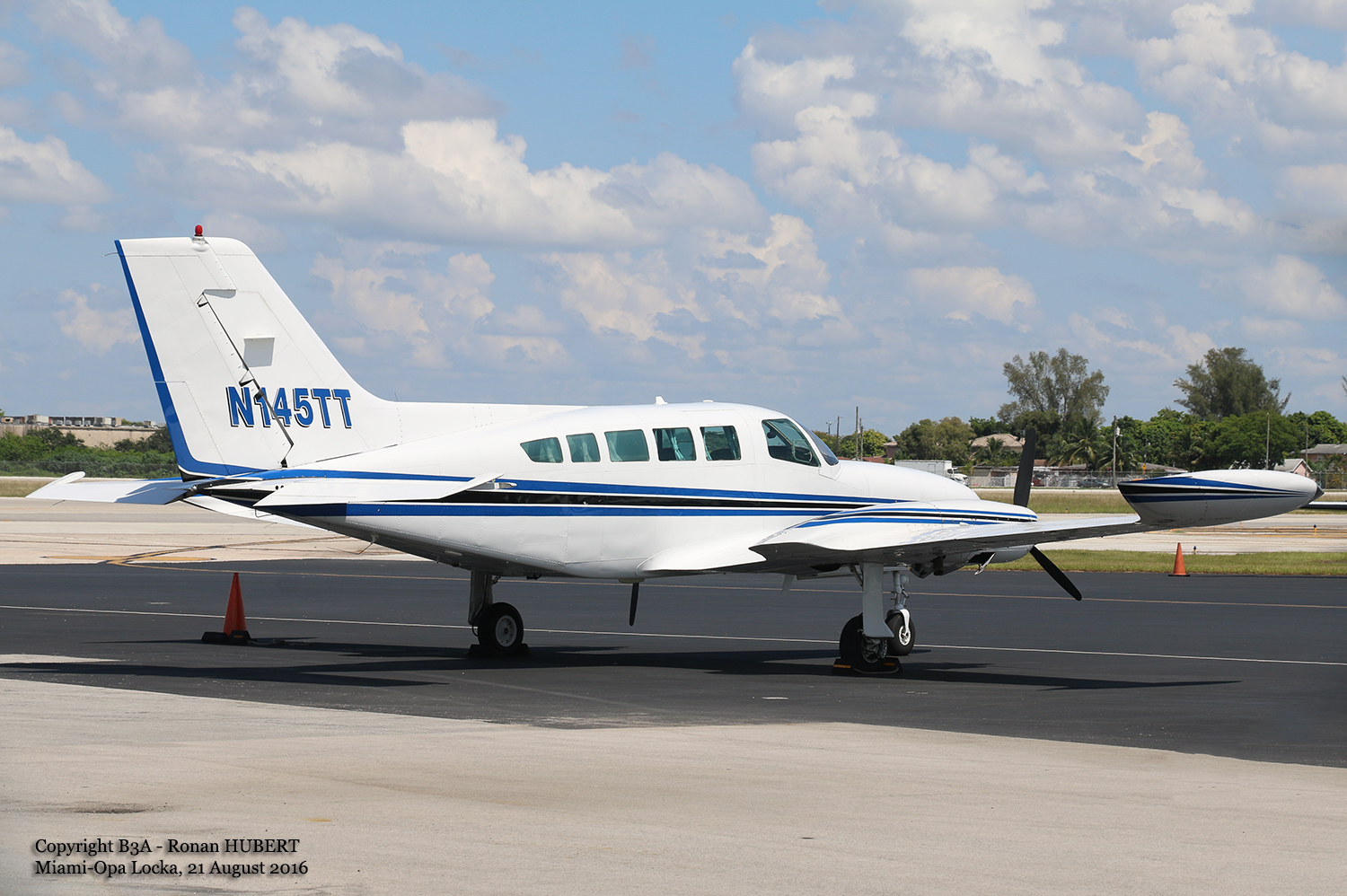
The aircraft departed the Opa Locka Executive Airport (KOPF), Opa Locka, Florida, USA at 7:52 AM EST (1252 UTC) with 2 persons on board enroute to the Chub Cay Int’l Airport. The aircraft was operated by Airway Air Charter INC (Venture Air Solutions INC), a Part 135 certificate holder under Title 14 US Code of Federal Regulations (CFR), Investigations revealed that the pilot in command arrived at the Opa Locka Airport at approximately 6:30 AM EST and conducted a pre-flight check of the aircraft, subsequently adding 66.5 gallons of 100LL avgas fuel to the main fuel tanks of the aircraft. No fuel was added to the auxiliary tanks. After completion of all pre-flight checks, and gaining clearance from Air Traffic Control, the aircraft departed at approximately 7:52 AM EST. Investigations revealed that the flight was uneventful, until descending into Chub Cay, at about 2,500 feet, when the left engine began to “sputter”. At this point the pilot executed the engine failure checklist, but shortly thereafter, the right engine began to “sputter” also. The pilot then contacted Miami air traffic center and advised of loss of power to both engines, which resulted in the aircraft crashing into waters. The United States Coast Guard along with the Royal Bahamas Defense Force (RBDF) and Police Force (RBPF) were alerted. Joint aerial and marine assets were dispatched and additional assistance was provided by local mariners and pilots flying in the area to conduct search and rescue. Both occupants were located and rescued. They were later airlifted to the United States to receive further medical attention for minor injuries. Image from Google Earth of accident site and distance from Chub Cay Airport The location where the aircraft crashed was identified at coordinates 25° 24.884’ N and 077° 58.030’ W, approximately 4.48 NM west of the Chub Cay International Airport (MYBC), Berry Islands, Bahamas.
Probable cause:
The AAIA has determined the probable cause of this accident to be dual system component failure – powerplant. A contributing factor was a loss of engine power as a result of mismanagement of available fuel.
Final Report: