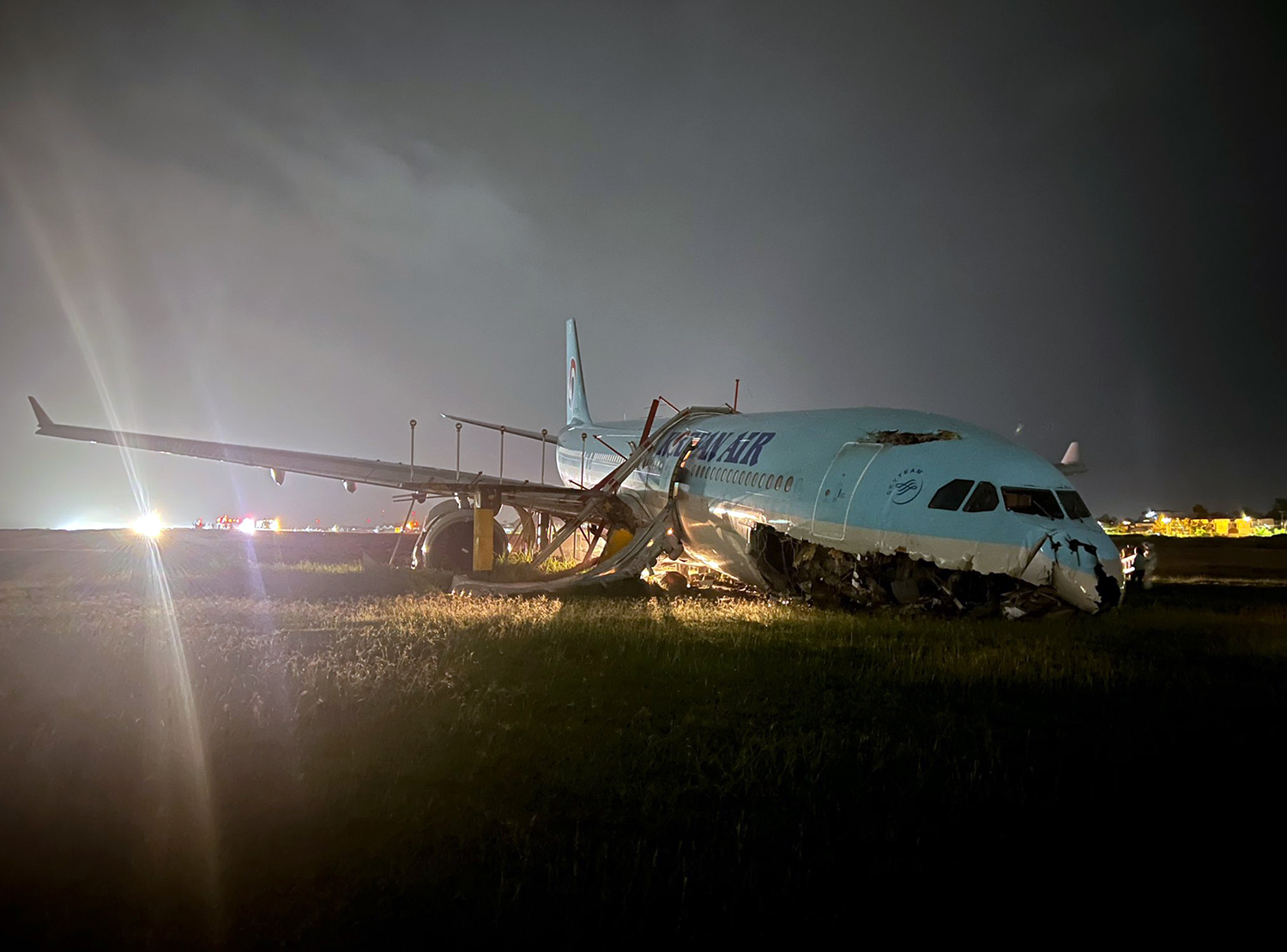
Crash of an Airbus A330-322 in Mactan

Date & Time: Oct 23, 2022 at 2310 LT
Type of aircraft:
Operator:
Registration:
HL7525
Survivors:
Yes
Schedule:
Seoul - Mactan
MSN:
219
YOM:
1998
Flight number:
KE631
Location:
Country:
Region:
Crew on board:
11
Crew fatalities:
Pax on board:
165
Pax fatalities:
Other fatalities:
Total fatalities:
0
Captain / Total flying hours:
13043
Captain / Total hours on type:
9285.00
Copilot / Total flying hours:
1603
Copilot / Total hours on type:
1035
Aircraft flight hours:
78197
Circumstances:
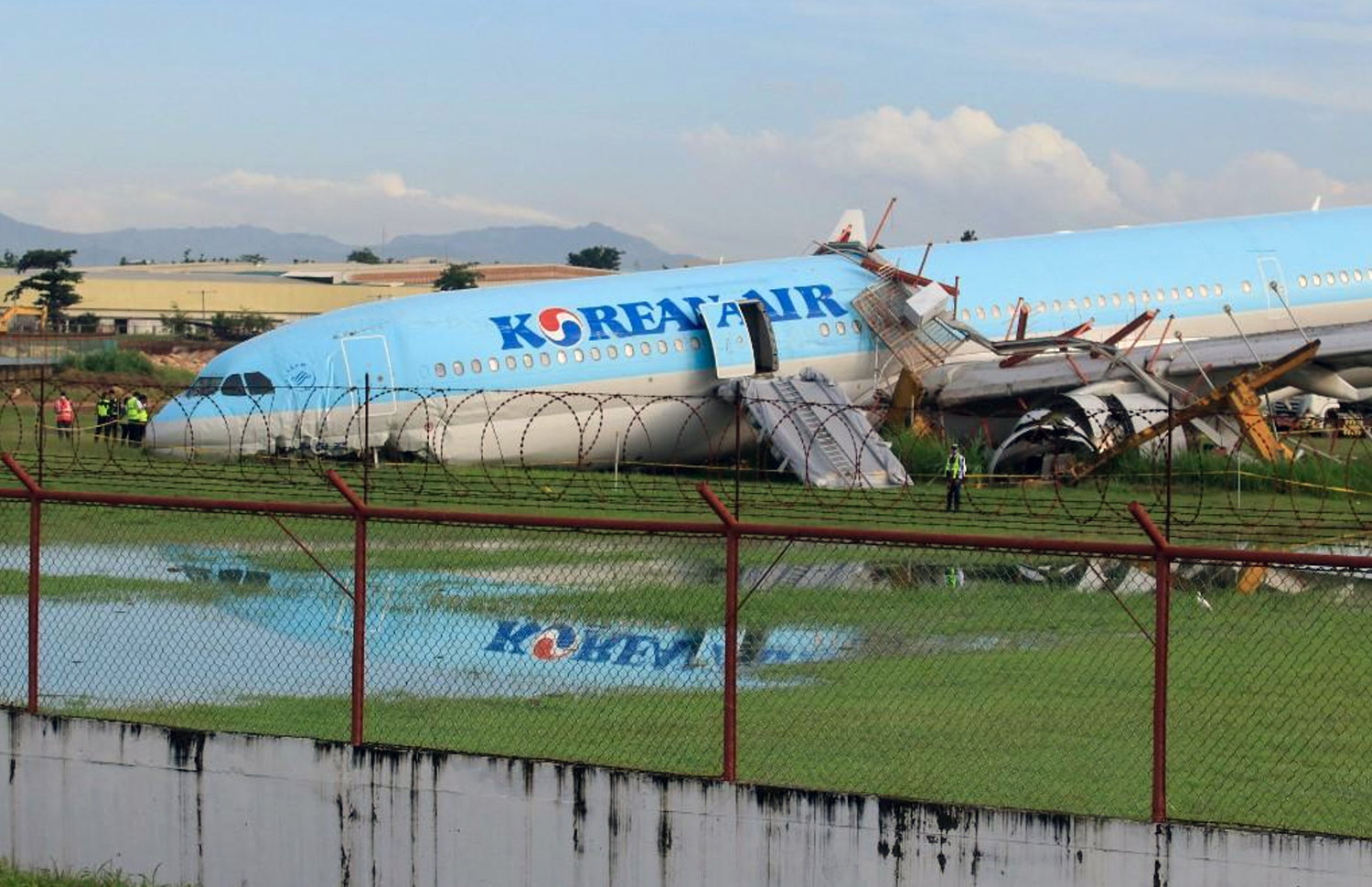
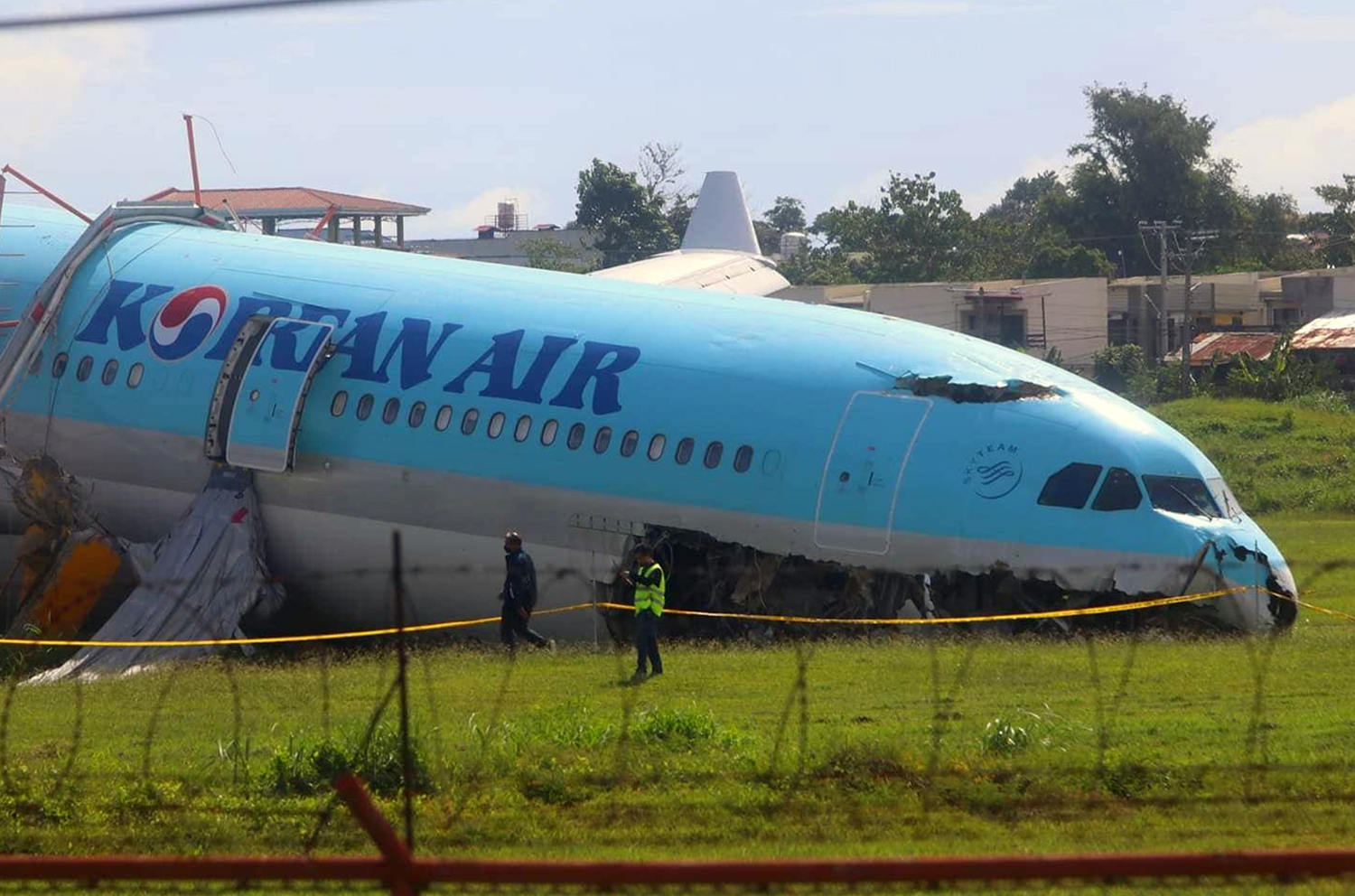
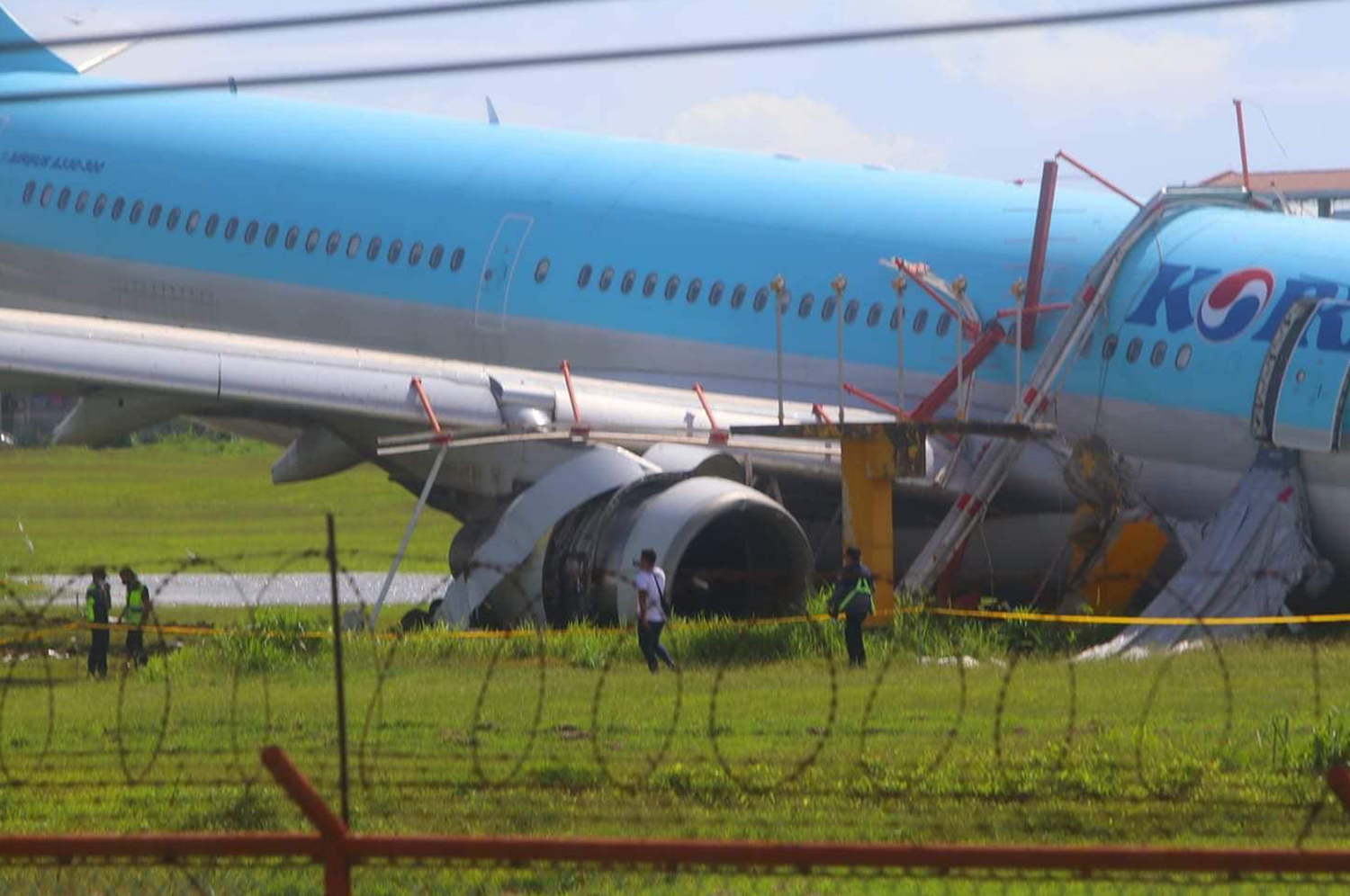
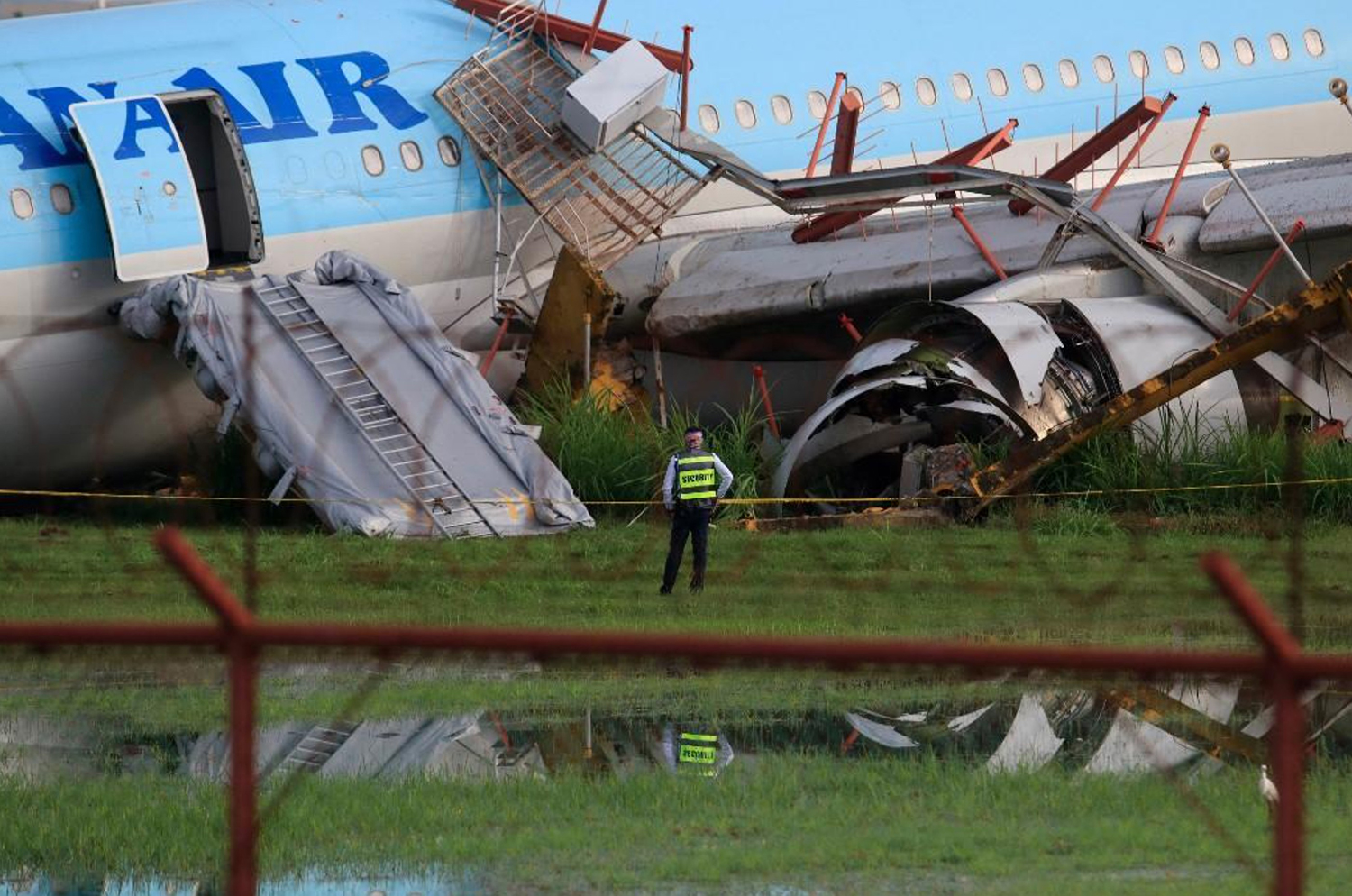
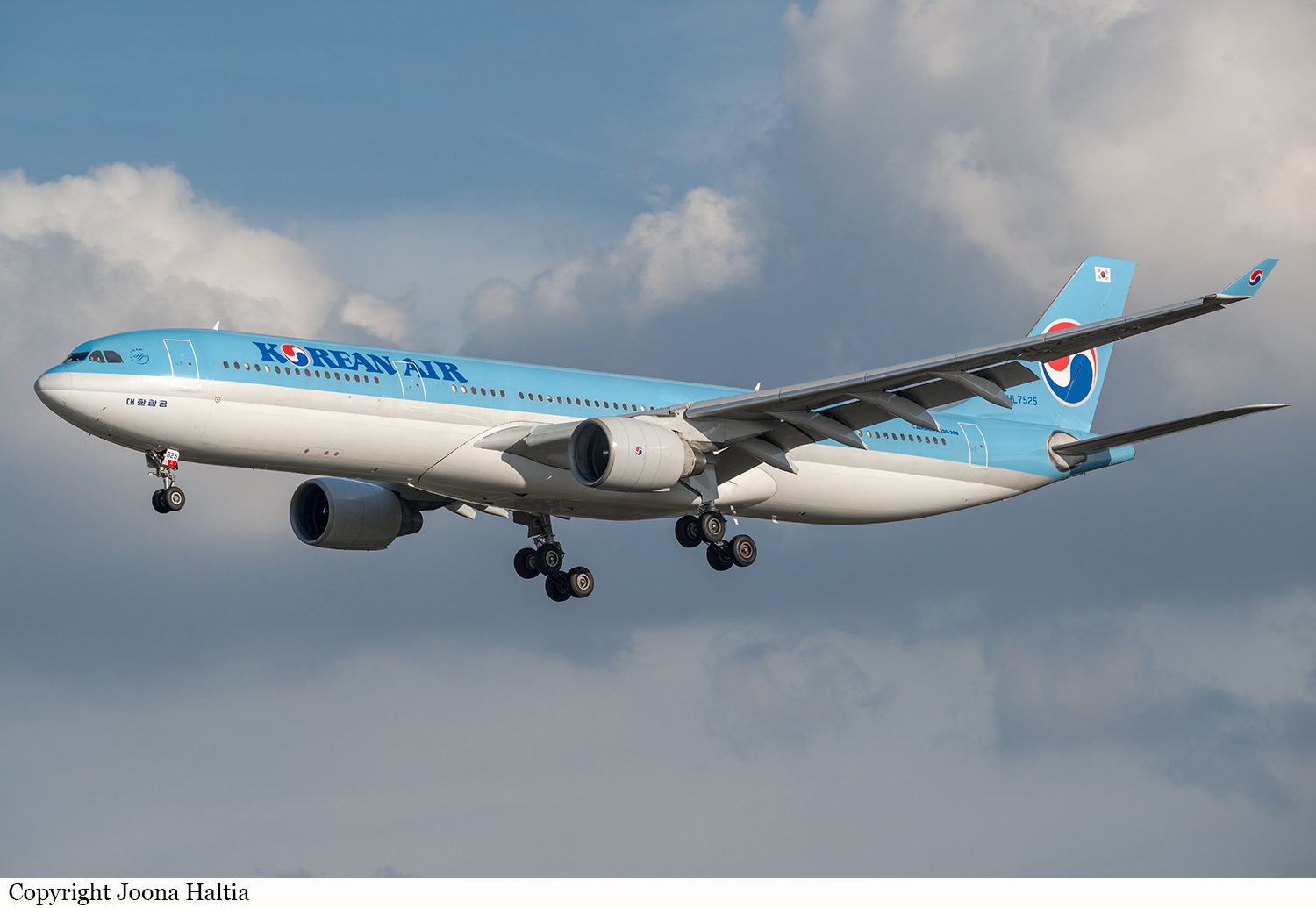
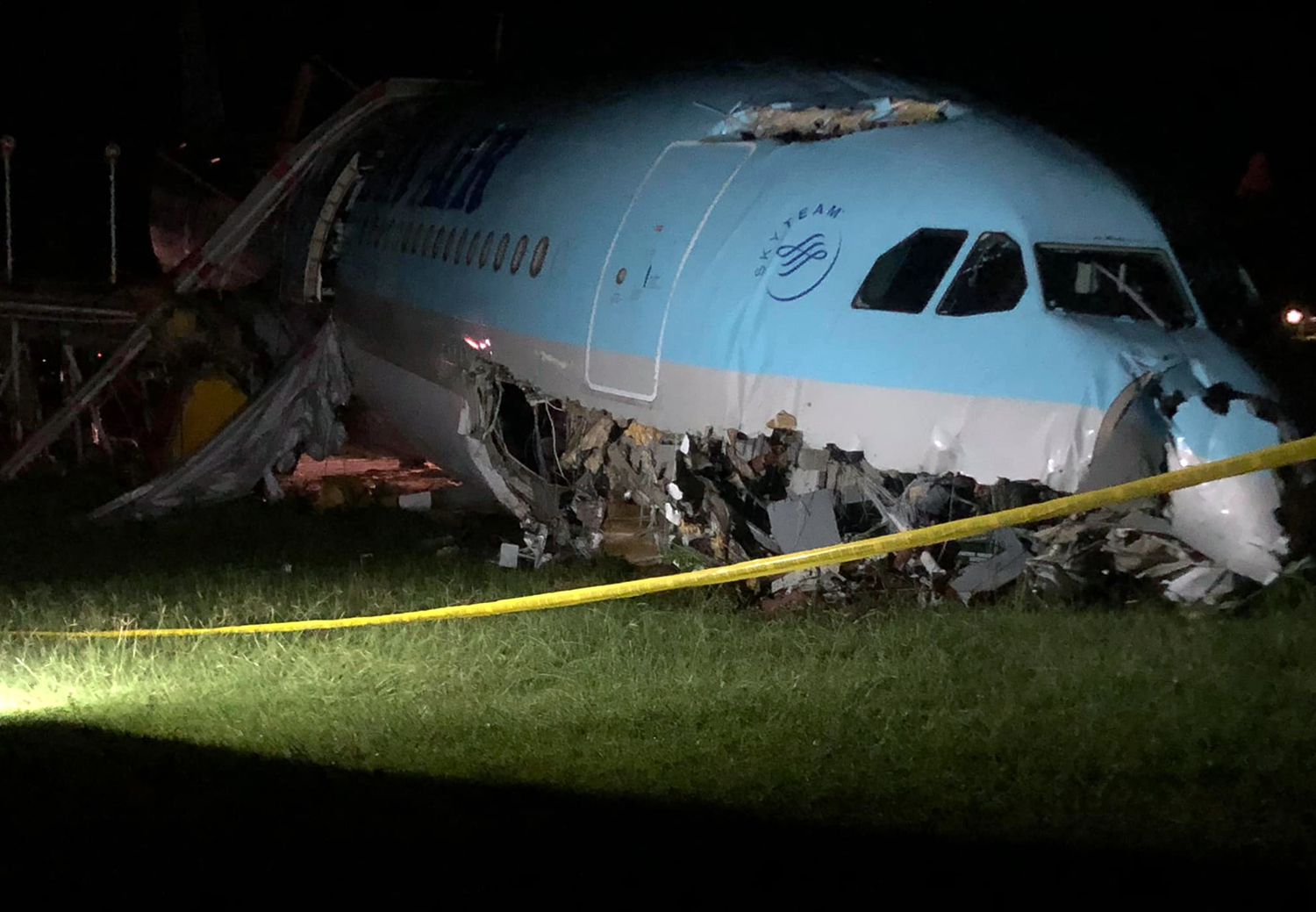
On or about 2310LT (1510 UTC), October 23, 2022, an Airbus 330-322 type of aircraft with registry number HL7525 experienced a runway overrun during landing roll at Runway (RWY) 22 of Mactan-Cebu International Airport (RPVM), Lapu-lapu City, Cebu, Philippines. The aircraft is being operated by Korean Air. One (1) flight crew member, four (4) cabin crew members, and fifteen (15) passengers sustained minor injuries. The aircraft sustained damage and was subsequently destroyed. Instrument Meteorological Conditions (IMC) prevailed at the time of the accident. The flight took off from Incheon International Airport (RKSI), Incheon, Korea. The captain was the pilot flying (PF) when the accident happened. There was a change of runway in use from RWY 04 to RWY 22 as the variable winds shifted direction favorable to RWY 22 during the first approach for landing. While on approach for landing, after descending below the minima, during the interview, the crew encountered heavy rain and elected to go around as they lost runway visibility. A second (2nd) approach was flown, and a second (2nd) go-around at 14:26:23 UTC was performed due to a sudden increase of vertical speed followed by an aural warning “Sink rate.” While initiating the go-around, the aircraft landing gears contacted the ground. An Electronic Centralized Aircraft Monitor (ECAM) message was noted by the crew indicating a landing gear control interface unit (LGCIU) 1 and 2 fault. After reporting the go-around to the air traffic controller (ATC), the crew requested to hold over reporting point ALMAR and performed ECAM actions. While performing ECAM action on the LGCIU 1 and 2 fault, an ECAM message of BRAKES ANTI SKID FAULT was noticed. These two (2) messages were displayed to the flight crew only at 1,500 ft RA (as inhibited below), i.e., 32 seconds after the touchdown, and a third (3rd) approach for landing was decided. While initiating the third (3rd) approach for landing, the crew performed a normal landing gear down procedure in accordance with ECAM actions for LGCIU 1 and 2 faults at 14:44.29 UTC. However, the right main landing gear down-lock indicator was not illuminating on the L/G indicator panel. The crew requested from ATC to cancel the approach clearance and requested again hold over reporting point ALMAR at 14:45.30 UTC to resolve the technical issue. After the crew carried out the QRH procedure for landing with abnormal landing gear, an indication of the HYD B RSVR LO LVL message was displayed. The crew then performed another ECAM action. The flight then continued its approach to RPVM. During landing on the fourth (4th) approach, the aircraft failed to stop and overran the end of the runway. After colliding with the localizer antenna and runway approach lighting system, the aircraft came to a complete stop at the grassy portion about 235 meters from the end of runway 22 at coordinates 10o17’41.8” N 123o57’59.9” E with a final heading of 245°. The passengers evacuated utilizing the L2 and R2 cabin door slide rafts. The crew and passengers were ferried to the airport terminal by shuttle buses. Mactan Cebu International Airport Authority (MCIAA) Rescue and Firefighting Services immediately responded to help secure the aircraft. There was no fire ensued after the accident.
Probable cause:
Primary Cause Factor:
a. The increase of VSI was attributed to the forward pitch control from the captain that resulted in the ground contact before the runway.
b. The increase in vertical wind factor during the aircraft’s descent on the second approach.
c. The right hand MLG hit a 15cm step of the cemented edge of RWY 22 resulting in multiple damage/faults to the said landing gear and consequently the loss of most of the deceleration means, specifically aircraft braking failure resulting in runway overrun.
Contributory Cause Factors:
a. Loss of spoilers and reversers.
b. Aircraft brake system dormant failure.
c. The deficiency in Airbus’s Crew Operating Procedure and Alerting in relation to the A330 Blue Hydraulic Low-Level Fault.
Final Report:
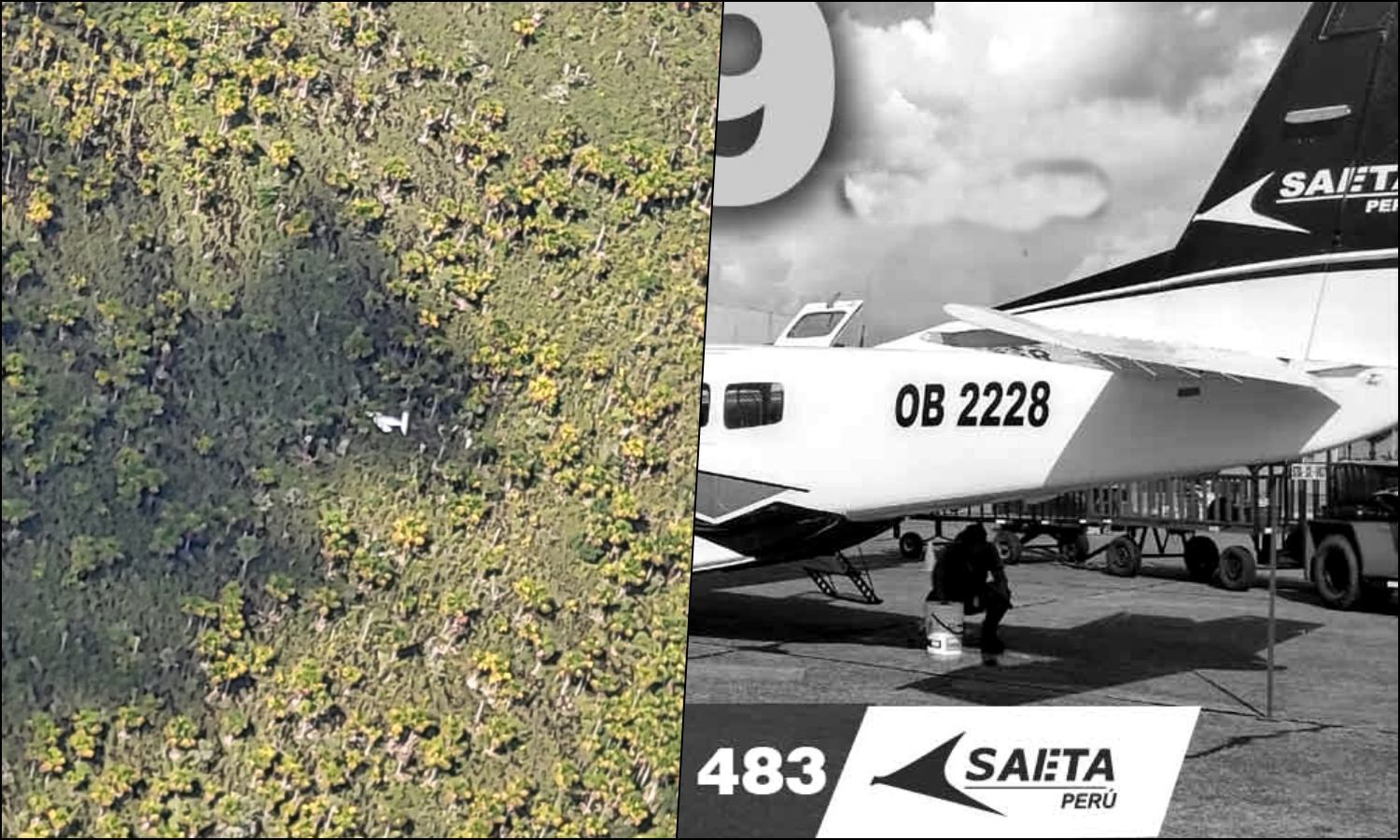
Crash of a Cessna 208B Grand Caravan near San Lorenzo

Date & Time: Oct 13, 2022 at 0915 LT
Type of aircraft:
Operator:
Registration:
OB-2228
Flight Phase:
Survivors:
Yes
Schedule:
San Lorenzo – Tarapoto
MSN:
208B-0802
YOM:
2000
Country:
Crew on board:
2
Crew fatalities:
Pax on board:
10
Pax fatalities:
Other fatalities:
Total fatalities:
0
Circumstances:
The single engine airplane departed San Lorenzo at 0900LT on a flight to Tarapoto, carrying 10 passengers and two pilots. About 15 minutes into the flight, the crew encountered technical problems with the engine and attempted an emergency landing when the aircraft crash landed in a wooded area located some 15 km southeast of San Lorenzo. All 12 occupants were rescued and the aircraft was damaged beyond repair.

Crash of a BAe 3201EP Jetstream 32 in El Estrecho: 1 killed

Date & Time: Sep 20, 2022 at 0853 LT
Type of aircraft:
Operator:
Registration:
OB-2152
Flight Phase:
Survivors:
Yes
Schedule:
El Estrecho – Iquitos
MSN:
941
YOM:
1991
Country:
Crew on board:
2
Crew fatalities:
Pax on board:
15
Pax fatalities:
Other fatalities:
Total fatalities:
1
Captain / Total flying hours:
11088
Captain / Total hours on type:
454.00
Copilot / Total flying hours:
936
Copilot / Total hours on type:
628
Aircraft flight hours:
26267
Aircraft flight cycles:
34966
Circumstances:
During the takeoff run from runway 31 at El Estrecho Airport, when the aircraft reached a speed of 80 knots, the captain handed over control to the first officer to complete the takeoff maneuver. However, after traveling approximately 1,000 metres down the runway without being able to lift off, the First Officer decided, without communicating this to the Captain, to abort the takeoff, for which he reduced power by braking the aircraft. Upon feeling the reduction in power, the Captain took the controls, applied reverse thrust to the engines, and simultaneously applied the brakes. The aircraft overshot the end of the runway by approximately 50 metres, causing a Runway Excursion, colliding with and coming to an abrupt stop on a mound of earth and vegetation in the runway extension, leaving the aircraft partially destroyed and causing the death of one of the passengers, as well as injuries to the rest of the occupants.
Probable cause:
Loss of directional control of the aircraft and a subsequent Runway Excursion, resulting from a combination of errors in takeoff planning and execution, incorrect configuration of the RPM throttles levers, failure to comply with standard procedures and poor cockpit resource management (CRM).
The following contributing factors were identified:
- The inappropriate decision to abort takeoff at a speed higher than that described in the performance tables significantly increased the required braking distance.
- Ineffective communication between flight crew members, especially during the critical takeoff phase, creating confusion and incorrect decision-making.
- The ASDA (Accelerate-Stop Distance Available) and takeoff speed calculations used by the crew were significantly higher, increasing the distance and speed required for a safe takeoff.
Final Report:

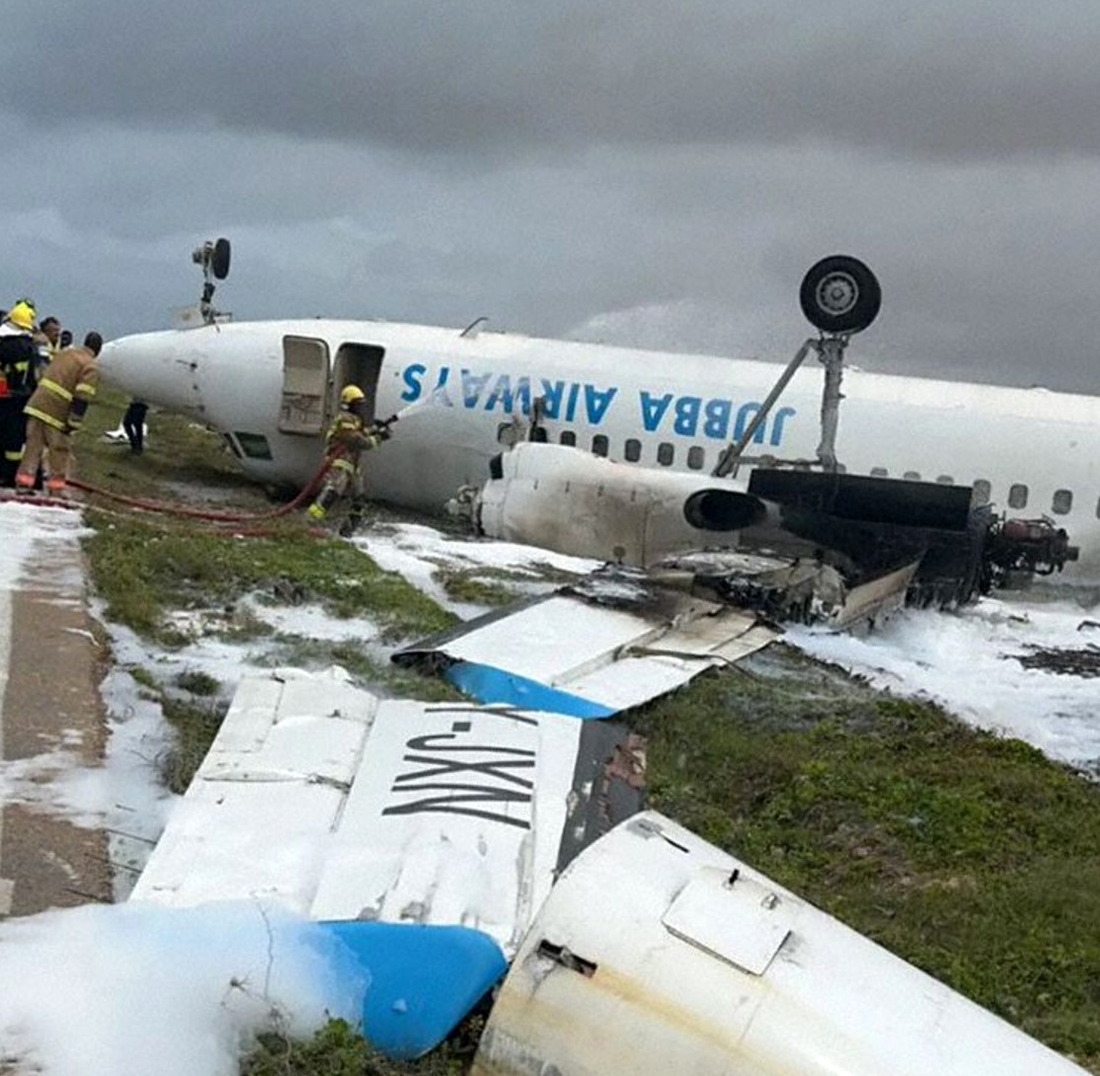
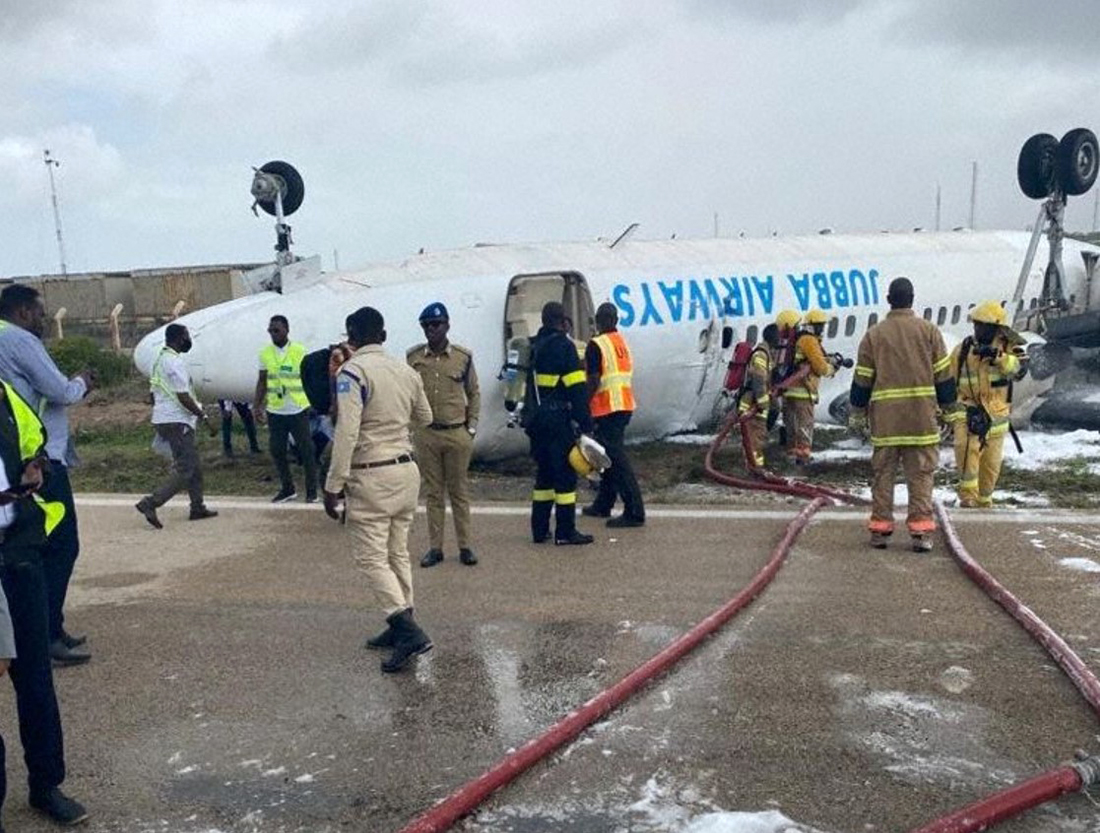
Crash of a Fokker 50 in Mogadishu

Date & Time: Jul 18, 2022 at 1130 LT
Type of aircraft:
Operator:
Registration:
5Y-JXN
Survivors:
Yes
Schedule:
Baidoa – Mogadishu
MSN:
20239
YOM:
1992
Country:
Region:
Crew on board:
4
Crew fatalities:
Pax on board:
32
Pax fatalities:
Other fatalities:
Total fatalities:
0
Circumstances:
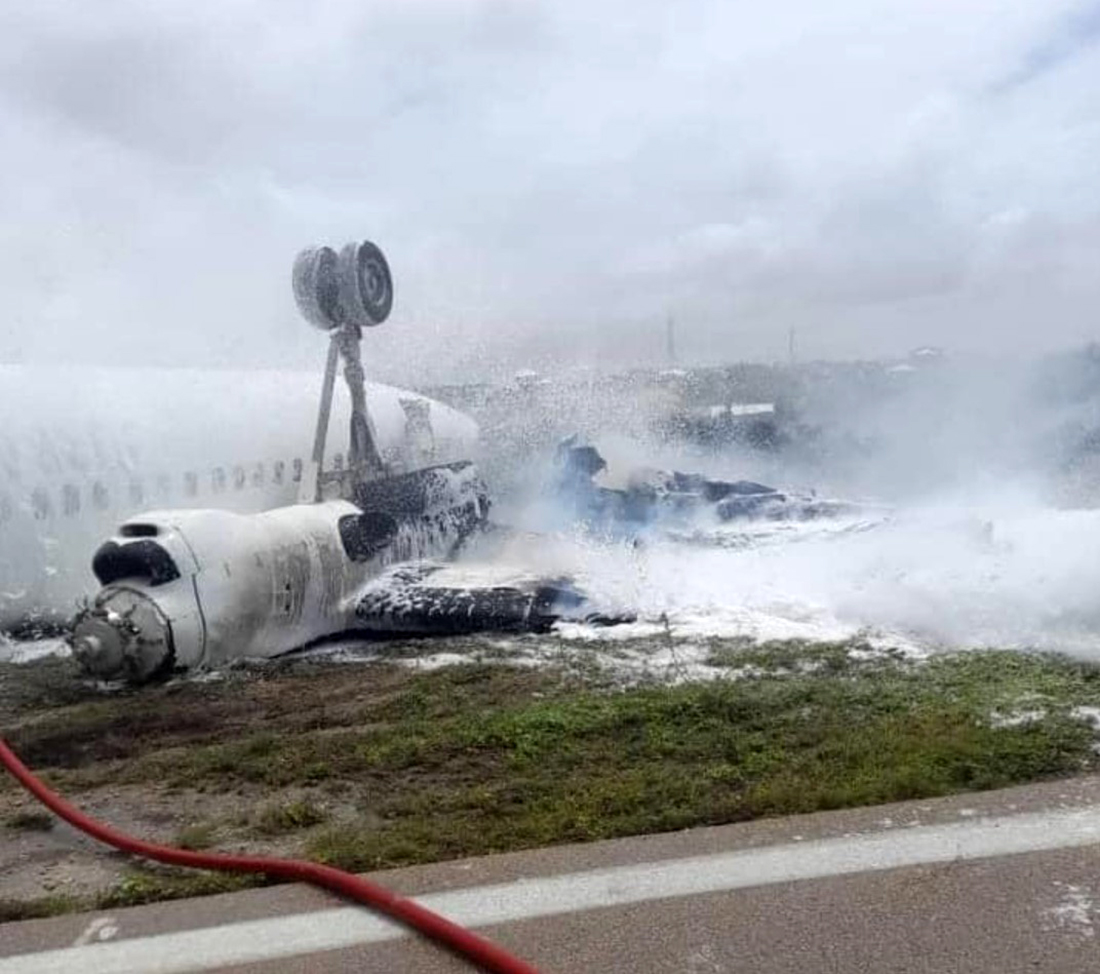
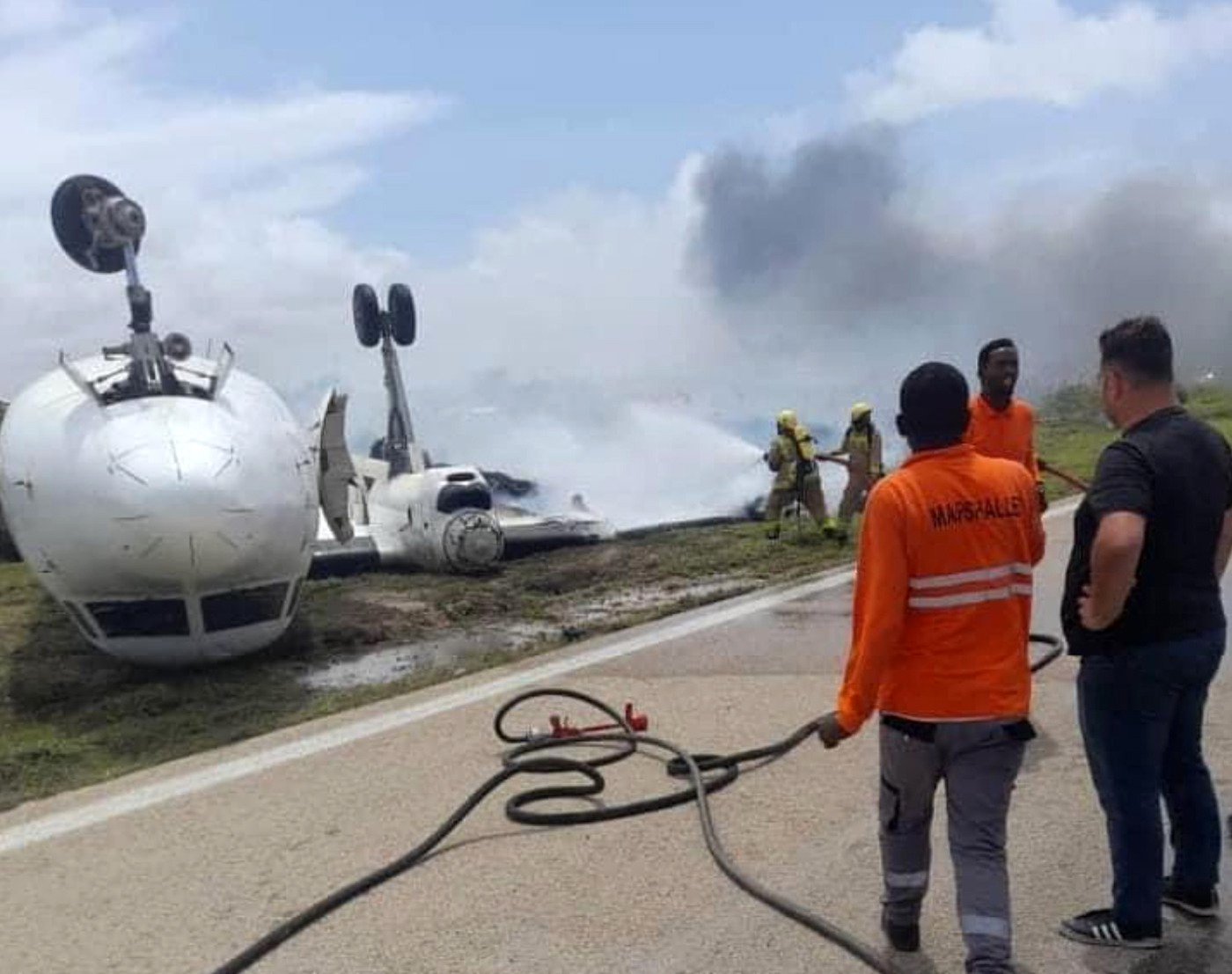
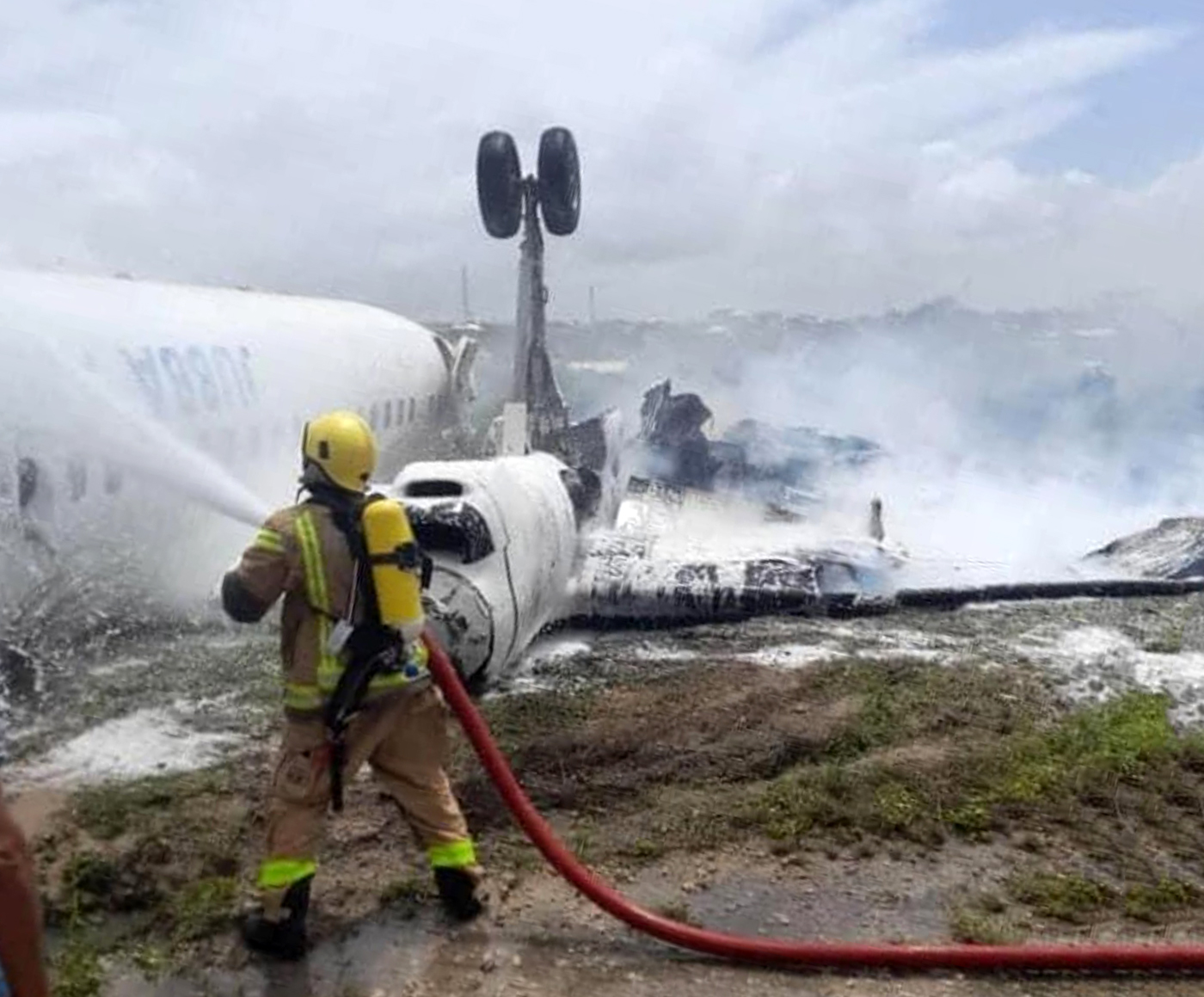
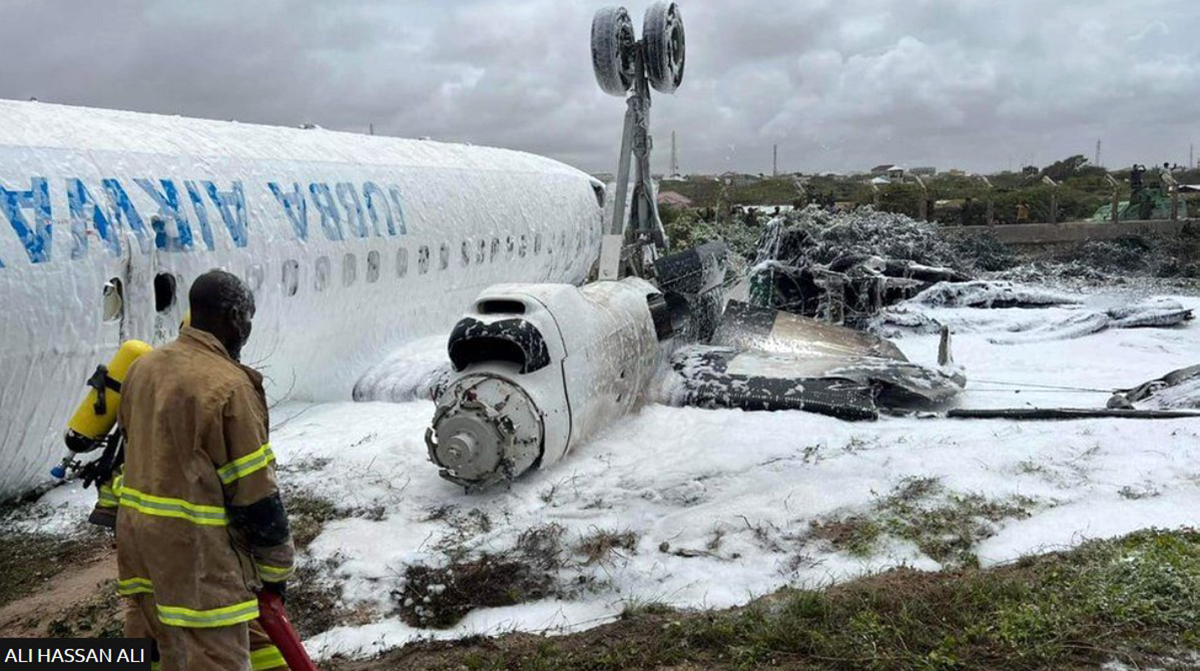
Upon landing at Mogadishu-Aden Abdulle Airport runway 05, the airplane went out of control, veered off runway, lost its left wing and crashed upside down, bursting into flames. The fire was quickly extinguished and all 36 occupants evacuated, three passengers suffered minor injuries.

Crash of a McDonnell Douglas MD-82 in Miami

Date & Time: Jun 21, 2022 at 1738 LT
Type of aircraft:
Operator:
Registration:
HI1064
Survivors:
Yes
Schedule:
Santo Domingo - Miami
MSN:
53027/1805
YOM:
1990
Flight number:
L5203
Crew on board:
10
Crew fatalities:
Pax on board:
130
Pax fatalities:
Other fatalities:
Total fatalities:
0
Captain / Total flying hours:
14388
Captain / Total hours on type:
1400.00
Copilot / Total flying hours:
822
Copilot / Total hours on type:
269
Aircraft flight hours:
69838
Aircraft flight cycles:
36990
Circumstances:
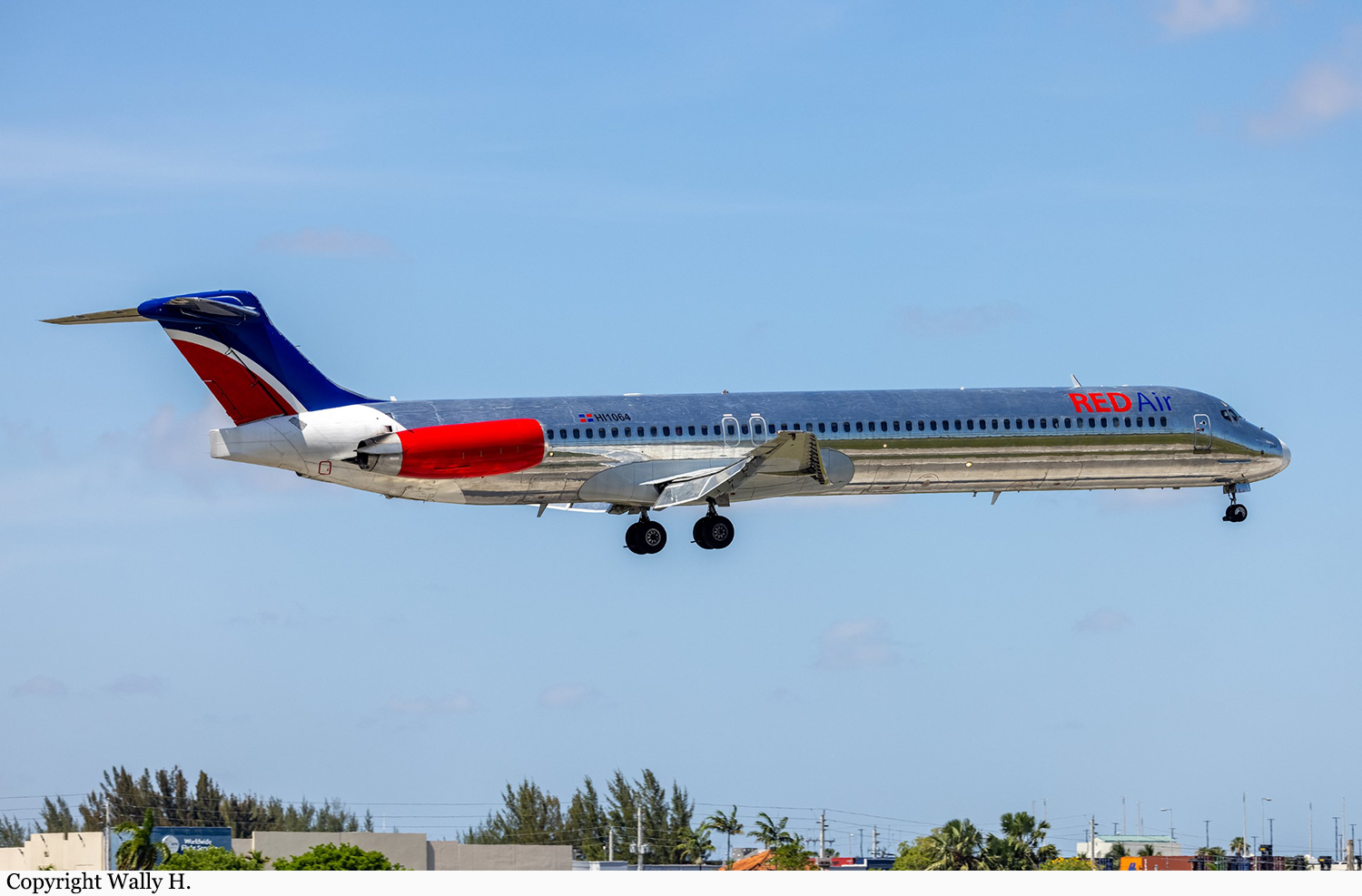
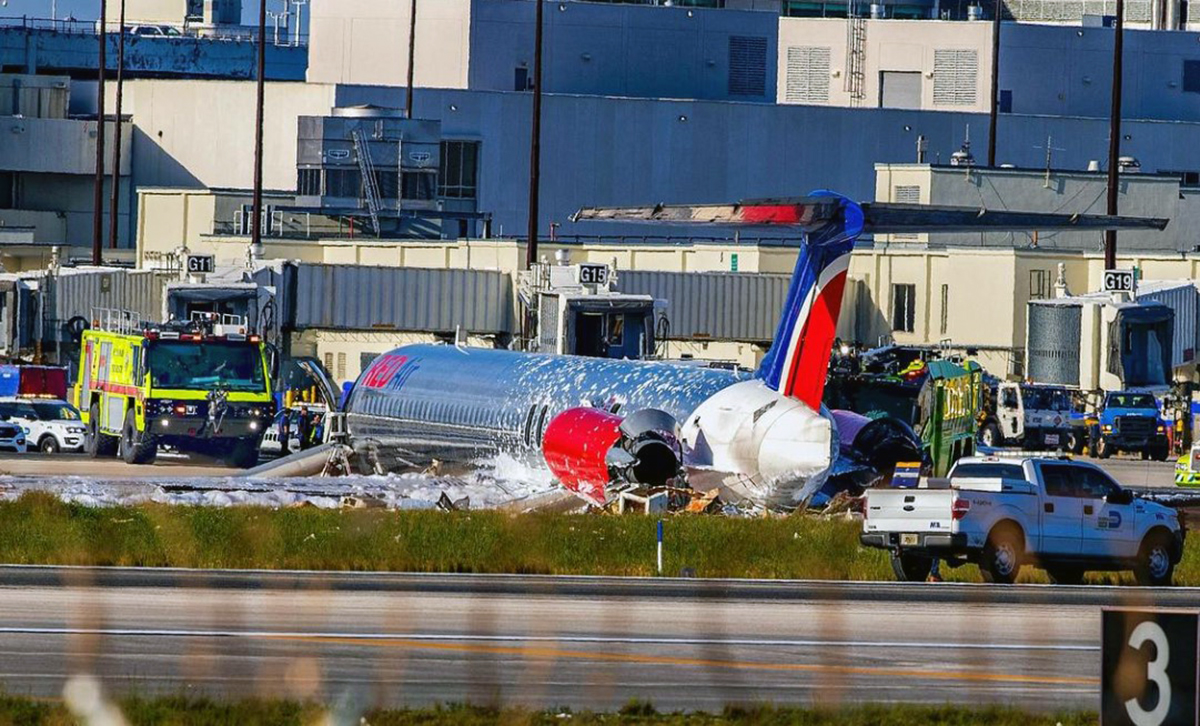
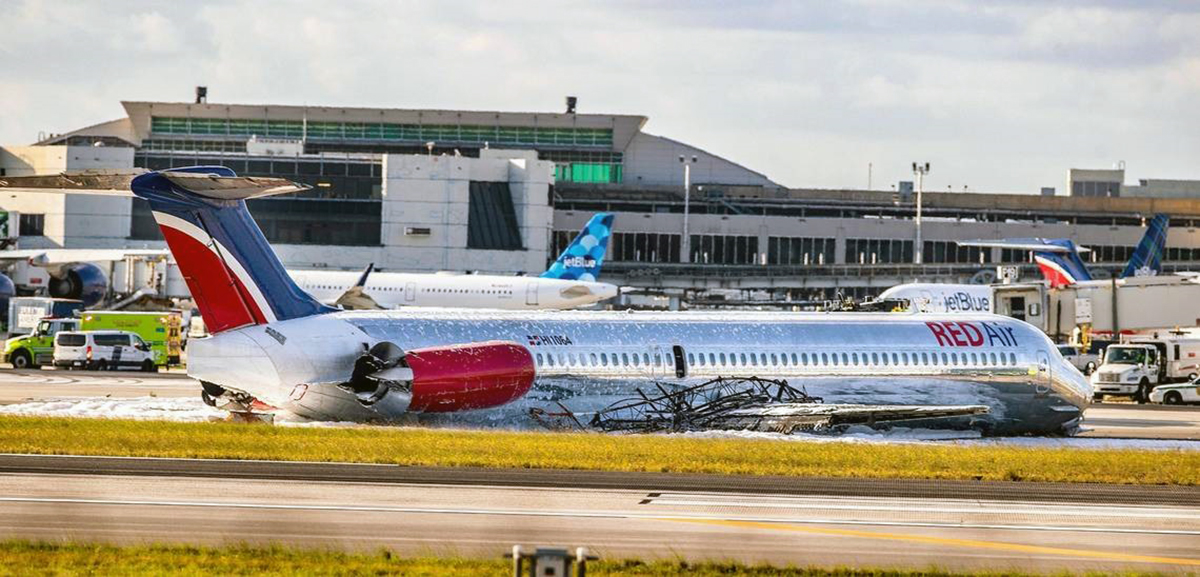
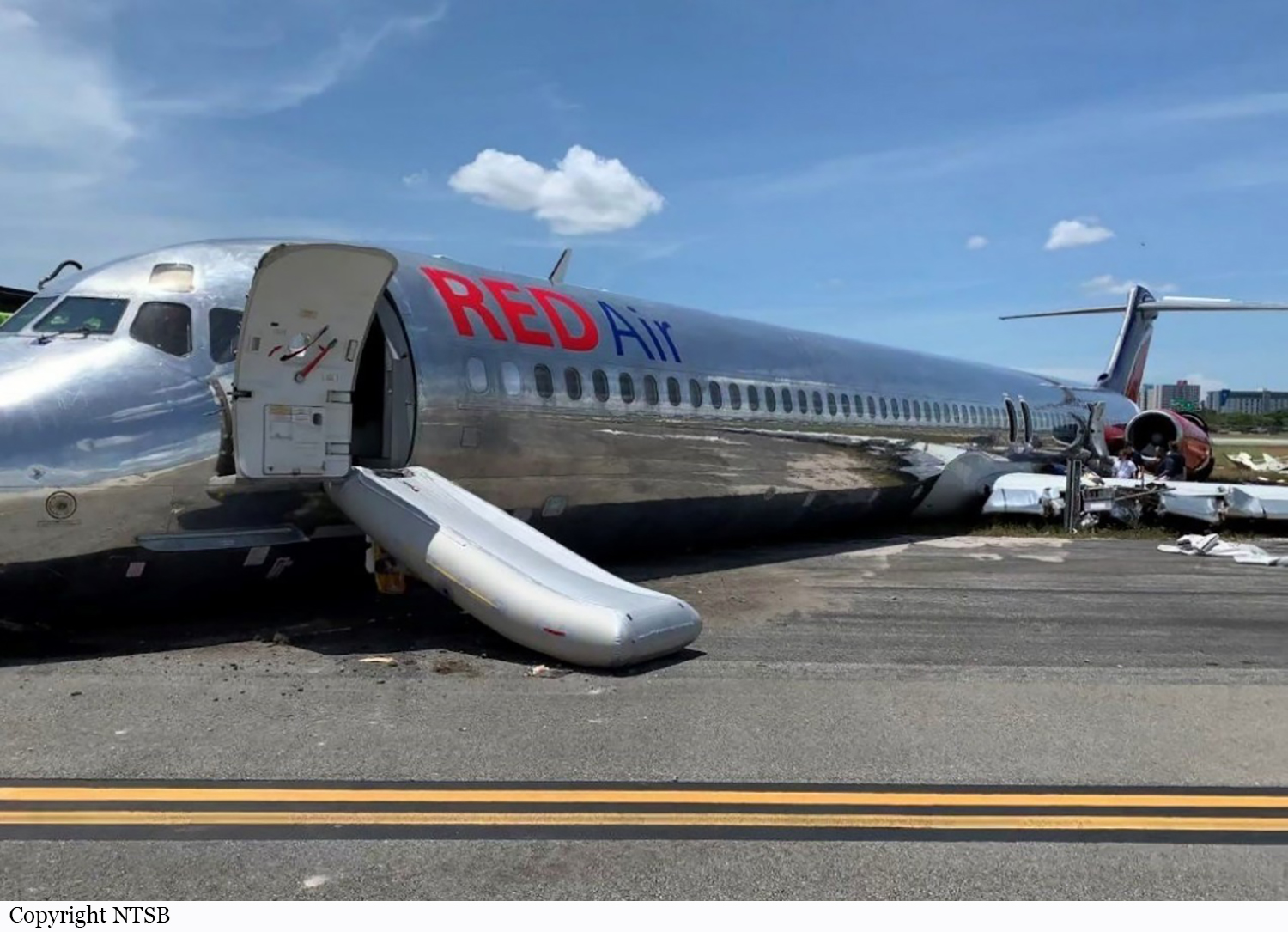
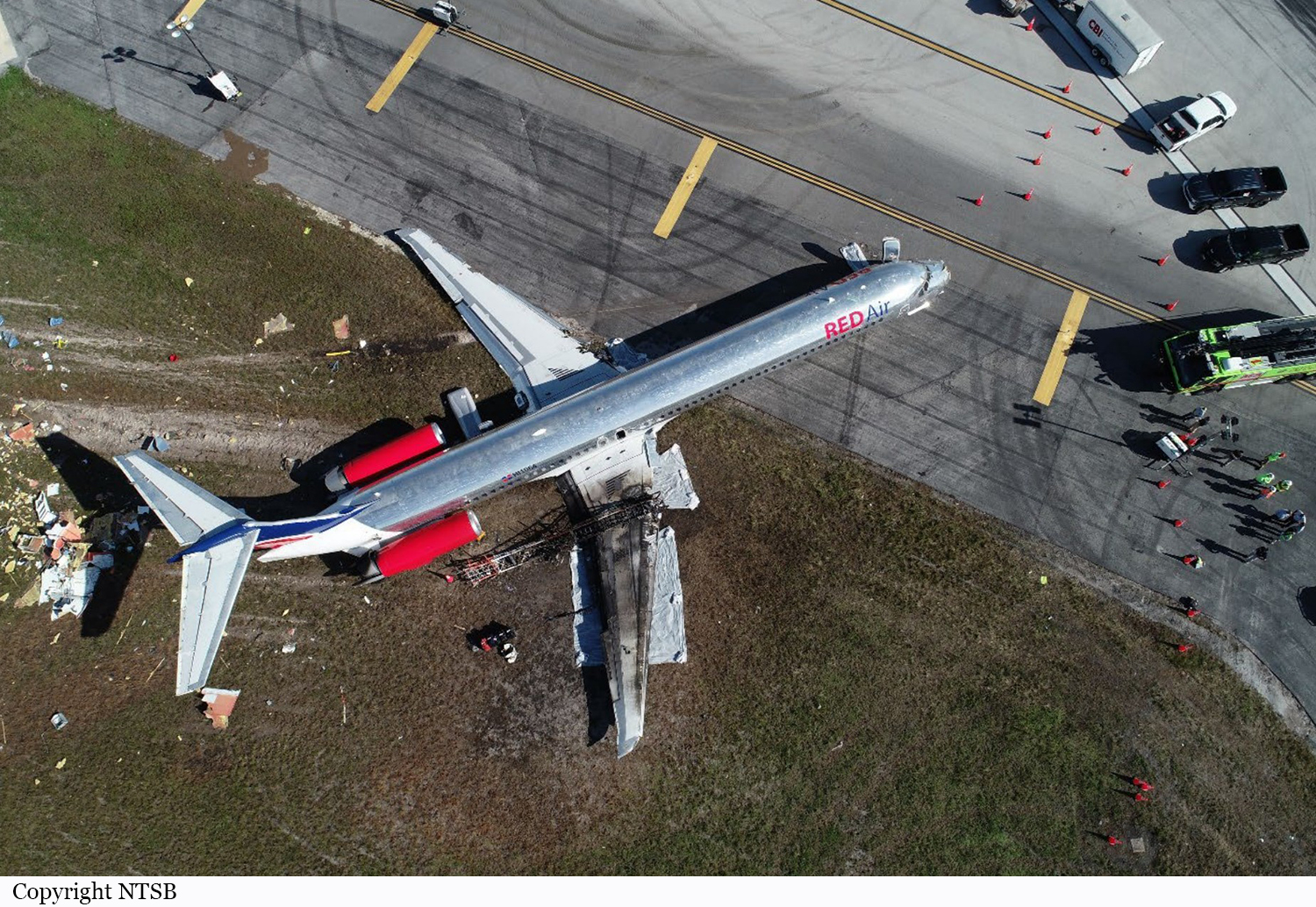
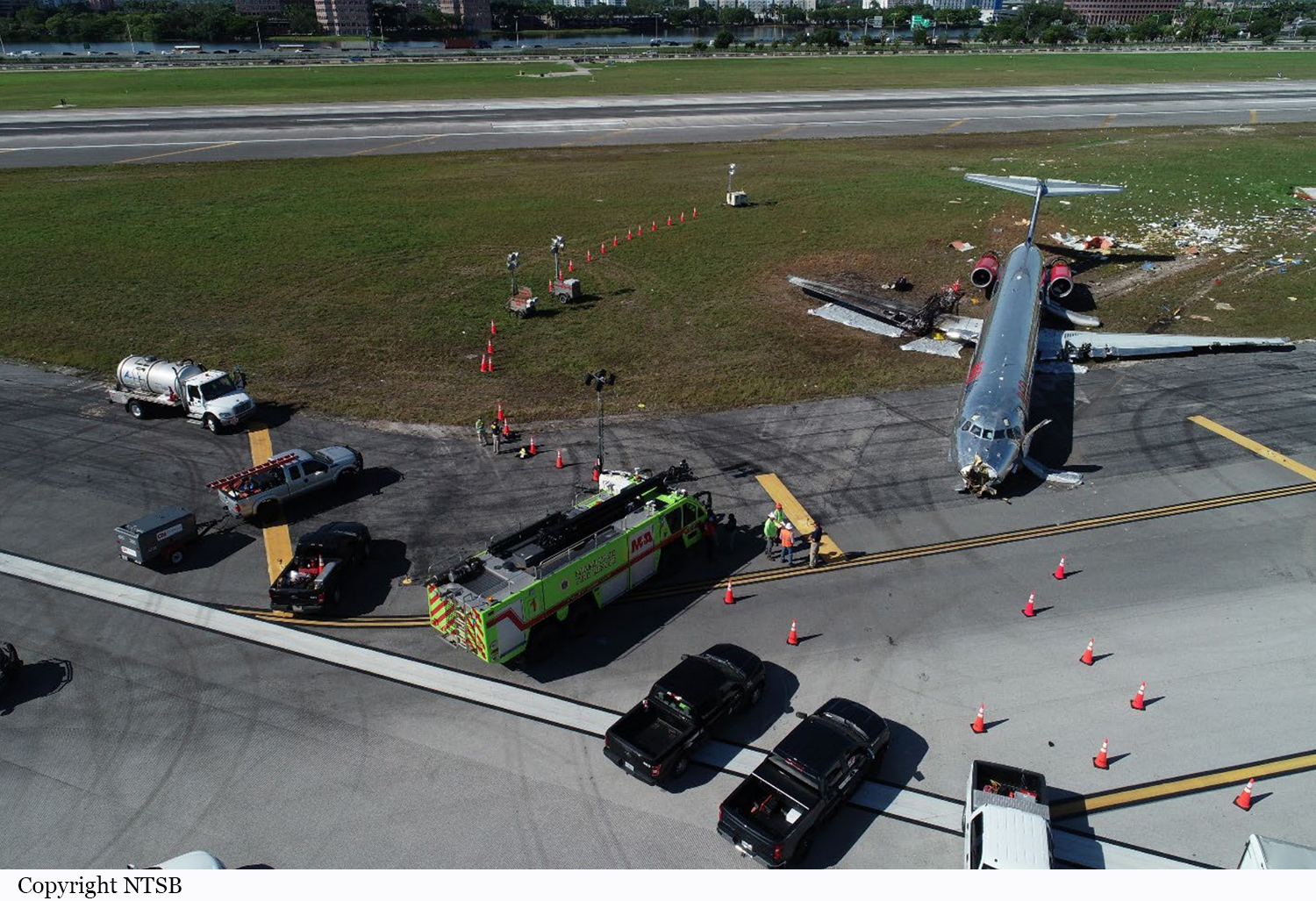
Following an uneventful flight from Santo Domingo-Las Américas Airport, the crew was cleared to land on runway 09 at Miami-Intl Airport. The first officer recalled that the airplane touched down smoothly on the right and then the left main landing gear and that the airplane was slightly to the right of the centerline, which he corrected after touching down. Shortly afterward, the flight crew felt a vibration on the left side of the airplane. The vibration increased, and the airplane veered to the left despite the crew’s efforts to maintain the airplane on the runway centerline. The airplane subsequently departed the paved runway surface and impacted the glideslope equipment building for runway 30, which was located to the left of runway 09, causing the nose landing gear and the right main landing gear to collapse. A post crash fire began on the right wing after the fuel tank on that wing was breached, after which the airplane came to a stop. Nevertheless, fire was quickly extinguished and all 140 occupants evacuated safely, among them four passengers were taken to Jackson Hospital.
Probable cause:
The collapse of the left main landing gear during the landing roll resulted in a runway excursion due to a loss of controllability on the runway, during which the aircraft impacted a small equipment building, breaching the right-wing fuel tank and causing a post-crash fire. The performance of the crew was thoroughly evaluated during this investigation and found to be appropriate for the circumstances of the accident.
The focus of this analysis is the cause of the left main landing gear collapse. Particularly
(1) the left shimmy damper’s failure to adequately dampen vibration during landing and
(2) the failure of the left main gear downlock mechanism due to excessive vibration.
The structural failure of the left main landing gear downlock following ineffective shimmy dampening during the landing roll which caused the collapse of the left main landing gear, resulting in a runway excursion and post-flight fire.
Final Report:

Crash of a De Havilland DHC-6 Twin Otter 300 near Sanosware: 22 killed

Date & Time: May 29, 2022 at 1010 LT
Operator:
Registration:
9N-AET
Flight Phase:
Survivors:
No
Site:
Schedule:
Pokhara – Jomsom
MSN:
619
YOM:
1979
Flight number:
TRA197
Country:
Region:
Crew on board:
3
Crew fatalities:
Pax on board:
19
Pax fatalities:
Other fatalities:
Total fatalities:
22
Captain / Total flying hours:
17500
Captain / Total hours on type:
13500.00
Copilot / Total flying hours:
520
Copilot / Total hours on type:
315
Aircraft flight hours:
41336
Aircraft flight cycles:
71338
Circumstances:
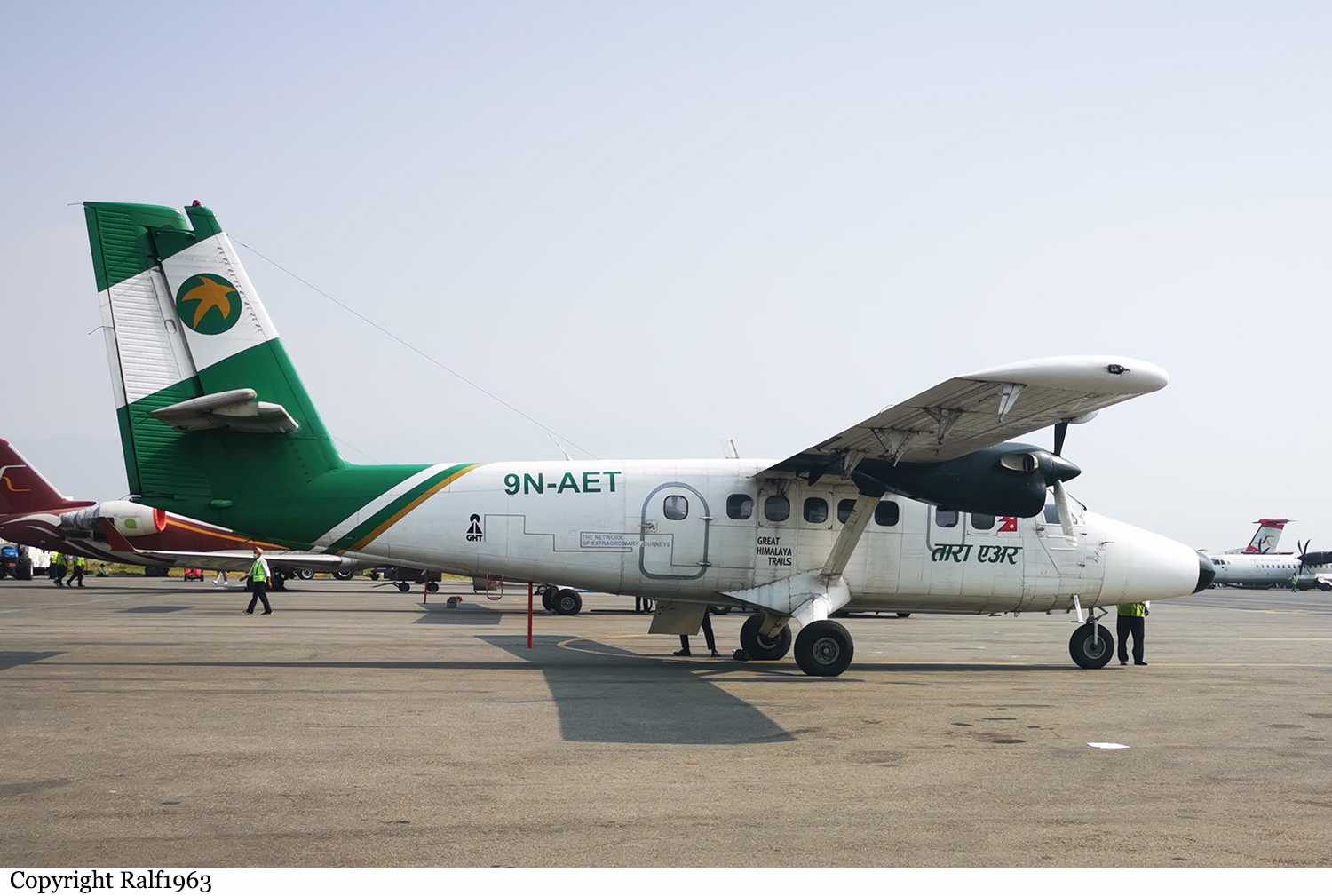
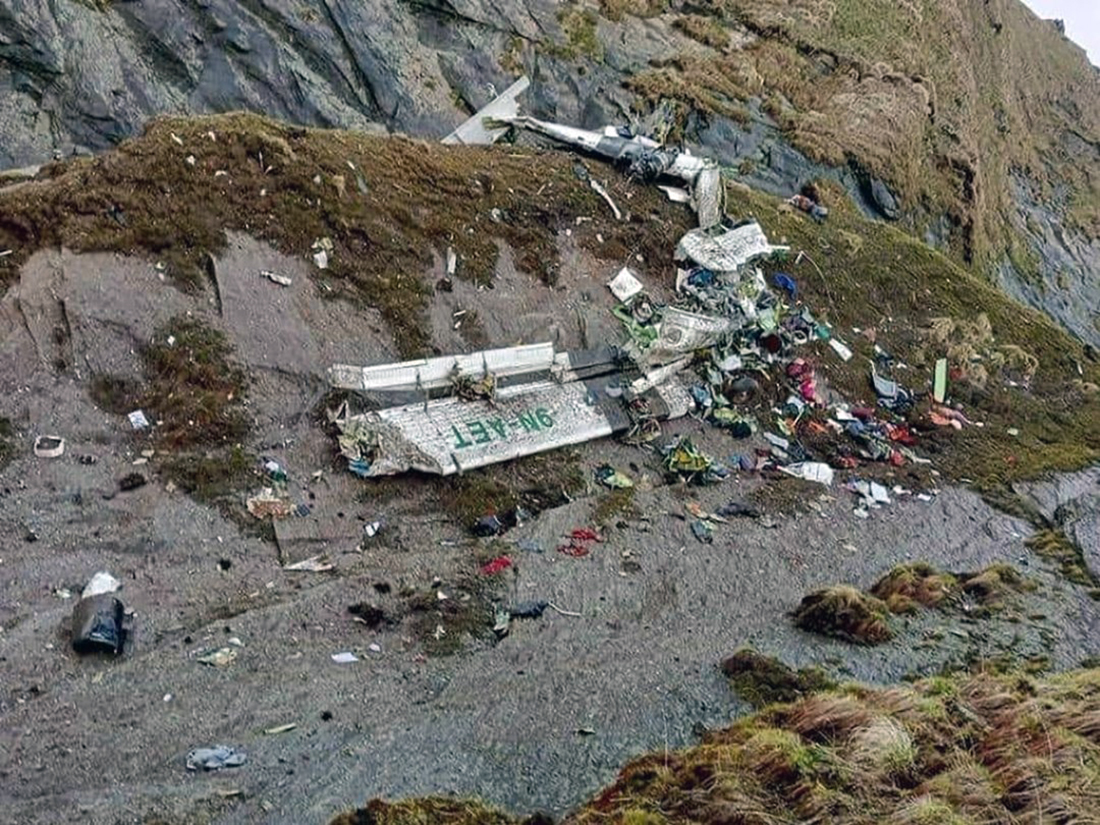
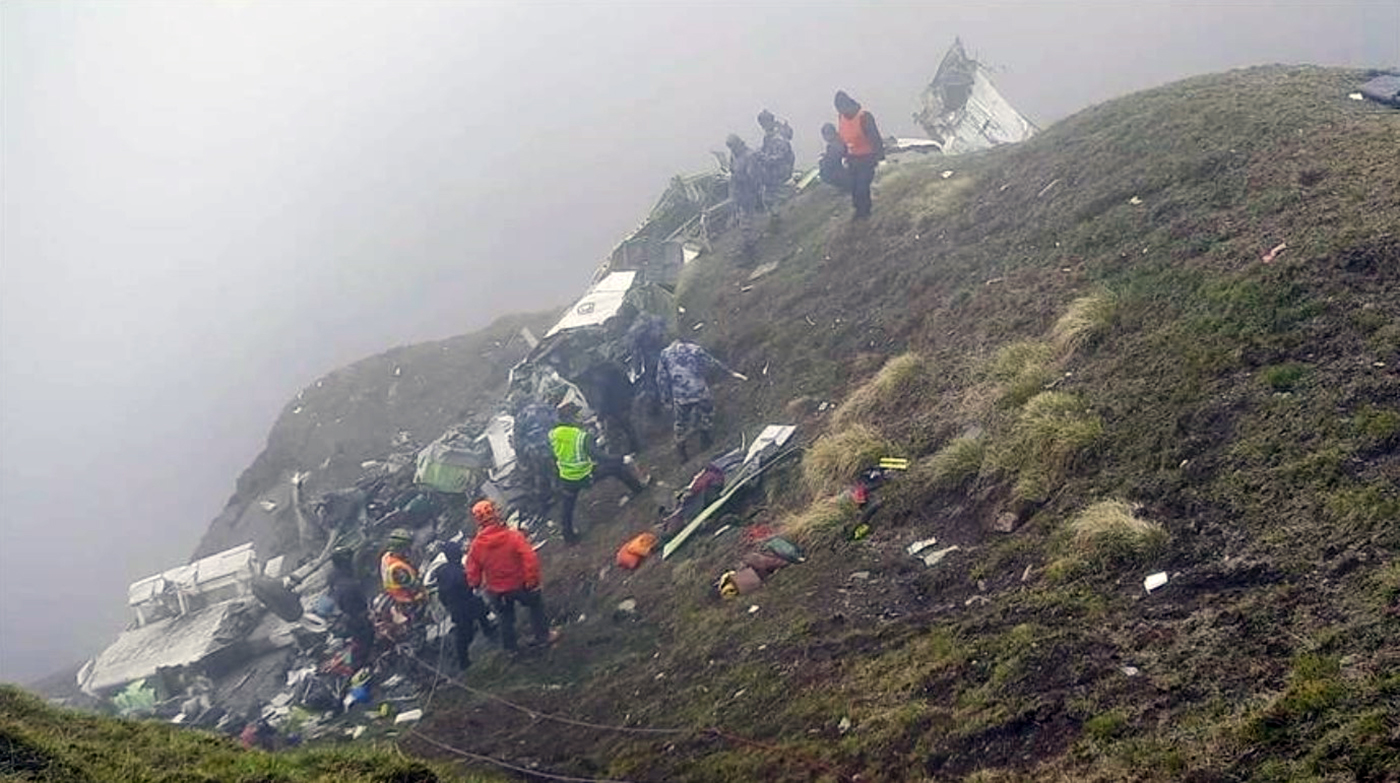
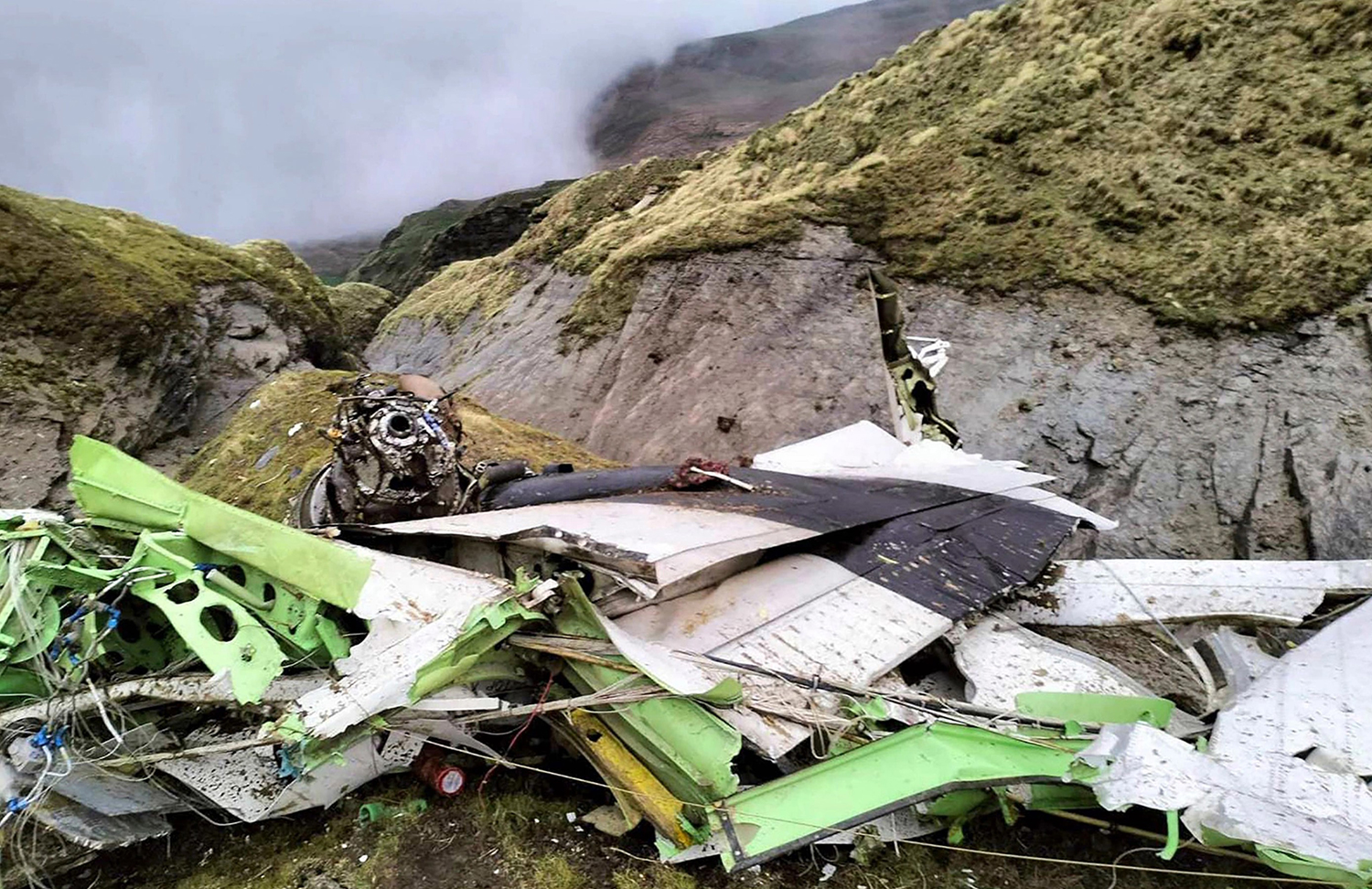
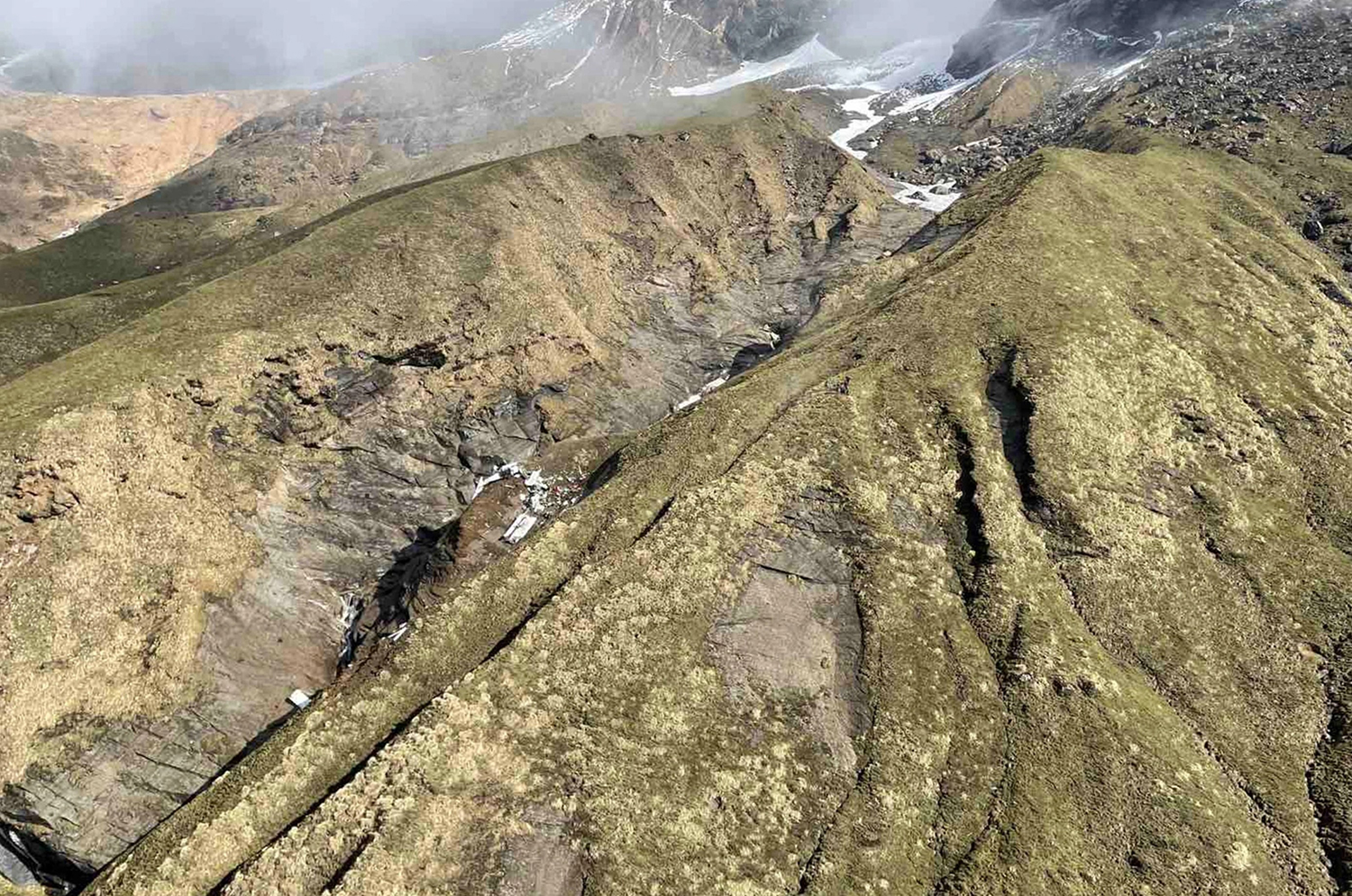
On 29 May 2022, Tara Air’s 9N-AET, Twin Otter (DHC-6/300) aircraft was scheduled for three flights on Pokhara-Jomsom-Pokhara sector. Tara Air had also filed flight plans for two additional Charter flights on the same sector. Among those five flights, four flights were to be conducted by a set of crews already positioned at Pokhara while the last flight was scheduled to be commanded by the PIC who had reached Pokhara from Kathmandu that very morning. Since Jomsom Airport was closed for operations due to bad weather, the PIC went to Tara Air crew camp and waited for the updates of weather improvement of Jomsom. After Jomsom Airport was open for operations at 0321 UTC, Tara Air operation decided to operate the first scheduled flight. However suspecting the next flight operation to Jomsom could not be operated, the original PIC assigned to the flight seated on board as a passenger to Jomsom for his scheduled business trip and the PIC assigned for the last flight took command. The Flight Plan was amended accordingly. At 0342 UTC, Summit Air’s 9N-AKZ, LET-410 took-off from Pokhara to Jomsom. At 0405 UTC, it reported an altitude of 12,500 ft and patches of cloud over Tatopani. At 0409 UTC, Summit Air’s second aircraft 9N-AMG, LET-410, took-off for Jomsom and subsequently, at 0410 UTC, 9N-AET of Tara Air (TRA197) took-off with 19 passengers and three crews on board. The Copilot had initially reported 3 crew and 18 passengers onboard to Pokhara Tower but later, revised the passenger figure was 19 prior to takeoff. 9N-AET was supposed to take-off before SMT 601 but the PIC seemed hesitant to commence the flight due to weather PIREP from 9N-AKZ that, the en-route weather was not favorable for VFR flights and critical around LETE and TATOPANI. All the crew members of TRA 197 and SMT 601 were in their respective cockpits and communicating with the preceding flight 9N-AKZ as well as with Pokhara tower for the updated information of en-route and destination weather. No flights had been conducted since morning and most of the passengers of Tara air and Summit Air were already at airport. In this situation it can be assumed that there was pressure to conduct flight from each angle. While listening to the CVR of TRA 197, it was observed that someone, either ground staff or some intimate passenger to the crew, advising strongly to the PIC to conduct the flight. Following the PIREP from 9NAKZ, both TRA197 and SMT 601 subsequently started their engines to commence the flights. The PIC of TRA 197 was still hesitant to conduct the flight for Jomsom even after the engine start and delayed the taxi as he was not yet convinced about the weather report received from preceding 9N-AKZ aircraft. In the meantime, SMT 601 lined up for departure to Jomsom. That was one of the most important pressure points to the PIC of TRA 197 to initiate departure. TRA 197 finally lined up and took off from Pokhara at 0410 UTC following the SMT 601 based on the en-route weather information (VMC) from 9N-AKZ, through Pokhara Tower. The en-route weather provided by Summit Air’s 9N-AKZ to Pokhara Tower and the crewmembers of TRA 197 and SMT 601 was not the same. Aircraft took off from Pokhara from runway 04 heading North. Tower instructed “report 5 DME northwest RW 04”. Then after departure at 90 climb power aircraft turned left to maintain a heading of 345 and planned to join heading 305 degree towards Ghodepani. After four minutes, TRA 197 reported, “Now on course…. 6000 climbing and ETA Jomsom 32” (0432 UTC). At 04:21 TRA 197 reported to Pokhara Tower as position approaching Ghodepani 12000 climbing for 12500. After 6 Seconds ATC Pokhara asked TRA 197, “confirm would like to change level and TRA 197 replied, “No Ma'am we have crossed Ghodepani and like to be on”. Pokhara Tower instructed, “Tara 197 contact Jomsom Tower 122.5” CVR recordings show that after TRA 197 crossed Ghodepani, the PIC was not comfortable with the en-route weather. However, the flight was continued following the advice of SMT 601. At 0426 UTC, TRA 197made the first contact with Jomsom AFS and reported its position to which Jomsom Tower conveyed the prevailing weather as “Wind South Westerly up to 30 kts, QNH 1019, Temp 18º”. The PIC of TRA 197 reconfirmed twice if the wind was maximum, up to 30 Kts and currently South Westerly-25kts. The crew was discussing about the bad weather being encountered and the PIC himself voiced his dissatisfaction about the behavior of other pilots who conduct VFR flights in such unfavorable weather. The CVR recordings reveal that the aircraft was encountering clouds and the PIC was trying his best to remain clear of the clouds. During the course of flight, TRA 197 hadn’t reported any abnormalities encountered and neither any technical defect on aircraft either to Jomsom tower or Pokhara Tower. As per CVR, PIC was searching for light and brighter areas and adamantly heading towards it. As per CVR and V2 tracker data, the aircraft was maintaining 12000 ft and was in a climbing attitude. During the continuous attempts of crew to avoid the clouds with Terrain Avoidance and Warning System [TAWS] inhibited, the aircraft met with an unfortunate CFIT accident into the rocky terrain at an altitude of 4050 meter AMSL at Sanusare Mountain, Thasang Rural Municipality, Mustang. As per V2 tracker, last position of 9N-AET was 7.7 nm SW of Jomsom Airport. The aircraft was completely destroyed by the impact and there were no survivors.
Probable cause:
The probable cause of this accident was the flight crew's failure to monitor and maintain the proper course while inadvertently flying in IMC conditions with the aircraft Terrain Avoidance and Warning System (TAWS) inhibited which resulted into a Controlled Flight Into Terrain (CFIT) accident.
The following contributing factors were identified:
1. The flight crew's failure to follow the SOP of company.
2. The aircraft flight operation with TAWS inhibited during deteriorating en-route weather condition.
3. Loss of situational awareness of crew.
4. Deteriorating en route weather.
5. Less experienced copilot for that sector and high crew gradient.
6. Poor CRM during the flight.
7. The whole cockpit duties [both PF and PM] were undertaken by the PlC, which likely impaired his performance.
8. Underutilization of the available Navigation instruments.
Final Report:

Crash of an Airbus A319-115 in Chongqing

Date & Time: May 12, 2022 at 0805 LT
Type of aircraft:
Operator:
Registration:
B-6425
Flight Phase:
Survivors:
Yes
Schedule:
Chongqing – Nyingchi
MSN:
5157
YOM:
2012
Flight number:
TV9833
Country:
Region:
Crew on board:
9
Crew fatalities:
Pax on board:
113
Pax fatalities:
Other fatalities:
Total fatalities:
0
Aircraft flight hours:
28364
Aircraft flight cycles:
14495
Circumstances:
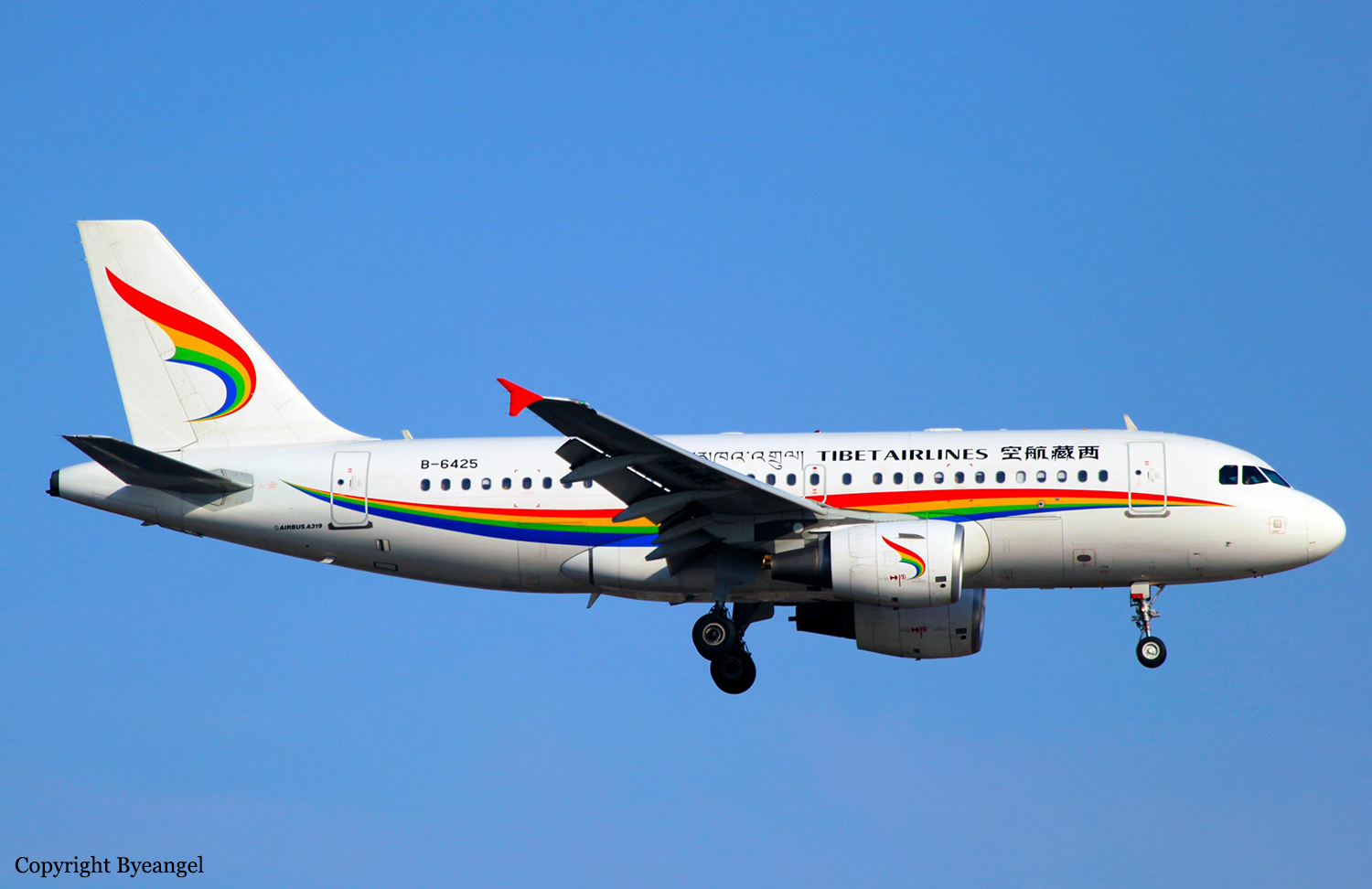
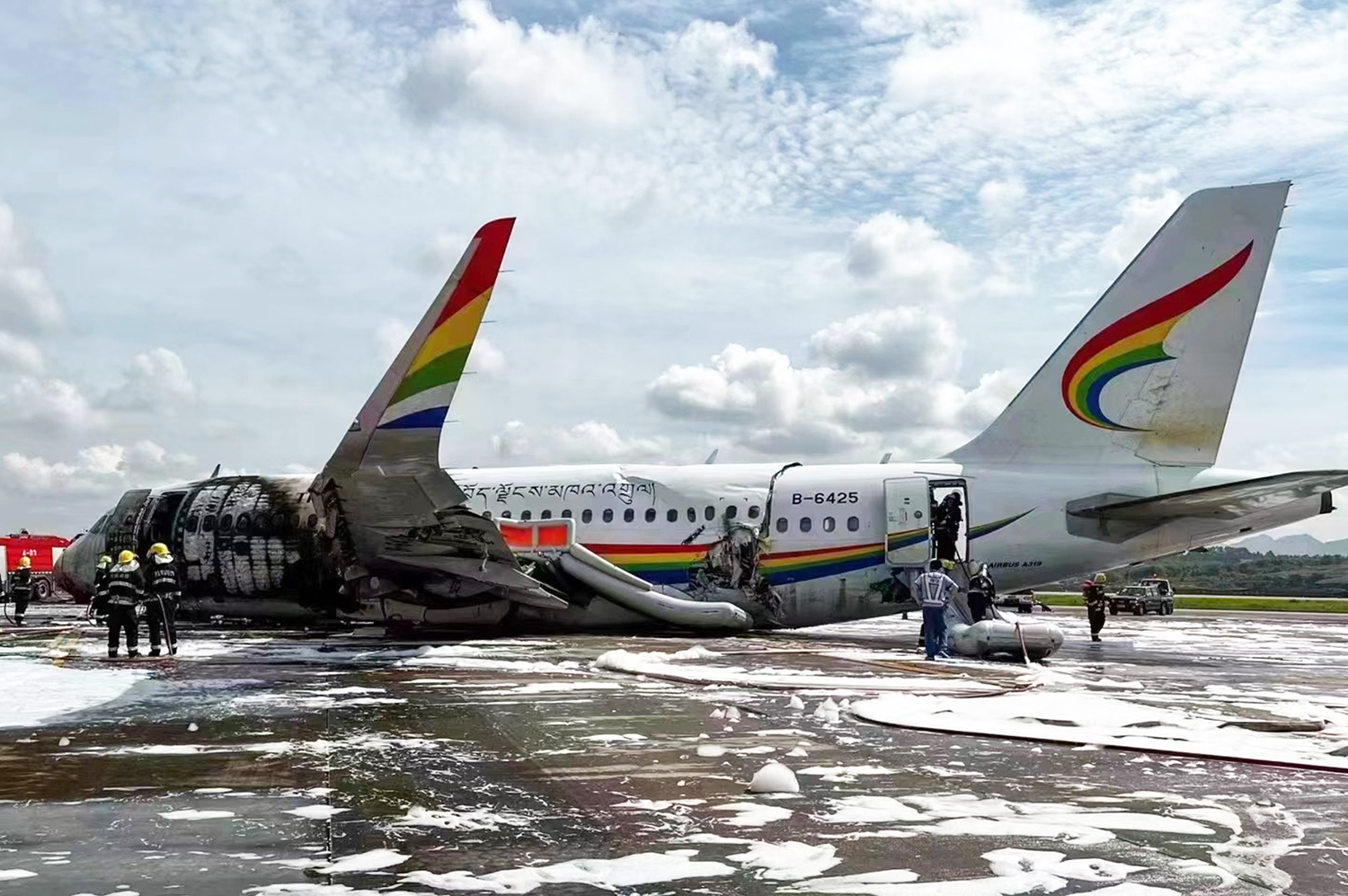
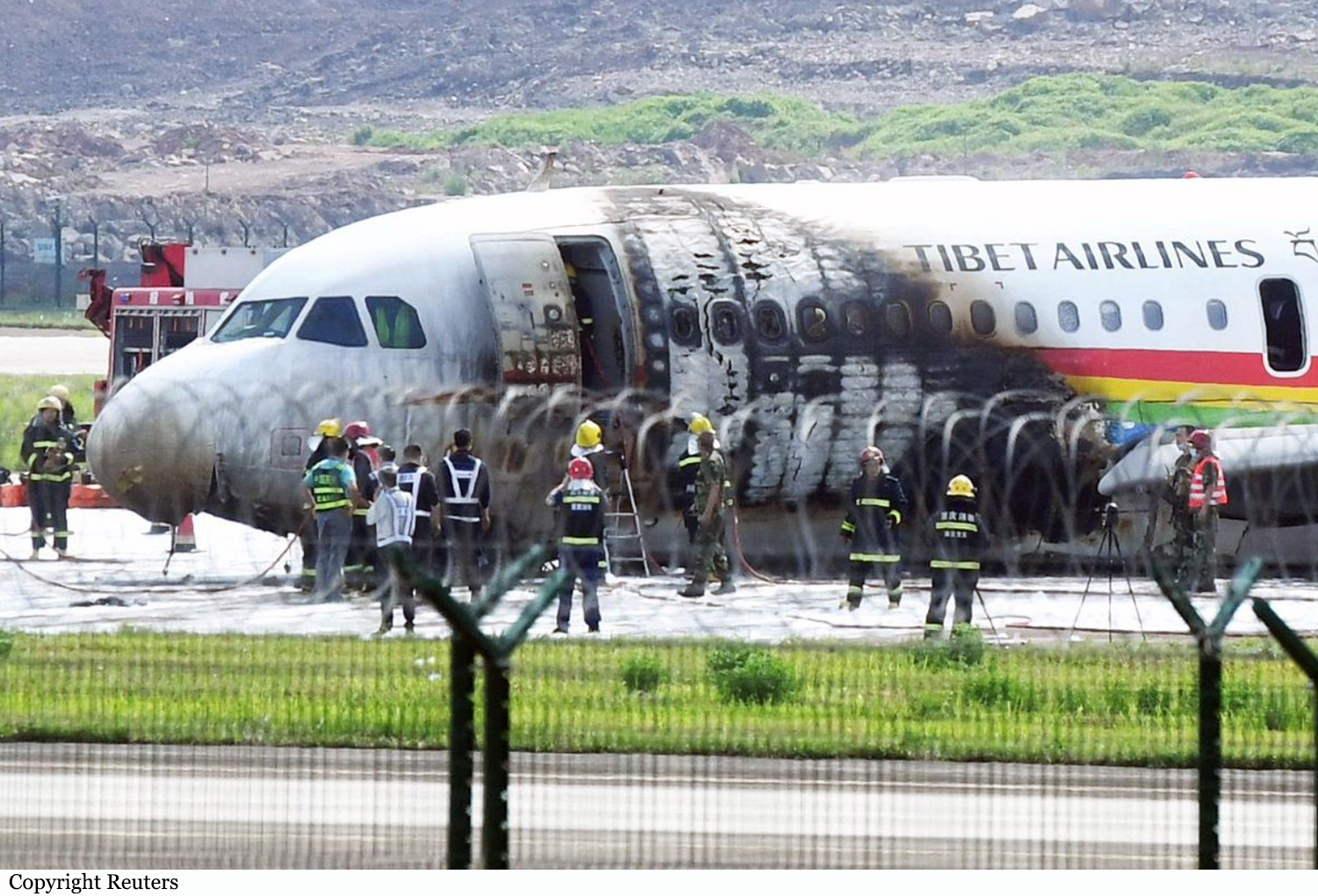
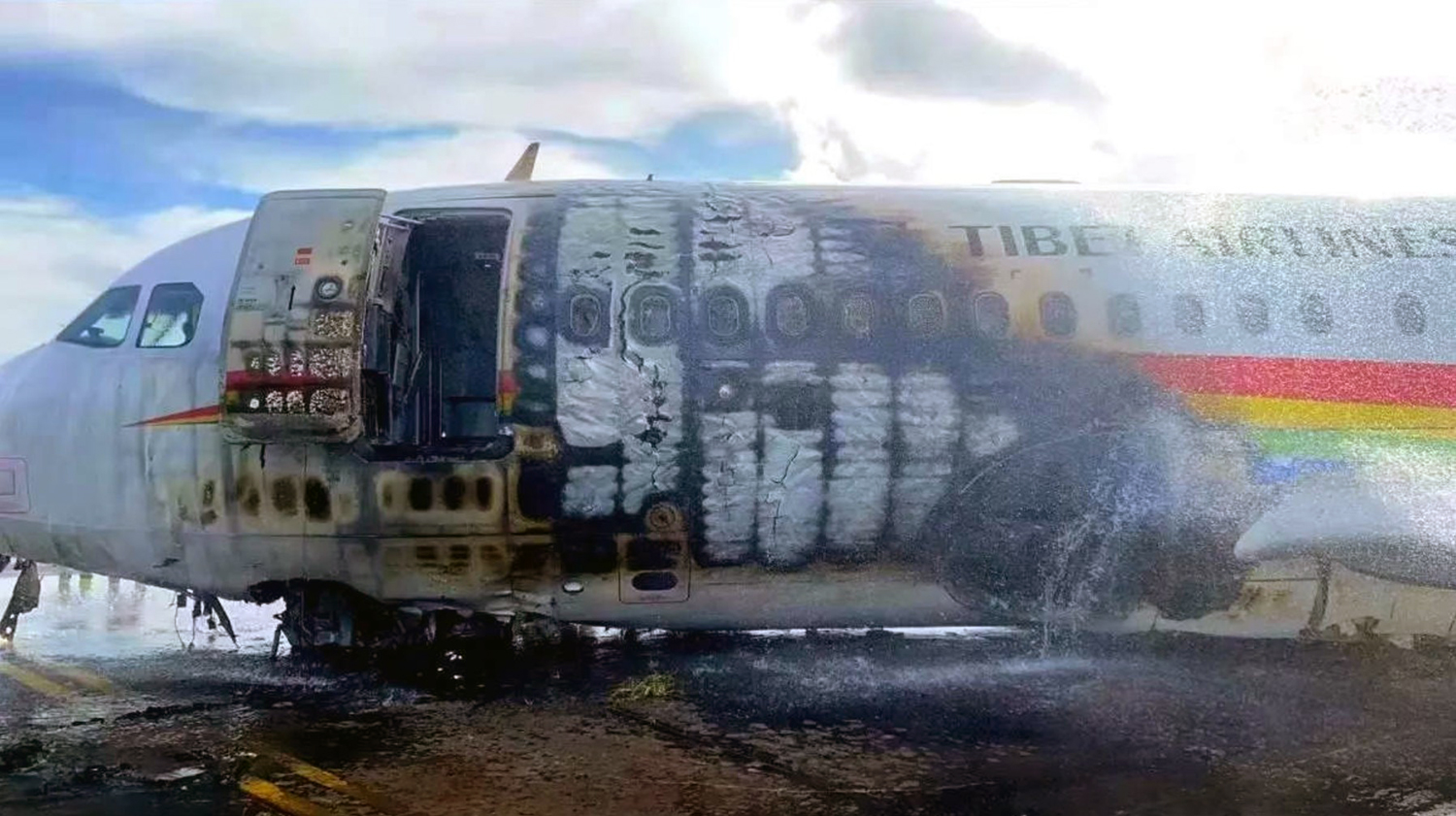
The airplane was departing Chongqing-Jiangbei Airport on a regular schedule service to Nyingchi, Tibet, carrying 113 passengers and a crew of nine. During the takeoff roll on runway 03, at a speed of 145 knots (just below V1 speed), the captain encountered an unexpected situation and decided to abandon the takeoff procedure. He initiated an emergency braking manoeuvre when the airplane started to deviate to the left. It veered off runway and went through a grassy area. While contacting the parallel concrete taxiway, the nose gear was sheared off. The airplane continued for 120 metres when it impacted a drainage ditch, causing both main landing gears and both engines to be sheared off as well. The airplane later came into a stop, bursting into flames. 36 occupants were injured while all others evacuated safely. The aircraft was destroyed.
Probable cause:
It was determined that, during the takeoff run, the captain was distracted by items falling, and momentarily lost the monitoring of the aircraft's flight sequence. During this short period of time, he unconsciously held the left rudder, which resulted in an unintended deviation of the aircraft to the left direction. After he noticed the deviation, the crew failed to execute the standard callouts, and the captain reduced the throttle in an attempt to abort the takeoff. Due to the combined effects of maximum braking force and inertia, the crew was unable to maintain a safe control, causing the airplane to veer off the runway to the left at a speed of approximately 127 knots. Poor decision makings on part of the crew was considered as the main cause of the accident.
Final Report:
Crash of a Boeing 737-89P near Wuzhou: 132 killed

Date & Time: Mar 21, 2022 at 1422 LT
Type of aircraft:
Operator:
Registration:
B-1791
Flight Phase:
Survivors:
No
Site:
Schedule:
Kunming - Guangzhou
MSN:
41474/5433
YOM:
2015
Flight number:
MU5735
Location:
Country:
Region:
Crew on board:
9
Crew fatalities:
Pax on board:
123
Pax fatalities:
Other fatalities:
Total fatalities:
132
Captain / Total flying hours:
6709
Copilot / Total flying hours:
31769
Aircraft flight hours:
18239
Aircraft flight cycles:
8986
Circumstances:
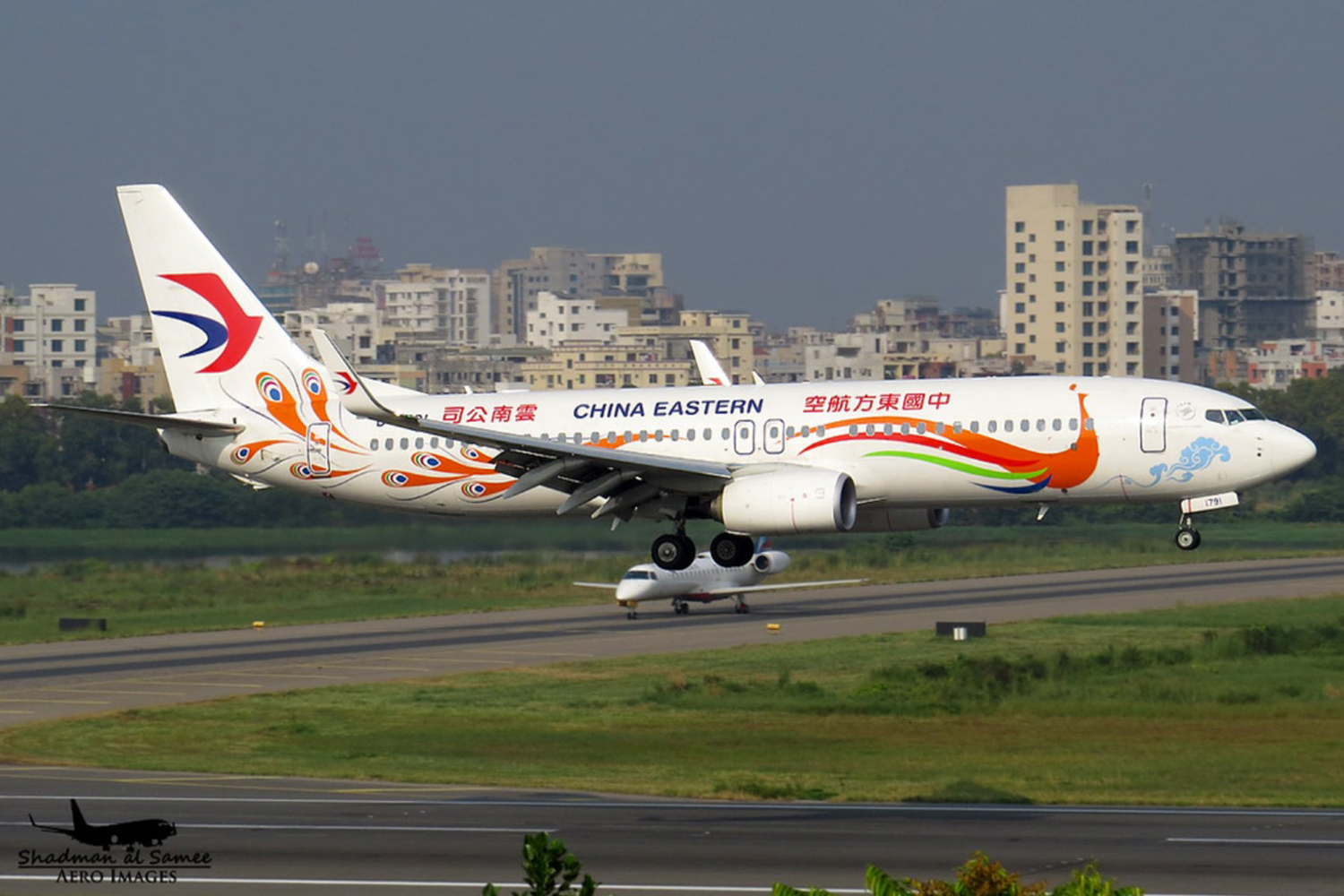
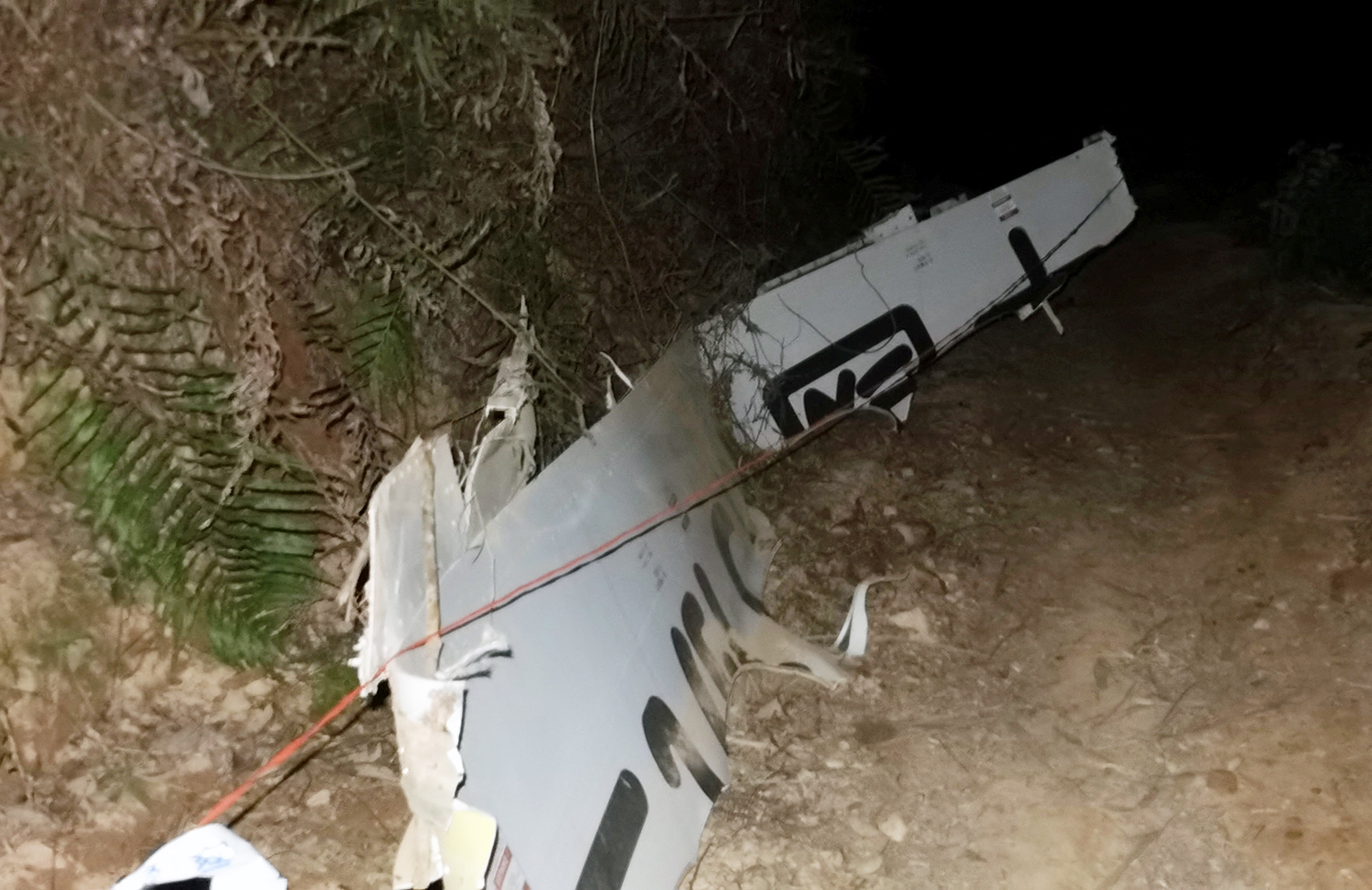
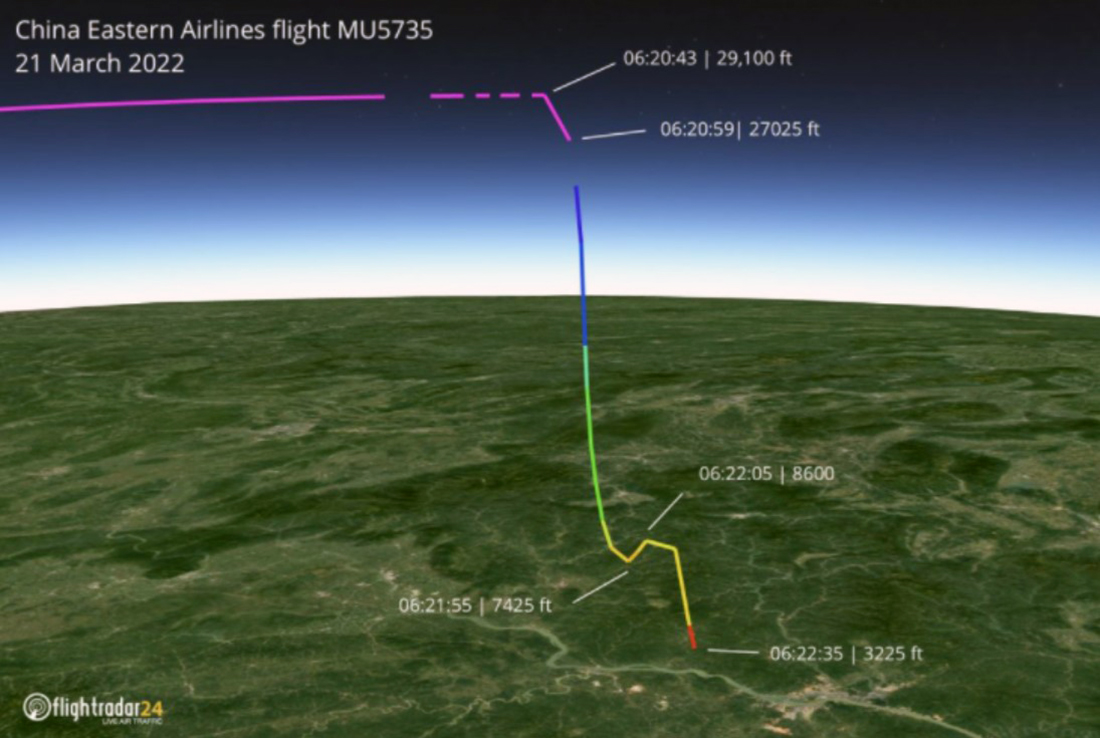
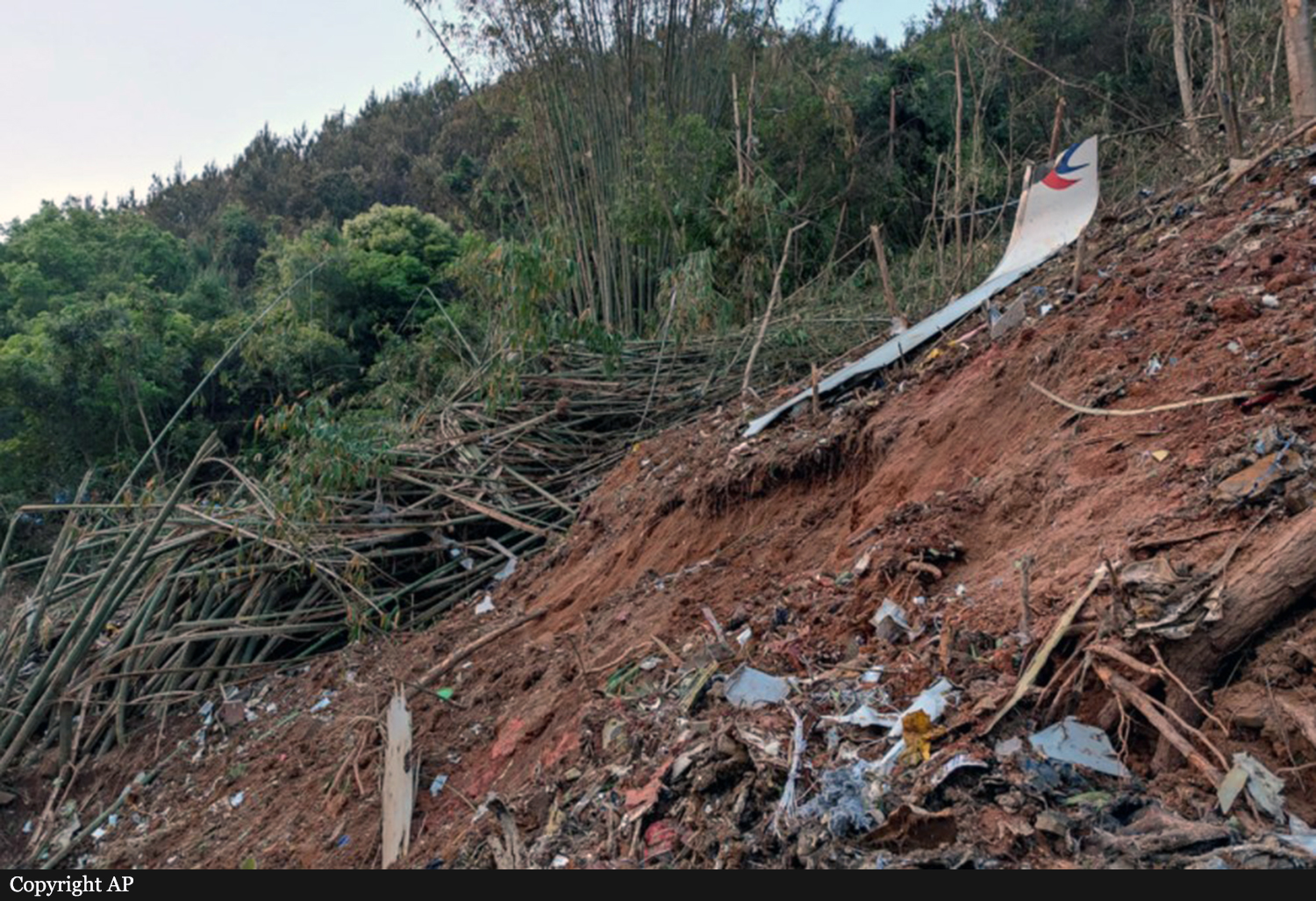
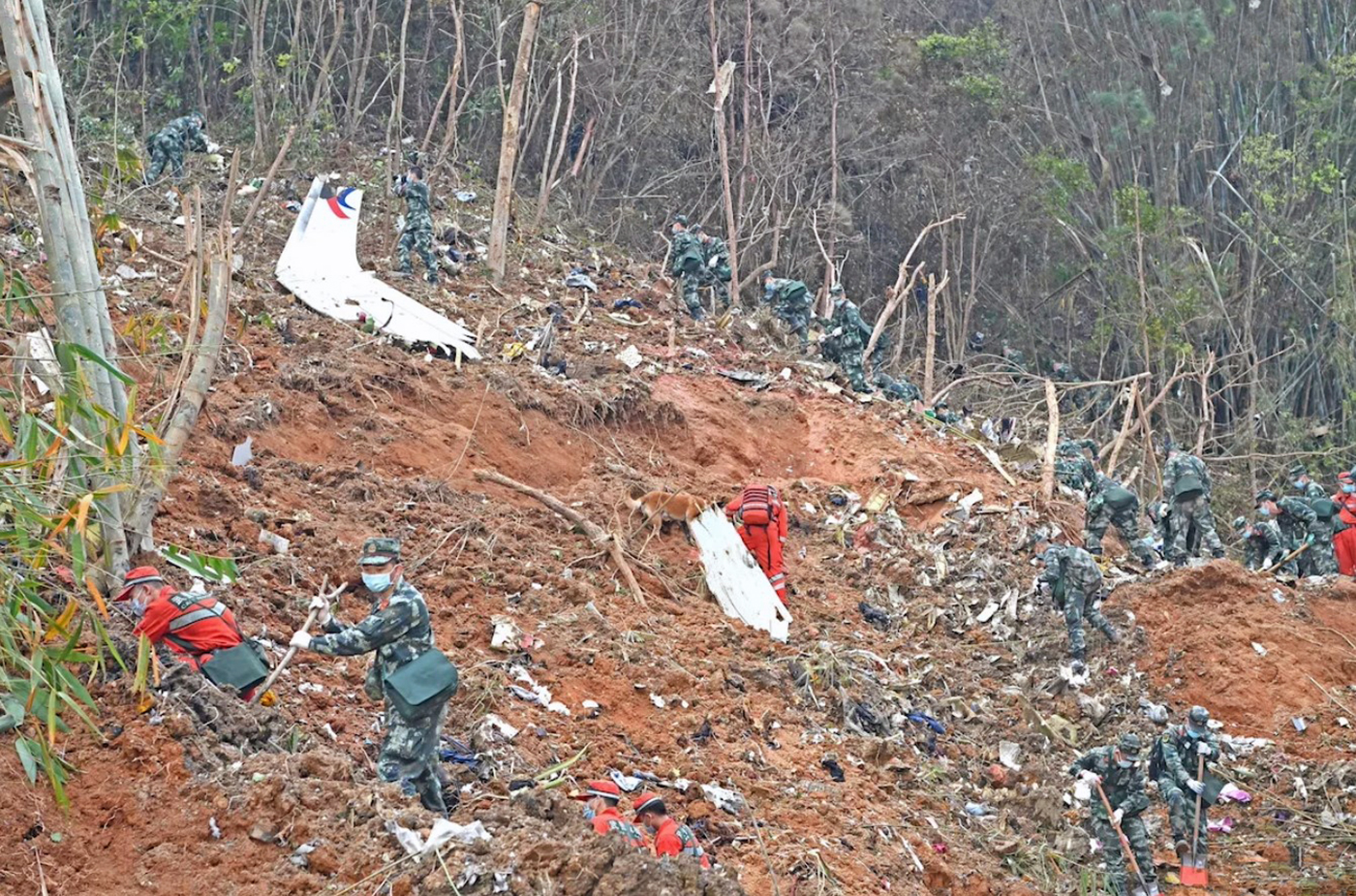
The airplane departed Kunming-Wujiaba Airport at 1315LT on a schedule service (flight MU5735) to Guangzhou, carrying 123 passengers and a crew of nine. At 1420LT, while cruising at an altitude of 29,100 feet, the aircraft entered an uncontrolled descent until 7,400 feet then climbed to 8,600 feet. It finally entered a steep descent and crashed almost two minutes later in a vertical attitude on hilly and wooded terrain located some 20 km southwest of Wuzhou. The airplane disintegrated on impact and all 132 occupants were killed. Two days after the accident, the CVR was found while the DFDR was found on March 27.

Crash of a Cessna 208B Grand Caravan off Mohéli: 14 killed

Date & Time: Feb 26, 2022 at 1230 LT
Type of aircraft:
Operator:
Registration:
5H-MZA
Flight Phase:
Survivors:
No
Schedule:
Moroni - Mohéli
MSN:
208B-5278
YOM:
2016
Flight number:
Y61103
Region:
Crew on board:
2
Crew fatalities:
Pax on board:
12
Pax fatalities:
Other fatalities:
Total fatalities:
14
Circumstances:
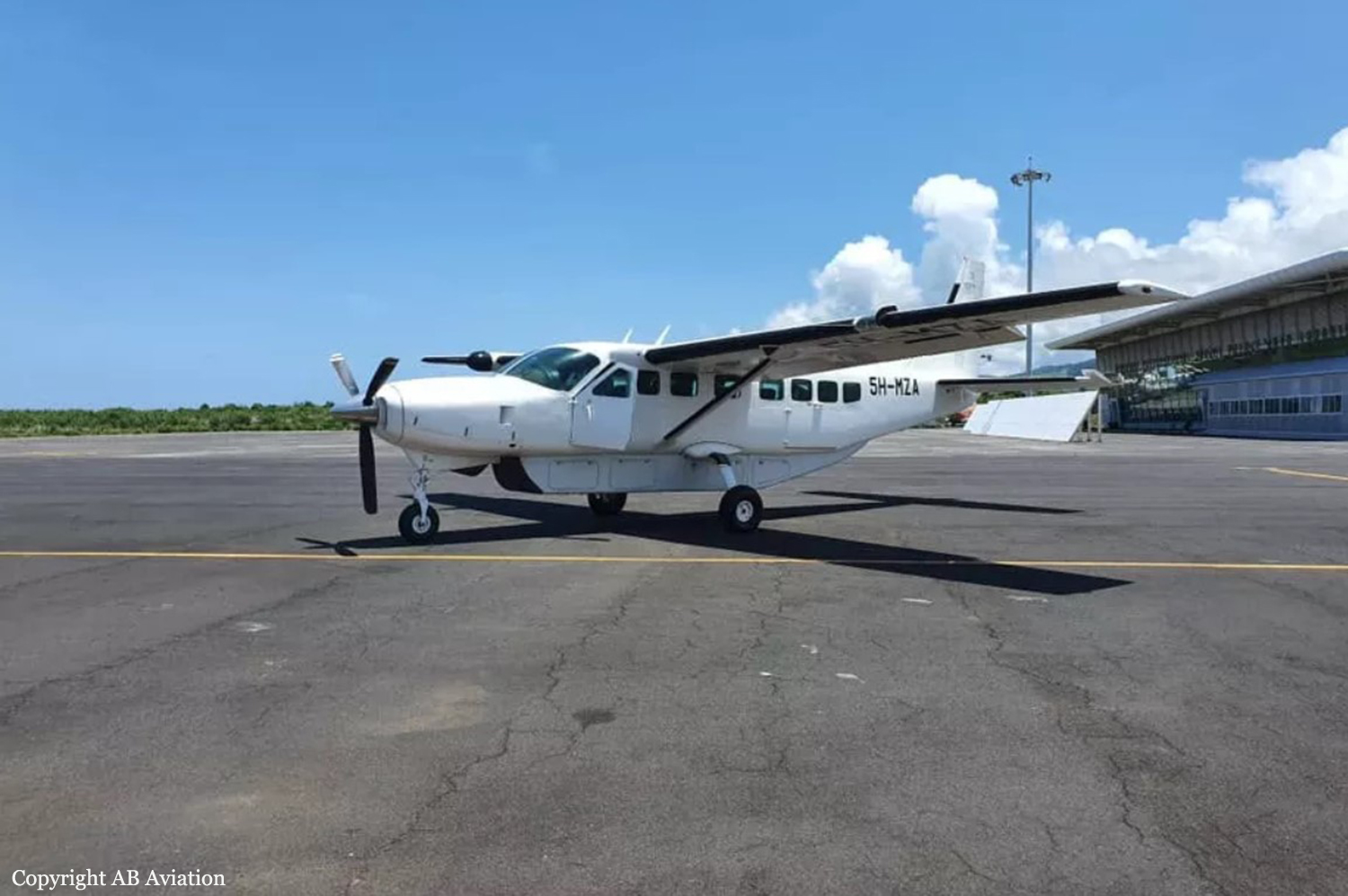
The single engine airplane departed Moroni Airport at 1155LT on a schedule flight to Mohéli, carrying 12 passengers and two pilots. While approaching Mohéli, the crew encountered marginal weather conditions when the aircraft crashed in the sea some 2,5 km northwest of Mohéli-Bander es Eslam Airport. After 24 hours of intense research, only few debris were found floating on water (such a wheel and wing fragments). No trace of the 14 occupants was found.

Crash of a BAe 3101 Jetstream 31 in Roatán

Date & Time: Jan 4, 2022 at 1200 LT
Type of aircraft:
Operator:
Registration:
HR-AYY
Survivors:
Yes
Schedule:
La Ceiba – Roatán
MSN:
657
YOM:
1985
Country:
Crew on board:
3
Crew fatalities:
Pax on board:
17
Pax fatalities:
Other fatalities:
Total fatalities:
0
Circumstances:
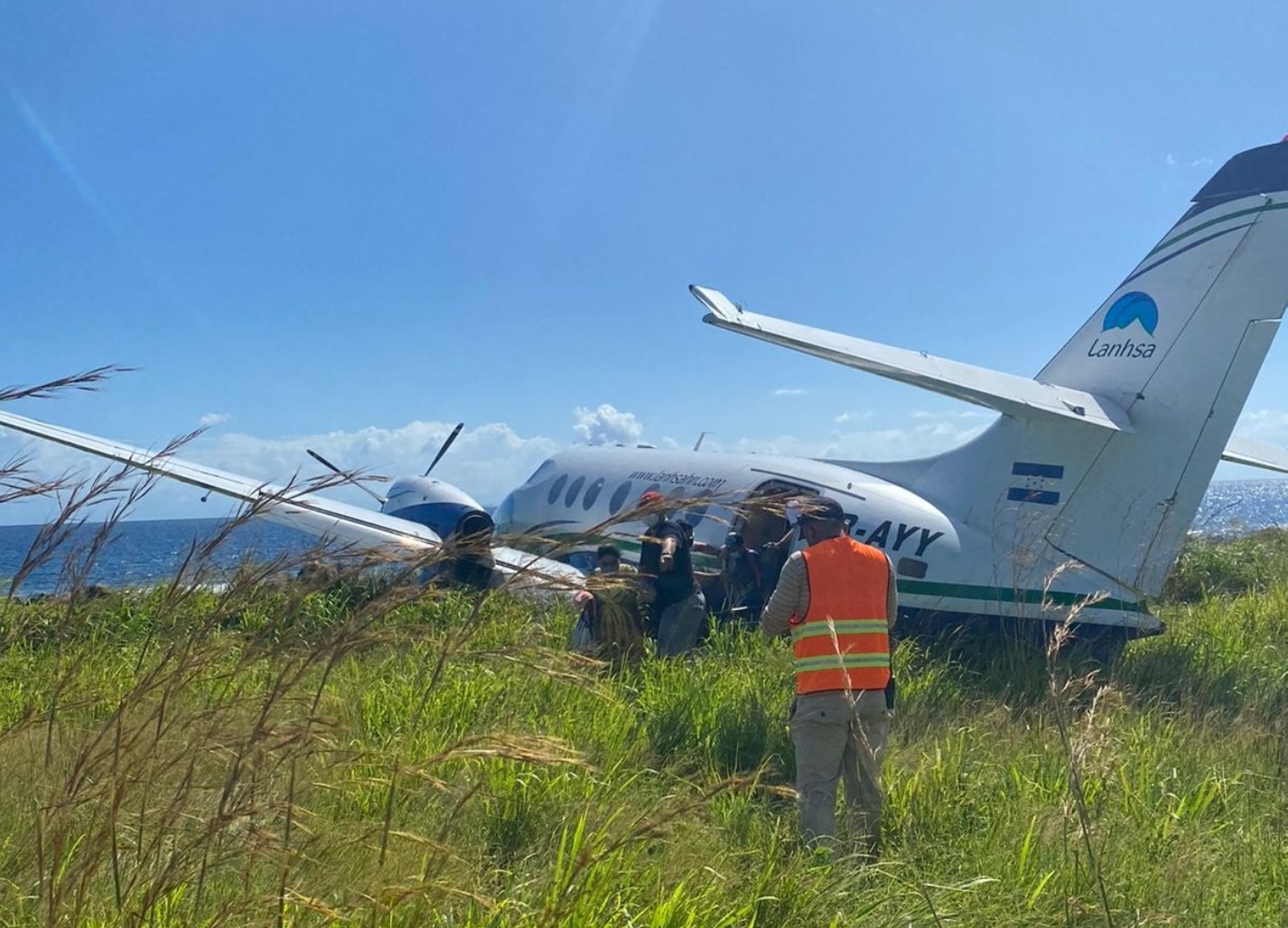
After landing on runway 07 at Roatán-Juan Manuel Gálvez Airport, the right main gear collapsed. The airplane veered off runway to the right and came to rest in a grassy area located about 30 metres from the runway. All 20 occupants evacuated safely.