Crash of a Dassault Falcon 20C in Jamestown

Date & Time: Dec 21, 2008 at 0100 LT
Type of aircraft:
Operator:
Registration:
N165TW
Flight Type:
Survivors:
Yes
Schedule:
Tulsa – Jamestown
MSN:
65
YOM:
1966
Crew on board:
2
Crew fatalities:
Pax on board:
0
Pax fatalities:
Other fatalities:
Total fatalities:
0
Captain / Total flying hours:
3028
Captain / Total hours on type:
1160.00
Copilot / Total flying hours:
2086
Copilot / Total hours on type:
80
Aircraft flight hours:
16360
Circumstances:
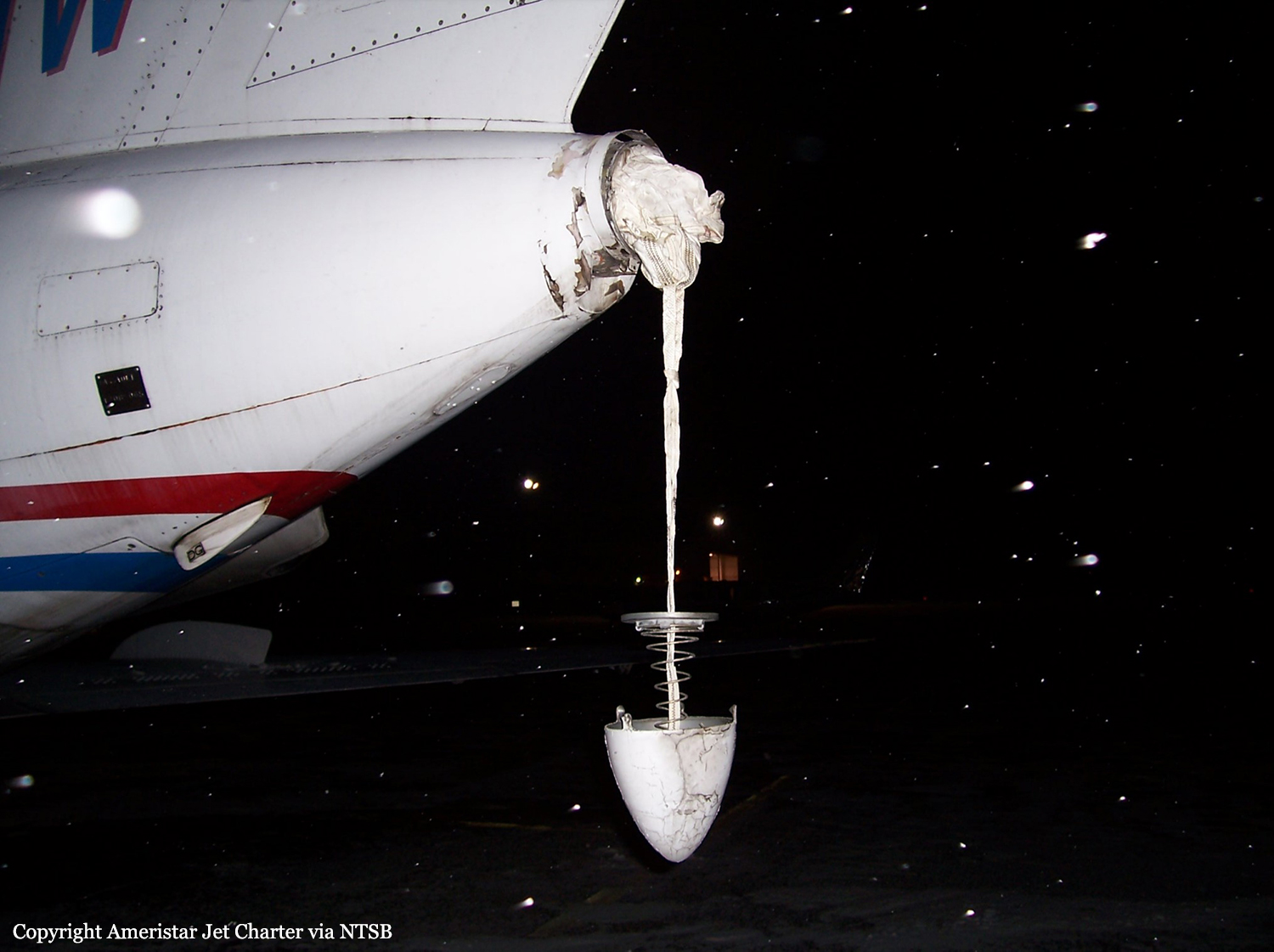
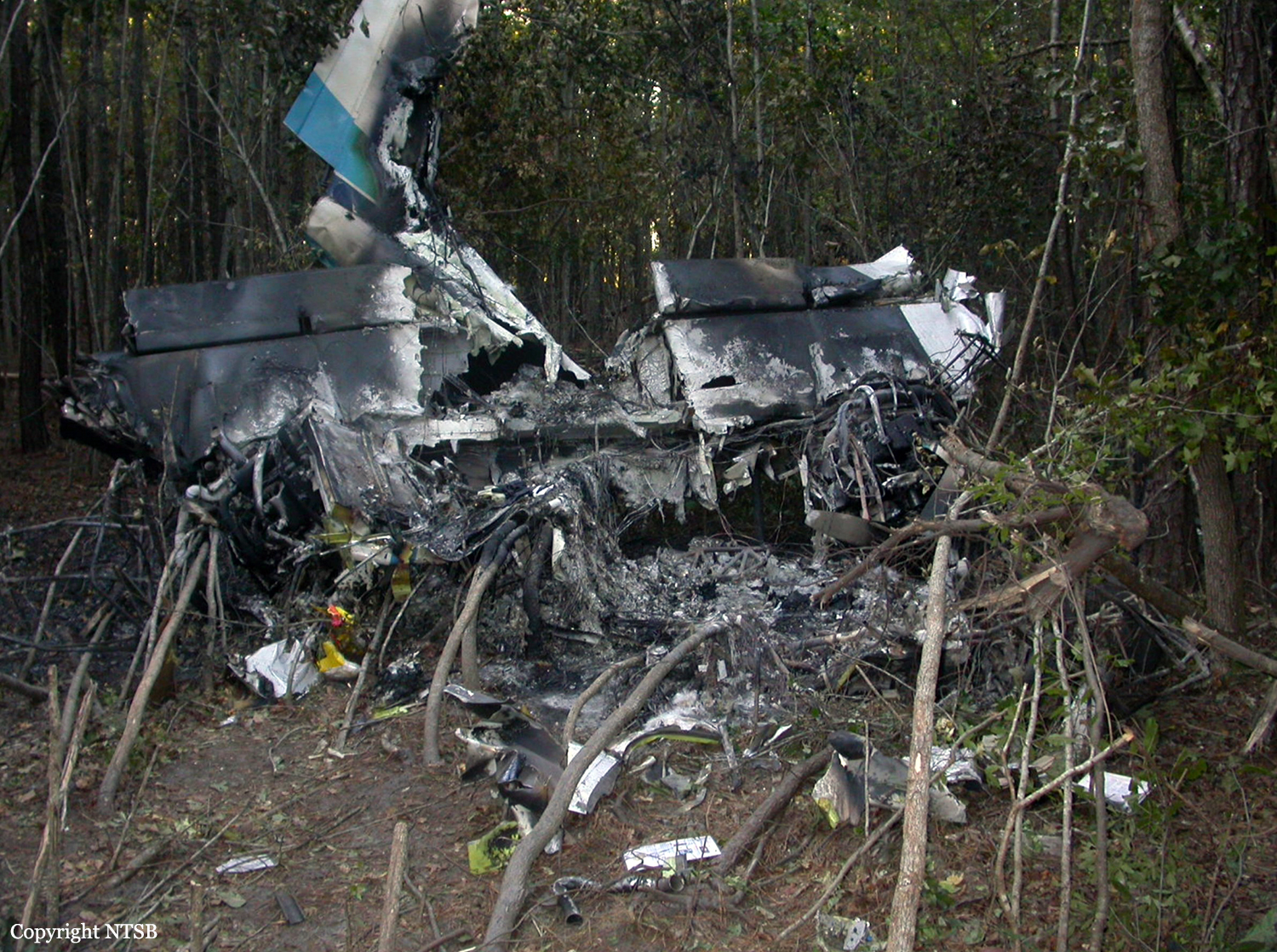
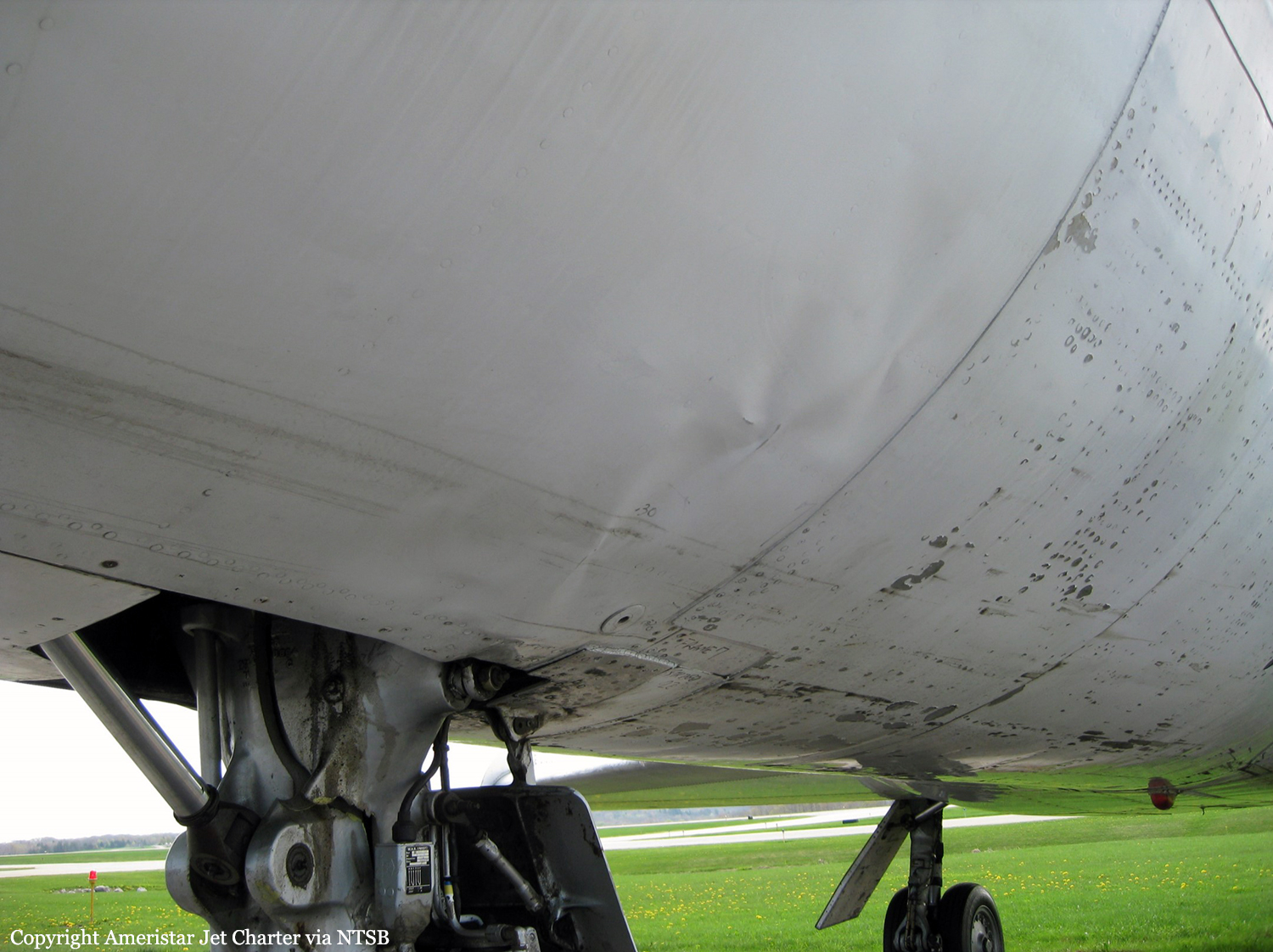
The co-pilot was performing a nighttime approach and landing to runway 25. No runway condition reports were received by the flight crew while airborne, and a NOTAM was in effect, stating, “thin loose snow over patchy thin ice.” After landing, the co-pilot called out that the airplane was sliding and the wheel brakes were ineffective. The captain took the controls, activated the air brakes, and instructed the co-pilot to deploy the drag chute. The crew could not stop the airplane in the remaining runway distance and the airplane overran the runway by approximately 100 feet. After departing the runway end, the landing gear contacted a snow berm that was the result of earlier plowing. The captain turned the airplane around and taxied to the ramp. Subsequent inspection of the airplane revealed a fractured nose gear strut and buckling of the fuselage. The spring-loaded drag chute extractor cap activated, but the parachute remained in its tail cone container. Both flight crewmembers reported that the runway was icy at the time of the accident and braking action was “nil.” The airport manager reported that when the airplane landed, no airport staff were on duty and had not been for several hours. He also reported that when the airport staff left for the evening, the runway conditions were adequate. The runway had been plowed and sanded approximately 20 hours prior to the accident, sanded two more times during the day, and no measurable precipitation was recorded within that time frame. The reason that the drag chute failed to deploy was not determined.
Probable cause:
The inability to stop the airplane on the remaining runway because of icy runway conditions. A factor was the failure of the drag chute to properly deploy.
Final Report:

Crash of a Boeing 737-524 in Denver

Date & Time: Dec 20, 2008 at 1818 LT
Type of aircraft:
Operator:
Registration:
N18611
Flight Phase:
Survivors:
Yes
Schedule:
Denver - Houston
MSN:
27324/2621
YOM:
1994
Flight number:
CO1404
Crew on board:
5
Crew fatalities:
Pax on board:
110
Pax fatalities:
Other fatalities:
Total fatalities:
0
Captain / Total flying hours:
13100
Captain / Total hours on type:
6300.00
Copilot / Total flying hours:
8000
Copilot / Total hours on type:
1500
Aircraft flight hours:
40541
Aircraft flight cycles:
21511
Circumstances:
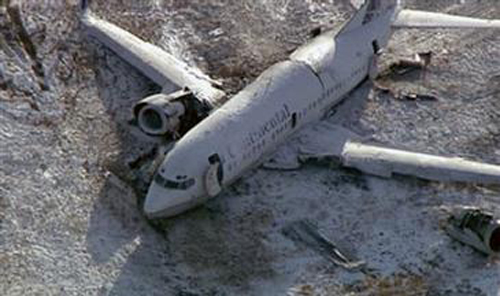
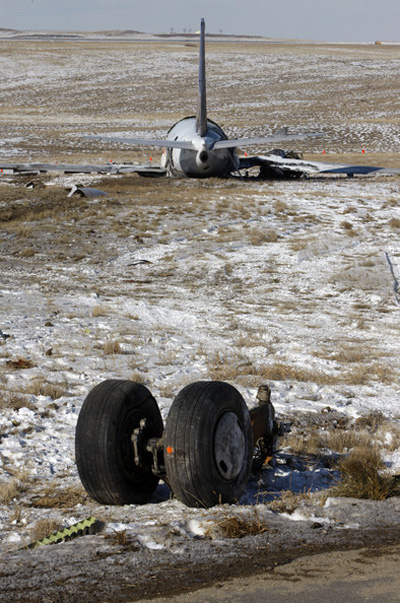
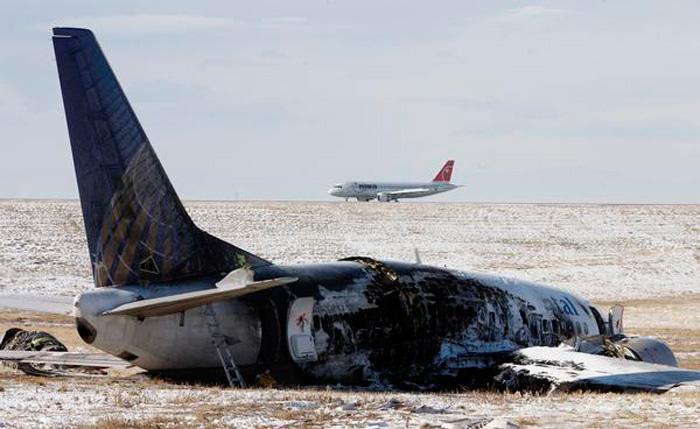
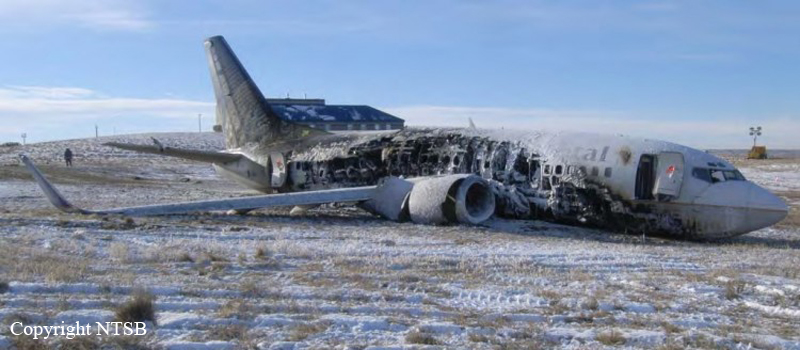
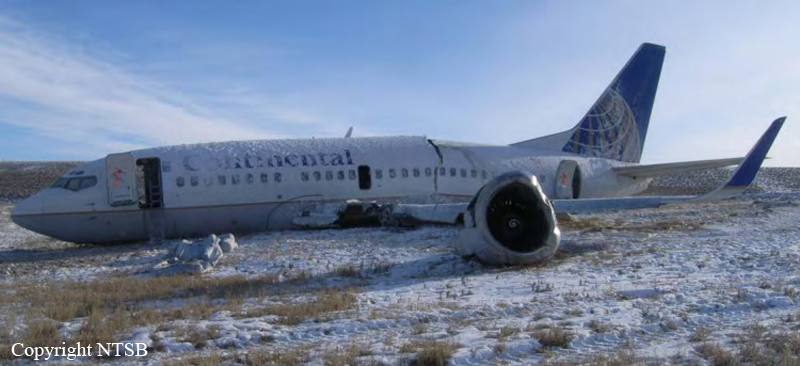
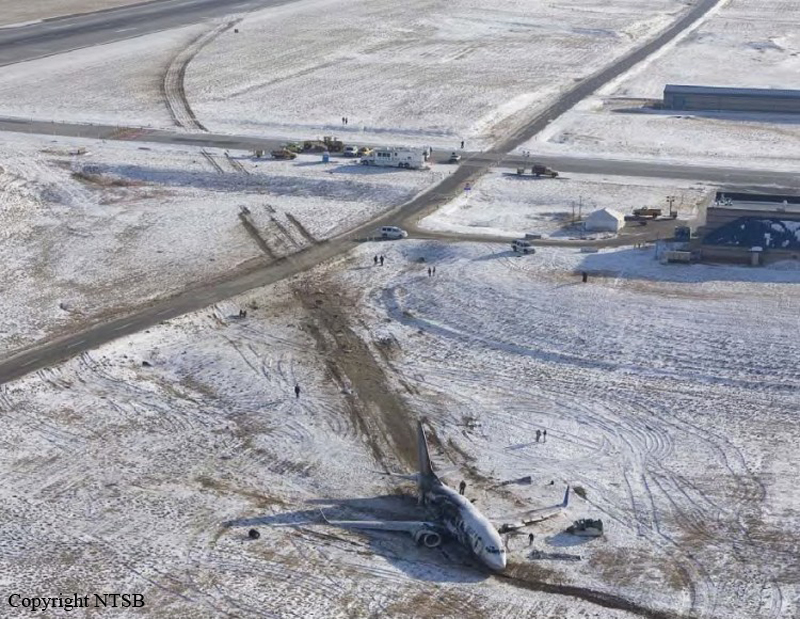
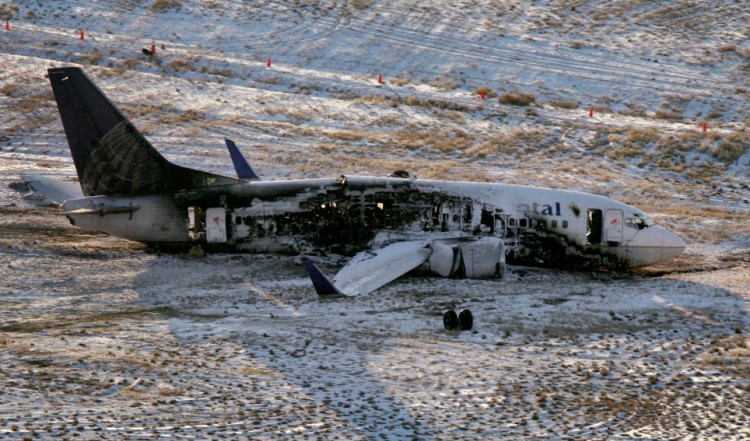
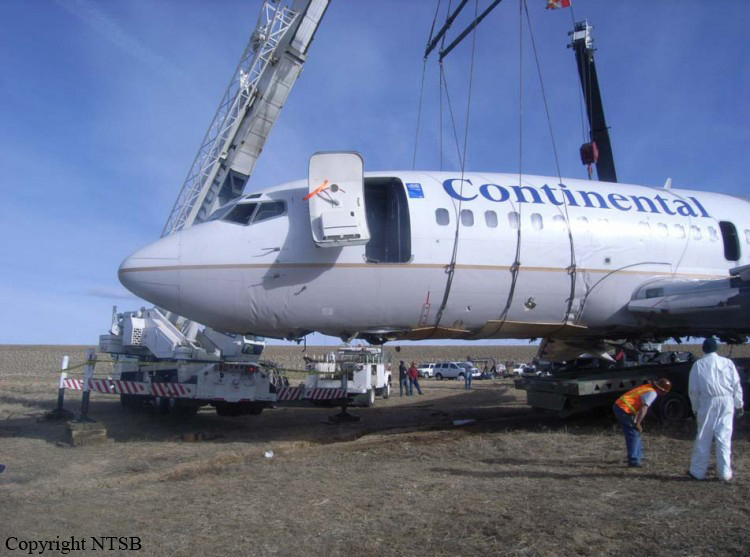
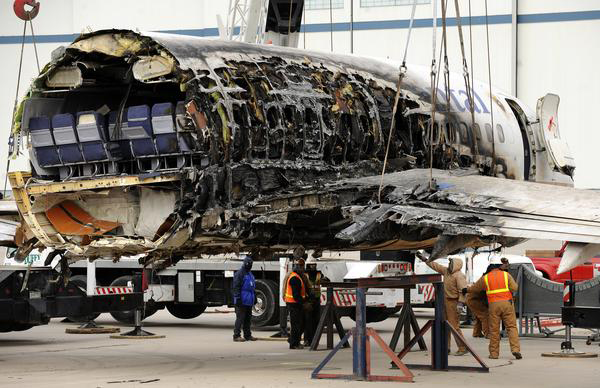
On December 20, 2008, about 1818 mountain standard time, Continental Airlines flight 1404, a Boeing 737-500, N18611, departed the left side of runway 34R during takeoff from Denver International Airport (DEN), Denver, Colorado. A postcrash fire ensued. The captain and 5 of the 110 passengers were seriously injured; the first officer, 2 cabin crewmembers, and 38 passengers received minor injuries; and 1 cabin crewmember and 67 passengers (3 of whom were lap-held children) were uninjured. The airplane was substantially damaged. The scheduled, domestic passenger flight, operated under the provisions of 14 Code of Federal Regulations Part 121, was departing DEN and was destined for George Bush Intercontinental Airport, Houston, Texas. At the time of the accident, visual meteorological conditions prevailed, with strong and gusty winds out of the west. The flight operated on an instrument flight rules flight plan.
Probable cause:
The captain’s cessation of right rudder input, which was needed to maintain directional control of the airplane, about 4 seconds before the excursion, when the airplane encountered a strong and gusty crosswind that exceeded the captain’s training and experience.
Contributing to the accident were the following factors:
1) an air traffic control system that did not require or facilitate the dissemination of key, available wind information to the air traffic controllers and pilots; and
2) inadequate crosswind training in the airline industry due to deficient simulator wind gust modeling.
Final Report:
Crash of a Cessna 402B in Madison

Date & Time: Dec 16, 2008 at 2252 LT
Type of aircraft:
Operator:
Registration:
N4504B
Flight Type:
Survivors:
Yes
Schedule:
Appleton - Milwaukee
MSN:
402B-1370
YOM:
1978
Flight number:
FRG1531
Crew on board:
1
Crew fatalities:
Pax on board:
0
Pax fatalities:
Other fatalities:
Total fatalities:
0
Captain / Total flying hours:
2069
Captain / Total hours on type:
274.00
Aircraft flight hours:
12805
Circumstances:
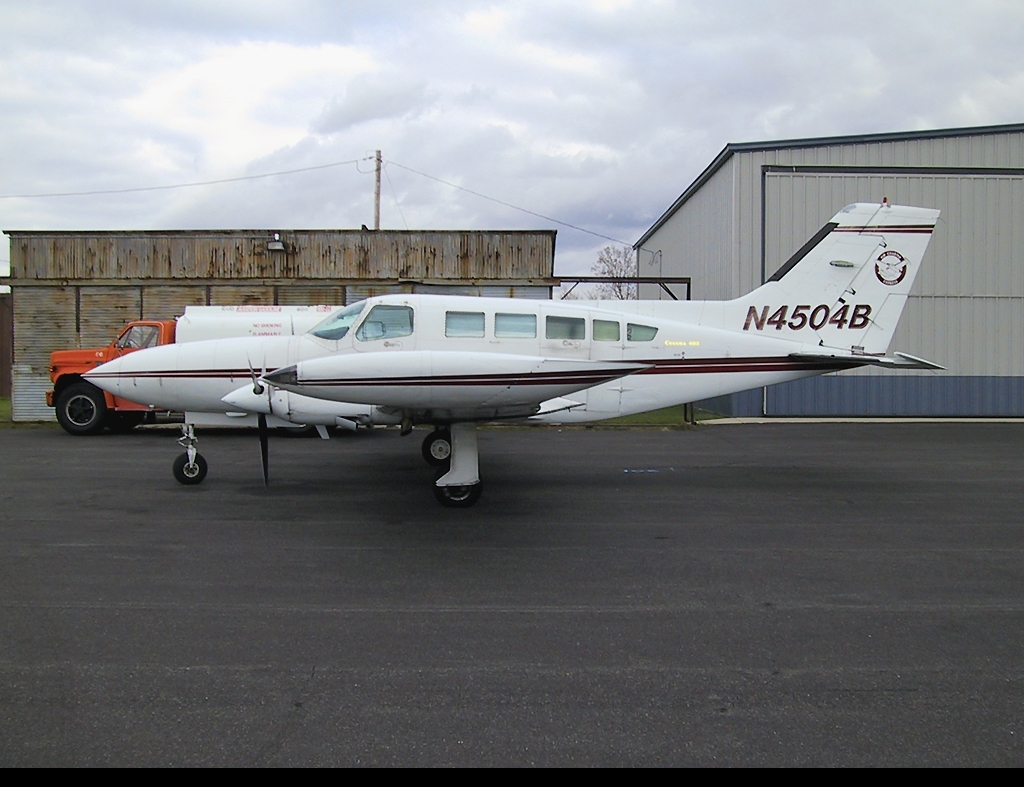
The on-demand cargo flight departed for the destination airport and was delayed en route due to repetitive destination airport closures. The closures were the result of snow-contaminated runways. The pilot then diverted to an alternate airport due to concerns about remaining fuel reserves. The airplane experienced a loss of engine power during an instrument approach at the alternate airport and impacted the ground about 200 yards short of the landing runway. A postaccident inspection of the airplane revealed no usable fuel on board.
Probable cause:
The pilot’s improper fuel management, which resulted in a loss of engine power during an instrument landing due to fuel exhaustion.
Final Report:
Crash of a Beechcraft C90B King Air in Rocksprings: 1 killed

Date & Time: Dec 14, 2008 at 1500 LT
Type of aircraft:
Operator:
Registration:
N43KM
Flight Phase:
Flight Type:
Survivors:
No
Schedule:
Hondo – Goodyear
MSN:
LJ-1345
YOM:
1993
Crew on board:
1
Crew fatalities:
Pax on board:
0
Pax fatalities:
Other fatalities:
Total fatalities:
1
Captain / Total flying hours:
3500
Captain / Total hours on type:
250.00
Aircraft flight hours:
3725
Circumstances:
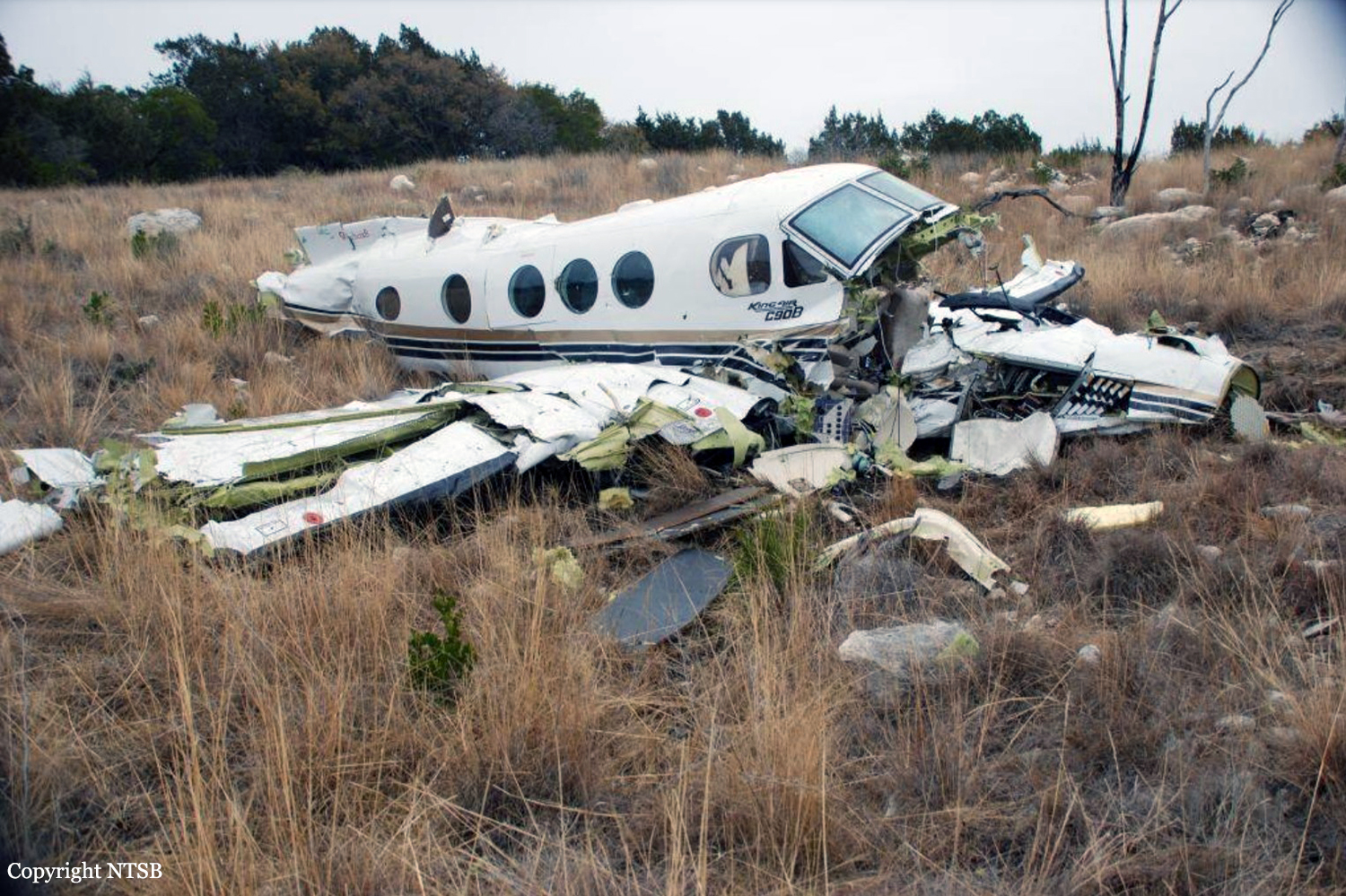
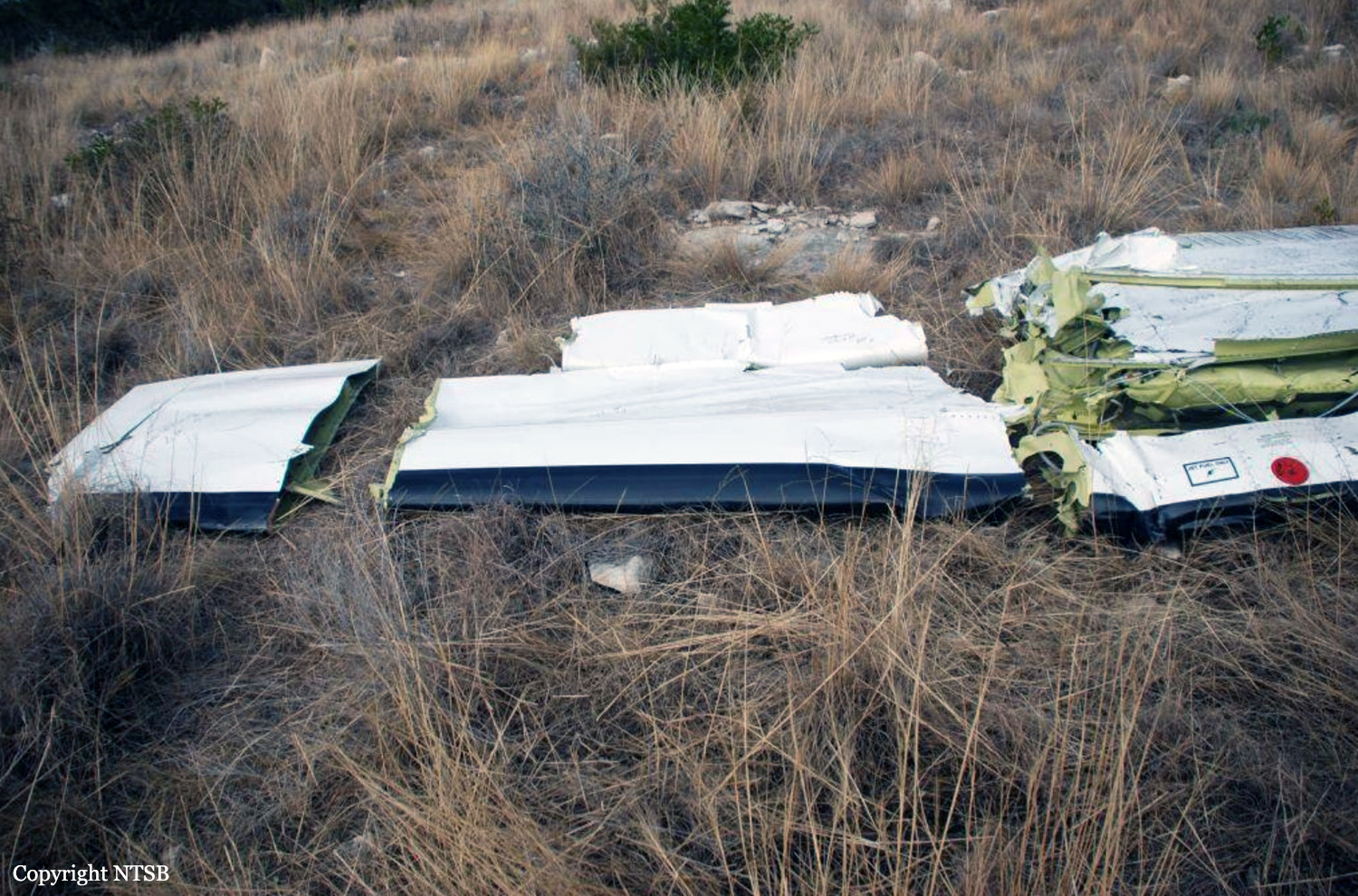
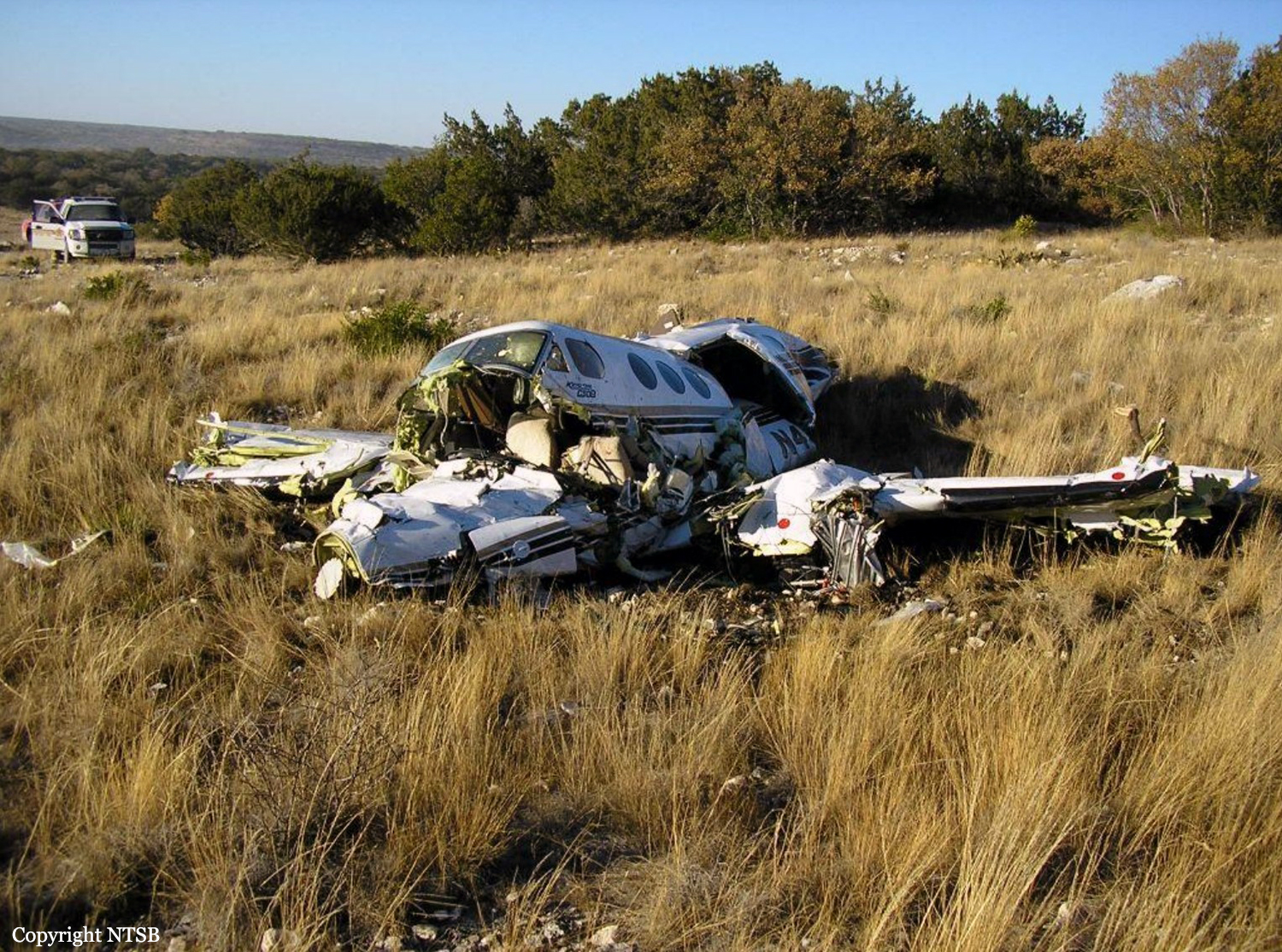
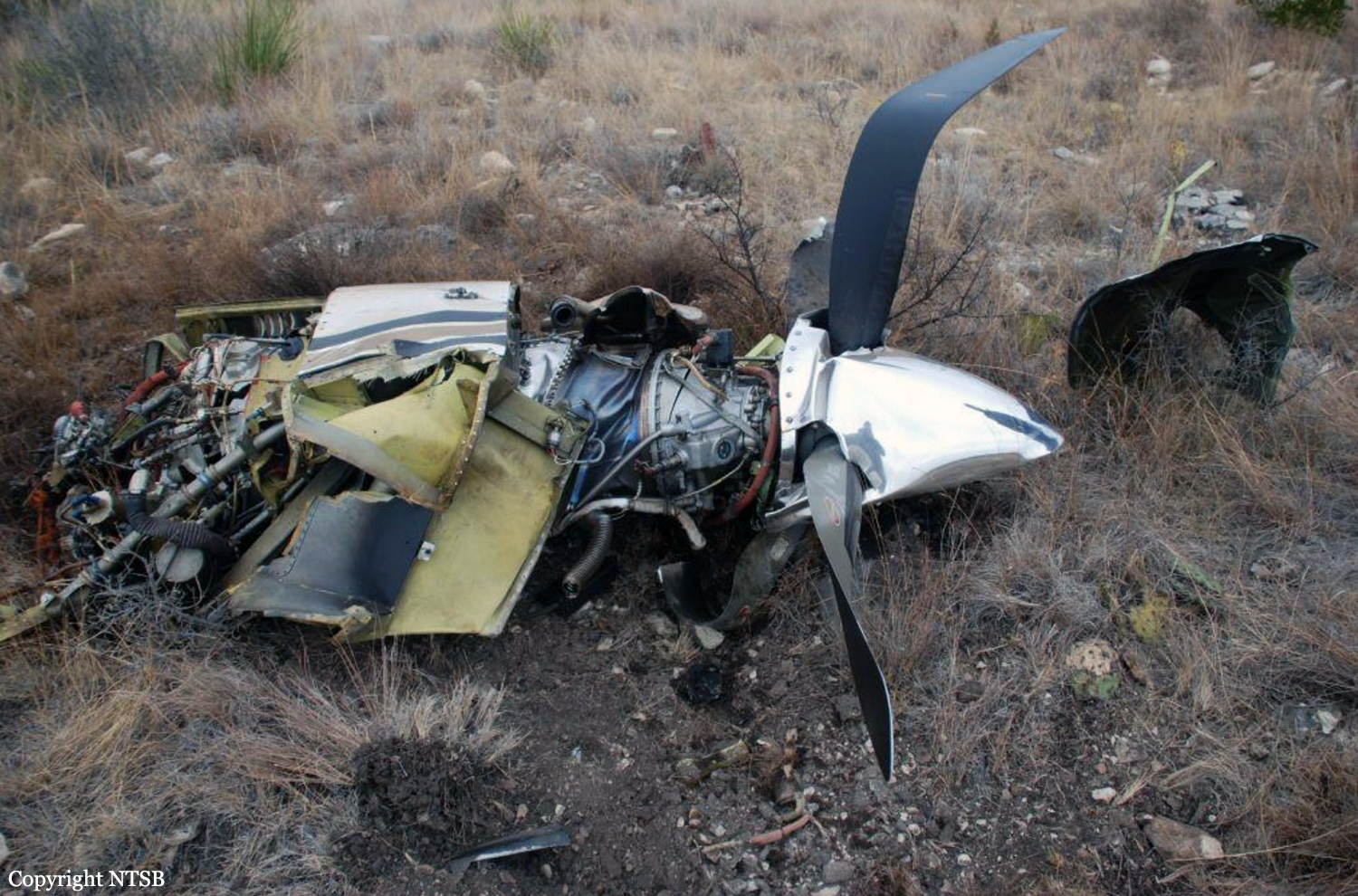
The pilot was cleared to 17,000 feet approximately 7 minutes after takeoff. After arriving at 17,000 feet, radar showed the airplane in a meandering flight path increasingly off course that continued through the end of the flight, even after several prompts from the controller. The pilot was cleared to flight level 240 (24,000 feet) after about 6 minutes at 17,000 feet, and about 2 minutes later, while passing through about 18,000 feet, he made his last radio transmission, acknowledging a corrected heading. About 6 minutes later, the airplane arrived at 24,000 feet and the pilot did not make any intelligible responses to controller inquiries for the remainder of the flight. At 1456, radar showed the airplane in a descent to 21,000 feet before beginning a rapid descent and continuing to impact. The airplane was substantially damaged by the impact forces and the pilot, who was the only occupant, was fatally injured. During the review of the air traffic control recordings, it was determined that none of the voice transmissions from N43KM sounded as if the pilot was speaking through an oxygen mask microphone. At the accident scene both bleed air switches were observed to be in the closed position and the airplane pressurization switch on the console was observed to be in the dump position. No other preimpact anomalies were observed that would have prevented the normal operation of the airplane.
Probable cause:
The pilot's failure to properly configure the pressurization controls, resulting in his impairment and subsequent incapacitation due to hypoxia.
Final Report:
Crash of a Mitsubishi MU-2B-60 Marquise in Millington

Date & Time: Dec 9, 2008 at 1058 LT
Type of aircraft:
Registration:
N452MA
Flight Type:
Survivors:
Yes
Schedule:
Millington - Millington
MSN:
1533
YOM:
1981
Crew on board:
1
Crew fatalities:
Pax on board:
0
Pax fatalities:
Other fatalities:
Total fatalities:
0
Captain / Total flying hours:
5311
Captain / Total hours on type:
662.00
Aircraft flight hours:
6094
Circumstances:
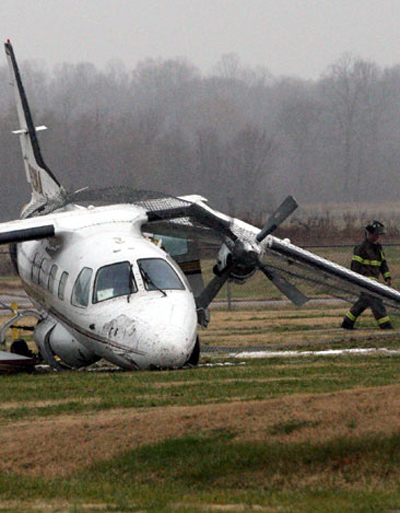
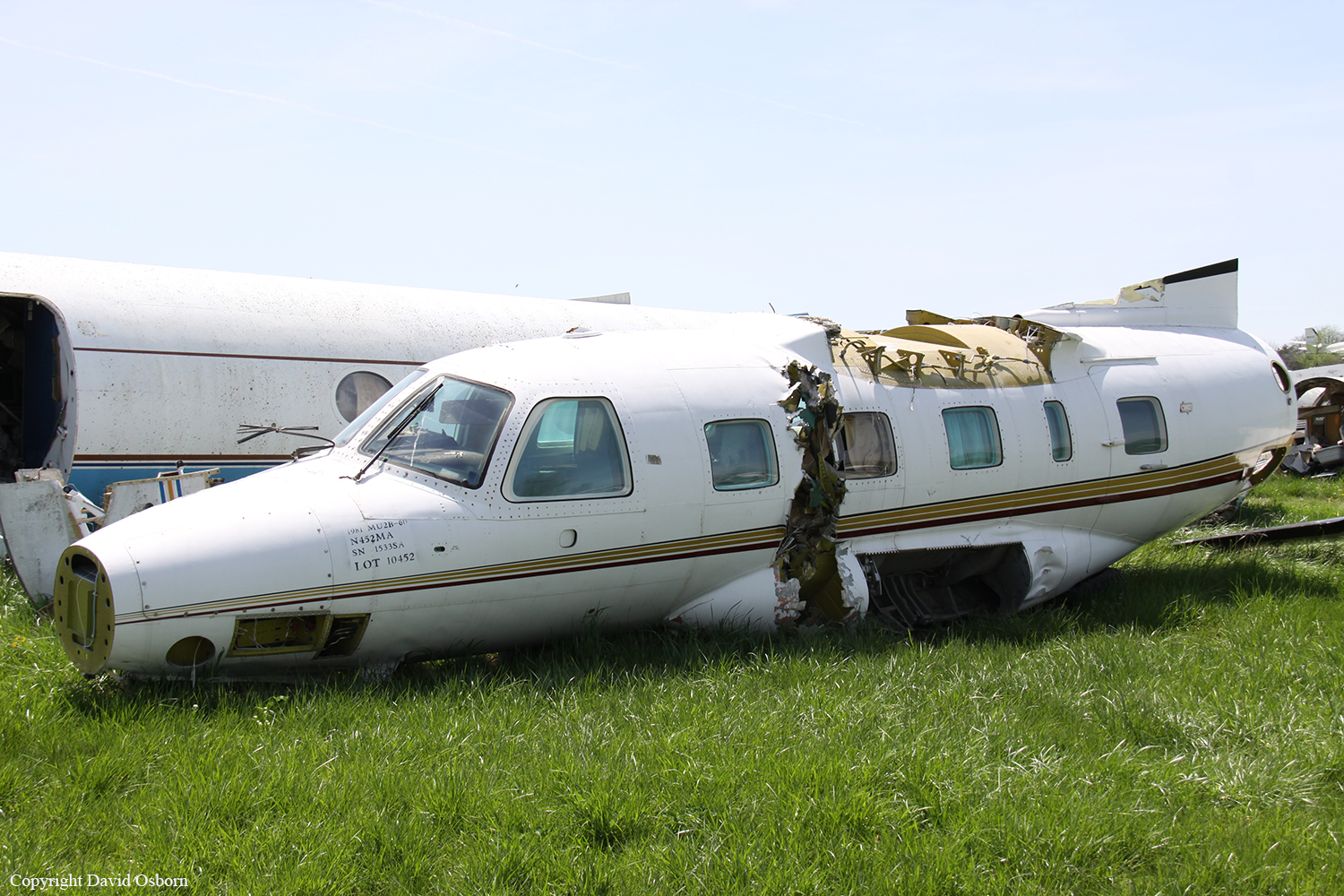
According to the pilot, after he took off for a nearby airport he raised the landing gear but did not raise the 20-degree flaps per the “after takeoff” checklist. Shortly thereafter, when the airplane was at an altitude of about 2,400 feet, and in "heavy rain," the pilot noticed that the right engine was losing power. He subsequently feathered the propeller as engine power reduced to 40 percent, but still did not raise the flaps. Weather, recorded shortly before the accident, included scattered clouds at 500 feet, and a broken cloud layer at 1,200 feet, and the pilot advised air traffic control (ATC) that he would fly an ILS (instrument landing system) approach if he could maintain altitude. After maneuvering, and advising ATC that he could not maintain altitude, the pilot descended the airplane to a right base leg where, about 1/4 nautical mile from the runway, it was approximately 300 feet above the terrain. The pilot completed the landing, with the airplane touching down about 6,200 feet down the 8,000-foot runway, heading about 20 degrees to the left. The airplane veered off the left side of the runway and subsequently went through an airport fence. The left engine was running at “high speed” when fire fighters responded to the scene. The right engine propeller was observed in the feathered position at the scene, and after subsequent examinations, the right engine was successfully run in a test cell with no noticeable loss of power. There was no determination as to why the right engine lost power in flight, although rain ingestion is a possibility. Airplane performance calculations indicated that with the landing gear up, a proper single-engine power setting and airspeed, and flaps raised, the airplane should have been able to climb about 650 feet per minute. Even with flaps at 20 degrees, it should have been able to climb at 350 feet per minute. In either case, unless the airplane was not properly configured, there was no reason why it should not have been able to maintain the altitudes needed to position it for a stabilized approach.
Probable cause:
The pilot’s improper configuration of the airplane following an engine shutdown, which resulted in a low-altitude, unstabilized approach. Contributing to the accident was a loss of engine power for undetermined reasons.
Final Report:
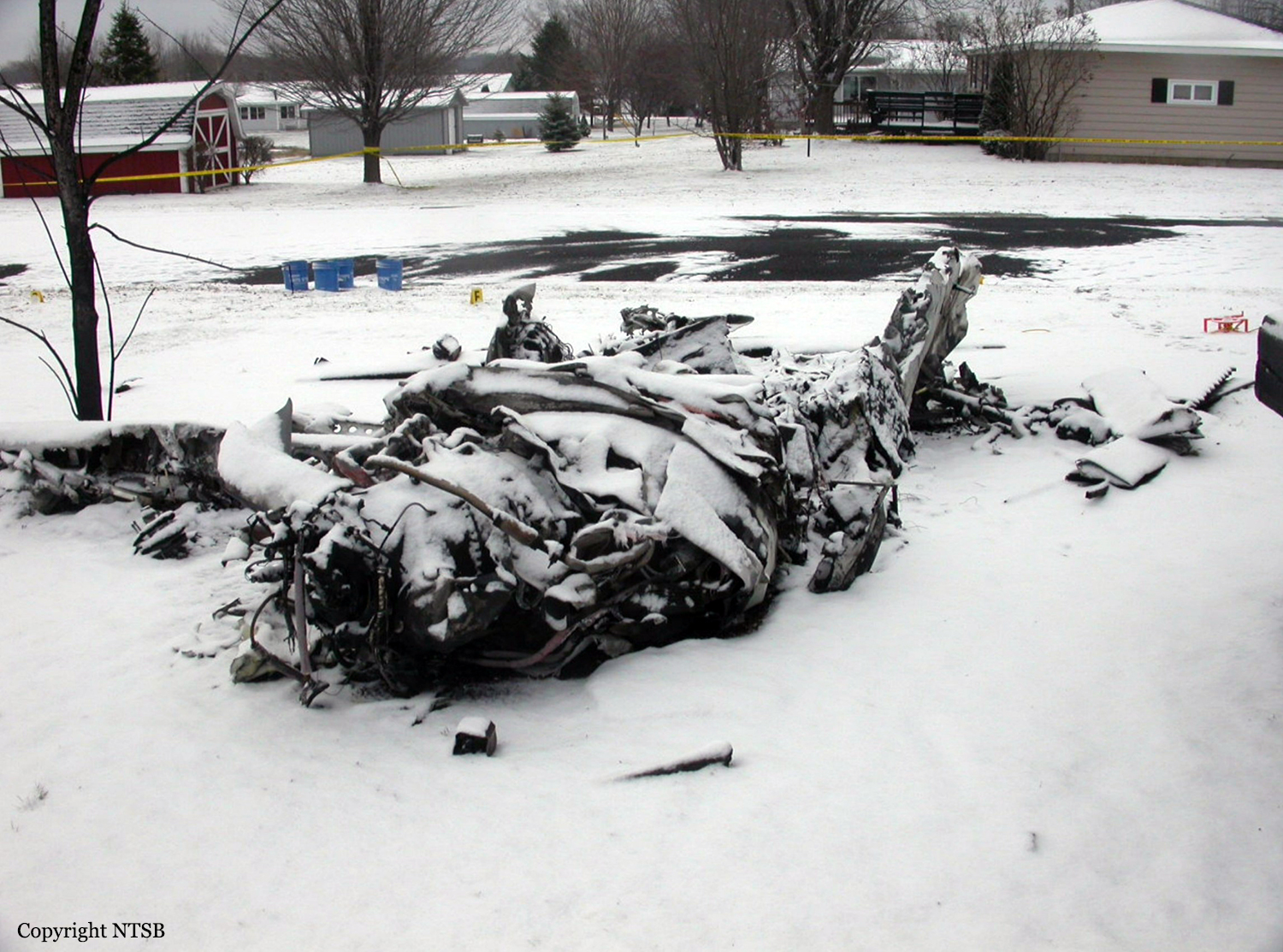
Crash of a Piper PA-46-500TP Malibu Meridian in Marshfield: 3 killed

Date & Time: Nov 22, 2008 at 2309 LT
Operator:
Registration:
N67TE
Flight Type:
Survivors:
No
Schedule:
Green Bay – Marshfield
MSN:
46-97364
YOM:
2008
Crew on board:
1
Crew fatalities:
Pax on board:
2
Pax fatalities:
Other fatalities:
Total fatalities:
3
Captain / Total flying hours:
749
Captain / Total hours on type:
60.00
Aircraft flight hours:
153
Circumstances:
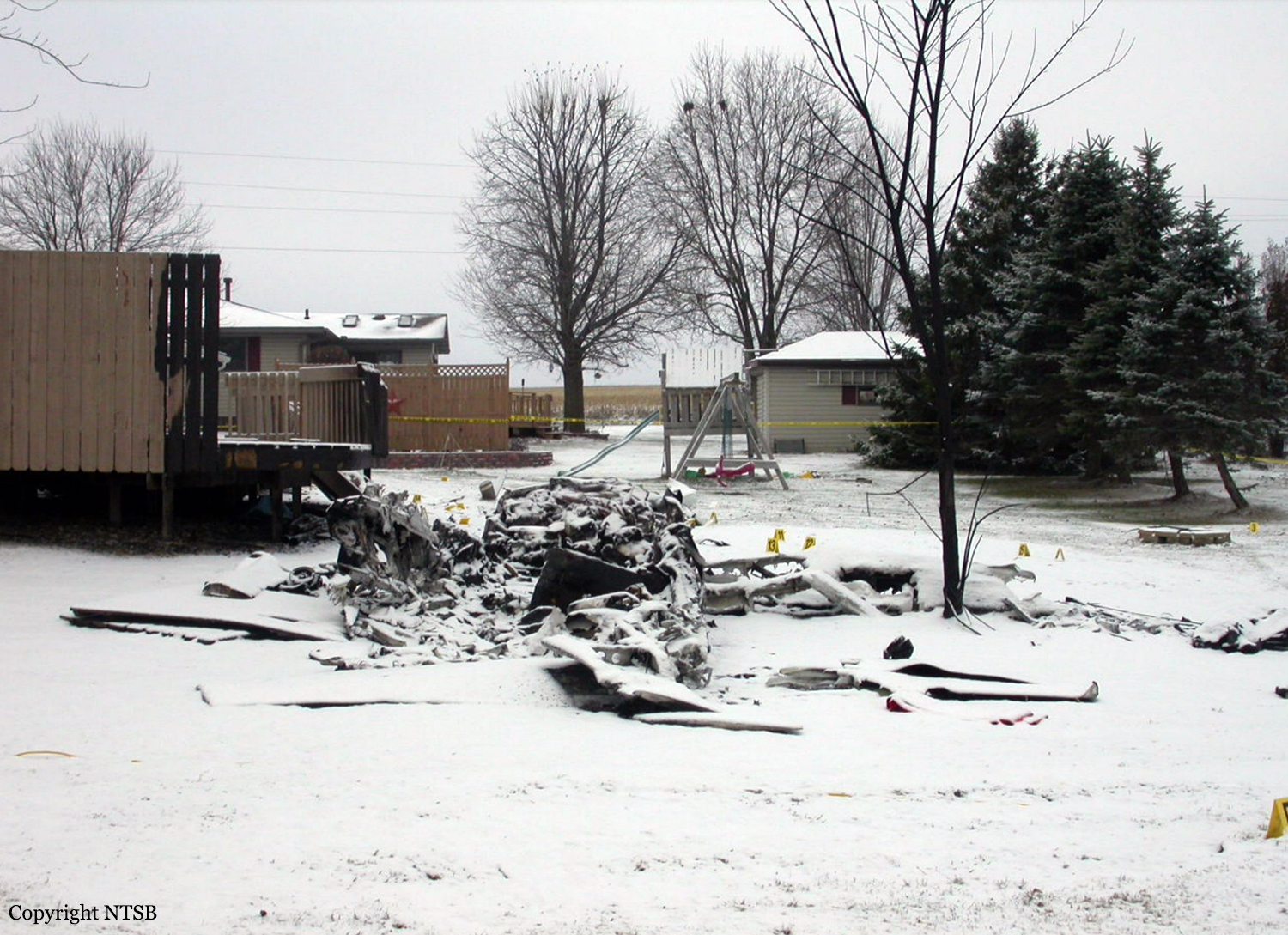
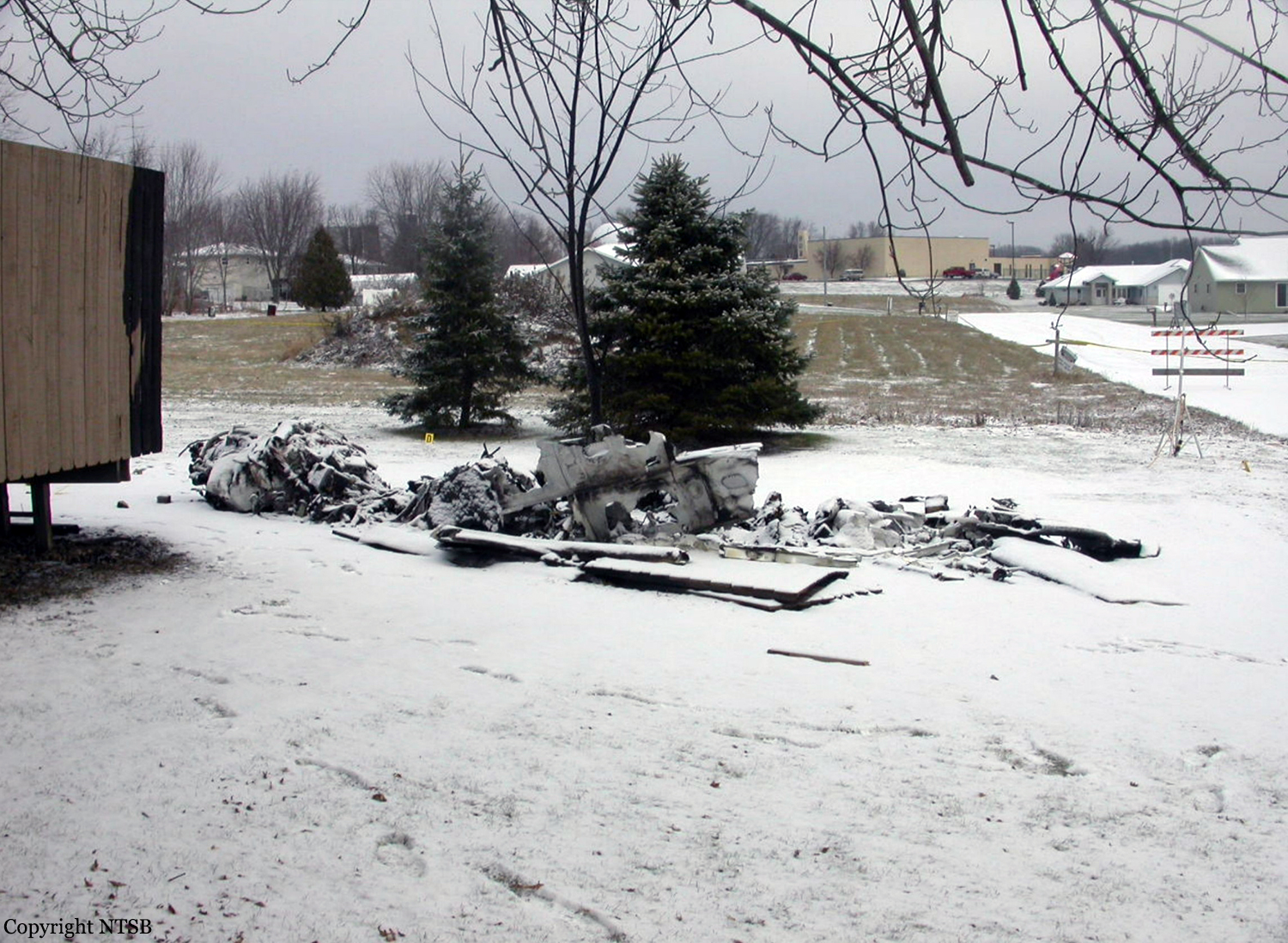
Witnesses reported that the airplane appeared to be making a normal approach for landing when it suddenly rolled to the left, descended, and impacted the terrain about one-half mile from the runway. On arrival at the scene, the witnesses saw the airplane fully engulfed in flames. The flight was operating in night visual meteorological conditions and the runway lights were illuminated at the time of the accident. The pilot communicated no problems or difficulties while in contact with air traffic control (ATC) during the accident flight. A postaccident examination of the airframe and engine did not reveal any anomalies associated with a pre-impact failure or malfunction. Radar track data and weather observations indicated that the pilot climbed through an overcast cloud layer without the required ATC clearance, en route to his intended destination. The pilot previously had been issued a private pilot certificate with single and multi-engine airplane ratings upon successful completion of the prescribed practical tests. He was subsequently issued a commercial pilot certificate, which included the addition of an instrument airplane rating, based on military flight experience. However, a review of military records and statements from his family indicated that the pilot had never served in the military. The pilot's medical history and toxicology testing showed he had a history of back pain and was taking medication for that condition that commonly causes impairment. However, the time proximity for the pilot having taken the medication prior to the accident flight and any possible impairment, could not be determined.
Probable cause:
The pilot's failure to maintain control of the airplane during final approach for landing in night, visual meteorological conditions for undetermined reasons.
Final Report:
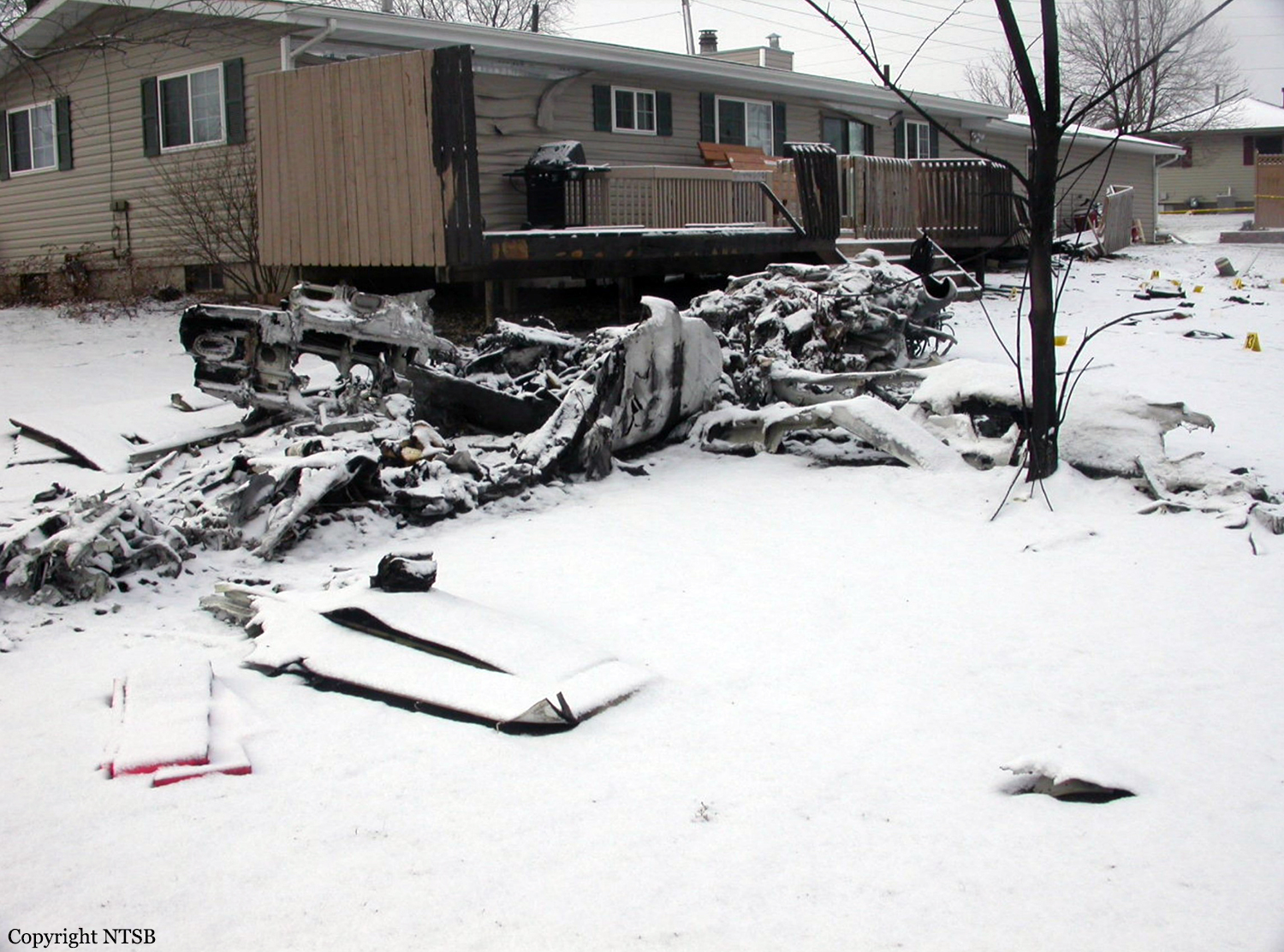
Crash of a Partenavia P.68C in Gainesville: 3 killed

Date & Time: Nov 7, 2008 at 0246 LT
Type of aircraft:
Operator:
Registration:
N681KW
Flight Type:
Survivors:
No
Schedule:
Key West - Gainesville
MSN:
273
YOM:
1983
Crew on board:
1
Crew fatalities:
Pax on board:
2
Pax fatalities:
Other fatalities:
Total fatalities:
3
Captain / Total flying hours:
8300
Captain / Total hours on type:
1500.00
Aircraft flight hours:
6971
Circumstances:
The pilot of the multiengine airplane was flying two passengers at night on an instrument-flight-rules flight plan. One of the passengers had been on an organ recipient waiting list and his wife was accompanying him. A viable matched organ was available at a distant hospital and the passenger had to arrive on short notice for surgery the following morning. All radio communications during the flight between the pilot and air traffic control (ATC), a flight service station (FSS), and a fixed-based operator (FBO) were routine. The pilot was aware of the weather at the destination airport, and had commented to ATC about 75 miles from the destination that the weather was "going up and down…like a real thin fog layer.” Additionally, better weather conditions prevailed at nearby suitable airports. The pilot mentioned one of those airports to ATC in the event he decided to divert. According to an employee at an FBO located at the destination airport, the pilot contacted him via radio and asked about the current weather conditions. The employee replied that the visibility was low due to fog and that he could not see the terminal lights from the FBO. The pilot then asked which of the two alternate airports was closer and the employee stated that he did not know. The employee then heard the pilot “click” the runway lights and contact the local FSS. about 5 miles from runway 29, just prior to the initial approach fix, the pilot radioed on the common traffic advisory frequency and reported a 5-mile final leg for runway 29. The FSS reported that the current weather was automated showing an indefinite ceiling of 100 feet vertical visibility and 1/4 mile visibility in fog. The pilota cknowledged the weather information. The weather was below the minimum published requirements for the instrument-landing-system (ILS) approach at the destination airport. Radar data showed that the flight intercepted and tracked the localizer, then intercepted the glideslope about 1 minute later. There were a few radar targets without altitude data due to intermittent Mode C transponder returns. The last recorded radar target with altitude indicated the airplane was at 600 feet, on glideslope and heading for the approach; however, the three subsequent and final targets did not show altitude information. The last recorded radar target was about 1.4 miles from the runway threshold. The airplane flew below glideslope and impacted 100-foot-tall trees about 4,150 feet from the runway 29 threshold. On-ground facility checks and a postaccident flight check of the ILS runway 29 approach conducted by the Federal Aviation Administration did not reveal malfunctions with the ILS. The cabin and cockpit area, including the NAV/COMM/APP, equipment were consumed by a postimpact fire which precluded viable component testing. Detailed examination of the wreckage that was not consumed by fire did not reveal preimpact mechanical malfunctions that may have contributed to the accident. Given that the pilot was aware of the weather conditions before and during the approach, it is possible that the pilot’s goal of expeditiously transporting a patient to a hospital for an organ transplant may have affected his decision to initiate and continue an instrument approach while the weather conditions were below the published minimum requirements for the approach.
Probable cause:
The pilot's failure to maintain the proper glidepath during an instrument-landing-system (ILS) approach. Contributing to the accident were the pilot's decision to initiate the ILS approach with weather below the published minimums, and the pilot's self-induced pressure to expeditiously transport an organ recipient to a hospital.
Final Report:
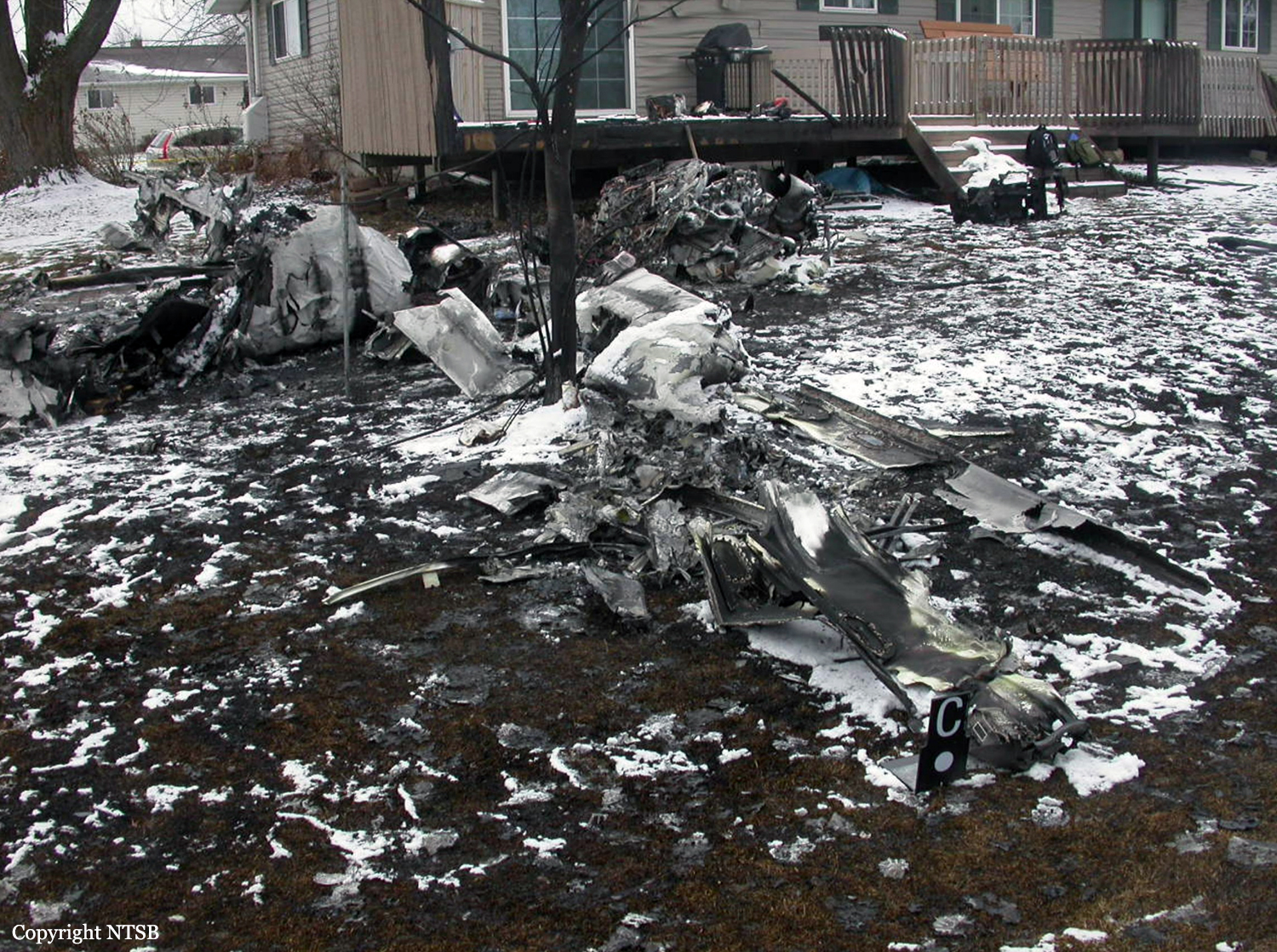
Crash of a Pilatus PC-12 in Santa Fe: 1 killed

Date & Time: Sep 29, 2008 at 2216 LT
Type of aircraft:
Registration:
N606SL
Flight Type:
Survivors:
No
Schedule:
New York - Lubbock - Santa Fe
MSN:
1020
YOM:
2008
Crew on board:
1
Crew fatalities:
Pax on board:
0
Pax fatalities:
Other fatalities:
Total fatalities:
1
Captain / Total flying hours:
2437
Captain / Total hours on type:
86.00
Aircraft flight hours:
130
Circumstances:
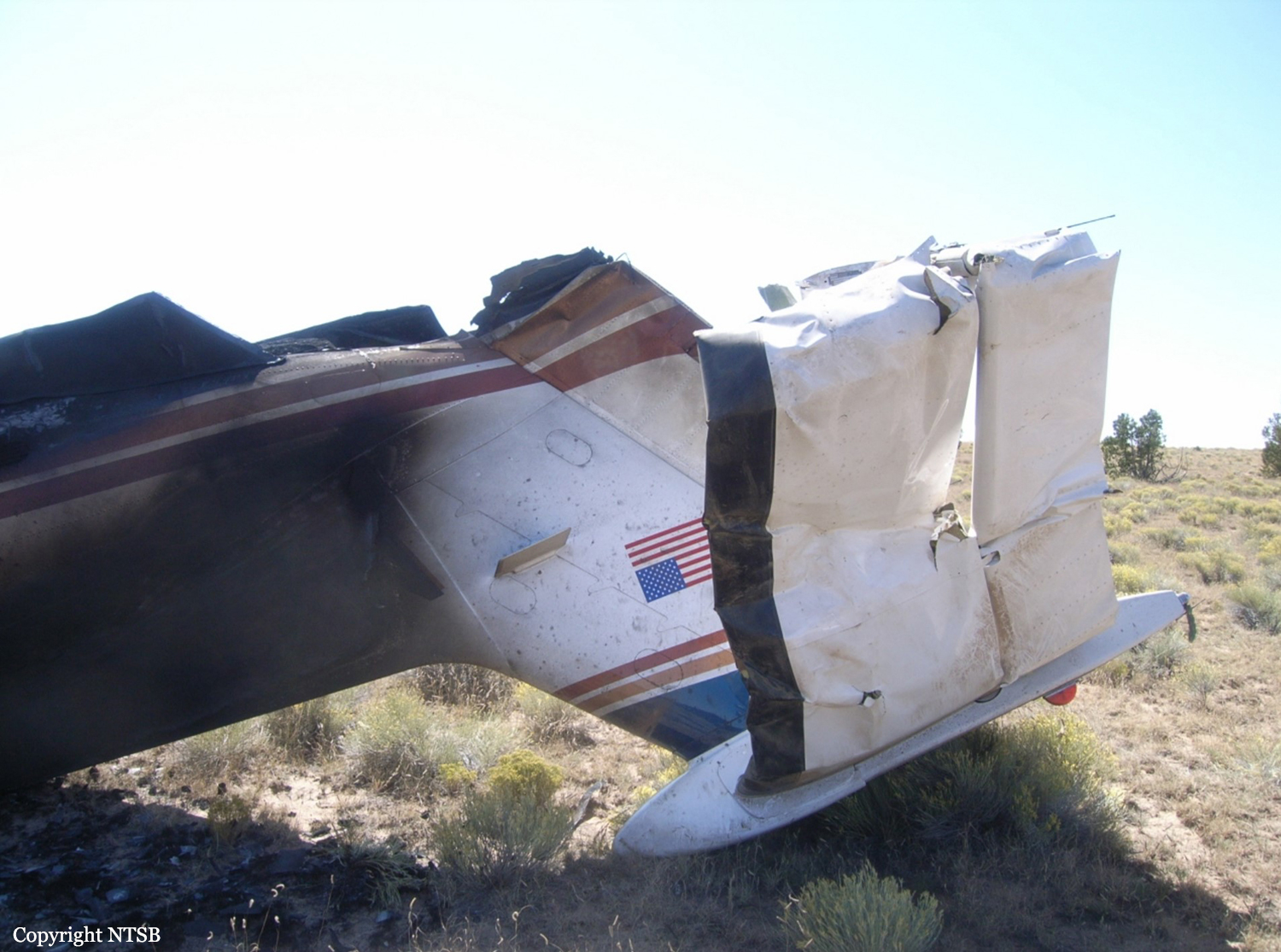
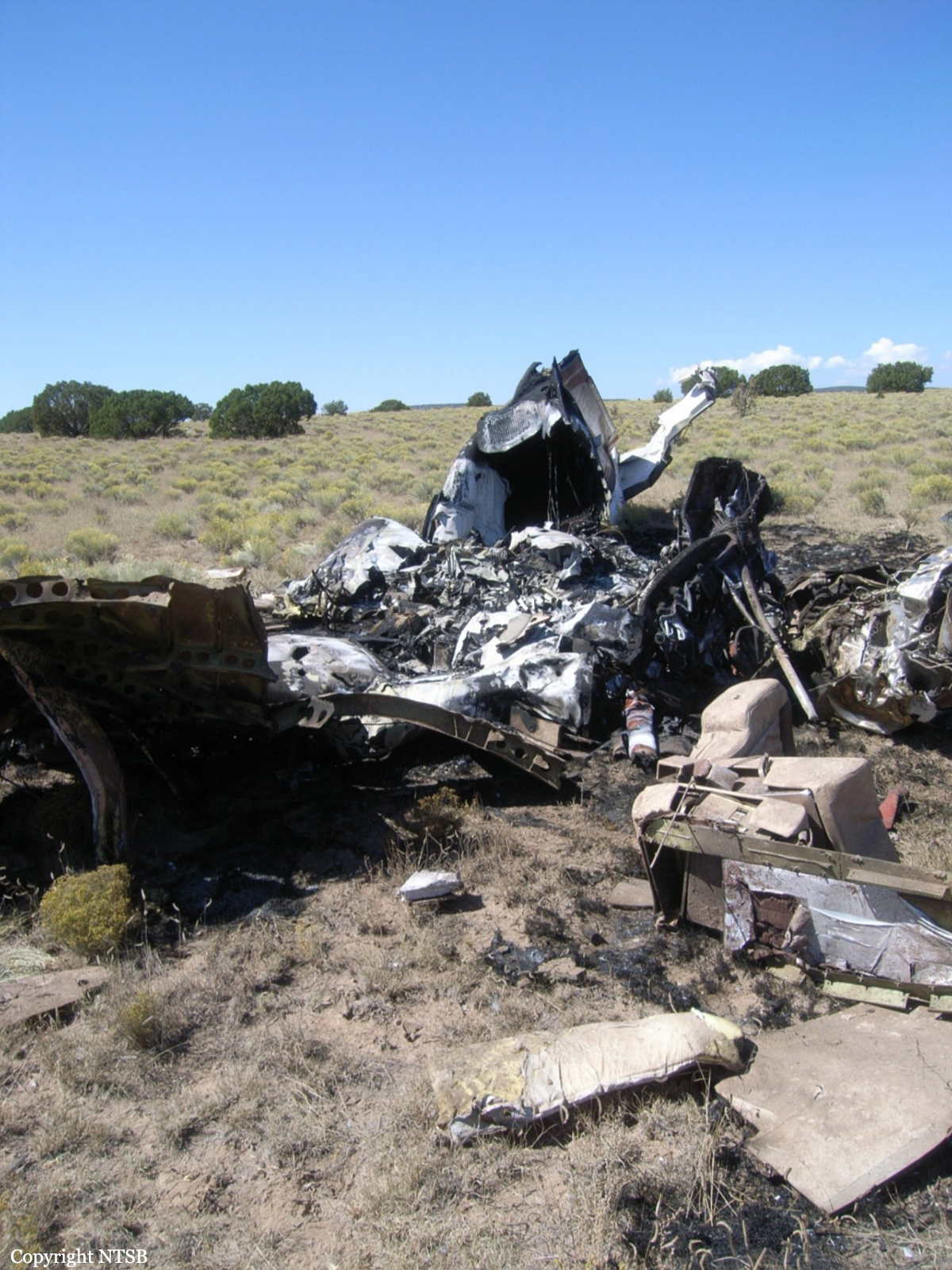
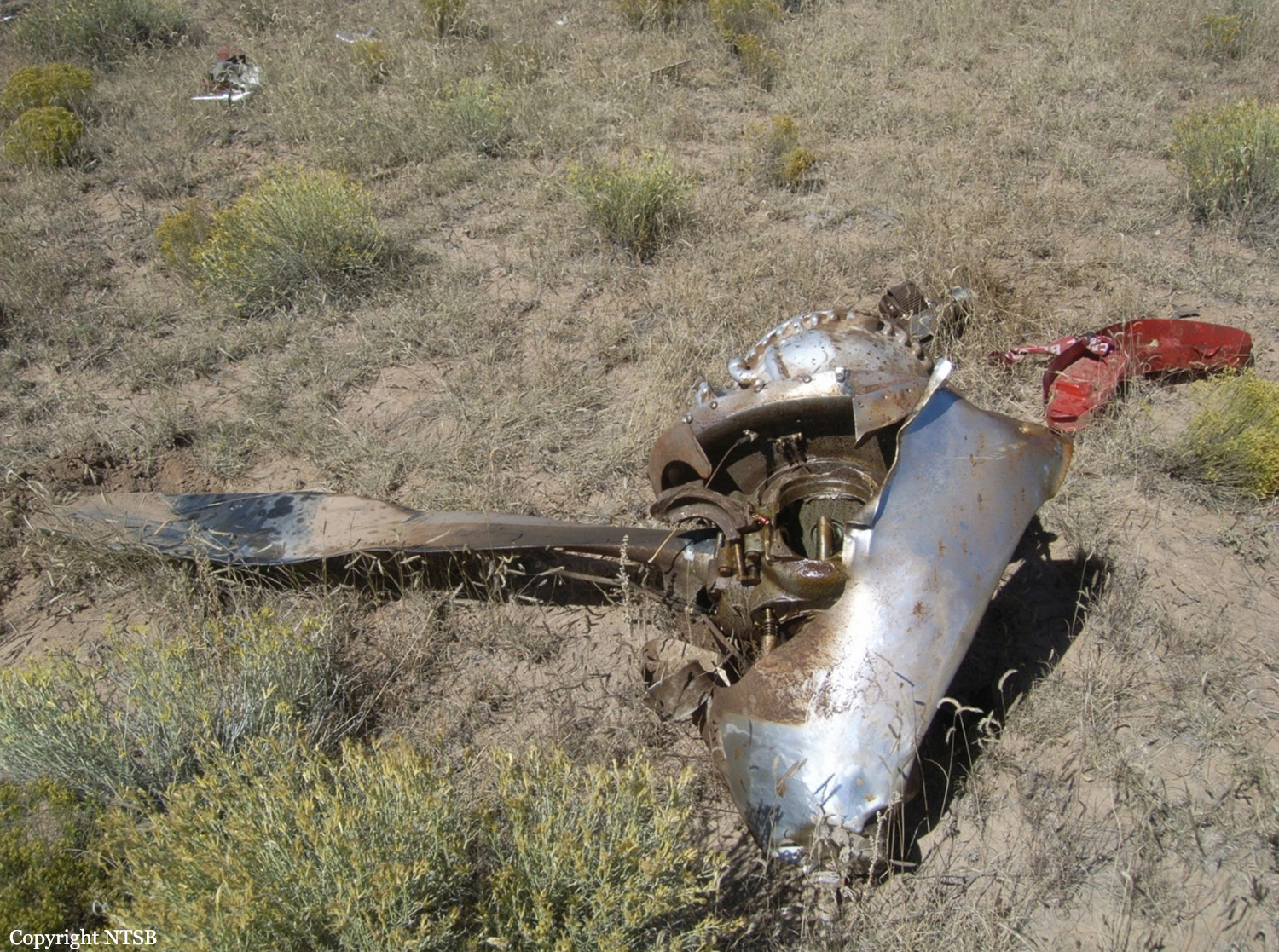
The pilot was approaching his home airport under dark night conditions. He reported that he was five miles from the airport and adjusted the airport lighting several times. He made no further radio calls, though his normal practice was to report his position several times as he proceeded in the landing pattern. The airplane approached the airport from the southeast in a descent, continued past the airport, and adjusted its course slightly to the left. One witness reported observing the airplane enter a left turn, then pitch down, and descend at a steep angle. The airplane impacted terrain in a steep left bank and cart wheeled. An examination of the airframe, airplane systems, and engine revealed no pre-impact anomalies. Flight control continuity was confirmed. The pilot had flown eight hours and 30 minutes on the day of the accident, crossing two time zones, and had been awake for no less than 17 hours when the accident occurred. The accident occurred at a time of day after midnight in the pilot's departure time zone. Post-accident toxicology testing revealed doxylamine and amphetamine in the pilot's tissues. The pilot had been diagnosed with attention deficit hyperactivity disorder (ADHD) almost five years prior to the accident and had taken prescription amphetamines for the disorder since that diagnosis. The FAA does not medically certify pilots who require medication for the control of ADHD. At the time of the accident, the pilot's blood level of amphetamines may have been falling, and he may have been increasingly fatigued and distracted. The use of doxylamine (an over-the-counter antihistamine, often used as a sleep aid) could suggest that the pilot was having difficulty sleeping.
Probable cause:
The pilot's incapacitation due to fatigue resulting in an in-flight collision with terrain.
Final Report:

Crash of a Cessna 402C in Vineyard Haven: 1 killed

Date & Time: Sep 26, 2008 at 2003 LT
Type of aircraft:
Operator:
Registration:
N770CA
Flight Phase:
Flight Type:
Survivors:
No
Schedule:
Vineyard Haven - Boston
MSN:
402C-0432
YOM:
1981
Flight number:
9K1055
Crew on board:
1
Crew fatalities:
Pax on board:
0
Pax fatalities:
Other fatalities:
Total fatalities:
1
Captain / Total flying hours:
16746
Captain / Total hours on type:
2330.00
Aircraft flight hours:
26809
Circumstances:
The pilot of the multi engine airplane, operated by a regional airline, was conducting a positioning flight in night instrument meteorological conditions. After takeoff, the airplane made a slight left turn before making a right turn that continued until radar contact was lost. The airplane reached a maximum altitude of 700 feet before impacting terrain about 3 miles northwest of the departure airport. Post accident examination of the wreckage did not reveal any preimpact failures. The weather reported at the airport, about the time of the accident, included a visibility of 5 statute miles in light rain and mist and an overcast ceiling at 400 feet. Analysis of the radar and weather data indicated that, with the flight accelerating and turning just after having entered clouds, the pilot likely experienced spatial disorientation.
Probable cause:
A loss of aircraft control due to spatial disorientation.
Final Report:

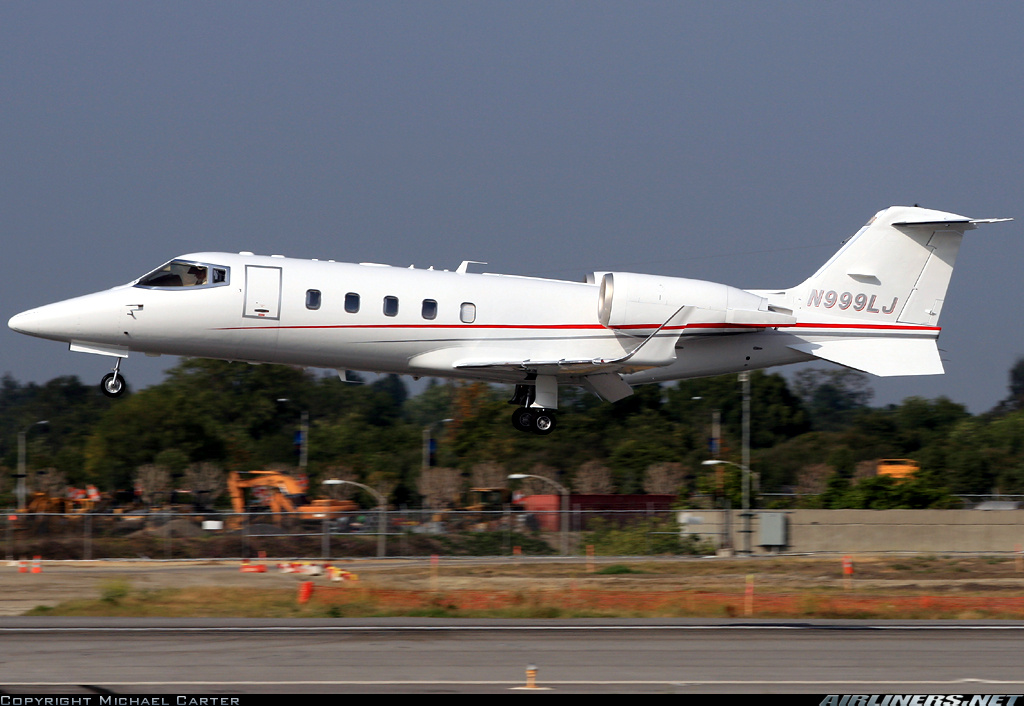
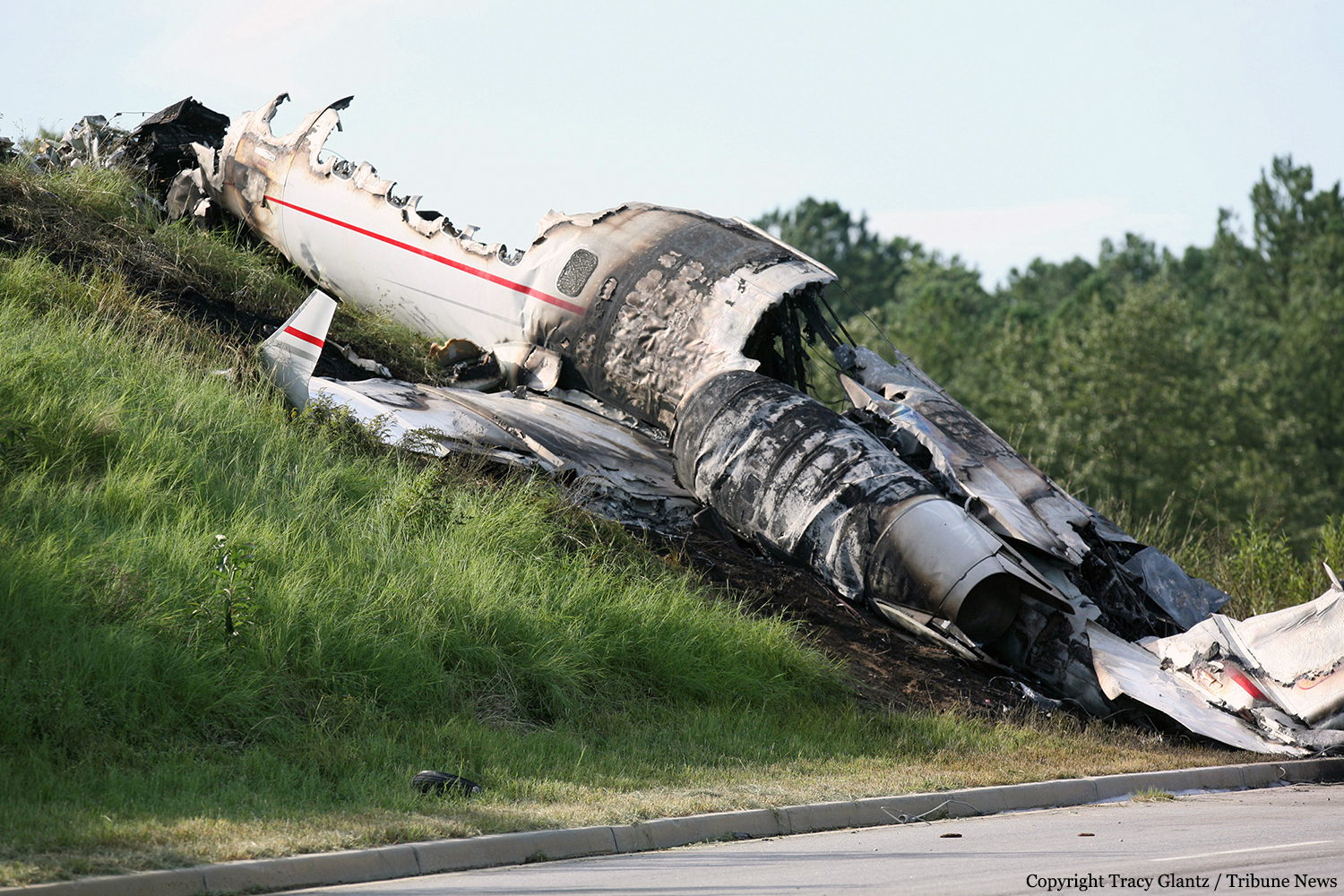
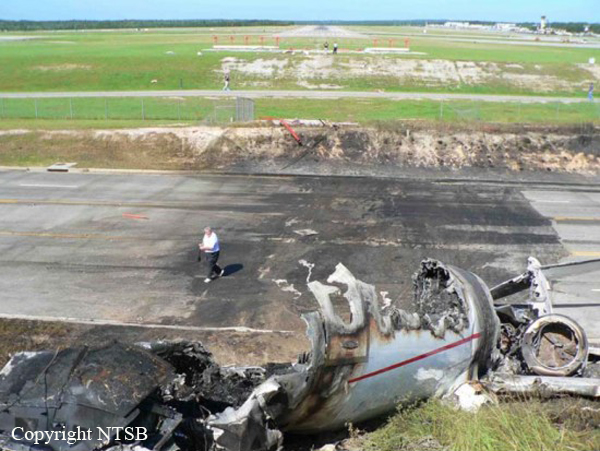
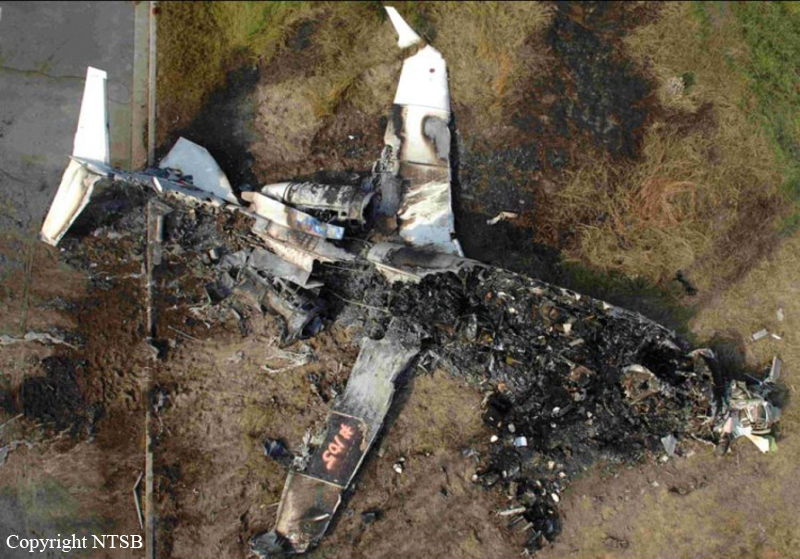
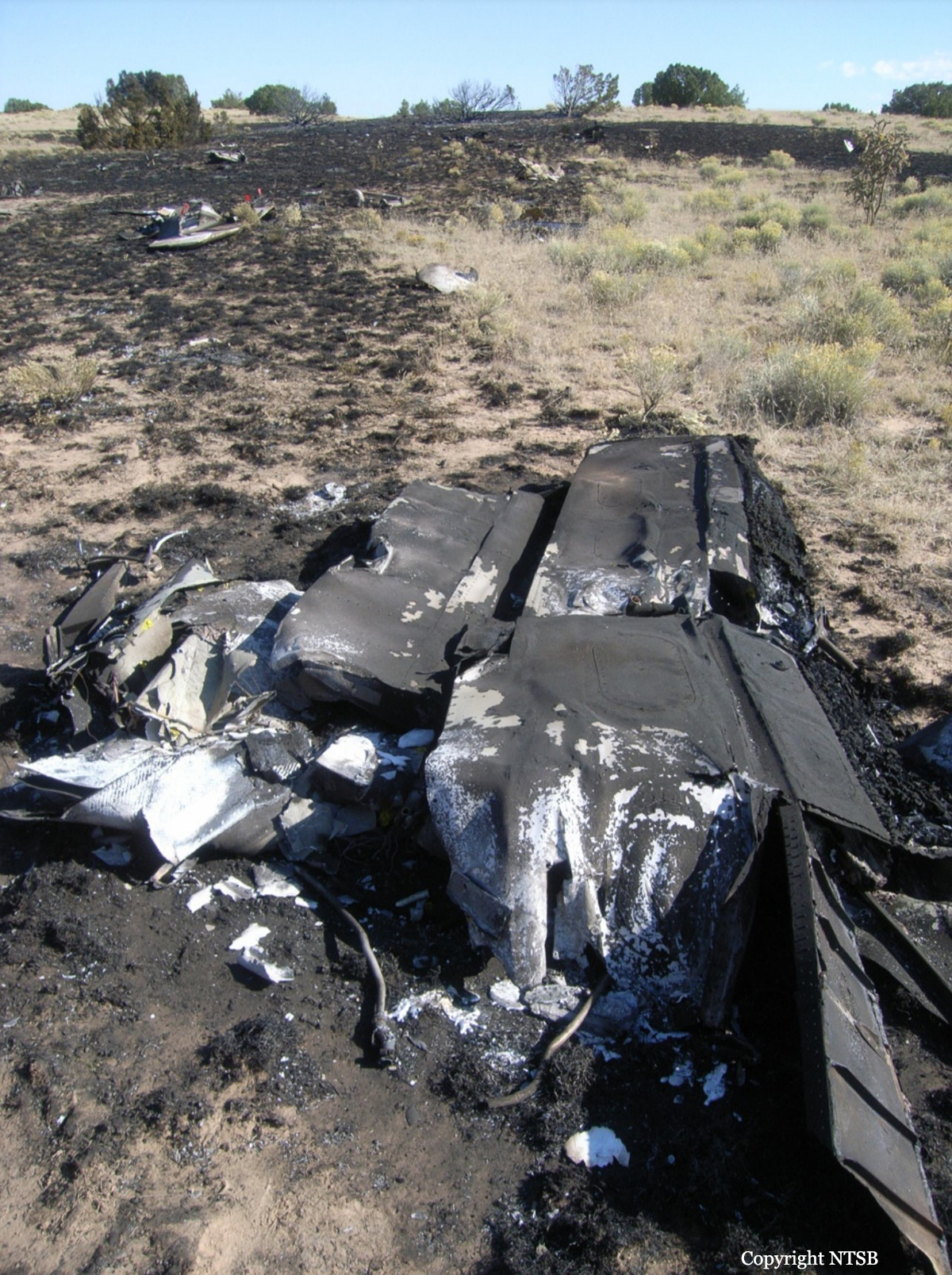
Crash of a Learjet 60 in Columbia: 4 killed

Date & Time: Sep 19, 2008 at 2353 LT
Type of aircraft:
Operator:

Registration:
N999LJ
Flight Phase:
Survivors:
Yes
Schedule:
Columbia - Van Nuys
MSN:
314
YOM:
2006
Crew on board:
2
Crew fatalities:
Pax on board:
4
Pax fatalities:
Other fatalities:
Total fatalities:
4
Captain / Total flying hours:
3140
Captain / Total hours on type:
35.00
Copilot / Total flying hours:
8200
Copilot / Total hours on type:
300
Aircraft flight hours:
108
Aircraft flight cycles:
123
Circumstances:
On September 19, 2008, about 2353 eastern daylight time, a Bombardier Learjet Model 60, N999LJ, owned by Inter Travel and Services, Inc., and operated by Global Exec Aviation, overran runway 11 during a rejected takeoff at Columbia Metropolitan Airport, Columbia, South Carolina. The captain, the first officer, and two passengers were killed; two other passengers were seriously injured. Both pilots and two passengers were killed while two others were seriously injured. Both passengers who were admitted in a local hospital for high burns were DJ AM & Travis Barker of the Rock band called "Blink". They were travelling back to California after they gave a concert in South Carolina.
Probable cause:
The operator’s inadequate maintenance of the airplane’s tires, which resulted in multiple tire failures during takeoff roll due to severe underinflation, and the captain’s execution of a rejected takeoff (RTO) after V1, which was inconsistent with her training and standard operating procedures.
Contributing to the accident were:
- Deficiencies in Learjet’s design of and the Federal Aviation Administration’s (FAA) certification of the Learjet Model 60’s thrust reverser system, which permitted the failure of critical systems in the wheel well area to result in uncommanded forward thrust that increased the severity of the accident,
- The inadequacy of Learjet’s safety analysis and the FAA’s review of it, which failed to detect and correct the thrust reverser and wheel well design deficiencies after a 2001 uncommanded forward thrust accident,
- Inadequate industry training standards for flight crews in tire failure scenarios,
- The flight crew’s poor crew resource management (CRM).
Final Report: