Crash of a Cessna 421B Golden Eagle II in Steamboat Springs: 3 killed

Date & Time: Jan 4, 1992 at 1606 LT
Operator:
Registration:
N1974G
Flight Phase:
Flight Type:
Survivors:
Yes
Schedule:
Steamboat Springs - Minneapolis
MSN:
421B-0862
YOM:
1974
Crew on board:
1
Crew fatalities:
Pax on board:
8
Pax fatalities:
Other fatalities:
Total fatalities:
3
Captain / Total flying hours:
4000
Aircraft flight hours:
2916
Circumstances:
While initiating a cross country flight, the eight place aircraft with nine persons aboard, impacted terrain shortly after takeoff. Ice had been seen on the wings and horizontal stabilizer, and icing conditions were present. The aircraft was over maximum gross weight by a minimum of 258 pounds, and the pilot held an expired student pilot certificate dated august 17, 1984. A copy of a private pilot certificate designating multiengine land and instrument was found in the pilot's personal belongings. Faa officials concluded that it was not a valid certificate. An application for a medical certificate dated may 30, 1991, indicated the pilot had 4,000 hours of flight time. This figure could not be verified. Just prior to takeoff the pilot was observed brushing snow off the wings. Following the accident granular ice was found on the aerodynamic surfaces. The pilot and two passengers were killed while six other occupants were injured.
Probable cause:
Airframe ice and the pilot's failure to remove it. Factors were: aircraft weight exceeded and lack of pilot certification.
Final Report:
Crash of a Cessna 421B Golden Eagle II in Muskogee: 6 killed

Date & Time: Jan 5, 1991 at 2043 LT
Registration:
N421H
Flight Phase:
Flight Type:
Survivors:
No
Schedule:
Muskogee - Albuquerque
MSN:
421B-0516
YOM:
1973
Crew on board:
1
Crew fatalities:
Pax on board:
5
Pax fatalities:
Other fatalities:
Total fatalities:
6
Captain / Total flying hours:
1820
Captain / Total hours on type:
684.00
Aircraft flight hours:
2580
Circumstances:
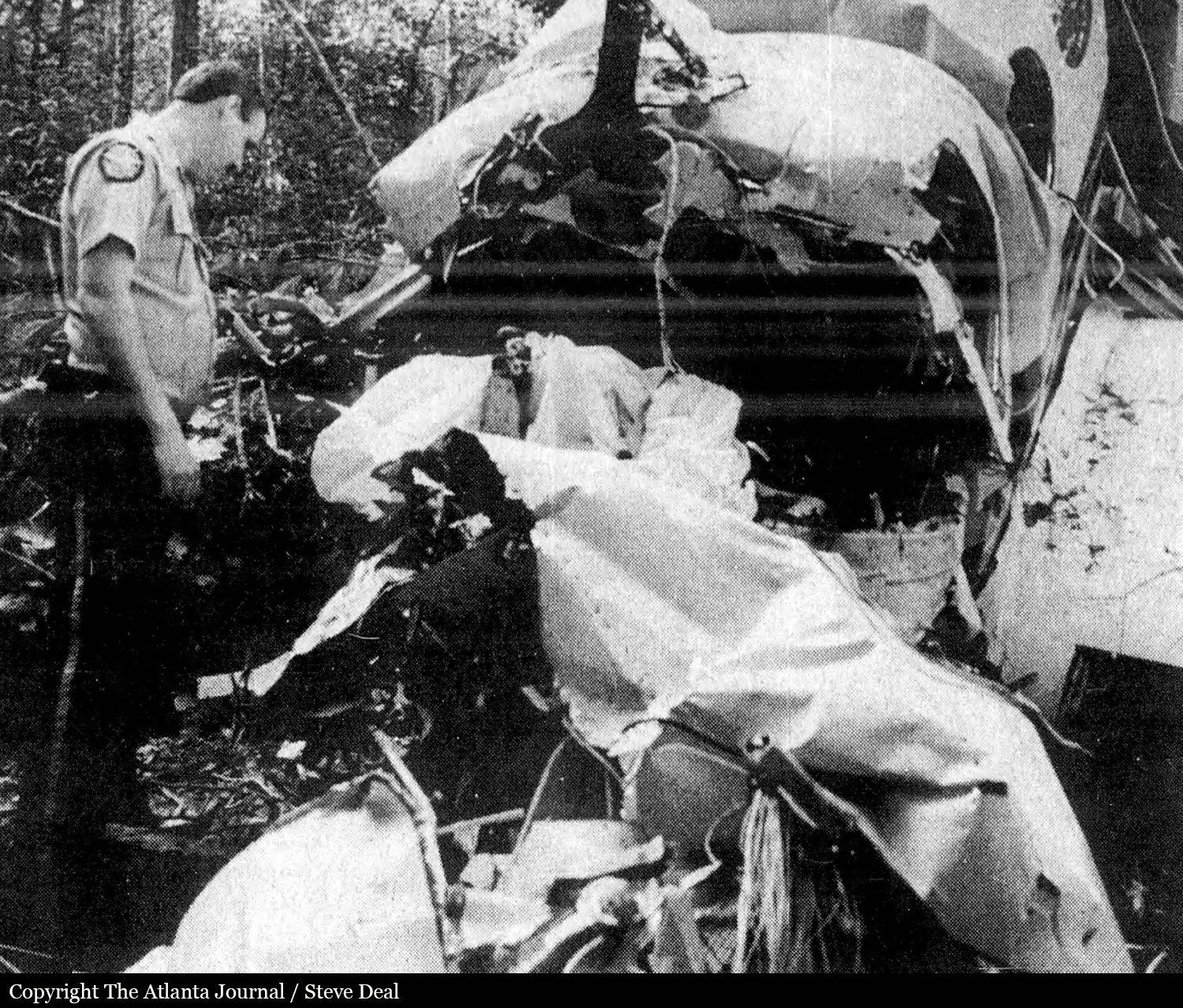
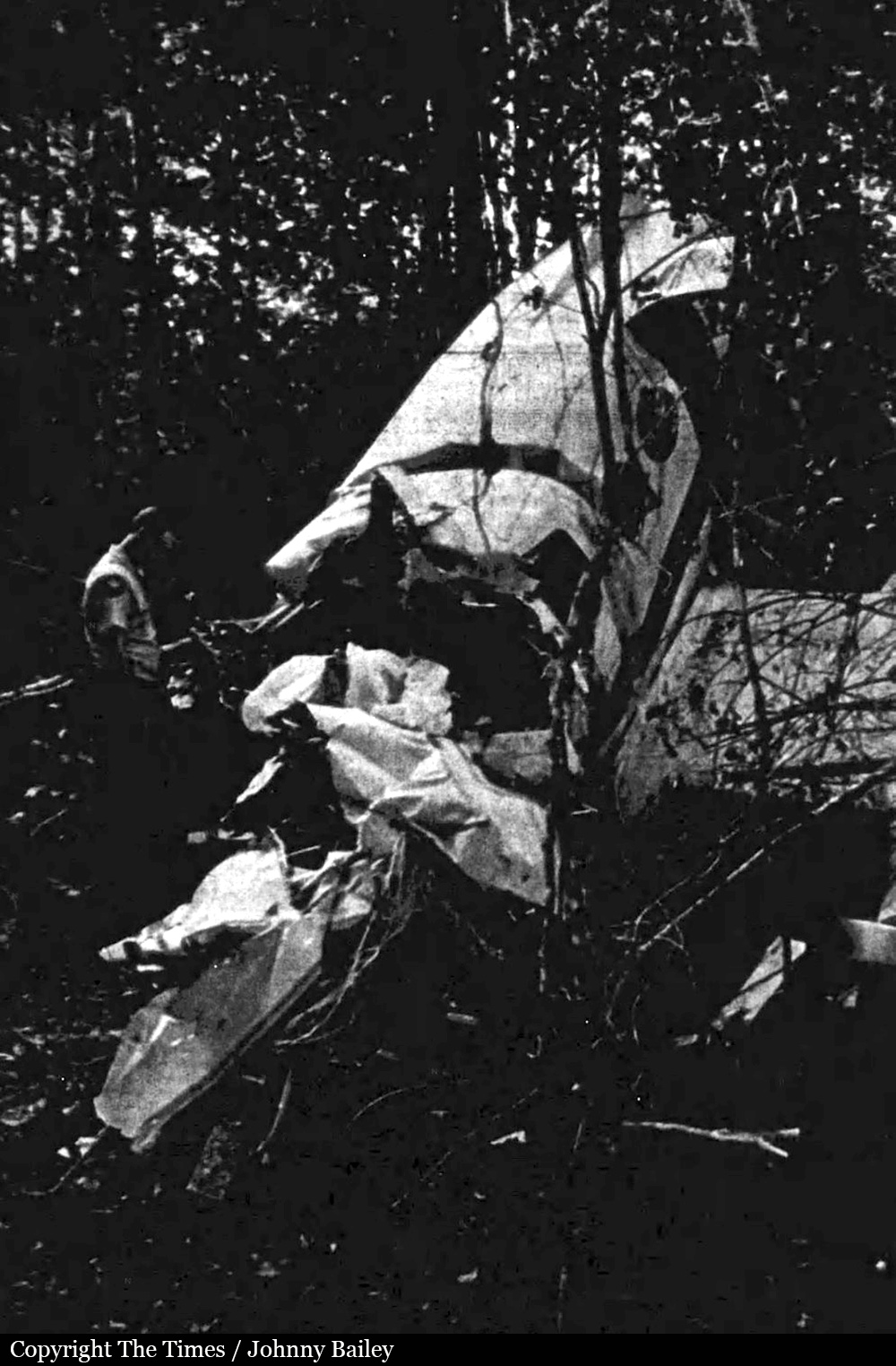
A pilot (whose instrument currency could not be determined) took off at night in IMC. Shortly after takeoff, the aircraft crashed about 1.5 mile from the departure end of the runway. There was evidence that it impacted in an 85° right bank, nose down attitude at high speed. No preimpact part failure was found during the investigation; however, during a pre-purchase inspection on 10/16/90, several discrepancies were noted. These included an inop flight director, an autopilot malfunction and a misrigged flight control system that allowed the control wheel to indicate a left turn when the aircraft was in level flight. There was no record of these being repaired. Records showed the pitot-static system was last tested on 3/24/88. The pilot was taking sine-aid and tylenol for a chronic sinus infection. Although tox checks indicated the presence of 50.7 ug/ml of pseudoephedrine and 36.4 ug/ml of acetaminophen in the pilot's urine, none was found in his blood. The sinus cond could have affected the pilot's balance and equilibrium. All six occupants were killed.
Probable cause:
The pilot's failure to maintain control of the aircraft, due to spatial disorientation. Factors related to the accident were: darkness, adverse weather conditions, and the pilot's physical impairment from the chronic sinus infection.
Final Report:

Crash of a Cessna 421B Golden Eagle II near Flamingo: 3 killed

Date & Time: Nov 9, 1990 at 1447 LT
Registration:
N21ST
Flight Phase:
Flight Type:
Survivors:
No
Schedule:
Key West - Naples
MSN:
421B-0963
YOM:
1975
Crew on board:
1
Crew fatalities:
Pax on board:
2
Pax fatalities:
Other fatalities:
Total fatalities:
3
Captain / Total flying hours:
10100
Captain / Total hours on type:
50.00
Aircraft flight hours:
2741
Circumstances:
As the aircraft (N21ST) was en route on a flight from Key West to Naples, FL, the pilot of another aircraft saw a 'fireball' in the vicinity of where N21ST subsequently crashed. When N21ST did not arrive, a search was initiated. The wreckage was found the next day at 1704 est, in the Everglades National Park, near Flamingo, FL. During impact, the main wreckage was buried in 30 feet of mud. The left outboard wing section (from just outboard of the engine nacelle to the wing tip) was found approximately 1 mile from the main wreckage. An exam revealed the wing had failed where the nacelle fuel tank and the aux fuel tank boost pumps were mounted. No exhaust system failure or leakage from the fuel tanks was found in the area of the fire. The greatest fire damage was at a point where the left nacelle fuel tank boost pump was mounted and aft from there to where the rear wing spar had burned thru. The electrical fuel boost pumps were not recovered after the accident. The ignition source for the fire was not determined. All three occupants were killed.
Probable cause:
An undetermined airframe/component/system failure/malfunction, which resulted in a fuel fed fire in the left wing.
Final Report:

Crash of a Cessna 421B Golden Eagle II in Jefferson: 3 killed

Date & Time: Sep 25, 1990 at 1230 LT
Registration:
N316MH
Flight Phase:
Survivors:
No
Schedule:
Jefferson - Greer
MSN:
421B-0327
YOM:
1973
Crew on board:
2
Crew fatalities:
Pax on board:
1
Pax fatalities:
Other fatalities:
Total fatalities:
3
Captain / Total flying hours:
3800
Aircraft flight hours:
3004
Circumstances:
Shortly after takeoff, the aircraft was seen flying low over trees, followed by a rapid roll to the left and a collision with wooded terrain. One witness reported seeing gray smoke trailing the left engine before the crash. An inspection of the wreckage revealed the left engine spark plugs were black and heavily sooted. Neither propeller had been feathered before the accident. The landing gear was found in an extended position. Further investigation revealed that Cessna multi-engine service bulletin (SB) 88-3 was not complied with. This SB modified the fuel system to provide for direct pilot (rather than automatic) actuation of the output pressure of the auxiliary fuel pumps. Both engines ran satisfactorily on a test stand following the accident. No other evidence of mechanical failure or malfunction was found. All three occupants were killed.
Probable cause:
Failure of the pilot to perform the correct emergency procedures, when confronted with a loss of engine power, and his failure to maintain minimum control speed (VMC), which resulted in a loss of aircraft control.
Final Report:

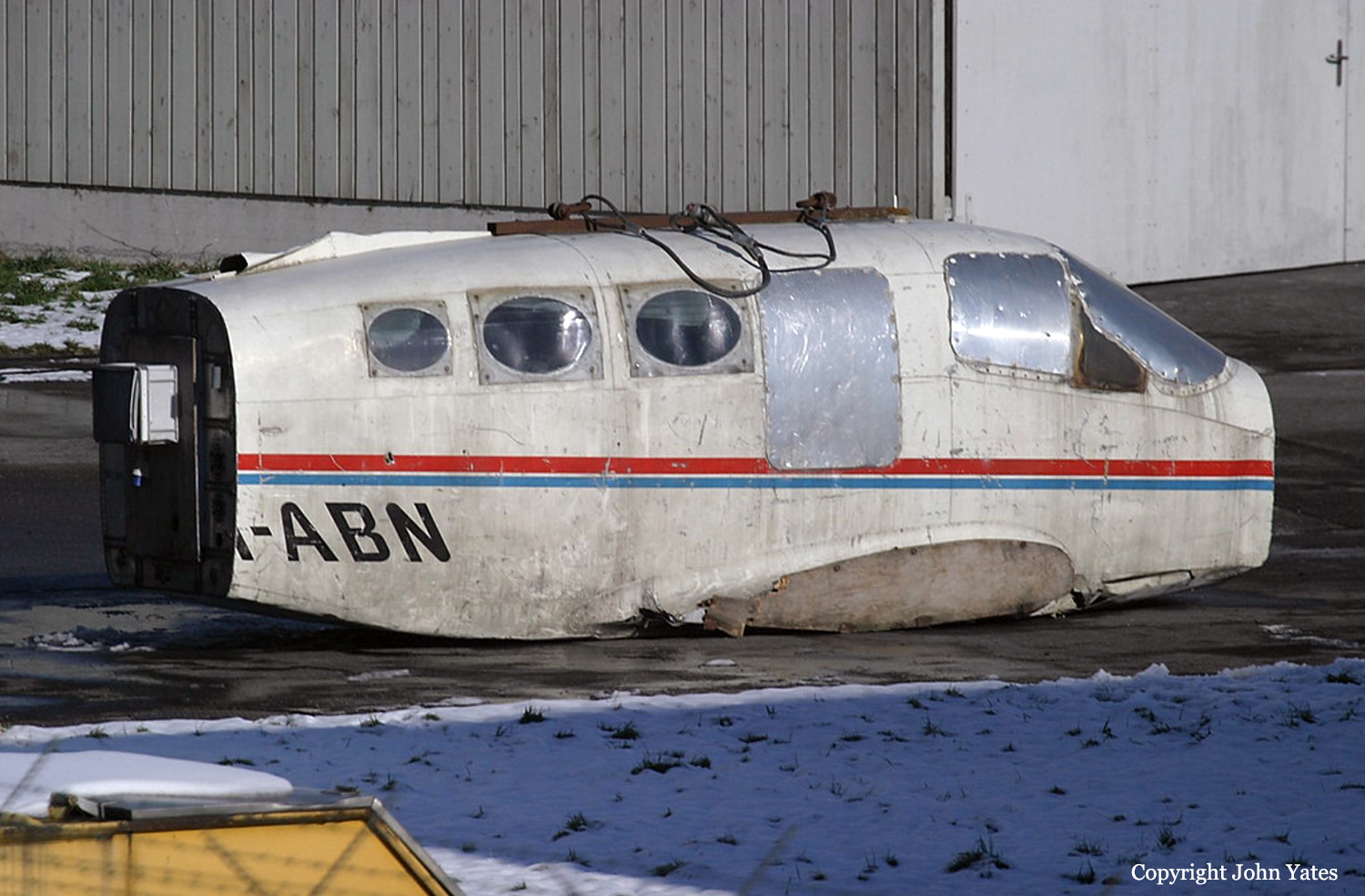
Crash of a Cessna 421B Golden Eagle II in Zurich

Date & Time: Dec 27, 1989 at 1735 LT
Registration:
9H-ABN
Flight Type:
Survivors:
Yes
Schedule:
Malta – Rome – Basel – Zurich – Rome – Malta
MSN:
421B-0007
YOM:
1970
Country:
Region:
Crew on board:
2
Crew fatalities:
Pax on board:
0
Pax fatalities:
Other fatalities:
Total fatalities:
0
Captain / Total flying hours:
1375
Captain / Total hours on type:
262.00
Aircraft flight hours:
2094
Circumstances:
The crew was completing a training flight from Malta to Zurich and return with intermediate stops in Rome and Basel. While on an ILS approach to Zurich-Kloten Airport runway 14, while at an altitude of 600 meters, the twin engine aircraft deviated from the glide, proceeded to a flat attitude when it entered a rapid descent and crashed 1,500 meters short of runway. The aircraft was damaged beyond repair and both occupants were seriously injured.
Probable cause:
It was determined that the accident was the consequence of an aircraft that, while flying in cat I weather conditions, entered an excessive nose-down and unstabilized attitude while passing from IFR to VFR mode until it struck the ground before runway threshold. It is possible that the pilot suffered an optical illusion, which would remain a contributory factor as well as the fact that the windshield was covered by frost, reducing the pilot visibility.

Crash of a Cessna 421B Golden Eagle II in Chesapeake

Date & Time: Nov 28, 1989 at 1815 LT
Registration:
N3359Q
Survivors:
Yes
Schedule:
Washington - Chesapeake
MSN:
421B-0243
YOM:
1972
Crew on board:
1
Crew fatalities:
Pax on board:
1
Pax fatalities:
Other fatalities:
Total fatalities:
0
Captain / Total flying hours:
10800
Captain / Total hours on type:
35.00
Aircraft flight hours:
3760
Circumstances:
The pilot returned to the airport at dusk and made a visual approach to runway 23. He reported that as the aircraft was descending thru 350 feet msl on final approach, it was aligned with the runway, the airspeed was 105 knots and the flaps were extended 25°. However, the aircraft hit trees and crashed about 1/8 mile short of the runway. No mechanical malfunction was reported. The airport elevation was 20 feet. Both occupants were slightly injured.
Probable cause:
The pilot misjudged distance and altitude to the runway, while on final approach to land. The light condition at dusk was a related factor.
Final Report:

Crash of a Cessna 421B Golden Eagle II in Hoffmans Cay: 1 killed

Date & Time: Mar 31, 1989 at 2230 LT
Operator:
Registration:
N4470L
Flight Type:
Survivors:
No
MSN:
421B-0942
YOM:
1975
Country:
Crew on board:
1
Crew fatalities:
Pax on board:
0
Pax fatalities:
Other fatalities:
Total fatalities:
1
Circumstances:
Crashed in unknown circumstances while landing at Hoffmans Cay Airport. The pilot, sole on board, was killed.

Crash of a Cessna 421B Golden Eagle II in San Antonio

Date & Time: Mar 3, 1989 at 0245 LT
Registration:
N5999M
Survivors:
Yes
Schedule:
Memphis - San Antonio
MSN:
421B-0242
YOM:
1972
Crew on board:
1
Crew fatalities:
Pax on board:
1
Pax fatalities:
Other fatalities:
Total fatalities:
0
Captain / Total flying hours:
732
Captain / Total hours on type:
34.00
Aircraft flight hours:
2897
Circumstances:
The airplane had made one approach, followed by a missed approach during a dark night with low ceilings and low visibility. During the next approach the airplane was high on the glide slope and touched down fast and long. The airplane hit the terrain 300 feet past the end of the runway, hit a second time 115 feet further down, then flew into the ils localizer. Part of the left wing burned. There were no indications of an attempted go-around.
Probable cause:
The failure of the pilot to follow the proper procedures/directives by not following the glideslope which resulted in not being able to attain the proper touchdown point.
Final Report:

Crash of a Cessna 421B Golden Eagle II near Tooele: 2 killed

Date & Time: Nov 16, 1988 at 0110 LT
Operator:
Registration:
N222BL
Flight Phase:
Survivors:
No
Site:
Schedule:
Saint George - Salt Lake City
MSN:
421B-0824
YOM:
1974
Crew on board:
1
Crew fatalities:
Pax on board:
1
Pax fatalities:
Other fatalities:
Total fatalities:
2
Captain / Total flying hours:
6375
Aircraft flight hours:
2774
Circumstances:
The flight departed St. George, UT, at 0100 mst enroute to Salt Lake City (SLC). A flight plan was not filed. The weather forecast was for IMC with mountain tops obscured. The pilot requested flight following from SLC center and proceeded on the airways until about 40 miles south of SLC where radar contact was lost. Upon loss of radar contact, the controller asked the pilot what his altitude was. The pilot replied that he was at 10,500 feet. That was the last contact with the flight. After repeated attempts to reestablish contact, it was determined that the aircraft had gone down. A search was begun and the wreckage was found 30 miles southwest of SLC at the 9,500 feet level of a mountain. Both occupants were killed.
Probable cause:
Occurrence #1: in flight collision with terrain/water
Phase of operation: cruise - normal
Findings
1. (f) light condition - dark night
2. (f) weather condition - snow
3. (f) weather condition - low ceiling
4. (f) terrain condition - mountainous/hilly
5. (c) in-flight planning/decision - improper - pilot in command
6. (c) became lost/disoriented - inadvertent - pilot in command
7. (c) proper altitude - not maintained - pilot in command
8. (c) flight into known adverse weather - attempted - pilot in command
Final Report:

Crash of a Cessna 421B Golden Eagle II near Knoxville: 1 killed

Date & Time: Jun 9, 1988 at 1203 LT
Registration:
N700SC
Flight Phase:
Survivors:
No
Schedule:
Indianapolis - Jacksonville
MSN:
421B-0910
YOM:
1975
Crew on board:
1
Crew fatalities:
Pax on board:
0
Pax fatalities:
Other fatalities:
Total fatalities:
1
Captain / Total flying hours:
435
Captain / Total hours on type:
250.00
Aircraft flight hours:
3516
Circumstances:
During an IFR flight at FL170, the pilot reported airframe icing and requested a higher altitude. The pilot climbed to FL210 where he started a descent and reported loss of manifold pressure in the left engine. The pilot indicated that weather was in his flight path and descent was required to avoid icing. 90 seconds later the pilot transmitted '...losing it...'. Radar data indicated aircraft had an inflight breakup at approximately 17,000 feet msl. There was no evidence of mechanical or structural malfunction prior to the breakup. The aircraft did not have a complete current annual and de-ice equipment was inoperative. The pilot had no actual instrument experience and was not certified for multi engine IFR flight. The pilot had a medical history of anxiety attacks and had been taking prescription medication, Xanax and Tofranil, for approximately three years prior to the accident. The blood contained 1.2 mcg/ml of imipramine (Tofranil) and 2.6 mcg/ml desipramine (metabolite of Tofranil). Xanax (alprazolam) was not reported in blood toxicology. These drugs have been known to produce side effects that include poor judgement. The pilot, sole on board, was killed.
Probable cause:
Occurrence #1: in flight encounter with weather
Phase of operation: cruise - normal
Findings
1. (f) weather condition - thunderstorm
2. (f) weather condition - icing conditions
3. (f) flight control surfaces/attachments - ice
4. (f) weather condition - rain
5. (f) weather condition - turbulence
6. (c) in-flight planning/decision - poor - pilot in command
7. (c) impairment (drugs) - pilot in command
8. (c) flight into known adverse weather - intentional - pilot in command
9. (f) lack of total instrument time - pilot in command
10. (f) operation with known deficiencies in equipment - performed - pilot in command
----------
Occurrence #2: loss of engine power (partial) - nonmechanical
Phase of operation: cruise
Findings
11. 1 engine
12. Engine assembly - undetermined
----------
Occurrence #3: airframe/component/system failure/malfunction
Phase of operation: descent - uncontrolled
Findings
13. (f) operation with known deficiencies in equipment - performed - pilot in command
14. (c) design stress limits of aircraft - exceeded - pilot in command
----------
Occurrence #4: in flight collision with terrain/water
Phase of operation: descent - uncontrolled
Findings
15. Terrain condition - residential area
Final Report: