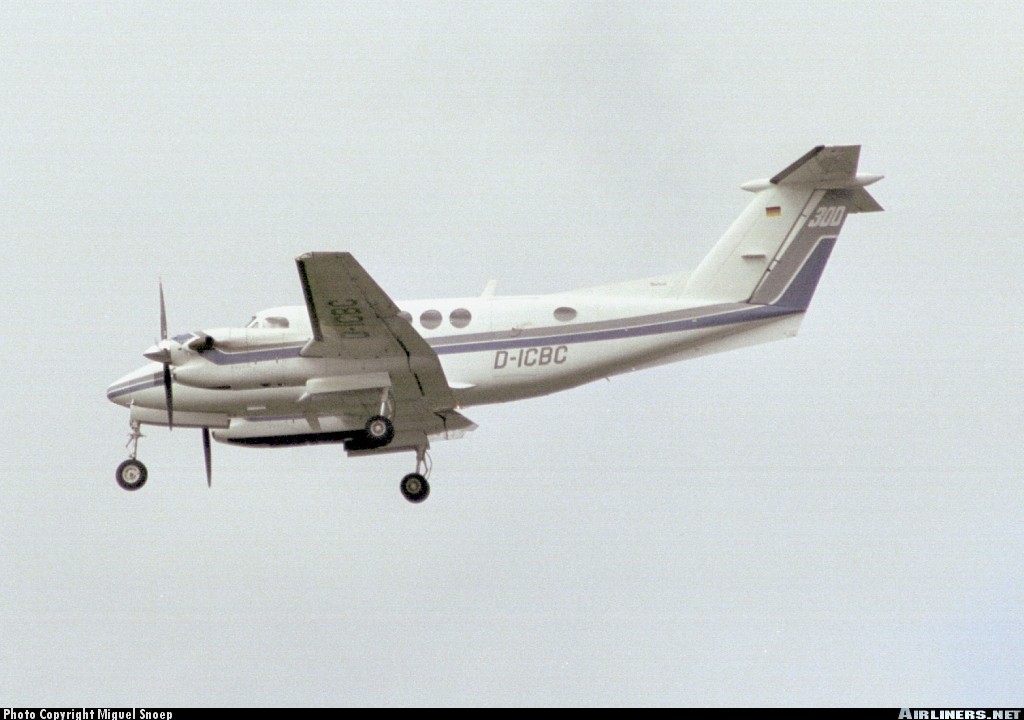
Crash of a Beechcraft 300LW Super King Air on Piz Sarsura: 2 killed

Date & Time: Feb 14, 2002 at 1720 LT
Operator:

Registration:
D-ICBC
Flight Phase:
Survivors:
No
Site:
Schedule:
Poznań – Samedan
MSN:
FA-227
YOM:
1993
Country:
Region:
Crew on board:
1
Crew fatalities:
Pax on board:
1
Pax fatalities:
Other fatalities:
Total fatalities:
2
Captain / Total flying hours:
4158
Captain / Total hours on type:
1835.00
Aircraft flight hours:
4141
Circumstances:
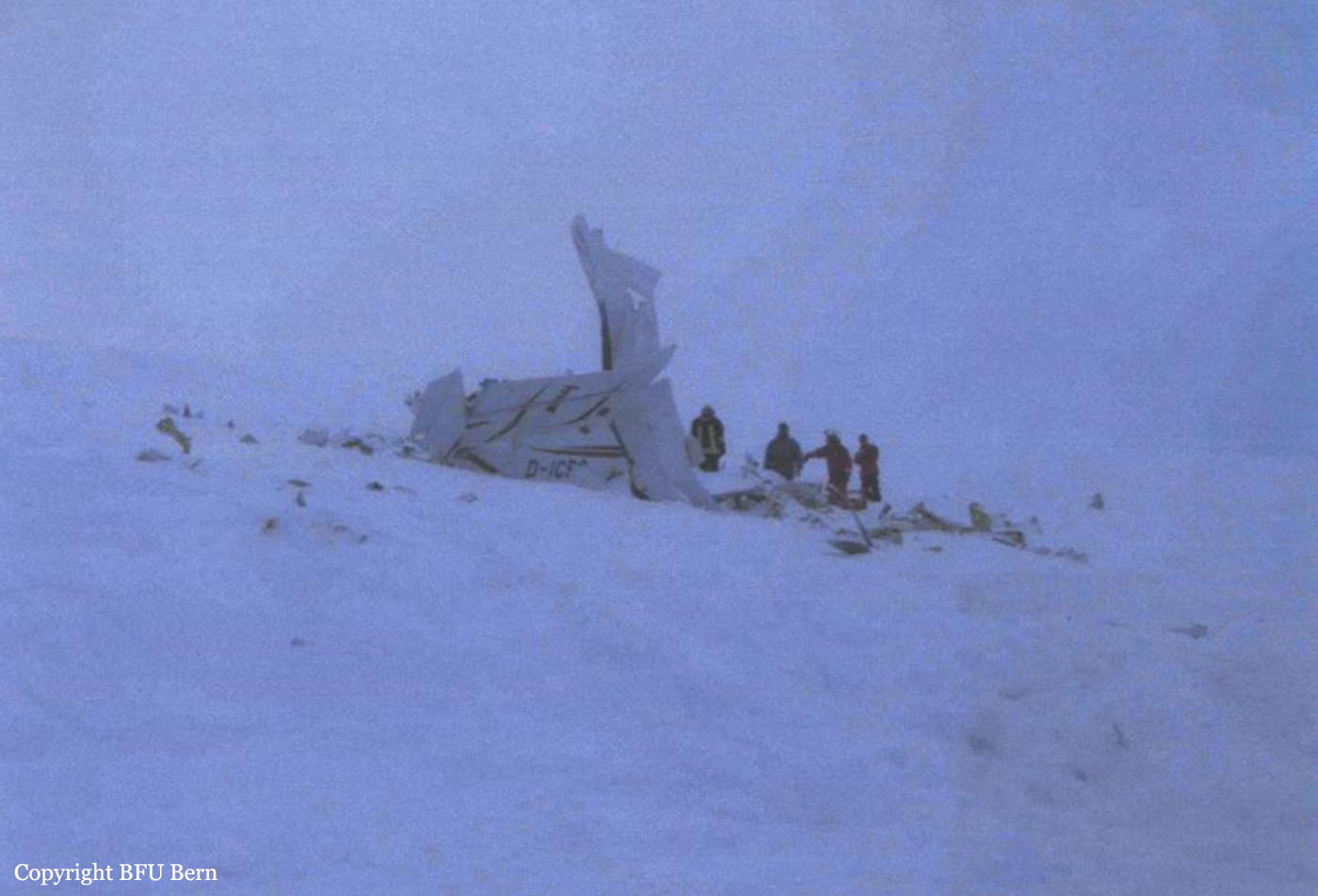
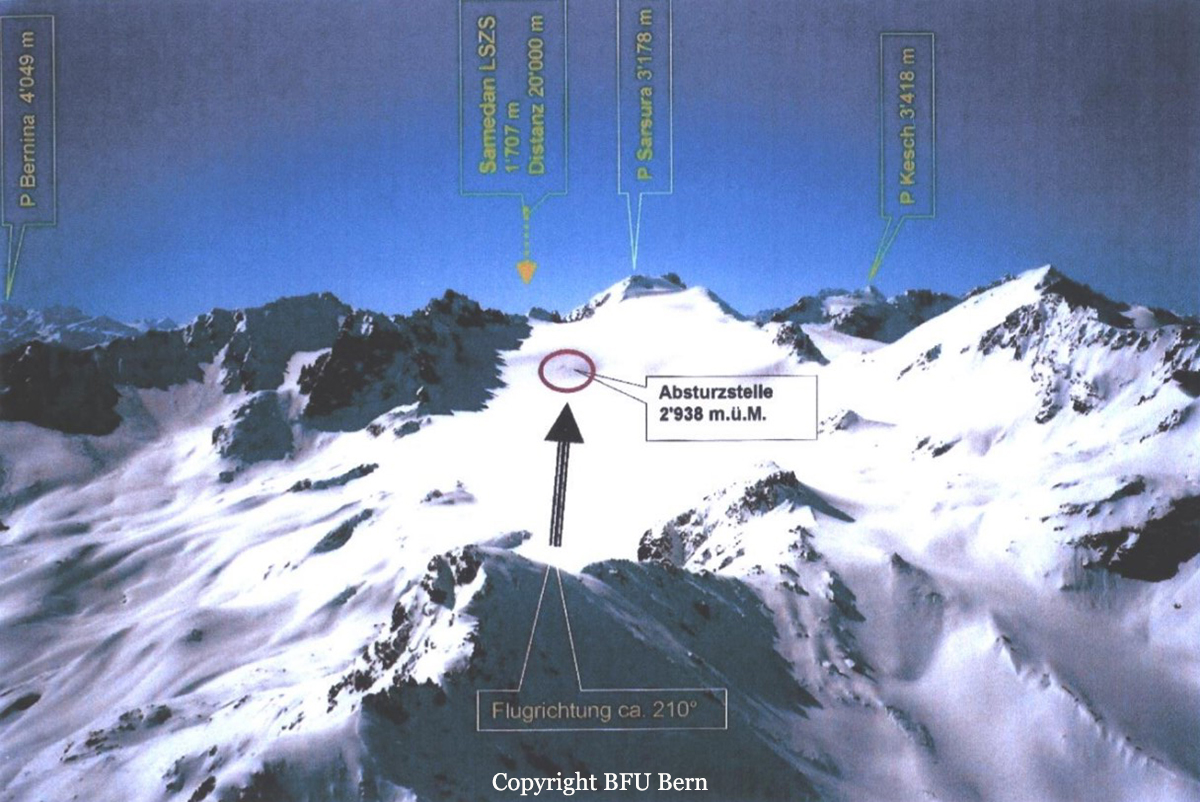
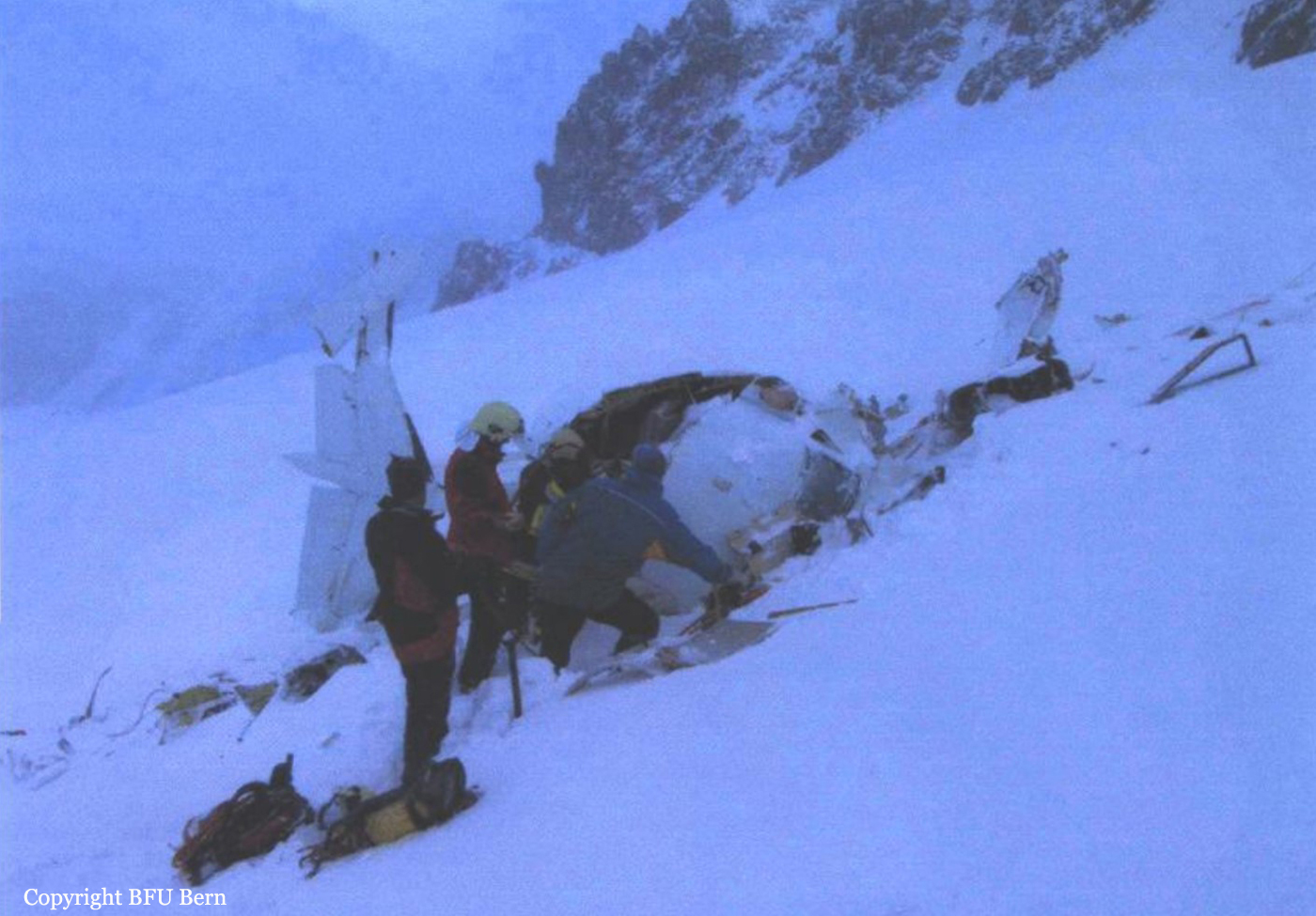
D-ICBC was refuelled in Poznan to its maximum capacity of 2040 litres. An ATC flight plan was filed for an IFR flight. After the RENTA waypoint, VFR had actually been entered, but the crew had not filed the flight plan as a Y flight plan, as is prescribed for flights which begin under IFR rules and then end as a VFR flight. However, the flight plan was entered and transmitted as a Y flight plan by the competent unit in Brussels. Take-off time was scheduled for 14:20 UTC. Take-off actually took place at 14:35 UTC. No details are known about the history of the first part of the flight. The aircraft reached the border with Italian airspace in the planned air corridor M736 at flight level 250. The crew reported at 15:54:14 UTC to Padua ACC, sector LOW NORD on frequency 125.900 MHz: “..ua Buongiorno D-ICBC, Flight level 250, appro…approaching LIZUM Point” The air traffic controller instructed the crew to fly “LIZUM, LUSIL direct”. The crew confirmed “LIZUM .... direct DBC”. On enquiring, they received the information that they would be able to descend in about 10 miles. On the radar plot it can be seen that the aircraft did not fly as required direction LUSIL, but turned onto a heading of approximately 240° and was flying in the direction of Samedan. At 15:59:18 UTC, the clearance to flight level 170 was given; which is the lowest IFR flight level (minimum enroute altitude – MEA) in this area. At 16:02:03 UTC, the crew of D-ICBC was asked whether they were flying direct to Samedan. This was confirmed by them. They were then requested to report as soon as they wished to change from instrument flight rules to visual flight rules. At 16:05:16 UTC, the crew change from instrument flight rules to visual flight rules and were requested to contact Samedan Tower on frequency 135.325 MHz, which they did after a brief delay. The Samedan air traffic controller informed the crew that runway 21 was in use and that the QNH was 1012 hPa. He additionally requested them to report as soon as they flew into the valley. After leaving flight level 170, the aircraft turned slightly to the right onto a course of approximately 265° and maintained its continuous descent. At 16:11:25 UTC, the aircraft passed flight level 130 and began to turn slowly to the left. This turn brought the aircraft precisely onto the extended centre line of runway 21 in Samedan. The aircraft was last captured by the radar at 16:15:24. The last flight level indicated on the secondary radar was FL 101. A little later, the aircraft collided with the elevated terrain of the Sarsura glacier at an elevation of 9640 ft AMSL. Both pilots were killed immediately. The aircraft was destroyed.
Probable cause:
The accident is caused by the fact that the crew on its approach according to visual flight rules to Samedan aerodrome, under critical weather conditions and applying inappropriate flying tactics lost the situational awareness and theby the aircraft D-ICBC collided with the terrain.
The following findings were identified:
- The pilot was in possession of a senior commercial pilots licence, issued by the Polish authorities.
- There are no indications of any health problems affecting the pilot during the flight involved in the accident.
- The aircraft was admitted for traffic.
- The investigation produced no indications of any pre-existing technical faults which might have caused the accident.
- The mass and centre of gravity at the time of the accident were within the prescribed limits.
- As weather information, only METAR and TAF for Innsbruck, Zurich, Milan Malpensa and Milan Linate were found.
- No documentation for visual approaches to Samedan were found in the aircraft.
- In the documentation which was available to the investigators, it was not evident that any of the crew members had previously flown to Samedan.
Final Report:
Crash of a Beechcraft 300 Super King Air near Donaueschingen: 4 killed

Date & Time: Oct 24, 2000 at 1716 LT
Registration:
D-CFMC
Flight Type:
Survivors:
No
Site:
Schedule:
Donaueschingen - Donaueschingen
MSN:
FA-104
YOM:
1986
Country:
Region:
Crew on board:
2
Crew fatalities:
Pax on board:
2
Pax fatalities:
Other fatalities:
Total fatalities:
4
Circumstances:
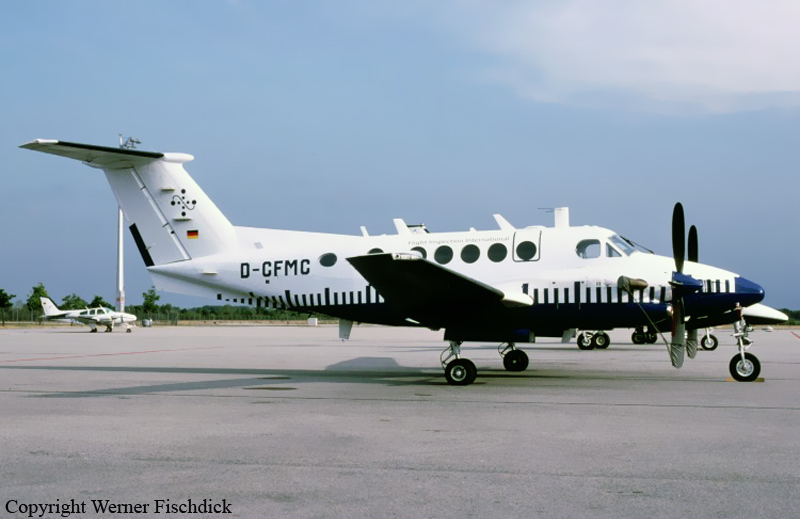
The twin engine aircraft departed Donaueschingen-Villingen Airport in the afternoon on a local calibration mission. After several circuits over the area at an altitude of 7,000 feet, both NDB and DME systems have been calibrated and the crew was returning to the airport at the end of the afternoon. While approaching runway 36 in marginal weather conditions, the crew failed to realize his altitude was insufficient when the aircraft struck trees and crashed in a wooded area located about 15 km from the airport. The aircraft was destroyed and all four occupants were killed. According to published procedures, the crew was supposed to continue the approach at a minimum altitude of 4,500 feet until 11 km from the runway threshold then descending to 2,650 feet. For unknown reasons, the crew started the descent prematurely, causing the aircraft to impact terrain.
Probable cause:
Controlled flight into terrain after the crew descended too low under VFR mode in IMC conditions. The following contributing factors were identified:
- The crew canceled the IFR flight plan for an approach under VFR mode despite weather conditions were marginal and the visibility was insufficient,
- The crew failed to follow the approach checklist,
- The crew failed to complete an approach briefing,
- The crew did not proceed to any callouts on approach,
- The second pilot was procedurally not involved in cockpit work processes and decision-making,
- On approach, the crew referred to the Flight Management System (FMS type III series) which was initially dedicated to flight inspection purposes only,
- Measurement was performed by the flight engineer.

Crash of a Beechcraft 300 Super King Air in Concord

Date & Time: Oct 19, 2000 at 1538 LT
Registration:
N398DE
Flight Phase:
Flight Type:
Survivors:
Yes
Schedule:
Concord - San Jose
MSN:
FA-109
YOM:
1986
Crew on board:
1
Crew fatalities:
Pax on board:
0
Pax fatalities:
Other fatalities:
Total fatalities:
0
Captain / Total flying hours:
10868
Captain / Total hours on type:
35.00
Aircraft flight hours:
3801
Circumstances:
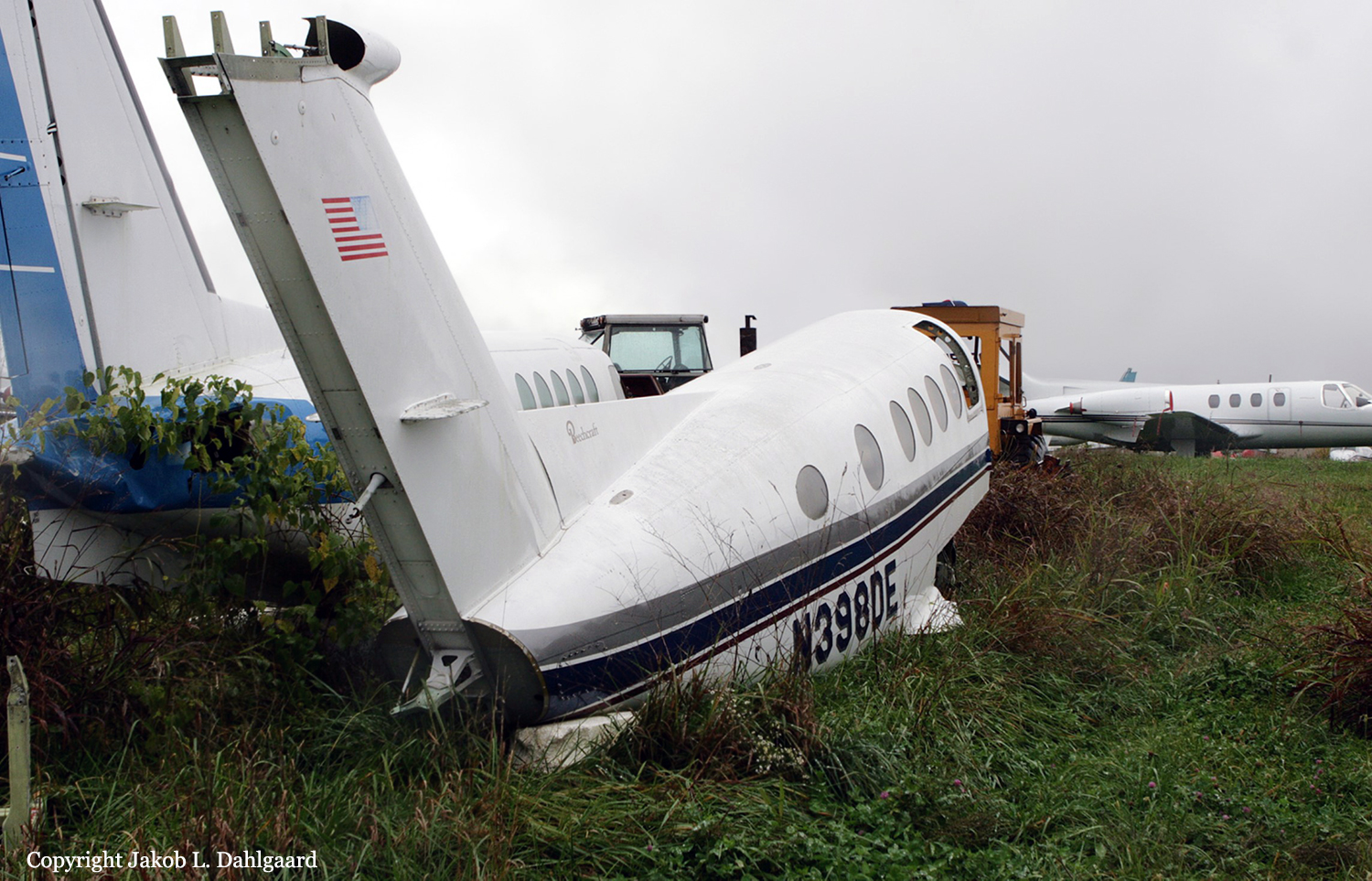
The twin turboprop airplane overran the runway, impacted two fences, and an occupied automobile after the airline transport pilot attempted to abort a takeoff. The pilot performed a rolling takeoff and was paying close attention to balancing the engine power and keeping runway centerline alignment. As the airplane accelerated, the pilot set the power above 80 percent and began an instrument scan. He then noted the airspeed indicator was reading zero with the needle resting on the peg. After a moment's hesitation, the pilot attempted to abort the takeoff by reducing the power levers to flight idle, and subsequently over the gate to ground fine. He reported to the FAA that he did not place the power controls into the reverse position. Air traffic controllers reported they observed the airplane with its nose wheel off of the ground approximately 3/4 of the way down the 4,602-foot long runway. The aircraft's left and right pitot/static systems were examined and tested after the accident, and no anomalies were noted. The pilot obtained verbal training on rejected/aborted takeoffs for the accident airplane. He obtained his type rating and 14 CFR 135 check-out in the accident airplane approximately 1 month prior to the accident. The pilot had accumulated a total of 10,867.5 hours of flight time, of which 34.7 hours were accumulated in the accident aircraft make and model. The pilot reported his total pilot-in-command flight time in the accident aircraft make and model as 20 hours, all of which were accumulated within the preceding 30 days of the accident. Examination of the airplane, the flight instruments and the pitot/static system found no explanation for the pilot reported lack of airspeed reading. The brakes were found to be fully functional. Review of the performance charts for the airplane disclosed that for the weight and ambient conditions of the takeoff, the airplane required 4,100 feet for an
accelerate-stop distance; the runway was 4,602 feet long.
Probable cause:
The pilot's delayed decision to abort the takeoff and his failure to utilize the propeller's reverse pitch function.
Final Report:

Crash of a Beechcraft 300 Super King Air in Ensenada: 3 killed

Date & Time: Aug 26, 2000 at 0245 LT
Operator:
Registration:
XC-AA72
Flight Type:
Survivors:
No
Site:
Schedule:
Hermosillo – Ensenada
MSN:
FA-87
YOM:
1986
Country:
Crew on board:
2
Crew fatalities:
Pax on board:
1
Pax fatalities:
Other fatalities:
Total fatalities:
3
Captain / Total flying hours:
8260
Copilot / Total flying hours:
1529
Aircraft flight hours:
3125
Circumstances:
The twin engine aircraft departed Hermosillo Airport at 0121LT on a flight to Ensenada, carrying one passenger and two pilots. On approach by night, the crew initiated a last turn to join the runway 11 approach path when the aircraft struck the slope of mountain and crashed about 14 km from the airport. The aircraft was destroyed and all three occupants were killed.
Probable cause:
Controlled flight into terrain while completing a turn on final approach, in night conditions, towards an airport of daytime operations only, as mentioned in the Aeronautical Information Publication (AIP).
Final Report:

Crash of a Beechcraft 300 Super King Air in Cullman: 2 killed

Date & Time: Jan 14, 1999 at 0918 LT
Registration:
N780BF
Survivors:
No
Schedule:
Greenville - Cullman
MSN:
FA-70
YOM:
1985
Location:
Crew on board:
1
Crew fatalities:
Pax on board:
1
Pax fatalities:
Other fatalities:
Total fatalities:
2
Captain / Total flying hours:
4100
Aircraft flight hours:
7687
Circumstances:
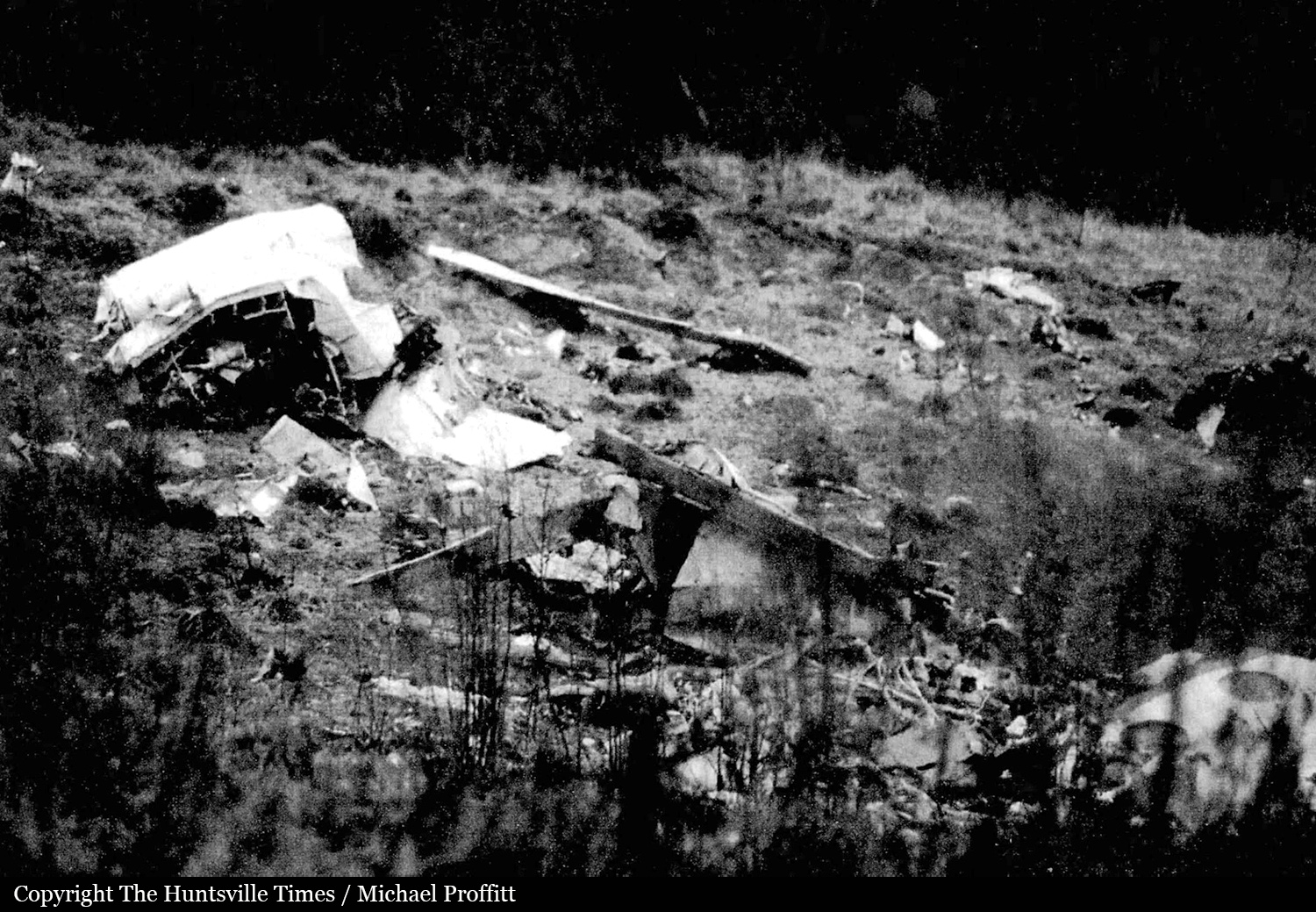
The airplane descended to 2,600 feet to the NDB, and initiated the approach upon crossing the NDB. As the airplane descended below 1,500 feet MSL, Huntsville lost radar contact. The next communication with the airplane was when the pilot radioed that he was initiating the missed approach. The published missed approach procedure is, 'Climbing lift turn to 2,700 direct CPP NDB and hold.' The airplane made a series of turns within the next one minute and 24 seconds. Additionally, the airplane's altitude varied but it never climbed above the altitude of 1,700 feet. The airplane wreckage was located approximately 3.5 miles north of the airport on a 345 degree heading on the opposite side of the outbound course to the NDB. Witnesses in the immediate area stated that they could hear the airplane flying low over their homes but could not see it due to the foggy conditions. A review of pilot records did not show the pilot having any fixed wing airplane experience.
Probable cause:
The pilot's failure to adhere to the missed approach procedure resulting in a collision with terrain. Contributing factors were fog and the rotorcraft rated pilot's lack of fixed wing certification/experience.
Final Report:

Crash of a Beechcraft 300LW Super King Air near Linz: 4 killed

Date & Time: May 12, 1996 at 1630 LT
Operator:
Registration:
OE-FEM
Flight Phase:
Survivors:
No
Site:
Schedule:
Salzburg - Krems
MSN:
FA-210
YOM:
1990
Country:
Region:
Crew on board:
2
Crew fatalities:
Pax on board:
2
Pax fatalities:
Other fatalities:
Total fatalities:
4
Circumstances:
En route from Salzburg to Krems, while cruising in IMC conditions, the crew cancelled the IFR flight plan and continued under VFR mode. Shortly later, the twin engine aircraft struck the slope of a mountain shrouded by clouds and crashed about 35 km northeast of Linz. All four occupants were killed.

Crash of a Beechcraft 300 Super King Air on Mt Knob: 3 killed

Date & Time: Oct 26, 1993 at 1552 LT
Operator:
Registration:
N82
Flight Phase:
Flight Type:
Survivors:
No
Site:
Schedule:
Atlantic City - Winchester - Newport News
MSN:
FF-17
YOM:
1988
Crew on board:
3
Crew fatalities:
Pax on board:
0
Pax fatalities:
Other fatalities:
Total fatalities:
3
Captain / Total flying hours:
6700
Captain / Total hours on type:
2000.00
Aircraft flight hours:
3353
Circumstances:
The airplane departed Winchester Regional Airport under VFR mode and was completing a routine point-to-point flight to Newport News/Williamsburg International Airport (PHF), Virginia after conducting a flight inspection of the ILS at Winchester Regional Airport. After takeoff, while flying at an altitude of 2,000 feet, the crew requested permission to climb but this was denied by ATC due to traffic. Awaiting an IFR clearance, the aircraft struck the slope of Mt Knob located about 30 miles southwest from Winchester Airport. All three occupants were killed.
Probable cause:
Failure of the pilot-in-command to ensure that the airplane remained in visual meteorological conditions over mountainous terrain, and the failure of Federal Aviation Administration executives and managers responsible for the FAA flying program to:
(1) establish effective and accountable leadership and oversight of flying operations;
(2) establish minimum mission and operational performance standards;
(3) recognize and address performance-related problems among the organization's pilots; and
(4) remove from flight operations duty pilots who were not performing to standards.
Final Report:

Crash of a Beechcraft 300 Super King Air in Taloja: 4 killed

Date & Time: Jul 15, 1993 at 1155 LT
Operator:
Registration:
VT-EQM
Flight Type:
Survivors:
No
Schedule:
Ahmedabad - Mumbai
MSN:
FA-128
YOM:
1987
Country:
Region:
Crew on board:
1
Crew fatalities:
Pax on board:
3
Pax fatalities:
Other fatalities:
Total fatalities:
4
Captain / Total flying hours:
1505
Captain / Total hours on type:
28.00
Aircraft flight hours:
270
Circumstances:
The aircraft, belonging to National Remote Sensing Agency, Hyderabad, was operating a ferry flight from Ahmedabad to Bombay. There were four persons on board the aircraft including pilot-in-command. During approach to land at Bombay, contact with ATC was lost after the aircraft had reported its flight level 4,000 feet. The aircraft was found crashed on top of the hills at Taloja village located about 11 NM East of Bombay airports. All the four persons on board received fatal injuries. The aircraft was completely destroyed.
Probable cause:
The probable cause of accident has been attributed to:
- The commander of the aircraft having meager flying experience on type and limited instrument flying hours encountering instrument meteorological conditions descended below the ATC cleared height of 3,700 feet without intercepting the glide slope.
- The radar controller by not effectively monitoring the aircraft position after he had advised it to intercept the localizer contributed to the cause of the accident.
- The pilot failed to follow procedures, regulations and instructions.
Final Report: