


Country
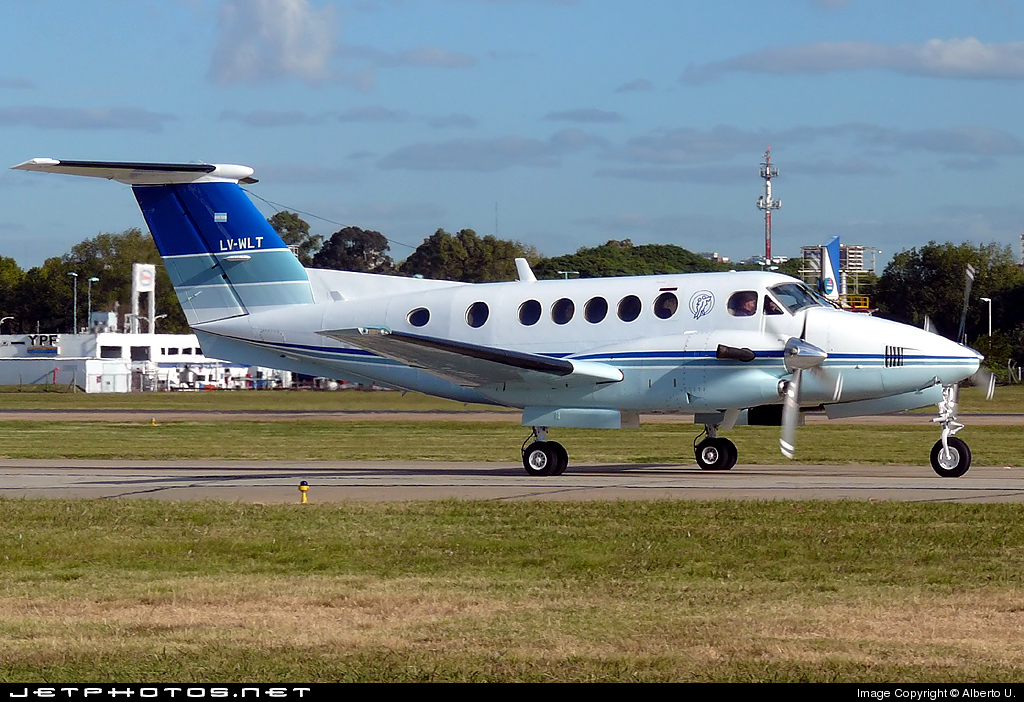
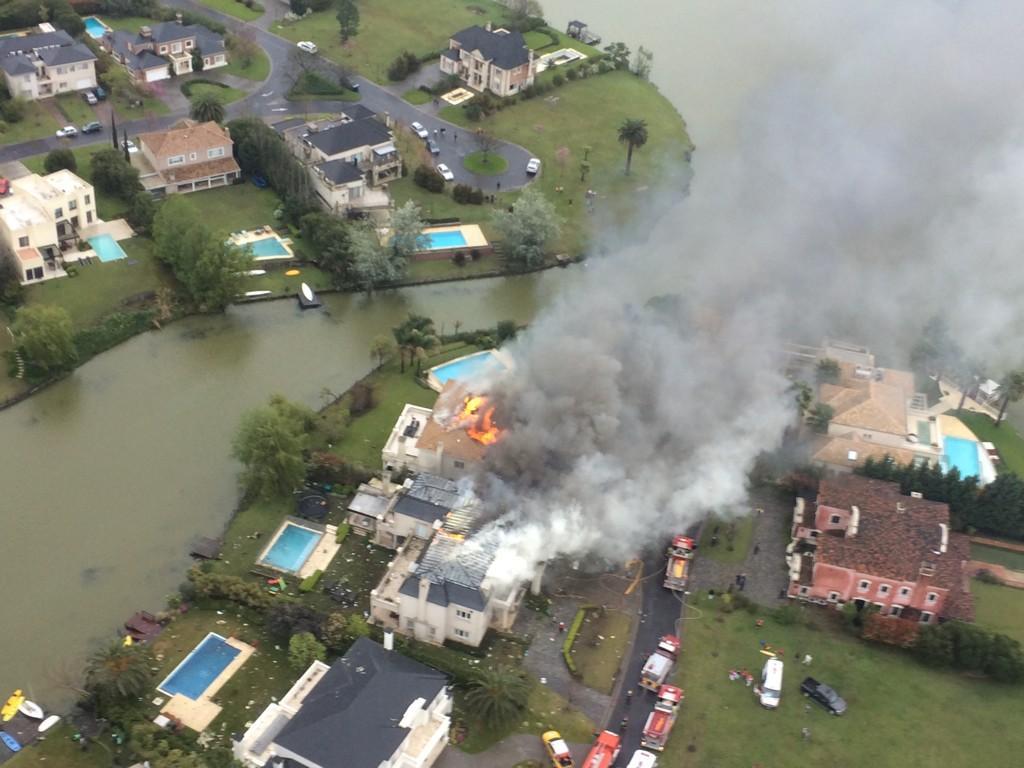
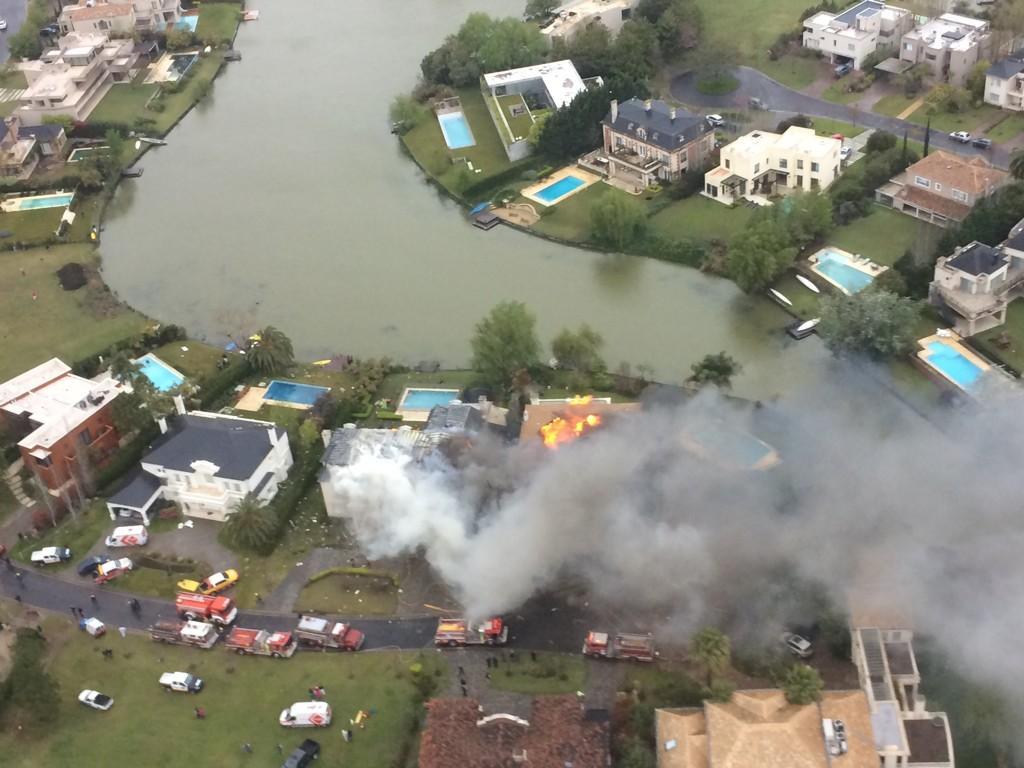
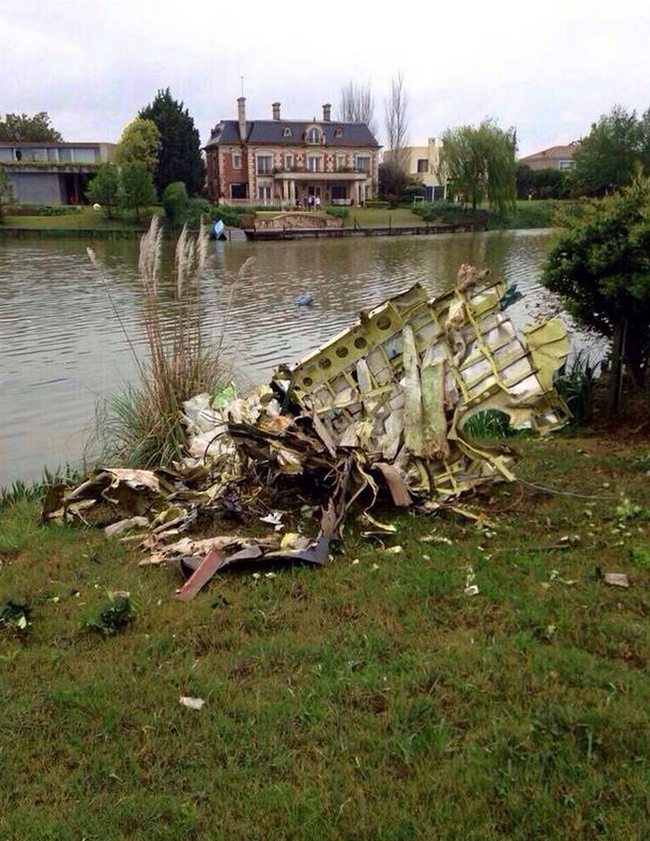
Crash of a Beechcraft 300LW Super King Air in Nordelta: 2 killed
Date & Time:
Sep 14, 2014 at 1515 LT
Registration:
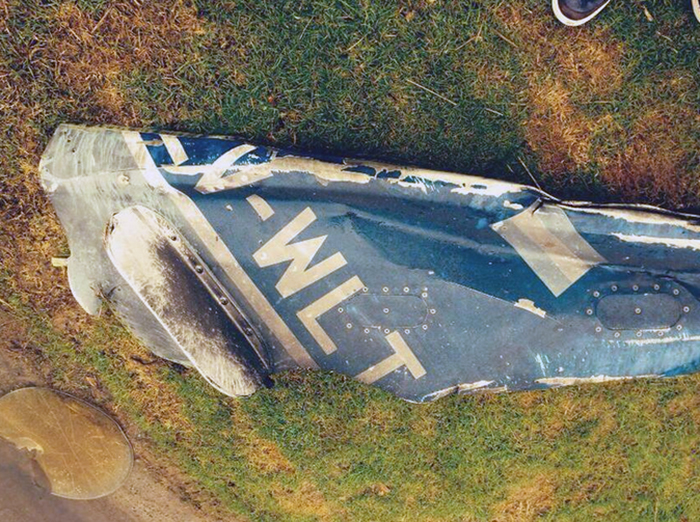
LV-WLT
Survivors:
No
Schedule:
Lincoln – Buenos Aires
MSN:
FA-221
YOM:
1992
Crew on board:
1
Crew fatalities:
Pax on board:
1
Pax fatalities:
Other fatalities:
Total fatalities:
2
Captain / Total hours on type:
2000.00
Aircraft flight hours:
2630
Aircraft flight cycles:
2419
Circumstances:
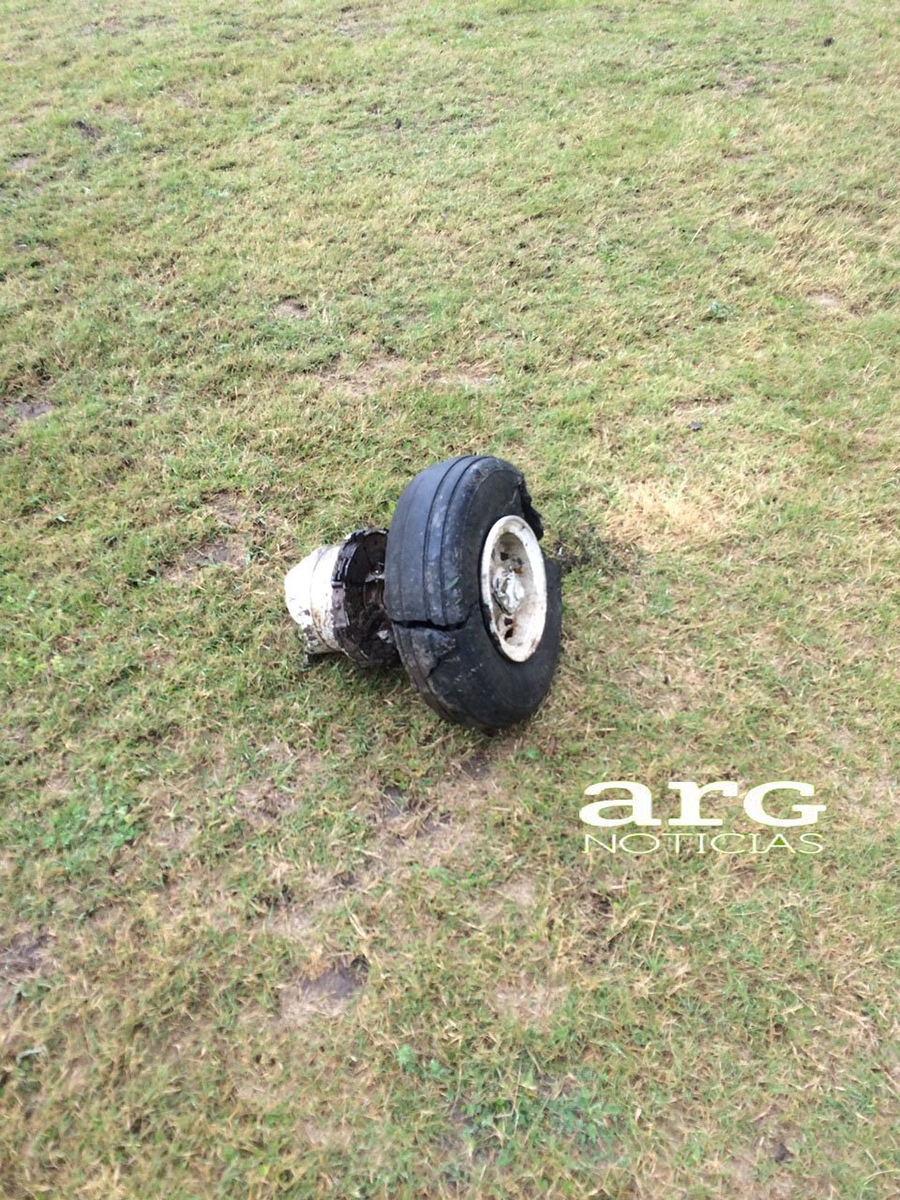
The twin engine aircraft departed Lincoln-Estancia La Nueva Airport on a private flight to Buenos Aires, carrying one passenger and one pilot. While descending to Buenos Aires-Aeroparque-Jorge Newbury Airport, the pilot was unable to intercept the ILS for runway 13 because of an excessive speed of 260 knots and a too high angle of descent. In such conditions, he could not configure the aircraft for approach and landing (flaps) in accordance with the information in the BE 300 flight manual. He completed a left turn at a speed of 228 knots and descended below the glide before initiating a second turn to the right when control was lost. The aircraft entered a dive and crashed onto two houses located in Nordelta, about 26 km northwest of the airport. The aircraft and two houses were destroyed and both occupants were killed, among them Gustavo Andres Deutsch aged 78 who was the former owner of the defunct airline LAPA.
Probable cause:
The accident resulted from the combination of immediate triggers and failures in the aeronautical system's defenses, including:
- Prevailing weather conditions at the scene of the accident;
- Pilot-in-command experienced difficulties in managing aircraft control and flight path during an instrument approach;
- The probability of overload of work of the pilot in command as a result of the operational demands presented by the situation;
- The execution of the operation by a single pilot (single pilot operation), taking into account the age of the pilot; and
- Deficiencies in pilot-in-command certification denying the value of CE-6 as a defense barrier for the aeronautical system (CE-6 is a Critical Element of ICAO Annex 19 regarding responsibilities in issuing licenses).
- Prevailing weather conditions at the scene of the accident;
- Pilot-in-command experienced difficulties in managing aircraft control and flight path during an instrument approach;
- The probability of overload of work of the pilot in command as a result of the operational demands presented by the situation;
- The execution of the operation by a single pilot (single pilot operation), taking into account the age of the pilot; and
- Deficiencies in pilot-in-command certification denying the value of CE-6 as a defense barrier for the aeronautical system (CE-6 is a Critical Element of ICAO Annex 19 regarding responsibilities in issuing licenses).
Final Report:
Crash of a Beechcraft 300 Super King Air in Zacatecas: 6 killed
Date & Time:
Apr 30, 2013 at 1221 LT
Operator:

Registration:
XC-LMV
Survivors:
No
Schedule:
Zacatecas - Mexico City
MSN:
FA-83
YOM:
1986
Crew on board:
2
Crew fatalities:
Pax on board:
4
Pax fatalities:
Other fatalities:
Total fatalities:
6
Aircraft flight hours:
7146
Aircraft flight cycles:
5756
Circumstances:
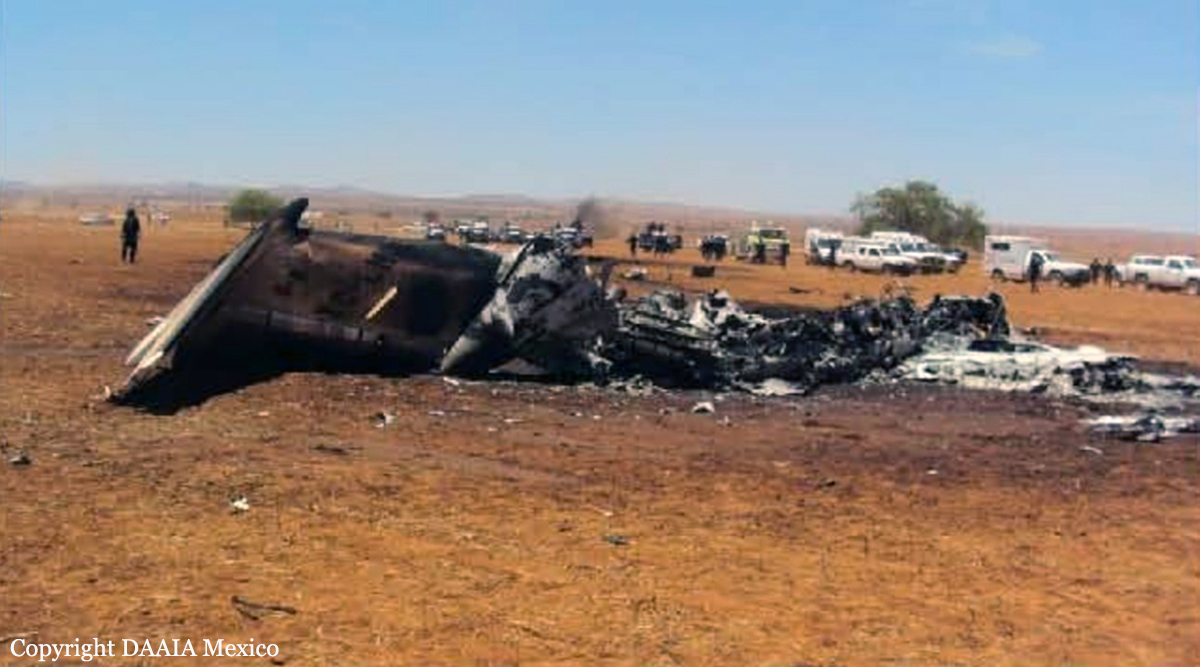
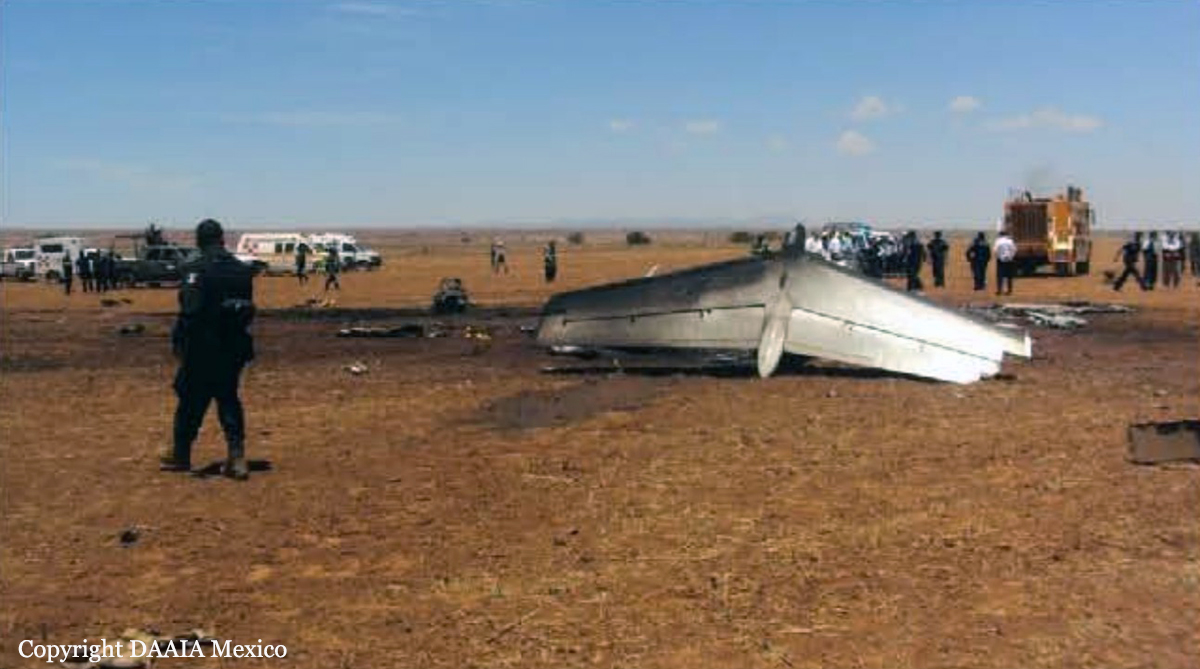
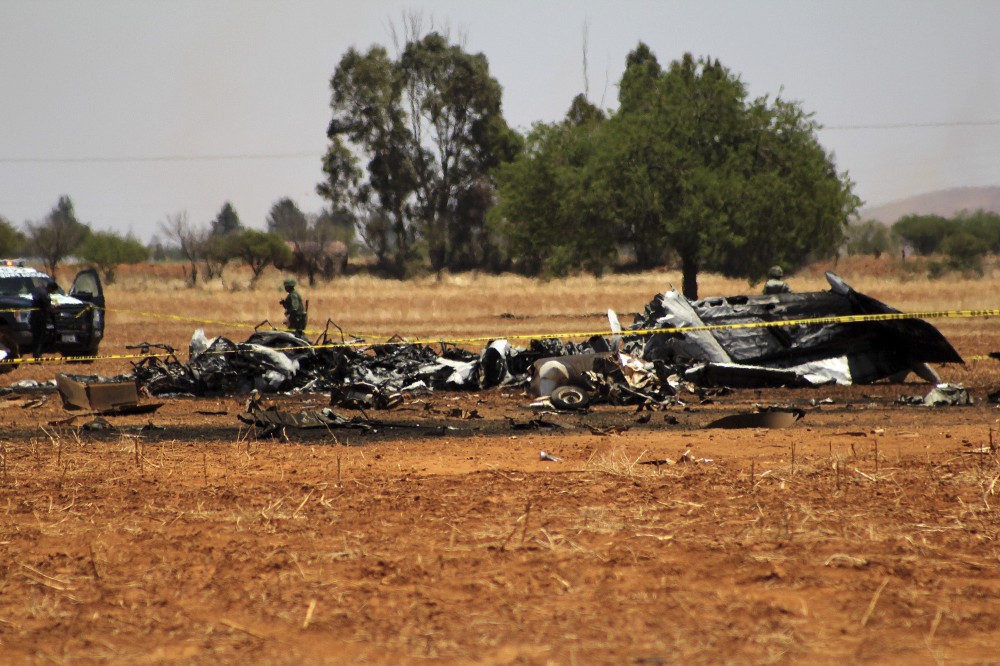
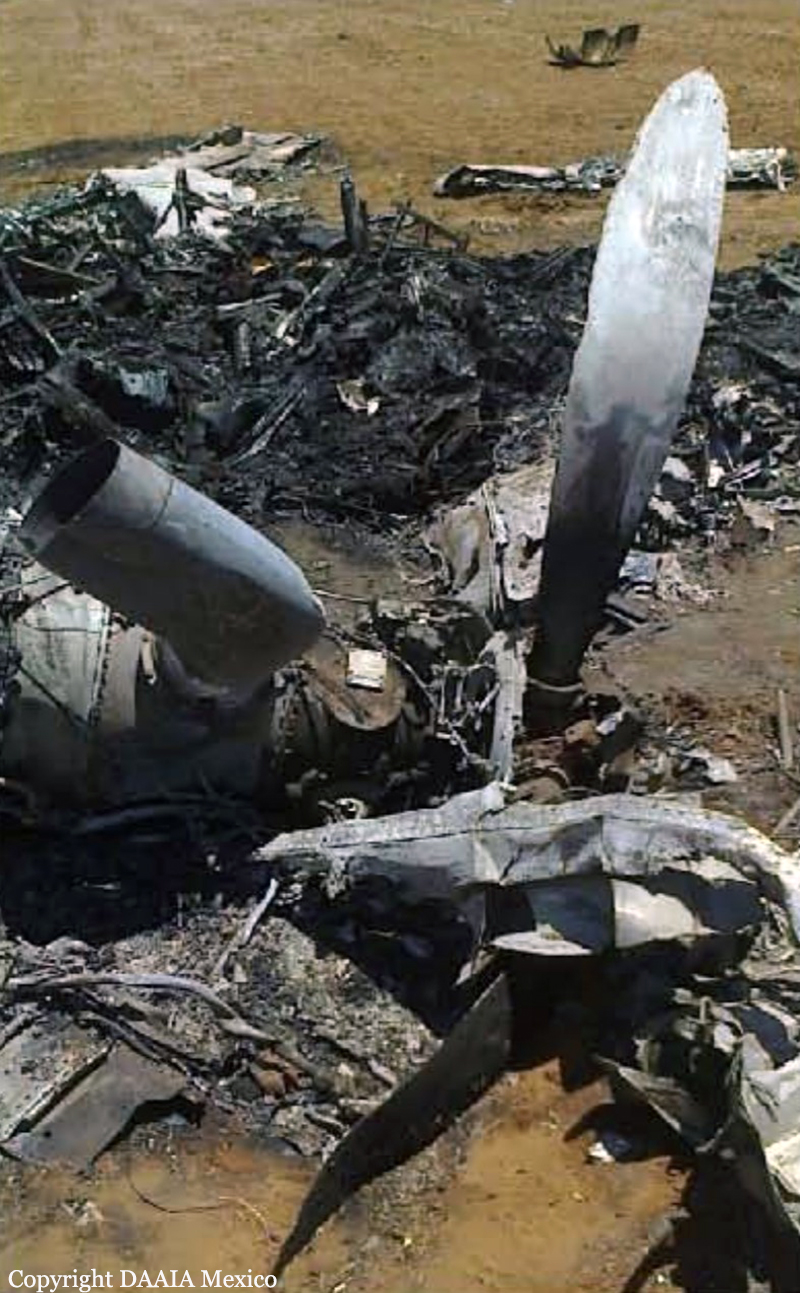
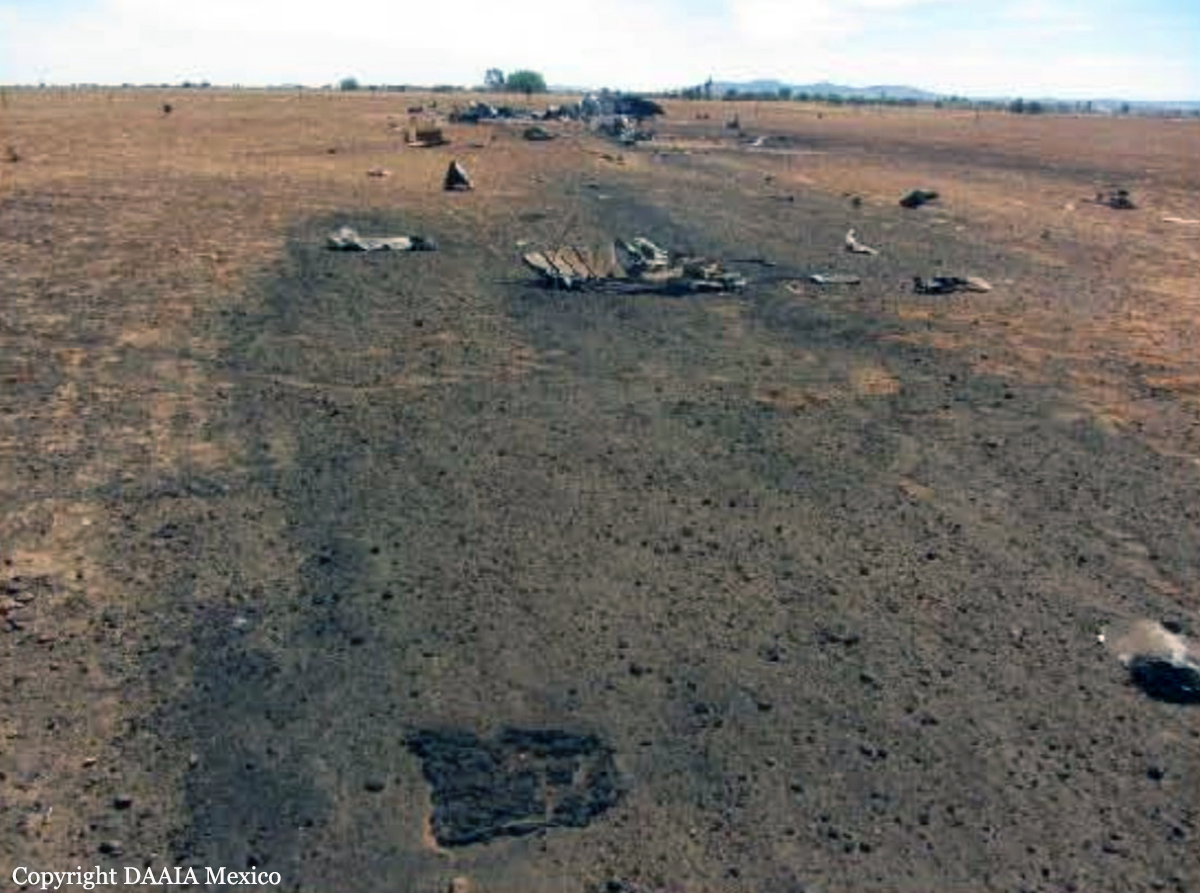
Shortly after takeoff from Zacatecas Airport Runway 20, while in initial climb, the crew informed ATC about technical problems with the left engine and attempted to return to land on runway 02. Eventually, the crew attempted an emergency landing when the aircraft crashed in a soft and dry terrain located southeast of the airport, bursting into flames, about one minute after takeoff. The aircraft was totally destroyed by a post crash fire and all six occupants were killed, among them two agents of the Federal Police and one employee of the Public Minister.
Probable cause:
Precautionary landing due to probable loss of left engine power, in soft and dry terrain, bogging down the legs of the main landing gear resulting in destruction of the aircraft. The following contributing factors were identified:
- Lack of application of CRM concepts,
- Lack of adherence to standard operating procedures.
- Lack of application of CRM concepts,
- Lack of adherence to standard operating procedures.
Final Report:
Crash of a Beechcraft 300 Super King Air in Port Orange
Date & Time:
Apr 14, 2004 at 1915 LT
Registration:
N301KS
Survivors:
Yes
Schedule:
Stuart – Daytona Beach
MSN:
FA-61
YOM:
1985
Crew on board:
1
Crew fatalities:
Pax on board:
1
Pax fatalities:
Other fatalities:
Total fatalities:
0
Captain / Total hours on type:
147.00
Circumstances:
The pilot stated that he initiated a fuel transfer due to a fuel imbalance. To affect the fuel transfer, he said he "began crossfeed right to left." When the airplane was about 5 to 10 miles away from Spruce Creek Airport, the pilot said he began his descent from 12,500, and also executed a left turn to begin setting up to land, when suddenly, both engines ceased operating. When he leveled the wings both engines restarted due to auto-ignition. He said the fuel gages showed 300 to 350 lbs of fuel for the right tank, and 100 to 150 pounds on the left, so he decided to continue his approach to Spruce Creek Airport. As he approached Spruce Creek Airport, he again entered a left bank to prepare for a left base to runway 23, and while established in the left turn, both engines ceased operating a second time. He said he did not think he could reach the runway, and decided to make an landing on a taxiway. When the wings became level after the turn, he said both engines again restarted while in the vicinity of the beginning of the taxiway. As he was about to land, he said a car pulled out onto the taxiway, and stopped on the centerline, so he applied power to avoid the car. He said he climbed straight out, and when he made a climbing left turn, he said the engines ceased operating a third time, and the airplane descended towards a cluster of condos. With no runway or clear area in sight, the pilot said he guided the airplane to a retention pond. Follow-on/detailed examinations of the aircraft, engines, and propellers were conducted by an FAA Inspector, as well as technical representatives from Raytheon Aircraft Company, Pratt & Whitney Canada, and Hartzell Propeller Company, and no pre accident anomalies were noted with the airframe, flight controls, engines/accessories, or propellers. According to the FAA Inspector, and the technical representative from the airplane manufacturer, Raytheon Aircraft Company, the pilot was transferring fuel from the left fuel tank to the right fuel tank, and with the reduced amount of fuel in the left tank, as he performed left turns, the engine ceased operating. The Raytheon Aircraft Company representative stated that the Pilot Operating Handbook specifies the use of crossfeed for those times when the airplane is operating on a single engine.
Probable cause:
The pilot's inadequate management of the airplane's fuel system, which resulted in fuel starvation, a loss of engine power, a forced landing, and damage to the airplane during the landing.
Final Report:

