Crash of an Avro 652A Anson XI in RAF Kenley

Date & Time: Nov 23, 1949
Type of aircraft:
Operator:
Registration:
PH840
Flight Phase:
Flight Type:
Survivors:
Yes
Schedule:
Kenley - Kenley
Region:
Crew on board:
3
Crew fatalities:
Pax on board:
0
Pax fatalities:
Other fatalities:
Total fatalities:
0
Circumstances:
On final approach, the pilot in command decided to perform a go around. During initial climb, an engine failed. The aircraft stalled and crashed. All three crew members were injured and the aircraft was written off.
Probable cause:
Engine failure.


Crash of a Vickers 619 Wellington X in RAF Finningley

Date & Time: Nov 10, 1949
Type of aircraft:
Operator:
Registration:
PF993
Flight Phase:
Flight Type:
Survivors:
Yes
Schedule:
Finningley - Finningley
Region:
Crew on board:
5
Crew fatalities:
Pax on board:
0
Pax fatalities:
Other fatalities:
Total fatalities:
0
Circumstances:
The crew was completing a training sortie in RAF Finningley. While flying in the vicinity of the airbase, the aircraft collided with a flock of ducks. Both engines lost power and the pilot was forced to attempt an emergency landing. The aircraft crash landed near the airfield and came to rest. There were no casualties.
Probable cause:
Bird strike.

Crash of an Avro 683 Lancaster B.1 off Selsey: 7 killed

Date & Time: Nov 3, 1949
Type of aircraft:
Operator:
Registration:
TW908
Flight Phase:
Flight Type:
Survivors:
No
Schedule:
Upwood - Upwood
Region:
Crew on board:
7
Crew fatalities:
Pax on board:
0
Pax fatalities:
Other fatalities:
Total fatalities:
7
Circumstances:
The crew was engaged in a night training exercice called 'Bullseye', consisting of an in flight interception of a RAF Mosquito. While flying by night over The Channel, both aircraft collided and crashed into the sea about 8 miles south of Selsey. All seven crew members were killed as well as both pilots on board the Mosquito registered RL116.
Crew (148th Squadron):
F/O Jack Oldham, pilot
Donald McUsbie McCall, navigator,
William Meldrum, navigator,
Lyndon Harold Stevens, flight engineer,
Eric George Clarke, signaler,
Sydney Arthur Mason, gunner,
Cyril James Chapman, gunner.

Crash of an Airspeed AS.65 Consul in Normanton

Date & Time: Nov 1, 1949
Type of aircraft:
Registration:
G-AIIS
Survivors:
Yes
Schedule:
Croydon – Yeadon
MSN:
4398
YOM:
1946
Region:
Crew on board:
1
Crew fatalities:
Pax on board:
2
Pax fatalities:
Other fatalities:
Total fatalities:
0
Circumstances:
The pilot started the descent to Yeadon Aerodrome when he was forced to make an emergency landing in a field located in Normanton, southeast of Leeds. The aircraft came to rest and was damaged beyond repair while all three occupants escaped uninjured.

Crash of a Grumman G-73 Mallard in London: 6 killed

Date & Time: Oct 28, 1949 at 0100 LT
Type of aircraft:
Operator:
Registration:
NC2956
Flight Phase:
Survivors:
Yes
MSN:
J-15
YOM:
1947
Region:
Crew on board:
3
Crew fatalities:
Pax on board:
4
Pax fatalities:
Other fatalities:
Total fatalities:
6
Aircraft flight hours:
1235
Circumstances:
After takeoff from London-Heathrow Airport, while climbing to a height of some 30-50 feet, the seaplane banked left to an angle of 40° and then lost height and hit the ground some 150 yards to the left of the runway. The aircraft continued for some 450 yards before coming to rest in flames. A crew member was seriously injured while six other occupants were killed.

Crash of a Boeing B-50A-25-BO Superfortress in Isleham: 12 killed

Date & Time: Oct 13, 1949 at 0930 LT
Type of aircraft:
Operator:
Registration:
46-060
Flight Phase:
Flight Type:
Survivors:
No
Schedule:
Lakenheath - Lakenheath
MSN:
15780
YOM:
1947
Region:
Crew on board:
12
Crew fatalities:
Pax on board:
0
Pax fatalities:
Other fatalities:
Total fatalities:
12
Circumstances:
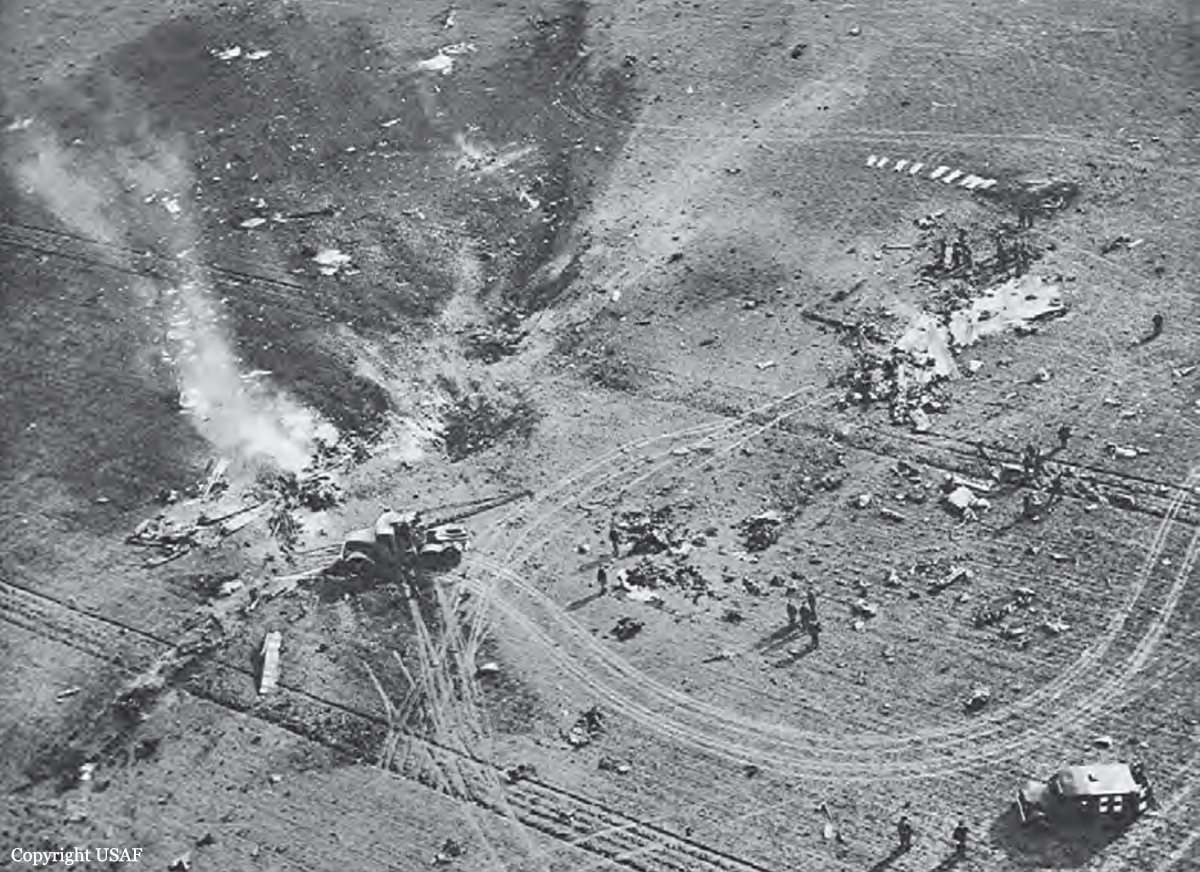
The aircraft departed RAF Lakenheath at 0925LT on a training mission consisting of a climb to 25,000 feet, break up the formation then drop 16,500 pounds of high explosive bombs individually on the bombing target at Heligoland. During the initial climb, while at a height of 500 feet, the captain reported to ATC that all was OK on board. Shortly later, while climbing into clouds, the aircraft went out of control, dove into the ground and crashed in a huge explosion in a field located half a mile southeast of Isleham. The aircraft was totally destroyed by impact forces and several explosions caused by the bombs and the 6,000 gallons of fuel. All 12 crew members were killed.
Source:
http://www.islehaminformer.org.uk/Images/Informer201110.pdf
Probable cause:
The obvious cause of the crash was an in flight fire, although what caused the fire could not be determined in view of the total destruction of the aircraft and the entire crew being killed. This aircraft type had been plagued with oil leaks and exhaust problems, and it is likely that this was the cause of the fire.

Crash of a De Havilland DH.89A Dragon Rapide in Hutton Cranswick

Date & Time: Oct 4, 1949
Registration:
EI-AEA
Survivors:
Yes
MSN:
6433
YOM:
1948
Region:
Crew on board:
2
Crew fatalities:
Pax on board:
5
Pax fatalities:
Other fatalities:
Total fatalities:
0
Circumstances:
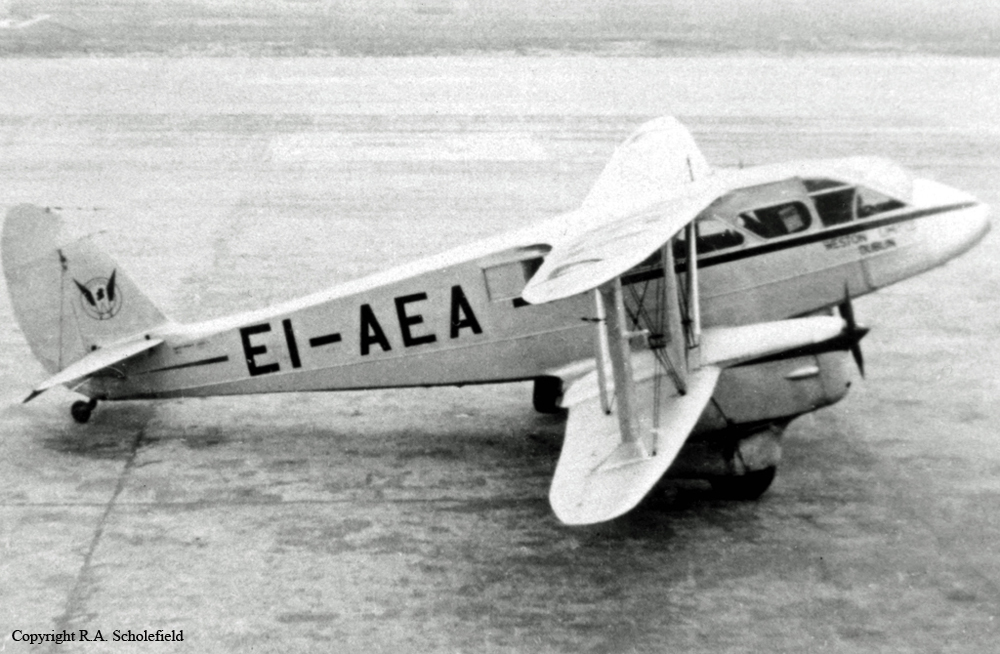
The approach to RAF Driffield was performing at dusk when the twin engine aircraft crashed in unknown circumstances in a field located at Highfield Farm, about 2 miles southeast of the airbase. All seven occupants were rescued while the aircraft was damaged beyond repair. It was reported that the crew started the descent without customs clearance.

Crash of an Avro 694 Lincoln B.2 in RAF Mildenhall

Date & Time: Sep 29, 1949
Type of aircraft:
Operator:
Registration:
SX990
Flight Type:
Survivors:
Yes
Schedule:
Mildenhall - Mildenhall
Region:
Crew on board:
4
Crew fatalities:
Pax on board:
0
Pax fatalities:
Other fatalities:
Total fatalities:
0
Circumstances:
The crew (35th Squadron) was performing a local training sortie in RAF Mildenhall. While approaching by night, the four engine aircraft was too low and crashed in a field located 5 miles from runway 11 threshold. All four crew members were injured and the aircraft was damaged beyond repair.

Crash of a Handley Page H.P.67 Hastings C.1 in Beacon Hill: 3 killed

Date & Time: Sep 26, 1949
Operator:
Registration:
TG499
Flight Phase:
Flight Type:
Survivors:
No
MSN:
3
YOM:
1948
Region:
Crew on board:
3
Crew fatalities:
Pax on board:
0
Pax fatalities:
Other fatalities:
Total fatalities:
3
Circumstances:
While cruising at an altitude of 4,000 feet during a training sortie, the pilot lost control of the airplane that crashed in Beacon Hill, Wiltshire. The aircraft was destroyed by impact forces and all three crew members were killed.
Probable cause:
Loss of control in flight due to the failure of the under-slung belly pannier that was torn off and hit tail.

Crash of an Avro 694 Lincoln B.2 in Staythorpe: 7 killed

Date & Time: Sep 26, 1949
Type of aircraft:
Operator:
Registration:
RF407
Flight Phase:
Flight Type:
Survivors:
No
Region:
Crew on board:
7
Crew fatalities:
Pax on board:
0
Pax fatalities:
Other fatalities:
Total fatalities:
7
Circumstances:
The crew was engaged in a training mission called 'Operation Bulldog' consisting of an aerial attack of a target located outside the city of Staythorpe. While approaching the target on the north of the city at low height, the aircraft collided with a second RAF Avro 694 Lincoln B.2 registered RE374 and carrying also a crew of seven. Both aircraft dove into the ground and crashed in a field, killing all 14 crew members.
Crew (61st Squadron):
Stanley Wilson +6.
Probable cause:
The exact cause of the accident could not be determined with certainty but could have been caused by minor errors in timing, a convergence of tracks on approach to the target or inadequate lookout by each crew.