Crash of an Antonov AN-12 in Bada: 47 killed

Date & Time: Aug 5, 1994 at 0850 LT
Type of aircraft:
Operator:
Flight Type:
Survivors:
No
Schedule:
Chita – Dzhida – Bada – Domna
MSN:
00 34 70 01
YOM:
1970
Country:
Region:
Crew on board:
6
Crew fatalities:
Pax on board:
41
Pax fatalities:
Other fatalities:
Total fatalities:
47
Circumstances:
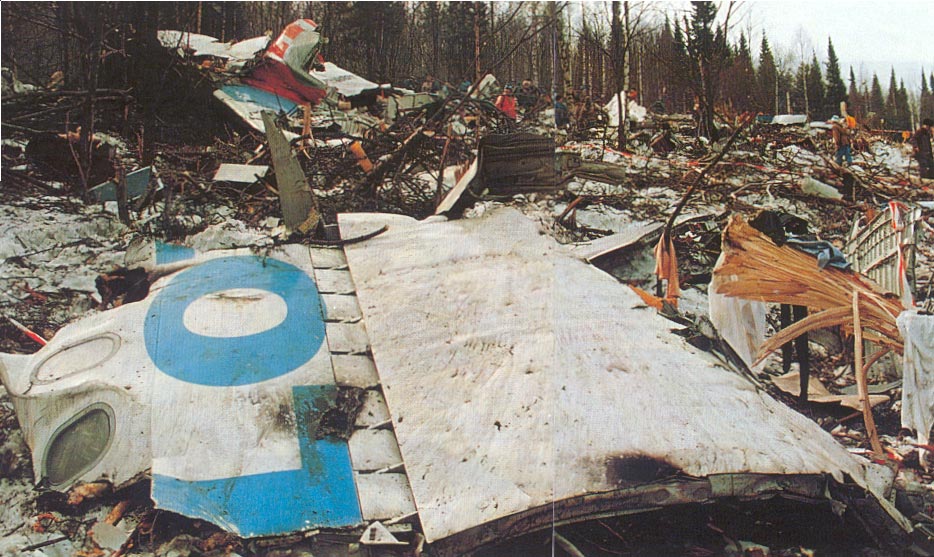
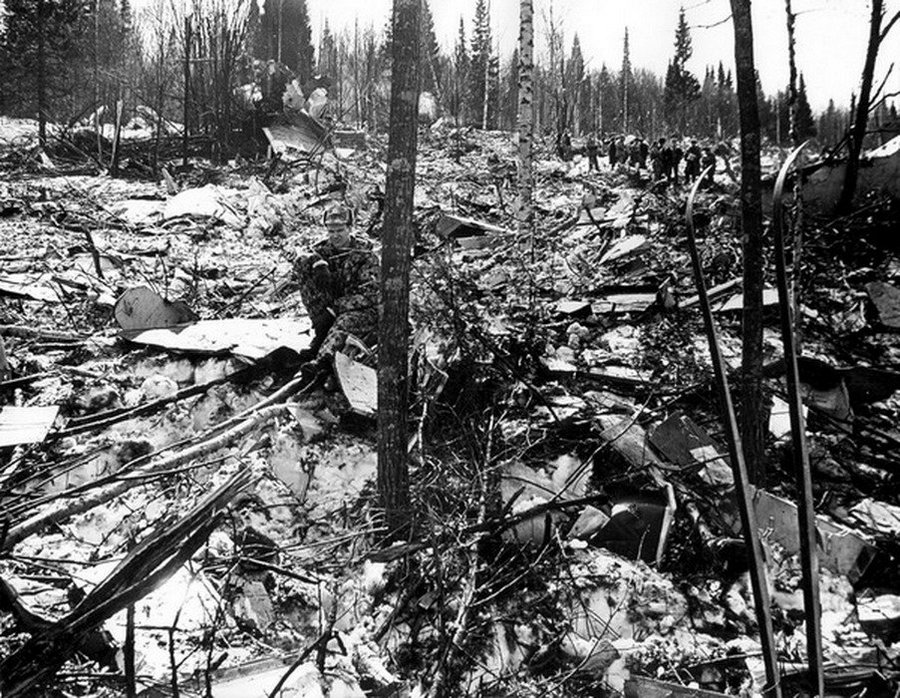
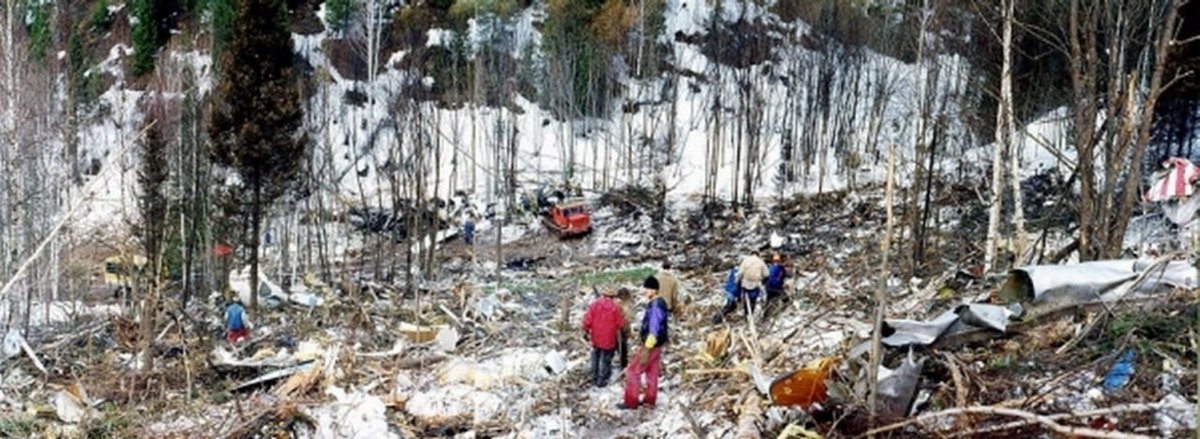
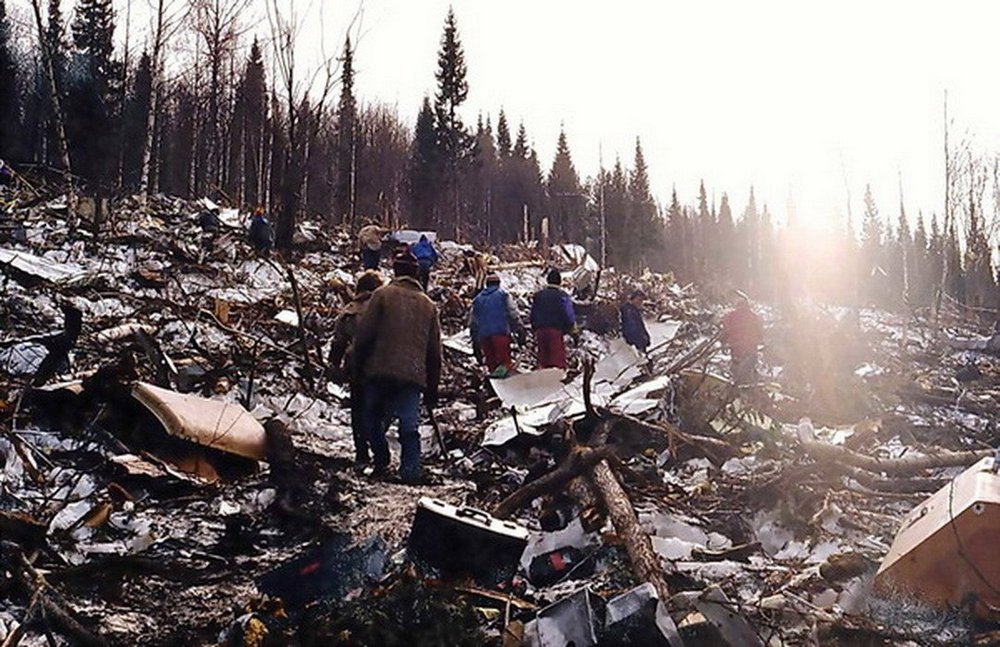
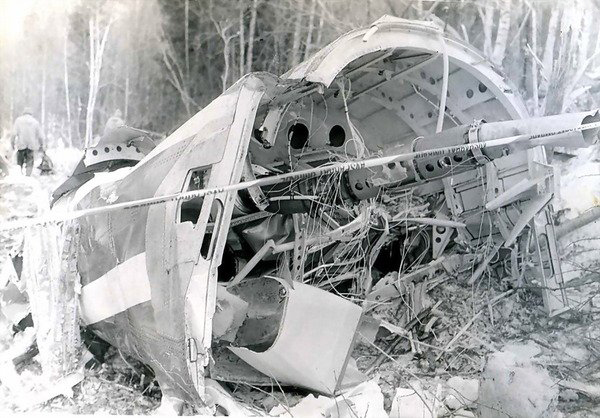
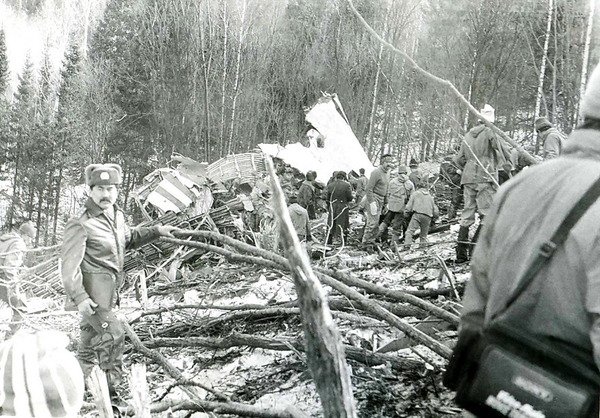
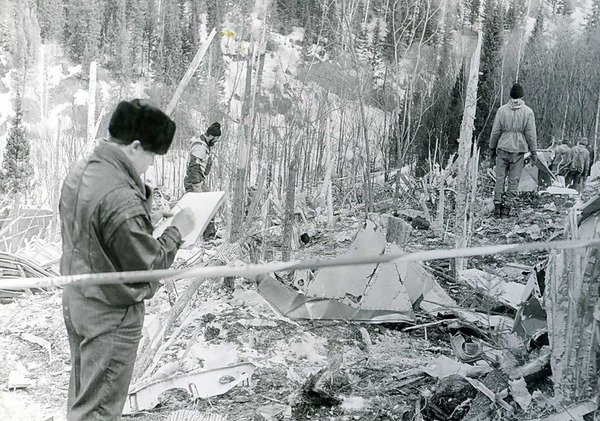
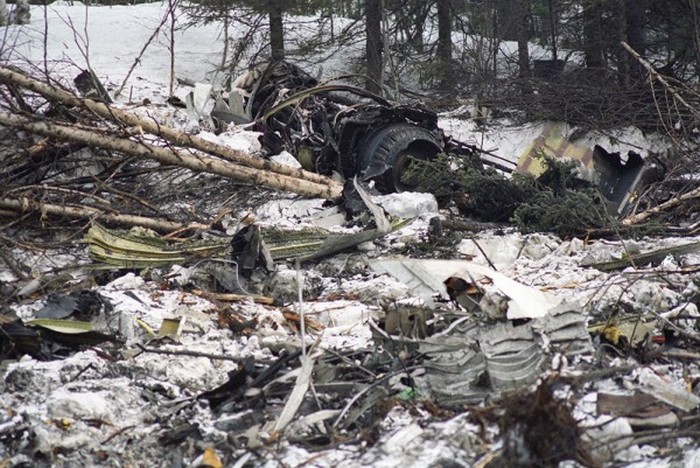
The approach to Bada Airfield was performed in poor weather conditions with low visibility due to heavy rain falls. On final approach, the four engine aircraft struck a hill (140 metres high) located 5,200 metres short of runway and 430 metres to the right of its extended centerline. The aircraft was destroyed by impact forces and a post crash fire and all 47 occupants were killed.
Probable cause:
The crew decided to continue the approach in low visibility and failed to initiate a go-around despite the fact that no visual contact with the runway was established. The aircraft was not properly aligned on the approach path.

Crash of a PZL-Mielec AN-2V in Purnema

Date & Time: Aug 1, 1994
Type of aircraft:
Operator:
Registration:
RA-50582
Survivors:
Yes
Schedule:
Onega - Purnema
MSN:
1G131-24
YOM:
1971
Country:
Region:
Crew on board:
2
Crew fatalities:
Pax on board:
15
Pax fatalities:
Other fatalities:
Total fatalities:
0
Circumstances:
On approach to Purnema Airstrip, the crew was forced to initiate a go-around for unknown reasons. During a second attempt to land, the single engine aircraft deviated from the approach pattern and glide path, lost speed, stalled and struck the ground 57 metres short of runway threshold. The aircraft was damaged beyond repair and all 17 occupants escaped uninjured.

Crash of an Antonov AN-26 in Lyakhovo: 1 killed

Date & Time: Jul 13, 1994
Type of aircraft:
Operator:
Flight Phase:
Flight Type:
Survivors:
No
Country:
Region:
Crew on board:
1
Crew fatalities:
Pax on board:
0
Pax fatalities:
Other fatalities:
Total fatalities:
1
Circumstances:
A flight engineer wanted to commit suicide and stole the AN-26 parked at Kubinka AFB. After circling over the area for more than four hours at an altitude between 300 and 2,000 feet, the aircraft went out of control, dove into the ground and crashed in a field located in Lyakhovo. The sole occupant was killed. It appears that both engines stopped due to fuel exhaustion.

Crash of a PZL-Mielec AN-2P in Kirensk

Date & Time: Jun 25, 1994
Type of aircraft:
Operator:
Registration:
CCCP-70263
Flight Phase:
Survivors:
Yes
MSN:
1G139-22
YOM:
1972
Country:
Region:
Crew on board:
2
Crew fatalities:
Pax on board:
6
Pax fatalities:
Other fatalities:
Total fatalities:
0
Circumstances:
During initial climb, the engine failed. The aircraft stalled and crashed, bursting into flames. All eight occupants escaped uninjured (or with minor injuries) while the aircraft was destroyed.
Probable cause:
Engine failure during climb out for unknown reasons.

Crash of a PZL-Mielec AN-2R in Kholodnyy Klyuch

Date & Time: Jun 21, 1994
Type of aircraft:
Operator:
Registration:
RA-40788
Flight Phase:
Flight Type:
Survivors:
Yes
Schedule:
Kholodnyy Klyuch - Kholodnyy Klyuch
MSN:
1G173-15
YOM:
1977
Country:
Region:
Crew on board:
1
Crew fatalities:
Pax on board:
0
Pax fatalities:
Other fatalities:
Total fatalities:
0
Circumstances:
Sole on board, the copilot decided to make an illegal survey flight for crop spraying operations in the region of Kholodnyy Klyuch. En route, he encountered low patches of fog and suffered a spatial disorientation. Control was lost and the aircraft crashed on the ground. The pilot was slightly injured and the aircraft was damaged beyond repair.
Probable cause:
Loss of control after the pilot suffered spatial disorientation while flying in foggy conditions.

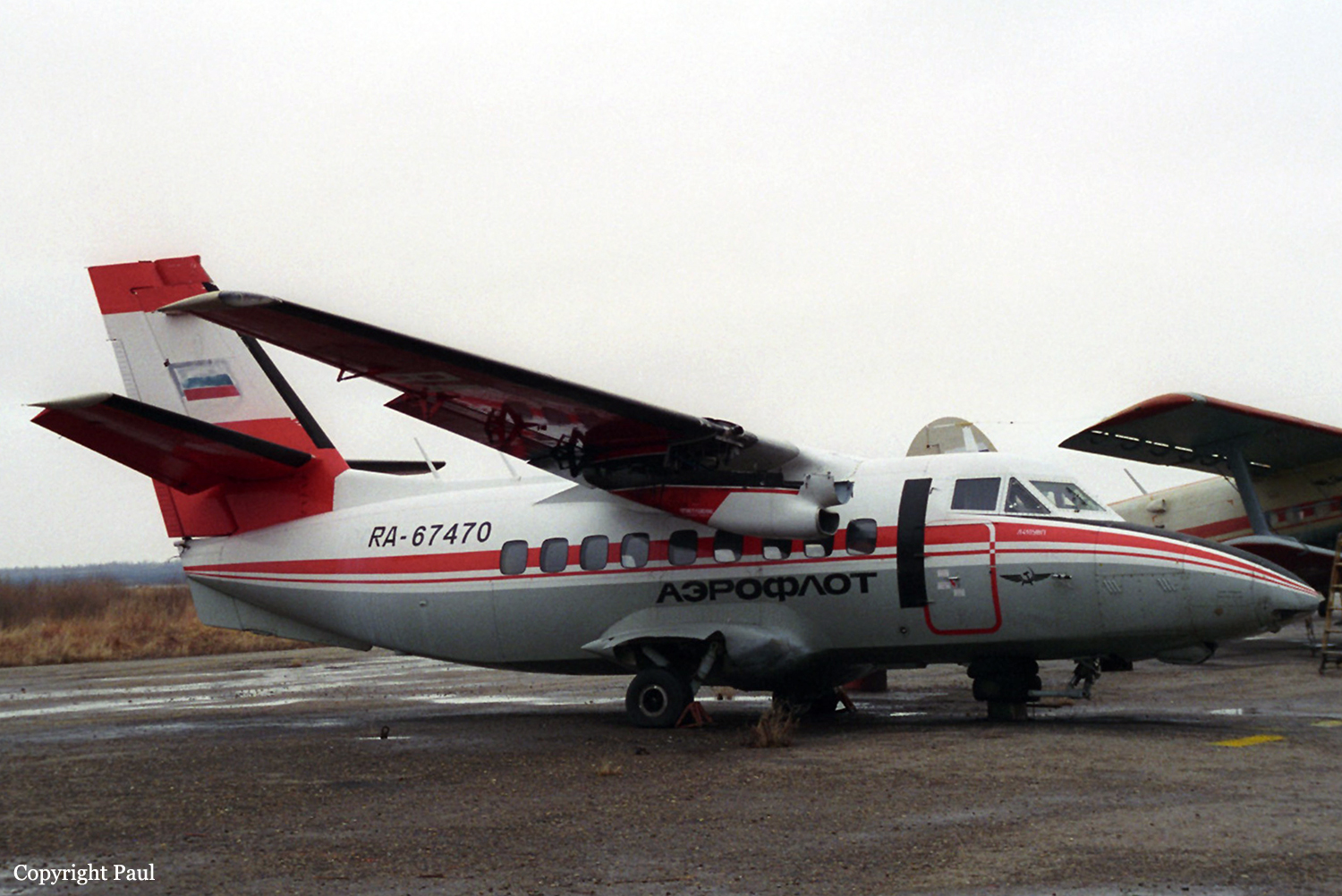
Crash of a Let L-410UVP in Blagoveshchensk

Date & Time: Jun 14, 1994
Type of aircraft:
Operator:
Registration:
RA-67470
Flight Phase:
Survivors:
Yes
MSN:
84 12 35
YOM:
1984
Country:
Region:
Crew on board:
3
Crew fatalities:
Pax on board:
11
Pax fatalities:
Other fatalities:
Total fatalities:
0
Circumstances:
While taxiing at Blagoveshchensk-Ignatyevo Airport, the pilot was forced to make an evasive maneuver to avoid a collision with a bus. Doing so, the nose gear collided with a drainage ditch (25 cm deep) located on the left side of the taxiway. On impact, the nose gear collapsed and the aircraft came to rest. All 14 occupants evacuated safely and the aircraft was damaged beyond repair.

Crash of a PZL-Mielec AN-28 in Palana

Date & Time: May 12, 1994
Type of aircraft:
Operator:
Registration:
RA-28713
Survivors:
Yes
Schedule:
Petropavlovsk-Kamchatsky - Palana
MSN:
1AJ006-23
YOM:
1989
Country:
Region:
Crew on board:
2
Crew fatalities:
Pax on board:
10
Pax fatalities:
Other fatalities:
Total fatalities:
0
Circumstances:
The approach and landing at Palana Airport were completed in strong crosswinds. The twin engine aircraft landed hard and was apparently damaged beyond repair due to structural damages. All 12 occupants evacuated safely.

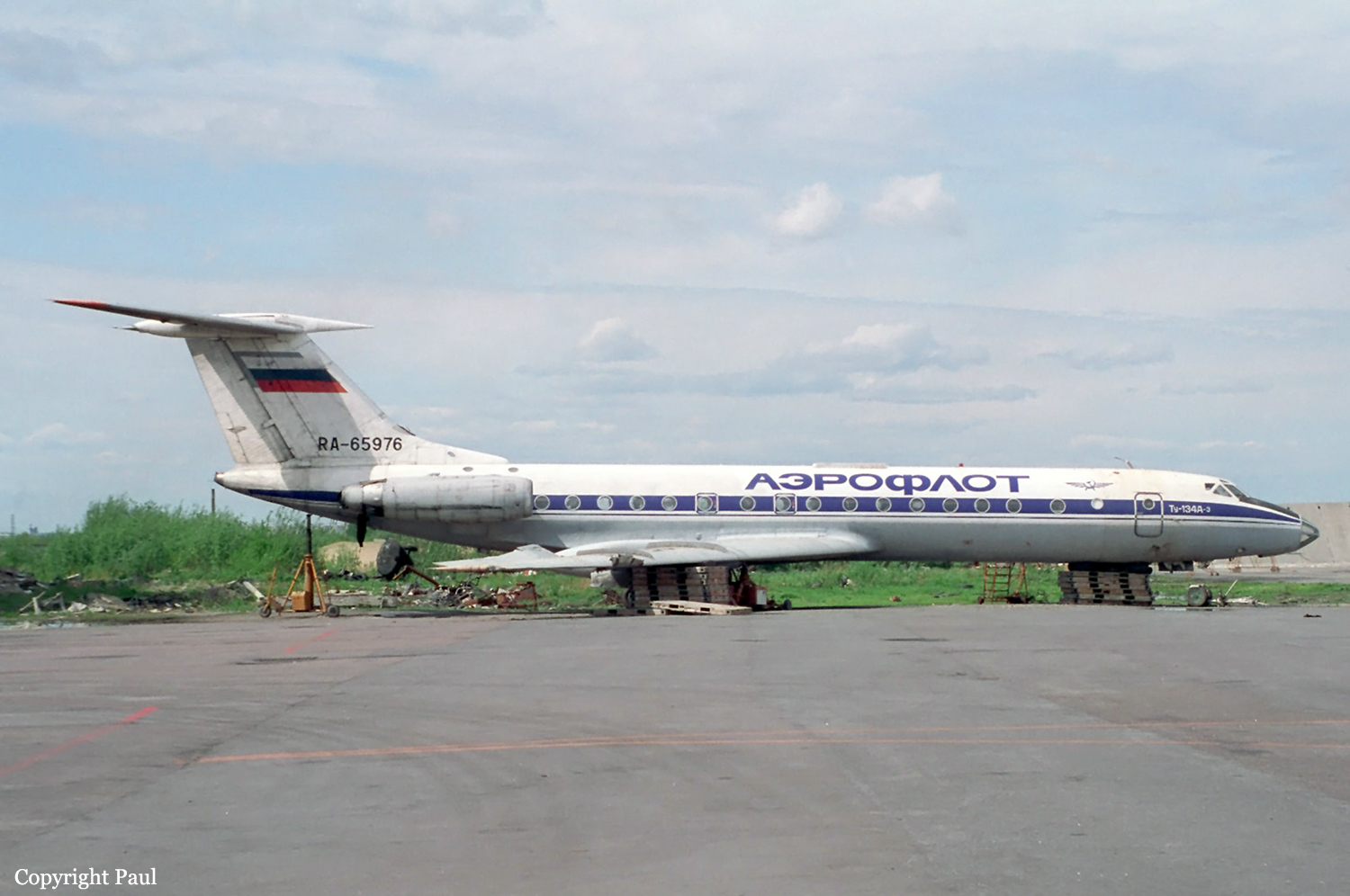
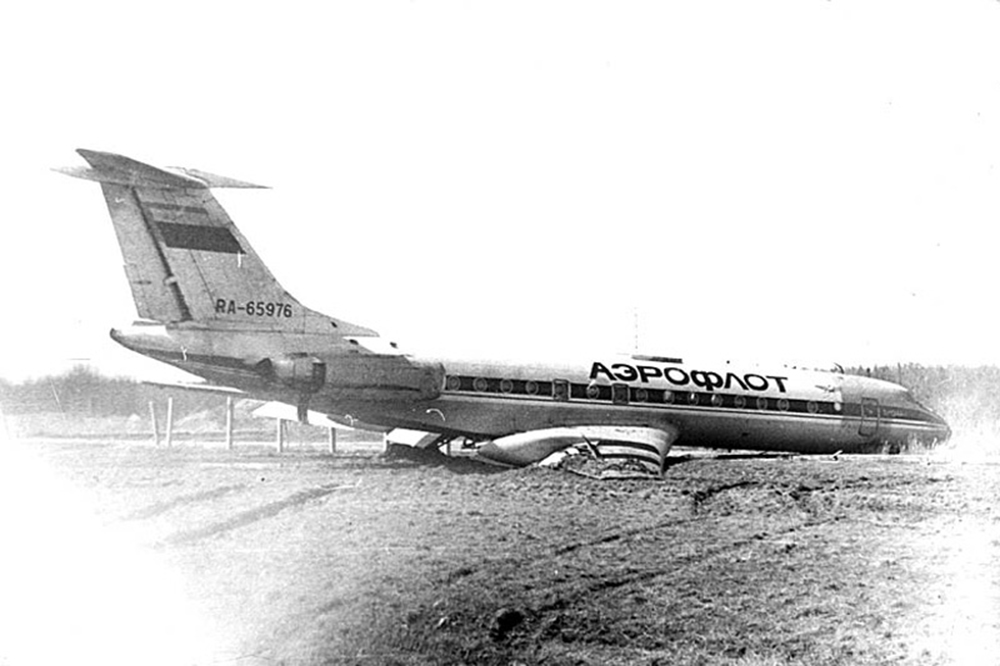
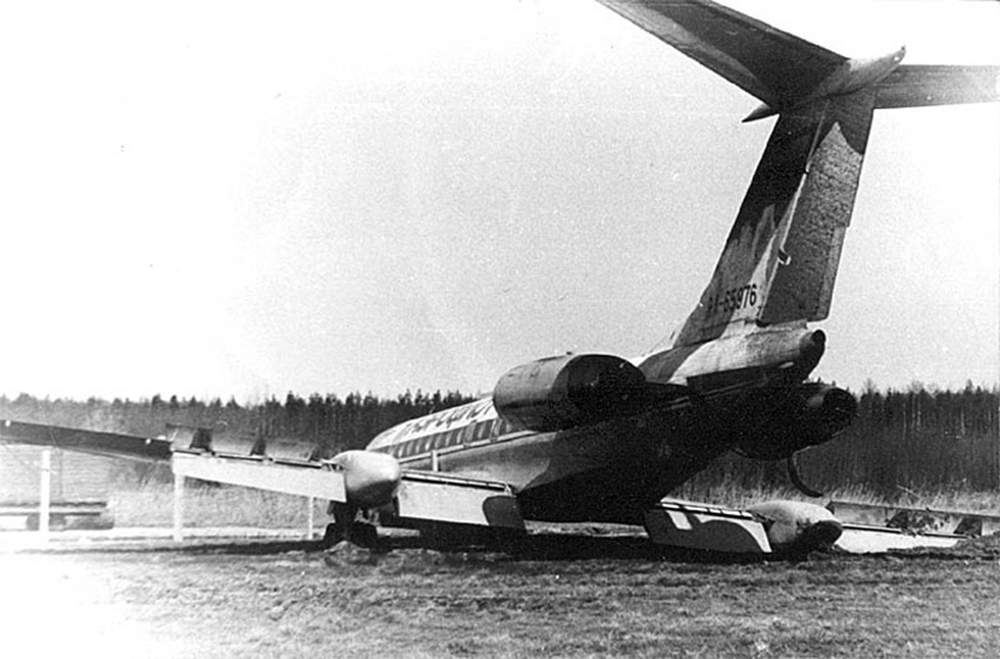
Crash of a Tupolev TU-134A-3 in Arkhangelsk

Date & Time: May 7, 1994 at 1242 LT
Type of aircraft:
Operator:
Registration:
RA-65976
Survivors:
Yes
Schedule:
Moscow - Arkhangelsk
MSN:
3 35 20 07
YOM:
1973
Flight number:
SU2315
Country:
Region:
Crew on board:
6
Crew fatalities:
Pax on board:
56
Pax fatalities:
Other fatalities:
Total fatalities:
0
Aircraft flight hours:
33606
Aircraft flight cycles:
21071
Circumstances:
On approach to Arkhangelsk-Talagi, the crew encountered technical problems with the landing gear that could not be lowered. Several manual attempts were made and finally, only the right main gear remained stuck in its wheel well. The captain decided to land in such configuration. After touchdown, the aircraft slid on the ground then veered off runway and came to rest in a grassy area. All 62 occupants escaped uninjured while the aircraft was damaged beyond repair.
Probable cause:
The right main gear could not be lowered because of a breakage of the filling connection of the hydraulic tank due to metal fatigue while the aircraft was taxiing at Moscow-Sheremetyevo Airport. The fitting was blown out under pressure and damaged hydraulic lines, causing a hydraulic fluid leak and the oil pressure to drop.

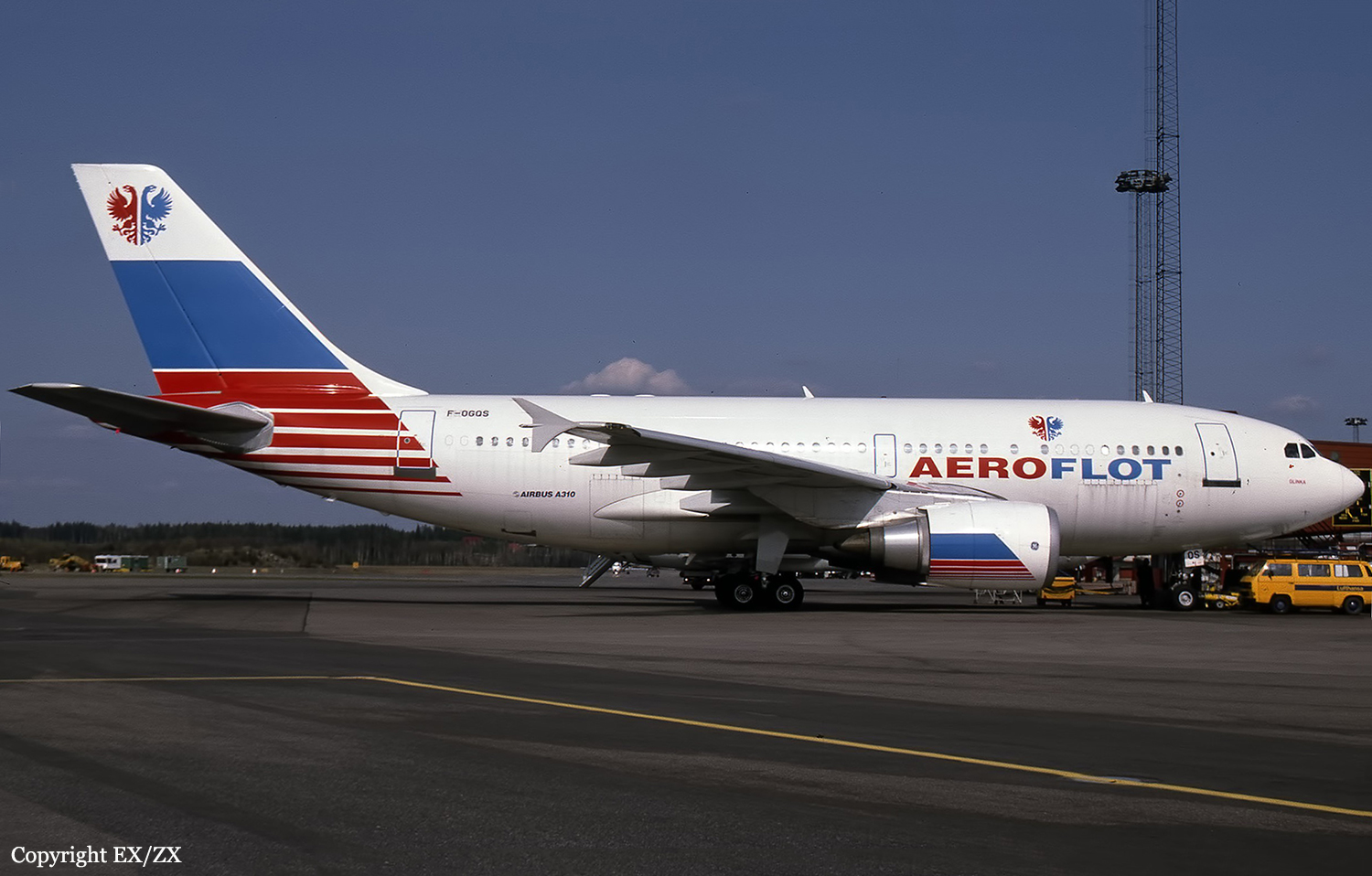
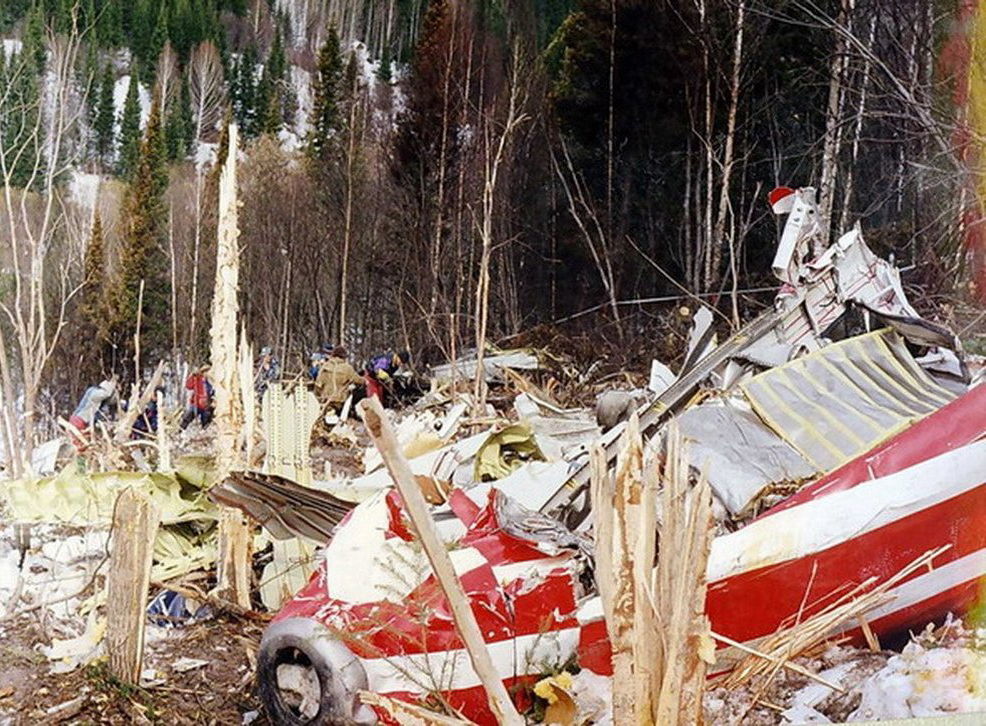
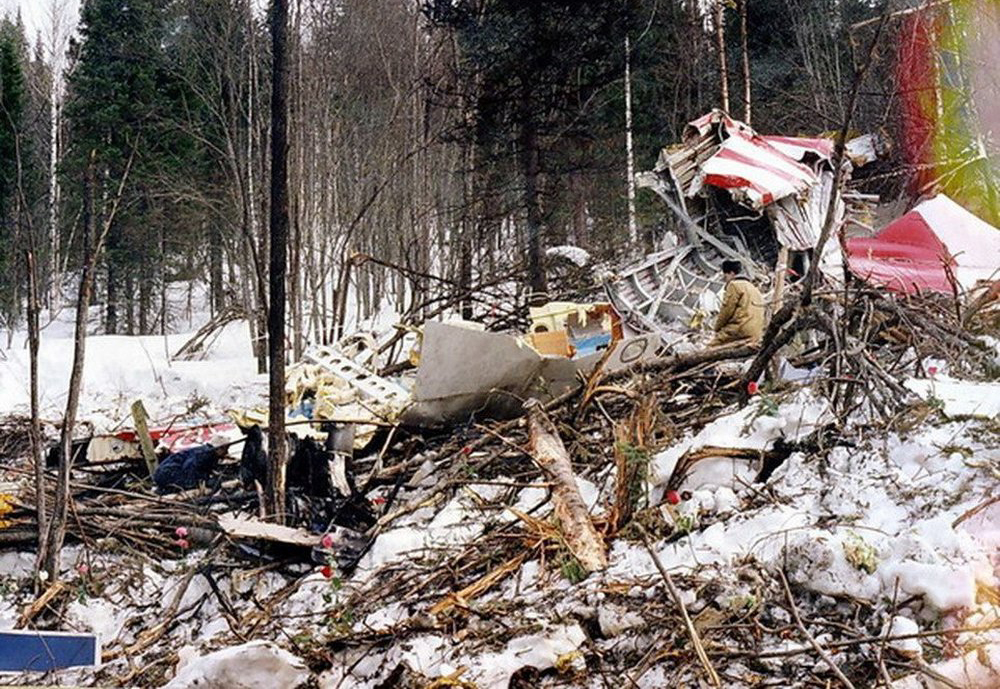
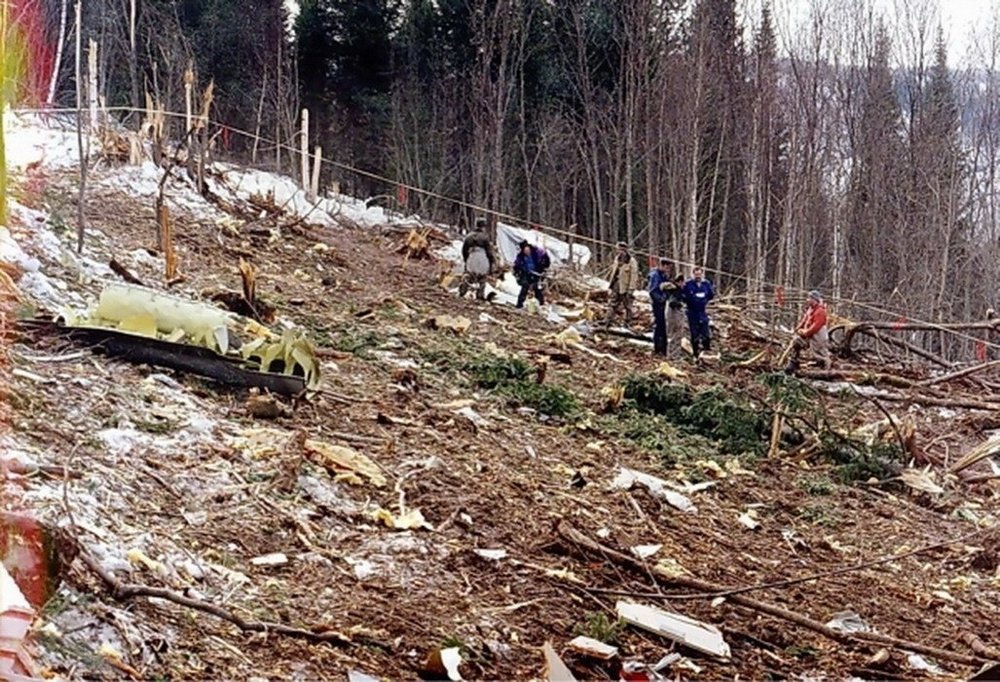
Crash of an Airbus A310-308 near Mezhdurechensk: 75 killed

Date & Time: Mar 23, 1994 at 0057 LT
Type of aircraft:
Operator:
Registration:
F-OGQS
Flight Phase:
Survivors:
No
Schedule:
Moscow - Hong Kong
MSN:
596
YOM:
1991
Flight number:
SU593
Country:
Region:
Crew on board:
12
Crew fatalities:
Pax on board:
63
Pax fatalities:
Other fatalities:
Total fatalities:
75
Captain / Total flying hours:
9675
Captain / Total hours on type:
38.00
Copilot / Total flying hours:
5855
Copilot / Total hours on type:
440
Aircraft flight hours:
5375
Aircraft flight cycles:
846
Circumstances:
While cruising by night at the assigned altitude of 10,100 metres, approaching the Novokuznetsk reporting point, the captain's daughter entered the cockpit. She was allowed to sit the left-hand seat while the captain demonstrated some autopilot features, using HDG/S and NAV submodes to alter the heading. The captain's son then took the left front seat. The captain intended to demonstrate the same manoeuvre when his son asked if he could turn the control wheel. He then turned the wheel slightly (applying a force of between 8-10 kg) and held it in that position for a few seconds before returning the wheel to the neutral position. The captain then demonstrated the same features as he did to his daughter and ended by using the NAV submode to bring the aircraft back on course. As the autopilot attempted to level the aircraft at its programmed heading, it came in conflict with the inputs from the control wheel which was blocked in a neutral position. Forces on the control wheel increased to 12-13 kg until the torque limiter activated by disconnecting the autopilot servo from the aileron control linkage. The autopilot remained engaged however. The aircraft then started to bank to the right at 2,5° per second, reaching 45° when the autopilot wasn't able to maintain altitude. The A310 started buffeting, which caught the attention of the captain who told the copilot to take control while he was trying to regain his seat. The seat of the copilot was fully aft, so it took him an additional 2-3 seconds to get to the control wheel. The bank continued to 90°, the aircraft pitched up steeply with +4,8g accelerations, stalled and entered a spin. Two minutes and six seconds later the aircraft struck the ground. The aircraft disintegrated on impact and all 75 occupants were killed, among them 25 foreigners.
Probable cause:
The accident was caused by a stall, spin and impact with the ground resulting from a combination of the following factors:
1. The decision by the PIC to allow an unqualified and unauthorized outsider (his son) to occupy his duty station and intervene in the flying of the aeroplane.
2. The execution of demonstration manoeuvres that were not anticipated in the flight plan or flight situation, with the PIC operating the autopilot while not at his duty station.
3. Application by the outsider and the co-pilot of control forces that interfered with the functioning of the roll channel of the autopilot (and are not recommended in the A310 flight manual), thus overriding the autopilot and disconnecting it from the aileron control linkage.
4. The copilot and PIC failed to detect the fact that the autopilot had become disconnected from the aileron control linkage, probably because:
- The A310 instrumentation has no declutch warning. The provision of signals in accordance with the requirements of Airworthiness Standard NLGS-3, para. 8.2.7.3., and international recommended practices, could have enabled the crew to detect the disengaged autopilot in a timely manner.
- The copilot and PIC may have been unaware of the peculiarities of the declutching function and the actions to be taken in such a situation because of a lack of appropriate information in the flight manual and crew training programme;
- It was difficult for the co-pilot to detect the disengagement of the autopilot by feel, either because of the small forces on his control column or because he took changing forces to be the result of Eldar's actions;
- The PIC was away from his position and distracted by the conversation with his daughter.
5. A slight, unintentional further turn of the control wheel(s) following disengagement of the autopilot caused a right roll to develop.
6. The PIC and copilot failed to detect the excessive right bank angle, which exceeded operating limits, and were late in re-entering the aircraft control loop because their attention was focussed on determining why the aircraft had banked to the right, a manoeuvre they interpreted as entry into a holding area with either no course line or with a new (false) course line generated on the navigational display.
A strong signal indicating that the aeroplane had exceeded the allowable operating bank angle, taking account of the delay in recognizing and assessing the situation and making a decision, could in this situation have attracted the crew's attention and enabled them to detect the bank at an earlier stage.
7. The aeroplane was subjected to buffeting and high angles of attack because the autopilot continued to perform its height-keeping function even after the actuator declutched and as the right roll developed, until the pilot disconnected it by overriding its longitudinal channel.
8. Inappropriate and ineffective action on the part of the copilot, who failed to disconnect the autopilot and to push the control column forward when the buffeting occurred and the aeroplane entered an unusual attitude (high angles of attack and pitch). These actions, which caused the aeroplane to stall and spin, could have resulted from:
- the presence of an outsider in the left-hand pilot's seat and the resulting delay before the PIC re-entered the aeroplane control loop;
- the less-than-optimum working posture of the copilot, whose seat was pushed back to its rearmost position;
- the occurrence, 2 seconds following the onset of buffeting, of an unintentional pitching up of the aeroplane, which sharply increased the angle of attack and reduced lateral controllability;
- unpreparedness of the crew to act in this situation because of lack of appropriate drills in the training programme;
- temporary loss of spatial orientation in night conditions.
Final Report:

Crash of an Antonov AN-12BP in Nalcik: 13 killed

Date & Time: Feb 24, 1994 at 1116 LT
Type of aircraft:
Operator:
Registration:
RA-11118
Flight Type:
Survivors:
No
Schedule:
Saint Petersburg - Volgograd - Nalcik
MSN:
01 348 002
YOM:
1971
Flight number:
FV9045
Country:
Region:
Crew on board:
6
Crew fatalities:
Pax on board:
7
Pax fatalities:
Other fatalities:
Total fatalities:
13
Circumstances:
The aircraft was completing a cargo flight from St Petersburg to Nalcik with an intermediate stop in Volgograd, carrying seven passengers, six crew members and a load of 12,5 tons of coins minted in St Petersburg. On final approach, at a distance of 8 km from the airport, at a speed of 260 km/h, flaps were selected down to an angle of 35°. Thirty seconds later, the aircraft started to pitch up and down then nosed up to an angle of 15°. It entered an uncontrolled descent and crashed at a speed of 414 km/h in a nose down angle of 55° in an open field located 4,5 km short of runway threshold. The aircraft disintegrated on impact and all 13 occupants were killed.
Probable cause:
It was determined that the loss of control was the consequence of an excessive accumulation of ice on stabilizers. Information transmitted to the crew regarding weather conditions at destination did not reflect the actual situation and did not mention any icing conditions.