Crash of a Short S.25 Sunderland I off Nigg: 4 killed

Date & Time: Nov 21, 1943
Type of aircraft:
Operator:
Registration:
L2168
Flight Phase:
Flight Type:
Survivors:
No
Schedule:
Invergordon - Invergordon
Region:
Crew on board:
4
Crew fatalities:
Pax on board:
0
Pax fatalities:
Other fatalities:
Total fatalities:
4
Circumstances:
The crew left RAF Invergordon to perform a night training mission consisting of landing practice. Apparently, an engine caught fire in flight and the seaplane crashed into the Cromarty Firth off the village of Nigg. All four crew members were killed.
Crew (4th OTU):
George Robert Sawhill Riddell,
John Raymond Harnwell,
William McCarroll,
Sydney Albert Spencer.
Probable cause:
Engine fire.
Crash of a Short S.25 Sunderland off RAF Invergordon

Date & Time: Jan 16, 1943
Type of aircraft:
Operator:
Registration:
L5802
Flight Type:
Survivors:
Yes
Schedule:
Invergordon - Invergordon
Region:
Crew on board:
0
Crew fatalities:
Pax on board:
0
Pax fatalities:
Other fatalities:
Total fatalities:
0
Circumstances:
The crew was performing a night training sortie out from RAF Invergordon. On landing in the Cromarty Firth, the seaplane went out of control and sank. There were no casualties. Crew from the 4th OTU.

Crash of a Short S.25 Sunderland I near RAF Invergordon: 11 killed

Date & Time: Nov 26, 1942 at 0643 LT
Type of aircraft:
Operator:
Registration:
DD851
Flight Phase:
Survivors:
No
Schedule:
Invergordon - Invergordon
Region:
Crew on board:
11
Crew fatalities:
Pax on board:
0
Pax fatalities:
Other fatalities:
Total fatalities:
11
Circumstances:
The crew was engaged in an antisubmarine patrol flight off the British coast on behalf of the fourth Operational Training Unit. Shortly after takeoff from RAF Invergordon, while climbing, the engine number three failed. Few seconds later, it caught fire and fell off, causing severe vibrations. The crew lost control of the airplane that crashed in a huge explosion on a railway road located 3 km northeast of the Invergordon Station. All 11 occupants were killed.
Crew (4th OTU):
F/Lt John Alfred Johnson, pilot,
F/O Garth Borland Johnson, pilot,
F/Sgt James Edward Porret, flight engineer,
Sgt Francis William George Cosgrave, flight engineer,
P/O Charles Marland Kendall, navigator,
W/O Clare Kinton, wireless operator,
W/O Fredrick John Peters, wireless operator,
F/L William Fedoruk, wireless operator,
F/O John Hodgson Shand, wireless operator,
Sgt Donald Charles Beattie, air gunner,
Sgt Milton Lynn Hill, air gunner.
Probable cause:
Failure of a connecting rod on the engine n°3, caused the engine to catch fire and to detach.

Crash of a Blackburn B-26 Botha I off RAF Invergordon: 1 killed

Date & Time: Nov 10, 1942
Type of aircraft:
Operator:
Registration:
L6535
Flight Phase:
Flight Type:
Survivors:
Yes
Schedule:
Invergordon - Invergordon
Region:
Crew on board:
4
Crew fatalities:
Pax on board:
0
Pax fatalities:
Other fatalities:
Total fatalities:
1
Circumstances:
While performing a local training flight, the airplane suffered an engine failure and was ditched in the Cromarty Firth off RAF Invergordon. A crew was killed and three others were injured.
Crew:
S/L T. A. Silcox, pilot,
Lac George. F. Bates. †
Probable cause:
Engine failure in flight.

Crash of a Short S.25 Sunderland near Braemore: 14 killed

Date & Time: Aug 25, 1942 at 1342 LT
Type of aircraft:
Operator:
Registration:
W4026
Flight Phase:
Flight Type:
Survivors:
Yes
Site:
Schedule:
Oban – Invergordon – Keflavik
Region:
Crew on board:
12
Crew fatalities:
Pax on board:
3
Pax fatalities:
Other fatalities:
Total fatalities:
14
Circumstances:
The seaplane departed Oban to Keflavik with an intermediate stop at RAF Invergordon, carrying 11 crew members and three passengers, among them Prince George, Duke of Kent, who was flying to Iceland on an official visit. Few minutes after takeoff from RAF Invergordon, while cruising in poor visibility due to bad weather conditions, the seaplane hit the Eagle's Rock hill located near Breamore, about 55 km northwest of Inverness. The air gunner was seriously injured while all 14 other occupants were killed.
Crew (228th Squadron):
F/Lt Frank McKenzie Goyen, pilot, †
W/Cdr Thomas Lawton Moseley, copilot, †
F/O Sydney Wood Smith, copilot, †
P/O George Richard Saunders, navigator, †
F/Sgt William Royston Jones, flight engineer, †
Sgt Leonard Sweett, flight engineer and fitter, †
F/Sgt Charles Norman Lewis, airframe fitter, †
F/Sgt Edward James Hewerdine, wireless operator, †
Sgt Edward Francis Blacklock, wireless operator, †
Sgt Arthur Rowland Catt, wireless operator, †
Sgt Andrew Simpson William Jack, air gunner.
Passengers:
Air Commodore George Edward Alexander Windsor, HRH Prince George, The Duke of Kent, †
Lt John Crowther, private secretary, †
P/O C. V. Michael Strutt, †
Lac John Walter Hales. †
Probable cause:
The aircraft was equipped with a new gyro-compass few days prior to the accident and the crew was not familiar with it. According to the Board of investigations, it appears that the accident occurred as a result of navigational error. The crew failed to make sufficient allowance for a strong on-shore wind and allowed the aircraft to drift over high ground before it gained sufficient altitude to clear the hilly terrain. According to the Hansard Report of October 7th 1942, blame was apportioned to the captain of the aircraft, "Who changed flight plan for reasons unknown and descended through cloud without making sure he was over water, and crashed." Poor visibility due to bad weather conditions was considered as a contributory factor.

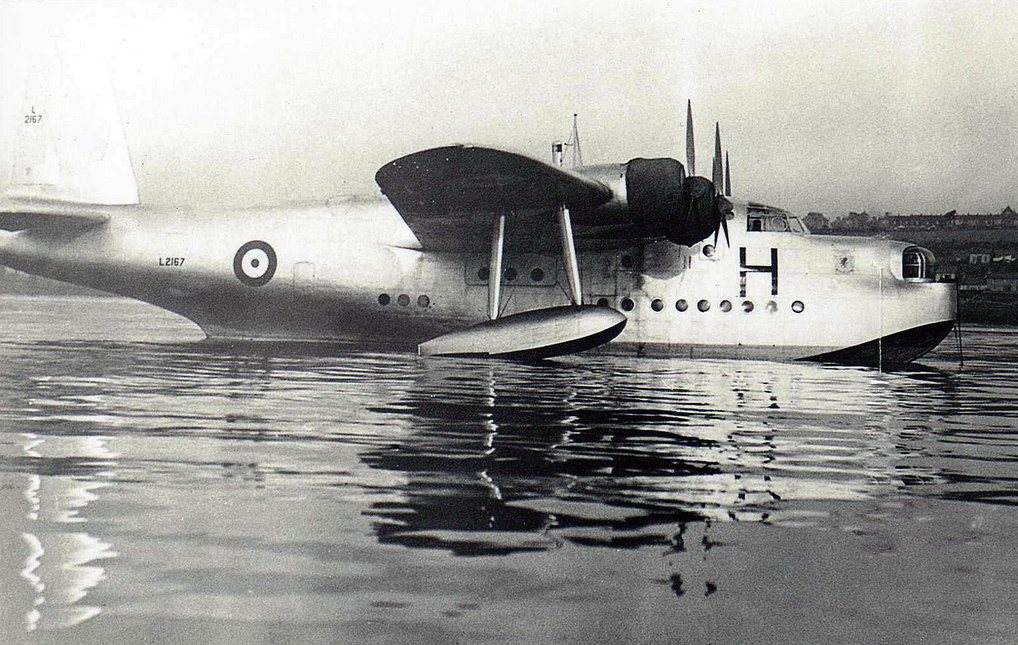
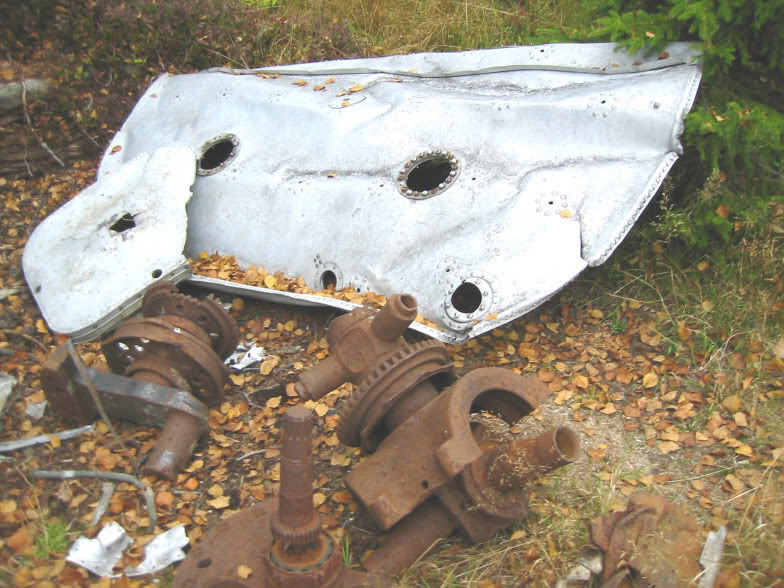
Crash of a Short S.25 Sunderland I in Sylling: 9 killed

Date & Time: Apr 9, 1940
Type of aircraft:
Operator:
Registration:
L2167
Flight Phase:
Survivors:
Yes
Schedule:
Invergordon - Invergordon
Country:
Region:
Crew on board:
10
Crew fatalities:
Pax on board:
0
Pax fatalities:
Other fatalities:
Total fatalities:
9
Circumstances:
The float plane was performing a reconnaissance mission from RAF Invergordon to Fornebu (Oslo region). While flying away from Fornebu, the airplane was attacked by the pilot of a German Air Force Messerschmitt Me.110. The pilot lost control of the aircraft that dove into the ground and crashed in a dense wooded area. At a height of 3,000 feet, a crew member was able to bail out without any parachute. On the crash site, rescue teams found the dead bodies of nine crew while the jumper, a young sergeant, was injured. It appears his chute was absorbed by deep snow on the ground.
Crew (210th Squadron):
F/L Peter W. H. Kite, †
P/O Arthur F. LeMaistre, †
Sgt Jack C. Carpenter, †
Sgt Ogwyn F. George,
Sgt James A. L. Barter, †
LAC Frederic A. Morrison, †
LAC Douglas W. B. Upham, †
AC1 Graham H. Maile, †
AC1 Robert L. Millar, †
AC2 George Eveson. †
Probable cause:
Shot down by a German fighter.

Crash of a Supermarine Southampton off Invergordon: 1 killed

Date & Time: May 10, 1928
Type of aircraft:
Operator:
Flight Type:
Survivors:
Yes
Schedule:
Calshot - Invergordon
Region:
Crew on board:
4
Crew fatalities:
Pax on board:
0
Pax fatalities:
Other fatalities:
Total fatalities:
1
Circumstances:
The crew departed RAF Calshot on a flight to RAF Invergordon, Scotland. While trying to land on the Cromarty Firth, the seaplane collided with a tender mast and crashed in the bay. A crew member was killed and three others were rescued.