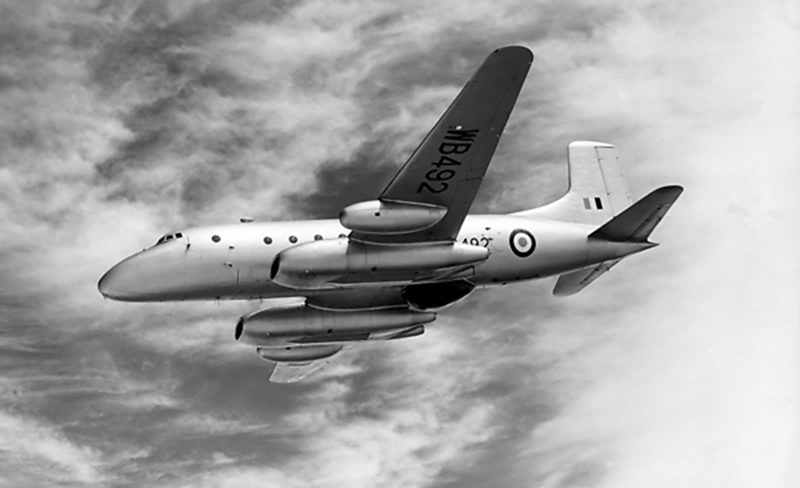
Ground accident of an Avro 706 Ashton Mk.3 at RAF Defford

Date & Time: Aug 4, 1955
Type of aircraft:
Operator:
Registration:
WB492
Flight Phase:
Flight Type:
Survivors:
Yes
Schedule:
Defford - Defford
Region:
Crew on board:
5
Crew fatalities:
Pax on board:
0
Pax fatalities:
Other fatalities:
Total fatalities:
0
Circumstances:
The crew was engaged in a test flight on behalf of the Telecommunications Research Establishment (TRE). While taxiing, a fire broke out in a wheel well. The pilot was able to stop the airplane and all five occupants escaped without any injuries. The airplane was considered as damaged beyond repair and later transferred to Farnborough for structural test.
Probable cause:
Wheel fire during taxiing.
Crash of an Avro 694 Lincoln B.2 in Wylye: 4 killed

Date & Time: Jul 2, 1948
Type of aircraft:
Operator:
Registration:
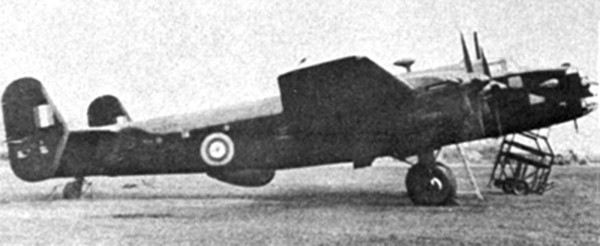
RF560
Flight Phase:
Flight Type:
Survivors:
No
Schedule:
Boscombe-Down - Defford
Location:
Region:
Crew on board:
4
Crew fatalities:
Pax on board:
0
Pax fatalities:
Other fatalities:
Total fatalities:
4
Circumstances:
The crew was performing a test flight from RAF Boscombe Down to RAF Defford on behalf of the A & AEE. Shortly after takeoff, while climbing to a height of 3,500 feet with the propeller of the engine number one feathered and the number two running at low speed, the aircraft stalled, went into a dive and crashed in a field located in Wylye, about 10 miles west of RAF Boscombe Down. All four crew members were killed.
Crew:
S/L A. Toot,
F/Lt A. G. Bradfield,
F/O G. W. Williams,
P. W. Howes.

Crash of a Bristol 142 Blenheim IV at RAF Defford

Date & Time: Feb 20, 1943
Type of aircraft:
Operator:
Registration:
L4839
Flight Phase:
Flight Type:
Survivors:
Yes
MSN:
8854
YOM:
1939
Region:
Crew on board:
3
Crew fatalities:
Pax on board:
0
Pax fatalities:
Other fatalities:
Total fatalities:
0
Circumstances:
During the takeoff roll, a tyre burst. The airplane started to swerve on runway then lost its undercarriage and came to a stop. There were no casualties.
Probable cause:
A tyre burst on takeoff.

Crash of an Avro 652 Anson I in Cirencester: 6 killed

Date & Time: Aug 16, 1942
Type of aircraft:
Operator:
Registration:
DJ184
Flight Phase:
Flight Type:
Survivors:
No
Schedule:
Defford – Boscombe Down
Region:
Crew on board:
6
Crew fatalities:
Pax on board:
0
Pax fatalities:
Other fatalities:
Total fatalities:
6
Circumstances:
The crew departed RAF Defford on a flight to RAF Boscombe Down to take delivery of a second Avro 652 Anson. While cruising at an altitude of 2,000 feet, the twin engine airplane went out of control, dove into the ground and crashed in a field near Cirencester. All six occupants, among them two brothers, were killed.
Crew:
F/L Frank Brown,
F/O Eric Tom Sellick,
F/O George Flight Sellick,
F/O Alfred James Marsh,
LAC Henry Davis McCallum,
AC2 Roland Frederick Umney.
Probable cause:
The loss of control was caused by a failure of the fabric covering the right wing that separated from the structure in flight.

Crash of a Douglas DB-7A Boston II at RAF Defford

Date & Time: Aug 12, 1942
Operator:
Registration:
BB903
Flight Type:
Survivors:
Yes
Schedule:
Defford - Defford
Region:
Crew on board:
1
Crew fatalities:
Pax on board:
0
Pax fatalities:
Other fatalities:
Total fatalities:
0
Circumstances:
The pilot was performing a solo training flight out from RAF Defford. The airplane suffered an engine failure and a loss of hydraulic pressure which caused the brakes to be almost ineffective. After landing at RAF Defford, the airplane was unable to stop within the remaining distance, overran and crashed into a ditch. The pilot escaped unhurt.
Probable cause:
Engine failure and brakes failure following a loss of hydraulic pressure.

Crash of a Handley Page H.P.57 Halifax II in Welsh Bicknor: 11 killed

Date & Time: Jun 7, 1942
Operator:
Registration:
V9977
Flight Phase:
Flight Type:
Survivors:
No
Schedule:
Defford - Defford
Region:
Crew on board:
5
Crew fatalities:
Pax on board:
6
Pax fatalities:
Other fatalities:
Total fatalities:
11
Circumstances:
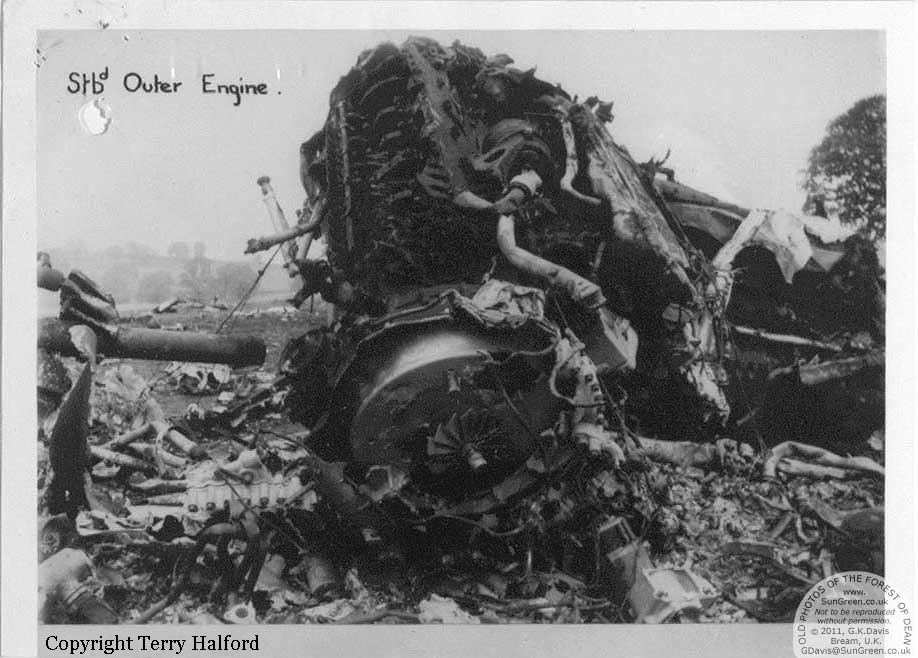
The airplane was engaged in a test flight on behalf of the Telecommunications Research Establishment (TRE) of the Royal Air Force. It departed RAF Defford in the day with a crew of five and six engineers on board. En route, the engine number four caught fire. The captain attempted an emergency landing when, at an altitude of 500 feet, a portion of the right wing broke away. Out of control, the aircraft crashed in a field at a speed of 150 mph and was destroyed. All 11 occupants were killed, among them the British engineer Alan Blumlein. His death was officially announced three years later as the mission was highly secret: test and development of the H2S airborne radar system.
Crew:
P/O D. J. D.Berrington, pilot,
F/O A. M. Phillips, pilot,
F/Sgt G. Millar, observer,
LAC B. D. C. Dear, flight engineer,
AC2 B. C. F. Bicknell, wireless operator and air gunner.
Passengers:
S/L R. J. Sansom, attached to TRE,
P/O C. E. Vincent, attached to TRE,
Mr. G. S. Hensby, engineer by TRE,
Mr. A. D. Blumlein, engineer by EMI,
Mr. C. O. Browne, engineer by EMI,
Mr. F. Blythen, engineer by EMI.
Probable cause:
After the RAF investigative board completed its report on the Halifax crash on 1 July 1942, it was distributed to a restricted list of approved recipients, but not publicly divulged. In the interests of wartime secrecy, the announcement of Blumlein's death was not made for another three years. The investigative board, headed by AIB Chief Inspector Vernon Brown (who later also investigated the postwar Star Tiger and Star Ariel disappearances) found that the Halifax bomber crash was caused by engine fire, attributed to the unscrewing of a tappet nut on the starboard outer engine, which had been improperly tightened by a RAF engine fitter while inspecting the engine some three hours prior to the crash. The loosened nut caused excessive valve clearance and a fracture of the valve stem which resulted pumping ignited fuel outboard of the rocker cover and along the outside of the engine, causing a fire in the engine nacelle. Constantly fueled by the broken intake, the fire burned rapidly along the wing and fuselage, eventually causing a large section of the wing to separate from the fuselage at approximately 350 feet of altitude. With the loss of all control over level flight, the rest of the plane rolled inverted and struck the ground at approximately 150 mph.