Country
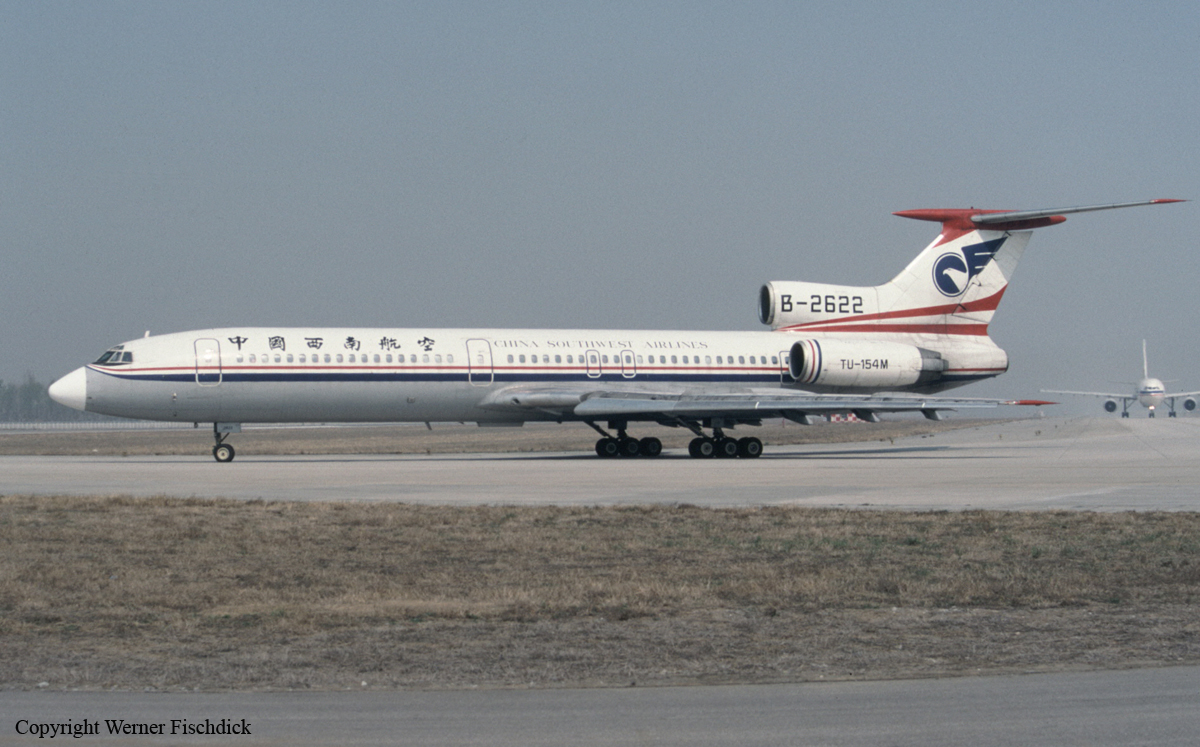
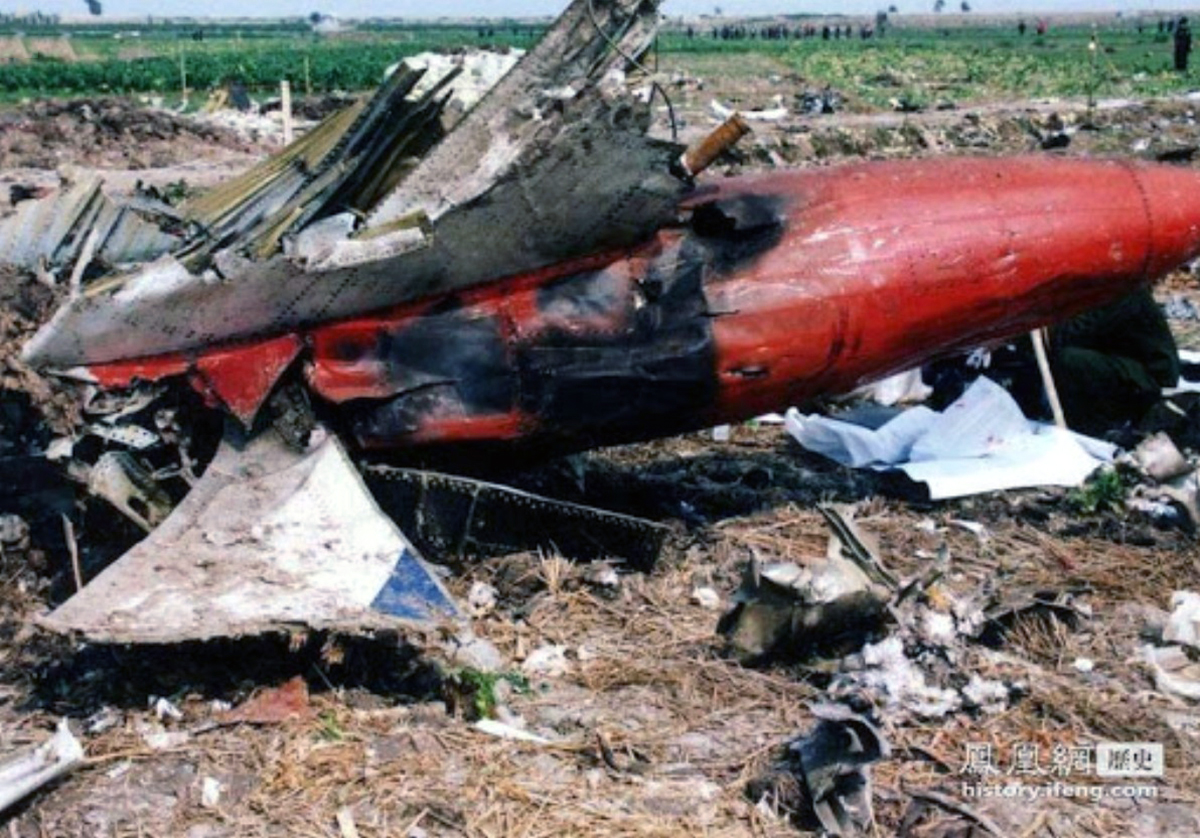
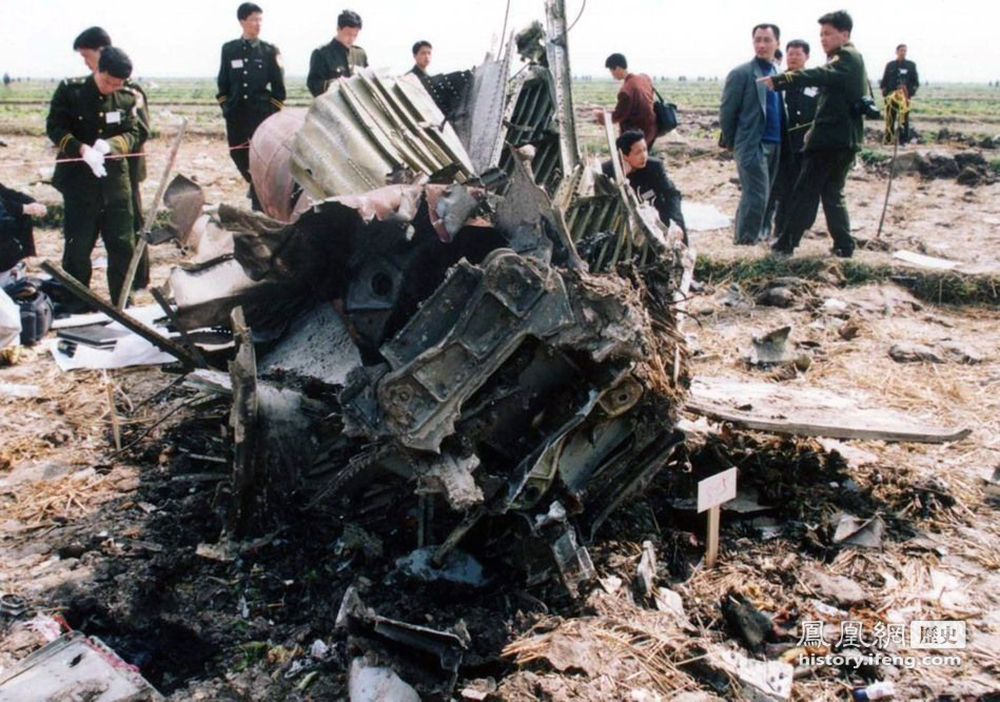
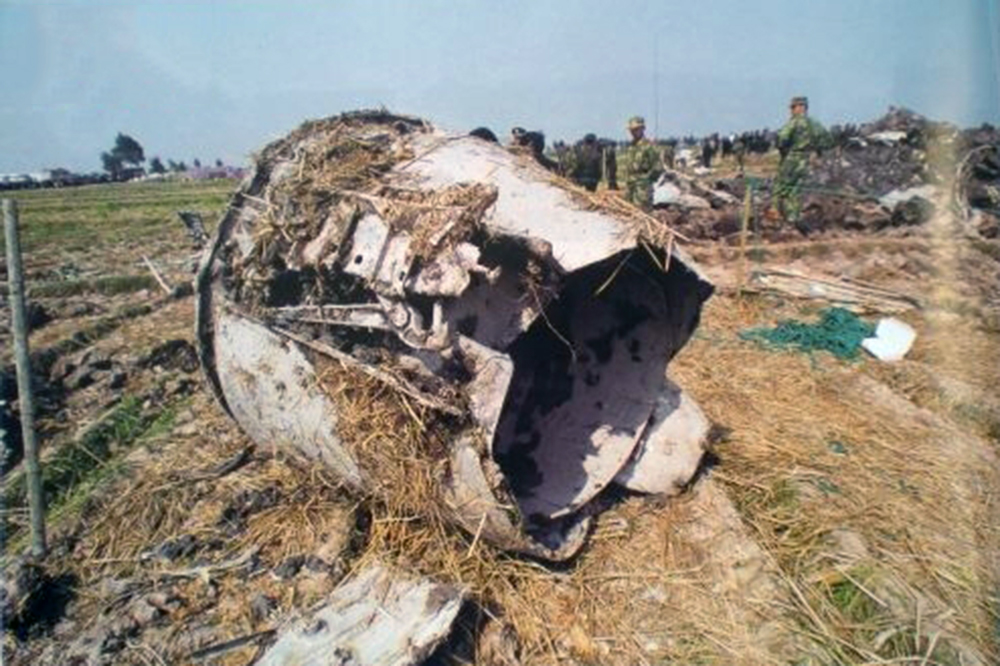
Crash of a Tupolev TU-154M in Wenzhou: 61 killed
Date & Time:
Feb 24, 1999 at 1634 LT
Operator:

Registration:
B-2622
Survivors:
No
Schedule:
Chengdu - Wenzhou
MSN:
90A846
YOM:
1990
Flight number:
SZ4509
Crew on board:
11
Crew fatalities:
Pax on board:
50
Pax fatalities:
Other fatalities:
Total fatalities:
61
Aircraft flight hours:
14135
Aircraft flight cycles:
7748
Circumstances:
Following an uneventful flight from Chengdu, the crew was cleared to descend to Wenzhou Airport. While passing 9,000 metres on descent, the crew encountered technical difficulties with the control column that was too far forward. At 1629LT, the crew was cleared to descend from 1,200 to 700 metres when the aircraft entered a nose-down attitude. Flaps were selected down (first stage) when the AOA alarm sounded in the cockpit. The aircraft entered an uncontrolled descent and crashed in an open field. It disintegrated on impact and all 61 occupants were killed. Several farmers were injured by debris.
Probable cause:
A self-locking nut, other than castle nut with cotter pin as specified, had been installed at the bolt for connection between pull rod and bellcranck in the elevator control system. The nut screwed off, resulting in bolt loss, which led to the loss of pitch control.
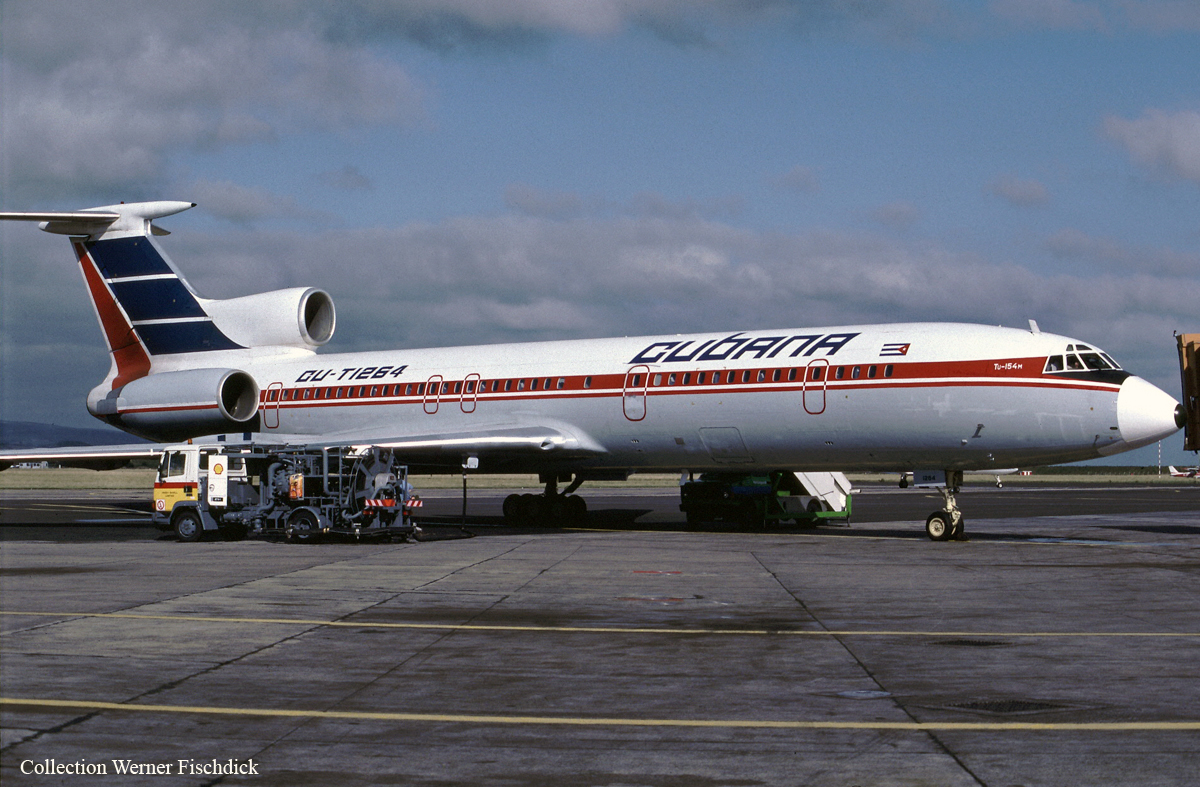
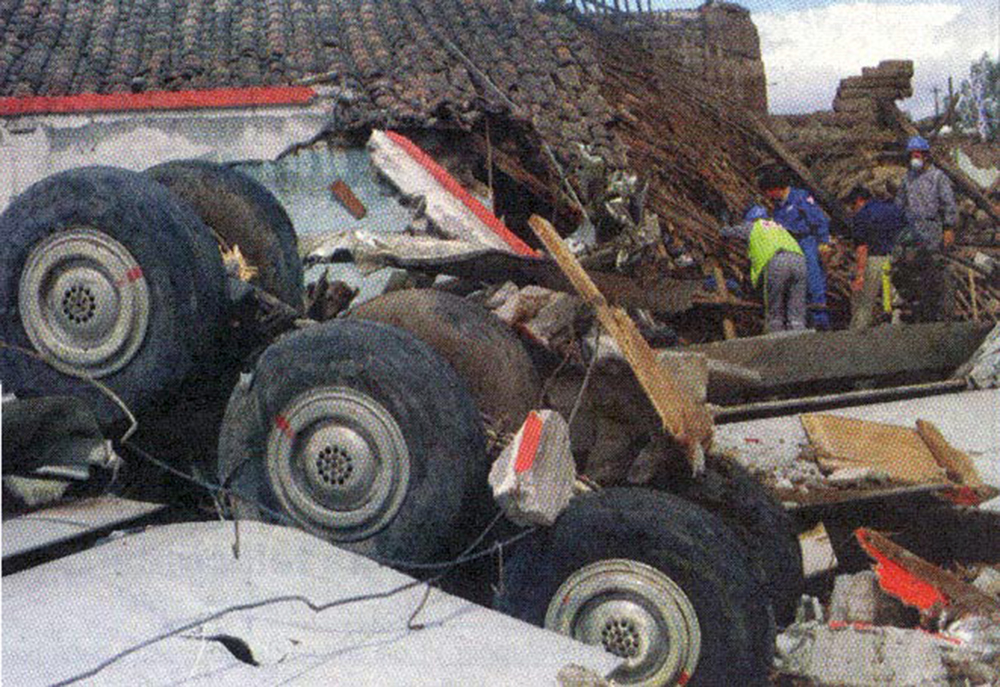
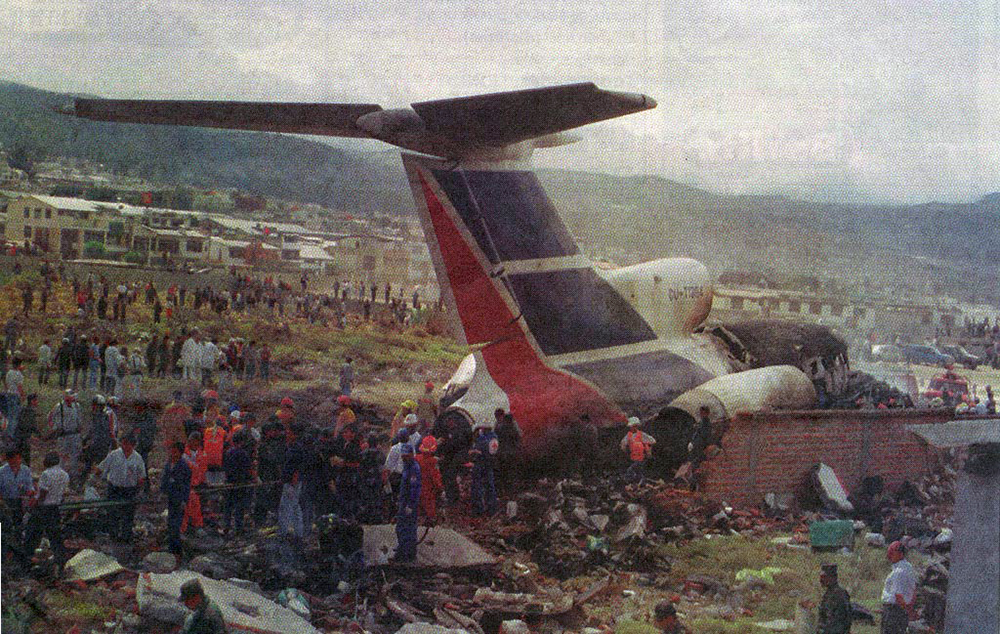
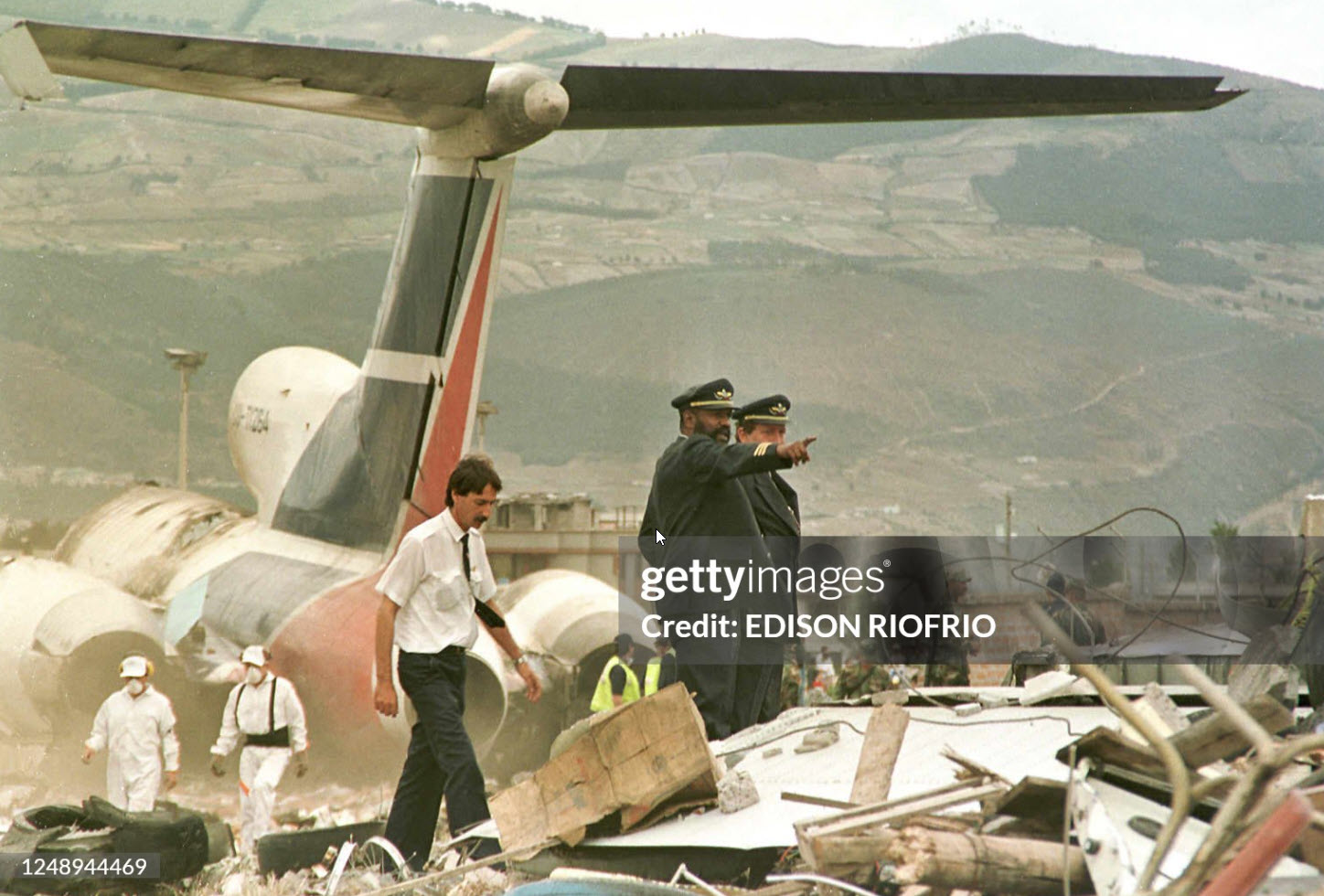
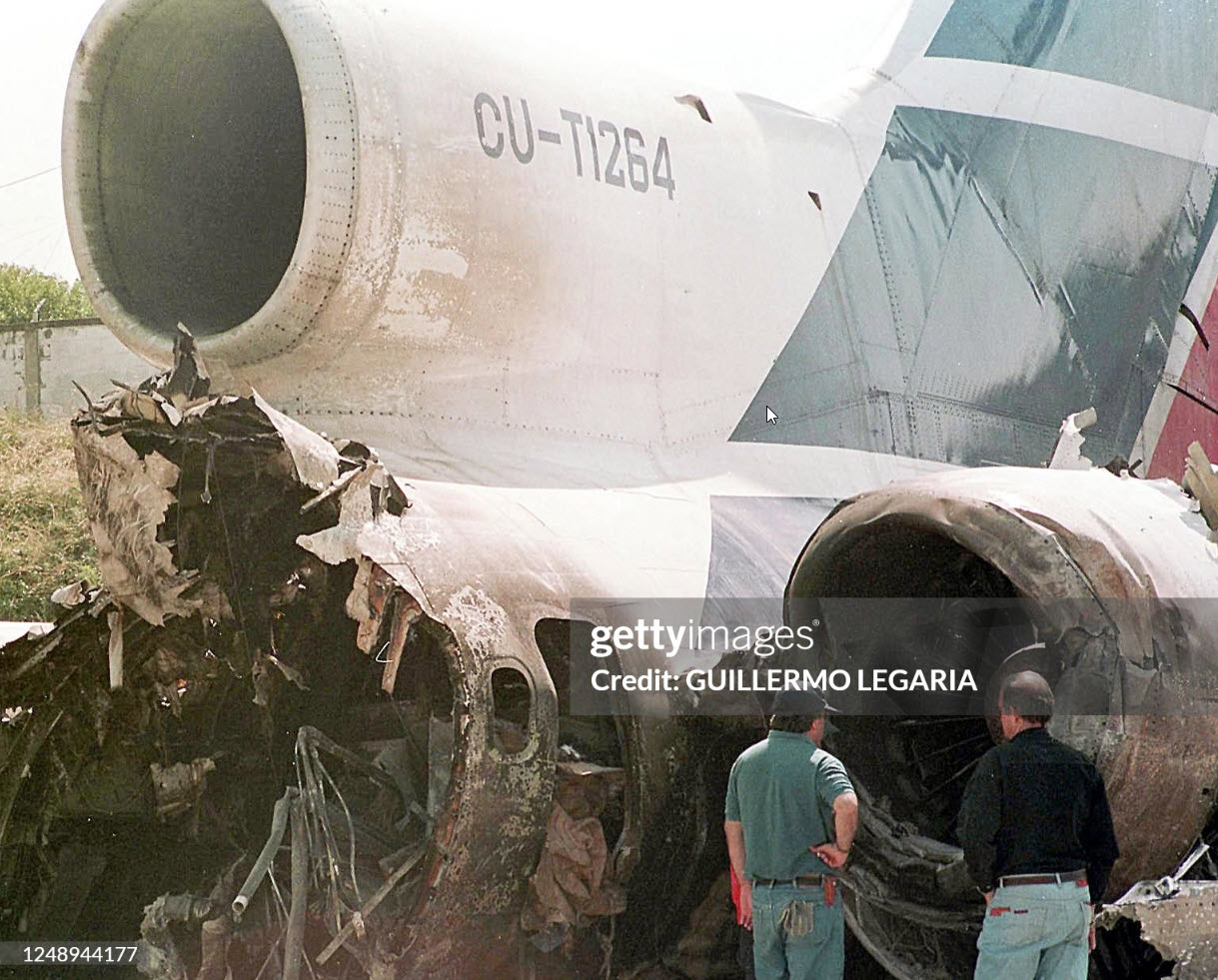
Crash of a Tupolev TU-154M in Quito: 80 killed
Date & Time:
Aug 29, 1998 at 1303 LT
Operator:

Registration:
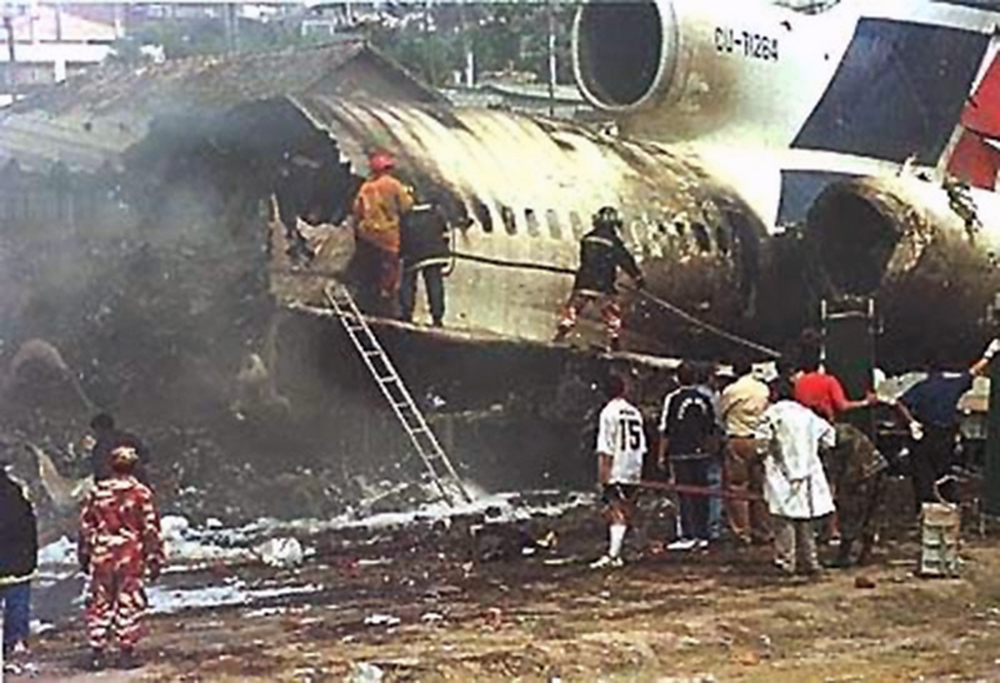
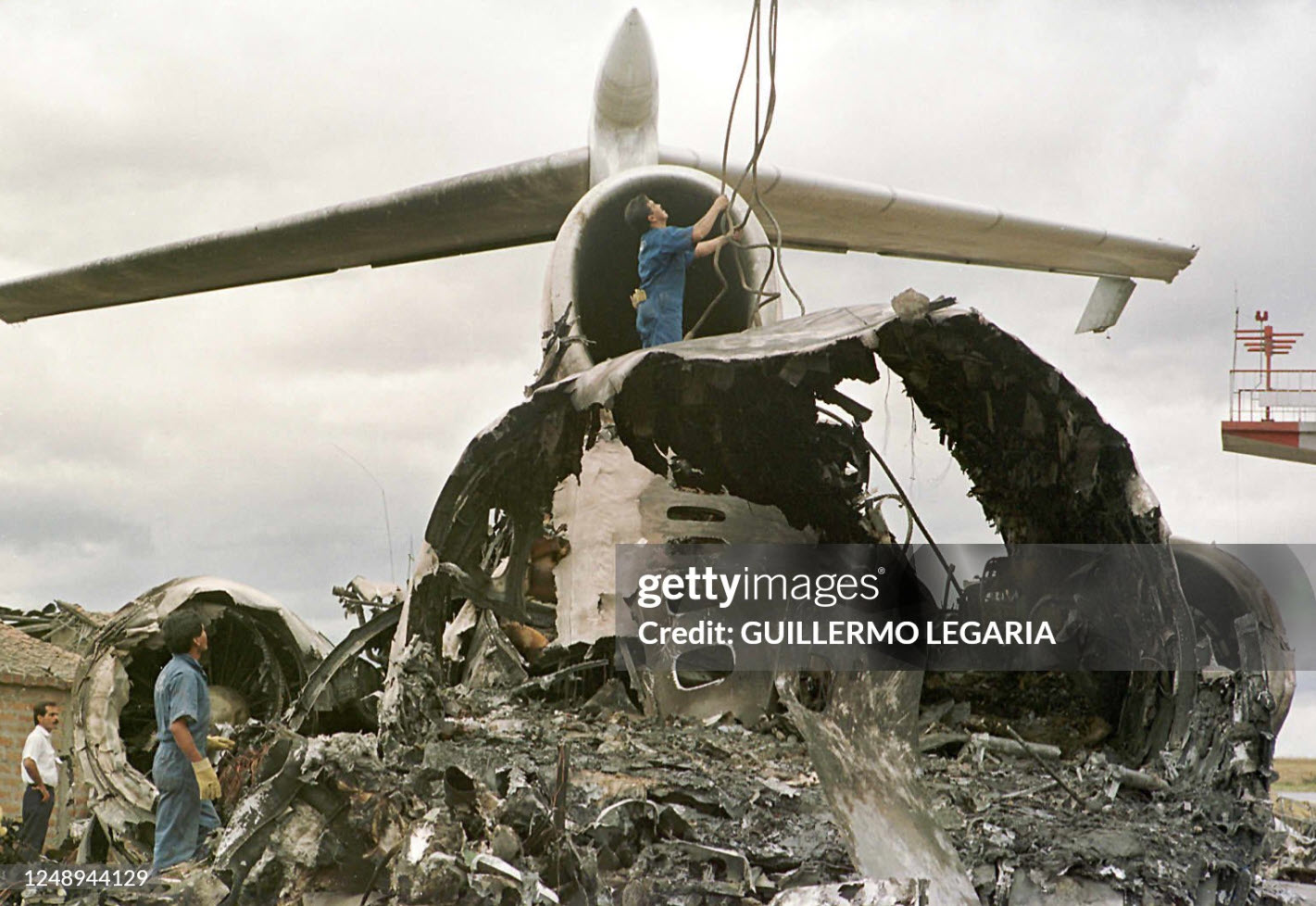
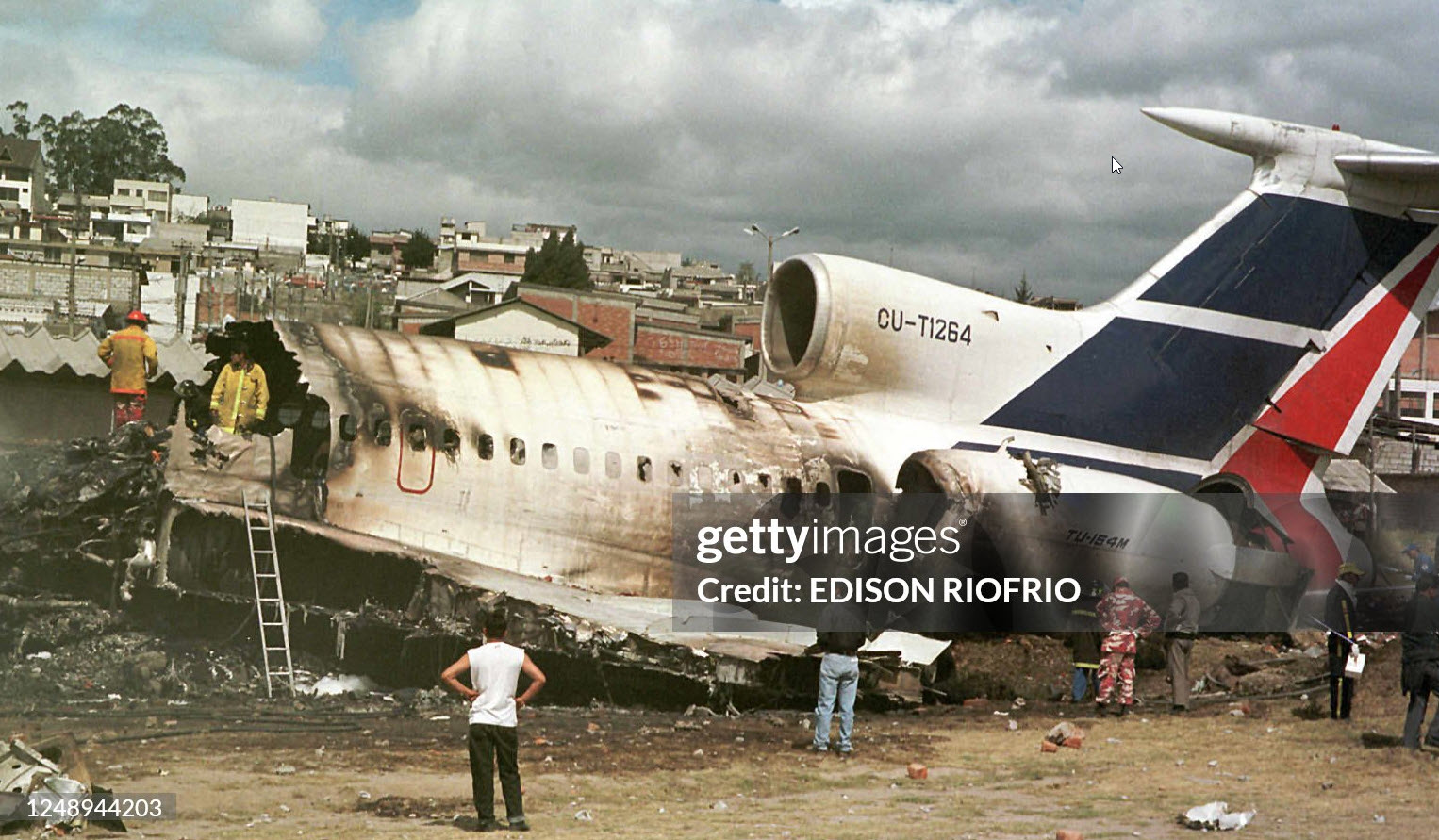
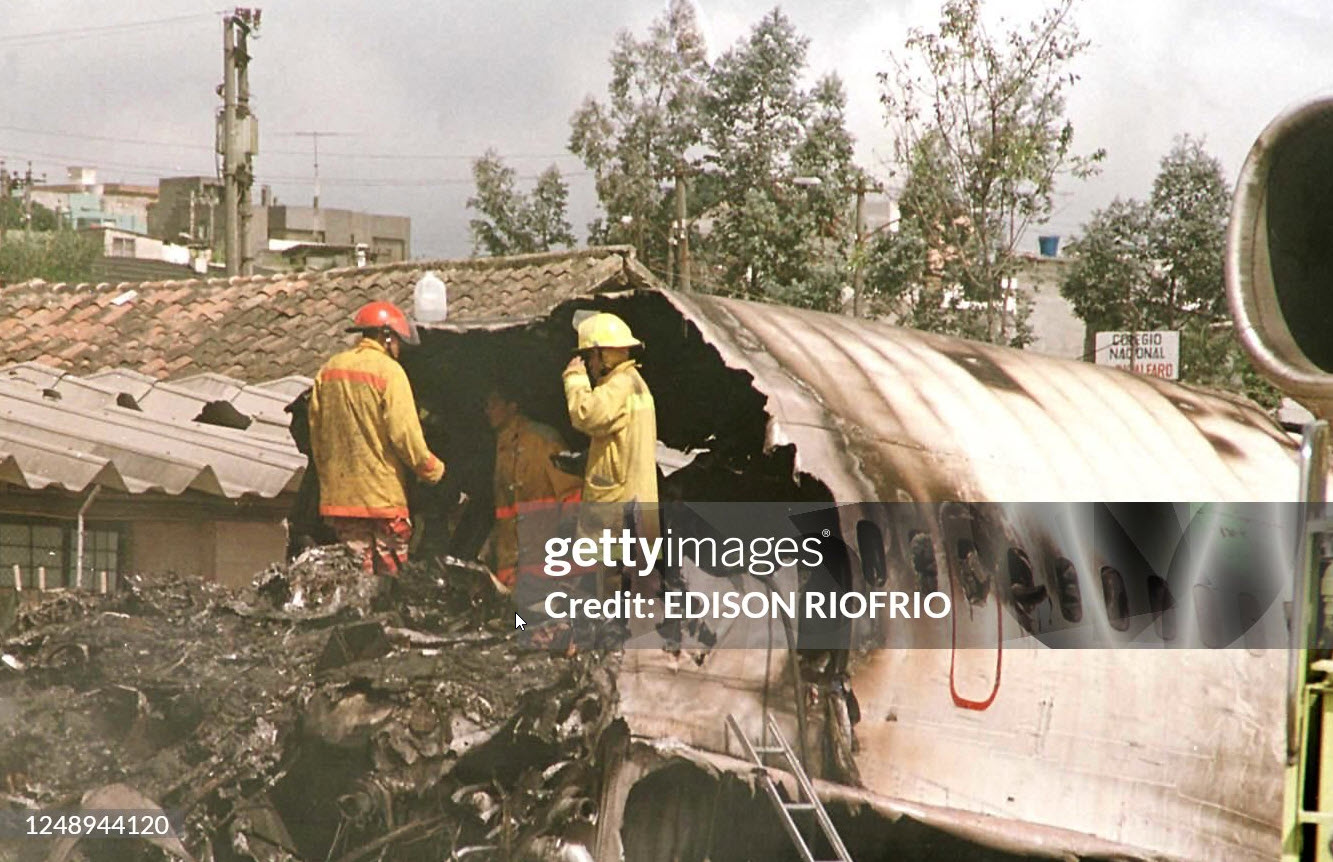
CU-T1264
Survivors:
Yes
Schedule:
Quito - Guayaquil - Havana
MSN:
85A720
YOM:
1985
Flight number:
CU389
Crew on board:
14
Crew fatalities:
Pax on board:
77
Pax fatalities:
Other fatalities:
Total fatalities:
80
Aircraft flight hours:
9256
Circumstances:
While parked on the apron at Quito-Mariscal Sucre Airport, the crew started the engine when a pneumatic valve blocked. The problem was resolved and two engines were started with ground power unit while the third engine was started during taxi. During the takeoff roll on runway 17, at Vr speed, the pilot-in-command started the rotation but the aircraft failed to respond. For unknown reasons, the crew took 10 seconds to decide to abort the takeoff. The captain initiated an emergency braking procedure but the remaining distance of 800 metres was insufficient. Unable to stop, the aircraft overran, struck a concrete wall, an auto spare parts building and crashed near a soccer field, bursting into flames. Seventy people in the aircraft was well as 10 people on the ground were killed while 21 people in the airplane and 15 on the ground were injured, some seriously. At the time of the accident, the total weight of the aircraft was 73,309 kilos, within limits.
Probable cause:
It is believed that the crew failed to follow the taxi and pre-takeoff checklist and forgot to select the switches for the hydraulic valves of the control system. No technical anomalies were found on the aircraft and engines.

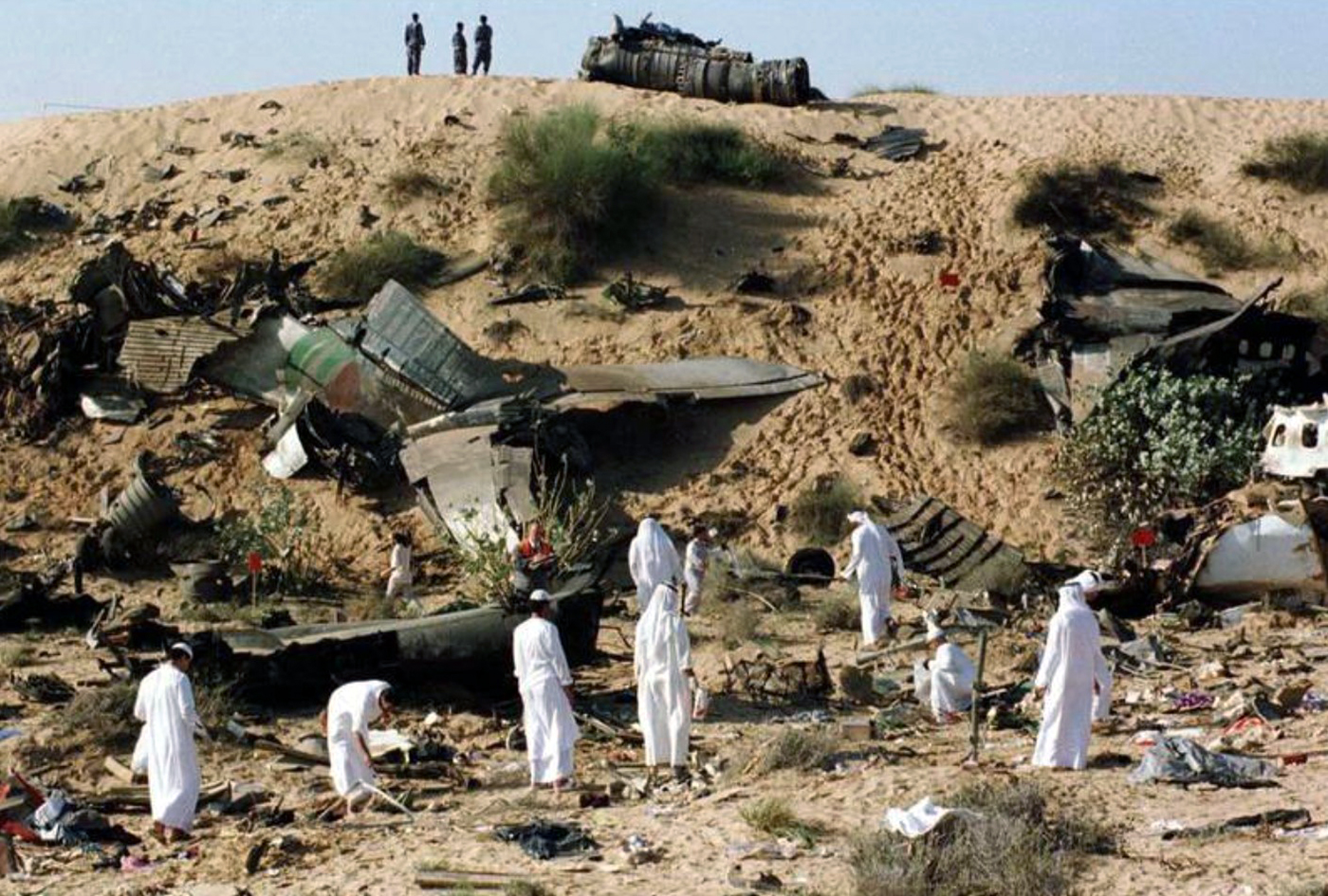
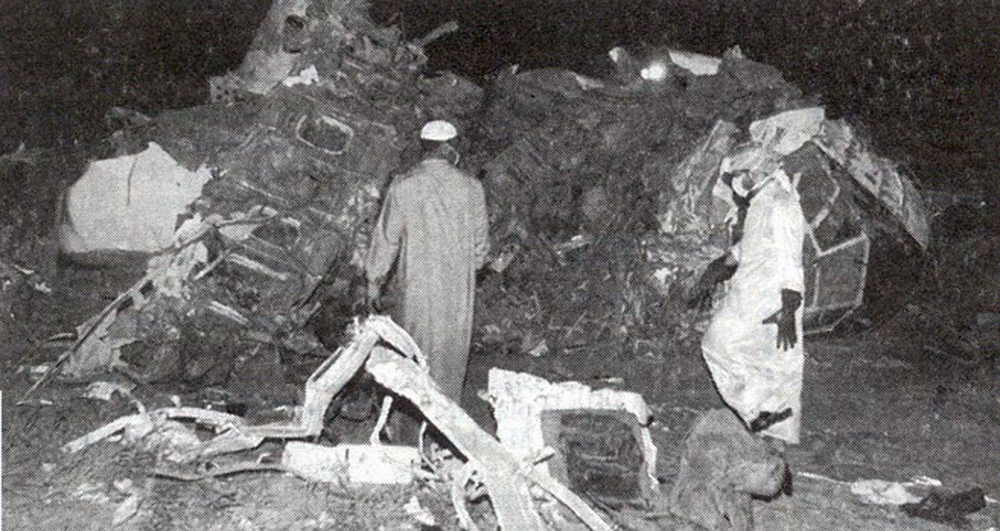
Crash of a Tupolev TU-154B-1 in Sharjah: 85 killed
Date & Time:
Dec 15, 1997 at 1835 LT
Operator:

Registration:
EY-85281
Survivors:
Yes
Schedule:
Dushanbe - Sharjah
MSN:
78A281
YOM:
1978
Flight number:
TZK3183
Crew on board:
7
Crew fatalities:
Pax on board:
79
Pax fatalities:
Other fatalities:
Total fatalities:
85
Circumstances:
Following an uneventful flight, the aircraft entered the UAE airspace and was cleared by Dubai ATC to successively descend to FL170, 100, 060 and 025 via heading 190. Passing 3,460 feet on descent, the crew was cleared to continue to 1,500 feet when, at an altitude of 1,800 feet, the aircraft entered an area of turbulences. The level of 1,500 feet was reached 15 km from the runway 30 threshold. For unknown reasons, the crew failed to report he was passing 1,500 feet and was then instructed to continue via heading 270 for the final approach to runway 30. In a relative limited visibility, the crew initiated a right turn at a speed of 400 km/h then lowered the landing gear. At an altitude of 820 feet, an alarm sounded in the cockpit, informing the crew about an excessive angle of attack. The captain corrected the pitch from 20° to 14° when few seconds later, at an altitude of 690 feet, the aircraft entered a second area of turbulences. The captain realized his altitude was insufficient and requested an increase of engine power when the aircraft struck the ground and crashed 13 km short of runway, bursting into flames. The copilot was the only survivor while 85 other occupants were killed. The aircraft disintegrated on impact.
Probable cause:
The accident was the consequence of a controlled flight into terrain.
The following findings were identified:
- The crew failed to follow the approach published procedures,
- The crew continued the approach below the MDA until the aircraft collided with terrain,
- The crew failed to proceed to the usual approach briefing and checks,
- Lack of visibility due to the night,
- Crew fatigue,
- Lack of crew mutual crosscheck during descent,
- Lack of crew coordination,
- Turbulences in the approach path,
- Non compliance to published procedures.
The following findings were identified:
- The crew failed to follow the approach published procedures,
- The crew continued the approach below the MDA until the aircraft collided with terrain,
- The crew failed to proceed to the usual approach briefing and checks,
- Lack of visibility due to the night,
- Crew fatigue,
- Lack of crew mutual crosscheck during descent,
- Lack of crew coordination,
- Turbulences in the approach path,
- Non compliance to published procedures.



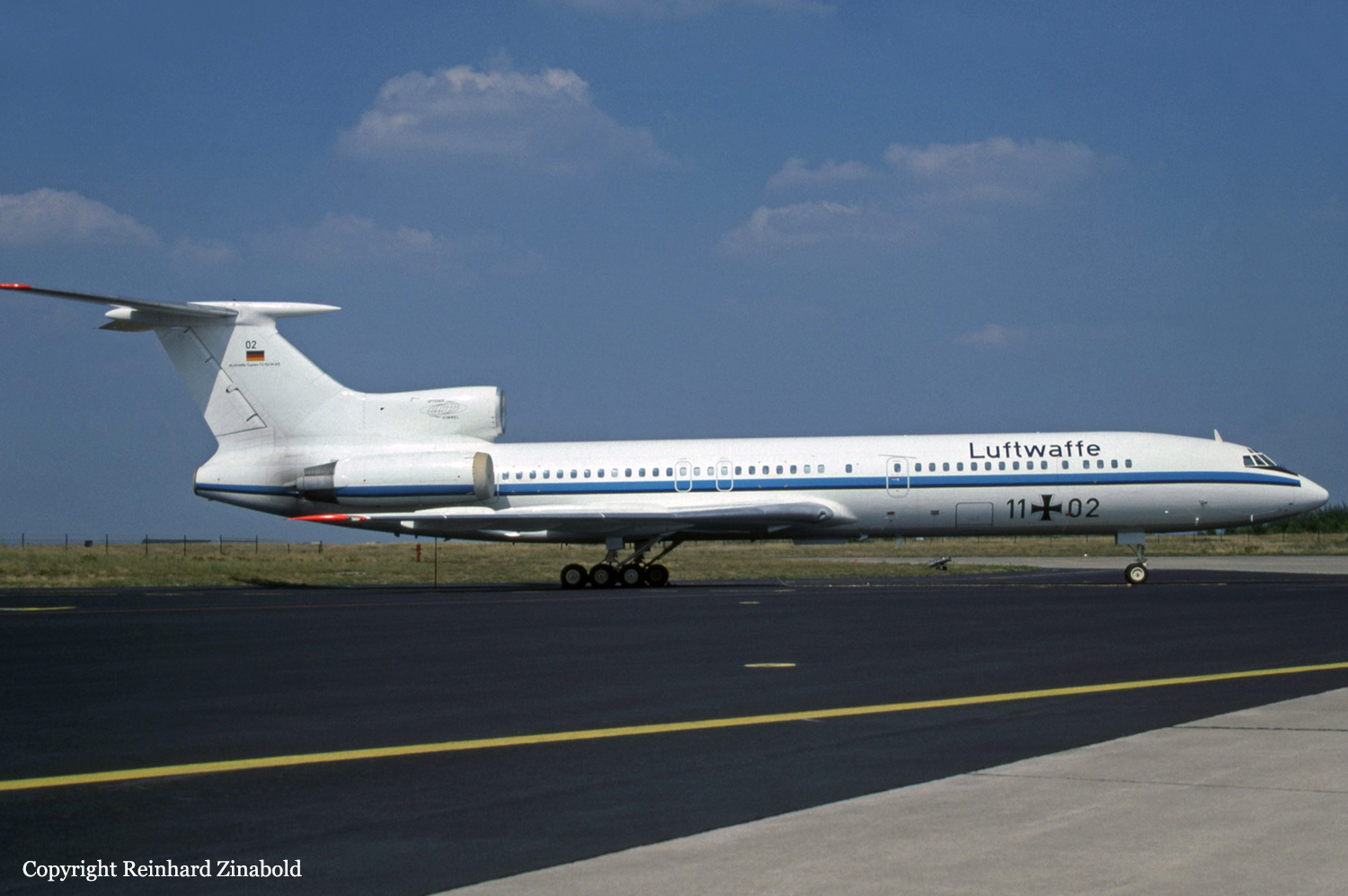
Crash of a Tupolev TU-154M in the Atlantic Ocean: 24 killed
Date & Time:
Sep 13, 1997 at 1710 LT
Operator:

Registration:
11+02
Survivors:
No
Schedule:
Bonn – Niamey – Windhoek – Cape Town
MSN:
89A813
YOM:
1989
Flight number:
GAF074
Crew on board:
10
Crew fatalities:
Pax on board:
14
Pax fatalities:
Other fatalities:
Total fatalities:
24
Circumstances:
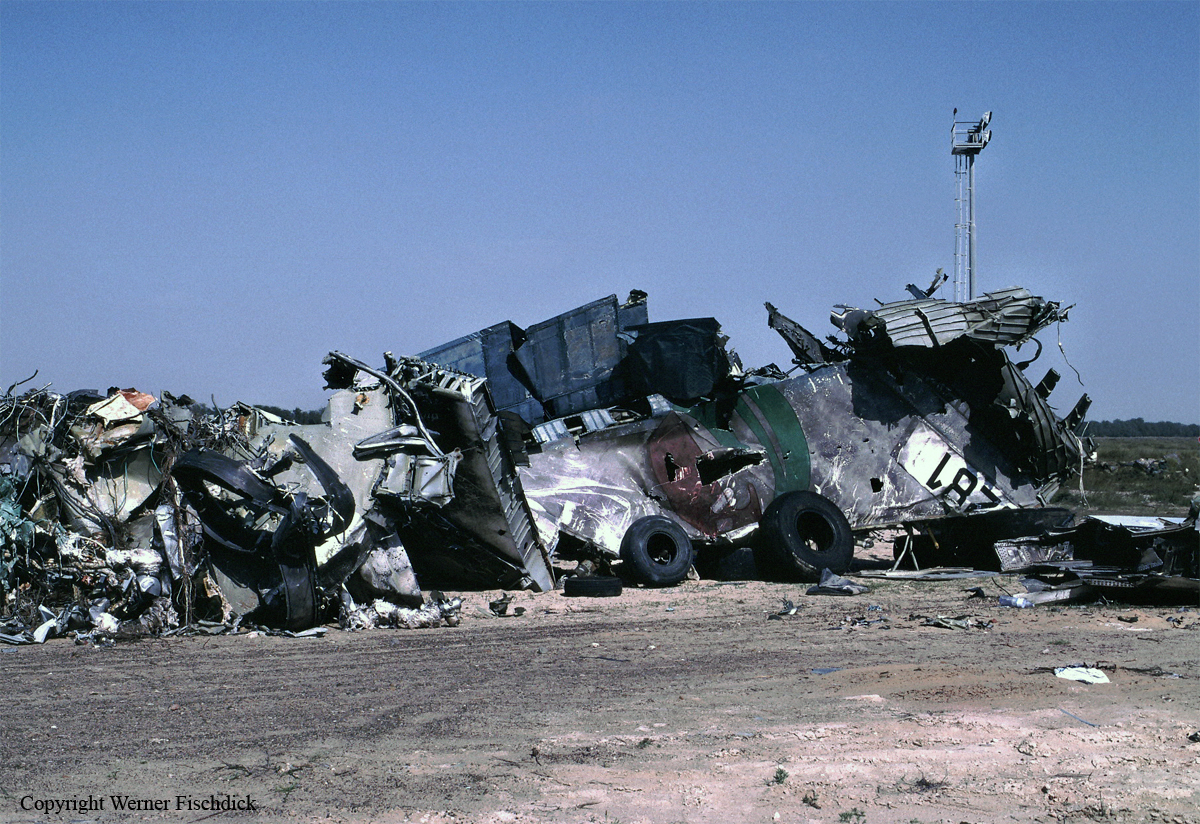
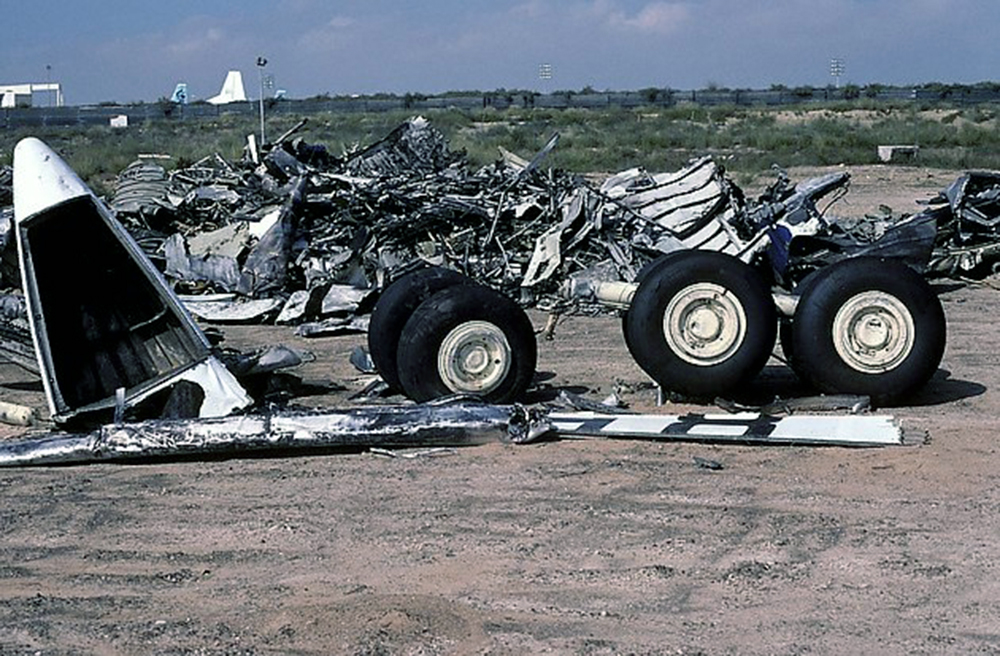
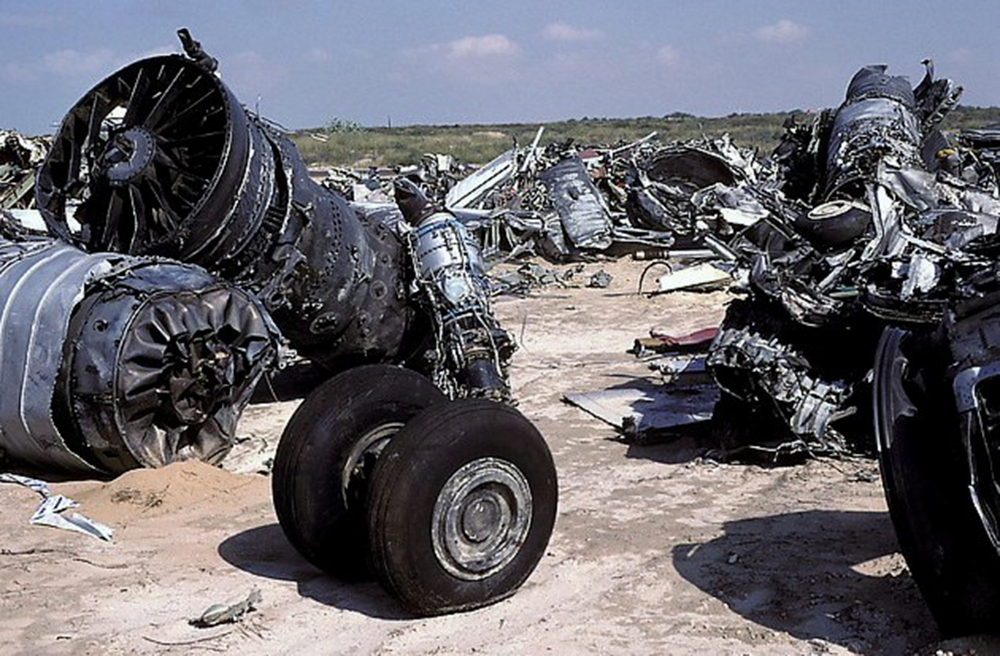
Some 65 nautical miles west off the Namibian coast, a US Air Force Lockheed C-141B Starlifter collided with a German Air Force Tupolev 154M in mid-air. Both aircraft crashed, killing all 33 occupants. The Tupolev 154M (11+02), call sign GAF074, operated on a flight from Cologne/Bonn Airport in Germany to Kaapstad, South Africa. En route refueling stops were planned at Niamey, Niger and Windhoek, Namibia. On board were ten crew members and 14 passengers. The C-141B, (65-9405), call sign REACH 4201, had delivered UN humanitarian supplies to Windhoek and was returning to the U.S. via Georgetown on Ascension Island in the South Atlantic Ocean. On board were nine crew members. GAF074 departed Niamey, Niger at 10:35 UTC. REACH 4201 took off from Windhoek at 14:11 UTC and climbed to its filed for and assigned cruise level of 35,000 feet (FL350). At the same time, GAF074 was not at its filed for cruise level of FL390 but was still at its initially assigned cruise level FL350. Windhoek ATC was in sole and continuous radio contact with REACH 4201, with no knowledge of GAF 074's movement. Luanda ATC was in radio contact with GAF074, but they were not in radio contact with REACH 4201. Luanda ATC did receive flight plans for both aircraft but a departure message for only REACH 4201. At 15:10 UTC both aircraft collided at FL350 and crashed into the sea.
Probable cause:
The primary cause of this accident, in my opinion, was GAF 074 flying a cruise level (FL350) which was not the level they had filed for (FL390). Neither FL350 nor FL390 were the correct cruise levels for that aircraft's magnetic heading according to International Civil Aviation Organization regulations. The appropriate cruise level would have been FL290, FL330, FL370, FL410, etc. A substantially contributing factor was ATC agency Luanda's poor management of air traffic through its airspace. While ATC communications could be improved, ATC agency Luanda did have all the pertinent information it needed to provide critical advisories to both aircraft. If ATC agency Luanda was unable to contact GAF 074, it should have used other communication means (HF radio, telefax or telephone) to contact REACH 4201 through ATC agency Windhoek, as outlined in governing documents. Another substantially contributing factor was the complicated and sporadic operation of the Aeronautical Fixed Telecommunications Network (AFTN). Routing of messages to affected air traffic control agencies is not direct and is convoluted, creating unnecessary delays and unfortunate misroutings. Specifically, ATC agency Windhoek did not receive a flight plan or a departure message on GAF 074, which could have been used by the controllers to identify the conflict so they could have advised REACH 4201. In my opinion, the absence of TCAS was not a cause or substantially contributing factor, but the presence of a fully operational TCAS could have prevented the accident." (Colonel William H. C. Schell Jr., USAF, President of the Accident Investigation Board).