Country
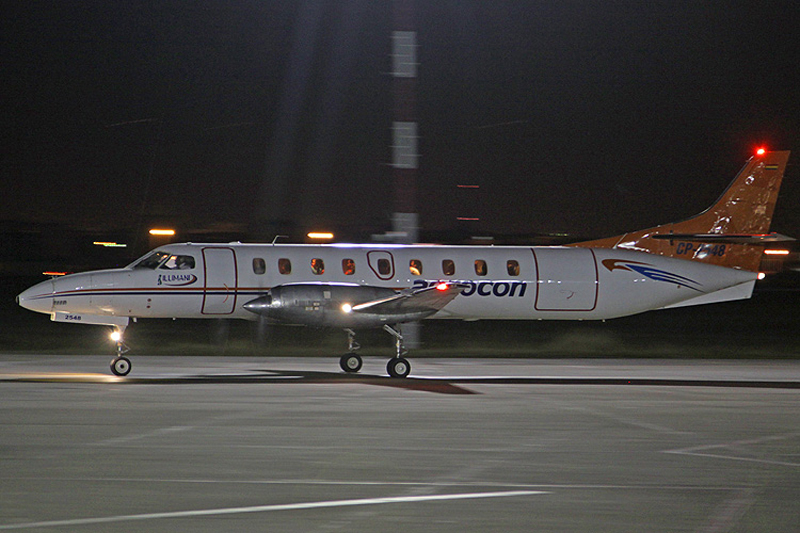
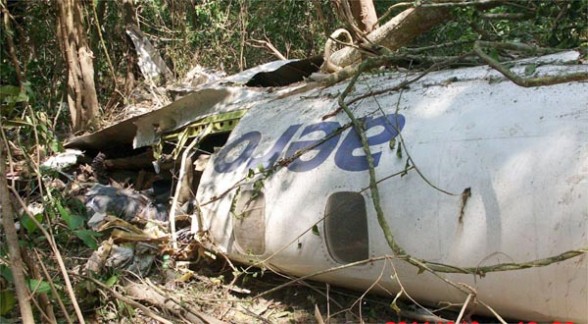
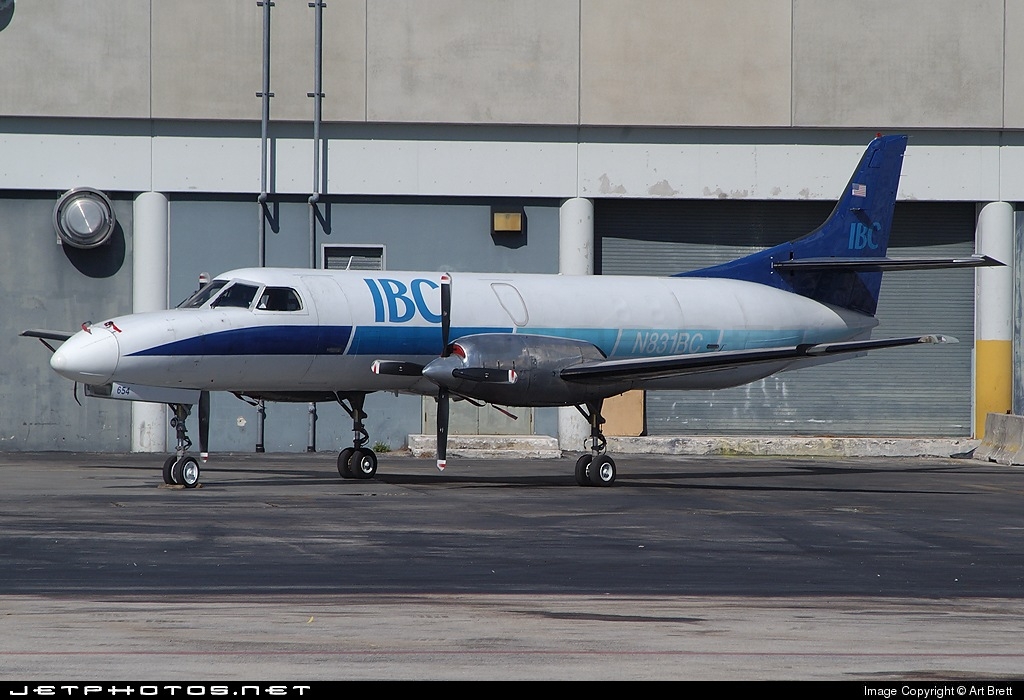
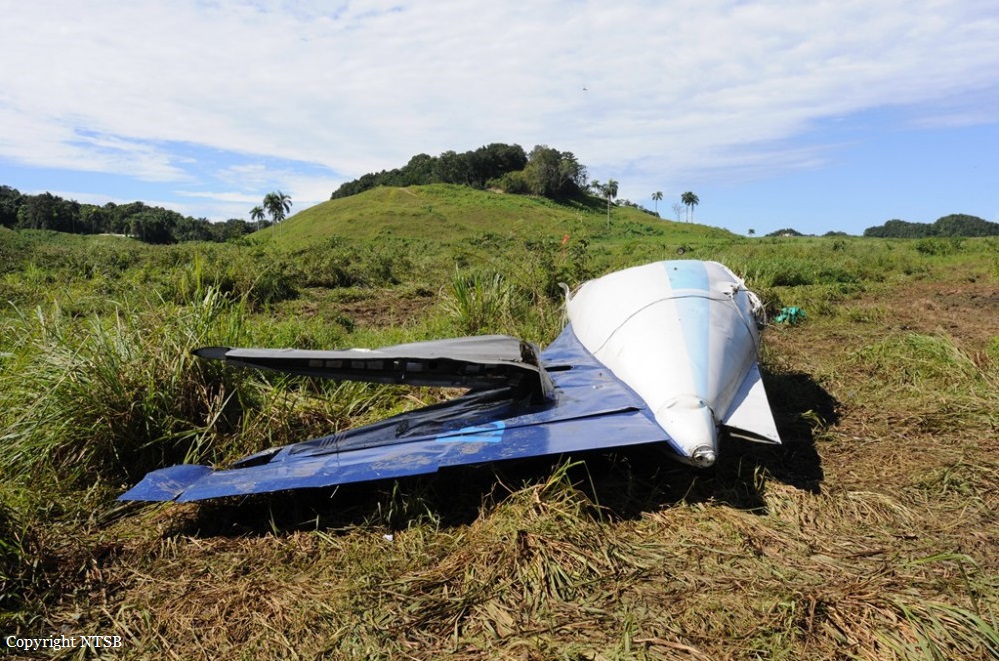
Crash of a Swearingen SA227AC Metro III in La Alianza: 2 killed
Date & Time:
Dec 2, 2013 at 2010 LT
Operator:

Registration:
N831BC
Survivors:
No
Schedule:
CSQ405
MSN:
AC-654B
YOM:
1986
Flight number:
Santo Domingo - San Juan
Crew on board:
2
Crew fatalities:
Pax on board:
0
Pax fatalities:
Other fatalities:
Total fatalities:
2
Captain / Total hours on type:
686.00
Copilot / Total hours on type:
92
Aircraft flight hours:
33888
Circumstances:
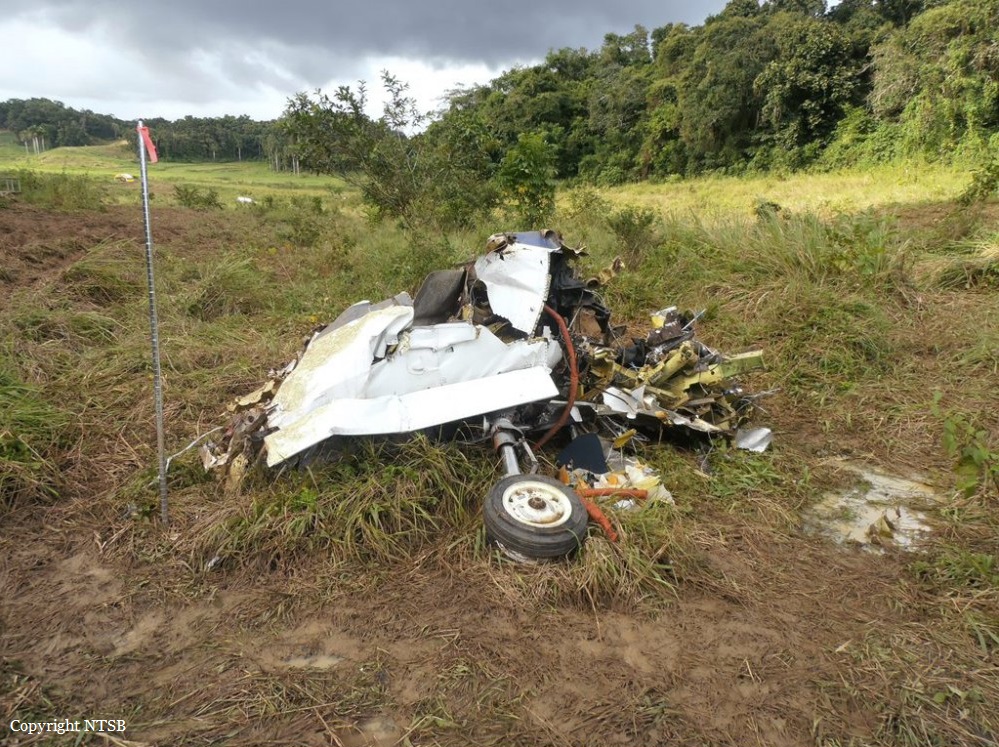
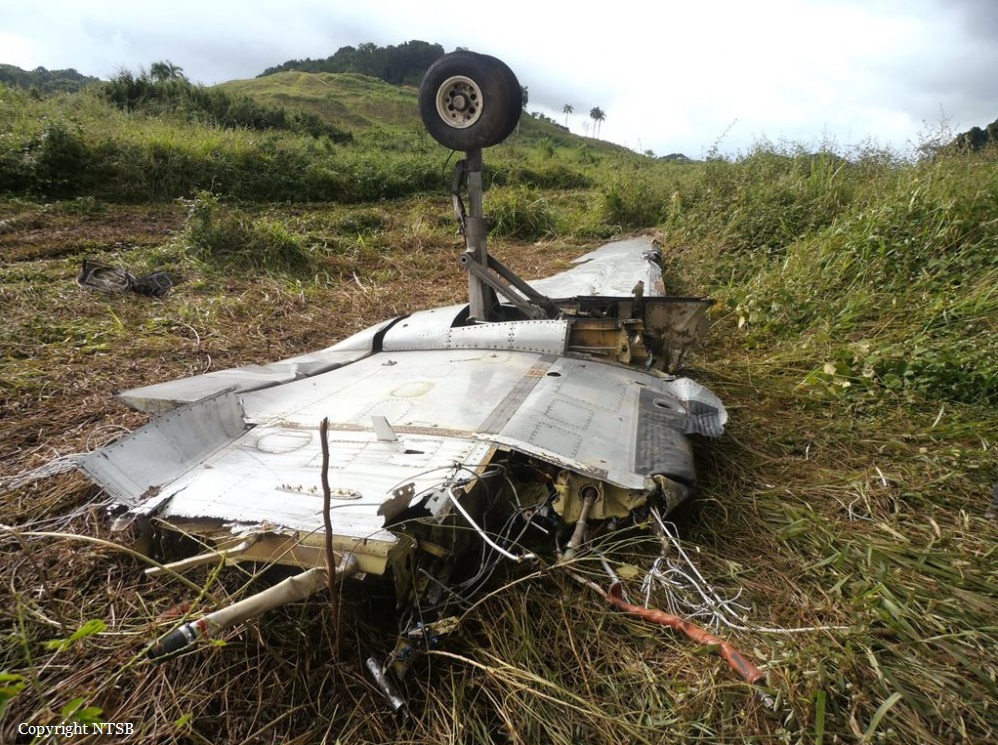
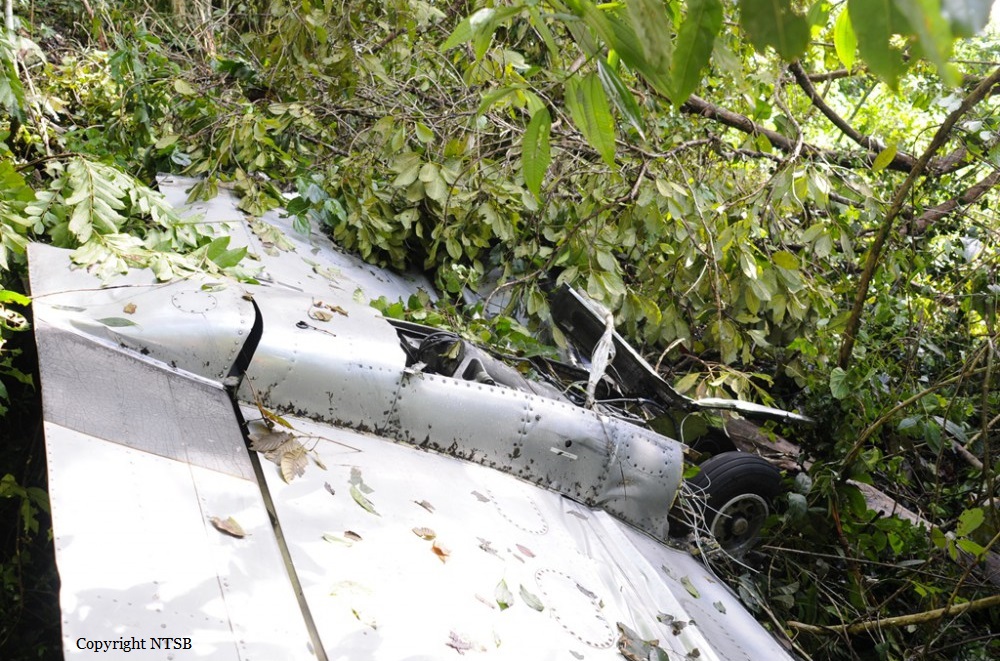
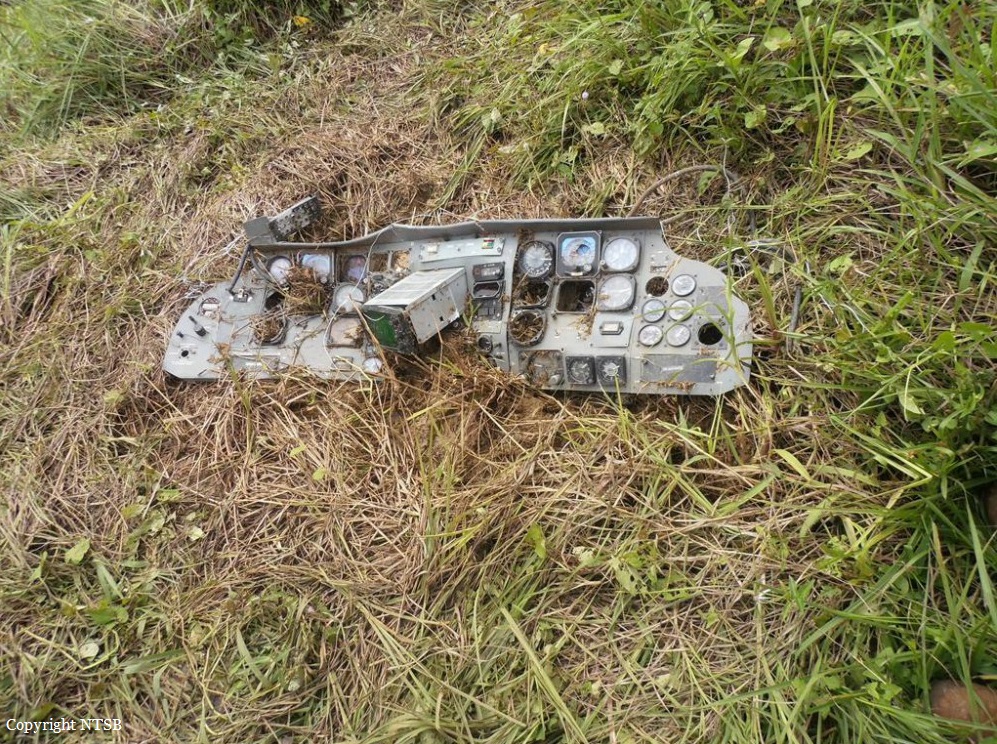
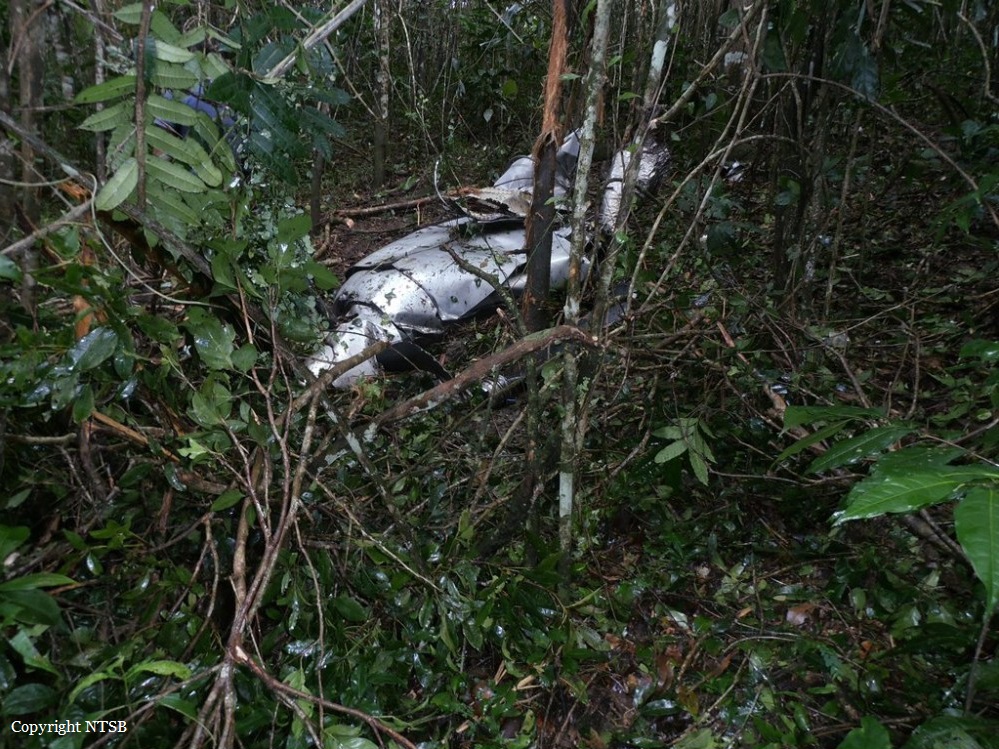
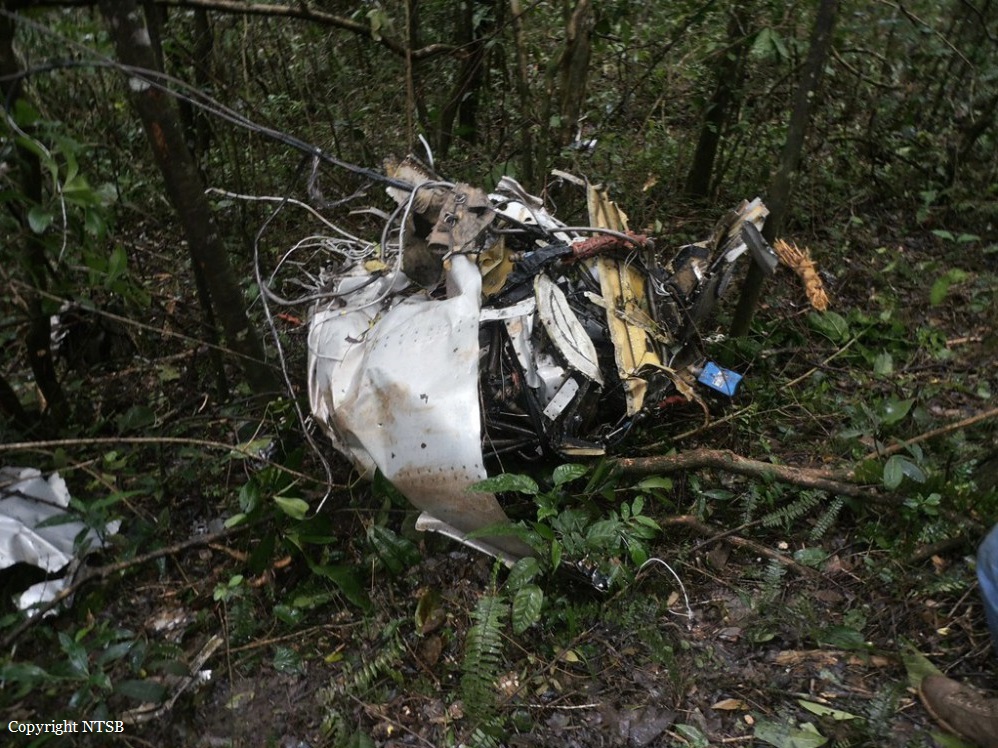
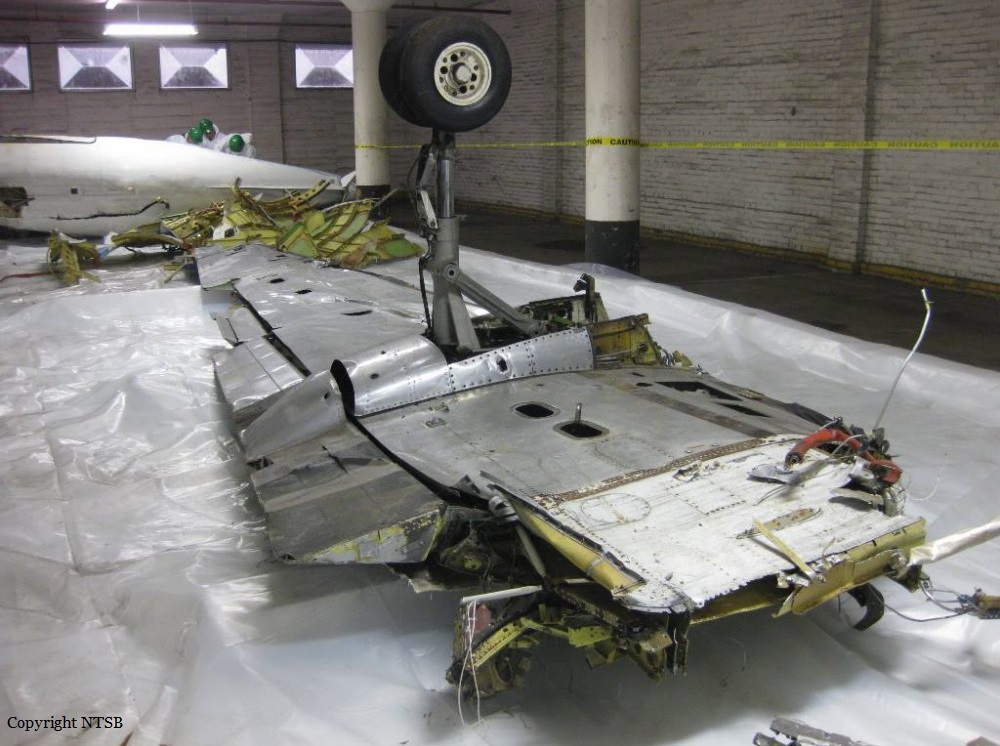
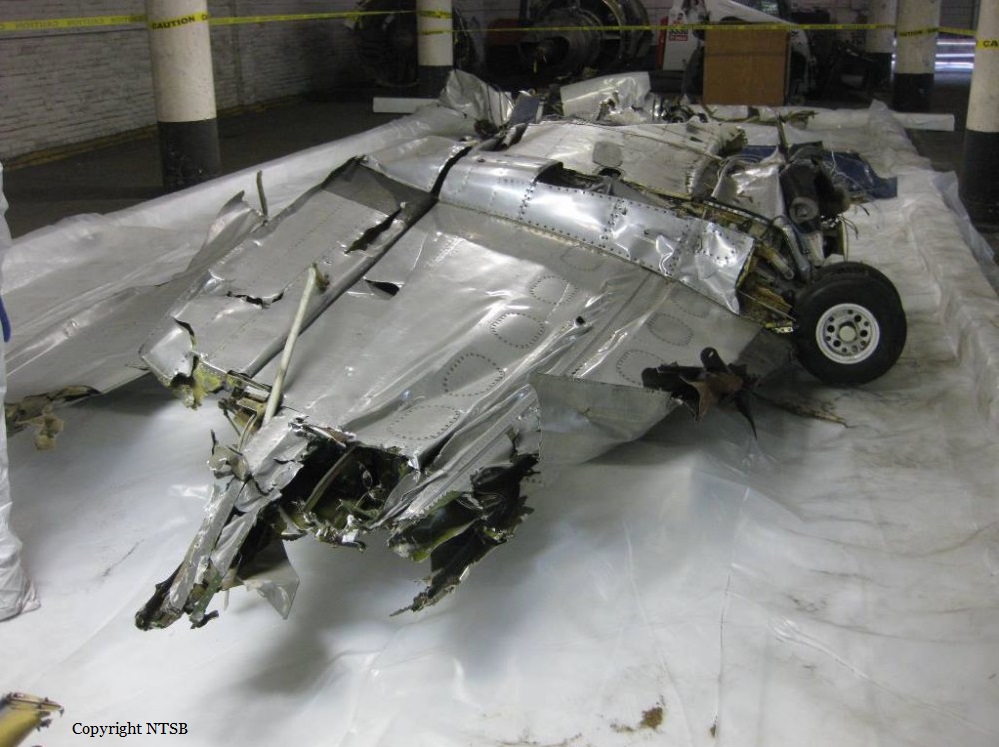
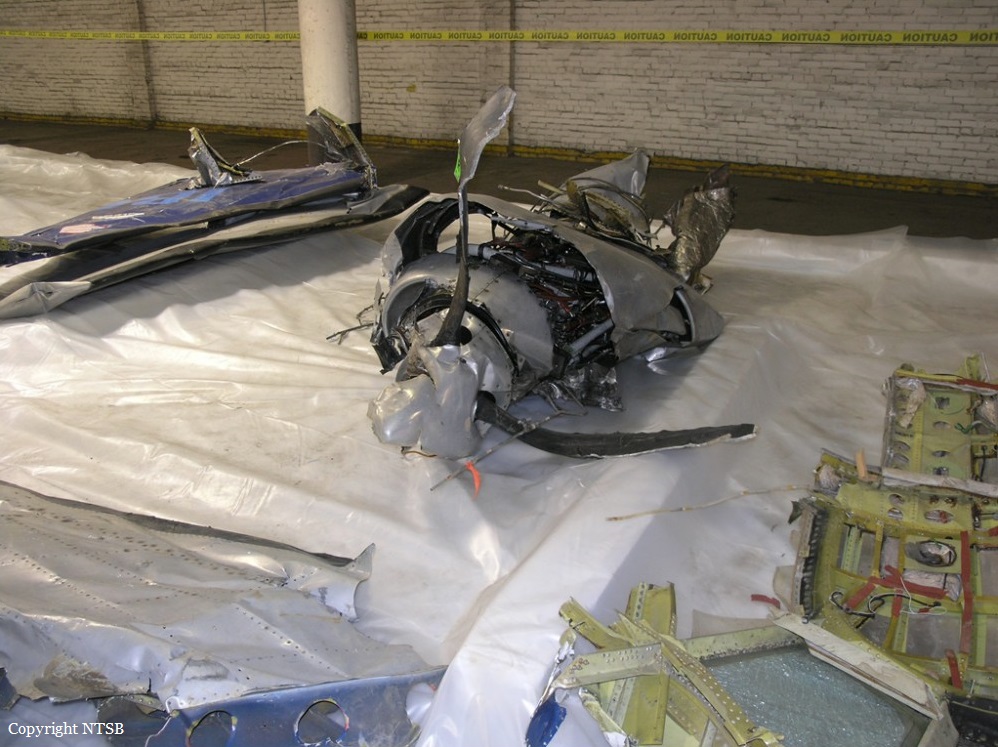
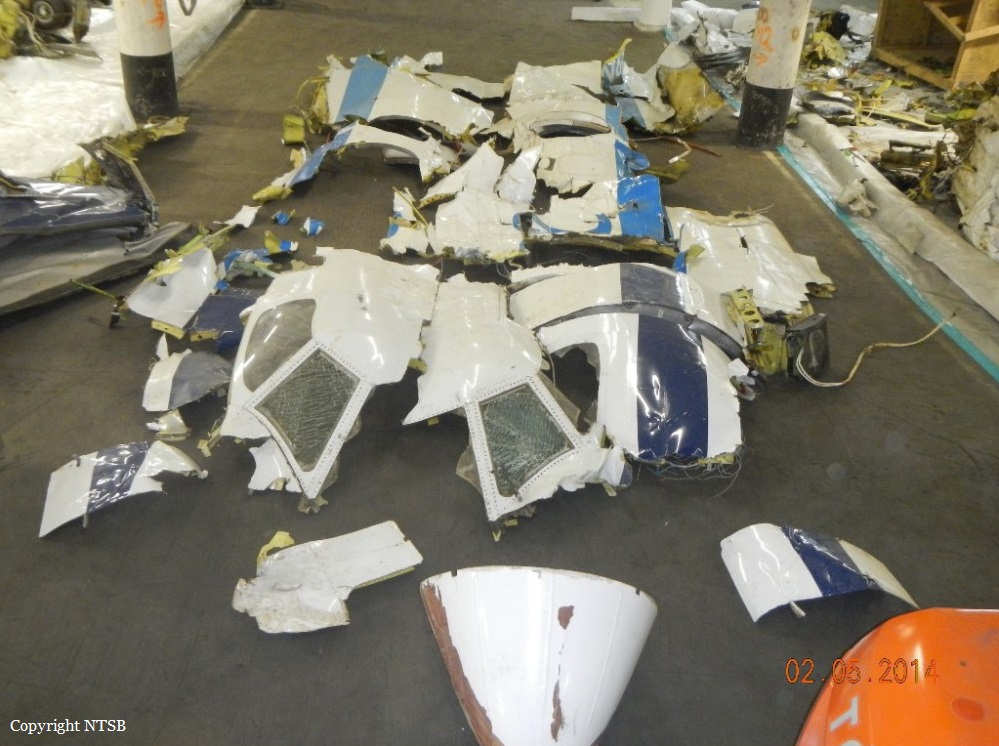
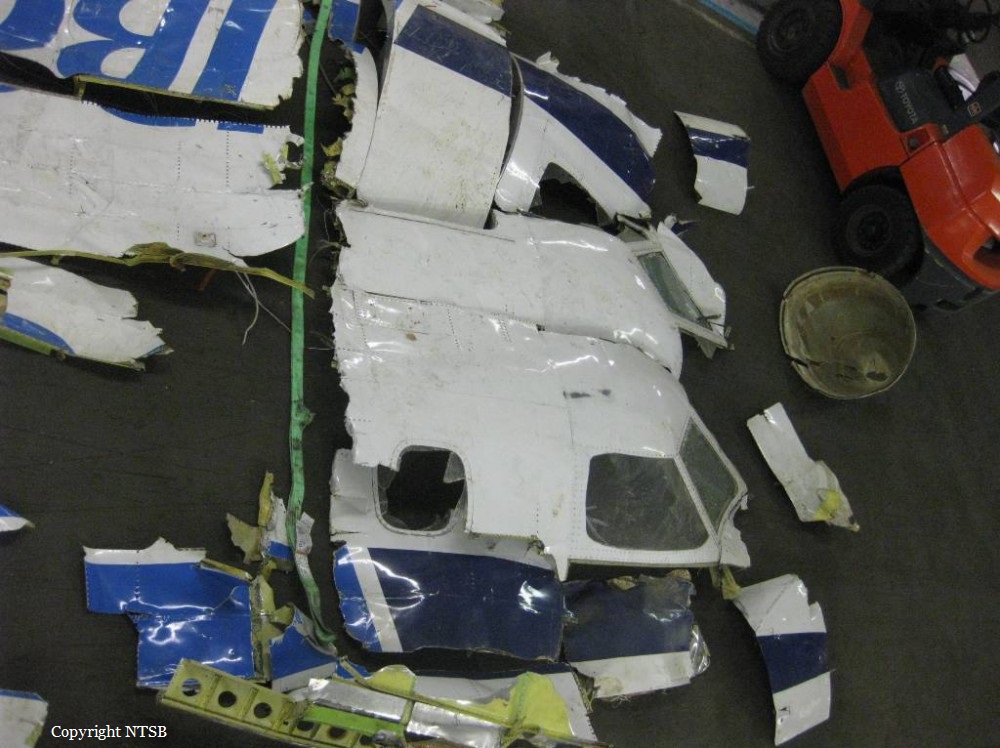
The captain and first officer were conducting an international cargo flight in the twin-engine turboprop airplane. After about 40 minutes of flight during night visual meteorological conditions, an air traffic controller cleared the airplane for a descent to 7,000 ft and then another controller further cleared the airplane for a descent to 3,000 ft and told the flight crew to expect an ILS (instrument landing system) approach. During the descent, about 7,300 ft and about 290 kts, the airplane entered a shallow left turn, followed by a 45-degree right turn and a rapid, uncontrolled descent, during which the airplane broke up about 1,500 ft over uneven terrain. The moderately loaded cargo airplane was not equipped with a flight data recorder or cockpit voice recorder (CVR) (although it previously had a CVR in its passenger configuration) nor was it required by Federal Aviation Administration (FAA) regulations. There were also no avionics on board with downloadable or nonvolatile memory. As a result, there was limited information available to determine what led to the uncontrolled descent or what occurred as the flight crew attempted to regain control of the airplane. Also, although the first officer was identified in FAA-recorded radio transmissions several minutes before the loss of control and it was company policy that the pilot not flying make those transmissions, it could not be determined who was at the controls when either the loss of control occurred or when the airplane broke up. There was no evidence of any in-flight mechanical failures that would have resulted in the loss of control, and the airplane was loaded within limits. Evidence of all flight control surfaces was confirmed, and, to the extent possible, flight control continuity was also confirmed. Evidence also indicated that both engines were operating at the time of the accident, and, although one of the four propeller blades from the right propeller was not located after separating from the fractured hub, there was no evidence of any preexisting propeller anomalies. The electrically controlled pitch trim actuator did not exhibit any evidence of runaway pitch, and measurements of the actuator rods indicated that the airplane was trimmed slightly nose low, consistent for the phase of flight. Due to the separation of the wings and tail, the in-flight positions of the manually operated aileron and rudder trim wheels could not be determined. Other similarly documented accidents and incidents generally involved unequal fuel burns, which resulted in wing drops or airplane rolls. In one case, the flight crew intentionally induced an excessive slide slip to balance fuel between the wings, which resulted in an uncontrolled roll. However, in the current investigation, the fuel cross feed valve was found in the closed position, indicating that a fuel imbalance was likely not a concern of the flight crew. In at least two other events, unequal fuel loads also involved autopilots that reached their maximum hold limits, snapped off, and rolled the airplane. Although the airplane in this accident did not have an autopilot, historical examples indicate that a sudden yawing or rolling motion, regardless of the source, could result in a roll, nose tuck, and loss of control. The roll may have been recoverable, and in one documented case, a pilot was able to recover the airplane, but after it lost almost 11,000 ft of altitude. During this accident flight, it was likely that, during the descent, the flight crew did regain control of the airplane to the extent that the flight control surfaces were effective. With darkness and the rapid descent at a relatively low altitude, one or both crewmembers likely pulled hard on the yoke to arrest the downward trajectory, and, in doing so, placed the wings broadside against the force of the relative wind, which resulted in both wings failing upward. As the wings failed, the propellers simultaneously chopped through the fuselage behind the cockpit. At the same time, the horizontal stabilizers were also positioned broadside against the relative wind, and they also failed upward. Evidence also revealed that, at some point, the flight crew lowered the landing gear. Although it could not be determined when they lowered the gear, it could have been in an attempt to slow or regain control of the airplane during the descent. Although reasons for the loss of control could not be definitively determined, the lack of any preexisting mechanical anomalies indicates a likelihood of flight crew involvement. Then, during the recovery attempt, the flight crew's actions, while operating under the difficult circumstances of darkness and rapidly decreasing altitude, resulted in the overstress of the airplane.
Probable cause:
The flight crew's excessive elevator input during a rapid descent under night lighting conditions, which resulted in the overstress and breakup of the airplane. Contributing to the
accident was an initial loss of airplane control for reasons that could not be determined because postaccident examination revealed no mechanical anomalies that would have
precluded normal operation.
accident was an initial loss of airplane control for reasons that could not be determined because postaccident examination revealed no mechanical anomalies that would have
precluded normal operation.
Final Report:
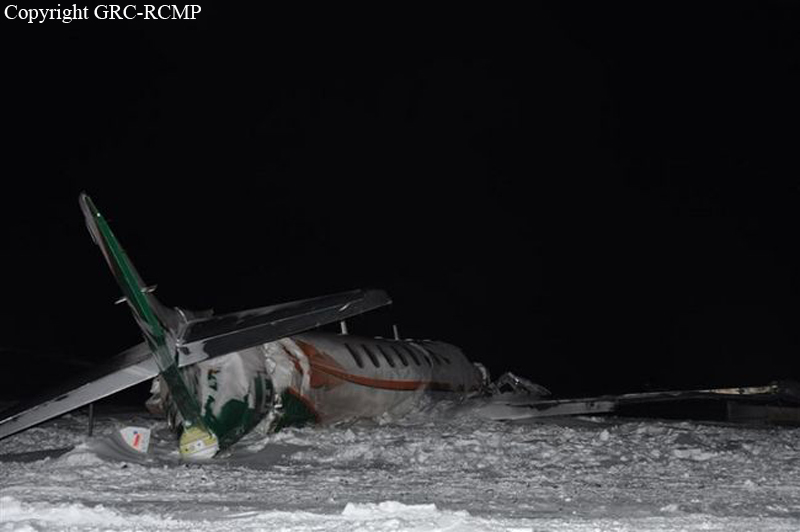
Crash of a Swearingen SA227AC Metro III in Red Lake: 5 killed
Date & Time:
Nov 10, 2013 at 1829 LT
Operator:

Registration:
C-FFZN
Survivors:
Yes
Schedule:
Sioux Lookout - Red Lake
MSN:
AC-785B
YOM:
1991
Flight number:
BLS311
Crew on board:
2
Crew fatalities:
Pax on board:
5
Pax fatalities:
Other fatalities:
Total fatalities:
5
Captain / Total hours on type:
3550.00
Copilot / Total hours on type:
1060
Aircraft flight hours:
35474
Circumstances:
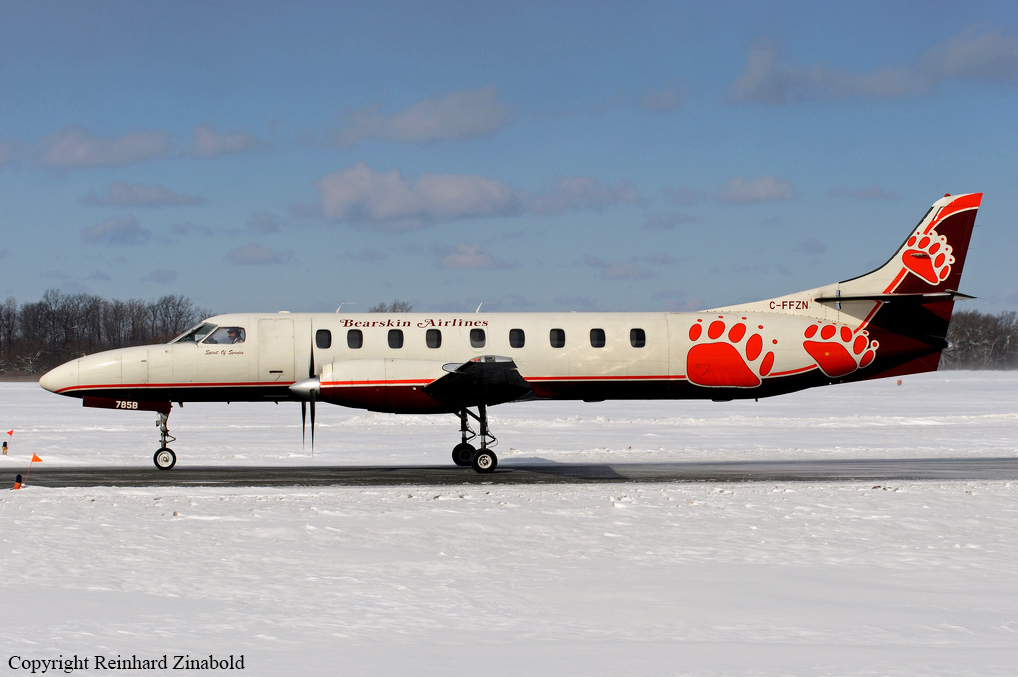
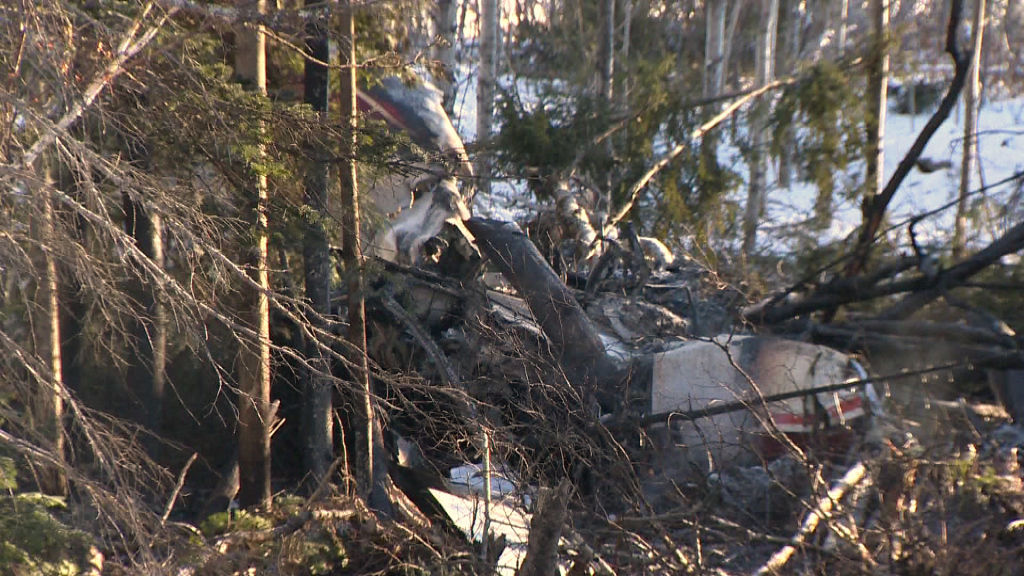
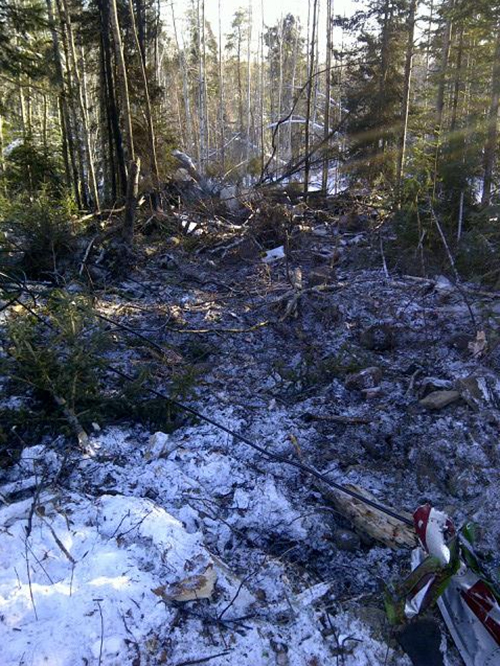
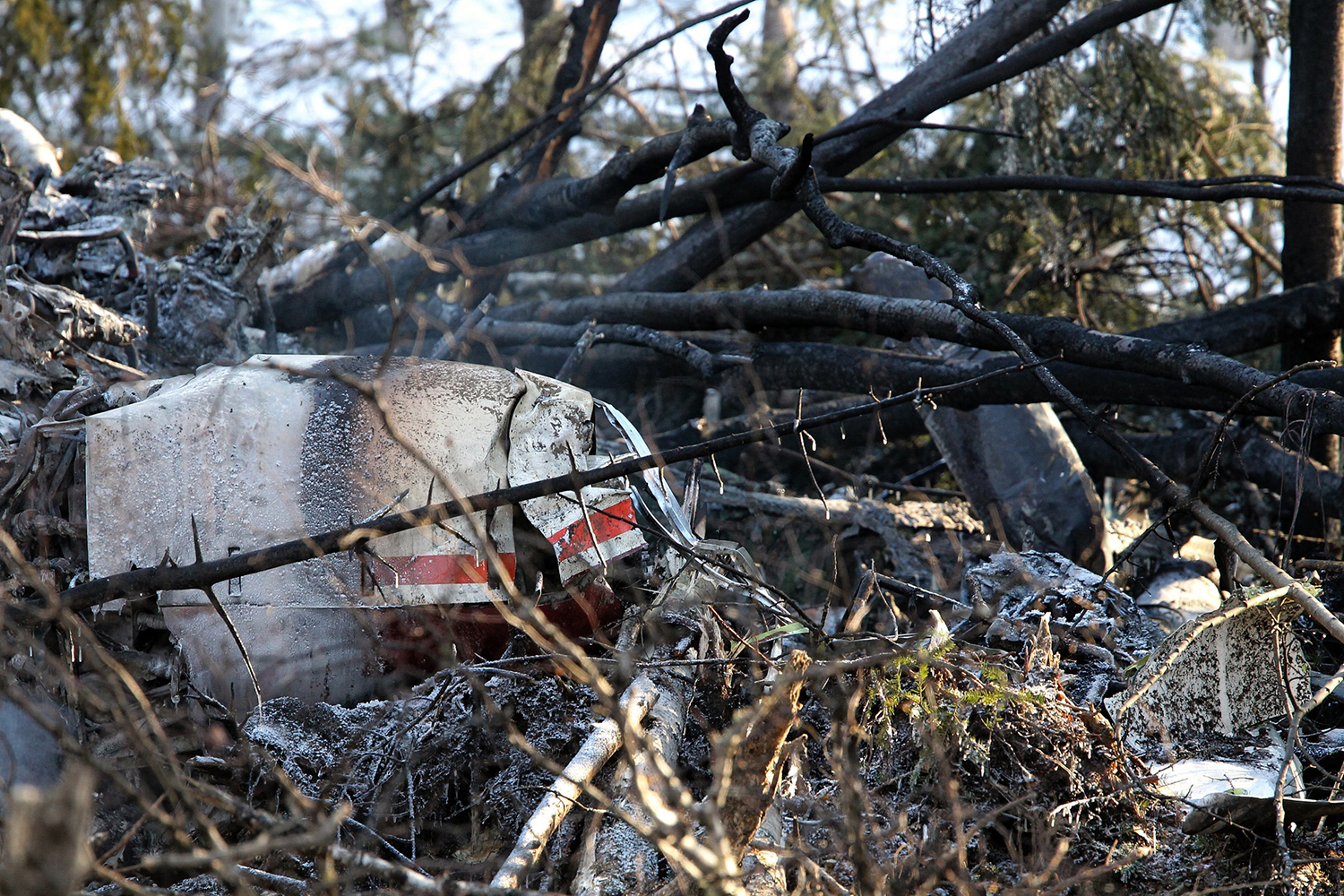
Flight from Sioux Lookout was uneventful till the final descent to Red Lake completed by night and in light snow with a ceiling at 2,000 feet and visibility 8 SM. On final approach to runway 26, crew reported south of the airport and declared an emergency. Shortly after this mayday message, aircraft hit power cables and crashed in flames in a dense wooded area located 800 meters south of the airport. Two passengers seating in the rear were seriously injured while all five other occupants including both pilots were killed.
Probable cause:
A first-stage turbine wheel blade in the left engine failed due to a combination of metallurgical issues and stator vane burn-through. As a result of the blade failure, the left engine continued to operate but experienced a near-total loss of power at approximately 500 feet above ground level, on final approach to Runway 26 at the Red Lake Airport. The crew were unable to identify the nature of the engine malfunction, which prevented them from taking timely and appropriate action to control the aircraft. The nature of the engine malfunction resulted in the left propeller being at a very low blade angle, which, together with the landing configuration of the aircraft, resulted in the aircraft being in an increasingly high drag and asymmetric state. When the aircraft’s speed reduced below minimum control speed (VMC), the crew lost control at an altitude from which a recovery was not possible.
Final Report:
Crash of a Swearingen SA227AC Metro III in Riberalta: 8 killed
Date & Time:
Nov 3, 2013 at 1556 LT
Operator:

Registration:
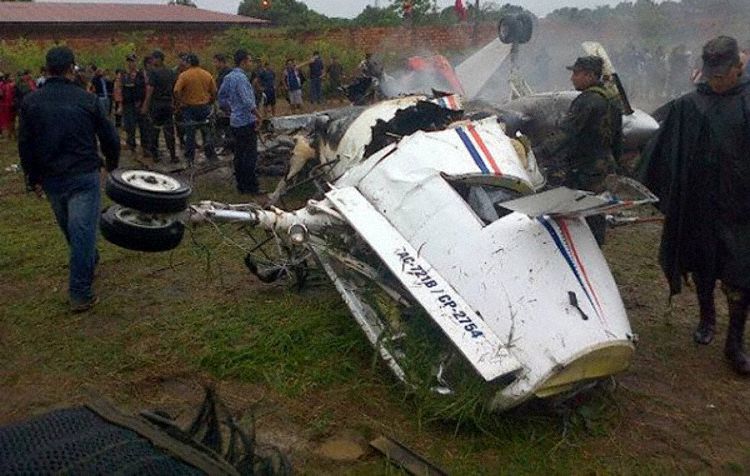
CP-2754
Survivors:
Yes
Schedule:
Trinidad - Riberalta
MSN:
AC-721B
YOM:
1989
Flight number:
AEK025
Crew on board:
2
Crew fatalities:
Pax on board:
16
Pax fatalities:
Other fatalities:
Total fatalities:
8
Circumstances:
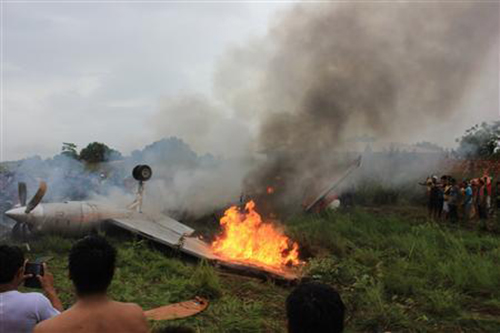
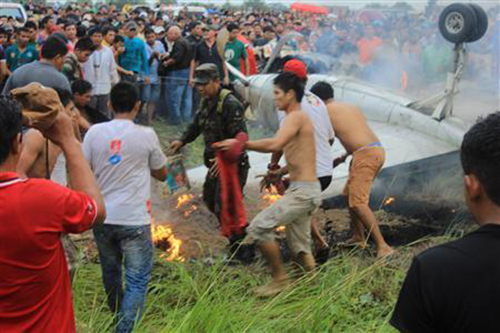
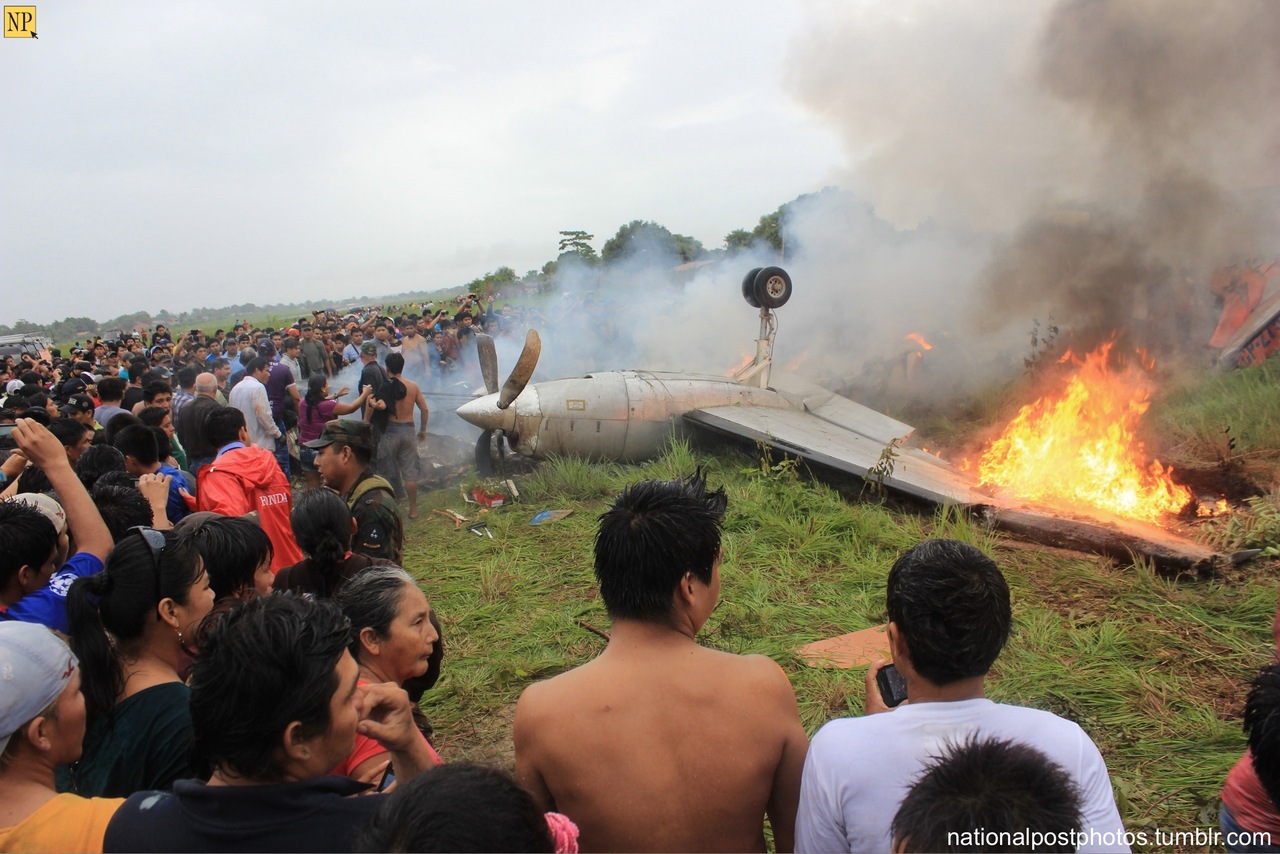
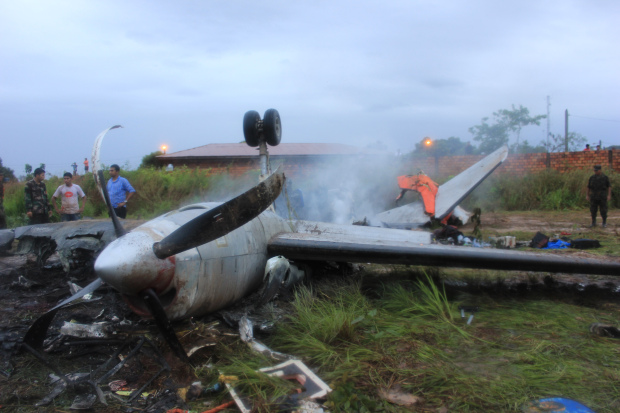
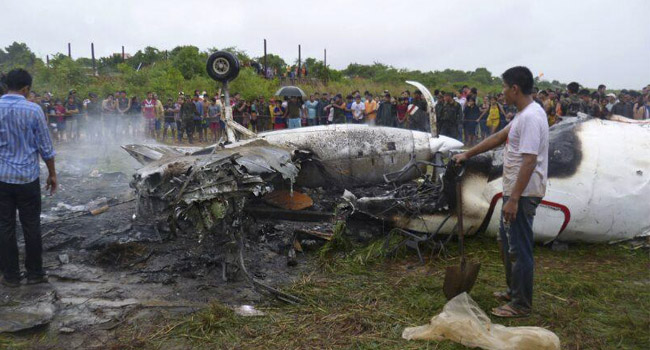
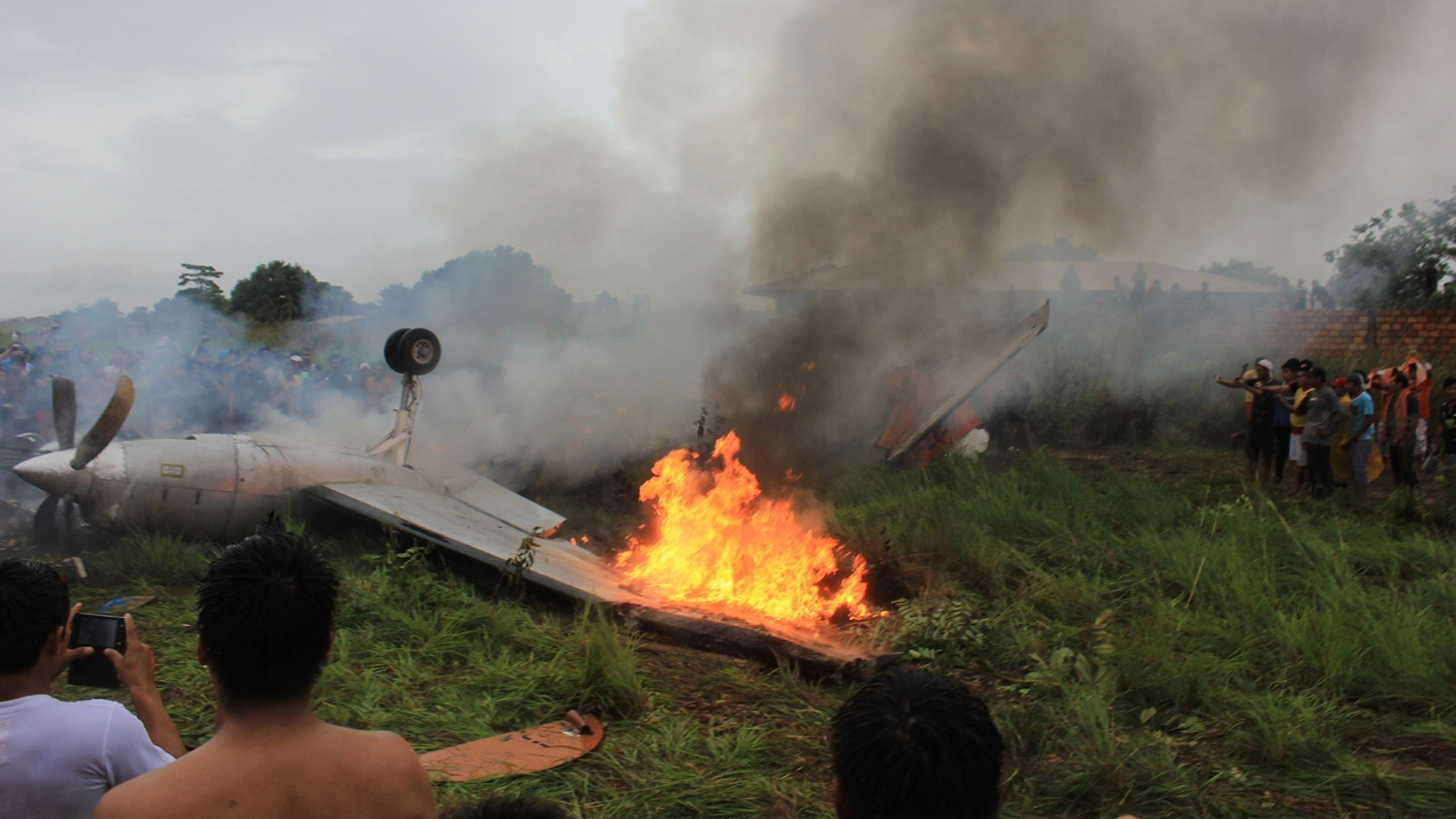
Following an uneventful flight from Trinidad, the crew started the descent to Riberalta Airport in poor weather conditions with a visibility reduced to 3 km due to rain falls. After touchdown on wet runway 14, the aircraft was unable to stop within the remaining distance. It overran, collided with obstacles and came to rest upside down, bursting into flames, some 300 metres short of runway 32 threshold. Ten people were rescued while eight passengers were killed. The aircraft was totally destroyed. The exact circumstances of the accident remains unclear.
Crash of a Swearingen SA227DC Metro 23 in Sucre
Date & Time:
Aug 20, 2013 at 0847 LT
Operator:
Registration:
CP-2655
Survivors:
Yes
Schedule:
Potosí – Sucre
MSN:
DC-819B
YOM:
1993
Flight number:
AEK228
Crew on board:
2
Crew fatalities:
Pax on board:
8
Pax fatalities:
Other fatalities:
Total fatalities:
0
Captain / Total hours on type:
806.00
Copilot / Total hours on type:
953
Aircraft flight hours:
34860
Circumstances:
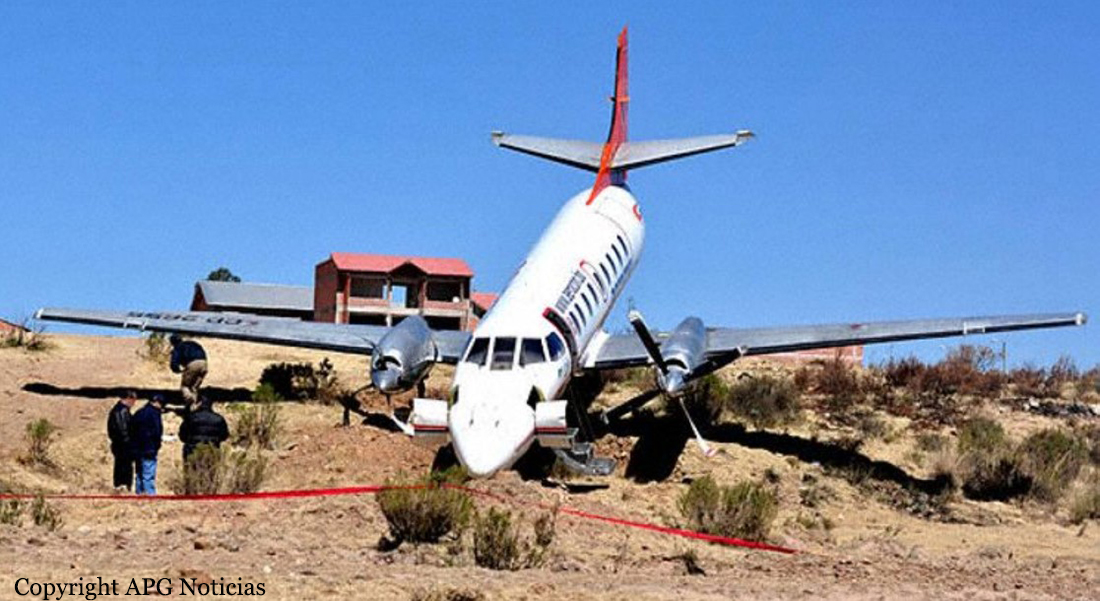
Following an uneventful flight from Potosí, the crew started the descent to Sucre-Juana Azurduy de Padilla Airport Runway 05 in good weather conditions. After touchdown, at a speed of about 50 knots, the aircraft deviated to the left then pivoted 90° left, veered off runway and rolled for about 50 metres before coming to rest in a rocky ditch. There was no fire. All 10 occupants evacuated safely and the aircraft was damaged beyond repair.
Probable cause:
Loss of control after landing due to the failure of the nosewheel steering system.
Final Report:
Crash of a Swearingen SA227AC Metro III in Sanikiluaq: 1 killed
Date & Time:
Dec 22, 2012 at 1806 LT
Operator:

Registration:
C-GFWX
Survivors:
Yes
Schedule:
Winnipeg - Sanikiluaq
MSN:
AC-650B
YOM:
1986
Flight number:
PAG993
Crew on board:
2
Crew fatalities:
Pax on board:
7
Pax fatalities:
Other fatalities:
Total fatalities:
1
Captain / Total hours on type:
2330.00
Copilot / Total hours on type:
950
Aircraft flight hours:
32982
Circumstances:
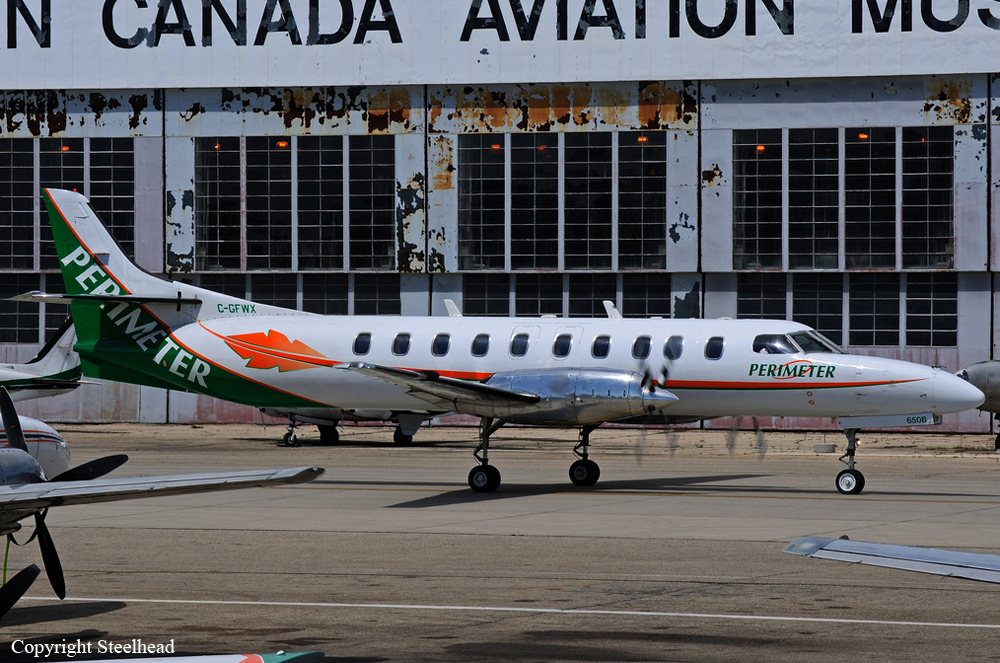
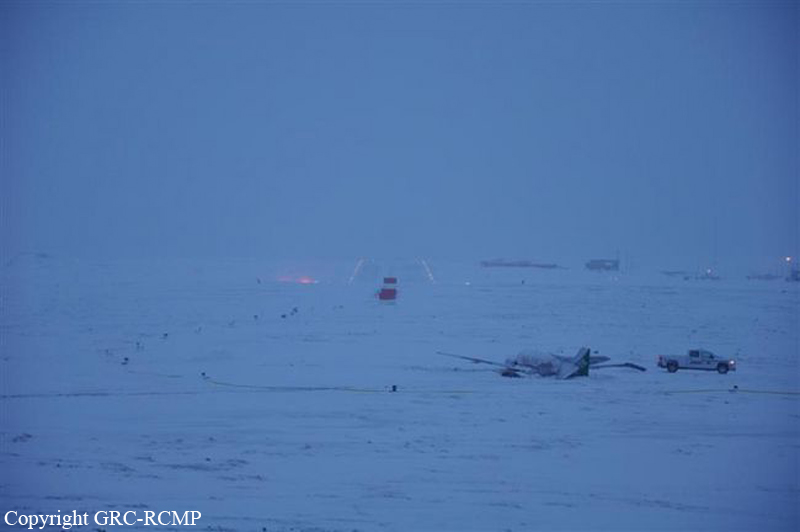
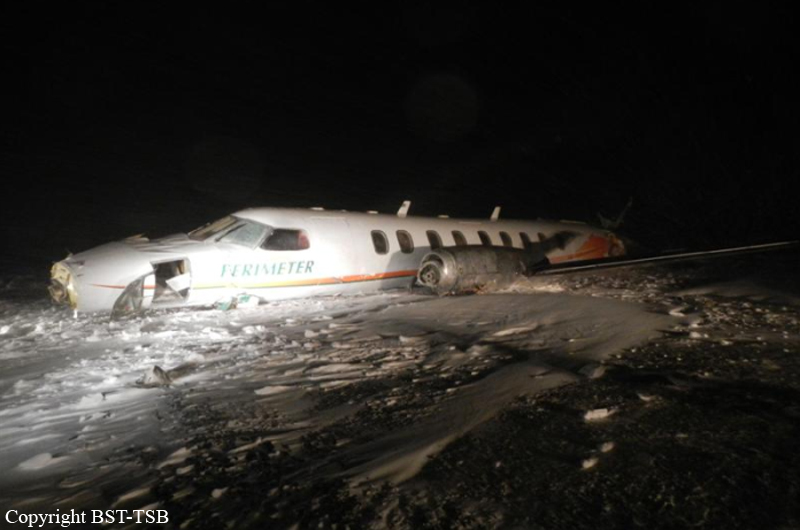
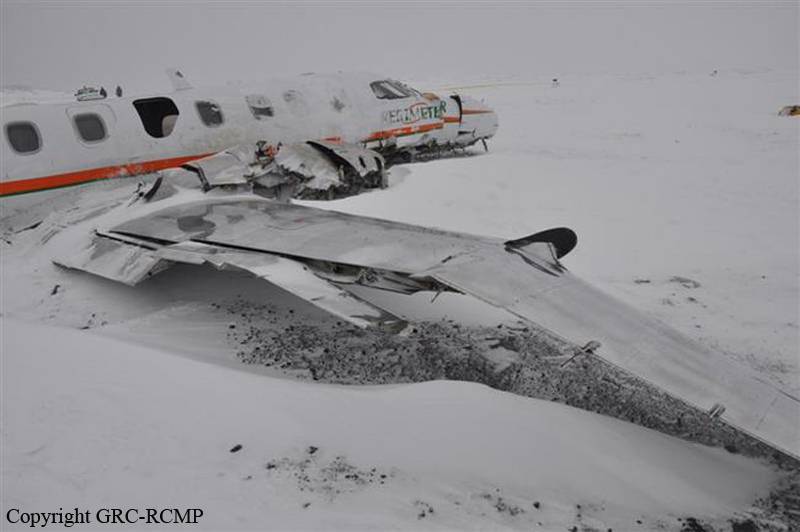
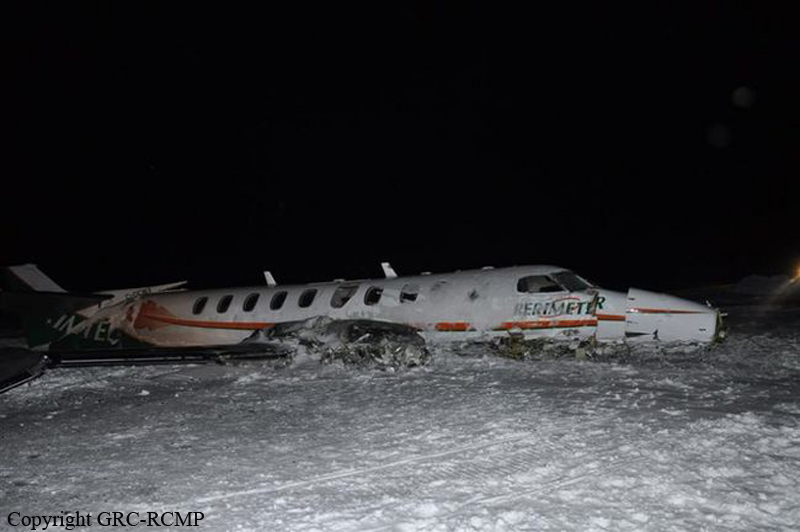
On 22 December 2012, the Perimeter Aviation LP, Fairchild SA227-AC Metro III (registration C-GFWX, serial number AC650B), operating as Perimeter flight PAG993, departed Winnipeg/James Armstrong Richardson International Airport, Manitoba, at 1939 Coordinated Universal Time (1339 Central Standard Time) as a charter flight to Sanikiluaq, Nunavut. Following an attempted visual approach to Runway 09, a non precision non-directional beacon (NDB) Runway 27 approach was conducted. Visual contact with the runway environment was made and a circling for Runway 09 initiated. Visual contact with the Runway 09 environment was lost and a return to the Sanikiluaq NDB was executed. A second NDB Runway 27 approach was conducted with the intent to land on Runway 27. Visual contact with the runway environment was made after passing the missed approach point. Following a steep descent, a rejected landing was initiated at 20 to 50 feet above the runway; the aircraft struck the ground approximately 525 feet beyond the departure end of Runway 27. The 406 MHz emergency locator transmitter activated on impact. The 2 flight crew and 1 passenger sustained serious injuries, 5 passengers sustained minor injuries, and 1 infant was fatally injured. Occupants exited the aircraft via the forward right overwing exit and were immediately transported to the local health centre. The aircraft was destroyed. The occurrence took place during the hours of darkness at 2306 Coordinated Universal Time (1806 Eastern Standard Time).
Probable cause:
Findings as to causes and contributing factors:
1. The lack of required flight documents, such as instrument approach charts, compromised thoroughness and placed pressure on the captain to find a workaround solution during flight planning. It also negatively affected the crew’s situational awareness during the approaches at CYSK (Sanikiluaq).
2. Weather conditions below published landing minima for the approach at the alternate airport CYGW (Kuujjuarapik) and insufficient fuel to make CYGL (La Grande Rivière) eliminated any favourable diversion options. The possibility of a successful landing at CYGW was considered unlikely and put pressure on the crew to land at CYSK (Sanikiluaq).
3. Frustration, fatigue, and an increase in workload and stress during the instrument approaches resulted in crew attentional narrowing and a shift away from welllearned, highly practised procedures.
4. Due to the lack of an instrument approach for the into-wind runway and the unsuccessful attempts at circling, the crew chose the option of landing with a tailwind, resulting in a steep, unstable approach.
5. The final descent was initiated beyond the missed approach point and, combined with the 14-knot tailwind, resulted in the aircraft remaining above the desired 3- degree descent path.
6. Neither pilot heard the ground proximity warning system warnings; both were focused on landing the aircraft to the exclusion of other indicators that warranted alternative action.
7. During the final approach, the aircraft was unstable in several parameters. This instability contributed to the aircraft being half-way down the runway with excessive speed and altitude.
8. The aircraft was not in a position to land and stop within the confines of the runway, and a go-around was initiated from a low-energy landing regime.
9. The captain possibly eased off on the control column in the climb due to the low airspeed. This, in combination with the configuration change at a critical phase of flight, as called for in the company procedures, may have contributed to the aircraft’s poor climb performance.
10. A rate of climb sufficient to ensure clearance from obstacles was not established, and the aircraft collided with terrain.
11. The infant passenger was not restrained in a child restraint system, nor was one required by regulations. The infant was ejected from the mother’s arms during the impact sequence, and contact with the interior surfaces of the aircraft contributed to the fatal injuries.
Findings as to risk:
1. If instrument approaches are conducted without reference to an approach chart, there is a risk of weakened situational awareness and of error in following required procedures, possibly resulting in the loss of obstacle clearance and an accident.
2. If additional contingency fuel is not accounted for in the aircraft weight, there is a risk that the aircraft may not be operated in accordance with its certificate of airworthiness or may not meet the certified performance criteria.
3. If Transport Canada crew resource management (CRM) training requirements do not reflect advances in CRM training, such as threat and error management and assertiveness training, there is an increased risk that crews will not effectively employ CRM to assess conditions and make appropriate decisions in critical situations.
4. If a person assisting another is seated next to an emergency exit, there is an increased risk that the use of the exit will be hindered during an evacuation.
5. If a person holding an infant is seated in a row with no seatback in front of them, there is an increased risk of injury to the infant as no recommended brace position is available.
6. If young children are not adequately restrained, there is a risk that injuries sustained will be more severe.
7. If a lap-held infant is ejected from its guardian’s arms, there is an increased risk the infant may be injured, or cause injury or death to other occupants.
8. If more complete data on the number of infants and children travelling by air are not available, there is a risk that their exposure to injury or death in the event of turbulence or a survivable accident will not be adequately assessed and mitigated.
9. If temperature corrections are not applied to all altitudes on the approach chart, there is an increased risk of controlled flight into terrain due to a reduction of obstacle clearance.
10. If the missed approach point on non-precision instrument approaches is located beyond the 3-degree descent path, there is an increased risk that a landing attempt will result in a steep, unstable descent, and possible approach-and-landing accident.
11. If there is not sufficient guidance in the standard operating procedures, there is a risk that crews will not react and perform the required actions in the event that ground proximity warning system warnings are generated.
12. If standard operating procedures, the Airplane Flight Manual and training are not aligned with respect to low-energy go-arounds, there is a risk that crews may perform inappropriate actions at a critical phase of flight.
13. If non-compliant practices are not identified, reported, and dealt with by a company’s safety management system, there is a risk that they will not be addressed in a timely manner.
14. If Transport Canada’s oversight is dependent on the effectiveness of a company’s safety management system’s reporting of safety issues, there is a risk that important issues will be missed.
Other findings:
1. The quick response of the people on the ground reduced the exposure of passengers and crew to the elements.
1. The lack of required flight documents, such as instrument approach charts, compromised thoroughness and placed pressure on the captain to find a workaround solution during flight planning. It also negatively affected the crew’s situational awareness during the approaches at CYSK (Sanikiluaq).
2. Weather conditions below published landing minima for the approach at the alternate airport CYGW (Kuujjuarapik) and insufficient fuel to make CYGL (La Grande Rivière) eliminated any favourable diversion options. The possibility of a successful landing at CYGW was considered unlikely and put pressure on the crew to land at CYSK (Sanikiluaq).
3. Frustration, fatigue, and an increase in workload and stress during the instrument approaches resulted in crew attentional narrowing and a shift away from welllearned, highly practised procedures.
4. Due to the lack of an instrument approach for the into-wind runway and the unsuccessful attempts at circling, the crew chose the option of landing with a tailwind, resulting in a steep, unstable approach.
5. The final descent was initiated beyond the missed approach point and, combined with the 14-knot tailwind, resulted in the aircraft remaining above the desired 3- degree descent path.
6. Neither pilot heard the ground proximity warning system warnings; both were focused on landing the aircraft to the exclusion of other indicators that warranted alternative action.
7. During the final approach, the aircraft was unstable in several parameters. This instability contributed to the aircraft being half-way down the runway with excessive speed and altitude.
8. The aircraft was not in a position to land and stop within the confines of the runway, and a go-around was initiated from a low-energy landing regime.
9. The captain possibly eased off on the control column in the climb due to the low airspeed. This, in combination with the configuration change at a critical phase of flight, as called for in the company procedures, may have contributed to the aircraft’s poor climb performance.
10. A rate of climb sufficient to ensure clearance from obstacles was not established, and the aircraft collided with terrain.
11. The infant passenger was not restrained in a child restraint system, nor was one required by regulations. The infant was ejected from the mother’s arms during the impact sequence, and contact with the interior surfaces of the aircraft contributed to the fatal injuries.
Findings as to risk:
1. If instrument approaches are conducted without reference to an approach chart, there is a risk of weakened situational awareness and of error in following required procedures, possibly resulting in the loss of obstacle clearance and an accident.
2. If additional contingency fuel is not accounted for in the aircraft weight, there is a risk that the aircraft may not be operated in accordance with its certificate of airworthiness or may not meet the certified performance criteria.
3. If Transport Canada crew resource management (CRM) training requirements do not reflect advances in CRM training, such as threat and error management and assertiveness training, there is an increased risk that crews will not effectively employ CRM to assess conditions and make appropriate decisions in critical situations.
4. If a person assisting another is seated next to an emergency exit, there is an increased risk that the use of the exit will be hindered during an evacuation.
5. If a person holding an infant is seated in a row with no seatback in front of them, there is an increased risk of injury to the infant as no recommended brace position is available.
6. If young children are not adequately restrained, there is a risk that injuries sustained will be more severe.
7. If a lap-held infant is ejected from its guardian’s arms, there is an increased risk the infant may be injured, or cause injury or death to other occupants.
8. If more complete data on the number of infants and children travelling by air are not available, there is a risk that their exposure to injury or death in the event of turbulence or a survivable accident will not be adequately assessed and mitigated.
9. If temperature corrections are not applied to all altitudes on the approach chart, there is an increased risk of controlled flight into terrain due to a reduction of obstacle clearance.
10. If the missed approach point on non-precision instrument approaches is located beyond the 3-degree descent path, there is an increased risk that a landing attempt will result in a steep, unstable descent, and possible approach-and-landing accident.
11. If there is not sufficient guidance in the standard operating procedures, there is a risk that crews will not react and perform the required actions in the event that ground proximity warning system warnings are generated.
12. If standard operating procedures, the Airplane Flight Manual and training are not aligned with respect to low-energy go-arounds, there is a risk that crews may perform inappropriate actions at a critical phase of flight.
13. If non-compliant practices are not identified, reported, and dealt with by a company’s safety management system, there is a risk that they will not be addressed in a timely manner.
14. If Transport Canada’s oversight is dependent on the effectiveness of a company’s safety management system’s reporting of safety issues, there is a risk that important issues will be missed.
Other findings:
1. The quick response of the people on the ground reduced the exposure of passengers and crew to the elements.
Final Report:
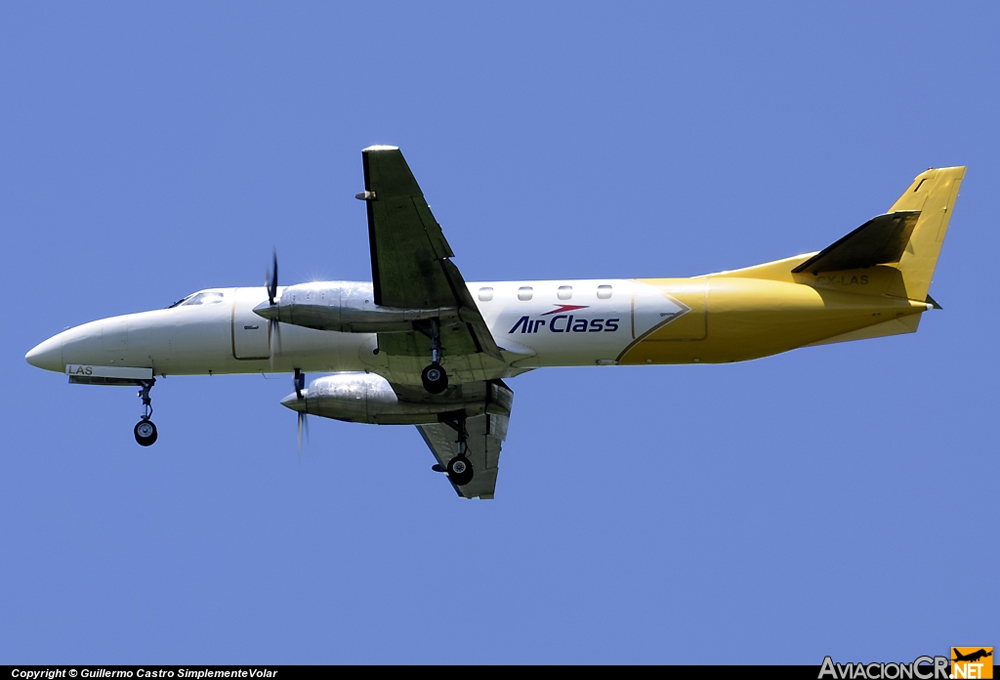
Crash of a Swearingen SA227AC Metro III off Montevideo: 2 killed
Date & Time:
Jun 6, 2012 at 1955 LT
Operator:

Registration:
CX-LAS
Survivors:
No
Schedule:
Montevideo - Buenos Aires
MSN:
AC-482
YOM:
1982
Crew on board:
2
Crew fatalities:
Pax on board:
0
Pax fatalities:
Other fatalities:
Total fatalities:
2
Aircraft flight hours:
26158
Circumstances:
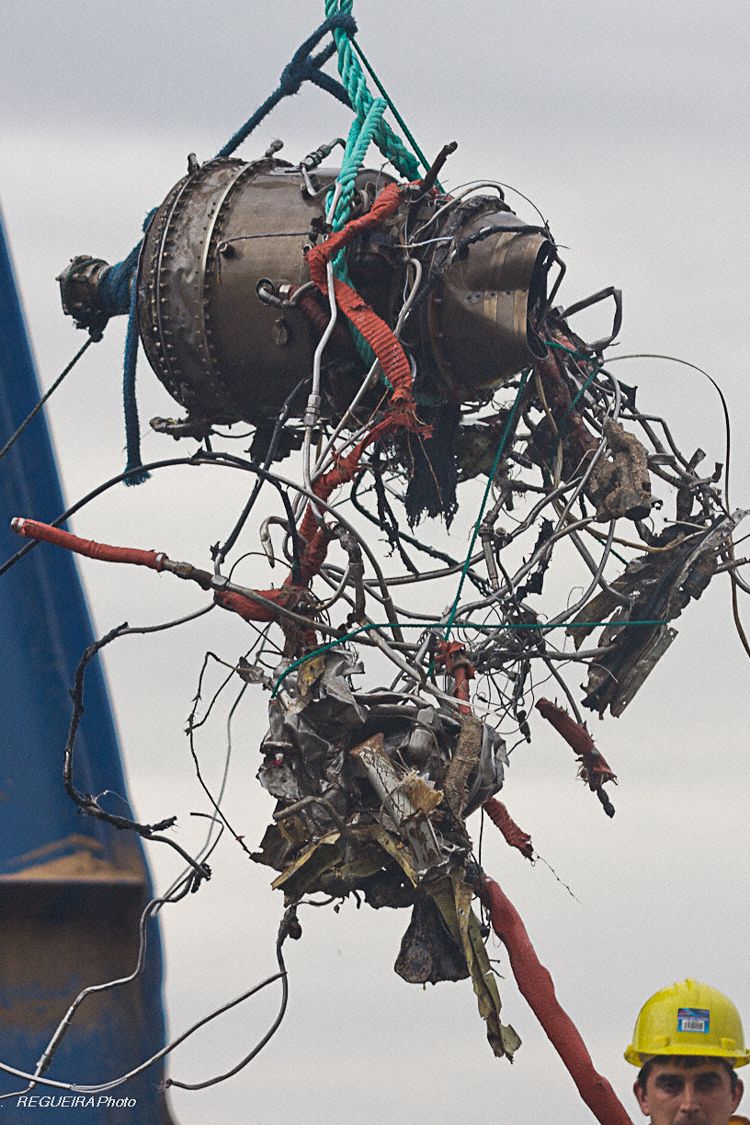
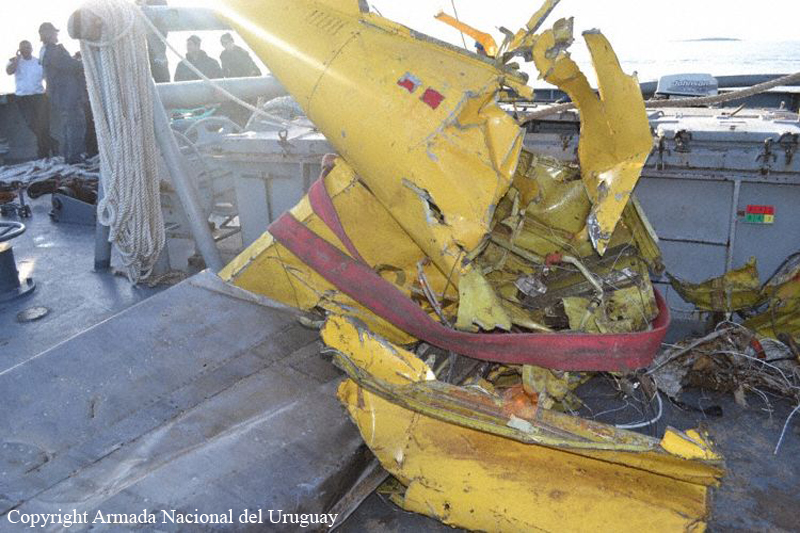
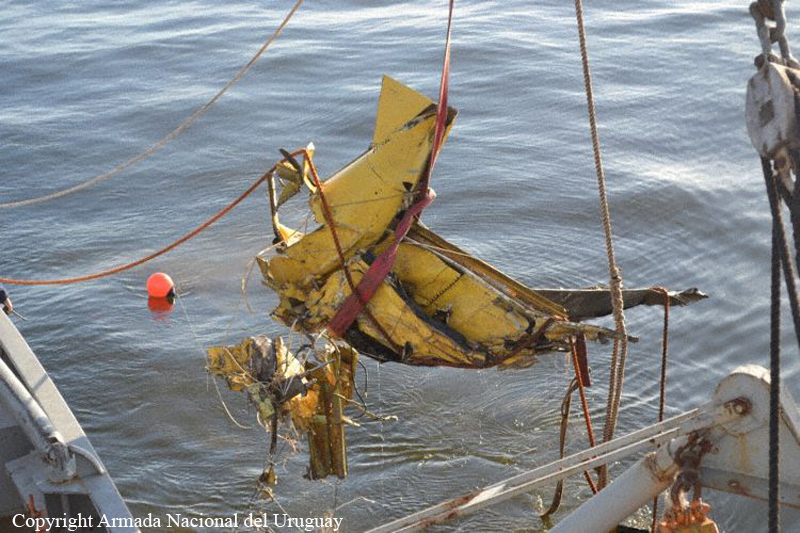
The crew was performing a cargo flight from Montevideo to Buenos Aires on behalf of DHL. The aircraft departed runway 24 at Montevideo-Carrasco Airport at 1945LT and the crew was cleared to climb to FL080. While reaching a height of 4,500 feet, the aircraft entered an uncontrolled descent and crashed in the sea at a speed of 570 knots which caused its disintegration off Flores Island. Few debris were found the following day floating on water but the main wreckage was localized two weeks later about one NM south of Flores Island. The CVR was found on 02AUG2012 but was unreadable as the content was concerning the last 30 minutes of the precedent flight. On 11FEB2013, fishermen found the cargo door in their fishnet. No trace of the cargo nor the crew was ever found.
Probable cause:
Investigations determined that both engines were running normally at impact, that no propeller blades were lost during descent, that fuel was not contaminated and that no problems occurred on the on electrical system. Meteorological Office confirmed that severe icing conditions prevailed at the time of the accident between FL010 and FL150. The loss of control was the consequence of erroneous indications of the flight instruments, associated with the possible formation of crystalline ice on the aircraft' structure, causing a loss of situational awareness of the crew.
Final Report:
Crash of a Swearingen SA227BC Metro III in Trinidad: 8 killed
Date & Time:
Sep 6, 2011 at 1850 LT
Operator:
Registration:
CP-2548
Survivors:
Yes
Schedule:
Santa Cruz – Trinidad
MSN:
BC-768B
YOM:
1992
Flight number:
AEK238
Crew on board:
2
Crew fatalities:
Pax on board:
7
Pax fatalities:
Other fatalities:
Total fatalities:
8
Circumstances:
Following an uneventful flight from Santa Cruz-El Trompillo Airport, the crew started the descent to Trinidad-Jorge Heinrich Arauz Airport runway 14. On approach, the crew encountered poor visibility due to smoke coming from forest fires. In a visibility estimated between 300 and 500 feet, the aircraft descended too low, impacted trees and crashed in a wooded area located 8 km short of runway. The wreckage was found 3 days later. A passenger was slightly injured while 8 other occupants were killed.