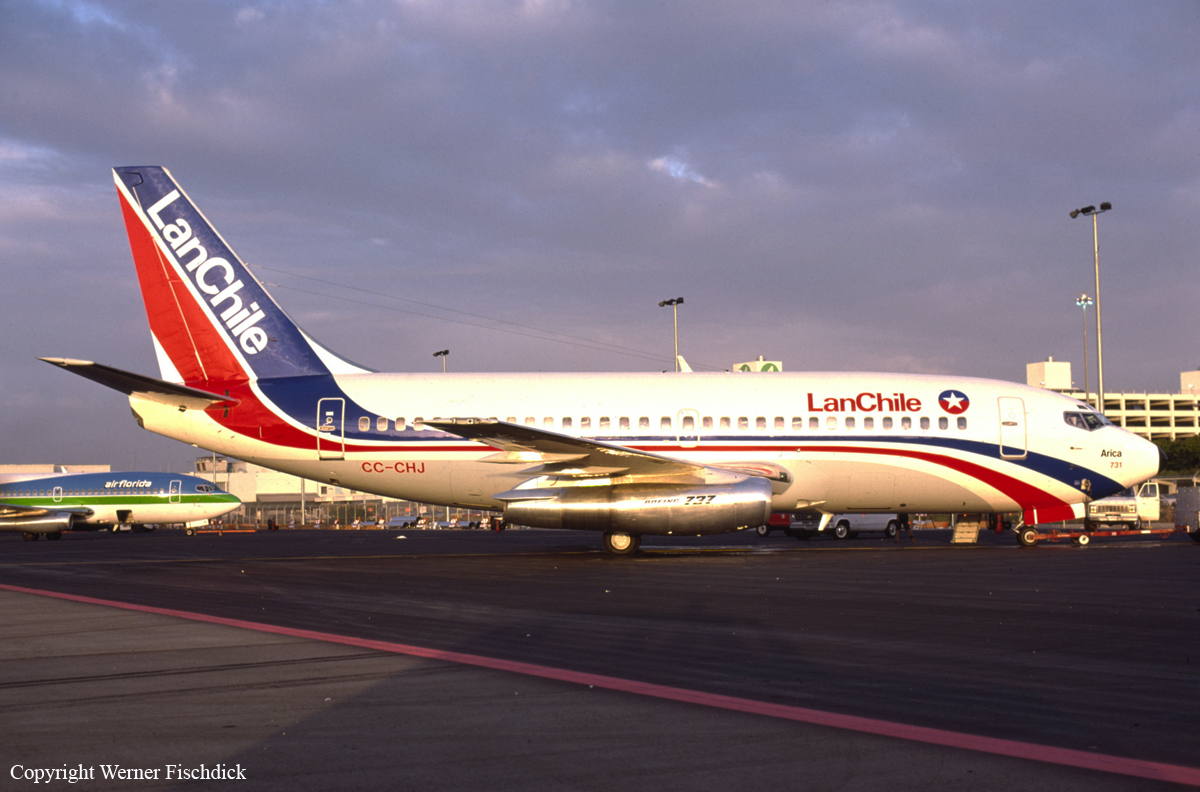
Crash of a Boeing 737-2A1 in Calama: 1 killed

Date & Time: Aug 4, 1987
Type of aircraft:
Operator:
Registration:
CC-CHJ
Survivors:
Yes
Schedule:
Antofagasta - Calama
MSN:
22602/711
YOM:
1980
Country:
Crew on board:
4
Crew fatalities:
Pax on board:
31
Pax fatalities:
Other fatalities:
Total fatalities:
1
Circumstances:
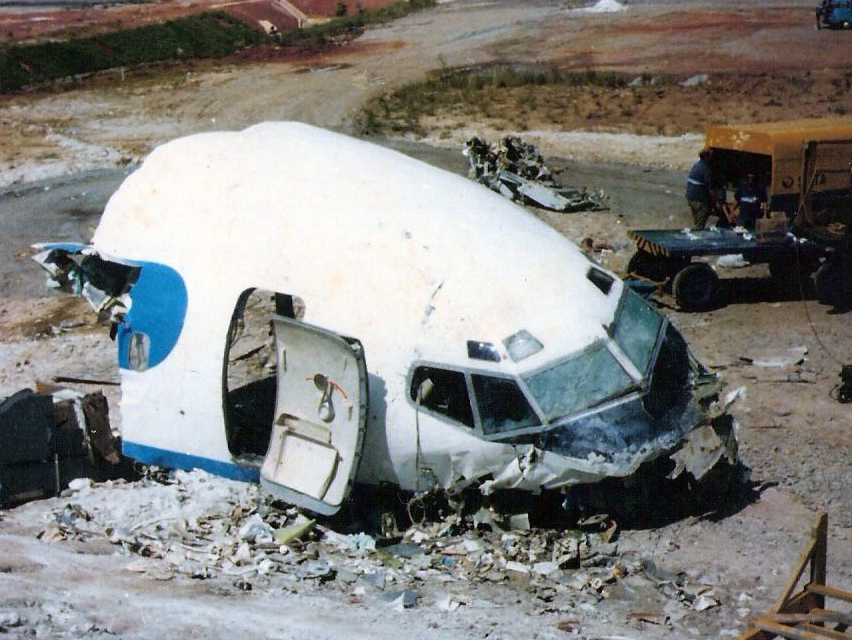
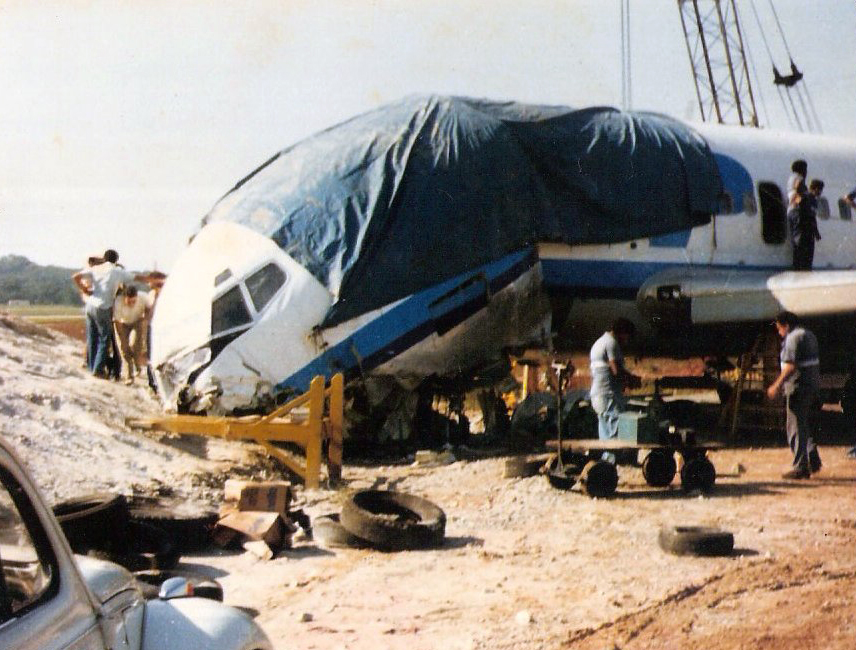
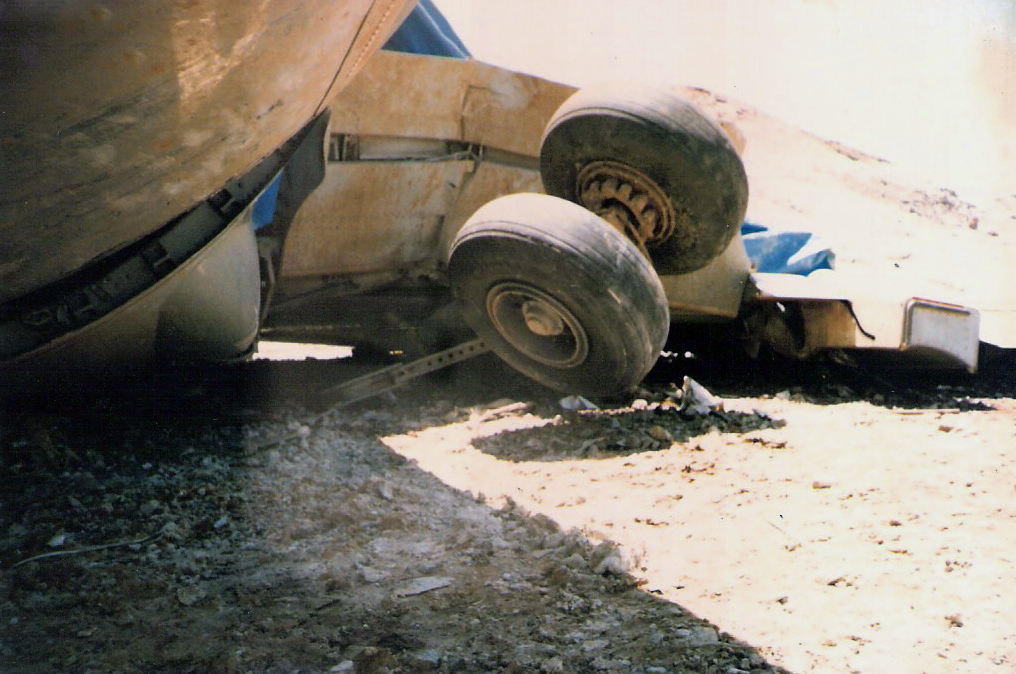
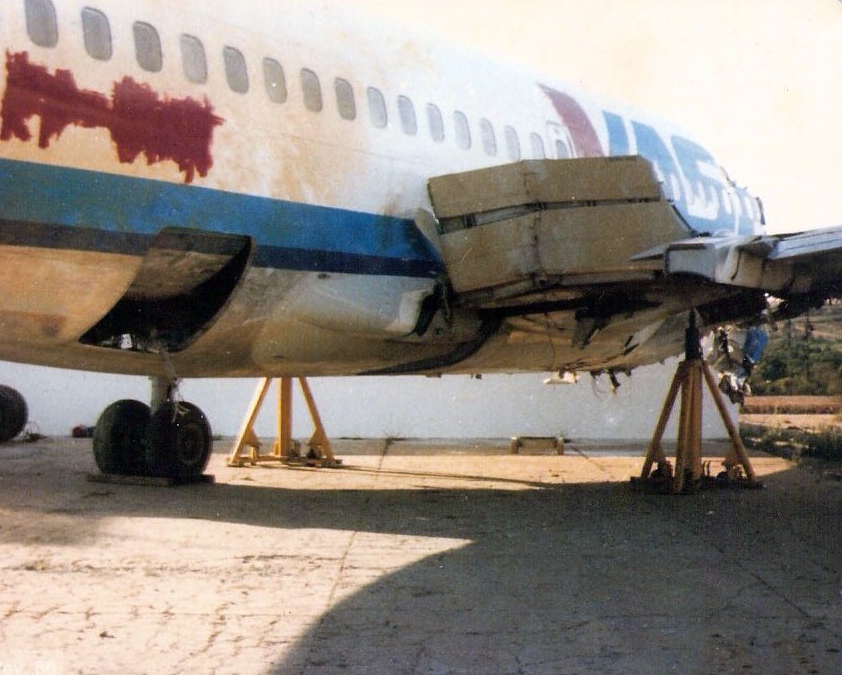
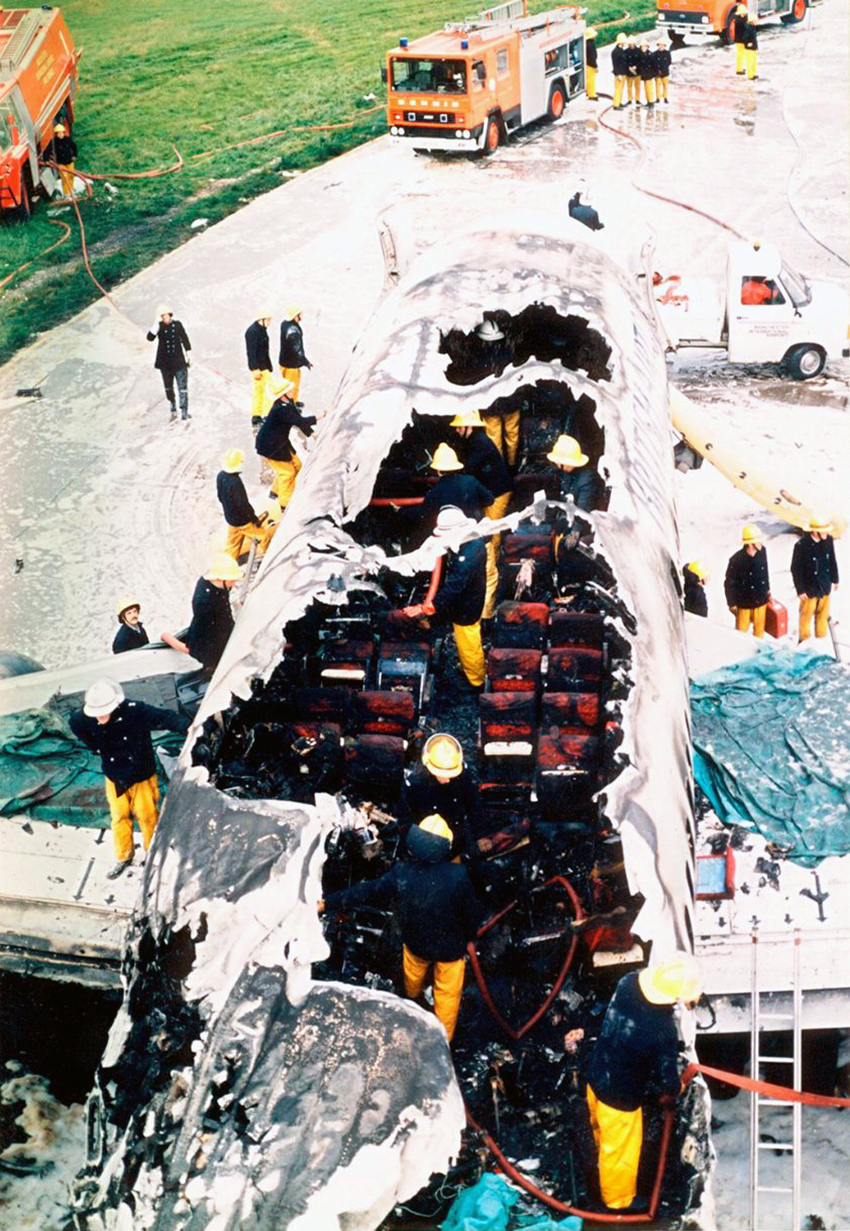
The first 880 meters of runway 27 at Calama Airport were closed due to repavement. Thus, a notam was published with a displaced threshold. The pilot was facing the sun when approaching Calama Airport and landed 520 meters short of the displaced threshold. The aircraft struck various materials when the nose gear collapsed. The aircraft slid on its nose for few hundred meters before coming to rest on the runway, broken in two. A passenger died while all other occupants were rescued. The aircraft caught fire after 30 minutes and was destroyed.

Crash of a Boeing 737-270C in Arar: 63 killed

Date & Time: Dec 25, 1986 at 1230 LT
Type of aircraft:
Operator:
Registration:
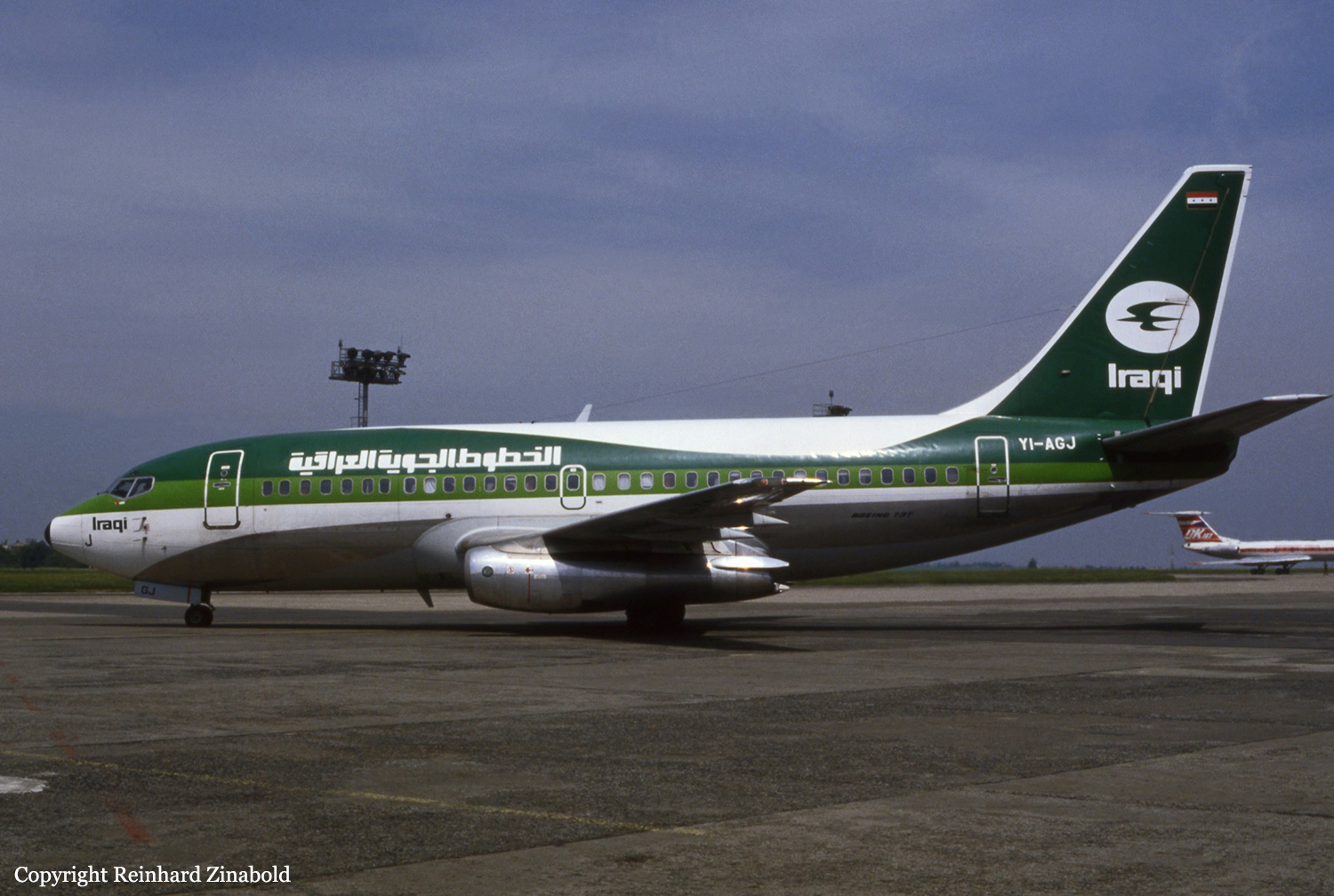
YI-AGJ
Survivors:
Yes
Schedule:
Baghdad - Amman
MSN:
21183
YOM:
1976
Flight number:
IA163
Country:
Region:
Crew on board:
15
Crew fatalities:
Pax on board:
91
Pax fatalities:
Other fatalities:
Total fatalities:
63
Circumstances:
About 50 minutes into the flight, while cruising at an altitude of 26,000 in the Saudi Arabian airspace, four hijackers went into the cockpit and forced the crew to divert to Tehran. In a certain confusion, a first grenade exploded in the cabin and the crew elected to divert to Arar for an emergency landing when a second grenade exploded in the cockpit. On final approach, out of control, the airplane crashed 800 meters short of runway, bursting into flames. 43 occupants were injured while 63 others were killed. The aircraft was destroyed.
Probable cause:
Crashed on final after being hijacked.

Crash of a Boeing 737-222 in Charlotte

Date & Time: Oct 25, 1986 at 2008 LT
Type of aircraft:
Operator:
Registration:
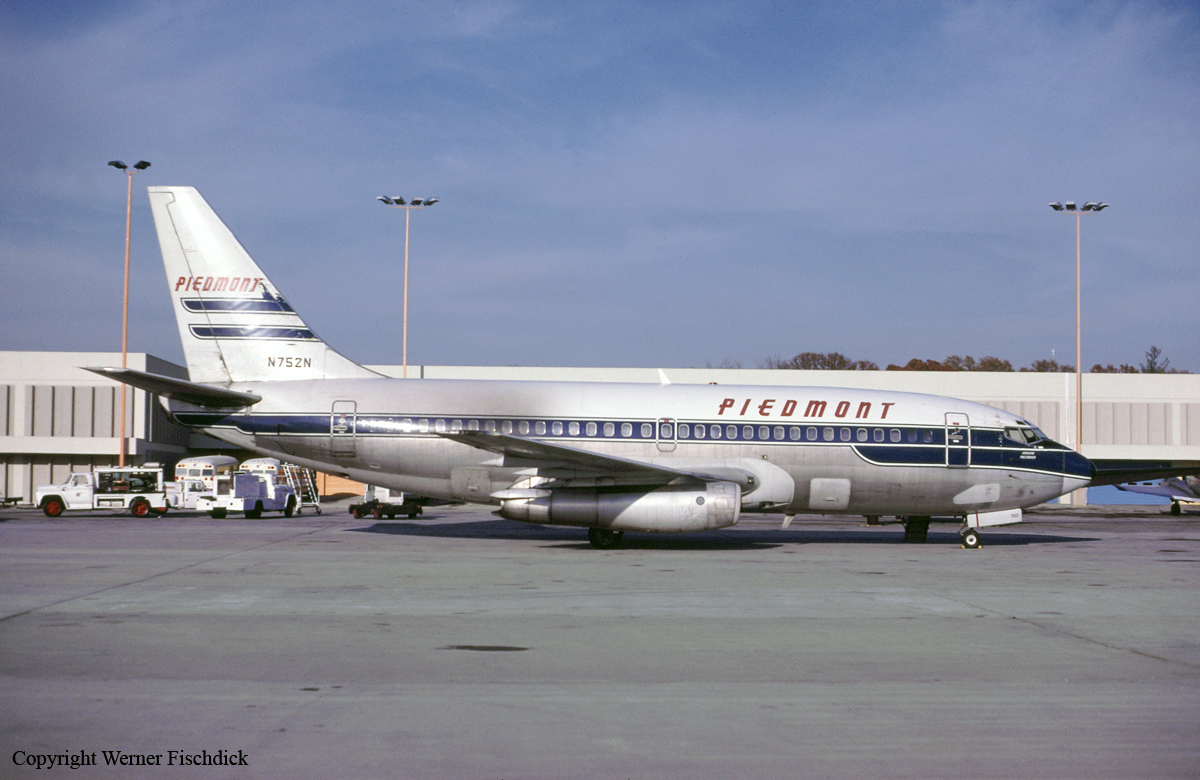
N752N
Survivors:
Yes
Schedule:
Newark - Charlotte - Myrtle Beach
MSN:
19073
YOM:
1968
Flight number:
PI467
Crew on board:
5
Crew fatalities:
Pax on board:
114
Pax fatalities:
Other fatalities:
Total fatalities:
0
Captain / Total flying hours:
10000
Captain / Total hours on type:
2500.00
Copilot / Total flying hours:
4100
Copilot / Total hours on type:
500
Aircraft flight hours:
41714
Aircraft flight cycles:
59033
Circumstances:
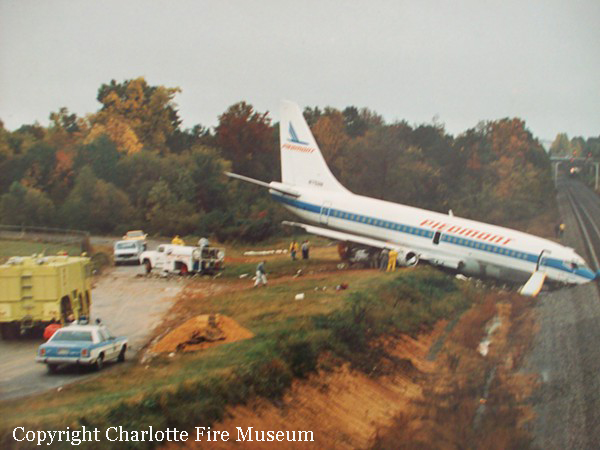
During arrival, Piedmont flight 467 was vectored for an ILS runway 36R approach. At 2001 cdt (approximately 7 minutes before landing), all arriving flights were advised the weather was (in part): 400 feet overcast, visibility 2 miles with light rain and fog, wind from 090° at 8 knots. Runway 05/32 was out of-svc at that time. Flight 467 was vectored for right turns (from north and west) onto final approach. At 2002:42, the ATC final controller told another flight (same frequency) that there was a 20 to 25 knots right crosswind on final approach. When flight 467 was cleared for landing at 2005:36, the surface wind was reported from 100° at 4 knots. The aircraft was not configured for landing until just before touchdown and the copilot did not alert the captain of the deviation. The aircraft landed approximately 3,200 feet from the threshold and the captain was unable to stop on the wet runway. After departing the runway, the aircraft hit an ILS antenna and a culvert, then went thru a fence and stopped beside railroad tracks. Reportedly, the captain added 20 knots to approach speed for possible wind shear and delayed spoiler option after touchdown. There was evidence of hydroplaning and poor frictional quality on last 1,500 feet of runway. Three passengers received back injuries; both pilots and one flight attendant had minor injuries.
Probable cause:
The captain's failure to stabilize the approach and his failure to discontinue the approach to a landing that was conducted at an excessive speed beyond the normal touchdown point on a wet runway. Contributing to the accident was the captain's failure to optimally use the airplane decelerative devices. Also contributing to the accident was the lack of effective crew coordination during the approach. Contributing to the severity of the accident was the poor frictional quality of the last 1,500 feet of the runway and the obstruction presented by a concrete culvert located 318 feet beyond the departure end of the runway.
Final Report:

Ground explosion of a Boeing 737-286 in Shiraz: 3 killed

Date & Time: Oct 15, 1986 at 1700 LT
Type of aircraft:
Operator:
Registration:
EP-IRG
Flight Phase:
Survivors:
Yes
Schedule:
Shiraz - Tehran
MSN:
20499
YOM:
1971
Location:
Country:
Region:
Crew on board:
5
Crew fatalities:
Pax on board:
75
Pax fatalities:
Other fatalities:
Total fatalities:
3
Circumstances:
The aircraft was taxiing and preparing for takeoff at Shiraz Airport when it was hit by an air-to-surface missile shot by the pilot of an Iraqi fighter who was attacking the airport. The B737 caught fire and was partially destroyed by fire. Three passengers were killed, 30 other occupants were injured and 47 unhurt.
Probable cause:
Destroyed by an air-to-ground missile.

Crash of a Boeing 737-281 off Magong: 13 killed

Date & Time: Feb 16, 1986 at 1850 LT
Type of aircraft:
Operator:
Registration:
B-1870
Survivors:
No
Schedule:
Kaohsiung - Magong
MSN:
20226
YOM:
1969
Country:
Region:
Crew on board:
7
Crew fatalities:
Pax on board:
6
Pax fatalities:
Other fatalities:
Total fatalities:
13
Circumstances:
On final approach to Magong Airport by night, the crew apparently encountered problems with the nose gear. The captain decided to initiate a go-around procedure. Few minutes later, while climbing, the airplane entered an uncontrolled descent and crashed in the sea. On March 10, the wreckage was found in a depth of 58 meters about 19 km north of the airport. All 13 occupants were killed.

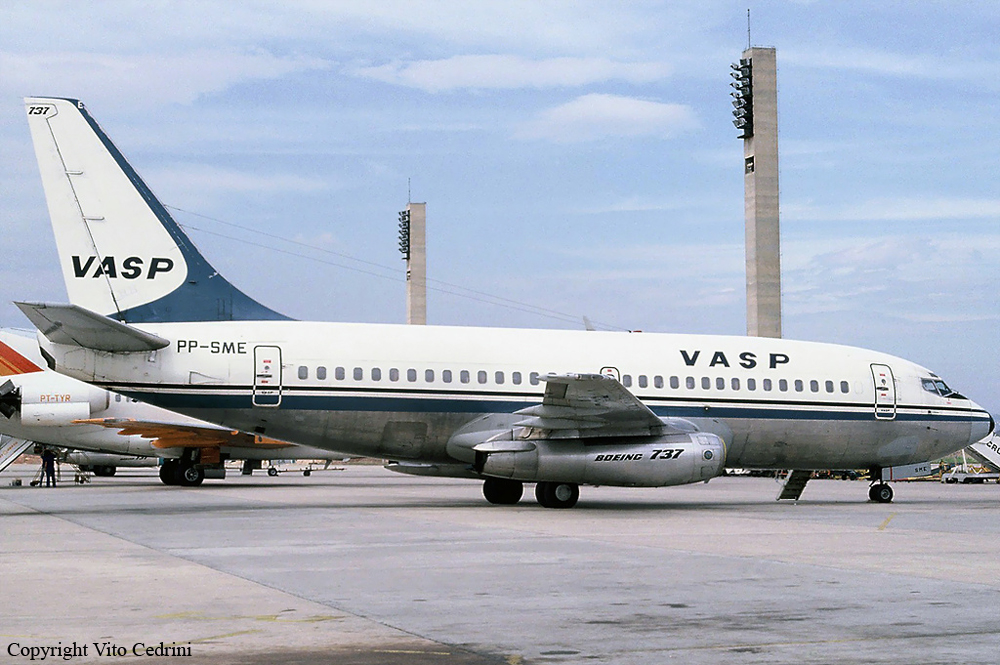
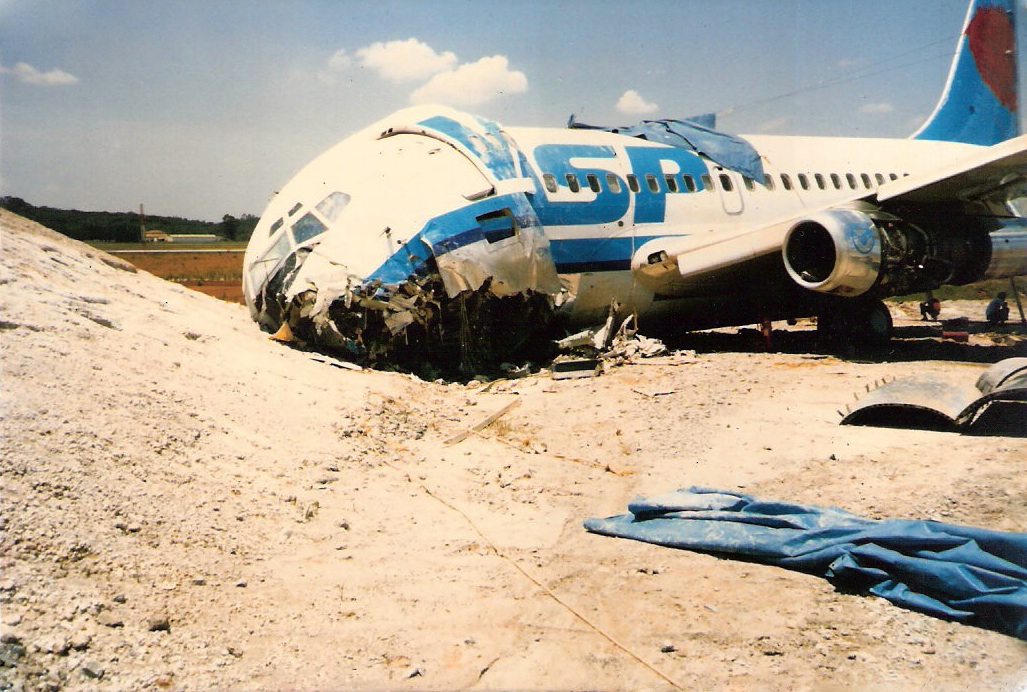
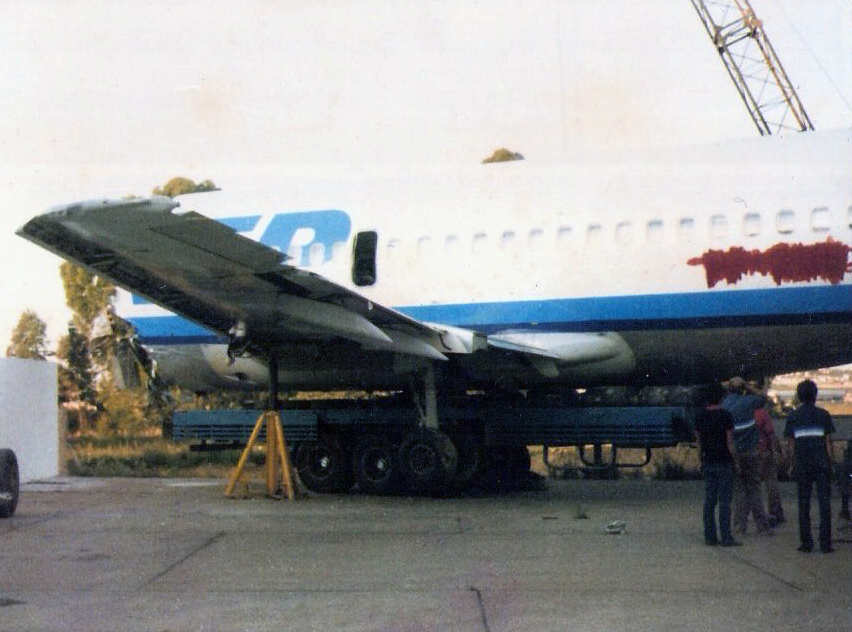
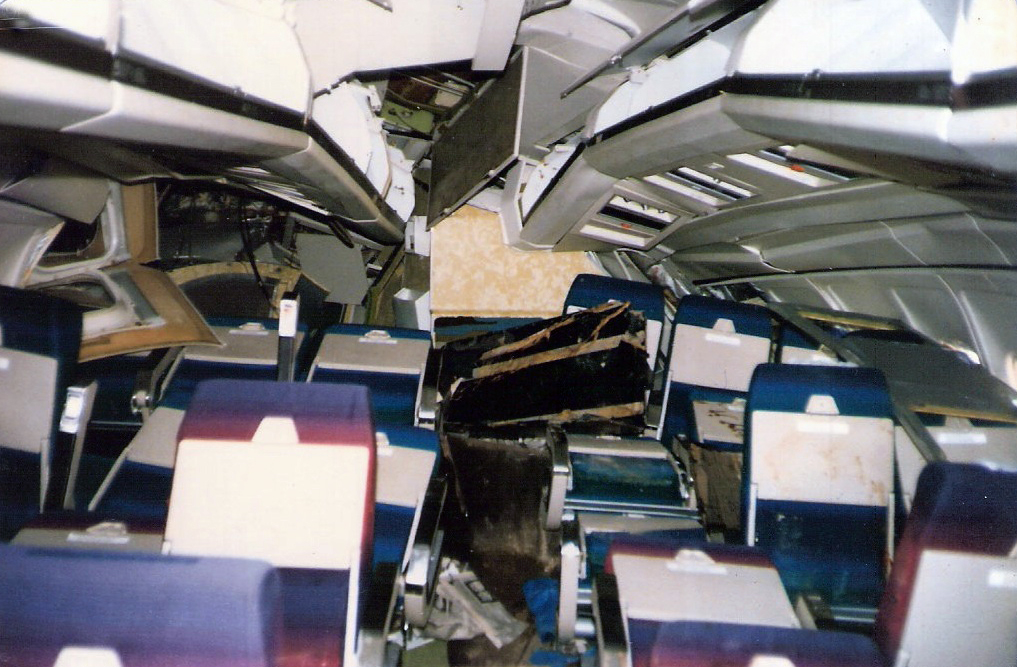
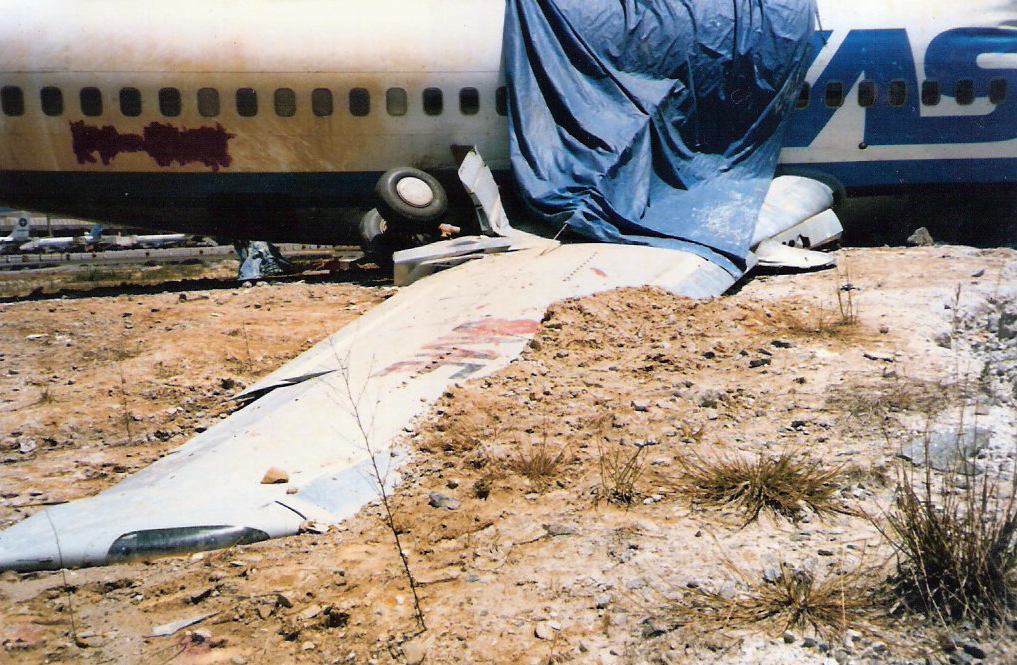
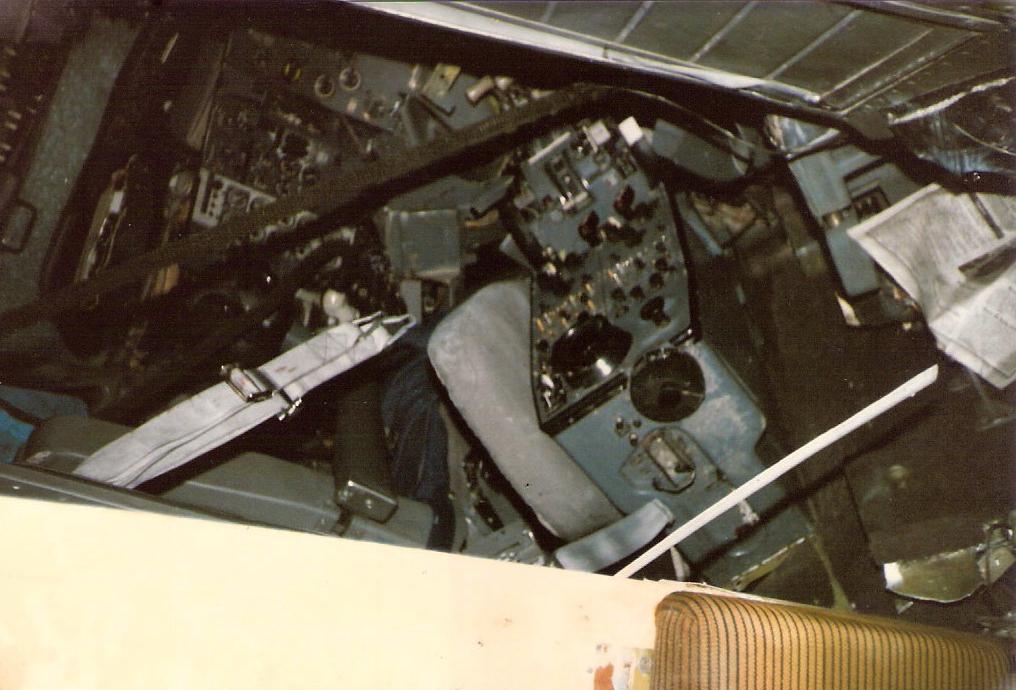
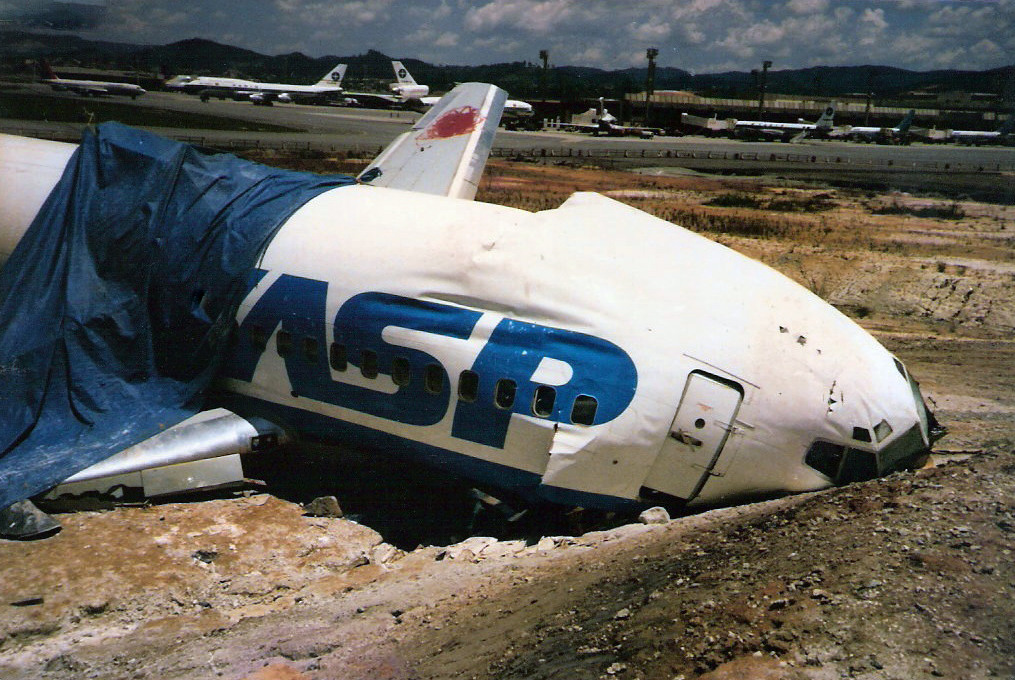
Crash of a Boeing 737-2A1 in São Paulo: 1 killed

Date & Time: Jan 28, 1986 at 0732 LT
Type of aircraft:
Operator:
Registration:
PP-SME
Flight Phase:
Survivors:
Yes
Schedule:
São Paulo – Belo Horizonte
MSN:
20096
YOM:
1969
Flight number:
VP210
Country:
Crew on board:
5
Crew fatalities:
Pax on board:
67
Pax fatalities:
Other fatalities:
Total fatalities:
1
Circumstances:
The crew left the apron and taxied to the runway threshold for takeoff on a regular schedule service VP210 to Belo Horizonte. Due to foggy conditions, the visibility was nil and the crew mistakenly lined up on the 'threshold' of the taxiway instead of the runway. Unaware of the wrong position of the aircraft, the crew was cleared for takeoff by ATC and started the takeoff procedure. After few seconds, the captain realize the situation and initiated an emergency braking maneuver. Unable to stop within the remaining distance, the aircraft overran, struck an embankment and came to rest, broken in two. A passenger was killed, 20 other occupants were injured and the aircraft was destroyed.
Probable cause:
Failure of the crew to recognize that he was lined up on a taxiway and not the active runway. Poor visibility due to foggy conditions was a contributing factor.

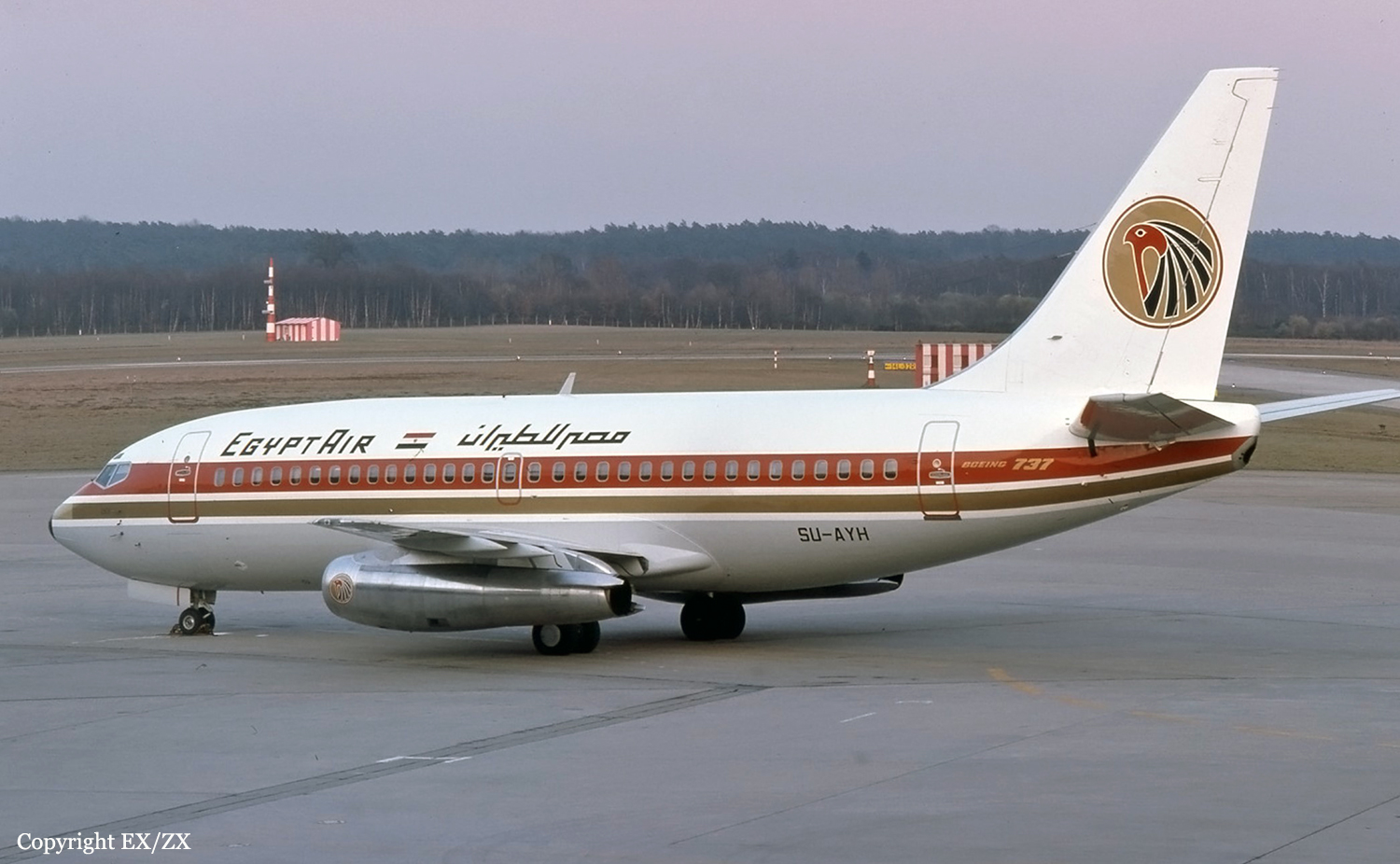
Ground fire of a Boeing 737-266 in Luqa: 60 killed

Date & Time: Nov 24, 1985 at 2020 LT
Type of aircraft:
Operator:
Registration:
SU-AYH
Flight Phase:
Survivors:
Yes
Schedule:
Athens - Cairo
MSN:
21191
YOM:
1976
Flight number:
MS648
Location:
Country:
Region:
Crew on board:
6
Crew fatalities:
Pax on board:
92
Pax fatalities:
Other fatalities:
Total fatalities:
60
Circumstances:
On November 23, at 19:35 the EgyptAir Boeing 737 was hijacked by 3 men. The Egyptian security guard who was onboard shot and killed one of the hijackers before being shot and wounded himself, along with two flight attendants. Although the hijackers demanded to be flown to Tunisia or Libya, they agreed to land at Malta for refueling were it landed at 21:15. At Malta, the two wounded cabin crew members were released, along with 11 women. Because Maltese authorities refused to refuel the plane unless all passengers were released, the hijackers threatened to kill a passenger every 10 minutes. A total of 5 additional people were shot and thrown off the aircraft, two of them were killed. After 22 hours of negotiation the plane was stormed by Egyptian forces. In the fight which followed hand grenades were thrown into the passenger cabin, causing a fire.
Probable cause:
Aircraft hijacked and then partially destroyed by grenade explosion and fire arms.

Crash of a Boeing 737-236 in Manchester: 55 killed

Date & Time: Aug 22, 1985 at 0713 LT
Type of aircraft:
Operator:
Registration:
G-BGJL
Flight Phase:
Survivors:
Yes
Schedule:
Manchester - Kerkyra
MSN:
22033
YOM:
1981
Flight number:
KT328M
Region:
Crew on board:
6
Crew fatalities:
Pax on board:
131
Pax fatalities:
Other fatalities:
Total fatalities:
55
Captain / Total flying hours:
8441
Captain / Total hours on type:
1276.00
Copilot / Total flying hours:
12277
Copilot / Total hours on type:
345
Aircraft flight hours:
12977
Aircraft flight cycles:
5907
Circumstances:
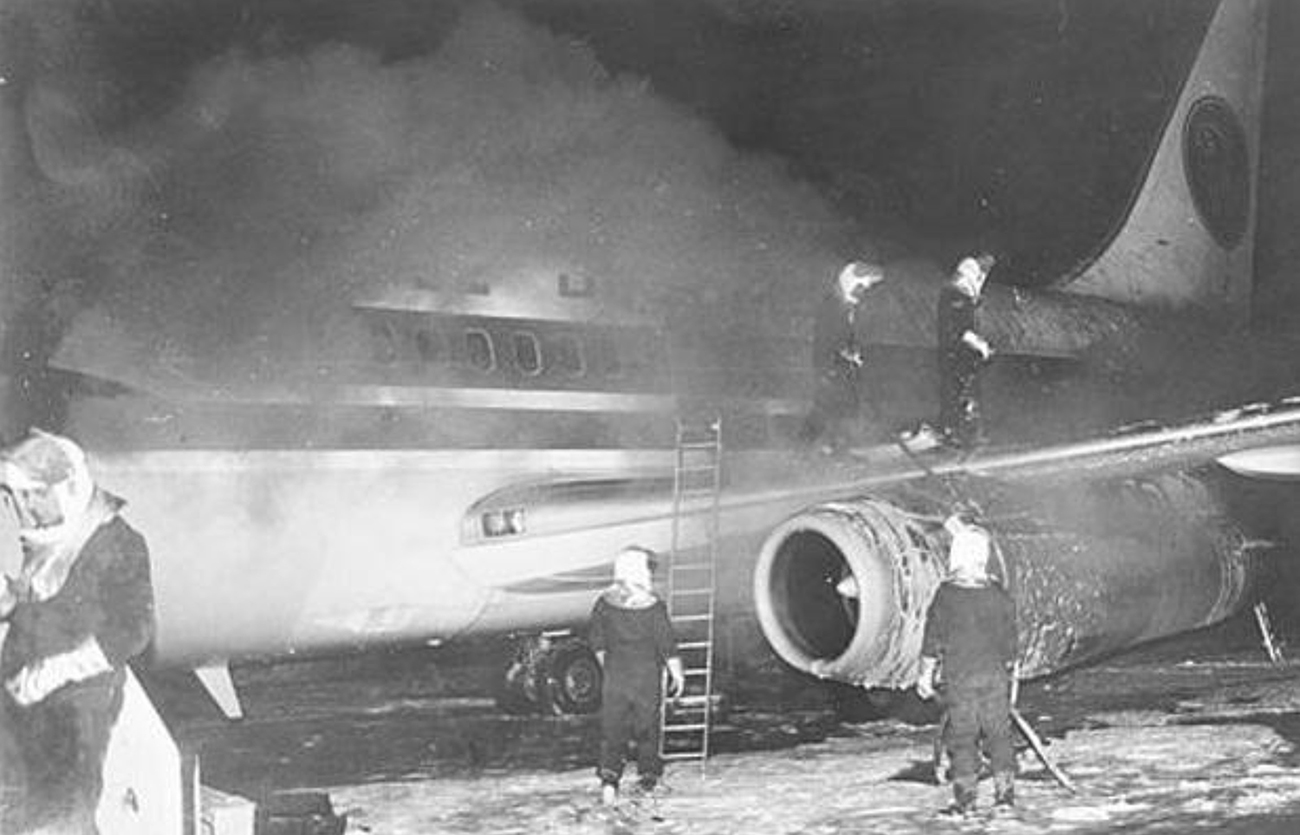
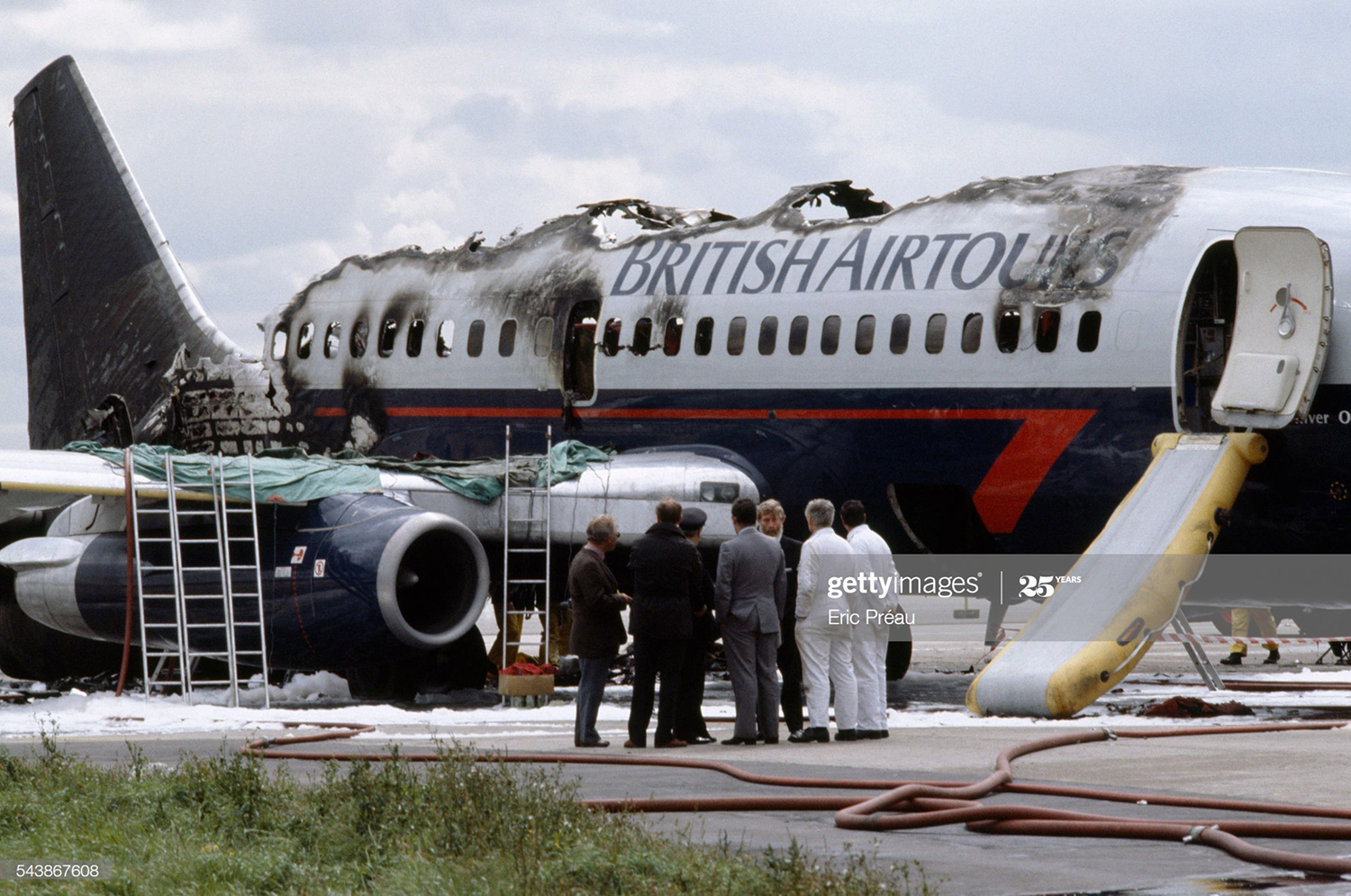
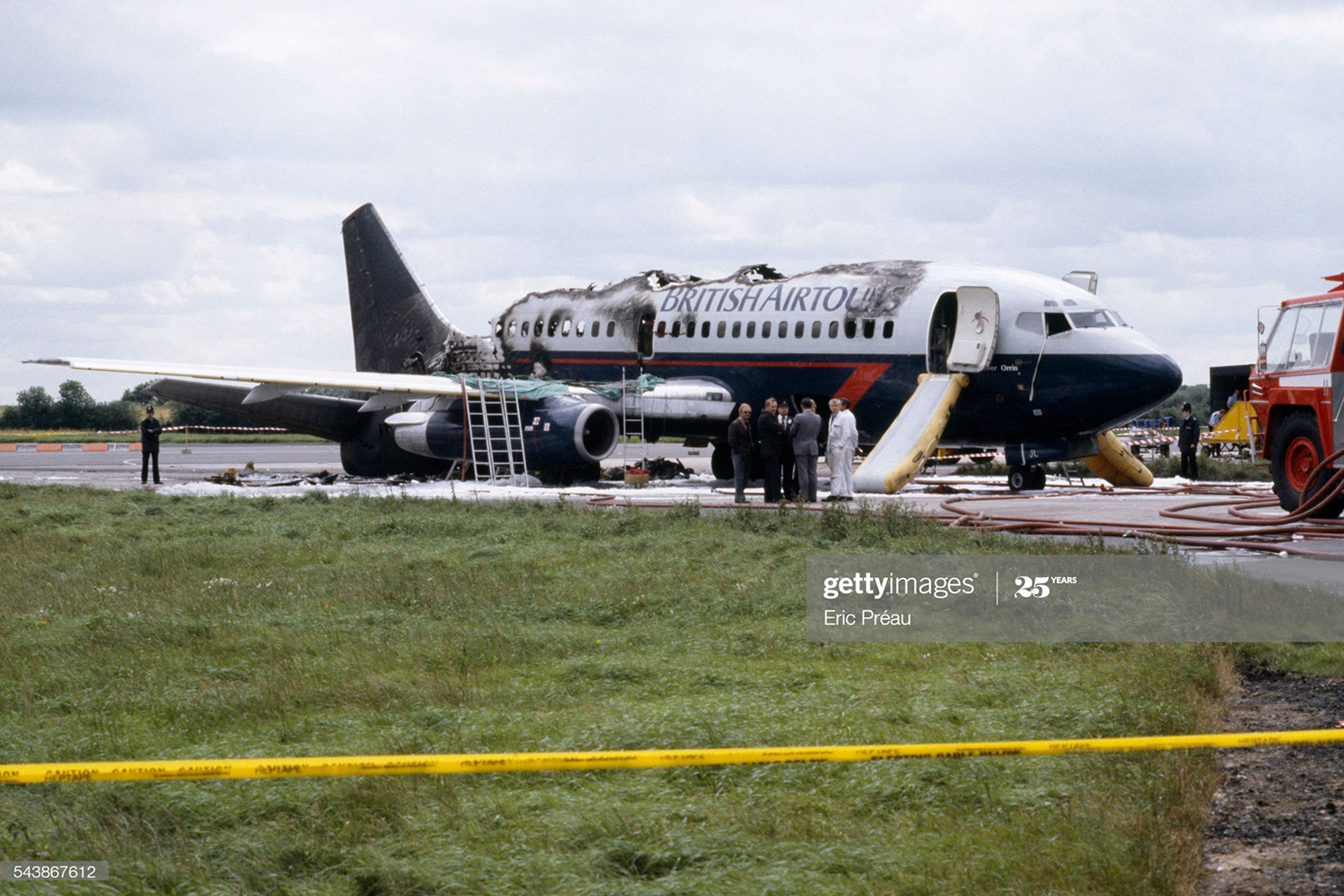
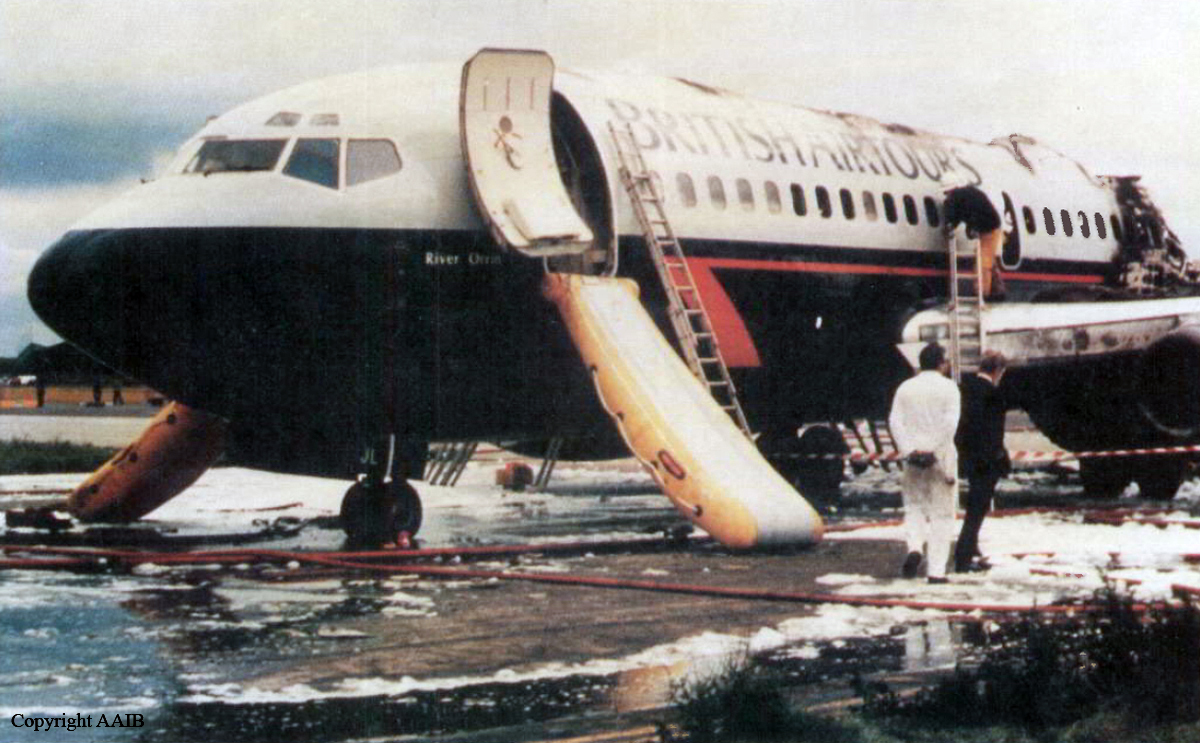
British Airtours Flight 328 (also known as flight 28M) was a charter flight from Manchester to Corfu. At 06:08 in the morning the crew were cleared to taxi to runway 24 for departure. At 06:12 the aircraft had lined up on the runway and was cleared for takeoff. The takeoff was to be performed by the co-pilot. During the takeoff run the captain made the routine 'eighty knots' call and 12 seconds later a 'thump' or 'thud' was heard. The captain immediately ordered 'stop', closed the throttles an selected reverse thrust. The maximum speed achieved was 126 knots IAS. At first the captain thought they had suffered a tyre burst or a bird strike. The co-pilot had applied maximum wheel braking, however, because of the possible tyre burst, the captain said 'Don't hammer the brakes, don't hammer the brakes'. At 45 seconds after the start of the takeoff run, 9 seconds after the 'thud', as the aircraft decelerated trough 85 knots the captain radioed ATC that they were abandoning takeoff. The fire bell rang simultaneously and he added as he cancelled reverse thrust, 'it looks as though we've got a fire on number 1'. ATC confirmed this: 'right there's a lot of fire, they're on their way now.'. At 25 seconds past the 'thud' (and 20 seconds before the aircraft stopped) the crew decided to evacuate via the starboard side. The 737 was decelerating through 36 knots then and the captain warned the cabin crew about the evacuation six seconds later. After the aircraft stopped a no. 1 engine fire drill was carried out, the no. 2 engine was shut down and the passenger evacuation drill carried out. Before completion of this drill the captain saw fuel and fire spreading forward on the left side of the aircraft. Both flight crew members escaped through the sliding window in the right hand side. Immediately after the 'thud' an intense fire developed on the left-hand side of the plane, causing some cracking and melting of windows with some associated smoke in the aft cabin. This caused some passengers to stand up in alarm and move into the aisle. Immediately after coming to a halt the purser tried to open the right front door (R1) but the escape slide container jammed on the doorframe, preventing further movement of the door. He then crossed to the L1 door and opened it (25 seconds had passed since the aircraft had stopped). The purser then returned to the R1 door and managed to clear the obstruction and was able to open the door 85 seconds after the aircraft had stopped. Meanwhile passengers had managed to open the right hand overwing exit. The R2 (right rear) door had also been opened but no one escaped through this exit. In total 17 surviving passengers escaped through the L1 door, 34 through R1 and 27 through the overwing exit.
Probable cause:
The cause of the accident was an uncontained failure of the left engine, initiated by a failure of the No 9 combustor can which had been the subject of a repair. A section of the combustor can, which was ejected forcibly from the engine, struck and fractured an underwing fuel tank access panel. The fire which resulted developed catastrophically, primarily because of adverse orientation of the parked aircraft relative to the wind, even though the wind was light. Major contributory factors were the vulnerability of the wing tank access panels to impact, a lack of any effective provision for fighting major fires inside the aircraft cabin, the vulnerability of the aircraft hull to external fire and the extremely toxic nature of the emissions from the burning interior materials. The major cause of the fatalities was rapid incapacitation due to the inhalation of the dense toxic/irritant smoke atmosphere within the cabin, aggravated by evacuation delays caused by a forward right door malfunction and restricted access to the exits.
Final Report:


Crash of a Boeing 737-2P5 in Phuket: 11 killed
Date & Time: Apr 15, 1985 at 2329 LT

Type of aircraft:
Operator:
Registration:
HS-TBB
Survivors:
No
Schedule:
Bangkok - Phuket
MSN:
21810
YOM:
1979
Country:
Region:
Crew on board:
7
Crew fatalities:
Pax on board:
4
Pax fatalities:
Other fatalities:
Total fatalities:
11
Circumstances:
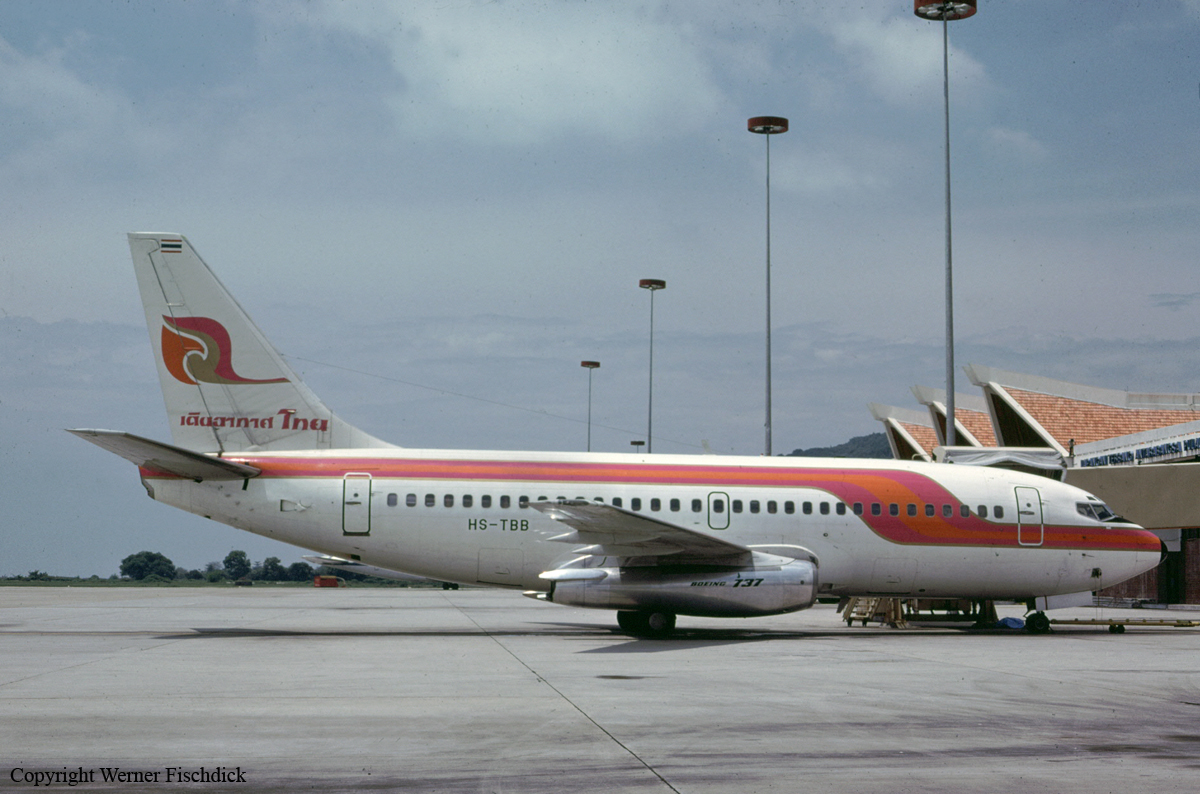
Following an uneventful flight from Bangkok, the crew started the descent to Phuket Airport by night and good weather conditions. Four minutes after being cleared to descend to 3,000 feet, the pilot reported that he was unable to receive the DME signal. ATC asked the crew if he wanted to conduct a VOR approach to runway 09 but the captain preferred to attempt a visual approach to runway 27. On final, the aircraft struck a hill (800 feet high) and crashed about 18 km short of runway. The aircraft was destroyed and all 11 occupants were killed.
Probable cause:
Decision of the crew to continue the approach below MDA until the aircraft struck the ground.

Ground explosion of a Boeing 737-2H7C in Douala: 2 killed

Date & Time: Aug 30, 1984
Type of aircraft:
Operator:
Registration:
TJ-CBD
Flight Phase:
Survivors:
Yes
Schedule:
Douala – Yaoundé – Garoua
MSN:
21295
YOM:
1977
Flight number:
UY786
Location:
Country:
Region:
Crew on board:
7
Crew fatalities:
Pax on board:
109
Pax fatalities:
Other fatalities:
Total fatalities:
2
Circumstances:
While taxiing at Douala Airport, an explosion occurred on the left hand side. The crew stopped the aircraft on the taxiway and started an emergency evacuation. 94 occupants were wounded while 20 others were uninjured. Unfortunately, two passengers died by asphyxia.
Probable cause:
It was reported by the Cameroon Authorities that a bomb placed in the left main wheel well exploded during taxi, causing a rupture of the main left fuel tank. A fire erupted, partially destroying the aircraft. It appears that the bomb was placed by members of the 'Liberation Front of Cameroon'.