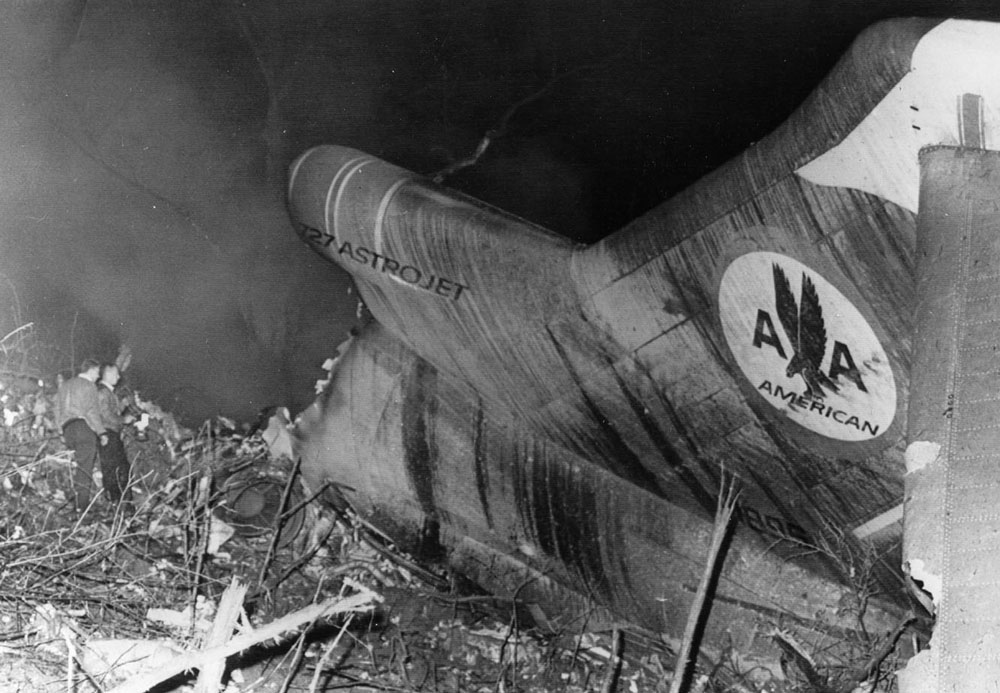
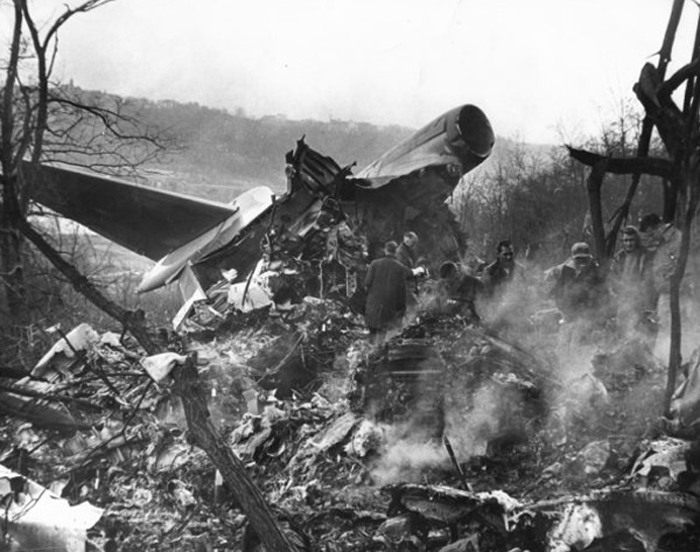
Crash of a Boeing 727-23 in Cincinnati: 58 killed

Date & Time: Nov 8, 1965 at 1902 LT
Type of aircraft:
Operator:
Registration:
N1996
Survivors:
Yes
Schedule:
New York - Cincinnati
MSN:
18901
YOM:
1965
Flight number:
AA383
Crew on board:
6
Crew fatalities:
Pax on board:
56
Pax fatalities:
Other fatalities:
Total fatalities:
58
Captain / Total flying hours:
16387
Captain / Total hours on type:
225.00
Copilot / Total flying hours:
14400
Copilot / Total hours on type:
35
Aircraft flight hours:
938
Circumstances:
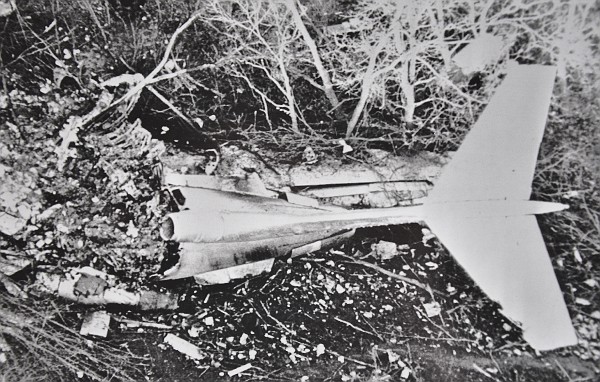
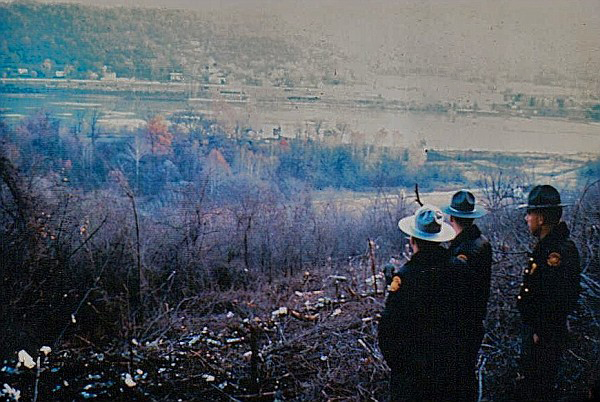
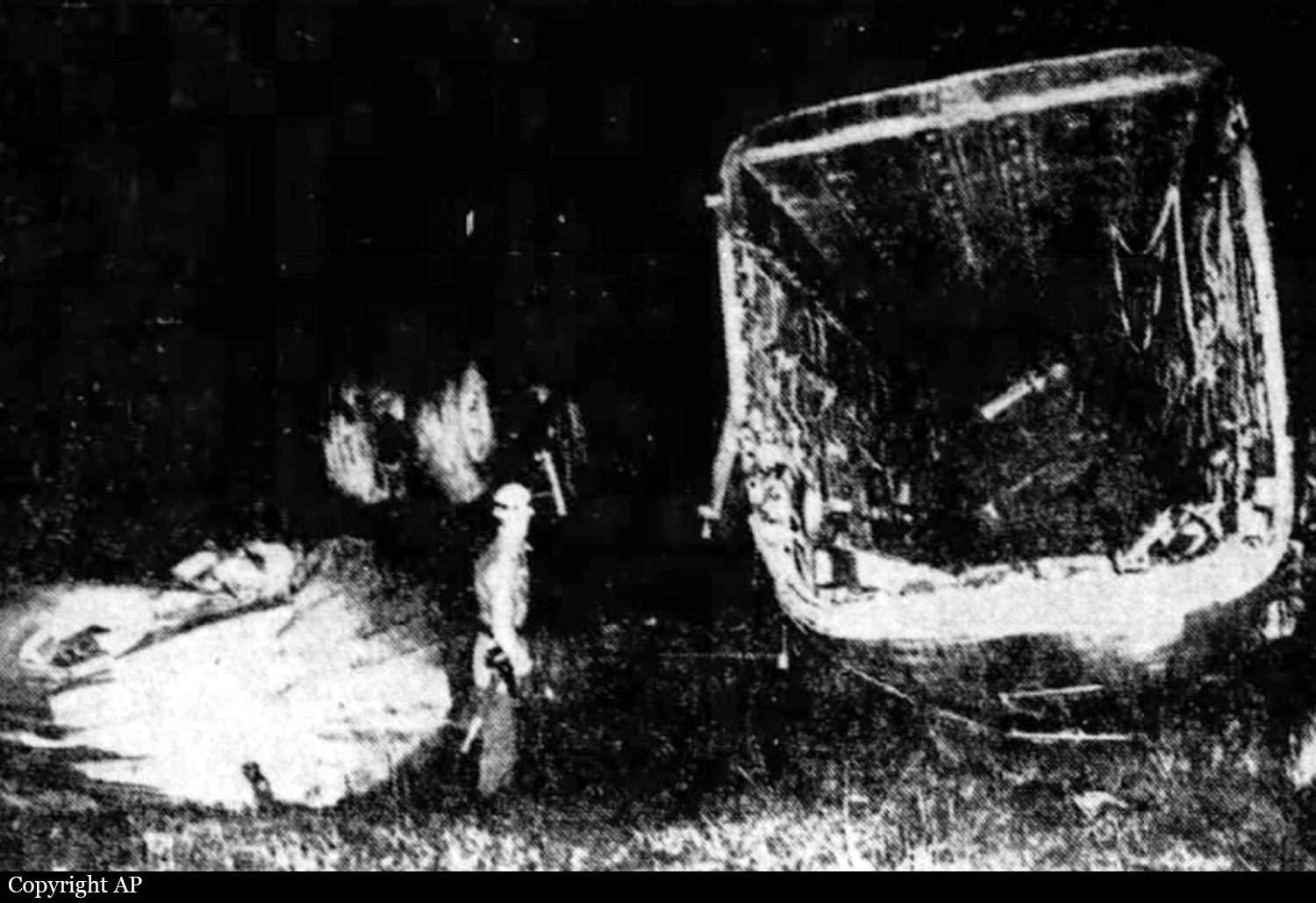
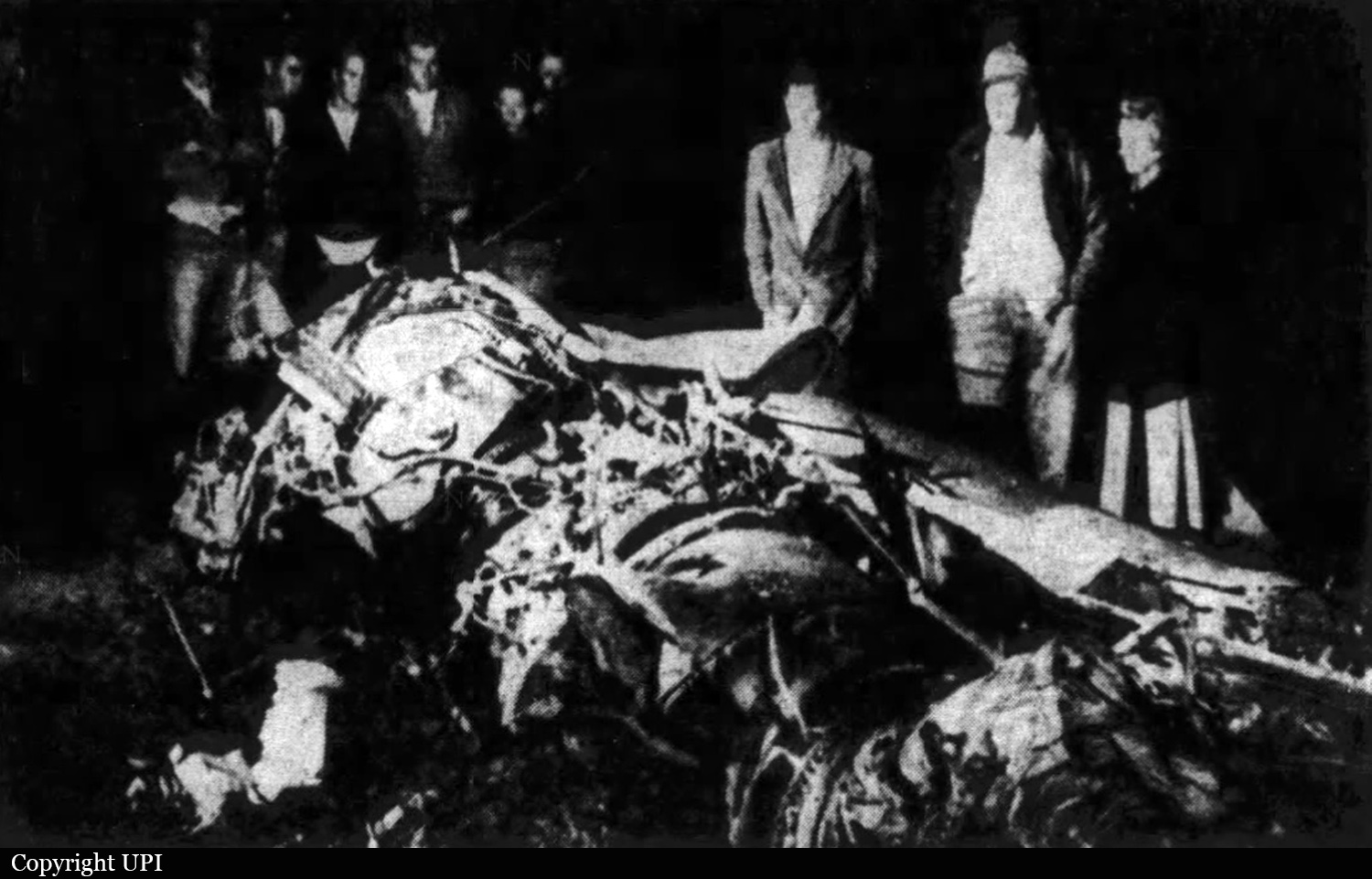
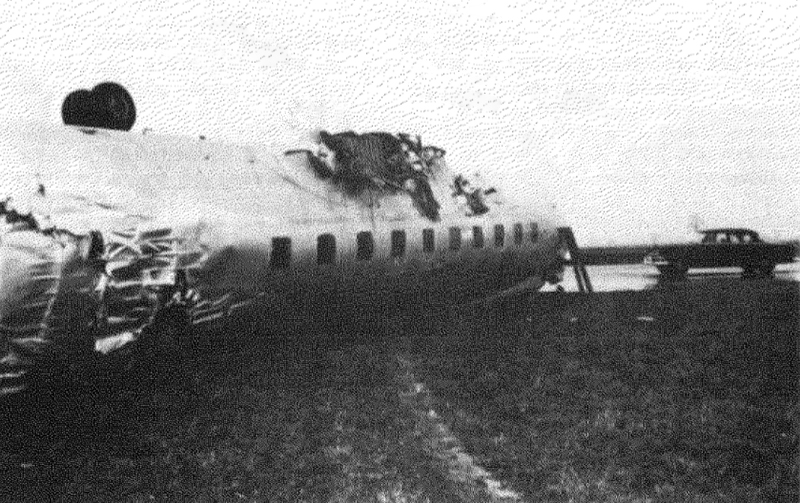
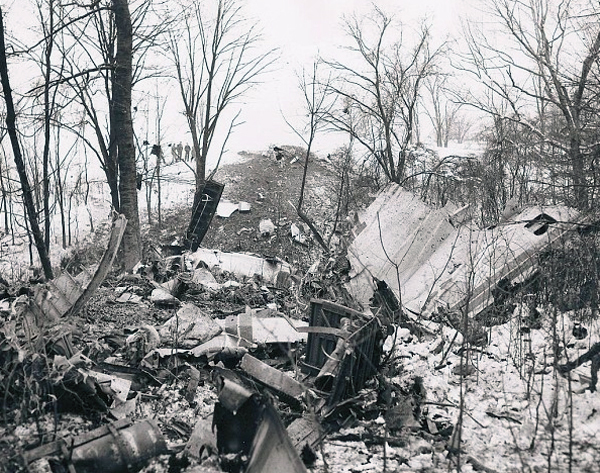
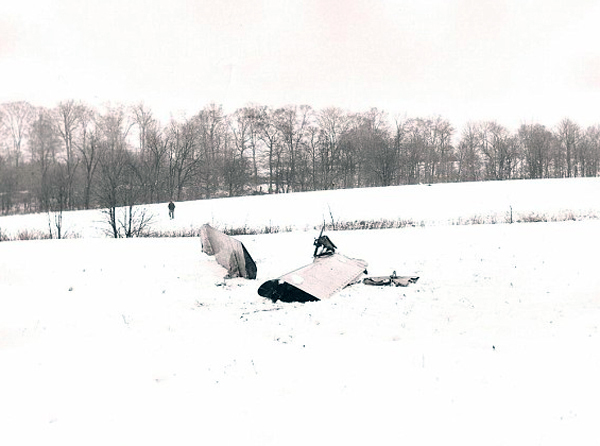
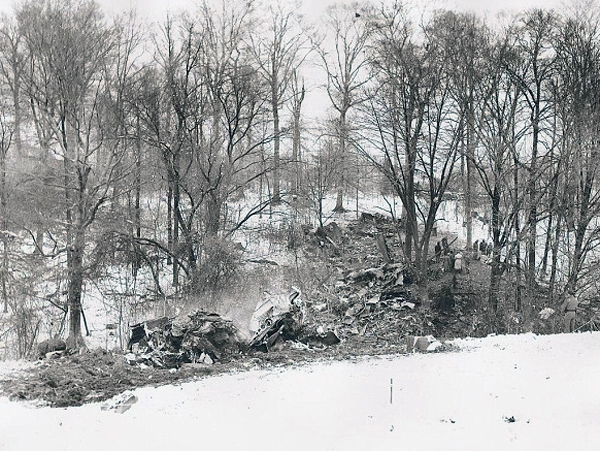
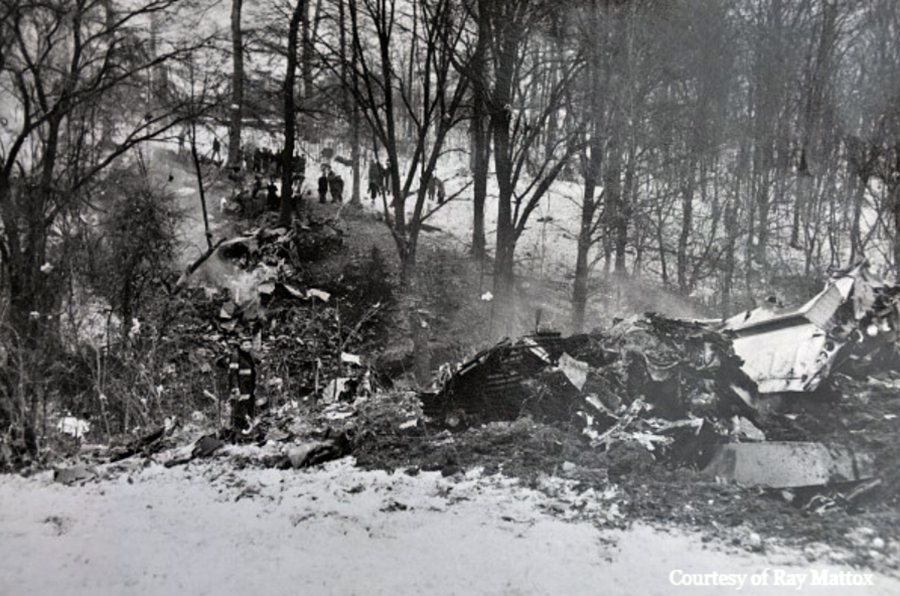
American Airlines Flight 383, a Boeing 727, N1996, departed New York-LaGuardia Airport (LGA) at 17:38 for a scheduled flight to the Greater Cincinnati Airport (CVG). It was to be an IFR flight with a requested cruising altitude of 35,000 ft and an estimated time en route of 1 hour 23 minutes. The en route part of the flight was uneventful. About 18:55, when the flight was about 27 miles southeast of the Greater Cincinnati Airport, radar traffic control was effected by Cincinnati Approach Control. Subsequent descent clearances were issued to the flight and at 18:57 flight 383 reported: "...out of five for four and how about a control VFR, we have the airport." The Approach Controller replied: "... continue to the airport and cleared for a visual approach to runway one eight, precip lying just to the west boundary of the airport and its ... southbound." The crew acknowledged the clearance and the controller cleared the flight to descend to 2,000 feet at their discretion. At 18:58 Approach Control advised the flight that its radar position was six miles southeast of the airport and instructed them to change to the Cincinnati tower frequency. One minute later the tower controller cleared the flight to land. During the approach the visibility at the airport deteriorated as it began to rain. The tower controller reported: "American three eighty three we are beginning to pickup a little rain right now." At 19:01:14 the tower asked: "American three eighty three you still got the runway Okay?" To which the crew replied "Ah just barely we'll ah pickup the ILS here". At this point, thirteen seconds before impact, the 727 was descending at a rate of 2100 feet/min to an altitude of approximately 725 feet (165 ft below published field elevation) with the airspeed holding at 160 knots. The descent rate then decreased to about 625 ft/min for approximately the last 10 seconds of flight with the airspeed decreasing to 147 knots at impact. The right wing struck a tree at an altitude of 665 feet msl which is approximately 225 feet below the published field elevation. The aircraft slid a distance of 340 feet relatively intact through scrub trees and ground foilage before impacting and coming to rest amidst a group of larger trees. Following impact an intense ground fire erupted which completely destroyed the aircraft cabin forward of the tail section. A stewardess and three passengers survived while 58 other occupants were killed.
Probable cause:
The Board determines that the probable cause of this accident was the failure of the crew to properly monitor the altimeters during a visual approach into deteriorating visibility conditions.
Final Report:
Crash of a Beechcraft E18S near Henderson: 4 killed

Date & Time: Jan 3, 1965 at 1445 LT
Type of aircraft:
Registration:
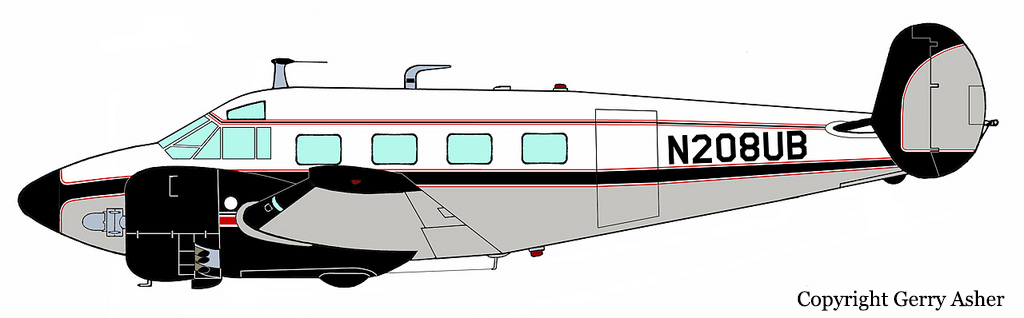
N208UB
Flight Phase:
Flight Type:
Survivors:
No
MSN:
BA-331
YOM:
1958
Crew on board:
1
Crew fatalities:
Pax on board:
3
Pax fatalities:
Other fatalities:
Total fatalities:
4
Captain / Total flying hours:
4341
Captain / Total hours on type:
174.00
Circumstances:
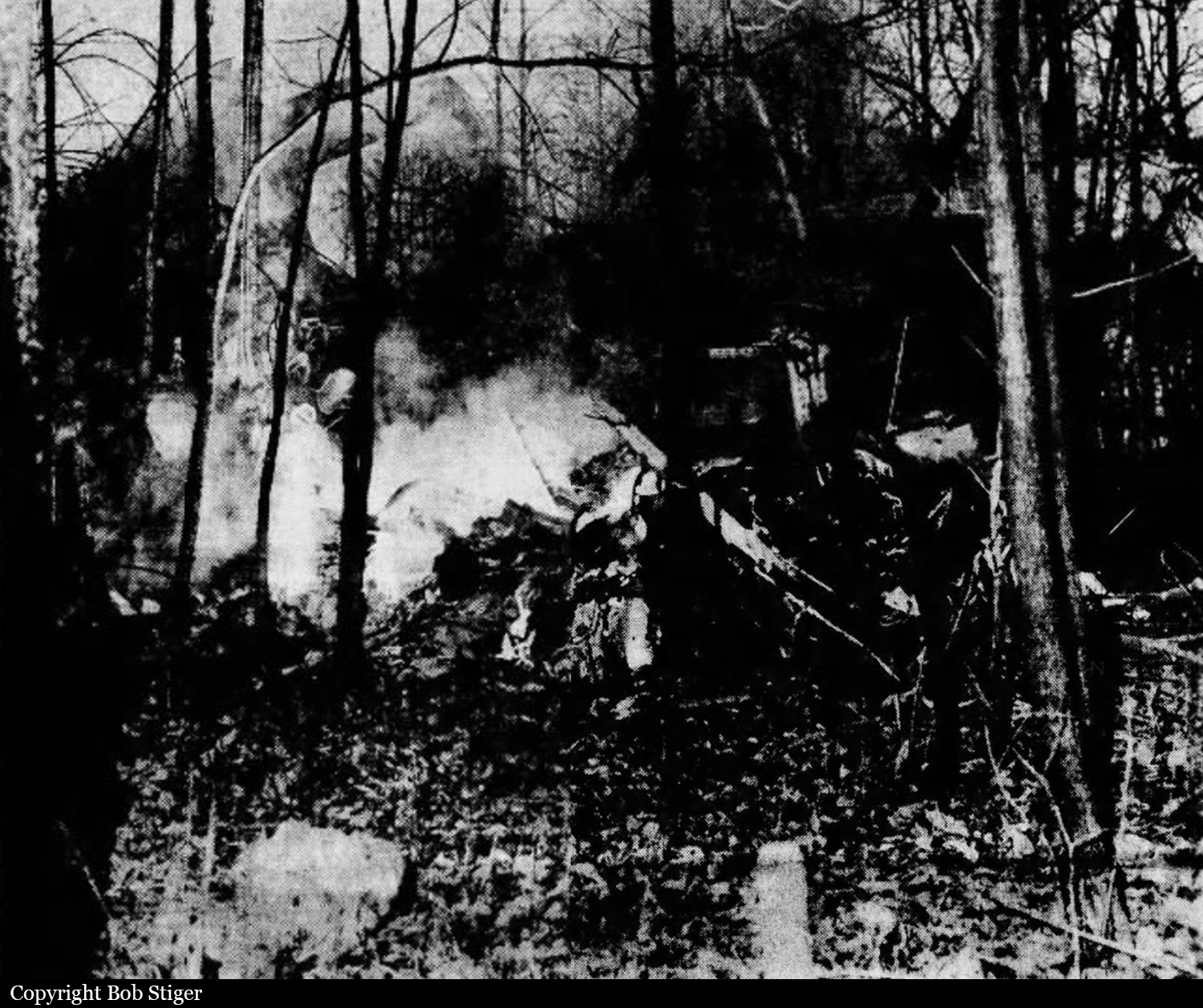
While in cruising altitude, the propeller blades on the left engine detached. Control was lost and the airplane dove into the ground and crashed in a lake located near Henderson. The aircraft was destroyed and all four occupants were killed.
Probable cause:
The left engine tearaway following the in-flight separation of the propeller blade due to fatigue fracture.
Final Report:

Crash of a Douglas DC-4 in Cincinnati

Date & Time: Nov 14, 1961
Type of aircraft:
Operator:
Registration:
N30061
Flight Type:
Survivors:
Yes
MSN:
10331
YOM:
1944
Crew on board:
3
Crew fatalities:
Pax on board:
0
Pax fatalities:
Other fatalities:
Total fatalities:
0
Circumstances:
On touchdown, the aircraft went out of control and came to rest in flames. All three crew members were injured and the aircraft was destroyed by fire.

Crash of a Fairchild C-119G Flying Boxcar at Fort Campbell AFB: 5 killed

Date & Time: Jan 15, 1961 at 1925 LT
Operator:
Registration:
51-2639
Flight Type:
Survivors:
No
Schedule:
Kelly - Fort Campbell
MSN:
10628
YOM:
1951
Crew on board:
5
Crew fatalities:
Pax on board:
0
Pax fatalities:
Other fatalities:
Total fatalities:
5
Circumstances:
While approaching Fort Campbell AFB following an uneventful flight from Kelly AFB, the crew failed to realize his altitude was insufficient when the airplane crashed onto a hill located 3,9 miles short of runway. The aircraft was destroyed and all five crew members were killed.

Crash of a Boeing B-52F-100-BO Stratofortress near Leitchfield: 4 killed

Date & Time: Oct 15, 1959 at 1945 LT
Type of aircraft:
Operator:
Registration:
57-0036
Flight Phase:
Flight Type:
Survivors:
Yes
MSN:
17430
YOM:
1957
Crew on board:
8
Crew fatalities:
Pax on board:
0
Pax fatalities:
Other fatalities:
Total fatalities:
4
Circumstances:
While on a training mission, the B-52 was supposed to be refueled by the crew of a USAF KC-135 registered 57-1513. At an altitude of 32,000 feet, both aircraft collided in unclear circumstances and dove into the ground before crashing near Leitchfield. All four crew member on board the KC-135 were killed. On board the B-52, four crew members were killed while four others were able to bail out and were found alive. Both aircraft were destroyed upon impact. Both nuclear bombs on board the B-52 were recovered intact.

Crash of a Boeing KC-135A-BN Stratotanker near Leitchfield: 4 killed

Date & Time: Oct 15, 1959 at 1945 LT
Type of aircraft:
Operator:
Registration:
57-1513
Flight Phase:
Flight Type:
Survivors:
No
Schedule:
Columbus - Columbus
MSN:
17584
YOM:
1958
Crew on board:
4
Crew fatalities:
Pax on board:
0
Pax fatalities:
Other fatalities:
Total fatalities:
4
Circumstances:
The crew left Columbus AFB, Mississippi, on a routine refuelling mission of a USAF Boeing B-52 Stratofortress. Registered 57-0036, the B-52 was carrying a crew of eight. At an altitude of 32,000 feet, both aircraft collided in unclear circumstances and dove into the ground before crashing near Leitchfield. All four crew member on board the KC-135 were killed. On board the B-52, four crew members were killed while four others were able to bail out and were found alive. Both aircraft were destroyed upon impact.
Crew:
1st Lt Harold E. Helmick, pilot,
S/Sgt Paul E. Thomasson 2.

Crash of a Martin 404 in Louisville

Date & Time: Mar 10, 1957 at 1138 LT
Type of aircraft:
Operator:
Registration:
N453A
Survivors:
Yes
Schedule:
Chicago – Indianapolis – Louisville – Miami
MSN:
14144
YOM:
1952
Flight number:
EA181
Crew on board:
3
Crew fatalities:
Pax on board:
31
Pax fatalities:
Other fatalities:
Total fatalities:
0
Captain / Total flying hours:
7795
Captain / Total hours on type:
2151.00
Copilot / Total flying hours:
1201
Copilot / Total hours on type:
652
Aircraft flight hours:
15365
Circumstances:
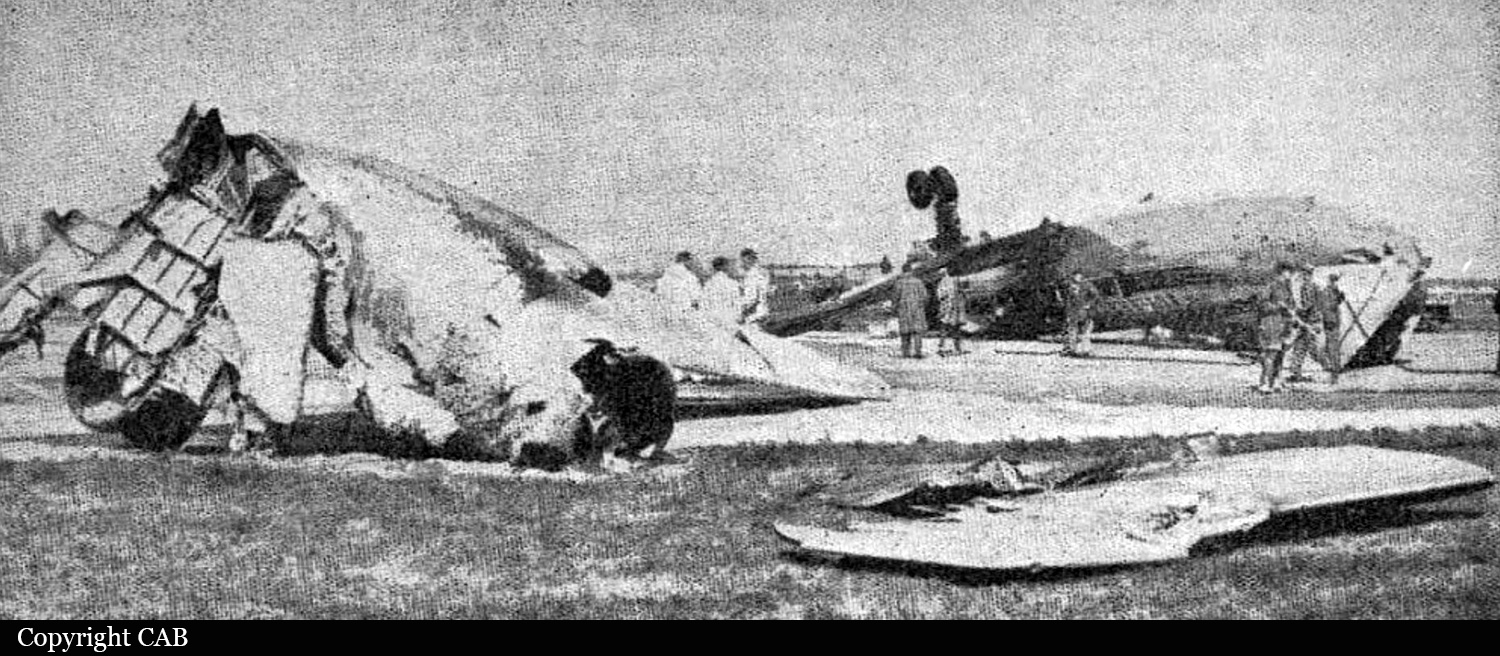
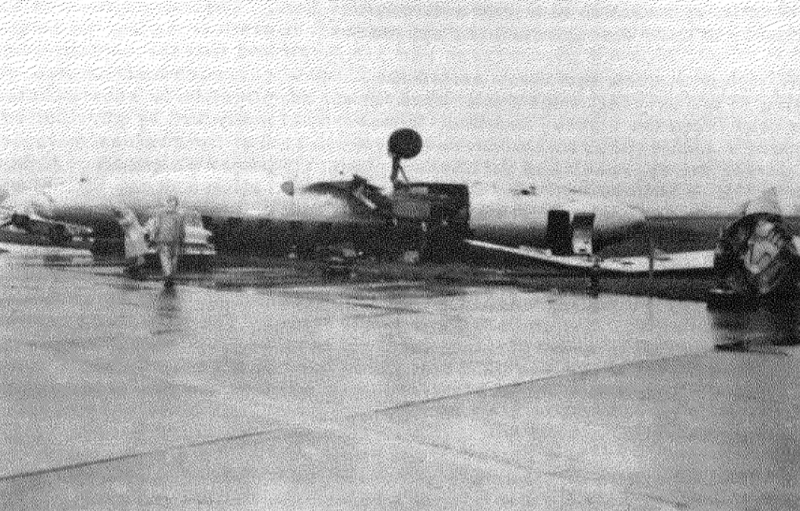
Flight 181 originated at Midway Airport, Chicago, Illinois, for Miami, Florida. Several stops were scheduled including Indianapolis, Indiana, and Louisville, Kentucky, the latter a point of crew change. Departure, scheduled for 0955, was at 1001, with a crew of Captain Clarence G. Chambers, Pilot Harold D. Bingham, and Stewardess Shirley Michael. To Indianapolis the flight was routine, with Captain Chambers flying, and arrival was on schedule. Departure from Indianapolis was on schedule, at 1105, with 31 passengers and 450 gallons of fuel. The aircraft’s gross weight was 41,126 pounds, 3,774 less than the maximum takeoff allowable of 44,900, and its center of gravity was located within prescribed limits. Captain Chambers instructed Pilot Bingham to do the flying and, accordingly, Bingham, seated on the right, made the takeoff and flew this segment of the flight. The aircraft proceeded along V-53 airway at 5,000 feet altitude on a VFR flight plan in clear weather. At 1133 the flight advised Standiford (Louisville) tower that it was over New Albany, Indiana, eight miles to the north-northwest, and requested clearance to the airport. At 1134 the flight asked landing information of its company radio station and was given the Louisville pressure altitude as 340 feet and the Louisville altimeter setting as 30.10 inches. A minute later the flight advised the tower that it was over the city and received clearance to land on runway 11. Wind conditions were given as southeast five to eight knots, variable both sides. Ceiling and visibility were unlimited. The “Fasten Seat Belt” sign had been put on. Pilot Bingham descended from 5,000 feet to 2,000 feet and then reduced both rate of descent and power. An airspeed of 165 knots was established, the landing gear was lowered, and the flaps were placed in takeoff position. Bingham then started a turn for final approach, and the flaps were placed in approach position. Captain Chambers saw that the aircraft was too high and reduced power still further; Bingham lowered the flaps to full down. The pre-landing checklist had been accomplished. At this point (the altitude was then 1,000 to 1,500 feet higher than the runway) the captain took over control. He nosed down sharply, holding as closely as possible to an airspeed of 100 knots. The landing gear remained down, flaps remained fully down, and throttles were pulled fully back. Neither pilot read the rate-of-climb (descent) indicator during the approach. When approximately over the threshold of the runway and while about 100 feet above it, the captain pulled back on the yoke to flare out. No power was used. The aircraft’s attitude was observed to change from nose-down to nose-up but its rate of descent did not seem to lessen markedly. The aircraft struck the runway on its main landing gear, the left wing separated inboard of the left engine nacelle, and the remainder of the aircraft half rolled to an inverted position. It slid along in that attitude, turning and coming to rest headed nearly opposite its direction at touchdown. Two minutes later, by estimate, all occupants were out of their inverted seats, in which they were belted, and away from the wreckage which had developed a small fire. This was confined by a passenger using a hand extinguisher until emergency apparatus, which had been alerted by the tower, arrived quickly and took the necessary steps to prevent further fire.
Probable cause:
The Board determines that the probable cause of this accident was the captain’s faulty landing approach technique, resulting in an excessively high rate of sink at the instant of touchdown imposing load beyond the design strength of the wing stricture. The following findings were reported:
- An approach was started from a paint too close and too high in relation to the approach end of the runway,
- The speed and configuration of the aircraft in conjunction with the retarded throttle during this approach resulted in an inordinately high rate of descent,
- This high descent rate was not sufficiently checked during the attempted flareout,
- Touchdown imposed loads beyond the design strength of the wing structure, which failed.
Final Report:

Crash of a Martin 404 in Owensboro

Date & Time: Feb 17, 1956 at 1458 LT
Type of aircraft:
Operator:
Registration:
N445A
Survivors:
Yes
Schedule:
Evansville – Owensboro – Louisville – Chicago
MSN:
14122
YOM:
1951
Flight number:
EA156
Crew on board:
3
Crew fatalities:
Pax on board:
20
Pax fatalities:
Other fatalities:
Total fatalities:
0
Captain / Total flying hours:
10491
Captain / Total hours on type:
3182.00
Copilot / Total flying hours:
4292
Copilot / Total hours on type:
2616
Aircraft flight hours:
12373
Circumstances:
Eastern Air Lines Flight 156 of February 17 was a scheduled operation between Evansville, Indiana, and Chicago, Illinois, with intermediate stops at Owensboro and Louisville, Kentucky. It utilized the aircraft and flight crew of Trip 157 from Chicago, which terminated at Evansville. The crew consisted of Captain Charles R. Hard, Pilot Raymond F. Rozman, and Flight Attendant Robert T. Schroeter. The Chicago to Evansville flight arrived at 1422, 43 minutes late because of traffic and ground delays. It was reported routine in all other respects. During the short ground time at Evansville Captain Bard reviewed the weather forecasts for the flight Evansville to Chicago, and received the latest weather observation reports for Owensboro, the first stop. These indicated the flight to Owensboro would be in accordance with Instrument Flight Rules and that an instrument approach to the airport there would be necessary. Accordingly, an IFR flight plan was filed and an instrument clearance was given the crew before departure. Clearance was direct to Owensboro at 2,000 feet. Flight 156 departed at 1441. Gross takeoff weight was 41,471 pounds, which was less than the maximum allowable, 43,306 pounds. The load was properly distributed with respect to the center of gravity limits of the aircraft. The crew reported its position en mute to ATC (Air Traffic Control) according to its clearance and thereafter at 1447 called the company radio located on the Owensboro Airport. Routine information exchanged between flight and ground personnel included giving the flight the latest weather and altimeter information. There being no control tower at Owensboro, the company there advised the flight that surface wind favored landing on runway 05. A few minutes later N445A was observed to descend below the clouds just north of the airport, flying on a southerly heading toward the field. It was observed to level out and turn right onto a downwind leg for runway 05. In the limited visibility, reported as one mile in rain and fog, the aircraft disappeared from view near the southwest boundary of the airport while still, on its downwind leg. Shortly thereafter it came back into view, proceeding toward the landing runway. It suddenly struck the ground, right wing down, rolled to an inverted position, and slid to a stop beside runway 05. The aircraft lost its both wings and was partially destroyed. All 23 occupants were evacuated.
Probable cause:
The Board determines that the probable cause of this accident was an improperly executed final approach, resulting in a stall, during a steep left turn at an altitude too low to permit recovery. The following findings were reported:
- Weather conditions reported were above the minimums for the flight to execute an ADF approach, circle, and land,
- Weather conditions experienced by the flight were equal to or better than those reported,
- The flight established visual contact with the ground at a position which was normal following the completion of the specified instrument approach procedure,
- A circling approach was begun to land on runway 05,
- The position on the downwind leg from which a left turn was begun to align with runway 5 resulted in little or no straight-in portion of the approach and an abnormally steep turn,
- During the latter phase of the approach while at low altitude the aircraft rolled from a steep left bank to the right in a continuous motion,
- The aircraft struck the ground short of and to the right of the runway of intended landing in an uncontrolled attitude,
- There was no evidence of malfunction or failure of the aircraft, its engines, or propellers,
- Thunderstorm turbulence, wind shift, and lightning were not factors in the accident.
Final Report:

Crash of a Douglas C-47-DL in Cincinnati: 2 killed

Date & Time: Jan 12, 1955 at 0904 LT
Operator:
Registration:
N999B
Flight Phase:
Flight Type:
Survivors:
No
Schedule:
Battle Creek – Lexington – Miami
MSN:
4255
YOM:
1942
Crew on board:
2
Crew fatalities:
Pax on board:
0
Pax fatalities:
Other fatalities:
Total fatalities:
2
Circumstances:
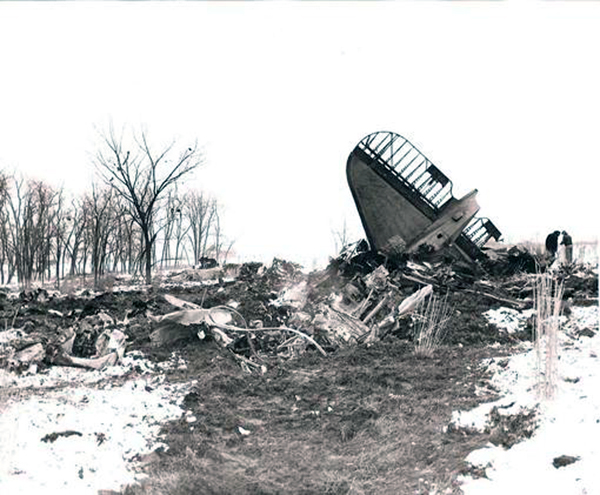
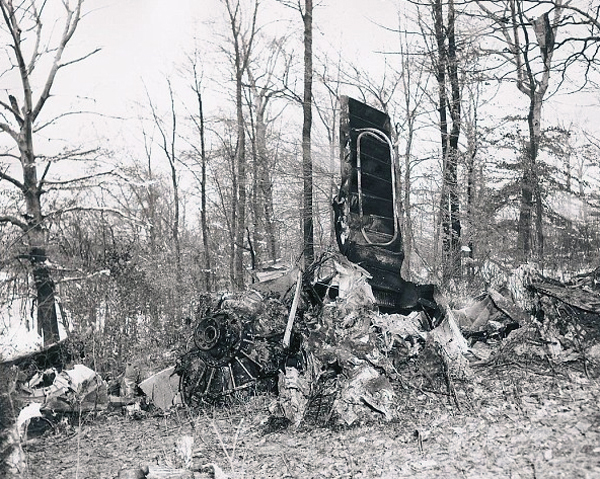
The crew departed Battle Creek Airport at 0733LT bound for Miami with an intermediate stop at Lexington, Kentucky. While cruising at an altitude between 700 and 900 feet, the left wing of the aircraft collided with the right engine of a Trans World Airlines (TWA) Martin 202 registered N93211 that just took off from Cincinnati-Greater Cincinnati Airport. Following the collision, both aircraft went into a dive and crashed in a snow covered field and a wooded area located in the suburb of Cincinnati. Both aircraft were completely destroyed upon impact and all 15 occupants on both airplanes were killed.
Probable cause:
The probable cause of this accident was operation of the DC-3 in the control zone as unknown traffic, without clearance, very close to the base of, or in, the overcast.
Final Report:

Crash of a Martin 202 in Cincinnati: 13 killed

Date & Time: Jan 12, 1955 at 0904 LT
Type of aircraft:
Operator:
Registration:
N93211
Flight Phase:
Survivors:
No
Schedule:
Cincinnati – Cleveland
MSN:
14081
YOM:
1950
Flight number:
TW694
Crew on board:
3
Crew fatalities:
Pax on board:
10
Pax fatalities:
Other fatalities:
Total fatalities:
13
Circumstances:
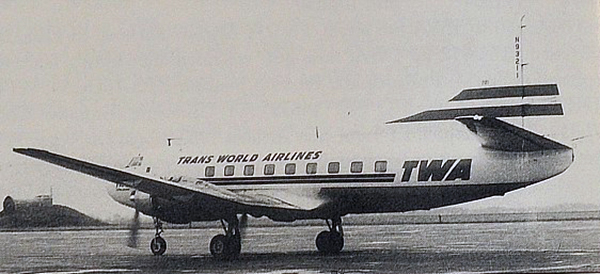
Few minutes after takeoff from Cincinnati-Greater Cincinnati Airport runway 22, while climbing to a height of 700-900 feet, the pilot-in-command started a turn to the right when the aircraft collided with a DC-3 owned by Castleton Inc. Registered N999B, the aircraft was piloted by a crew of two from Battle Creek to Miami with an intermediate stop at Lexington. It appears that the left wing of the DC-3 hit the right engine of the Martin. Following the collision, both aircraft went into a dive and crashed in a snow covered field and a wooded area located in the suburb of Cincinnati. Both aircraft were completely destroyed upon impact and all 15 occupants on both airplanes were killed.
Probable cause:
The probable cause of this accident was operation of the DC-3 in the control zone as unknown traffic, without clearance, very close to the base of, or in, the overcast.
Final Report: