Crash of a Boeing KC-97G-27-BO Stratotanker near Gray Mountain: 16 killed

Date & Time: Oct 29, 1957 at 0830 LT
Type of aircraft:
Operator:
Registration:
52-2711
Flight Phase:
Survivors:
No
Site:
Schedule:
Walker - Walker
MSN:
16733
YOM:
1952
Crew on board:
4
Crew fatalities:
Pax on board:
12
Pax fatalities:
Other fatalities:
Total fatalities:
16
Circumstances:
The crew left Walker AFB at 0630LT for a nine hours training mission consisting of a low level survey flight. After it overflew the small town of Gray Mountain at a height of about 60 feet in marginal weather conditions, the four engine aircraft hit the slope of a mountain and crashed about 35 miles of Flagstaff. The aircraft disintegrated on impact and all 16 occupants were killed. At the time of the accident, the visibility was limited due to low clouds.

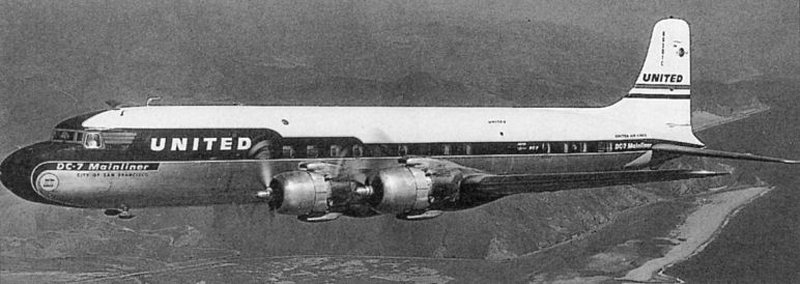
Crash of a Douglas DC-7 in the Grand Canyon: 58 killed

Date & Time: Jun 30, 1956 at 1032 LT
Type of aircraft:
Operator:
Registration:
N6324C
Flight Phase:
Survivors:
No
Site:
Schedule:
Los Angeles – Chicago – New York
MSN:
44288
YOM:
1955
Flight number:
UA718
Crew on board:
5
Crew fatalities:
Pax on board:
53
Pax fatalities:
Other fatalities:
Total fatalities:
58
Captain / Total flying hours:
16492
Captain / Total hours on type:
1238.00
Copilot / Total flying hours:
4540
Copilot / Total hours on type:
230
Aircraft flight hours:
5115
Circumstances:
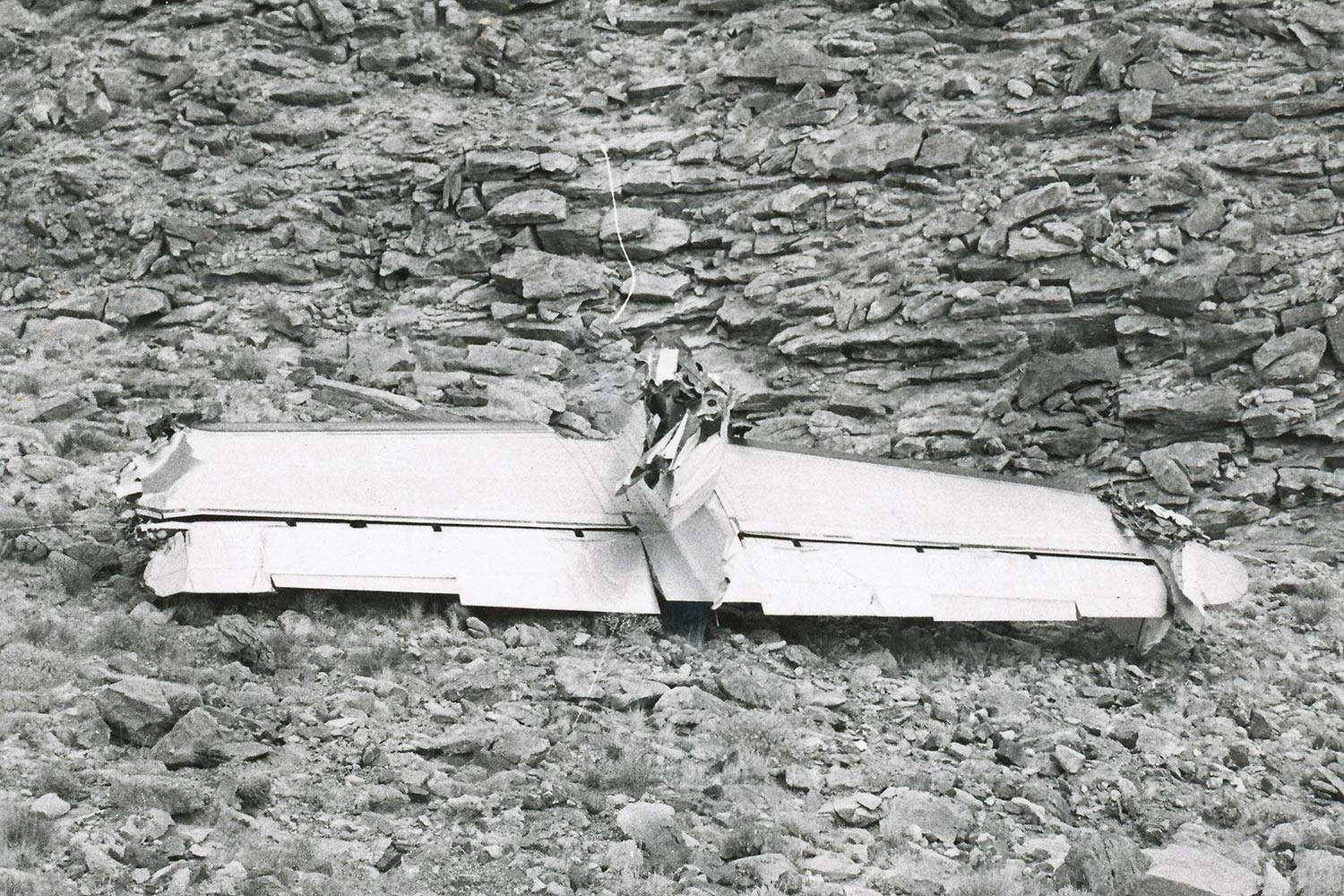
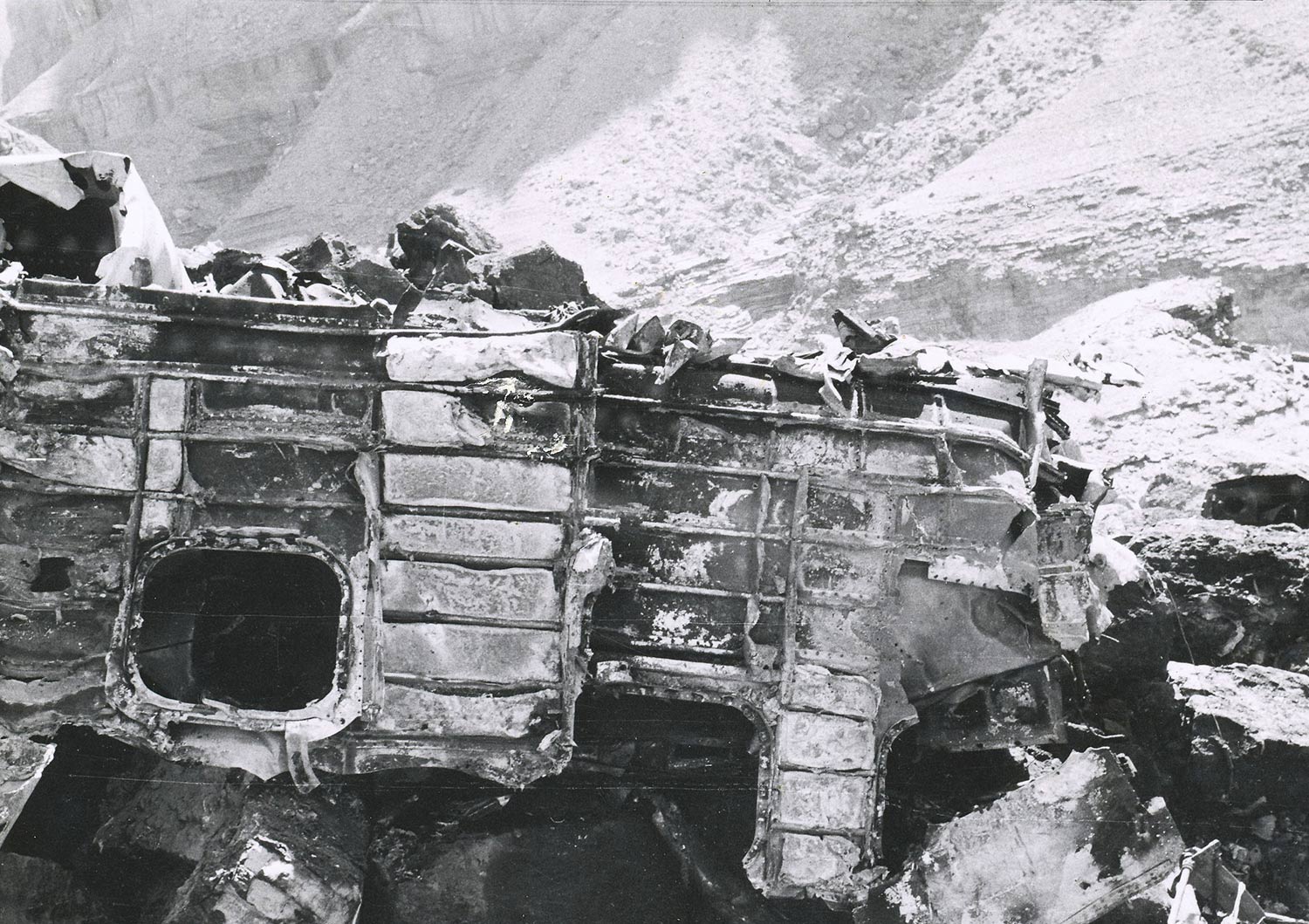
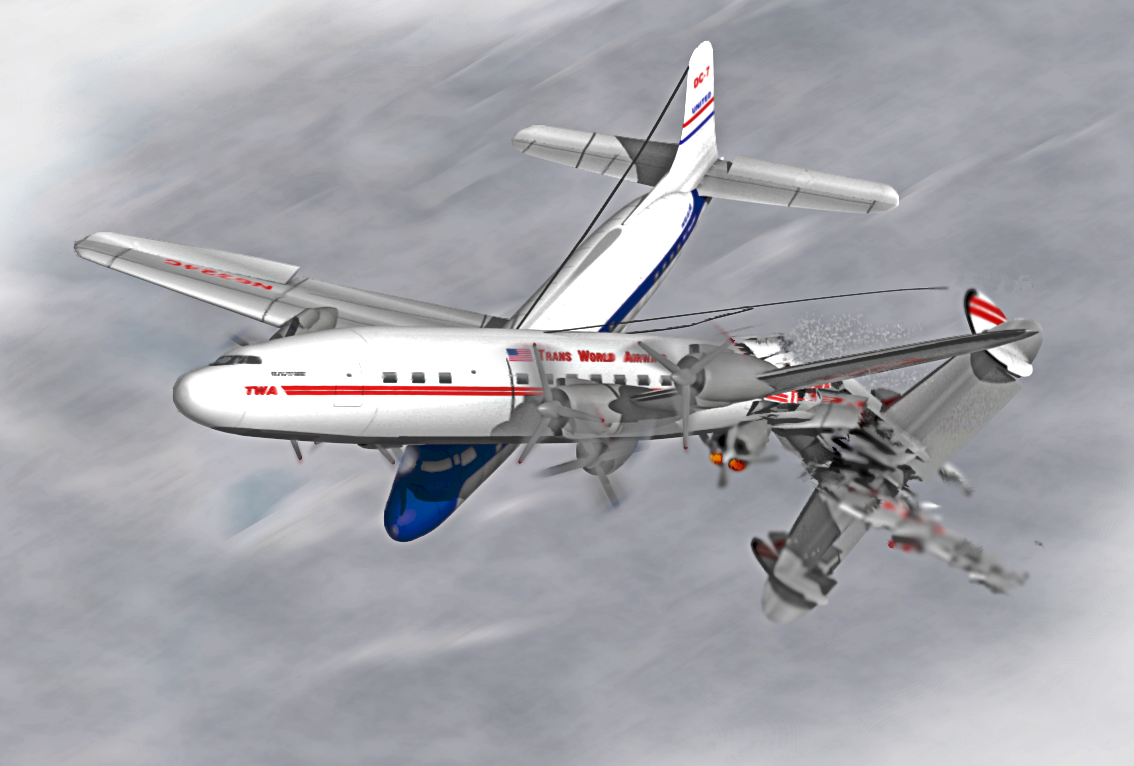
United Air Lines Flight 718 was regularly scheduled from Los Angeles to Chicago, Illinois. On June 30, 1956, it took off from runway 25L (left) of the Los Angeles International Airport at 0904 (three minutes after TWA 2). Flight 718 was on an IFR flight plan to Chicago via Green Airway 5 Palm Springs inter-section, direct Needles, direct Painted Desert, direct Durango, direct Pueblo, direct St. Joseph. Victor Airway 116 Joliet, Victor Airway 84 Chicago Midway Airport. The flight plan proposed a .JPG"> airspeed of 288 knots., a cruising altitude of 21,000 feet, and a departure time of 0845. The flight crew consisted of Captain Robert F. Shirley, First Officer Robert W. Harms, Flight Engineer Gerard Flore, and Stewardesses Nancy L. Kemnitz and Margaret A. Shoudt. Flight preparations and dispatch of United 718 were routine and the aircraft departed with 3,850 gallons of fuel. The company load manifest showed the gross weight of the aircraft at takeoff to be 105,835 pounds, which was less than the maximum allowable of 114,060 pounds; the latter weight was restricted from a maximum of 122,200 pounds for the aircraft because of a landing limitation at Chicago. The load was properly distributed with respect to the center of gravity limitations of the aircraft. After takeoff the flight contacted the Los Angeles tower radar controller, who vectored it through the overcast over the same departure course as TWA 2. United 718 reported "on top" and changed to Los Angeles Center frequency for its en route clearance. This corresponded to the flight plan as filed; however, the controller specified that the climb to assigned altitude be in VER conditions. Flight 718 made position reports to Aeronautical Radio, Inc., which serves under contract as United company radio. It reported passing over Riverside and later over Palm Springs intersection. The latter report indicated that United 718 was still climbing to 21,000 and estimated it would reach Needles at 1000 and the Painted Desert at 1034. At approximately 0958 United 718 made a position report to the CAA communications station located at Needles. This report stated that the flight was over Needles at 0958, at 21,000 feet, and estimated the Painted Desert at 1031, with Durango next. At 1031 an unidentified radio transmission was heard by Aeronautical Radio communicators at Salt Lake City and San Francisco. They were not able to understand the message when it was received but it was later determined by playing back the recorded transmission that the message was from United 718. Context was interpreted as: "Salt Lake, United 718 . . . ah . . . we're going in."
Probable cause:
The Board determines that the probable cause of this mid-air collision was that the pilots did not see each other in time to avoid the collision. It is not possible to determine why the pilots did not see each other, but the evidence suggests that it resulted from any one or a combination of the following factors: Intervening clouds reducing time for visual separation, visual limitations due to cockpit visibility, and preoccupation with normal cockpit duties, preoccupation with matters unrelated to cockpit duties such as attempting to provide the passengers with a more scenic view of the Grand Canyon area, physiological limits to human vision reducing the time opportunity to see and avoid the other aircraft, or insufficiency of en route air traffic advisory information due to inadequacy of facilities and lack of personnel in air traffic control. The following findings were reported:
- Approaching Daggett, TWA 2 requested its company radio to obtain 21,000 feet as an assigned altitude, or 1,000 on top,
- Company radio requested 21,000 feet IFR from ARTC. This vas denied by ARTC. Request was then made for 1,000 on top. This was approved and clearance issued. The flight climbed to and proceeded at 21,000 feet,
- As an explanation for the denial of 21,000 feet, TWA 2 was furnished pertinent information on UA718,
- The last position report by each flight indicated it was at that time at 21,000, estimating the Painted Desert line of position at 1031,
- The Salt Lake controller possessed both position reports at approximately 1013, at which time both flights were in uncontrolled airspace,
- Traffic control services are not provided in the uncontrolled airspace and according to existing Air Traffic Control policies and procedures the Salt Lake controller was not required to issue traffic information; none was issued voluntarily,
- A general overcast with some breaks existed at 15,000 feet in the Grand Canyon area,
- Several cumulus buildups extending above flight level existed; one was nearly over Grand Canyon Village and others were north and northeast in the area of the collision,
- The collision occurred at approximately 1031 in visual flight rule weather conditions at about 21,000 feet,
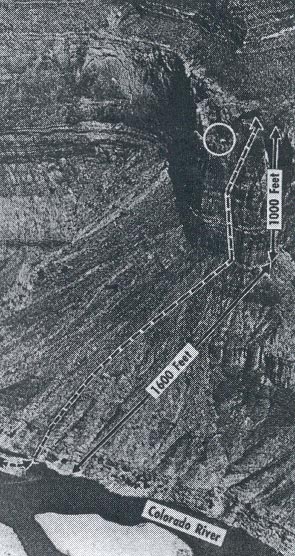
- The collision in space was above a position a short distance west of the TWA wreckage area, 17 miles west of or approximately 3-1/2 minutes' flying time from the Painted Desert line of position,
- Under visual flight rule weather conditions it is the pilot's responsibility to maintain separation from other aircraft,
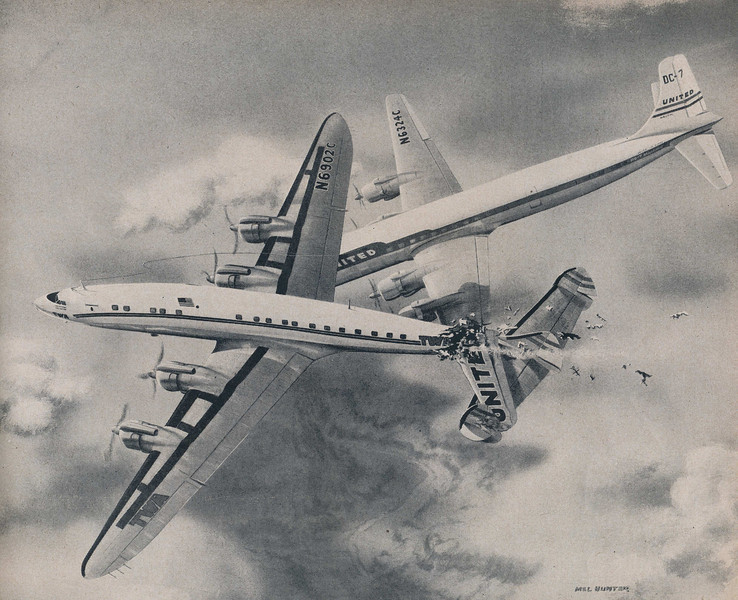
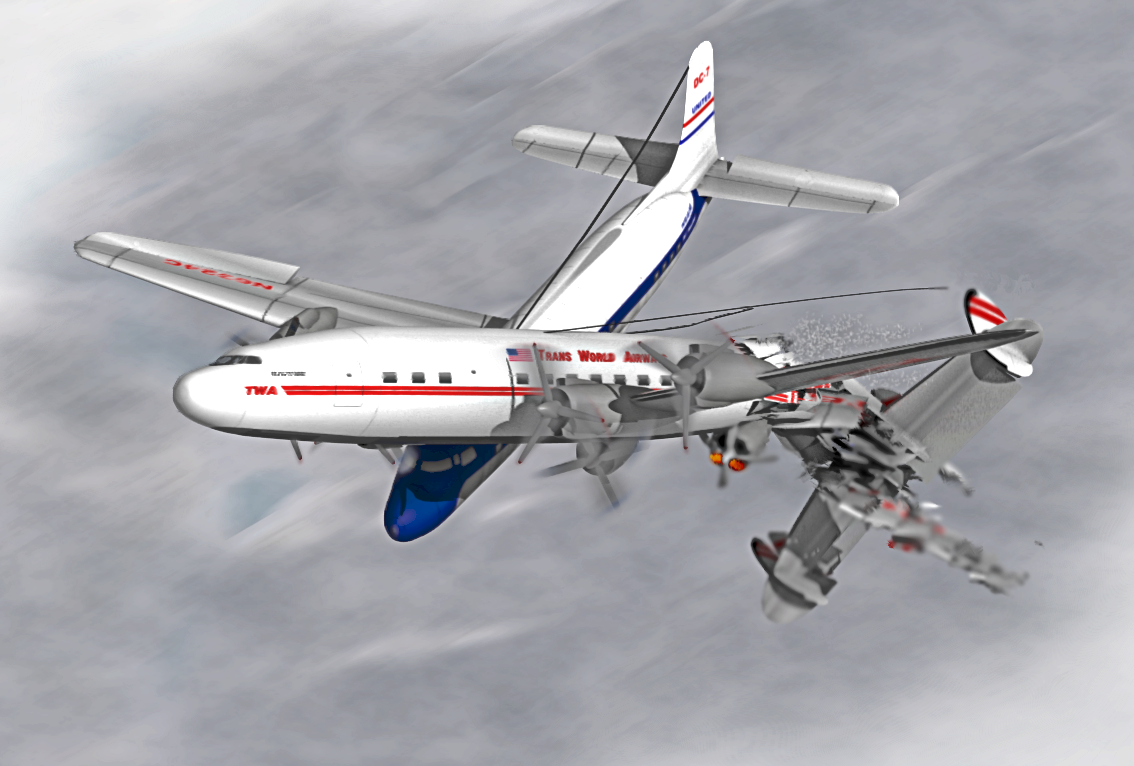
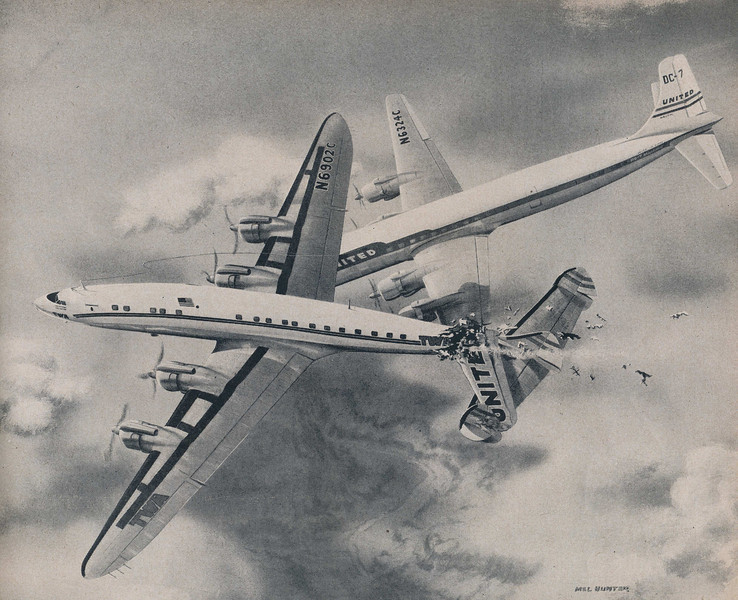
- At impact the aircraft relative to each other converged at an angle of about 25 degrees with the DC-7 to the right of the L-1049. The DC-7 was rolled about 20 degrees right wing down and pitched about 10 degrees nose down relative to the L-1049,
- There was no evidence found to indicate that malfunction or failure of the aircraft or their components was a factor in the accident.
Final Report:

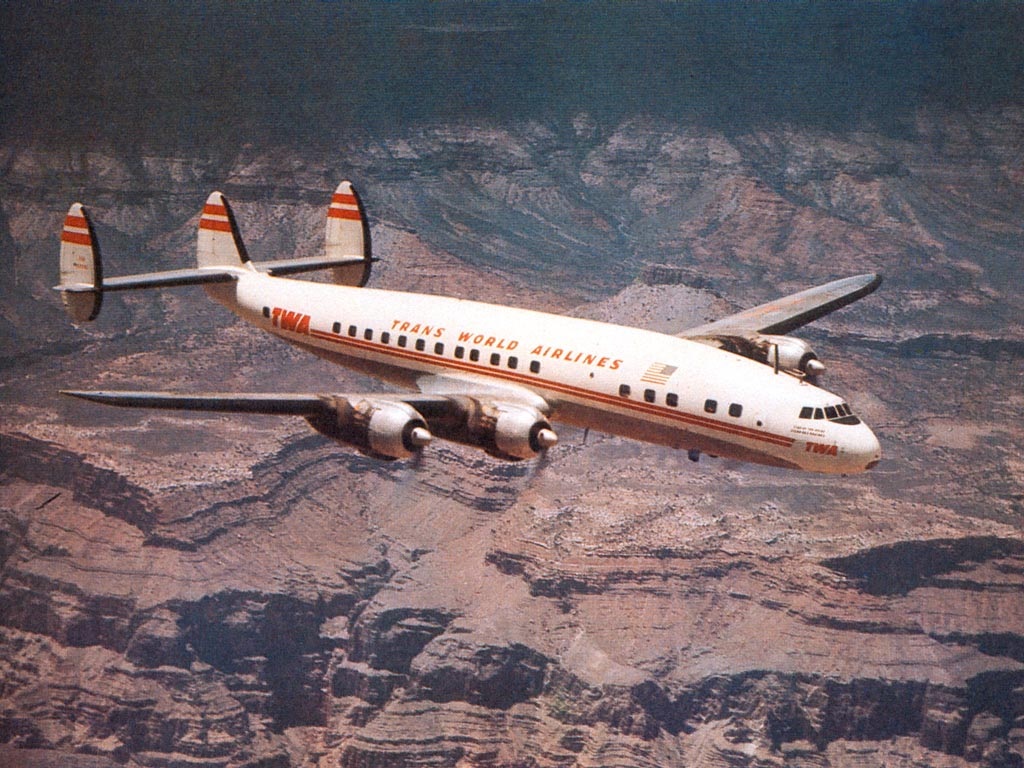
Crash of a Lockheed L-1049 Super Constellation in the Grand Canyon: 70 killed

Date & Time: Jun 30, 1956 at 1031 LT
Operator:
Registration:
N6902C
Flight Phase:
Survivors:
No
Site:
Schedule:
Los Angeles – Kansas City – Washington DC
MSN:
4016
YOM:
1952
Flight number:
TW002
Crew on board:
6
Crew fatalities:
Pax on board:
64
Pax fatalities:
Other fatalities:
Total fatalities:
70
Captain / Total flying hours:
14922
Captain / Total hours on type:
7208.00
Copilot / Total flying hours:
6976
Copilot / Total hours on type:
825
Aircraft flight hours:
10519
Circumstances:
On June 30, 1956, at 0901, Trans World Airlines Flight 2, a regularly scheduled passenger service, took off from runway 25 of the Los Angeles Inter-national Airport. Flight 2 was on an instrument flight rules (IFR) flight plan from Los Angeles, California, to Kansas City, Missouri, via Green Airway 5, Amber Airway 2, Daggett direct Trinidad, direct Dodge City, Victor Airway 10 Kansas City. The flight plan also proposed a cruising altitude of 19,000 feet, a .JPG"> airspeed of 270 knots, and a departure time of 0830. The Trans World flight crew consisted of Captain Jack S. Gandy, Copilot James H. Ritner, Flight Engineer Forrest D. Breyfogle, night Engineer Harry H. Allen (aboard as an additional crew member), and Hostesses Tracine E. Armbruster and Beth E. Davis. Preparations for Flight 2 were routine except that departure was delayed a few minutes by minor maintenance on the aircraft. The flight was dispatched with 3,300 gallons of fuel and the load manifest showed the gross weight of the aircraft at takeoff was 108,115 pounds, well, under the maximum allowable of 113,200 pounds. The load was properly distributed with respect to center of gravity limitations of the aircraft. As requested. the flight, after takeoff, contacted the Los Angeles tower radar departure controller, and was vectored through an overcast which existed in the Los Angeles area. After reporting "on top" (2,400 feet) the flight switched to Los Angeles Air Route Traffic Control Center (referred to as Los Angeles Center) frequency, 118.9 mcs., for its en route clearance. This clearance specified the routing as filed in the flight plan, however, the controller specified that the flight climb to 19,000 feet in VFR conditions. Immediately thereafter TWA 2 asked for a routing change to Daggett via Victor Airway 210. This was approved in a routine manner. At 0921, through company radio communications, Flight 2 reported that it was approaching Daggett and requested a change in flight plan altitude assignment from 19,000 to 21,000 feet. ARTC (Los Angeles Center) advised they were unable to approve the requested altitude because of traffic (United Air Lines Flight 718). Flight 2 requested a clearance of 1,000 feet on top. Ascertaining from the radio operator that the flight was then at least 1,000 on top, ARTC cleared the flight. At 0959 Trans World 2 reported its position through company radio at Las Vegas. It reported that it had passed Lake Mohave at 0955, was 1,000 on top at 21,000 feet, and estimated it would reach the 321-degree radial of the Winslow omni range station (Painted Desert) at 1031 with Farmington next. This was the last radio communication with the flight.
Probable cause:
The Board determines that the probable cause of this mid-air collision was that the pilots did not see each other in time to avoid the collision. It is not possible to determine why the pilots did not see each other, but the evidence suggests that it resulted from any one or a combination of the following factors: Intervening clouds reducing time for visual separation, visual limitations due to cockpit visibility, and preoccupation with normal cockpit duties, preoccupation with matters unrelated to cockpit duties such as attempting to provide the passengers with a more scenic view of the Grand Canyon area, physiological limits to human vision reducing the time opportunity to see and avoid the other aircraft, or insufficiency of en route air traffic advisory information due to inadequacy of facilities and lack of personnel in air traffic control. The following findings were reported:
- Approaching Daggett, TWA 2 requested its company radio to obtain 21,000 feet as an assigned altitude, or 1,000 on top,
- Company radio requested 21,000 feet IFR from ARTC. This vas denied by ARTC. Request was then made for 1,000 on top. This was approved and clearance issued. The flight climbed to and proceeded at 21,000 feet,
- As an explanation for the denial of 21,000 feet, TWA 2 was furnished pertinent information on UA718,
- The last position report by each flight indicated it was at that time at 21,000, estimating the Painted Desert line of position at 1031,
- The Salt Lake controller possessed both position reports at approximately 1013, at which time both flights were in uncontrolled airspace,
- Traffic control services are not provided in the uncontrolled airspace and according to existing Air Traffic Control policies and procedures the Salt Lake controller was not required to issue traffic information; none was issued voluntarily,
- A general overcast with some breaks existed at 15,000 feet in the Grand Canyon area,
- Several cumulus buildups extending above flight level existed; one was nearly over Grand Canyon Village and others were north and northeast in the area of the collision,
- The collision occurred at approximately 1031 in visual flight rule weather conditions at about 21,000 feet,
- The collision in space was above a position a short distance west of the TWA wreckage area, 17 miles west of or approximately 3-1/2 minutes' flying time from the Painted Desert line of position,
- Under visual flight rule weather conditions it is the pilot's responsibility to maintain separation from other aircraft,
- At impact the aircraft relative to each other converged at an angle of about 25 degrees with the DC-7 to the right of the L-1049. The DC-7 was rolled about 20 degrees right wing down and pitched about 10 degrees nose down relative to the L-1049,
- There was no evidence found to indicate that malfunction or failure of the aircraft or their components was a factor in the accident.

Final Report:

Crash of a De Havilland L-20A Beaver near Safford: 1 killed

Date & Time: Aug 25, 1955
Type of aircraft:
Operator:
Registration:
52-6100
Flight Phase:
Flight Type:
Survivors:
No
Site:
MSN:
473
YOM:
1953
Location:
Crew on board:
1
Crew fatalities:
Pax on board:
0
Pax fatalities:
Other fatalities:
Total fatalities:
1
Circumstances:
Crashed in unknown circumstances in a mountainous area located about 13 miles north of Safford. The pilot Wilfred P. Champlain, sole on board, was killed.

Crash of a Convair T-29A-CO in Tucson: 4 killed

Date & Time: Nov 4, 1954
Type of aircraft:
Operator:
Registration:
50-0189
Flight Type:
Survivors:
Yes
MSN:
219
YOM:
1951
Location:
Crew on board:
3
Crew fatalities:
Pax on board:
12
Pax fatalities:
Other fatalities:
Total fatalities:
4
Circumstances:
Shortly after takeoff from Tucson Airport, while climbing by night, the crew informed ATC about an engine failure and received the permission to return for an emergency landing. While completing a last turn at low height, the aircraft hit power cables and crashed near the runway threshold. Four occupants were killed while 11 others were injured.
Probable cause:
Engine failure during initial climb.

Crash of a Boeing B-50A-35-BO Superfortress on Picacho Peak: 2 killed

Date & Time: Aug 20, 1953 at 0205 LT
Type of aircraft:
Operator:
Registration:
47-116
Flight Phase:
Flight Type:
Survivors:
Yes
Site:
Schedule:
Davis-Monthan - Davis-Monthan
MSN:
15800
YOM:
1947
Location:
Crew on board:
12
Crew fatalities:
Pax on board:
0
Pax fatalities:
Other fatalities:
Total fatalities:
2
Circumstances:
Few minutes after takeoff from Davis-Monthan AFB, while cruising at an altitude of 15,000 feet, the crew encountered an unexpected situation. Immediately, the captain ordered his crew to bail out and all 12 occupants abandoned the aircraft that dove into the ground and crashed in a huge explosion on the slope of the Picacho Peak, southeast of Picacho. The airplane disintegrated on impact and debris were found on a wide area. Ten crew members were injured while two others were killed.
Crew:
Cpt John D. Winters, pilot,
1st Lt William H. Montgomery, copilot,
William Reale, flight engineer,
Cpt John A. Barnes, navigator,
S/Sgt David Fry, radio operator,
William P. Cooke, gunner,
A1c Richard W. Dickey, gunner
A3c Charles R. Stewart, gunner,
Cpt Charles D. Bostick, †
S/Sgt Herbert G. Emberton, †
Cpt Lee F. Aubechon 1.
Probable cause:
It was reported that a sudden and heavy fire erupted on the right wing, maybe from an engine.

Crash of Boeing B-50A-25-BO Superfortress in the San Juan Mountains: 8 killed

Date & Time: Jul 17, 1953
Type of aircraft:
Operator:
Registration:
46-049
Flight Phase:
Flight Type:
Survivors:
Yes
Site:
Schedule:
Williams - Williams
MSN:
15769
YOM:
1947
Crew on board:
11
Crew fatalities:
Pax on board:
0
Pax fatalities:
Other fatalities:
Total fatalities:
8
Circumstances:
The crew was performing a local training flight from Williams AFB. En route, the heavy bomber collided with a second USAF Boeing B-50 registered 47-101. Following the collision, the crew of 47-101 was able to land safely while 46-049 went into a dive. Four crew members parachuted to safety, one was killed in the parachute attempt and seven were unable to bail out and were killed when the plane crashed in the San Juan Mountains, south-east of Chandler. The exact circumstances of the collision remains unclear.

Crash of a Douglas VC-47D on Mt Armer: 28 killed

Date & Time: Dec 30, 1951 at 1534 LT
Operator:
Registration:
44-76266
Flight Phase:
Flight Type:
Survivors:
No
Site:
Schedule:
San Rafael – Williams – San Angelo – New York
MSN:
15850/32598
YOM:
1945
Crew on board:
4
Crew fatalities:
Pax on board:
24
Pax fatalities:
Other fatalities:
Total fatalities:
28
Captain / Total flying hours:
1969
Captain / Total hours on type:
216.00
Copilot / Total flying hours:
1062
Circumstances:
The aircraft was carrying 19 cadets of the West Point Academy, five passengers and a crew of four from San Rafael to New York with intermediate stops in Williams AFB (Chandler, Arizona) and San Angelo, Texas. While approaching Phoenix from the northeast at an altitude of 8,000 feet, the pilot received the permission to descent to 6,000 feet when ATC requested his position in relation to Mt White Tank. The pilot said he overflew this mountain five minutes ago but the controller was convinced this was not the case. While cruising in marginal weather conditions, the aircraft hit the slope of a peak located in the Armer mountain range, about 66 miles northeast of Williams AFB. The wreckage was found two days later 100 feet from the summit and all 28 occupants were killed.
Crew:
Maj Lester Carlson, pilot,
1st Lt Walter Boback, copilot,
Sgt Jeane Garafalo 1.
Passengers:
William Pedrick,
Hilmar G. Manning,
Robert W. Berry Jr.,
Leonard G. De Vilbiss III,
William E. Melancon Jr.,
Harry K. Roberts Jr.,
Guy L. McNeil Jr.,
Nelson S. Byers,
Francis C. Camilli,
Noel S. Perrin,
Alan C. Abrahamson,
William F. Sharp,
Karl F. Glasbrenner Jr.,
Ward B. Keiler,
Kenneth MacArthur,
Ronald E. Rounds,
Hugh R. Wilson,
Herman Archer,
Maurice J. Mastelotto
5 civilians.
Probable cause:
Link to the USAF Accident report:
http://www.aviationarchaeology.com/C47rpt.htm

Crash of a Douglas C-47B-15-DK near Winslow

Date & Time: Jan 10, 1951
Operator:
Registration:
43-49384
Flight Phase:
Flight Type:
Survivors:
Yes
Site:
MSN:
15200/26645
YOM:
1944
Location:
Crew on board:
0
Crew fatalities:
Pax on board:
0
Pax fatalities:
Other fatalities:
Total fatalities:
0
Circumstances:
An engine failed in flight, forcing the crew to abandon the aircraft and to bail out. Out of control, the airplane dove into the ground and crashed in a desert area located in the region of Winslow. The aircraft was destroyed upon impact while all crew members were found uninjured.
Probable cause:
Engine failure.

Crash of a North American B-25J-35-NC Mitchell near Coolidge

Date & Time: Nov 28, 1950
Operator:
Registration:
45-8853
Flight Phase:
Flight Type:
Survivors:
Yes
MSN:
108-47704
Crew on board:
0
Crew fatalities:
Pax on board:
0
Pax fatalities:
Other fatalities:
Total fatalities:
0
Circumstances:
While performing a training flight, the crew encountered an unexpected situation and decided to bail out and to abandon the aircraft that dove into the ground and crashed in a field located three miles west of Coolidge. All crew members were uninjured while the aircraft was destroyed.