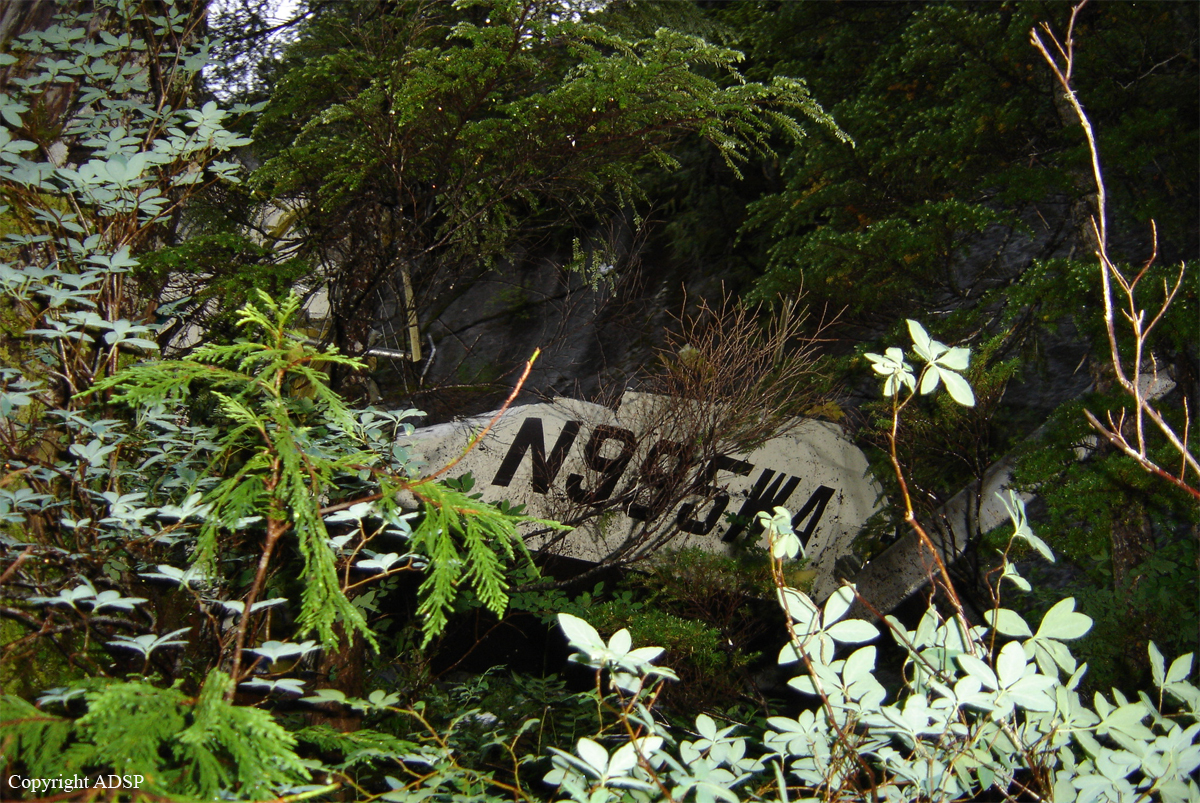
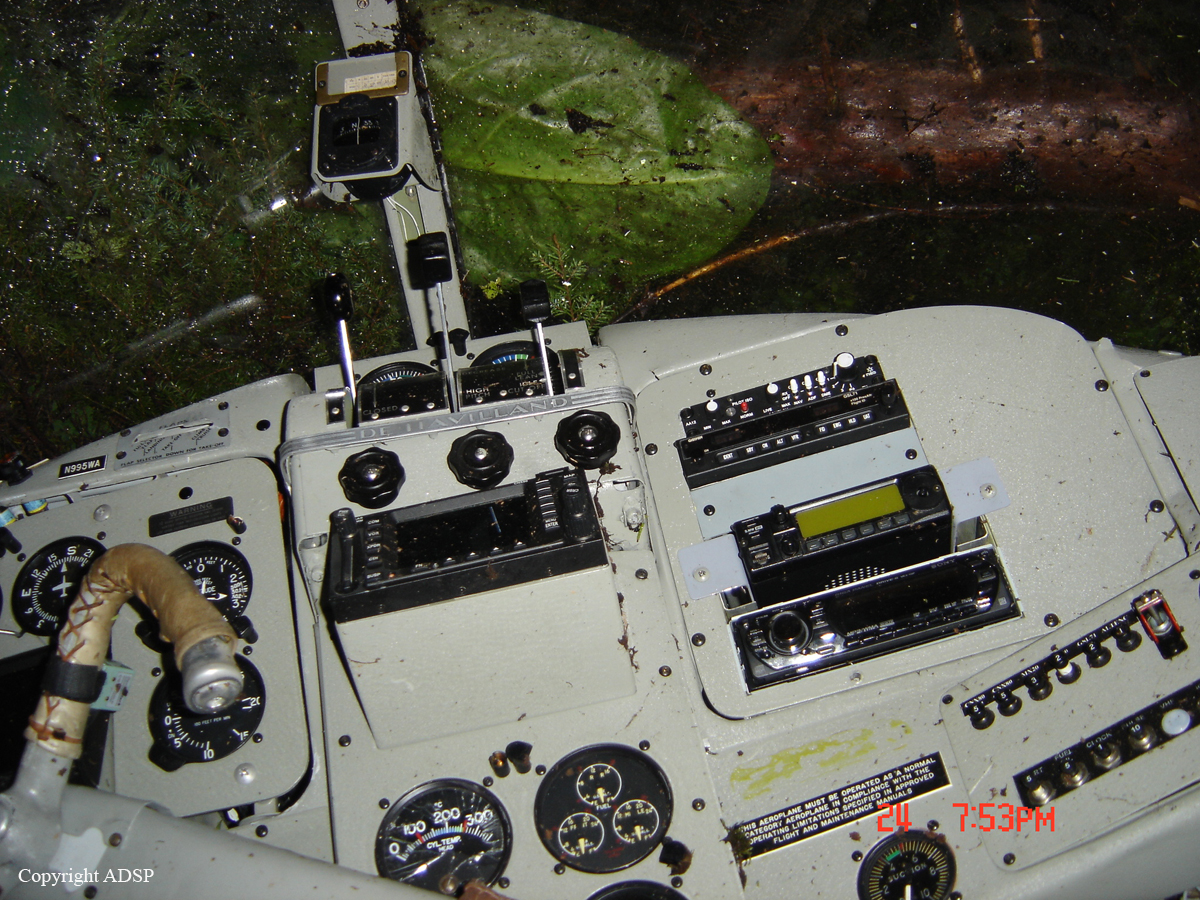
Crash of a De Havilland DHC-2 Beaver in Ketchikan: 5 killed

Date & Time: Jul 24, 2007 at 1405 LT
Type of aircraft:
Operator:
Registration:
N995WA
Flight Phase:
Survivors:
No
Schedule:
Ketchikan - Ketchikan
MSN:
1100
YOM:
1957
Crew on board:
1
Crew fatalities:
Pax on board:
4
Pax fatalities:
Other fatalities:
Total fatalities:
5
Captain / Total flying hours:
5273
Captain / Total hours on type:
178.00
Aircraft flight hours:
17356
Circumstances:
The air taxi float-equipped airplane was the second of three airplanes on an air tour flight over a remote scenic area in southeast Alaska. As the flight of three airplanes flew into mountainous terrain, the first pilot reported low clouds, with rain and fog, which required him to descend to 700 feet msl to maintain VFR flight conditions. The pilot of the third tour airplane, which was about 5 minutes behind the accident airplane, stated that as he approached the area around the accident site, he encountered "a wall of weather" which blocked his intended flight route, and he turned around. The accident airplane's fragmented wreckage was discovered in an area of steep, tree-covered terrain, about 2,500 feet msl, near the area where the third airplane turned around. The NTSB discovered no mechanical problems with the airplane during postaccident inspections. An NTSB weather study revealed instrument meteorological conditions in the area at the time of the accident. Photographs recovered from a passenger's camera depicted deteriorating weather conditions as the flight progressed. A charter boat captain, who had seen numerous float-equipped tour airplanes operating in adverse weather conditions, called the local FAA Flight Standards District Office (FSDO) 9 days before the accident, to report his sightings. According to the FAA, no specific tour operator could be identified during their ensuing investigation, and no enforcement actions or additional surveillance of any operators was initiated. According to the FSDO manager, the local FSDO had lost inspectors due to downsizing. He reported they had not attempted to observe operators' adherence to weather minimums via ground-based viewing locations along the heavily traveled tour routes, and noted that FAA inspectors used to purchase air tour tickets to provide en route, on-board surveillance, but had not done so for approximately the last 10 years. He noted that additional inspector assistance from other FAA offices was not requested
Probable cause:
The pilot's decision to continue under visual flight rules into an area of instrument metrological conditions. Contributing to the accident was the pilot's inadequate weather evaluation, and the FAA's inadequate surveillance of the commercial air tour operator.
Final Report:
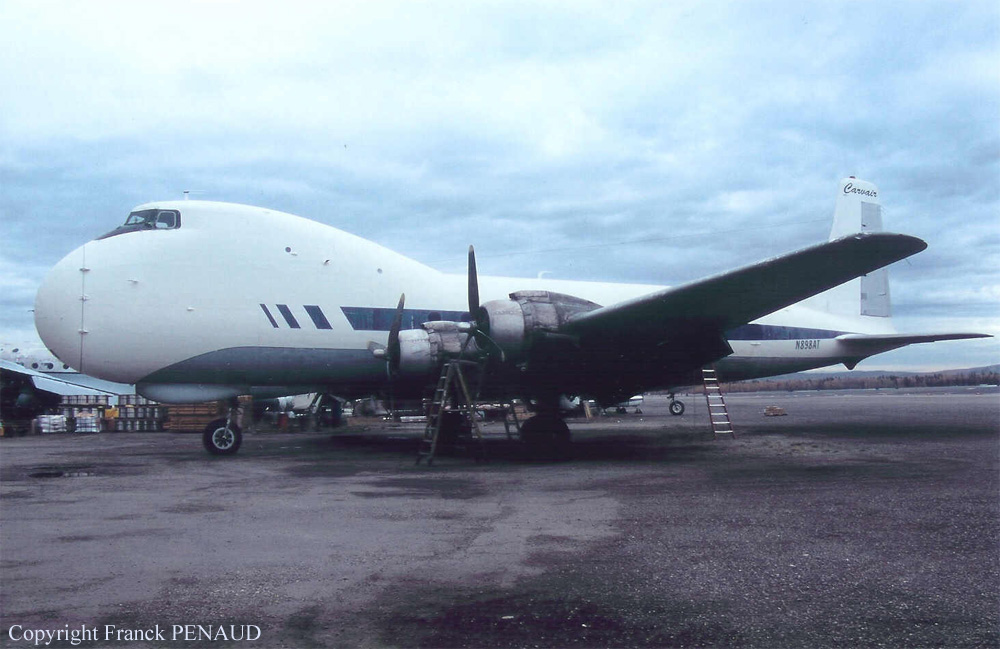
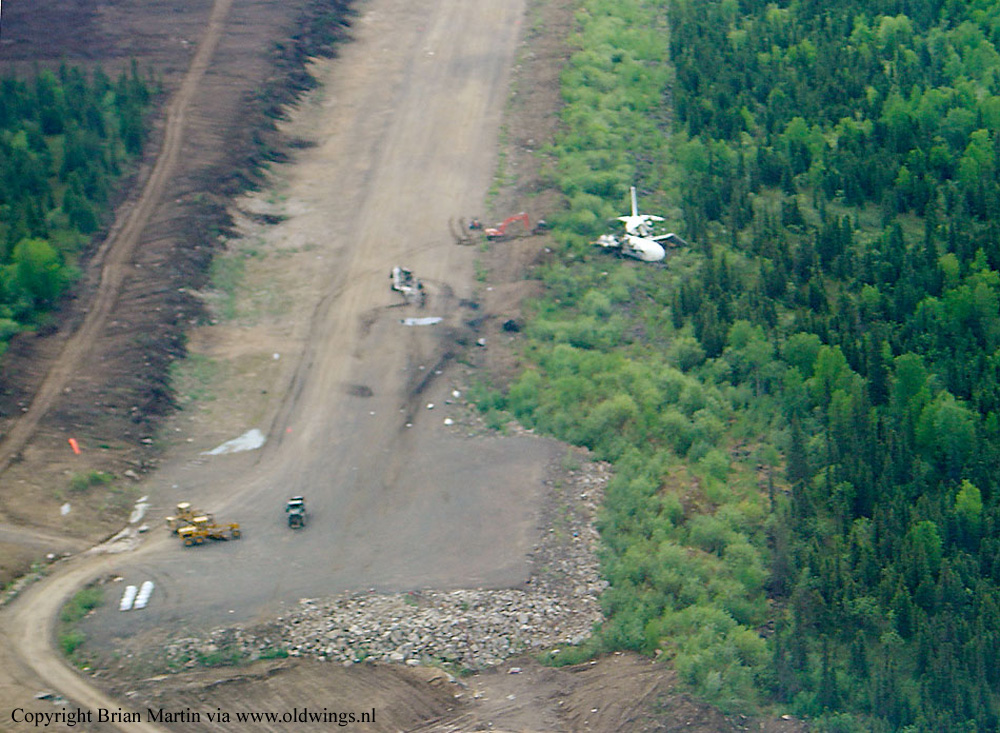
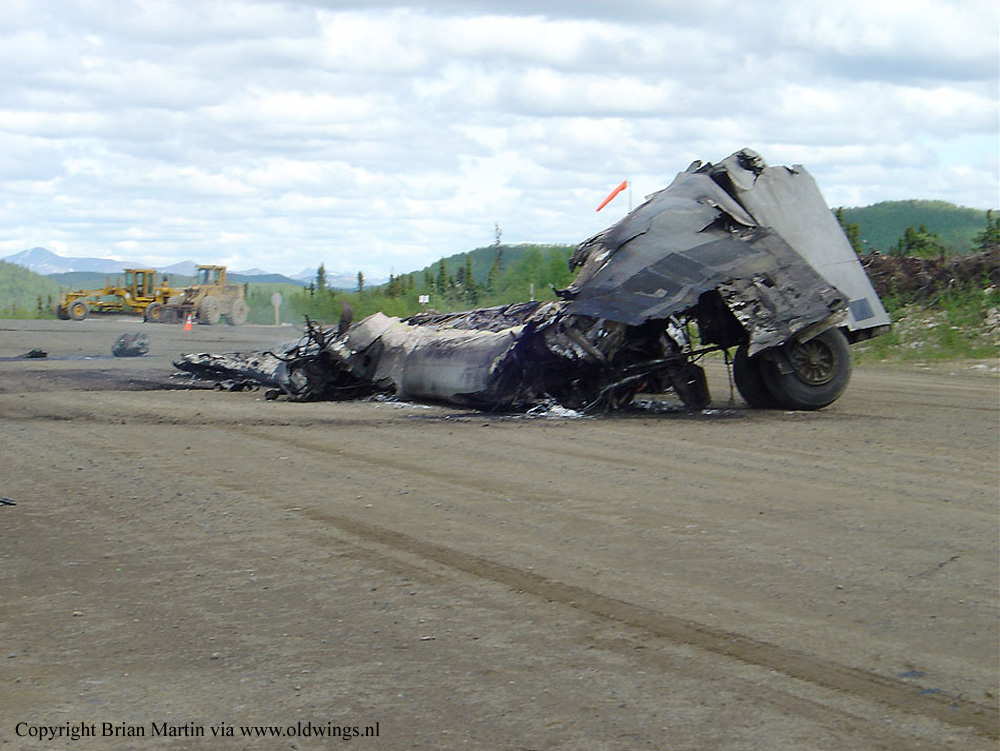
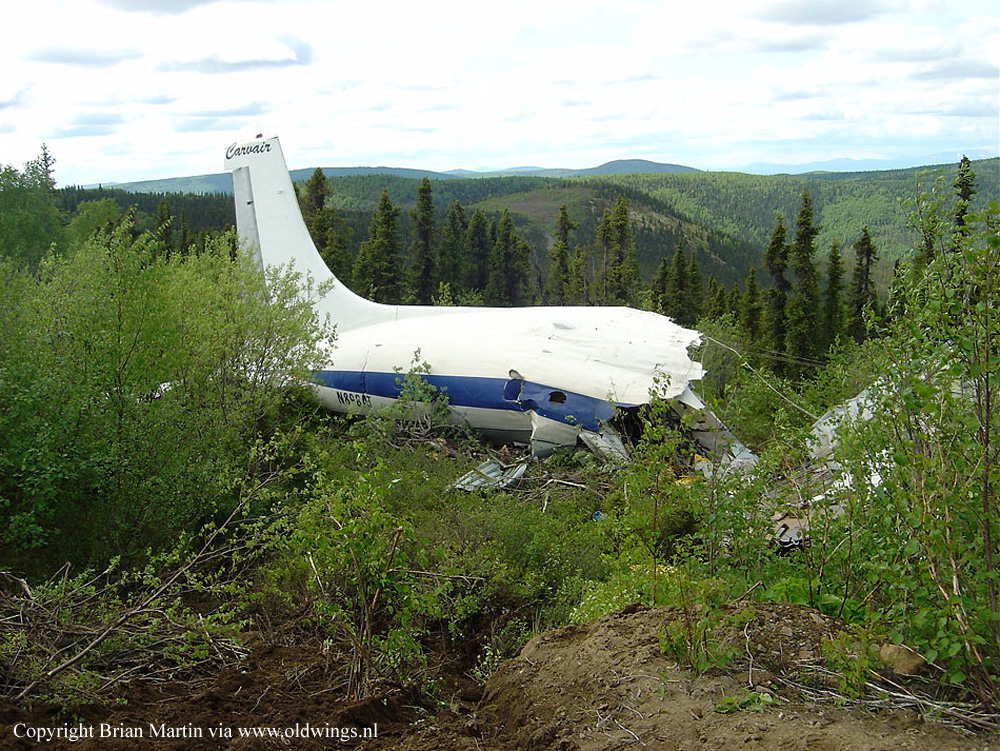
Crash of a Carvair ATL-98 in Nixon Fork Mine

Date & Time: May 30, 2007 at 1200 LT
Operator:
Registration:
N898AT
Flight Type:
Survivors:
Yes
Schedule:
Fairbanks - Nixon Fork Mine
MSN:
42994
YOM:
1946
Crew on board:
2
Crew fatalities:
Pax on board:
0
Pax fatalities:
Other fatalities:
Total fatalities:
0
Captain / Total flying hours:
21658
Captain / Total hours on type:
13600.00
Aircraft flight hours:
55753
Circumstances:
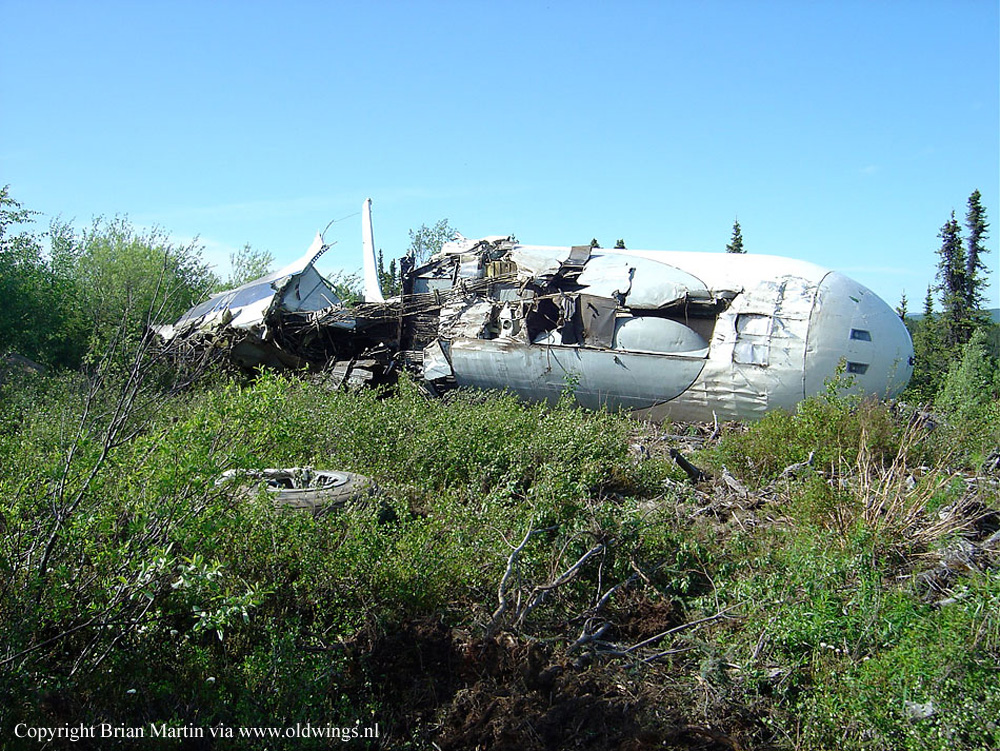
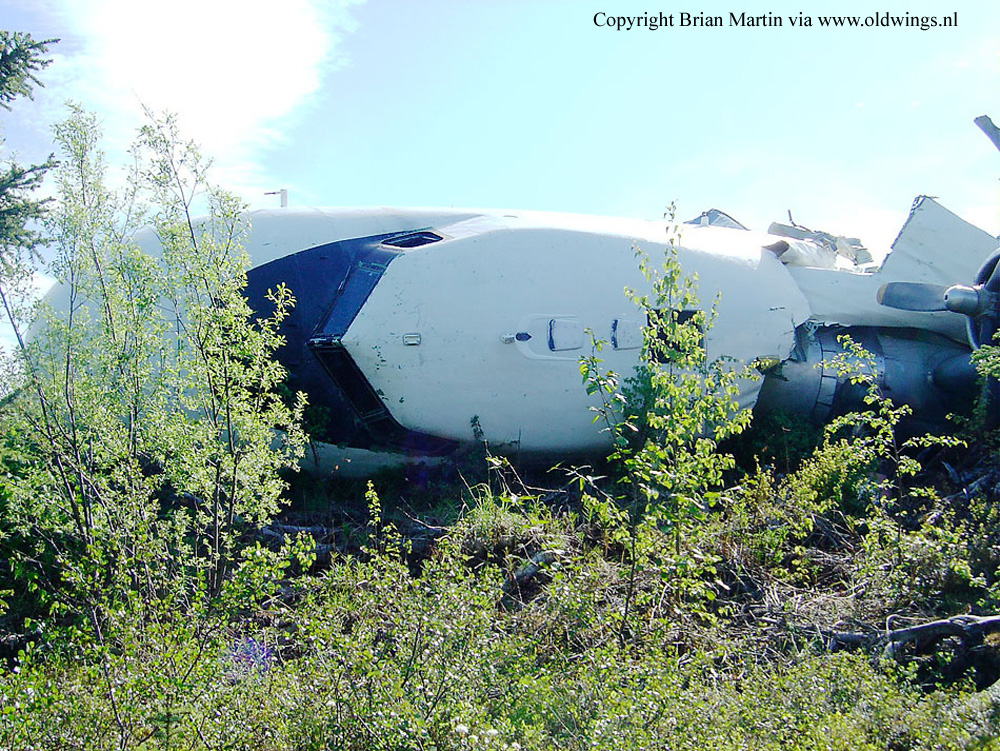
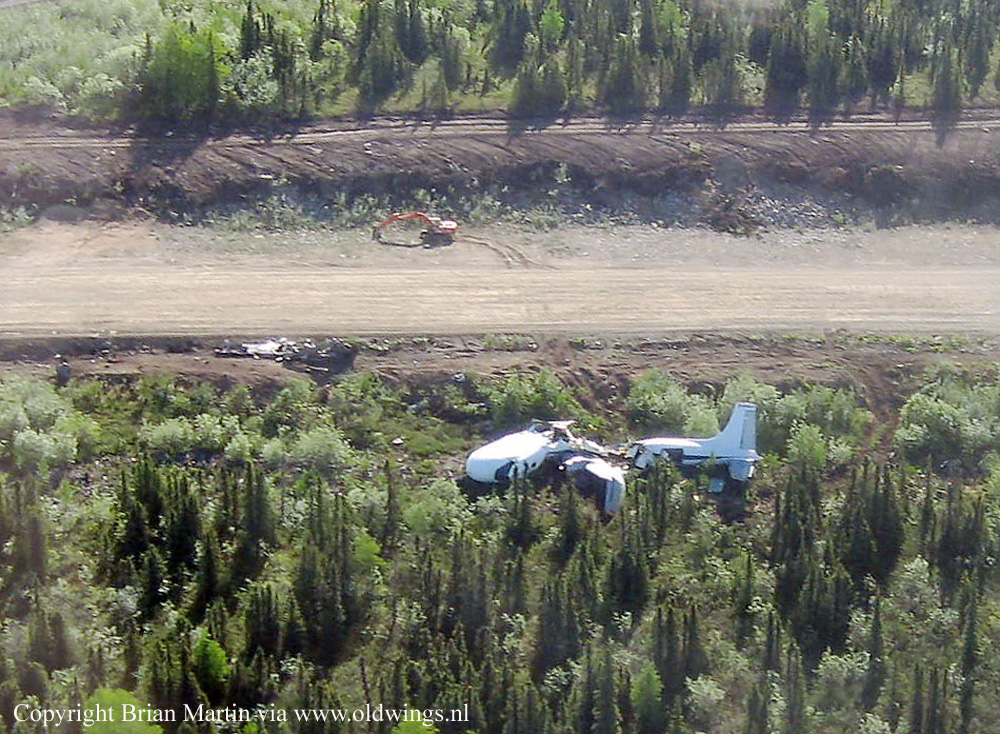
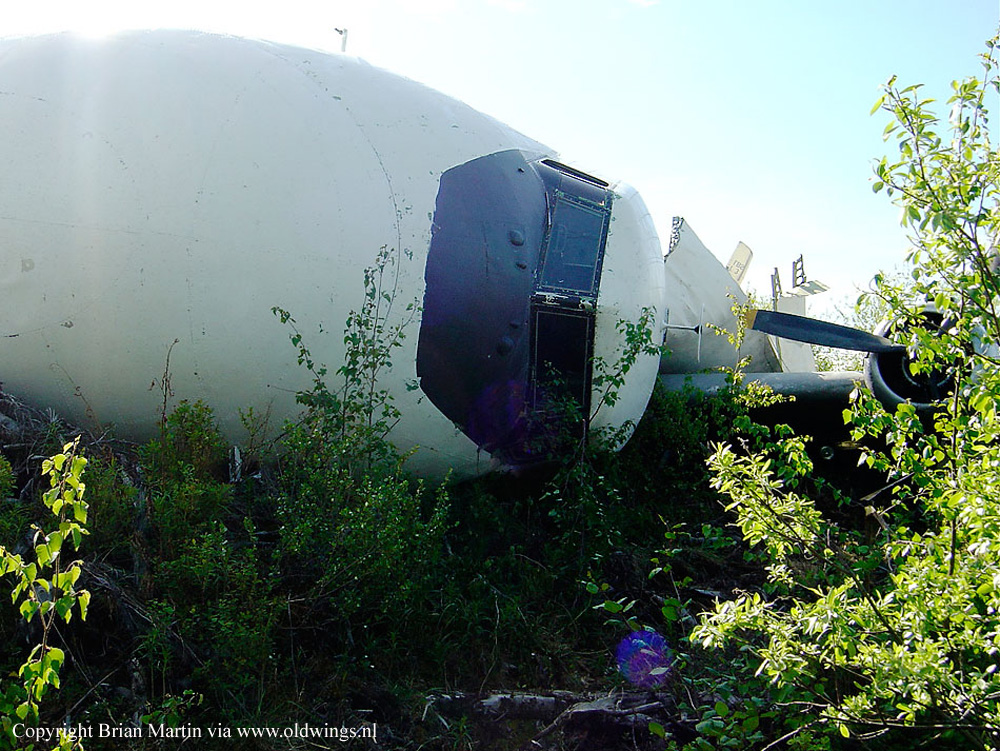
The captain was making a VFR landing approach to a remote mining airstrip in a modified Douglas DC-4 airplane at the end of a cross-country nonscheduled cargo flight. The modified airplane had a raised cockpit above the fuselage to accommodate an upward swinging nose door. During the landing flare/touchdown, the airplane undershot the runway threshold, and right main landing gear struck the lip of the runway. The right main landing gear was torn off, which allowed the nose and right wing to collide with the runway surface. The right wing was torn off the fuselage and caught fire. The fuselage, containing the cargo of fuel bladders, slid to a stop and rolled about 90 degrees to the left. The pilot indicated that due to the additional cockpit height of the modified airplane, versus a standard Douglas DC-4 airplane, the airplane was lower than he perceived.
Probable cause:
An undershoot and collision with the runway when the pilot misjudged the distance/altitude during the landing flare/touchdown.
Final Report:
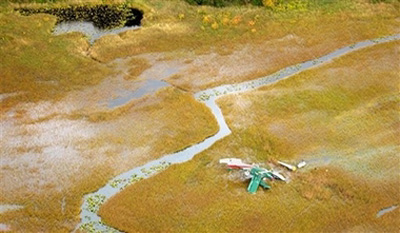
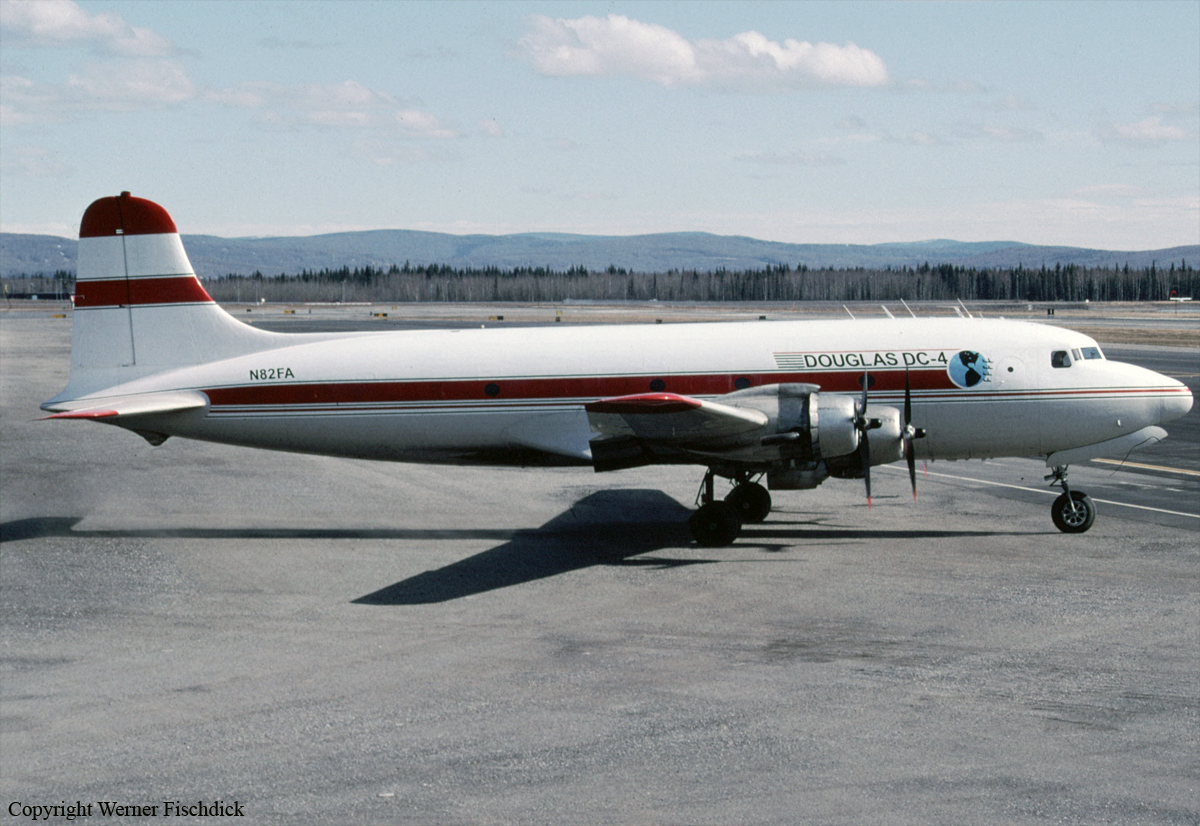
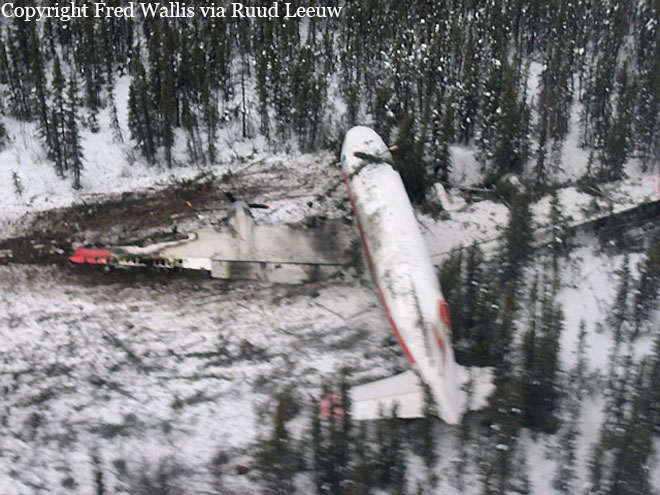
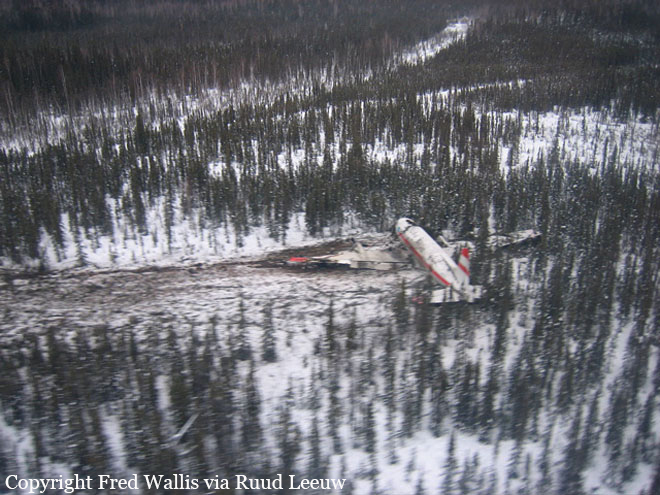
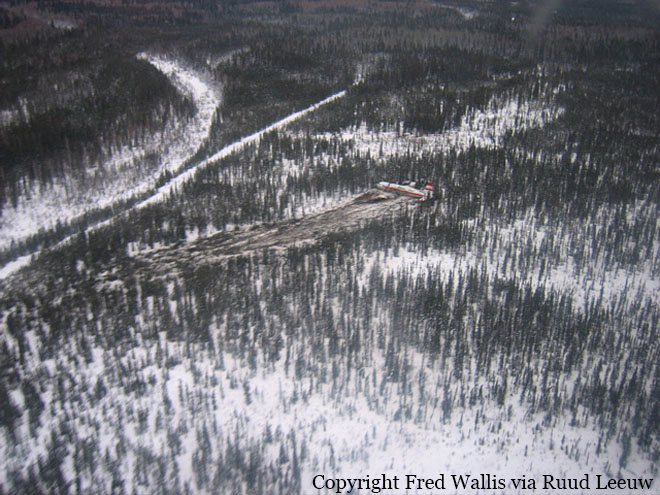
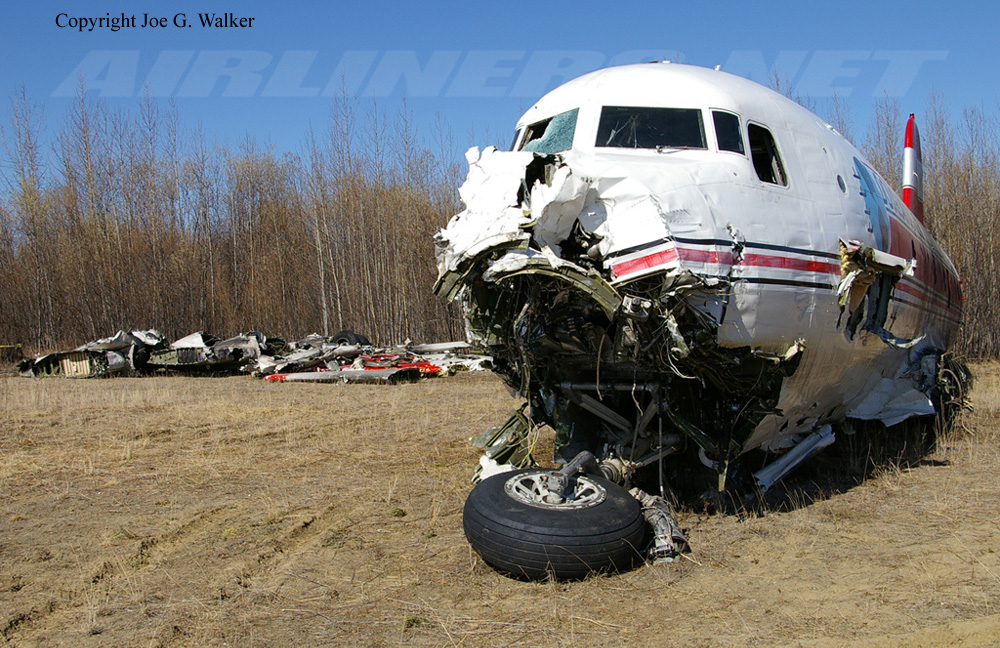
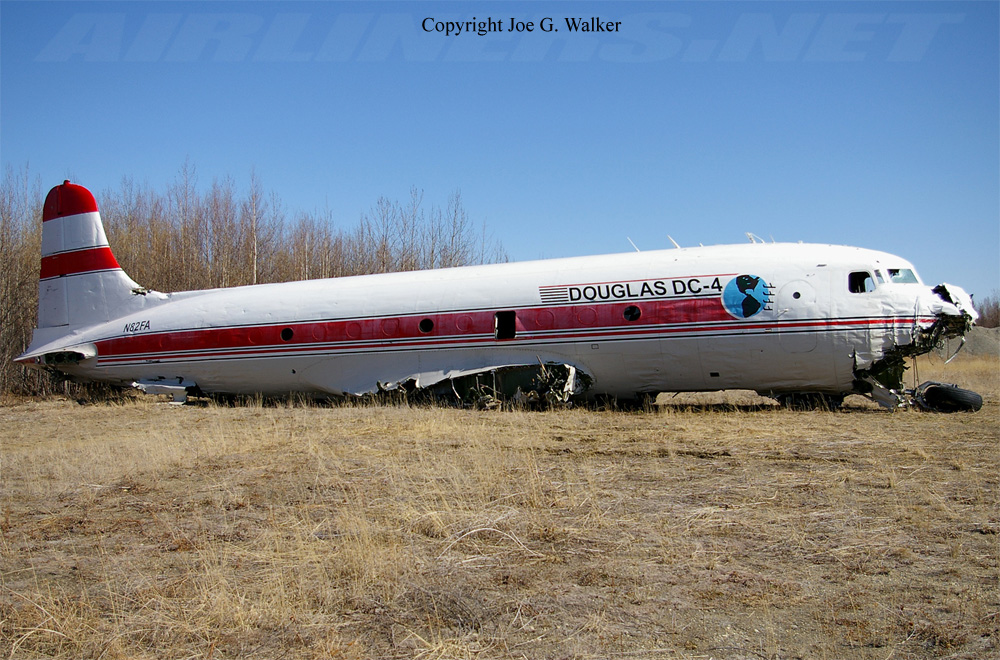
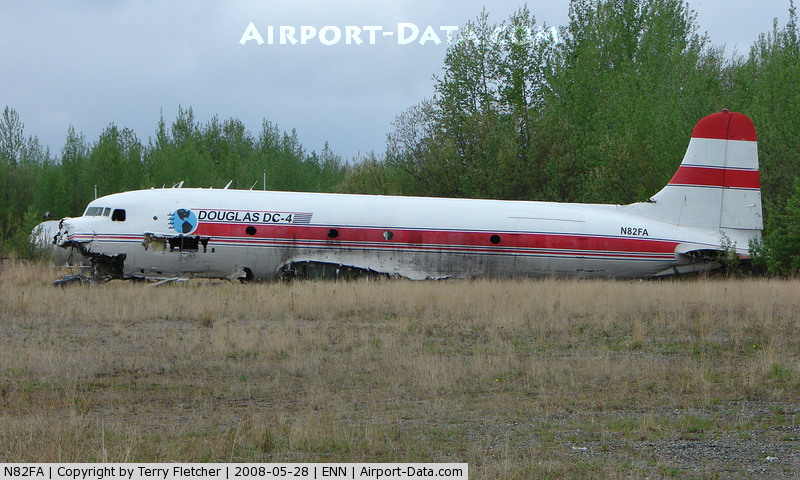
Crash of a Douglas C-54G-DC Skymaster near Nenana

Date & Time: Jan 17, 2007 at 1550 LT
Type of aircraft:
Operator:
Registration:
N82FA
Flight Phase:
Flight Type:
Survivors:
Yes
Schedule:
Fairbanks - Nixon Fork Mine
MSN:
35960
YOM:
1945
Location:
Crew on board:
2
Crew fatalities:
Pax on board:
0
Pax fatalities:
Other fatalities:
Total fatalities:
0
Captain / Total flying hours:
2750
Captain / Total hours on type:
1550.00
Copilot / Total flying hours:
796
Copilot / Total hours on type:
61
Aircraft flight hours:
28933
Circumstances:
The flight crew was delivering a cargo of fuel in the four-engine airplane under Title 14, CFR Part 125, when the airplane lost power in the number 2 engine. The captain elected to shut the engine down and return to the airport. He said during the shutdown procedure, the engine caught fire, and that the fire extinguishing system was activated. The crew thought the fire was out, but it erupted again, and the captain elected to land the airplane gear-up on the snow covered tundra. Once on the ground, the left wing was consumed by fire. An inspection by company maintenance personnel revealed that an overhauled engine cylinder had failed at its base, resulting in a fire. The airplane was not examined by the NTSB due to its remote location.
Probable cause:
The failure of an engine cylinder during cruise flight, which resulted in an in-flight fire, and subsequent emergency gear-up landing on snow-covered tundra. A factor in the accident was the failure of the fire suppression equipment to extinguish the fire.
Final Report:

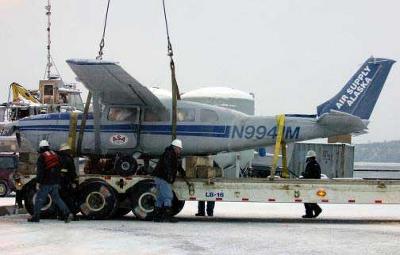
Crash of a Cessna 207A Skywagon in the Cook Inlet: 1 killed

Date & Time: Jan 9, 2007 at 1035 LT
Operator:
Registration:
N9941M
Flight Phase:
Flight Type:
Survivors:
No
Schedule:
Kenai - Kokhanok
MSN:
207-0748
YOM:
1981
Crew on board:
1
Crew fatalities:
Pax on board:
0
Pax fatalities:
Other fatalities:
Total fatalities:
1
Captain / Total flying hours:
5291
Captain / Total hours on type:
512.00
Aircraft flight hours:
13774
Circumstances:
The commercial certificated pilot prepared for a VFR cross-country nonscheduled cargo flight under Title 14, CFR Part 135, by preflighting the wheel-equipped airplane and starting the engine. The airplane had been parked on the airport ramp overnight, with an electric engine heater and an engine cover on. A portion of the flight was over ocean waters to a remote village. After engine start, the pilot contacted the company owner and reported that the engine oil pressure appeared to be low, but within the operating range. The owner and the pilot discussed the possible reasons, such as cold ambient temperatures, which was about -20 degrees F. The pilot then departed, and reported to his company that the engine pressure was good. About 10 minutes later, he declared an emergency and stated he was ditching in the water, about 18 miles west of the departure airport. Retrieved track data from the pilot's GPS showed the airplane's maximum altitude was 1,439 feet msl, while crossing the ocean in an area that was about 22 miles wide. A review of the manufacturer's maximum glide distance chart revealed that from an altitude of about 1,500 feet, the airplane could glide about 2.1 nautical miles. The airplane was located about two hours after the accident, floating nose down next to a segment of pan ice, about 8.8 miles from the initial accident location. The pilot was not recovered with the airplane, and subsequent searches did not locate him. Following recovery of the airplane, examination of the engine revealed a 8 X 5 inch hole in the top of the case, adjacent to the number 2 cylinder. The number 2 connecting rod was broken from its crankshaft journal, and broken from the bottom of the piston. The number 1 connecting rod bearing was missing from its normal position on the crankshaft journal and the rod had evidence of high heat. Evidence of oil starvation and high heat signatures to several crankshaft and connecting rod bearings was found throughout the engine, along with a large amount of fragmented bearing material. The pilot was not wearing any personal flotation equipment, and the expected survival time in the 29 degree F ocean water was about 30 minutes. The company's operations manual does not contain a written policy requiring pilot's to maintain sufficient altitude to reach shore when crossing ocean waters.
Probable cause:
The total loss of engine power during cruise flight due to the disintegration of engine bearings and the fracture of a connecting rod, which resulted in a ditching into ice covered ocean water. Factors contributing to the survivability of the accident were the pilot's improper decision to fly over frigid water without sufficient altitude to reach a suitable landing area, the lack of written policy and procedures by the operator requiring sufficient altitude to reach shore when crossing ocean waters, temperature extremes consisting of sub-zero air and below freezing water temperatures, and the lack of personal flotation/survival equipment.
Final Report:
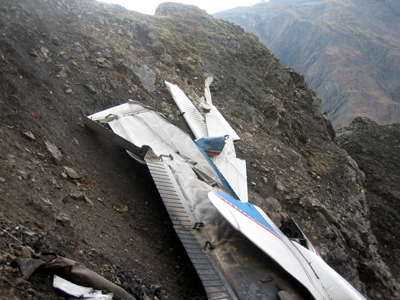
Crash of a Cessna 207 Skywagon in Tuntutuliak

Date & Time: Oct 13, 2006 at 1512 LT
Operator:
Registration:
N7336U
Flight Type:
Survivors:
Yes
Schedule:
Bethel - Tuntutuliak
MSN:
207-0405
YOM:
1977
Crew on board:
1
Crew fatalities:
Pax on board:
0
Pax fatalities:
Other fatalities:
Total fatalities:
0
Captain / Total flying hours:
5700
Captain / Total hours on type:
1000.00
Aircraft flight hours:
21781
Circumstances:
The commercial certificated pilot was attempting to land on a remote runway during a Title 14, CFR Part 135, cargo flight. The approach end of the runway is located at the edge of a river. During the pilot's fourth attempt to land, the airplane collided with the river embankment, and sustained structural damage. The director of operations for the operator reported that he interviewed several witnesses to the accident. They told him that the weather conditions in the area had been good VFR, but as the pilot was attempting to land, rain and mist moved over the area, reducing the visibility to about 1/4 mile. Within 30 minutes of the accident, the weather conditions were once again VFR. The pilot told an FAA inspector that the weather conditions consisted of a 500 foot ceiling and 2 miles of visibility. The pilot reported that he made 3 passes over the runway before attempting to land. On the last landing approach, while maintaining 80 knots airspeed, the pilot said the nose of the airplane dropped, he applied full power and tried to raise the nose, but the airplane collided with the river bank.
Probable cause:
The pilot's misjudgment of distance/altitude during the landing approach, which resulted in an undershoot and in-flight collision with a river embankment. Factors contributing to the accident were reduced visibility due to rain and mist.
Final Report:

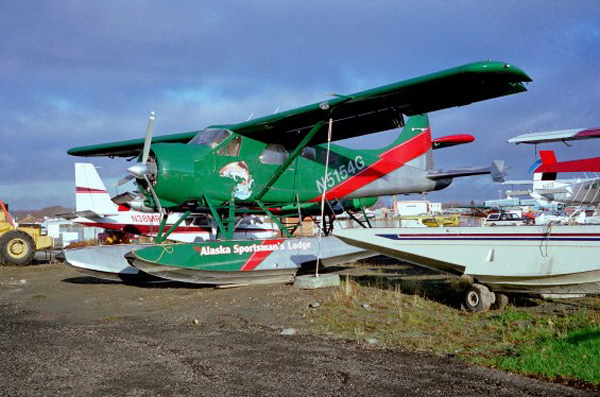
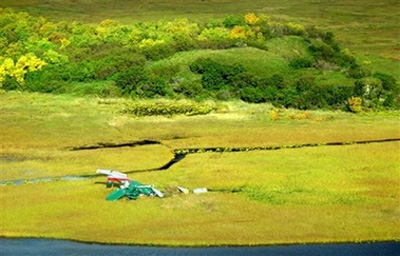
Crash of a De Havilland DHC-2 Beaver I in Swikshak: 1 killed

Date & Time: Sep 21, 2006 at 1315 LT
Type of aircraft:
Operator:
Registration:
N5154G
Survivors:
Yes
Schedule:
Kodiak - Igiugig
MSN:
405
YOM:
1952
Crew on board:
1
Crew fatalities:
Pax on board:
5
Pax fatalities:
Other fatalities:
Total fatalities:
1
Captain / Total flying hours:
4770
Captain / Total hours on type:
1860.00
Aircraft flight hours:
11613
Circumstances:
The airline transport pilot was departing to the north from a narrow stream in a float-equipped airplane with lodge guests aboard, on a Title 14, CFR Part 91 flight. Northerly winds between 25 and 35 knots, were reported at the time of the accident. The accident pilot reported that after departure, he turned left, and a strong downdraft "threw the airplane to the ground." The passengers said that the airplane started its takeoff run directly into the strong winds, but shortly after becoming airborne, the pilot made a steep turn to the left, about 150 feet above the ground. The passengers indicated that as the airplane continued to turn left, it began to shudder and buffet, then abruptly descended nose low into the marsh-covered terrain. During the impact, the right wing folded, and the airplane's fuselage came to rest on its right side. One of the occupants, seated next to the right main cabin door, was partially ejected during the impact sequence, and was pinned under the fuselage and covered by water. Rescue efforts by the pilot and passengers were unsuccessful. In the pilot's written statement to the NTSB, he reported that there were no pre accident mechanical anomalies with the airplane, and during the on-site examination of the wreckage by the NTSB investigator-in-charge, no pre accident mechanical anomalies were discovered.
Probable cause:
The pilot's failure to maintain adequate airspeed while maneuvering to reverse direction, which resulted in an inadvertent stall and an uncontrolled descent. Factors associated with the accident were the inadvertent stall and wind gusts.
Final Report:
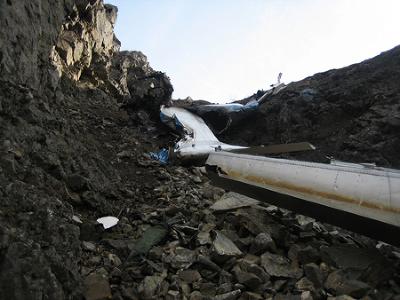
Crash of a De Havilland DHC-2 Beaver in Skwentna: 2 killed

Date & Time: Sep 15, 2006 at 1620 LT
Type of aircraft:
Operator:
Registration:
N836KA
Flight Phase:
Flight Type:
Survivors:
No
Site:
Schedule:
Galena - Anchorage
MSN:
604
YOM:
1954
Location:
Crew on board:
1
Crew fatalities:
Pax on board:
1
Pax fatalities:
Other fatalities:
Total fatalities:
2
Captain / Total flying hours:
2700
Aircraft flight hours:
34896
Circumstances:
The private pilot and the sole passenger were in the first of two airplanes of a flight of two, operating as a personal flight under Title 14, CFR part 91. The pilot of the second airplane reported that both airplanes were in radio contact, and the accident airplane was about one mile ahead as they entered a mountain pass along the intended flight route. As the flight progressed, both airplanes descended due to deteriorating weather conditions as they neared the narrowest part of the pass. The second pilot said that visibility deteriorated to a point that it was difficult to discern topographical features, and he told the accident pilot that he was uncomfortable with the lack of visibility and was turning around. The second pilot stated that the accident pilot responded by saying, in part: "Turn around if you can... I am not able to." The second pilot indicated that the last time he saw the accident airplane was as it entered a cloudbank. During the accident pilot's final radio transmission, prompted by the second pilot's inquiry about how he was doing, he responded that he was just trying to get through the pass. No further radio communications were received from the accident airplane. There was no ELT signal, and the search for the airplane was unsuccessful until three days later. The wreckage was located at the 3,100-foot level of the mountain pass, in an area of steep terrain. Impact forces and a post crash fire had destroyed the airplane. During the IIC's on-site examination of the wreckage, no pre accident mechanical anomalies were discovered.
Probable cause:
The pilot's continued VFR flight into instrument meteorological conditions, which resulted in an in-flight collision with mountainous terrain. A factor associated with the accident was a low cloud ceiling.
Final Report:
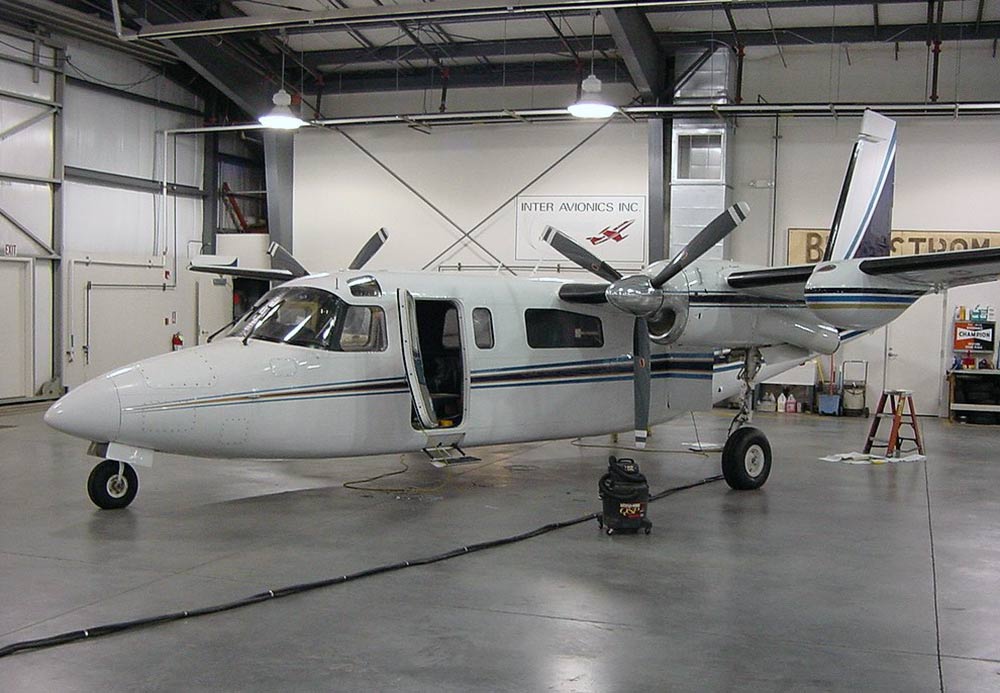
Crash of a Rockwell Grand Commander 690A off Anchorage: 3 killed

Date & Time: Jul 28, 2006 at 2037 LT
Registration:
N57096
Flight Type:
Survivors:
No
Schedule:
Kenai - Anchorage
MSN:
690-11120
YOM:
1973
Crew on board:
2
Crew fatalities:
Pax on board:
1
Pax fatalities:
Other fatalities:
Total fatalities:
3
Captain / Total flying hours:
4600
Copilot / Total flying hours:
9200
Aircraft flight hours:
11340
Circumstances:
The crew of the missing airplane was conducting a local area familiarization flight under Title 14, CFR Part 91. At the time of the flight, visual meteorological conditions prevailed, with occasional moderate turbulence forecast for the area. The airplane was routinely contracted for animal and bird counts, and the flight was to include low level flight simulating such a mission. The three occupants of the airplane were the pilot, company check pilot, and another company pilot riding along as a passenger. Both the pilot and the check pilot held airline transport certificates, and were experienced in the make and model of the accident airplane. The airplane was equipped with a satellite position reporting device that updated position, groundspeed, and altitude every 2 minutes. Radar and GPS track information indicated the accident airplane was flying low and slow along a peninsula coast over a saltwater inlet, and turned toward the center of the inlet. The track stopped about 3 miles offshore. The data indicated that while flying along the inlet, the airplane descended to 112 feet above ground level (water), and climbed as high as 495 feet, which was the airplane's altitude at the last data point. The airplane's groundspeed varied between 97 and 111 knots. The area of the presumed crash site experiences extreme tides and strong currents, with reduced visibility due to a high glacial silt content. An extensive search was conducted, but the airplane and its occupants have not been located. An examination of the airplane's maintenance logs did not disclose any unresolved maintenance issues.
Probable cause:
Undetermined; the airplane and its occupants are missing.
Final Report:

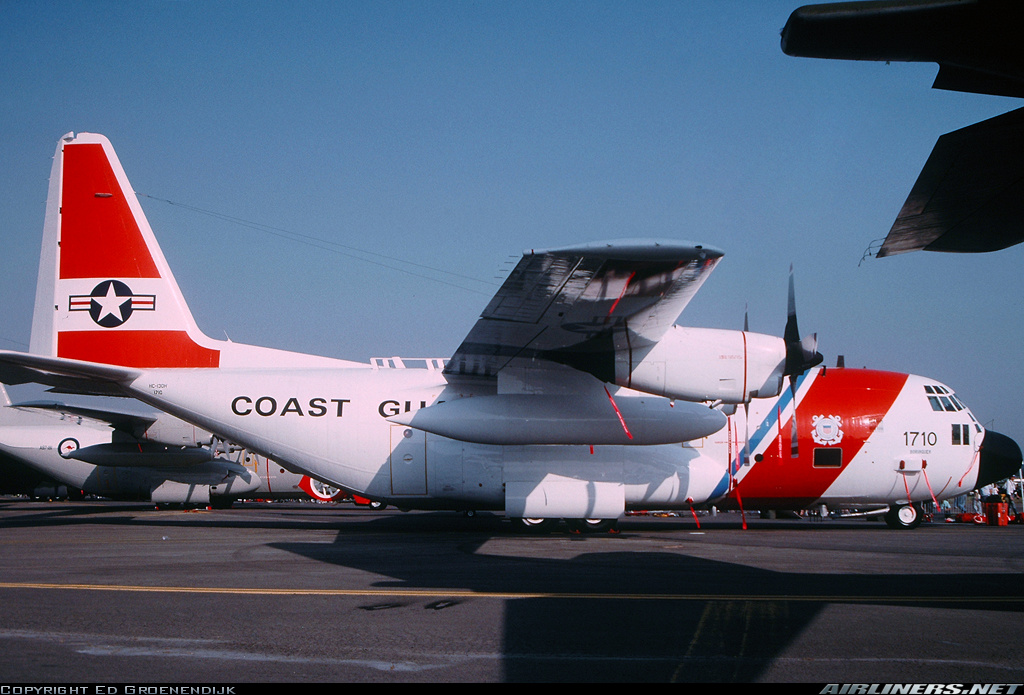
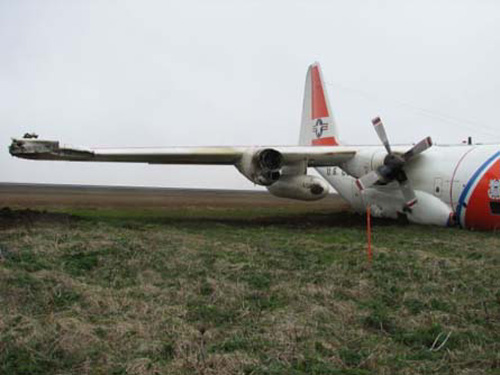
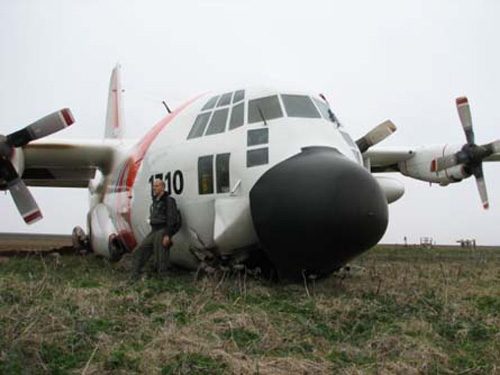
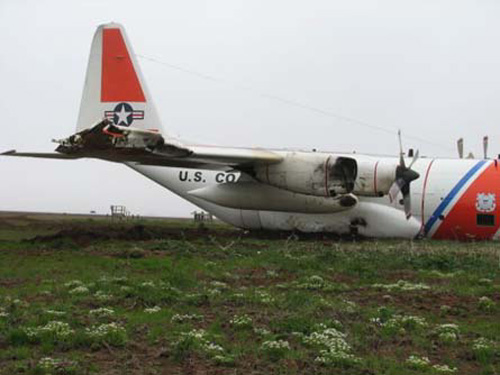
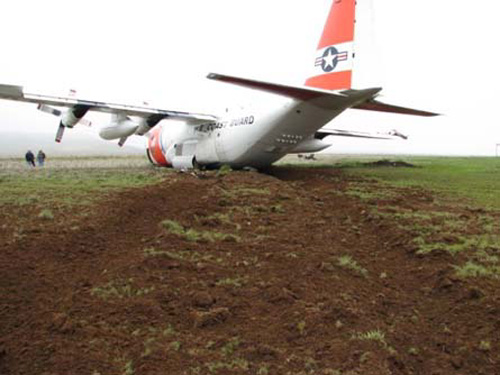
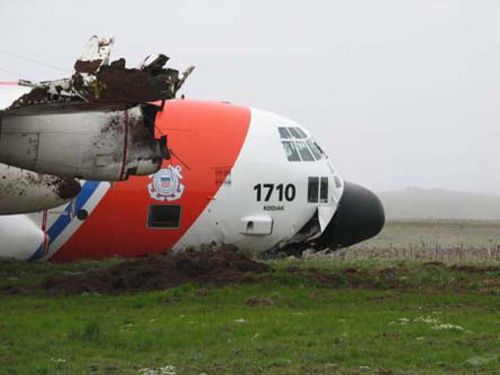
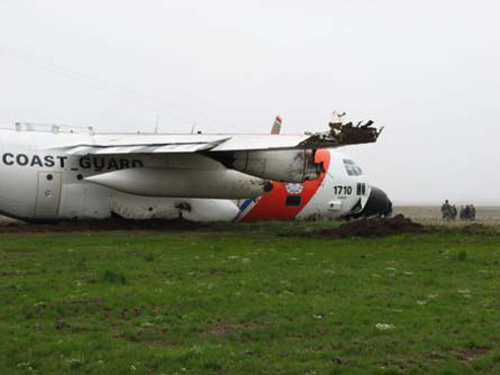
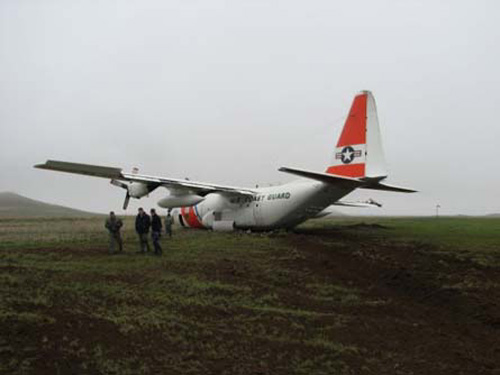
Crash of a Lockheed HC-130H Hercules in Saint Paul Island

Date & Time: Jun 28, 2006
Type of aircraft:
Operator:
Registration:
1710
Flight Type:
Survivors:
Yes
Schedule:
Kodiak - Saint Paul Island
MSN:
5028
YOM:
1985
Crew on board:
9
Crew fatalities:
Pax on board:
0
Pax fatalities:
Other fatalities:
Total fatalities:
0
Circumstances:
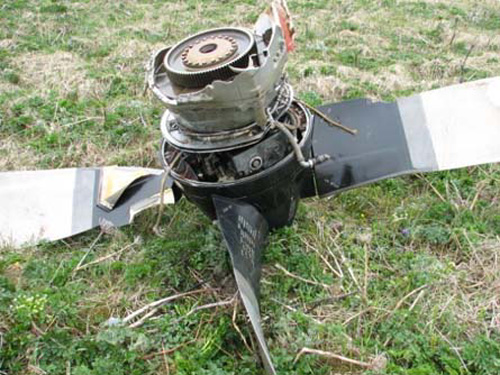
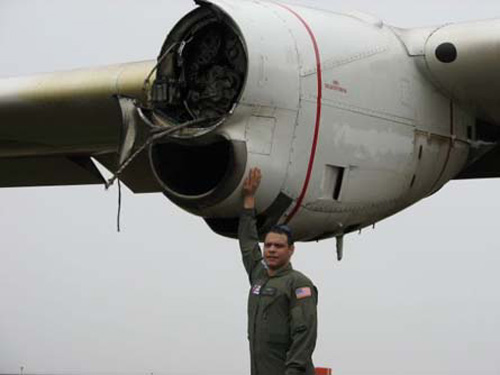
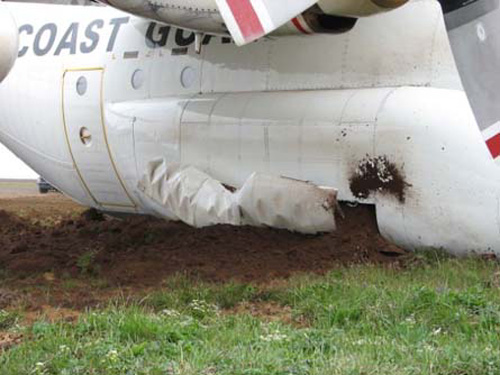
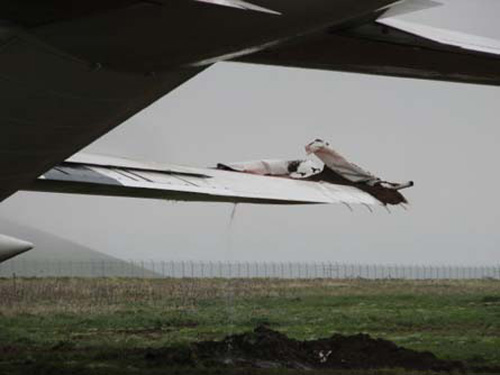
The aircraft departed Kodiak on a cargo flight to Saint Paul Island, carrying nine crew members and a 19,000 litres fuel truck. Upon landing on runway 36, the airplane fish tailed twice, causing the right wing to struck the runway surface. The wingtip was sheared off as well as the engine n°4 propeller. Unable to stop within the remaining distance, the aircraft overrun, lost its undercarriage and came to rest few dozen metres further. All nine occupants escaped uninjured while the aircraft was damaged beyond repair.

Crash of a De Havilland DHC-2 Beaver in Hallo Bay

Date & Time: May 22, 2006 at 1300 LT
Type of aircraft:
Operator:
Registration:
N1543
Flight Phase:
Survivors:
Yes
Schedule:
Hallo Bay-Kodiak
MSN:
1687
YOM:
1967
Crew on board:
1
Crew fatalities:
Pax on board:
5
Pax fatalities:
Other fatalities:
Total fatalities:
0
Captain / Total flying hours:
7460
Captain / Total hours on type:
40.00
Aircraft flight hours:
16360
Circumstances:
The commercial certificated pilot was departing a remote bay with five passengers in an amphibious float-equipped airplane on the return portion of a Title 14, CFR Part 135 sightseeing flight. The pilot began the takeoff run toward the north, with the wind from the north between 15 to 20 knots, and 4 to 6 foot sea swells. When the airplane had climbed to about 10 to 15 feet, the pilot said a windshear was encountered, which pushed the airplane down. The airplane's floats struck a wave, missed about 4 to 5 swells, and then struck another wave, which produced a loud "bang." The company guide, seated in the right front seat, told the pilot that the right float assembly was broken and displaced upward. The airplane cleared a few additional swells, and then collided with the water. Both float assemblies were crushed upward, and the left float began flooding. The guide exited the airplane onto the right float, and made a distress call via a satellite telephone. All occupants donned a life preserver as the airplane began sinking. The pilot said that after about 15 minutes, the rising water level in the airplane necessitated an evacuation, and all occupants exited into the water, and held onto the right float as the airplane rolled left. The airplane remained floating from the right float, and was being moved away from shore by wind and wave action. The pilot said that one passenger was washed away from the float within about 5 minutes, and two more passengers followed shortly thereafter. Within about 5 minutes after entering the water, the pilot said he lost his grip on the float, and does not remember anything further until regaining consciousness in a hospital. He was told by medical staff that he had been severely hypothermic. U.S. Coast Guard aircraft were already airborne on a training mission, and diverted to rescue the occupants. About 1320, a C-130 flew overhead, and began dropping inflatable rafts. The company guide was the only one able to climb into a raft. When the helicopters arrived, they completed the rescue using a hoist and a rescue swimmer. The passengers reported that they also were unable to hold onto the airplane after entering the water, became unconscious, and were severely hypothermic upon reaching a hospital. The airplane was not equipped with a life raft, and was not required to be so equipped.
Probable cause:
The pilot's inadequate evaluation of the weather conditions, and his selection of unsuitable terrain (rough water) for takeoff, which resulted in a collision with ocean swells during takeoff initial climb, and a hard emergency landing and a roll over. Factors contributing to the accident were a windshear, rough water, and buckling of the float assemblies when the airplane struck the waves.
Final Report: