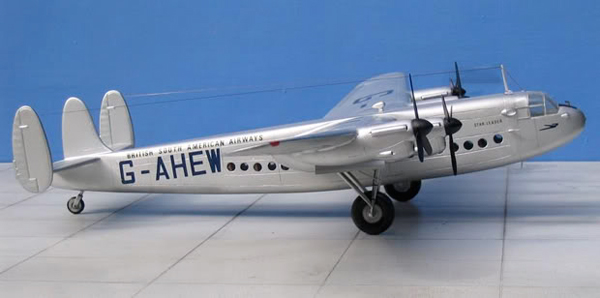
Crash of an Avro 685 York I in Bathurst: 24 killed

Date & Time: Sep 7, 1946 at 0410 LT
Type of aircraft:
Operator:
Registration:
G-AHEW
Flight Phase:
Survivors:
No
Schedule:
London – Lisbon – Bathurst – Natal – Rio de Janeiro – Montevideo – Buenos Aires
MSN:
1300
YOM:
1946
Country:
Region:
Crew on board:
4
Crew fatalities:
Pax on board:
20
Pax fatalities:
Other fatalities:
Total fatalities:
24
Circumstances:
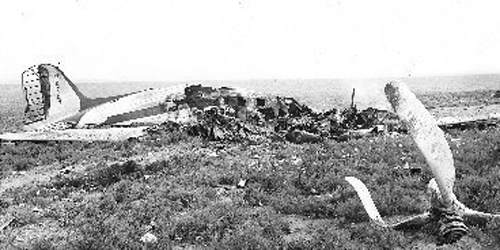
The aircraft arrived in Bathurst at 0243LT from Lisbon and the crew was changed. The departure was performed at 0408LT in fair weather conditions. Two minutes later, while in initial climb, the aircraft failed to gain height and hit few trees with its left wing. It then banked left and crashed in flames in a wooded area located 3 km from the airport. The aircraft christened 'Star Leader' was destroyed by impact forces and a post crash fire and all 24 occupants were killed.
Probable cause:
The exact cause of the accident could not be determined with certainty. However, it is believed that the loss of control during initial climb was probably due to a mishandling of the controls on behalf of the pilot in command. It was confirmed by investigations that it was the captain's first York flight on a scheduled service, and it was also the first takeoff he made in a York loaded to more than 69,000 lb.

Crash of a Junkers JU.52/3m in Darvaza: 6 killed

Date & Time: Sep 6, 1946 at 1205 LT
Type of aircraft:
Operator:
Registration:
CCCP-L35
Flight Type:
Survivors:
No
Schedule:
Ashgabat – Darvaza
MSN:
6445
YOM:
0
Country:
Region:
Crew on board:
4
Crew fatalities:
Pax on board:
2
Pax fatalities:
Other fatalities:
Total fatalities:
6
Aircraft flight hours:
3536
Circumstances:
The crew was completing a cargo flight from Ashgabat to Darvaza, carrying a load of various goods for a total weight of 2,400 kilos. On final approach to Darvaza Airport, the aircraft adopted a high nose attitude and then stalled before crashing in a desert area located one km short of the runway threshold. The aircraft was destroyed and all six occupants were killed.
Probable cause:
It was reported that the left elevator failed on final approach due to the failure of several bolts located on the inner part of the elevator. This was the result of a faulty maintenance on the part of the technicians of the company. Wrong reaction on part of the crew was considered as a contributory factor.

Crash of a Vickers 619 Wellington X in RAF Moreton-in-Marsh: 5 killed

Date & Time: Sep 6, 1946
Type of aircraft:
Operator:
Registration:
PG135
Flight Type:
Survivors:
No
Schedule:
Moreton-in-Marsh - Moreton-in-Marsh
Region:
Crew on board:
5
Crew fatalities:
Pax on board:
0
Pax fatalities:
Other fatalities:
Total fatalities:
5
Circumstances:
On final approach to RAF Moreton-in-Marsh, while on a local training sortie, the aircraft hit the ground and crashed in a field located in Long Compton, about five km east of the airfield. The aircraft was destroyed by impact forces and all five crew members were killed. The accident occurred by night and low visibility due to clouds.
Crew (21st OTU):
F/O D. J. Ferdinando,
F/Lt K. G. J. Gratton,
F/Sgt R. Dunn,
Sgt W. B. Greatrix,
Sgt D. E. Robinson.

Crash of a DDouglas C-47A-5-DL in Elko: 20 killed

Date & Time: Sep 5, 1946 at 0132 LT
Registration:
NC57850
Survivors:
Yes
Schedule:
New York – Cheyenne – Elko – San Francisco
MSN:
9214
YOM:
1943
Location:
Crew on board:
3
Crew fatalities:
Pax on board:
18
Pax fatalities:
Other fatalities:
Total fatalities:
20
Captain / Total flying hours:
2944
Copilot / Total flying hours:
1339
Aircraft flight hours:
2137
Circumstances:
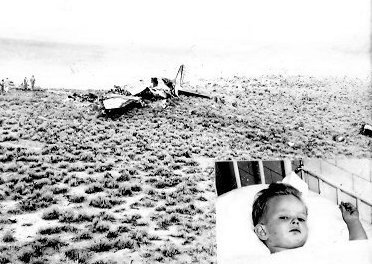
The aircraft was reported over Elko, Nevada, at 0121 and the pilot stated to the Aircraft Communicator at Elko that he had the field n and that he anticipated no difficulty in landing. The latest weather information was transmitted to the pilot and acknowledged by him: Ceiling measured 200 feet, thin overcast; lower thin scattered clouds at 100 visibility 7 miles; wind ENE at 6 mph; altimeter setting 30.14. No further transmission was received from the flight. Elko radio made several attempts to contact Aircraft 850 without success and, at approximately 0133, notified Airway Traffic control that radio contact was no longer being maintained with the flight. Salt Lake City Air Traffic Control requested Battle Mountain radio to attempt to contact the aircraft in the event the pilot had elected to continue to his alternate. However, although several attempts were made, no contact was established with the flight. United Air Lines' Flight 16, of September 4, 1946, en route to Salt Lake City on Airway Green 3, was called by the United Air Lines station at Salt Lake City and requested to check the vicinity of Elko for any sign of fire or other indications of an aircraft accident. The time of this contact was 0200, at which time Flight 16 was approximately 5 miles east of Elko Range Station. The Caption of Flight 16 returned to Elko and scanned the area in the vicinity of the airport. On approaching the airport the flight crew of the United Air Lines' DC-3 observed an intense fire approximately 2 miles west and almost directly in line with Runway 23 of the Elko Airport. This information was transmitted to the United Air Lines' ground station at Elko, Nevada, and Salt Lake City, Utah. The fire warden at Elko was immediately notified of the location of the fire and was requested to proceed to the scene of the fire. Personnel from the C. A. Communications Station at Elko arrived at the scene of the fire at approximately 0230 and found that the aircraft had crashed near the top of a ridge, the elevation of which was approximately 11' feet above that of the field, and at a point approximately 2 1/2 miles west of the west and of Runway 23 at Elko Airport. At this time the wreckage was found to be burned severely and, with the exception of two passengers, one of whom died shortly afterward, all occupants had been fatally injured in the aircraft.
Probable cause:
On the basis of the above findings, the Board determines that the probable cause of this accident was the pilot's action in continuing a landing approach after having lost visual contact with the airport under conditions of dense ground fog. A contributing factor was the pilot's unfamiliarity with the terrain in the immediate vicinity of the airport.
Final Report:

Crash of an Avro 652 Anson XI in Udine

Date & Time: Sep 5, 1946
Type of aircraft:
Operator:
Registration:
PH566
Flight Type:
Survivors:
Yes
Country:
Region:
Crew on board:
0
Crew fatalities:
Pax on board:
0
Pax fatalities:
Other fatalities:
Total fatalities:
0
Circumstances:
On touchdown, the undercarriage failed. The aircraft skidded on its belly and came to rest. There were no casualties but the aircraft was damaged beyond repair.
Probable cause:
The undercarriage were not locked down and failed on landing.

Crash of a Douglas DC-3D in Paris-Le Bourget: 20 killed

Date & Time: Sep 4, 1946 at 0915 LT
Type of aircraft:
Operator:
Registration:
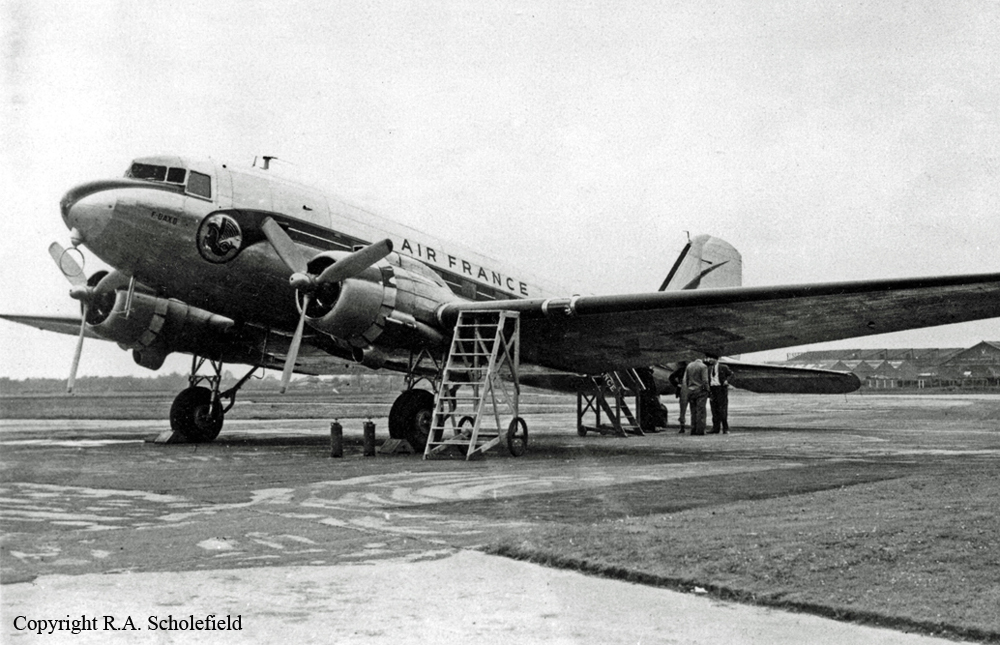
F-BAXD
Flight Phase:
Survivors:
Yes
Schedule:
Paris - Croydon
MSN:
42975
YOM:
1946
Country:
Region:
Crew on board:
5
Crew fatalities:
Pax on board:
21
Pax fatalities:
Other fatalities:
Total fatalities:
20
Circumstances:
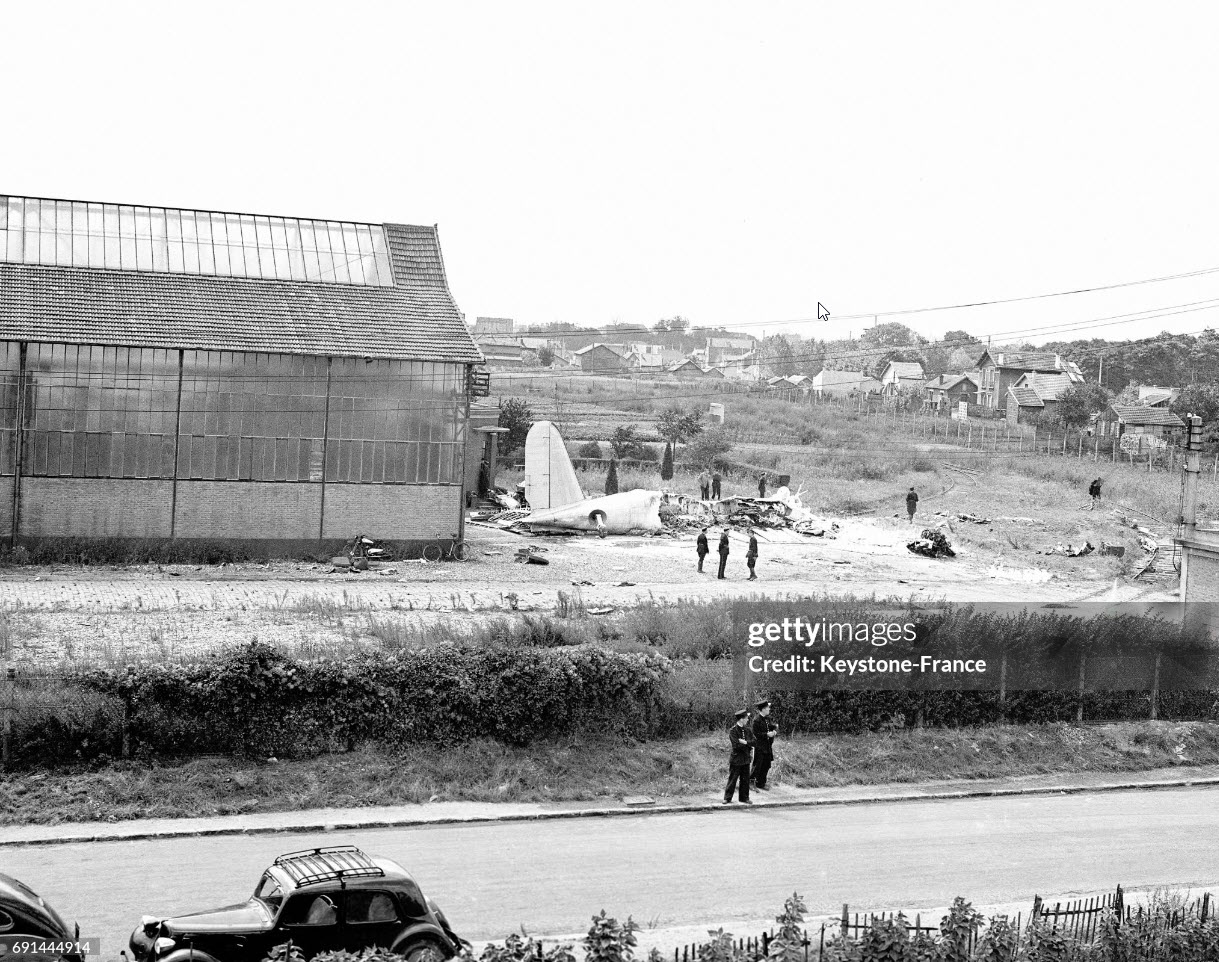
After takeoff, the aircraft failed to gain height and hit the roof of a house. It stalled and then crashed in flames near a factory located in Le Blanc-Mesnil, southeast of the airport. Seven occupant (a crew member and six passengers) were rescued while 19 other occupants were killed. A person on the ground was also killed.
Crew killed were:
Joseph Corvaisier, pilot,
Michel Jourdan, radio navigator,
Guy Gaudie, mechanic,
Mrs Vavasseur, stewardess.
Probable cause:
It appears that both engines were not developing full power on takeoff, causing the aircraft to have insufficient speed and power to gain altitude. Unfortunately, investigations were unable to determine the exact cause of the lack of power.

Crash of a Focke-Wulf Fw.200A-05 Condor in Northolt

Date & Time: Sep 4, 1946
Type of aircraft:
Operator:
Registration:
OY-DEM
Survivors:
Yes
Schedule:
Copenhagen – Northolt
MSN:
2993
YOM:
1938
Region:
Crew on board:
0
Crew fatalities:
Pax on board:
0
Pax fatalities:
Other fatalities:
Total fatalities:
0
Circumstances:
On touchdown, the aircraft went out of control then veered off runway and came to rest. There were no casualties but the aircraft was written off.
Probable cause:
Loss of control on landing caused by strong cross winds.

Crash of an Avro 683 Lancaster III in RAF Swinderby: 1 killed

Date & Time: Sep 2, 1946
Type of aircraft:
Operator:
Registration:
PA966
Flight Phase:
Flight Type:
Survivors:
Yes
Schedule:
Swinderby - Swinderby
MSN:
7366
YOM:
1943
Region:
Crew on board:
2
Crew fatalities:
Pax on board:
0
Pax fatalities:
Other fatalities:
Total fatalities:
1
Circumstances:
The crew was performing a training sortie on behalf of the 1660 CU. After takeoff, while in initial climb, the instructor shut down the engine number one, according to the training program (simulation of an engine failure). Simultaneously, the aircraft swung then stalled and crashed. While the instructor was injured, the second pilot was killed.

Crash of a Douglas C-47B-1-DK Dakota IV in Barrackpore

Date & Time: Sep 2, 1946
Operator:
Registration:
KJ819
Flight Phase:
Flight Type:
Survivors:
Yes
MSN:
14158/25603
YOM:
1944
Country:
Region:
Crew on board:
3
Crew fatalities:
Pax on board:
15
Pax fatalities:
Other fatalities:
Total fatalities:
0
Circumstances:
Shortly after rotation, the left engine failed. The aircraft stalled, hit the runway surface, veered off runway and came to rest in flames. While all 18 occupants escaped unhurt, the aircraft was destroyed.
Probable cause:
Failure of the left engine.

Crash of a Douglas C-47A-25-DK Dakota III in Manchester

Date & Time: Aug 31, 1946
Operator:
Registration:
KG665
Flight Phase:
Flight Type:
Survivors:
Yes
MSN:
13482
YOM:
1944
Region:
Crew on board:
0
Crew fatalities:
Pax on board:
0
Pax fatalities:
Other fatalities:
Total fatalities:
0
Circumstances:
Crashed shortly after takeoff from Manchester-Ringway Airport. There were no casualties but the aircraft was destroyed.