Crash of a Boeing B-17F-5-BO Flying Fortress in Opijnen: 8 killed

Date & Time: Jul 30, 1943 at 1200 LT
Operator:

Registration:
41-24399
Flight Phase:
Flight Type:
Survivors:
Yes
Schedule:
Bassingbourn - Bassingbourn
MSN:
3084
YOM:
1940
Country:
Region:
Crew on board:
10
Crew fatalities:
Pax on board:
0
Pax fatalities:
Other fatalities:
Total fatalities:
8
Circumstances:
The aircraft left RAF Bassingbourn on a bombing mission to Kassel, Germany. While overflying The Netherlands, it was shot down by the pilot of a German fighter (Focke-Wulf Fw.190A-6) and crashed in a field. Eight crew members were killed while both pilots survived.
Crew:
2nd Lt Keene C. McCammon, pilot,
2nd Lt John P. Bruce, copilot,
T/Sgt Douglas V. Blackwood,
T/Sgt Americo Cianfichi,
1st Lt Robert U. Duggan,
S/Sgt George R. Krueger,
2nd Lt Daniel V. Ohman,
S/Sgt Mike A. Perrotta,
S/Sgt Hermon D. Poling,
S/Sgt Harold R. Sparks .
Probable cause:
Shot down by a German fighter.


Crash of a GVF PS-84 in Belarus: 5 killed

Date & Time: Jul 30, 1943
Type of aircraft:
Operator:
Registration:
CCCP-L3912
Flight Phase:
Flight Type:
Survivors:
Yes
MSN:
184 12 03
YOM:
1941
Country:
Region:
Crew on board:
6
Crew fatalities:
Pax on board:
1
Pax fatalities:
Other fatalities:
Total fatalities:
5
Circumstances:
The crew was engaged in a supply mission to soldiers based in Belarus. En route, the airplane was shot down by the pilot of a German fighter and crashed. The passenger and one crew member managed to bail out and survived while all five other occupants were killed.
Probable cause:
Shot down by a German fighter.

Crash of a GVF PS-84 in Žukaŭka: 1 killed

Date & Time: Jul 30, 1943
Type of aircraft:
Operator:
Registration:
CCCP-L3489
Flight Phase:
Flight Type:
Survivors:
Yes
MSN:
184 11 06
YOM:
1941
Country:
Region:
Crew on board:
6
Crew fatalities:
Pax on board:
0
Pax fatalities:
Other fatalities:
Total fatalities:
1
Circumstances:
On a flight to an area behind the German lines by night, the aircraft was attacked by fighters of the German Air Force, caught fire and crashed near Žukaŭka. All 6 crew managed to bail out but one of them was killed and one was injured.
Probable cause:
Shot down by the pilot of a German fighter.

Crash of a North American B-25 Mitchell off Vlieland Island: 5 killed

Date & Time: Jul 30, 1943
Operator:
Registration:
FR144
Flight Phase:
Survivors:
No
Country:
Region:
Crew on board:
5
Crew fatalities:
Pax on board:
0
Pax fatalities:
Other fatalities:
Total fatalities:
5
Circumstances:
In unknown circumstances, the aircraft crashed into the sea off Vlieland Island while on a maritime patrol flight. All five crew members were killed.

Crash of a Douglas R4D-5 on San Cristobal Island: 10 killed

Date & Time: Jul 29, 1943
Operator:
Registration:
12405
Flight Phase:
Flight Type:
Survivors:
No
Site:
MSN:
9177
YOM:
1943
Region:
Crew on board:
10
Crew fatalities:
Pax on board:
0
Pax fatalities:
Other fatalities:
Total fatalities:
10
Circumstances:
Hit a mountain slope on San Cristobal Island, killing all 10 crew members.

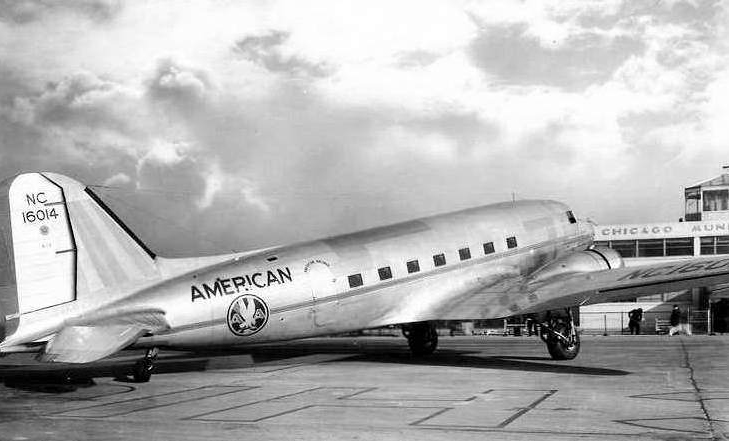
Crash of a Douglas DC-3-178 in Trammel: 20 killed

Date & Time: Jul 28, 1943 at 2243 LT
Type of aircraft:
Operator:
Registration:
NC16014
Flight Phase:
Survivors:
Yes
Schedule:
Cleveland – Columbus – Dayton – Cincinnati – Louisville – Nashville – Memphis
MSN:
1552
YOM:
1936
Flight number:
AA063
Crew on board:
4
Crew fatalities:
Pax on board:
18
Pax fatalities:
Other fatalities:
Total fatalities:
20
Captain / Total flying hours:
4315
Captain / Total hours on type:
2700.00
Copilot / Total flying hours:
970
Copilot / Total hours on type:
238
Aircraft flight hours:
17991
Circumstances:
Flight 63 originated at and left Cleveland about 5:42 p.m. EET cleared to Memphis on American's Route 22 with intermediate stops scheduled at Columbus, Dayton, Cincinnati, Louisville and Nashville. En route from Dayton to Cincinnati, the trip encountered adverse weather which, together with unreported Army traffic, made it seem advisable to return to Dayton. The situation at Cincinnati improved and after a delay of about 30 to 40 minutes the flight proceeded to Cincinnati end thence to Louisville, where it landed at 9:42 p.m. CWT2/. It was refueled and cleared to take off at 9:54 p.m. to fly at 4000 feet with estimated time of arrival at Nashville of 10:54 p.m. At 9:54 p.m., apparently just before take-off from Louisville, Captain Stiller requested Louisville to advise Nashville that he wanted to change his flight plan to proceed to Smiths Grove, Kentucky at 2500 feet. and continue to Nashville at 2000 feet. This change was subsequently approved by Nashville and relayed to the flight by Smiths Grove Airways Communications Station. (Smiths Grove is located on American Route 22, approximately 69 miles in a northeasterly direction from Nashville.) At approximately 10:22 p.m. when the flights about 15 miles northeast of Smiths Grove the following radio contact was made with the airways communication station at Smiths Grove: "Route 22, trip 63 over Smiths Grove at 10 29 p.m. at 2500 feet." Although static interference made radio telephone communication impossible between the flight and American stations at Nashville or Louisville, this report as relayed to Nashville and Louisville via interphone by the Smiths Grove radio operator. At 10:28 p.m. the flight advised the Smiths Grove Station by radio of the presence of an aircraft approximately 3 miles south of Smiths Grove, flying at about 5000 feet. The station operator informed the flight that he -was aware of its presence and that it was an Army plane practicing on the Smiths Grove range. Acknowledgement of this information was the last message received from the flight. Shortly thereafter, when Flight 63 failed to report, there followed an intensive radio search by at least twenty radio communication stations. At about 1:00 a.m. July 29, the police at Trammel notified American at Nashville of the crash of Flight 63 at Trammel. (Trammel is on American Route 22, about 21 miles southeast of Smiths Grove.). Examination of the wreckage did not reveal any evidence whatsoever which would indicate any mechanical or structural failure of the aircraft in flight. Examination of both engines revealed that they were functioning normally at the time of impact. There was adequate fuel aboard. Inspection of the propellers disclosed settings of 23 1/2 degree on the left propeller and 24 degree on the right. It appears probable that these settings were indicative of the settings immediately prior to impact. The wreckage was found on the airway less than 2 miles from the "on course" signal of the Smiths Grove Radio Range. The rolling terrain of the locale varies from 695 to 720 feet above sea level. Examination of the wreckage and of marks and cuts on the ground and trees revealed that the aircraft, while level laterally and descending about 11 degree from horizontal, initially struck and cut a path through a small grove of trees, 35 feet in depth about 16 feet above the ground. It struck the ground approximately 85 feet beyond the point of first contact with the trees, continued on an almost straight course (221 degree) through another small clump of trees, then across an open field and stopped in an upright position among several larger trees, about 1000 feet beyond the point of first impact. Just prior to coming to rest, the right wing was sheared from the fuselage by impact with a large tree and it was found approximately 25 feet behind the fuselage.
Crew:
Harry A. Stiller, pilot,
B. A. Carpenter, pilot,
Robert M. McClure, copilot,
Josephine Kane, stewardess.
Probable cause:
Loss of control of the aircraft due to unusually severe turbulence and violent downdraft caused by a thunderstorm of unknown and unpredictable intensity.
Final Report:

Crash of an Avro 683 Lancaster III off Terschelling: 7 killed

Date & Time: Jul 28, 1943
Type of aircraft:
Operator:
Registration:
EE169
Flight Phase:
Flight Type:
Survivors:
No
Schedule:
Grimsby - Grimsby
Country:
Region:
Crew on board:
7
Crew fatalities:
Pax on board:
0
Pax fatalities:
Other fatalities:
Total fatalities:
7
Circumstances:
The bomber left RAF Grimsby at 2244LT on a bombing mission to Hamburg. While approaching the Dutch coast, the aircraft went out of control and crashed into the sea some 10 km off Terschelling. All seven crew members were killed.
Crew (100th Squadron):
F/Sgt J. Lynch 6.

Crash of a Boeing B-17E Flying Fortress in Buin: 10 killed

Date & Time: Jul 27, 1943 at 0540 LT
Operator:
Registration:
41-9128
Flight Phase:
Flight Type:
Survivors:
No
Schedule:
Carney - Carney
MSN:
2600
YOM:
1941
Region:
Crew on board:
10
Crew fatalities:
Pax on board:
0
Pax fatalities:
Other fatalities:
Total fatalities:
10
Circumstances:
The crew left Carney Airfield in the early morning to attack the Kahili Airfield in Buin. Following a successful mission, the aircraft christened 'De-Icer' was shot down by anti-aircraft fire and crashed in flames 5 miles northwest of the airfield. All ten crew members were killed.
Crew (5th BG):
1st Lt Karl G. Stubblefield, pilot,
2nd Lt William E. Nevling, copilot,
1st Lt Walter C. Witherspoon, navigator,
1st Lt Robert J. Jones, bombardier,
M/Sgt Lowell E. Symons, flight engineer,
T/Sgt John L. Larson, assistant engineer,
T/Sgt Thomas H. Shadrick, radio operator,
Sgt Don E. Christenson, assistant radio operator,
Sgt Ranier P. Payton,
S/Sgt Louis Penven Jr.
Probable cause:
Shot down by anti-aircraft fire.

Crash of a Douglas C-47-DL on Masirah Island: 4 killed

Date & Time: Jul 27, 1943
Operator:
Registration:
41-38572
Flight Phase:
Flight Type:
Survivors:
No
MSN:
4453
YOM:
1942
Country:
Region:
Crew on board:
4
Crew fatalities:
Pax on board:
0
Pax fatalities:
Other fatalities:
Total fatalities:
4
Circumstances:
Crashed in unknown circumstances on Masirah Island, killing all four crew members.
Crew (12th FRG):
1st Lt William M. Baldwin,
Cpt Henry J. Kardel,
2nd Lt Ralph J. Sheaffer,
R. Drew Smith.

Crash of a Boeing B-17F Flying Fortress in Vriescheloo: 3 killed

Date & Time: Jul 26, 1943 at 1300 LT
Operator:
Registration:
42-30156
Flight Phase:
Flight Type:
Survivors:
Yes
Schedule:
Thurleigh - Thurleigh
MSN:
5270
Country:
Region:
Crew on board:
10
Crew fatalities:
Pax on board:
0
Pax fatalities:
Other fatalities:
Total fatalities:
3
Circumstances:
The four engine bomber left RAF Thurleigh in the morning on a bombing mission to Hanover, Germany. Following an uneventful mission and while returning to its base, the aircraft was hit by the German Flak and shot down by the pilot of a German fighter. A crew member was killed while nine other occupants bailed out. Unfortunately, two of them were killed as their parachute did not open properly.
Crew (423th Squadron):
Wes Courson, pilot,
Roy Bronson, copilot,
Ted Grezlak, navigator,
Henry Lynch, bombardier,
John Champion, flight engineer,
Cedric White, air gunner,
Bill Lamb, air gunner,
S/Sgt William G. Dayton, radio operator, †
Sgt Dock G. Thomas Jr., air gunner, †
Sgt Robert C. Stevens, air gunner. †
Probable cause:
Shot down by the German Flak and a German fighter as well.