Country
Operator Image

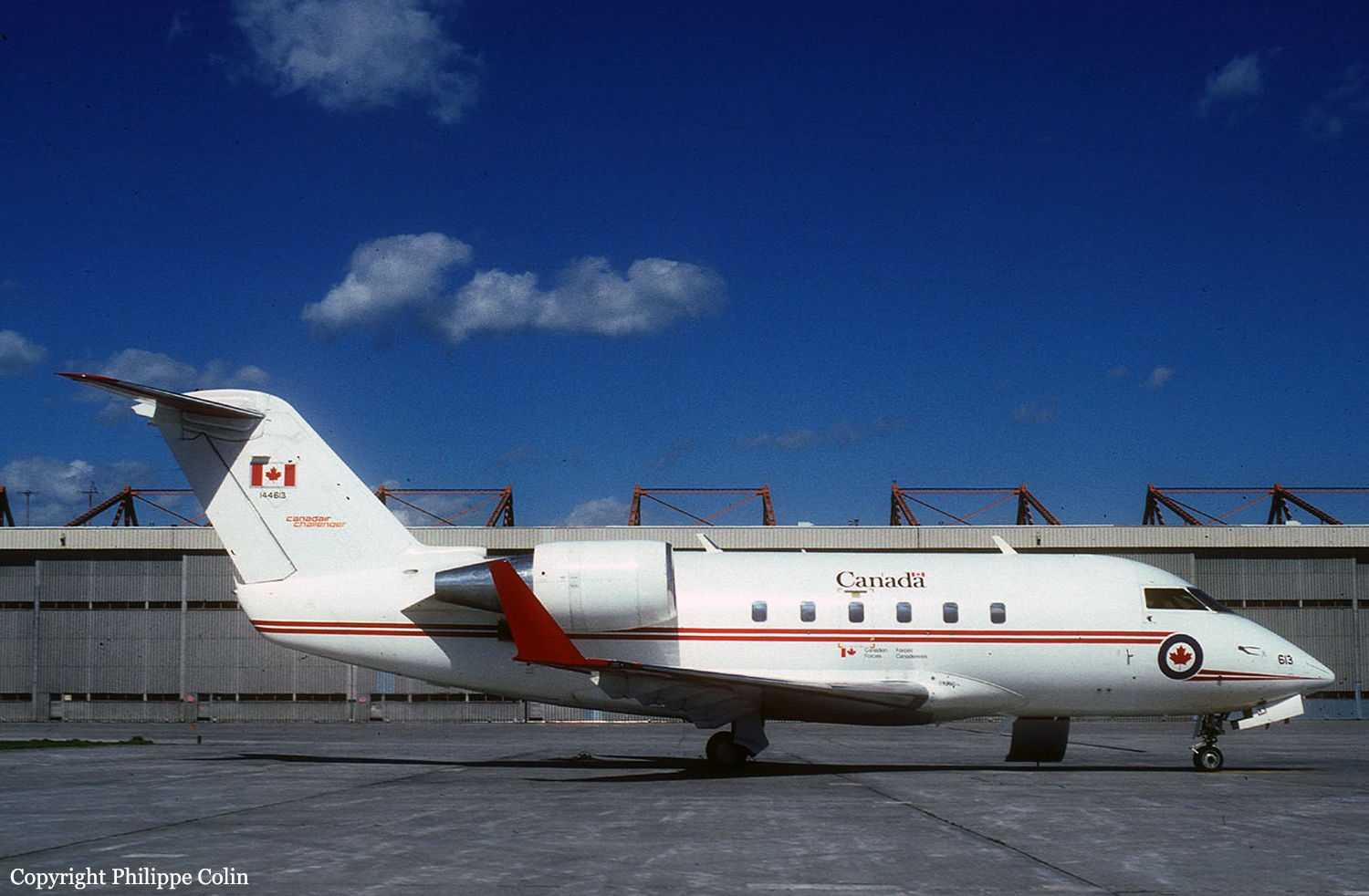
Crash of a Canadair CC-144A Challenger 601 in Shearwater
Date & Time:
Apr 24, 1995
Operator:
Registration:
144613
Survivors:
Yes
Schedule:
Shearwater - Shearwater
MSN:
3035
YOM:
1984
Crew on board:
4
Crew fatalities:
Pax on board:
0
Pax fatalities:
Other fatalities:
Total fatalities:
0
Circumstances:
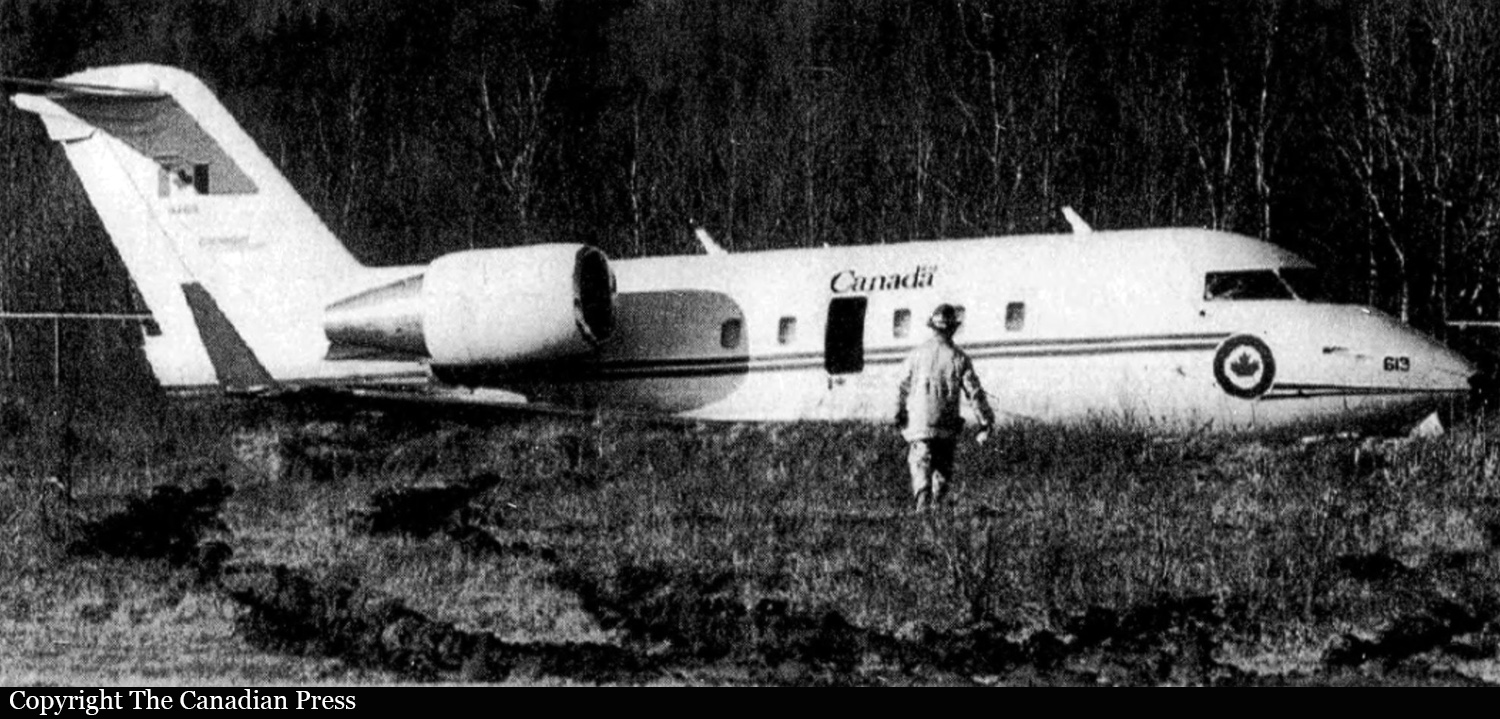
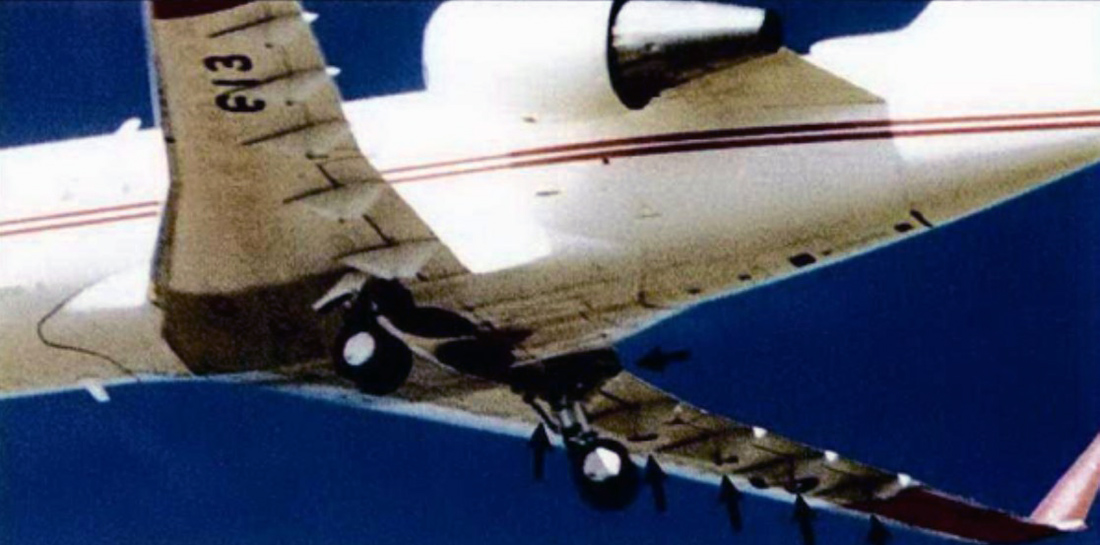
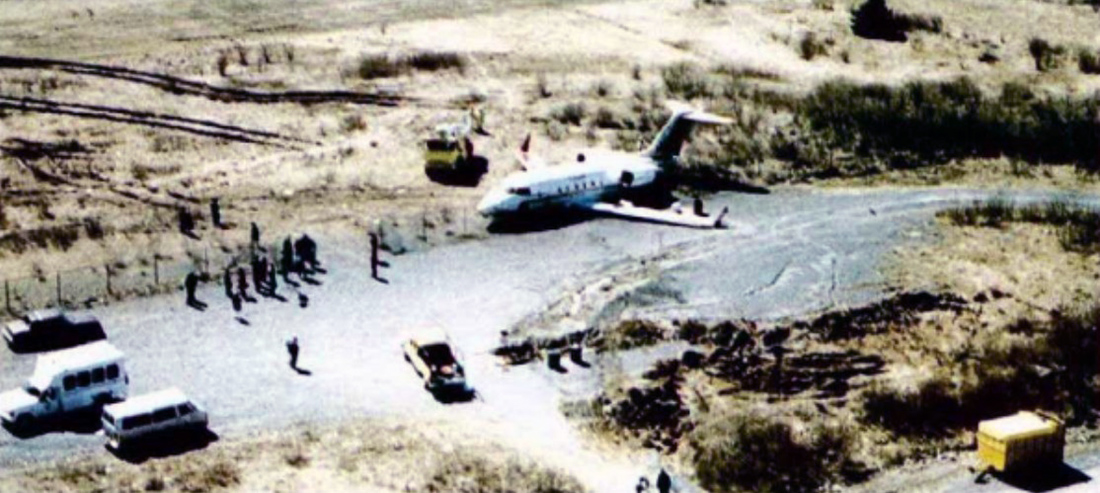
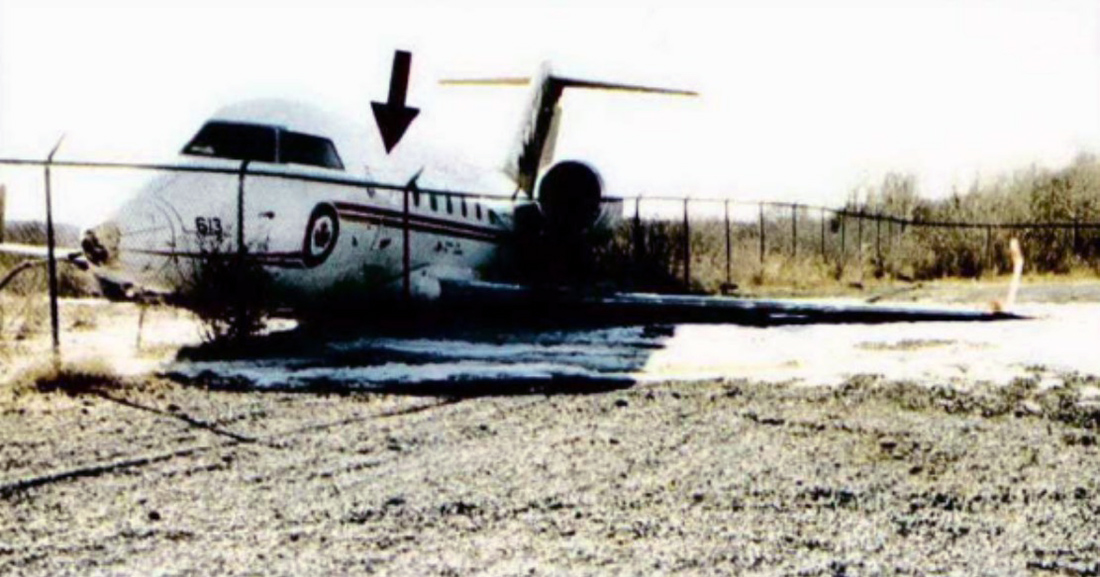
The crew (one instructor and three pilots under training) departed Shearwater Airport on a local training mission. The crew decided to perform a flapless landing but the aircraft arrived too high and to correct the situation, the pilot-in-command nosed down when the aircraft landed very hard and bounced. The crew initiated a go-around procedure and decided to follow a holding pattern after being informed by ATC based in the tower that the right main gear seems to be damaged. About 40 minutes later, the right main gear fell away. The right engine then lost power and a fire erupted in the right wheel well. The crew declared an emergency and was cleared to return to Shearwater Airport. Upon landing, the aircraft sank on its right side then rolled for few dozen metres before coming to rest, bursting into flames. All four occupants escaped uninjured before an explosion occurred in the central fuel tank.
Probable cause:
It was determined that during the first hard landing, the right main gear was seriously damaged upon impact as well as hydraulic and fuel line.
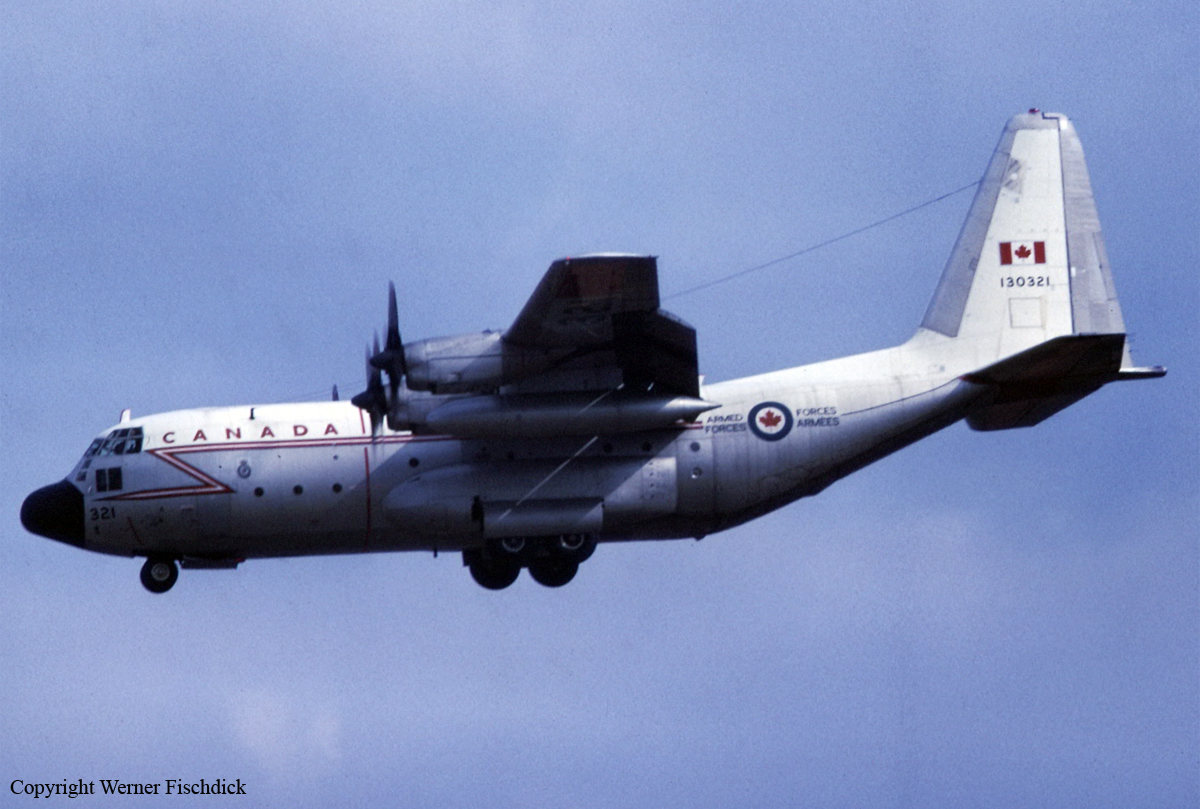
Crash of a Lockheed CC-130 Hercules near Wainwright: 5 killed
Date & Time:
Jul 22, 1993 at 1030 LT
Operator:
Registration:
130321
Survivors:
Yes
Schedule:
Namao AFB - Wainwright
MSN:
4191
YOM:
1967
Flight number:
Trucker 5
Crew on board:
9
Crew fatalities:
Pax on board:
0
Pax fatalities:
Other fatalities:
Total fatalities:
5
Captain / Total hours on type:
7307.00
Copilot / Total hours on type:
2798
Aircraft flight hours:
33189
Circumstances:
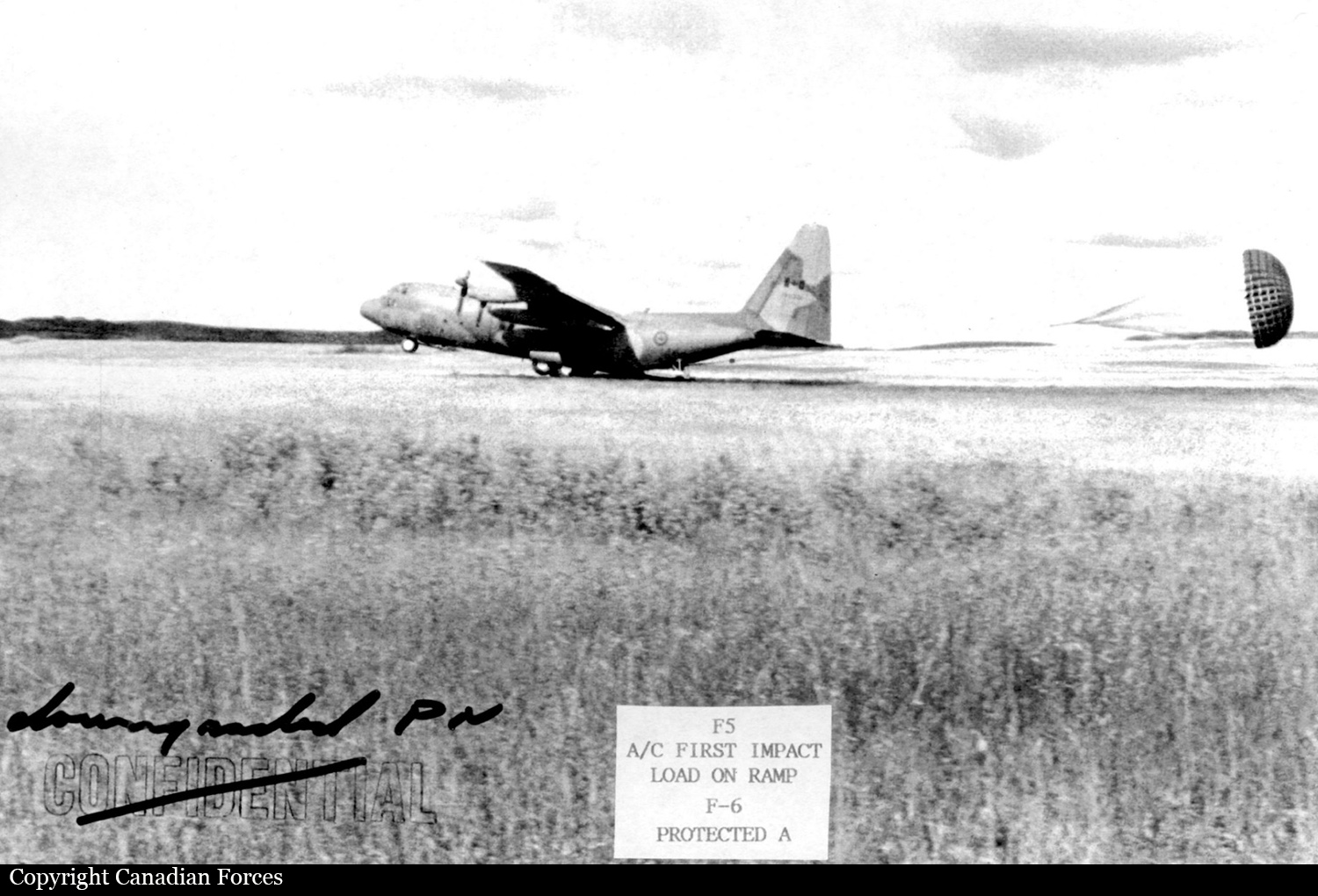
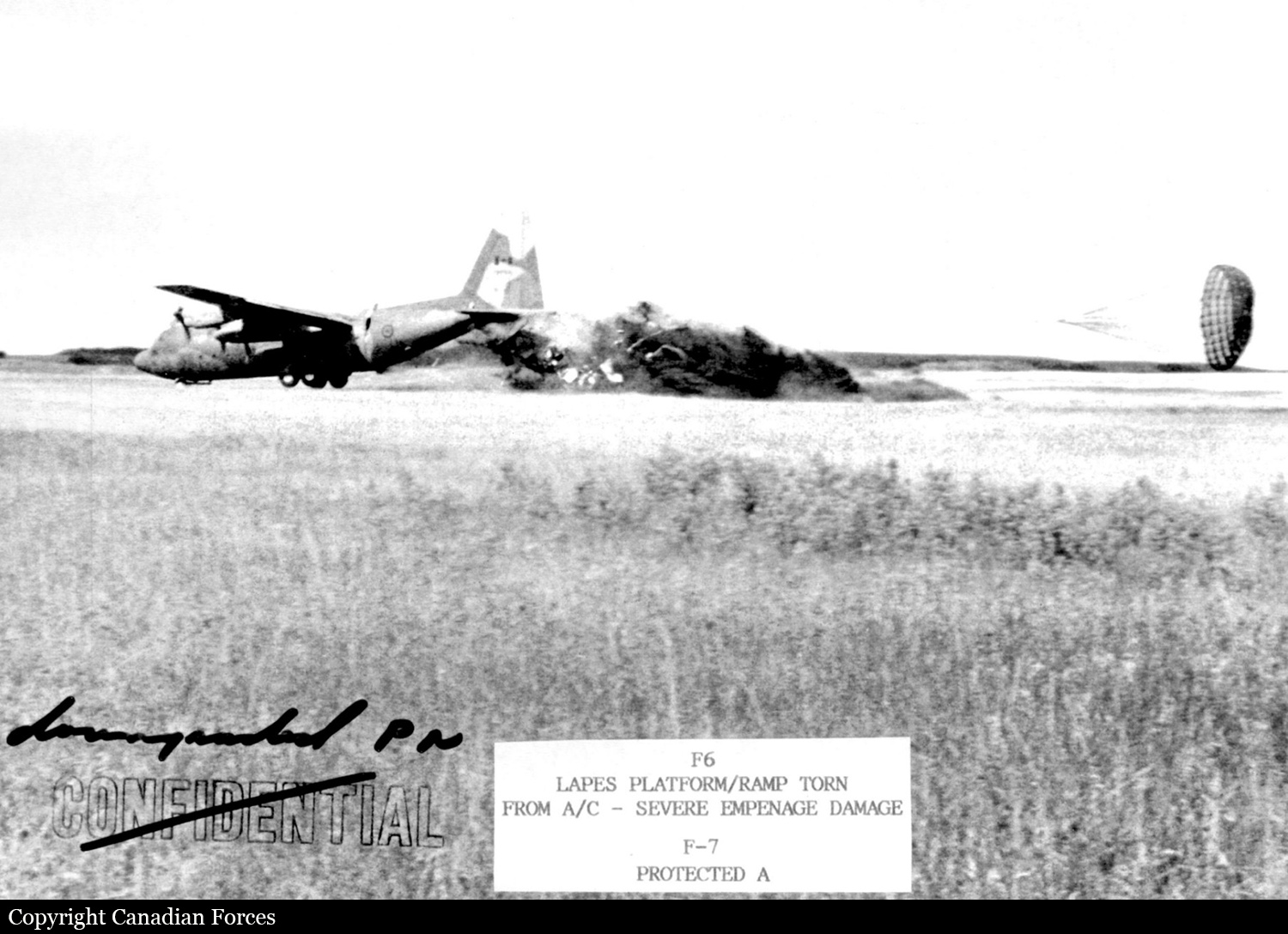
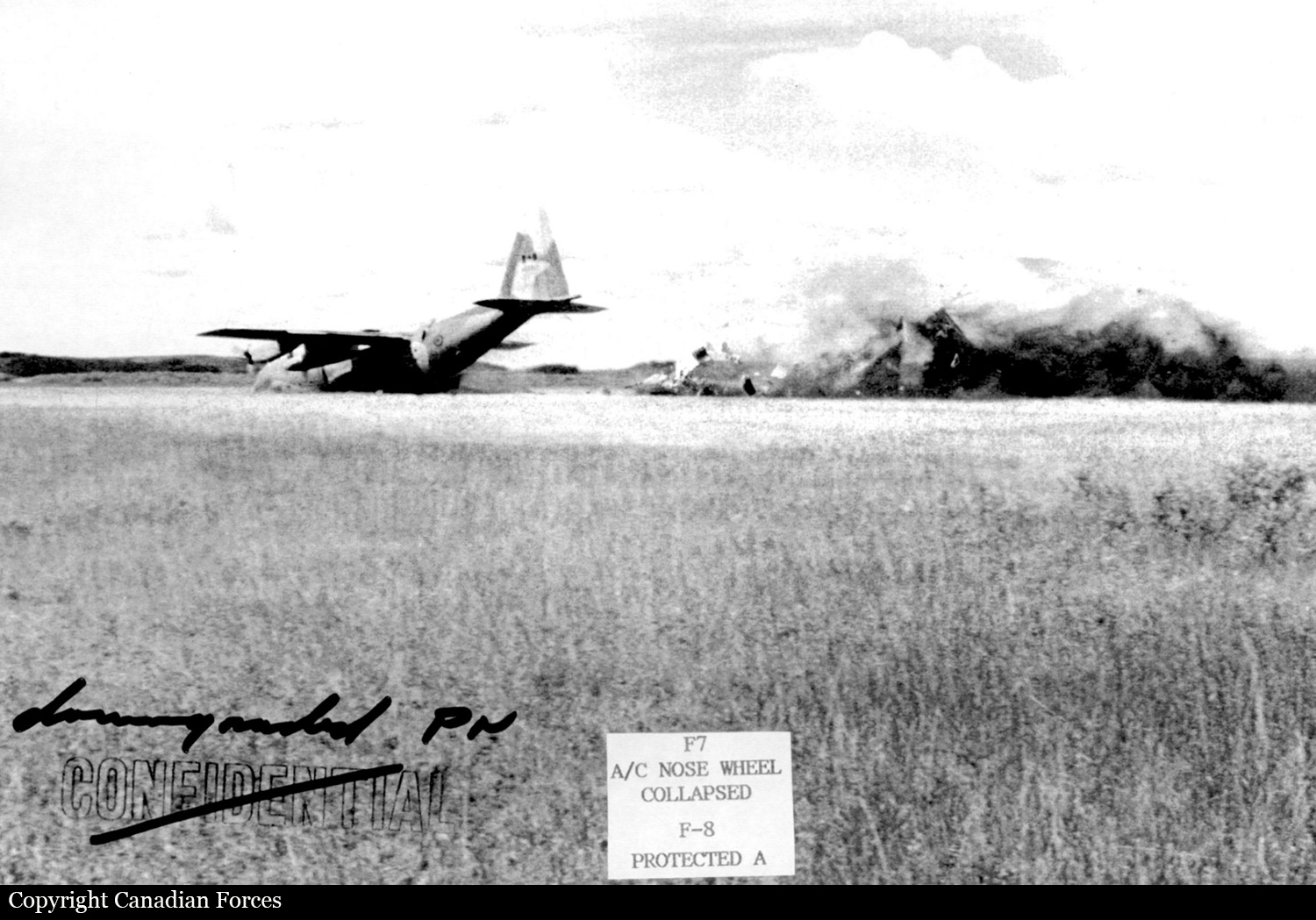
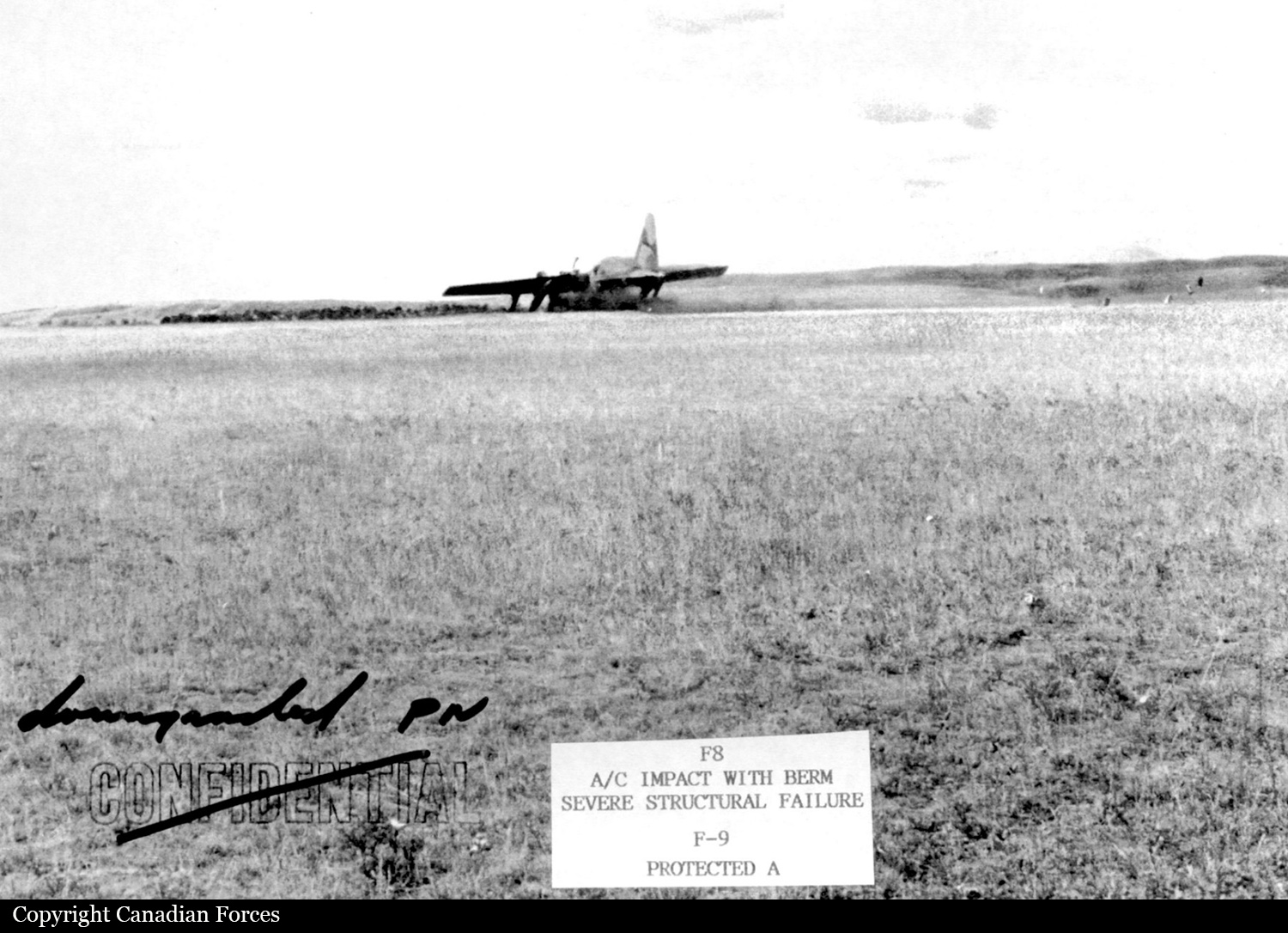
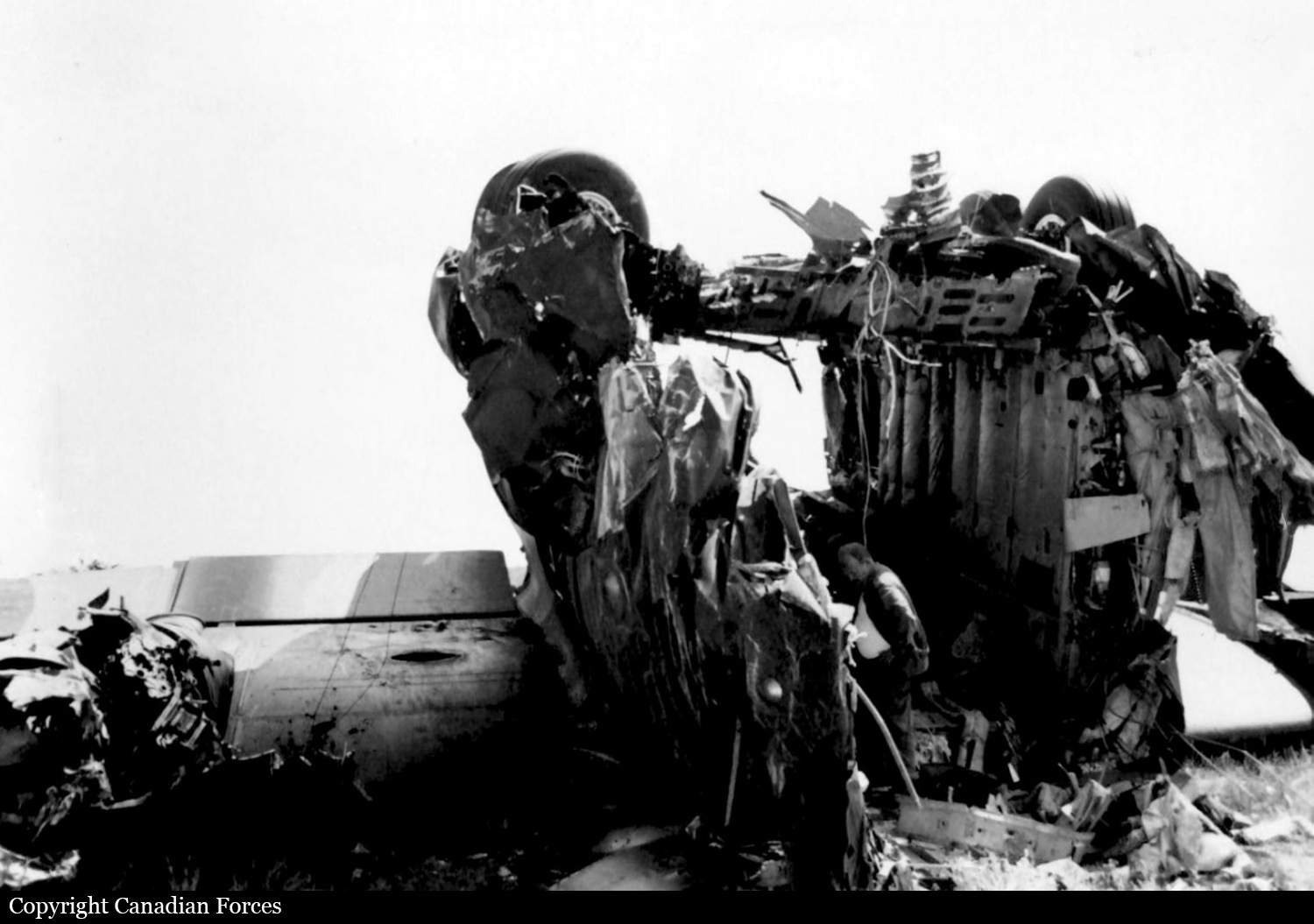
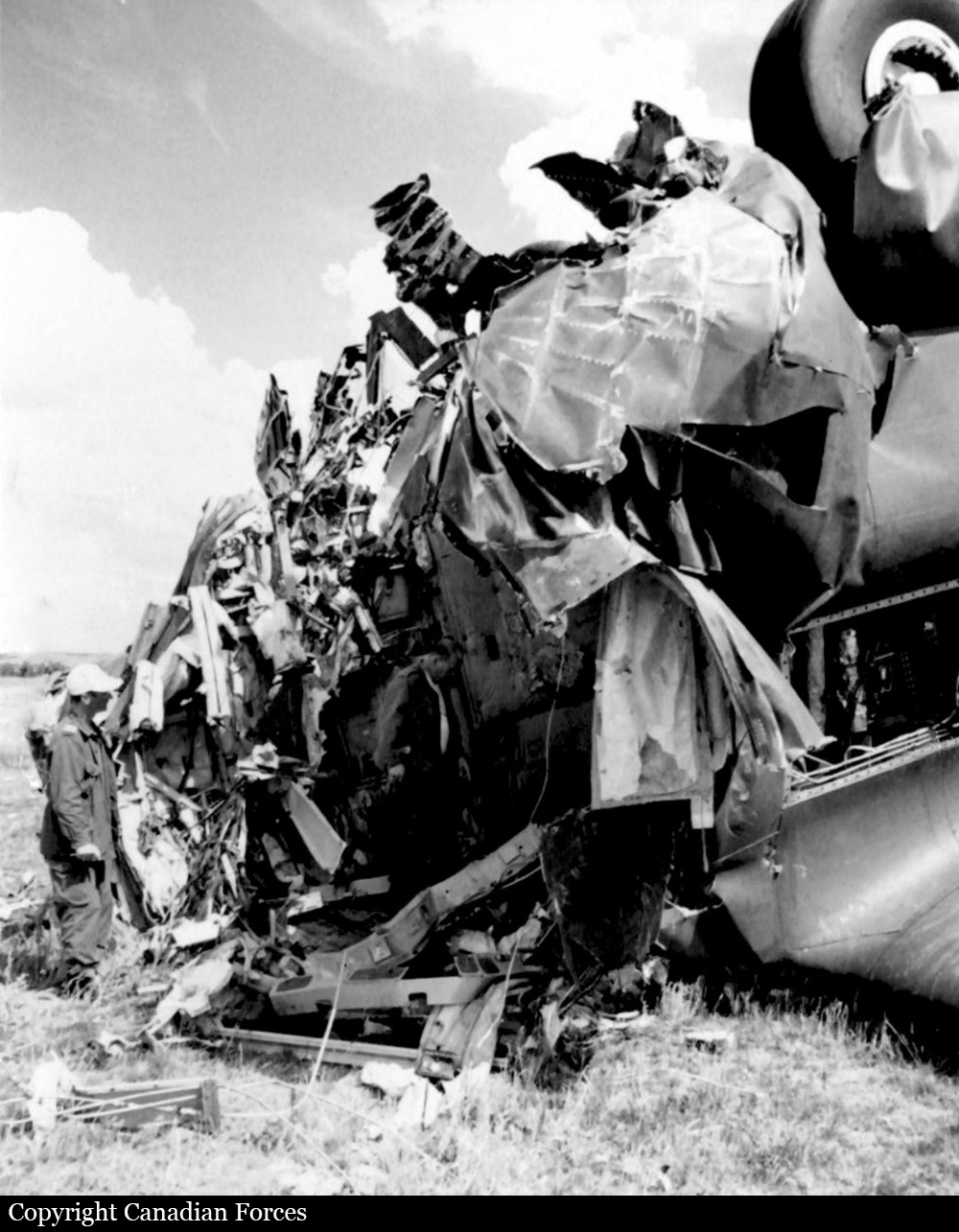
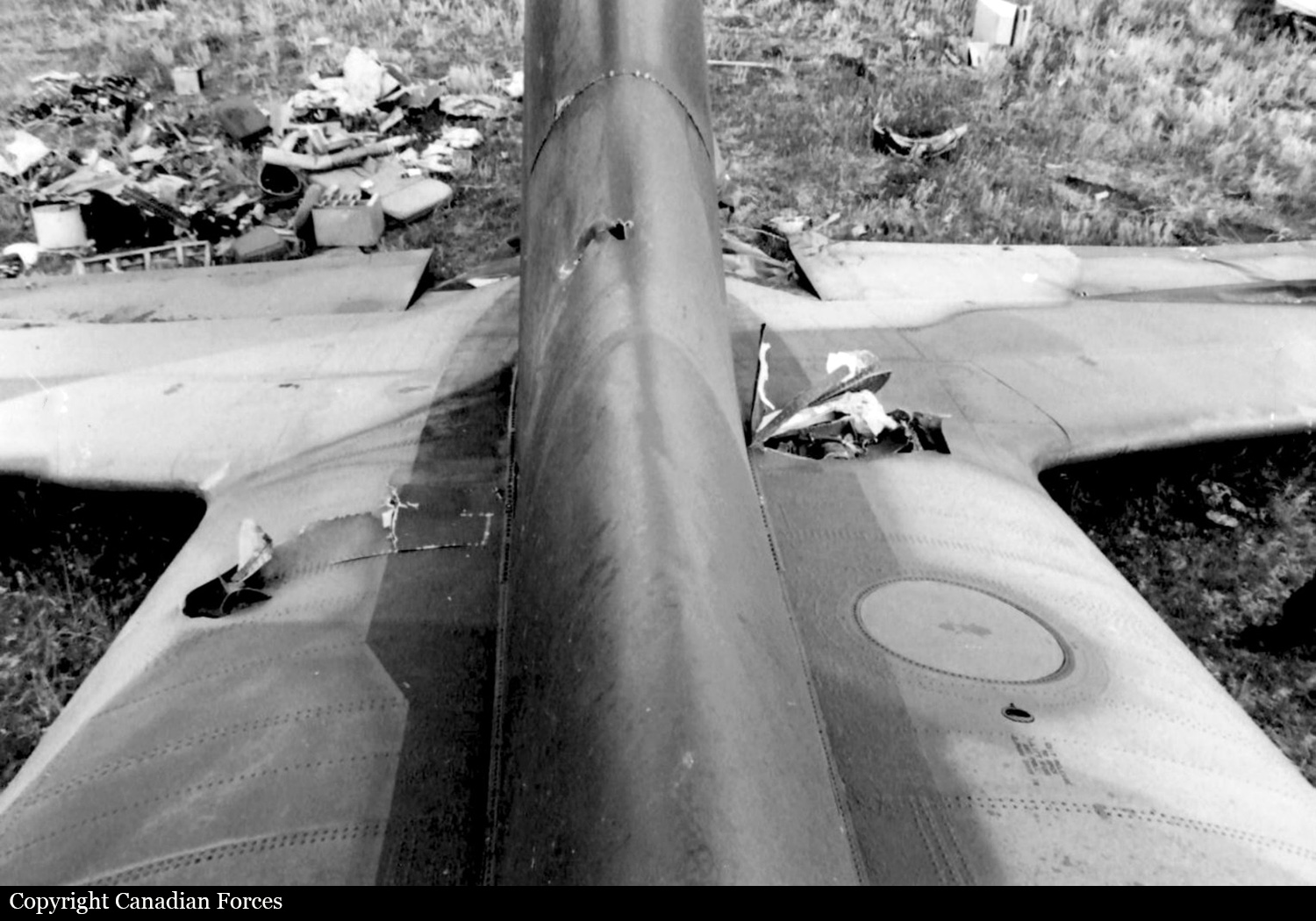
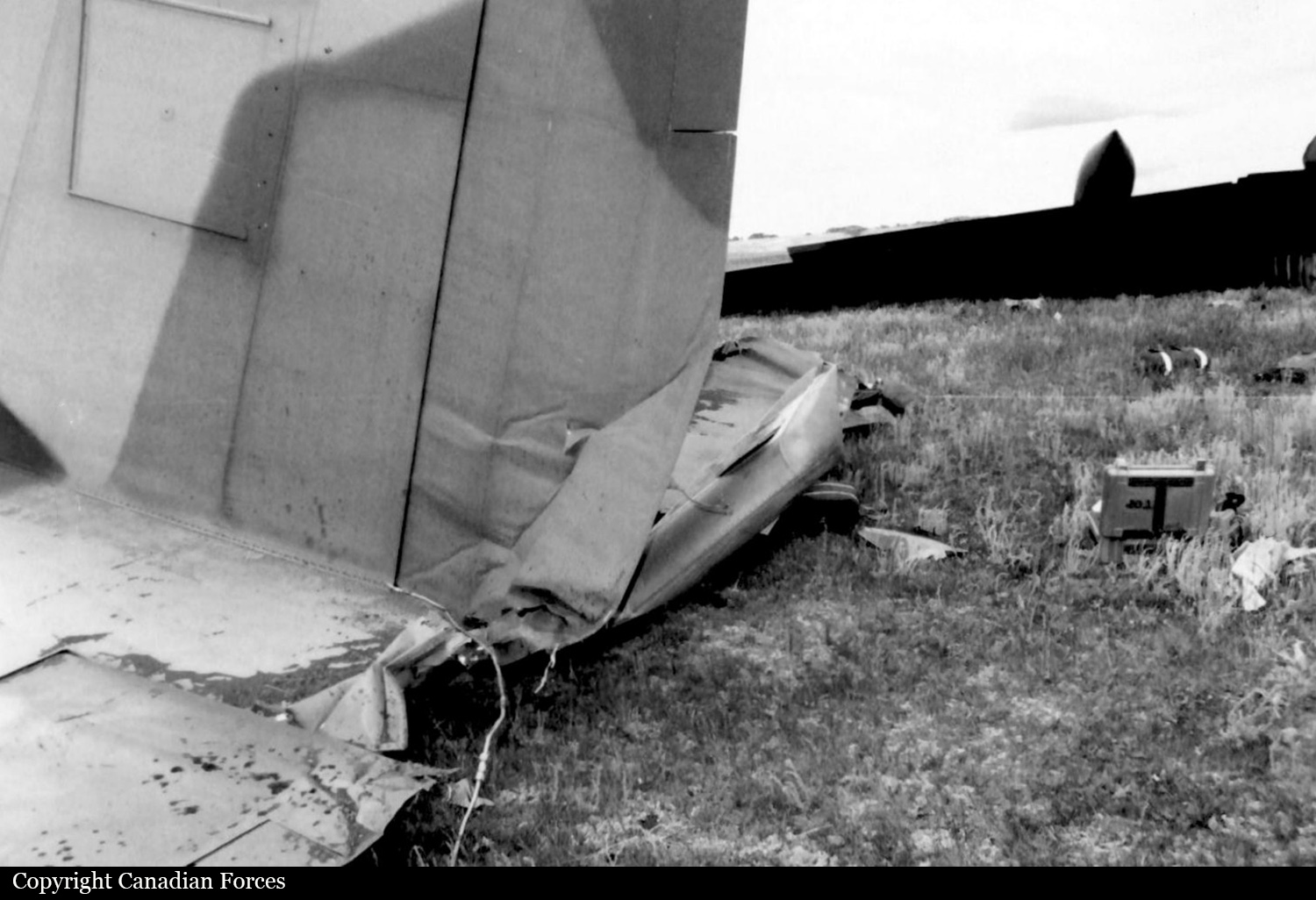
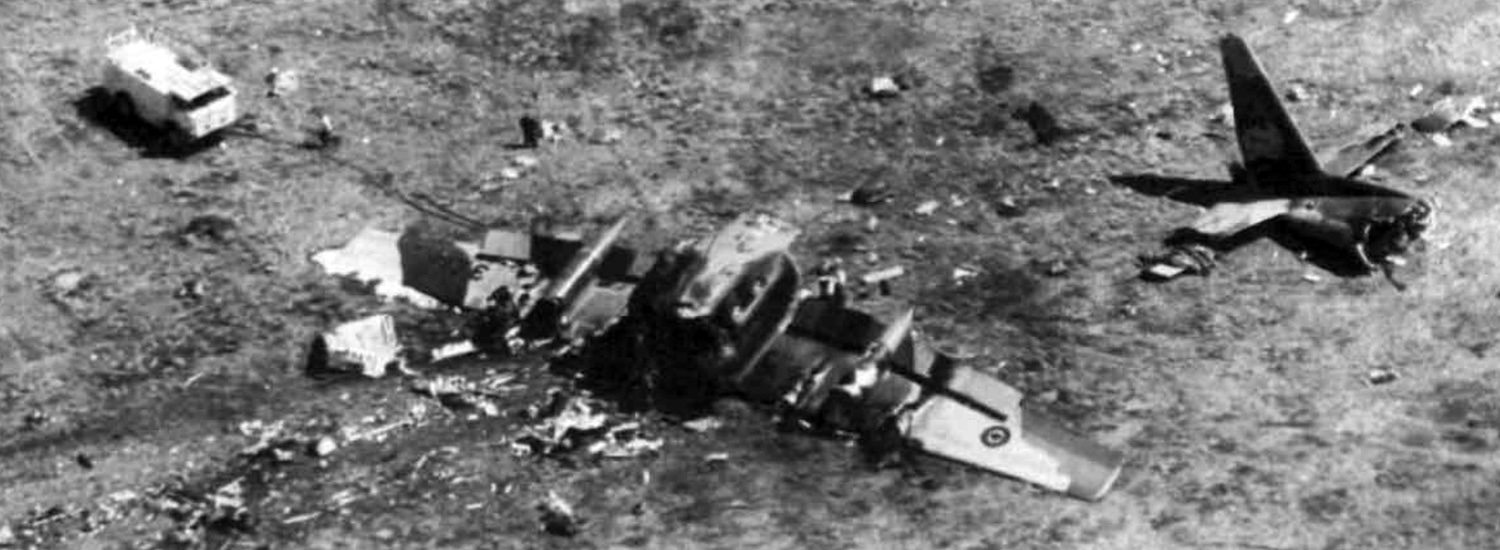
The airplane, a CC130, callsign Trucker 5, departed 18 Wing Namao, Alberta, at 1555Z on a VFR, Tactical Airlift Mission (TAL) to Camp Wainwright, Extraction Zone (EZ) Saville Farm. The aircraft was configured for a Low Altitude Parachute Extraction System (LAPES) drop and had a total all-up-weight (AUW) for takeoff of 118,914 pounds. A dry pass was made in Namao to practice a LAPES profile and an emergency. Following the dry pass, the proceeded on the low level route portion of their mission to EZ Saville Farm. The mission progressed normally to the extraction zone. The aircraft arrived at Saville Farm on time and proceeded to carry out the LAPES extraction. During the LAPES profile, the aircraft impacted the ground shortly after their expected Time On Target (TOT) of 1630Z. Five crew members were killed and four others were injured. The airplane was destroyed.
Crew:
Maj A. G. Niles, aircraft commander,
Cpt Michael G. Allen, pilot, †
Cpt Vincent L. Schurman, copilot, †
Cpt E. R. M. Juneau, navigator,
Sgt H. J. Lous, flight engineer,
W/O S. J. Hull, flight engineer,
M/WO Joseph Sylvio Castonguay, CABC, †
Sgt Alain Michaud, loadmaster, †
M/Cpl Ronald J. McWilliam, loadmaster, †
Crew:
Maj A. G. Niles, aircraft commander,
Cpt Michael G. Allen, pilot, †
Cpt Vincent L. Schurman, copilot, †
Cpt E. R. M. Juneau, navigator,
Sgt H. J. Lous, flight engineer,
W/O S. J. Hull, flight engineer,
M/WO Joseph Sylvio Castonguay, CABC, †
Sgt Alain Michaud, loadmaster, †
M/Cpl Ronald J. McWilliam, loadmaster, †
Probable cause:
The board of inquiry assigns the following cause factors:
- Personnel - Management/CHO - Other (Directives): Inadequate directives governing crew composition/training for uncurrent LAPES aircrew.
- Personnel - Management/GHO - Training: Inadequate directives governing navigator and flight engineer LAPES training/currency requirements.
- Personnel - Pilot - Judgement: The pilot commenced the LAPES profile despite being past the descent point.
- Personnel - Pilot - Pressing: Despite excessive altitude over the release panels, the pilot attempted to achieved normal wheel height by the impact panels.
- Personnel - AC - Judgement: Knowing the elapsed currency status of the pilots and their unfamiliarity with the extraction zone, the AC elected not occupy the right seat or conduct a dry pass at EZ Saville Farm.
- Personnel - Copilot - Channelized Attention: Copilot concentrated on release panels to the exclusion of his other duties.
- Personnel - AC - Channelized Attention: The AC was preoccupied with the activities of the copilot during a critical phase of flight.
- Personnel - Management/CHO - Other (Directives): Inadequate directives governing crew composition/training for uncurrent LAPES aircrew.
- Personnel - Management/GHO - Training: Inadequate directives governing navigator and flight engineer LAPES training/currency requirements.
- Personnel - Pilot - Judgement: The pilot commenced the LAPES profile despite being past the descent point.
- Personnel - Pilot - Pressing: Despite excessive altitude over the release panels, the pilot attempted to achieved normal wheel height by the impact panels.
- Personnel - AC - Judgement: Knowing the elapsed currency status of the pilots and their unfamiliarity with the extraction zone, the AC elected not occupy the right seat or conduct a dry pass at EZ Saville Farm.
- Personnel - Copilot - Channelized Attention: Copilot concentrated on release panels to the exclusion of his other duties.
- Personnel - AC - Channelized Attention: The AC was preoccupied with the activities of the copilot during a critical phase of flight.
Final Report:
Crash of a Lockheed C-130 Hercules near Alert: 5 killed
Date & Time:
Oct 30, 1991 at 1640 LT
Operator:
Registration:
130322
Survivors:
Yes
Schedule:
Edmonton - Thule - Alert
MSN:
4192
YOM:
1967
Flight number:
Boxtop22
Crew on board:
5
Crew fatalities:
Pax on board:
13
Pax fatalities:
Other fatalities:
Total fatalities:
5
Circumstances:
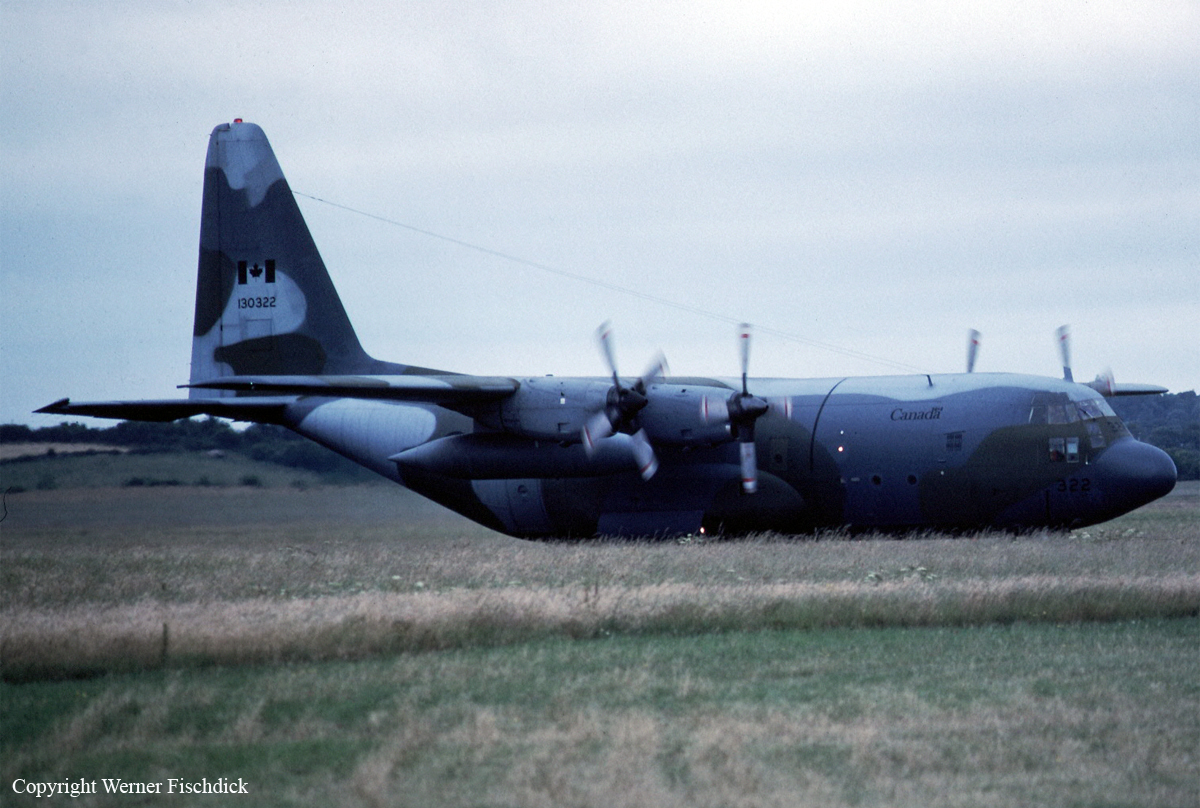
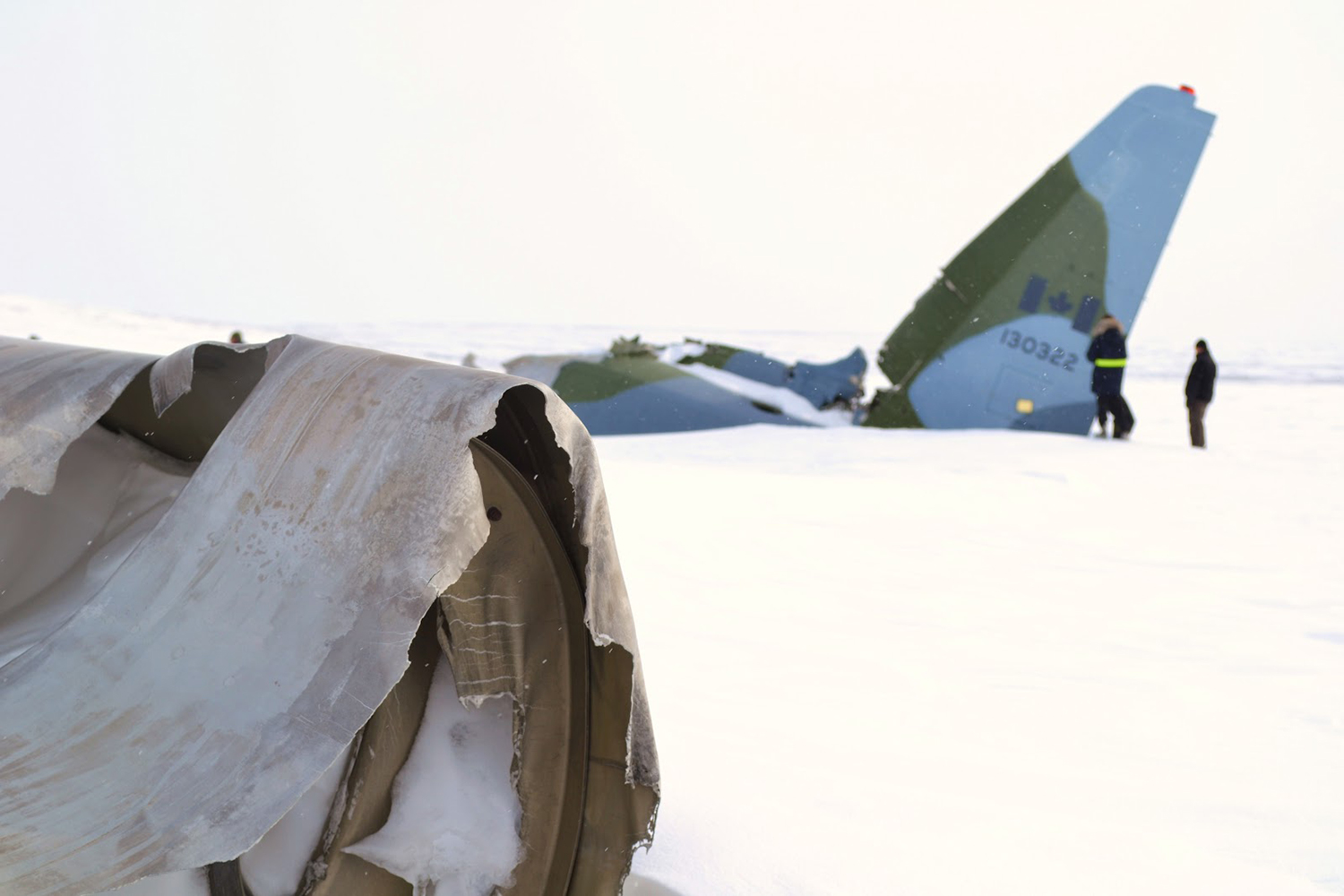
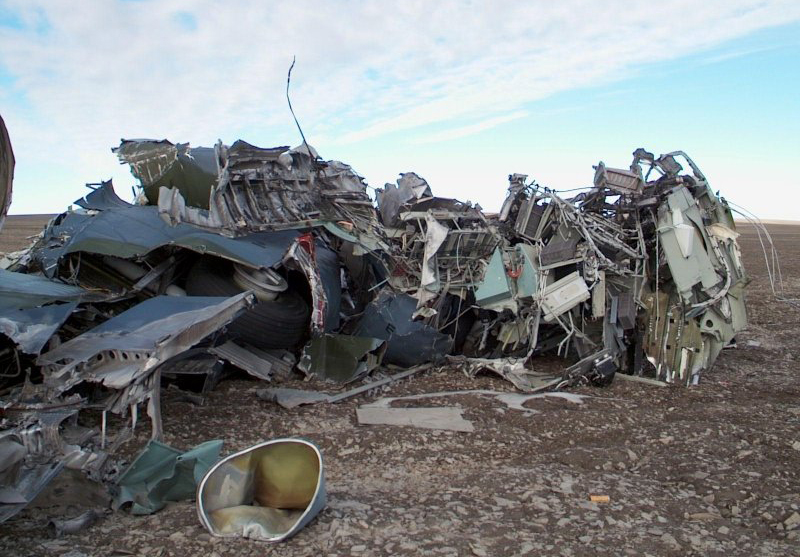
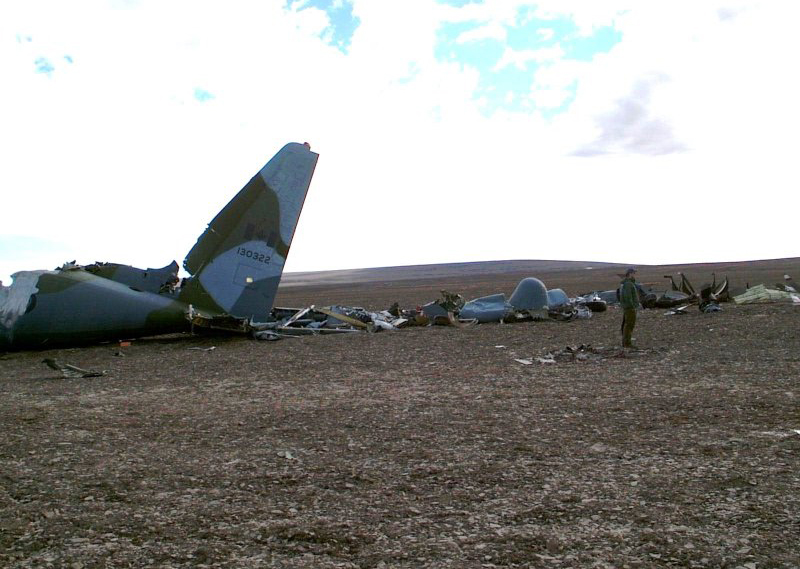
Every year, in the cold and darkness of late October, personnel at Canadian Forces Station Alert on Ellesmere Island, Nunavut, gather at a cairn near the runway to remember the crew and passengers of Hercules 130322 who lost their lives during a resupply mission to the station. On October 30, 1991, at approximately 4:40 p.m., flight 22 of Operation Boxtop – as the biannual resupply mission is called – was on its final approach to the station from Thule Air Force Base in Greenland. As the CC-130 Hercules from 435 Transport and Rescue Squadron, loaded with 3,400 litres of diesel fuel, began its descent, the pilot flying lost sight of the runway. Moments later, radar contact and communication were lost as the aircraft crashed approximately 16 km south of the station. The crew of another CC-130 Hercules, also bound for Alert, saw the fires of the crash and identified the location of Boxtop 22. The crash took the lives of five Canadian Armed Forces members – four died in the crash and one perished before help arrived – and led to the boldest and most massive air disaster rescue mission ever undertaken by the Canadian military in the High Arctic. Thirteen lives were saved. Within a half hour of the rescue call, a Hercules carrying 12 search and rescue technicians from 440 Search and Rescue Squadron in Edmonton, Alberta, was in the air. It reached the crash site seven and a half hours later, but the SAR technicians couldn’t descend due to the weather. Another Hercules from 413 Search and Rescue Squadron in Greenwood, Nova Scotia, soon joined the search. Meanwhile, search and rescue technicians formed a ground rescue team at Alert and set out overland for the crash site, guided through the darkness and horrendous weather conditions by a Hercules. The survivors, some soaked in diesel fuel, endured high winds and temperatures between -20C and -30C. Many sheltered in the tail section of the downed aircraft but others were more exposed to the elements. Finally, the 413 Squadron team finally got a break in the weather and six SAR technicians parachuted into the site more than 32 hours after the crash and began looking for survivors. They were joined soon after by more SAR technicians. When the ground rescue team finally arrived – 21 hours after it had set out – 26 rescuers were on the ground. They warmed and treated the injured and prepared them for medical evacuation. A Twin Huey helicopter from Alert made three trips to bring the survivors back to the station. Once again this year, personnel at Alert will conduct a parade on October 30 to commemorate the crash. The parade will begin at 4:30 p.m. and continue through the 4:40 p.m. timing when the crash occurred.
Those killed were:
Cpt John Couch, pilot,
Cpt Judy Trépanier, logistics officer,
M/WO Tom Jardine, regional services manager CANEX,
W/O Robert Grimsley, supply technician,
M/Cpl Roland Pitre, traffic technician.
Those who survived were:
Robert Thomson,
Susan Hillier,
Cpt Richard Dumoulin, logistics officer,
Cpt Wilma DeGroot, doctor,
Lt Joe Bales, pilot,
Lt Mike Moore, navigator,
M/WO Marc Tremblay, supply technician,
Sgt Paul West, flight engineer,
M/Cpl Tony Cobden, communications researcher,
M/Cpl David Meace, radio technician,
M/Cpl Mario Ellefsen, communications researcher,
M/S “Monty” Montgomery, communications researcher,
Pvt Bill Vance, communications researcher.
Source:
http://www.rcaf-arc.forces.gc.ca/en/article-template-standard.page?doc=remembering-the-crash-of-boxtop-flight-22/ig9v1k0t
Those killed were:
Cpt John Couch, pilot,
Cpt Judy Trépanier, logistics officer,
M/WO Tom Jardine, regional services manager CANEX,
W/O Robert Grimsley, supply technician,
M/Cpl Roland Pitre, traffic technician.
Those who survived were:
Robert Thomson,
Susan Hillier,
Cpt Richard Dumoulin, logistics officer,
Cpt Wilma DeGroot, doctor,
Lt Joe Bales, pilot,
Lt Mike Moore, navigator,
M/WO Marc Tremblay, supply technician,
Sgt Paul West, flight engineer,
M/Cpl Tony Cobden, communications researcher,
M/Cpl David Meace, radio technician,
M/Cpl Mario Ellefsen, communications researcher,
M/S “Monty” Montgomery, communications researcher,
Pvt Bill Vance, communications researcher.
Source:
http://www.rcaf-arc.forces.gc.ca/en/article-template-standard.page?doc=remembering-the-crash-of-boxtop-flight-22/ig9v1k0t
Final Report:
Crash of a Lockheed CC-130E Hercules at Fort Wainwright AFB: 9 killed
Date & Time:
Jan 30, 1989 at 1900 LT
Operator:
Registration:
130318
Survivors:
Yes
Schedule:
Namao - Fort Wainwright
MSN:
4124
YOM:
1966
Flight number:
Boxtop18
Crew on board:
8
Crew fatalities:
Pax on board:
10
Pax fatalities:
Other fatalities:
Total fatalities:
9
Circumstances:
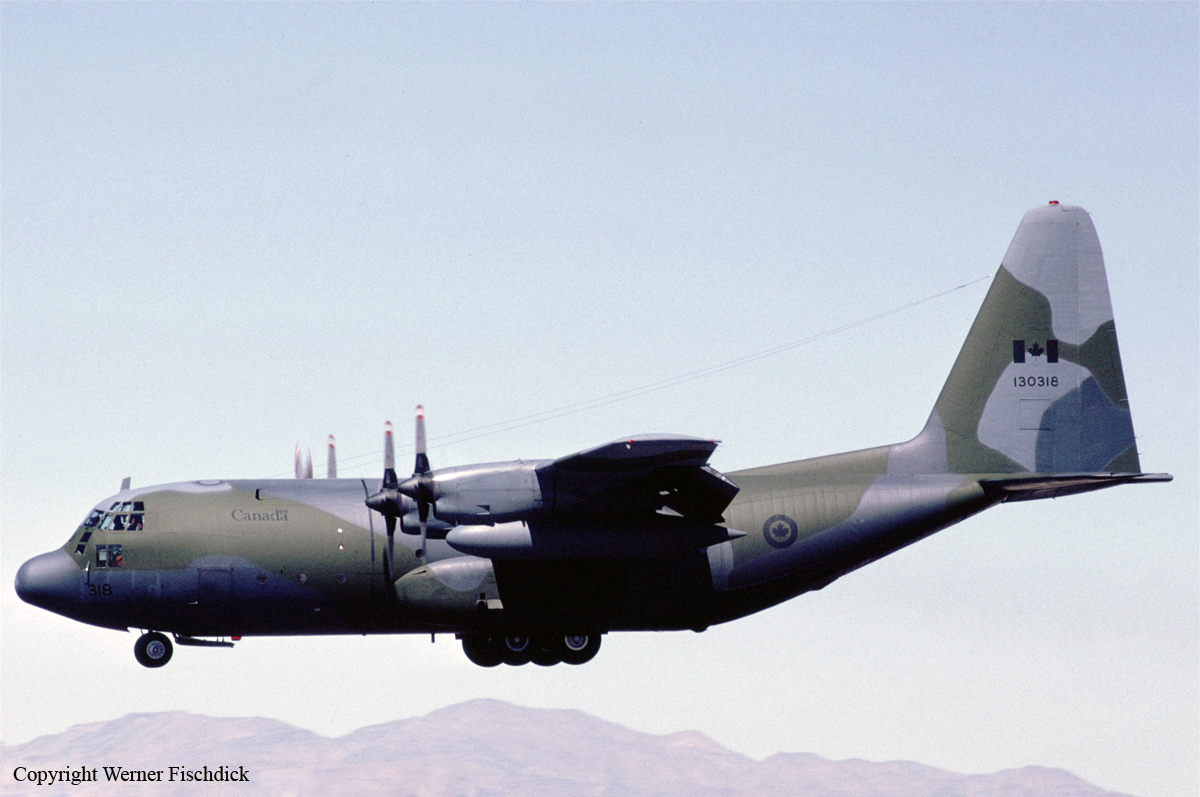
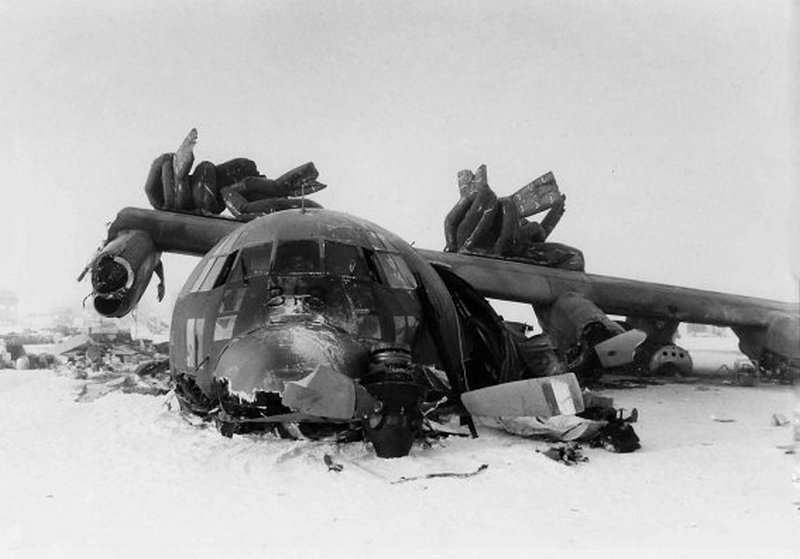
On short final to Fort Wainwright AFB, the airplane lost height, struck approach equipments then an embankment and eventually crashed about 600 feet short of runway threshold. Both pilots and seven passengers were killed while nine other occupants were injured. The aircraft was destroyed. It was engaged in a combined exercice called 'Brim Frost'. At the time of the accident, the OAT was -46° C.
Probable cause:
It was determined that the loss of altitude on short final was caused by the combination of frost accretion and an insufficient approach speed.
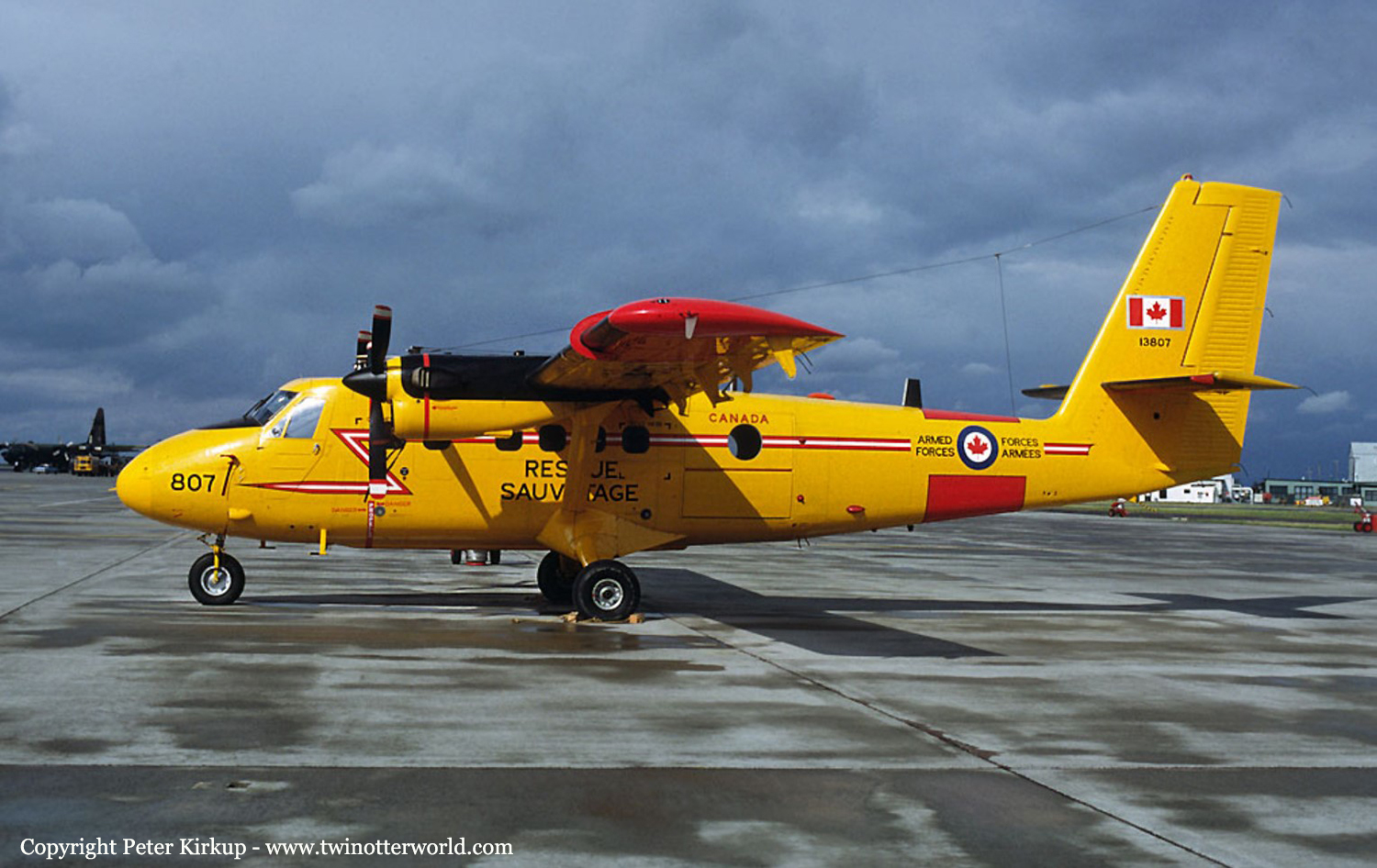
Crash of a De Havilland CC-138 Twin Otter 300 near Calgary: 8 killed
Date & Time:
Jun 14, 1986 at 1452 LT
Operator:
Registration:
13807
Survivors:
No
Schedule:
Calgary - Calgary
MSN:
309
YOM:
1971
Flight number:
Rescue 807
Crew on board:
3
Crew fatalities:
Pax on board:
5
Pax fatalities:
Other fatalities:
Total fatalities:
8
Captain / Total hours on type:
954.00
Copilot / Total hours on type:
1346
Aircraft flight hours:
13537
Circumstances:
The aircraft, with a crew of three and five civilian spotters, was engaged in an Air Search Mission in the Kananaskis area west of Calgary, after two airplanes were missing. The weather was good and the terrain consisted of hills and valleys with peaks up to 7,000 feet. The search profile was a 500 feet AGL contour search. Two hours and 20 minutes after takeoff, the aircraft impacted at 5,900 feet ASL on the west slope of 6,200 foot feature. The aircraft was destroyed by impact and post crash fire, and all occupants sustained fatal injuries.
Crew:
Cpt D. Wayne Plumbtree, pilot,
Cpt E. M. Kates, copilot,
Sgt Brian G. Burkitt, flight engineer.
Passengers:
Mr. D. Hall,
Mr. J. Schindler,
Mr. C. Masur,
Mr. C. Grant,
Miss P. McLean.
Crew:
Cpt D. Wayne Plumbtree, pilot,
Cpt E. M. Kates, copilot,
Sgt Brian G. Burkitt, flight engineer.
Passengers:
Mr. D. Hall,
Mr. J. Schindler,
Mr. C. Masur,
Mr. C. Grant,
Miss P. McLean.
Probable cause:
The following causal factors were identified:
Personnel - Pilot - Visual illusion
- The pilot at the controls of the aircraft carried out an overhead recce of the valley. The lighting conditions, absence of shadows and lack of contrast in the valley was such that the rock outcrop was masked by the surrounding rockface. The valley, in the absence of this rock outcrop, was large enough to permit the flight operation to be conducted.
Personnel - Pilot - Expectancy
- The low contrast terrain created the visual illusion experienced during the initial contour at approximately 7,000 feet ASL so that the pilot did not expect to see the rock outcrop during the final flight path at 6,100 feet ASL. Therefore, the pilot was slow to recognize and react to the environmental cues which indicated the hazards of the valley.
Personnel - Pilot - Pressing
- The crew of the aircraft were attempting to complete 500 and 1/2 search coverage of their area. To obtain this coverage, the crew believed they had to fly into the valley in order to complete their mission.
Personnel - Supervision - 418 Squadron
- Squadron supervisory staff did not ensure that current, qualified aircrew were assigned to this mission and that the mission was properly authorized.
The following findings have been determined:
- Neither pilot was current in accordance with CFACM 60-2604.
- The search mission was not authorized in accordance with 418 Squadron Flying Orders.
Personnel - Pilot - Visual illusion
- The pilot at the controls of the aircraft carried out an overhead recce of the valley. The lighting conditions, absence of shadows and lack of contrast in the valley was such that the rock outcrop was masked by the surrounding rockface. The valley, in the absence of this rock outcrop, was large enough to permit the flight operation to be conducted.
Personnel - Pilot - Expectancy
- The low contrast terrain created the visual illusion experienced during the initial contour at approximately 7,000 feet ASL so that the pilot did not expect to see the rock outcrop during the final flight path at 6,100 feet ASL. Therefore, the pilot was slow to recognize and react to the environmental cues which indicated the hazards of the valley.
Personnel - Pilot - Pressing
- The crew of the aircraft were attempting to complete 500 and 1/2 search coverage of their area. To obtain this coverage, the crew believed they had to fly into the valley in order to complete their mission.
Personnel - Supervision - 418 Squadron
- Squadron supervisory staff did not ensure that current, qualified aircrew were assigned to this mission and that the mission was properly authorized.
The following findings have been determined:
- Neither pilot was current in accordance with CFACM 60-2604.
- The search mission was not authorized in accordance with 418 Squadron Flying Orders.
Final Report:
Crash of a Lockheed CC-130H Hercules at Namao AFB: 6 killed
Date & Time:
Mar 29, 1985 at 2015 LT
Operator:
Registration:
130331
Survivors:
No
Schedule:
Namao - Namao
MSN:
4559
YOM:
1974
Flight number:
Trucker 2
Crew on board:
5
Crew fatalities:
Pax on board:
1
Pax fatalities:
Other fatalities:
Total fatalities:
6
Captain / Total hours on type:
1561.00
Copilot / Total hours on type:
1455
Aircraft flight hours:
11888
Circumstances:
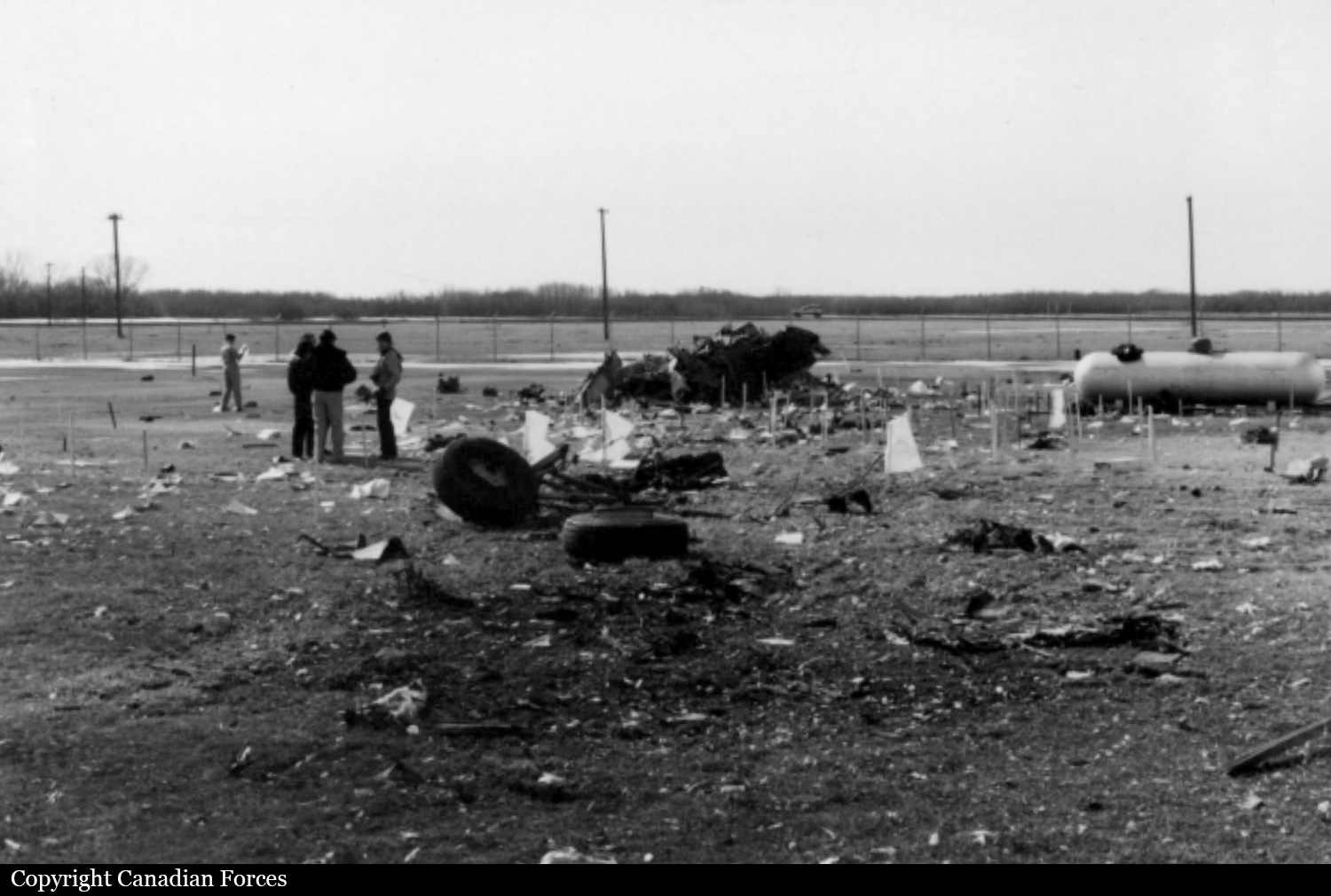
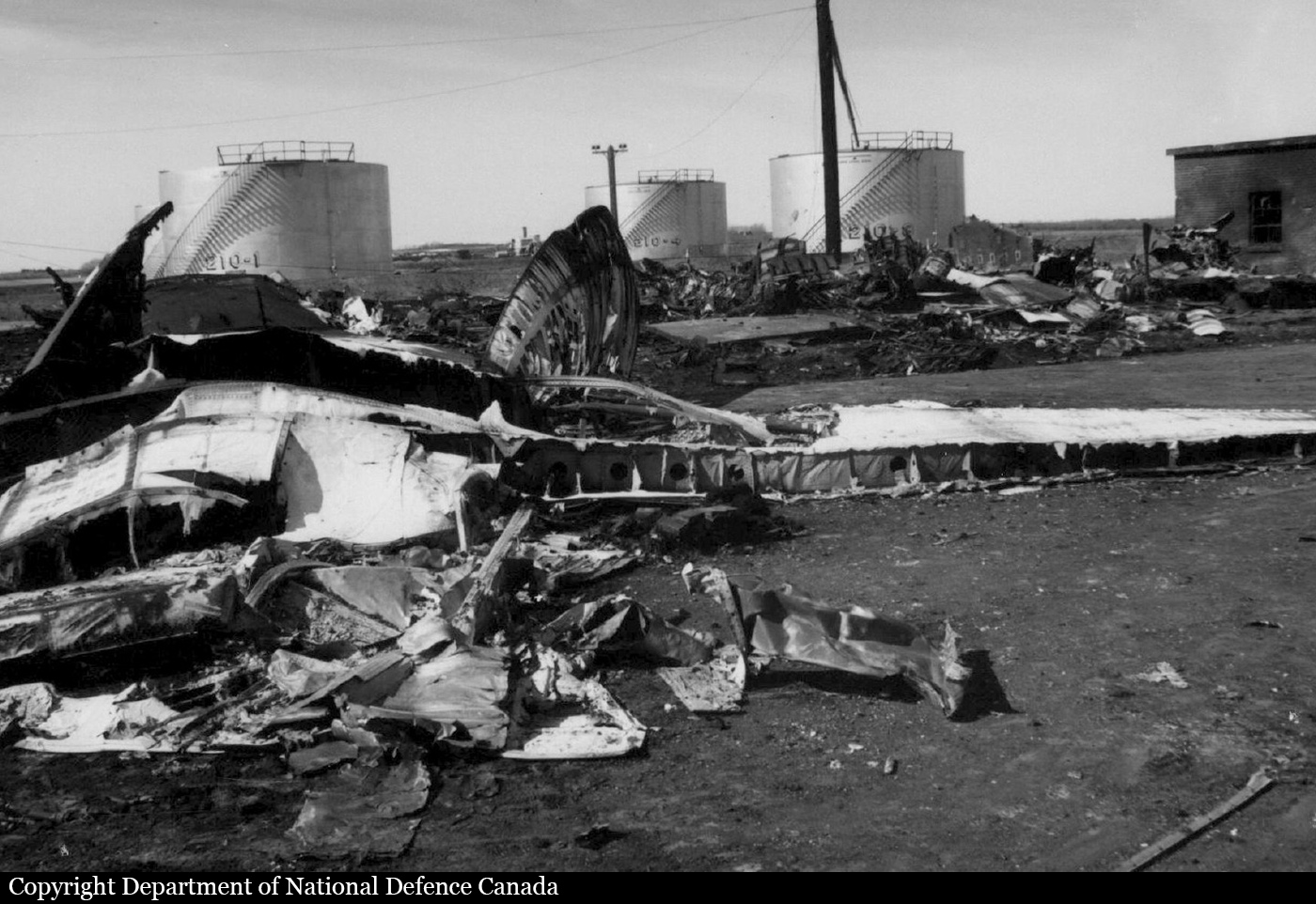
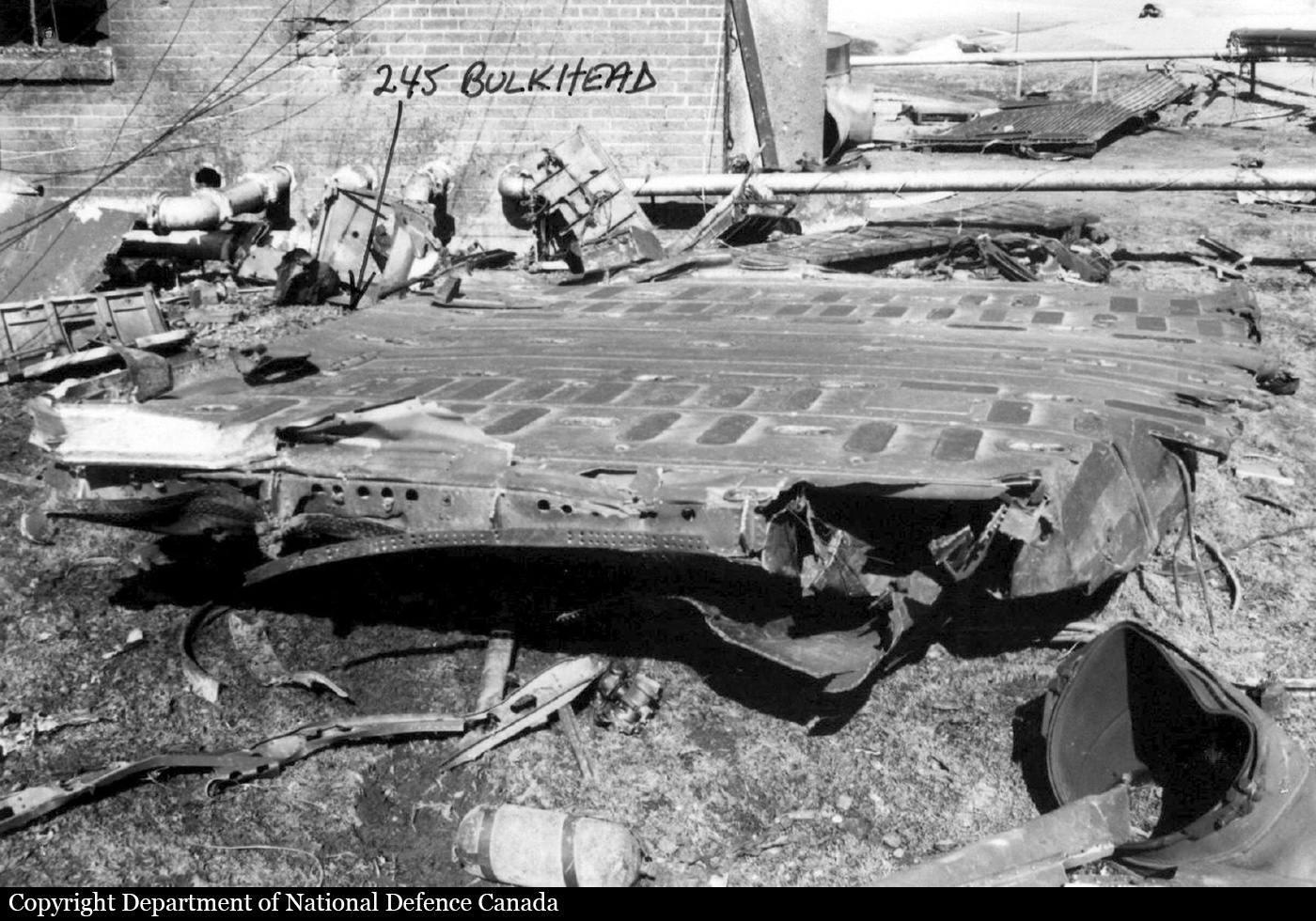
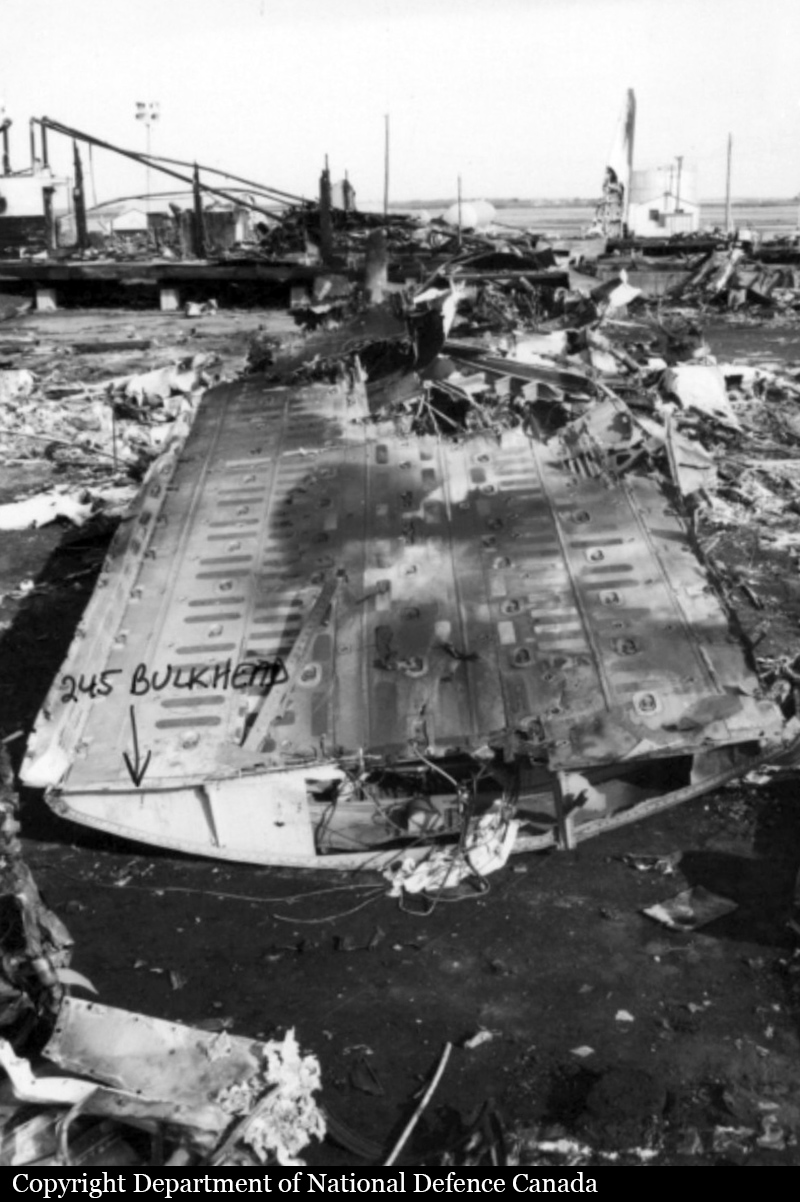
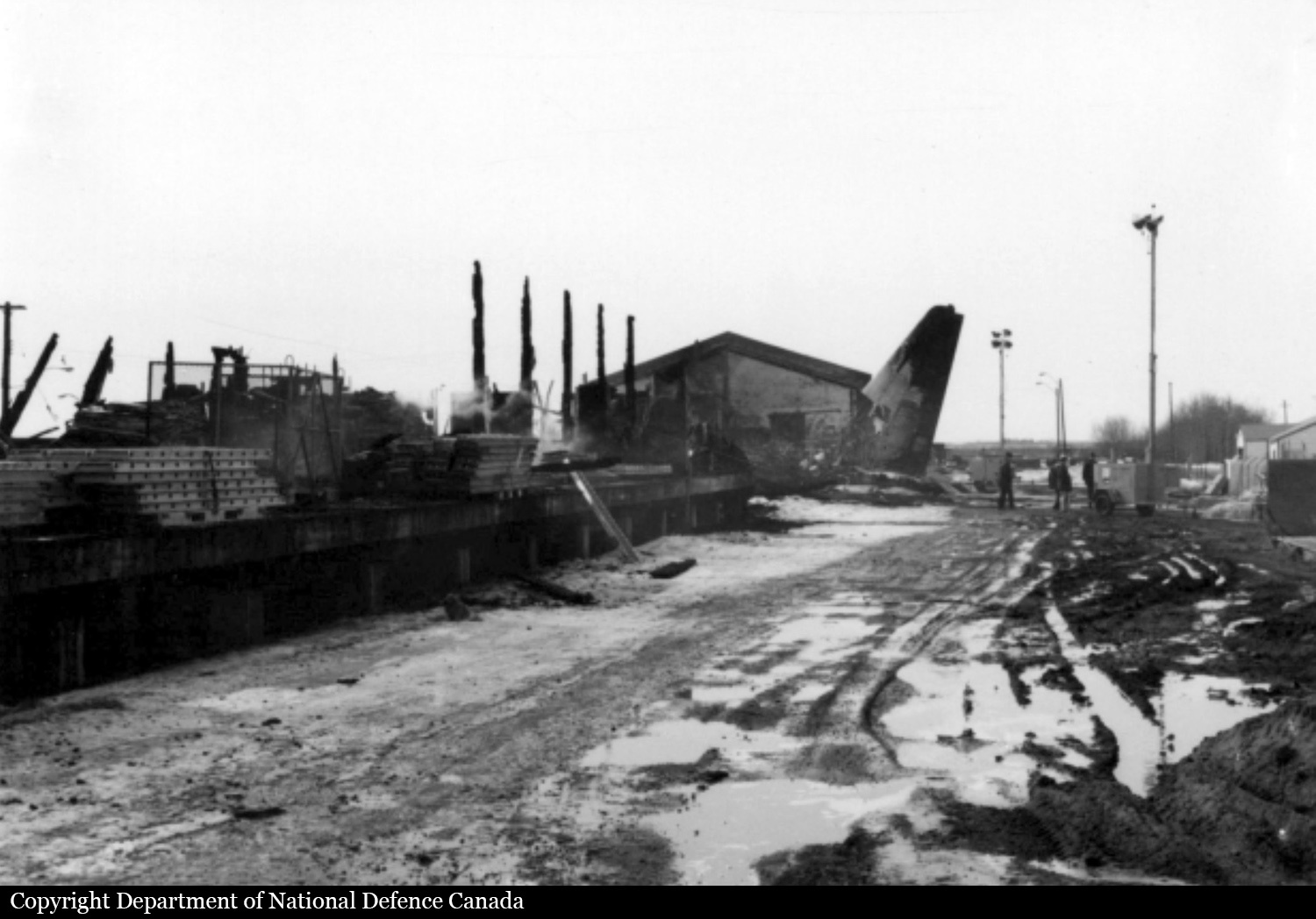
The Squadron was tasked to carry out a fly-past in commemoration of the 61st anniversary of the RCAF in conjunction with other base aircraft. At the conclusion of the fly-past the three CC-130 crews planned to recover on runway 29 utilizing a low level 'battle' break manoeuvre. They positioned themselves in echelon right with wingspan spacing. The briefed procedure was to pull 10° and turn left with 60° of bank maintaining 2 G's, climbing to 1,000 feet AGL to position themselves downwind. Number 2 & 3 would follow each with three seconds spacing. After approximately 50° of turn at 900 feet AGL number 2 collided with the underside of lead forward of the LH main gear, punching a 5 foot square hole in the aircraft floor structure. The number 2 aircraft had its forward fuselage section separate from the aircraft and freefall into a field. The numbers 3 and 4 propellers separated and landed some distance from the main wreckage. The tail section of the lead aircraft also separated prior to ground impact. Control of either aircraft after collision was impossible. The four occupants of the lead aircraft and the six occupants of number 2 all sustained fatal injuries. Both aircraft crashed inverted and a building and several vehicles were destroyed in a very intense fire.
Crew:
Cpt Robert William Drake, pilot,
Cpt Iain David Mahaffey, pilot,
Cpt John Derek Thornton, pilot,
Cpt David Arthur Jon Whalen, pilot,
W/O William Iver Oness, flight engineer.
Passenger:
Cpl J. M. Doucet, ATC.
Crew:
Cpt Robert William Drake, pilot,
Cpt Iain David Mahaffey, pilot,
Cpt John Derek Thornton, pilot,
Cpt David Arthur Jon Whalen, pilot,
W/O William Iver Oness, flight engineer.
Passenger:
Cpl J. M. Doucet, ATC.
Probable cause:
The Board assigns cause factors as follows:
a. Personnel - Pilot - Technique. The pilot (Trucker Lead) deviated from the briefed Battle Break profile to the extent that the designed time, vertical and horizontal separation between Lead and Trucker 2 was lost.
b. Personnel - Pilot - Inattention. The pilot (Trucker 2) lost visual contact with Lead and continued the manoeuvre through to impact without reacquiring Lead.
c. Personnel - Supervision/435 Sqn - Inattention. 435 Squadron supervisory personnel assigned pilots to perform a manoeuvre in the CC130 for which they were inadequately trained and in the case of two pilots had no training at all.
d. Personnel - Management/435 Sqn, CFB Edmonton, ATGHQ - Information. The absence of police with respect to Air Display manoeuvres permitted the planning and conduct to and unpublished procedure. There are no written instructions or Standard Operating Procedures describing the CC130 Battle Break. This manoeuvre was widely used and condoned at all levels.
a. Personnel - Pilot - Technique. The pilot (Trucker Lead) deviated from the briefed Battle Break profile to the extent that the designed time, vertical and horizontal separation between Lead and Trucker 2 was lost.
b. Personnel - Pilot - Inattention. The pilot (Trucker 2) lost visual contact with Lead and continued the manoeuvre through to impact without reacquiring Lead.
c. Personnel - Supervision/435 Sqn - Inattention. 435 Squadron supervisory personnel assigned pilots to perform a manoeuvre in the CC130 for which they were inadequately trained and in the case of two pilots had no training at all.
d. Personnel - Management/435 Sqn, CFB Edmonton, ATGHQ - Information. The absence of police with respect to Air Display manoeuvres permitted the planning and conduct to and unpublished procedure. There are no written instructions or Standard Operating Procedures describing the CC130 Battle Break. This manoeuvre was widely used and condoned at all levels.
Final Report:
Crash of a Lockheed CC-130H Hercules at Namao AFB: 4 killed
Date & Time:
Mar 29, 1985 at 2015 LT
Operator:
Registration:
130330
Survivors:
No
Schedule:
Namao - Namao
MSN:
4555
YOM:
1974
Flight number:
Trucker 1
Crew on board:
4
Crew fatalities:
Pax on board:
0
Pax fatalities:
Other fatalities:
Total fatalities:
4
Captain / Total hours on type:
3425.00
Copilot / Total hours on type:
882
Aircraft flight hours:
11771
Circumstances:
The Squadron was tasked to carry out a fly-past in commemoration of the 61st anniversary of the RCAF in conjunction with other base aircraft. At the conclusion of the fly-past the three CC-130 crews planned to recover on runway 29 utilizing a low level 'battle' break manoeuvre. They positioned themselves in echelon right with wingspan spacing. The briefed procedure was to pull 10° and turn left with 60° of bank maintaining 2 G's, climbing to 1,000 feet AGL to position themselves downwind. Number 2 & 3 would follow each with three seconds spacing. After approximately 50° of turn at 900 feet AGL number 2 collided with the underside of lead forward of the LH main gear, punching a 5 foot square hole in the aircraft floor structure. The number 2 aircraft had its forward fuselage section separate from the aircraft and freefall into a field. The numbers 3 and 4 propellers separated and landed some distance from the main wreckage. The tail section of the lead aircraft also separated prior to ground impact. Control of either aircraft after collision was impossible. The four occupants of the lead aircraft and the six occupants of number 2 all sustained fatal injuries. Both aircraft crashed inverted and a building and several vehicles were destroyed in a very intense fire.
Crew:
Cpt Lonnie Benjamin Register Jr., pilot,
Cpt Kevin Ernest Gerald Kennedy, copilot,
Cpt Brian John Tulloch, navigator,
Sgt Robert Harry Brown, flight engineer.
Crew:
Cpt Lonnie Benjamin Register Jr., pilot,
Cpt Kevin Ernest Gerald Kennedy, copilot,
Cpt Brian John Tulloch, navigator,
Sgt Robert Harry Brown, flight engineer.
Probable cause:
The Board assigns cause factors as follows:
a. Personnel - Pilot - Technique. The pilot (Trucker Lead) deviated from the briefed Battle Break profile to the extent that the designed time, vertical and horizontal separation between Lead and Trucker 2 was lost.
b. Personnel - Pilot - Inattention. The pilot (Trucker 2) lost visual contact with Lead and continued the manoeuvre through to impact without reacquiring Lead.
c. Personnel - Supervision/435 Sqn - Inattention. 435 Squadron supervisory personnel assigned pilots to perform a manoeuvre in the CC130 for which they were inadequately trained and in the case of two pilots had no training at all.
d. Personnel - Management/435 Sqn, CFB Edmonton, ATGHQ - Information. The absence of police with respect to Air Display manoeuvres permitted the planning and conduct to and unpublished procedure. There are no written instructions or Standard Operating Procedures describing the CC130 Battle Break. This manoeuvre was widely used and condoned at all levels.
a. Personnel - Pilot - Technique. The pilot (Trucker Lead) deviated from the briefed Battle Break profile to the extent that the designed time, vertical and horizontal separation between Lead and Trucker 2 was lost.
b. Personnel - Pilot - Inattention. The pilot (Trucker 2) lost visual contact with Lead and continued the manoeuvre through to impact without reacquiring Lead.
c. Personnel - Supervision/435 Sqn - Inattention. 435 Squadron supervisory personnel assigned pilots to perform a manoeuvre in the CC130 for which they were inadequately trained and in the case of two pilots had no training at all.
d. Personnel - Management/435 Sqn, CFB Edmonton, ATGHQ - Information. The absence of police with respect to Air Display manoeuvres permitted the planning and conduct to and unpublished procedure. There are no written instructions or Standard Operating Procedures describing the CC130 Battle Break. This manoeuvre was widely used and condoned at all levels.
Final Report:
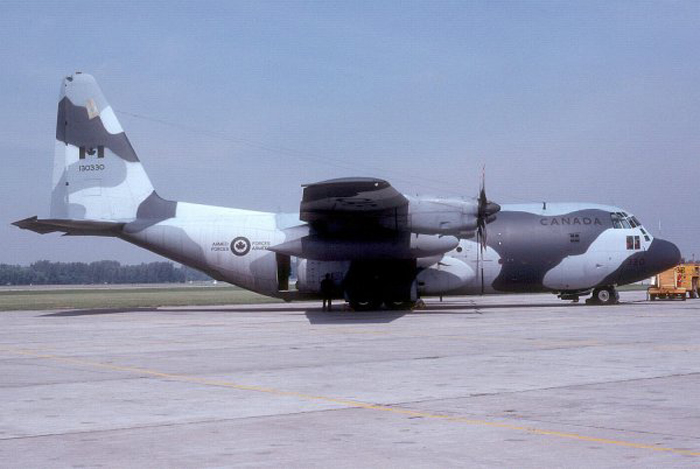
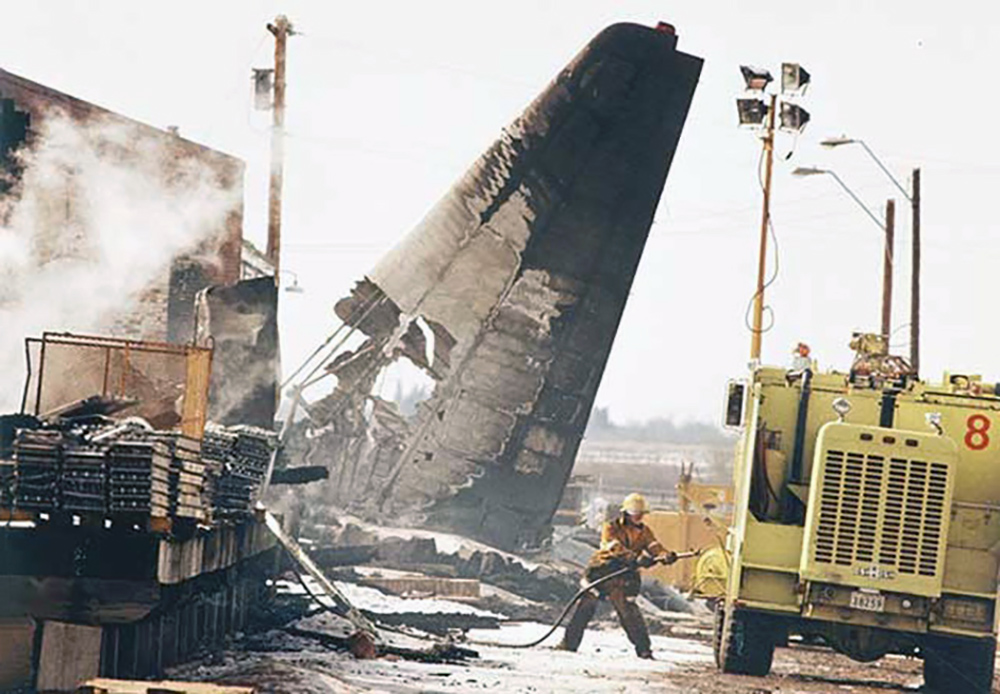
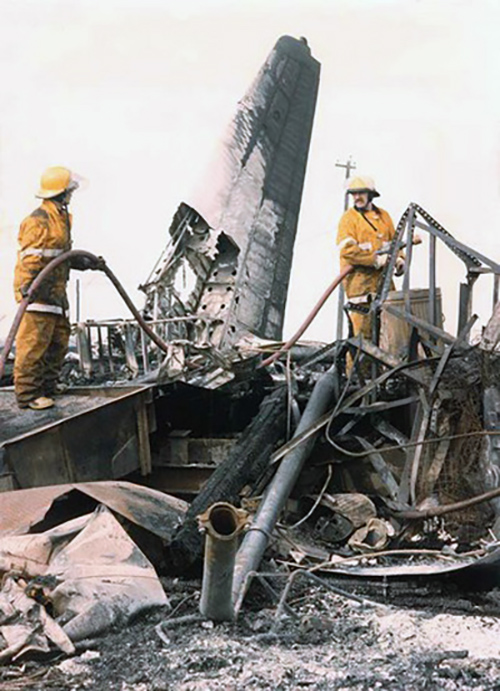
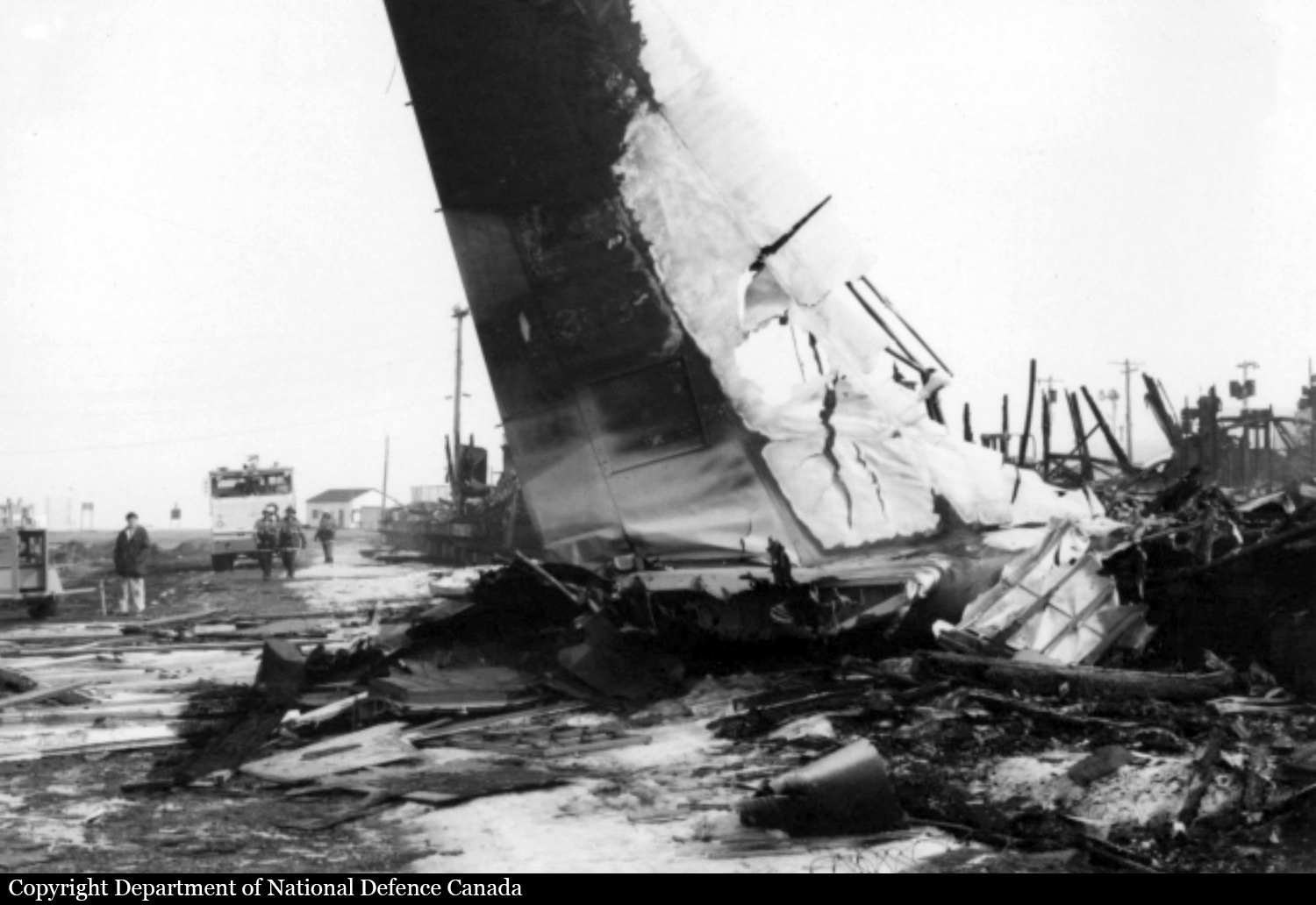
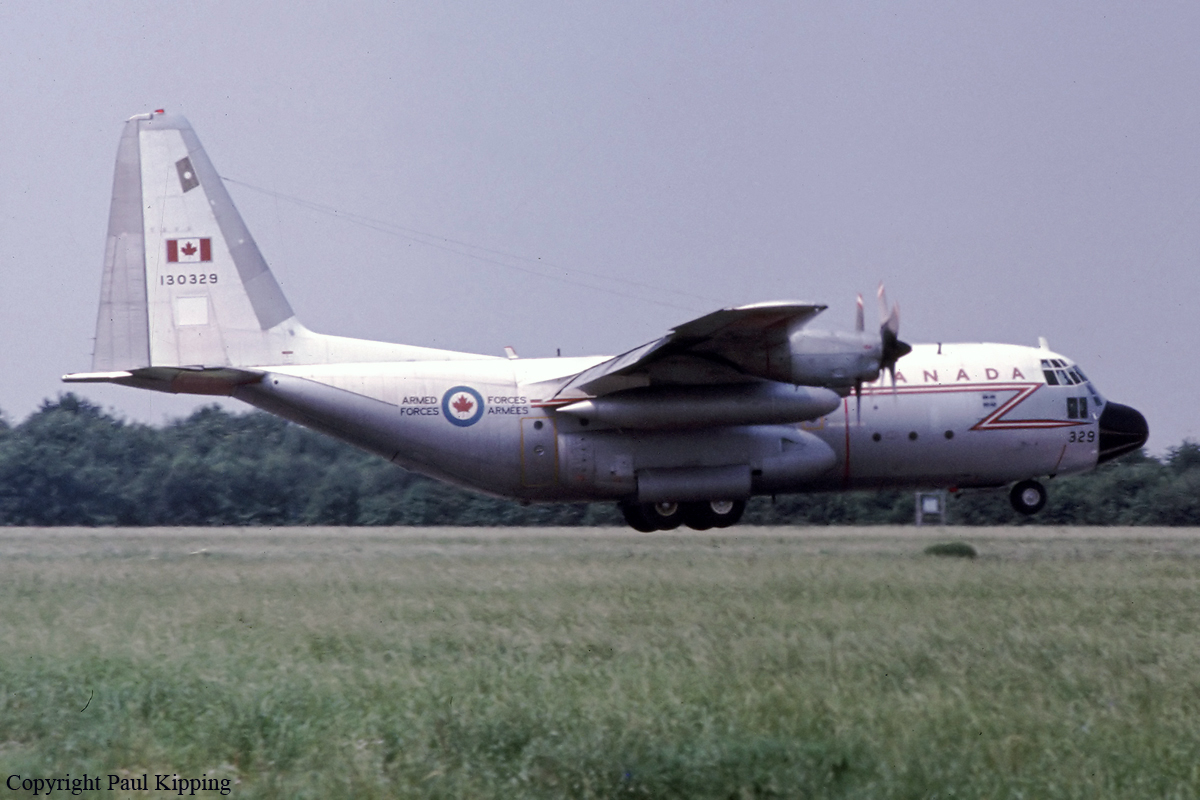
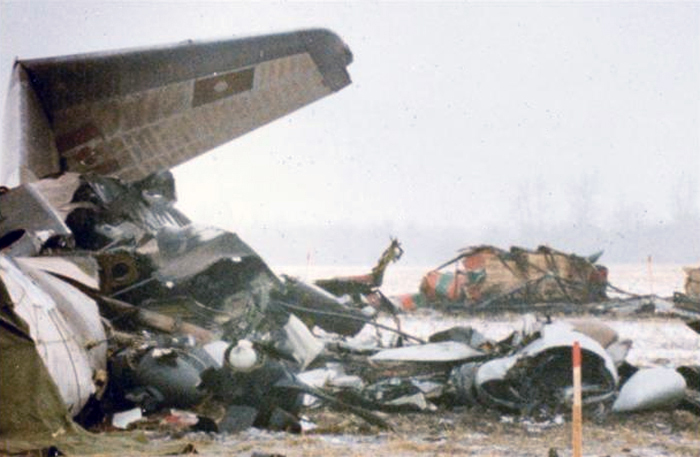
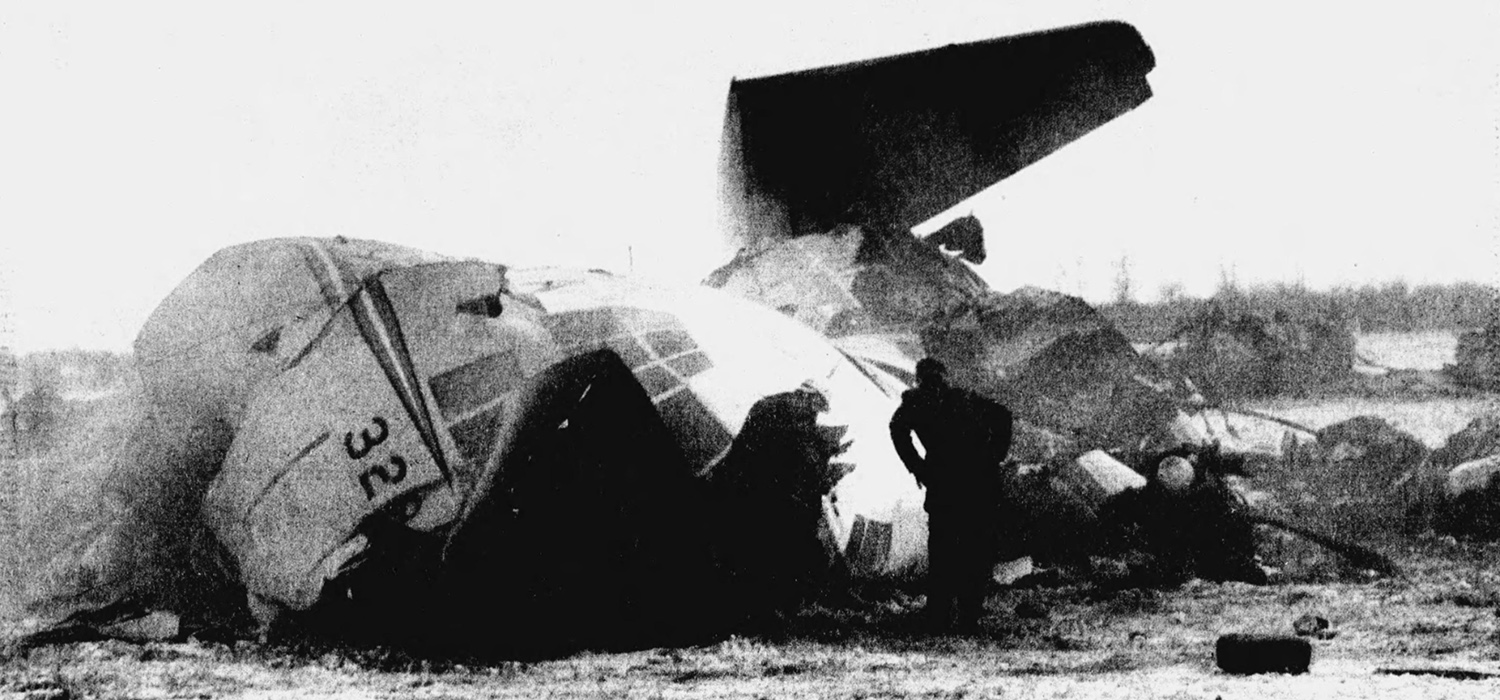
Crash of a Lockheed C-130H Hercules at Namao AFB: 7 killed
Date & Time:
Nov 16, 1982 at 1350 LT
Operator:
Registration:
130329
Survivors:
No
Schedule:
Namao - Namao
MSN:
4553
YOM:
1974
Flight number:
Boxtop 29
Crew on board:
7
Crew fatalities:
Pax on board:
0
Pax fatalities:
Other fatalities:
Total fatalities:
7
Circumstances:
On final approach to runway 29, the crew attempted to drop the load that jammed on the rear ramp. The aircraft banked left, causing the left wing to hit the ground. The aircraft went out of control and crashed. All seven crew members (six Canadians and one American) were killed.
Probable cause:
During a LAPES drop mission, the load got hung up, catastrophically changing the CofG to a point at which it was impossible to recover the aircraft.