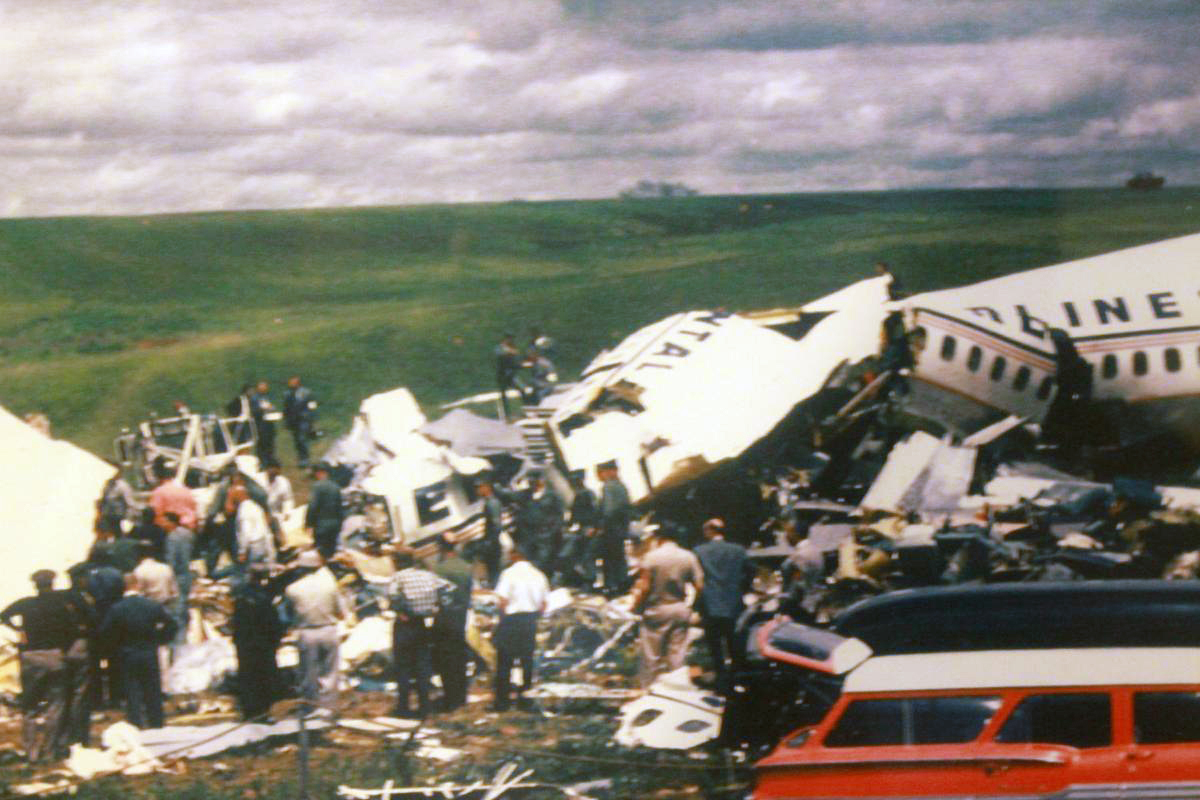
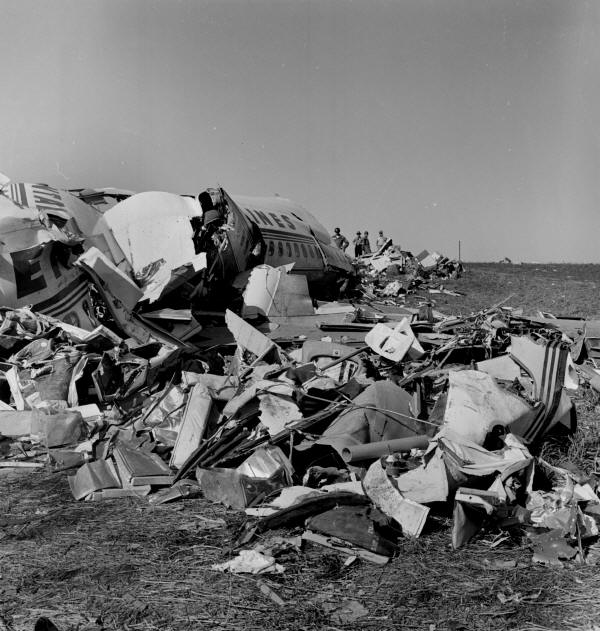
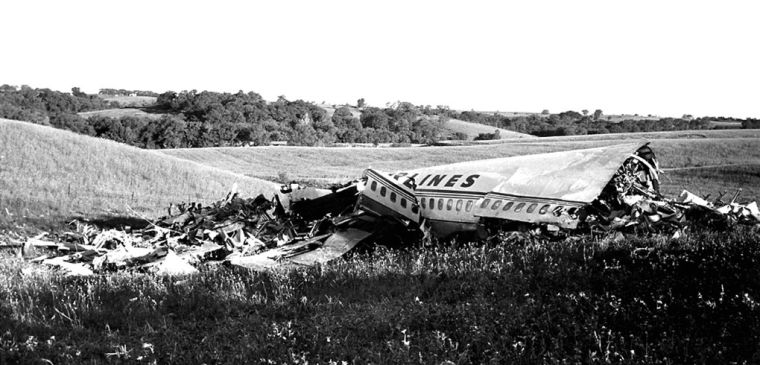
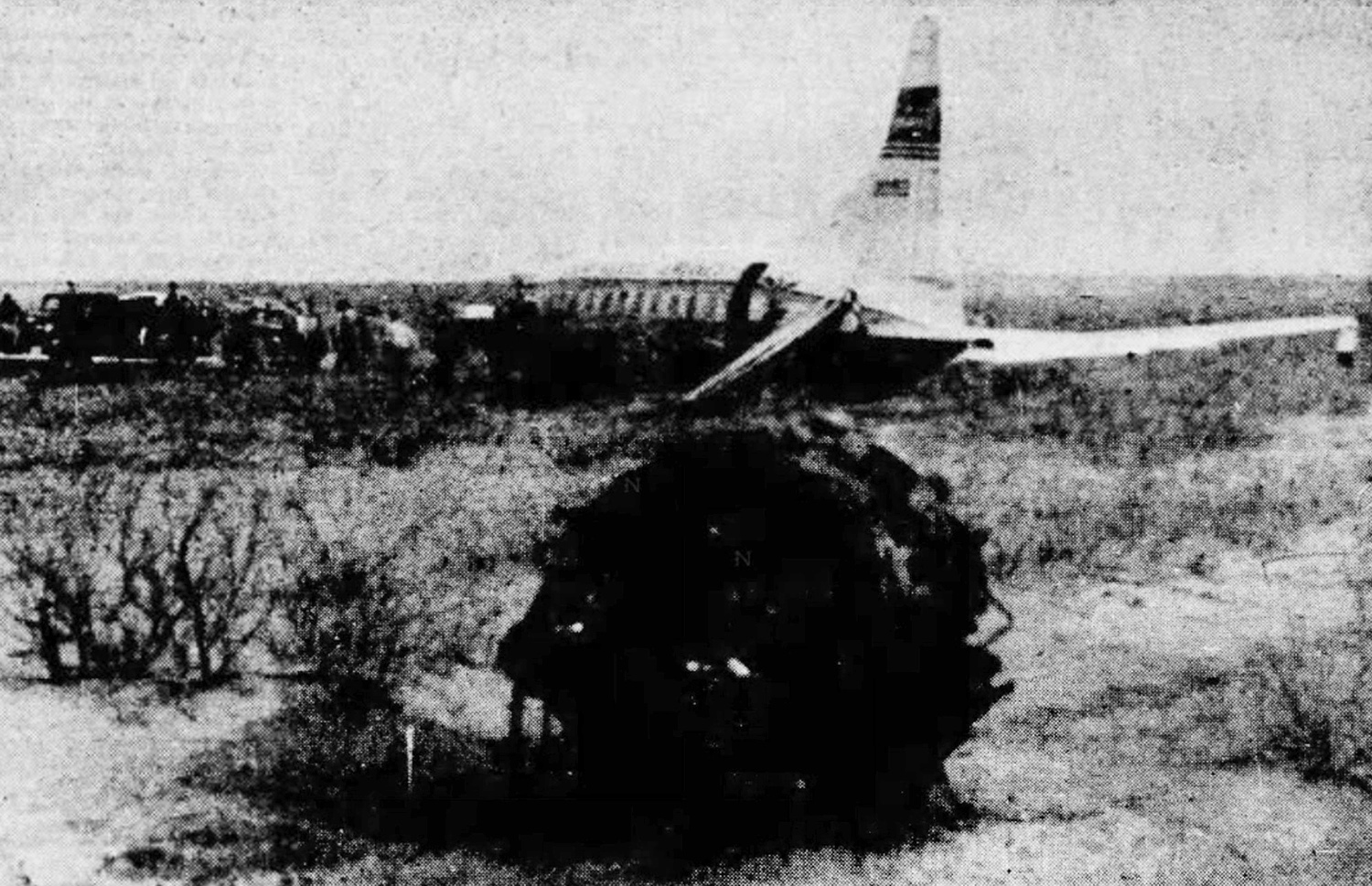
Operator Image

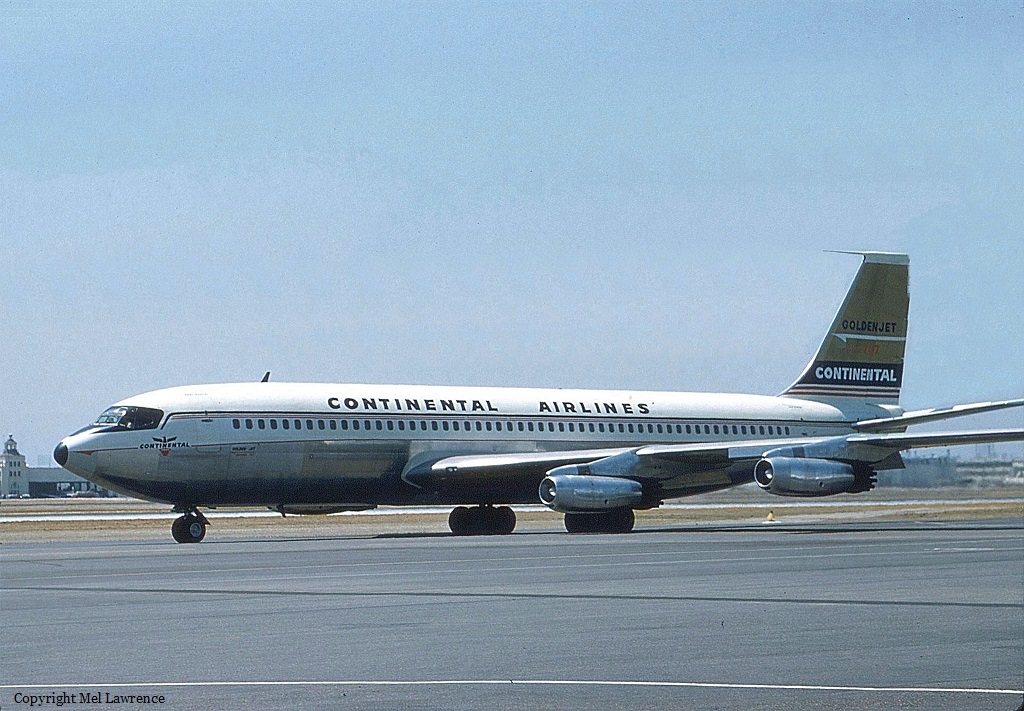
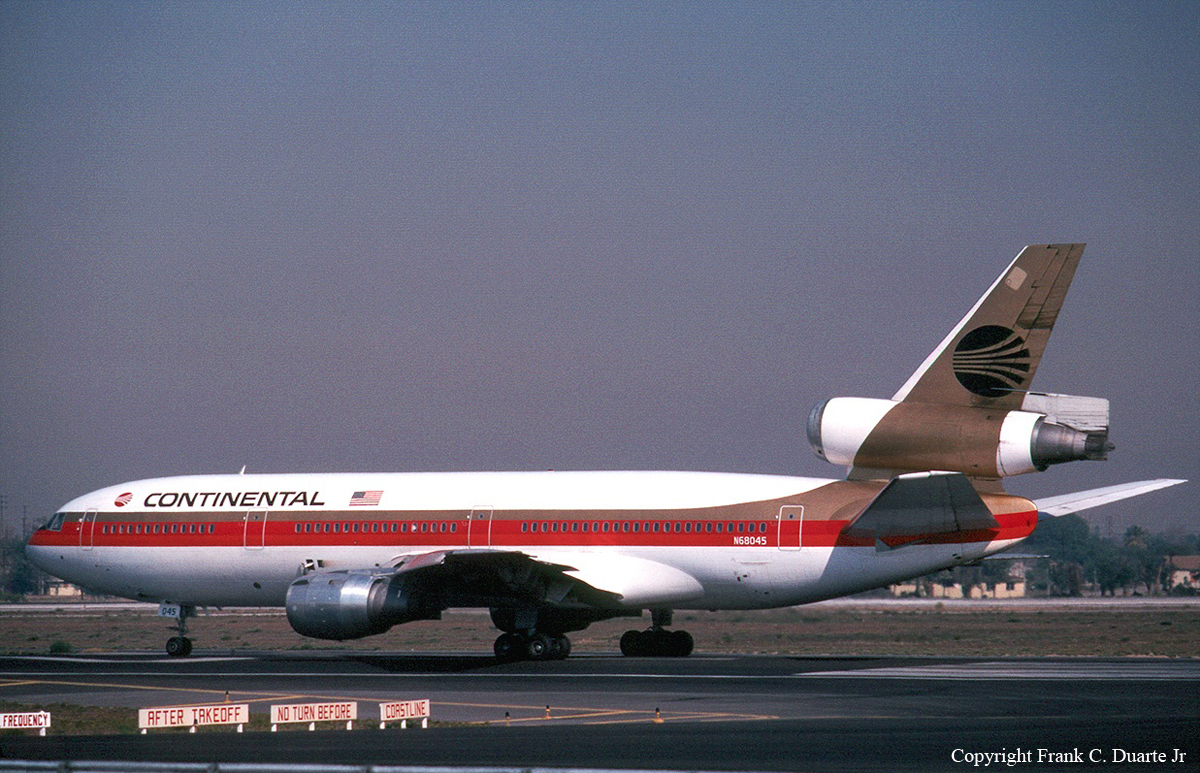
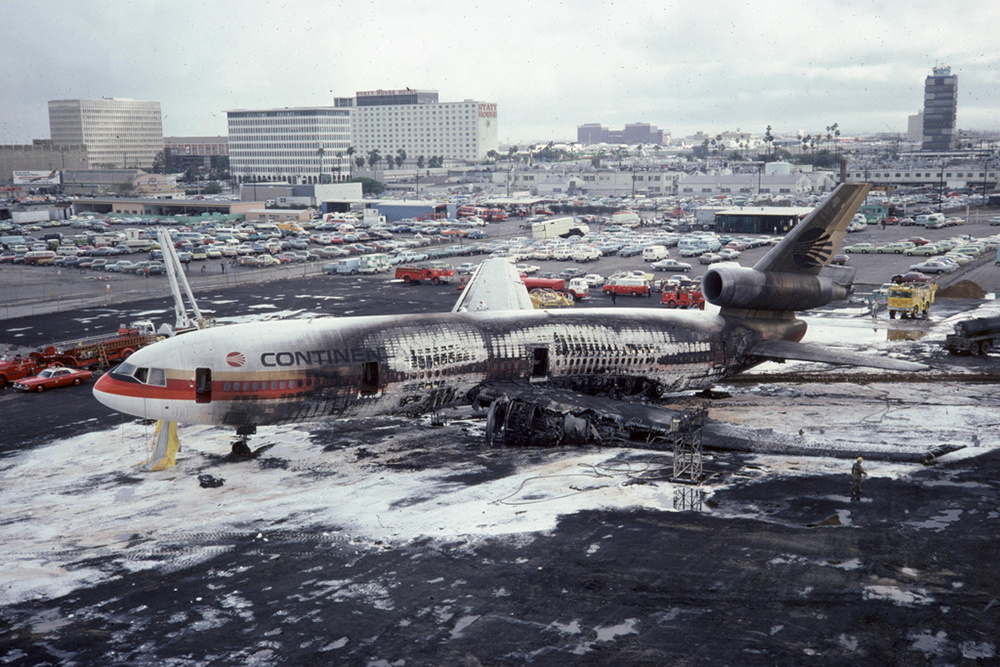
Crash of a Douglas DC-10-10 in Los Angeles: 2 killed

Date & Time: Mar 1, 1978 at 0925 LT
Type of aircraft:
Operator:
Registration:
N68045
Flight Phase:
Survivors:
Yes
Schedule:
Los Angeles - Honolulu
MSN:
46904
YOM:
1972
Flight number:
CO603
Crew on board:
14
Crew fatalities:
Pax on board:
186
Pax fatalities:
Other fatalities:
Total fatalities:
2
Captain / Total flying hours:
29000
Captain / Total hours on type:
2911.00
Copilot / Total flying hours:
10000
Copilot / Total hours on type:
1249
Aircraft flight hours:
21358
Circumstances:
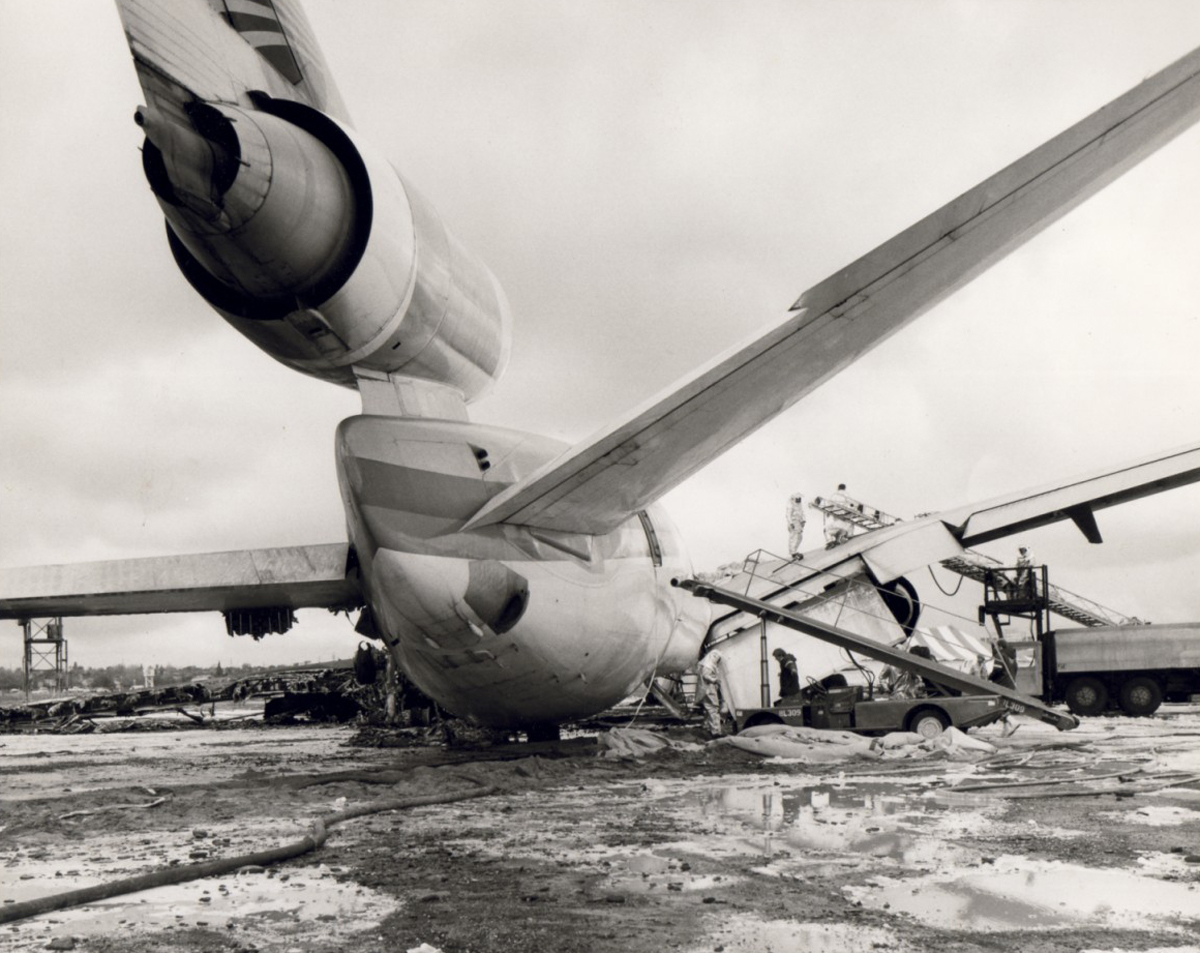
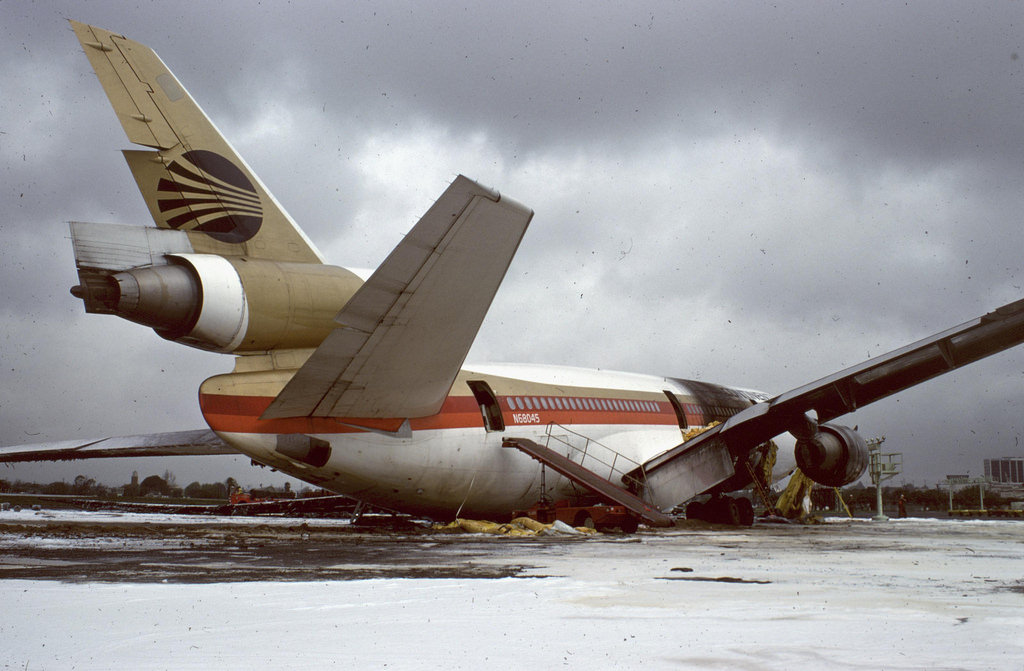
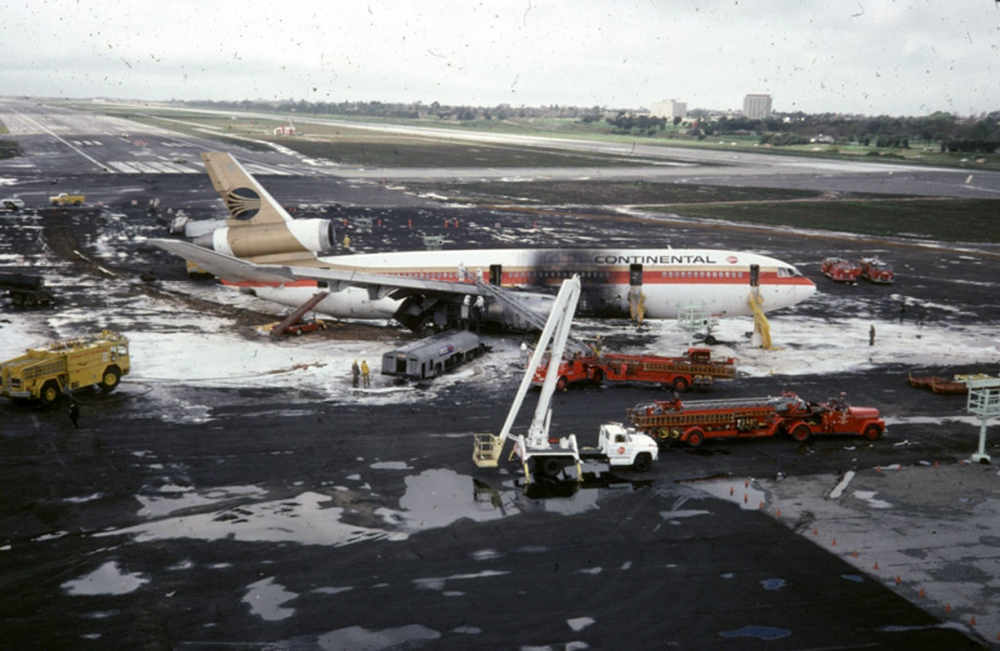
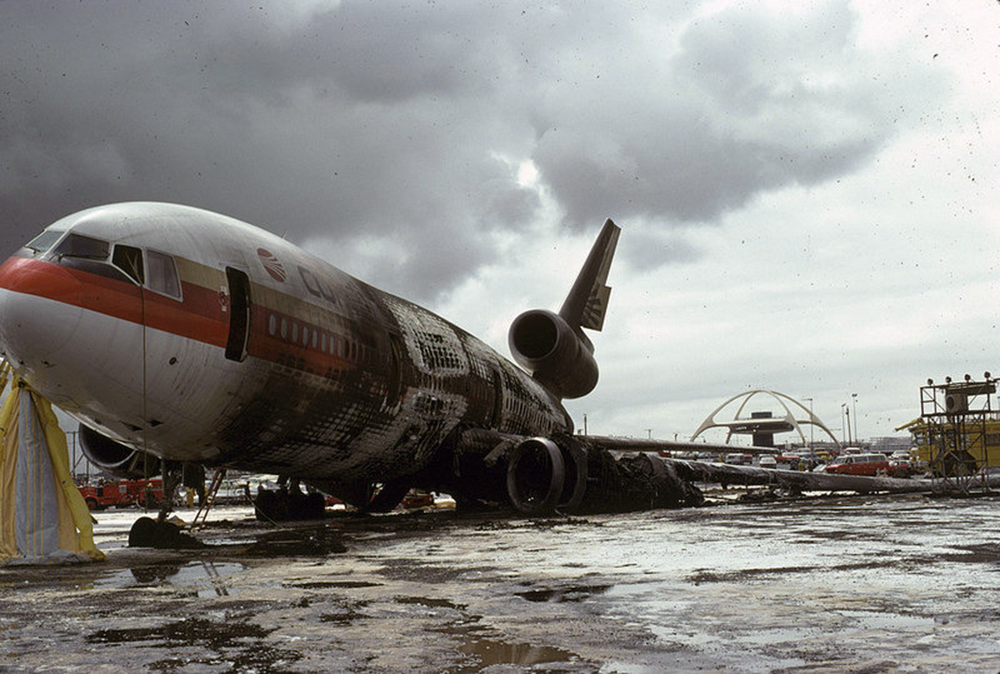
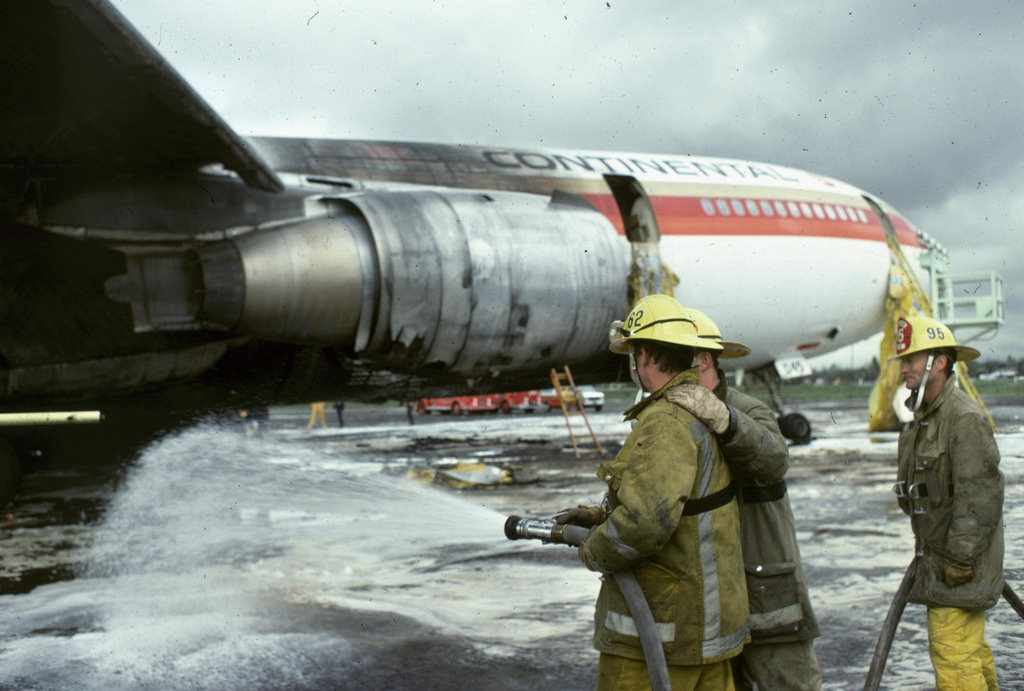
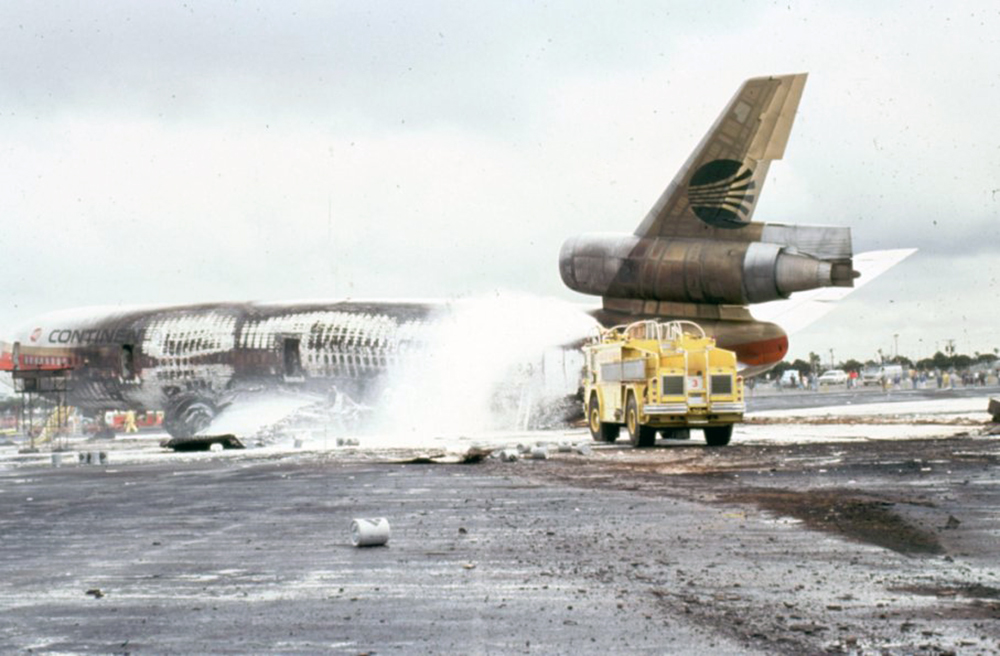
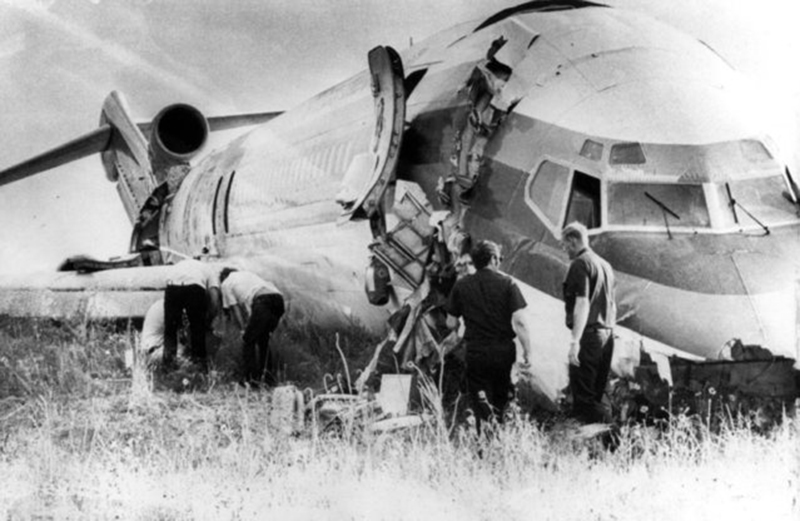
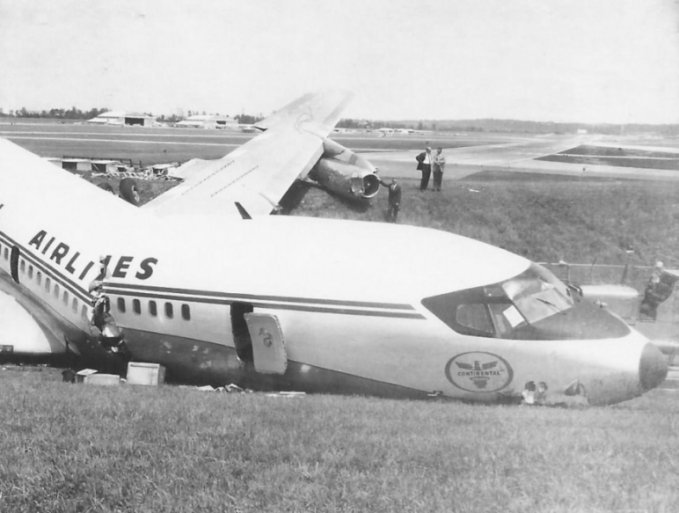
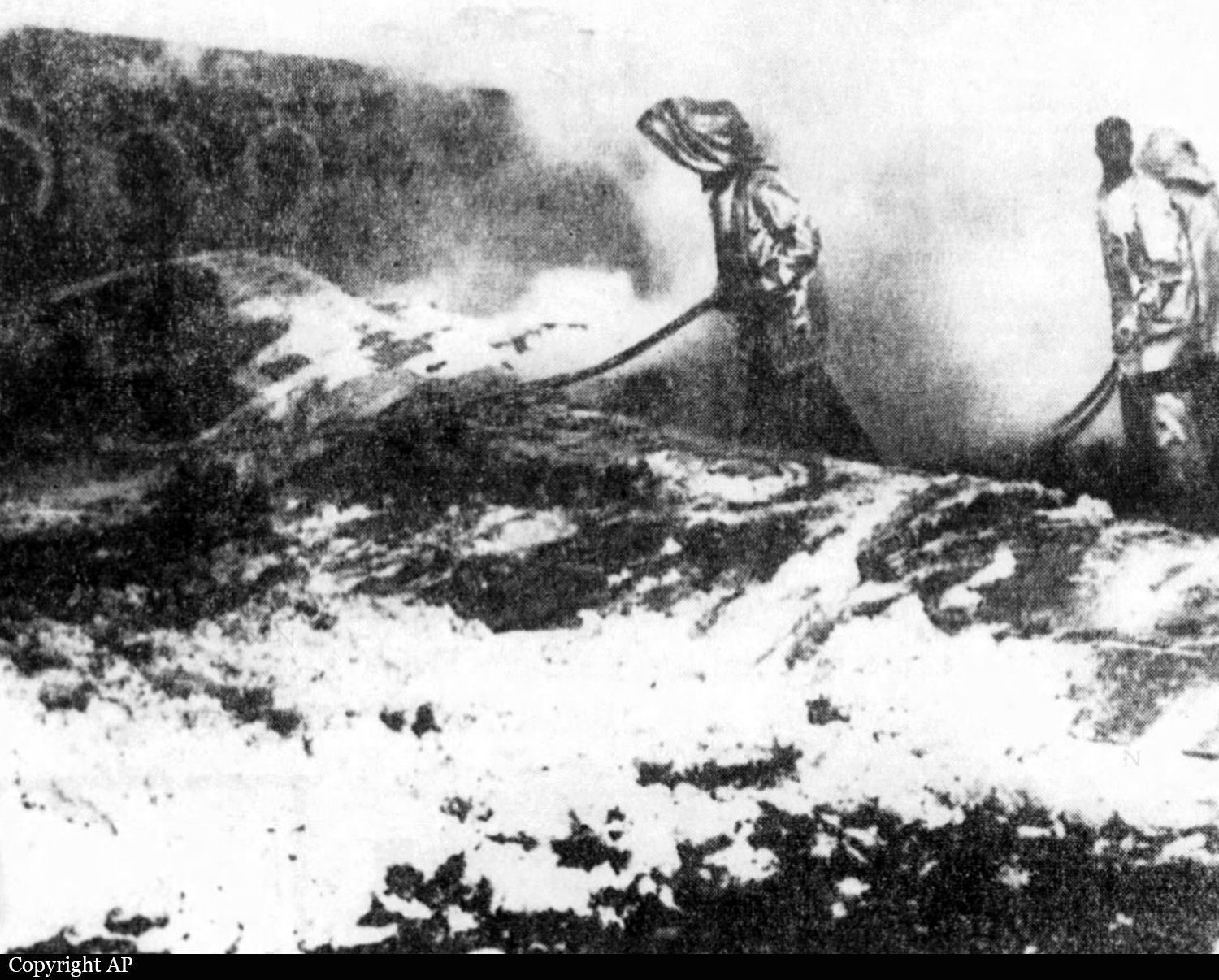
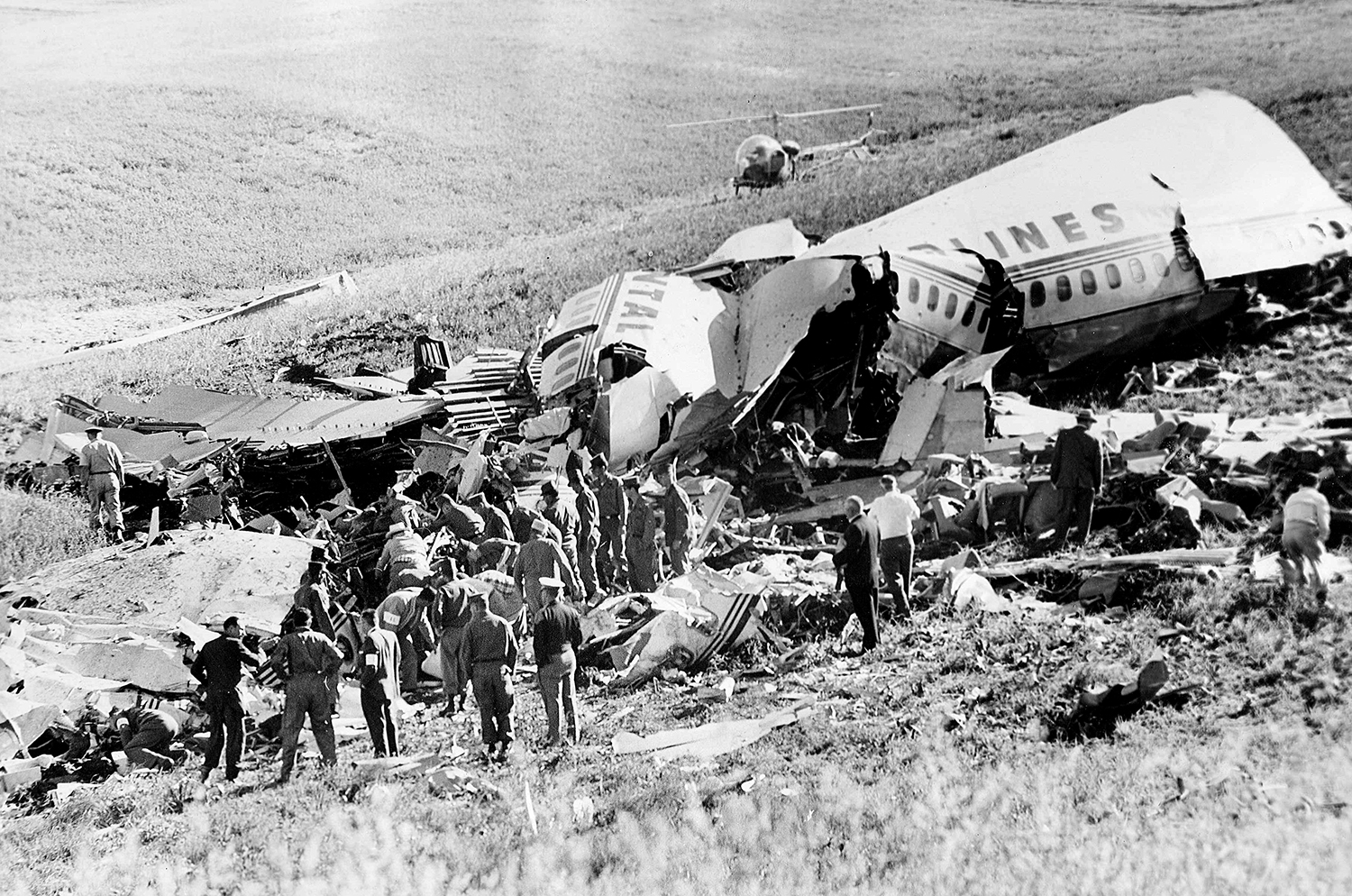
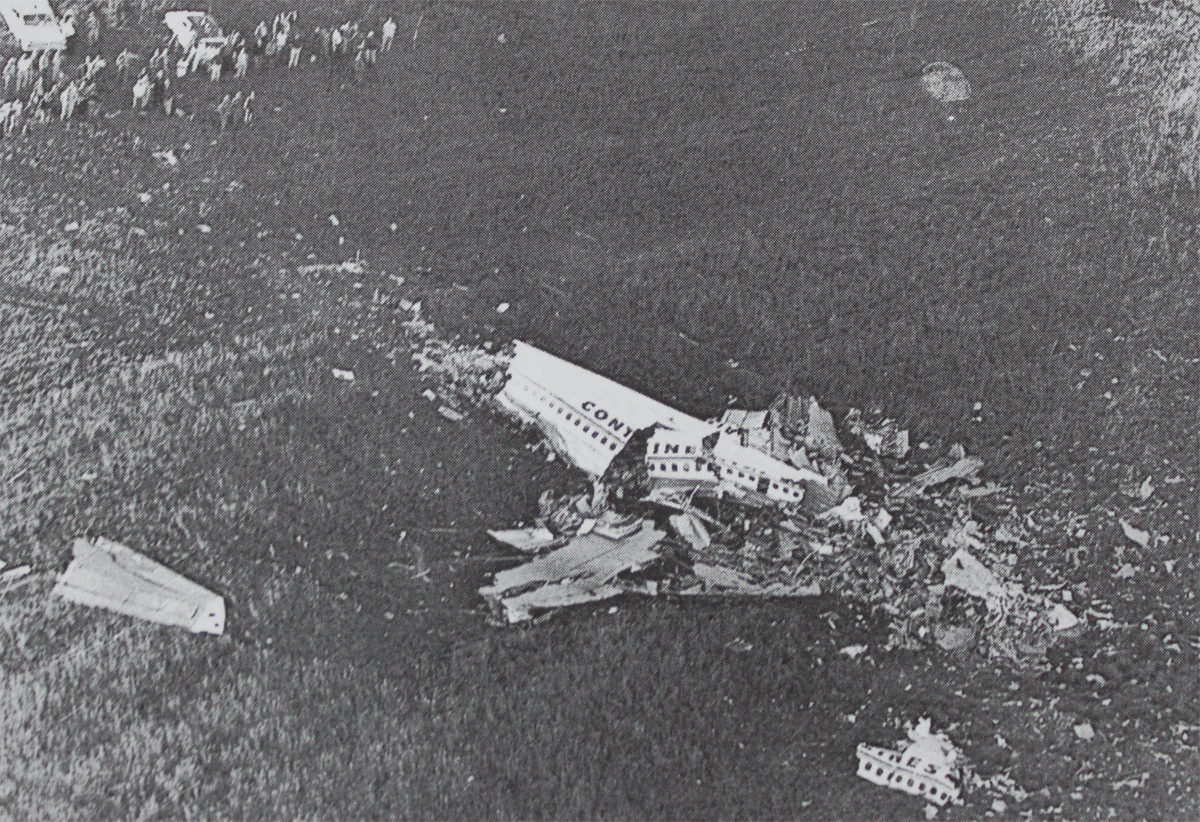
On March 1, 1978, Continental Air Lines, Inc., Flight 603, a McDonnell Douglas DC-10-10 (N68045), was a scheduled flight from Los Angeles International Airport, California, to Honolulu, Hawaii. At 0857:18, Flight 603 called Los Angeles clearance delivery and was cleared for the route of flight which was to have been flown. About 2 min later, the flight received permission from Los Angeles ground control to push back from the gate. At 0901:37, Flight 603 was cleared by ground control to taxi to runway 6R. The runway was wet, but there was no standing water. At 0922:29, Los Angeles local control cleared Flight 603 to taxi into position on runway 6R and hold. At 0923:17, local control cleared Flight 603 for takeoff; however, the flightcrew did not acknowledge the instructions and did not comply with them. At 0923:57, local acknowledged the instructions. The captain stated that he delayed control, again, cleared the flight for takeoff. This time the flightcrew acknowledgment of the takeoff clearance because he believed that he had initially been given the clearance too soon after a heavy jet aircraft had made its takeoff. The flightcrew stated that acceleration was normal and that all engine instruments were in the normal range for takeoff. As the airspeed approached the V1 speed of 156 kns, the captain heard a loud "metallic bang" which was followed immediately by "a kind of quivering of the plane." The flightcrew noticed that the left wing dropped slightly. A rejected takeoff was begun immediately; however, according to the digital flight data recorder (DFDR), the airspeed continued to increase to about 159 kns as the rejected takeoff procedures were begun. The captain stated that he applied full brake pressure while simultaneously bringing the thrust levers back to idle power. Reverse thrust levers were actuated and full reverse thrust was used. The flightcrew stated that they noted good reverse thrust. First, the aircraft moved to the left of the runway centerline and appeared tb the flightcrew to be decelerating normally. With about of deceleration had decreased, and they believed that the aircraft would 2,000 ft of runway remaining, the flightcrew became aware that the rate not be able to stop on the runway surface. The captain stated that he maintained maximum brake pedal force and full reverse thrust as he steered the aircraft to the right of the runway centerline in an effort "to go beside the stanchions holding the runway lights" immediately off of the departure end of runway 6R. He stated further that he encountered no problems with directional control of the aircraft throughout the rejected takeoff maneuver. The aircraft departed the right corner of the departure end of runway 6R. About 100 ft beyond the runway, the left main landing gear broke through the nonload-bearing tar-macadam (tarmac) surface and failed rearward. Fire erupted immediately from this area. The aircraft dropped onto the left wing and the No. 1 (left) engine and rotated to the left as it continued its slide along the surface. It stopped between two of the approach light stanchions for runway 24L about 664 ft from the departure end of runway 6R and about 40 ft to the right of the runway 6R extended centerline; it came to rest on a heading of 008°, in an 11° left wing low, 1.3° noseup attitude. When the aircraft came to a stop, the evacuation was begun immediately. Two passengers were killed while all other occupants were evacuated, some of them with serious injuries.
Probable cause:
The National Transportation Safety Board determined that the probable cause of the accident was the sequential failure of two tires on the left main landing gear and the resultant failure of another tire on the same landing gear at a critical time during the takeoff roll. These failures resulted in the captain's decision to reject the takeoff. Contributing to the accident was the cumulative effect of the partial loss of aircraft braking because of the failed tires and the reduced braking friction achievable on the wet runway surface which increased the accelerate-stop distance to a value greater than the available runway length. These factors prevented the captain from stopping the aircraft within the runway confines. The failure of the left main landing gear and the consequent rupture of the left wing fuel tanks resulted in an intense fire which added to the severity of the accident.
Final Report:
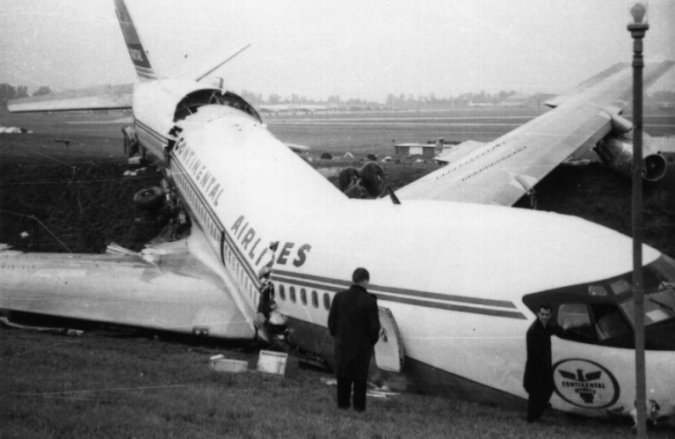
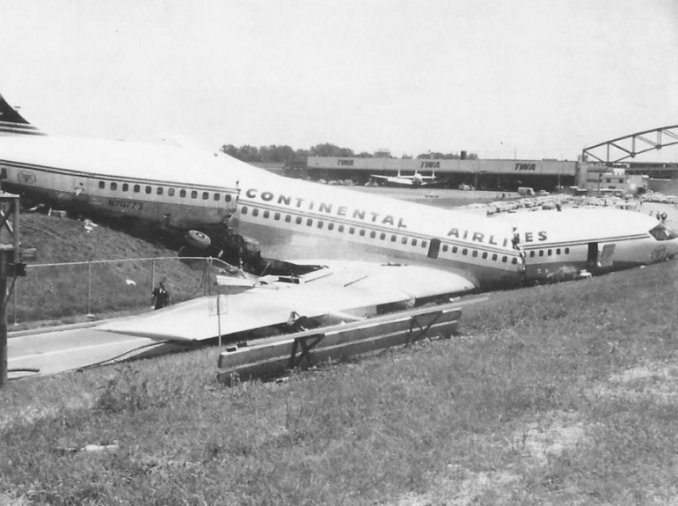
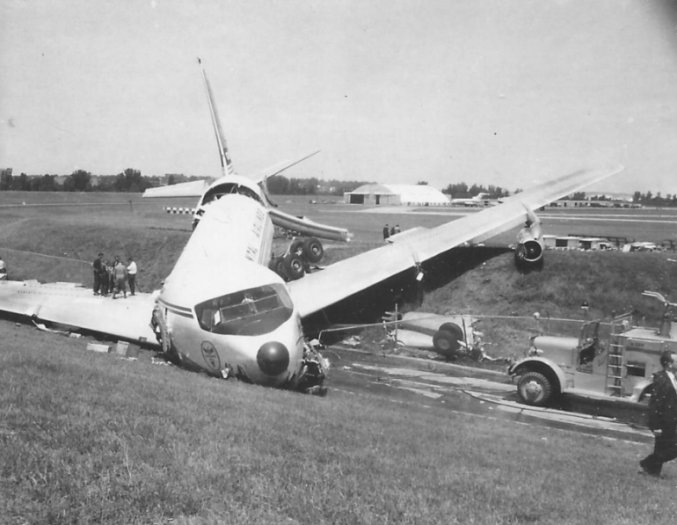
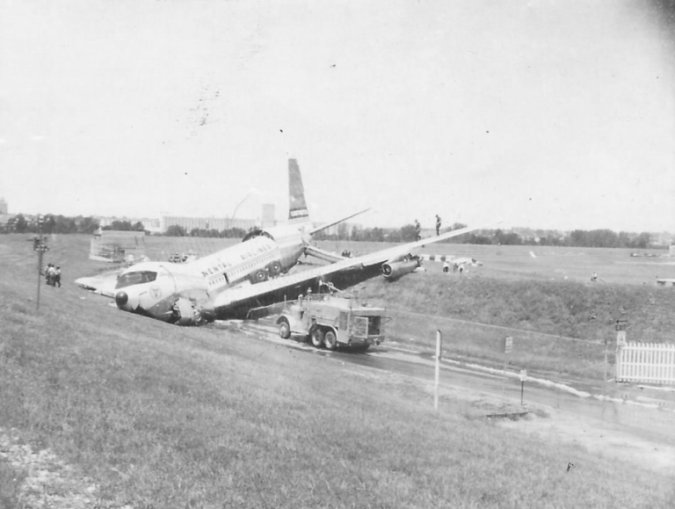
Crash of a Boeing 727-224 in Denver

Date & Time: Aug 7, 1975 at 1611 LT
Type of aircraft:
Operator:
Registration:
N88777
Flight Phase:
Survivors:
Yes
Schedule:
Denver - Wichita
MSN:
19798/608
YOM:
1968
Flight number:
CO426
Crew on board:
7
Crew fatalities:
Pax on board:
124
Pax fatalities:
Other fatalities:
Total fatalities:
0
Captain / Total flying hours:
11465
Captain / Total hours on type:
483.00
Copilot / Total flying hours:
6555
Copilot / Total hours on type:
998
Aircraft flight hours:
23850
Circumstances:
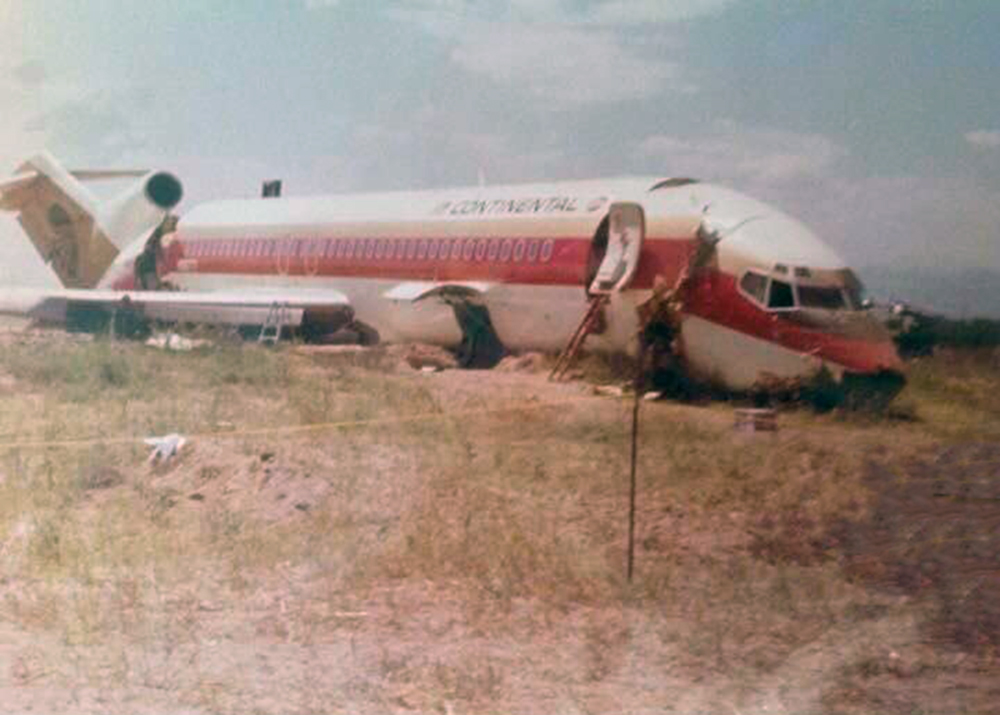
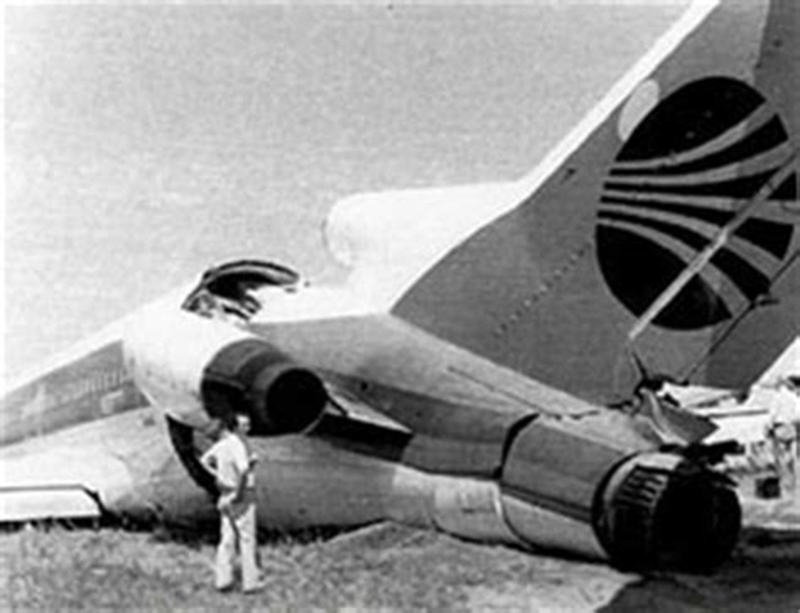
The takeoff from Denver-Stapleton Airport was completed from runway 35L in poor weather conditions. At that time, a thunderstorm with associated rain showers was moving over the northern portion of the airport. The Thunderstorm was surrounded by numerous other thunderstorms and associated rain showers but none of these were in the immediate vicinity of the airport. After liftoff, the airplane reached an altitude of 100 feet then lost about 41 kt of indicated airspeed in 5 seconds. The aircraft struck the ground 11.6 seconds after the airspeed began to decrease. The aircraft first hit the ground 387 feet south of the departure end of runway 35L and 106 feet to the right of the runway centerline. The aircraft continued northward to a second impact area about 135 feet north of the end of the first area. The main portion of the second area was 55 feet long and 4 feet wide. The aircraft slid northward from this area and came to rest about 1,600 feet north of the departure end of runway 35L and about 160 feet to the right of the extended runway centerline. All 131 occupants were evacuated, 15 of them were injured.
Probable cause:
The aircraft's encounter, immediately following take-off, with severe windshear at an altitude and airspeed which precluded recovery level flight; the windshear caused the aircraft to descend at a rate which could not be overcome even though the aircraft was flown at or near its maximum lift capability throughout the encounter. The windshear was generated by the outflow from a thunderstorm which was over the aircraft's departure path.
Final Report:

Crash of a Rockwell Sabreliner 60 in Montrose: 2 killed

Date & Time: Apr 13, 1973 at 1635 LT
Type of aircraft:
Operator:
Registration:
N743R
Flight Phase:
Flight Type:
Survivors:
No
Schedule:
Los Angeles - Montrose - Denver
MSN:
306-11
YOM:
1968
Crew on board:
2
Crew fatalities:
Pax on board:
0
Pax fatalities:
Other fatalities:
Total fatalities:
2
Captain / Total flying hours:
10000
Captain / Total hours on type:
84.00
Aircraft flight hours:
2372
Circumstances:
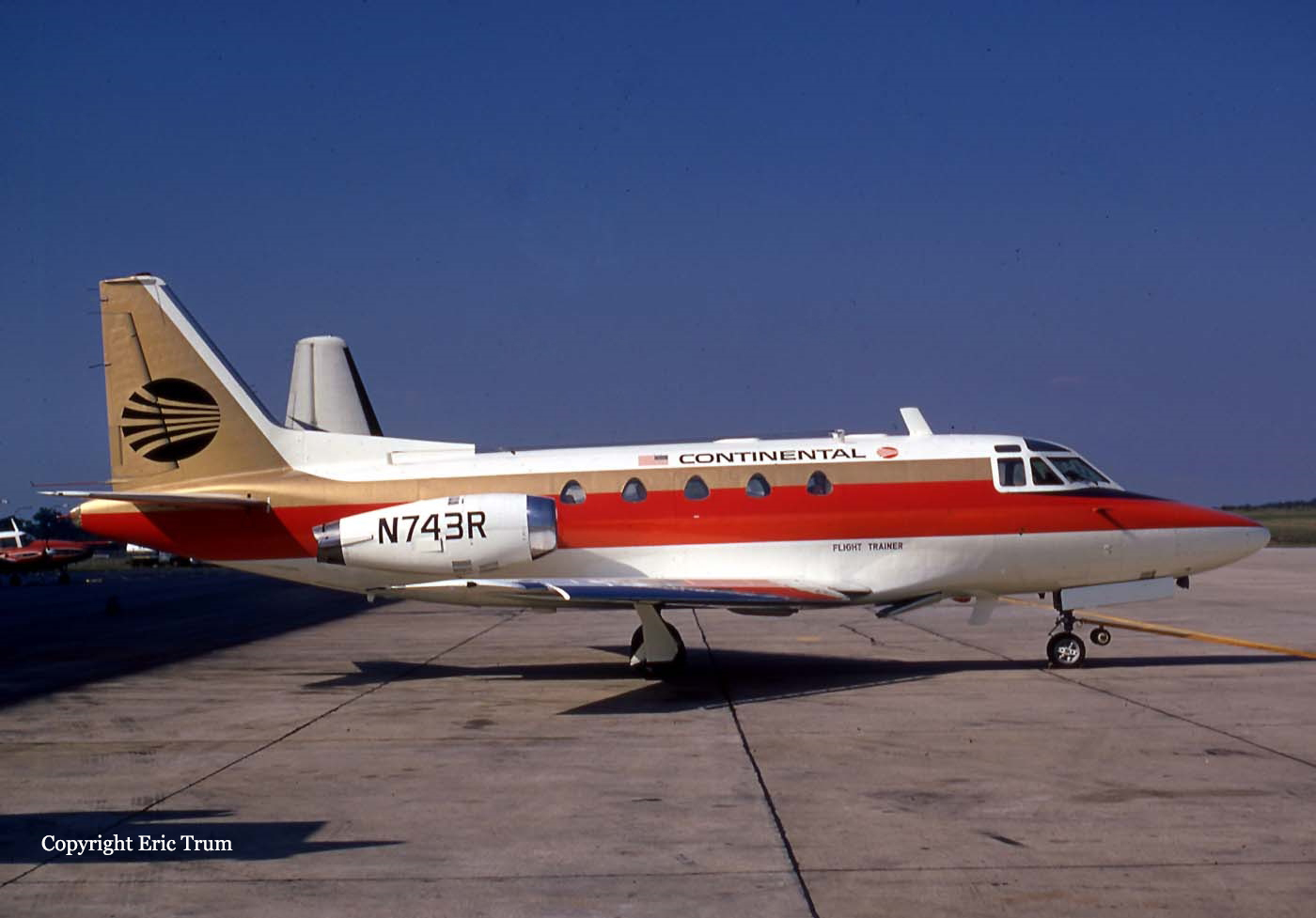
After takeoff from Montrose Airport, while climbing to an altitude of 1,000 feet, the airplane banked left to an angle of 55° then stalled and crashed in a huge explosion. The aircraft was destroyed by impact forces and a post crash fire and both pilots were killed.
Probable cause:
Loss of control during initial climb after the left engine thrust reverser deployed. The following factors were reported:
- Improper operations of powerplant,
- The pilot-in-command failed to follow the approved procedures,
- Improper emergency procedures,
- Unwanted thrust reversal,
- Continued operations of left engine at climb power after unwanted in-flight deployment of the left engine thrust reverser.
Final Report:

Crash of a Boeing 707-124 in Kansas City

Date & Time: Jul 1, 1965 at 0529 LT
Type of aircraft:
Operator:
Registration:
N70773
Survivors:
Yes
Schedule:
Los Angeles – Kansas City – Chicago
MSN:
17609
YOM:
1959
Flight number:
CO012
Crew on board:
6
Crew fatalities:
Pax on board:
60
Pax fatalities:
Other fatalities:
Total fatalities:
0
Captain / Total flying hours:
18729
Captain / Total hours on type:
850.00
Copilot / Total flying hours:
3178
Copilot / Total hours on type:
428
Aircraft flight hours:
25263
Circumstances:
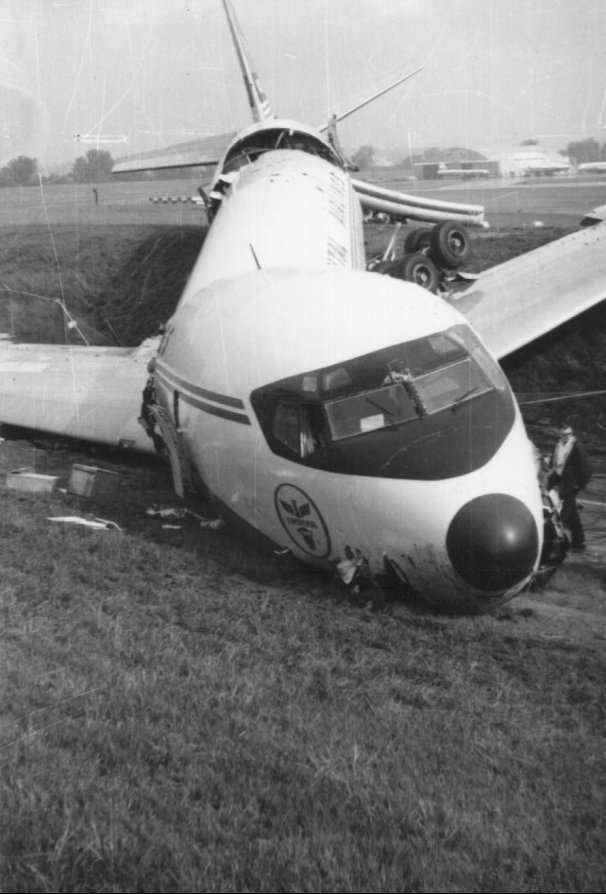
The aircraft made a "firm" landing, in heavy rain, about 1,050 feet past the approach end of runway 18. When the crew's efforts to stop the aircraft were ineffective, and the captain was convinced that they were going off the end of the runway, he used differential power and rudder to cock the aircraft to the left. The aircraft slid off the end of the runway, went through the US localizer antenna building, struck a dirt blast mound, slid up over the mound, and came to rest with the nose section in the perimeter road between the blast mound and a river levee. Of the 60 passengers and 6 crew members aboard, three passengers and two crew members received minor injuries. The aircraft received substantial damage although no major fire occurred. The passengers and crew evacuated the aircraft without major difficulty.
Probable cause:
The Board determines that the probable cause of this accident was hydroplaning of the landing gear wheels that precluded braking effectiveness.
Final Report:

Crash of a Vickers 812 Viscount in Kansas City: 8 killed

Date & Time: Jan 29, 1963 at 2244 LT
Type of aircraft:
Operator:
Registration:
N242V
Survivors:
No
Schedule:
Midland – Lubbock – Wichita Falls – Lawton – Oklahoma City – Tulsa – Kansas City
MSN:
356
YOM:
1958
Flight number:
CO290
Crew on board:
3
Crew fatalities:
Pax on board:
5
Pax fatalities:
Other fatalities:
Total fatalities:
8
Captain / Total flying hours:
18611
Captain / Total hours on type:
3409.00
Copilot / Total flying hours:
5761
Copilot / Total hours on type:
2648
Aircraft flight hours:
12860
Circumstances:
Continental Air Lines Flight 290, a Viscount 812, N242V, a regularly flight from Midland, Texas, crashed at the Kansas City Municipal Airport, Kansas City, Missouri, at 2244 c. s. t., January 29, 1963. All the occupants, three crew members and five passengers, received fatal injuries and the aircraft was destroyed by impact and subsequent fire. After making a straight-in approach to land on runway 18, in visual flight conditions, the aircraft continued to fly over the runway in a nose-up attitude without touching down. Near the south end of the runway, from an altitude of approximately 90 feet, the aircraft nosed over sharply, wings level, and dived into the ground. The main wreckage came to rest 680 feet beyond the end of the runway.
Probable cause:
The Board determines that the probable cause of this accident was an undetected accretion of ice on the horizontal stabilizer which, in conjunction with a Specific airspeed and aircraft configuration, caused a loss of pitch control.
Final Report:

Crash of a Vickers 812 Viscount in Amarillo

Date & Time: Jul 8, 1962 at 0706 LT
Type of aircraft:
Operator:
Registration:
N243V
Flight Phase:
Survivors:
Yes
Schedule:
Amarillo – Lubbock – Midland – San Angelo – Austin
MSN:
354
YOM:
1958
Flight number:
CO210
Location:
Crew on board:
3
Crew fatalities:
Pax on board:
13
Pax fatalities:
Other fatalities:
Total fatalities:
0
Captain / Total flying hours:
16466
Captain / Total hours on type:
1338.00
Copilot / Total flying hours:
4470
Copilot / Total hours on type:
1798
Aircraft flight hours:
11164
Aircraft flight cycles:
11976
Circumstances:
A Continental Air Lines Vickers-Armstrongs Viscount Model 812, N243V, was landed wheels-up, almost immediately following takeoff from the Amarillo Municipal Airport, Amarillo, Texas, on July 8, 1962, at approximately 0706LT. There were no serious injuries to any of the 13 passengers or 3 crew members. The aircraft was destroyed by fire. After normal lift-off and landing gear retraction, the captain was momentarily distracted by rainwater from the window channel falling on his left shirt sleeve and he inadvertently allowed the aircraft to settle until Nos. 2 and 3 propellers struck the runway. No. 4 engine and propeller were damaged by pieces of metal thrown from the No. 3 propeller. Increasingly severe vibration, a rapidly developing right wing heaviness, and sudden and excessive rise of exhaust gas temperatures of Nos. 2 and 3 engines dictated an immediate emergency landing. This was effected, wheels up, in a harvested wheat field approximately 6,930 feet beyond the end of runway 21 and in a direction 21 degrees to the right of its extended centerline.
Probable cause:
The Board determines that the probable cause of this accident was the captain's diversion of his attention during takeoff which allowed the aircraft to settle to the runway striking the Nos. 2 and 3 propellers.
Final Report:

Crash of a Boeing 707-124 near Unionville: 45 killed

Date & Time: May 22, 1962 at 2117 LT
Type of aircraft:
Operator:
Registration:
N70775
Flight Phase:
Survivors:
No
Schedule:
Chicago – Kansas City – Los Angeles
MSN:
17611
YOM:
1959
Flight number:
CO011
Crew on board:
8
Crew fatalities:
Pax on board:
37
Pax fatalities:
Other fatalities:
Total fatalities:
45
Captain / Total flying hours:
25000
Captain / Total hours on type:
2600.00
Copilot / Total flying hours:
14500
Copilot / Total hours on type:
600
Aircraft flight hours:
11945
Circumstances:
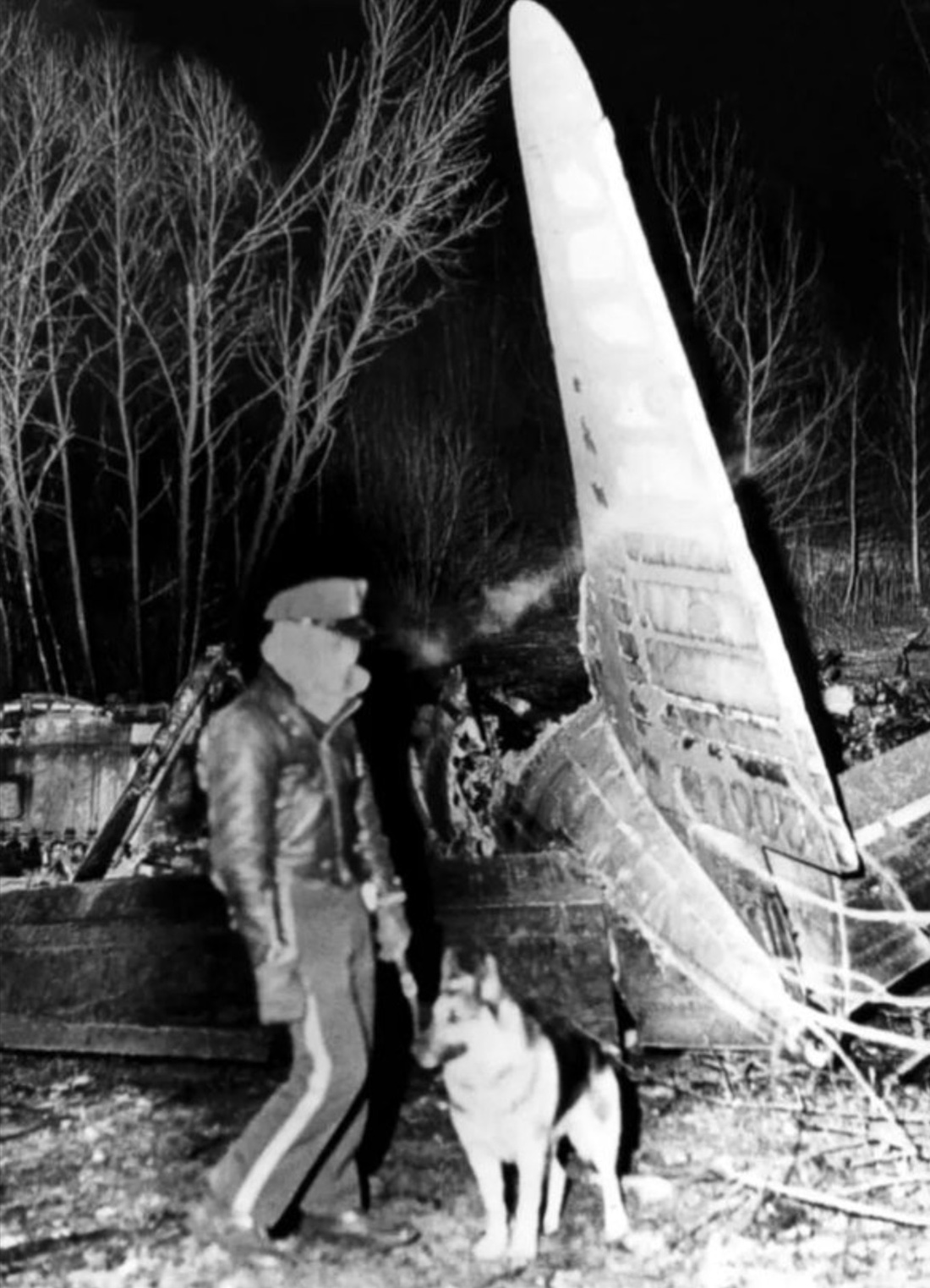
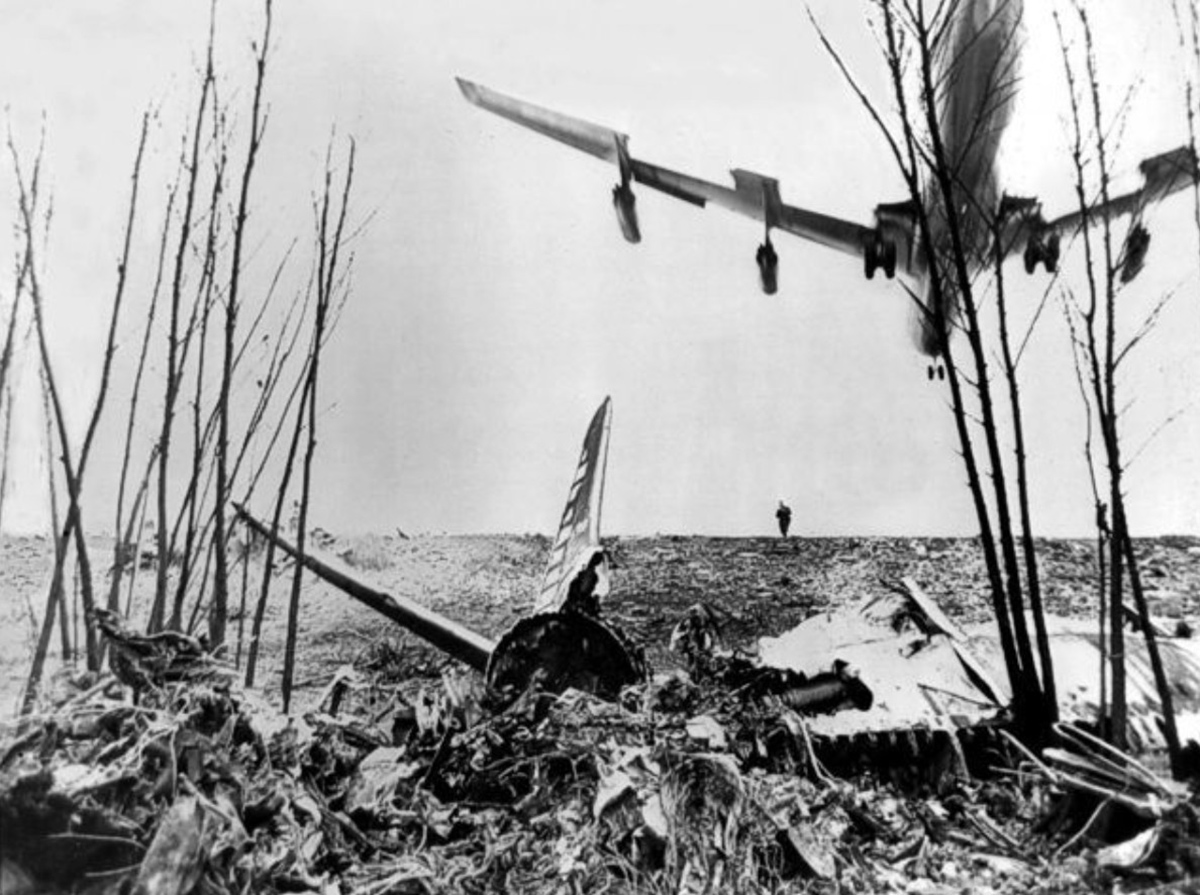
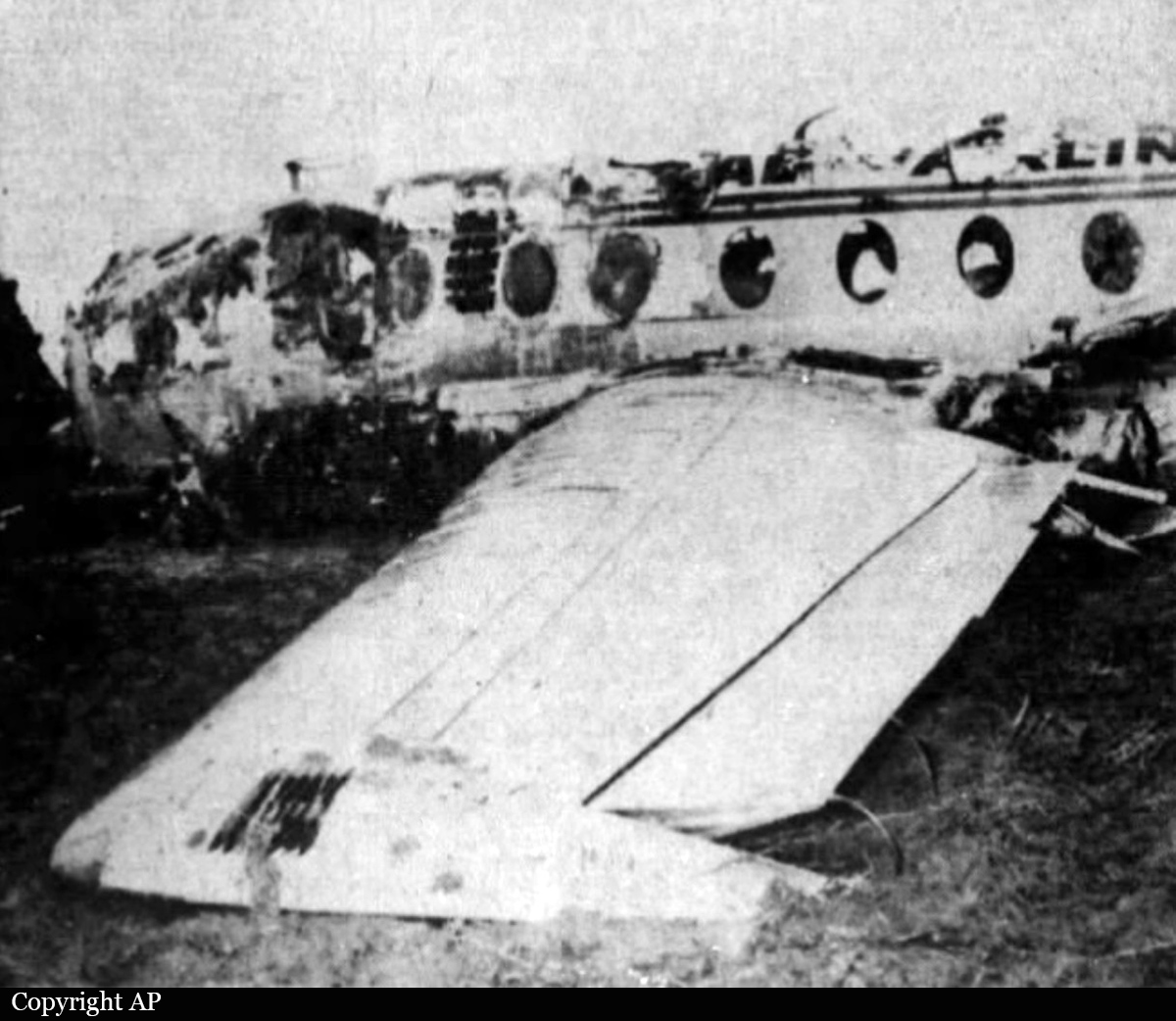
On the night of May 22, 1962, a Continental Air Lines Boeing 707-124, N70775, operating as Flight 11 en route from O’Hare Airport, Chicago, Illinois, to Kansas City, Missouri, was flying via Jet Route 26V at an altitude of 39,000 feet. A few minutes after Flight 11 had made a northerly deviation from course to circumnavigate a thunderstorm, in the vicinity of Centerville, Iowa, the radar image of the aircraft disappeared from the scope of the Waverly, Iowa, Flight Following Service. At approximately 2117 an explosion occurred in the right rear lavatory resulting in separation of the tail section from the fuselage. The aircraft broke up and the main part of the fuselage struck the ground about 6 miles north-northwest of Unionville, Missouri. All 37 passengers and crew of 8 sustained fatal injuries. The aircraft was totally destroyed.
Probable cause:
The Board determines that the probable cause of this accident was the disintegrating force of a dynamite explosion which occurred in the right rear lavatory resulting in destruction of the aircraft.
Final Report:
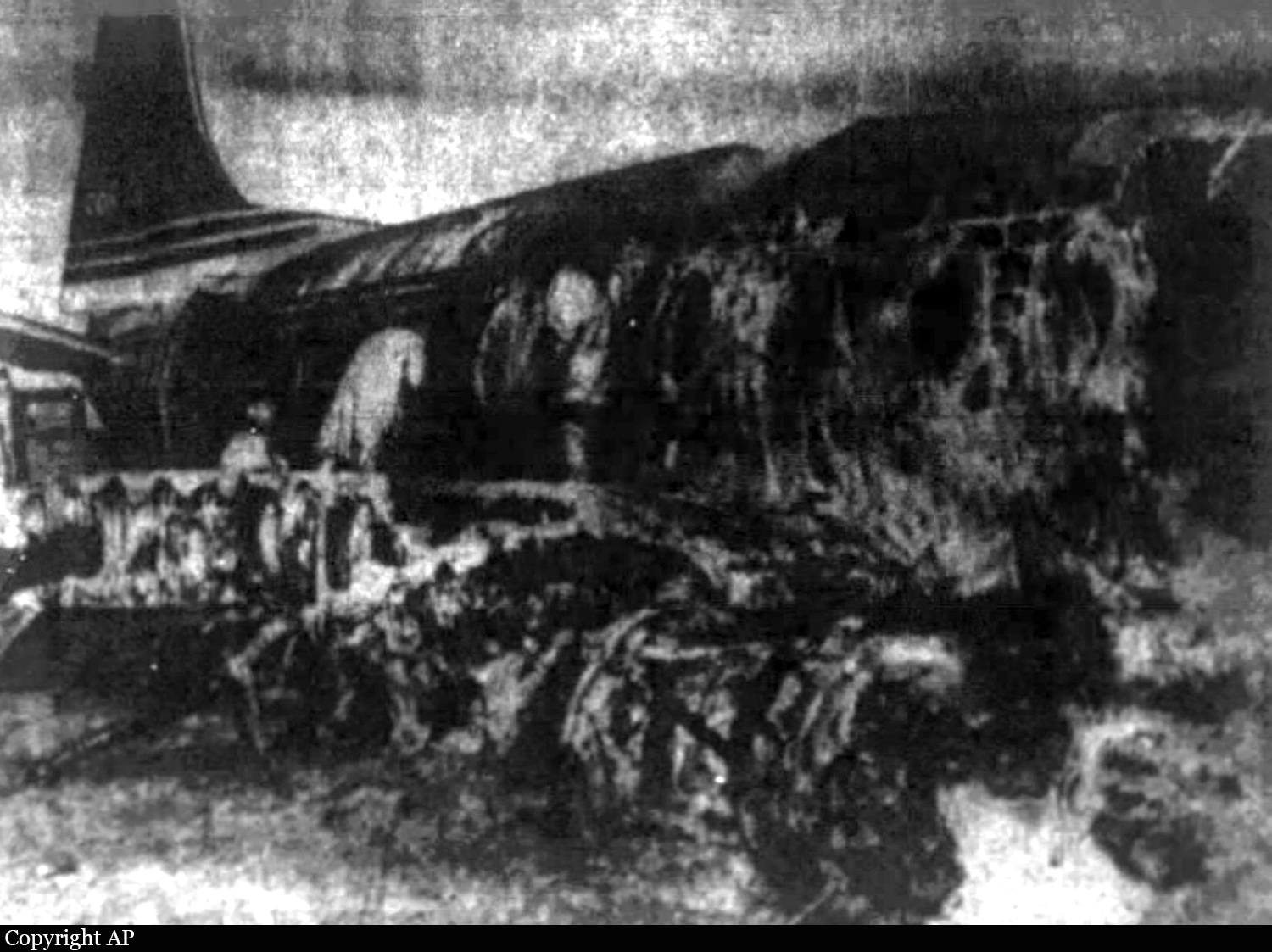
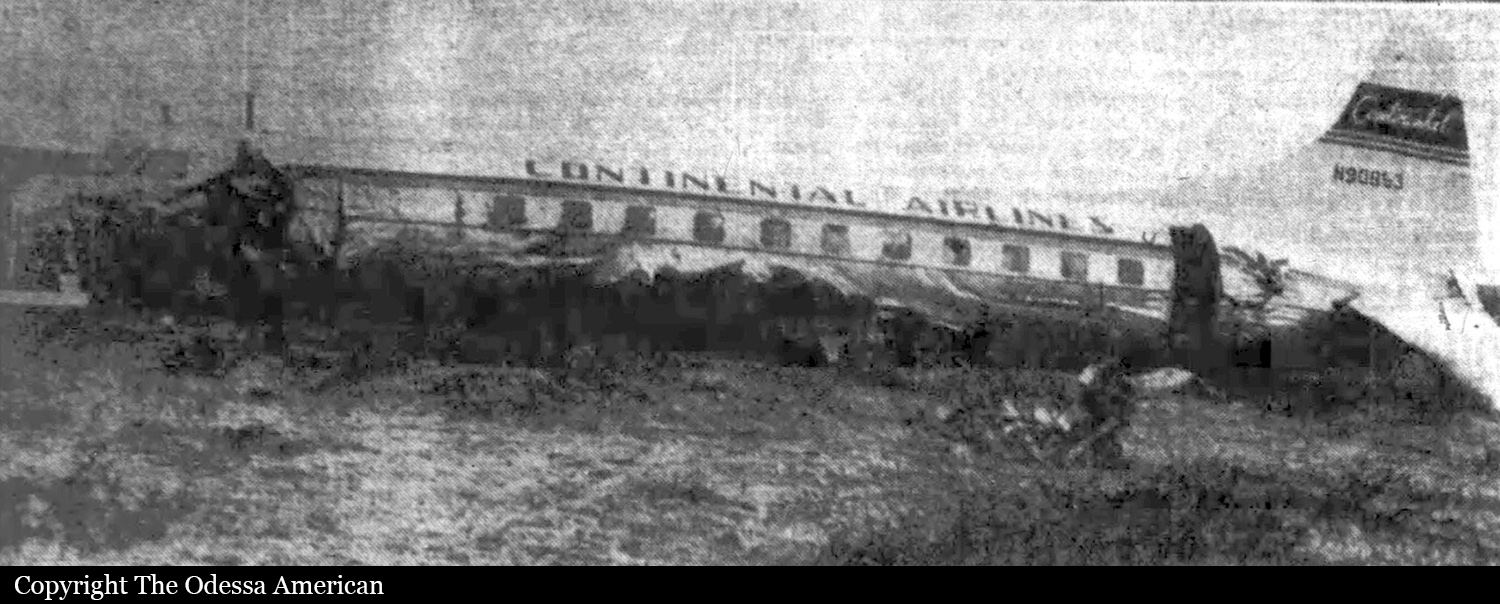
Crash of a Convair CV-340-35 in Midland

Date & Time: Mar 16, 1954 at 0838 LT
Type of aircraft:
Operator:
Registration:
N90853
Flight Phase:
Survivors:
Yes
Schedule:
El Paso – Midland – Kansas City
MSN:
44
YOM:
1953
Flight number:
CO046
Location:
Crew on board:
3
Crew fatalities:
Pax on board:
8
Pax fatalities:
Other fatalities:
Total fatalities:
0
Captain / Total flying hours:
11038
Captain / Total hours on type:
620.00
Copilot / Total flying hours:
2742
Copilot / Total hours on type:
659
Aircraft flight hours:
3099
Circumstances:
At 0833 Trip 46 was cleared to Runway 10 for takeoff. At this time the aircraft carried 585 gallons of fuel and was loaded to a gross takeoff weight of 36,345 pounds which was 10,655 pounds less than the maximum allowable. The load was properly distributed so that the center of gravity of the aircraft was within the approved limits. A pre-takeoff check was conducted adjacent to Runway 10 at which time the propellers, engines and instruments gave normal Indications. A part of this check included moving the control column fore and aft and turning the wheel left and right in order to check the control system for freedom of movement and full travel. At 0838 the flight was cleared for takeoff which was made using normal takeoff power. Immediately after becoming airborne the crew noted a slight vibration which was attributed to an unbalanced condition of the spinning main landing gear wheels. Captain Persing applied brakes during the landing gear retraction to eliminate this vibration; however, it not only continued but rapidly increased in severity. The aircraft reached an altitude of approximately 75 feet, the highest attained, and was near the airport boundary when the vibration stopped with a sudden jolt and the aircraft assumed a nose-down attitude. The first officer immediately sensing the situation joined the captain and both exerted their entire strength applying back pressure to their respective control columns to keep the aircraft from plunging into the ground. The captain quickly reduced power; however, the nose-down pressure could not be completely overcome. The first officer used nose-up trim control in an effort to relieve the nose-down pressure; this action had no appreciable effect and during the last attempt the trim tab control wheel appeared to be stuck. The captain established a shallow left turn with the thought of returning to the airport and continued the turn about 45 degrees from the takeoff heading. As air speed decreased power was momentarily increased whereupon it became evident to the crew that using power sufficient to maintain flight resulted in an insurmountable nose-down pressure. The captain therefore decided to make a wheels-up landing straight ahead. Close to the ground the first officer closed the throttles and the captain pulled the electrical crash bar. Contact with the ground followed with the aircraft in a near-level attitude and at approximately 100 m.p.h. Although the passengers and crew received injuries of varying degrees, they were able to get out of the aircraft unassisted in an orderly manner. The evacuation was mainly through the rear service door (emergency exit) and was accomplished in about 30 seconds. There was no fire.
Probable cause:
The Board determines that the probable cause of this accident was loss of control due to a failure of the right elevator trim tab push-pull rod caused by a reversed installation of the right elevator trim tab idler as a result of the carrier’s reliance on the Manufacturers Illustrated Parts Catalog as a maintenance reference. The following findings were reported:
- Immediately following a normal takeoff the right elevator trim tab push-pull rod failed and the stub end became wedged, holding the trim tab in a full-up or aircraft nose-down position,
- The trim tab position resulted in the crew being unable to control the aircraft and a wheels-up landing resulted,
- The push-pull rod failed as a result of excessive stresses caused by interference resulting from a reversed idler installation,
- The right elevator trim tab assembly as removed, reinstalled, inspected and functionally checked by company maintenance personnel 14:40 flight hours prior to the accident,
- Correct positioning of the right idler component could not be determined from the Maintenance Manual figure, 7.4.101, which the carrier considered appropriate for the installation,
- The Manufacturers Illustrated Parts Catalog was used in accordance with company policy as an installation reference to determine the idler position,
- Under conventional interpretation of the appropriate exploded diagram of the Parts Catalog, the idler was installed in reverse,
- The Illustrated Parts Catalog was not intended and should not have been used as a maintenance reference.
Final Report: