Operator Image

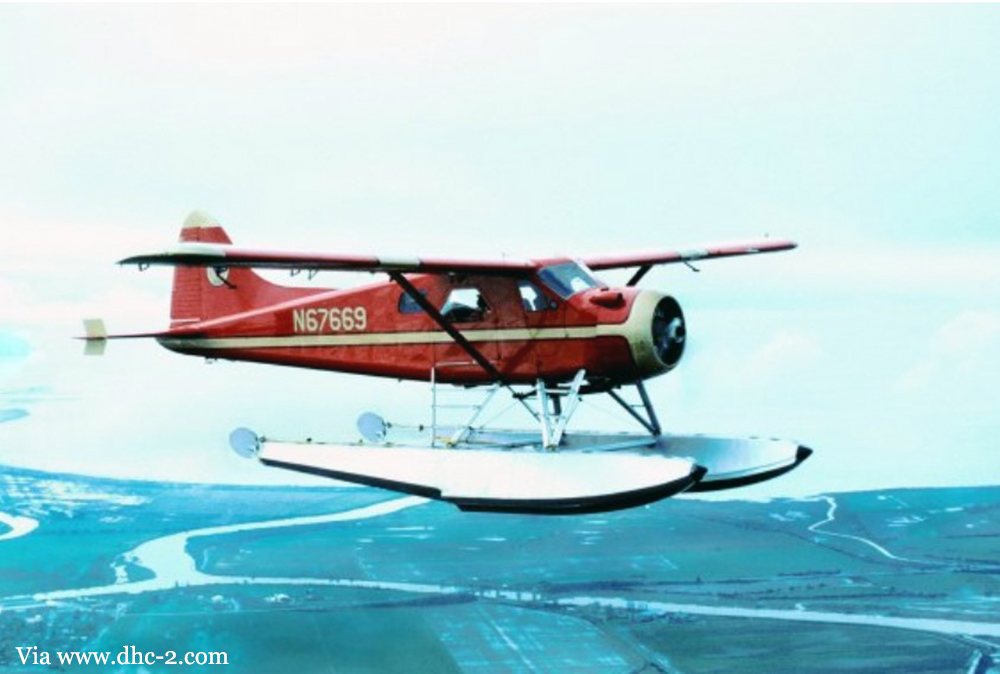
Crash of a De Havilland DHC-2 Beaver off Angoon: 1 killed

Date & Time: May 29, 1989 at 1245 LT
Type of aircraft:
Operator:
Registration:
N67669
Flight Type:
Survivors:
No
Schedule:
Juneau - Angoon
MSN:
917
YOM:
1956
Location:
Crew on board:
1
Crew fatalities:
Pax on board:
0
Pax fatalities:
Other fatalities:
Total fatalities:
1
Captain / Total flying hours:
14500
Captain / Total hours on type:
150.00
Aircraft flight hours:
11313
Circumstances:
The pilot landed the amphibian landing gear equipped aircraft on water with the wheels extended, and the aircraft flipped over to an inverted attitude on touchdown. The pilot, sole on board, was killed.
Probable cause:
Pilot failed to assure the landing gear on the amphibious floats were retracted for the water landing.
Final Report:
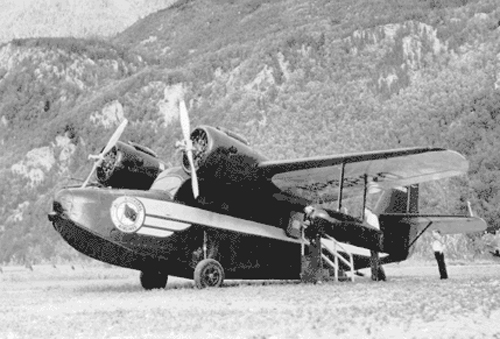
Crash of a Grumman G-21A Goose near Juneau: 9 killed

Date & Time: Aug 21, 1966 at 1035 LT
Type of aircraft:
Operator:
Registration:
N88820
Flight Phase:
Survivors:
No
Site:
MSN:
1114
YOM:
1941
Location:
Crew on board:
1
Crew fatalities:
Pax on board:
8
Pax fatalities:
Other fatalities:
Total fatalities:
9
Captain / Total flying hours:
9230
Captain / Total hours on type:
2492.00
Circumstances:
En route, the seaplane went into an uncontrolled descent and crashed in flames in a glacier located in the region of Juneau. The wreckage was found few hours later in a crevasse and all nine occupants have been killed.
Probable cause:
The exact cause of the accident could not be determined as hazardous location precluded on scene investigation.
Final Report:

Crash of a Grumman G-21A Goose off Eldred Rock: 1 killed

Date & Time: Aug 20, 1958 at 1525 LT
Type of aircraft:
Operator:
Registration:
N4774C
Flight Phase:
Survivors:
Yes
Schedule:
Juneau – Haines – Bridget Cove – Juneau
Flight number:
ACA038
Crew on board:
1
Crew fatalities:
Pax on board:
8
Pax fatalities:
Other fatalities:
Total fatalities:
1
Captain / Total flying hours:
7500
Captain / Total hours on type:
5000.00
Circumstances:
The aircraft flew into the water of Lynn Canal near Eldred Rock, 65 miles north-northwest of Juneau, Alaska, at approximately 1525LT. Six of the eight passengers and the pilot were seriously injured. One passenger died four days later. The aircraft, an amphibian, descended into the glassy water in cruising configuration from an established cruise altitude of approximately 200 feet. The aircraft received major damage from impact, sank, and was not recovered.
Probable cause:
The Board determines the probable cause of this accident was the failure of the pilot to maintain control of his aircraft at a safe altitude during marginal visual flight conditions. A contributing factor was a glassy surface which caused the pilot to misjudge the height above the water.
Final Report:

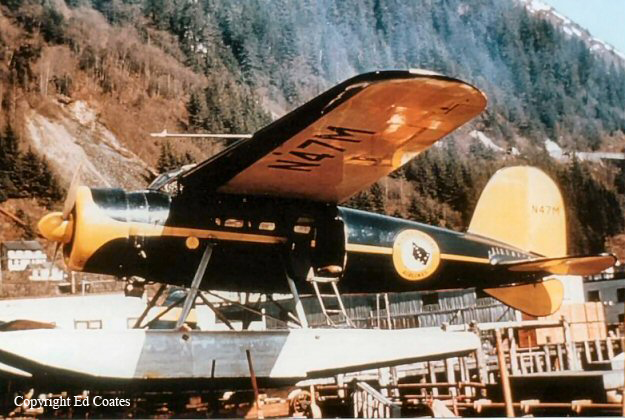
Crash of a Lockheed 5C Vega in Tenakee: 1 killed

Date & Time: Jan 15, 1958 at 1600 LT
Type of aircraft:
Operator:
Registration:
N47M
Survivors:
Yes
Schedule:
Juneau – Angoon – Hood Bay – Baranof – Rodgers Point – Tenakee – Juneau
MSN:
99
YOM:
1929
Flight number:
ACA040
Location:
Crew on board:
1
Crew fatalities:
Pax on board:
2
Pax fatalities:
Other fatalities:
Total fatalities:
1
Captain / Total flying hours:
1263
Captain / Total hours on type:
209.00
Aircraft flight hours:
13496
Circumstances:
Alaska Coastal Airlines, a scheduled air carrier, is authorized to conduct operations throughout southeastern Alaska. On January 15, 1958, Captain Fred B. Sheldon departed from Juneau to fly Trip 40. Scheduled stops were planned at Angoon, Hood Bay, Baranof, Rodgers Point, Tenakee, and the flight was to terminate at the point of origin, Juneau. Weather reports for the area indicated conditions to be generally good, enabling the flight to be conducted according to visual flight rules. Ceilings were forecast to be 2,000 to 3,000 feet and winds near the surface were anticipated to be moderate and generally southwesterly. At least one mountain pass over the route was reported closed because of clouds. The gross takeoff weight of the aircraft at Juneau was calculated to be 5,237 pounds, approximately 4 pounds less than the maximum allowable. The load was correctly distributed within the center of gravity limitations. Flight 40 departed Juneau at 1301 and was routine to Angoon. After refueling, the flight continued uneventfully to Hood Bay, Baranof, Rodgers Point; arriving at Rodgers Point about 1520. About 1530, after the takeoff from Rodgers Point, a radio operator there advised the station agent at Tenakee (the next intended en route stop) that flight 40 was off the water and would need 20 gallons of fuel when it arrived. At approximately 1557 the agent at Tenakee heard a distress call from flight 40 over the radio. The pilot called “Mayday” and stated he was trying to make it to the flats in Kadashan Bay. The agent then called Flight 40 by radio asking its position. Sheldon’s final message was “ . . . the flats across from Tenakee.” Immediately thereafter the aircraft crashed. Both passengers were injured while the pilot was killed.
Probable cause:
The Board determines that the probable cause of this accident was the poor flight planning by the pilot and his poor judgment in allowing the aircraft to run out of fuel. A contributing factor was the lack of adequate organization and management of the air carrier’s operations to ensure that all flights were planned and conducted with safety. The following findings were reported:
- With one fuel tank out of use, the aircraft did not comply with the requirements of Bulletin 7A under which it was certificated for passenger-carrying service,
- No evidence of mechanical or structural failure was found,
- The pilot did not plan his flight to provide for an adequate fuel reserve at all times,
- The company did not provide adequate supervision or control over flight planning or clearance of flights,
- A longer alternate route had to be followed by the flight because of unfavorable weather,
- The aircraft exhausted its fuel supply and crashed,
- The air carrier’s operations manual was incomplete and was not maintained current as required by regulations,
- The CAA safety inspection program was ineffective in terms of ensuring that the carrier was conducting operations at a level of safety appropriate for the carrier’s operating certificate and associated operating specifications.
Final Report:

Crash of a Grumman G-44 Widgeon near Pelican: 1 killed

Date & Time: Nov 4, 1954 at 1310 LT
Type of aircraft:
Operator:
Registration:
N67794
Flight Phase:
Survivors:
Yes
Schedule:
Sitka – Pelican – Hoonah – Juneau
MSN:
1321
YOM:
1943
Flight number:
ACA060
Location:
Crew on board:
1
Crew fatalities:
Pax on board:
2
Pax fatalities:
Other fatalities:
Total fatalities:
1
Captain / Total flying hours:
14000
Captain / Total hours on type:
600.00
Aircraft flight hours:
2763
Circumstances:
Flight 60 originated at Sitka, Alaska, with stops scheduled at Pelican City, Hoonah, and Juneau, the destination. Before departure from Sitka, the dispatcher in Juneau issued clearance for the flight to proceed DVFR (Defense Visual Flight Rules) to Hoonah and wait, if necessary, at that station for weather to improve in the Juneau area. The flight plan indicated estimated time from Sitka to Juneau, including stops, would be two hours and fifty minutes. Fuel consumption was estimated at 60 gallons, with 20 gallons re-serve upon arrival at Juneau. Gross weight of all disposable load at takeoff was 1,401 pounds, 30 less than the maximum allowable. The flight departed Sitka at 1153 with Captain James C. Rinehart (pilot), four passengers, cargo, mail, and baggage. The route between Sitka and Pelican City follows the North Pacific shore. The flight landed at Pelican City at 1235. Two passengers deplaned and 88 pounds of baggage, mail, and cargo were taken off; 159 pounds of cargo were added. The aircraft was not refueled. The pilot reported by radio that the flight departed Pelican City at 1305 en route to Hoonah. This was the last radio contact. When the flight became overdue at Hoonah, search operations were instituted. The Coast Guard was notified at 1655 and began search. At approximately 0800 the following morning, the pilot of a private aircraft located the wreckage in a mountain pass several miles southeast of Pelican City. A Coast Guard and civilian ground rescue party arrived the afternoon of November 5, rendered first aid to the two passengers, and stayed until the survivors and the body of the pilot were evacuated by helicopter on November 6.
Probable cause:
The Board determines that the probable cause of this accident was loss of control of the aircraft during a steep turn in severe turbulence while the pilot was attempting to conduct visual flight at less than the required altitude and weather minimums. The following findings were reported:
- Weather conditions within the pass were: Rain, fog, severe turbulence, and low ceiling, with the base of the clouds extending about halfway down the 3,000-foot mountain slopes,
- Flight 60 crashed one-fourth mile due south of the summit of the pass about 1.500 feet above mean sea level, the pilot having negotiated about three miles of its 10-mile length,
- The aircraft struck the ground on a west heading at a sharp bend in the narrow pass, having encountered strong turbulence in a steep left bank at low altitude,
- The pilot had reversed course when the accident occurred,
- The two passengers survived but the pilot was fatally injured,
- Alaska Coastal Airlines flights in this type aircraft are restricted to Defense Visual Flight Rules operations,
- The Alaska Coastal Airlines operations manual specified that the pass must be flown at 3,000 feet altitude,
- The pilot was attempting to negotiate the pass at less than the altitude specified in the operations manual and in weather conditions which were lower than DVFR requirements.
Final Report: