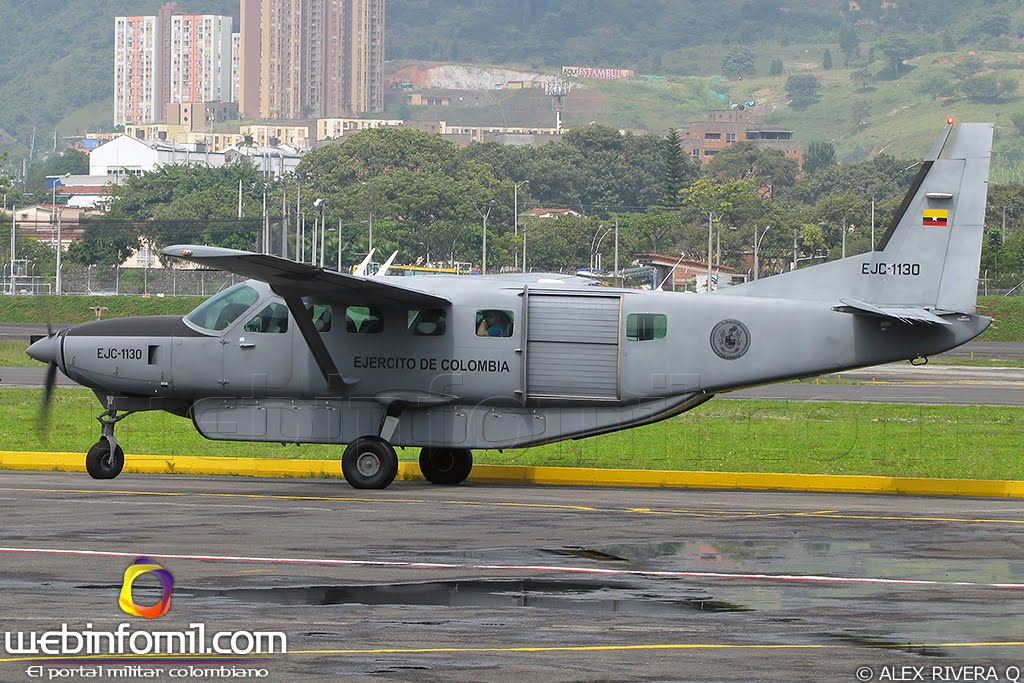
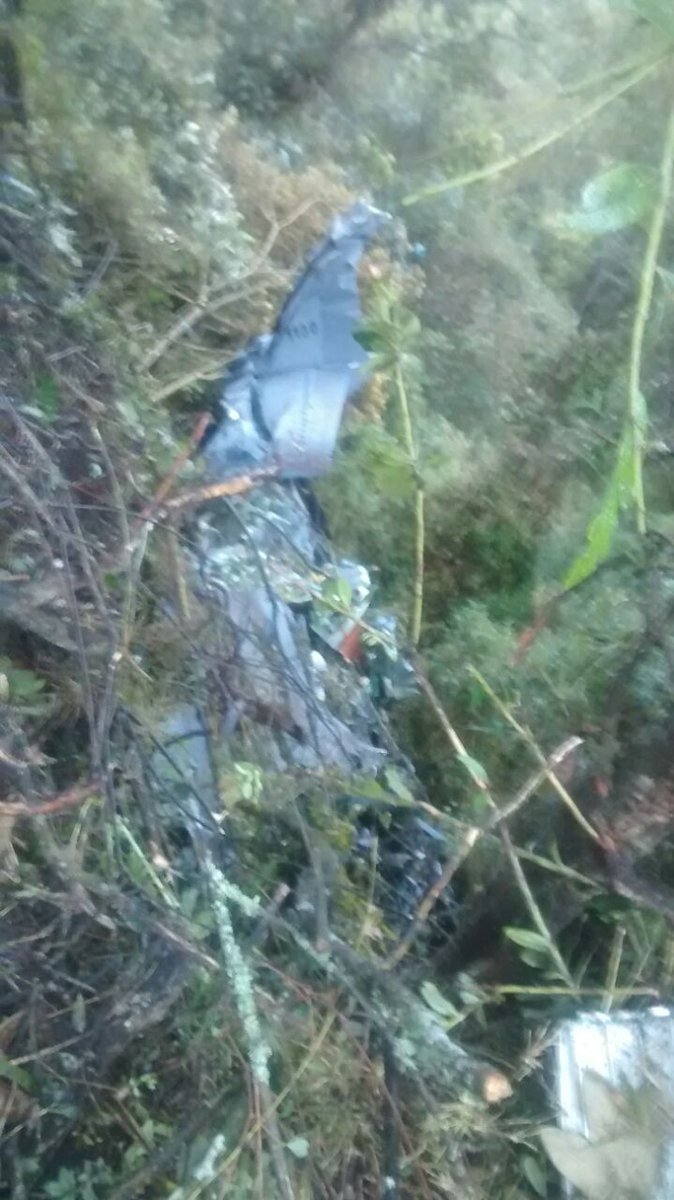
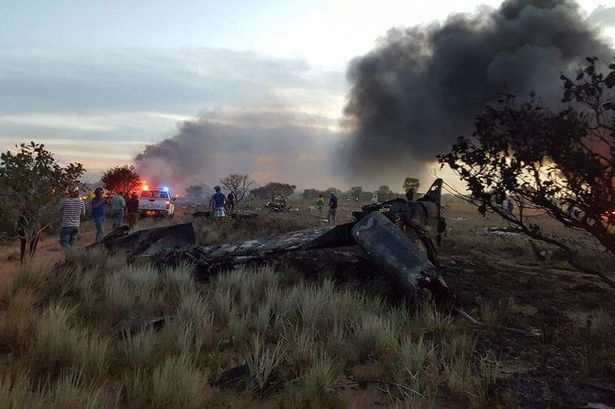
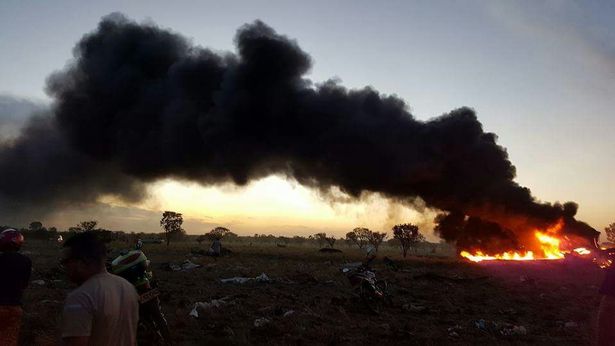
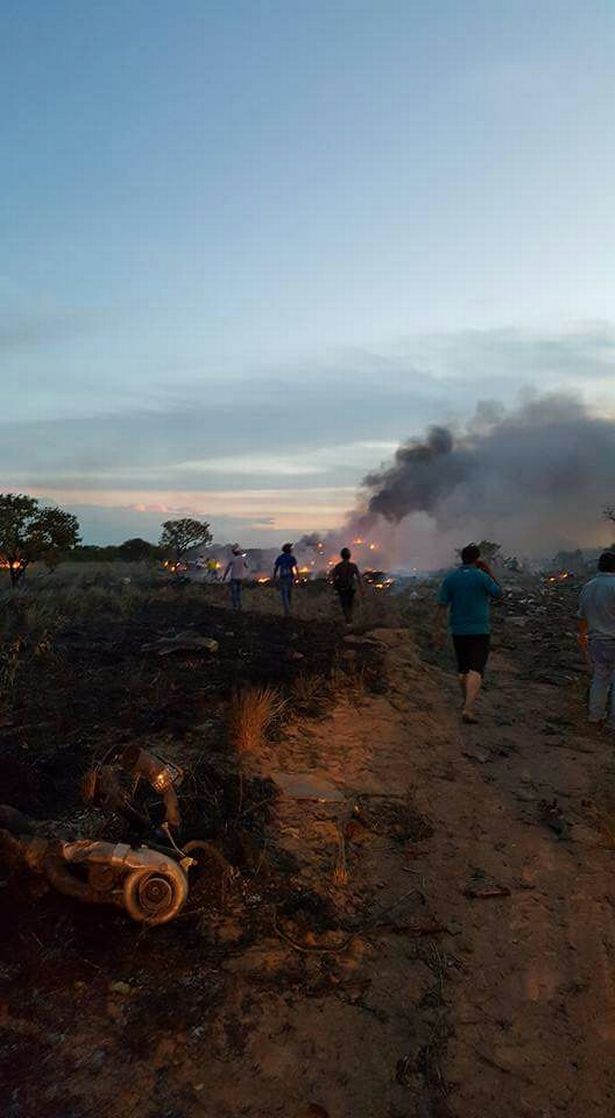
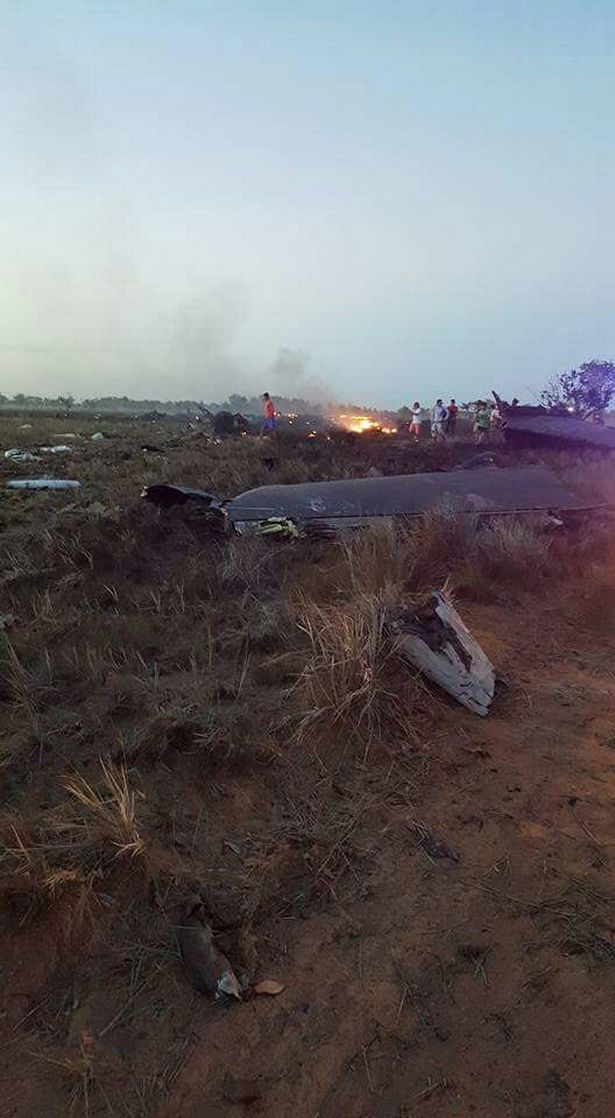
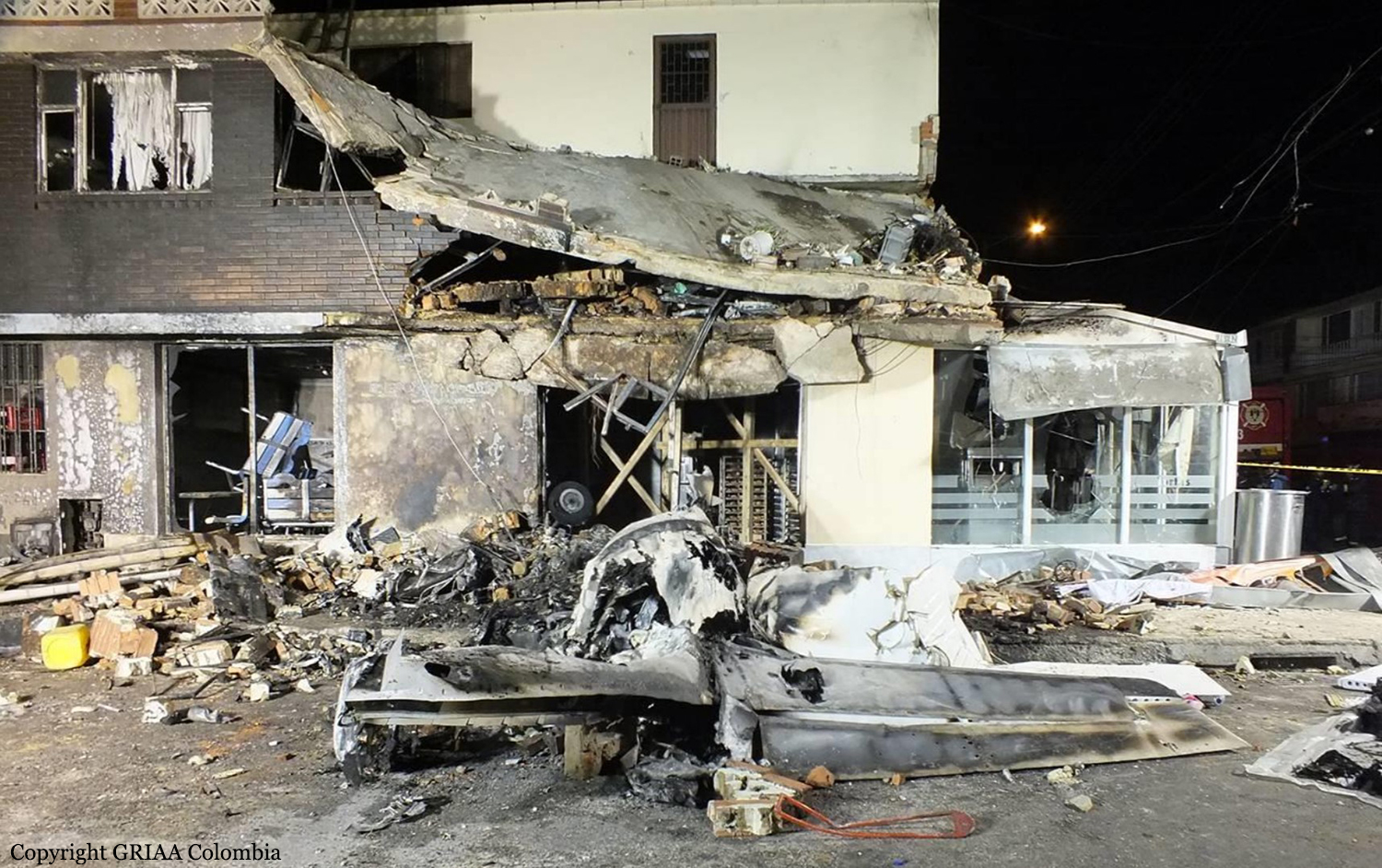
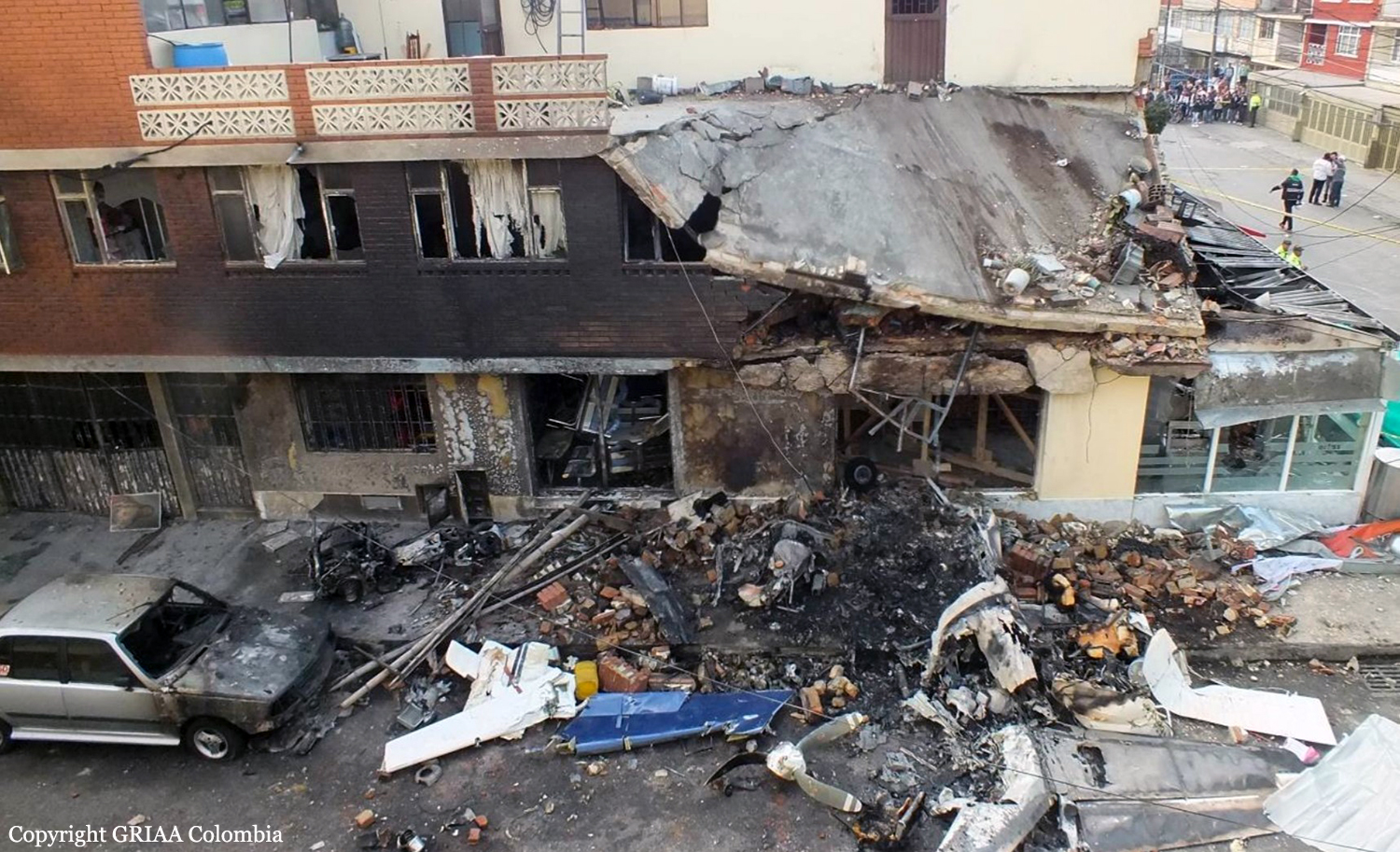
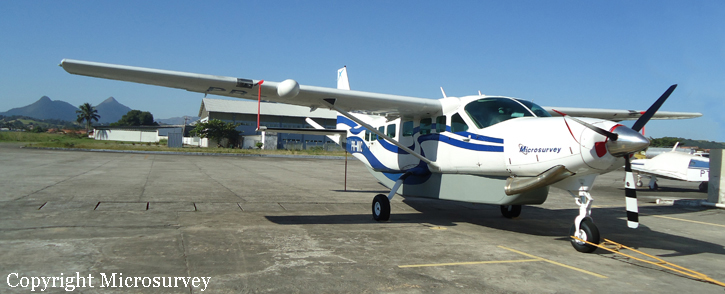
Crash of a Cessna 208B Grand Caravan near Guaymaral: 8 killed

Date & Time: May 1, 2017 at 1630 LT
Type of aircraft:
Operator:
Registration:
EJC-1130
Flight Type:
Survivors:
No
Site:
Schedule:
Tolemaida - Bogotá
MSN:
208B-1194
YOM:
2006
Country:
Crew on board:
3
Crew fatalities:
Pax on board:
5
Pax fatalities:
Other fatalities:
Total fatalities:
8
Circumstances:
The single engine aircraft was performing a short flight from Tolemaida AFB to Guaymaral Airport in Bogotá. While approaching the airport from the west, the crew encountered limited visibility due to marginal weather conditions when the aircraft impacted trees and crashed on the slope of Cerro Manjui, about 5 km west of the airport. The aircraft was destroyed and all 8 occupants were killed, among them three civilians.

Crash of a Piper PA-31-325 near Purísima de la Concepción

Date & Time: Apr 9, 2017 at 1241 LT
Type of aircraft:
Operator:
Registration:
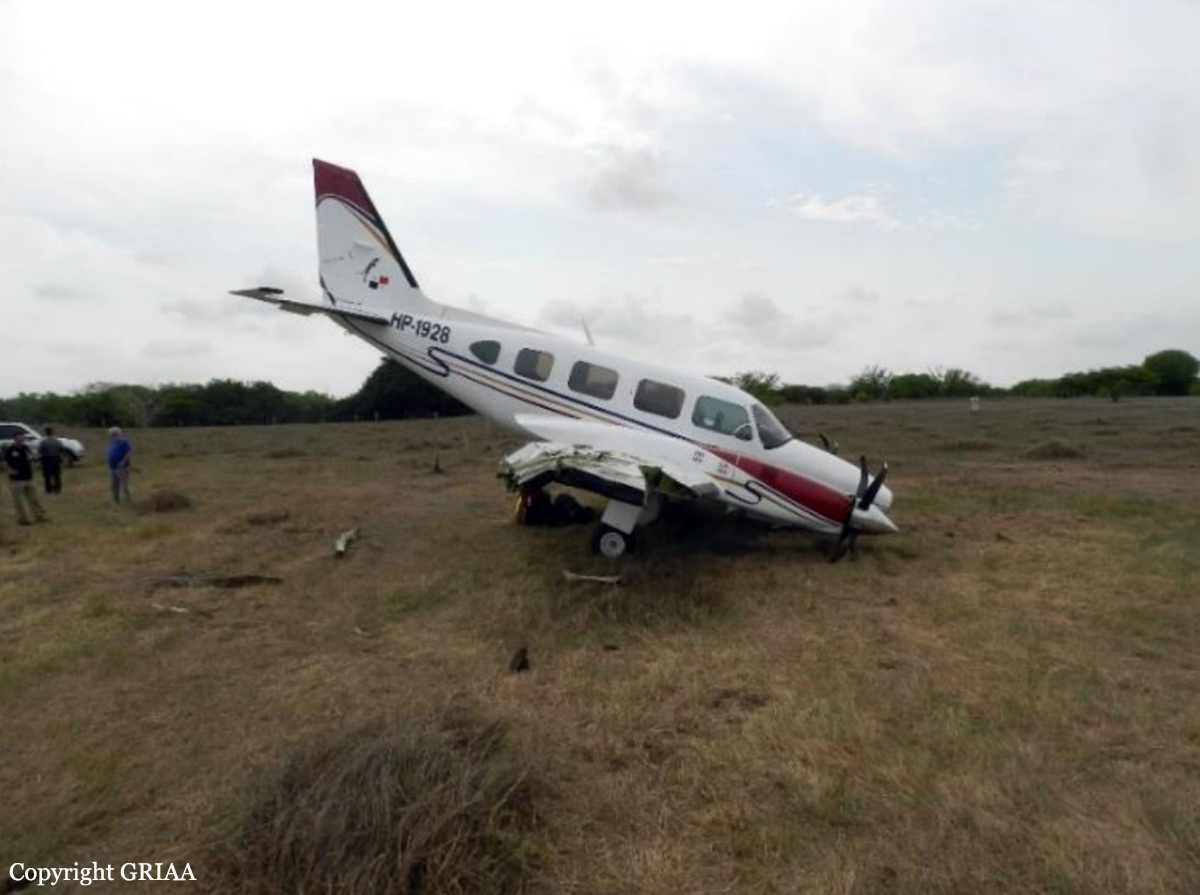
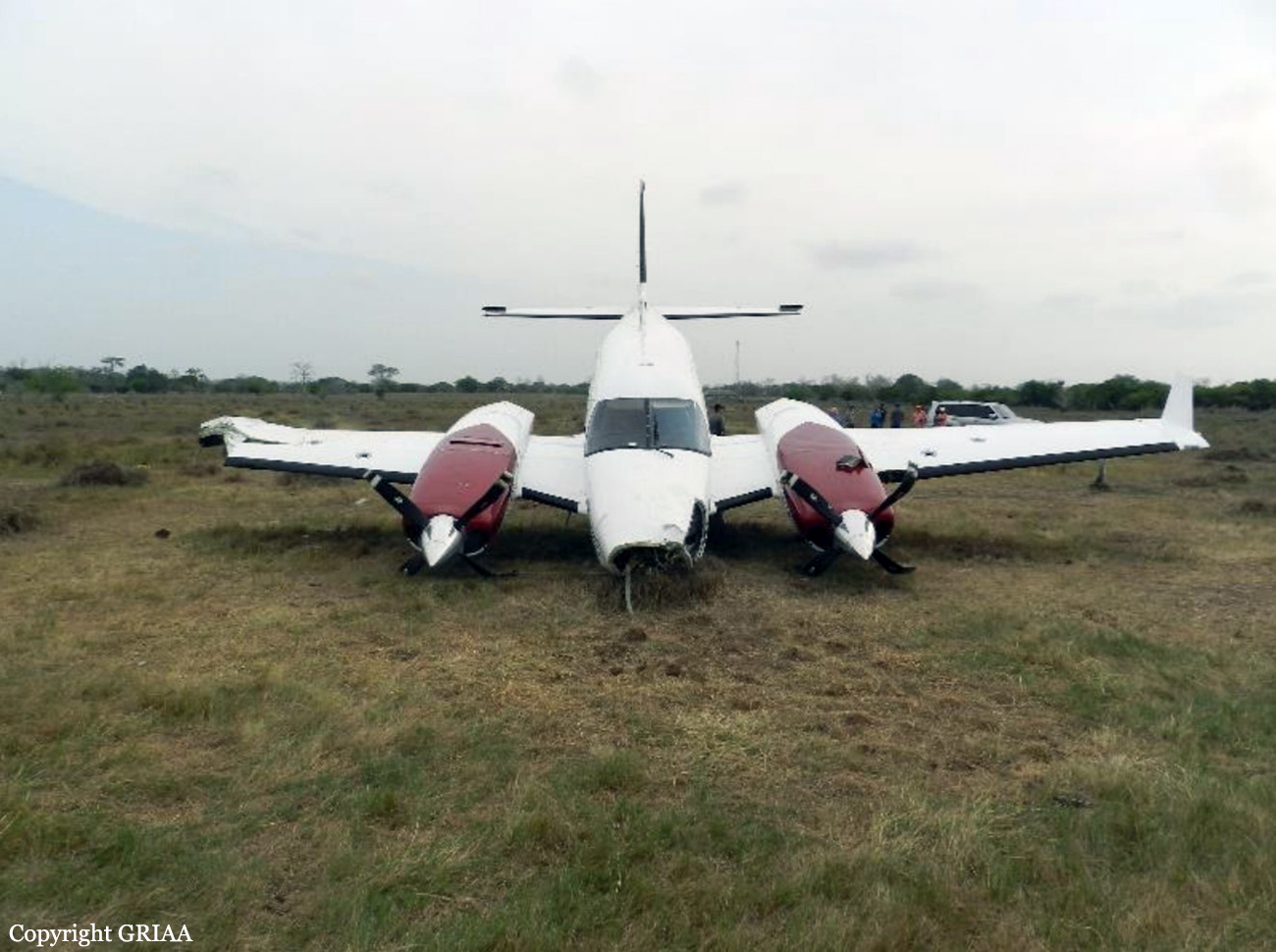
HP-1928
Flight Phase:
Flight Type:
Survivors:
Yes
Schedule:
Tolú - Montería
MSN:
31-7612020
YOM:
1976
Country:
Crew on board:
1
Crew fatalities:
Pax on board:
0
Pax fatalities:
Other fatalities:
Total fatalities:
0
Captain / Total flying hours:
14791
Captain / Total hours on type:
700.00
Aircraft flight hours:
6840
Circumstances:
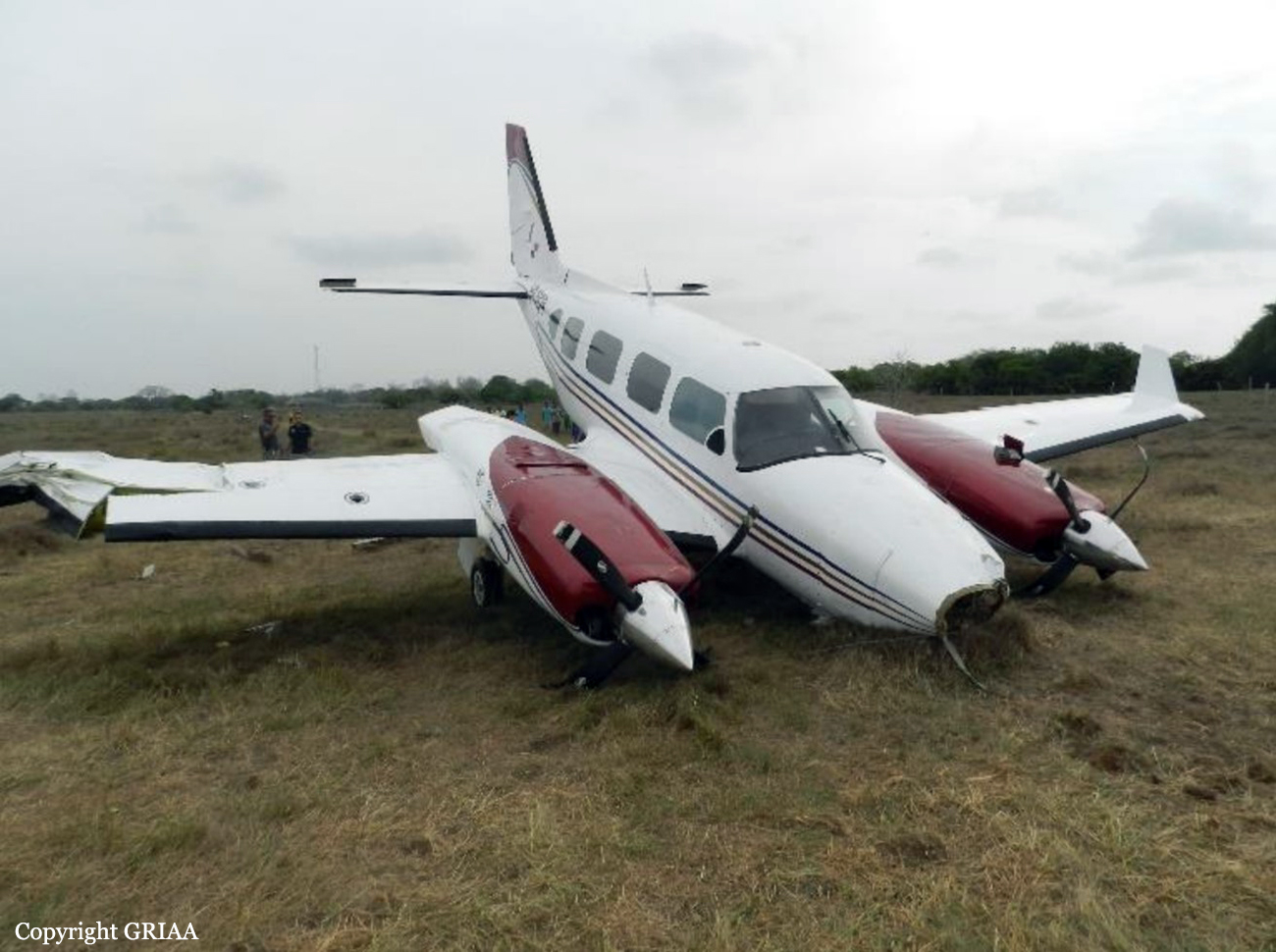
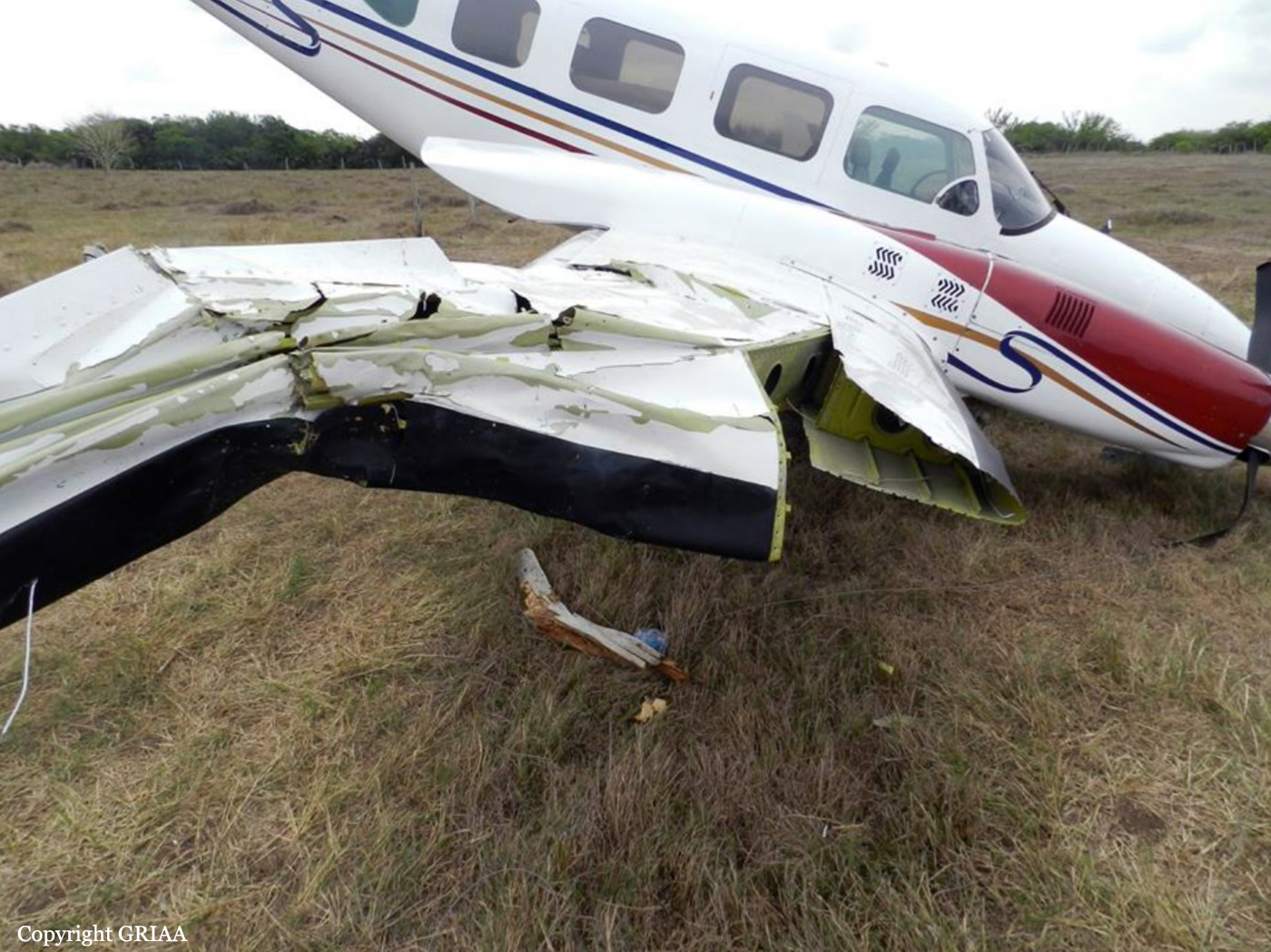
The twin engine aircraft departed Cali-Alfonso Bonilla Aragón Airport in the morning on a flight to Tolú, carrying seven passengers and one pilot. After takeoff from Tolú, the pilot decided to position to Montería-Los Garzones Airport. Shortly after takeoff, the pilot encountered engine problems and elected to make an emergency landing in a pasture. Upon landing, the right wing collided with obstacles then the nose gear collapsed and the aircraft came to rest near Purísima de la Concepción, about 10 km east of Tolú. The pilot was uninjured and the aircraft was damaged beyond repair.
Probable cause:
Inadequate fuel management and incomplete execution of procedures by the Pilot, by not activating in time the fuel supply from the external tanks (OUTBD) to the internal tanks (INBD) for the feeding of both the engines, causing the fuel in the internal tanks to run out and causing both engines to stop due to fuel starvation.
Contributing Factors:
- Poor flight planning on part of the pilot by not considering the amount of minimum fuel needed and not complying with the minimum fuel amount required for domestic flights.
- Loss of situational awareness by the pilot by not following the standard operation procedures.
Final Report:

Crash of a Boeing 727-2J0F in Puerto Carreño: 5 killed

Date & Time: Dec 20, 2016 at 1722 LT
Type of aircraft:
Operator:
Registration:
HK-4544
Flight Phase:
Flight Type:
Survivors:
Yes
Schedule:
Puerto Carreño - Bogotá
MSN:
21105/1158
YOM:
1975
Flight number:
KRE157
Country:
Crew on board:
6
Crew fatalities:
Pax on board:
0
Pax fatalities:
Other fatalities:
Total fatalities:
5
Captain / Total flying hours:
8708
Captain / Total hours on type:
6822.00
Copilot / Total flying hours:
3285
Copilot / Total hours on type:
3285
Aircraft flight hours:
60199
Circumstances:
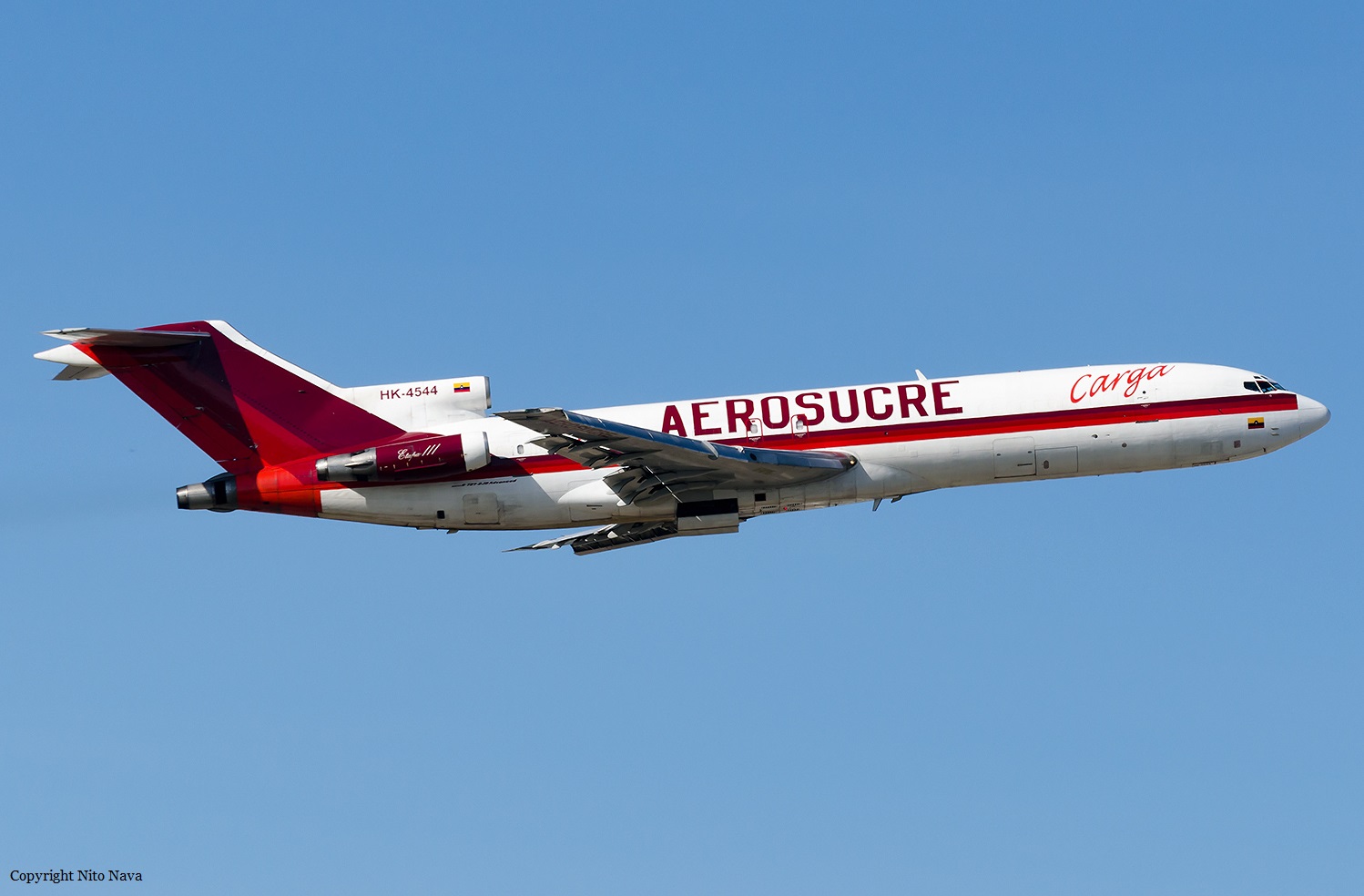
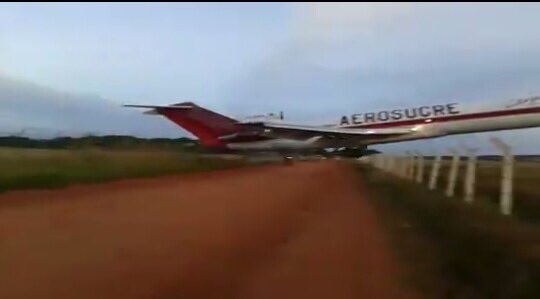
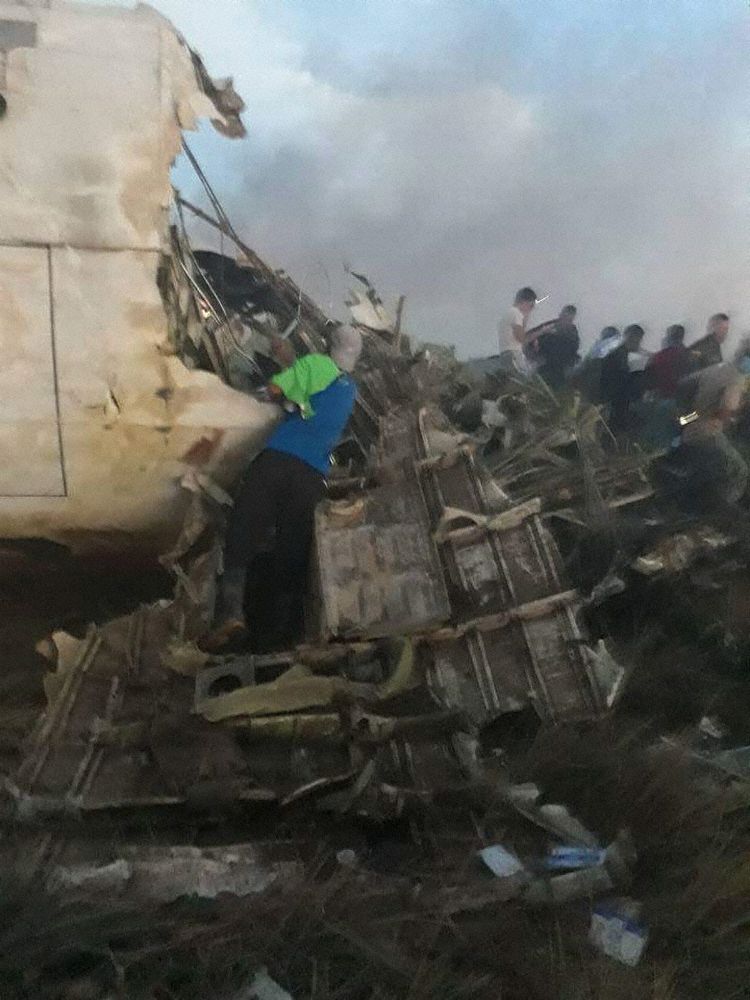
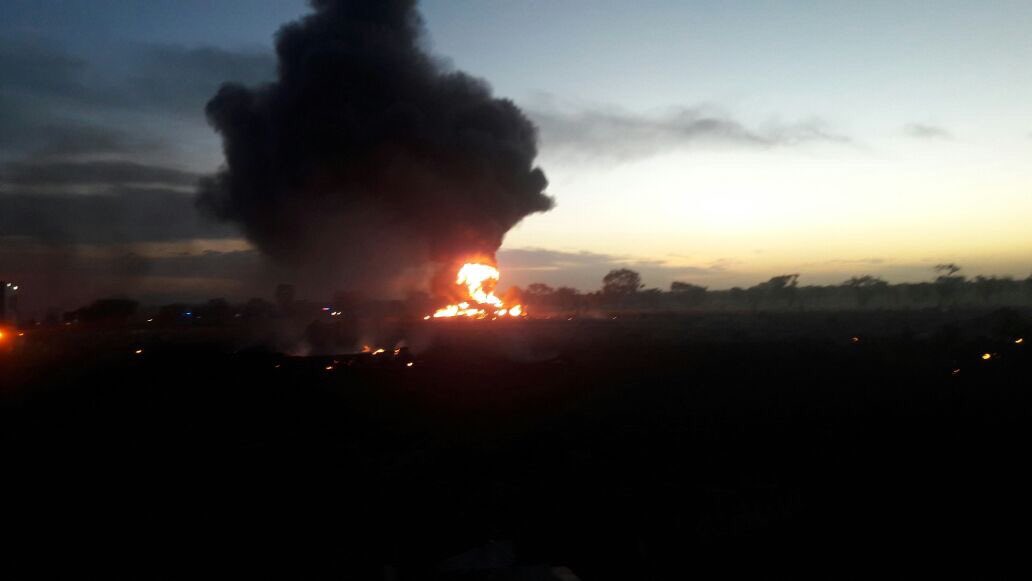
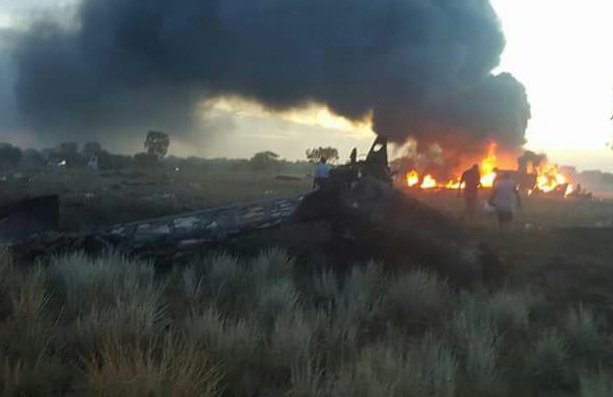
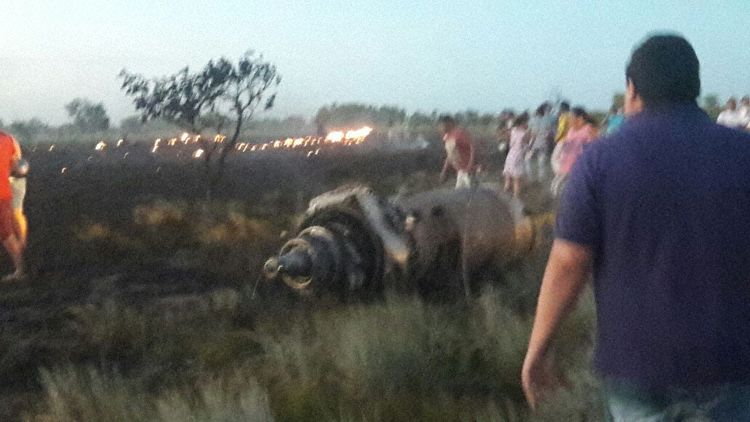
The crew started the takeoff procedure at 1718LT from Puerto Carreño-Germán Olano Airport Runway 07 which is 1,800 metres long. Following a long takeoff roll, the pilot-in-command initiated the rotation when the aircraft overran then rolled for about 95 metres. It collided with two perimeter fences, passed through a road then lifted off. During initial climb, the right main gear was torn off after it collided with a tree and the engine n°3 failed. The airplane continued to climb to an altitude of 790 feet then entered a right turn and eventually crashed in an open field located 7,5 km from the airport, bursting into flames. The flight engineer was seriously injured while five other occupants were killed.
Probable cause:
The following findings were identified:
- Inadequate flight planning by the operator of the aircraft, and by the crew, by failure to properly perform dispatch procedures, takeoff performance calculations and verification of limitations imposed by operational conditions of the aerodrome according to the configuration of the aircraft.
- Wrong crew decision making by not considering a key aspect affecting aircraft performance, such as the prevailing tailwind at takeoff.
- Erroneous selection of takeoff speeds V1/VR and V2, by the crew, corresponding to an aircraft without modification in its flap system, which led to rotate the aircraft with five more knots of speed, increasing the takeoff run.
- Erroneous rotation technique applied by the Pilot, delayed maneuver that extended the long takeoff run even more.
- Loss of components (landing gear, trailing inboard flap right) and damage to functional systems (loss of engine power n°3 and hydraulic system) necessary to control the aircraft in flight.
- Loss of control in flight generated by asymmetries of lift, power and emptying of the main hydraulic systems that exceeded the capacity of the crew and made it impossible to maintain adequate directional control and stability of the aircraft.
Contributing Factors:
- Non-compliance with the Aeronautical Regulations by the operating company of the aircraft, operating to an aerodrome unsuitable for the operation of B727-200 equipment, which, in addition, was not authorized for that type of aircraft in the company's Operating Specifications, approved by the Aeronautical Authority.
- Lack of standardization and supervision of the operating company of the aircraft, allowing the operation of the B727-200 equipment, to which a modification had been applied to the flap system, with the reference tables of speeds corresponding to the aircraft without modification.
- Execution of take-off with a weight that exceeded the maximum value established in the aircraft performance charts for the conditions prevailing at the Germán Olano airport.
- Omission of the crew by not activating the Standby hydraulic system, which might have allowed emergency hydraulic pressure, to regain control of the aircraft.
- Lack of supervision by the Aeronautical Authority, which allowed for several years the operation of equipment B727-200 of the company operating the aircraft at the Germán Olano aerodrome in Puerto Carreño, when the characteristics of the aerodrome did not allow it and without the operator being authorized to operate equipment B727-200 in that aerodrome.
Final Report:

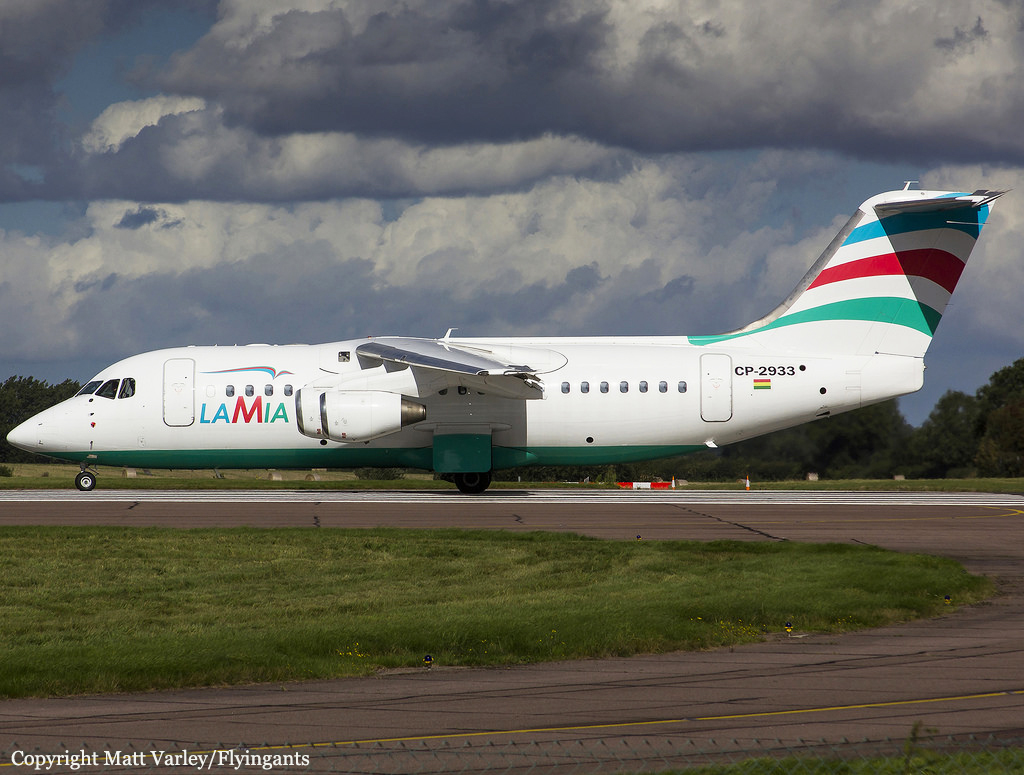
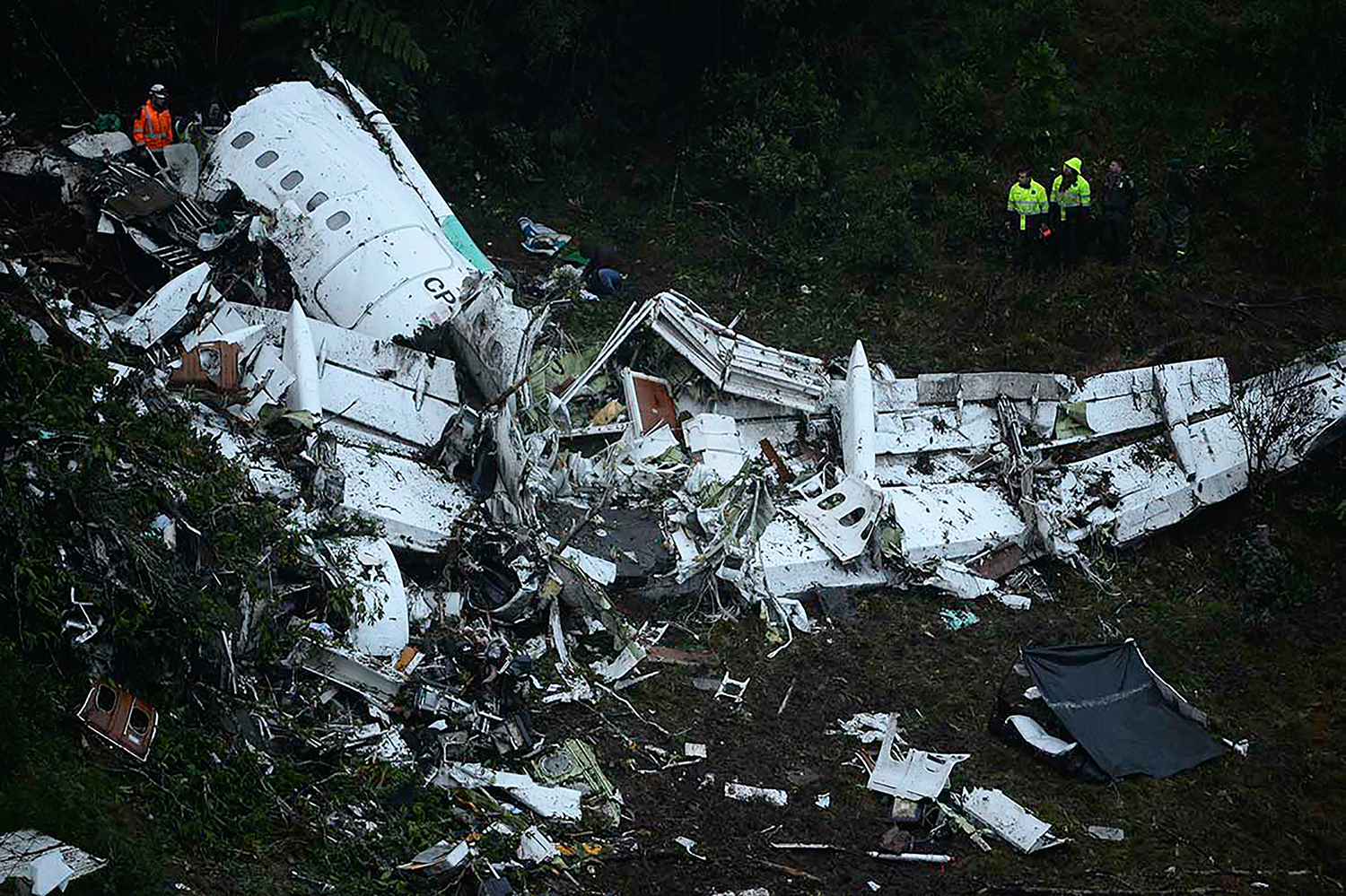
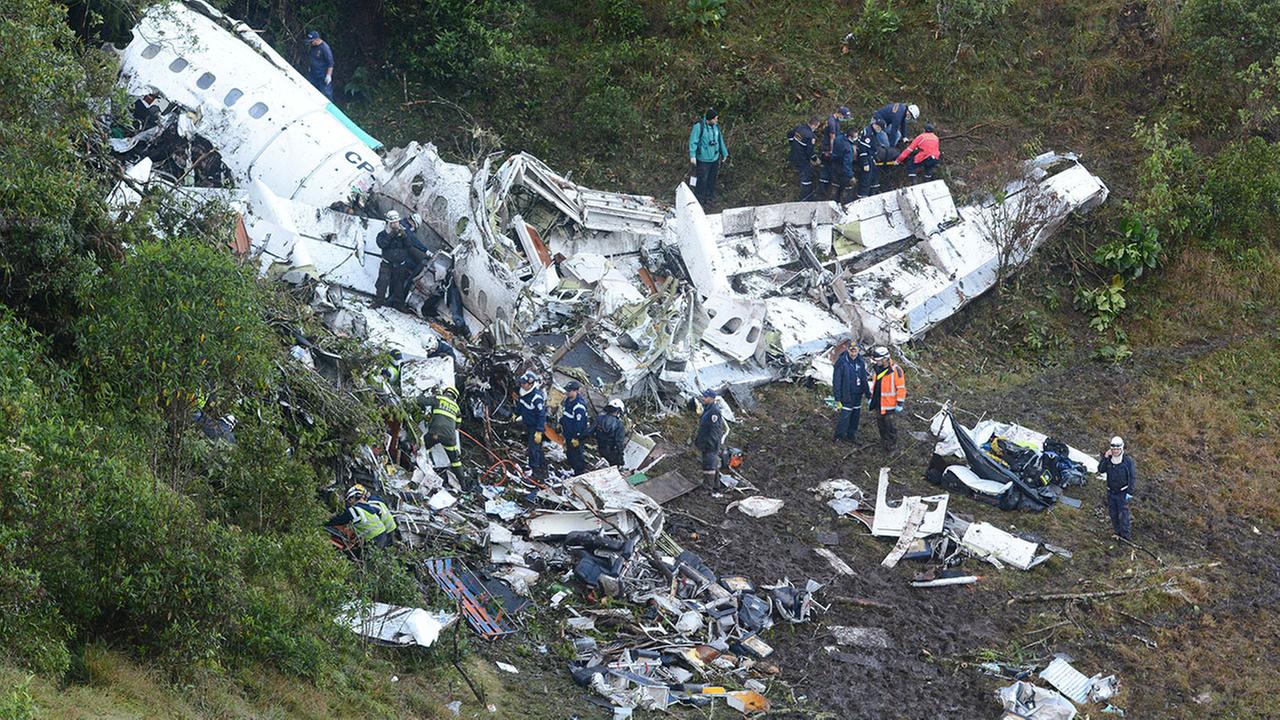
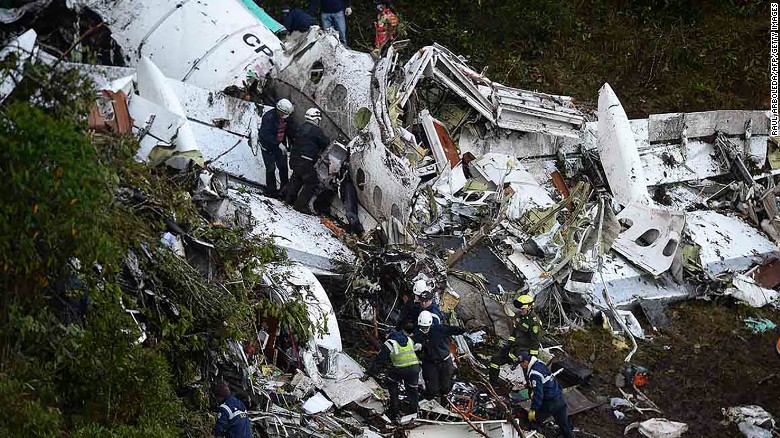
Crash of an Avro RJ85 in La Ceja: 71 killed

Date & Time: Nov 28, 2016 at 2158 LT
Type of aircraft:
Operator:
Registration:
CP-2933
Survivors:
Yes
Site:
Schedule:
Santa Cruz - Medellín
MSN:
E.2348
YOM:
1999
Flight number:
LMI2933
Country:
Crew on board:
4
Crew fatalities:
Pax on board:
73
Pax fatalities:
Other fatalities:
Total fatalities:
71
Captain / Total flying hours:
6692
Captain / Total hours on type:
3417.00
Copilot / Total flying hours:
6923
Copilot / Total hours on type:
1474
Aircraft flight hours:
21640
Aircraft flight cycles:
19737
Circumstances:
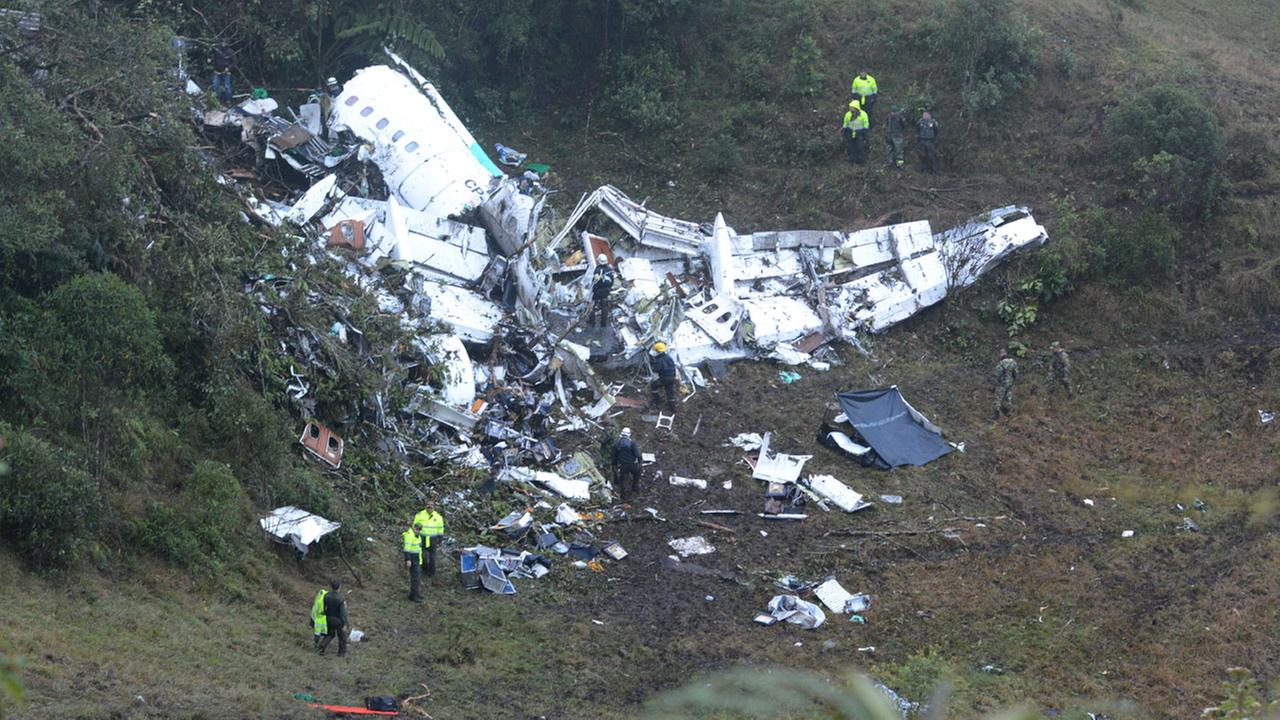
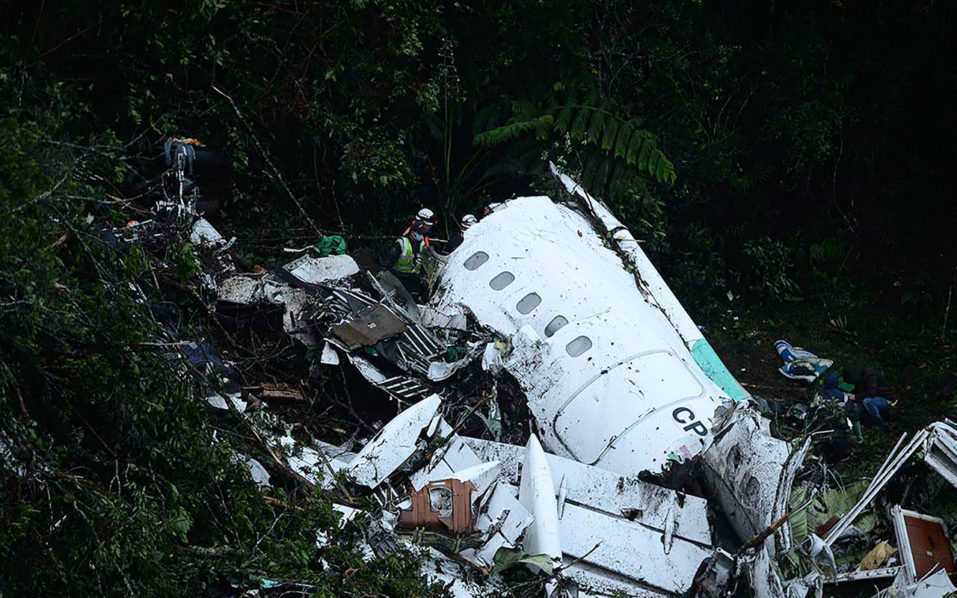
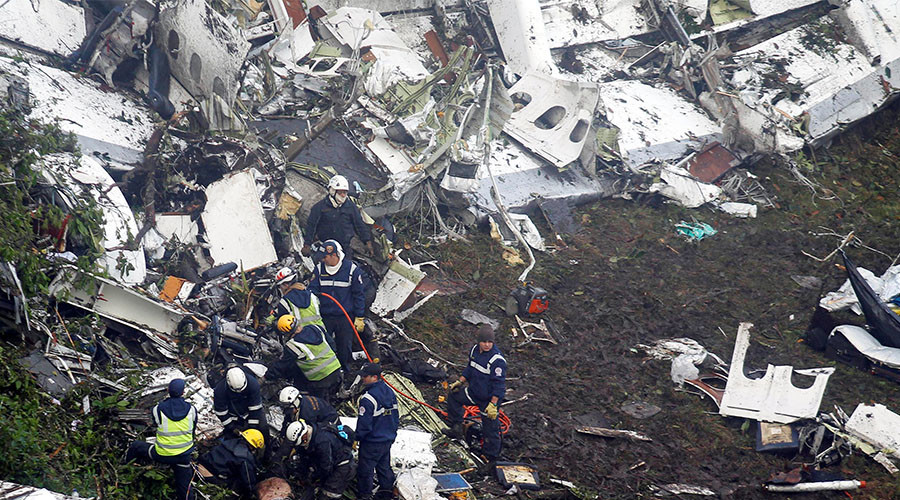
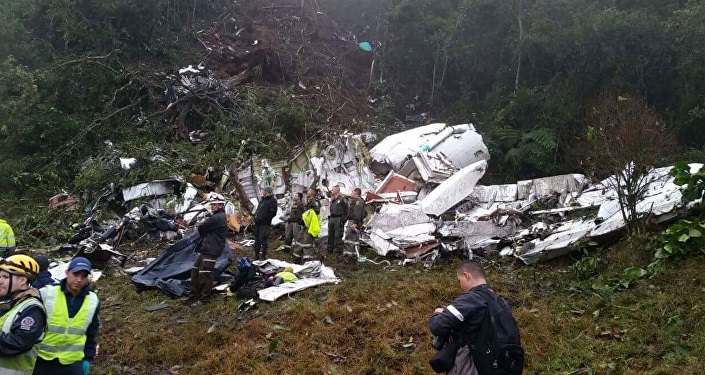
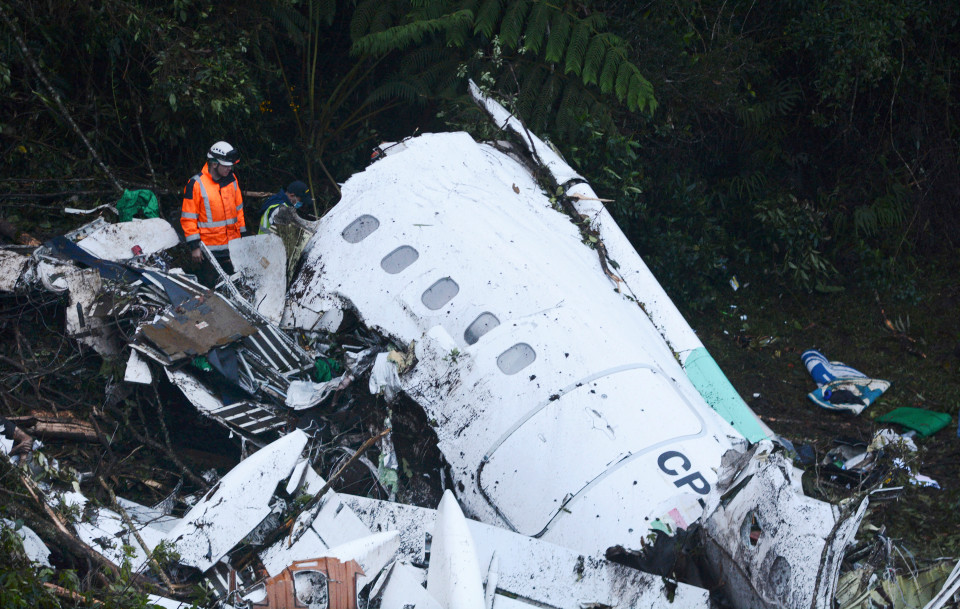
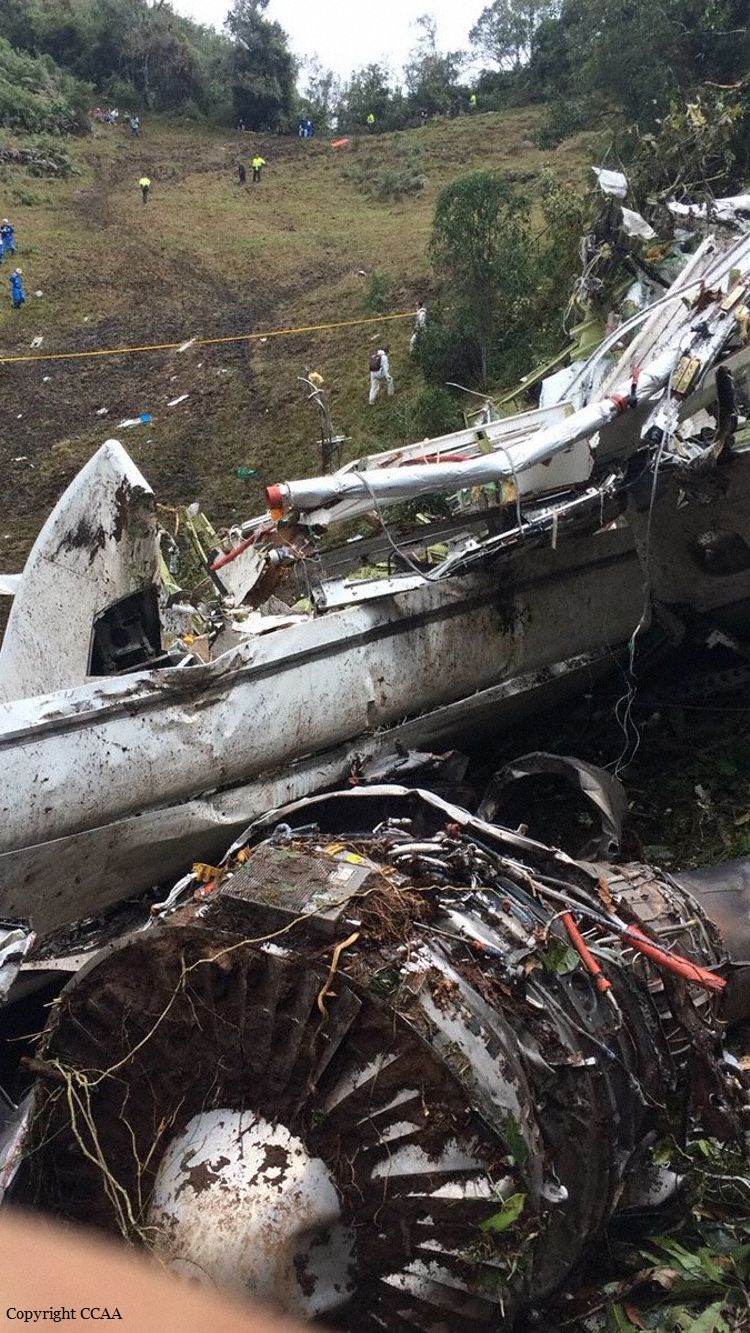
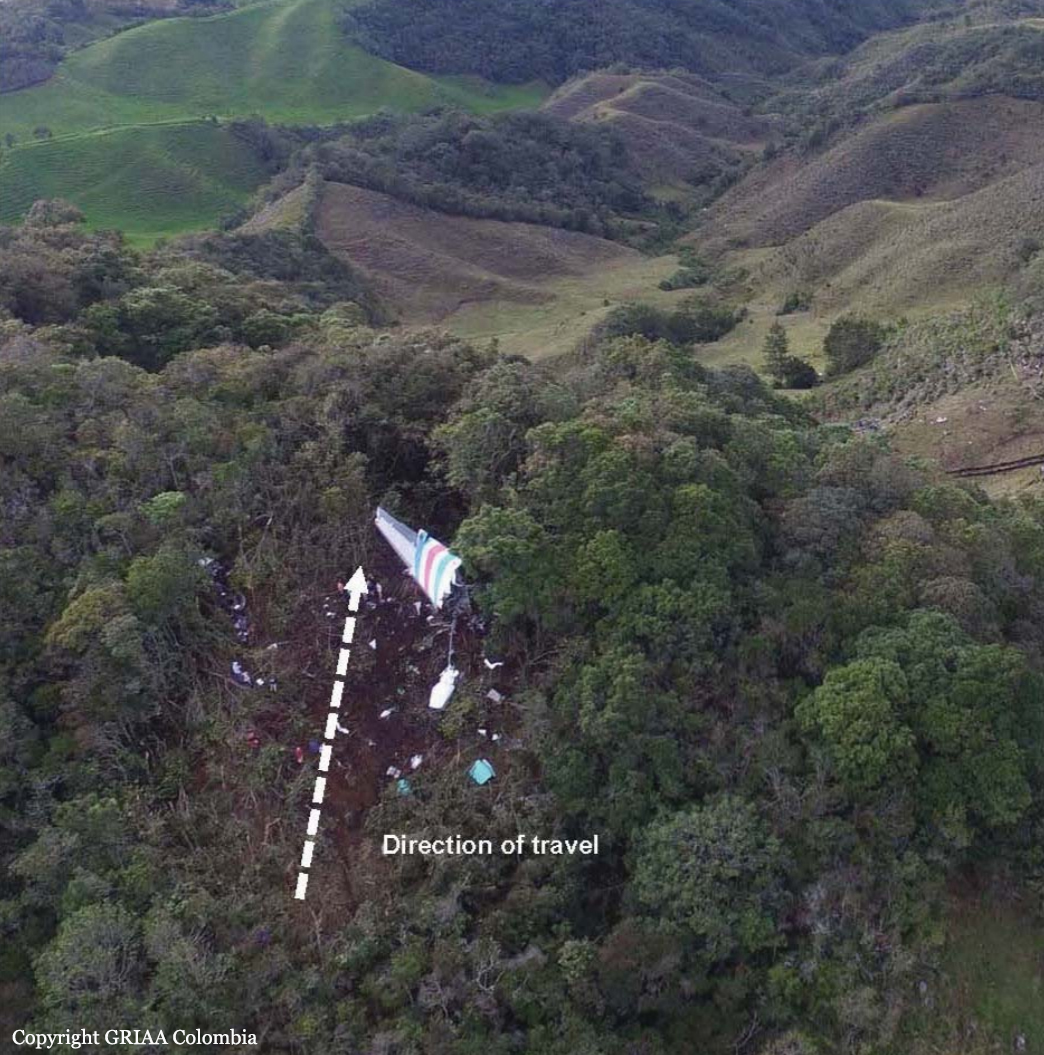
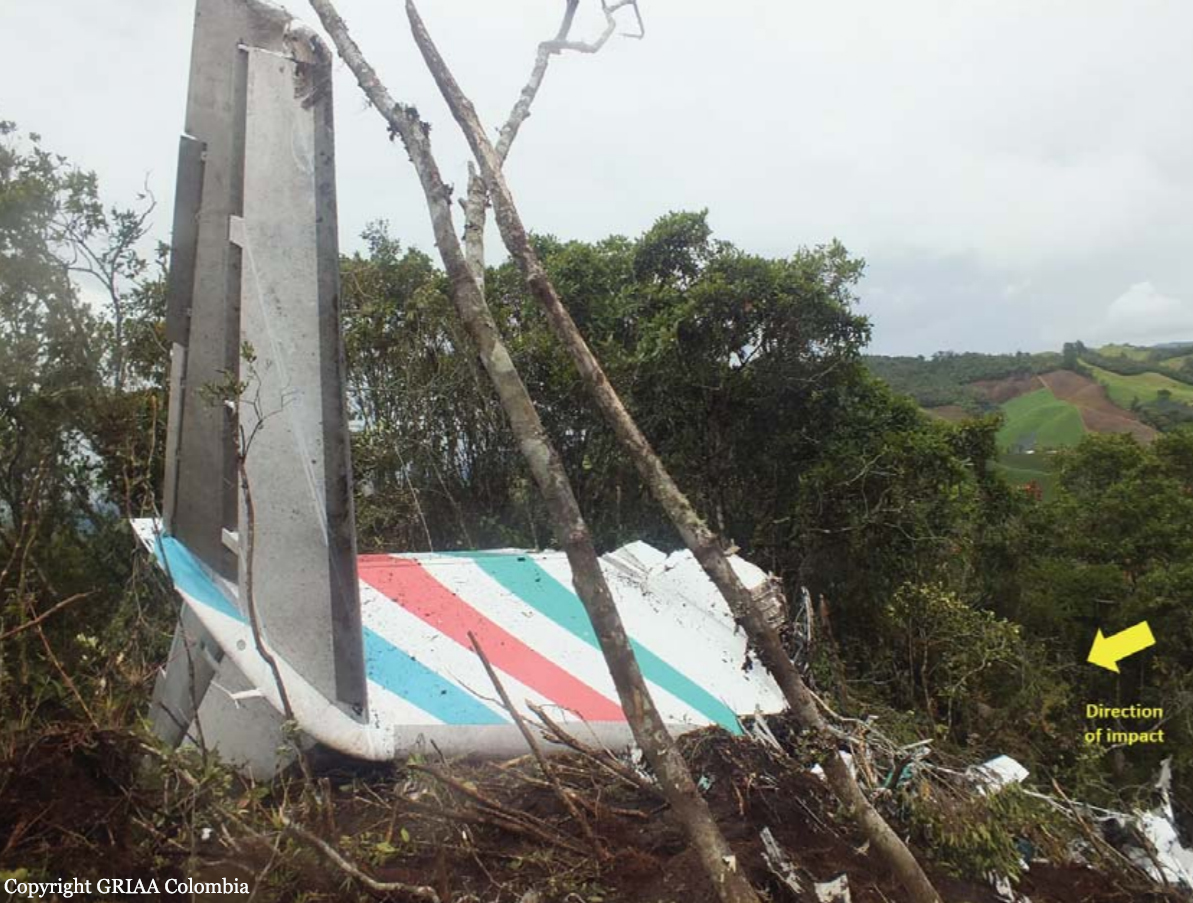
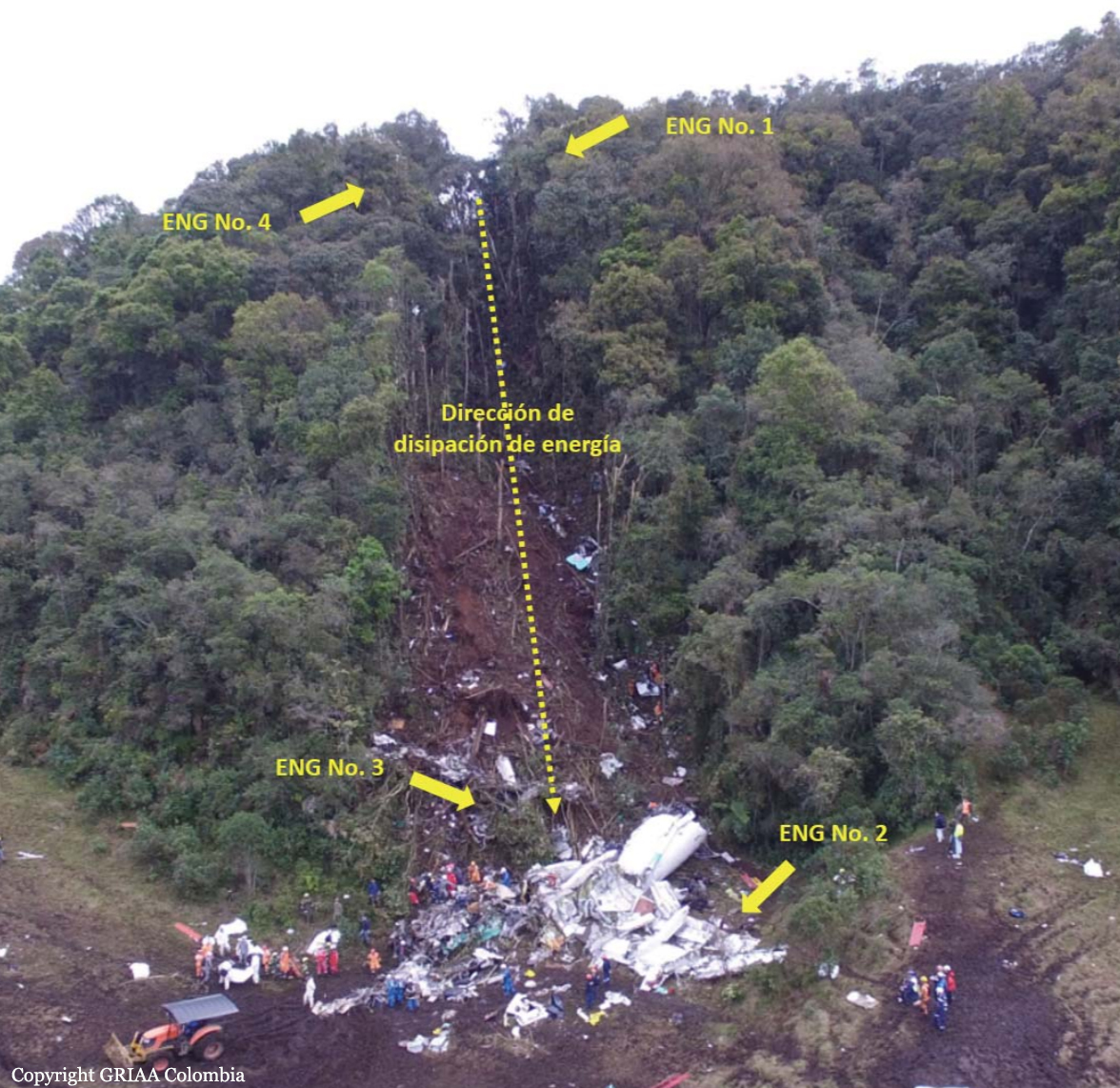
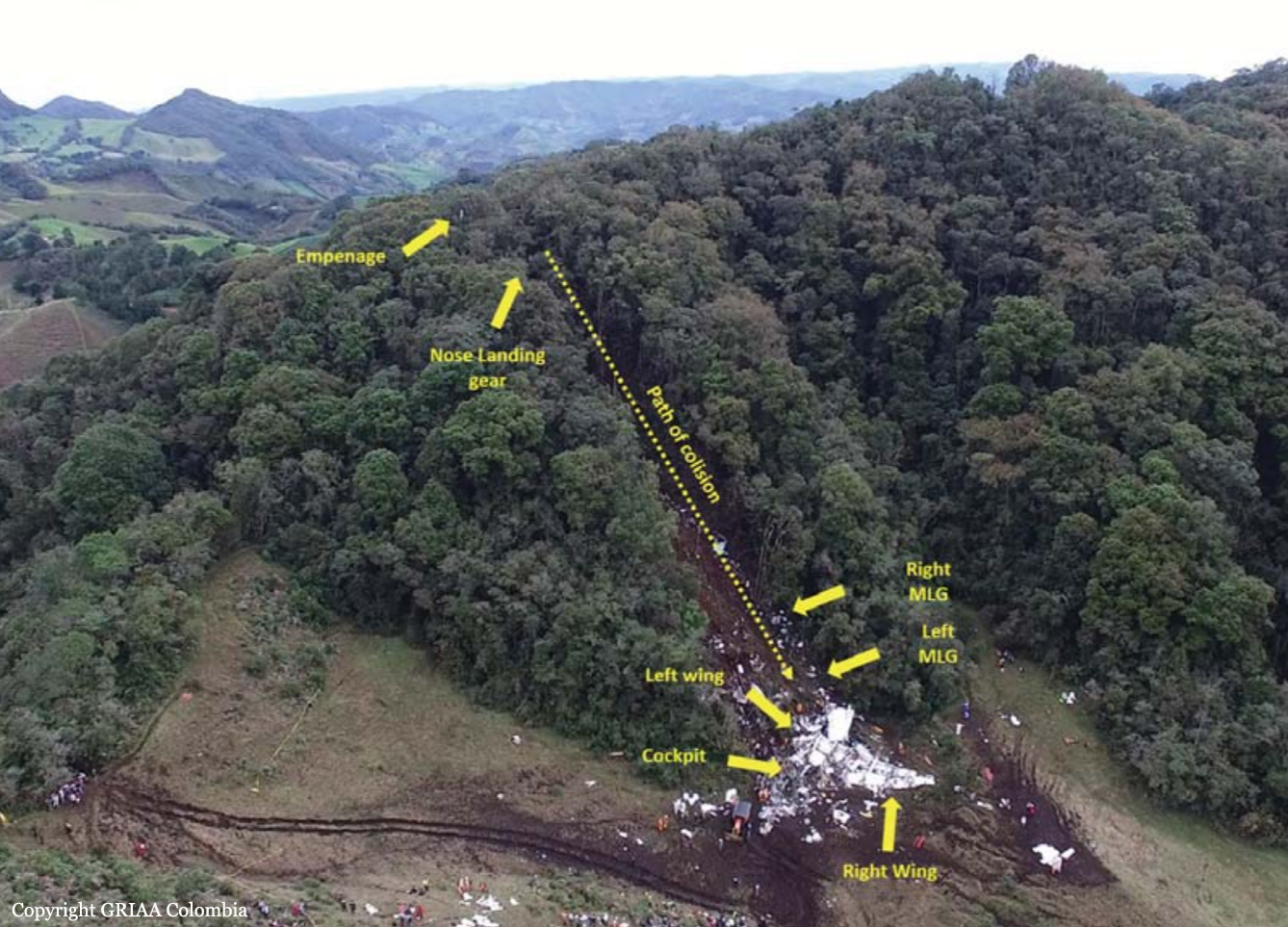
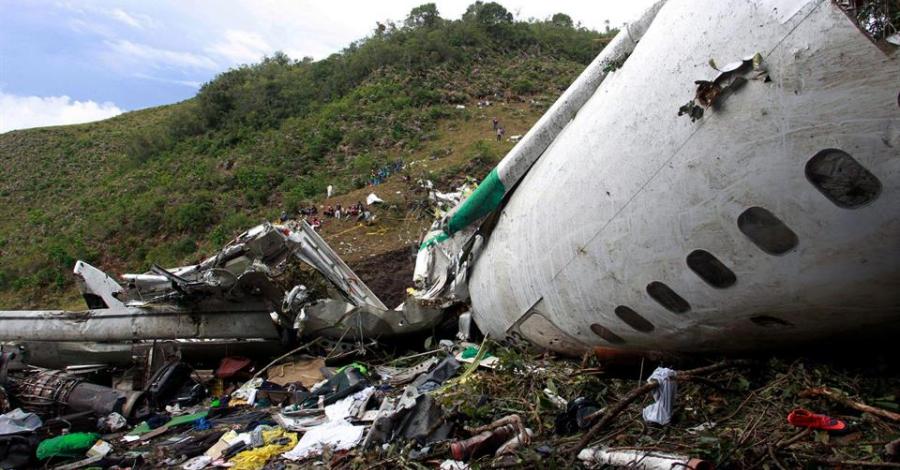
The aircraft was performing a charter flight from Santa Cruz-Viru Viru to Medellín-José María Córdova (Rionegro) Airport, carrying members of the Chapecoense Real soccer team from Brazil who were traveling to Medellín to play against Atletico Nacional for a Copa Sudamericana game. The descent to Medellín was started by night and in good weather conditions when it seems that the encountered electrical problem. At 2156LT, while descending to FL155, the four engine aircraft hit tree tops and crashed in a wooded area located on the slope of a mountain located in the Cerro Gordo, near the city of La Ceja, about 17 km south from runway 01 threshold. The aircraft was totally destroyed upon impact but there was no fire. Six (two crew member and four passengers) were injured and evacuated while 71 other occupants were killed. According to first investigations, the crew encountered electrical problems and the aircraft may have suffered a fuel exhaustion. Due to the combination of several factors and findings that were detected during initial investigations, it was determined that the primary cause of the accident may have been a fuel exhaustion. The board of investigation was then in a process to determine the exact circumstances of the occurrence and to understand the course of events and the exact behavior and flight supervision (instruments, fuel jauges, flight preparation, operations, permission, ground assistance) on part of the flight crew and the operator. On December 2, the Civil Aviation Authority of Bolivia revoked with immediate effect the Air Operator Certificate of LAMIA. All flights have been suspended since.

Probable cause:
It was determined that the accident was the consequence of an inappropriate planning and execution of the flight, since the amount of fuel required to fly from the airport of destination to an alternate airport was not considered, nor was the amount of reserve fuel, nor the contingency fuel, nor the minimum landing fuel, quantities of fuel required by aeronautical regulations for the execution of the type of international flight that the aircraft CP-2339 was performing. The following factors were considered as contributing:
- Loss of situational awareness,
– Premature configuration of the aircraft for landing,
– Latent deficiencies,
– Lack of operational supervision and control of part of Operator,
– Organizational and operational deviation on the part of the Operator (non compliant to standard procedures).
Final Report:

Crash of a Swearingen SA227DC Metro 23 in Bogotá

Date & Time: Oct 28, 2016 at 2007 LT
Type of aircraft:
Operator:
Registration:
PNC-0226
Flight Type:
Survivors:
Yes
Schedule:
Pereira – Bogotá
MSN:
DC-811M
YOM:
1995
Country:
Crew on board:
3
Crew fatalities:
Pax on board:
8
Pax fatalities:
Other fatalities:
Total fatalities:
0
Circumstances:
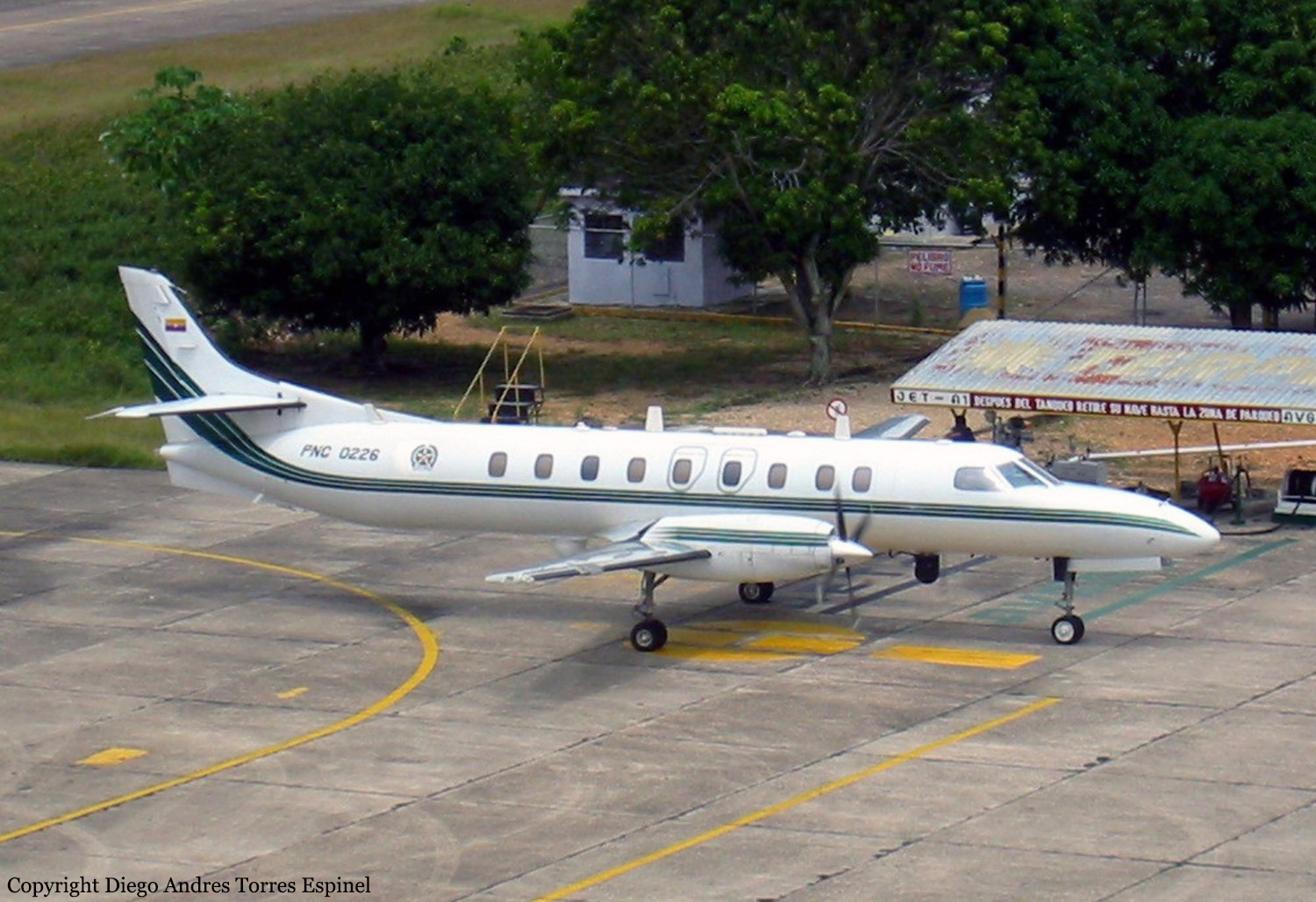
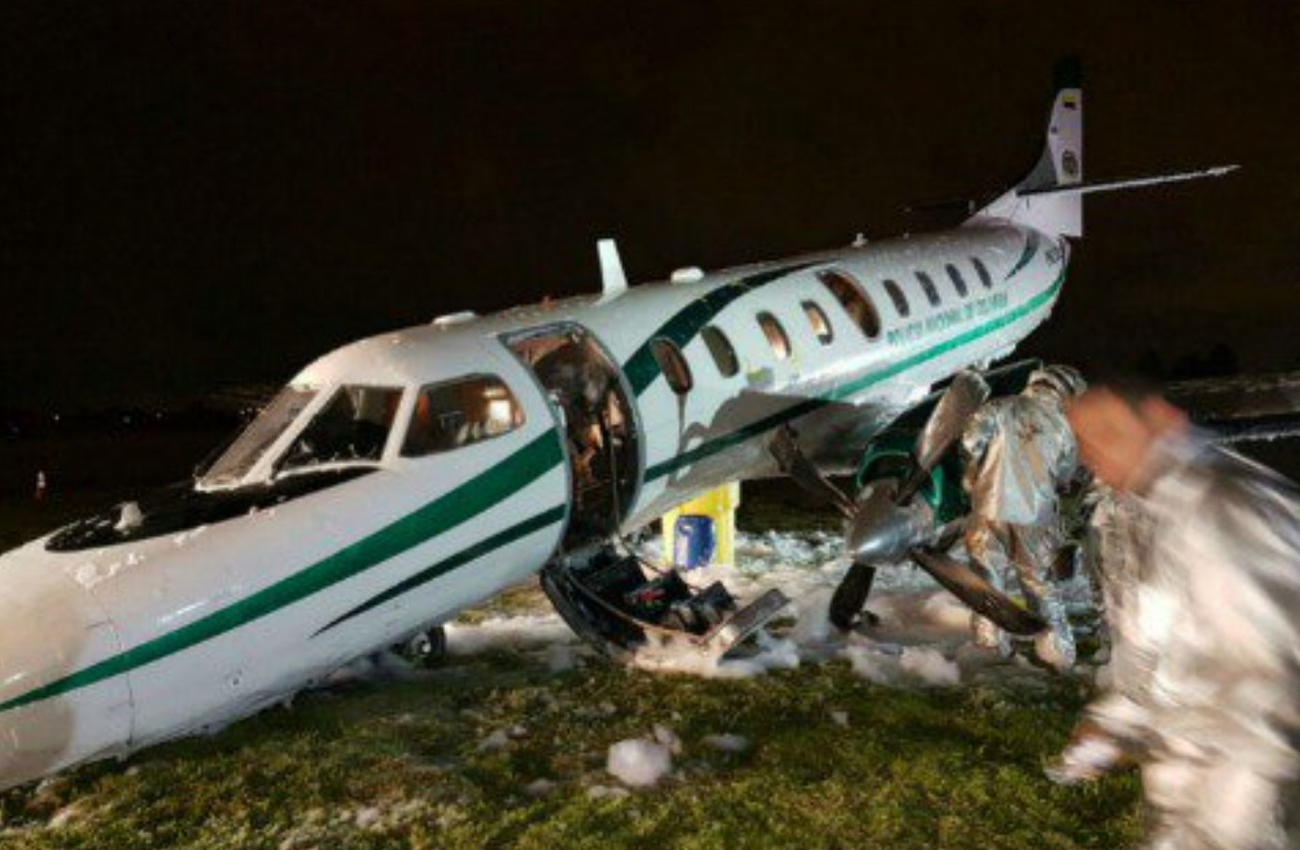
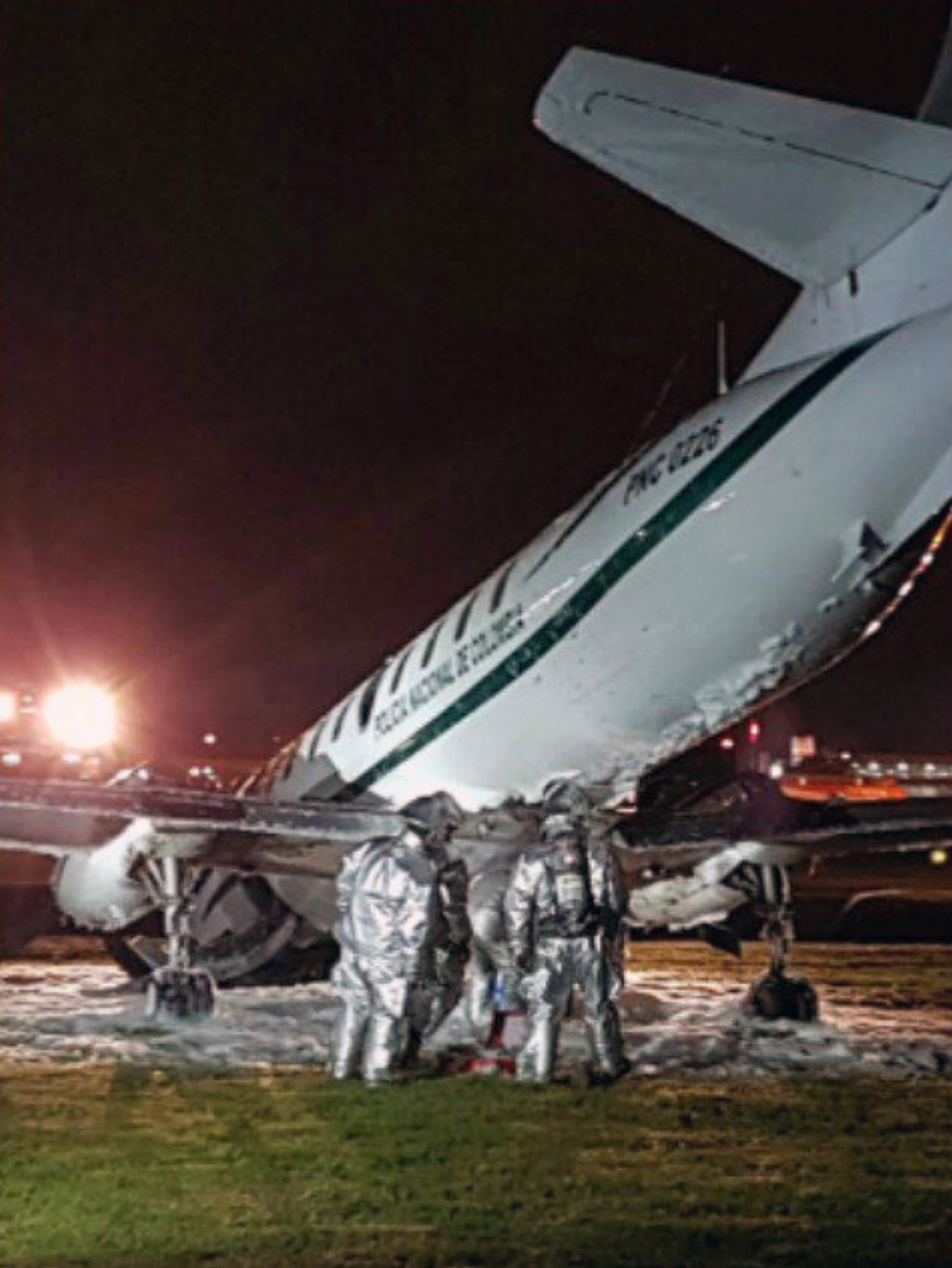
Following an uneventful flight from Pereira, the twin engine airplane was cleared to land on Bogotá-El Dorado Airport Runway 13L. Apparently, the aircraft bounced three times before landing firmly. After touchdown, it went out of control, veered off runway, lost its nose gear and came to rest in a grassy area. All 11 occupants evacuated safely and the aircraft was damaged beyond repair. Among the passengers was Juan Fernando Cristo, Minister for Internal Affairs.

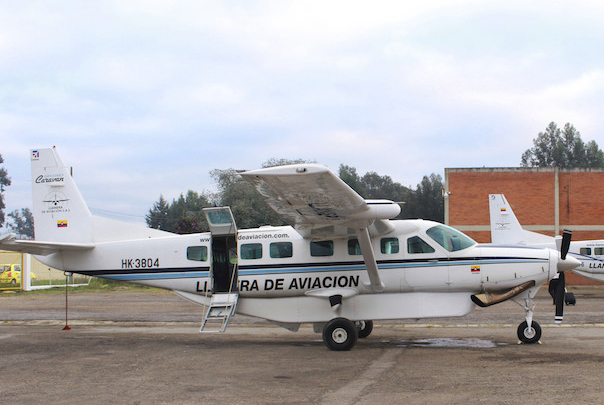
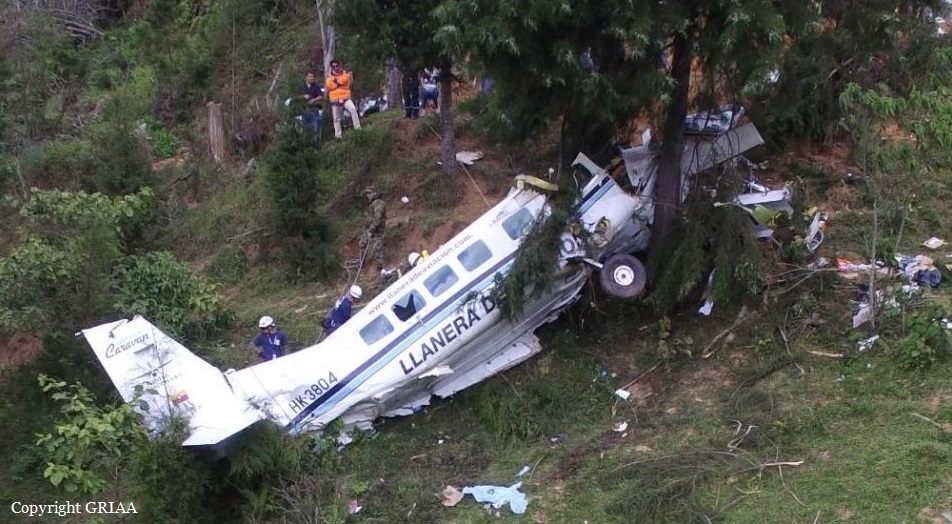
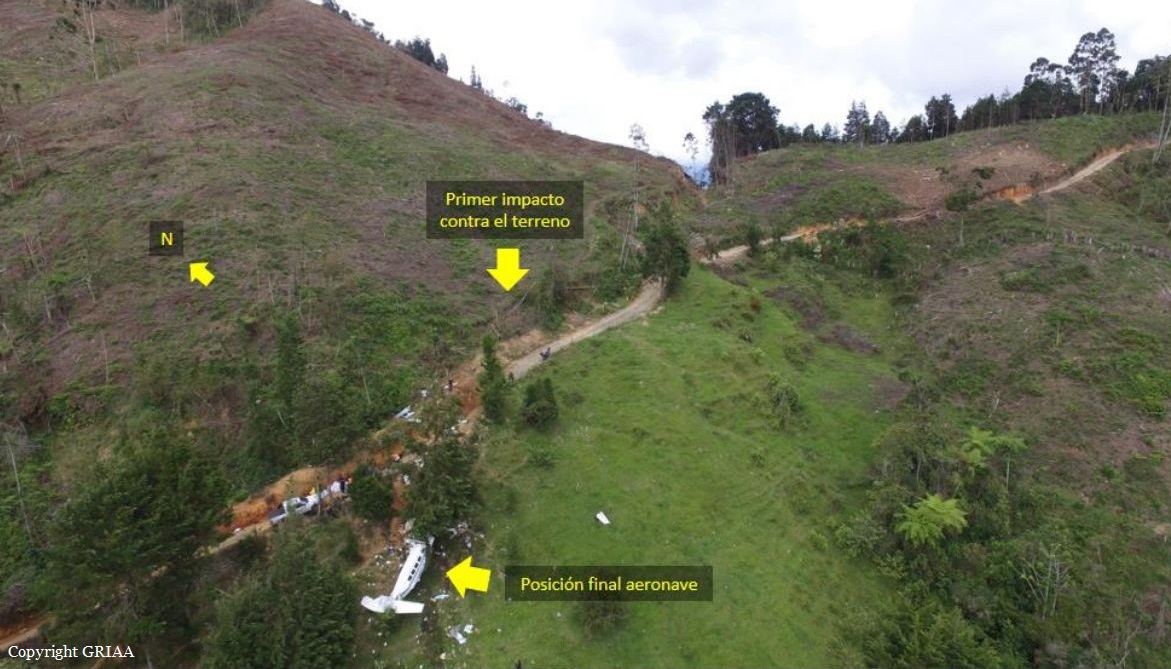
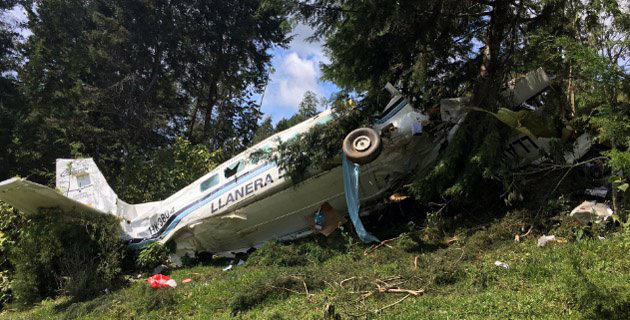
Crash of a Cessna 208B Grand Caravan in San Antonio de Prado: 4 killed

Date & Time: Sep 30, 2016 at 1204 LT
Type of aircraft:
Registration:
HK-3804
Flight Phase:
Survivors:
Yes
Site:
Schedule:
Medellín – Juradó
MSN:
208B-0315
YOM:
1992
Country:
Crew on board:
2
Crew fatalities:
Pax on board:
9
Pax fatalities:
Other fatalities:
Total fatalities:
4
Captain / Total flying hours:
3534
Captain / Total hours on type:
335.00
Copilot / Total flying hours:
6378
Copilot / Total hours on type:
1245
Aircraft flight hours:
2867
Circumstances:
The single engine aircraft departed Medellín-Enrique Olaya Herrera Airport on a charter flight to Juradó, carrying nine passengers and two pilots. Shortly after takeoff, the crew encountered difficulties to gain sufficient altitude and apparently attempted an emergency landing when the aircraft impacted a hill and eventually crashed into trees. The copilot and three passengers were killed and seven others occupants were injured, some seriously. The aircraft was destroyed.
Probable cause:
The following findings were identified:
- Execution of a take-off with a weight approximately 17% higher than the maximum gross operating weight (MTOW) established for the C208B aircraft.
- Limited climb rate with signs of lift loss due to the low performance given by the overweight during the initial climb phase.
- Forced landing in mountainous terrain due to loss of lift caused by overweight during the initial climb.
- Absence in the identification of the risks associated to an overweight operation of the aircraft.
- Lack of supervision by the Aircraft Operator in relation to the dispatch of aircraft operating from the outside at the main base of operation.
Final Report:

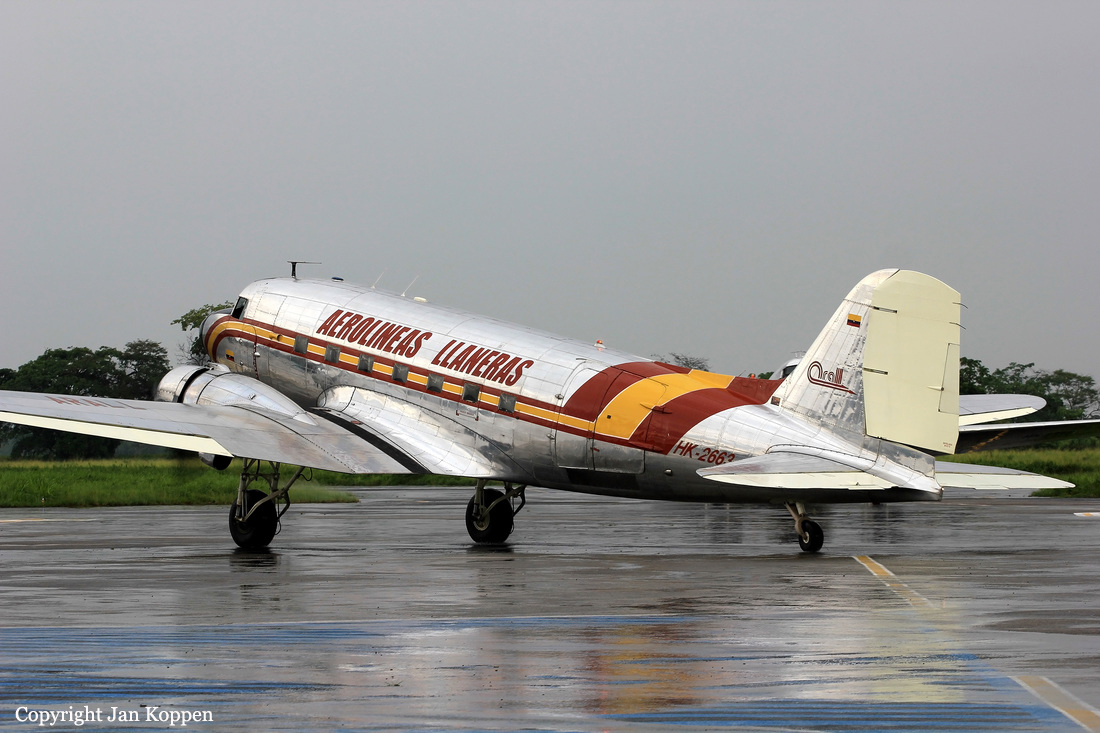
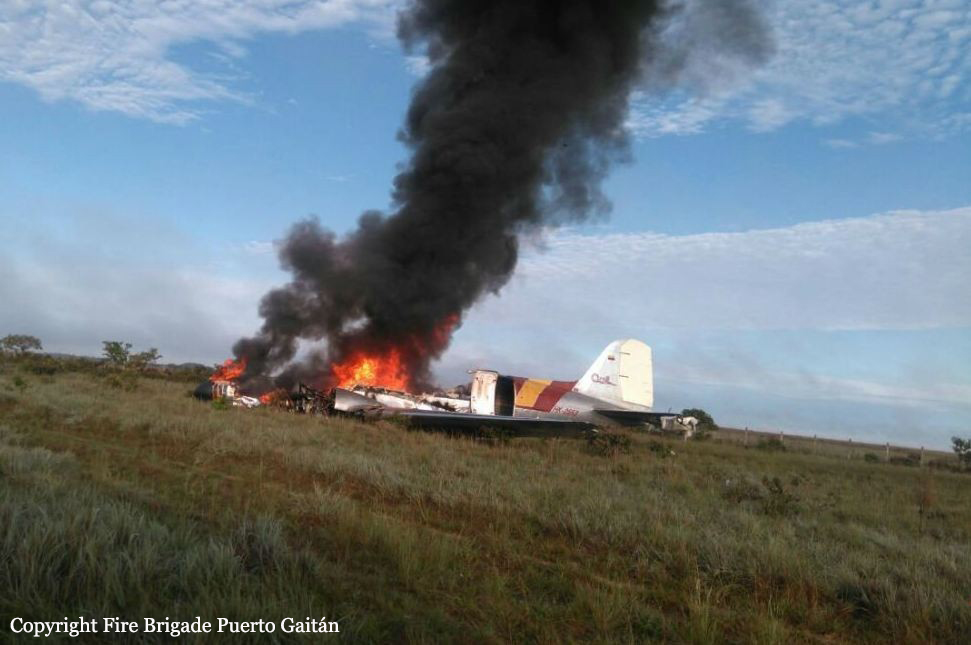
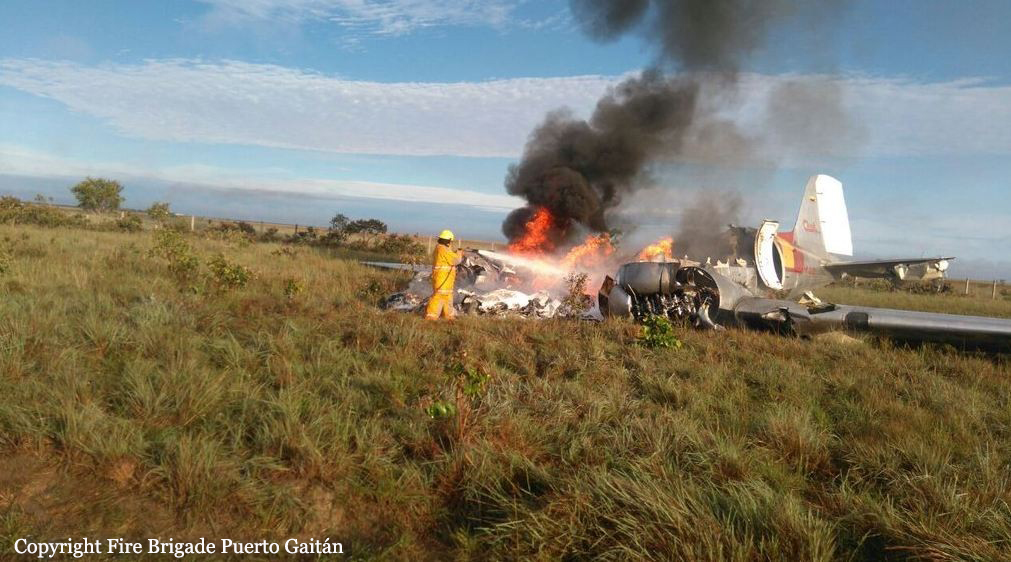
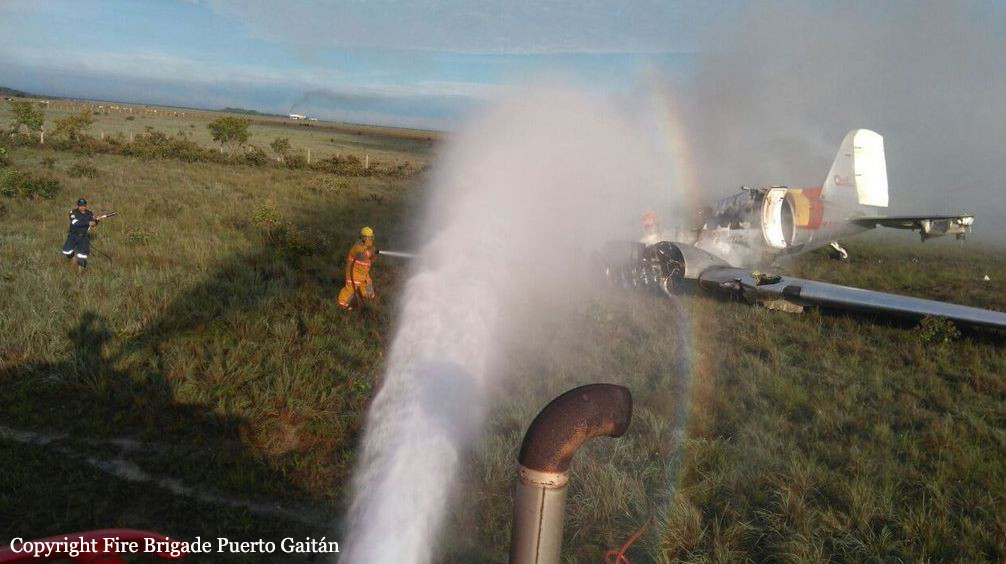
Crash of a Douglas DC-3C in Puerto Gaitán

Date & Time: Apr 6, 2016 at 0625 LT
Type of aircraft:
Operator:
Registration:
HK-2663
Flight Phase:
Flight Type:
Survivors:
Yes
Schedule:
Puerto Gaitán – Villavicencio
MSN:
10210
YOM:
1945
Country:
Crew on board:
3
Crew fatalities:
Pax on board:
0
Pax fatalities:
Other fatalities:
Total fatalities:
0
Captain / Total flying hours:
4058
Copilot / Total flying hours:
7934
Aircraft flight hours:
23291
Circumstances:
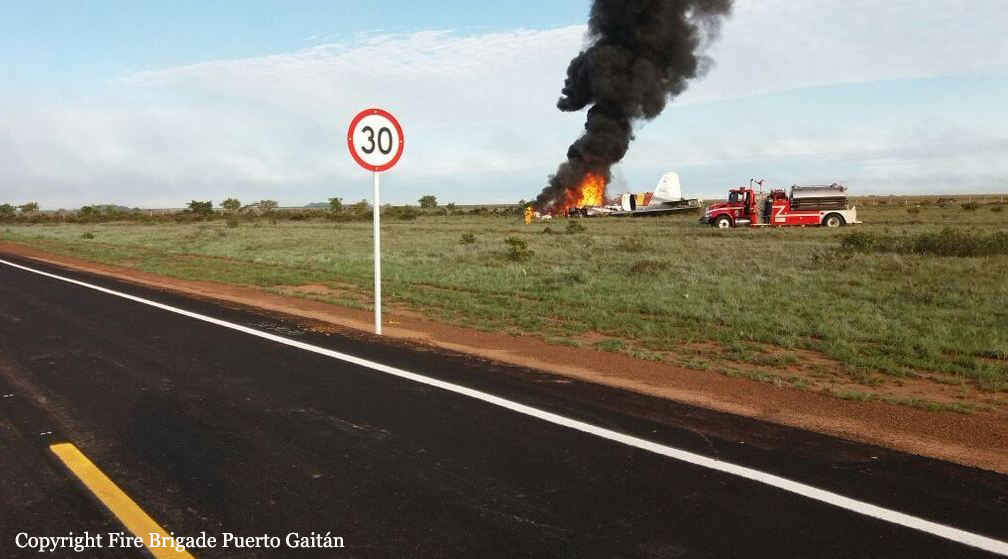
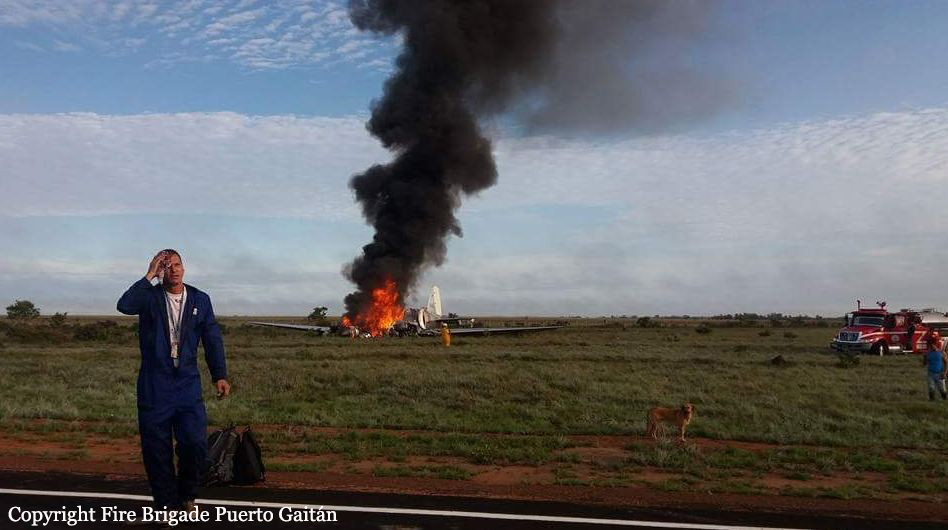
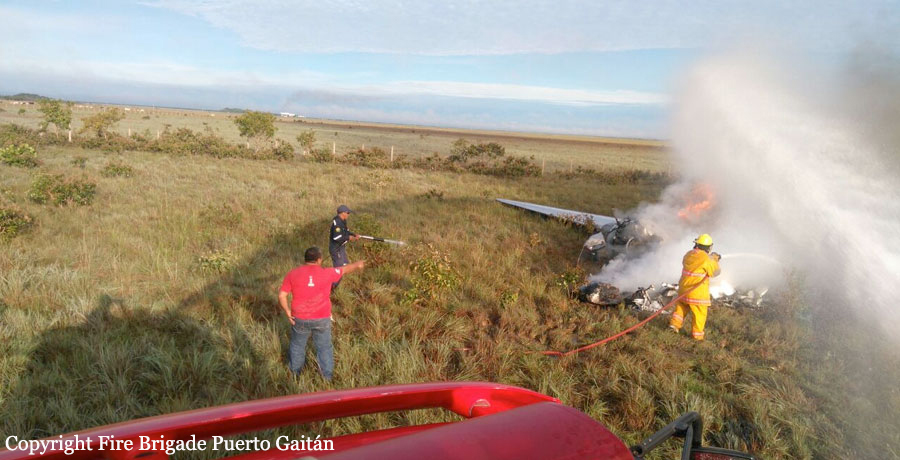
Shortly after takeoff from Puerto Gaitán Airport Runway 04, while on a cargo flight to Villavicencio, the left engine exploded and caught fire. As the aircraft was losing speed and height, the crew attempted an emergency landing when the aircraft crash landed in an open field located 2,6 km southwest from the airport, bursting into flames. All three crew members escaped with minor injuries and the aircraft was destroyed by a post crash fire.
Probable cause:
Failure of the left engine following the detachment of the head of a cylinder shortly after takeoff. Deficiencies in maintenance processes contributed to this situation. The crew failed to follow the emergency procedures when the left engine caught fire and exploded, reducing the power on the right engine. In such conditions, the aircraft was unable to maintain a safe altitude and the crew was forced to attempt an emergency landing.
Final Report:

Crash of a Cessna 402B in Acandí: 2 killed

Date & Time: Nov 17, 2015 at 1054 LT
Type of aircraft:
Operator:
Registration:
HK-4981G
Flight Phase:
Survivors:
Yes
Site:
Schedule:
Acandí – Medellín
MSN:
402B-1042
YOM:
1976
Location:
Country:
Crew on board:
1
Crew fatalities:
Pax on board:
9
Pax fatalities:
Other fatalities:
Total fatalities:
2
Circumstances:
Shortly after takeoff from Acandí-Alcides Fernandez Airport, while in initial climb, the twin engine aircraft stalled and crashed in a house located in the district of Miramar, near the airport. The pilot and a passenger were killed and eight other occupants were injured. There were no victims on the ground and the aircraft was destroyed.
Probable cause:
Stall during initial climb due to the combination of the following factors:
- The total weight of the aircraft was above the MTOW,
- The CofG was outside the enveloppe,
- Poor flight planning.

Crash of a Beechcraft B60 Duke in Bogotá: 9 killed

Date & Time: Oct 18, 2015 at 1619 LT
Type of aircraft:
Operator:
Registration:
HK-3917G
Flight Phase:
Survivors:
No
Site:
Schedule:
Bogotá - Bogotá
MSN:
P-410
YOM:
1977
Country:
Crew on board:
1
Crew fatalities:
Pax on board:
3
Pax fatalities:
Other fatalities:
Total fatalities:
9
Captain / Total flying hours:
4916
Aircraft flight hours:
1788
Circumstances:
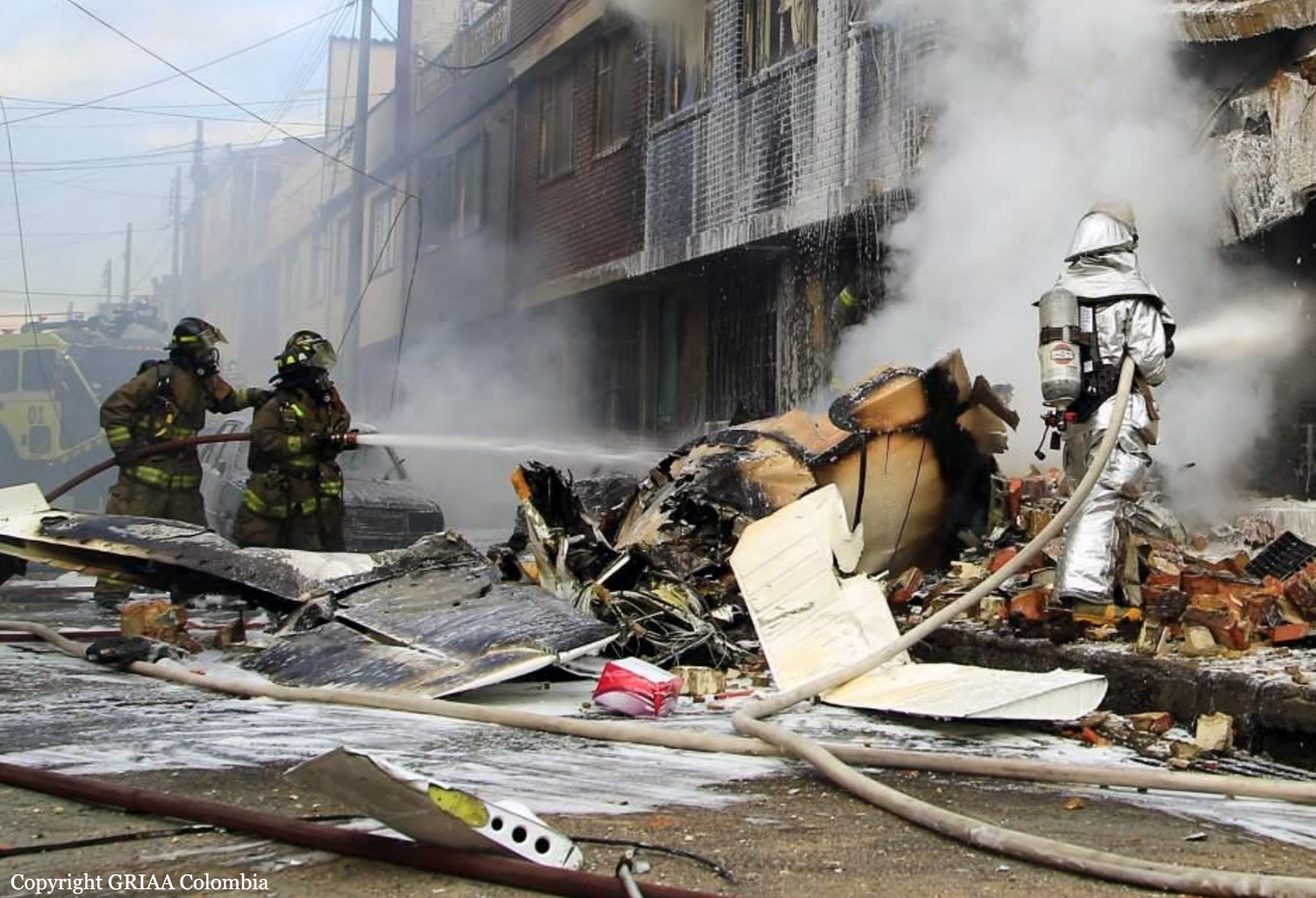
The twin engine aircraft departed Bogotá-El Dorado on a short flight to Bogotá-Guaymaral Airport, carrying three passengers and one pilot. Three minutes after takeoff from runway 13L, while climbing to a height of 200 feet in VFR conditions, the airplane entered a left turn then descended into the ground and crashed into several houses located in the district of Engativá, near the airport, bursting into flames. The aircraft as well as several houses and vehicles were destroyed. All four occupants as well as five people on the ground were killed. Thirteen others were injured, seven seriously.
Probable cause:
The pilot lost control of the airplane following a loss of power on the left engine during initial climb. Investigations were unable to determine the exact cause of this loss of power. The aircraft's speed dropped to 107 knots and the pilot likely did not have time to identify the problem. Operation from a high density altitude airport contributed to the accident.
Final Report:

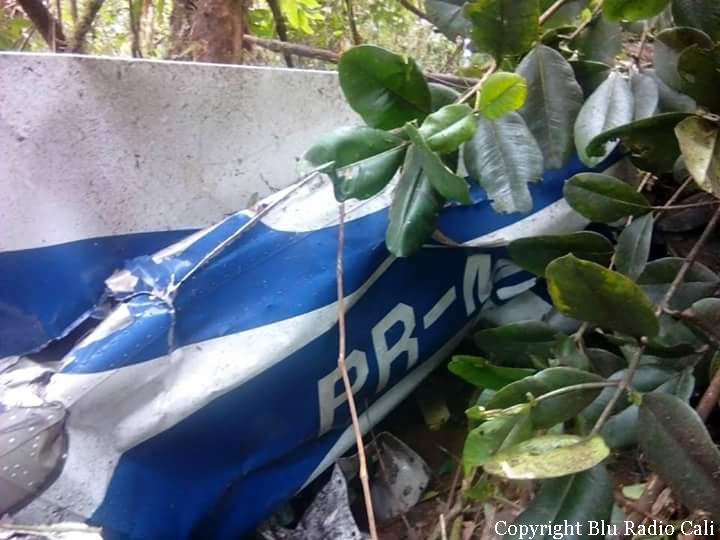
Crash of a Cessna 208B Grand Caravan near Yumbo: 3 killed

Date & Time: Oct 14, 2015 at 1146 LT
Type of aircraft:
Operator:
Registration:
PR-MIC
Flight Phase:
Survivors:
No
Site:
Schedule:
Cali - Cali
MSN:
208B-0841
YOM:
2000
Country:
Crew on board:
3
Crew fatalities:
Pax on board:
0
Pax fatalities:
Other fatalities:
Total fatalities:
3
Captain / Total flying hours:
9388
Captain / Total hours on type:
4155.00
Copilot / Total flying hours:
6343
Copilot / Total hours on type:
1029
Aircraft flight hours:
10519
Circumstances:
The single engine airplane departed Cali-Alfonso Bonilla Aragón Airport on an geophysical exploration mission of the south part of Chocó, carrying three crew members, two pilots and one operator in charge of the LIDAR equipment. At 1144LT, the crew reported his altitude at 5,600 feet. Two minutes later, while cruising in poor visibility, the aircraft struck trees and crashed in wooded and hilly terrain near Yambo. The wreckage was found few hours later and all three occupants were killed.
Probable cause:
The following factors were identified:
- Controlled flight into terrain,
- Execution of a VFR flight in reduced visibility weather conditions,
- Poor decision making by the crew in continuing VFR operation as they were in an environment of significantly reduced visibility,
- Inadequate operational risk assessment due to the lack of familiarity of the foreign crew with the topography and meteorological evolution of the sector.
Final Report: