Crash of a Rockwell Grand Commander 690A in Nacogdoches: 2 killed

Date & Time: Sep 18, 1983 at 1955 LT
Operator:
Registration:
N111QL
Flight Type:
Survivors:
No
Schedule:
Oklahoma City – Longview – Nacogdoches
MSN:
690-11312
YOM:
1976
Crew on board:
1
Crew fatalities:
Pax on board:
1
Pax fatalities:
Other fatalities:
Total fatalities:
2
Captain / Total flying hours:
3310
Captain / Total hours on type:
135.00
Aircraft flight hours:
3077
Circumstances:
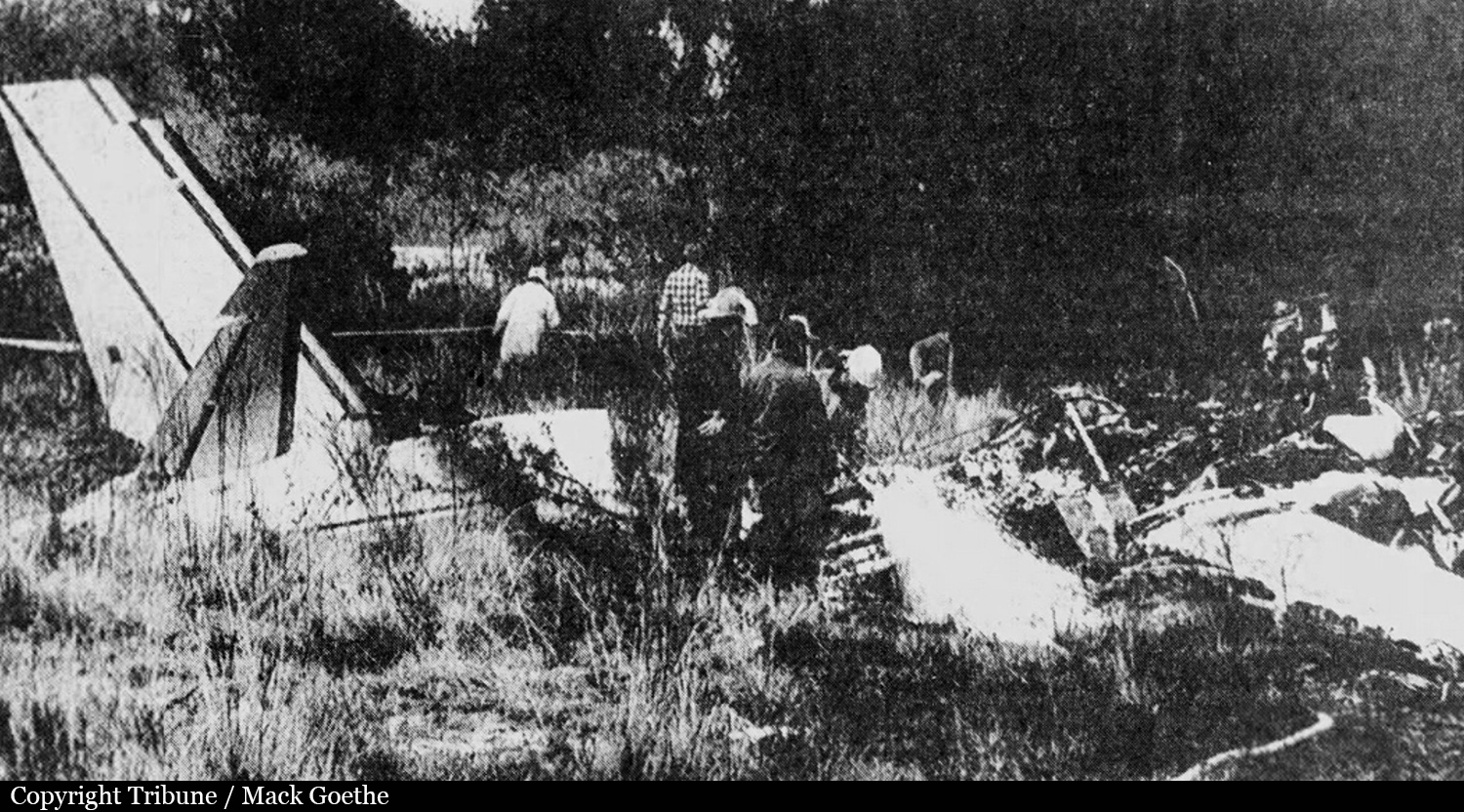
After transporting passengers from Longview, TX to Oklahoma City, OK and return to Longview, the aircraft was refueled for a flight back to Nacogdoches, TX, where the aircraft was based. About 12 min after takeoff, the pilot was cleared for an NDB approach to Nacogdoches and instructed to contact the Lufkin FSS for weather and current altimeter setting. During the NDB approach, the aircraft collided with trees, crashed and burned. An investigation revealed no evidence of either an engine or airframe failure or malfunction. Initial impact occurred with trees about 700 yards east of the NDB site. Initially, trees were cut in an upsloping manner where the terrain sloped upwards. Elevation of the crash site was 530 feet msl. The minimum descent altitude (MDA) was 900 feet msl. About 28 miles north, the 1955 cdt weather at Lufkin was, in part: 3,500 feet broken, visibility 5 miles. However, witnesses at Nacogdoches reported considerably lower ceilings, reduced visibility and some hilltops obscured by clouds. A pilot witness reported light rain, fog in the treetops. Reportedly, the airport was below minimums. Both occupants were killed.
Probable cause:
Occurrence #1: in flight encounter with weather
Phase of operation: approach - FAF/outer marker to threshold (IFR)
Findings
1. (f) preflight planning/preparation - inadequate - pilot in command
2. (f) light condition - dusk
3. (f) weather condition - low ceiling
4. (f) weather condition - fog
5. (f) weather condition - rain
6. (f) weather condition - below approach/landing minimums
----------
Occurrence #2: in flight collision with object
Phase of operation: approach - FAF/outer marker to threshold (IFR)
Findings
7. (c) IFR procedure - improper - pilot in command
8. (f) overconfidence in personal ability - pilot in command
9. (c) minimum descent altitude - not maintained - pilot in command
10. (f) object - tree(s)
----------
Occurrence #3: in flight collision with terrain/water
Phase of operation: descent - uncontrolled
Findings
11. Terrain condition - mountainous/hilly
Final Report:

Crash of a Rockwell Turbo Commander 690A in Winter Haven: 2 killed

Date & Time: Feb 13, 1983 at 1445 LT
Operator:
Registration:
N81416
Flight Phase:
Flight Type:
Survivors:
Yes
Schedule:
Winter Haven - Oranjestad
MSN:
690-11306
YOM:
1976
Crew on board:
1
Crew fatalities:
Pax on board:
2
Pax fatalities:
Other fatalities:
Total fatalities:
2
Captain / Total flying hours:
11450
Aircraft flight hours:
3400
Circumstances:
The aircraft crashed into a ditch off the departure end of the runway and burst into flames during takeoff. Witnesses said the aircraft did not sound like it was developing normal rpm for takeoff. One mechanic said the engines sounded like they were still in ground idle position. The surviving passenger said they didn't get enough speed to takeoff but he did not suspect any engine problems. Another ground witness said it sounded like the propellers were in very high or cruise pitch. After the accident both propellers were at or near the feather position. Toxicology studies on the pilot showed his blood alcohol level was 2,2‰. He also had cirrhosis of the liver. A passenger was seriously injured while the pilot and a second passenger were killed.
Probable cause:
Occurrence #1: overrun
Phase of operation: takeoff - roll/run
Findings
1. (c) powerplant controls - improper use of - pilot in command
2. (c) aborted takeoff - not performed - pilot in command
3. (c) impairment(alcohol) - pilot in command
----------
Occurrence #2: on ground/water encounter with terrain/water
Phase of operation: takeoff - roll/run
Findings
4. Terrain condition – ditch
Final Report:

Crash of a Rockwell Grand Commander 690B near Auxerre: 5 killed

Date & Time: Feb 21, 1981
Operator:
Registration:
D-IKOC
Flight Phase:
Survivors:
No
Schedule:
Lyon - Paris
MSN:
690B-11498
YOM:
1977
Location:
Country:
Region:
Crew on board:
2
Crew fatalities:
Pax on board:
3
Pax fatalities:
Other fatalities:
Total fatalities:
5
Circumstances:
The twin engine airplane departed Lyon-Bron Airport on a taxi flight to Paris-Le Bourget. En route, it went out of control and crashed in unknown circumstances in an open field located near Auxerre. All five occupants were killed.

Crash of a Rockwell Grand Commander 690B in Burns: 3 killed

Date & Time: Jan 7, 1981 at 1600 LT
Operator:
Registration:
N81521
Flight Type:
Survivors:
No
Schedule:
Klamath Falls - Burns
MSN:
690-11351
YOM:
1976
Location:
Crew on board:
2
Crew fatalities:
Pax on board:
1
Pax fatalities:
Other fatalities:
Total fatalities:
3
Captain / Total flying hours:
2177
Captain / Total hours on type:
506.00
Circumstances:
On approach to Burns Airport, the twin engine aircraft crashed in unknown circumstances. All three occupants were killed.
Probable cause:
The exact cause of the accident could not be determined.
Final Report:

Crash of a Rockwell Turbo Commander 690A off Buenos Aires: 5 killed

Date & Time: Sep 14, 1980
Operator:
Registration:
LV-MBR
Survivors:
No
Schedule:
Santa Fe - Buenos Aires
MSN:
690-11266
YOM:
1975
Country:
Crew on board:
2
Crew fatalities:
Pax on board:
3
Pax fatalities:
Other fatalities:
Total fatalities:
5
Circumstances:
The twin engine airplane was completing a taxi flight from Santa Fe to Buenos Aires, carrying three journalists of the 'Crónica' daily newspaper and two pilots. While approaching Buenos Aires, the airplane went out of control and crashed into the sea about 8 km off shore. All five occupants were killed.

Crash of a Rockwell Grand Commander 690 in Newcastle: 2 killed

Date & Time: Jan 30, 1980 at 1603 LT
Registration:
XB-AEA
Survivors:
No
Schedule:
Dallas - Oklahoma City
MSN:
690-11199
YOM:
1974
Crew on board:
2
Crew fatalities:
Pax on board:
0
Pax fatalities:
Other fatalities:
Total fatalities:
2
Captain / Total flying hours:
14700
Captain / Total hours on type:
800.00
Circumstances:
On approach to Oklahoma City-Will Rogers Airport, the twin engine airplane stalled and crashed in flames in Newcastle, about 8 miles south of the airport. The aircraft was destroyed and both pilots were killed.
Probable cause:
Stall on approach after the crew failed to maintain flying speed. The following contributing factors were reported:
- Inadequate/incorrect weather briefing,
- Icing conditions including sleet, freezing rain,
- Airframe ice,
- Forecast of icing conditions not provided to pilot.
Final Report:

Crash of a Rockwell Grand Commander 690 in Goldsboro

Date & Time: Jan 15, 1980 at 0118 LT
Operator:
Registration:
N182
Flight Phase:
Flight Type:
Survivors:
Yes
Schedule:
Hartford - Charlotte
MSN:
690-11048
YOM:
1972
Crew on board:
1
Crew fatalities:
Pax on board:
0
Pax fatalities:
Other fatalities:
Total fatalities:
0
Captain / Total flying hours:
9708
Captain / Total hours on type:
948.00
Circumstances:
While in normal cruise on a cargo flight from Hartford to Charlotte by night, the pilot informed ATC about technical problems. The aircraft lost 2,000 feet then entered an uncontrolled descent and eventually crashed in a field. The pilot was seriously injured.
Probable cause:
Uncontrolled descent and subsequent crash due to engine structure issues. The following contributing factors were reported:
- Engine tearaway,
- Engine structure: mount and vibration isolators,
- Material failure,
- Separation in flight,
- Pilot reported pitchup with autopilot off,
- Recovered with light g load,
- Right engine inbound mount pulled out.
Final Report:

Crash of a Rockwell Grand Commander 690A in Columbus

Date & Time: Oct 1, 1979 at 0803 LT
Operator:
Registration:
N57233
Survivors:
Yes
Schedule:
Louisville - Columbus
MSN:
690-11247
YOM:
1975
Crew on board:
1
Crew fatalities:
Pax on board:
0
Pax fatalities:
Other fatalities:
Total fatalities:
0
Captain / Total flying hours:
18341
Captain / Total hours on type:
2175.00
Circumstances:
On approach to Columbus-Ohio State University Airport, the pilot encountered limited visibility due to fog. On short final, the airplane struck a fence and crashed in flames short of runway threshold. The aircraft was destroyed and the pilot, sole on board, was injured.
Probable cause:
Collision with fence and subsequent crash on final approach due to improper IFR operation. The following contributing factors were reported:
- Fog,
- Visibility 3/4 mile or less.
Final Report:

Crash of a Rockwell Grand Commander 690 near Yauyos: 5 killed

Date & Time: Feb 14, 1979
Operator:
Registration:
OB-M-1031
Flight Phase:
Survivors:
No
Site:
Schedule:
Cuzco - Lima
MSN:
690-11008
YOM:
1972
Location:
Country:
Crew on board:
1
Crew fatalities:
Pax on board:
4
Pax fatalities:
Other fatalities:
Total fatalities:
5
Circumstances:
En route from Cuzco to Lima, the twin engine airplane struck the slope of Mt Valla Punta located near Yauyos, about 130 km southeast of Lima. All five occupants were killed.

Crash of a Rockwell Grand Commander 690A in Calumet: 2 killed

Date & Time: May 27, 1978 at 1010 LT
Registration:
N299F
Flight Phase:
Survivors:
No
Schedule:
Oklahoma City - Colorado Springs
MSN:
690-11112
YOM:
1973
Crew on board:
2
Crew fatalities:
Pax on board:
0
Pax fatalities:
Other fatalities:
Total fatalities:
2
Captain / Total flying hours:
7000
Captain / Total hours on type:
500.00
Circumstances:
Few minutes after takeoff from Oklahoma City Airport, from climb to cruise, the crew encountered bad weather condition with thunderstorm activity. In severe turbulences, the airplane suffered a general disintegration and crashed in Calumet. The aircraft was totally destroyed and both occupants were killed.
Probable cause:
In-flight airframe failure during climb to cruise due to inadequate preflight preparation. The following contributing factors were reported:
- Initiated flight in adverse weather conditions,
- Exceeded designed stress limits of aircraft,
- Airframe failure of wings spars,
- Airframe failure of flight control surfaces: horizontal stabilizer, attachments,
- Overload failure,
- Separation in flight,
- Low ceiling,
- Thunderstorm activity,
- General disintegration,
- Embedded thunderstorms.
Final Report: