Country

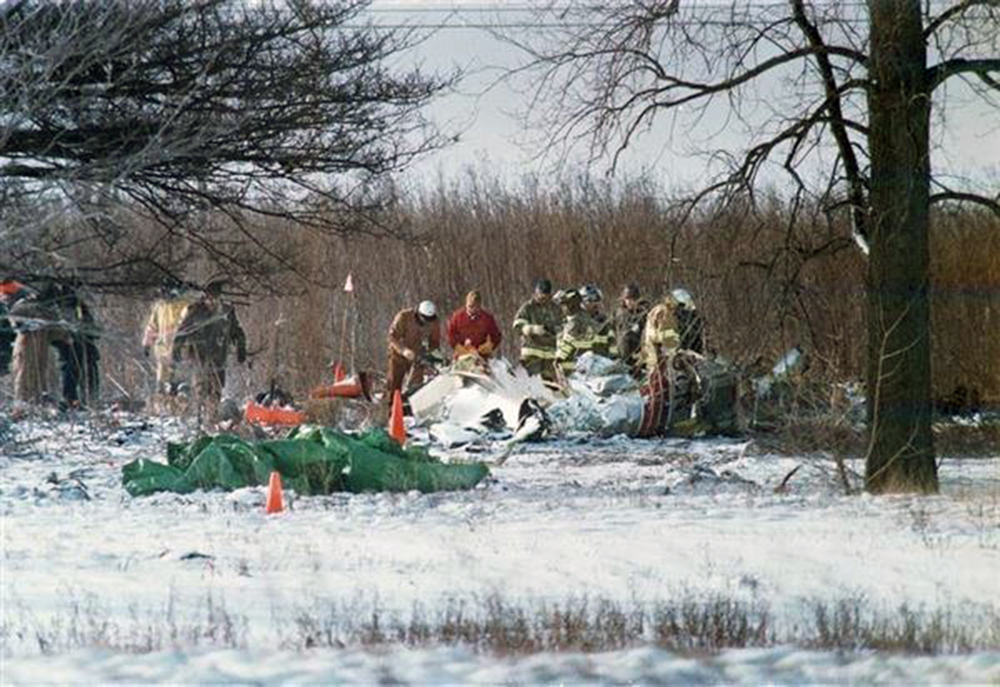
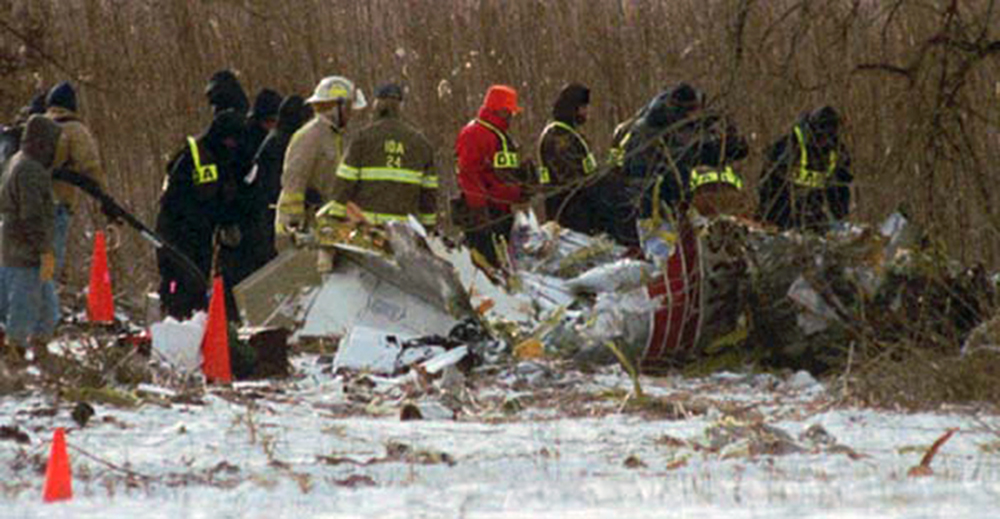
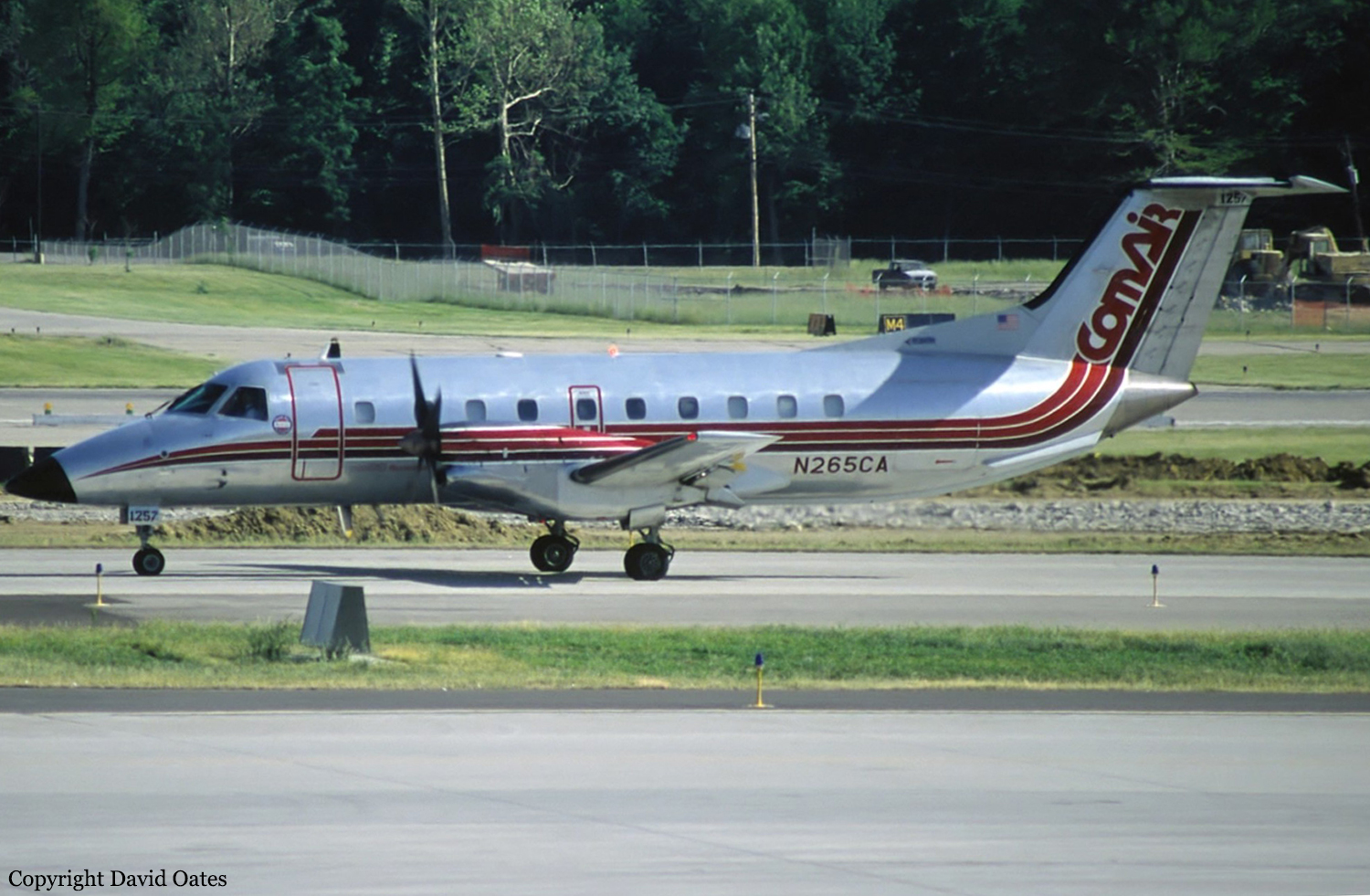
Crash of an Embraer EMB-120 Brasília in Detroit: 29 killed

Date & Time: Jan 9, 1997 at 1554 LT
Type of aircraft:
Operator:
Registration:
N265CA
Survivors:
No
Schedule:
Cincinnati - Detroit
MSN:
120-257
YOM:
1991
Flight number:
OH3272
Location:
Crew on board:
3
Crew fatalities:
Pax on board:
26
Pax fatalities:
Other fatalities:
Total fatalities:
29
Captain / Total flying hours:
5329
Captain / Total hours on type:
2302.00
Copilot / Total flying hours:
2582
Copilot / Total hours on type:
1494
Aircraft flight hours:
12752
Aircraft flight cycles:
12734
Circumstances:
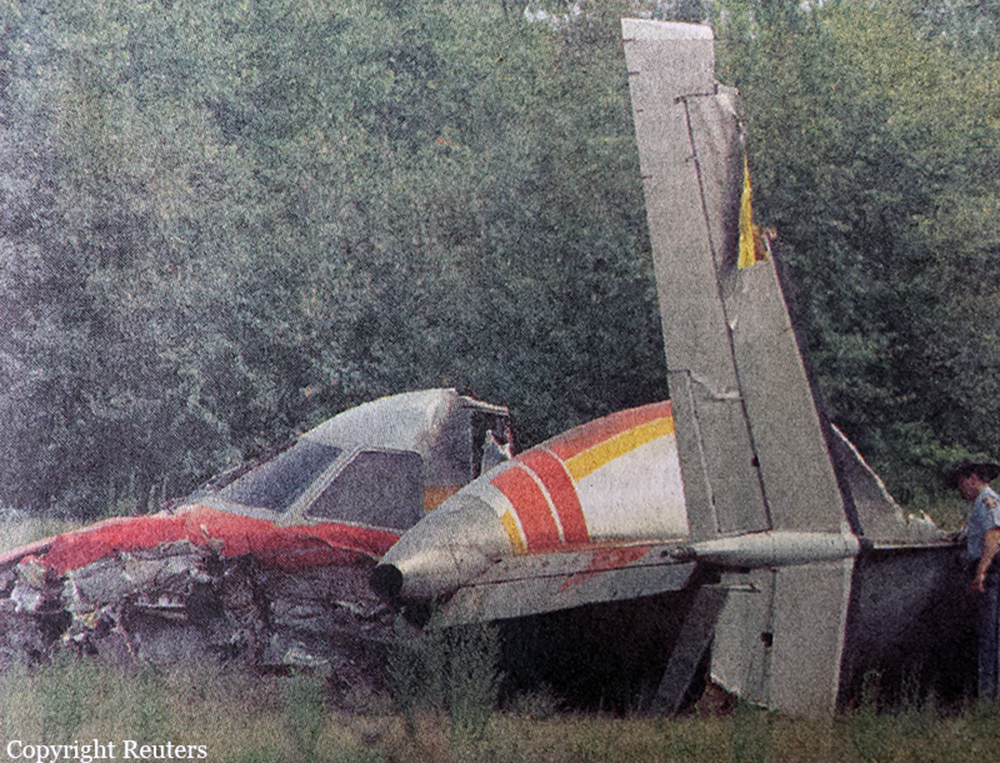
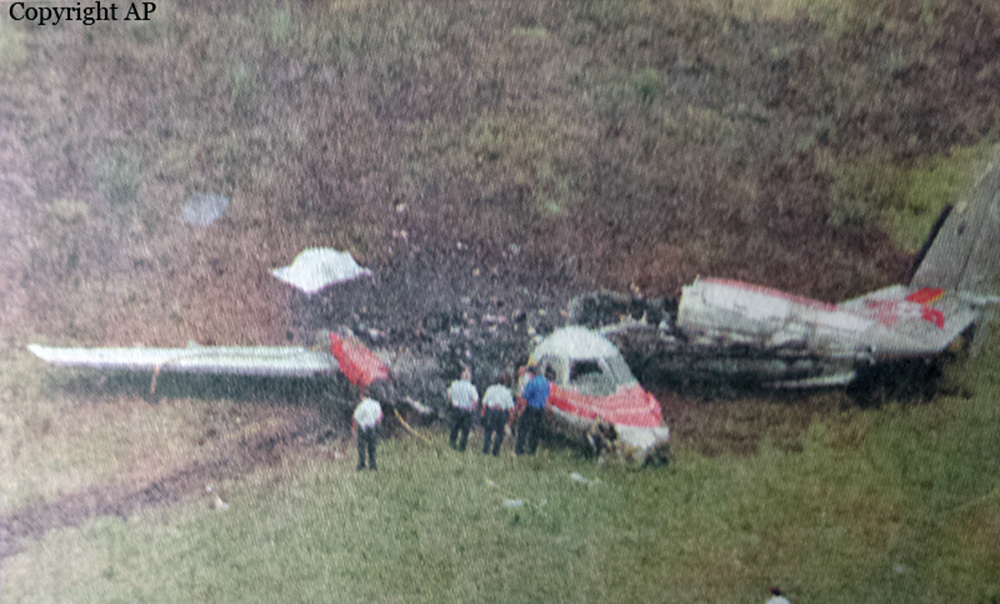
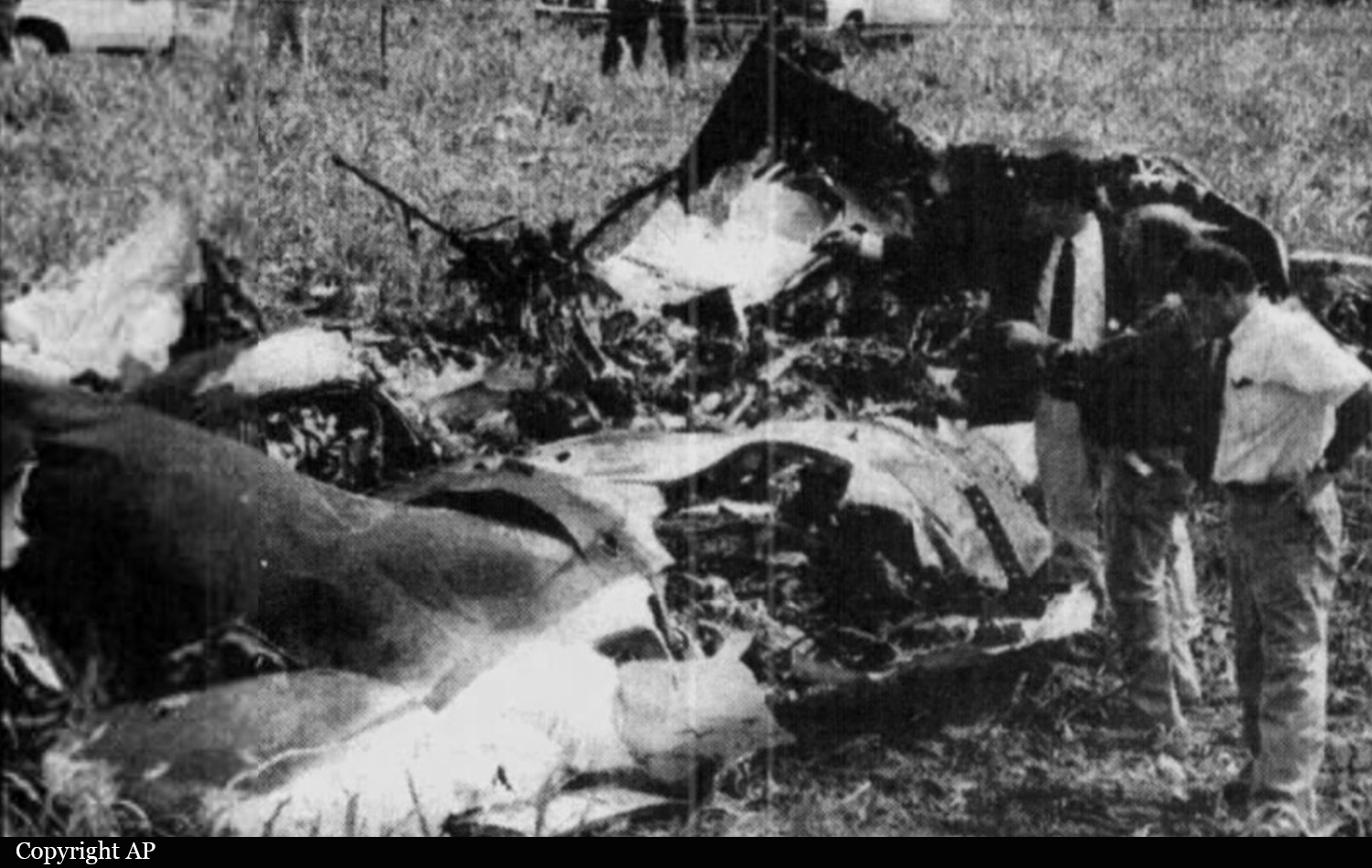
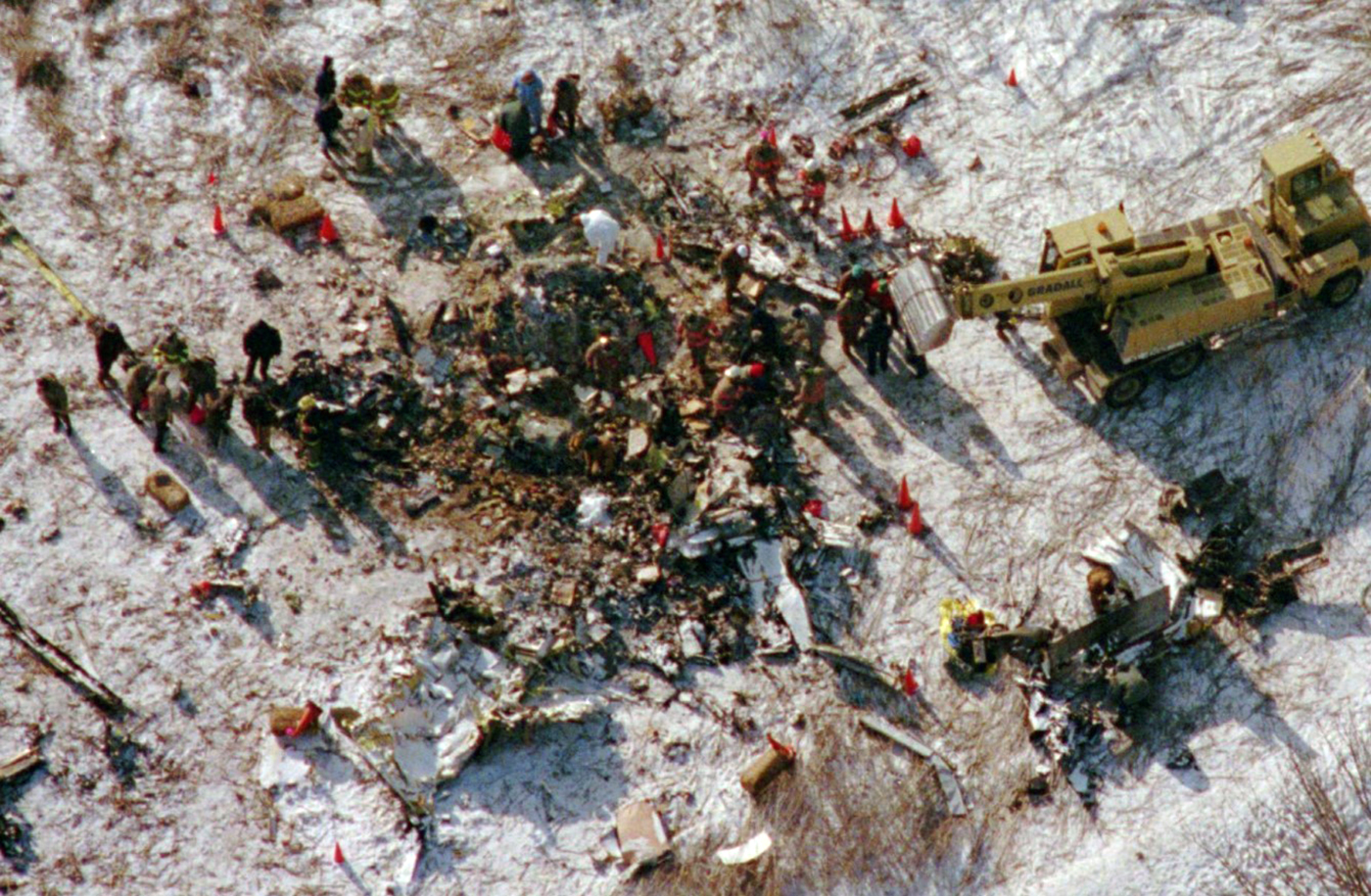
The flight was being vectored for the approach to runway 3R at Detroit Metropolitan Wayne County Airport (DTW) when the aircraft descended and impacted the ground. The aircraft struck the ground in a steep nose-down attitude in a level field in a rural area about 19 nm southwest of DTW. The flight carried 26 passengers and 3 crew members. There were no survivors and the airplane was destroyed by impact forces and a post crash fire. Instrument meteorological conditions prevailed at the time of the accident. The investigation revealed that it was likely that the airplane gradually accumulated a thin, rough glaze/mixed ice coverage on the leading edge deicing boot surfaces, possibly with ice ridge formation on the leading edge upper surface, as the airplane descended from 7,000 feet mean sea level (msl) to 4,000 feet msl in icing conditions, which may have been imperceptible to the pilots. The pilots had been instructed by air traffic control to slow to 150 knots and according to flight data recorder information, the airplane began to show signs of departure from controlled flight as it decelerated from 155 to 156 knots while in a flaps-up configuration. The investigation disclosed that the FAA failed to adopt a systematic and proactive approach to the certification, and operational issues of turbopropeller-driven transport airplane icing. The icing certification process has been inadequate because it has not required manufacturers to demonstrate the airplane's flight handling and stall characteristics under a sufficiently realistic range of adverse ice accretion/flight handling conditions. The aircraft manufacturer had issued a revision in April, 1996 to the approved flight manual which included activation of the leading edge deicing boots at the first sign of ice formation. The airplane operator did not incorporate the procedure, because it was contrary to the company's trained procedures and practices and of the belief that enacting the changes would result in potentially unsafe operation. Investigators' discussion with management personnel at each of the seven U.S.-based operators of the aircraft indicated that at the time of the accident only two of these operators had changed their procedures to reflect the information in the revision. The FAA, at the time of the accident, did not require manufacturers of all turbine-engine driven airplanes to publish minimum airspeed information for various flap configurations and phases and conditions of flight. During Safety Board investigators postaccident interviews with company pilots, there were inconsistent answers on the complex and varied minimum airspeed requirements established by the company for both icing and nonicing conditions. It was also noted that the pilots uncertainty of the appropriate airspeeds might have been associated with the language used, the different airspeeds and criteria contained in the guidance, the company's methods of distribution, and the company's failure t o incorporate the guidance as a formal, permanent revision to the flight standards manual.
Probable cause:
The Federal Aviation Administration's (FAA) failure to establish adequate aircraft certification standards for flight in icing conditions, the FAA's failure to ensure that at Centro Tecnico Aeroespacial/FAA-approved procedure for the accident airplane's deice system operation was implemented by U.S.-based air carriers, and the FAA's failure to require the establishment of
adequate minimum airspeeds for icing conditions, which led to the loss of control when the airplane accumulated a thin, rough, accretion of ice on its lifting surfaces. Contributing to the
accident were the flightcrew's decision to operate in icing conditions near the lower margin of the operating airspeed envelope (with flaps retracted) and Comair's failure to establish and adequately disseminate unambiguous minimum airspeed values for flap configurations and for flight in icing conditions.
Final Report:
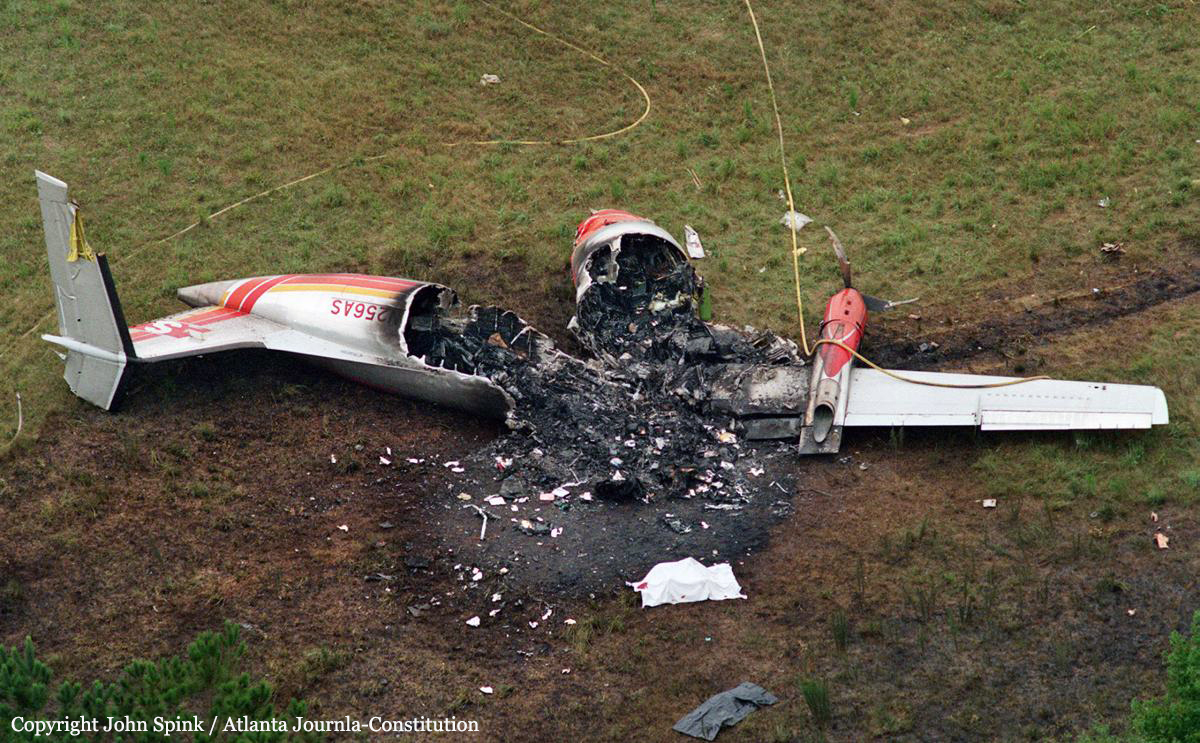
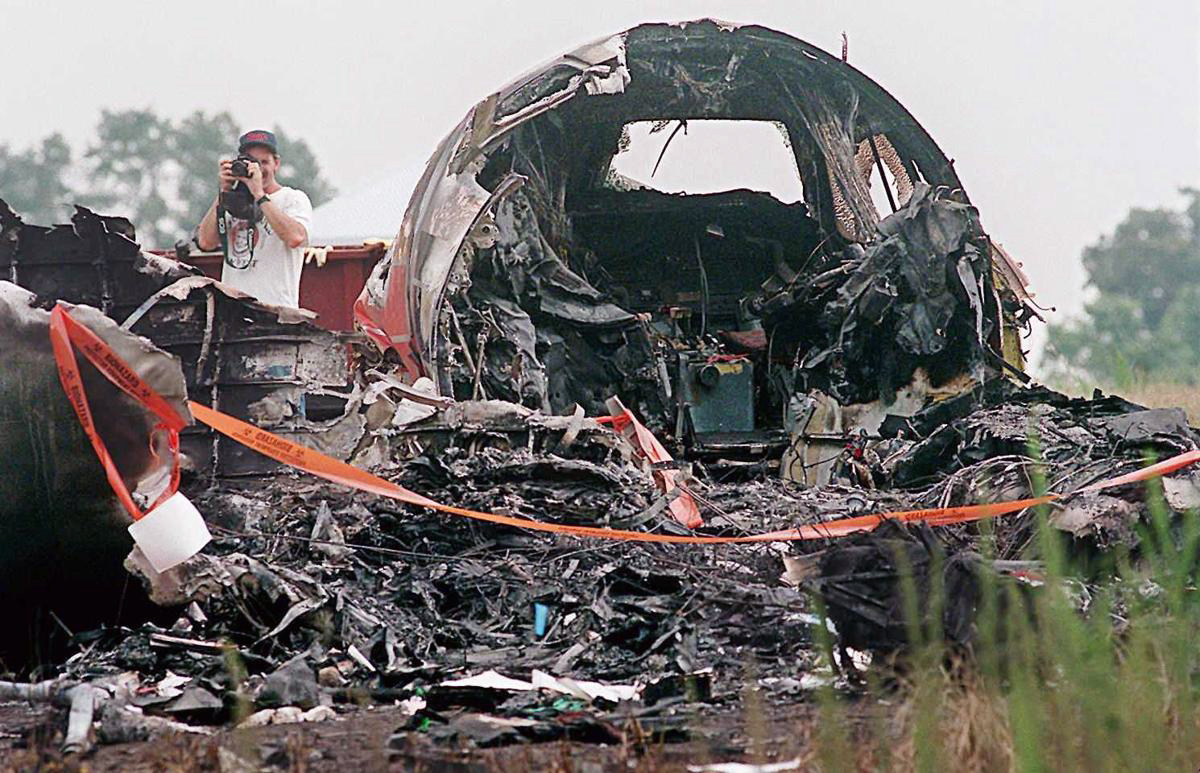
Crash of an Embraer EMB-120RT Brasília in Carrollton: 8 killed

Date & Time: Aug 21, 1995 at 1253 LT
Type of aircraft:
Operator:
Registration:
N256AS
Survivors:
Yes
Schedule:
Atlanta - Gulfport
MSN:
120-122
YOM:
1989
Flight number:
EV529
Crew on board:
3
Crew fatalities:
Pax on board:
26
Pax fatalities:
Other fatalities:
Total fatalities:
8
Captain / Total flying hours:
9876
Captain / Total hours on type:
7374.00
Copilot / Total flying hours:
1193
Copilot / Total hours on type:
363
Aircraft flight hours:
17151
Aircraft flight cycles:
18171
Circumstances:
Atlantic Southeast Airline Flight 529 was climbing through 18,000 feet, when a blade from the left propeller separated. This resulted in distortion of the left engine nacelle, excessive drag, loss of wing lift, and reduced directional control. The degraded performance resulted in a forced landing. While landing, the airplane passed through trees, impacted the ground, and was further damaged by post impact fire. An exam of the left propeller revealed the blade had failed due to a fatigue crack that originated from multiple corrosion pits in the taper bore surface of the blade spar. The crack had propagated toward the outside of the blade and around both sides of the taper bore. Due to 2 previous blade failures (separations), a borescope inspection procedure had been developed by Hamilton Standard to inspect returned blades (that had rejectable ultrasonic indications) for evidence of cracks, pits and corrosion. The accident blade was one of 490 rejected blades that had been sent to Hamilton Standard for further evaluation and possible repair. Maintenance technicians, who inspected the blade, lacked proper NDI familiarization training and specific equipment to identify the corrosion that resulted in fatigue. The captain and seven passengers were killed.
Probable cause:
The in-flight fatigue fracture and separation of a propeller blade resulting in distortion of the left engine nacelle, causing excessive drag, loss of wing lift, and reduced directional control of
the airplane. The fracture was caused by a fatigue crack from multiple corrosion pits that were not discovered by Hamilton Standard because of inadequate and ineffective corporate inspection and repair techniques, training, documentation, and communications. Contributing to the accident was Hamilton Standard's and FAA's failure to require recurrent on-wing ultrasonic inspections of the affected propellers. Contributing to the severity of the accident was the overcast cloud ceiling at the accident site.
Final Report:

Crash of an Embraer EMB-120RT Brasília in Pine Bluff

Date & Time: Apr 29, 1993 at 1555 LT
Type of aircraft:
Operator:
Registration:
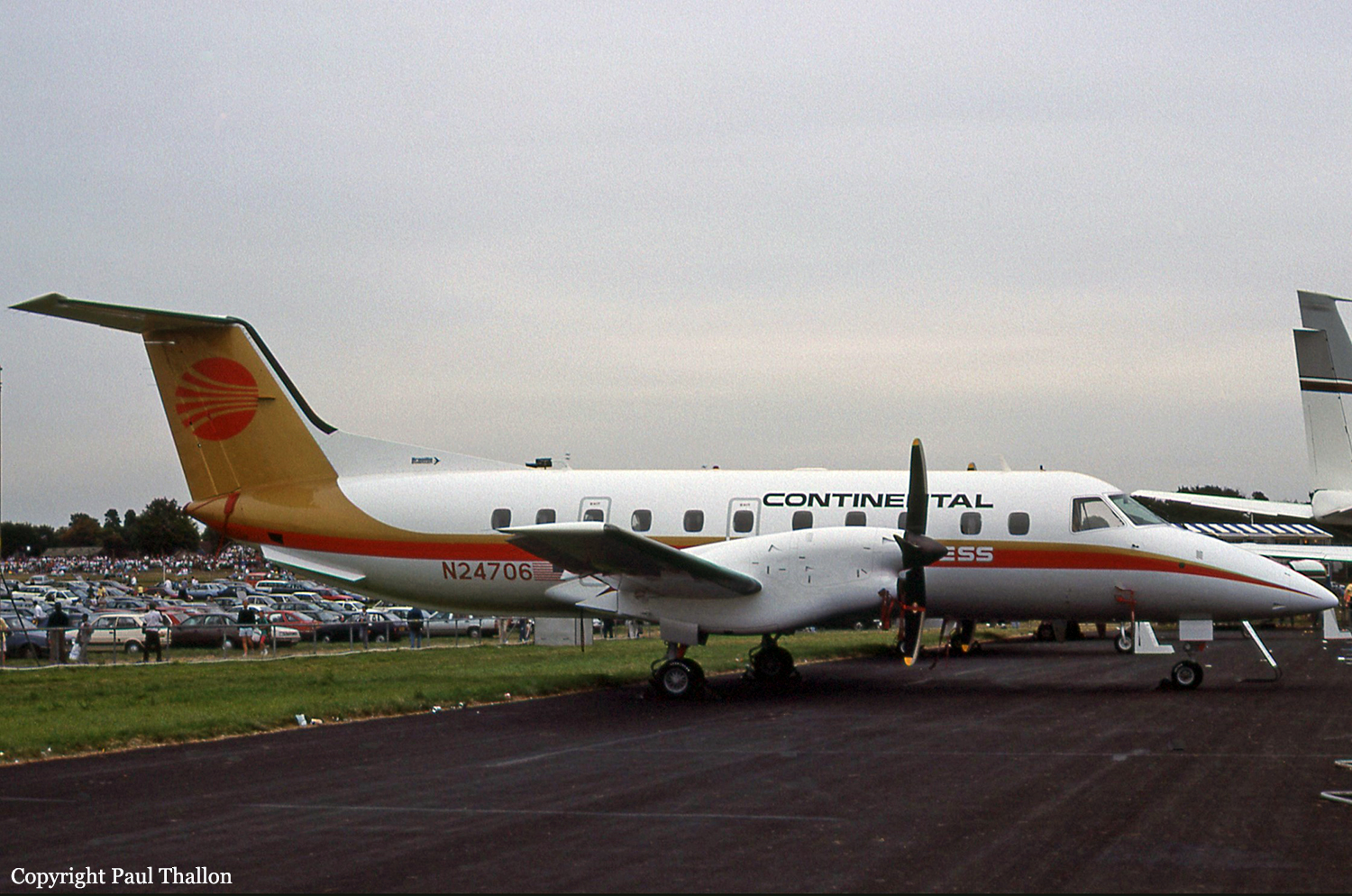
N24706
Flight Phase:
Survivors:
Yes
Schedule:
Little Rock - Houston
MSN:
120-093
YOM:
1988
Flight number:
CA2733
Crew on board:
3
Crew fatalities:
Pax on board:
27
Pax fatalities:
Other fatalities:
Total fatalities:
0
Captain / Total flying hours:
3600
Captain / Total hours on type:
2600.00
Copilot / Total flying hours:
3300
Copilot / Total hours on type:
700
Aircraft flight hours:
10398
Circumstances:
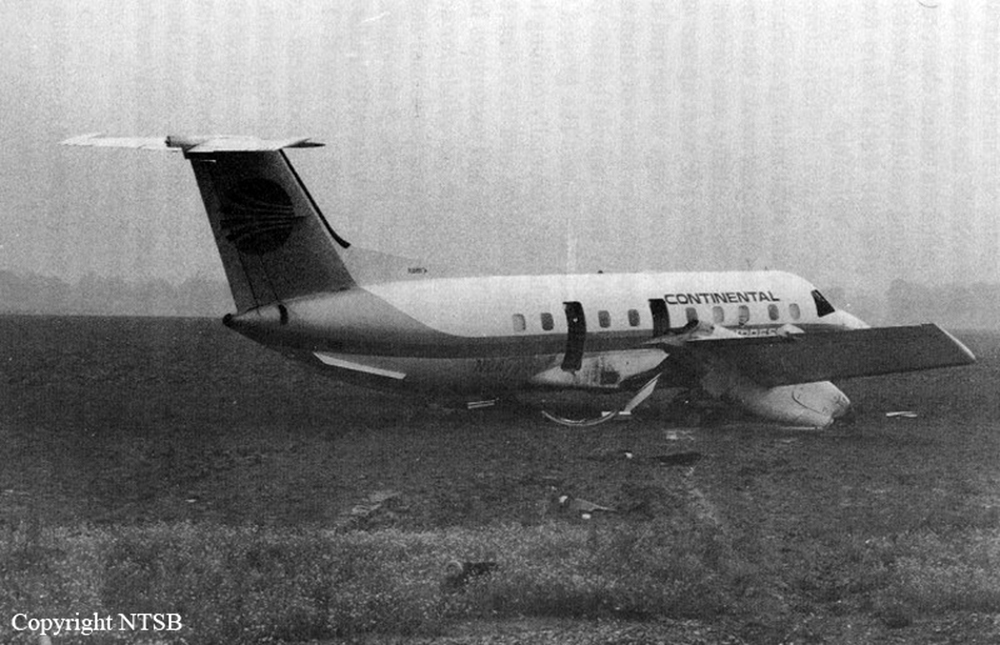
In climb, captain (pic) increased pitch, when flight attendant (f/a) entered cockpit and suggested faster climb, so she could begin cabin service. Autoflight was set in pitch and heading modes, contrary to company policy. Pic and f/a had non- pertinent conversation for 4.5 min, while 1st officer (f/o) was making log entries. Airplane stalled in IMC at 17,400 feet. Initial recovery was at 6,700 feet after f/o lower gear, then due to improper recovery, 2nd stall occurred and recovery was at 5,500 feet. Left propeller shed 3 blades, left engine cowling separated, left engine was shut down in descent. Level flight could not be maintained and forced landing was made at closed airport. Pic overshot final turn due to controllability problems and landed fast with 1,880 feet of wet runway remaining. Airplane hydroplaned off runway and was further damaged. Crew got limited sleep during 3 day trip, though rest periods available. Freezing level near 11,500 feet, clouds tops to 21,000 feet with potential for icing to 19,000 feet. No pre-accident malfunction was found.
Probable cause:
The captain's failure to maintain professional cockpit discipline, his consequent inattention to flight instruments and ice accretion, and his selection of an improper autoflight vertical mode, all of which led to an aerodynamic stall, loss of control, and a forced landing. Factors contributing to the accident were: poor crew discipline, including flightcrew coordination before the stall and the flightcrew's inappropriate actions to recover from the loss of control. Also contributing to the accident was fatigue induced by the flightcrew's failure to properly manage provided rest periods.
Final Report:

Crash of an Embraer EMB-120RT Brasília in Eagle Lake: 14 killed

Date & Time: Sep 11, 1991 at 1003 LT
Type of aircraft:
Operator:
Registration:
N33701
Flight Phase:
Survivors:
No
Schedule:
Laredo - Houston
MSN:
120-077
YOM:
1987
Flight number:
CO2574
Crew on board:
3
Crew fatalities:
Pax on board:
11
Pax fatalities:
Other fatalities:
Total fatalities:
14
Captain / Total flying hours:
4243
Captain / Total hours on type:
2468.00
Copilot / Total flying hours:
11543
Copilot / Total hours on type:
1066
Aircraft flight hours:
7229
Aircraft flight cycles:
10009
Circumstances:
The airplane broke up in flight while descending from FL240. The horizontal stabilizer, or top of the T-type tail, had separated from the fuselage before ground impact. Examination revealed that the 47 screw fasteners that would have attached the upper surface of the leading edge assembly for the left side of the horizontal stabilizer were missing. They had been removed the night before during scheduled maintenance. Investigation revealed that there was a lack of compliance with the FAA-approved general maintenance manual procedures by the mechanics, inspectors, and supervisors responsible for assuring the airworthiness of the airplane the night before the accident. In addition, routine surveillance of the continental express maintenance department by the FAA was inadequate and did not detect deficiencies, such as those that led to this accident. All 14 occupants were killed.
Probable cause:
The failure of continental express maintenance and inspection personnel to adhere to proper maintenance and quality assurance procedures for the airplane's horizontal stabilizer deice boots that led to the sudden in-flight loss of the partially secured left horizontal stabilizer leading edge and the immediate severe nose down pitchover and breakup of the airplane. Contributing to the cause of the accident was the failure of continental express management to ensure compliance with the approved maintenance procedures, and the failure of the faa surveillance to detect and verify compliance with approved procedures.
Final Report:

Crash of an Embraer EMB-120RT Brasilía in Brunswick: 23 killed

Date & Time: Apr 5, 1991 at 1451 LT
Type of aircraft:
Operator:
Registration:
N270AS
Survivors:
No
Schedule:
Atlanta - Brunswick
MSN:
120-218
YOM:
1990
Flight number:
EV2311
Crew on board:
3
Crew fatalities:
Pax on board:
20
Pax fatalities:
Other fatalities:
Total fatalities:
23
Captain / Total flying hours:
11724
Captain / Total hours on type:
5720.00
Copilot / Total flying hours:
3925
Copilot / Total hours on type:
2795
Aircraft flight hours:
816
Aircraft flight cycles:
845
Circumstances:
Witnesses reported that the airplane suddenly turned or rolled left until the wings were perpendicular to the ground. The airplane then fell in a nose-down attitude. Examination of the left propeller components indicated a blade angle of about 3°, while the left propeller control unit (pcu) ballscrew position was consistent with a commanded blade angle of 79.2°. Extreme wear on the pcu quill spline teeth, which normally engaged the titanium-nitrided splines of the propeller transfer tube, was found. The titanium-nitrided surface was much harder and rougher than the nitrided surface of the quill. Therefore, the transfer tube splines acted like a file and caused abnormal wear of the gear teeth on the quill. Wear of the quill was not considered during the certification of the propeller system. The aircraft was totally destroyed upon impact and all 23 occupants were killed, among them John Goodwin Tower, Senator of Texas and the astronaut Manley Sonny Carter.
Probable cause:
The loss of control in flight as a result of a malfunction of the left engine propeller control unit which allowed the propeller blade angles to go below the flight idle position. Contributing to the accident was the deficient design of the propeller control unit by hamilton standard and the approval of the design by the federal aviation administration. The design did not correctly evaluate the failure mode that occurred during this flight, which resulted in an uncommanded and uncorrectable movement of the blades of the airplane's left propeller below the flight idle position.
Final Report:

Crash of an Embraer VC-97 Brasilía in São José dos Campos: 5 killed

Date & Time: Jul 8, 1988 at 1600 LT
Type of aircraft:
Operator:
Registration:
2001
Flight Phase:
Flight Type:
Survivors:
Yes
Schedule:
São José dos Campos -São José dos Campos
MSN:
120-029
YOM:
1987
Country:
Crew on board:
2
Crew fatalities:
Pax on board:
7
Pax fatalities:
Other fatalities:
Total fatalities:
5
Circumstances:
The crew was completing a local training flight at São José dos Campos Airport. While circling with one engine out, the pilot-in-command lost control of the airplane that crashed near the runway. Five occupants were killed and four others were injured.

Crash of an Embraer EMB-120RT Brasília in Bordeaux: 16 killed

Date & Time: Dec 21, 1987 at 1510 LT
Type of aircraft:
Operator:
Registration:
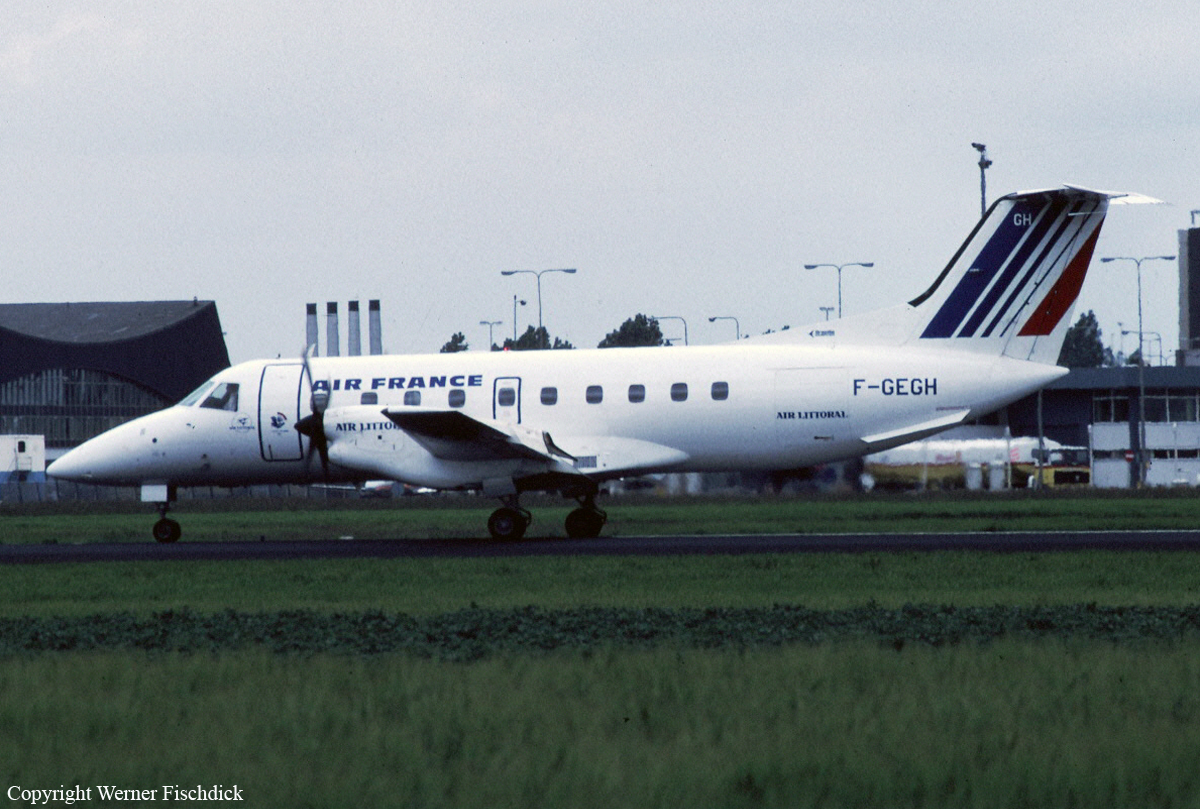
F-GEGH
Survivors:
No
Schedule:
Brussels - Bordeaux
MSN:
120-033
YOM:
1986
Flight number:
AF1919
Country:
Region:
Crew on board:
3
Crew fatalities:
Pax on board:
13
Pax fatalities:
Other fatalities:
Total fatalities:
16
Captain / Total flying hours:
2394
Captain / Total hours on type:
101.00
Copilot / Total flying hours:
1326
Copilot / Total hours on type:
215
Aircraft flight hours:
2505
Circumstances:
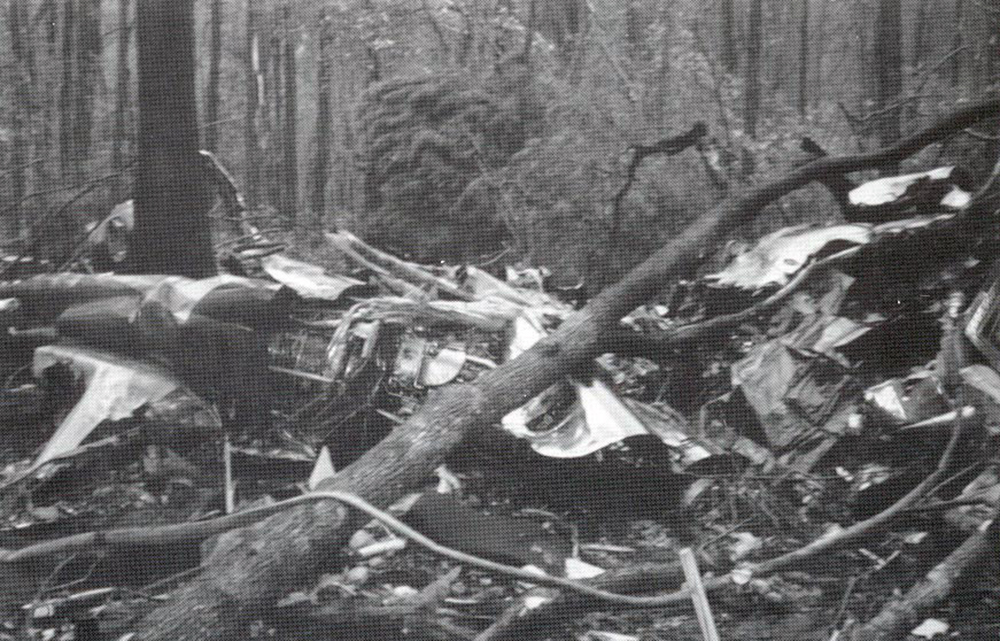
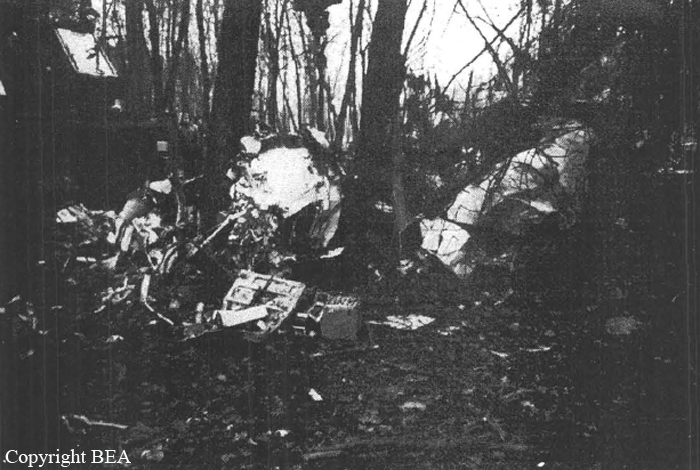
Following an uneventful flight from Brussels, the crew contacted Bordeaux Approach at 15:01 and was vectored for an ILS approach to runway 23. Visibility was poor with low clouds at 100 feet and a runway visual range (RVR) of between 650 and 350 metres. Flight 1919 crossed the KERAG beacon, the initial approach fix (IAF) at an altitude of FL144, at 15:04:40. Cloud base was still around 100 feet so the crew requested to enter a holding pattern to the south of the airport. The weather conditions slightly improved during the next few minutes and Bordeaux Approach reported a cloud base at 160 feet. Flight 1919 had not reached the holding pattern yet and the pilot decided to attempt to rejoin the ILS. At 15:06:38 the flight was cleared direct to the BD beacon and to descend down to 2000 feet. At the BD beacon, the flight was cleared for final approach and instructed to contact Bordeaux Tower. The airplane had overshot the centreline and was slightly right on the glidepath. Bordeaux Tower then instructed the flight to report over the Outer Marker, which was acknowledged by the captain. After crossing the Outer Marker, the airplane was still not properly established on the ILS. The airplane descended below the glideslope with the crew hurriedly deploying flaps and landing gear. The captain did not contact Bordeaux Tower as requested. Instead he took over control of the airplane, attempting to continue the approach. Both crew members had very little time to adapt to their new roles as the airplane was descending below the glide slope. The descent continued until the aircraft struck tree tops and crashed in the Eysines forrest, about 5 km short of runway. The aircraft was totally destroyed and all 16 occupants were killed.
Probable cause:
The accident was the direct result of poorly managed aircraft trajectory.
- The lack of vigilance with respect to altitude, by one pilot and then the other, when they were in a pilot-flying situation (PF, according to the Air Littoral Operations Manual) both when the aircraft descended out of the ILS beam through 2000 feet altitude and when it descended below 220 feet, the decision height.
- Inadequate coordination of tasks between the two pilots who formed the flight crew, neither of which had performed important tasks related to this function, such as monitoring and reporting ILS or altitude deviations, while in a nonpilot-flying situation (PNF, according to the same manual).
Final Report:

Crash of an Embraer EMB-120RT Brasília near São Francisco Xavier: 5 killed

Date & Time: Sep 19, 1986 at 1458 LT
Type of aircraft:
Operator:
Registration:
N219AS
Flight Phase:
Flight Type:
Survivors:
No
Site:
Schedule:
São Jose dos Campos - Brasília - Manaus - Caracas - Fort Lauderdale - Atlanta
MSN:
120-019
YOM:
1986
Country:
Crew on board:
3
Crew fatalities:
Pax on board:
2
Pax fatalities:
Other fatalities:
Total fatalities:
5
Captain / Total flying hours:
10880
Captain / Total hours on type:
550.00
Copilot / Total flying hours:
11490
Copilot / Total hours on type:
480
Aircraft flight hours:
12
Circumstances:
Brand new, the aircraft was took over by ASA crew to be delivered to Atlanta, Georgia. He was cleared by the São José Tower controller to follow the 010° radial to the SJC VOR, and cross the VOR at 5,000 feet. Some time after takeoff São José Tower instructed the flight to climb to FL280 out of 5,000 feet and intercept the 352 radial of the SJC VOR. The flight crew failed to follow the instructions and continued at an altitude of 5,000 feet. In limited visibility due to low clouds, the airplane struck the slope of a mountain located in the Mantiqueira Mountain Range. The wreckage was found 700 feet below the summit. All five occupants were killed.
Probable cause:
The following findings were reported:
- The pilots did not plan the flight properly, though there was an AIS room with the necessary sources of consultation. Maintaining altitude of 5000 feet for too long a time, subject to the minimum safe altitudes in the are area in the available publications, and the discrepancies found in the flight plan confirm this thesis.
- The pilot did not properly collated the guidelines issued by the tower and remained incompatible altitude with instructions issued by the control.
- There are strong indications that the flight proceeded under instrument flight conditions.
- There was no proper coordination between the ACC BS and TWR SJ regarding the transference and control of the air traffic nor did TWR SJ requested receipt of the messages.
Final Report: