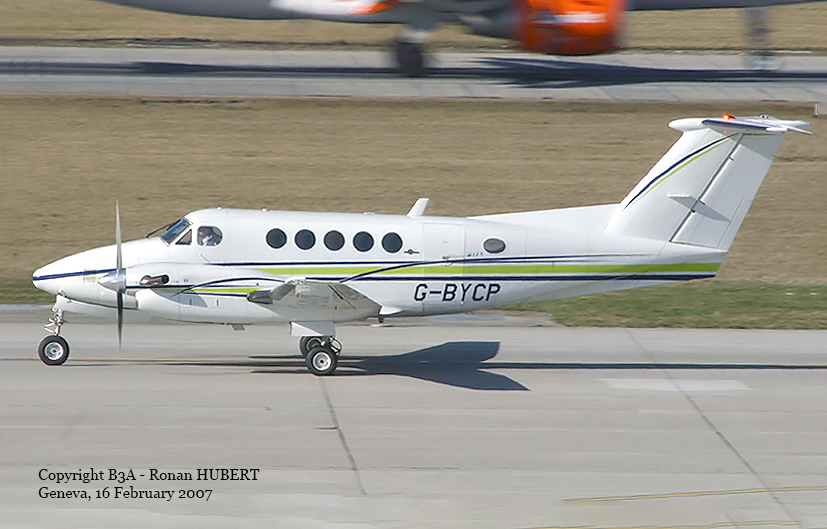
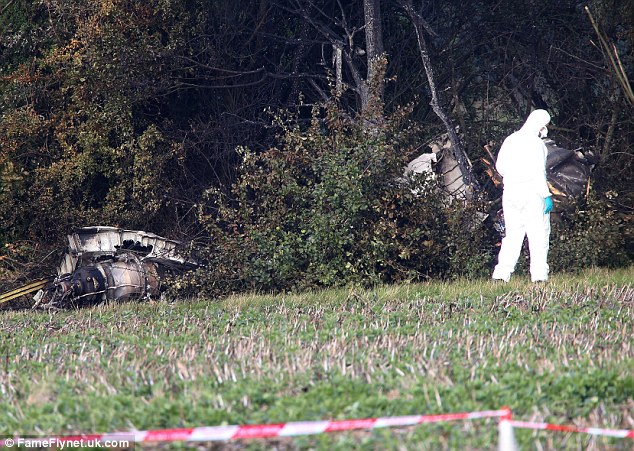
Crash of a Beechcraft B200 Super King Air in Chigwell: 2 killed

Date & Time: Oct 3, 2015 at 1020 LT
Operator:

Registration:
G-BYCP
Flight Phase:
Flight Type:
Survivors:
No
Schedule:
Stapleford - Brize Norton
MSN:
BB-966
YOM:
1982
Region:
Crew on board:
1
Crew fatalities:
Pax on board:
1
Pax fatalities:
Other fatalities:
Total fatalities:
2
Captain / Total flying hours:
1941
Captain / Total hours on type:
162.00
Aircraft flight hours:
14493
Aircraft flight cycles:
12222
Circumstances:
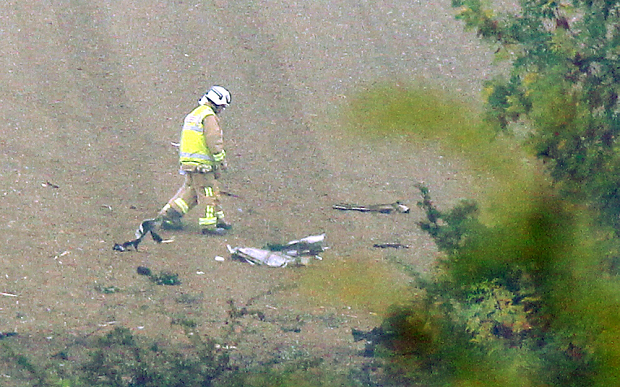
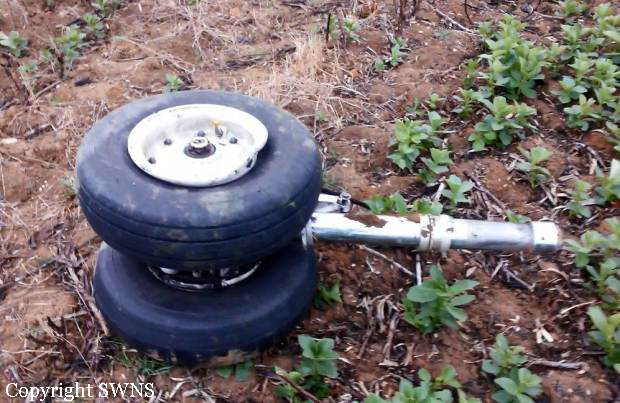
G-BYCP was planned to operate a non-commercial flight from Stapleford Aerodrome to RAF Brize Norton with two company employees on board (including the pilot) to pick up two passengers for onward travel. The pilot (the aircraft commander) held a Commercial Pilot’s Licence (CPL) and occupied the left seat and another pilot, who held an Airline Transport Pilot’s Licence (ATPL), occupied the right. The second occupant worked for the operator of G-BYCP but his licence was valid on Bombardier Challenger 300 and Embraer ERJ 135/145 aircraft and not on the King Air. The pilot reported for work at approximately 0715 hrs for a planned departure at 0815 hrs but he delayed the flight because of poor meteorological visibility. The general weather conditions were fog and low cloud with a calm wind. At approximately 0850 hrs the visibility was judged to be approximately 600 m, based on the known distance from the operations room to a feature on the aerodrome. At approximately 0915 hrs, trees were visible just beyond the end of Runway 22L, indicating that visibility was at least 1,000 m and the pilot decided that conditions were suitable for departure. At 0908 hrs, the pilot called the en-route Air Navigation Service Provider (ANSP) on his mobile phone to ask for a departure clearance. He was instructed to remain clear of controlled airspace when airborne and call London Tactical Control Northeast (TCNE) on 118.825 MHz. The planned departure was to turn right after takeoff and intercept the 128° radial from Brookman’s Park VOR (BPK) heading towards the beacon, and climb to a maximum altitude of 2,400 ft amsl to remain below the London TMA which has a lower limit of 2,500 ft amsl. The aircraft took off at 0921 hrs and was observed climbing in a wings level attitude until it faded from view shortly after takeoff. After takeoff, the aircraft climbed on a track of approximately 205°M and, when passing approximately 750 ft amsl (565 ft aal), began to turn right. The aircraft continued to climb in the turn until it reached 875 ft amsl (690 ft aal) when it began to descend. The descent continued until the aircraft struck some trees at the edge of a field approximately 1.8 nm southwest of the aerodrome. The pilot and passenger were both fatally injured in the accident, which was not survivable. A secondary radar return, thought to be G-BYCP, was observed briefly near Stapleford Aerodrome by London ATC but no radio transmission was received from the aircraft. A witness was walking approximately 30 m north-east of where the aircraft struck the trees. She suddenly heard the aircraft, turned towards the sound and saw the aircraft in a nose‑down attitude fly into the trees. Although she saw the aircraft only briefly, she saw clearly that the right wing was slightly low, and that the aircraft appeared to be intact and was not on fire. She also stated that the aircraft was “not falling” but flew “full pelt” into the ground.
Probable cause:
Examination of the powerplants showed that they were probably producing medium to high power at impact. There was contradictory evidence as to whether or not the left inboard flap was fully extended at impact but it was concluded that the aircraft would have been controllable even if there had been a flap asymmetry. The possibility of a preaccident control restriction could not be discounted, although the late change of aircraft attitude showed that, had there been a restriction, it cleared itself. The evidence available suggested a loss of aircraft control while in IMC followed by an unsuccessful attempt to recover the aircraft to safe flight. It is possible that the pilot lost control through a lack of skill but this seemed highly unlikely given that he was properly licensed and had just completed an extensive period of supervised training. Incapacitation of the pilot, followed by an attempted recovery by the additional crew member, was a possibility consistent with the evidence and supported by the post-mortem report. Without direct evidence from within the cockpit, it could not be stated unequivocally that the pilot became incapacitated. Likewise, loss of control due to a lack of skill, control restriction or distraction due to flap asymmetry could not be excluded entirely. On the balance of probabilities, however, it was likely that the pilot lost control of the aircraft due to medical incapacitation and the additional crew member was unable to recover the aircraft in the height available.
Final Report:
Crash of an Embraer EMB-505 Phenom 300 in Blackbushe: 4 killed

Date & Time: Jul 31, 2015 at 1508 LT
Type of aircraft:
Registration:
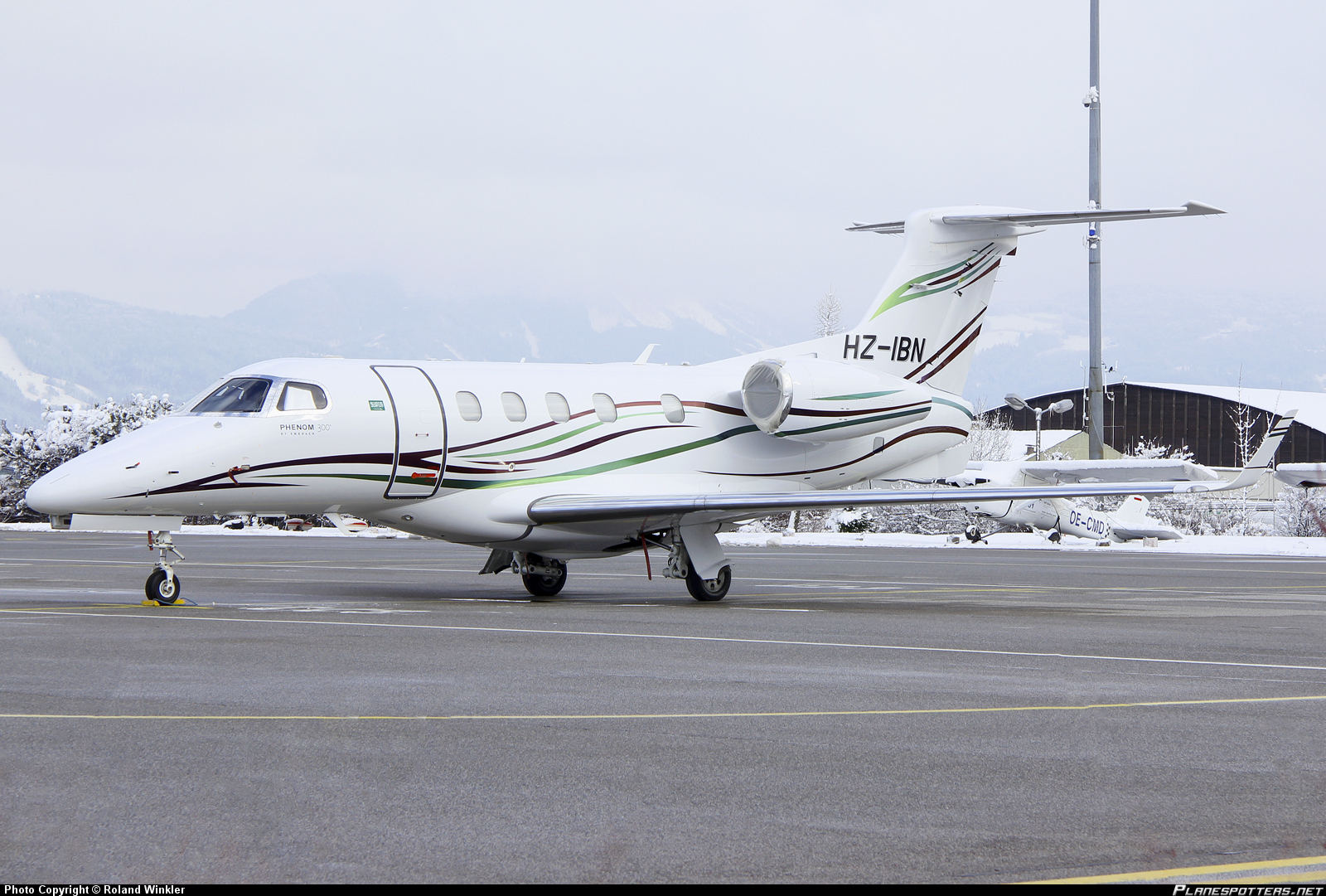
HZ-IBN
Flight Type:
Survivors:
No
Schedule:
Milan - Blackbushe
MSN:
505-00040
YOM:
2010
Region:
Crew on board:
1
Crew fatalities:
Pax on board:
3
Pax fatalities:
Other fatalities:
Total fatalities:
4
Captain / Total flying hours:
11000
Captain / Total hours on type:
1180.00
Aircraft flight hours:
2409
Aircraft flight cycles:
1377
Circumstances:
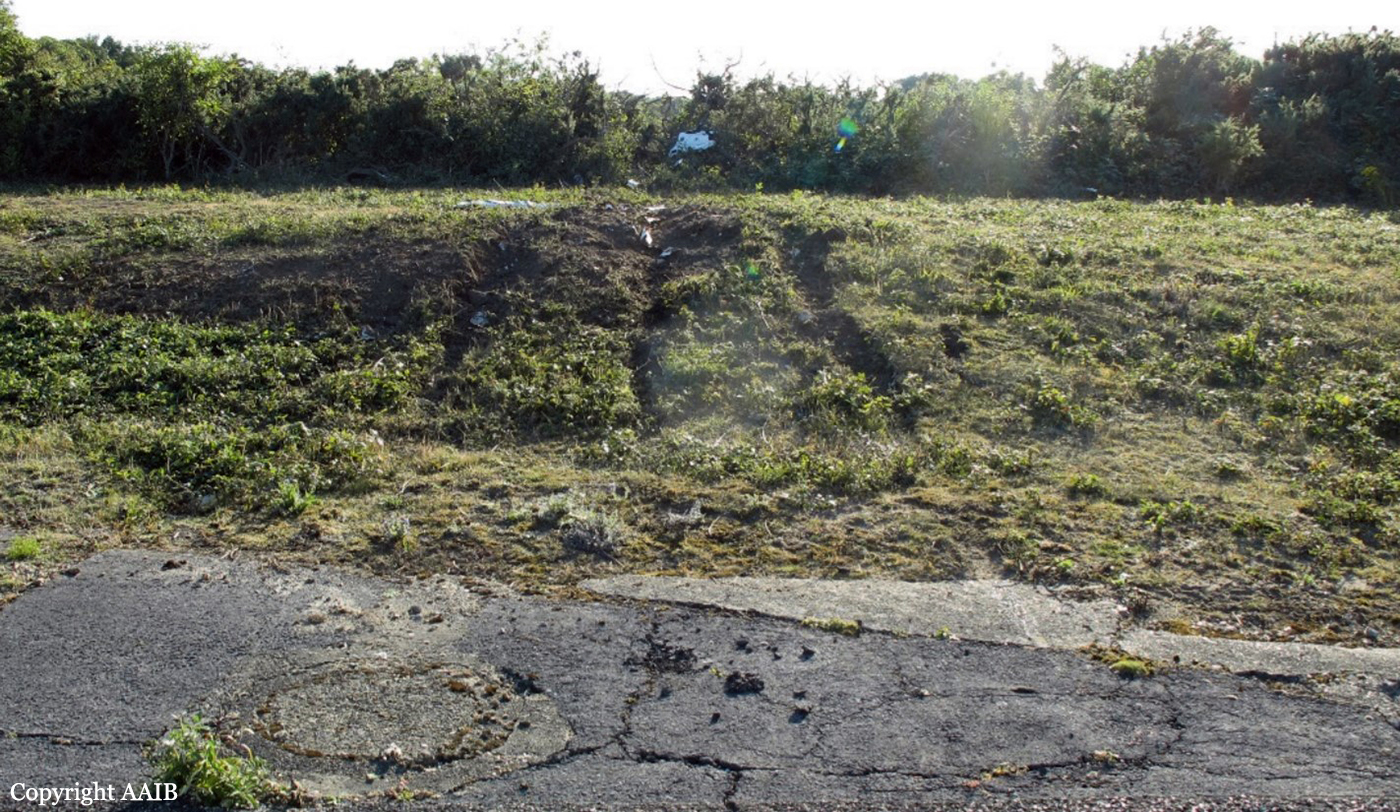
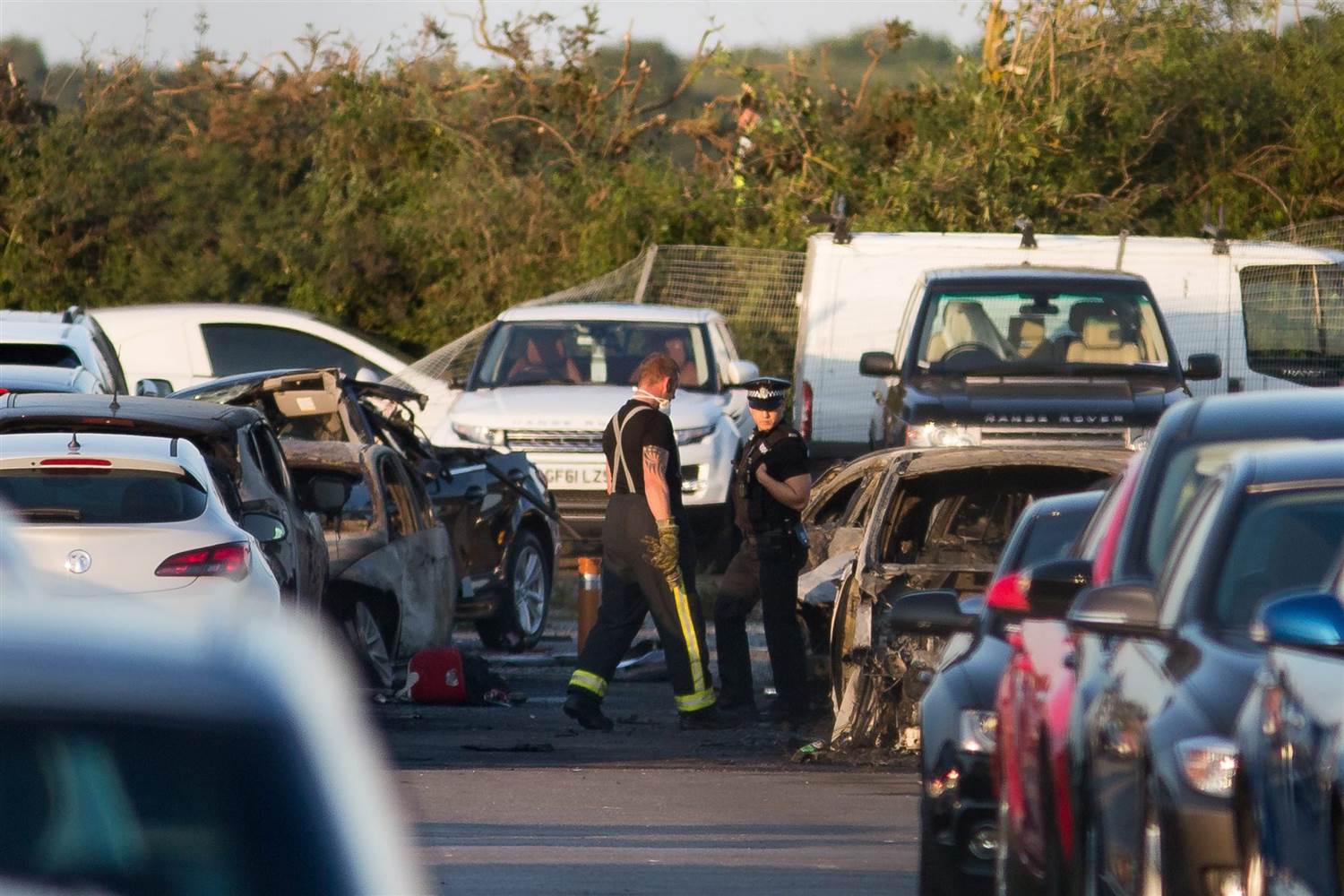
The aircraft had positioned to Milan earlier in the day, flown by the same pilot, and was returning to Blackbushe with the pilot and three passengers on board. After descending through the London Terminal Manoeuvring Area (TMA) it was handed over from London Control to Farnborough Approach. Its descent continued towards Blackbushe and, having reported that he had the airfield in sight, the pilot was instructed to descend at his own discretion. When the aircraft was approximately four miles south of its destination, he was instructed to contact Blackbushe Information. The weather at Blackbushe was fine with light and variable winds, visibility in excess of ten kilometres, and no low cloud. HZ-IBN entered the left-hand circuit for Runway 25 via the crosswind leg. Towards the end of the downwind leg, it overtook an Ikarus C42 microlight aircraft, climbing to pass ahead of and above that aircraft. As the climb began, at approximately 1,000 ft aal, the TCAS of HZ-IBN generated a ‘descend’ RA alert to resolve a conflict with the microlight. The TCAS RA changed to ‘maintain vertical speed’ and then ‘adjust vertical speed’, possibly to resolve a second conflict with a light aircraft which was above HZ-IBN and to the east of the aerodrome. Neither the microlight nor the light aircraft was equipped with TCAS. Following this climb, HZ-IBN then flew a curving base leg, descending at up to 3,000 feet per minute towards the threshold of Runway 25. The aircraft’s TCAS annunciated ‘clear of conflict’ when HZ-IBN was 1.1 nm from the runway threshold, at 1,200 ft aal, and at a speed of 146 KIAS, with the landing gear down and flap 3 selected. The aircraft continued its approach at approximately 150 KIAS. Between 1,200 and 500 ft aal the rate of descent averaged approximately 3,000 fpm, and at 500 ft aal the descent rate was 2,500 fpm. The aircraft’s TAWS generated six ‘pull up’ warnings on final approach. The aircraft crossed the Runway 25 threshold at approximately 50 ft aal at 151 KIAS. The aircraft manufacturer calculated that the appropriate target threshold speed for the aircraft’s mass and configuration was 108 KIAS. The AFISO initiated a full emergency as the aircraft touched down, because “it was clear at this time that the aircraft was not going to stop”. Tyre marks made by the aircraft at touchdown indicated that it landed 710 m beyond the Runway 25 threshold. The Runway 25 declared Landing Distance Available (LDA) was 1,059 m; therefore the aircraft touched down 349 m before the end of the declared LDA. The paved runway surface extended 89 m beyond the end of the LDA. The aircraft continued along the runway, decelerating, but departed the end of the paved surface at a groundspeed of 83 kt (84 KIAS airspeed) and struck an earth bank, which caused the aircraft to become airborne again. It then struck cars in a car park, part of a large commercial site adjacent to the aerodrome. The wing separated from the fuselage, and the fuselage rolled left through 350° before coming to rest on top of the detached wing, on a heading of 064°(M), 30° right side down and in an approximately level pitch attitude. A fire broke out in the underside of the aft fuselage and burned with increasing intensity. The aerodrome’s RFFS responded to the crash alarm but their path to the accident site was blocked by a locked gate between the aerodrome and commercial site. The first two RFFS vehicles arrived at the gate 1 minute and 34 seconds after the aircraft left the runway end. The third RFFS vehicle, which carried a key for the gate, arrived approximately one minute later, and the three RFFS vehicles proceeded through the gate 2 minutes and 46 seconds after the aircraft left the runway. As the aircraft was located in an area of the car park surrounded by a 2.4 m tall wire mesh fence, the RFFS vehicles had to drive approximately 400 m to gain access to the accident site. Despite applying all their available media, the RFFS was unable to bring the fire under control. The intensity of the fire meant that it was not possible to approach the aircraft to save life. All four occupants of the aircraft survived the impact and subsequently died from the effects of fire. Subsequently, local authority fire appliances arrived and the fire was extinguished.
Probable cause:
The pilot was appropriately licensed and experienced, and had operated into Blackbushe Aerodrome on 15 previous occasions. He was reported to be physically and mentally well. The aircraft was certified for single-pilot operations and the pilot was qualified to conduct them. The engineering investigation of the accident aircraft did not find evidence of any pre‑existing technical defect that caused or contributed to the accident. The meteorological conditions were suitable for the approach and landing and, at the actual landing weight and appropriate speed, a successful landing at Blackbushe was possible. HZ-IBN joined the circuit at a speed and height which would have been consistent with the pilot’s stated plan to extend downwind in order that the microlight could land first. The subsequent positioning of HZ-IBN and the microlight involved HZ-IBN manoeuvring across the microlight’s path, in the course of which the first of several TCAS warnings was generated. After manoeuvring to cross the microlight’s path, HZ-IBN arrived on the final approach significantly above the normal profile but appropriately configured for landing. In the ensuing steep descent, the pilot selected the speed brakes out but they remained stowed because they are inhibited when the flaps are deployed. The aircraft’s speed increased and it crossed the threshold at the appropriate height, but 43 KIAS above the applicable target threshold speed. The excessive speed contributed to a touchdown 710 m beyond the threshold, with only 438 m of paved surface remaining. From touchdown, at 134 KIAS, it was no longer possible for the aircraft to stop within the remaining runway length. The brakes were applied almost immediately after touchdown and the aircraft’s subsequent deceleration slightly exceeded the value used in the aircraft manufacturer’s landing performance model. The aircraft departed the paved surface at the end of Runway 25 at a groundspeed of 83 kt. The aircraft collided with an earth bank and cars in a car park beyond it, causing the wing to separate and a fire to start. Although the aircraft occupants survived these impacts, they died from the effects of fire. Towards the end of the flight, a number of factors came together to create a very high workload situation for the pilot, to the extent that his mental capacity could have become saturated. His ability to take on new and critical information, and adapt his situational awareness, would have been impeded. In conjunction with audio overload and the mental stressors this can invoke, this may have lead him to become fixated on continuing the approach towards a short runway.
Final Report:

Crash of a Raytheon 390 Premier I in Blackpool

Date & Time: Mar 12, 2015 at 1148 LT
Type of aircraft:
Operator:
Registration:
G-OOMC
Survivors:
Yes
Schedule:
Avignon – Blackpool
MSN:
RB-146
YOM:
2005
Region:
Crew on board:
2
Crew fatalities:
Pax on board:
2
Pax fatalities:
Other fatalities:
Total fatalities:
0
Captain / Total flying hours:
3455
Captain / Total hours on type:
408.00
Circumstances:
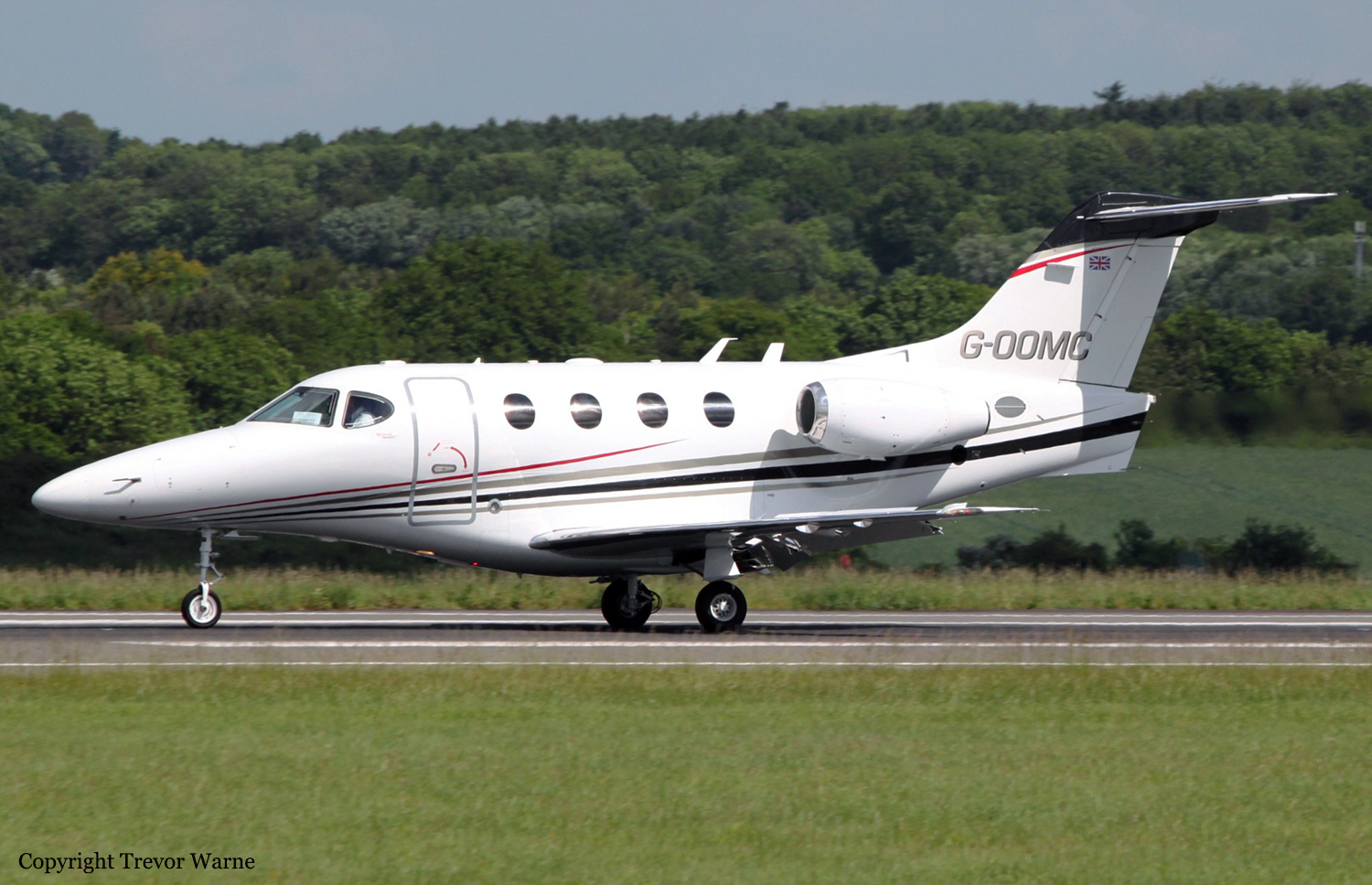
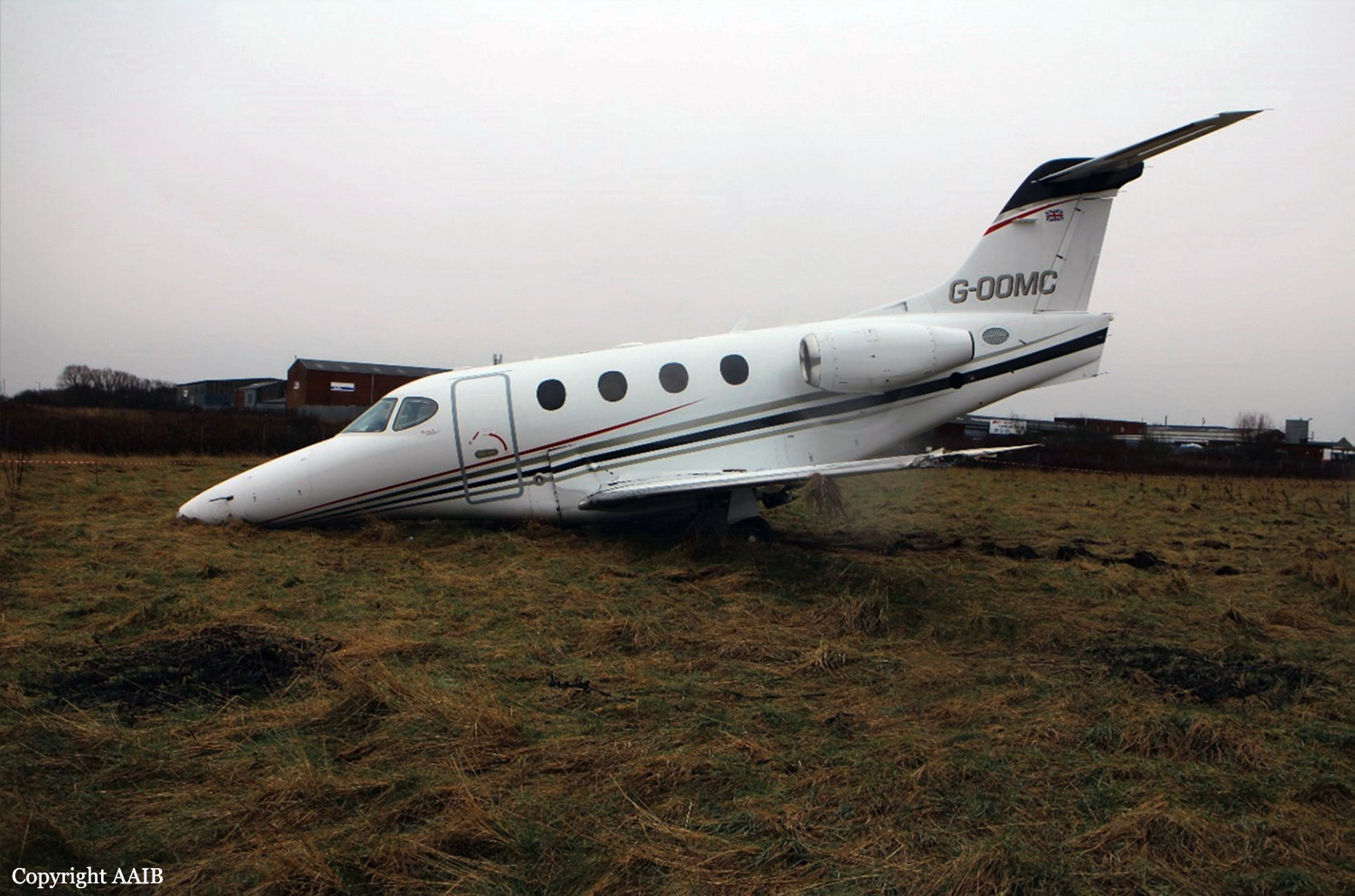
The aircraft planned to fly from Avignon Airport, France to Blackpool Airport, with two flight crew and two passengers. The co-pilot performed the external checks; this included checking the fluid level in the hydraulic reservoir, as stated in the ‘Pilot Checklist’. The aircraft was refuelled to 3,000 lb and, after the passengers boarded, it departed for Blackpool. The commander was the pilot flying (PF). The takeoff and cruise to Blackpool were uneventful. Prior to the descent the crew noted ATIS Information ‘Lima’, which stated: Runway 10, wind from 150° at 18 kt, visibility 9 km, FEW clouds at 2,000 ft aal, temperature 11°C, dew point 8°C, QNH 1021 hPa, runway damp over its whole length. The commander planned and briefed for the NDB approach to Runway 10, which was to be flown with the autopilot engaged. Whilst descending through FL120, the left, followed by the right, hydraulic low pressure cautions illuminated. Upon checking the hydraulic pressure gauge, situated to the left of the commander’s control column, the pressure was noted to be ‘cycling up and down’, but for the majority of the time it indicated about 2,800 psi (in the green arc). During this time the hydraulic low pressure cautions went on and off irregularly, with the left caution being on more often than the right. The co-pilot then actioned the ‘HYDRAULIC SYSTEM - HYDRAULIC PUMP FAILURE’ checklist. It stated that if the hydraulic pressure was a minimum of 2,800 psi, the flight could be continued. Just before the aircraft reached the Blackpool NDB, the commander commented “it’s dropping”, but he could not recall what he was referring to. This was followed by the roll fail and speed brk [brake] fail caution messages illuminating. The co-pilot then actioned the applicable checklists. These stated that the Landing Distances Required (LDR) would increase by approximately 65% and 21%, respectively. As the roll fail LDR increase was greater than that of the speed brk fail, the crew used an LDR increase of 65% which the co-pilot equated to 5,950 ft. Runway 10 at Blackpool has an LDA of 6,131 ft, therefore they elected to continue to Blackpool. The roll fail checklist stated that a ‘FLAPS UP’ landing was required. The co-pilot then calculated the VREF of 132 kt, including a 20 kt increment, as stipulated by the ‘FLAPS UP, 10, OR 20 APPROACH AND LANDING’ checklist. The commander then continued with the approach. At about 4 nm on final approach the co-pilot lowered the landing gear, in response to the commander’s request. About 8 seconds later the commander said “just lost it all”; referring to the general state of the aircraft. This was followed almost immediately by the landing gear unsafe aural warning, as the main landing gear was not indicating down and locked. Whilst descending through 1,000 ft, at just over 3 nm from the threshold, the commander asked the co-pilot to action the ‘ALTERNATE GEAR EXTENSION’ checklist. The commander then discontinued the approach by selecting ALT HOLD, increased engine thrust and selected a 500 ft/min rate of climb on the autopilot. However, a few seconds later, before the co-pilot could action the checklist, the main gear indicated down and locked. The commander disconnected the autopilot and continued the approach. The crew did not consider reviewing the ‘HYDRAULIC SYSTEM - HYDRAULIC PUMP FAILURE’ checklist as they had not recognised the symptoms of loss of hydraulic pressure. When ATC issued the aircraft its landing clearance the wind was from 140° at 17 kt. This equated to a headwind component of about 10 kt and a crosswind of about 12 kt. As the aircraft descended through 500 ft (the Minimum Descent Altitude (MDA) for the approach) at 1.5 nm from the threshold, the commander instructed the co-pilot to advise ATC that they had a hydraulic problem and to request the RFFS to be put on standby. There was a slight delay in transmitting this request, due to another aircraft on frequency, but the request was acknowledged by ATC. The aircraft touched down about 1,500 ft from the start of the paved surface at an airspeed of 132 kt and a groundspeed of 124 kt. When the commander applied the toe (power) brakes he felt no significant retardation. During the landing roll no attempt was made to apply the emergency brakes, as required in the event of a power brake failure. The co-pilot asked if he should try to operate the lift dump, but it failed to function, due to the lack of hydraulic pressure. At some point, while the aircraft was on the runway, the co-pilot transmitted a MAYDAY call to ATC. When an overrun appeared likely, the commander shut down the engines. The aircraft subsequently overran the end of the runway at a groundspeed of about 80 kt. The commander later commented that he was in a “state of panic” during the landing roll and was unsure whether or not he had applied the emergency brake. As the aircraft left the paved surface the commander steered the aircraft slightly right to avoid a shallow downslope to the left of runway’s extended centreline. The aircraft continued across the rough, uneven ground, during which the nose gear collapsed and the wing to fuselage attachments were severely damaged (Figure 1). Once it had come to a stop, he shut down the remaining aircraft systems. The passengers and crew, who were uninjured, vacated the aircraft via the entry/exit door and moved upwind to a safe distance. The RRFS arrived shortly thereafter.
Probable cause:
The crew carried out the reservoir level check procedure in accordance with the checklist prior to the flight and found it to be correct, as indicated by the test light not illuminating. This meant that there was at least 1.2 gals (4.5 litres) of fluid within the reservoir. Evidence of hydraulic leakage was only visible within the left engine nacelle. The crew reported fluctuating hydraulic pressure in the latter stages of the flight and intermittent l hyd press lo then r hyd press lo captions on the annunciator panel, the left more than the right. After they had selected the landing gear down the hydraulic pressure dropped completely. The pressure fluctuations suggest that the left pump in particular was struggling to maintain pressure due to cavitation and leakage. As the fluid in the system was gradually depleting, later shown by the fluid accumulation in the engine bay, the right hydraulic pump was also suffering cavitation, as indicated by the r hyd press lo indications. When the MLG was lowered the fluid taken in by the retraction jacks, which is estimated to be at least 4 pints (2.27 litres), further reduced the volume of hydraulic fluid. This resulted in more severe pump cavitation such that the pumps were not able to produce or maintain useable hydraulic pressure. It is likely that the fluid quantity became unviable as the landing gear reached the full extent of its travel, manifesting itself in a delay in getting the gear down and locked indication and the inboard doors not being able to complete their sequence and remaining open. The parking/emergency brake was not affected by the hydraulic system loss. Had a demand been made on the emergency brakes system during the landing it would have worked normally, albeit without anti-skid and a reduced retardation capability. Pump port cap failure The multiple-origin cracking found in the port cap by the laboratory testing had propagated from a thread root in the bore to the outer surface of the cap. It is not known how long the crack had been propagating for, but it is likely that the crack broke the surface of the cap relatively recently, allowing the leakage of fluid outwards under pressure from within the pump. The excessive pitting at the root of the thread is likely to have initiated the fatigue crack, with the thread root radius as a contributory factor. The load imparted into the thread by the compensator plug fitting places the thread under a constant tensile stress when the pump is operating, leading to the eventual fatigue failure.
Final Report:

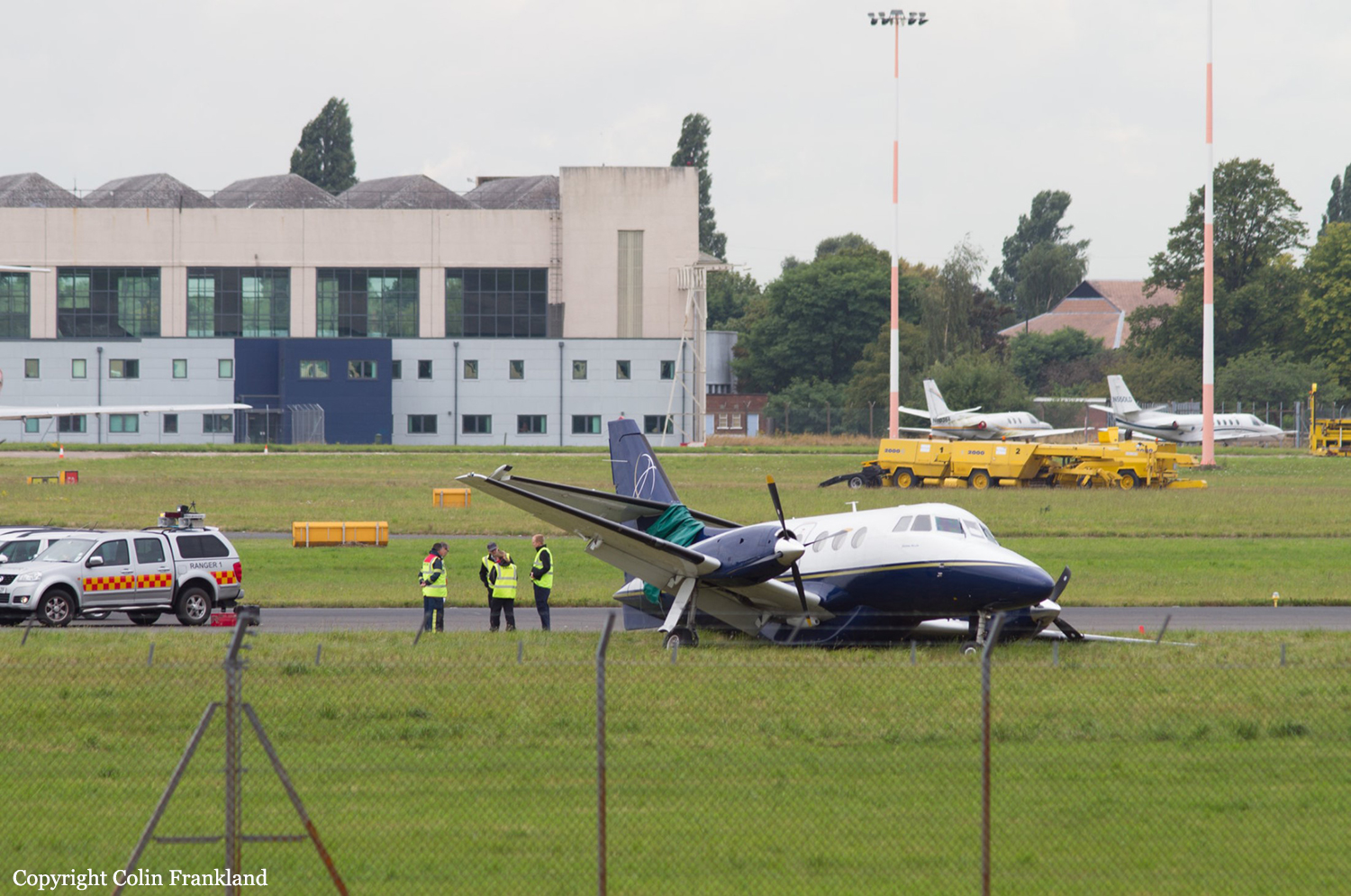
Crash of a Saab 340B in Stornoway

Date & Time: Jan 2, 2015 at 0833 LT
Type of aircraft:
Operator:
Registration:
G-LGNL
Flight Phase:
Survivors:
Yes
Schedule:
Stornoway – Glasgow
MSN:
246
YOM:
23
Flight number:
BE6821
Region:
Crew on board:
3
Crew fatalities:
Pax on board:
26
Pax fatalities:
Other fatalities:
Total fatalities:
0
Captain / Total flying hours:
3880
Captain / Total hours on type:
3599.00
Circumstances:
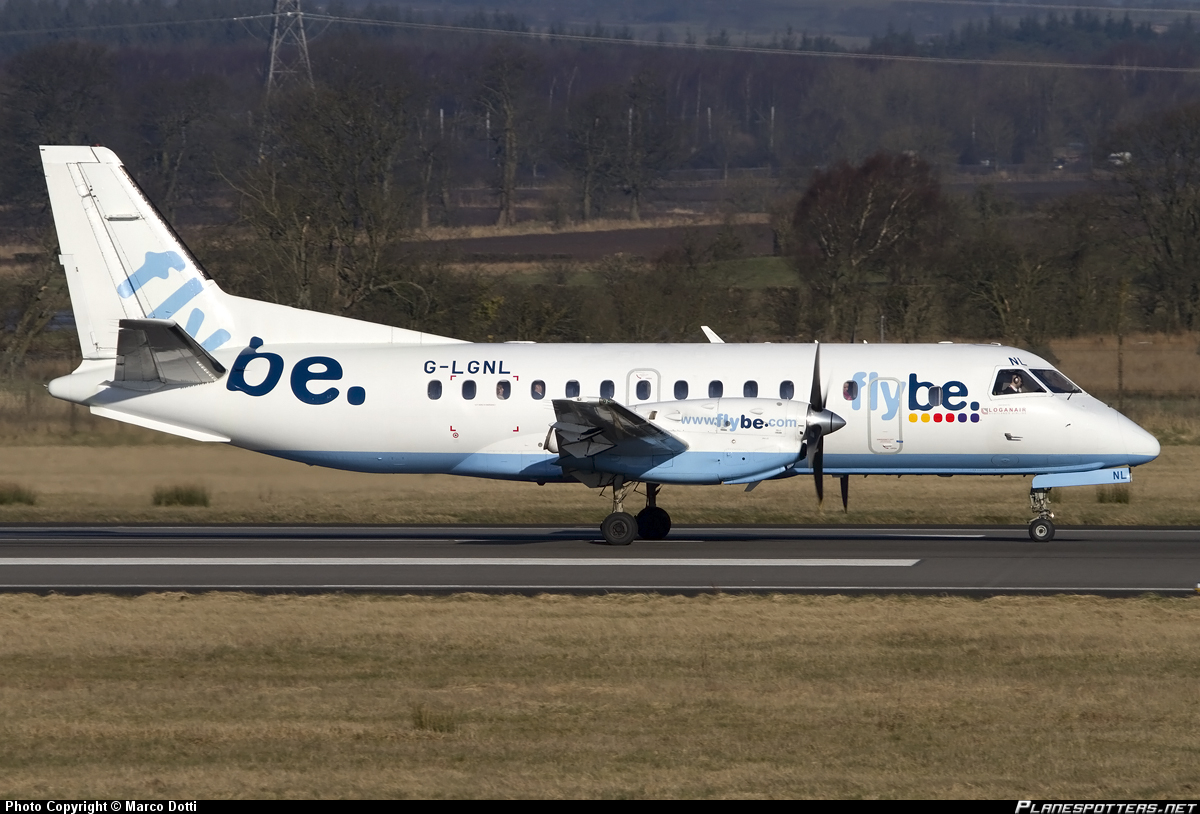
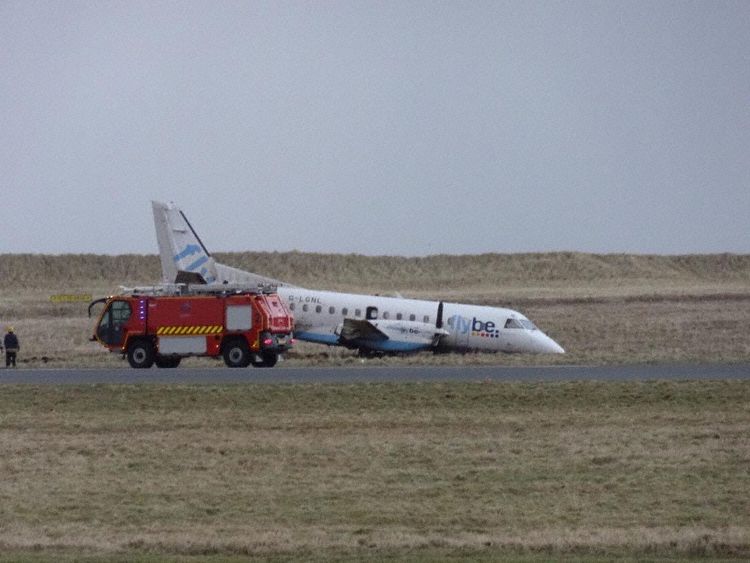
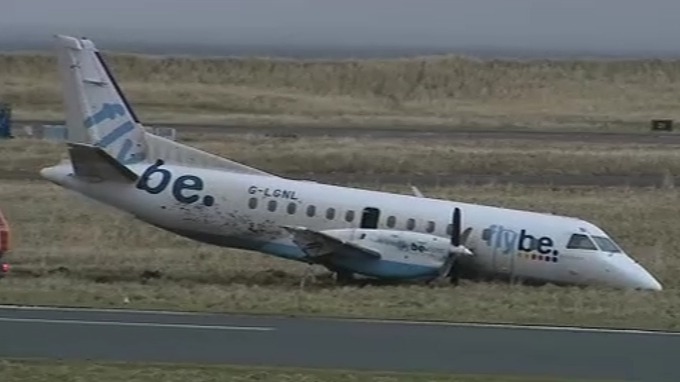
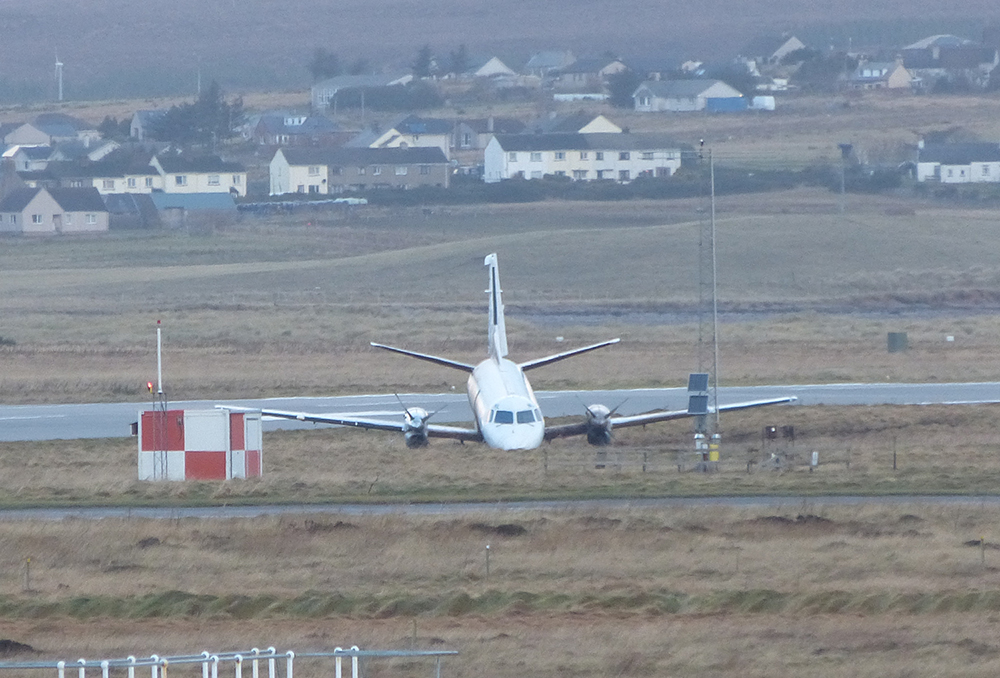
The aircraft had been prepared for a Commercial Air Transport flight from Stornoway Airport to Glasgow Airport with 26 passengers and three crew on board; the commander was the Pilot Flying (PF) and the co-pilot was the Pilot Monitoring (PM). At 0825 hrs the aircraft was taxied towards Holding Point A1 for a departure from Runway 18. At 0832 hrs G-LGNL was cleared to enter the runway from Holding Point A1 and take off, and the ATC controller transmitted that the surface wind was from 270° at 27 kt. The commander commented to the co-pilot that the wind was across the runway and that there was no tailwind. As the aircraft taxied onto the runway, the co-pilot applied almost full right aileron input consistent with a cross-wind from the right, and the commander said to the co-pilot “charlie1, one hundred, strong wind from the right”. The commander advanced the power levers, the co-pilot said “autocoarsen high” and the engine torques increased symmetrically. The commander instructed the co-pilot to “set takeoff power” to which the co-pilot replied “apr armed”. Approximately one second after this call, the engine torques began to increase symmetrically, reaching 100% as the aircraft accelerated through 70 kt. During the early stages of the takeoff, left rudder was applied and the aircraft maintained an approximately constant heading. As the aircraft continued accelerating, the rudder was centralised, after which there was a small heading change to the left, then to the right, then a rapid heading change to the left causing the aircraft to deviate to the left of the runway centreline. The pilot applied right rudder but although the aircraft changed heading to the right in response, it did not alter the aircraft’s track significantly and the aircraft skidded to the left, departing the runway surface onto the grass at an IAS of 80 kt. The power levers remained at full power as the aircraft crossed a disused runway and back onto grass. During this period the nose landing gear collapsed before the aircraft came to a halt approximately 38 m left of the edge of the runway and 250 m from where it first left the paved surface. After the aircraft came to a halt, the captain saw that the propellers were still turning and so called into the cabin for the passengers to remain seated. One of the passengers shouted for someone to open the emergency exit but the cabin crew member instructed the passengers not to do so because the propellers were still turning. The co-pilot observed that the right propeller was still turning so operated the engine fire extinguishers to shut down both engines. When the passenger seated in the emergency exit row on the right of the aircraft saw that the right propeller had stopped, he decided to open the exit. He climbed out onto the wing and helped the remaining passengers leave the aircraft through the same exit, instructing them to slide off the rear of the wing onto the ground. The left propeller was still turning at the time the right over-wing exit was opened and the passenger seated in the left-side emergency exit row decided not to open the left exit. The crash alarm was activated by ATC at 0833 hrs. An aircraft accident was declared and the aerodrome emergency plan was put into action. When the Rescue and Fire Fighting Services (RFFS) arrived at the scene, passengers were still exiting the aircraft and the left propeller was still turning. After leaving the aircraft, the cabin crew member confirmed to the RFFS that all passengers had exited the cabin and had been accounted for outside. The passengers were taken to the fire station and then on to the passenger terminal. There were no injuries.
Probable cause:
During the attempted takeoff, the rudder was central from 40 kt and remained so until approximately 65 kt. Between approximately 52 and 65 kt, the aircraft turned right slightly before it turned left sharply at approximately 65 kt. Given that the rudder was central, this change of direction might have been caused by one, or a combination of the following factors:
a. Differential braking
b. Asymmetric thrust
c. A change in wind speed and direction
d. A nose wheel steering input
Data from the FDR showed that thrust was applied symmetrically throughout the takeoff run, and the manufacturer did not consider that the data for longitudinal acceleration and indicated airspeed supported the use of differential braking.
Final Report:

Crash of a Gulfstream GIII in Biggin Hill

Date & Time: Nov 24, 2014 at 2030 LT
Type of aircraft:
Operator:
Registration:
N103CD
Flight Phase:
Flight Type:
Survivors:
Yes
Schedule:
Biggin Hill - Gander
MSN:
418
YOM:
1984
Region:
Crew on board:
2
Crew fatalities:
Pax on board:
5
Pax fatalities:
Other fatalities:
Total fatalities:
0
Captain / Total flying hours:
4120
Captain / Total hours on type:
3650.00
Circumstances:
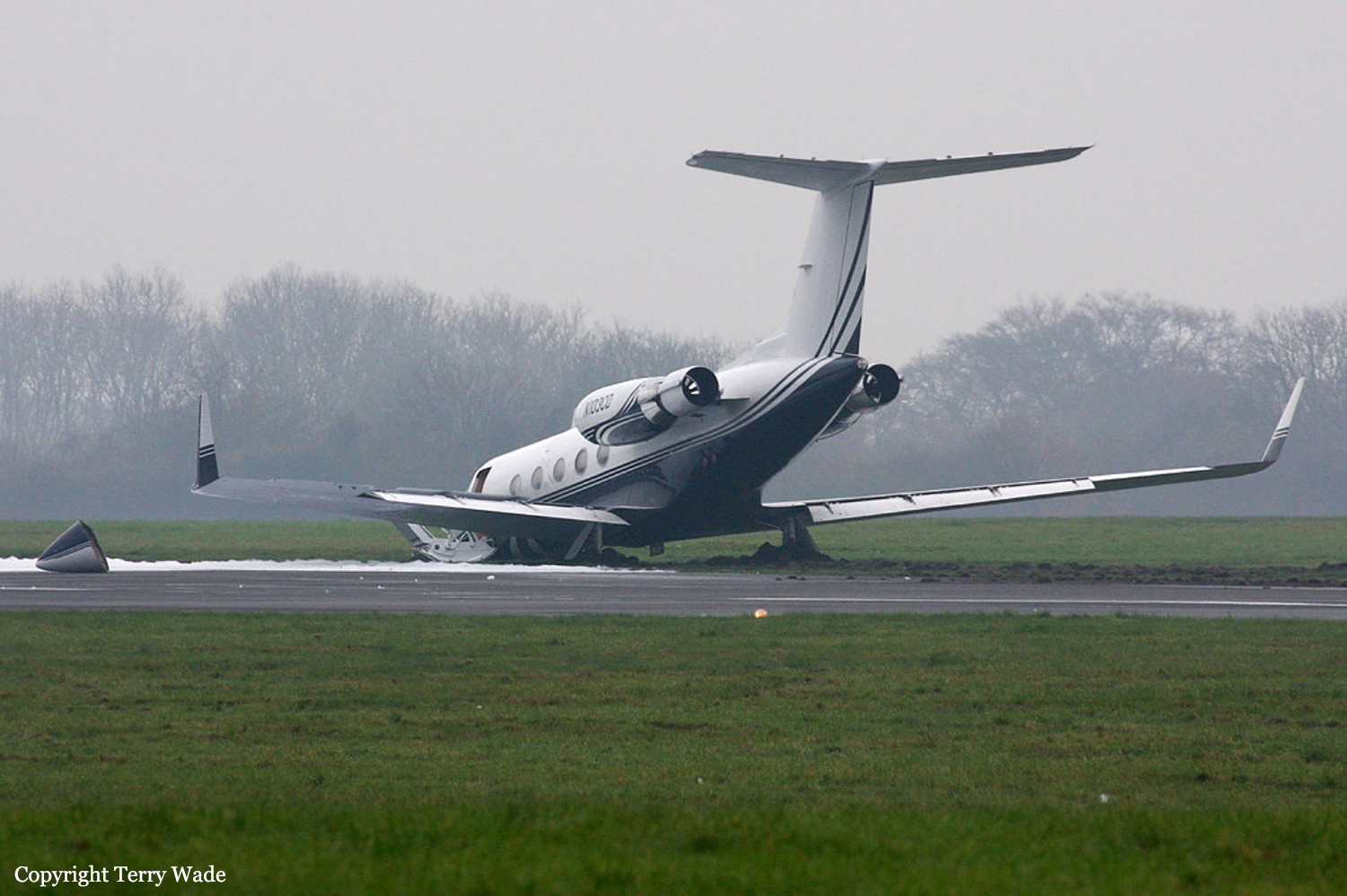
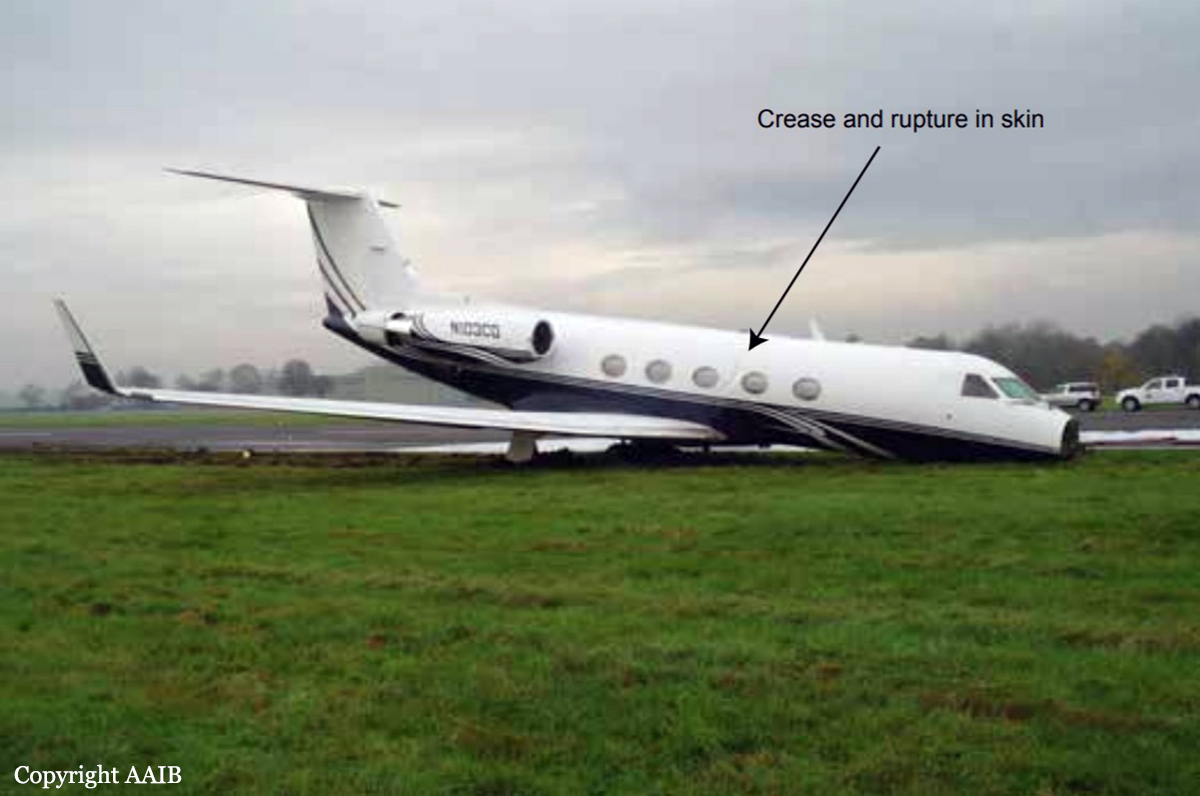
On 24 November 2014 the crew of Gulfstream III N103CD planned for a private flight from Biggin Hill Airport to Gander International Airport in Canada. The weather reported at the airport at 2020 hrs was wind ‘calm’, greater than 10 km visibility with fog patches, no significant cloud, temperature 5°C, dew point 4°C and QNH 1027 hPa. At 2024 hrs, the crew was cleared to taxi to Holding Point J1 for a departure from Runway 03. After the crew read back the taxi clearance, the controller transmitted: “we are giving low level fog patches on the airfield, general visibility in excess of 10 km but visibility not measured in the fog patches. it seems to be very low, very thin fog from the zero three threshold to approximately half way down the runway then it looks completely clear”. The crew acknowledged the information. At 2028 hrs, the aircraft was at the holding point and was cleared for takeoff by the controller. The aircraft taxied towards the runway from J1 but lined up with the runway edge lights, which were positioned 3 m to the right of the edge of the runway. The aircraft began its takeoff run at 2030 hrs, passing over paved surface for approximately 248 m before running onto grass which lay beyond. The commander, who was the handling pilot, closed the thrust levers to reject the takeoff when he realized what had happened and the aircraft came to a halt on the grass having suffered major structural damage. The crew shut down the engines but were unable to contact ATC on the radio to tell the controller what had happened. The co-pilot moved from the flight deck into the passenger cabin and saw that no one had been injured. He vacated the aircraft through the rear baggage compartment and then helped the commander, who was still inside, to open the main exit door. The commander and the five passengers used the main exit to vacate the aircraft. The controller saw that the aircraft had stopped but did not realize that it was not on the runway. He attempted to contact the crew on the radio but, when he saw the lights of the aircraft switch off, he activated the crash alarm, at 2032 hrs, declaring an aircraft ground incident. At 2034 hrs the airport fire service reached the aircraft and declared an aircraft accident, after which the airport emergency plan was activated.
Probable cause:
This was a private flight which could not depart in conditions of less than 400 m RVR. RVR cannot be measured at the threshold end of Runway 03 but the prevailing visibility was reported as being more than 10 km. The crew reported that there was moisture on the windscreen from the mist and they could see a “glow” around lights which were visible to them. They were also aware while taxiing that there was some patchy ground fog on the airfield. The ATC controller transmitted that visibility had not been measured in the fog patches but there seemed to be ‘very low, very thin fog from the zero three threshold to approximately half way down the runway’. With hindsight, this piece of information is significant but, at the time, the crew did not consider the fog to be widespread or thick; operating under FAR Part 91 in the United States, they were used to making their own judgments as to whether the visibility was suitable for a takeoff. However, after the aircraft came to a halt following its abortive takeoff attempt, the controller could only see the top of the fuselage and tail above the layer of fog. It is likely, therefore, that the visibility was worse than the crew appreciated at the time N103CD taxied from Holding Point J1. The route from J1 to the runway The information on the aerodrome chart used by the crew, and the source of information in the UK AIP, suggested that the aircraft would be required to taxi in a straight line from J1 to the runway and then make a right turn onto the runway heading. In fact, in order to taxi from J1 onto the runway, an aircraft must: taxi in a straight line; follow a curve to the right onto runway heading but still displaced to the right of the runway itself; turn left towards the runway; and then turn right again onto runway heading. The UK AIP states that there is no centreline lighting on Runway 03, and that the pavement width at the beginning of the runway is twice the normal runway width. It recognizes the potential for confusion and urges crews to ensure that they have lined up correctly. This information was not available to the crew on their aerodrome charts and both crew members believed that the runway had centreline lighting. Further, the light from those left-side runway edge lights covered in fog would have been scattered, making it harder for the crew to perceive them as a distinct line of lights. The situation is likely to have been made worse by the bright lights reflecting off the top of the fog layer, making the underlying runway lights even harder to see, or swamping them completely as shown in Figure 5. The CCTV images in Figure 5 show that peripheral lighting can interact with low fog layers to reduce the visibility of underlying aerodrome lighting. Current standards associated with apron lighting only address the minimum light levels required to make the areas safe and there are no standards relating to light spilling into other areas.
Human and environmental factors Five of the factors identified by the ATSB as being present in misaligned takeoffs were present in this accident:
1. It was dark.
2. It was potentially a confusing taxiway environment given that the aerodrome chart did not reflect the actual layout of the taxiways. Pilots had previously reported having difficulty when vacating the runway near the Runway 03 threshold because of a lack of taxiway lighting.
3. There was an additional paved area (the ORP) near the runway.
4. There was no runway centreline lighting and the runway edge lights before the displaced threshold were recessed.
5. There was reduced visibility.
It appeared that the information available to the crew caused them to develop an incorrect expectation of their route to the runway. Both crew members believed that the runway had centreline lighting and, when the first right turn almost lined the aircraft up with some lights, their incorrect expectation was reinforced and they believed that the aircraft was lined up correctly. Cues to the contrary, such as runway edge lights on the other side of the runway, or the fact that the first three lights ahead of the aircraft were red (indicating that they were edge lights before the displaced threshold), did not appear to have been strong enough to make the crew realize that they had lost situational awareness. Figure 8 indicates that the apparent intensity of the white left-side runway edge lights was significantly less than that of the right-side lights, when viewed from the position where the aircraft lined up. This, along with other visual issues relating to contrast and the fog, is a plausible explanation as to why they were not noticed by the crew. The aircraft began its takeoff roll from a location beyond the first red runway edge light and approximately 46 m short of the next light, as shown in Figure 1. Aircraft structure only obscures approximately the first 13 m of pavement ahead of pilots within a Gulfstream III aircraft and therefore these lights would not have been obscured by the aircraft. However, it is likely that the recessed nature of the red edge lights before the displaced threshold made them less compelling than the elevated white edge lights beyond, which would explain why their significance – that they could only have been runway edge lights – was not appreciated by the flight crew.
Final Report:

Crash of a BAe 3102 Jetstream 31 in Doncaster

Date & Time: Aug 15, 2014 at 1936 LT
Type of aircraft:
Operator:
Registration:
G-GAVA
Survivors:
Yes
Schedule:
Belfast – Doncaster
MSN:
785
YOM:
1987
Flight number:
LNQ207
Region:
Crew on board:
2
Crew fatalities:
Pax on board:
1
Pax fatalities:
Other fatalities:
Total fatalities:
0
Captain / Total flying hours:
8740
Captain / Total hours on type:
3263.00
Circumstances:
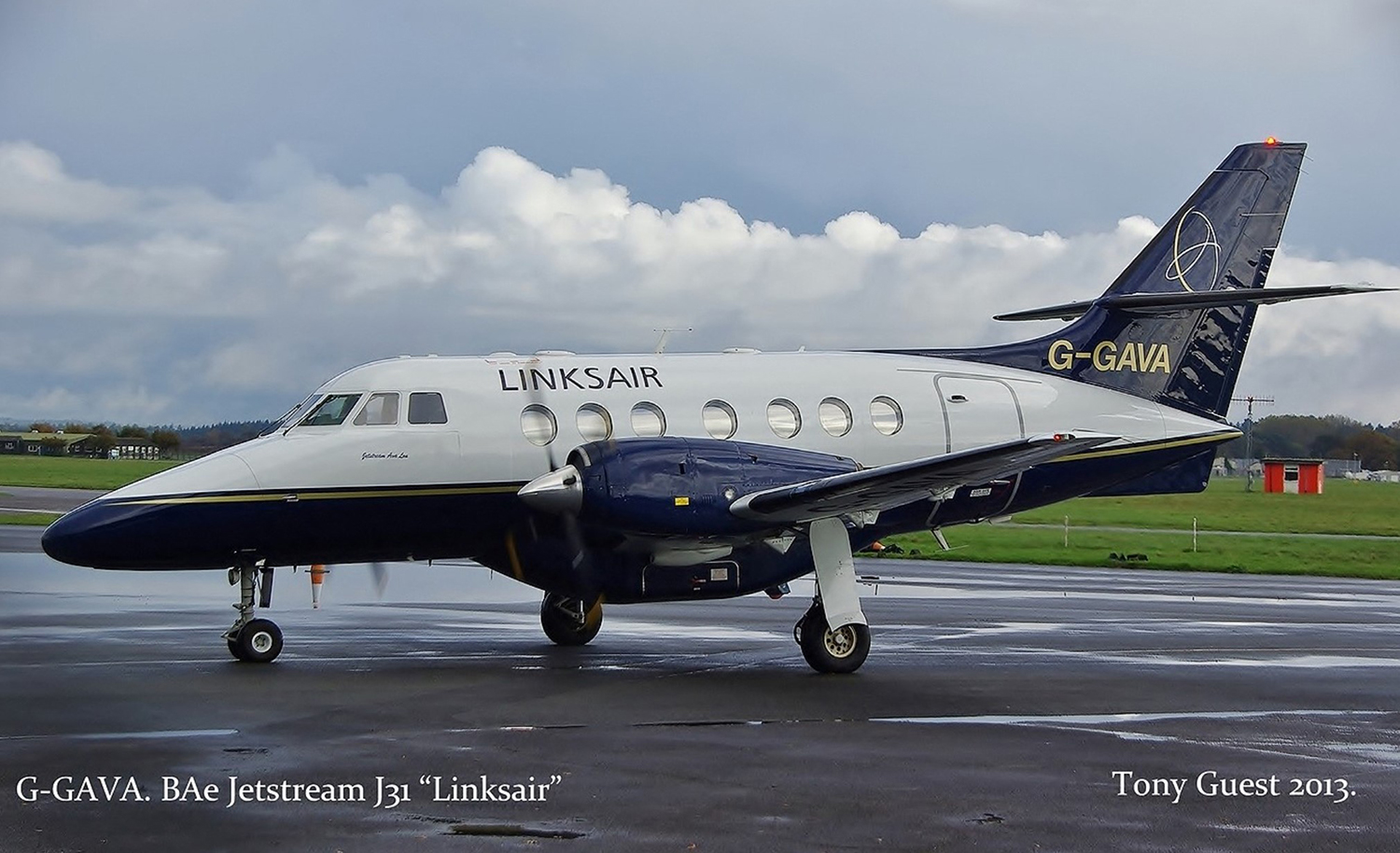
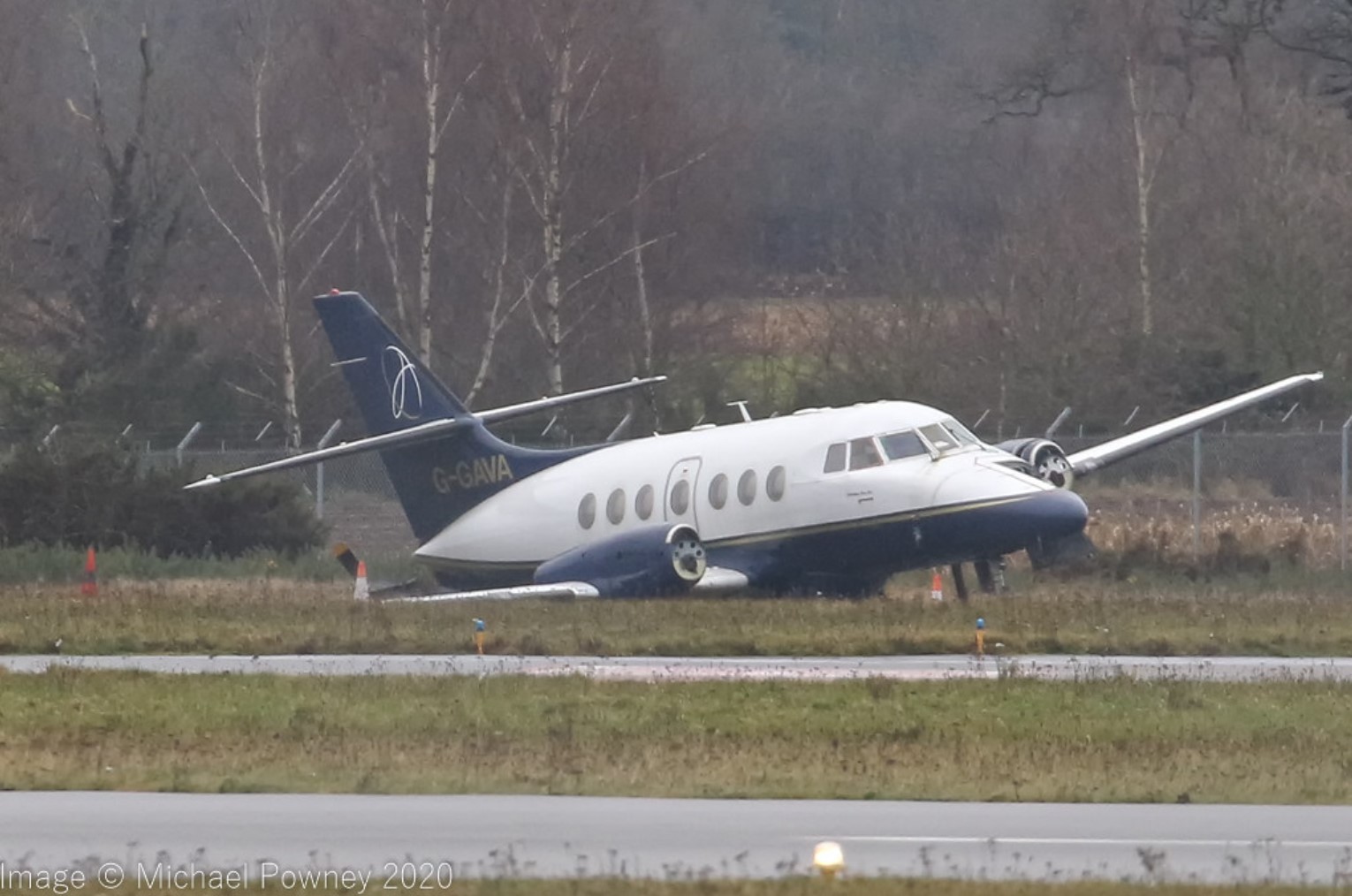
G-GAVA took off from Belfast City Airport at 1745 hrs operating a scheduled air service to Doncaster Sheffield Airport with one passenger and a crew of two pilots on board. The commander was the Pilot Flying (PF) and the co-pilot was the Pilot Monitoring (PM). The departure, cruise and approach to Doncaster Sheffield were uneventful. The 1820 hrs ATIS for the airport stated that the wind was from 260° at 5 kt, varying between 220° and 280°. Visibility was greater than 10 km, there were few clouds at 3,000 ft aal, the temperature was 17°C and the QNH was 1,019 hPa. Although Runway 02 was the active runway, the crew requested radar vectors for a visual final approach to Runway 20, a request which was approved by ATC. The load sheet recorded that the aircraft’s mass at landing was expected to be 5,059 kg which required a target threshold indicated airspeed (IAS) of 101 kt. The aircraft touched down at 1836 hrs with an IAS of 102 kt and a peak normal acceleration of 1.3 g, and the commander moved the power levers aft to ground idle and then to reverse. As the aircraft decelerated, the commander moved the power levers forward to ground idle and asked the co-pilot to move the RPM levers to taxi. At an IAS of 65 kt, eight seconds after touchdown, the left wing dropped suddenly, the aircraft began to yaw to the left and the commander was unable to maintain directional control with either the rudder or the nosewheel steering tiller. The aircraft ran off the left side of the runway and stopped on the grass having turned through approximately 90°. The left landing gear had collapsed and the aircraft had come to a halt resting on its baggage pannier, right landing gear and left wing. The commander pulled both feather levers, to ensure that both engines were shut down, and switched the Electrics Master switch to emergency off. The co-pilot transmitted “tower……[callsign]” and the controller replied “[callsign] copied, emergency services on their way”. The commander instructed the co-pilot to evacuate the aircraft. The co-pilot moved into the main cabin where he found that the passenger appeared to be uninjured. He considered evacuating the aircraft through the emergency exit on the right side but judged that the main exit on the left side at the rear of the cabin would be the best option. The left side cabin door released normally but would not open completely because the sill of the doorway was at ground level (Figure 1) but, all occupants were able to evacuate the aircraft. The Aerodrome Controller in the ATC tower activated the Crash Alarm at 1836 hrs while the aircraft was still on the paved surface of the runway. Two Rescue and Fire Fighting Service vehicles arrived on scene at 1838 hrs by which time the occupants were clear of the aircraft.
Probable cause:
The aircraft’s left main landing gear failed as a result of stress corrosion cracking in the forward pintle housing, at the top of the left landing gear cylinder. The landing gear material is known to be susceptible to stress corrosion cracking. The investigation determined that a design solution implemented by the aircraft manufacturer following the 2012 accident, which was intended to prevent stress corrosion cracking, had not met its original design intent.
Final Report: