Region
code
UK
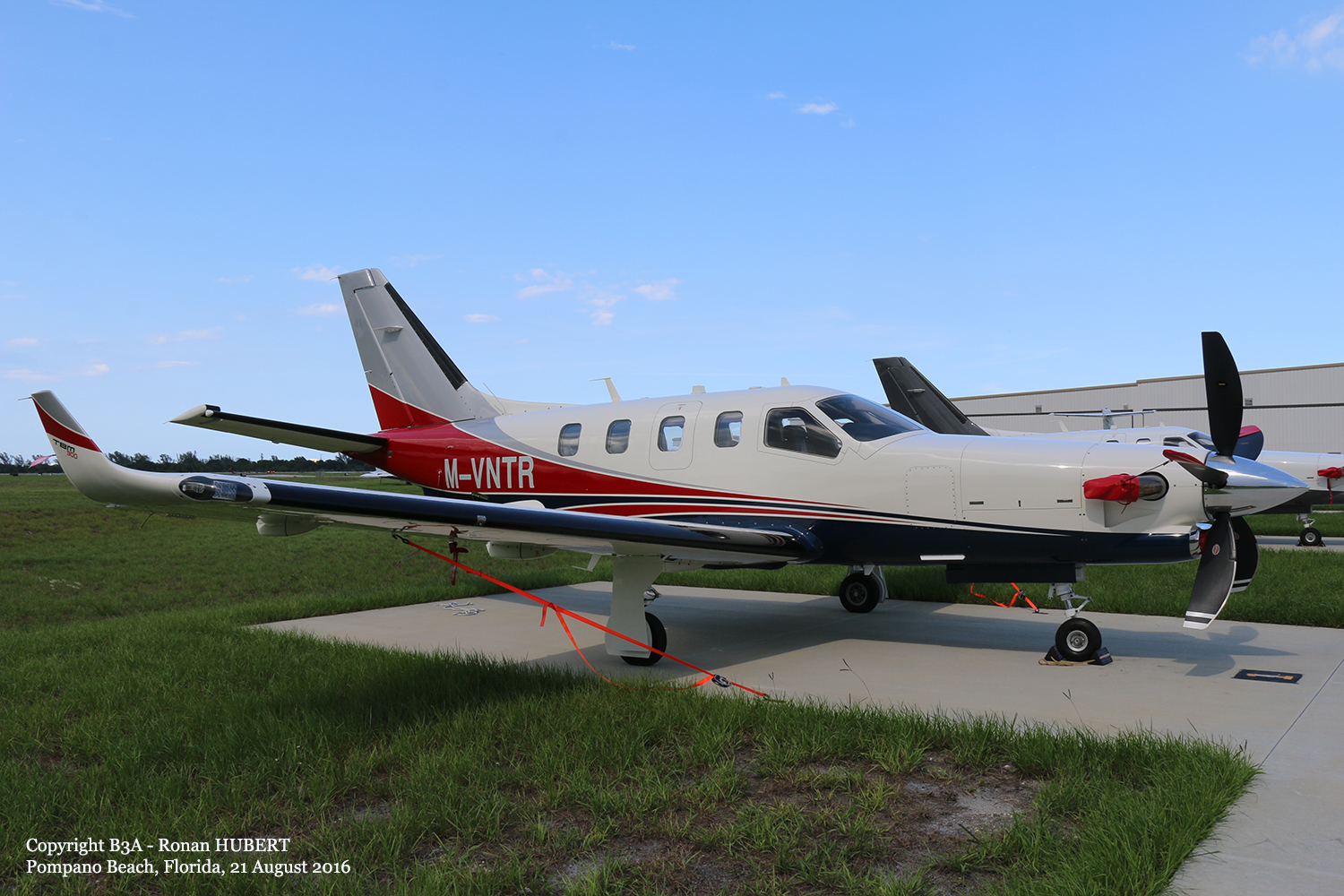
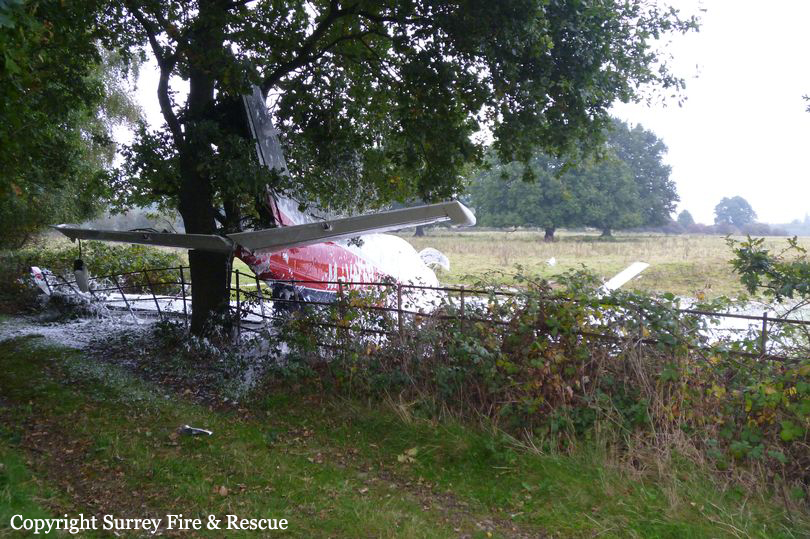
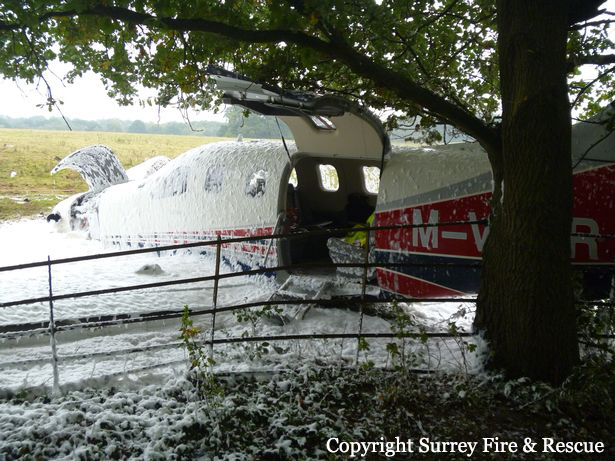
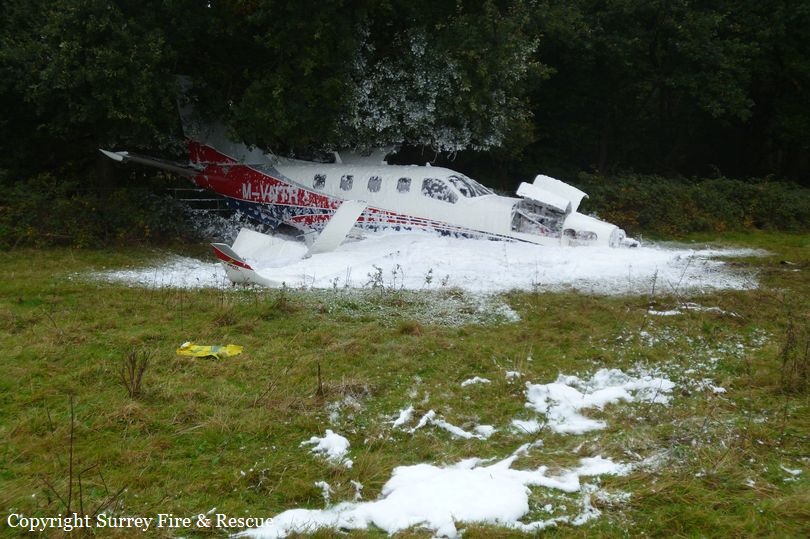
Crash of a Socata TBM-900 in Fairoaks
Date & Time:
Oct 15, 2016 at 0732 LT
Registration:
M-VNTR
Survivors:
Yes
Schedule:
Douglas - Fairoaks
MSN:
1097
YOM:
2016
Crew on board:
1
Crew fatalities:
Pax on board:
1
Pax fatalities:
Other fatalities:
Total fatalities:
0
Captain / Total hours on type:
1585.00
Circumstances:
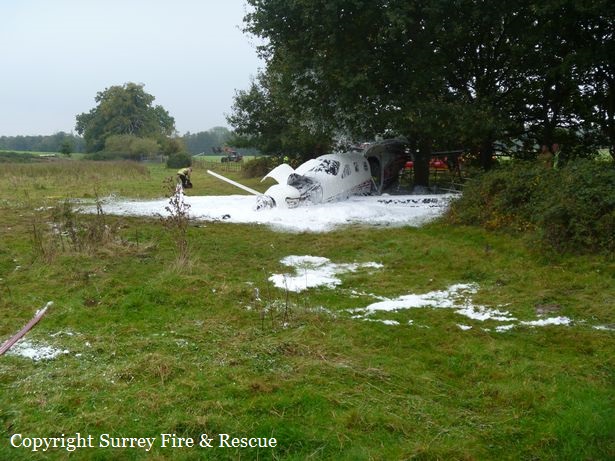
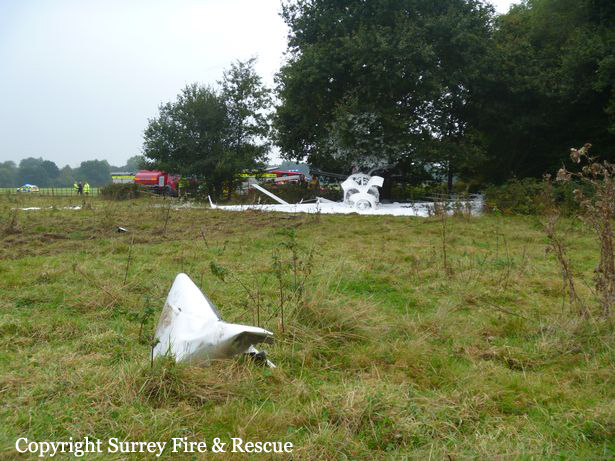
The accident occurred as the aircraft was preparing to land at Fairoaks Airport at the end of a private flight from Ronaldsway Airport on the Isle of Man. On board were the aircraft commander and a passenger who occupied the front right seat. As the aircraft neared Fairoaks, the pilot listened to the Farnborough ATIS broadcast, which reported a visibility of 4,000 m in mist. He and the passenger discussed the visibility, and agreed that they would proceed to Fairoaks while retaining the option to divert to Farnborough Airport (9 nm to the south-west) if a landing was not possible. The visibility at Fairoaks was recorded as 4,500 m, with ‘few’ clouds at 4,000 ft and a surface wind of 3 kt from 240°. Runway 24 was in use with a left-hand circuit. The circuit height, based on the Fairoaks QNH was 1,100 ft (the elevation of Fairoaks Airport is 80 ft amsl). Runway 24 is a hard runway, 813 m long and 27 m wide. The pilot identified the airfield visually, although there was low lying mist in the area. In order to maintain visual contact with the landing area he joined the circuit and flew a downwind leg that was closer to the runway than usual. He recalled carrying out the pre-landing checks while downwind, including lowering the landing gear and extending the flaps to the takeoff position2 . Based on a final approach with flaps at the landing setting, the pilot planned for an initial approach speed of 90 kt, reducing to a final approach speed of 80 kt. The pilot recalled the aircraft being slightly low as it turned from the downwind leg onto its final approach track. He believed he had selected flaps to the landing position, and recalled seeing the airspeed just below 90 kt, which prompted him to increase power slightly. The aircraft flew through the extended runway centreline and the pilot increased the bank angle to regain it. The pilot’s next recollection was of being in a right bank and seeing only sky ahead. He pushed forward on the control column and attempted to correct the bank with aileron. The aircraft then rolled quickly in the opposite direction and he again applied a correction. He became aware of being in an approximately wings-level attitude and seeing the ground approaching rapidly. He responded by pulling back hard on the control column, but was unable to prevent the aircraft striking the ground. He did not recall hearing a stall warning, or any other audio warning, before the loss of control occurred. The aircraft struck flat ground and slid for about 85 m before coming to rest against a treeline, about 500 m from Runway 24 and approximately on the extended centreline. The propeller was destroyed in the accident sequence and the landing gear legs detached, causing damage to the wings which included a ruptured fuel tank. In the latter stages of the slide the aircraft yawed right, coming to rest heading approximately in the direction from which it had come. The pilot and passenger remained conscious but had both suffered injury. The passenger saw flames from the region of the engine and warned the pilot that they needed to evacuate. He went to the rear of the cabin, opened the main door and left the aircraft. The pilot initially attempted to open his side door, but his right arm was injured and he was unable to open the door with only his left. He therefore followed the passenger out of the rear door.
Probable cause:
There were no indications that the aircraft had been subject to any defects or malfunctions that may have contributed to the accident. Reports from the two occupants, eye witness accounts and radar data all confirm that the aircraft commenced its final turn from a position closer to the runway than usual. This would have required a sustained moderate angle of bank through about 180° of turn. The radar data indicates that the turn onto the final approach was initially flown with less angle of bank than required. The pilot therefore either lost visual contact with the runway or did not fully appreciate the turn requirements. An explanation for the latter might be that the low height on the downwind leg combined with the relatively poor visibility to produce a runway visual aspect that gave a false impression that the aircraft spacing was not abnormal. As the finals turn progressed, there was a need to increase the angle of bank to a relatively high value. With the flaps remaining at the takeoff setting, and maintaining level flight, this placed the aircraft close to its stalling speed. Any increase in angle of bank or ‘g’ loading (as may have occurred when it became evident that the aircraft would fly through the extended centreline) risked a stall. The available evidence indicates that the aircraft stalled during the turn onto the final approach. Recovery actions taken by the occupants appear to have been partially successful, but there was evidently insufficient height in which to effect a full recovery.
Final Report:
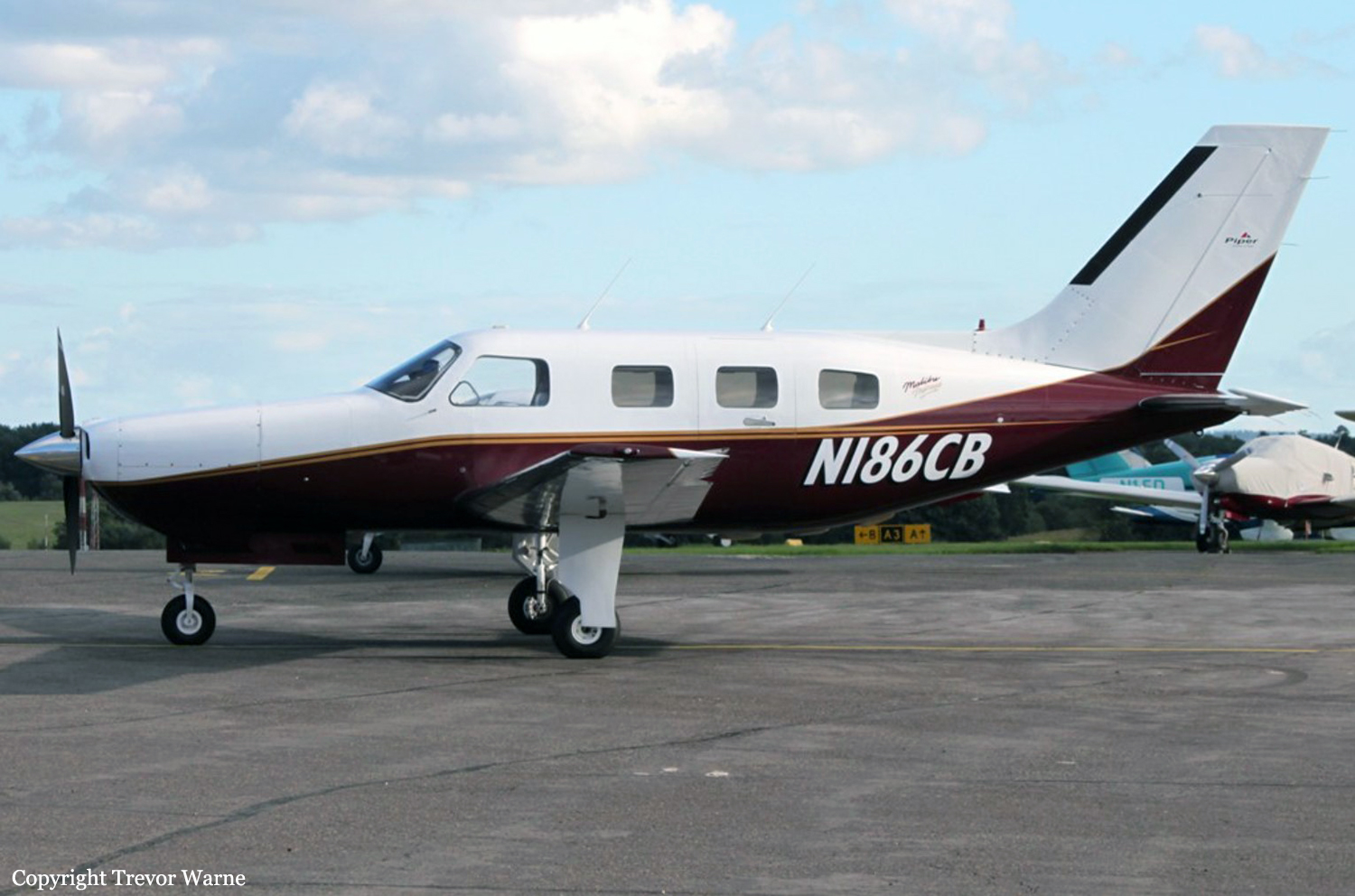
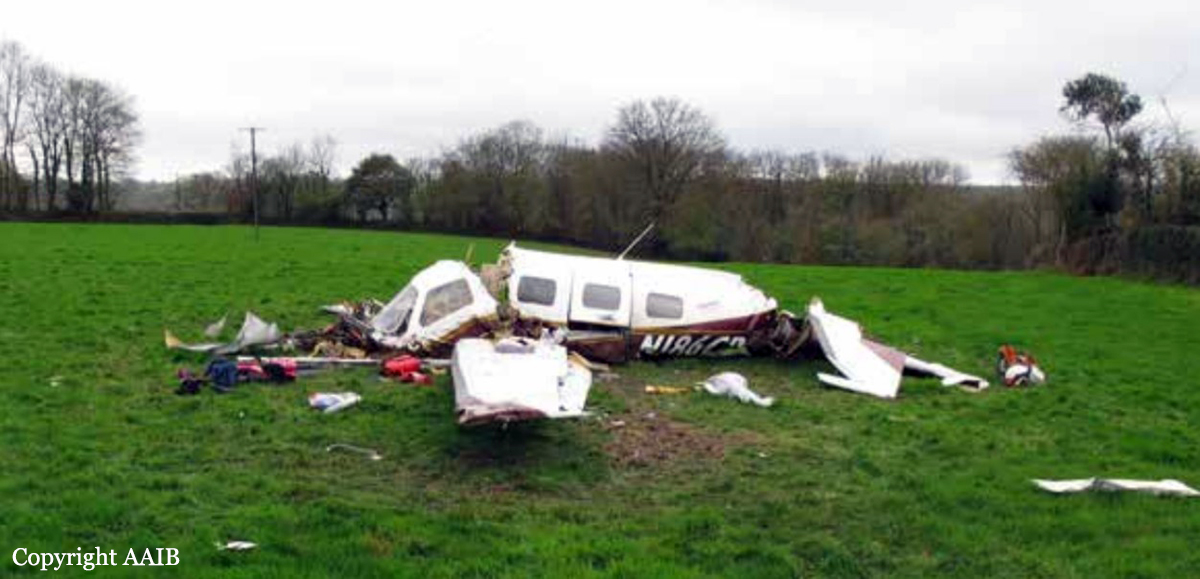
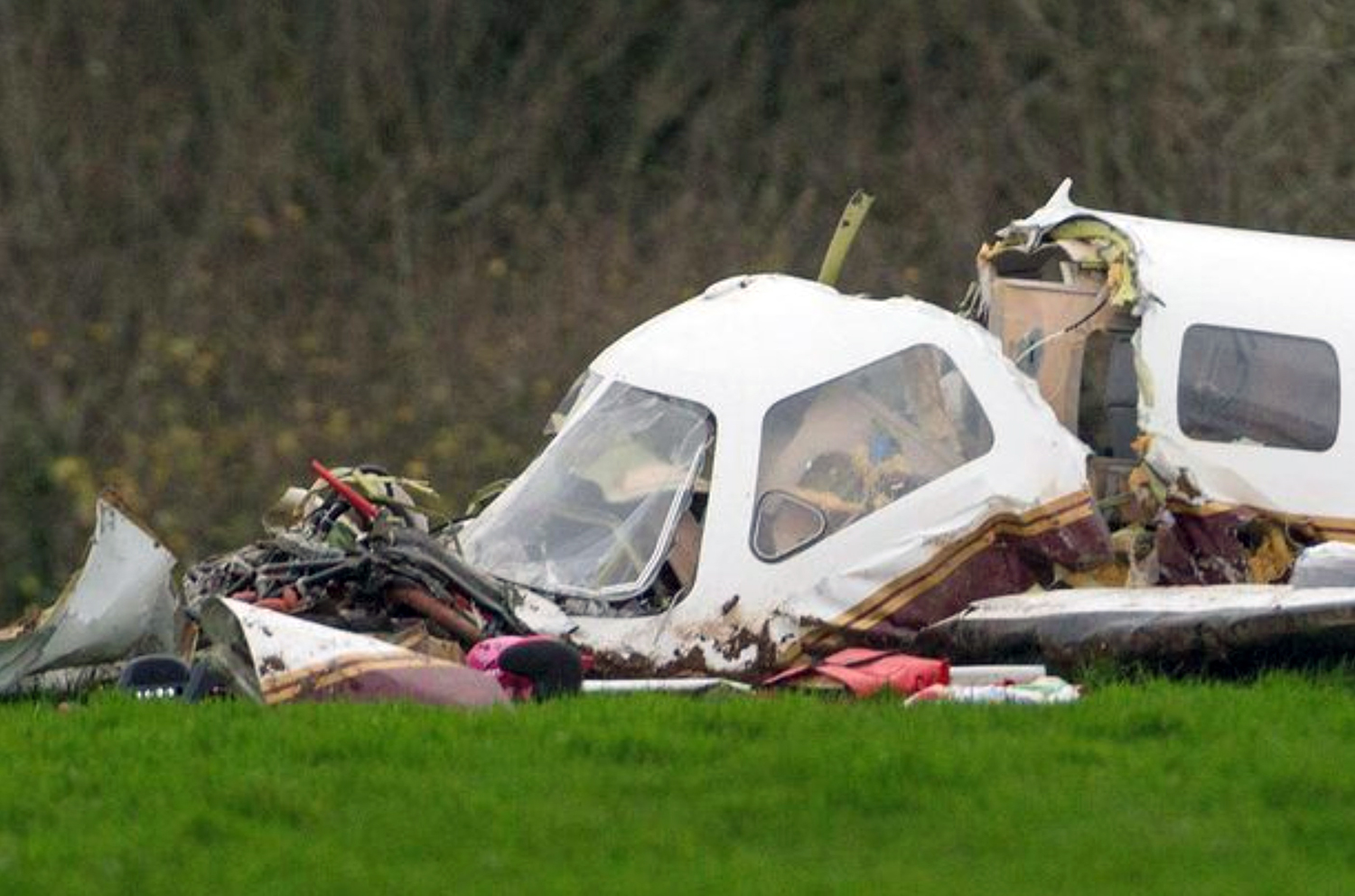
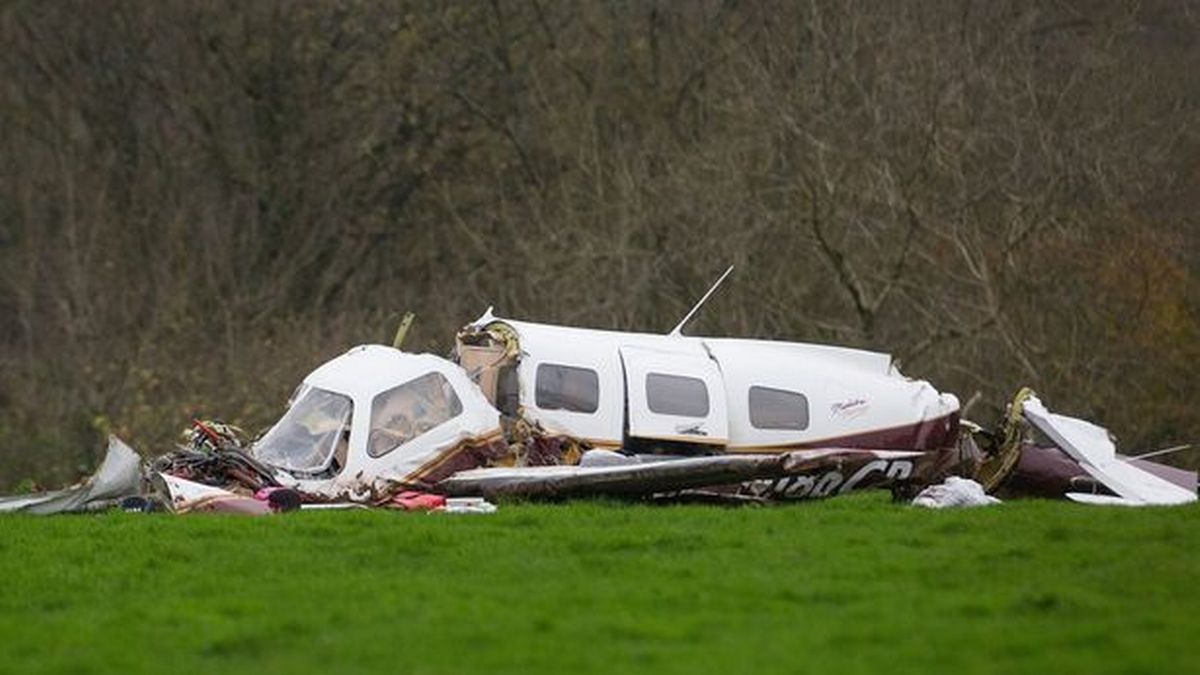
Crash of a Piper PA-46-350P Malibu Mirage in Buttles Farm: 4 killed
Date & Time:
Nov 14, 2015 at 1134 LT
Registration:
N186CB
Survivors:
No
Schedule:
Fairoaks – Dunkeswell
MSN:
46-22085
YOM:
1989
Crew on board:
1
Crew fatalities:
Pax on board:
3
Pax fatalities:
Other fatalities:
Total fatalities:
4
Captain / Total hours on type:
260.00
Circumstances:
The aircraft was approaching Dunkeswell Airfield, Devon after an uneventful flight from Fairoaks, Surrey. The weather at Dunkeswell was overcast, with rain. The pilot held an IMC rating but there is no published instrument approach procedure at Dunkeswell. As the aircraft turned onto the final approach, it commenced a descent on what appeared to be a normal approach path but then climbed rapidly, probably entering cloud. The aircraft then seems to have stalled, turned left and descended to “just below the clouds”, before it climbed steeply again and “disappeared into cloud”. Shortly after, the aircraft was observed descending out of the cloud in a steep nose-down attitude, in what appears to have been a spin, before striking the ground. All four occupants were fatally injured.
Probable cause:
Whilst positioning for an approach to Dunkeswell Airfield, the aircraft suddenly pitched nose-up and entered cloud. This rapid change in attitude would have been disorientating for the pilot, especially in IMC, and, whilst the aircraft was probably still controllable, recovery from this unusual attitude may have been beyond his capabilities. The aircraft appears to have stalled, turned left and descended steeply out of cloud, before climbing rapidly back into cloud. It probably then stalled again and entered a spin from which it did not recover. All four occupants were fatally injured when the aircraft struck the ground. The investigation was unable to determine with certainty the reason for the initial rapid climb. However, it was considered possible that the pilot had initiated the preceding descent by overriding the autopilot. This would have caused the autopilot to trim nose-up, increasing the force against the pilot’s manual input. Such an out-of-trim condition combined with entry into cloud could have contributed to an unintentional and disorientating pitch-up manoeuvre.
Final Report: