Crash of a Piper PA-31-310 Navajo in Charlotte: 1 killed

Date & Time: Nov 15, 1983 at 0236 LT
Type of aircraft:
Operator:
Registration:
N6459L
Flight Type:
Survivors:
No
Schedule:
Winston-Salem - Charlotte
MSN:
31-415
YOM:
1968
Crew on board:
1
Crew fatalities:
Pax on board:
0
Pax fatalities:
Other fatalities:
Total fatalities:
1
Captain / Total flying hours:
13950
Captain / Total hours on type:
1870.00
Aircraft flight hours:
7267
Circumstances:
The aircraft was first radar identified about 18 miles north of the airport and was given radar vectors for a right downwind and base to runway 36R. While on a downwind heading 150°, the pilot was assigned a heading of 270° and was queried if the airport was in sight. The pilot responded '...we got it.' However, radar data shows the aircraft continuing the turn through 270° to about 350°. After about 1/2 mile, the aircraft turned left to 250° descending. The turn continued to a southwest heading approximately aligned with a city street that passes south of the airport on a course of 250°. The altitude decreased with a consistent rate to 900 feet when radar contact was lost. Elevation at the approach end of runway 36R is 724 feet. Wreckage distribution was along a 245° heading. A flight inspection of the runway 36R edge lights at night during VFR conditions indicated the lights were not visible beyond 30° of the runway centerline. The pilot got up at 0730 on 11/14.
Probable cause:
Occurrence #1: in flight collision with terrain/water
Phase of operation: approach
Findings
1. (c) reason for occurrence undetermined
Final Report:

Crash of a Cessna 402B in Greensboro: 1 killed

Date & Time: Feb 6, 1978 at 1520 LT
Type of aircraft:
Operator:
Registration:
N69284
Flight Type:
Survivors:
No
Schedule:
Gulfport – Winston-Salem – Raleigh
MSN:
402B-0407
YOM:
1973
Crew on board:
1
Crew fatalities:
Pax on board:
0
Pax fatalities:
Other fatalities:
Total fatalities:
1
Captain / Total flying hours:
7408
Captain / Total hours on type:
540.00
Circumstances:
While approaching Winston-Salem Airport, the pilot informed ATC about engine problems. Shortly later, the twin engine airplane went out of control, entered a dive and crashed in flames in a field located in Greensboro. The aircraft was destroyed and the pilot, sole on board, was killed.
Probable cause:
Stalled and spiraled while descending to Winston-Salem Airport due to foreign material affecting normal operations. The following contributing factors were reported:
- Ice in fuel,
- Fuel starvation,
- Failed to maintain flying speed,
- Failure of both engines.
Final Report:

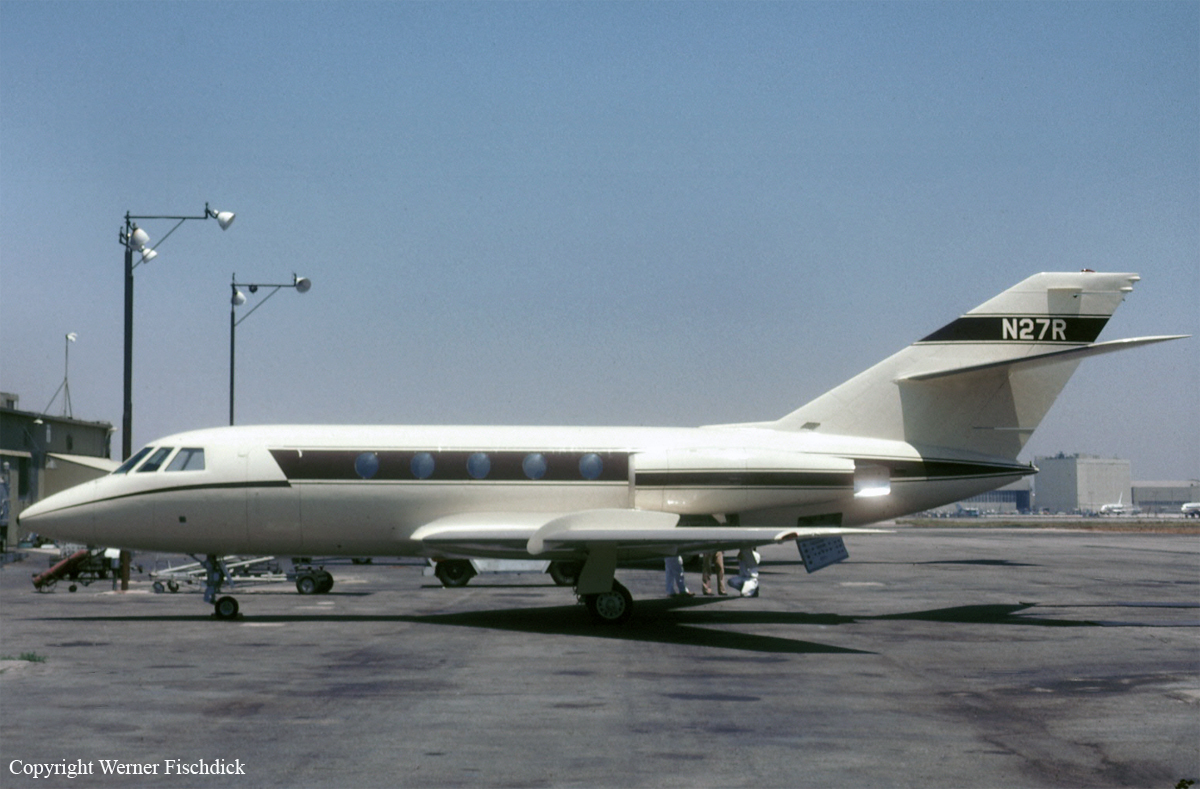
Crash of a Dassault Falcon 20C in Naples

Date & Time: Nov 12, 1976 at 0857 LT
Type of aircraft:
Operator:
Registration:
N27R
Flight Phase:
Survivors:
Yes
Schedule:
Naples - Winston Salem
MSN:
303
YOM:
1974
Location:
Crew on board:
2
Crew fatalities:
Pax on board:
9
Pax fatalities:
Other fatalities:
Total fatalities:
0
Captain / Total flying hours:
3826
Captain / Total hours on type:
768.00
Circumstances:
Shortly after takeoff from Naples Airport, while initial climb, the airplane collided with a flock of seagulls that entered the engines. Both engines' compressors stalled, the airplane lost speed then stalled and crashed in an open field located past the runway end. The aircraft was damaged beyond repair and all 11 occupants were seriously injured.
Probable cause:
Bird strike during initial climb. The following contributing factors were reported:
- Inadequate preflight preparation,
- Failed to follow approved procedures,
- Failure to provide adequate directives, manual, equipment,
- Failure to notify of unsafe conditions / and or failure to mark obstruction,
- Bird ingestion,
- Forced landing off airport on land,
- Passengers not briefed,
- Emergency card instructions not correct for exits.
Final Report:

Crash of a Beechcraft 65 Queen Air in Dublin

Date & Time: Jun 30, 1970 at 1215 LT
Type of aircraft:
Operator:
Registration:
N447S
Flight Phase:
Survivors:
Yes
Schedule:
Dublin – Winston-Salem
MSN:
LC-8
YOM:
1960
Crew on board:
1
Crew fatalities:
Pax on board:
0
Pax fatalities:
Other fatalities:
Total fatalities:
0
Captain / Total flying hours:
10598
Captain / Total hours on type:
130.00
Circumstances:
When the pilot proceeded to the engine start-up at Dublin-New River Valley Airport, the left engine could not start for unknown reason. The pilot decided to takeoff with the right engine only. After liftoff, the airplane encountered difficulties to gain height, struck power cables and crashed in flames. The aircraft was destroyed and the pilot was seriously injured.
Probable cause:
The accident was the consequence of the combination of the following factors:
- The pilot exercised poor judgement,
- The pilot attempted operation with known deficiencies in equipment,
- The pilot failed to obtain flying speed,
- The pilot failed to maintain directional control,
- Un start left engine on ground,
- Takeoff with right engine only.
Final Report:

Crash of a Douglas DC-3-201F in Oxon Hill: 5 killed

Date & Time: Jan 13, 1948 at 0436 LT
Type of aircraft:
Operator:
Registration:
NC28384
Survivors:
Yes
Schedule:
Houston – Atlanta – Greenville – Winston – Washington DC
MSN:
4092
YOM:
1941
Flight number:
EA572
Crew on board:
3
Crew fatalities:
Pax on board:
6
Pax fatalities:
Other fatalities:
Total fatalities:
5
Captain / Total flying hours:
7271
Captain / Total hours on type:
5111.00
Copilot / Total flying hours:
4593
Copilot / Total hours on type:
1002
Aircraft flight hours:
29974
Circumstances:
Flight 572 arrived in Atlanta, Georgia, from its point of origin, Houston, Texas, at 2330, January 12, 1948. With a new crew, consisting of Captain Paul J. Saltanis, First Officer Ralph B. Sanborn, Jr., and Flight Attendant Peter L. Philiois, the flight departed from Atlanta at 2355 for Greenville and Winston-Salem, North Carolina, and Washington, D. C. The flight as far as Winston-Salem was routine. At 0306, January 13, 1948, the flight took off from Winston-Salem carrying six passengers, a crew of three, and 600 gallons of fuel. It proceeded at the altitude of 9,000 feet specified in the flight plan, to Washington, via Blackstone and Richmond, Virginia. Shortly after reporting over Blackstone, at 0405, 146 miles southwest of Washington, an airway traffic control clearance was transmitted by company radio to the flight authorizing it to cross the Doncaster fan marker, 27 miles southwest of Washington, at 5,000 feet. Captain Saltanis requested a lower altitude and ten minutes later received another ATC clearance approving 3,000 feet over Doncaster, and permission to descend to 2,500 feet immediately after crossing Doncaster. At 0427, the flight reported its position to the Washington control tower, stating that it was over Doncaster at 3,000 feet. It was instructed by the tower to maintain 2,500 feet, and to report again when it was over Mt. Vernon. 9 miles south of the Washington National Airport. At about this same time another Eastern Air Lines’ flight, No, 454, reported that it was at 4,500 feet over the Arcola range station, which is located 23 miles west-northwest of Washington, D. C. Since the two Eastern Air Lines' flights were converging toward Mt. Vernon, the airport traffic controller thought that flight 454 might fly over Mt. Vernon before it had descended to a safe altitude below Flight 572. To assure that both airplanes would not be over Mt. Vernon at the seine time and altitude, the controller instructed Flight 572 to climb to 3,500 feet Flight 572 acknowledged, advised that it was contact, and asked why it was necessary to climb. Less than a minute later, at approximately 0430, the east bound flight, No. 454, reported that it was “contact” at 2,000 feet and approaching Mt. Vernon. The controller then knowing that a safe altitude separation existed between the two aircraft, cleared night 572 back to its previous approach altitude of 2,500 feet. At 0433, flight 572 was again cleared to the airport by the Washington Tower, and advised to report when leaving 2,500 feet, when leaving Mt. Vernon, and when "VFR." 2 Following this transmission flight 572 was asked to give a short count, since the tower wished to adjust its receiving frequency. The flight complied. Then at 0435, the flight was requested to report the altitude of the base of the clouds. The flight responded, “standby.” According to the tower operator the pilot’s voice when giving the tuning count was normal, but his “standby,” sounded “hurried and preoccupied.” One to two minutes after the east bound flight, No. 454, reported contact approaching Mt. Vernon, an aircraft was observed in the tower’s surveillance radar scope over the vicinity of Mt. Vernon. This aircraft was then tracked continuously, first In the surveillance, and then in the precision beam radar scope until it had landed on runway 36. 3 It was then identified as Eastern's Flight 454. Flight 572, however, was not observed in either scope. From 0435 to 0445 several attempts were made to establish radio contact with flight 572. Forty-five minutes later it was learned that it had crashed in the vicinity of Oxon Hill, Maryland, approximately 5.2 miles south of the Washington National Airport. Three passengers and two crew members were killed in the accident.
Probable cause:
The Board determines that the probable cause of this accident was the failure of the flight to follow prescribed instrument procedure and to maintain a safe altitude during the course of an instrument approach to the Washington National Airport.
Final Report:

Crash of a Douglas C-49-DO near Galax: 18 killed

Date & Time: Jan 12, 1947 at 0138 LT
Type of aircraft:
Operator:
Registration:
NC88872
Flight Phase:
Survivors:
Yes
Site:
Schedule:
Detroit – Cleveland – Akron – Winston-Salem
MSN:
3274
YOM:
1941
Flight number:
EA665
Location:
Crew on board:
3
Crew fatalities:
Pax on board:
16
Pax fatalities:
Other fatalities:
Total fatalities:
18
Captain / Total flying hours:
3511
Captain / Total hours on type:
1939.00
Copilot / Total flying hours:
1560
Copilot / Total hours on type:
326
Aircraft flight hours:
7680
Circumstances:
While cruising at the altitude of 2,500 feet in bad weather conditions, the aircraft hit the slope of a mountain located near Galax. A passenger was seriously injured while 18 other occupants were killed.
Probable cause:
The probable cause of this accident was the action of the pilot in attempting a let-down without having positively determined the position of the aircraft. A contributing factor was the erroneous navigation of the pilot which on at least two occasions led him to believe that he was farther south than he actually was.
Final Report: