Crash of a Boeing 737-4L7 in Johannesburg

Date & Time: Oct 26, 2015 at 1206 LT
Type of aircraft:
Operator:
Registration:
ZS-OAA
Survivors:
Yes
Schedule:
Port Elizabeth - Johannesburg
MSN:
26960/2483
YOM:
1993
Flight number:
BA6234
Country:
Region:
Crew on board:
6
Crew fatalities:
Pax on board:
94
Pax fatalities:
Other fatalities:
Total fatalities:
0
Captain / Total flying hours:
9186
Captain / Total hours on type:
2899.00
Copilot / Total flying hours:
5817
Copilot / Total hours on type:
480
Aircraft flight hours:
57543
Circumstances:
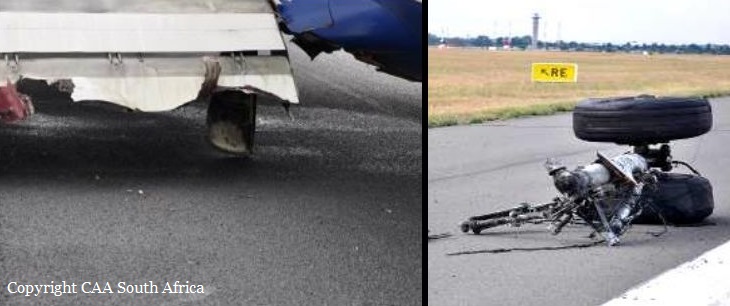
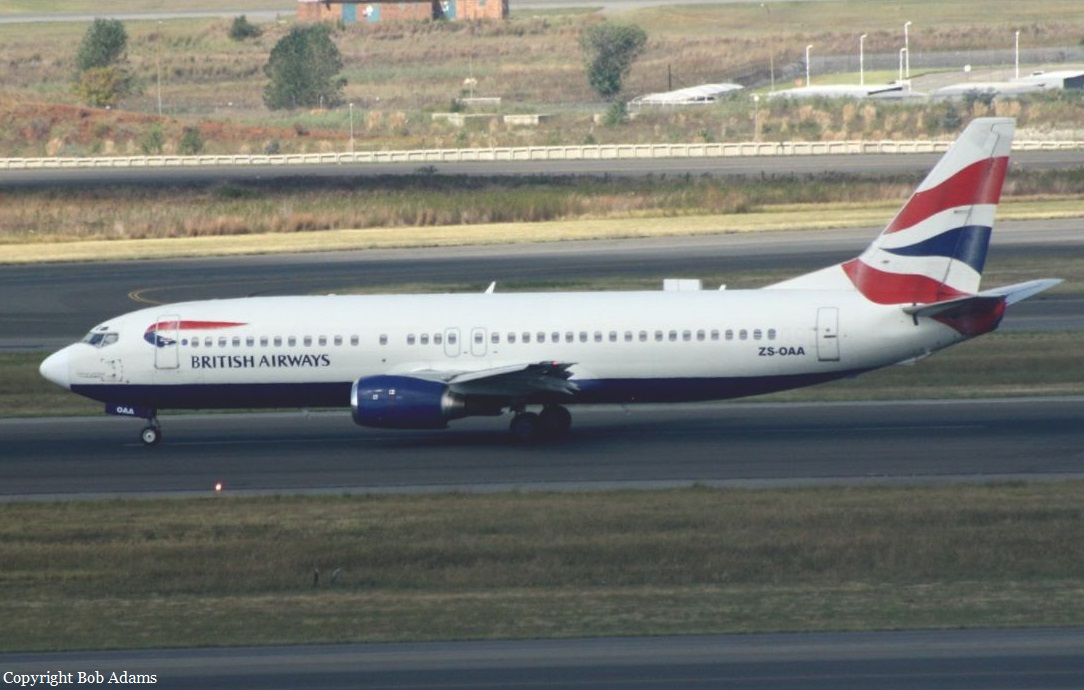
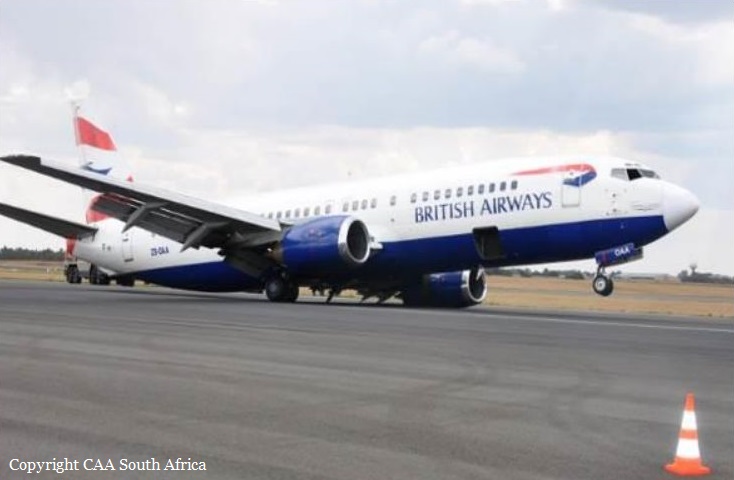
The aircraft Boeing 737-400, operated by Comair, flight number BA6234, was on a scheduled domestic flight operated under the provisions of Part 121 of the Civil Aviation Regulations (CARs). The aircraft was on the third leg for the day, after it had performed two uneventful legs. According to their recorded flight plan, the first leg departed from King Shaka International Airport (FALE) to O.R. Tambo International Airport (FAOR), the second leg was from FAOR to Port Elizabeth International Airport (FAPE) on the same day, during which the Captain was flying. During this third leg, the aircraft departed from FAPE at 0820Z on an instrument flight plan rule for FAOR. On board were six (6) crew members, ninety four (94) passengers and two (2) live animals. The departure from FAPE was uneventful, whereby the first officer (FO) was the flying pilot (FP) for this leg. During the approach to FAOR, the aircraft was cleared for landing on runway 03R. The accident occurred at approximately 1 km past the threshold. The crew stated that a few seconds after a successful touchdown, they felt the aircraft vibrating, during which they applied brakes and deployed the reverse thrust. The vibration was followed by the aircraft rolling slightly low to the left. It later came to a full stop slightly left of the runway centre line, resting on its right main landing gear and the number one engine, with the nose landing gear in the air. The crash alarm was activated by the FAOR Air Traffic Controller (ATC). The Airport Rescue and Fire Fighting (ARFF) personnel responded swiftly to the scene of the accident. The accident site was then secured with all relevant procedures put in place. The aircraft sustained substantial damage as the number one engine scraped along the runway surface when the landing gear detached from the fuselage. ARFF personnel had to prevent an engine fire in which they saw smoke as a result of runway contact. The occupants were allowed to disembark from the aircraft via the left aft door due to the attitude in which the aircraft came to rest. The accident occurred during daylight meteorological conditions on Runway 03R at O.R. Tambo International Airport (FAOR) located at GPS reading as: S 26°08’01.30” E 028°14’32.34” and the field elevation 5558 ft.
Probable cause:
Unstable approach whereby the aircraft was flared too high with high forward speed resulting with a low sink rate in which during touch down the left landing gear
experienced excessive vibration and failed due to shimmy events.
The following findings were identified:
- According to the FDR recordings, the aircraft flare was initiated earlier at 65ft than at 20ft as recommended by aircraft manufacture, which contributed to the low sink rate.
- The shimmy damper failed the post-accident lab-test and fluid was found in the thermal relief valve, which could have contributed to the shimmy damper failure.
- According to the lab results, significant wear was found on the upper torsion link bushing and flange, which could have contributed to undamped vibration
continuation.
- The aircraft had a tailwind component during landing, which could have prolonged the landing distance.
Final Report:
Crash of a Beechcraft C90 King Air in Cradock

Date & Time: Dec 23, 2001 at 1630 LT
Type of aircraft:
Operator:
Registration:
ZS-INN
Flight Type:
Survivors:
Yes
Schedule:
Port Elizabeth - Cradock
MSN:
LJ-523
YOM:
1971
Country:
Region:
Crew on board:
1
Crew fatalities:
Pax on board:
3
Pax fatalities:
Other fatalities:
Total fatalities:
0
Captain / Total flying hours:
3599
Captain / Total hours on type:
118.00
Circumstances:
The private pilot was accompanied by his wife and his two daughters on a flight from Port Elizabeth to his farm in the Cradock district. On arrival at Cradock, the pilot apparently over-flew the runway for inspection and was on the downwind leg when the aircraft started to roll and yaw to the left. All engine indications were normal and the pilot had to decrease power on the right-hand engine in order to maintain control of the aircraft. With the reduction in power of the right-hand engine, the pilot was unable to maintain height and executed a forced landing on an open field. The aircraft was extensively damaged during the forced landing but no injuries were sustained. An on-site investigation was carried out on 24 December 2000 after which the aircraft was recovered to Lanseria aerodrome for further inspection. On inspection of the Left-hand propeller it was noted that the carbon block of the low pitch proximity sensor, which normally runs inside the Low-Pitch stop collar, was bent down at an angle, which would have rendered the secondary Low-Pitch stop inoperative. Due to the fact that the aircraft sustained damage to it's electronic circuitry it was not possible to verify the proper operation of the propeller pitch control system.
Probable cause:
Due to damage sustained during the accident, the proper operation of the propeller pitch control system could not be verified. The cause of the accident therefore remains undetermined.

Crash of a Piaggio P.166S Albatross in Johannesburg

Date & Time: Mar 1, 1997
Type of aircraft:
Registration:
ZS-NJR
Flight Phase:
Flight Type:
Survivors:
Yes
Schedule:
Johannesburg - Port Elizabeth
MSN:
455
YOM:
1973
Country:
Region:
Crew on board:
1
Crew fatalities:
Pax on board:
0
Pax fatalities:
Other fatalities:
Total fatalities:
0
Circumstances:
Shortly after liftoff, while in initial climb, the twin engine aircraft stalled and crashed near the runway end. The pilot was injured and the aircraft was destroyed.
Probable cause:
Loss of control during initial following an engine failure for unknown reasons.

Crash of a Vickers 818 Viscount off East London: 25 killed

Date & Time: Mar 13, 1967 at 1910 LT
Type of aircraft:
Operator:
Registration:
ZS-CVA
Survivors:
No
Schedule:
Port Elizabeth – East London – Bloemfontein – Johannesburg
MSN:
317
YOM:
1958
Flight number:
SA406
Country:
Region:
Crew on board:
5
Crew fatalities:
Pax on board:
20
Pax fatalities:
Other fatalities:
Total fatalities:
25
Captain / Total flying hours:
12344
Captain / Total hours on type:
3231.00
Copilot / Total flying hours:
3995
Copilot / Total hours on type:
109
Circumstances:
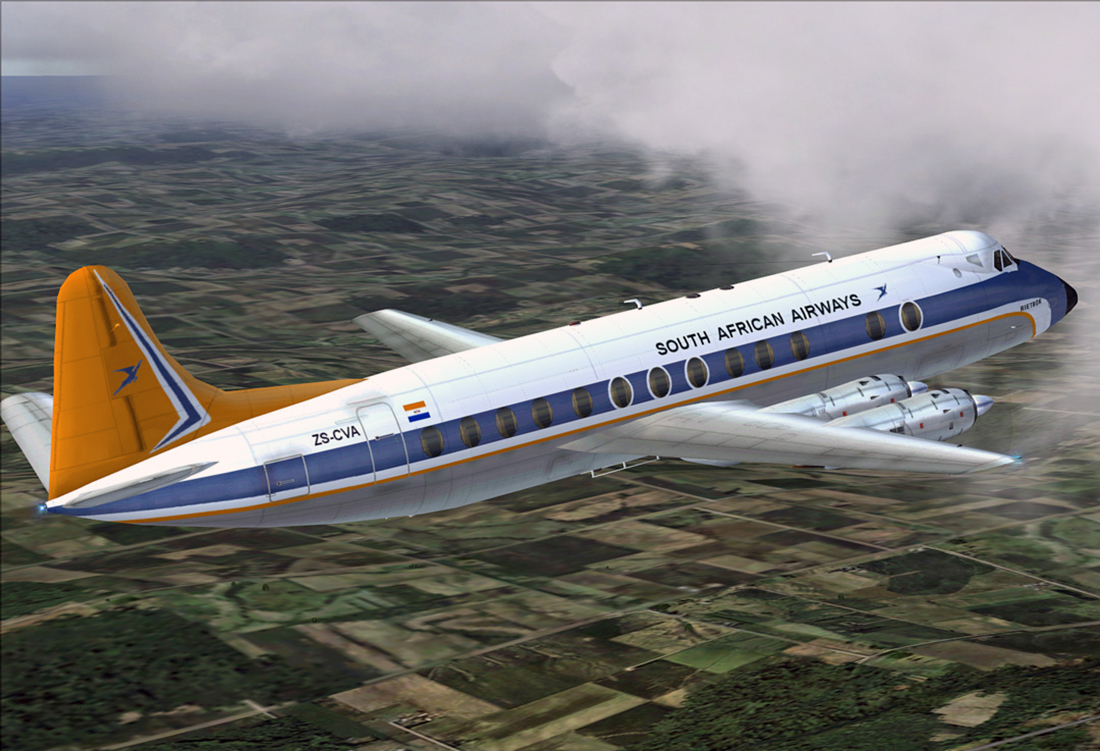
On 13th March 1967 Vickers Viscount aircraft ZS-CVA, "Rietbok", was on a scheduled public transport flight No. SA 406 from Port Elizabeth to Johannesburg via East London and Bloemfontein. Its Estimated Time of Arrival at East London was 1714 GMT, but the weather there was poor. The captain had indicated that he would probably overfly East London, but that he would have a look at conditions there before deciding to do so. The last communication from the aircraft was when it notified East London Airport Control that it was "at 2,000 ft. with the coastline in sight". It is estimated that the aircraft was then between 20 and 15 nautical miles from the Airport and that the time was approximately 1709 GMT. At 1710.08 GMT the aircraft crashed into the sea. The approximate position of the crash was 33°13.45’ S. , 27°38.3’ E. On board were Captain Gordon Benjamin Lipawsky, First Officer Brian Albert Richard Trenwith, 3 cabin crew and 20 passengers. Air-sea rescue operations were put in hand promptly, but there were no survivors. Bits of floating wreckage, consisting mainly of cabin interior fittings, were recovered by naval vessels and other pieces were washed ashore. The main wreckage of the aircraft is believed to he lying at a depth of between 180 and 220 feet, approximately 1½ miles off-shore. Extensive salvage operations were attempted, but were hindered by murky water, a current up to 8 kts and dangerous sea conditions. The aircraft was lost and all 25 occupants were killed.
Probable cause:
The available data is not sufficient for the originating cause of the accident to be determined with any degree of probability. In the opinion of the Board certain possibilities can be excluded as being inconsistent with the evidence and/or as being remote and improbable: among these possibilities are structural failure, failure of controls or control surfaces, multiple engine failure, instrument failure, explosion, fire, a "bad weather" accident and pilot error. However, on the evidence the Board cannot exclude as the originating cause of the accident a heart attack suffered by the captain in the air, with ensuing loss of control of the aircraft, and with the first officer being unable in the time available to regain sufficient control to prevent contact with the sea.
Final Report:

Crash of a Douglas C-47A-1-DK on Mt Ingeli: 17 killed

Date & Time: Oct 15, 1951
Operator:
Registration:
ZS-AVJ
Flight Phase:
Survivors:
No
Site:
Schedule:
Port Elizabeth – Durban
MSN:
12016
YOM:
1943
Country:
Region:
Crew on board:
4
Crew fatalities:
Pax on board:
13
Pax fatalities:
Other fatalities:
Total fatalities:
17
Circumstances:
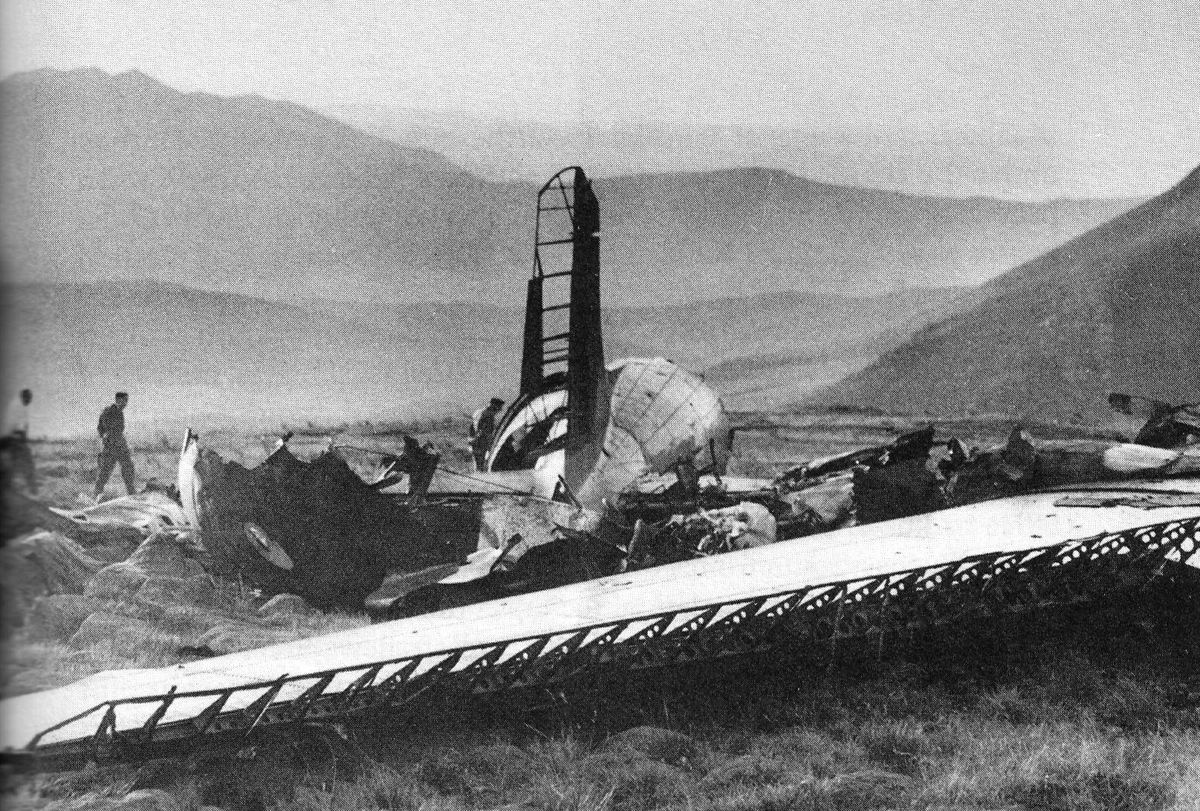
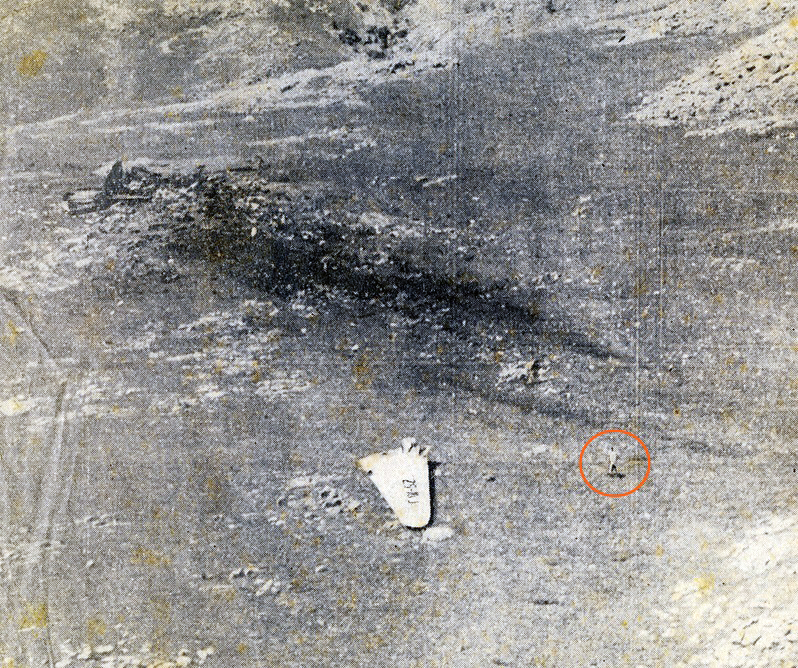
While cruising in clouds, the airplane crashed on Mt Ingeli (2,500 meters high) located about 17 km southeast of Kokstad. The aircraft christened 'Paardeberg' was destroyed and all 17 occupants were killed. It is believed that the accident was the result of a controlled flight into terrain.

Crash of a Junkers JU.52/3msa1 in Johannesburg: 1 killed

Date & Time: Jun 16, 1937
Type of aircraft:
Operator:
Registration:
ZS-AKY
Flight Phase:
Survivors:
Yes
Schedule:
Johannesburg – Port Elizabeth
MSN:
5351
YOM:
1937
Country:
Region:
Crew on board:
0
Crew fatalities:
Pax on board:
0
Pax fatalities:
Other fatalities:
Total fatalities:
1
Circumstances:
Shortly after takeoff, the engine n°1 & 3 failed. The crew attempted to make an emergency landing when, after touchdown, the airplane veered off runway and came to rest, bursting into flames. All occupants were evacuated while the aircraft was destroyed by a post crash fire. A female passenger died few days later from injuries sustained.
Probable cause:
Double engine failure after liftoff.