Country
Crash of an ATR72-212 in Shannon
Date & Time:
Jul 17, 2011 at 1021 LT
Operator:

Registration:
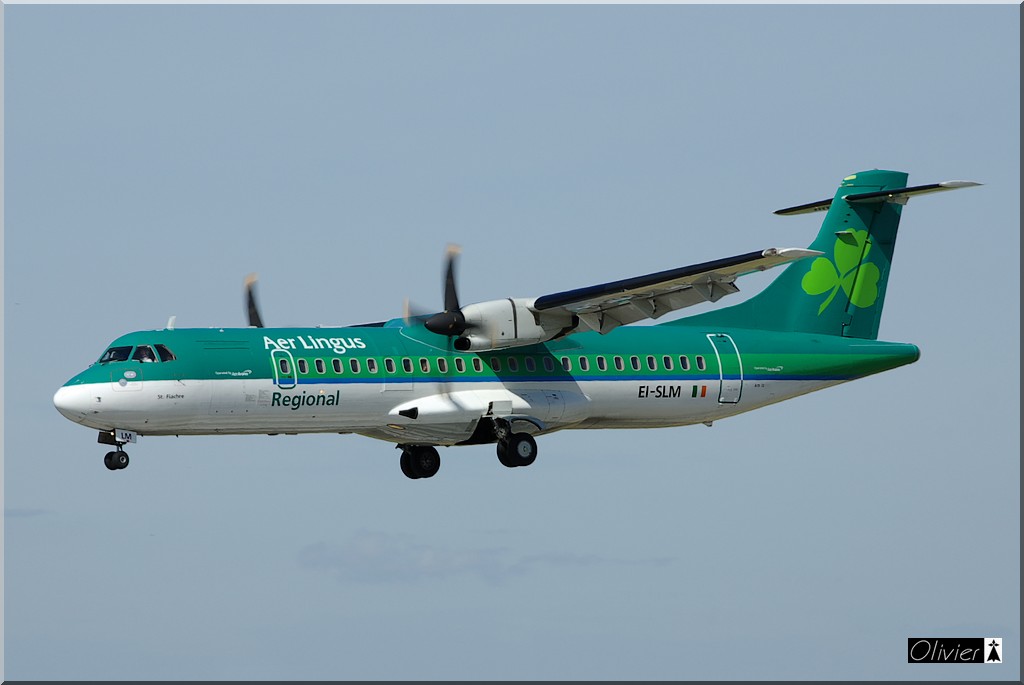
EI-SLM
Survivors:
Yes
Schedule:
Manchester - Shannon
MSN:
413
YOM:
1994
Flight number:
EI3601
Crew on board:
4
Crew fatalities:
Pax on board:
21
Pax fatalities:
Other fatalities:
Total fatalities:
0
Captain / Total hours on type:
2444.00
Copilot / Total hours on type:
1351
Aircraft flight hours:
32617
Aircraft flight cycles:
37149
Circumstances:
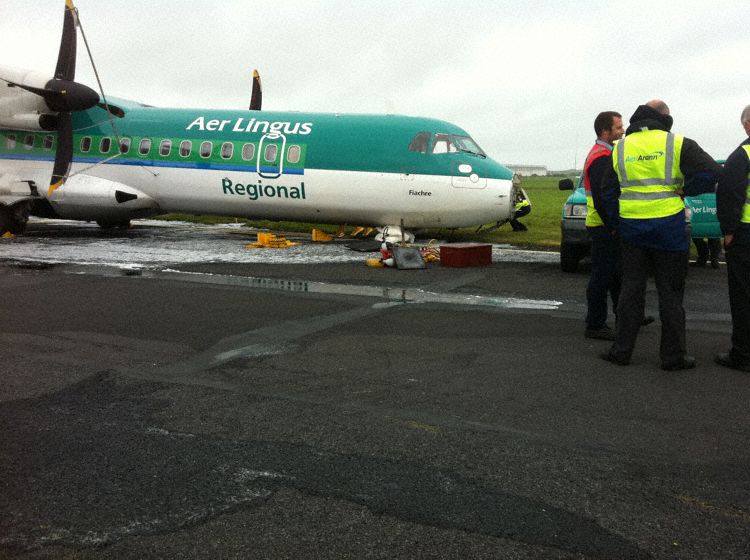
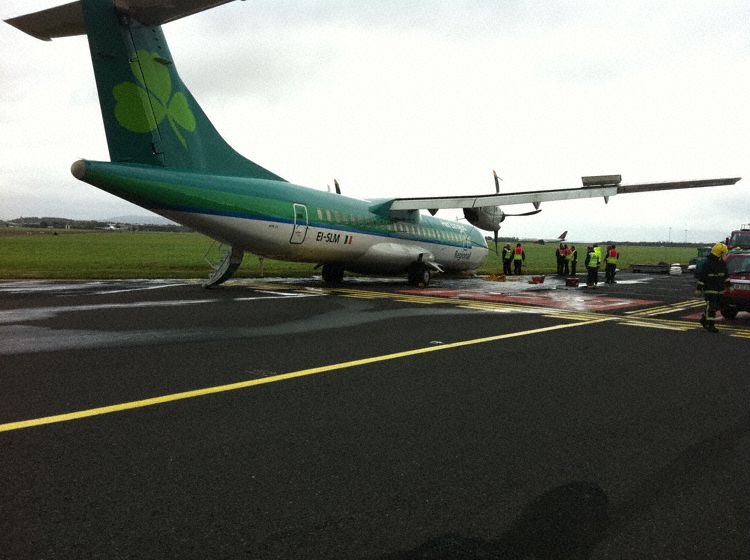
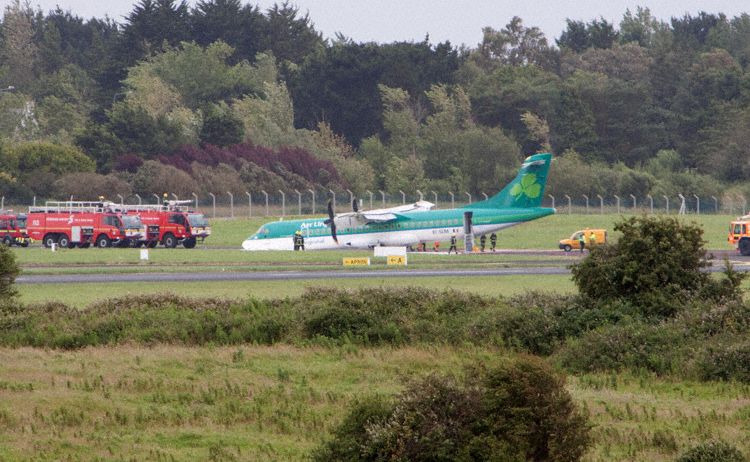
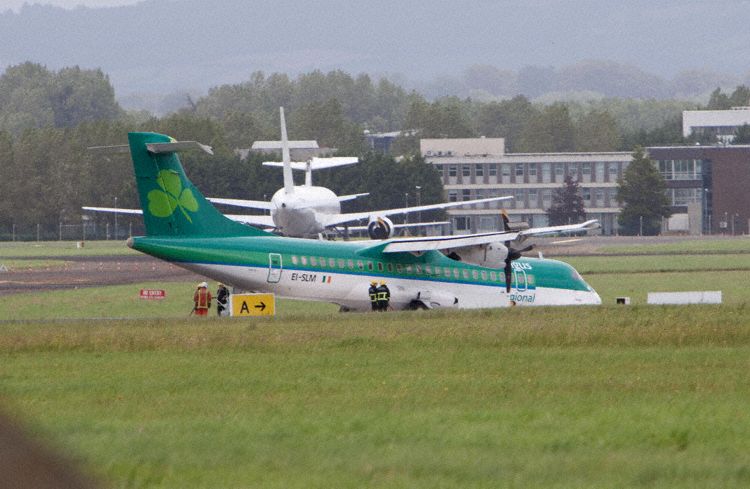
The aircraft and crew commenced operations in EINN that morning, departing at 05.52 hrs and arriving at EGCC at 07.13 hrs. During the turnaround, fuel was uplifted and 21 passengers boarded. Using the flight number and call sign EI-3601 the scheduled passenger service departed EGCC at 07.47 hrs for EINN with an estimated flight time of one hour and nine minutes. En-route operations were normal and, in consultation with ATC, the aircraft descended and was cleared to self-position to DERAG2 for an Instrument Landing System (ILS) approach to RWY 24. At 09.08 hrs the aircraft commenced an approach to RWY 24 in strong and gusty crosswind conditions. Following a turbulent approach difficulty was experienced in landing the aircraft, which contacted the runway in a nose-down attitude and bounced. A go-around was performed and the aircraft was vectored for a second approach. During this second approach landing turbulence was again experienced. Following bounces the aircraft pitched nose down and contacted the runway heavily in a nose down attitude. The nose gear collapsed and the aircraft nose descended onto the runway. The aircraft sustained damage with directional control being lost. The aircraft came to rest at the junction of the runway and a taxiway. Following engine shutdown the forward Cabin Crew Member (CCM) advised the cockpit that there was no smoke and that the doors could be opened following which, an evacuation was commenced. Airport fire crews arrived on scene promptly and assisted passengers disembarking the aircraft. There were no injuries.
Probable cause:
Probable Cause:
1. Excessive approach speed and inadequate control of aircraft pitch during a crosswind landing in very blustery conditions.
Contributory Factors:
1. Confusing wording in the FCOM that led the crew to compute an excessive wind factor in the determination of Vapp.
2. Incorrect power handling technique while landing.
3. Inexperience of the pilot in command.
4. Inadequate information provided to flight crew regarding crosswind landing techniques.
1. Excessive approach speed and inadequate control of aircraft pitch during a crosswind landing in very blustery conditions.
Contributory Factors:
1. Confusing wording in the FCOM that led the crew to compute an excessive wind factor in the determination of Vapp.
2. Incorrect power handling technique while landing.
3. Inexperience of the pilot in command.
4. Inadequate information provided to flight crew regarding crosswind landing techniques.
Final Report:

Ground collision of an ATR72-202 in Warsaw
Date & Time:
Jul 14, 2011 at 2230 LT
Operator:

Registration:
SP-LFH
Survivors:
Yes
Schedule:
Wrocław – Warsaw
MSN:
478
YOM:
1995
Flight number:
ELO3850
Crew on board:
4
Crew fatalities:
Pax on board:
33
Pax fatalities:
Other fatalities:
Total fatalities:
0
Circumstances:
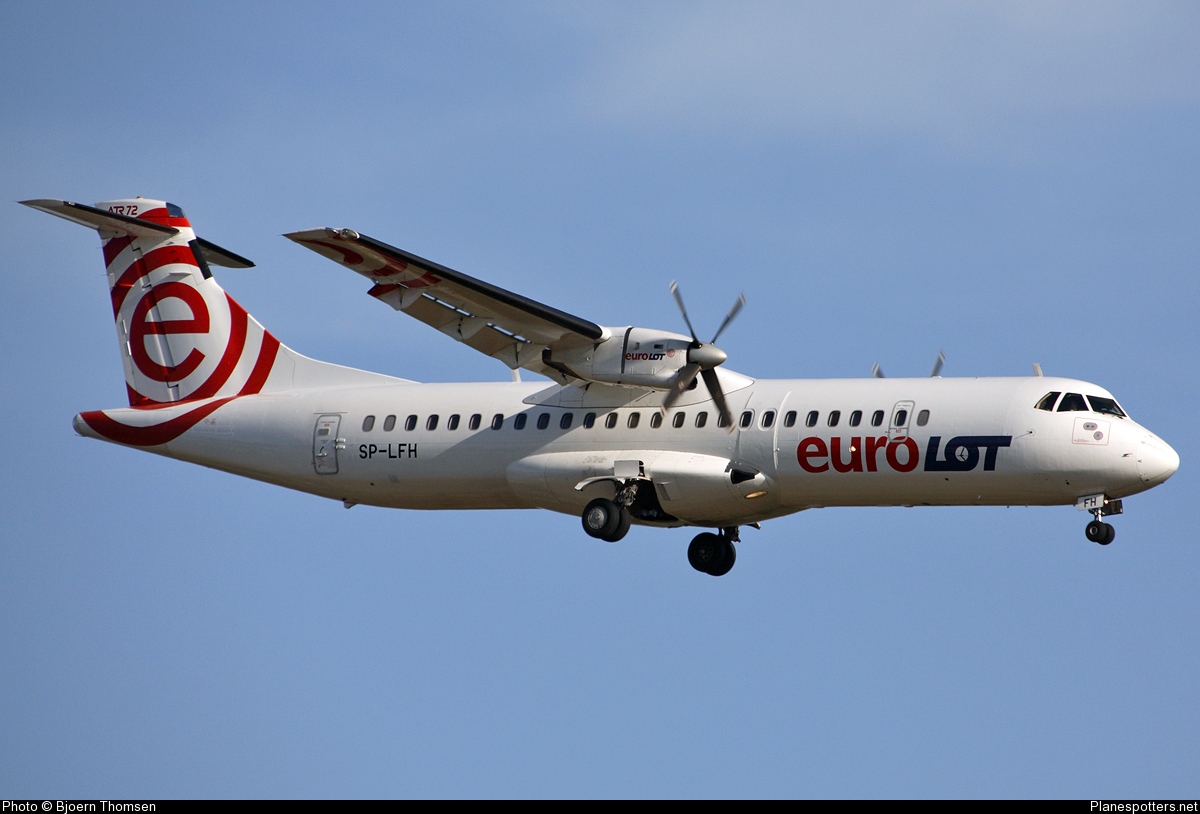
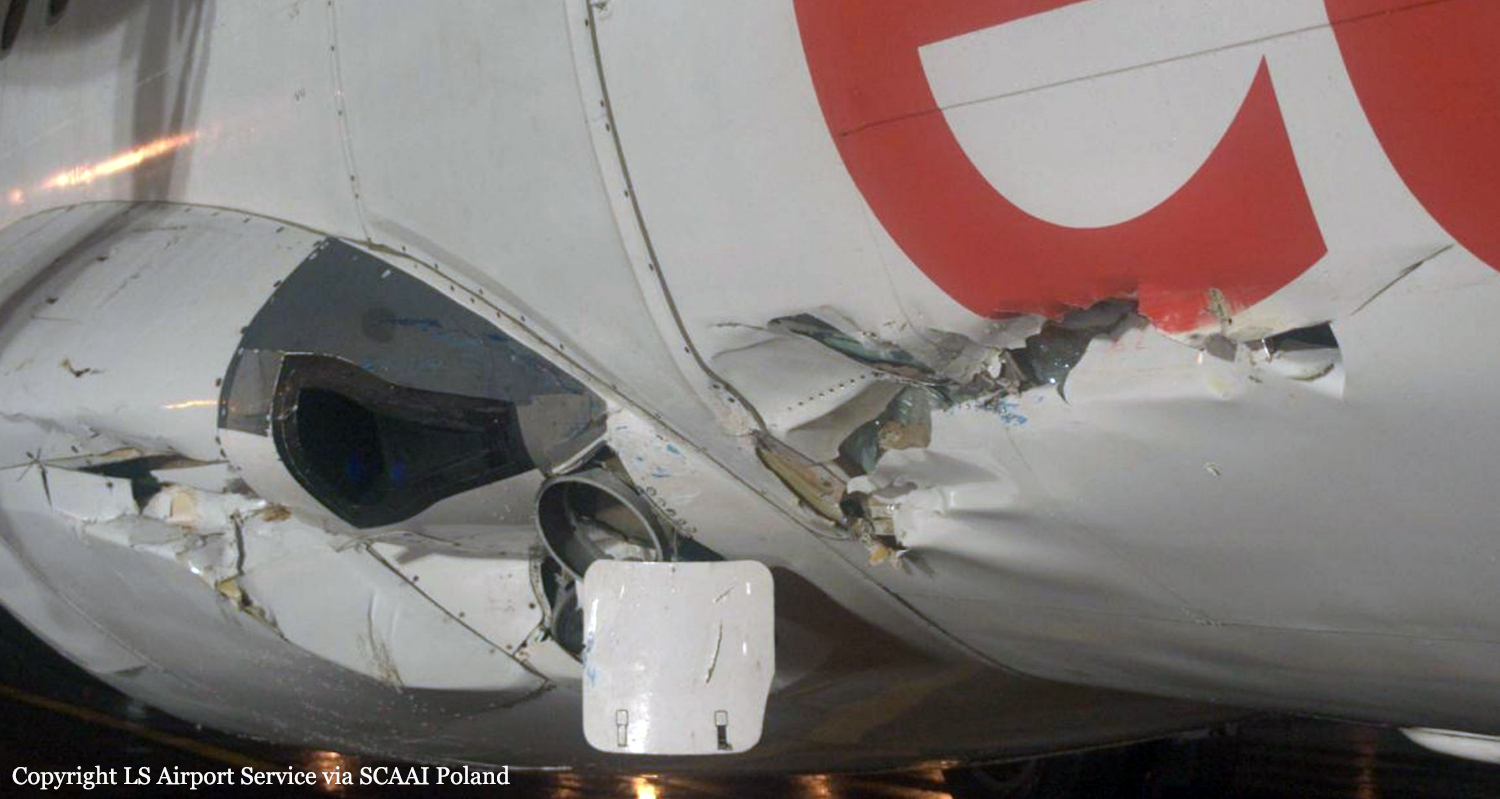
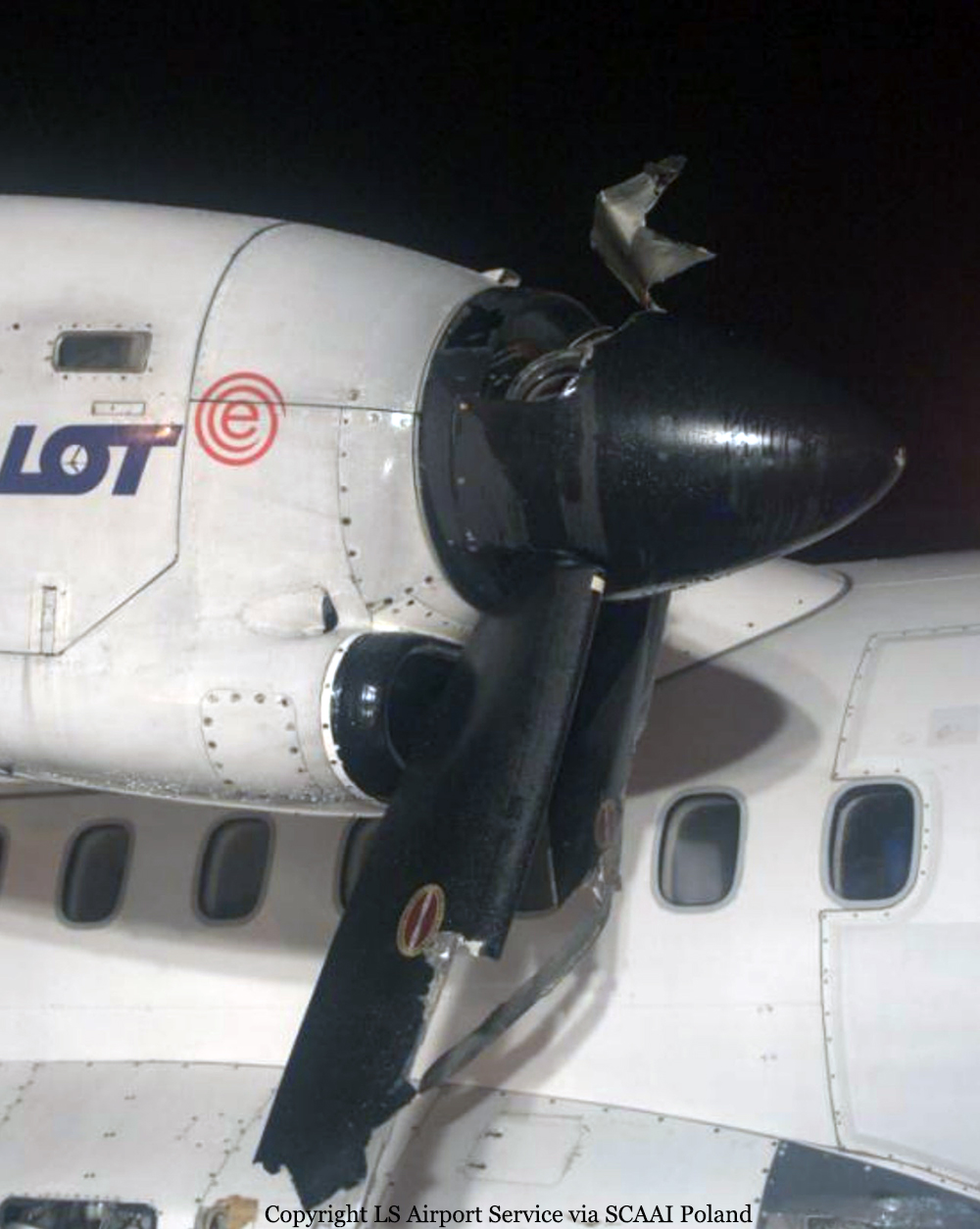
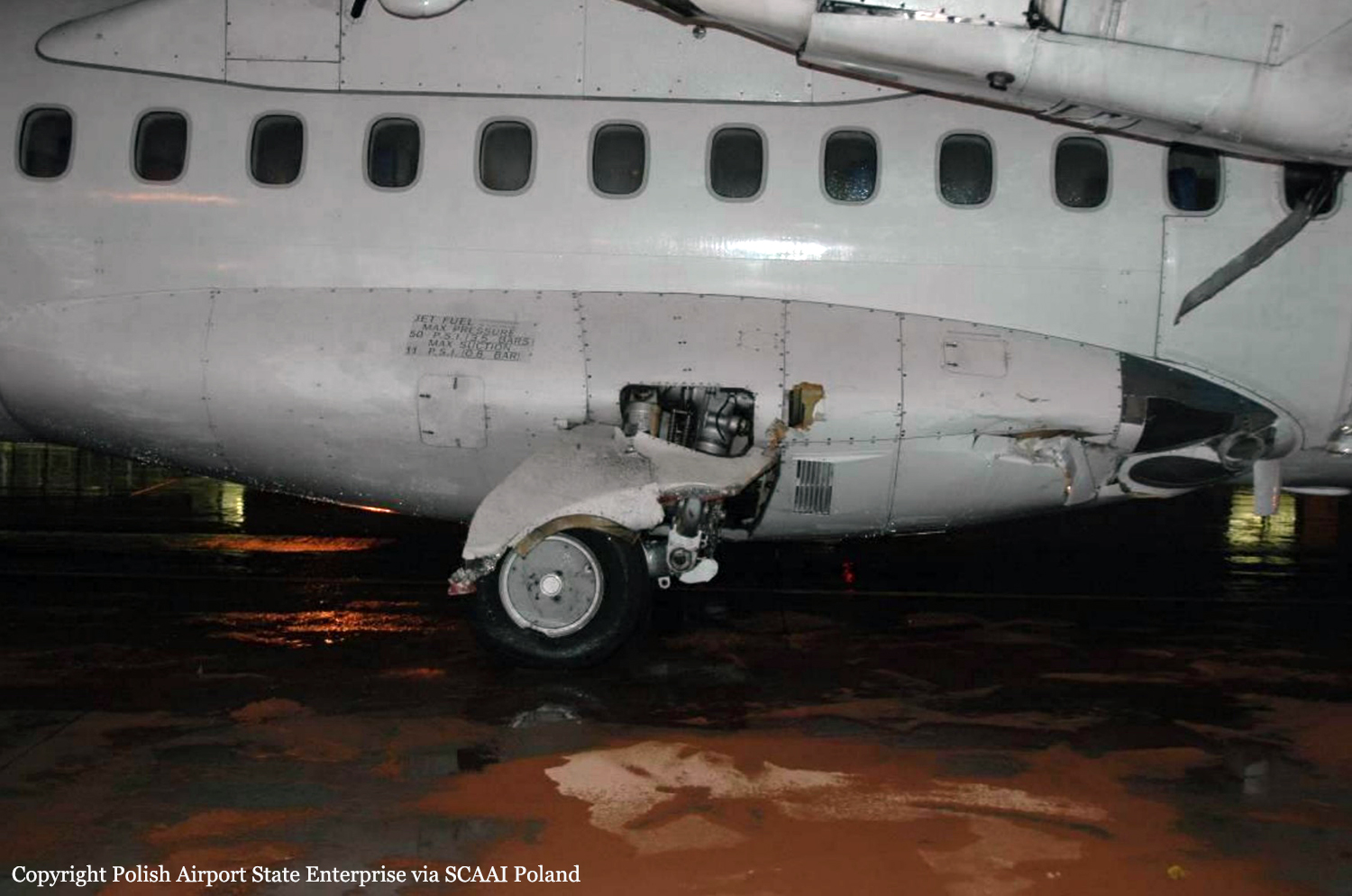
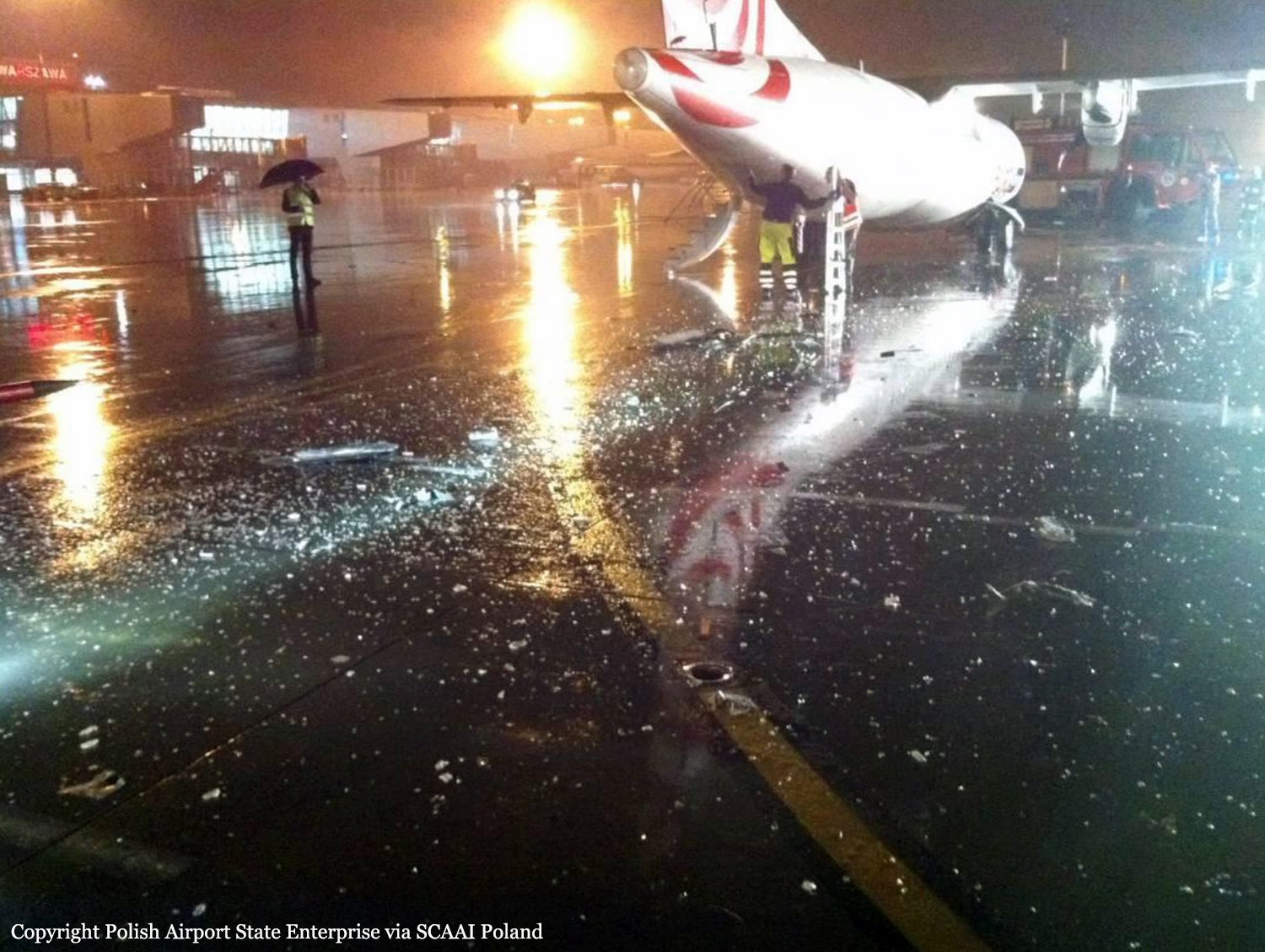
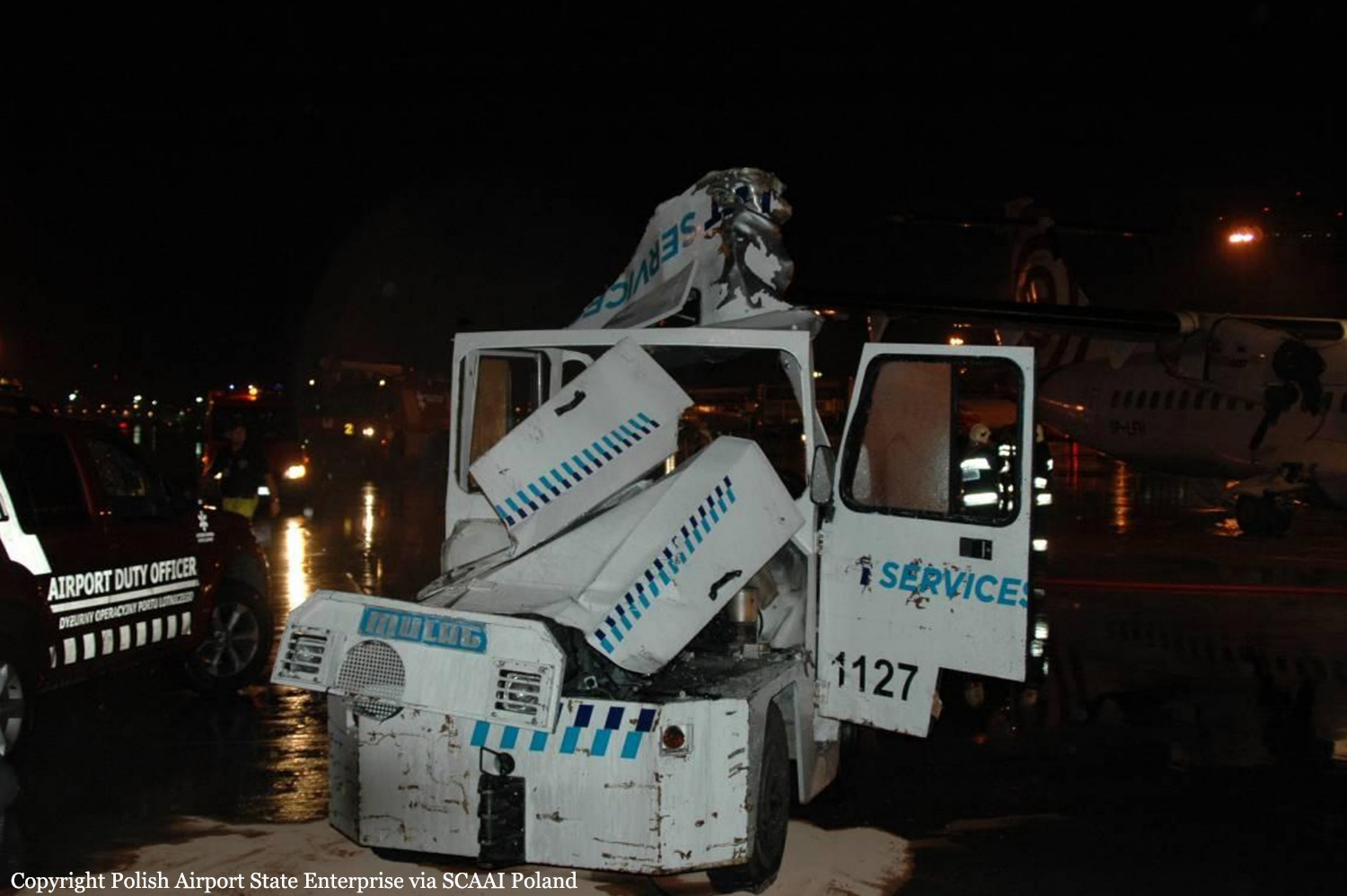
On 14 July, 2011 ATR 72 flight crew after landing at EPWA aerodrome received the clearance for taxiing to parking stand 41 via taxiways: "S", "O" and "M". When the airplane was on taxiway "M2", "Mulag" type tractor was moving by the service road, passing perpendicularly to taxiway “M2”. The tractor driver did not give the right of way to ATR 72 and the tractor collided with the airplane. As a result, the airplane and the tractor sustained substantial damages. The flight crew stopped the airplane and shut down the engines. Airport Fire Brigade and an ambulance were called. The tractor operator suffered some injuries and was taken to hospital. the airplane passengers and the flight crew did not suffer any injuries. The impact caused a fuel leakage from the airplane of 200 m2 in area, which was removed along with other elements of the damaged aircraft by the Airport Fire Brigade. The airplane and the "Mulag" tractor were withdrawn from the further service. During the accident there were adverse weather conditions at the airport - heavy rain and lightning which caused reduction in visibility.
Probable cause:
Inadequate observation of the Ground Movement Area by the “Mulag” tractor operator.
Contributing factors:
1. Heavy rain and lightning.
2. Light reflections on the aerodrome surface which hindered observation from the tractor cab.
3. Construction of the "Mulag” tractor cab, left side of which could partially or completely obscure silhouette of the airplane.
4. Short distance between a service road and taxiway "O2".
Contributing factors:
1. Heavy rain and lightning.
2. Light reflections on the aerodrome surface which hindered observation from the tractor cab.
3. Construction of the "Mulag” tractor cab, left side of which could partially or completely obscure silhouette of the airplane.
4. Short distance between a service road and taxiway "O2".
Final Report:

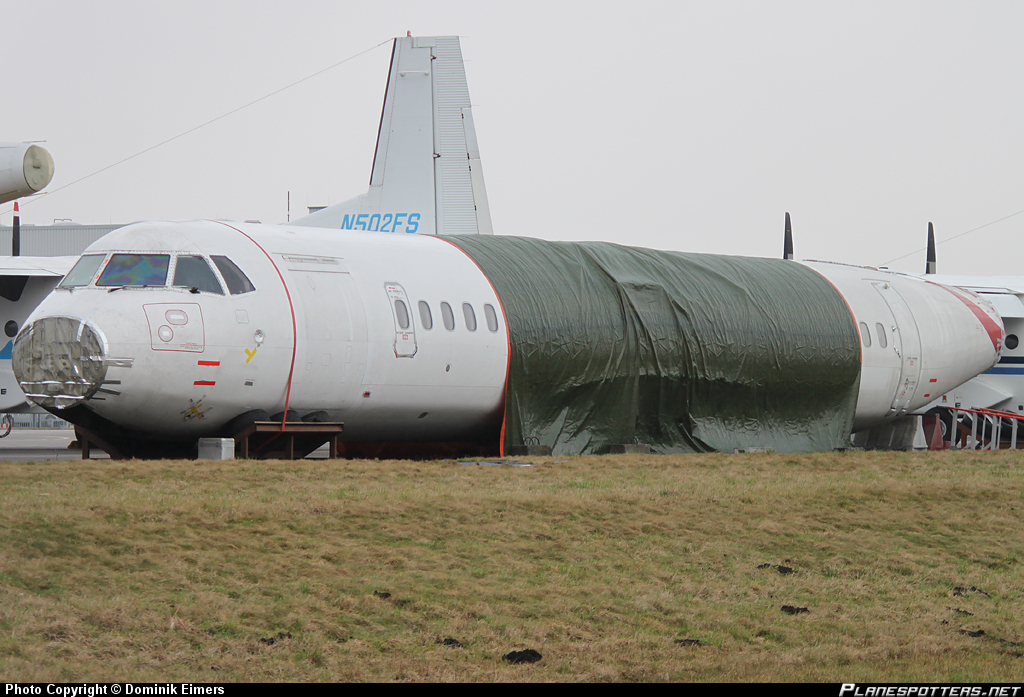
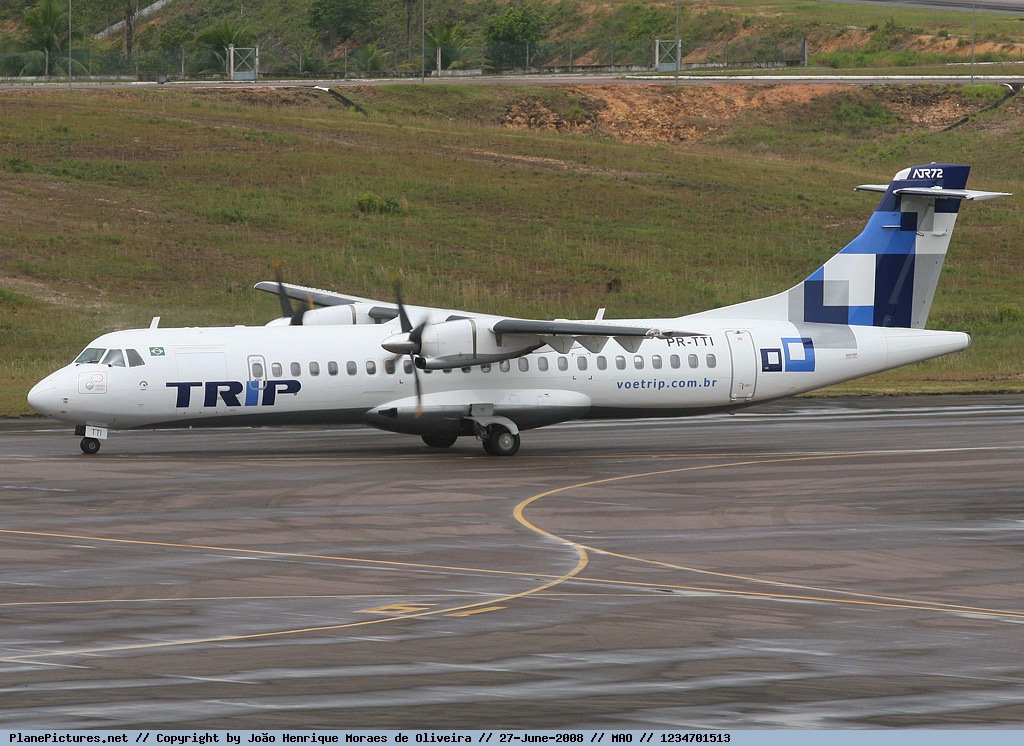
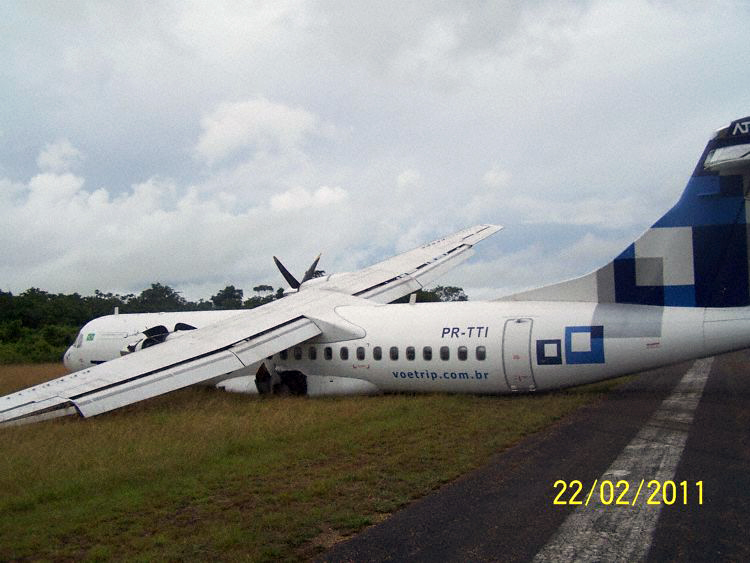
Crash of an ATR72-212 in Altamira
Date & Time:
Feb 21, 2011 at 1845 LT
Operator:

Registration:
PR-TTI
Survivors:
Yes
Schedule:
Belém - Altamira
MSN:
454
YOM:
1995
Flight number:
TIB5204
Crew on board:
4
Crew fatalities:
Pax on board:
47
Pax fatalities:
Other fatalities:
Total fatalities:
0
Captain / Total hours on type:
2600.00
Copilot / Total hours on type:
50
Aircraft flight hours:
32886
Circumstances:
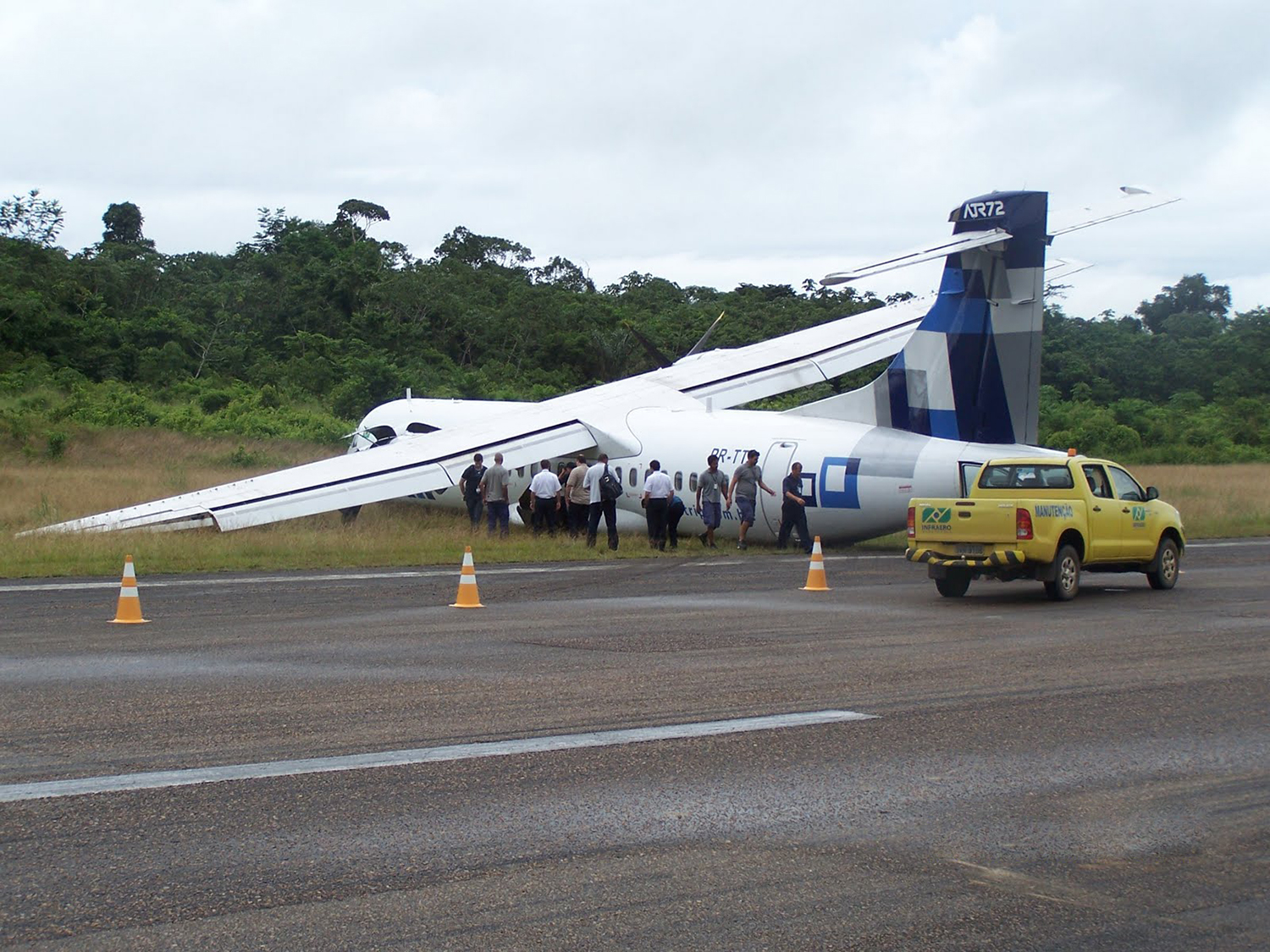
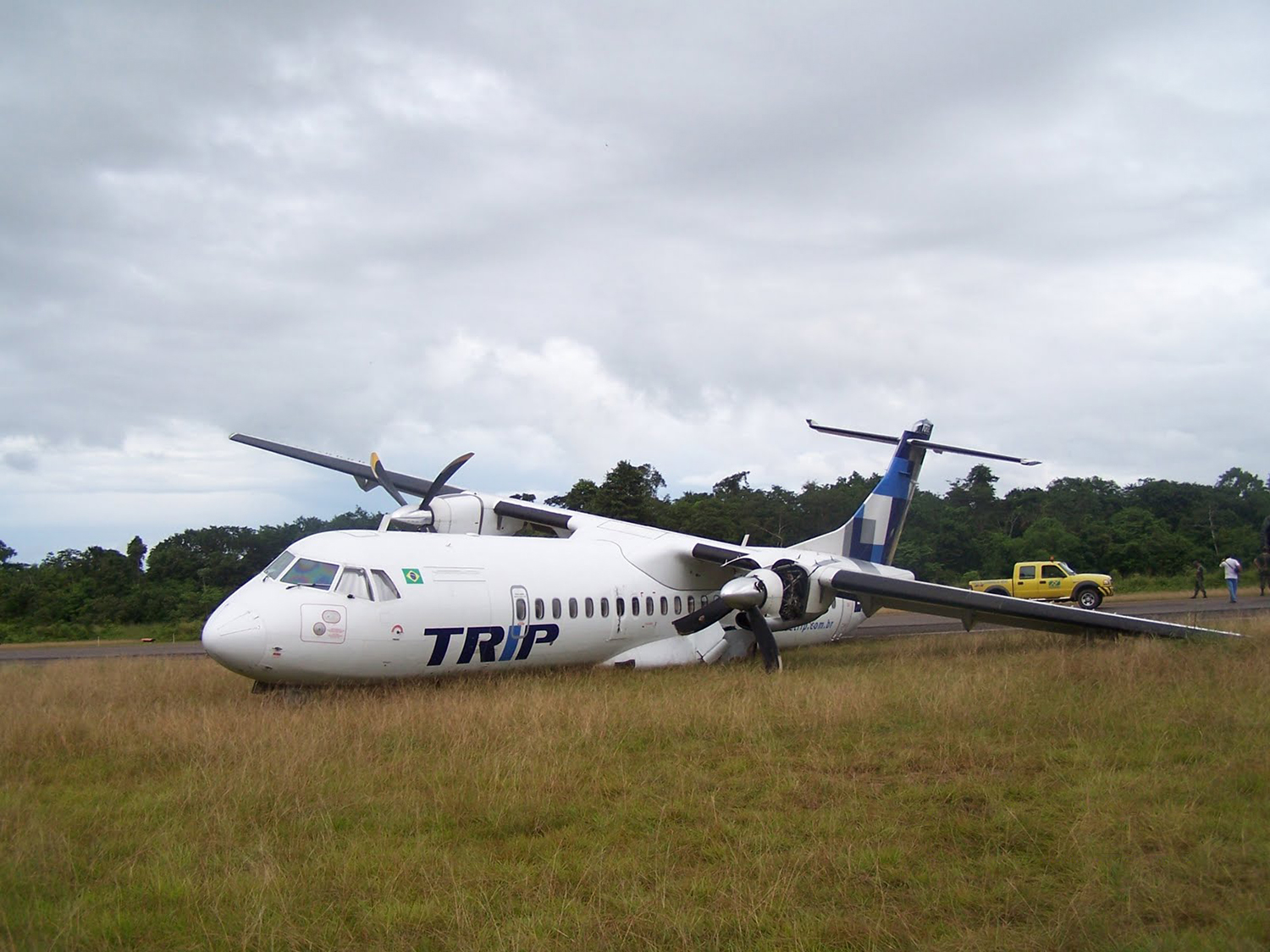
The aircraft departed Belém-Val de Cans Airport on a schedule service to Altamira with 47 passengers and 4 crew members on board. The approach for landing in Altamira was completed in VFR mode and the aircraft was stabilized. The touchdown on the runway was smooth, with gradual deceleration, in which only the 'ground idle' was used. After the '70 knots' callout, a strong noise was heard, and the left main gear collapsed with the aircraft deviating to the left. The aircraft veered off runway and came to rest in a grassy area. Among the 51 occupants, one passenger suffered minor injuries.
Probable cause:
The following findings were identified:
- The LEFT MAIN LANDING GEAR ASSEMBLY (PN D23189000-19 and SN MN1700) collapsed, failing with 5,130 cycles after the last overhaul.
- A specific component (pin) of the assembly connecting the landing gear to the airframe, the AFT PIVOT PIN (P / N D61000, S / N 25), broke on account of fatigue, whose onset was facilitated by a machining process carried out in the pin section transition region.
- The ANAC-approved ATR72 Series Aircraft Maintenance Program of the TRIP Linhas Aéreas company read that the LEFT MAIN LANDING GEAR ASSEMBLY had to undergo overhaul every eight years or 18,000 cycles.
- On 27 February 2009, the PR-TTI landing gear was removed and, on 09 March 2009, was sent to be overhauled by the AV Indústria Aeronáutica Ltda. It had 31,684 cycles since new and 18,095 cycles since the last overhaul.
- AV Indústria Aeronáutica Ltda. was homologated for conducting such inspection, as specified in the List attached to the Addendum, Revision no. 11, dated 05 January 2009, and accepted by means of the Official Document no. 0173/2009-GGAC/SAR, issued by the Civil Aviation Authority.
- The AV Indústria Aeronáutica Ltda. company disassembled the legs of the landing gear, and outsourced some of the tasks for not possessing technical knowledge and/or appropriate machinery (necessary for the process of reconditioning the AFT PIVOT PIN (D61000 SN 25).
- Two of the three companies outsourced by AV Indústria Aeronáutica Ltda. were not homologated by the Civil Aviation Authority.
- The AV Indústria Aeronáutica Ltda. company conducted external audits of the three companies involved in the overhaul.
- The audits carried out by AV Indústria Aeronáutica Ltda. were not sufficient to identify that the contractors lacked qualified personnel, manuals and the machinery necessary to work with aeronautical products.
- The AV Indústria Aeronáutica Ltda. Technical Manager did not supervise the overhaul inspections and services performed by the contracted companies.
- The AFT PIVOT PIN (D61000 SN 25) is part of the assembly that connects the landing gear to the airframe.
- All revision tasks were described in the manuals of the manufacturer.
- The AFT PIVOT PIN (D61000 SN 25) failure-analysis report stated that the PRTTI aircraft left main landing gear collapsed on account of fatigue, whose onset was facilitated by a machining process carried out in the section transition region of the pin.
- The manufacturer's maintenance manual did not refer to any machining work in that region of the pin.
- In only one stage of the pin reconditioning process was it possible to observe that a machining task was required, namely, the Grinding of chromium.
- The lack of capacitation and training of the subcontractors’ professionals for handling aircraft material hindered the execution of an efficient maintenance work as prescribed by the manufacturer's manual, culminating in inadequate machining during the maintenance process.
- The lack of an effective process of supervision, both on the part of TRIP Linhas Aéreas and on the part of the other contractors and subcontractors allowed the existing maintenance services’ latent failures not to be checked and corrected, in a way capable of subsidizing, in an adequate and safe manner, the execution of the landing gear maintenance service.
- The process of supervision of the TRIP Linhas Aéreas and the AV Indústria Aeronáutica Ltda. companies by the Civil Aviation Authority, prescribed by specific legislation in force, was not enough to mitigate the latent conditions present in the accident in question.
- According to the technical opinion issued by the DCTA, the AFT PIVOT PIN (D61000 and SN 25) presented fracture surfaces with ± 45º inclination, as well as a flat area with multiple initiations, indicative of a fracture mechanism related to fatigue. In examinations of the external surface of the pin, in a region close to the fatigue fracture, cracks were observed that had initiated from scratches created by an inadequate maintenance machining process. In the region where the overload-related fracture occurred, it was also possible to identify that the machining process had modified the profile of the part in the section transition region, by producing a depression. Thus, it can be said that the AFT PIVOT PIN (D61000 and SN 25) of the PR-TTI left main gear broke on account of fatigue, whose onset was facilitated by an inadequate machining process that had been performed in the section transition region of the pin.
- The LEFT MAIN LANDING GEAR ASSEMBLY (PN D23189000-19 and SN MN1700) collapsed, failing with 5,130 cycles after the last overhaul.
- A specific component (pin) of the assembly connecting the landing gear to the airframe, the AFT PIVOT PIN (P / N D61000, S / N 25), broke on account of fatigue, whose onset was facilitated by a machining process carried out in the pin section transition region.
- The ANAC-approved ATR72 Series Aircraft Maintenance Program of the TRIP Linhas Aéreas company read that the LEFT MAIN LANDING GEAR ASSEMBLY had to undergo overhaul every eight years or 18,000 cycles.
- On 27 February 2009, the PR-TTI landing gear was removed and, on 09 March 2009, was sent to be overhauled by the AV Indústria Aeronáutica Ltda. It had 31,684 cycles since new and 18,095 cycles since the last overhaul.
- AV Indústria Aeronáutica Ltda. was homologated for conducting such inspection, as specified in the List attached to the Addendum, Revision no. 11, dated 05 January 2009, and accepted by means of the Official Document no. 0173/2009-GGAC/SAR, issued by the Civil Aviation Authority.
- The AV Indústria Aeronáutica Ltda. company disassembled the legs of the landing gear, and outsourced some of the tasks for not possessing technical knowledge and/or appropriate machinery (necessary for the process of reconditioning the AFT PIVOT PIN (D61000 SN 25).
- Two of the three companies outsourced by AV Indústria Aeronáutica Ltda. were not homologated by the Civil Aviation Authority.
- The AV Indústria Aeronáutica Ltda. company conducted external audits of the three companies involved in the overhaul.
- The audits carried out by AV Indústria Aeronáutica Ltda. were not sufficient to identify that the contractors lacked qualified personnel, manuals and the machinery necessary to work with aeronautical products.
- The AV Indústria Aeronáutica Ltda. Technical Manager did not supervise the overhaul inspections and services performed by the contracted companies.
- The AFT PIVOT PIN (D61000 SN 25) is part of the assembly that connects the landing gear to the airframe.
- All revision tasks were described in the manuals of the manufacturer.
- The AFT PIVOT PIN (D61000 SN 25) failure-analysis report stated that the PRTTI aircraft left main landing gear collapsed on account of fatigue, whose onset was facilitated by a machining process carried out in the section transition region of the pin.
- The manufacturer's maintenance manual did not refer to any machining work in that region of the pin.
- In only one stage of the pin reconditioning process was it possible to observe that a machining task was required, namely, the Grinding of chromium.
- The lack of capacitation and training of the subcontractors’ professionals for handling aircraft material hindered the execution of an efficient maintenance work as prescribed by the manufacturer's manual, culminating in inadequate machining during the maintenance process.
- The lack of an effective process of supervision, both on the part of TRIP Linhas Aéreas and on the part of the other contractors and subcontractors allowed the existing maintenance services’ latent failures not to be checked and corrected, in a way capable of subsidizing, in an adequate and safe manner, the execution of the landing gear maintenance service.
- The process of supervision of the TRIP Linhas Aéreas and the AV Indústria Aeronáutica Ltda. companies by the Civil Aviation Authority, prescribed by specific legislation in force, was not enough to mitigate the latent conditions present in the accident in question.
- According to the technical opinion issued by the DCTA, the AFT PIVOT PIN (D61000 and SN 25) presented fracture surfaces with ± 45º inclination, as well as a flat area with multiple initiations, indicative of a fracture mechanism related to fatigue. In examinations of the external surface of the pin, in a region close to the fatigue fracture, cracks were observed that had initiated from scratches created by an inadequate maintenance machining process. In the region where the overload-related fracture occurred, it was also possible to identify that the machining process had modified the profile of the part in the section transition region, by producing a depression. Thus, it can be said that the AFT PIVOT PIN (D61000 and SN 25) of the PR-TTI left main gear broke on account of fatigue, whose onset was facilitated by an inadequate machining process that had been performed in the section transition region of the pin.
Final Report:
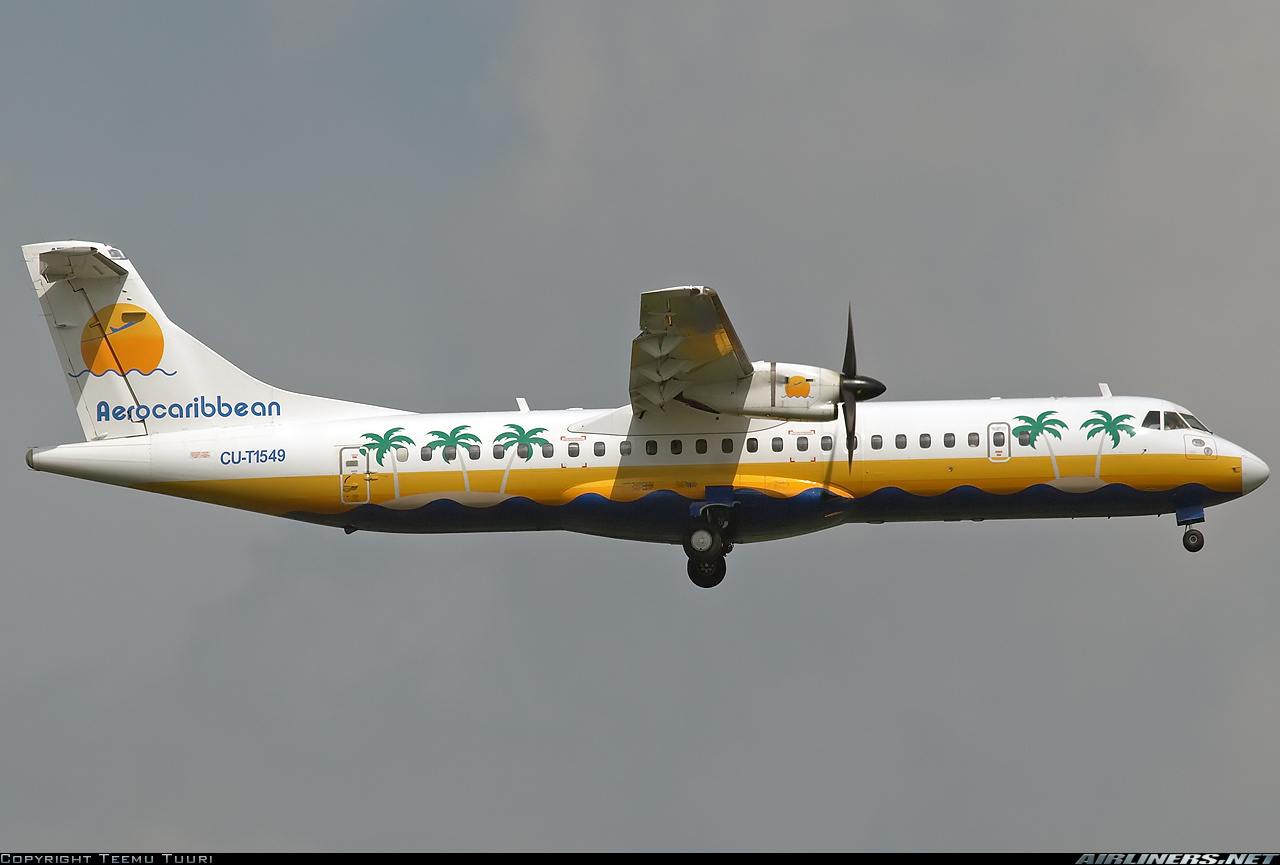
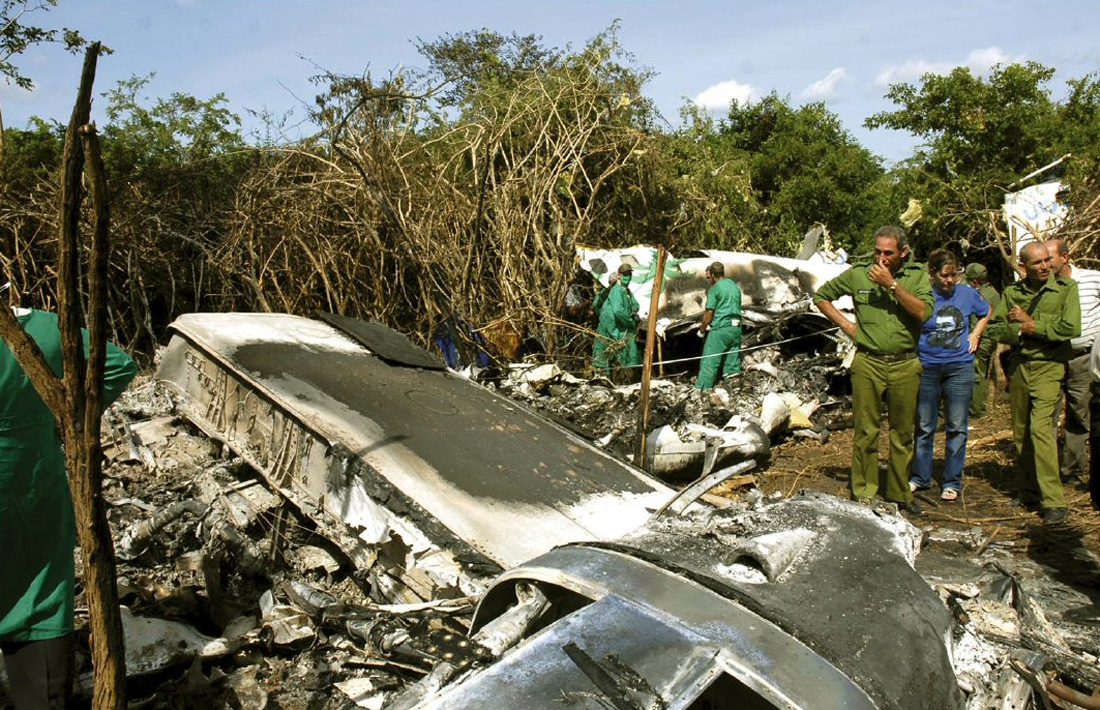
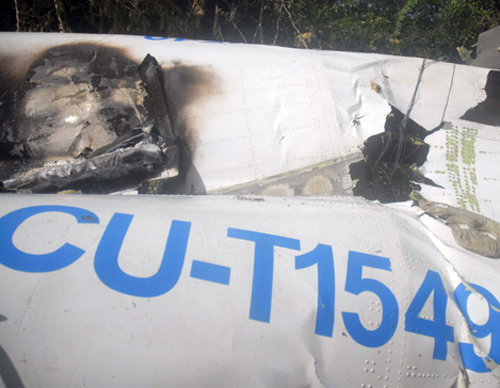
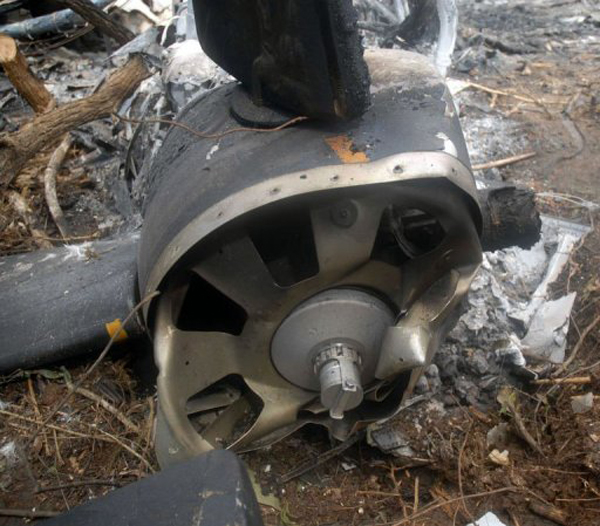
Crash of an ATR72-212 in Guasimal: 68 killed
Date & Time:
Nov 4, 2010 at 1751 LT
Operator:

Registration:
CU-T1549
Survivors:
No
Schedule:
Port-au-Prince - Santiago de Cuba - Havana
MSN:
459
YOM:
1995
Flight number:
CRN883
Crew on board:
7
Crew fatalities:
Pax on board:
61
Pax fatalities:
Other fatalities:
Total fatalities:
68
Aircraft flight hours:
25000
Aircraft flight cycles:
34500
Circumstances:
The twin engine aircraft departed Port-au-Prince on a schedule service to Havana with an intermediate stop in Santiago de Cuba, carrying 61 passengers and 7 crew members. The airplane departed Santiago de Cuba-Antonio Maceo Airport at 1644LT and the crew was cleared to climb to his assigned altitude of 18,000 feet. At 1736LT, the crew was cleared to climb to 20,000 feet. During the climb, the Total Air Temperature (TAT) dropped from +3°C to -1°C and the aircraft' speed dropped from 196 knots to 176 knots. At 17:44, at FL200, the ICING caution light illuminated on the instrument panel with an associated chime. This was followed by the illumination of the AOA light several seconds later. At 17:46 the crew toggled the anti-icing switches on the overhead panel and contacted Havana Control to request permission to descent to FL160 due to icing. However, the controller reported conflicting traffic 30 miles ahead. The crew then requested vectors to enable them to descend. Clearance was given to change course from 295° to 330°. At 17:49, with an airspeed of 156 kts, the airplane commenced a right bank. Then suddenly the airplane banked left and right before banking 90° to the left again with a steep nose down attitude. The crew struggled to control the plane, which was banking turning and losing altitude. Out of control, the aircraft crashed in a wooded an hilly terrain. All 68 occupants were killed.
Probable cause:
Flight was proceeding normally until it found itself in extreme meteorological conditions that caused the airplane to ice up severely at an altitude of 20,000ft (6,100m). This, in conjunction with errors by the crew in managing the situation, caused the accident.



Crash of an ATR72-212A in Manila
Date & Time:
Jul 28, 2010 at 1515 LT
Operator:

Registration:
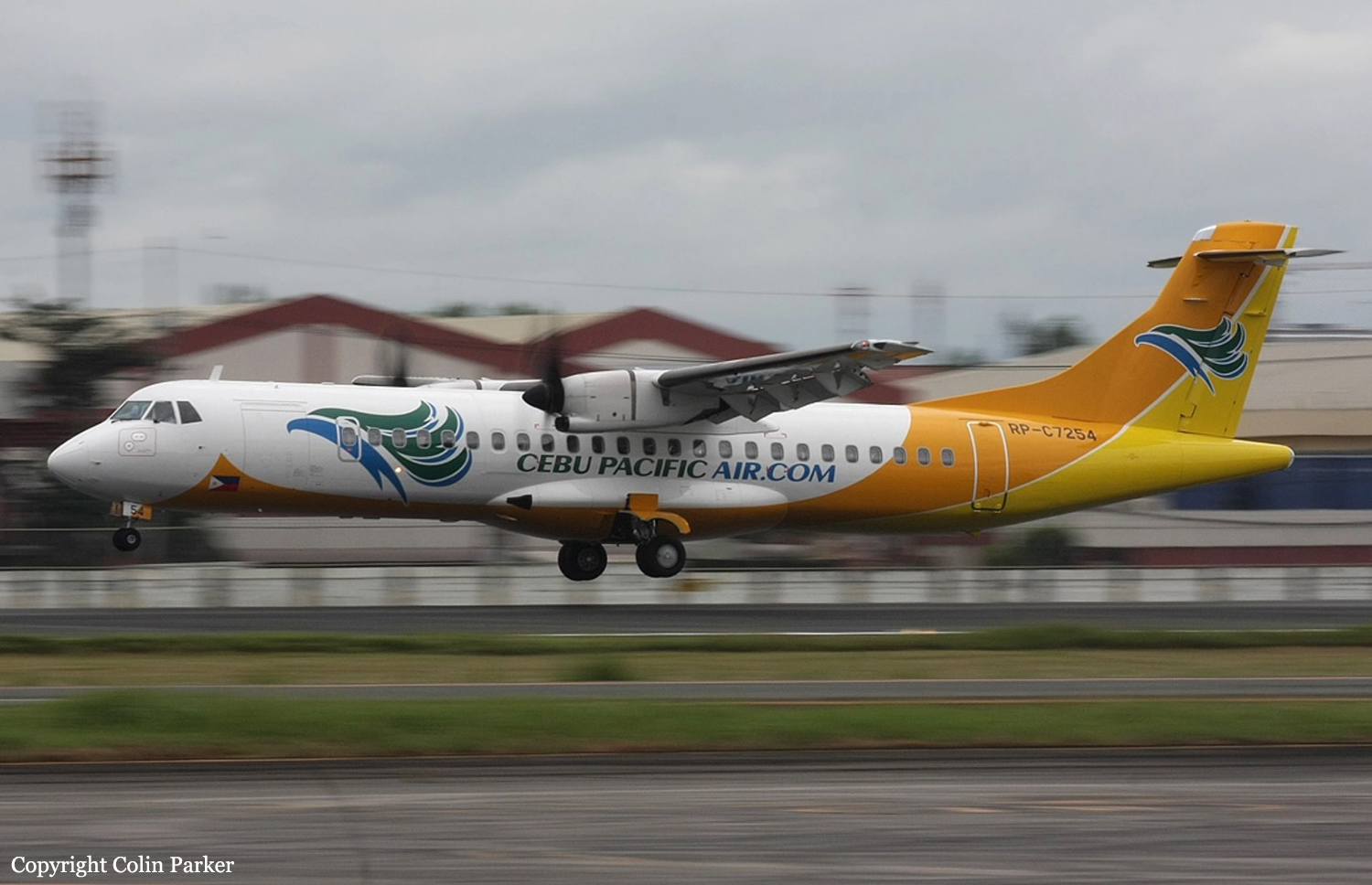
RP-C7254
Survivors:
Yes
Schedule:
Tuguegarao – Manila
MSN:
828
YOM:
2008
Flight number:
5J509
Crew on board:
0
Crew fatalities:
Pax on board:
0
Pax fatalities:
Other fatalities:
Total fatalities:
0
Circumstances:
Cebu Pacific Air flight 5J509, an ATR 72-500, took off from Tuguegarao Airport, Philippines, bound for Manila-Ninoy Aquino International Airport. The first officer was the Pilot Flying (PF) while the captain was the Pilot Not Flying (PNF). Approaching Manila, the flight was under radar vector for a VOR/DME approach to runway 24. At 7 miles on finals the approach was stabilized. A sudden tailwind was experienced by the crew at 500 feet radio altitude (RA) which resulted in an increase in airspeed and vertical speed. The captain took over the controls and continued the approach. Suddenly, the visibility went to zero and consequently the aircraft experienced a bounced landing three times, before a go-around was initiated. During climb out the crew noticed cockpit instruments were affected including both transponders and landing gears. They requested for a priority landing and were vectored and cleared to land on runway 13. After landing the aircraft was taxied to F4 where normal deplaning was carried out. No injuries were reported on the crew and passengers.
Probable cause:
Primary Cause Factor:
- Failure of the flight crew to discontinue the approach when deteriorating weather and their associated hazards to flight operations had moved into the airport (Human Factor)
Contributory Factor:
- The adverse weather condition affected the judgment and decision-making of the PIC even prior to the approach to land. With poor weather conditions being encountered, the PIC still continued the approach and landing. (Environmental Factor)
Underlying Factor:
- As a result of the bounced landing, several cockpit instruments were affected including both transponders on board. One of the nosewheels was detached and all the landing gears could not be retracted. Further, the integrity of the structure may have been affected and chance airframe failure was imminent. With all of these conditions, the Captain still opted to request for a priority landing when emergency landing was needed.
- Failure of the flight crew to discontinue the approach when deteriorating weather and their associated hazards to flight operations had moved into the airport (Human Factor)
Contributory Factor:
- The adverse weather condition affected the judgment and decision-making of the PIC even prior to the approach to land. With poor weather conditions being encountered, the PIC still continued the approach and landing. (Environmental Factor)
Underlying Factor:
- As a result of the bounced landing, several cockpit instruments were affected including both transponders on board. One of the nosewheels was detached and all the landing gears could not be retracted. Further, the integrity of the structure may have been affected and chance airframe failure was imminent. With all of these conditions, the Captain still opted to request for a priority landing when emergency landing was needed.