Crash of a Martin PBM-5 Mariner off North Island NAS: 8 killed

Date & Time: Apr 6, 1945
Type of aircraft:
Operator:
Registration:
59082
Flight Phase:
Flight Type:
Survivors:
No
Schedule:
North Island - Kaneohe
MSN:
59082
Crew on board:
8
Crew fatalities:
Pax on board:
0
Pax fatalities:
Other fatalities:
Total fatalities:
8
Circumstances:
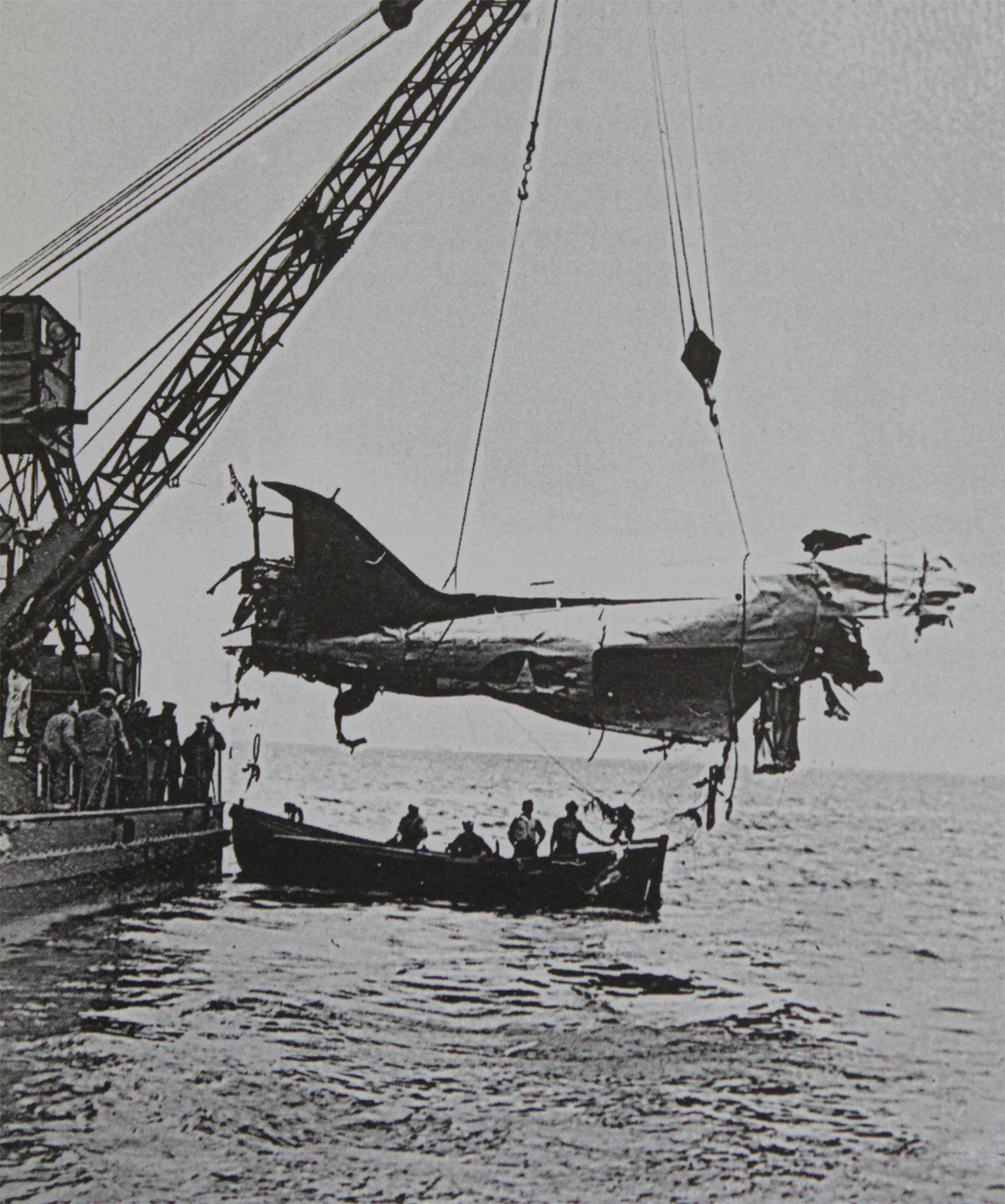
Shortly after takeoff from North Island-Halsey Field NAS, while in initial climb, the crew retracted the flaps when the aircraft stalled and crashed into the Bay of San Diego. All eight crew members were killed.

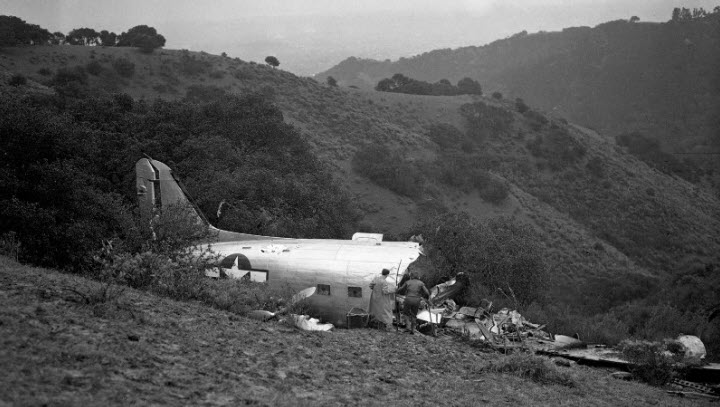
Crash of a Douglas C-47A-DL in Lee Vining: 3 killed

Date & Time: Mar 16, 1945 at 1735 LT
Operator:
Registration:
43-30676
Flight Phase:
Flight Type:
Survivors:
No
Site:
Schedule:
March - Shafter
MSN:
13827
YOM:
1943
Crew on board:
3
Crew fatalities:
Pax on board:
0
Pax fatalities:
Other fatalities:
Total fatalities:
3
Circumstances:
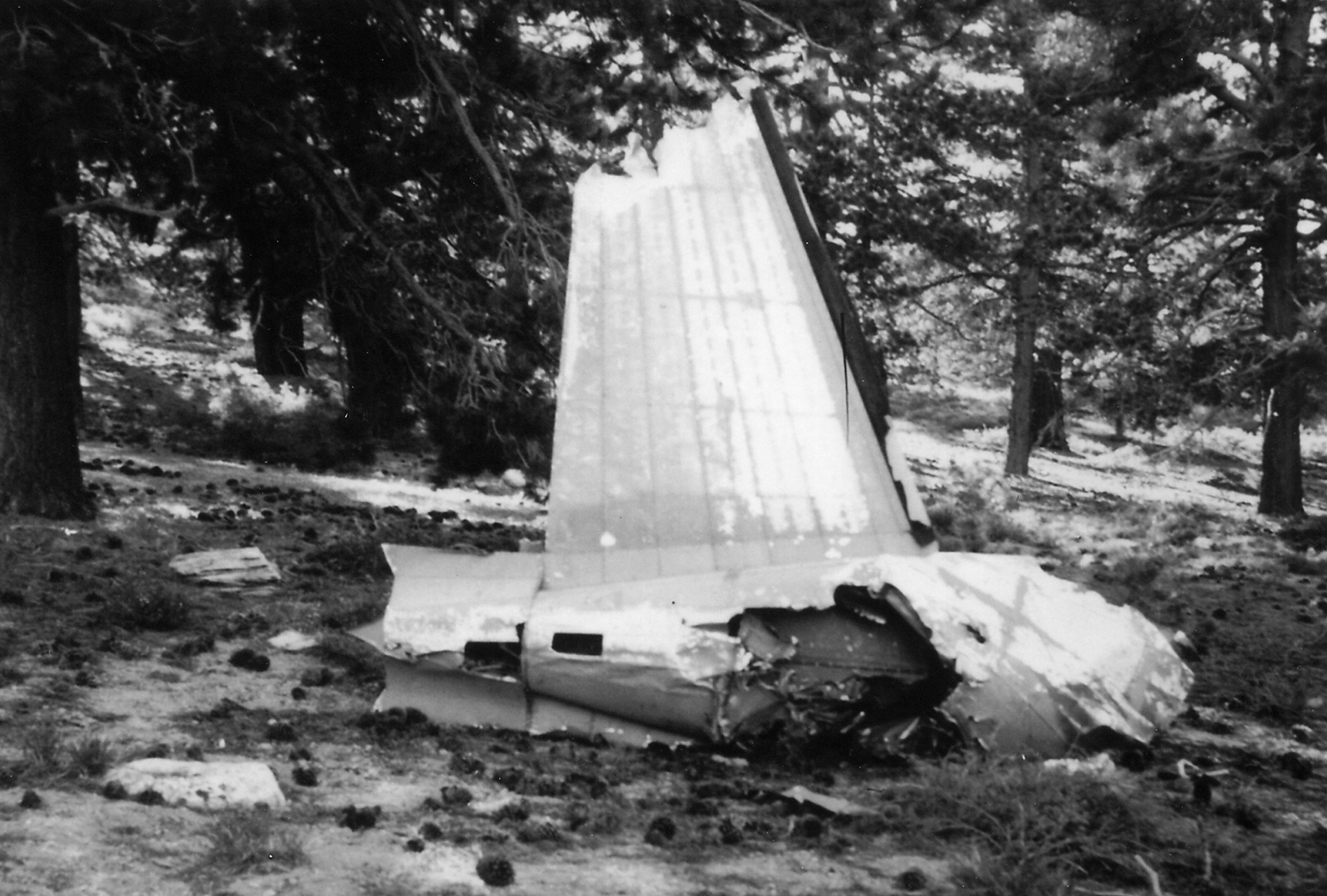
While cruising at an altitude of 11,500 feet in poor weather conditions, the aircraft hit the slope of a mountain located west of Lee Vining. The wreckage was found on September 23, 1945. All three occupants have been killed.
Crew:
2nd Lt Cargill L. Beach,
1st Lt Raymond Moore,
S/Sgt Jack E. Moran.

Crash of a Douglas R4D-5 in San Carlos: 7 killed

Date & Time: Mar 14, 1945 at 2040 LT
Operator:
Registration:
17228
Flight Phase:
Flight Type:
Survivors:
Yes
Site:
Schedule:
San Pedro - Alameda
MSN:
13379
YOM:
1944
Crew on board:
3
Crew fatalities:
Pax on board:
20
Pax fatalities:
Other fatalities:
Total fatalities:
7
Circumstances:
The airplane departed San Pedro-Catalina NAS (Long Beach) on a flight to Alameda NAS in Oakland, carrying 20 passengers and a crew of three. The descent was initiated at night when the crew encountered limited visibility due to poor weather conditions. Following an unsuccessful landing, the crew followed a missed approach procedure when he got apparently lost. The airplane impacted the slope of a hill and crashed at an altitude of 630 feet about two miles west of San Carlos. All three crew members were killed as well as four passengers. At the time of the accident, weather conditions were poor with heavy rain falls, clouds down to 500 feet and visibility less than three miles.
Crew:
Lt William Karlick, pilot,
Ens Clois Holmes Jr., copilot,
Robert A. Trout, flight engineer.
Passengers:
LCdr Robert H. Allen,
LCdr John Brahtz,
S1C Richard Johnston,
Victor Salazar Jr.
Probable cause:
Controlled flight into terrain.

Crash of a Douglas DC-3 Dakota IV on Mt Pinos: 5 killed

Date & Time: Mar 13, 1945
Operator:
Registration:
KN345
Flight Phase:
Flight Type:
Survivors:
No
Site:
Schedule:
Biggs - Sacramento
MSN:
15913/32661
YOM:
1945
Crew on board:
4
Crew fatalities:
Pax on board:
1
Pax fatalities:
Other fatalities:
Total fatalities:
5
Circumstances:
The aircraft was performing a flight from Biggs AFB, El Paso, to Sacramento, California. While cruising by night in stormy weather, the aircraft hit tree tops and crashed on the Mt Pinos located some 14 miles west of Lebec. All five occupants were killed. The wreckage was found by walkers on 13MAY1945 only.
Crew:
Peter Antrobus, pilot
Floyd E. George, copilot
Frank S. Holmes, navigator
Edward Watkins, radio operator
Passenger:
Max K. Nelson.

Crash of a Douglas R4D-6 off Oakland NAS: 24 killed

Date & Time: Feb 13, 1945 at 0630 LT
Operator:
Registration:
50765
Flight Phase:
Flight Type:
Survivors:
No
MSN:
14848/26293
YOM:
1944
Crew on board:
3
Crew fatalities:
Pax on board:
21
Pax fatalities:
Other fatalities:
Total fatalities:
24
Circumstances:
Shortly after takeoff from runway 27, while in initial climb by night and in marginal weather conditions, the pilot made a turn to the right when the right wing tip hit the water surface. The aircraft crashed into the Bay of San Francisco and none of the 24 occupants survived. The cloud ceiling was down to 500 feet at the time of the accident with a good visibility under the cloud layer.
Probable cause:
The crew was unaware of his real position after takeoff due to the malfunction of a gyro. Because the aircraft was flying over the Bay of San Francisco and due to lack of visibility and the absence of ground visual references, the crew lost his bearings during initial climb.

Crash of a Curtiss R5C-1 Commando near Los Angeles: 8 killed

Date & Time: Feb 2, 1945
Type of aircraft:
Operator:
Registration:
39504
Flight Phase:
Flight Type:
Survivors:
No
MSN:
26498
YOM:
1943
Crew on board:
8
Crew fatalities:
Pax on board:
0
Pax fatalities:
Other fatalities:
Total fatalities:
8
Circumstances:
Crashed in unknown circumstances south of Los Angeles, killing all eight crew members. The s/n has not been confirmed.

Crash of a Douglas DC-3-277B near Burbank: 24 killed

Date & Time: Jan 10, 1945 at 0410 LT
Type of aircraft:
Operator:
Registration:
NC25684
Flight Phase:
Survivors:
No
Site:
Schedule:
New York – Washington DC – Cincinnati – Memphis – Dallas – El Paso – Phoenix – Burbank
MSN:
2215
YOM:
1940
Flight number:
AA6001
Crew on board:
3
Crew fatalities:
Pax on board:
21
Pax fatalities:
Other fatalities:
Total fatalities:
24
Captain / Total flying hours:
6315
Captain / Total hours on type:
4660.00
Copilot / Total flying hours:
2113
Copilot / Total hours on type:
1792
Aircraft flight hours:
14888
Circumstances:
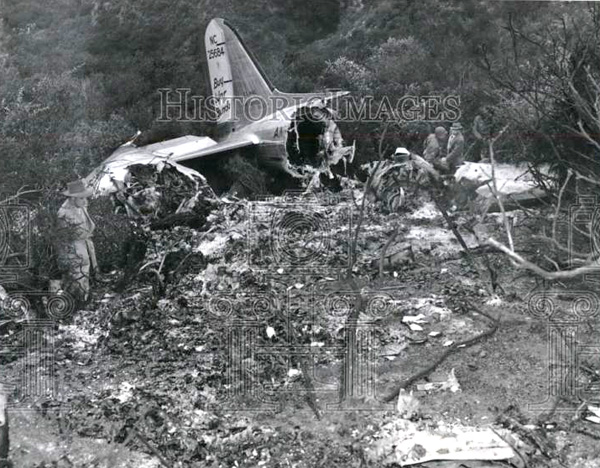
Following an uneventful flight from El Paso, the crew started the approach to Burbank-Hollywood-Lockheed Air Terminal at night. Due to low visibility caused by poor weather conditions, the pilot was unable to localize the airport and decided to proceed to the alternate airfield, Palmdale. Few minutes later, as it was flying at a too low altitude, the aircraft hit tree tops and crashed on the slope of a wooded hill located in the Verdigo mountains, some 4 miles northeast of the Burbank Airport. All 24 occupants were killed.
Probable cause:
The possibility of an accident became a potentiality when the company ground personnel failed to obtain and transmit important weather to the pilot. Failure to obtain and transmit this information to the pilot constitutes negligence on the part of the company. This, however, did not relieve the pilot of his responsibility to conduct a safe flight although it did place him in a disadvantageous position. Had no properly execution the "missed-approach" procedure it is unlikely that the accident would have occurred. The Board, therefore, determines that the probable cause of this accident was "the pilot's attempt to use the standard 'missed-approach' procedure after having followed another course up to a point there it was impossible to apply this procedure safely."
Final Report:

Crash of a Lockheed C-60A-1-LO LodeStar in Mt Bear: 9 killed

Date & Time: Dec 1, 1944 at 1945 LT
Type of aircraft:
Operator:
Registration:
42-32197
Flight Type:
Survivors:
No
Site:
Schedule:
Hondo – Fresno
MSN:
2287
Crew on board:
7
Crew fatalities:
Pax on board:
2
Pax fatalities:
Other fatalities:
Total fatalities:
9
Circumstances:
While on a flight from Hondo AAF, the crew started the descent to Fresno by night when at the altitude of 4,300 feet, the twin engine aircraft hit the north slope of Mt Bear located some 18 miles southeast of Bakersfield. All nine occupants were killed.
Crew and passengers:
Clarence W. DeGroff,
1st Lt Hobert D. Simpson Jr.,
2nd Lt James F. Applewhite,
2nd Lt Jimmie E. Hoch,
2nd Lt Louis J. Hoekstra,
F/O Otto F. Illias,
F/O Michel D. Pavich,
Sgt Ira R. Ratliff,
Pfc Walter H. Denk.

Crash of a Douglas DC-3-209 in Burbank: 8 killed

Date & Time: Dec 1, 1944 at 0258 LT
Type of aircraft:
Operator:
Registration:
NC17322
Survivors:
Yes
Schedule:
San Francisco – Burbank – New York
MSN:
1968
YOM:
1937
Flight number:
TW018
Crew on board:
3
Crew fatalities:
Pax on board:
20
Pax fatalities:
Other fatalities:
Total fatalities:
8
Captain / Total flying hours:
5400
Captain / Total hours on type:
4315.00
Copilot / Total flying hours:
1084
Copilot / Total hours on type:
136
Aircraft flight hours:
22180
Circumstances:
The flight was cleared to Burbank Airport for a standard instrument approach. During the approach the plane descended under instrument conditions to such a low altitude as to clip the tree tops and strike a power line pole and then crash at a point approximately 6 1/2 miles short of the Burbank Airport. In a normal approach the plane would have flown over this point at an altitude of about 1650 feet above the ground. The specific reasons for the plane's descent below the minimums for instrument approach were not determinable, nor was it possible to tell whether the deviation was a voluntary one. Investigation did reveal, however, that a number of divisions were made from the company's standard Civil Aeronautics Administration approved procedures during this flight. Both pilots and six passengers were killed.
Crew:
John Pollard Snowden, pilot, †
Thomas Leo Bamberger, copilot, †
Donna Elizabeth Marr, hostess.
Probable cause:
On the basis of the evidence available the Board finds that the probable cause of this accident was the pilot's deviation from the standard instrument approach procedure then he descended below the established safe minimum altitude. A contributing factor was the company's failure to enforce adherence to company procedures.
Final Report:

Crash of a Martin PBM-5 Mariner on Mt Tamalpais: 8 killed

Date & Time: Nov 30, 1944 at 2325 LT
Type of aircraft:
Operator:
Registration:
45415
Flight Phase:
Flight Type:
Survivors:
No
Site:
Schedule:
Alameda - Honolulu
MSN:
45415
Crew on board:
8
Crew fatalities:
Pax on board:
0
Pax fatalities:
Other fatalities:
Total fatalities:
8
Captain / Total flying hours:
1500
Captain / Total hours on type:
1200.00
Circumstances:
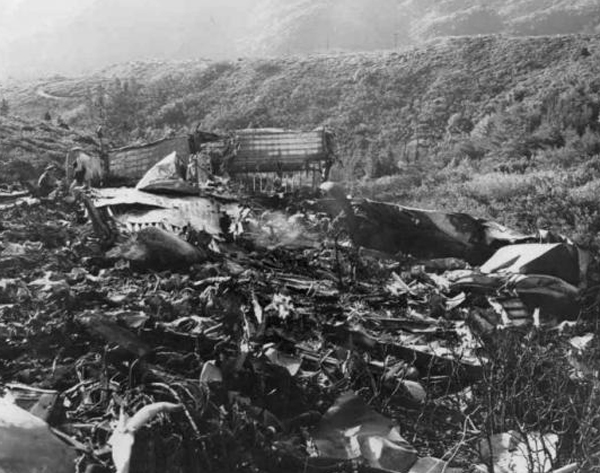
Shortly after take off from Alameda NAS, while approaching the Golden Gate at an altitude of 2,000 feet, the crew encountered poor weather conditions and low visibility. The captain decided to return to his departure point and started a turn to the right while penetrating a cloudy area. By night, the seaplane hit the slope of Mt Tamalpais located some 5 miles southwest of San Rafael. The wreckage was spotted a day later and all eight occupants were killed.
Crew:
Lt Joseph L. Resley,
Lt Thomas W. Oliver,
Ens Chapin B. Miller,
ACMM Harry L. Holland,
AMM2 Rodney Jeffers,
ARM2 Thomas J. Joyce,
ARM3 John R. Kelly,
AOM2 Wayne D. Paxson.
Photos: http://www.aviationarchaeology.com/pbm5bu.htm
Probable cause:
According to investigations, the sky was broken at the time of the accident, with scattered showers. Due to an insufficient visibility, it was concluded that weather conditions were unsuitable for such transpacific flight. The crew was unable to detect the mountain because it was shrouded by clouds and the visibility was low due to night.