Crash of a Douglas A26B-50-DL Invader into the Yellow Sea: 2 killed

Date & Time: Jun 28, 1950
Type of aircraft:
Operator:
Registration:
44-34238
Flight Phase:
Flight Type:
Survivors:
Yes
MSN:
27517
YOM:
1944
Country:
Region:
Crew on board:
3
Crew fatalities:
Pax on board:
0
Pax fatalities:
Other fatalities:
Total fatalities:
2
Circumstances:
While returning to his base following a bombing mission of a railroad located 20 miles north of Seoul, the crew encountered engine problems. The pilot attempted an emergency landing when the aircraft crashed into the Yellow Sea. Two crew members were killed while the third occupant was rescued.

Crash of a Douglas A26B-61-DL Invader off Ashiya AFB: 2 killed

Date & Time: Jun 28, 1950
Type of aircraft:
Operator:
Registration:
44-34478
Flight Type:
Survivors:
No
MSN:
27757
YOM:
1944
Country:
Region:
Crew on board:
2
Crew fatalities:
Pax on board:
0
Pax fatalities:
Other fatalities:
Total fatalities:
2
Circumstances:
The crew was returning to Ashiya AFB following a bombing mission of a railroad located 20 miles north of Seoul, South Korea. On final approach in bad weather conditions, the twin engine aircraft went out of control and crashed into the sea, killing both crew members.

Crash of a Consolidated PBN-1 Catalina in Moscow: 2 killed

Date & Time: Jun 26, 1950 at 1830 LT
Type of aircraft:
Operator:
Registration:
CCCP-N488
Flight Type:
Survivors:
Yes
Schedule:
Moscow - Moscow
MSN:
2817
YOM:
1943
Country:
Region:
Crew on board:
5
Crew fatalities:
Pax on board:
1
Pax fatalities:
Other fatalities:
Total fatalities:
2
Aircraft flight hours:
1102
Circumstances:
The seaplane was carrying one passenger and five crew members who were completing a post maintenance test flight. The crew was attempting to land in the Khimki Reservoir located northwest of Moscow when the aircraft hit the water surface, nosed down and overturned. Two crew members were killed while three other occupants were injured. The passenger was unhurt and the aircraft sank and was lost.
Probable cause:
The accident was the result of a wrong approach configuration on part of the pilot in command. Investigations stated that the approach speed was set at 220 km/h instead of the prescribed 170 km/h, and in a slight nose down attitude. This caused the aircraft to overturn while contacting the water surface that was, at the time of the accident, considered as glassy (mirror effect) due to the position of the sun and a calm water.

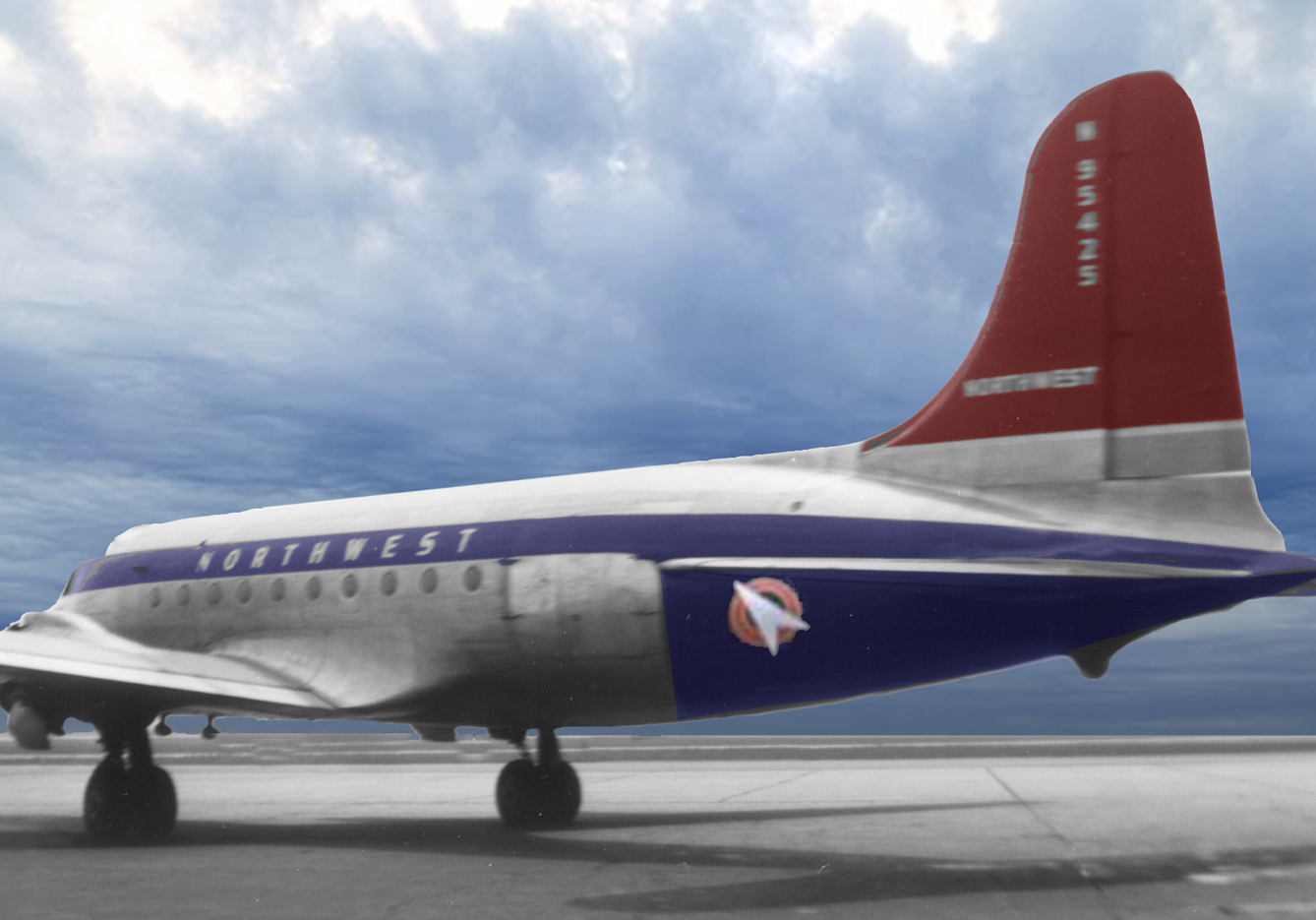
Crash of a Douglas DC-4 into Lake Michigan: 58 killed

Date & Time: Jun 23, 1950 at 2325 LT
Type of aircraft:
Operator:
Registration:
N95425
Flight Phase:
Survivors:
No
Schedule:
New York – Minneapolis – Spokane – Seattle
MSN:
10270
YOM:
1943
Flight number:
NW2501
Crew on board:
3
Crew fatalities:
Pax on board:
55
Pax fatalities:
Other fatalities:
Total fatalities:
3
Captain / Total flying hours:
8662
Captain / Total hours on type:
1968.00
Copilot / Total flying hours:
8821
Copilot / Total hours on type:
400
Aircraft flight hours:
15902
Circumstances:
The flight 2501, was scheduled to operate between the terminal points of New York, N. Y., and Seattle, Wash, via intermediate points of Minneapolis, Minn., and Spokane, Wash. At approximately 1931 the flight departed from LaGuardia Airport for Minneapolis with a crew consisting of Robert C. Lind, captain, Verne F. Wolfe, first officer, and Bonnie A. Feldman, stewardess. On board were 55 passengers, 2, 500 gallons of fuel, 80 gallons of oil, and 490 pounds of express, which resulted in an aircraft weight of 71, 342 pounds for takeoff. This was 58 pounds below the maximum permissible takeoff weight, and the load was distributed so that the center of gravity was within approved limits. The flight plan filed with ARTC (Air Route Traffic Control) specified a cruising altitude of 6 000 feet to Minneapolis. An altitude of 4,000 feet had been originally requested because of forecast en route thunderstorms, but denied by ARTC because other traffic was assigned at that level. At 2149, when over Cleveland, Ohio, a cruising altitude of 4,000 feet was again requested by the flight and this time approved by ARTC. Forty minutes later the flight was requested by ARTC to descend to 3, 500 feet because there was an eastbound flight at 5,000 feet over Lake Michigan which was experiencing severe turbulence and difficulty in maintaining its assigned altitude. ARTC estimated that the two flights would pass each other in the vicinity of Battle Creek, Mich., and that the standard separation of 1,000 feet would not be sufficient because of the turbulence. At 2251, Flight 2501 reported that it was over Battle Creek at 3,500 feet, and that it would be over Milwaukee at 2337. When in the vicinity of Benton Harbor, at 2313, the flight requested a cruising altitude of 2,500 feet, however, no reason was given for the request. ARTC was unable to approve this altitude because of other traffic. Acknowledgement that ARTC could not approve descent to 2,500 feet was received at 2315, and this was the last communication received from the flight. At 2337, Northwest Radio at Milwaukee advised the company at LaGuardia and Minneapolis, and ARTC at Chicago, that the flight was ten minutes overdue since they had incorrectly copied the 2251 flight report as 2327. At 2345 Northwest Radio at Milwaukee transmitted to the flight instructions to circle the range station at Madison, Wis., if its radio transmitter was inoperative. During the same period, all CAA (Civil Aeronautics Administration) radio stations in the Chicago-Minneapolis area tried to contact the flight on all frequencies. At 2358, Chicago ARTC, at the request of Northwest Airlines, alerted air-sea rescue facilities in the area, which included the Air Force, Navy, Coast Guard, and the state police of Illinois, Michigan, Wisconsin, and Indiana. The missing aircraft was assumed to have been involved in an accident at 0530 since the fuel supply at that time would have been exhausted. An intensive search of the Lake Michigan area was commenced at daylight June 24. On the following day, at 1830, the United States Coast Guard cutter Woodbine found an oil slick, aircraft debris, and the aircraft log book in Lake Michigan approximately 18 miles north-northwest of Benton Harbor. At 0530, June 25, underwater search operations were conducted with divers and sonar equipment. Divers descended at the points where strong sonar contacts were made. At those locations, the lake bottom was 150 feet below the surface of the water and was covered by a layer of silt and mud estimated to be 30 to 40 feet deep. Visibility was less than eight inches. The possibility of locating anything was slight, and movement was severely restricted. In addition to diving operations, the entire area was dragged with grapnel but without results. After two days of operation, the Navy suspended their search because of the difficult conditions, and because nothing had been found which would indicate that the aircraft could be recovered. Since then, the Coast Guard and aircraft flying in that area have maintained a sea and air surveillance. The only parts of the aircraft that were recovered were those with sufficient buoyancy to float a fuel tank float, foam rubber cushions, arm rests, clothing, blankets, pillows, pieces of luggage, cabin lining, plywood flooring and other wooden parts. The cushions and arm rests, shredded from impact forces and cutting edges of the fuselage, indicated that the aircraft struck the water at high speed. A plywood oxygen bottle support bracket, which had been installed in the forward left side of the fuselage, showed that the inertia forces acted in a forward, downward, and to the left direction. There was no sign of fire found on any parts recovered. All 58 occupants have been killed.
Probable cause:
The Board determines that there is not sufficient evidence upon which to make a determination of probable cause. At the approximate time of the accident a squall line was located in the area where the aircraft crashed. Despite an intensive surface and underwater search, the aircraft was not located with the exception of a few fragments.
Final Report:

Crash of a Boeing B-29-55-BA Superfortress into the Pacific Ocean: 3 killed

Date & Time: Jun 23, 1950
Type of aircraft:
Operator:
Registration:
44-84014
Flight Phase:
Flight Type:
Survivors:
Yes
Schedule:
Kadena - Andersen
Country:
Region:
Crew on board:
11
Crew fatalities:
Pax on board:
0
Pax fatalities:
Other fatalities:
Total fatalities:
3
Circumstances:
Crashed in unknown circumstances into the Pacific Ocean about 140 miles southeast of Guam Island. Three crew members were killed while eight others were rescued.

Crash of a North American B-25J Mitchell off Paracuru: 1 killed

Date & Time: Jun 16, 1950
Operator:
Flight Phase:
Flight Type:
Survivors:
Yes
Location:
Country:
Crew on board:
3
Crew fatalities:
Pax on board:
0
Pax fatalities:
Other fatalities:
Total fatalities:
1
Circumstances:
Crashed into the sea about 50 meters off shore. A crew member was killed while two others were injured.

Crash of a Boeing B-29A-10-BN Superfortress into the East China Sea

Date & Time: Jun 16, 1950
Type of aircraft:
Operator:
Registration:
42-93903
Flight Phase:
Survivors:
Yes
Schedule:
Kadena - Kadena
MSN:
7310
YOM:
1942
Country:
Region:
Crew on board:
0
Crew fatalities:
Pax on board:
0
Pax fatalities:
Other fatalities:
Total fatalities:
0
Circumstances:
Following an uneventful mission, the crew was returning to Kadena AFB, Okinawa, when on approach, he was unable to lower the undercarriage. After several trials, the crew decided to leave the area and went over the East China Sea to abandon the aircraft. After all crew members bailed out, the aircraft was shot down by the pilot of a Lockheed F-80C Shooting Star and crashed into the sea. All occupants were rescued.

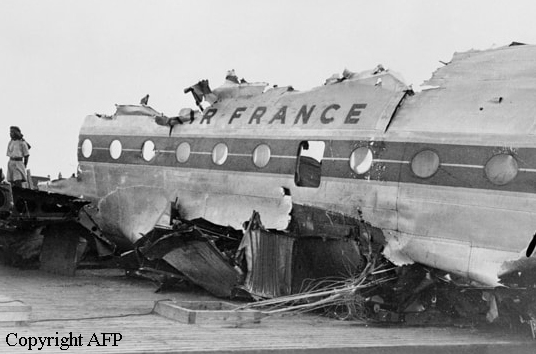
Crash of a Douglas DC-4-1009 off Bahrain: 40 killed

Date & Time: Jun 15, 1950 at 0153 LT
Type of aircraft:
Operator:
Registration:
F-BBDM
Survivors:
Yes
Schedule:
Saigon – Karachi – Bahrain – Paris
MSN:
42990
YOM:
1946
Country:
Region:
Crew on board:
8
Crew fatalities:
Pax on board:
45
Pax fatalities:
Other fatalities:
Total fatalities:
40
Captain / Total flying hours:
10550
Copilot / Total flying hours:
2100
Aircraft flight hours:
8705
Circumstances:
The approach to Bahrain was completed by night. On final approach, the aircraft christened 'Ciel de Gascogne' hit the water surface and crashed into the Persian Gulf, few hundred yards from the runway 29 threshold. First rescuers arrived on site about four hours later. Three crew members and ten passengers were rescued while 40 other occupants were killed.
Crew:
Robert Plamont, pilot, †
Mr. Cartier, copilot,
Mr. Thibaud, radio officer,
Lucien Duval, radio officer, †
Mr Franco, mechanic,
Mr. Gourhaut, steward,
Roland Rimbol, steward, †
Mrs. Hervé, stewardess.
Probable cause:
Failure of the pilot in command to adopt the timed approach procedure to the prevailing conditions. Having descended to 300 feet, the pilot in command did not take the appropriate measures to maintain this altitude until such time as the runway lights became visible. At the time of the accident, the airport of Bahrain was not equipped radio landing aids and suitable runway approach lights, which was considered as a contributory factors.
Final Report:

Crash of a Douglas DC-4-1009 off Bahrain: 46 killed

Date & Time: Jun 13, 1950 at 0116 LT
Type of aircraft:
Operator:
Registration:
F-BBDE
Survivors:
Yes
Schedule:
Saigon – Karachi – Bahrain – Paris
MSN:
42937
YOM:
1946
Country:
Region:
Crew on board:
8
Crew fatalities:
Pax on board:
44
Pax fatalities:
Other fatalities:
Total fatalities:
46
Captain / Total flying hours:
19500
Copilot / Total flying hours:
2750
Aircraft flight hours:
8128
Circumstances:
The approach to Bahrain was completed by night and limited visibility (1,370 meters). About 5,200 meters short of runway 29 threshold, the aircraft christened 'Ciel de Picardie' hit the water surface and sank by 12 feet in the Persian Gulf. First rescuers arrived on site about eight hours later. Two crew members, the captain and the radio officer, and four passengers, were rescued while 46 other occupants were killed.
Crew:
J. Sladek, pilot,
Raoul Saury, copilot, †
Yvan Moulis, radio navigator, †
M. Collard, radio officer,
Jacques Michel, mechanic, †
Nicole Combaret, stewardess, †
Roger Bertru, steward, †
Roland Bequet, steward. †
Probable cause:
The pilot in command did not keep an accurate check of his altitude and rate of descent during the timed approach procedure, thus allowing his aircraft to fly into the surface of the sea. The possibility that the pilot-in-command was feeling the effects of fatigue cannot be ruled out. At the time of the accident, the airport of Bahrain was not equipped radio landing aids and suitable runway approach lights, which was considered as a contributory factors.
Final Report:

Crash of a Boeing RB-29A-30-BN Superfortress into the North Sea: 11 killed

Date & Time: Jun 7, 1950
Type of aircraft:
Operator:
Registration:
42-94081
Flight Phase:
Survivors:
Yes
Schedule:
Sculthorpe - Sculthorpe
Location:
Country:
Region:
Crew on board:
13
Crew fatalities:
Pax on board:
0
Pax fatalities:
Other fatalities:
Total fatalities:
11
Circumstances:
The aircraft crashed in unknown circumstances into the North Sea, about 100 km northeast of RAF Sculthorpe, Norfolk, while on a maritime patrol flight. Two crew members were rescued while 11 others were killed.