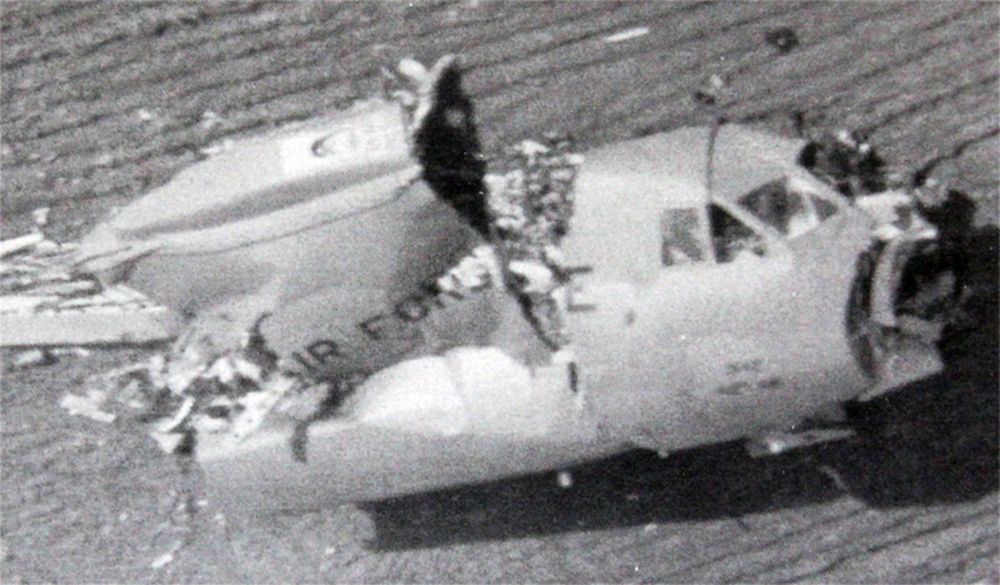
Crash of a Lockheed C-130E Hercules near Bliss: 6 killed

Date & Time: May 13, 1995
Type of aircraft:
Operator:
Registration:
62-1838
Flight Phase:
Flight Type:
Survivors:
No
Schedule:
Boise - Colorado Springs
MSN:
3801
YOM:
1963
Flight number:
Sumit 38
Location:
Crew on board:
6
Crew fatalities:
Pax on board:
0
Pax fatalities:
Other fatalities:
Total fatalities:
6
Circumstances:
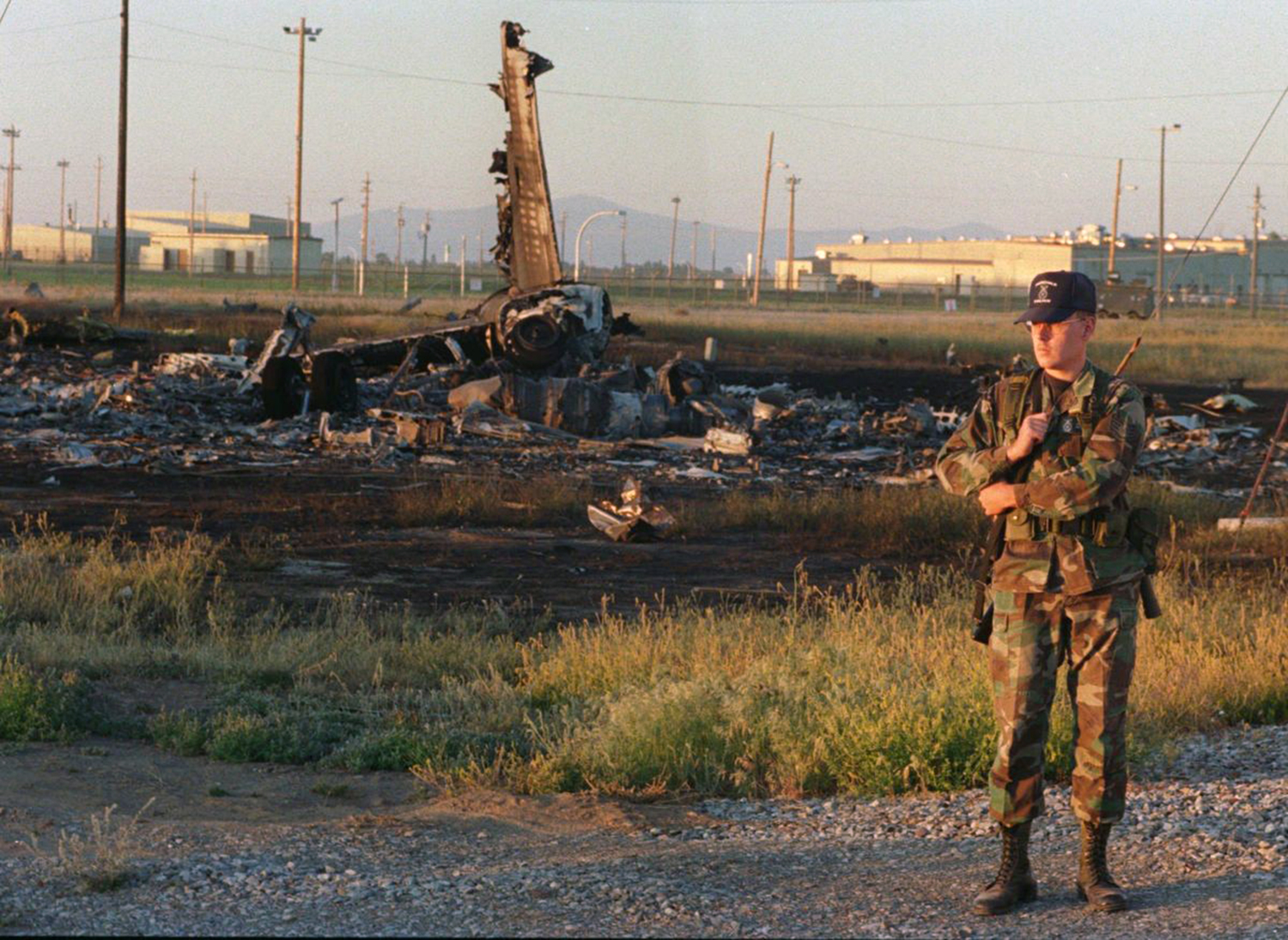
After departure from Boise-Gowen Field, en route to Peterson AFB in Colorado Springs, the crew encountered technical problems with the engine n°2. The crew declared an emergency and elected to divert to Mountain Home AFB. About 20 minutes into the flight, the engine n°2 compressor disintegrated. The aircraft entered an uncontrolled descent and crashed 12 miles north of Bliss. All six crew members were killed.
Crew:
Lt Col Robert Buckout, Commander
1st Lt Lance Daugherty, pilot,
Cpt Geoffery Boyd, navigator,
CMSgt Jimmy Vail, flight engineer,
M/Sgt Jay Kemp, loadmaster,
S/Sgt Michael Scheideman, loadmaster.
Probable cause:
The cause of the crash was that the number 2 (inside left wing) engine had a buggy undertemp sensor, causing the crew to enrich the fuel mixture, leading to an actual engine overtemp. One of the fuel lines ruptured or melted, causing the fire, and one of the crewmen hit the fire carts, but the fire re-erupted moments later, and there were no more extinguishers available for that engine. One of the pins that was supposed to melt in an engine fire, releasing the engine from the AC, failed to release the engine properly, while another worked properly. Still half connected to the wing hard point, the engine torqued at an awkward angle, causing severe wing and fuselage damage, which led to the crash.

Crash of a Learjet C-21A in Alexander City: 8 killed

Date & Time: Apr 17, 1995 at 1820 LT
Type of aircraft:
Operator:
Registration:
84-0136
Flight Type:
Survivors:
No
Schedule:
Randolph – Wright-Patterson – Andrews – Randolph
MSN:
35-583
YOM:
1985
Flight number:
Kiowa 71
Crew on board:
2
Crew fatalities:
Pax on board:
6
Pax fatalities:
Other fatalities:
Total fatalities:
8
Captain / Total flying hours:
1074
Captain / Total hours on type:
877.00
Copilot / Total flying hours:
2242
Copilot / Total hours on type:
547
Circumstances:
The C-21A, a USAF designation of the Learjet 35A was assigned to the 332nd Airlift Flight at Randolph AFB, Texas. The aircraft would depart Randolph AFB as flight Kiowa 71 to Wright-Patterson AFB, Andrews AFB and then back to Randolph. The aircraft was landed at Andrews AFB at 10:57. The crew requested a full load of fuel and told Serv-Air maintenance technicians that they had been unable to transfer fuel from the wing tanks to the fuselage tank. A Serv-Air maintenance technician removed the fuel-control panel from the aircraft and replaced the fuselage-tank transfer/fill switch. The maintenance technician told the crew that replacement of the fuselage-tank switch had not corrected the problem and that he was going to try to correct the problem by replacing the fuel-control relay panel. This was a time consuming job. The crew decided to continue back to Randolph without the repairs. The fuselage fuel tank was full and they had not had trouble earlier in the day getting fuel out of the fuselage tank. The aircraft departed from Andrews AFB at 16:38. The aircraft was in cruise flight at FL390 at 17:53 when the crew began to transfer fuel from the fuselage tank to the wing tanks. The crew did not know that the right standby fuel pump was operating and was preventing fuel from being transferred from the fuselage tank to the right wing. Bearings in the right standby pump were in a deteriorated condition and the pump had required higher-than-normal electrical current for rotation. The higher-than-normal electrical current had caused progressive damage to two contacts in the fuel control relay panel and eventually had caused the contacts to bond together. This caused the pump to run continuously throughout the flight and to prevent fuel transfer from the fuselage tank to the right wing. The aircrew noticed that the left wing-tip tank had become 800 pounds [363 kilograms] heavier than the right wing-tip tank during the transfer, and they attempted to analyse the malfunction and correct the imbalance. A fuel-imbalance during-fuel-transfer malfunction however was not included in the Air Force training syllabus, nor was the procedure contained in the C-21A checklist. At 17:56, the copilot told the Atlanta Air Route Traffic Control Center (Atlanta Center) controller, "Sir, we need to revise our flight plan. We’re having a problem getting some fuel out of one of our wings. Can we get vectors to Maxwell Air Force Base? And we’re going to need to dump fuel for about five minutes." The crew at 18:00 began to dump fuel from the left wing-tip tank. However, they still had an imbalance in the wing tanks themselves of about 200 pounds (91 kilograms). At 18:03 the flight was cleared to descend from FL350. The crew then observed that fuel quantity was decreasing rapidly in the right wing tank, that the left wing tank was full and that the left wing-tip tank had begun to fill with fuel. At 18:07, the copilot told the Atlanta Center controller, "Sir, we’d like to declare an emergency at this time for a fuel problem and, ah, get to Maxwell quick as we can." They were cleared direct to Maxwell AFB and cleared to descend to 17,000 feet, and later to 11,000 feet. At 18:15, the copilot told Atlanta Center, "We need to change the airfield, to get to the closest piece of pavement we can land on." The controller said, "Kiowa 71, we got an airport at 12 o’clock and 12 miles. It’s Alexander City." The crew accepted this and began their emergency descent into Alexander City airport. At 18:16 the copilot took over control since the captain did not have the airfield in sight and the copilot did. The aircraft was northeast of the airport at 8,800 feet and was descending at 5,600 feet per minute with the wing-lift spoilers extended when the copilot told Atlanta Center that they were on a left base for the runway. The crew attempted to fly a visual traffic pattern to runway 18 but were in a poor position to complete the approach and landing. They subsequently elected to enter a left downwind leg for runway 36. As airspeed was reduced, aileron authority diminished and, because of the fuel imbalance, the aircraft became difficult to control. The copilot, flying from the right seat, did not have a good view of the runway and asked the aircraft commander for help in positioning the aircraft on downwind and in beginning the turn toward the runway. The captain wanted to get the gear down but the copilot had difficult controlling the plane already: "Don’t put anything down," the copilot said. "Nothing down, nothing down." The aircraft was at 2,030 feet when the gear-warning horn sounded. The captain said, "Gear down. Gear down." The copilot said, "No. Stand by. Stand by." "Gear down," the captain said. "Gear down, man." "No, not yet, not yet," the copilot said. The copilot then asked the aircraft commander to "push the power up a little bit for me." Power was increased and the gear was extended. The aircraft was at about 1,500 feet and was one mile southwest of the runway at 18:19 when the copilot began a left turn. Approximately halfway through the final turn and one mile due south of runway 36, the aircraft abruptly rolled out, flew through the extended runway centerline and continued in an east, northeasterly direction approximately 800 feet above the ground. The copilot had rolled out of the turn to regain lateral control of the aircraft. At this time the right engine was operating at a reduced thrust setting in an attempt to counteract the effects of the fuel imbalance. The captain, to center the ball in the slip indicator, applied pressure on the left rudder, against pressure that was being applied on the right rudder by the copilot. The captain said, "Step on the rudder. Step on the rudder." The copilot said, "Paul, no. Paul, don’t." The application of left rudder caused the aircraft to roll left rapidly. It rolled inverted entered the trees and struck the ground.
Probable cause:
The investigating officer found that the mechanical malfunction consisted of the right standby [fuel] pump continuing to operate uncommanded after engine start. This malfunction resulted in fuel being pumped into the left wing and prevented fuel from being transferred to the right wing during normal transfer procedures. This condition caused a fuel imbalance. The Air Force, for whatever reason, did not contract for flight-manual updates from Learjet following purchase of the airplane in 1984. The "fuel imbalance during fuel transfer" emergency procedure was included in civilian Learjet flight-manual updates published by subsequent to 1984. As a result, the Air Force training syllabus likewise did not include this emergency procedure. Because the crew did not have checklist or flight-manual guidance on this problem, the crew misanalysed the malfunction. They failed to correct the fuel imbalance as a result, allowed their airspeed to become too slow for the aircraft’s configuration when attempting to land and then made control inputs that caused the aircraft to enter a flight regime from which they could not recover.


Crash of a Boeing B-52H Stratofortress at Fairchild AFB: 4 killed

Date & Time: Jun 24, 1994 at 1416 LT
Type of aircraft:
Operator:
Registration:
61-0026
Flight Phase:
Flight Type:
Survivors:
No
Schedule:
Fairchild AFB - Fairchild AFB
MSN:
464453
YOM:
1960
Flight number:
Czar 52
Crew on board:
4
Crew fatalities:
Pax on board:
0
Pax fatalities:
Other fatalities:
Total fatalities:
4
Circumstances:
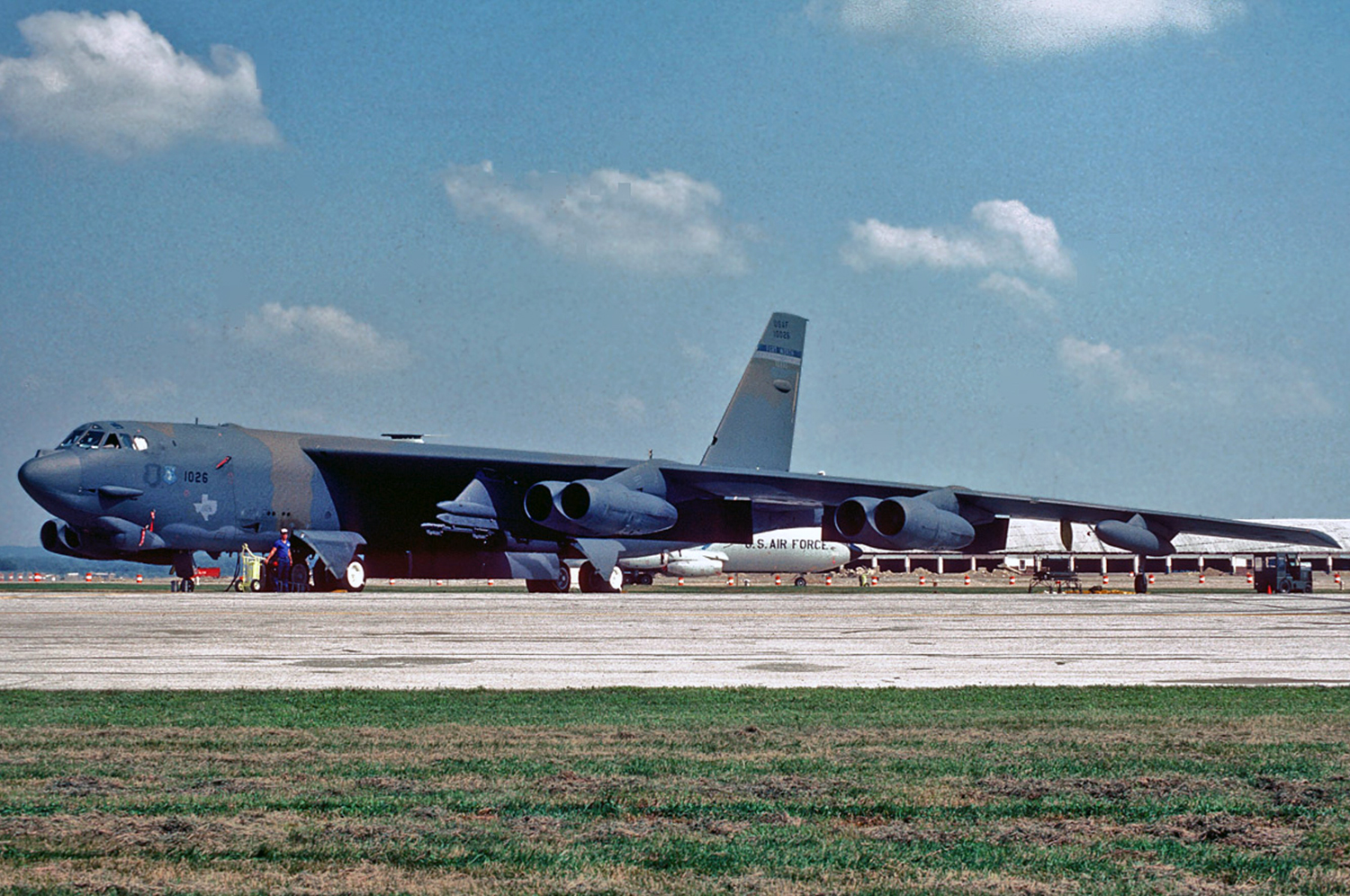
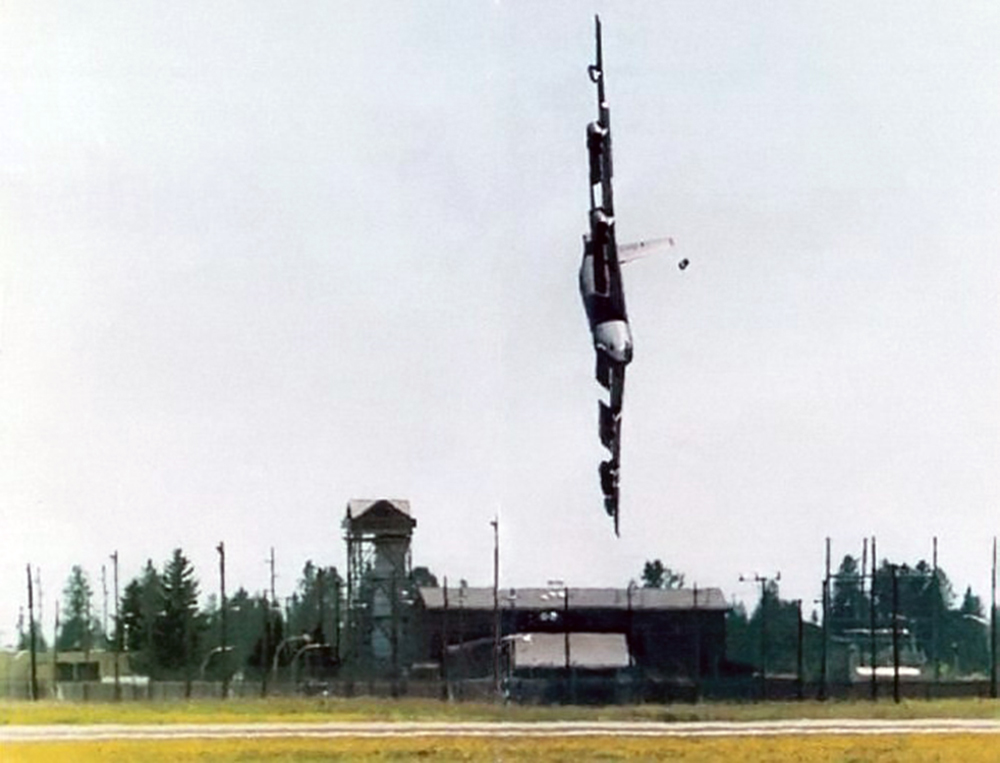
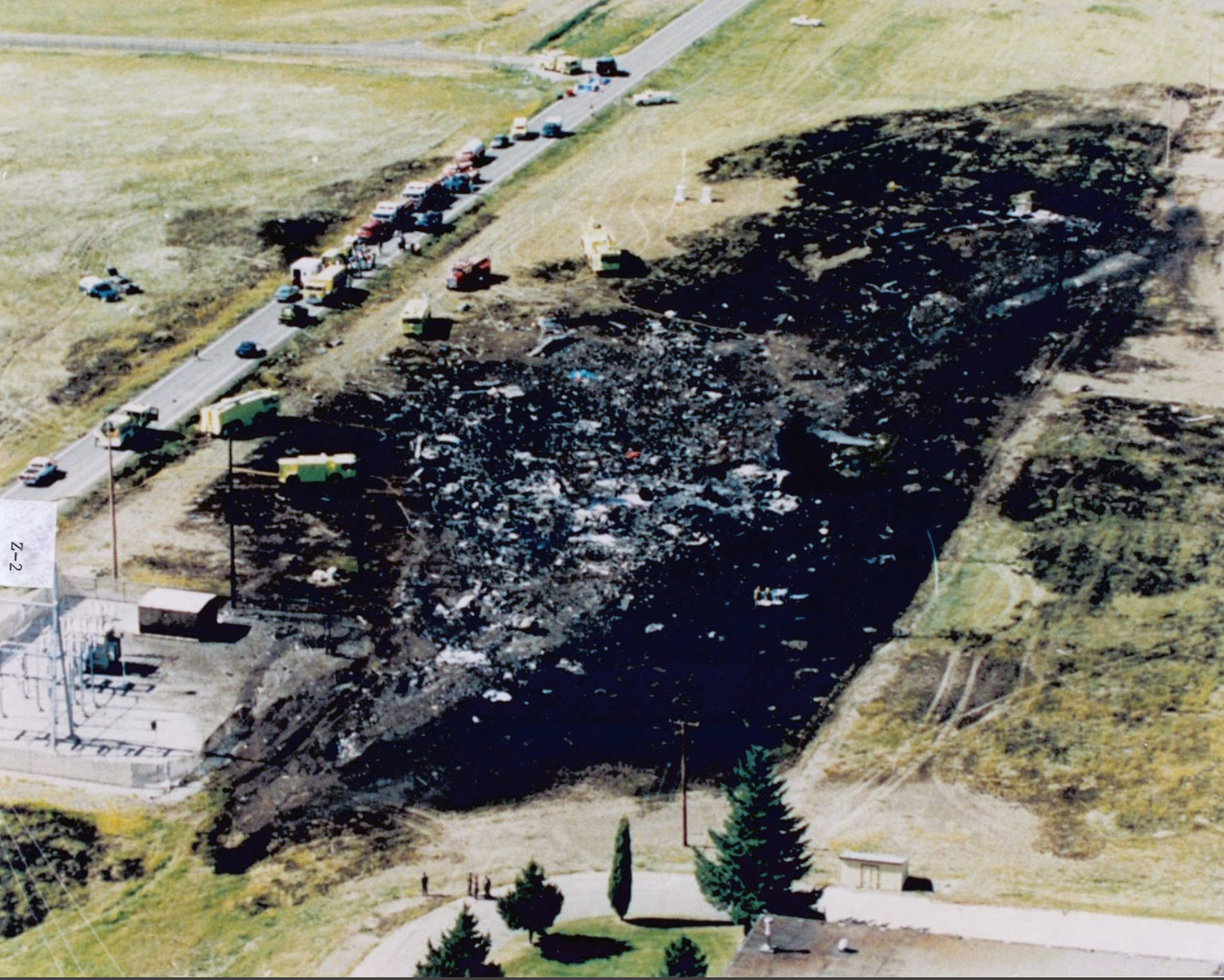
In preparation for the 1994 Fairchild Airshow, the Pilot Lt Col Arthur A. "Bud" Holland was again selected as the command pilot for the B-52 demonstration flight. On 15 June 1994, Holland briefed the new wing commander, Colonel William Brooks, on the proposed flight plan. Holland's demonstration profile violated numerous regulations, including steep bank angles, low-altitude passes, and steep pitch attitudes. Brooks ordered Holland not to exceed 45° bank angle or 25° pitch attitude during the demonstration. During the first practice session, on 17 June, Holland repeatedly violated these orders. Brooks witnessed this, but took no action. Pellerin flew with Holland on that flight and reported to Brooks that, "the profile looks good to him; looks very safe, well within parameters." The next practice flight on 24 June ended with the fatal crash. The demonstration profile designed by Holland included a 360° turn around Fairchild's control tower, a maneuver which he had not attempted in previous air show demonstrations. During the final flight, Holland performed a series of 60° bank turns and a 68° pitch climb in violation of Brooks' orders. There is no evidence to suggest that either McGeehan or Wolff attempted to intervene as Holland carried out these dangerous maneuvers. Pellerin was originally scheduled to fly in this mission, as he had done on the 17 June flight, but he was unavailable for the 24 June flight and Wolff was selected as the replacement aircrew member. Due to the short notice of his assignment to the mission, Wolff did not participate in the pre-flight briefing and boarded the aircraft after the engines were started. He was therefore unaware of the planned mission profile and had no opportunity to raise any objections before take-off. All of the four aircrew involved in the crash had only limited flying time in the months before the crash. It would appear that none of them had noticed that the aircraft had stalled until shortly before impact, as indicated by a failure to apply standard recovery techniques to the aircraft once it entered the stall. The investigation reported that even if the proper stall recovery techniques had been applied, it was unlikely that the accident could have been prevented as the aircraft was already flying too low to be recovered.
Crew:
Lt Col Arthur A. "Bud" Holland, pilot,
Lt Col Mark C. McGeehan, copilot,
Col Robert E. Wolff, observer,
Lt Col Kenneth "Ken" Huston, operations officer.
Probable cause:
The accident investigation concluded that the crash was primarily attributable to Holland's personality and behavior, USAF leaders' inadequate reactions to the previous incidents involving Holland, and the sequence of events and aircrew response during the final flight of the aircraft. Holland's disregard for procedures governing the safe operation of the B-52 aircraft that he commanded and the absence of firm and consistent corrective action by his superior officers allowed Holland to believe that he could conduct his flight in an unsafe manner, culminating with the slow, steeply banked, 360° turn around the control tower. The other environmental factors involved, including the addition of a new maneuver (the 360° turn around the tower), inadequate pre-flight involvement of Wolff, and the distractions from the base shooting four days prior, combined with Holland's unsafe and risk-taking piloting behavior to produce conditions favorable for the crash to occur. The final factor, according to the USAF investigation report, was the 10-knot (19 km/h) wind and its effect on the maneuvers required to achieve the intended flightpath in relation to the ground.

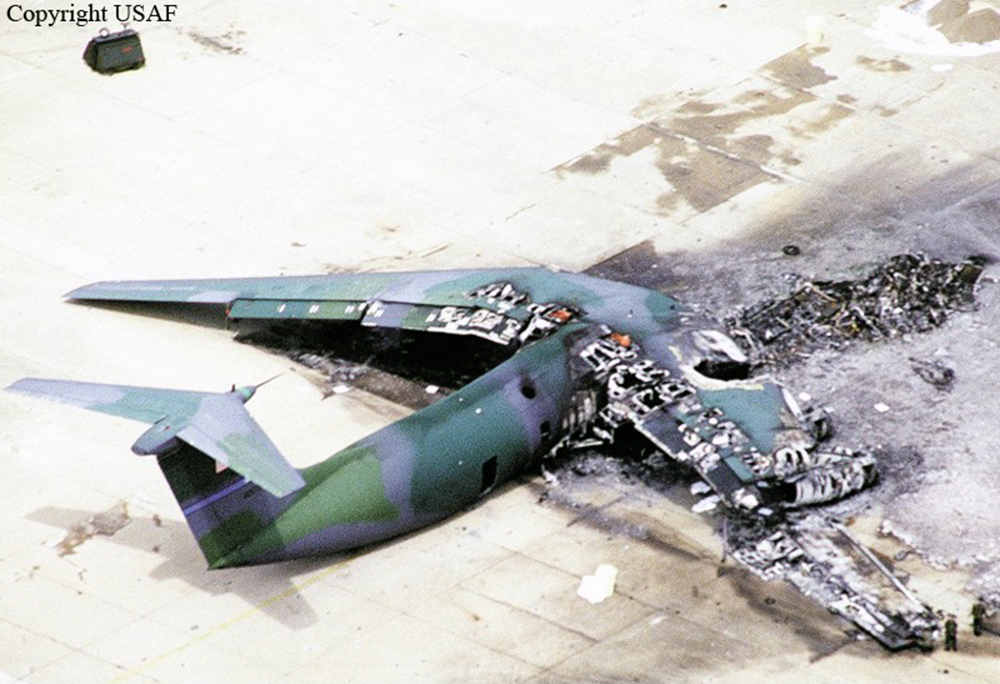
Ground fire of a Lockheed C-141A-LM Starlifter at Pope AFB: 23 killed

Date & Time: Mar 23, 1994 at 1405 LT
Type of aircraft:
Operator:
Registration:
66-0173
Flight Phase:
Flight Type:
Survivors:
Yes
MSN:
6199
YOM:
1966
Crew on board:
0
Crew fatalities:
Pax on board:
0
Pax fatalities:
Other fatalities:
Total fatalities:
23
Aircraft flight hours:
36132
Circumstances:
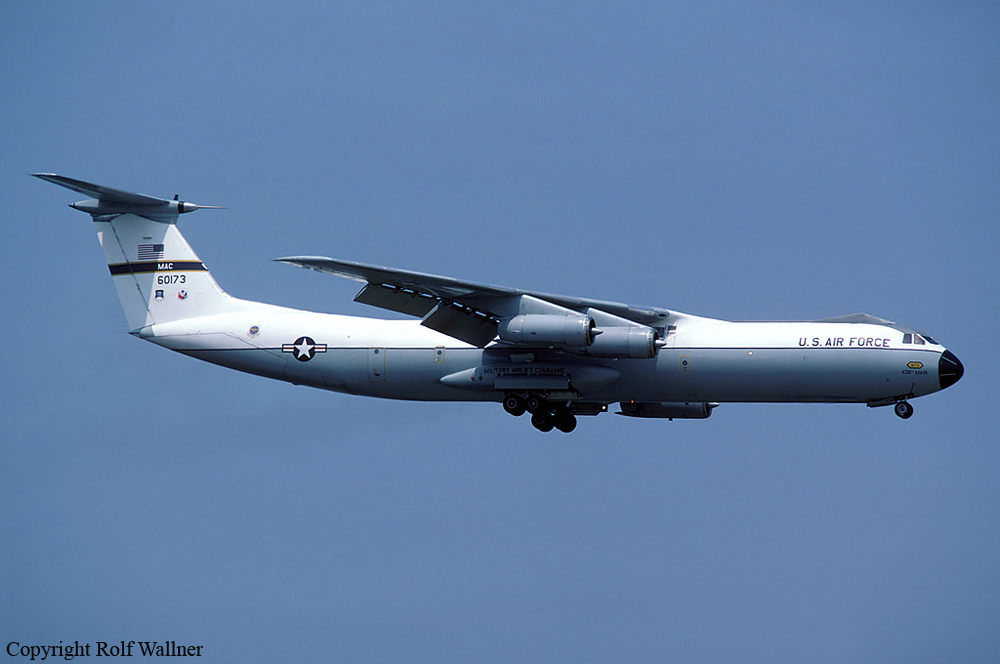
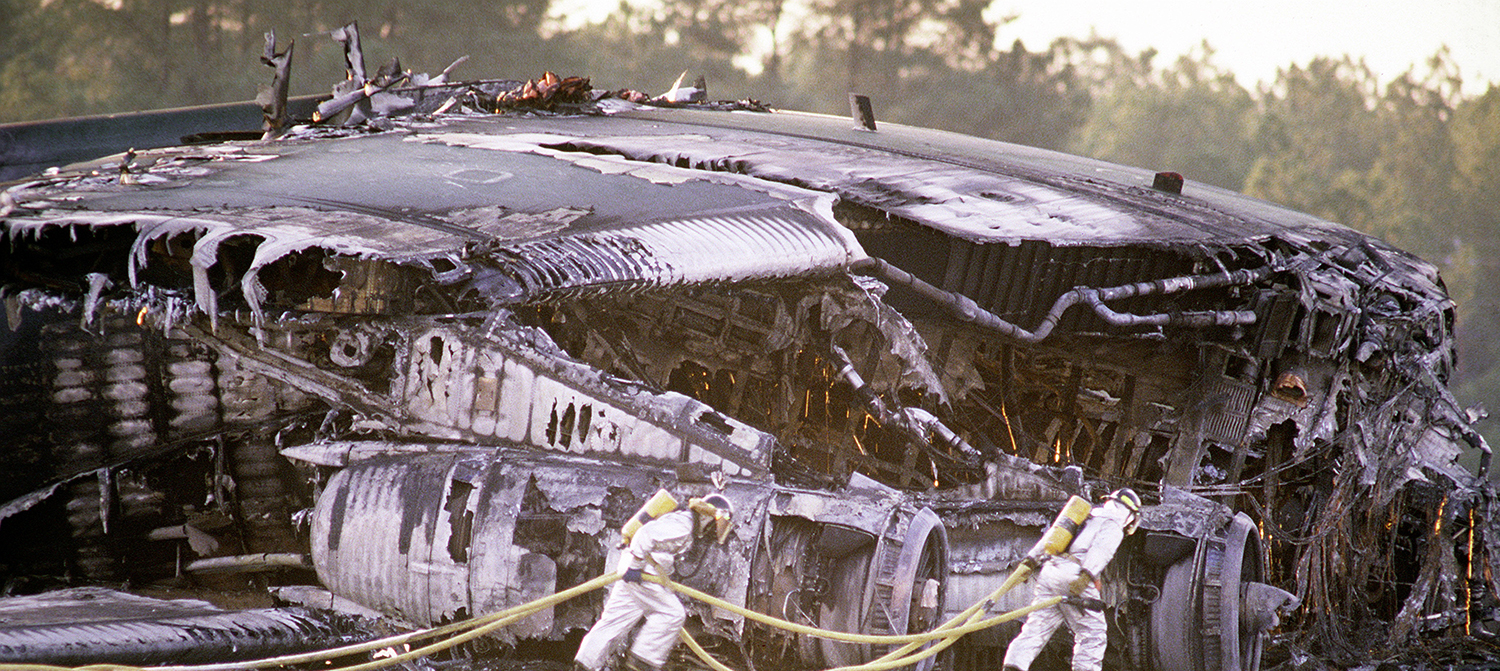
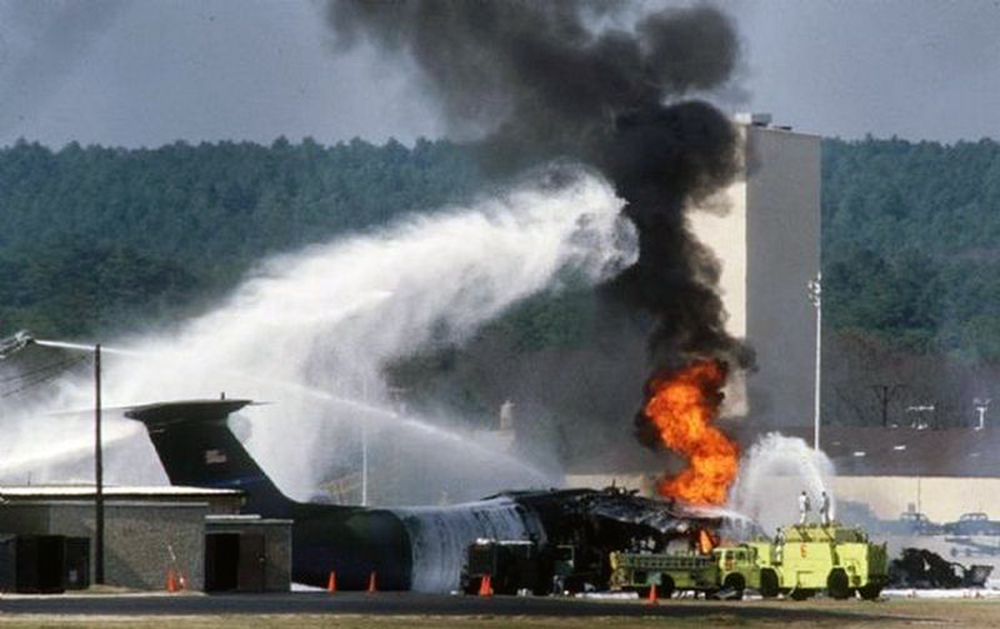
Parked at Pope AFB, the Starlifter was ready to embark its passengers. About 500 paratroopers were around the aircraft. On final approach to runway 23, at an altitude of 300 feet, an USAF Lockheed C-130E Hercules registered 68-10492 collided with a USAF F-16 Fighting Falcon (88-0171) that was approaching the same runway to land. The crew of the C-130 was able to land safely while both pilots on board the F-16 ejected before the fighter crashed on the parked C-141. Several explosion occurred and 23 soldiers who were already on board were killed while 80 others were injured, some seriously. The aircraft was destroyed by fire.
Probable cause:
The accident was the consequence of multiple causes such as ATC errors and pilots errors. USAF investigations placed most of the blame for the accident on the military and civilian air traffic controllers working at Pope AFB as well as the F-16 crew.

Crash of a Lockheed AC-130H Hercules off Malindi: 8 killed

Date & Time: Mar 14, 1994
Type of aircraft:
Operator:
Registration:
69-6576
Flight Phase:
Flight Type:
Survivors:
Yes
Schedule:
Mombasa - Mogadishu
MSN:
4351
YOM:
1969
Location:
Country:
Region:
Crew on board:
14
Crew fatalities:
Pax on board:
0
Pax fatalities:
Other fatalities:
Total fatalities:
8
Circumstances:
En route from Mombasa to Mogadishu, while in cruising altitude over the Indian Ocean, the crew contacted ATC and declared an emergency following an explosion in the cargo compartment. The crew initiated an emergency descent and elected to divert to the nearest airport when control was lost. The aircraft crashed in the sea about 200 metres offshore, some 7 km from Malindi. Six crew members were rescued while eight others were killed.
Probable cause:
A 105 mm shell exploded in a gun barrel for unknown reasons.

Crash of a Lockheed C-141B-LM Starlifter near Harlem: 7 killed

Date & Time: Nov 30, 1992 at 2120 LT
Type of aircraft:
Operator:
Registration:
65-0255
Flight Phase:
Flight Type:
Survivors:
No
Schedule:
McChord - McChord
MSN:
300-6106
YOM:
1965
Location:
Crew on board:
7
Crew fatalities:
Pax on board:
0
Pax fatalities:
Other fatalities:
Total fatalities:
7
Aircraft flight hours:
37744
Circumstances:
The aircraft departed McChord AFB on an air refuelling mission over Montana. While cruising at an altitude of 25,000 feet by night, the aircraft collided under unknown circumstances with a second USAF Lockheed C-141B-LM Starlifter registered 66-0142, carrying six crew members and taking part to the same mission. Both aircraft entered an uncontrolled descent, disintegrated in the air and crashed about 14 km north of Harlem. All 13 occupants in both aircraft were killed.

Crash of a Lockheed C-141B-LM Starlifter near Harlem: 6 killed

Date & Time: Nov 30, 1992 at 2120 LT
Type of aircraft:
Operator:
Registration:
66-0142
Flight Phase:
Flight Type:
Survivors:
No
Schedule:
McChord - McChord
MSN:
300-6168
YOM:
1966
Location:
Crew on board:
6
Crew fatalities:
Pax on board:
0
Pax fatalities:
Other fatalities:
Total fatalities:
6
Aircraft flight hours:
31857
Circumstances:
The aircraft departed McChord AFB on an air refuelling mission over Montana. While cruising at an altitude of 25,000 feet by night, the aircraft collided under unknown circumstances with a second USAF Lockheed C-141B-LM Starlifter registered 65-0255, carrying seven crew members and taking part to the same mission. Both aircraft entered an uncontrolled descent, disintegrated in the air and crashed about 14 km north of Harlem. All 13 occupants in both aircraft were killed.

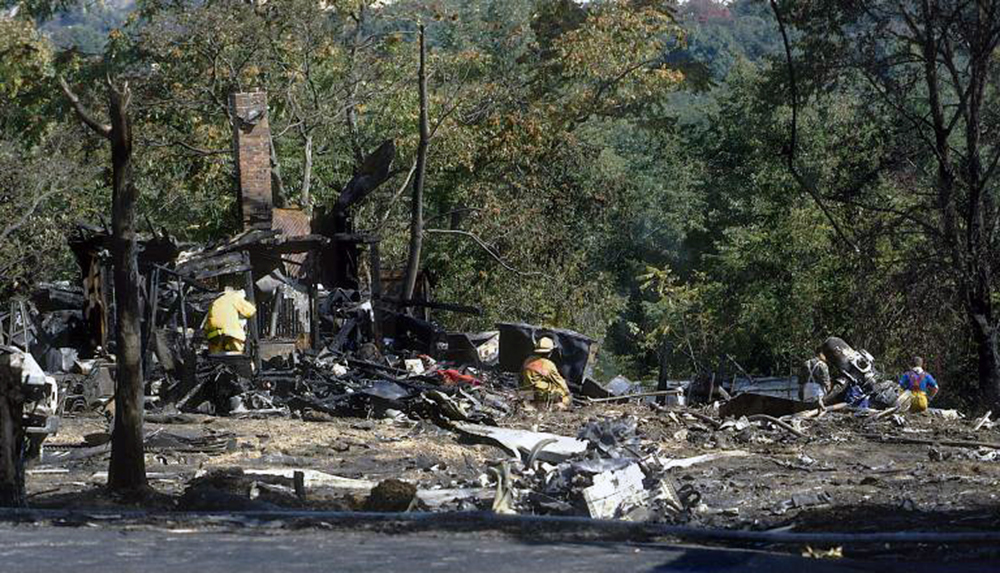
Crash of a Lockheed C-130E Hercules near Berkeley Springs: 6 killed

Date & Time: Oct 7, 1992 at 0930 LT
Type of aircraft:
Operator:
Registration:
63-7881
Flight Phase:
Flight Type:
Survivors:
No
Site:
Schedule:
Martinsburg - Martinsburg
MSN:
3952
YOM:
1964
Crew on board:
6
Crew fatalities:
Pax on board:
0
Pax fatalities:
Other fatalities:
Total fatalities:
6
Circumstances:
The crew departed Martinsburg-Eastern West Virginia-Shepherd Field for a local training flight. While flying at low height, the four engine aircraft struck power cables and crashed onto a house located 3 km northwest of Berkeley Springs. All six crew members were killed while the unique person in the house was slightly injured.

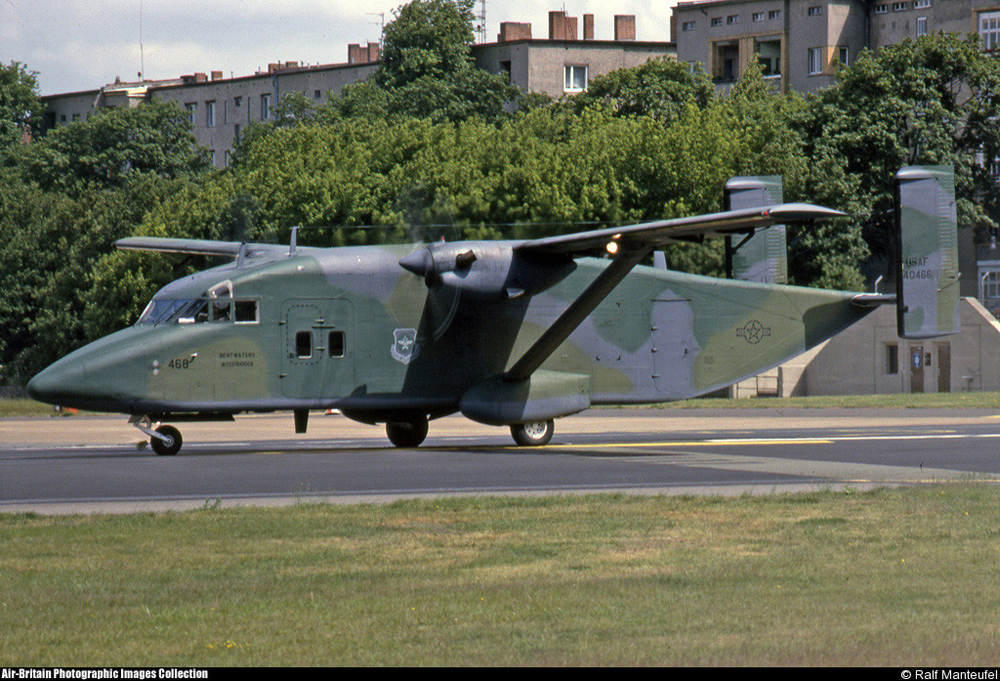
Crash of a Short JC-23A Sherpa in Colquitt: 3 killed

Date & Time: Jul 16, 1992 at 0930 LT
Type of aircraft:
Operator:
Registration:
84-0466
Flight Phase:
Flight Type:
Survivors:
No
Schedule:
Cairns AAF - Cairns AAF
MSN:
3113
YOM:
1985
Crew on board:
3
Crew fatalities:
Pax on board:
0
Pax fatalities:
Other fatalities:
Total fatalities:
3
Circumstances:
The Sherpa departed Fort Rucker-Cairns AAF on a training flight, carrying three crew members who were supposed to test the aircraft in special configuration. Two hours and 45 minutes into the flight, while cruising at an altitude of 5,336 feet in good weather conditions, the aircraft became unstable and rolled to the right to an angle of 12° then to the left to an angle of 35°. It entered an uncontrolled descent before crashing in an open field located 4 miles north of Colquitt, bursting into flames. All three occupants were killed. It was determined that control was lost while the aircraft' speed was 89 knots. Originally, the crew was supposed to simulate an engine failure at the altitude of 10,000 feet but apparently encountered problems as the aircraft' speed was dropping by the order of one knot per second before it became unstable. At the time of the accident, the total weight of the aircraft and its CofG were within limits.
Probable cause:
The exact cause of the stall at a speed of 89 knots remains unclear.

Crash of a Boeing EC-135J Stratotanker at Pope AFB

Date & Time: May 29, 1992 at 1420 LT
Type of aircraft:
Operator:
Registration:
62-3584
Flight Type:
Survivors:
Yes
Schedule:
Pope AFB - Pope AFB
MSN:
18567
YOM:
1963
Crew on board:
3
Crew fatalities:
Pax on board:
11
Pax fatalities:
Other fatalities:
Total fatalities:
0
Circumstances:
The crew was completing a local training flight at Pope AFB. Apparently following a wrong approach configuration, the aircraft landed too far down the runway and was unable to stop within the remaining distance. It overran, lost its undercarriage and came to rest, broken in two. All 14 occupants were injured.