Country
Operator Image

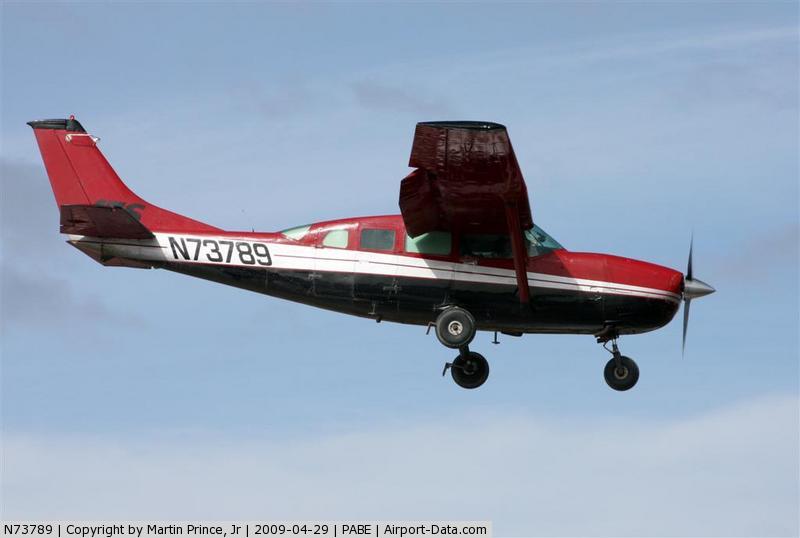
Crash of a Cessna T207A Turbo Stationair 8 in Nightmute
Date & Time:
Sep 2, 2011 at 1335 LT
Operator:
Registration:
N73789
Survivors:
Yes
Schedule:
Tununak - Bethel
MSN:
207-0629
YOM:
1981
Crew on board:
1
Crew fatalities:
Pax on board:
0
Pax fatalities:
Other fatalities:
Total fatalities:
0
Captain / Total hours on type:
216.00
Aircraft flight hours:
19562
Circumstances:
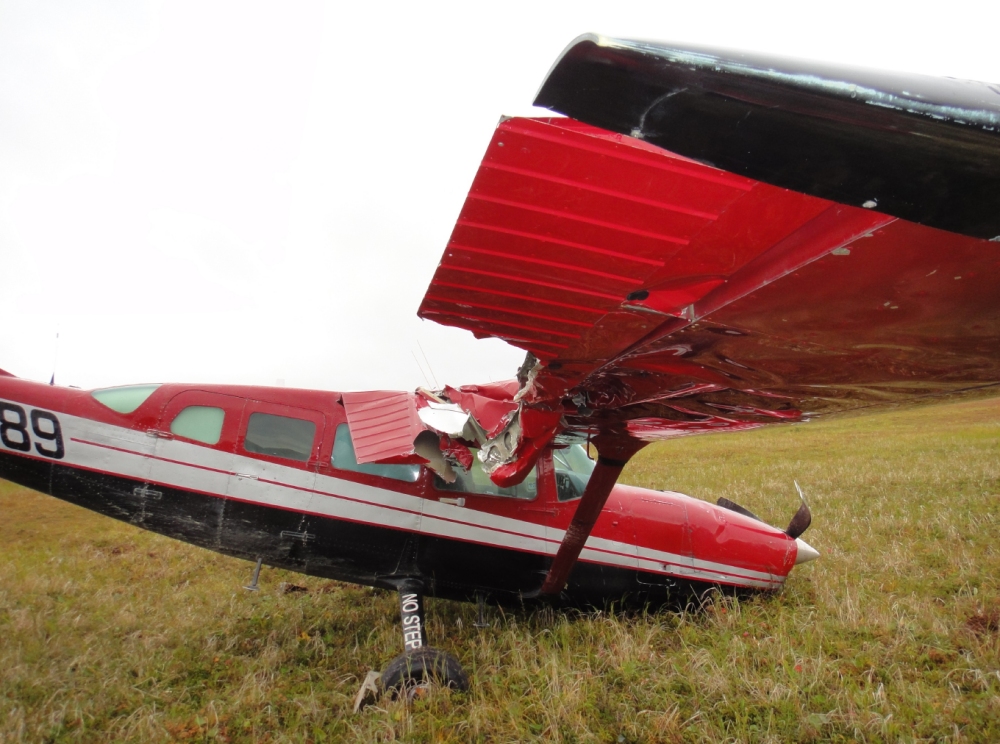
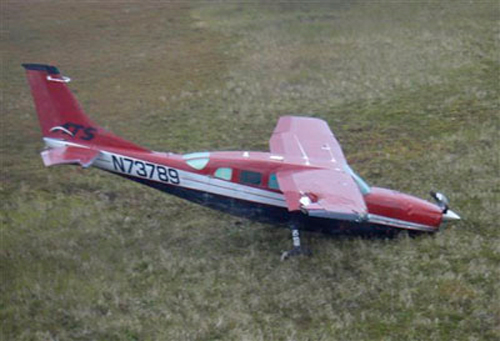
On September 2, 2011, about 1335 Alaska daylight time, a Cessna 208B airplane, N207DR, and a Cessna 207 airplane, N73789, collided in midair about 9 miles north of Nightmute, Alaska. Both airplanes were being operated as charter flights under the provisions of 14 Code of Federal Regulations (CFR) Part 135 in visual meteorological conditions when the accident occurred. The Cessna 208B was operated by Grant Aviation Inc., Anchorage, Alaska, and the Cessna 207 was operated by Ryan Air, Anchorage, Alaska. Visual flight rules (VFR) company flight following procedures were in effect for each flight. The sole occupant of the Cessna 208B, an airline transport pilot, sustained fatal injuries. The sole occupant of the Cessna 207, a commercial pilot, was uninjured. The Cessna 208B was destroyed, and the Cessna 207 sustained substantial damage. After the collision, the Cessna 208B descended uncontrolled and impacted tundra-covered terrain, and a postcrash fire consumed most of the wreckage. The Cessna 207’s right wing was damaged during the collision and the subsequent forced landing on tundra-covered terrain. Both airplanes were based at the Bethel Airport, Bethel, Alaska, and were returning to Bethel at the time of the collision. The Cessna 208B departed from the Toksook Bay Airport, Toksook Bay, Alaska, about 1325, and the Cessna 207 departed from the Tununak Airport, Tununak, Alaska. During separate telephone conversations with the National Transportation Safety Board (NTSB) investigator-in-charge on September 2, the chief pilot for Ryan Air, as well as the director of operations for Grant Aviation, independently reported that both pilots had a close personal relationship. During an initial interview with the NTSB IIC on September 3, in Bethel, the pilot of the Cessna 207 reported that both airplanes departed from the neighboring Alaskan villages about the same time and that both airplanes were en route to Bethel along similar flight routes. She said that, just after takeoff from Tununak, she talked with the pilot of the Cessna 208B on a prearranged, discreet radio frequency, and the two agreed to meet up in-flight for the flight back to Bethel. She said that, while her airplane was in level cruise flight at 1,200 feet above mean sea level (msl), the pilot of the Cessna 208B flew his airplane along the left side of her airplane, and they continued to talk via radio. She said that the pilot of the Cessna 208B then unexpectedly and unannounced climbed his airplane above and over the top of her airplane. She said that she immediately told the pilot of the Cessna 208B that she could not see him and that she was concerned about where he was. She said that the Cessna 208B pilot then said, in part: "Whatever you do, don't pitch up." The next thing she recalled was moments later seeing the wings and cockpit of the descending Cessna 208B pass by the right the side of her airplane, which was instantaneously followed by an impact with her airplane’s right wing. The Cessna 207 pilot reported that, after the impact, while she struggled to maintain control of her airplane, she saw the Cessna 208B pass underneath her airplane from right-to-left, and it began a gradual descent, which steepened as the airplane continued to the left and away from her airplane. She said that she told the pilot of the Cessna 208B that she thought she was going to crash.She said that the pilot of the Cessna 208B simply stated, “Me too.” She said that she watched as the Cessna 208B continued to descend, and then it entered a steep, vertical, nose-down descent before it collided with the tundra-covered terrain below. She said that a postcrash fire started instantaneously upon impact. Unable to maintain level cruise flight and with limited roll control, the Cessna 207 pilot selected an area of rolling, tundra-covered terrain as a forced landing site. During touchdown, the airplane’s nosewheel collapsed, and the airplane nosed down. The Cessna 207’s forced landing site was about 2 miles east of the Cessna 208B’s accident site.
Final Report:
Crash of a Cessna 402C in Koyuk: 5 killed
Date & Time:
Dec 10, 1994 at 1900 LT
Operator:
Registration:
N1238K
Survivors:
No
Schedule:
Nome - Koyuk
MSN:
402C-1019
YOM:
1985
Flight number:
XY2402
Crew on board:
1
Crew fatalities:
Pax on board:
4
Pax fatalities:
Other fatalities:
Total fatalities:
5
Captain / Total hours on type:
828.00
Aircraft flight hours:
10722
Circumstances:
The airplane was on a flight at night from Nome to Koyuk, AK, when it crashed into a mountain at the 2,725 foot level. The accident site was directly on a course line between the Nome and Koyuk Airports. The ceiling at nome was 3,500 overcast at the time of departure. According to rescue personnel, weather at the accident area was: indefinable ceiling and poor visibility with heavy snow and blowing snow. The pilot had a hand held GPS on board that he had barrowed from another pilot. But the database could not be retrieved from the GPS. According to the owner of the GPS, he and the accident pilot programmed different waypoints. The pilot did not file a VFR or an ifr flight plan with the FAA.
Probable cause:
VFR flight by the pilot into instrument meteorological conditions (IMC), and his failure to maintain sufficient altitude or clearance from mountainous terrain. Factors related to the accident were: darkness and the adverse weather conditions.
Final Report:
Crash of a Cessna 207A Stationair 7-II in Nome: 2 killed
Date & Time:
Apr 3, 1993 at 1011 LT
Operator:
Registration:
N6467H
Survivors:
No
Schedule:
Nome - Elim
MSN:
207-0531
YOM:
1979
Flight number:
XY403
Crew on board:
1
Crew fatalities:
Pax on board:
1
Pax fatalities:
Other fatalities:
Total fatalities:
2
Captain / Total hours on type:
1763.00
Aircraft flight hours:
11854
Circumstances:
Pireps provided to the pilot by FSS prior to takeoff indicated that fog and low visibility had been encountered on the pilot's route to the east, forcing airplanes to return to Nome. In addition, as the flight taxied for takeoff, the pilot was told '... VFR is not recommended to the east...'. The airplane impacted flat snow covered terrain in a steep left wing down attitude approximately 4 miles east of the departure end of the runway. The area was a treeless, snow covered flat coastal plain bordered by a sea frozen with white ice. The pilot had returned to work 4/1 after a 30-day suspension following a takeoff accident, and was assigned only to Cessna 207 'VFR only' airplanes. The poi did not discuss the earlier accident or the pilot with the operator's management.
Probable cause:
The pilot initiated VFR flight into instrument meteorological and whiteout conditions. Factors which contributed to the accident were: inadequate supervision of the pilot by the company, inadequate oversight by the Federal Aviation Administration, the pilot's self induced pressure to conduct the flight, and the existing weather conditions and snow covered terrain.
Final Report:
Crash of a Cessna 402C in Nome
Date & Time:
Feb 20, 1993 at 0900 LT
Operator:
Registration:
N4182G
Survivors:
Yes
Schedule:
Nome - Savoonga
MSN:
402C-0284
YOM:
1980
Crew on board:
1
Crew fatalities:
Pax on board:
1
Pax fatalities:
Other fatalities:
Total fatalities:
0
Captain / Total hours on type:
736.00
Aircraft flight hours:
5905
Circumstances:
The airplane was removed from a hangar about one hour before departure. During the interim period, the ambient temperature was about 32° F and it was snowing lightly. No deicing fluid was used on the airplane. The pilot reported observing only water on the plane's wings. The passenger (a rated pilot) reported to an alaska state trooper that the airplane had accumulated a little ice before the flight departed. The airplane became airborne about 1,000 feet from the end of the 5,576 feet long runway. Shortly after rotation, the airplane began to buffet and would not climb. The airplane impacted in a near horizontal attitude on level snow covered tundra. The pilot reported that immediately after exiting the airplane, he observed a coarse layer of ice on the aft two thirds of the wings. During the test run of both engines, no problems were noted that would have caused and/or contributed toward the inability of the airplane to sustain flight.
Probable cause:
The pilot in command not removing the ice from the plane's airfoil surfaces before takeoff. The weather condition was a factor.
Final Report:
Crash of a Cessna 402C near Nome: 1 killed
Date & Time:
Aug 7, 1989 at 1230 LT
Operator:
Registration:
N12333
Survivors:
No
Schedule:
Wales - Nome
MSN:
402C-0806
YOM:
1984
Flight number:
XY2401
Crew on board:
1
Crew fatalities:
Pax on board:
0
Pax fatalities:
Other fatalities:
Total fatalities:
1
Captain / Total hours on type:
312.00
Aircraft flight hours:
5644
Circumstances:
During arrival, Ryan Air flight 2401 (Cessna 402, N12333) contacted Nome FSS and reported 15 miles west of Nome. The pilot was advised the weather at Nome was below basic VFR. The pilot requested a special VFR clearance. He was advised to remain in VFR conditions outside the control zone and to standby for a clearance. Later, when FSS personnel tried to contact flight 2401 to issue the clearance, there was no reply from the pilot. Subsequently, a search was initiated for the aircraft. Four days later, it was found where it had crashed at about 450 feet msl on the east edge of Sledge Island, approximately 18 miles west of Nome. An exam of the wreckage revealed the aircraft had crashed into rising terrain, while in level flight on a heading of about 250°. No preimpact mechanical problem was evident. The 1300 adt weather at Nome was in part: 400 feet overcast, visibility 2 miles with rain and fog, wind from 120° at 12 knots.
Probable cause:
Continued VFR flight into instrument meteorological conditions (IMC) by the pilot, and his improper in-flight planning/decision. The weather and terrain conditions were considered to be contributing factors.
Final Report:
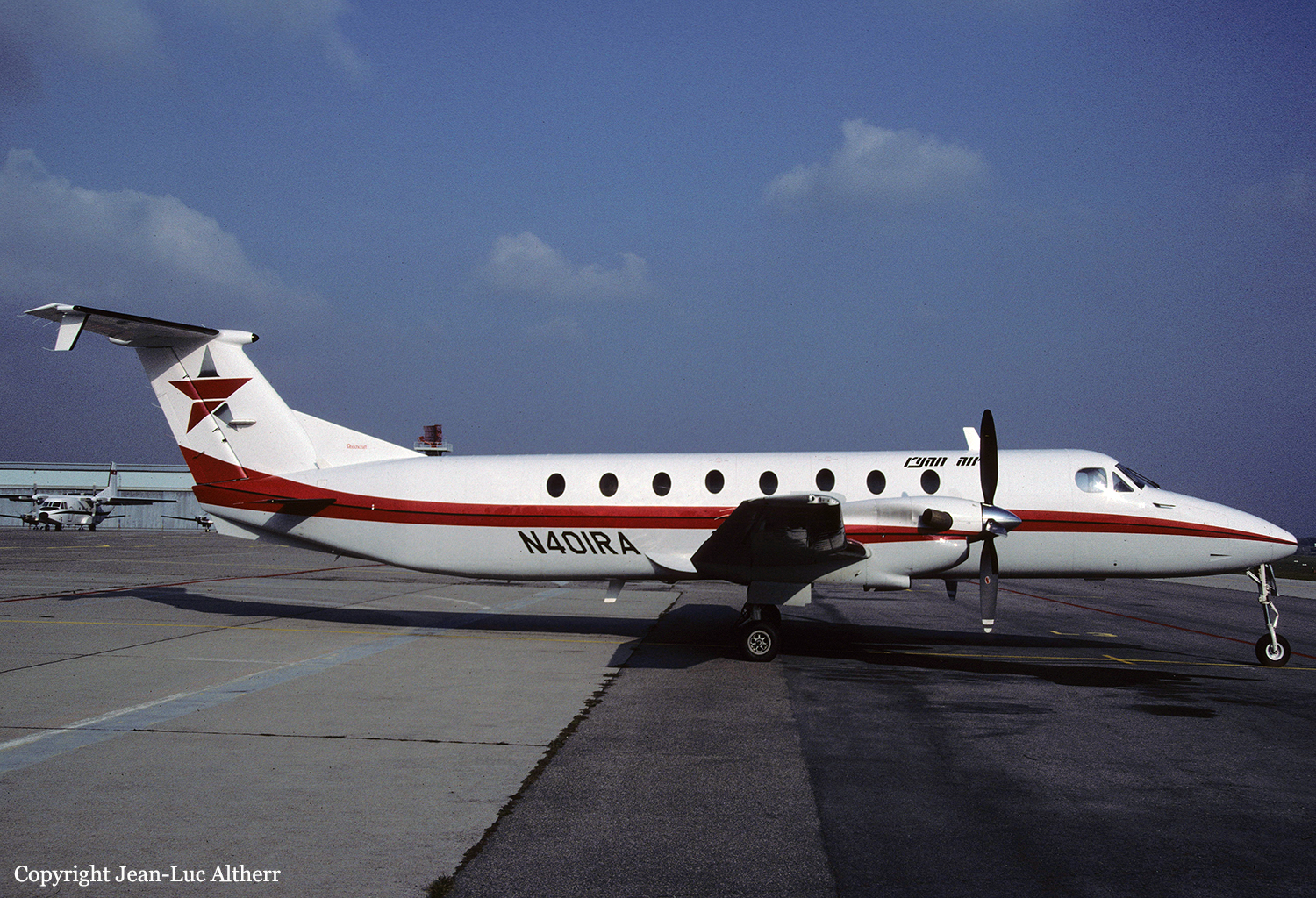
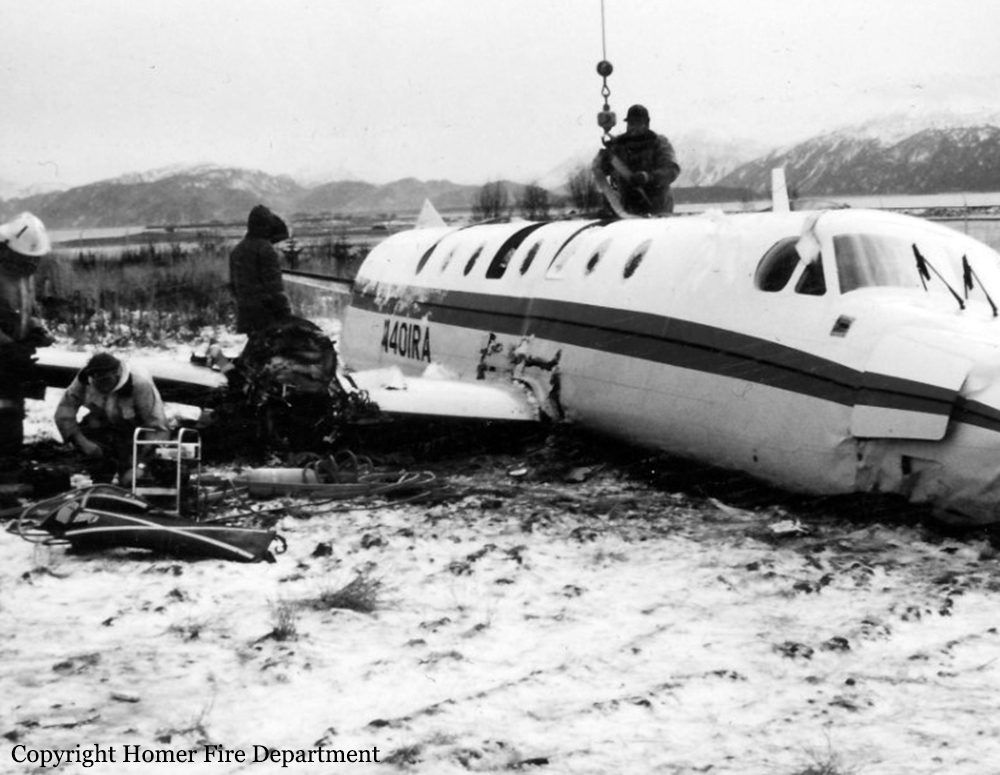
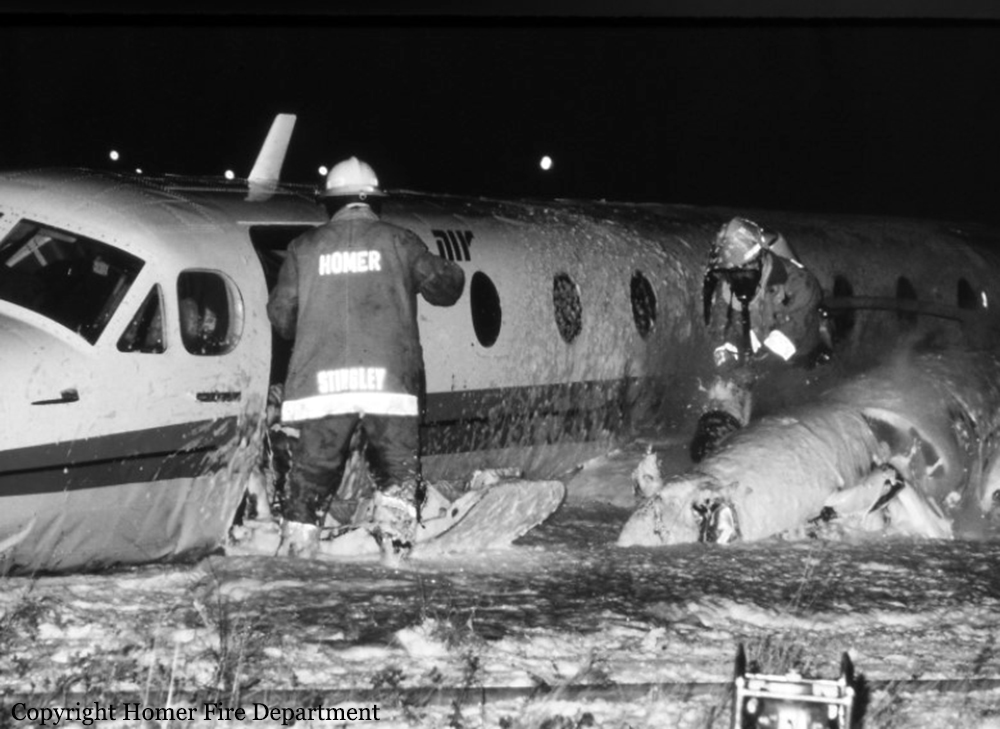
Crash of a Beechcraft 1900C in Homer: 18 killed
Date & Time:
Nov 23, 1987 at 1825 LT
Operator:
Registration:
N401RA
Survivors:
Yes
Schedule:
Kodiak - Homer - Kenai - Anchorage
MSN:
UB-058
YOM:
1986
Flight number:
XY103
Crew on board:
2
Crew fatalities:
Pax on board:
19
Pax fatalities:
Other fatalities:
Total fatalities:
18
Captain / Total hours on type:
4420.00
Copilot / Total hours on type:
300
Circumstances:
During arrival, the aircraft (Ryan flight 103) crashed short of runway 03. The fuselage stayed intact during impact, but the belly structure was compressed and vertical deceleration forces exceeded the design capability of the seats. Rescue personnel had difficulty shutting off the aircraft's electrical power which delayed removal of the 1st officer (f/o) from the aircraft. An investigation revealed the aircraft was loaded with approximately 600 lbs more cargo than the f/o had requested. The center-of-gravity (cg) was 8 to 11 inches behind the allowable aft limit and the flight crew did not comply with company and FAA procedures in computing the cg. During flight, up to 3/8 inches of ice accumulated on the aircraft's leading edges. There was evidence the crew lost control of the aircraft as the flaps were lowered. The right flap actuator was found in the 7 to 12° position and the stabilizer trim was found at the full nose down position. Flight tests showed there would be no significant difficulty in controlling the aircraft with up to 1.5 inch of ice on the leading edges and that static stability would deteriorate during flap extension with the aft cg configuration. Three passengers survived while 18 other occupants were killed.
Probable cause:
The failure of the flight crew to properly supervise the loading of the airplane which resulted in the centre of gravity being displaced to such an aft location that the airplane control was lost when the flaps were lowered for landing.
Final Report: