Operator Image

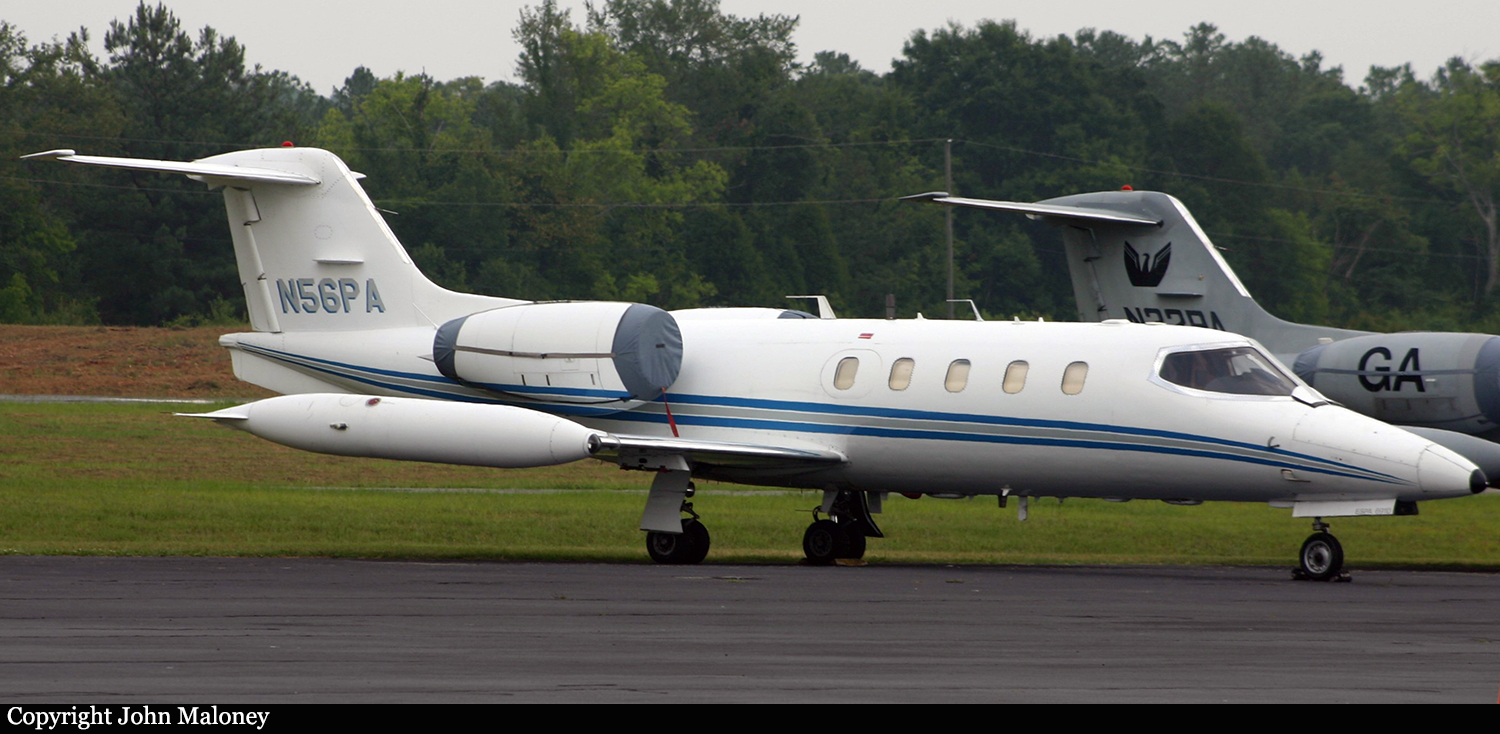
Crash of a Learjet 36A off San Clemente NAS: 3 killed

Date & Time: May 10, 2023 at 0749 LT
Type of aircraft:
Operator:
Registration:
N56PA
Flight Phase:
Flight Type:
Survivors:
No
Schedule:
Point Mugu - Point Mugu
MSN:
36-023
YOM:
1976
Flight number:
Fenix 01
Crew on board:
3
Crew fatalities:
Pax on board:
0
Pax fatalities:
Other fatalities:
Total fatalities:
3
Captain / Total flying hours:
10300
Captain / Total hours on type:
5700.00
Copilot / Total flying hours:
1013
Copilot / Total hours on type:
844
Aircraft flight hours:
18807
Circumstances:
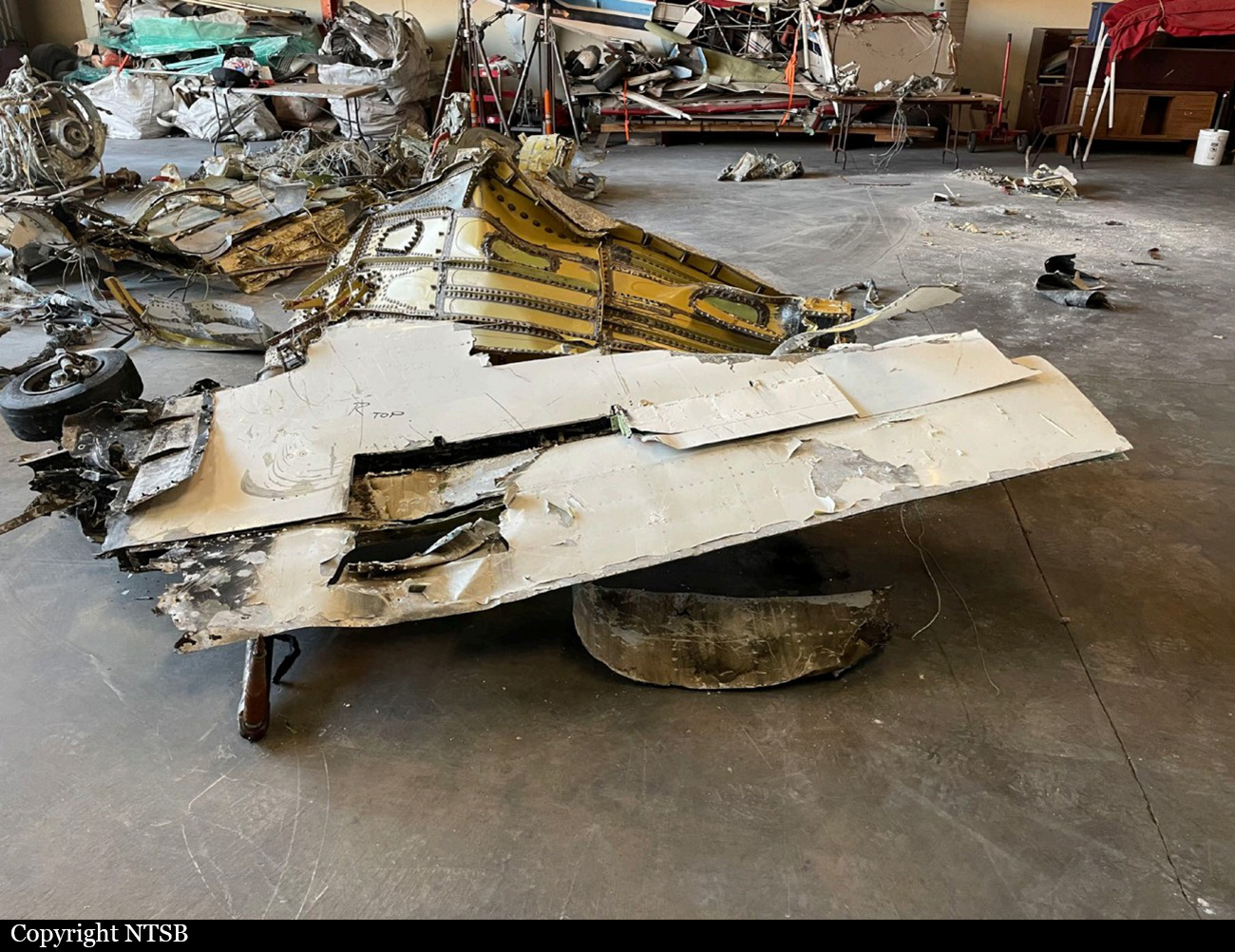
The accident airplane took off as the lead airplane in formation with a second Lear Jet airplane flying as wingman in a close formation position. The purpose of the flight was to participate in an exercise with the United States Navy in an over-water training area. Shortly after entering the training area at 15,000 ft mean sea level (msl) the wingman positioned on the right side of the accident airplane, observed the flaps on the accident airplane were partially extended. They notified the pilot of the accident airplane who acknowledged the radio call. The wingman then observed the flaps retract and observed white or gray colored “smoke or gas” coming from the left aft side of the airplane. The pilot in the accident airplane then radioed that they detected an odor in the cabin. Seconds later, the wingman observed red fluid on the underside of the tail cone followed by flames coming from around the aft equipment bay (tail cone) access door. They informed the accident pilots that their airplane was on fire and the accident pilot declared an emergency along with their intentions to land at a nearby airfield on the island. The wingman took over leading the formation and maneuvered in front of the accident airplane. The wingman last observed and heard radio transmissions from the accident airplane a short time later as they descended through about 7000 ft msl. The flight was above an overcast cloud layer that obstructed the view of the island at that time. Recorded ADS-B data showed that the accident airplane subsequently made a series of descending turns before the data ended. The airplane wreckage was located underwater about 4 miles northwest of the last ADS-B data point. The wreckage was highly fragmented, and the debris field extended several hundred feet along the ocean floor. Salvage operations were able to recover about 40 percent of the airplane wreckage. Examination of the wreckage showed areas of smoke and fire damage in portions of the airplane from the center wing fuselage outboard through the left- and right-wing roots and aft throughout the empennage. The aft equipment bay forward bulkhead, which also served as the fuselage fuel tank aft bulkhead, exhibited damage on the upper left side consistent with exposure to a focused heat source such as a fire from a leak in a pressurized fuel or hydraulic line. Additional evidence of focused fire damage was identified in the left engine pylon, which was located outboard and adjacent to the aft equipment bay. The effected area of the pylon contained engine fire detection circuits. Examination of the hydraulic shutoff valves attached to the hydraulic reservoir found that the left hydraulic shutoff valve was closed and the right valve was in the open position. The position of the left hydraulic shutoff valve indicates the aircrew likely shut down the left engine due to a fire indication (A hydraulic valve will close if the FIRE PULL tee-handle switch is activated by the flight crew in the event an engine fire is detected). Investigators were unable to determine if the witnessed flap extension and retraction was initiated by activation of the flap selector switch or induced by fire damage. The aft equipment bay houses electrical equipment capable of providing an ignition source for a fire, and hydraulic and fuel system components capable of providing fuel for a fire in the event of a leak. The left fuel motive flow line was intact from the fuel pump up to the fuselage fitting, where the line passes through the fuselage skin into the aft equipment bay near the aft left engine mount. The fuselage fitting had the stainless-steel fuel line and b-nut attached on the outboard, engine side. The inboard, aft equipment bay side of the fitting did not have an aluminum b-nut attached or the line that connects the fitting to the motive flow valve. The left engine hydraulic pressure line and PT2 line, which pass through the fuselage into the aft equipment bay adjacent to the motive fuel line, each had aluminum b-nuts present on the interior side of their respective fuselage fittings and the interior lines for each was sheared at the fitting. The left fuel motive flow fuselage fitting and the hydraulic fluid return fitting were examined. No thermal damage was observed on the outboard nuts and attached portions of tubing. Examination of the threads on the inboard side of the motive flow fitting did not exhibit evidence of thread stripping and comparison between the two fittings did not reveal any physical differences to explain why one nut remained attached and the other did not. The reason the motive flow nut was missing from the fitting could not be determined. Observed fire and heat damage patterns indicate the fire likely started in proximity to the where the pressurized fuel motive flow line connected to the firewall fitting where the missing b-nut was located. A leak from the pressurized motive flow line would have sustained and allowed an uncontrollable fire to develop. The sustained fire likely affected controllability of the airplane and resulted in the pilots’ loss of control of the airplane.
Probable cause:
The pilots’ loss of airplane control following a catastrophic fire that started on the left side of the aft equipment bay (tail cone). The fire likely initiated from a leak from the left fuel motive flow line due to a b-nut that loosened for reasons that could not be determined based on available evidence.
Final Report:
Crash of a Learjet 36A in Astoria

Date & Time: Dec 3, 2002 at 0612 LT
Type of aircraft:
Operator:
Registration:
N546PA
Flight Phase:
Flight Type:
Survivors:
Yes
Schedule:
Astoria - Astoria
MSN:
36-045
YOM:
1980
Location:
Crew on board:
2
Crew fatalities:
Pax on board:
2
Pax fatalities:
Other fatalities:
Total fatalities:
0
Captain / Total flying hours:
3350
Captain / Total hours on type:
2350.00
Copilot / Total flying hours:
1170
Copilot / Total hours on type:
920
Aircraft flight hours:
12335
Circumstances:
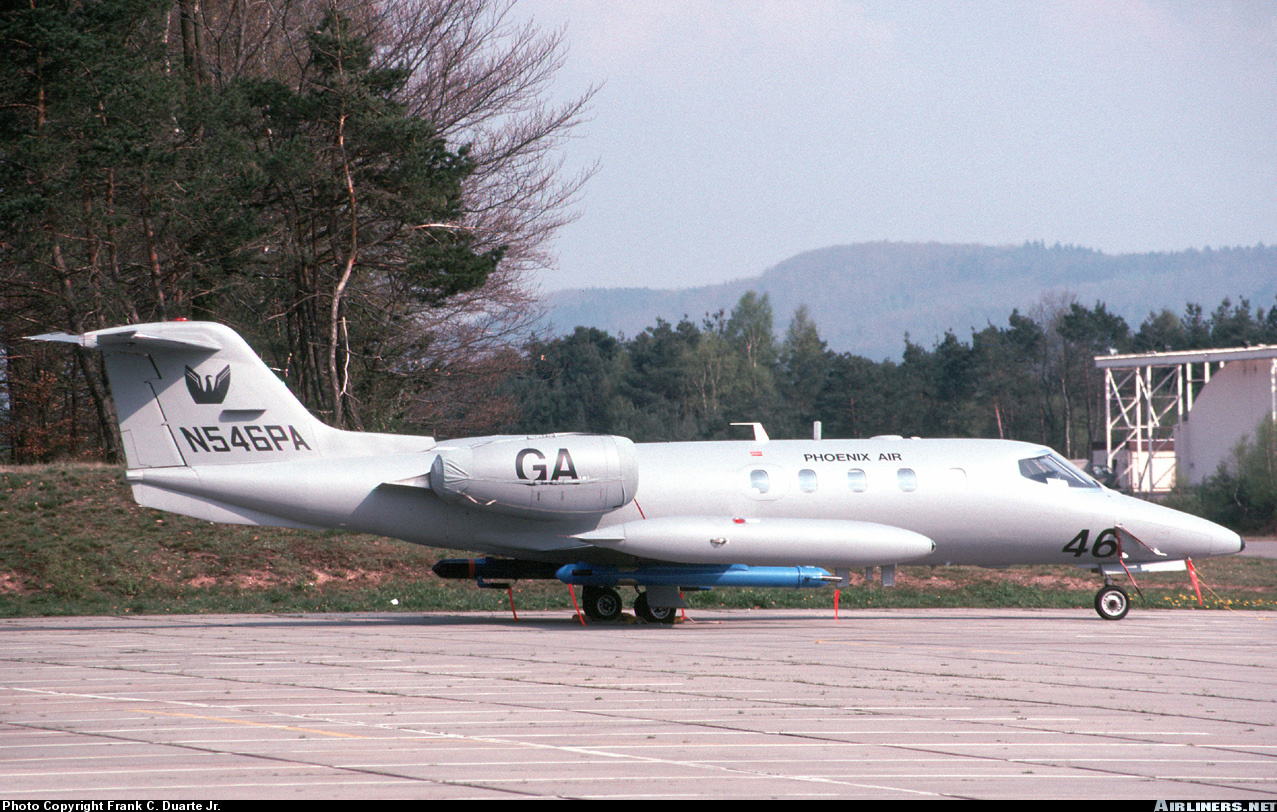
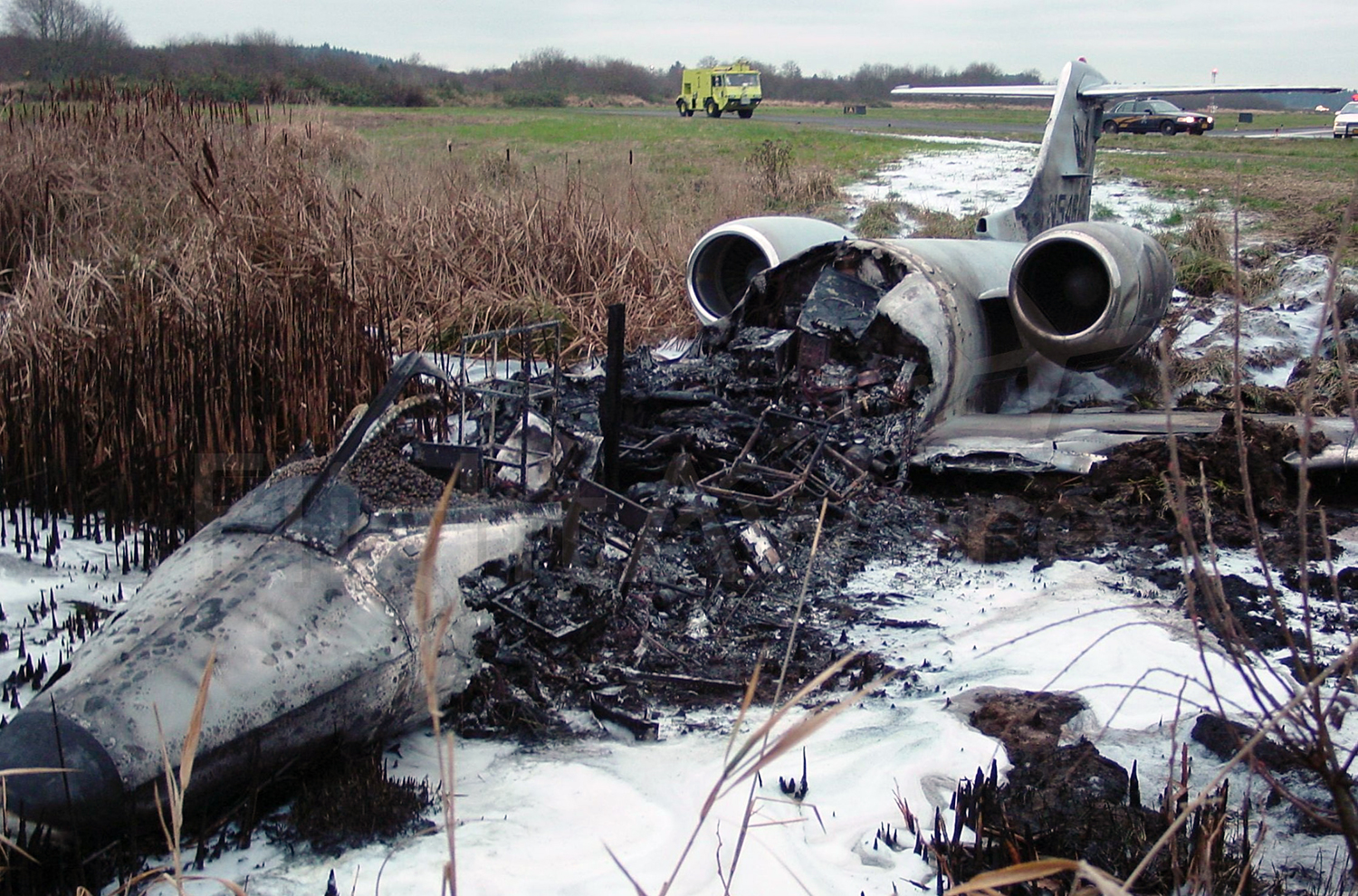
The pilot (PIC) reported that during acceleration for takeoff (approximately V1 [takeoff decision speed]) the airplane collided with an elk. The PIC reported that after the collision, he applied wheel brakes and deployed the airplane's drag chute, however, the airplane continued off the departure end of the runway. The airplane came to rest in a marshy bog approximately 50 feet beyond the departure threshold. Currently, approximately 15,000 feet of the airport's perimeter is bordered with animal control fence. The airport recently received a FAA Aviation Improvement Program (AIP) Grant that will provide funding for an additional 9,000-feet of fence. Airport officials stated that the fencing project should be completed by summer of 2003. At the completion of the project, game control fencing will encompass the entire airport perimeter. The U.S. Government Airport/Facilities Directory (A/FD) contains the following remarks for the Astoria Regional Airport: "Herds of elk on and in the vicinity of airport..."
Probable cause:
Collision with an elk during the takeoff roll. Factors include dark night VFR conditions.
Final Report:

Crash of a Learjet 35A in Fresno: 4 killed

Date & Time: Dec 14, 1994 at 1146 LT
Type of aircraft:
Operator:
Registration:
N521PA
Flight Type:
Survivors:
No
Schedule:
Fresno - Fresno
MSN:
35-239
YOM:
1979
Crew on board:
2
Crew fatalities:
Pax on board:
0
Pax fatalities:
Other fatalities:
Total fatalities:
4
Captain / Total flying hours:
7109
Captain / Total hours on type:
2747.00
Aircraft flight hours:
6673
Aircraft flight cycles:
5254
Circumstances:
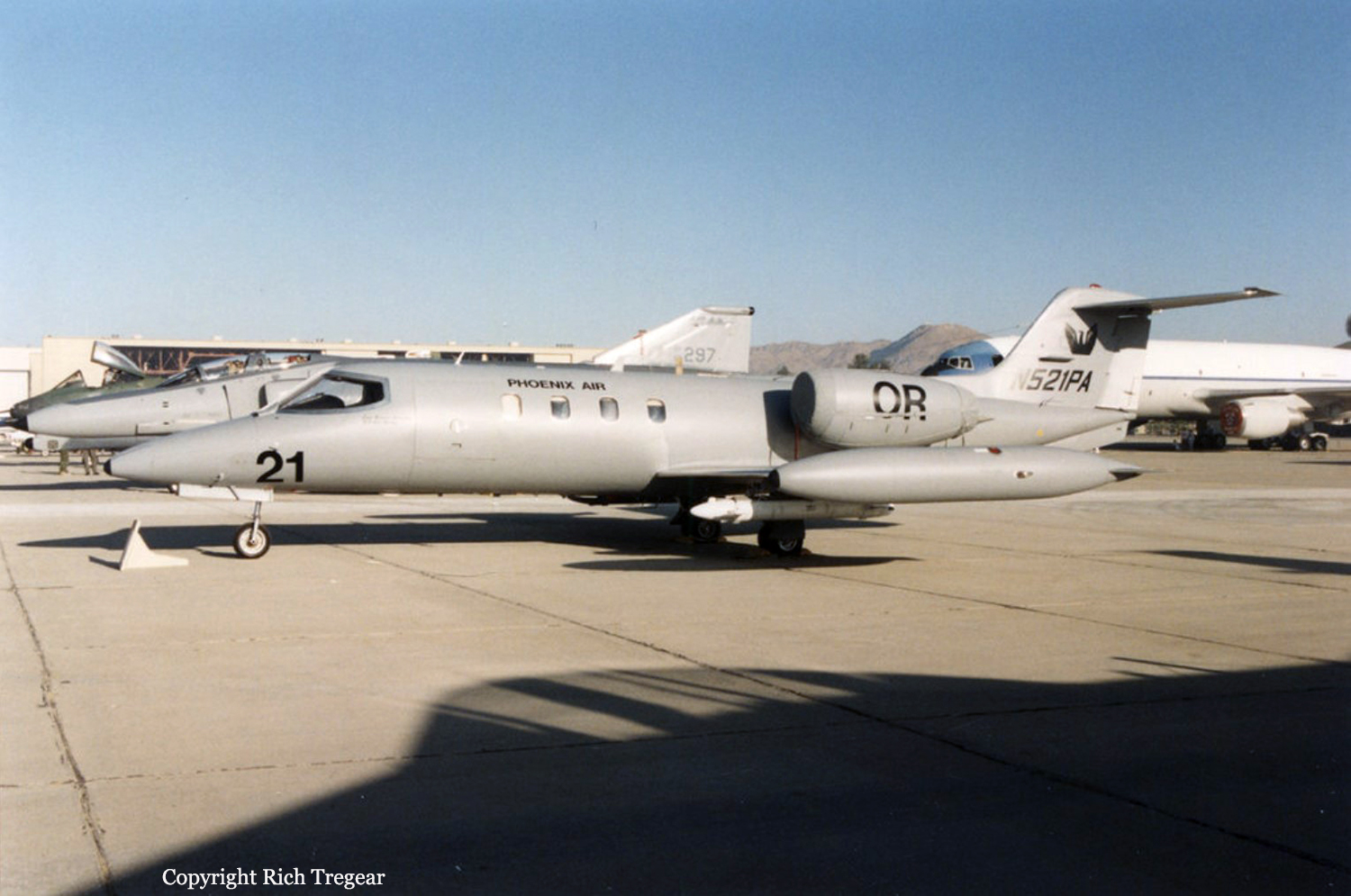
At about 1146 pst, Learjet 35A, N521PA, operating as a public use aircraft, crashed in Fresno, CA. Operating with call sign Dart 21, the flightcrew had declared an emergency inbound to Fresno Air Terminal due to engine fire indications. They flew the airplane toward a right base for their requested runway, but the airplane continued past the airport. The flightcrew was heard on tower frequency attempting to diagnose the emergency conditions and control the airplane until it crashed, with landing gear down, on an avenue in fresno. Both pilots were fatally injured. Twenty-one persons on the ground were injured, and 12 apartment units in 2 buildings were destroyed or substantially damaged by impact or fire. Investigation revealed that special mission wiring was not installed properly, leading to a lack of overload current protection. The in-flight fire most likely originated with a short of the special mission power supply wires in an area unprotected by current limiters. The fire resulted in false engine fire warning indications to the pilots that led them to a shutdown of the left engine. An intense fire burned through the aft engine support beam, damaging the airplane structure and systems in the aft fuselage and may have precluded a successful emergency landing.
Probable cause:
The accident was the consequence of the following factors:
- Improperly installed electrical wiring for special mission operations that led to an in-flight fire that caused airplane systems and structural damage and subsequent airplane control difficulties,
- Improper maintenance and inspection procedures followed by the operator,
- Inadequate oversight and approval of the maintenance and inspection practice by the operator in the installation of the special mission systems.
Final Report:

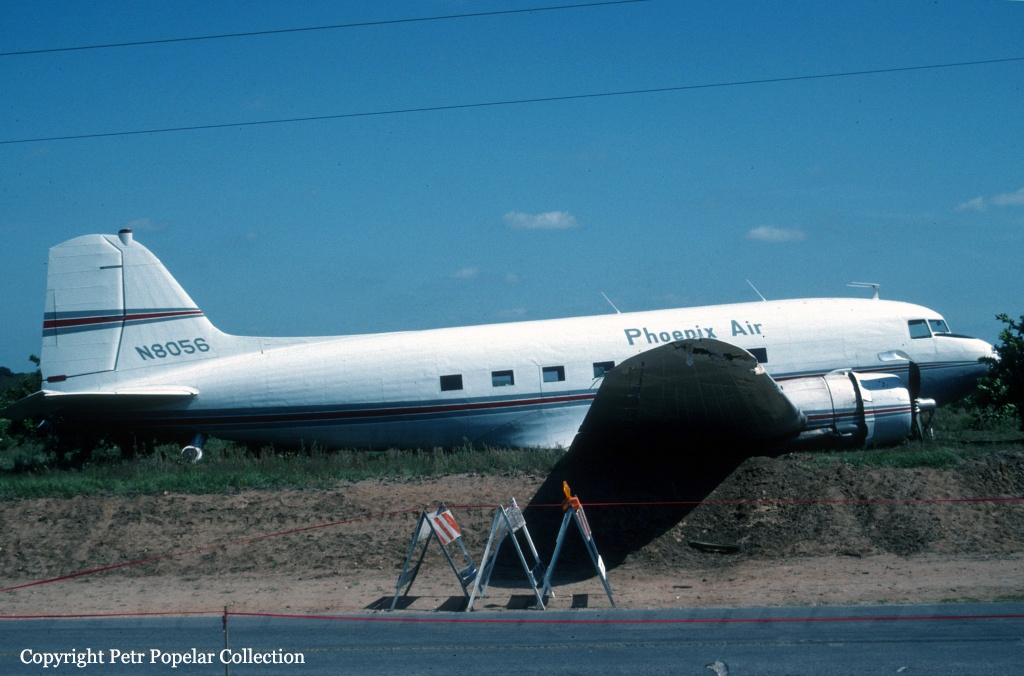
Crash of a Douglas C-47B-DK in Zephyrhills

Date & Time: Apr 20, 1993 at 1624 LT
Operator:
Registration:
N8056
Flight Phase:
Survivors:
Yes
Schedule:
Zephyrhills - Zephyrhills
MSN:
14290/25735
YOM:
1944
Crew on board:
2
Crew fatalities:
Pax on board:
40
Pax fatalities:
Other fatalities:
Total fatalities:
0
Captain / Total flying hours:
8500
Captain / Total hours on type:
4150.00
Aircraft flight hours:
16891
Circumstances:
The pilot stated that on initial climb, at about 400 feet agl, the crew smelled something burning, followed by light smoke in the cabin. Both engines appeared normal visually. The odor and smoke increased, and the left fire warning light illuminated. The left engine was shut down and the prop feathered. The pilot increased power on the right engine; however, the airplane would not climb or maintain airspeed. A gear and flaps up forced landing was made into a field. The pilot stated that he believed an exhaust clamp broke allowing a segment of exhaust to scorch cowling and activate the fire warning system. Examination of the left engine revealed that the lower fire detection elements were fused and broken free, and that the hydraulic lines were burned through.
Probable cause:
The pilot-in-command's failure to maintain best single-engine rate-of-climb speed which resulted in a forced landing. A factor which contributed to the accident was a possible exhaust system clamp failure.
Final Report:

Crash of a Dassault Falcon 20DC in Cartersville: 2 killed

Date & Time: Jun 29, 1989 at 0004 LT
Type of aircraft:
Operator:
Registration:
N125CA
Flight Phase:
Flight Type:
Survivors:
No
Schedule:
Cartersville - Montgomery
MSN:
208
YOM:
1970
Flight number:
PHX125
Crew on board:
2
Crew fatalities:
Pax on board:
0
Pax fatalities:
Other fatalities:
Total fatalities:
2
Captain / Total flying hours:
7940
Captain / Total hours on type:
770.00
Aircraft flight hours:
13547
Circumstances:
The crew arrived at the airport about 20 minutes before the planned midnight takeoff time, after the pilot-in-command had spent the day moving furniture. A night watchman noted that the preflight inspection and takeoff roll to rotation/lift-off was normal. There was no post-takeoff radio call to either unicom or ATC, although the crew had filed an IFR flight plan. After taking off from runway 36, the aircraft crashed about 1.8 mile north of the runway. The wreckage was found after interruption of electrical power to a nearby city. Initial impact was with trees, while in a shallow/left/descending turn. An area of trees about 1/2 mile long was damaged by impact and fire. Before coming to rest, the aircraft hit a powerline support tower. There was evidence the aircraft was traveling at about 260 knots, when it crashed. No preimpact part failure or malfunction was found that would have resulted in the accident. Both pilots were killed.
Probable cause:
Failure of the pilot-in-command (pic) to assure that the aircraft maintained a climb profile after takeoff. Factors related to the accident were: dark night, the crew's lack of visual perception at night, the pic's lack of rest (fatigue), and the copilot's failure to attain remedial action.
Final Report:

Crash of a Learjet 36 in Monroe: 2 killed

Date & Time: Jan 8, 1988 at 0519 LT
Type of aircraft:
Operator:
Registration:
N79SF
Flight Type:
Survivors:
No
Schedule:
Memphis - Monroe
MSN:
36-041
YOM:
1978
Crew on board:
2
Crew fatalities:
Pax on board:
0
Pax fatalities:
Other fatalities:
Total fatalities:
2
Captain / Total flying hours:
3355
Captain / Total hours on type:
528.00
Copilot / Total hours on type:
8
Aircraft flight hours:
3039
Circumstances:
The crew was executing the ILS approach and had turned back inbound on the procedure turn to the outer marker when the copilot stated they were 5.9 DME in a calm voice with no indication of a problem. Impact with the ground occurred at about 5.9 DME, approximately 10 statute miles from the airport, while the aircraft was in a slight nose up, slight right wing down attitude, with a high vertical rate of descent, and a high forward speed. The aircraft was demolished. No evidence of a pre-impact failure or malfunction of the aircraft or its systems could be found. The copilot was not rated in the aircraft and had logged a total of 7.9 hours of jet time in his personal logbook.
Probable cause:
Occurrence #1: in flight collision with terrain/water
Phase of operation: approach - iaf to faf/outer marker (ifr)
Findings
1. (c) descent - excessive - pilot in command
2. (f) inattentive - pilot in command
3. (c) level off - not performed - pilot in command
4. (f) lack of total experience in type of aircraft - copilot/second pilot
Final Report:

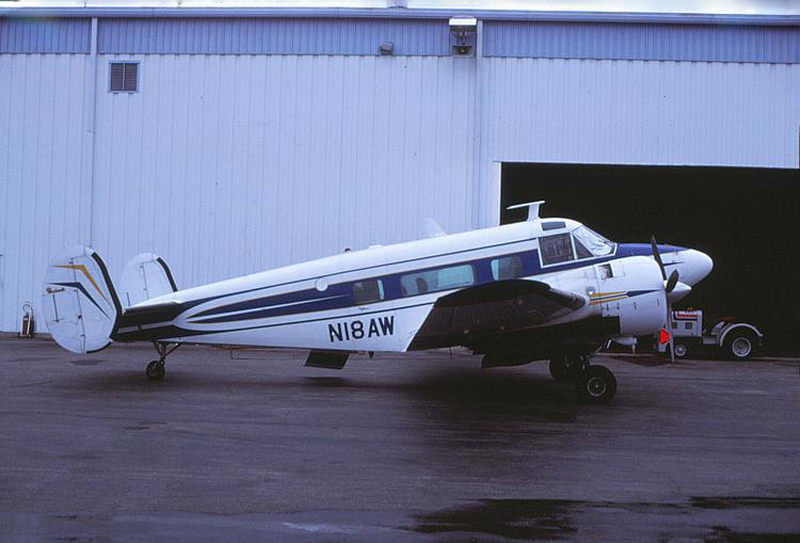
Crash of a Beechcraft H18 in Cartersville: 1 killed

Date & Time: Feb 12, 1985 at 0510 LT
Type of aircraft:
Operator:
Registration:
N18AW
Flight Phase:
Flight Type:
Survivors:
No
Schedule:
Cartersville - Atlanta
MSN:
BA-644
YOM:
1963
Crew on board:
1
Crew fatalities:
Pax on board:
0
Pax fatalities:
Other fatalities:
Total fatalities:
1
Captain / Total flying hours:
2313
Captain / Total hours on type:
183.00
Aircraft flight hours:
6468
Circumstances:
The flight had not yet been scheduled when the pilot retired for the evening at 2230 to 2300 est. At 0230, he was awoken and notified to make a night cargo flight. The owner obtained a weather briefing and filed a flight plan, then briefed the pilot later. The pilot arrived at the airport at 0430. He preflighted the aircraft while the owner updated the weather briefing. The aircraft was cleared as filed with a clearance void time of 0500; the clearance was radioed to the pilot by unicom. During takeoff, at 0510, the aircraft was observed climbing northbound to aprx 800 feet agl in moderate snowfall with the landing light on. A short time later, the aircraft crashed approximately one mile northeast of the airport while in a steep nose down, right wing low attitude. No pre- impact part failure/malfunction was found. Reportedly, when the pilot 1st hired on, he exaggerated his flight experience; he had problems with instrument flying and was not scheduled for flights in marginal weather; and he was given extra help. At the time of the accident, snow was falling, mixed icing was forecast in clouds and there was a sigmet for moderate to severe turbulences below 8,000 feet. The pilot, sole on board, was killed.
Probable cause:
Occurrence #1: in flight encounter with weather
Phase of operation: takeoff
Findings
1. (f) supervision - inadequate - company/operator management
2. (f) company-induced pressure - company/operator management
3. (f) fatigue (flight schedule) - pilot in command
4. (f) lack of total experience in type operation - pilot in command
5. (f) light condition - dark night
6. (f) weather condition - clouds
7. (f) terrain condition - snow covered
8. (f) weather condition - snow
9. (f) landing lights - improper use of - pilot in command
10. (f) visual/aural perception - pilot in command
----------
Occurrence #2: loss of control - in flight
Phase of operation: takeoff - initial climb
Findings
11. (c) ifr procedure - not followed - pilot in command
12. (c) spatial disorientation - pilot in command
13. Aircraft handling - not maintained
----------
Occurrence #3: in flight collision with terrain/water
Phase of operation: descent - uncontrolled
Final Report: