Zone

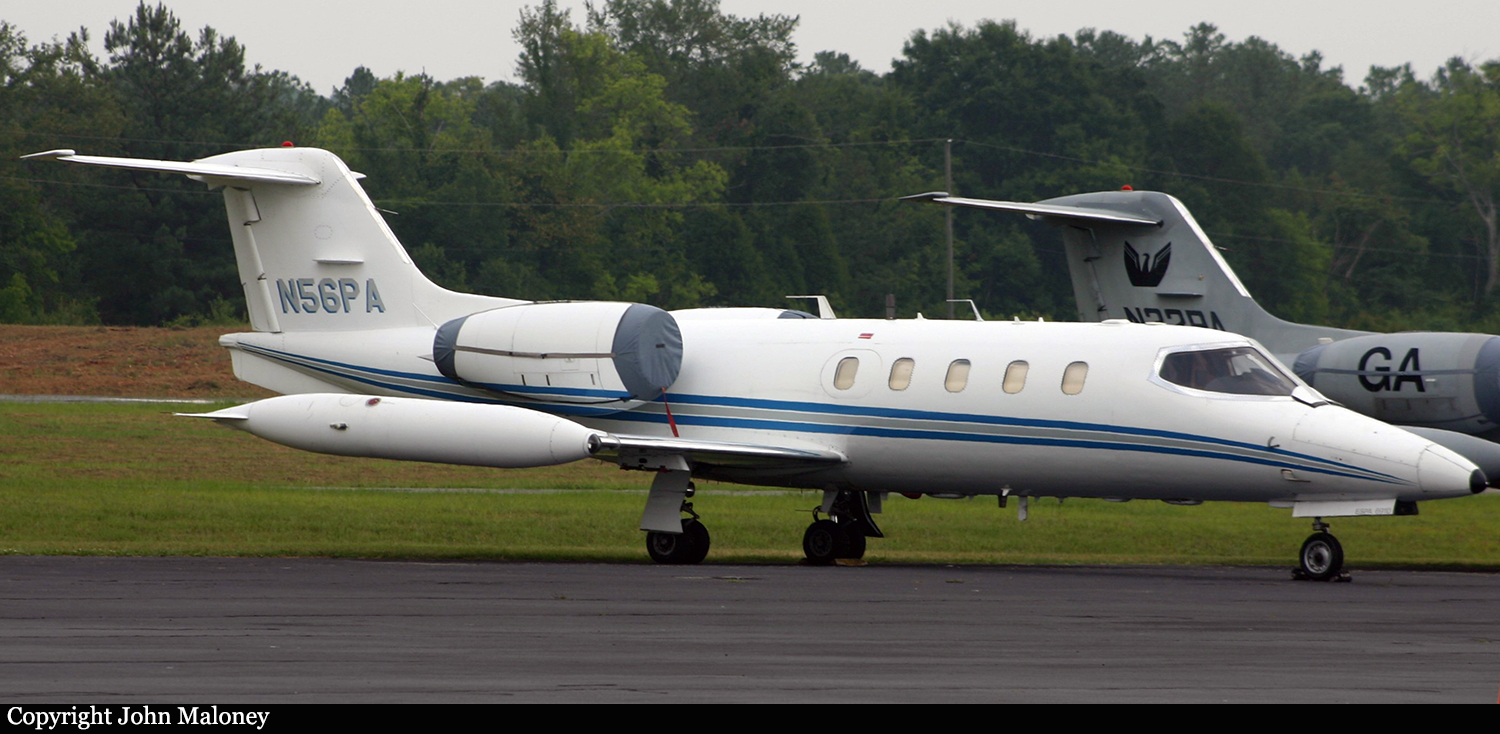
Crash of a Learjet 36A off San Clemente NAS: 3 killed

Date & Time: May 10, 2023 at 0749 LT
Type of aircraft:
Operator:
Registration:
N56PA
Flight Phase:
Flight Type:
Survivors:
No
Schedule:
Point Mugu - Point Mugu
MSN:
36-023
YOM:
1976
Flight number:
Fenix 01
Crew on board:
3
Crew fatalities:
Pax on board:
0
Pax fatalities:
Other fatalities:
Total fatalities:
3
Captain / Total flying hours:
10300
Captain / Total hours on type:
5700.00
Copilot / Total flying hours:
1013
Copilot / Total hours on type:
844
Aircraft flight hours:
18807
Circumstances:
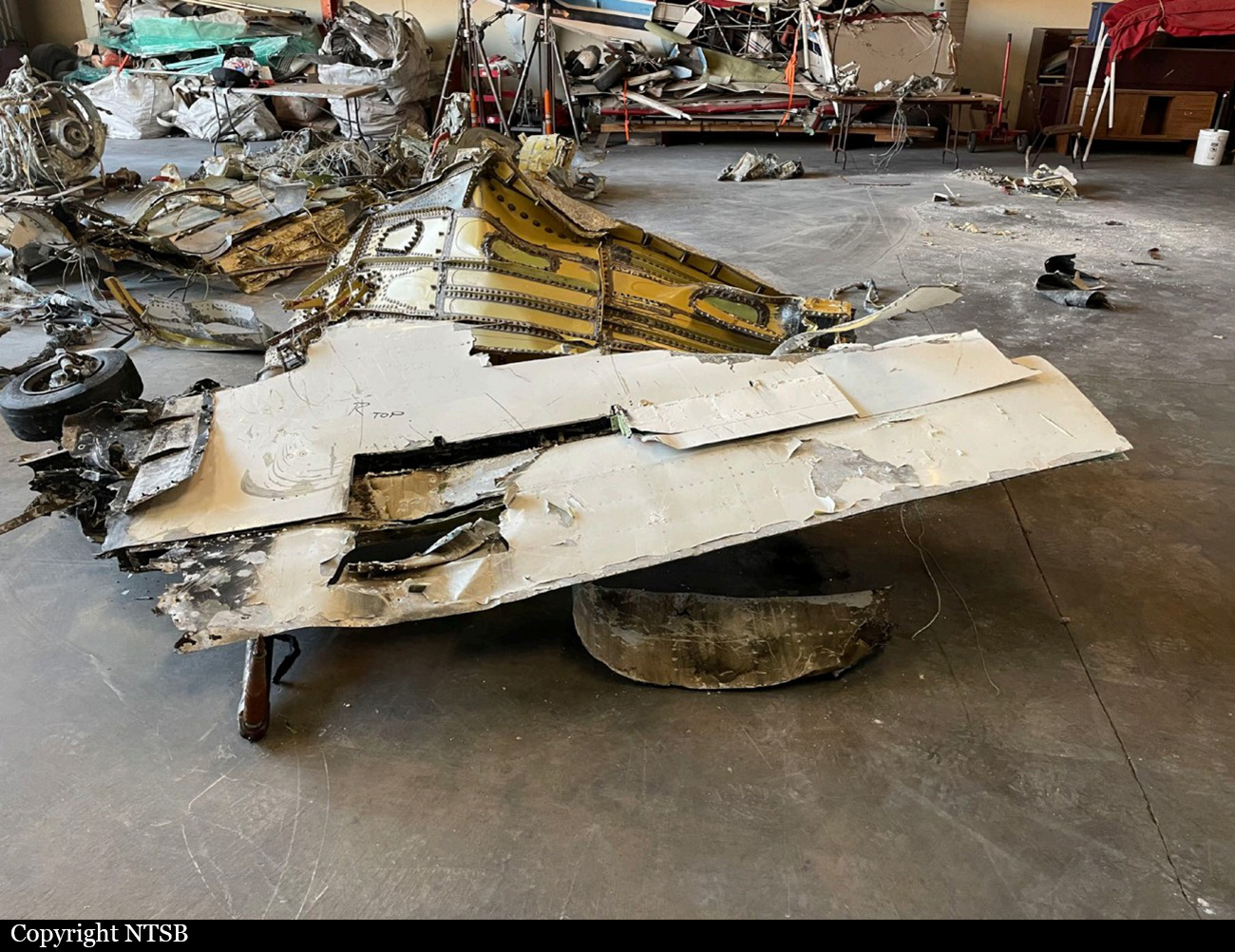
The accident airplane took off as the lead airplane in formation with a second Lear Jet airplane flying as wingman in a close formation position. The purpose of the flight was to participate in an exercise with the United States Navy in an over-water training area. Shortly after entering the training area at 15,000 ft mean sea level (msl) the wingman positioned on the right side of the accident airplane, observed the flaps on the accident airplane were partially extended. They notified the pilot of the accident airplane who acknowledged the radio call. The wingman then observed the flaps retract and observed white or gray colored “smoke or gas” coming from the left aft side of the airplane. The pilot in the accident airplane then radioed that they detected an odor in the cabin. Seconds later, the wingman observed red fluid on the underside of the tail cone followed by flames coming from around the aft equipment bay (tail cone) access door. They informed the accident pilots that their airplane was on fire and the accident pilot declared an emergency along with their intentions to land at a nearby airfield on the island. The wingman took over leading the formation and maneuvered in front of the accident airplane. The wingman last observed and heard radio transmissions from the accident airplane a short time later as they descended through about 7000 ft msl. The flight was above an overcast cloud layer that obstructed the view of the island at that time. Recorded ADS-B data showed that the accident airplane subsequently made a series of descending turns before the data ended. The airplane wreckage was located underwater about 4 miles northwest of the last ADS-B data point. The wreckage was highly fragmented, and the debris field extended several hundred feet along the ocean floor. Salvage operations were able to recover about 40 percent of the airplane wreckage. Examination of the wreckage showed areas of smoke and fire damage in portions of the airplane from the center wing fuselage outboard through the left- and right-wing roots and aft throughout the empennage. The aft equipment bay forward bulkhead, which also served as the fuselage fuel tank aft bulkhead, exhibited damage on the upper left side consistent with exposure to a focused heat source such as a fire from a leak in a pressurized fuel or hydraulic line. Additional evidence of focused fire damage was identified in the left engine pylon, which was located outboard and adjacent to the aft equipment bay. The effected area of the pylon contained engine fire detection circuits. Examination of the hydraulic shutoff valves attached to the hydraulic reservoir found that the left hydraulic shutoff valve was closed and the right valve was in the open position. The position of the left hydraulic shutoff valve indicates the aircrew likely shut down the left engine due to a fire indication (A hydraulic valve will close if the FIRE PULL tee-handle switch is activated by the flight crew in the event an engine fire is detected). Investigators were unable to determine if the witnessed flap extension and retraction was initiated by activation of the flap selector switch or induced by fire damage. The aft equipment bay houses electrical equipment capable of providing an ignition source for a fire, and hydraulic and fuel system components capable of providing fuel for a fire in the event of a leak. The left fuel motive flow line was intact from the fuel pump up to the fuselage fitting, where the line passes through the fuselage skin into the aft equipment bay near the aft left engine mount. The fuselage fitting had the stainless-steel fuel line and b-nut attached on the outboard, engine side. The inboard, aft equipment bay side of the fitting did not have an aluminum b-nut attached or the line that connects the fitting to the motive flow valve. The left engine hydraulic pressure line and PT2 line, which pass through the fuselage into the aft equipment bay adjacent to the motive fuel line, each had aluminum b-nuts present on the interior side of their respective fuselage fittings and the interior lines for each was sheared at the fitting. The left fuel motive flow fuselage fitting and the hydraulic fluid return fitting were examined. No thermal damage was observed on the outboard nuts and attached portions of tubing. Examination of the threads on the inboard side of the motive flow fitting did not exhibit evidence of thread stripping and comparison between the two fittings did not reveal any physical differences to explain why one nut remained attached and the other did not. The reason the motive flow nut was missing from the fitting could not be determined. Observed fire and heat damage patterns indicate the fire likely started in proximity to the where the pressurized fuel motive flow line connected to the firewall fitting where the missing b-nut was located. A leak from the pressurized motive flow line would have sustained and allowed an uncontrollable fire to develop. The sustained fire likely affected controllability of the airplane and resulted in the pilots’ loss of control of the airplane.
Probable cause:
The pilots’ loss of airplane control following a catastrophic fire that started on the left side of the aft equipment bay (tail cone). The fire likely initiated from a leak from the left fuel motive flow line due to a b-nut that loosened for reasons that could not be determined based on available evidence.
Final Report:
Crash of a Lockheed C-130H Hercules off San Clemente Island: 7 killed

Date & Time: Oct 29, 2009 at 1909 LT
Type of aircraft:
Operator:
Registration:
1705
Flight Phase:
Survivors:
No
Schedule:
McClellan AFB - McClellan AFB
MSN:
4993
YOM:
1984
Crew on board:
7
Crew fatalities:
Pax on board:
0
Pax fatalities:
Other fatalities:
Total fatalities:
7
Circumstances:
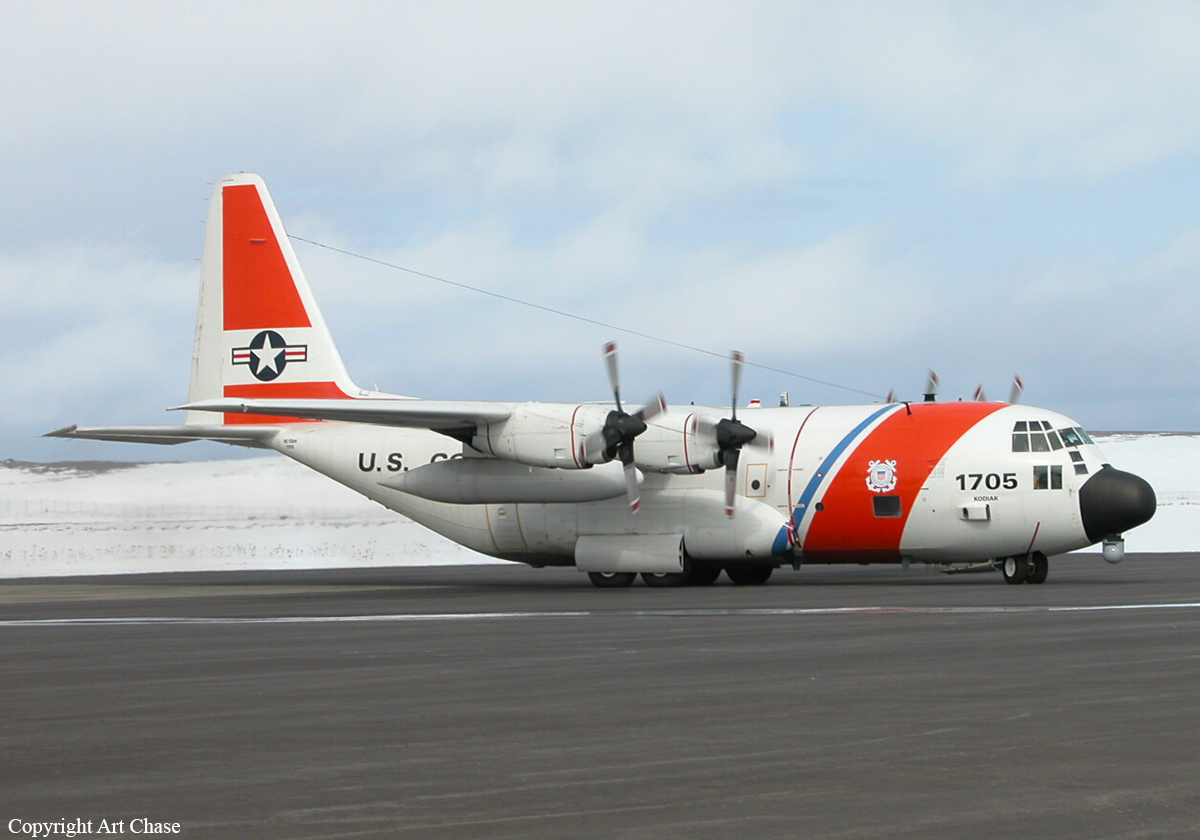
While performing a SAR mission for a 12 foot boat that was missing since two days, the aircraft collided with a Bell AH-1 Suber Cobra operated by the US Marine Corps. Both machines crashed into the sea some 24 km off the San Clemente Island and all occupants were missing. SAR were abandoned on 01NOV2013 as no trace of the Hercules and the Cobra were found. It appears that the Cobra's crew was taking part of an exercise in an area reserved for training missions. At the time of the accident, the Cobra had its anticollision lights and IFF transponder switched off.
Probable cause:
USAF and US authorities concluded that no single factor or individual act or omission was the cause of the collision. Investigations concluded that it was the consequence of a tragic confluence of events, missed opportunities, and procedure/policy issues in an airspace where most aircraft fly under a "see-and-avoid" regime. A contributory factor was that FACSFAC San Diego did not provide operational priority to the crew of the Lockheed Hercules.

Crash of a Learjet 24D off San Clemente Island: 2 killed

Date & Time: Mar 5, 1986
Type of aircraft:
Operator:
Registration:
N97DM
Flight Phase:
Flight Type:
Survivors:
No
MSN:
24-253
YOM:
1972
Crew on board:
2
Crew fatalities:
Pax on board:
0
Pax fatalities:
Other fatalities:
Total fatalities:
2
Circumstances:
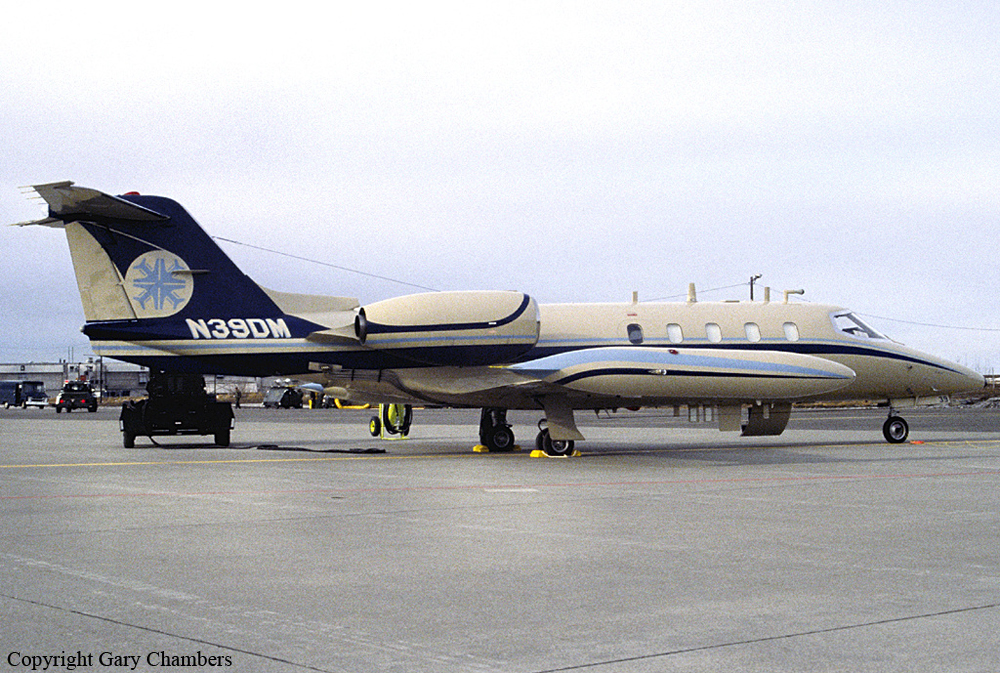
The crew was engaged in a military exercise consisting of an aerial attack of a US Navy vessel. In unknown circumstances, the aircraft collided with a second Flight International Learjet 35 registered N39DM. Both aircraft crashed in the sea about 27 miles southeast of San Clemente Island and all four crew members were killed.
Probable cause:
In-flight collision for unknown reasons.

Crash of a Learjet 35 off San Clemente Island: 2 killed

Date & Time: Mar 5, 1986
Type of aircraft:
Operator:
Registration:
N39DM
Flight Phase:
Flight Type:
Survivors:
No
MSN:
35-040
YOM:
1975
Crew on board:
2
Crew fatalities:
Pax on board:
0
Pax fatalities:
Other fatalities:
Total fatalities:
2
Circumstances:
The crew was engaged in a military exercise consisting of an aerial attack of a US Navy vessel. In unknown circumstances, the aircraft collided with a second Flight International Learjet 24D registered N97DM. Both aircraft crashed in the sea about 27 miles southeast of San Clemente Island and all four crew members were killed.
Probable cause:
In-flight collision for unknown reasons.

Crash of a Beechcraft UC-45J on San Clemente Island: 1 killed

Date & Time: Feb 2, 1981
Type of aircraft:
Registration:
N68392
Flight Phase:
Flight Type:
Survivors:
No
Site:
MSN:
5615
YOM:
1943
Crew on board:
1
Crew fatalities:
Pax on board:
0
Pax fatalities:
Other fatalities:
Total fatalities:
1
Captain / Total flying hours:
300
Circumstances:
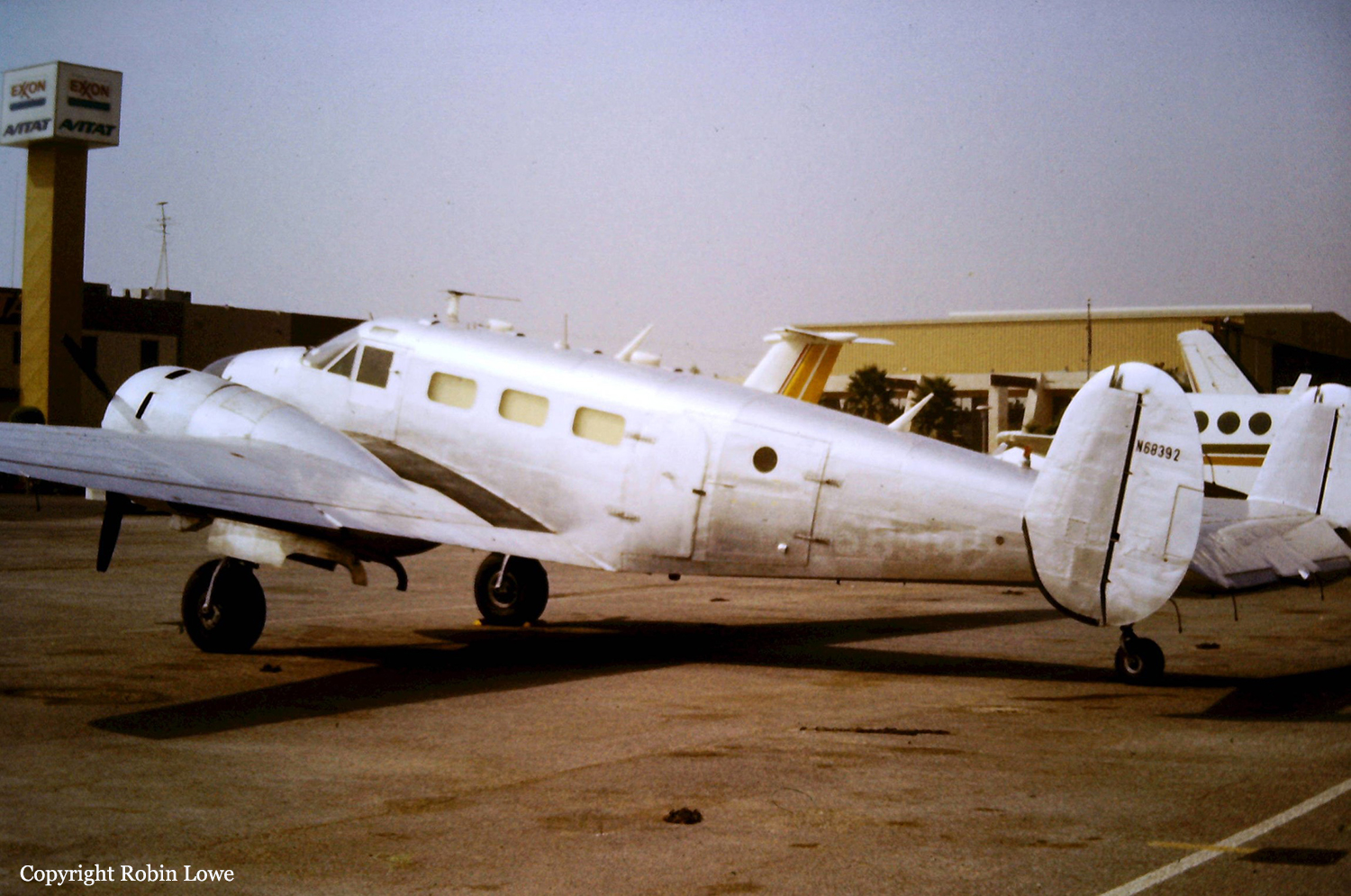
The pilot, sole on board, was completing an illegal flight to Santa Barbara when the airplane crashed in a mountainous area located on the San Clemente Island. The accident occurred in unknown circumstances and the wreckage was found seven months later on September 11, 1981. The pilot was killed. A load of 900 lbs of marijuana was also found in and around the wreckage.
Probable cause:
Controlled flight into terrain after the pilot misjudged altitude and clearance.
Final Report:

Crash of a Grumman C-1A Trader off San Clemente Island NAS: 4 killed

Date & Time: Aug 15, 1980
Type of aircraft:
Operator:
Registration:
146046
Survivors:
No
MSN:
76
YOM:
1958
Crew on board:
4
Crew fatalities:
Pax on board:
0
Pax fatalities:
Other fatalities:
Total fatalities:
4
Circumstances:
The twin engine airplane was returning to San Clemente Island-Naval Auxiliary Landing Field following a routine maritime patrol flight when it crashed into the sea in unknown circumstances, few miles offshore. All four crew members were killed.

Crash of a Boeing 247D off Long Beach

Date & Time: Jun 5, 1952
Type of aircraft:
Registration:
N41813
Flight Type:
Survivors:
Yes
Schedule:
San Clemente - Long Beach
MSN:
1725
YOM:
1933
Crew on board:
2
Crew fatalities:
Pax on board:
0
Pax fatalities:
Other fatalities:
Total fatalities:
0
Circumstances:
The crew was performing a cargo flight from San Clemente Island to Long Beach. While approaching Long Beach, the airplane crashed in unknown circumstances into the sea off Long Beach. Both pilots were rescued while the aircraft sank and was lost.

Crash of a Consolidated PBY-2A Catalina off San Clemente Island: 3 killed

Date & Time: Feb 2, 1938 at 2040 LT
Type of aircraft:
Operator:
Registration:
0463
Flight Phase:
Flight Type:
Survivors:
Yes
Schedule:
North Island - North Island
MSN:
10
YOM:
1937
Crew on board:
2
Crew fatalities:
Pax on board:
4
Pax fatalities:
Other fatalities:
Total fatalities:
5
Circumstances:
The crew was performing a night flight in formation with another Catalina registered 0463. While cruising side by side in heavy rain falls, both aircraft collided and crashed into the sea off the San Clemente Island, some 110 km west of San Diego. All occupants on board 0462 were killed while three crew members on boar 0463 survived.
Probable cause:
In-flight collision following a poor judgement on part of each crew.

Crash of a Consolidated PBY-2A Catalina off San Clementet Island: 7 killed

Date & Time: Feb 2, 1938 at 2040 LT
Type of aircraft:
Operator:
Registration:
0462
Flight Phase:
Flight Type:
Survivors:
No
Schedule:
North Island - North Island
MSN:
9
YOM:
1937
Crew on board:
2
Crew fatalities:
Pax on board:
5
Pax fatalities:
Other fatalities:
Total fatalities:
7
Circumstances:
The crew was performing a night flight in formation with another Catalina registered 0463. While cruising side by side in heavy rain falls, both aircraft collided and crashed into the sea off the San Clemente Island, some 110 km west of San Diego. All occupants on board 0462 were killed while three crew members on boar 0463 survived.
Probable cause:
In-flight collision following a poor judgement on part of each crew.