Country
Operator Image

Crash of an Ilyushin II-14 in Tashkent: 21 killed

Date & Time: Dec 23, 1958 at 0310 LT
Type of aircraft:
Operator:
Registration:
CCCP-61663
Survivors:
No
Schedule:
Mineralnye Vody – Ashgabat – Tashkent
MSN:
6 34 20 07
YOM:
1956
Flight number:
SU466
Country:
Region:
Crew on board:
6
Crew fatalities:
Pax on board:
15
Pax fatalities:
Other fatalities:
Total fatalities:
21
Aircraft flight hours:
3295
Circumstances:
On approach to Tashkent-Yuzhny Airport, the crew encountered poor weather conditions. The visibility was reduced due to the combination of snow falls and night. On final, the captain decided to make a go around and attempted a second approach instead of diverting to a suitable airport. During the second approach, as he was unable to locate the runway, the crew again decided to make a go around when, at a height of 100-150 meters, the airplane stalled, banked right and crashed in a snowy field. All 21 occupants were killed.
Probable cause:
The accident was the consequence of wrong decision on part of the crew who decided to continue the approach below weather minima conditions. The crew failed to divert to a suitable terrain and while performing a second go around manoeuvre, the airplane stalled due to an insufficient speed.
Crash of an Ilyushin II-14 in Ulyanovsk: 4 killed

Date & Time: Dec 15, 1958 at 2005 LT
Type of aircraft:
Operator:
Registration:
CCCP-41843
Flight Type:
Survivors:
Yes
Schedule:
Ulyanovsk - Ulyanovsk
MSN:
1460 005 12
YOM:
30
Country:
Region:
Crew on board:
7
Crew fatalities:
Pax on board:
0
Pax fatalities:
Other fatalities:
Total fatalities:
4
Aircraft flight hours:
2057
Circumstances:
The crew (six pilots and one instructor) was completing a local night training mission at Ulyanovsk-Baratayevka Airport. While approaching the airfield in icing conditions, the airplane stalled and crashed in flames 400 meters from the airfield. Four occupants were killed while three others were injured. The airplane was partially destroyed by fire.
Probable cause:
The accident was the consequence of poor piloting techniques on part of the pilot-in-command and the instructor while performing a transition flight from instruments to visual mode in icing conditions. 10 to 15 millimeters of ice were found on the wings after the accident, which contributed to the stall at low height. The following factors were considered as contributing:
- Lack of a clear order in the direction and control of the flight,
- Lack of a training methodology,
- Atmosphere of complacency on part of the instructor, which reduced his self-discipline,
- Insufficient knowledge of the aerodynamic qualities of the aircraft in icing conditions and appropriate action to take in such conditions,
- Insufficient distance between the airplane and the ground to expect recovery.

Crash of an Ilyushin II-12 in Cherepovets

Date & Time: Dec 15, 1958
Type of aircraft:
Operator:
Registration:
CCCP-L1467
Flight Type:
Survivors:
Yes
Schedule:
Leningrad – Cherepovets – Sverdlovsk
MSN:
8 30 25 04
YOM:
1948
Country:
Region:
Crew on board:
0
Crew fatalities:
Pax on board:
0
Pax fatalities:
Other fatalities:
Total fatalities:
0
Circumstances:
Apparently following a wrong approach configuration, the airplane landed long and was unable to stop within the remaining distance. It overran and crashed into a ravine. There were no casualties but the airplane was damaged beyond repair.

Crash of an Ilyushin II-14 in Stalingrad: 1 killed

Date & Time: Dec 7, 1958 at 2242 LT
Type of aircraft:
Operator:
Registration:
CCCP-L2096
Survivors:
Yes
Schedule:
Voronezh – Stalingrad
MSN:
7 34 29 07
YOM:
21
Flight number:
SU213
Country:
Region:
Crew on board:
6
Crew fatalities:
Pax on board:
19
Pax fatalities:
Other fatalities:
Total fatalities:
1
Aircraft flight hours:
2336
Circumstances:
The approach to Stalingrad Airport was completed by night and poor weather conditions with snow falls and fog. On final, at an altitude of 200 meters, as the pilot-in-command failed to establish a visual contact with the runway lights, he decided to abandon the approach and made a go around. ATC advised the crew to divert to Rostov or Voronezh but the captain obtained the permission to attempt a second approach. On final, in poor visibility, he was again unable to establish a visual contact with the runway lights but continued the approach when the copilot asked for a new go around procedure. In the mean time, the airplane struck tree tops, rolled to the right and crashed in a field located one km short of runway threshold. The flight mechanic was killed while all other occupants were rescued, some of them were injured. The aircraft was destroyed.
Probable cause:
Wrong approach configuration and poor techniques on part of the pilot-in-command who decided to continue the approach without visual contact with the runway lights. He also led the airplane passing below the minimum descend altitude without visual contact with the ground and in below-minima weather conditions.

Crash of an Antonov AN-2T in Anadyr

Date & Time: Nov 24, 1958 at 0145 LT
Type of aircraft:
Operator:
Registration:
CCCP-L5676
Flight Phase:
Survivors:
Yes
Schedule:
Anadyr - Anadyr
MSN:
1 56 473 15
YOM:
1955
Country:
Region:
Crew on board:
2
Crew fatalities:
Pax on board:
2
Pax fatalities:
Other fatalities:
Total fatalities:
0
Circumstances:
The crew was performing a short 10 minutes flight between both Anadyr Airports and the airplane was carrying two passengers, two crew and various goods for a total weight of 880 kilos. Shortly after takeoff, while climbing to a height of 40 meters, the aircraft stalled from the rear and crashed. All four occupants were injured and the aircraft was destroyed.
Probable cause:
It was determined that the crew failed to secure the load properly prior to takeoff. At rotation, the freight moved to the rear of the cabin, causing the CofG to be out of the enveloppe and the aircraft to be out of control.

Crash of an Avia 14P in Privetnoye: 12 killed

Date & Time: Nov 7, 1958 at 1647 LT
Type of aircraft:
Operator:
Registration:
CCCP-52024
Survivors:
No
Site:
Schedule:
Baku – Sochi – Simferopol
MSN:
052 704 115
YOM:
1
Country:
Region:
Crew on board:
5
Crew fatalities:
Pax on board:
7
Pax fatalities:
Other fatalities:
Total fatalities:
12
Aircraft flight hours:
1787
Circumstances:
The crew was flying at an altitude of 1,500 meters in VFR mode above the clouds when he received the permission by ATC to descent to 400 meters. While cruising in cloudy conditions at the altitude of 950 meters, the airplane hit tree tops, nosed down and crashed in flames in a wooded area located in Privetnoye. The wreckage was spotted on the slope of Mt Kharpuzyany Kayas and all 12 occupants have been killed.
Probable cause:
The accident was the consequence of ATC errors who failed to monitor the flight properly in reference to approach procedures, and allowed the crew to descent to an insufficient altitude. First, the crew was granted to fly at an altitude of 1,500 meters instead of the minimum 2,100 meters requested. Secondly, the ATC allowed the crew to descend to 400 meters although he knew the aircraft was flying in clouds and above a mountainous area.

Crash of a Lisunov LI-2 in Grakhovo: 4 killed

Date & Time: Nov 2, 1958 at 1620 LT
Type of aircraft:
Operator:
Registration:
CCCP-84624
Flight Phase:
Flight Type:
Survivors:
No
Schedule:
Stalino – Kharkov – Voronezh – Penza – Kazan – Izhevsk
MSN:
184 280 01
YOM:
1951
Country:
Region:
Crew on board:
4
Crew fatalities:
Pax on board:
0
Pax fatalities:
Other fatalities:
Total fatalities:
4
Aircraft flight hours:
13175
Circumstances:
The crew departed Stalino on a cargo flight to Izhevsk with intermediate stops at Kharkov, Voronezh, Penza and Kazan, carrying a load of bottles of zinc nitrate for a total of 2,250 kilos. On the last leg from Kazan to Izhevsk, while in cruising altitude, the crew informed ATC that a fire erupted in the cabin and requested the permission to divert to the nearest airport. An emergency was declared and the captain decided to reduce his altitude and to attempt an emergency landing in a field when the airplane struck the ground, exploded and crashed. The aircraft was totally destroyed upon impact and all four crew members were killed.
Probable cause:
It was determined that some bottles of zinc nitrate broke in flight, causing the fluid to leak in the heating system and to ignite when the heating system was turn ON by the crew (the ignition point of zinc nitrate is 36° C). A fire erupted in the cabin, forcing the crew to attempt an emergency landing. Upon touchdown, several bottles broke and exploded, causing a major explosion of the aircraft that was uncontrollable and crashed in flames. Investigations were able to determine that the Chemical Company in charge to ship the load from Stalino to Izhevsk failed to secure the bottles properly. Also, the operator (Aeroflot) has not been notified of the content of the shipping and thus, the crew was not aware of the nature of the load. Doing so, the Chemical Company violated all dangerous goods procedures.

Crash of a Tupolev TU-104A near Kanash: 80 killed

Date & Time: Oct 17, 1958 at 2130 LT
Type of aircraft:
Operator:
Registration:
CCCP-42362
Flight Phase:
Survivors:
No
Schedule:
Beijing – Omsk – Moscow
MSN:
8 66 010 02
YOM:
1958
Country:
Region:
Crew on board:
9
Crew fatalities:
Pax on board:
71
Pax fatalities:
Other fatalities:
Total fatalities:
80
Aircraft flight hours:
465
Circumstances:
While cruising at an altitude of 11,000 meters on a flight from Omsk to Moscow, the crew was informed by ATC that the route to Vnukovo was closed due to weather deterioration and was instructed to divert to Sverdlovsk and to reduce his altitude to 10,000 meters. Two minutes later, the pilot sent a mayday message, reporting he was losing control of the airplane that entered a dive. By an angle of 80°, the airplane struck the ground and crashed in a field located along a railroad track near Kanash. The aircraft totally disintegrated on impact and all 80 occupants were killed, among them several foreign citizens such as three Sudanese, one Cambodian (Cambodian ambassador in China), eight Czech, three Romanian, one Polish, five East-German, five Hungarian, three Moroccan, two British, five French, one Iraqi and one Laotian.
Probable cause:
It was determined that the loss of control was caused by severe downdrafts, updrafts and atmospheric turbulences encountered at high altitude while changing its itinerary and altitude. The aircraft then reach a critical angle of attack before entering a dive.

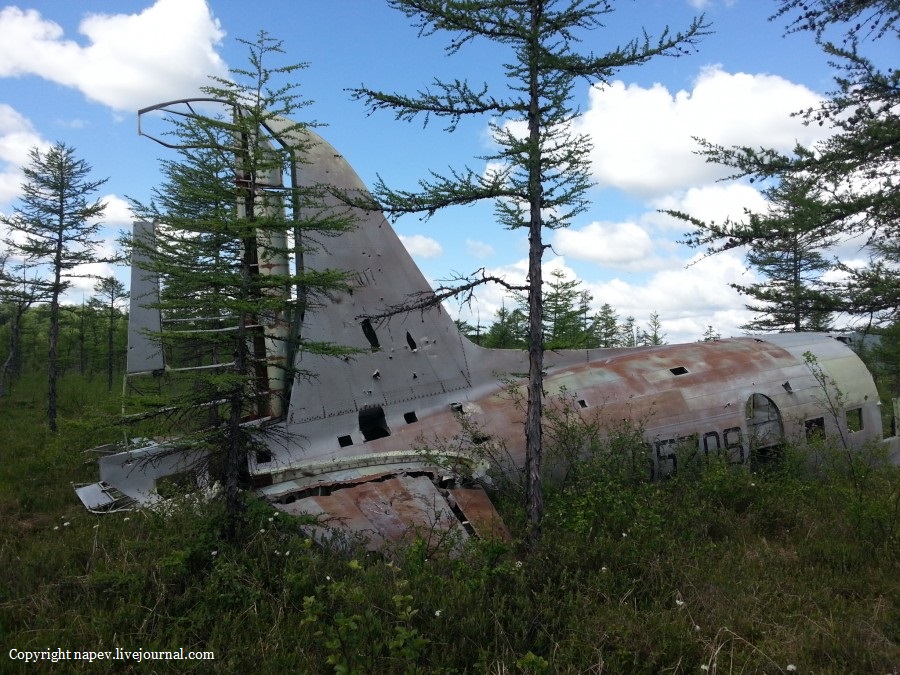
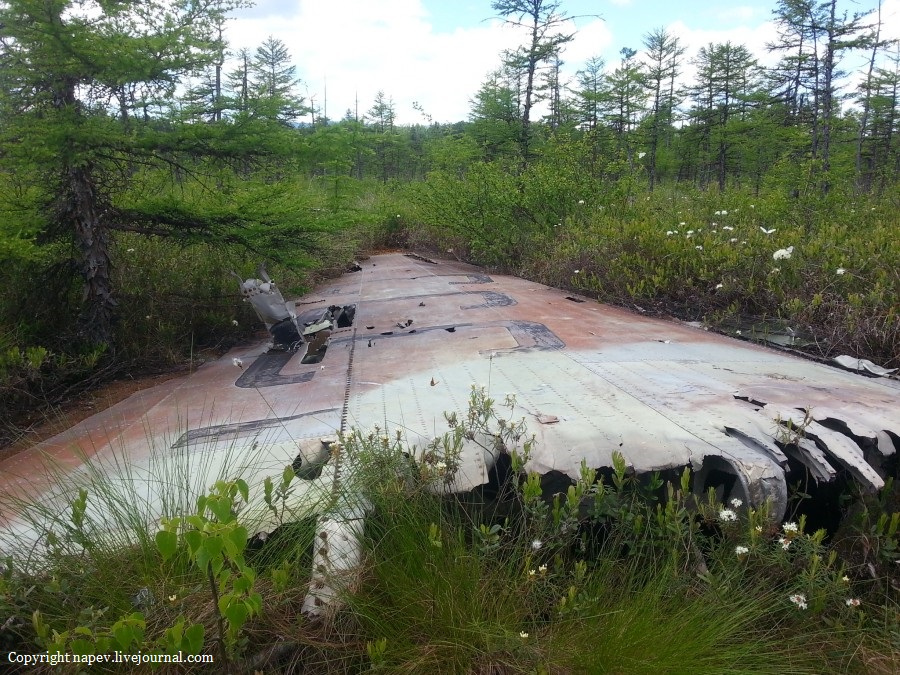
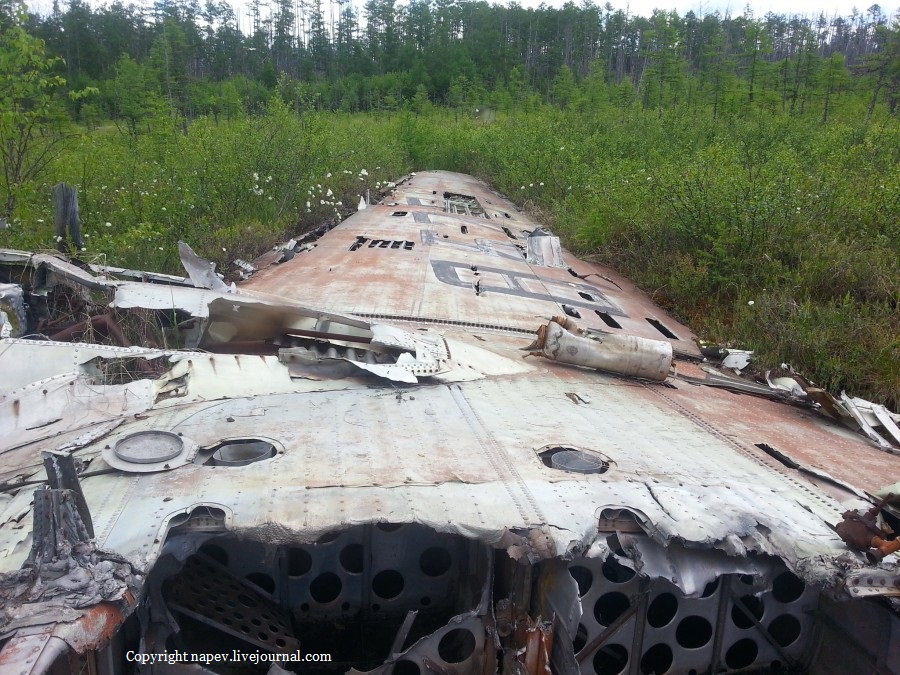
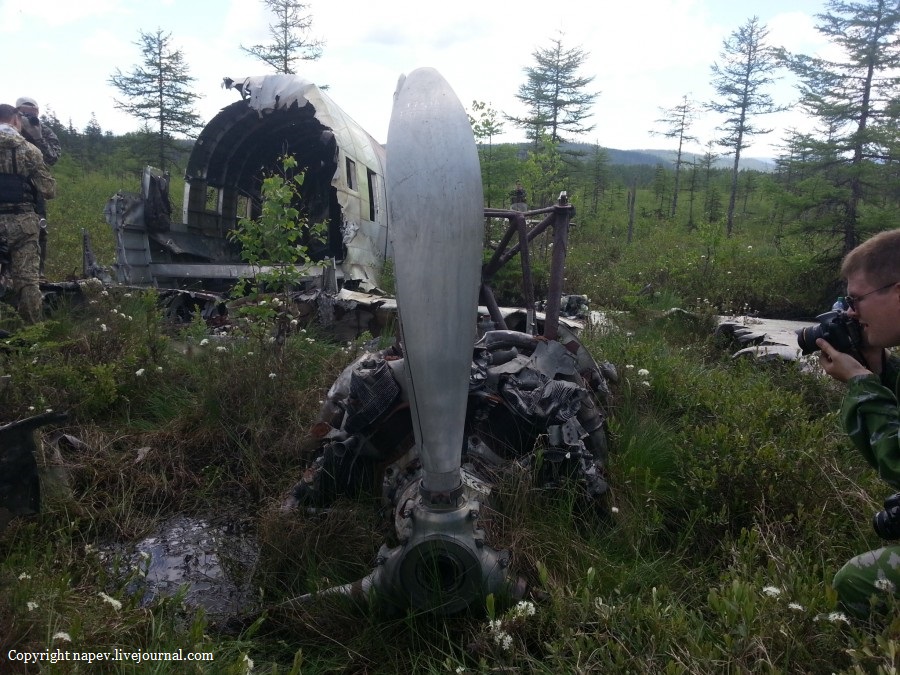
Crash of a Lisunov LI-2 near Sukpay

Date & Time: Oct 16, 1958
Type of aircraft:
Operator:
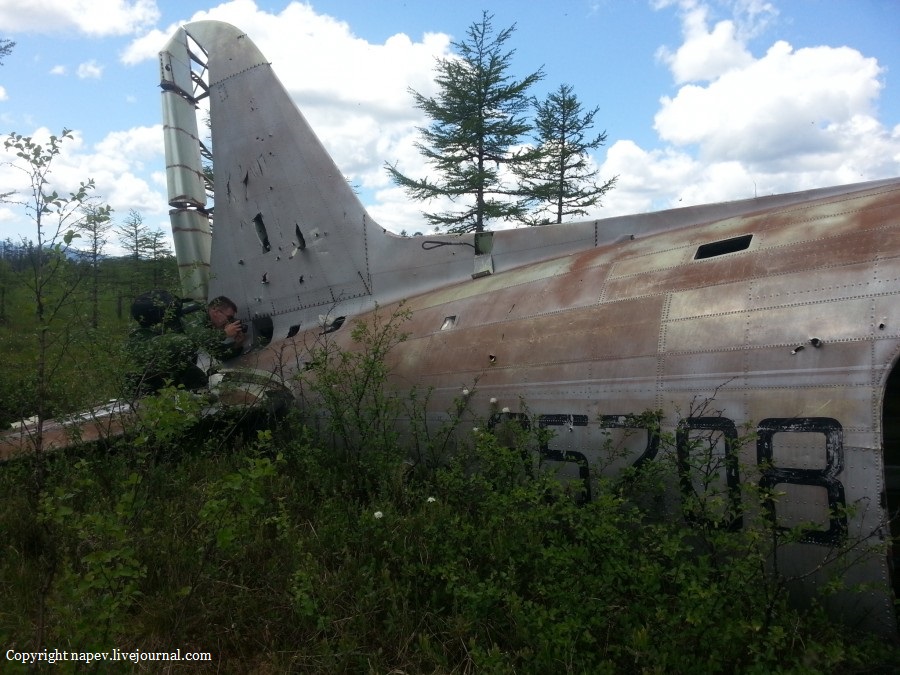
Registration:
CCCP-65708
Flight Phase:
Flight Type:
Survivors:
Yes
MSN:
184 286 02
YOM:
1948
Country:
Region:
Crew on board:
0
Crew fatalities:
Pax on board:
0
Pax fatalities:
Other fatalities:
Total fatalities:
0
Circumstances:
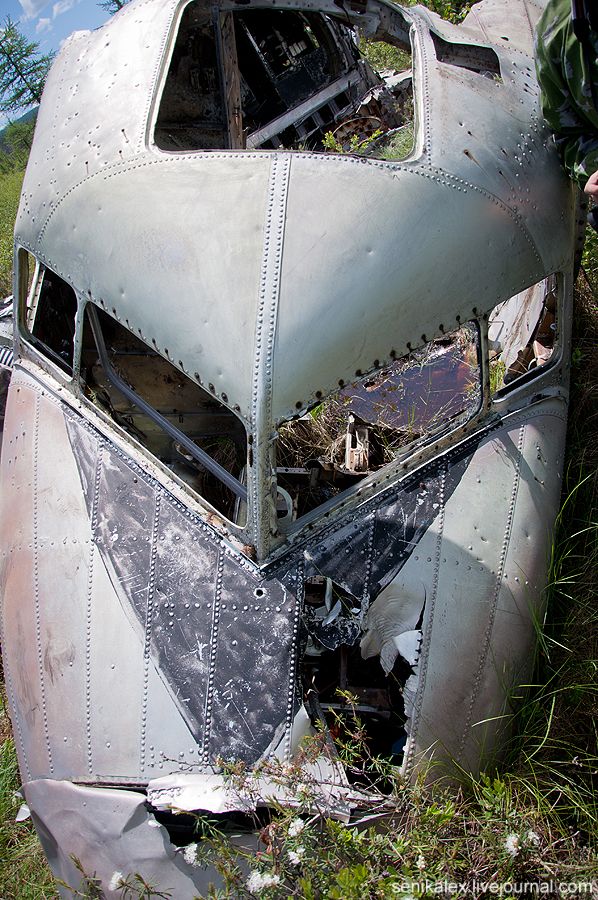
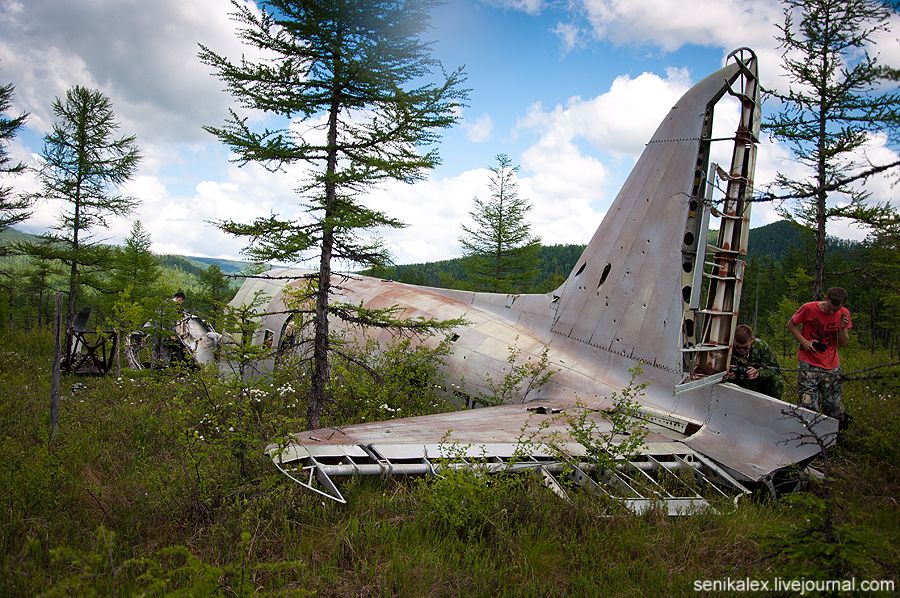
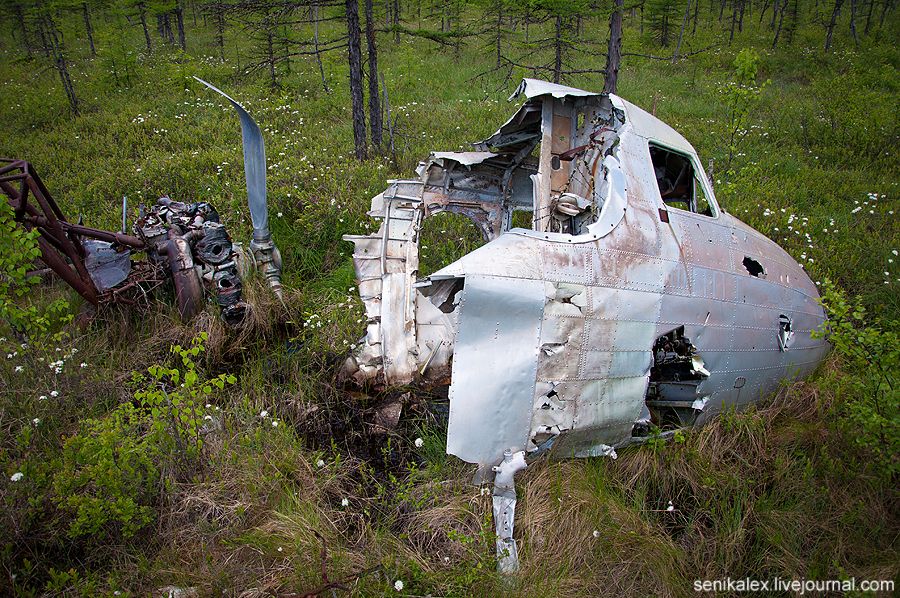
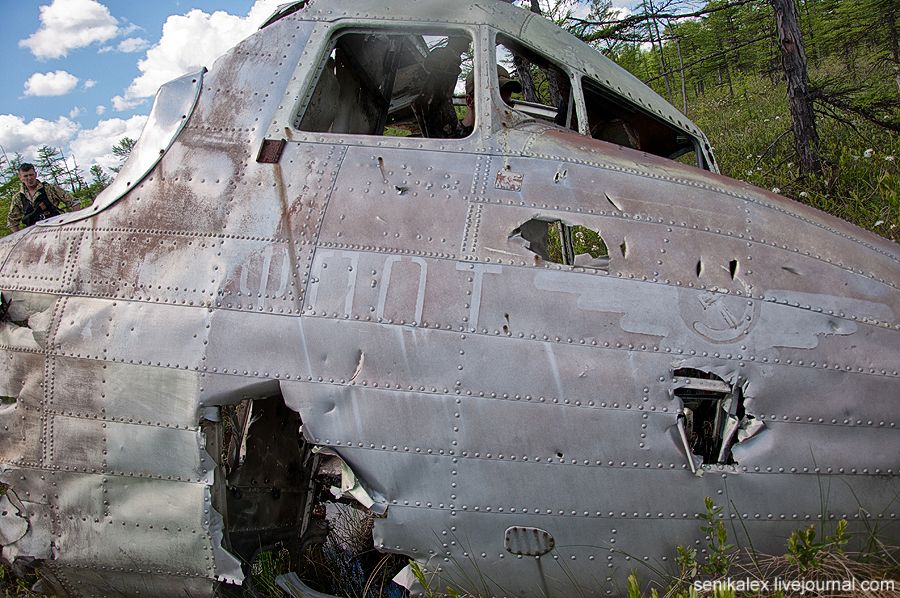
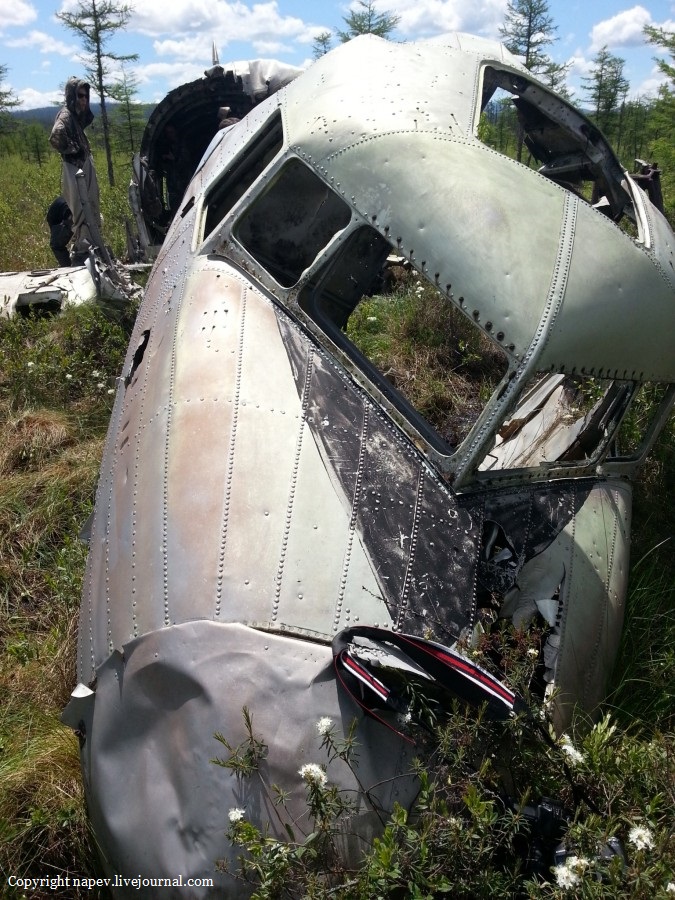
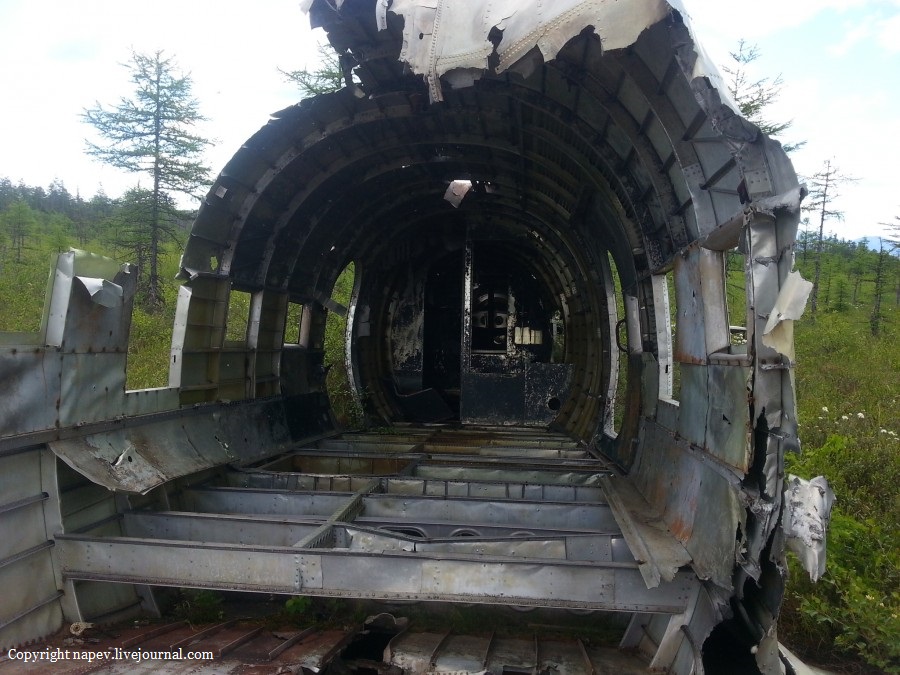
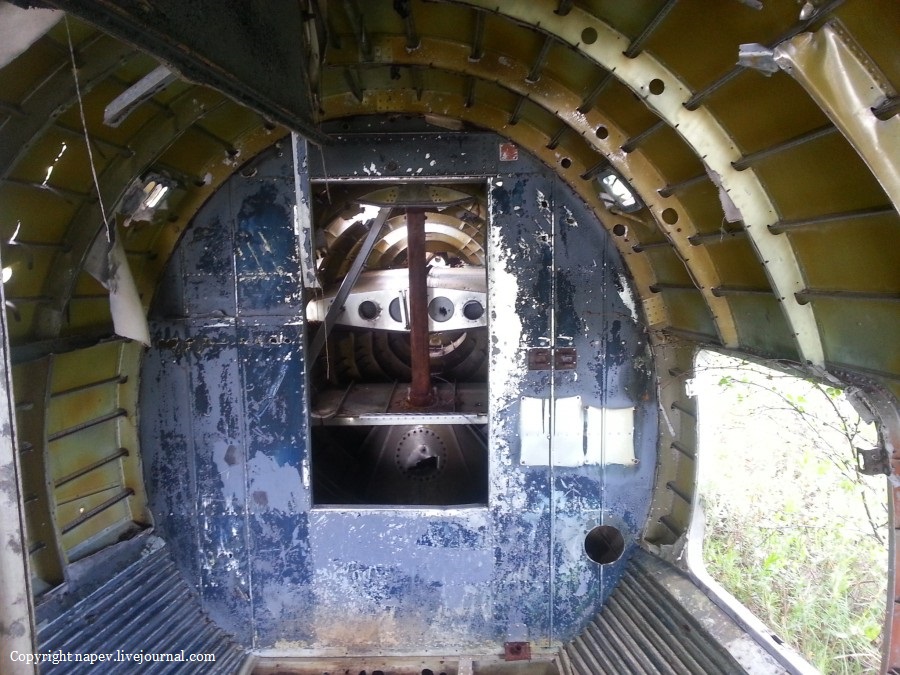
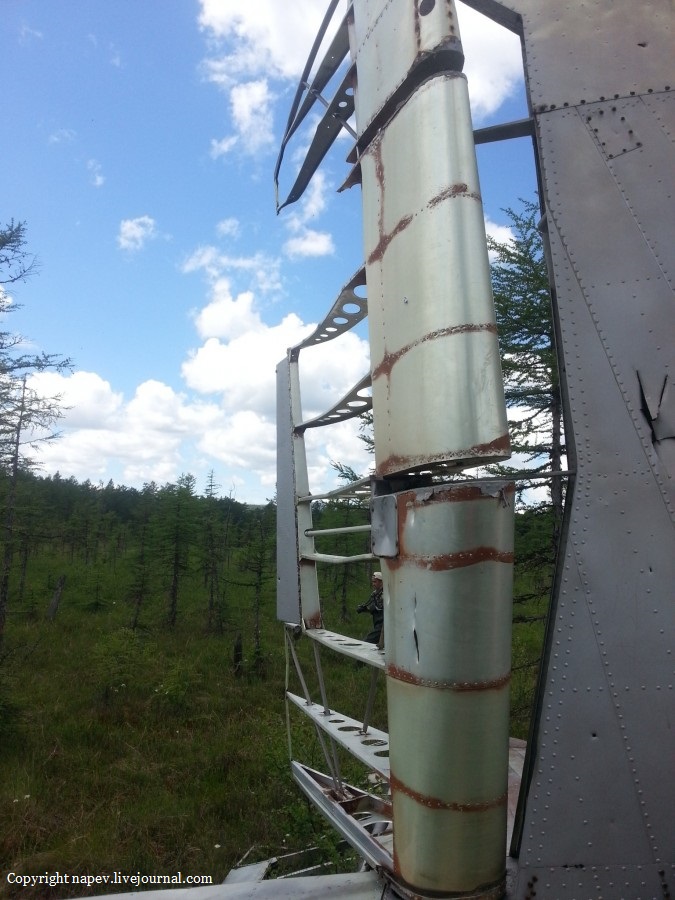
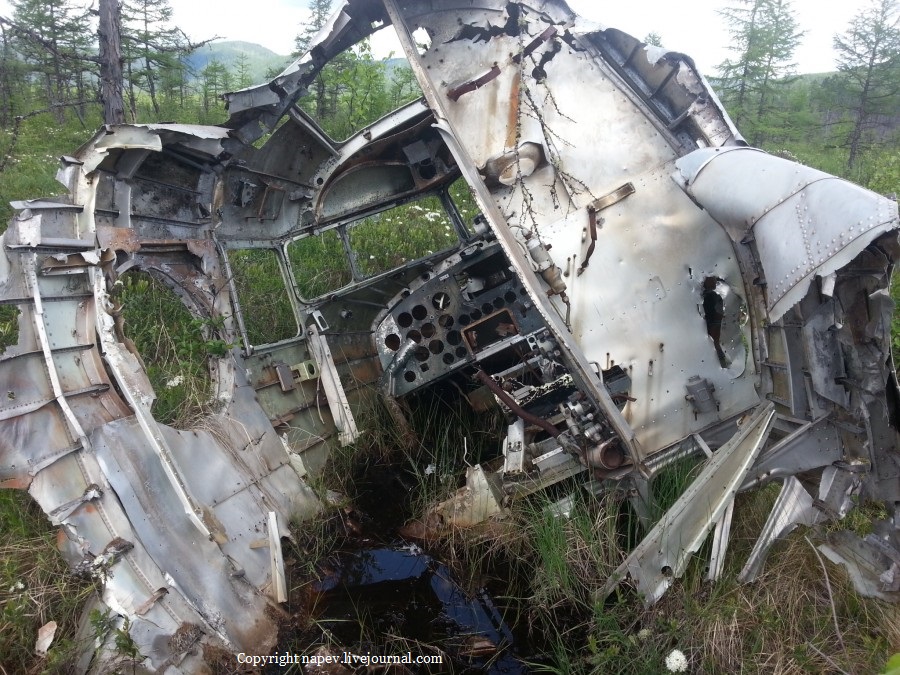
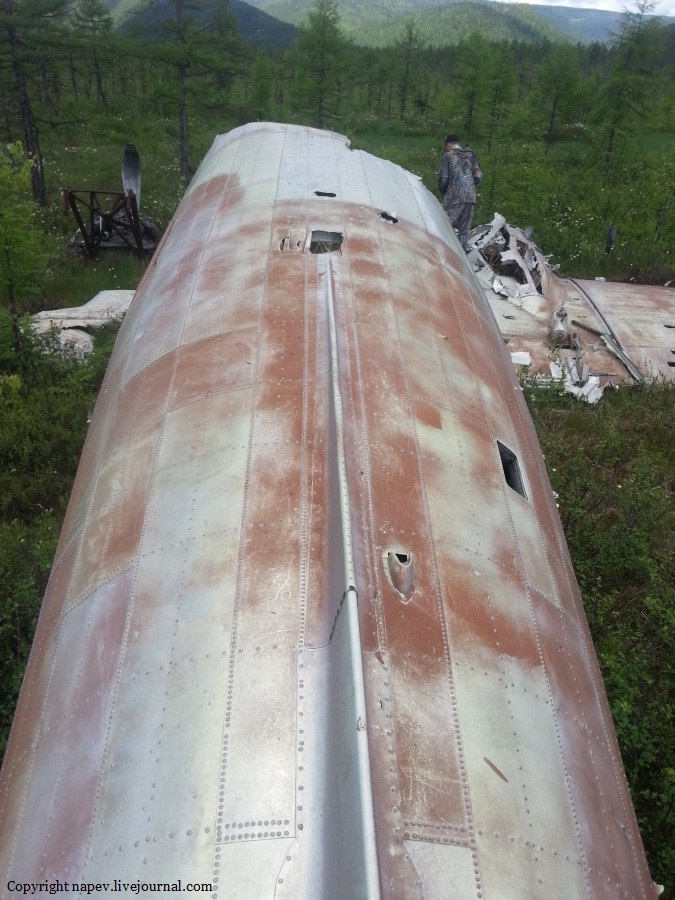
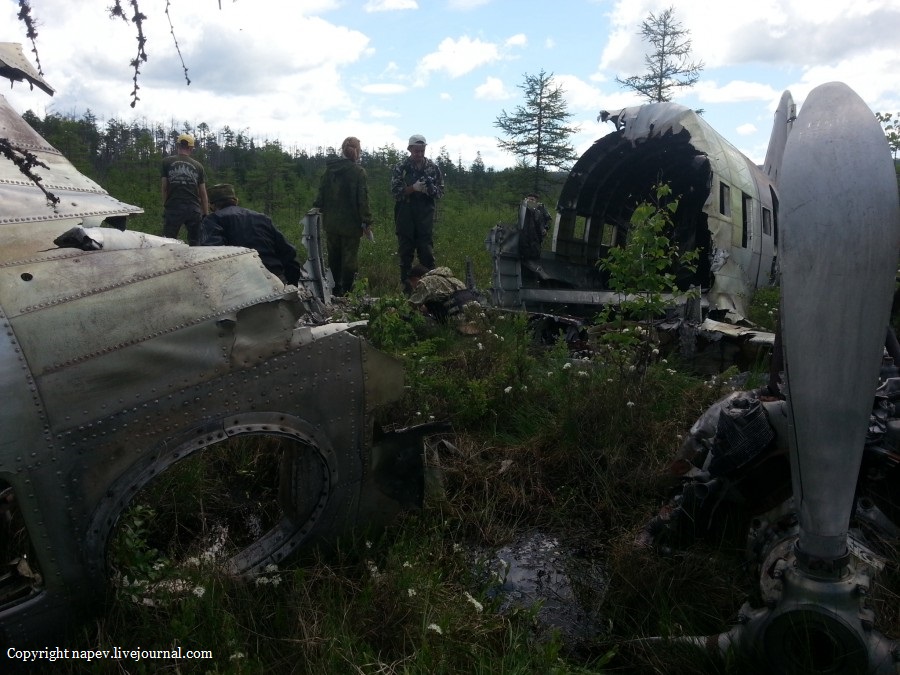
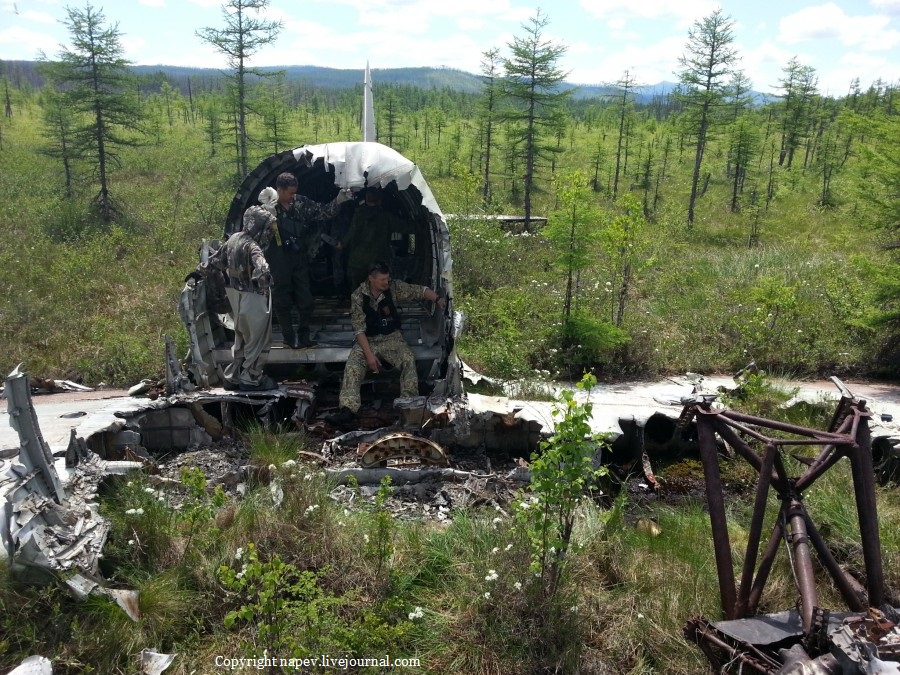
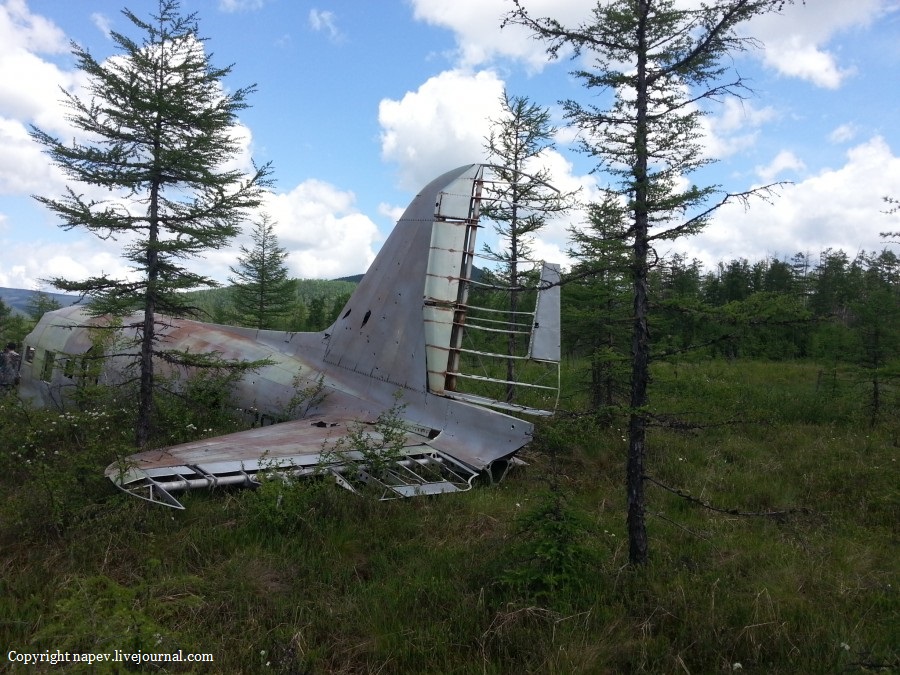
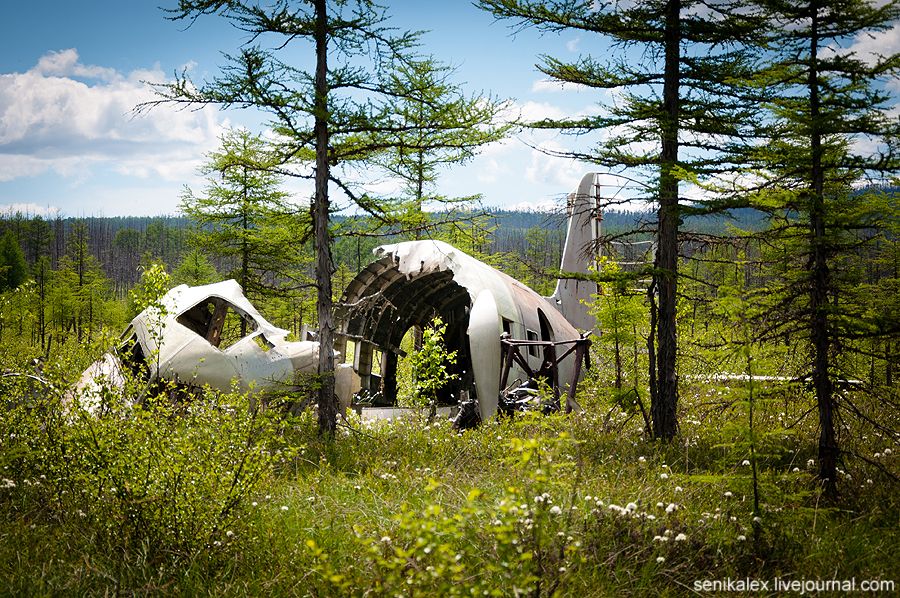
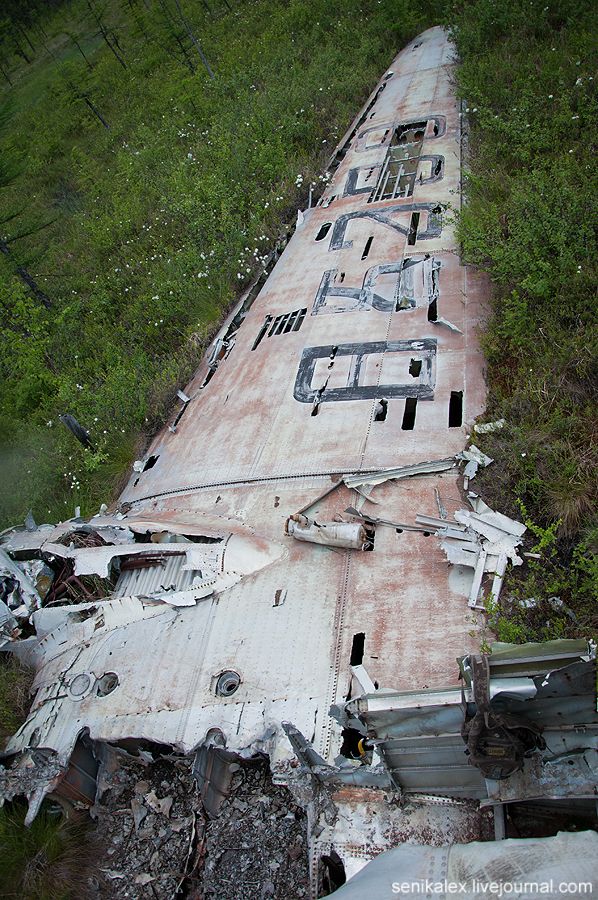
The crew was apparently involved in an aerial photo mission when the left engine caught fire in flight. The pilot reduced his altitude and attempted an emergency belly landing in the tundra. The aircraft came to rest about 82 km southeast of Sukpay, near the Aksu River, in the Sikhot-Alin Mountain Range. There were no casualties but the aircraft was damaged beyond repair.
Sources & photos:
http://aleonkin.livejournal.com/341110.html
https://napev.livejournal.com/201959.html
Probable cause:
Engine fire in flight.

Crash of a Lisunov LI-2 in Kuybyshev: 4 killed

Date & Time: Oct 10, 1958 at 0114 LT
Type of aircraft:
Operator:
Registration:
CCCP-84733
Flight Type:
Survivors:
Yes
Schedule:
Kuybyshev - Kuybyshev
MSN:
184 323 09
YOM:
16
Country:
Region:
Crew on board:
5
Crew fatalities:
Pax on board:
0
Pax fatalities:
Other fatalities:
Total fatalities:
4
Circumstances:
The crew was performing a night training mission at Kuybyshev Airport. Following several circuits in the area, the crew started a new approach. After passing the inner marker, the crew continued the approach at a very low altitude (about one meter above the ground) when the airplane struck with its undercarriage the fence of a private property. It then struck two houses before crashing in a garden. Three crew members were killed while two others were seriously injured. One of the survivor died from his injuries two hours later. The aircraft was destroyed and no one on the ground was injured.
Probable cause:
It was not possible to determine the reason why the crew continued the approach at a so low altitude but the assumption that both engines failed due to fuel exhaustion was not ruled out. At the time of the accident, the engines were supplied by the rear right fuel tank that was almost empty.