Country
code

Panamá

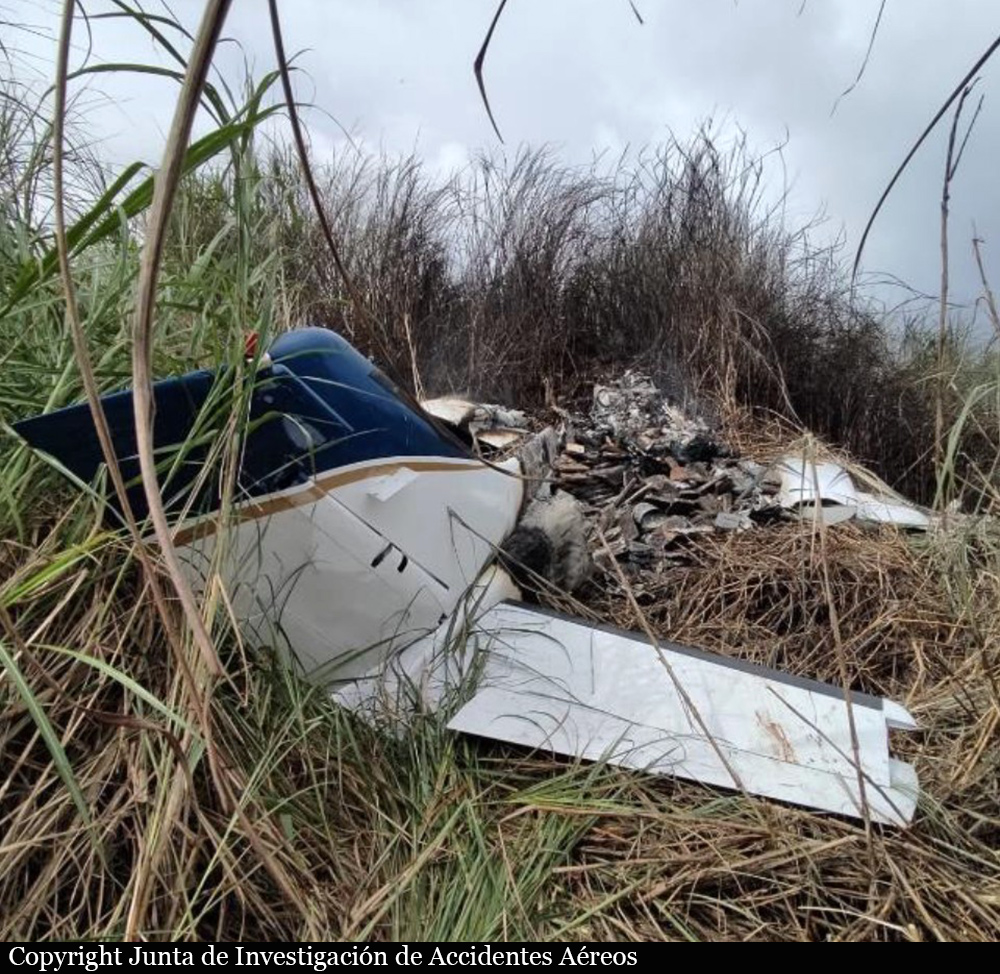
Crash of a Cessna 402B in Panama City: 1 killed

Date & Time: Nov 24, 2023 at 1123 LT
Type of aircraft:
Registration:
N76MD
Flight Phase:
Flight Type:
Survivors:
Yes
Schedule:
Panama City - David
MSN:
402B-1055
YOM:
1976
Country:
Crew on board:
1
Crew fatalities:
Pax on board:
1
Pax fatalities:
Other fatalities:
Total fatalities:
1
Captain / Total flying hours:
8717
Captain / Total hours on type:
1.00
Aircraft flight hours:
15004
Circumstances:
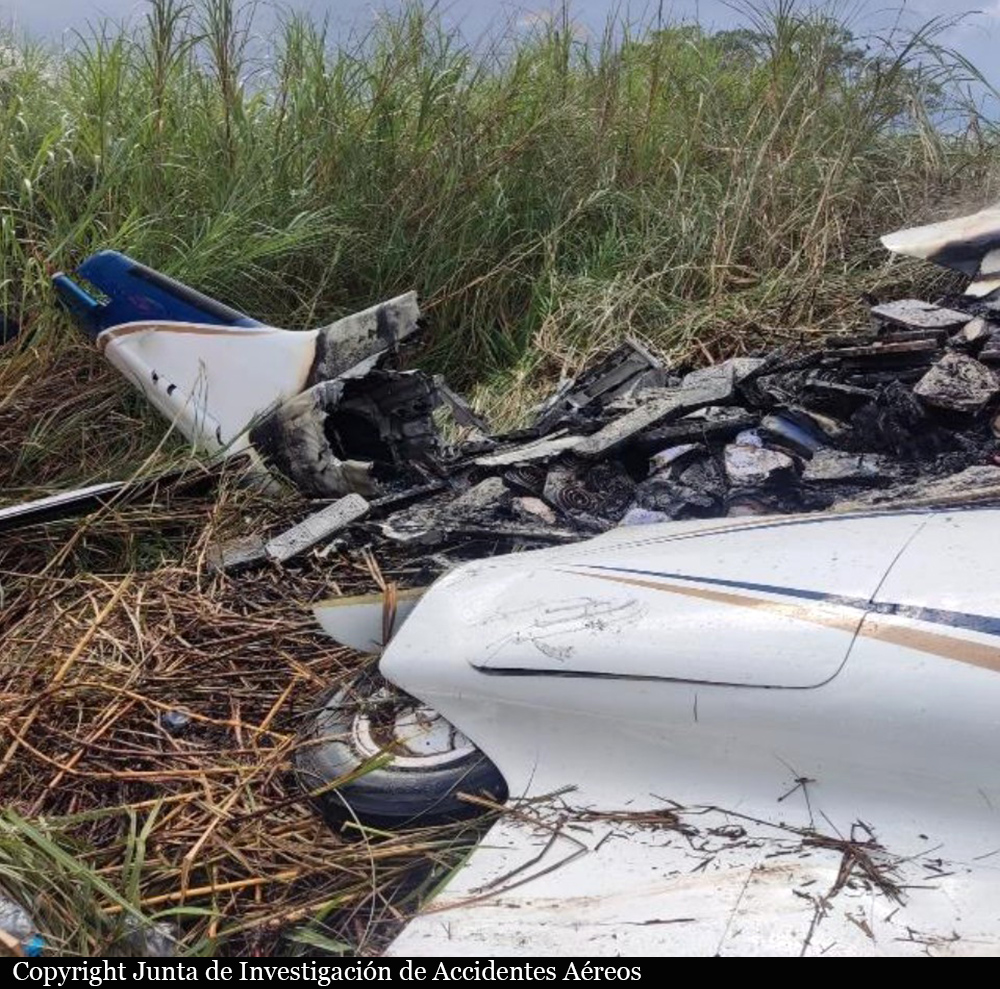
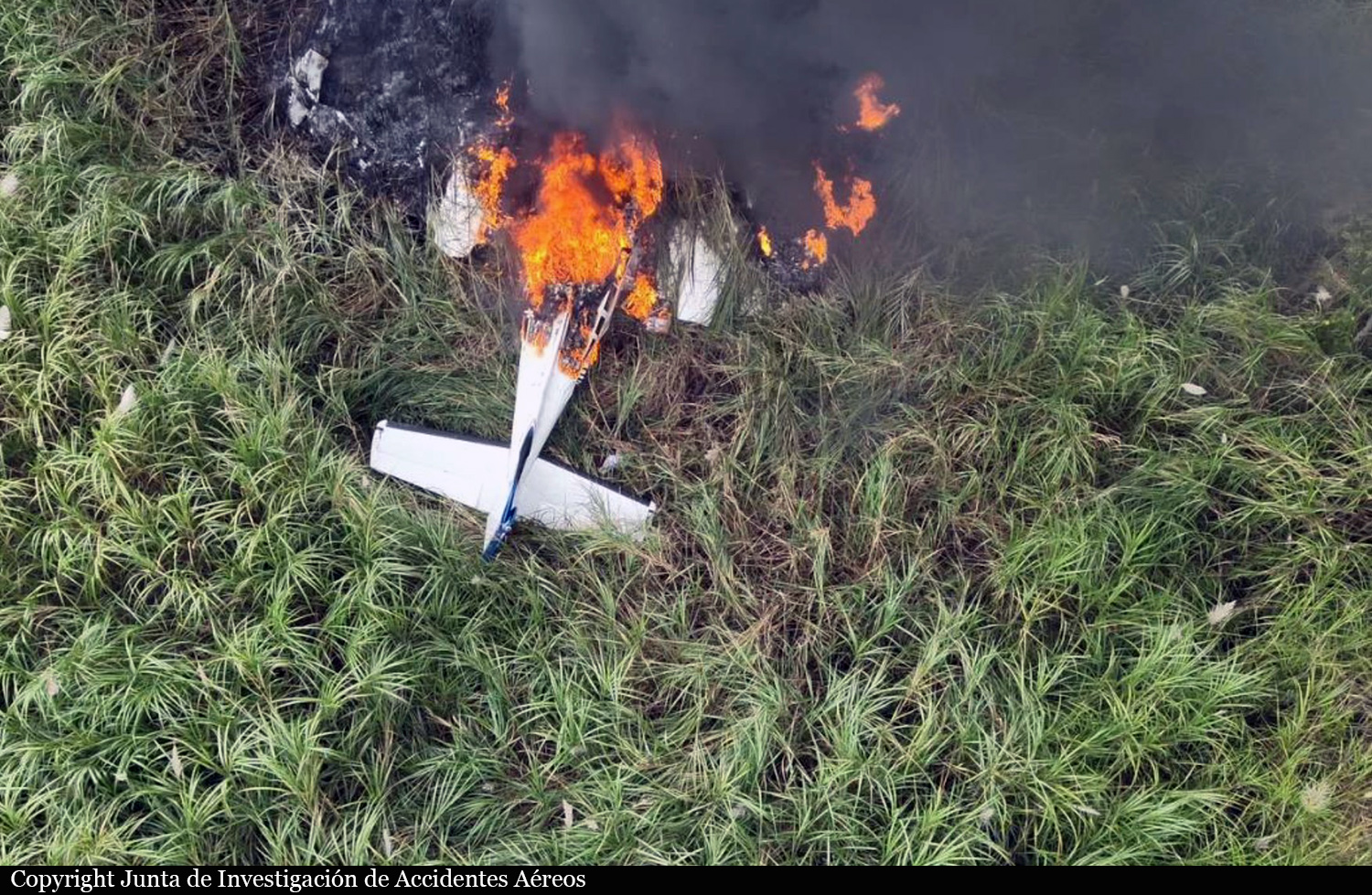
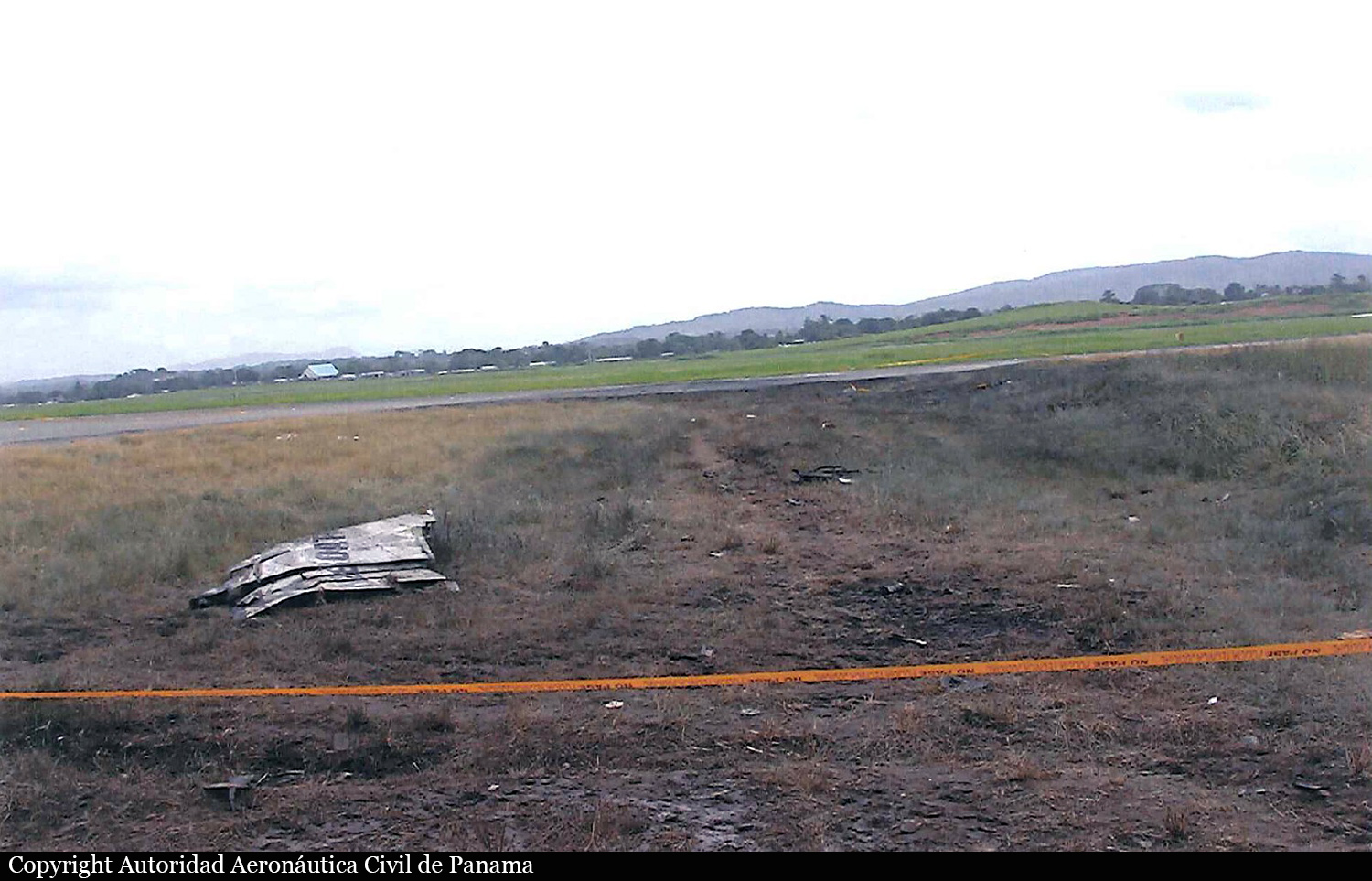
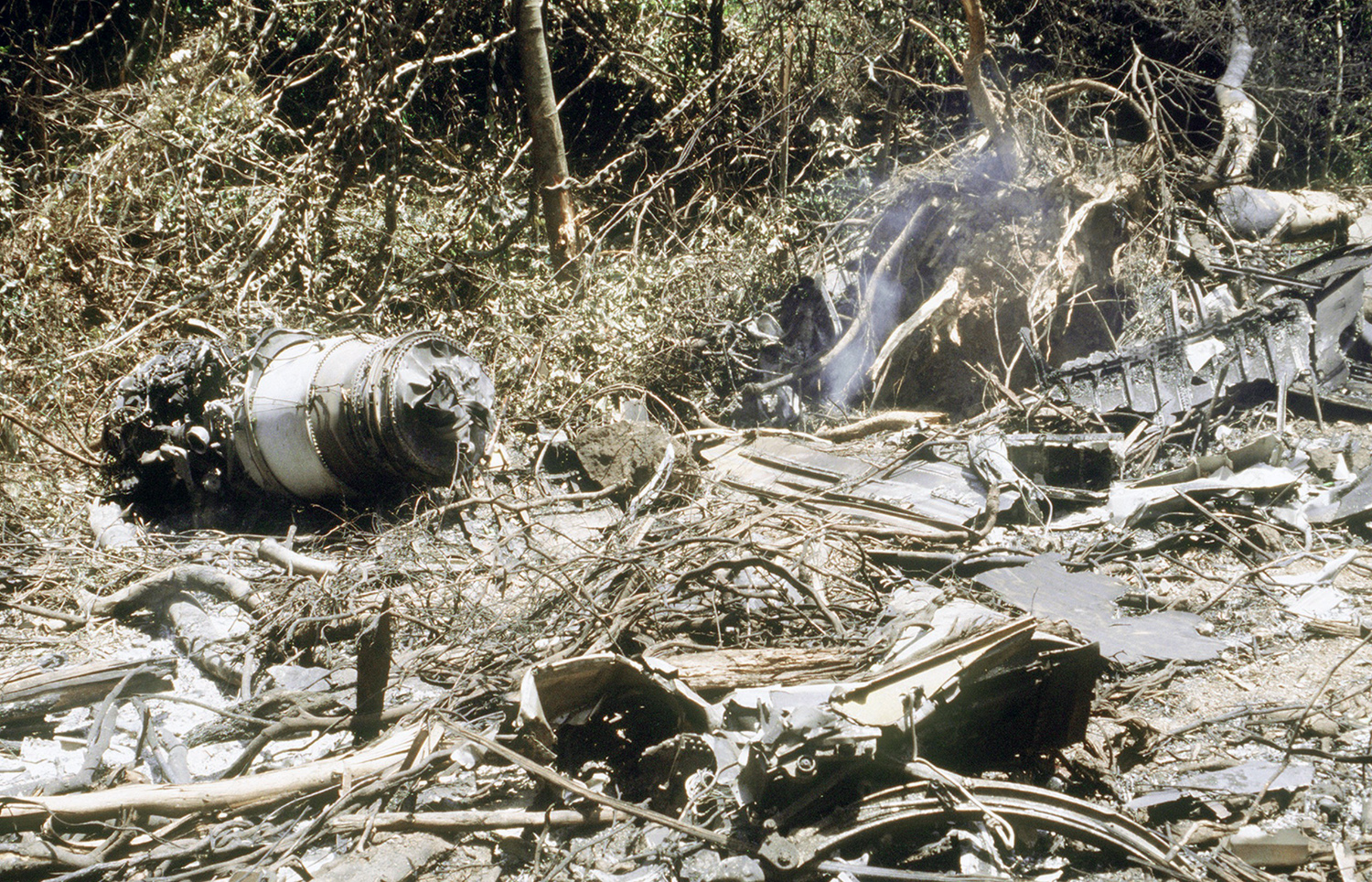
The twin engine airplane departed Panama City-Marcos A. Gelabert Airport Runway 01 on a private flight to David-Enrique Malek Airport, carrying one passenger and one pilot. Immediately after takeoff, it encountered difficulties to gain height, entered an uncontrolled descent and crashed in a wooded and hilly terrain located 1,100 short of runway 19, bursting into flames. The passenger was killed and the pilot was seriously injured. The airplane was totally destroyed by a post crash fire.
Probable cause:
The probable cause of the accident was that the aircraft was outside the weight limits established by the manufacturer, conditions that resulted in the aircraft failing to achieve the necessary climb, as a result of which the pilot was unable to maintain control of the aircraft, causing it to strike the ground during takeoff. At the time of the accident, the total weight of the airplane was 173 kilos above MTOW.
The following contributing factors were identified:
- Lack of training and instruction for the crew regarding the operation of the accident aircraft (improper use of the pre-takeoff checklist).
- Lack of knowledge of the aircraft’s performance charts.
- Lack of supervision regarding the aircraft’s dispatch.
- Lack of flight planning regarding weight in accordance with the limitations established by the manufacturer; at that time, the aircraft exceeded the operational limits. (Operating the aircraft outside the maximum takeoff weight limits established by the manufacturer).
- Lack of judgment on the part of the pilot when loading the aircraft.
Final Report:

Crash of a Learjet 35A in Panama City

Date & Time: Jul 19, 2015 at 1135 LT
Type of aircraft:
Operator:
Registration:
YV543T
Flight Type:
Survivors:
Yes
Schedule:
Caracas – Panama City
MSN:
35-246
YOM:
1979
Country:
Crew on board:
2
Crew fatalities:
Pax on board:
0
Pax fatalities:
Other fatalities:
Total fatalities:
0
Captain / Total flying hours:
7589
Circumstances:
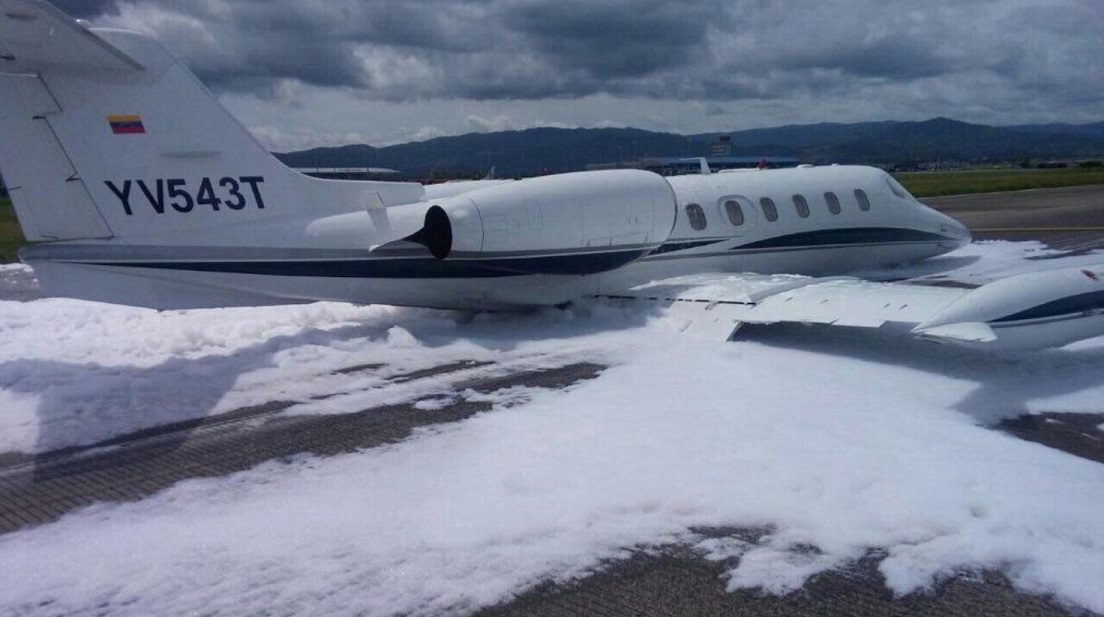
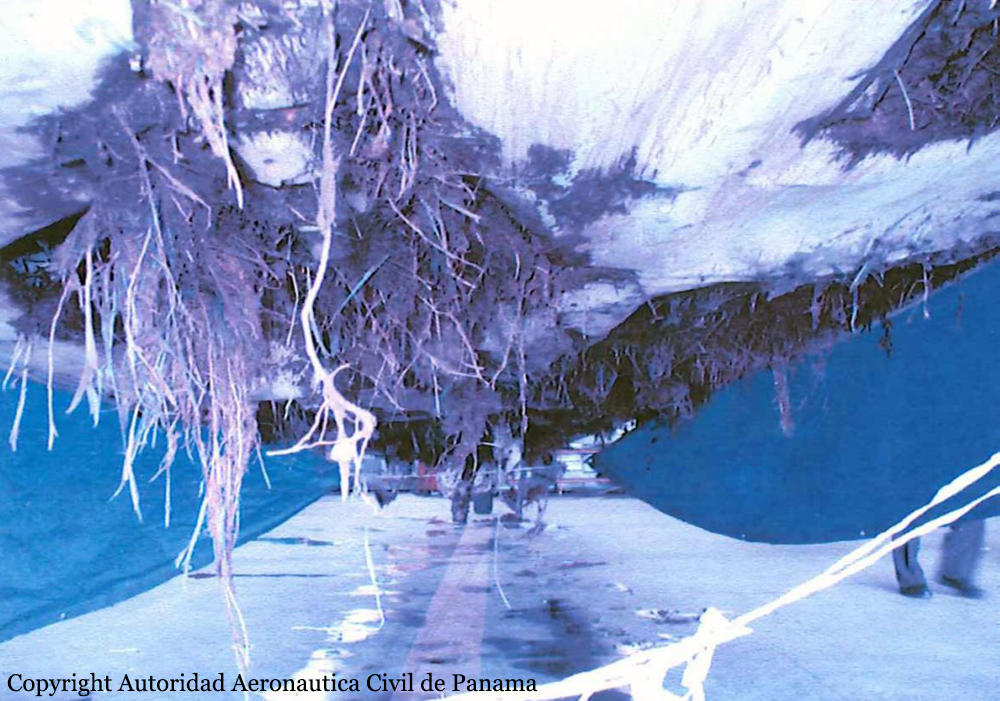
Following an uneventful flight from Caracas-Maiquetia-Simon Bolivar Airport, the crew initiated the descent to Panama City-Tocumen Airport. After a normal approach, the airplane landed with the landing gear still retracted and slid on a distance of 987 metres before coming to rest on the main runway. Both pilots escaped uninjured and the airplane was damaged beyond repair.
Probable cause:
The reason the aircraft landed without the landing gear deployed is attributed to human error for not having activated the deployment lever, and for failing to observe the frequency and transit lights of the deployment and confirm their locking.
Final Report:

Crash of a Britten-Norman BN-2A-21 Islander on Perico Island

Date & Time: Jul 19, 2013 at 1234 LT
Type of aircraft:
Operator:
Registration:
HP-1338MF
Flight Phase:
Survivors:
Yes
Schedule:
Punta Coco - Panama City
MSN:
818
YOM:
1977
Country:
Crew on board:
1
Crew fatalities:
Pax on board:
7
Pax fatalities:
Other fatalities:
Total fatalities:
0
Captain / Total flying hours:
7425
Captain / Total hours on type:
2200.00
Aircraft flight hours:
8178
Circumstances:
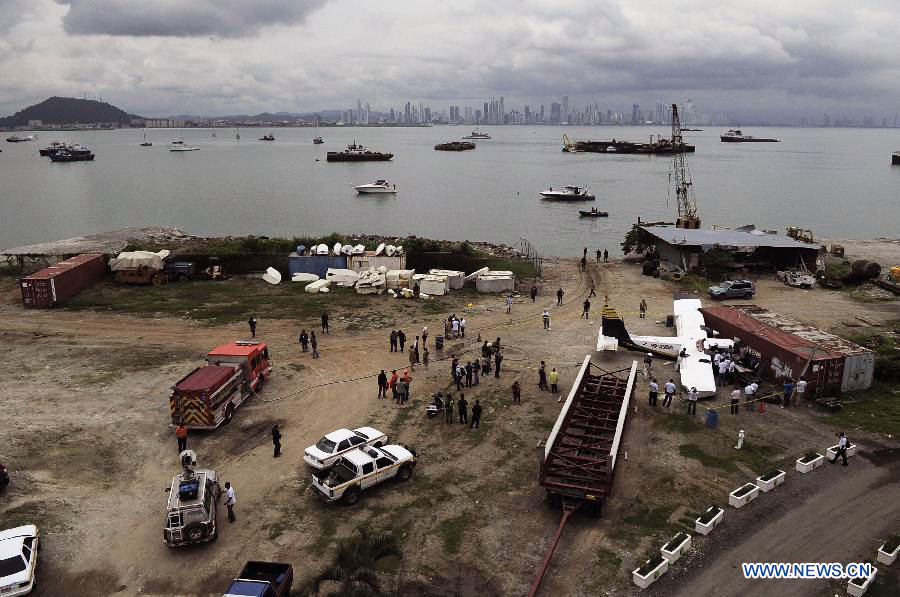
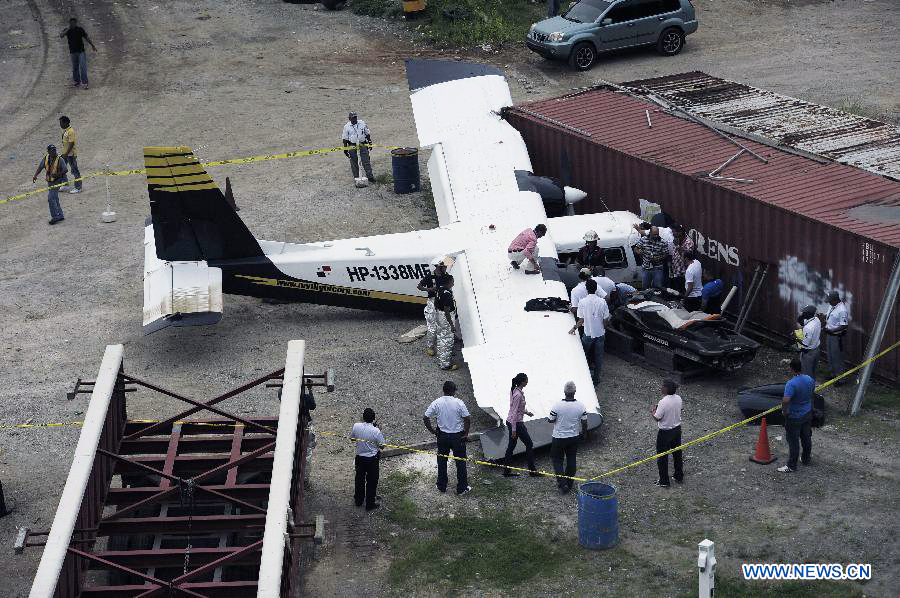
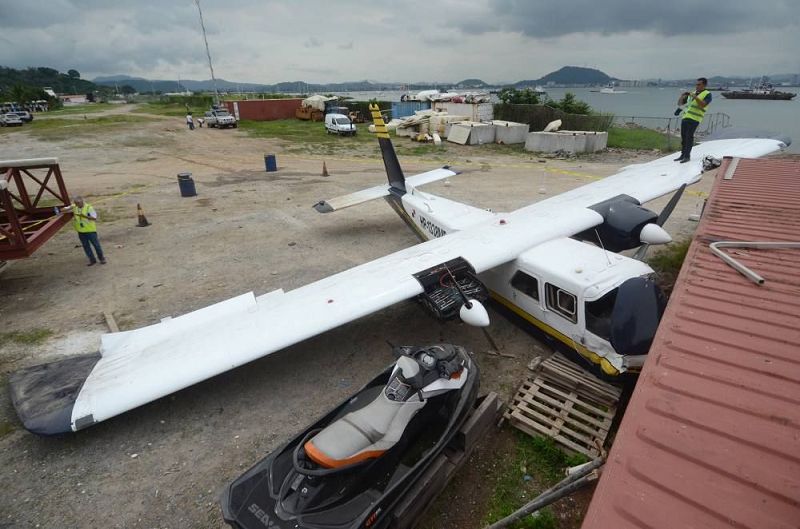
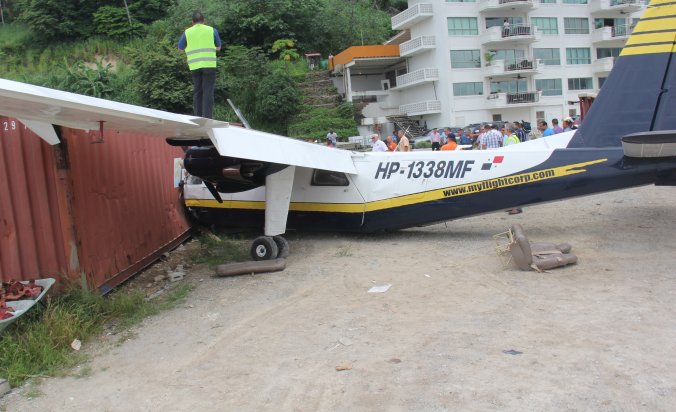
Few minutes after takeoff from Punta Coco Airport (Isla del Rey), while overflying the bay of Panama at an altitude of 2,500 feet, the right engine failed. The pilot informed ATC about the situation, feathered the propeller and continued to the destination airport. Unable to reach Panama City-Marcos A. Gelabert Airport, the pilot reduced his altitude and attempted an emergency landing on the Perico Island, 8 km east of the destination airport. After touchdown, the right main gear was torn off then airplane slid for few dozen metres before coming to rest against a fret container. All eight occupants escaped uninjured while the aircraft was damaged beyond repair.
Probable cause:
The cause of the accident was that the captain was forced to land in the Amador area two minutes before landing at MAG Airport, where the aircraft made contact with the terrain and during the landing roll, the right landing gear detached and collided with a cargo container. This was due to a series of events:
- The failure of the right engine due to an oil leak from the base (adapter) of the oil filter.
- The shutdown of the right engine in flight, due to a failure of the indication that appeared on the cockpit control instruments.
- The descent from 2,500 feet to 1,700 feet in order to land on Contadora Island, without which the descent could have maintained enough altitude to reach MAG.
- Human error in not deciding to land on the runway of Contadora Island and instead continuing the flight towards MAG Airport with an engine that was off at that time.
- The loss of altitude as the aircraft headed towards MAG due to not having cylinder compression within the manufacturer's limits.
- The possible influence of the weight of the occupants and cargo, which prevented maintaining altitude with only one functioning engine due to inadequate cylinder compression.
Final Report:

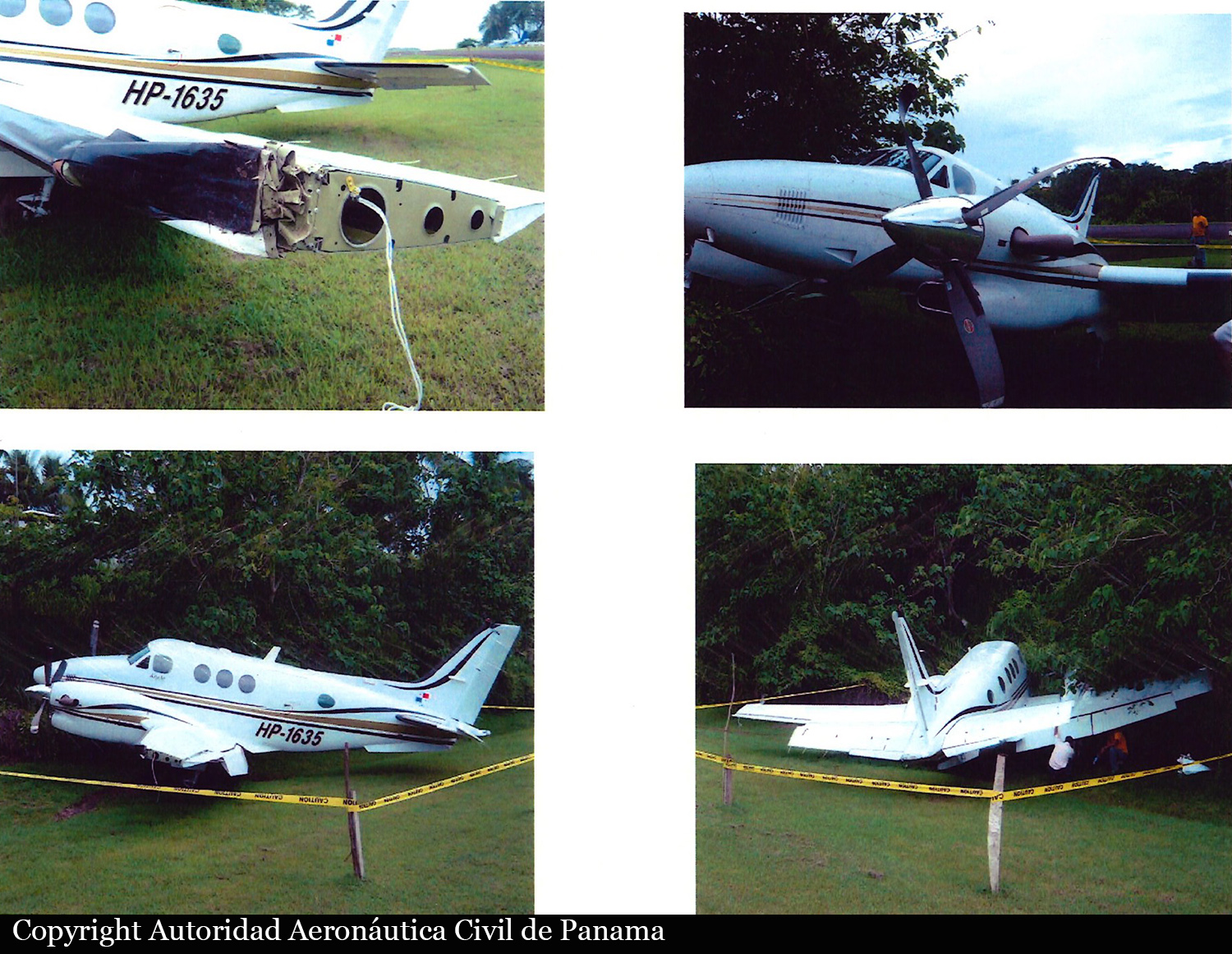
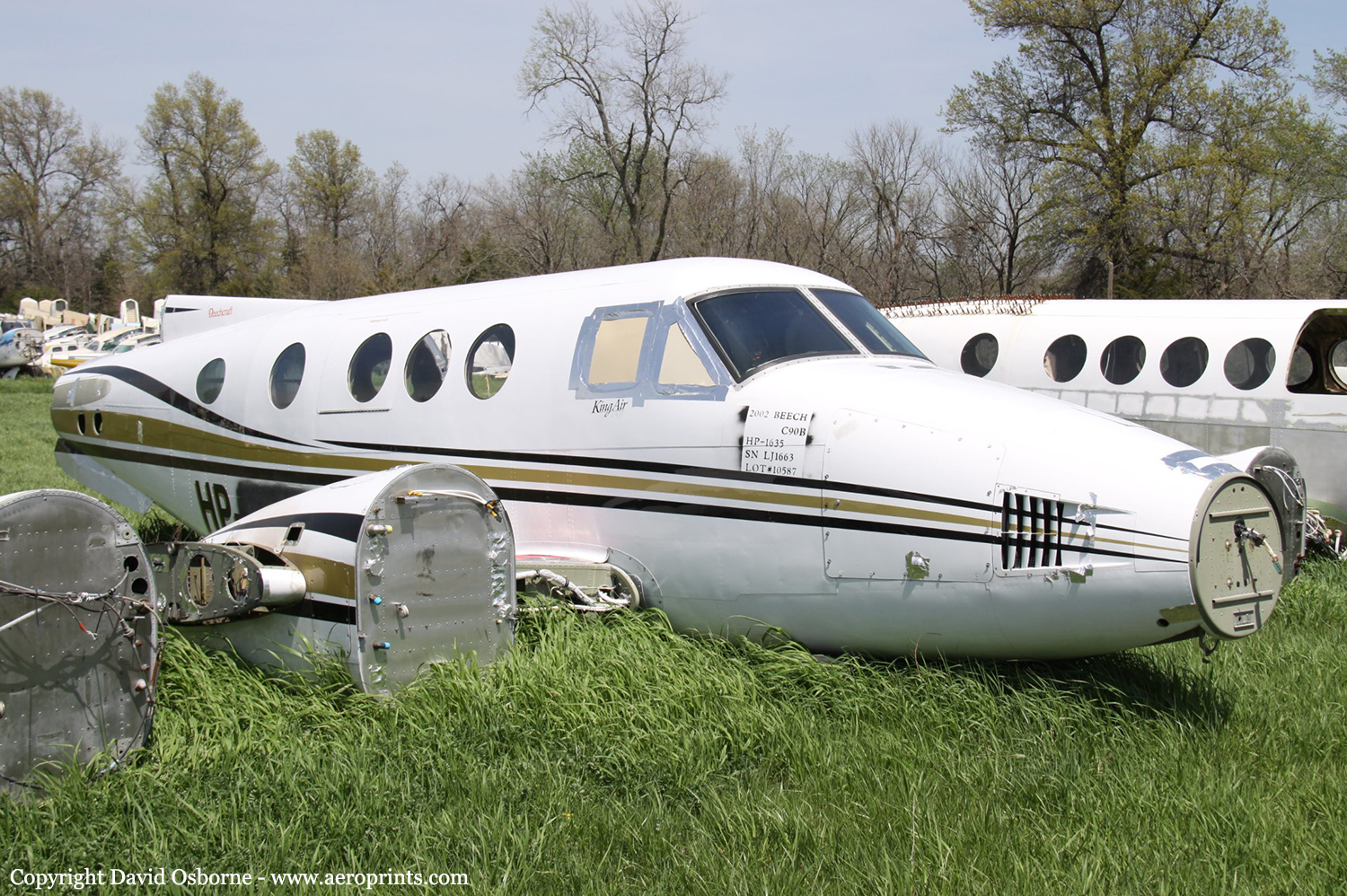
Crash of a Beechcraft C90B King Air in Contadora Island

Date & Time: Jun 6, 2008 at 0810 LT
Type of aircraft:
Registration:
HP-1635
Flight Type:
Survivors:
Yes
Schedule:
Panama City - Contadora Island
MSN:
LJ-1663
YOM:
2002
Country:
Crew on board:
1
Crew fatalities:
Pax on board:
5
Pax fatalities:
Other fatalities:
Total fatalities:
0
Captain / Total flying hours:
1976
Captain / Total hours on type:
54.00
Aircraft flight hours:
1351
Circumstances:
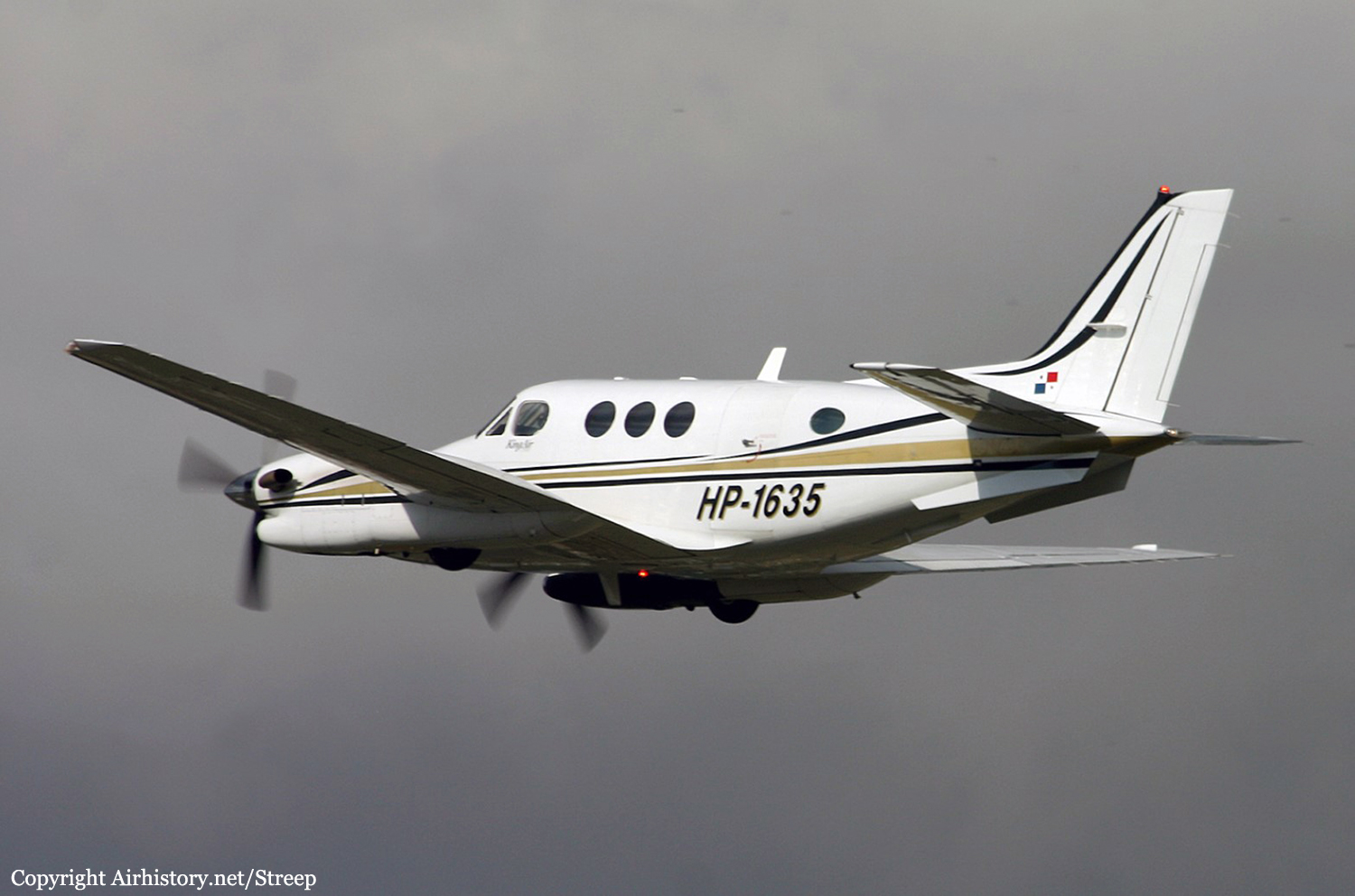
The twin engine airplane departed Panama City-Marcos A. Gelabert Airport at 0740LT on a private flight to Contadora Island, carrying five passengers and one pilot. Following an uneventful flight, the pilot initiated the approach to runway 35 and landed at an estimated speed of 92 knots. After touchdown, he started the braking procedure when the airplane started to veer to the left, causing the tire on left main gear to struck an element of the runway edge lighting system. This caused the left tire to deflate and the airplane to continue to veer to the left. As the end of the runway was approaching, the pilot decided to veer off runway to the left and the airplane came to rest into trees and was damaged beyond repair. All six occupants escaped unhurt.
Probable cause:
The cause of the accident, which resulted in it veering off the runway for the second time, was the impact of the left main landing gear tire against the runway edge light.
The following factors were considered as contributing:
- The runway was wet.
- Engaging the throttle before the nose gear touched down caused the aircraft to skid to the left due to the opposing forces.
- The aircraft’s landing speed was likely greater than 92 knots, as it traveled a total of 438 metres off the runway onto the grass from the moment of touchdown, despite the impact and the flat tire, of which 182 metres were with the flat tire.
Final Report:

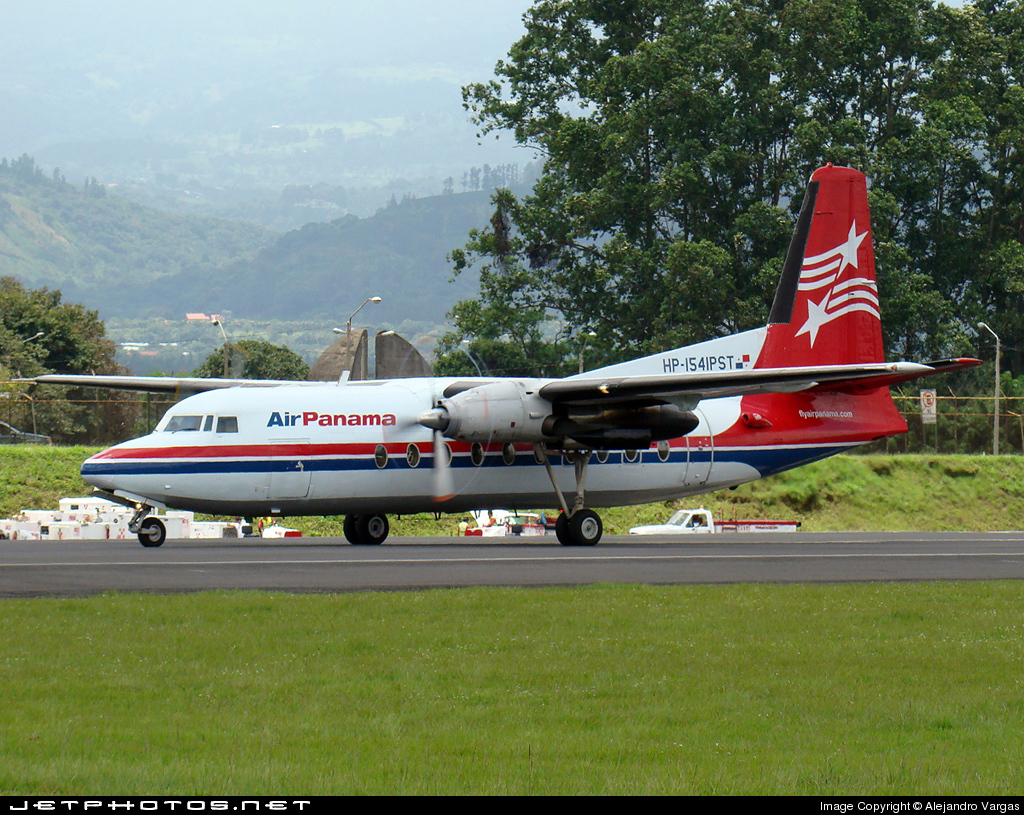
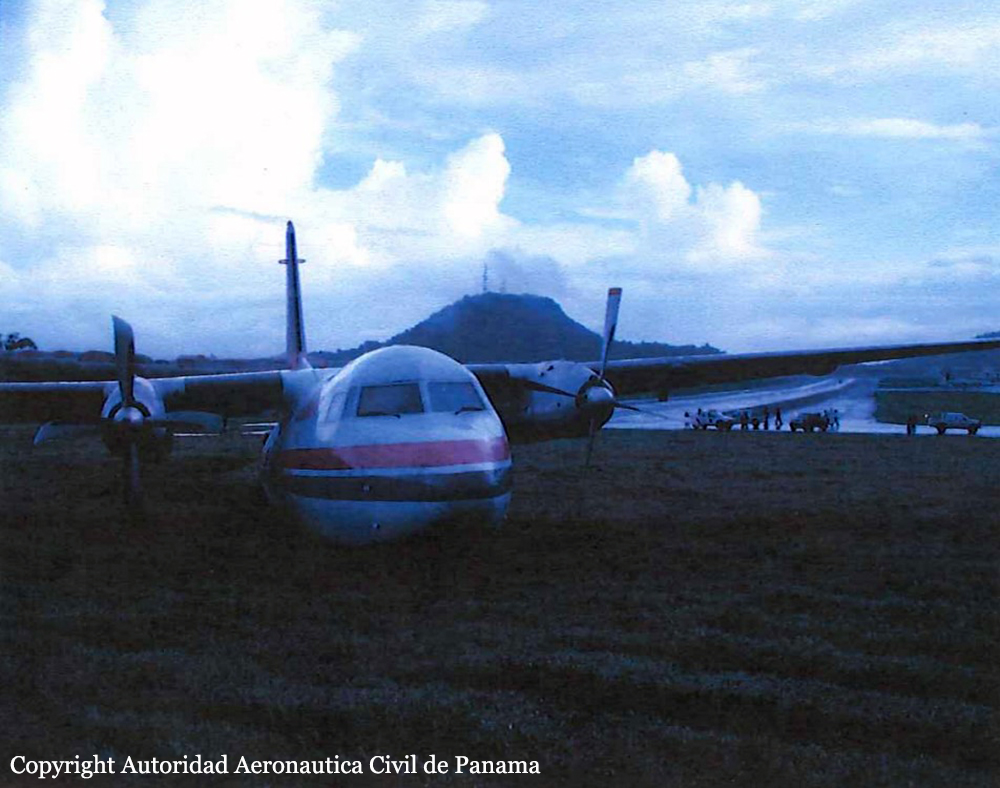
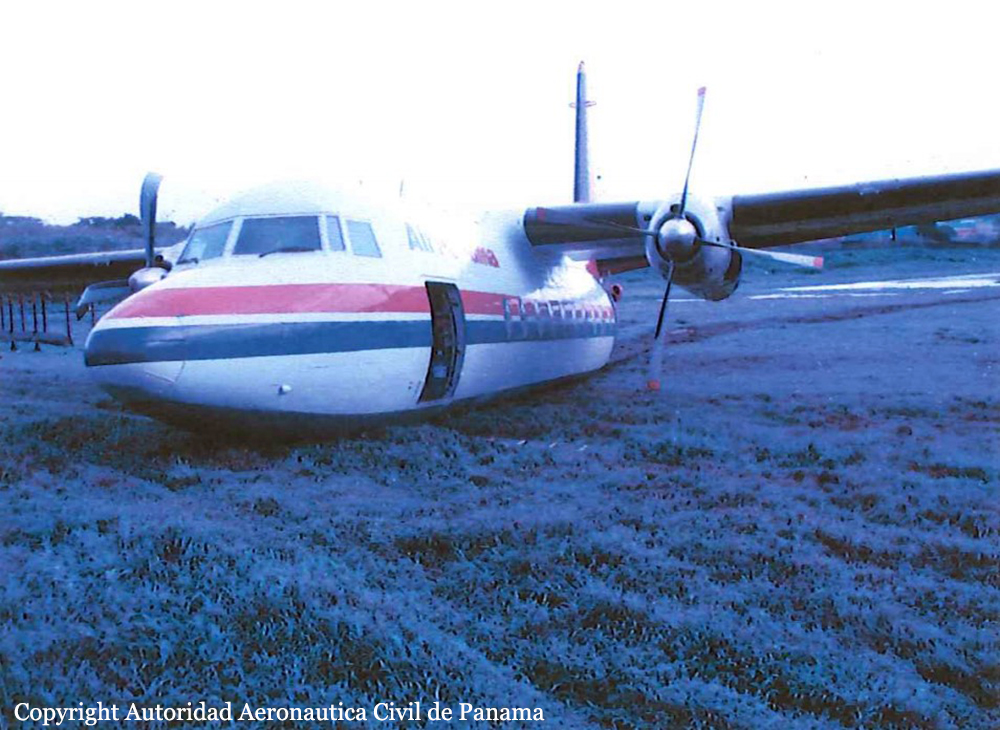
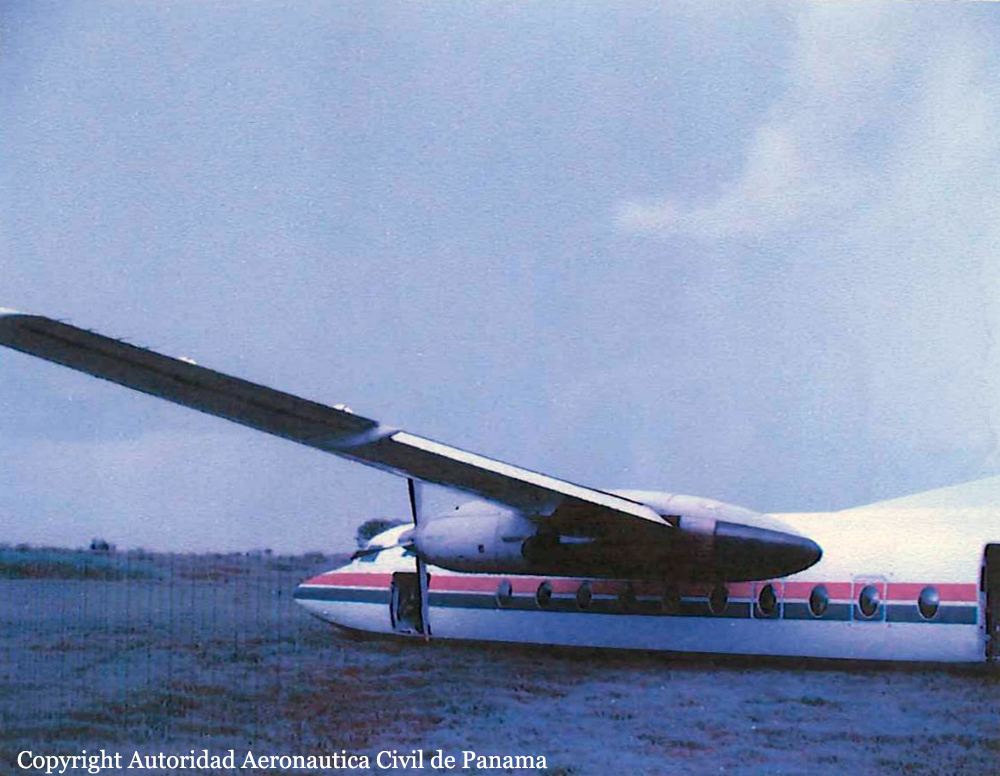
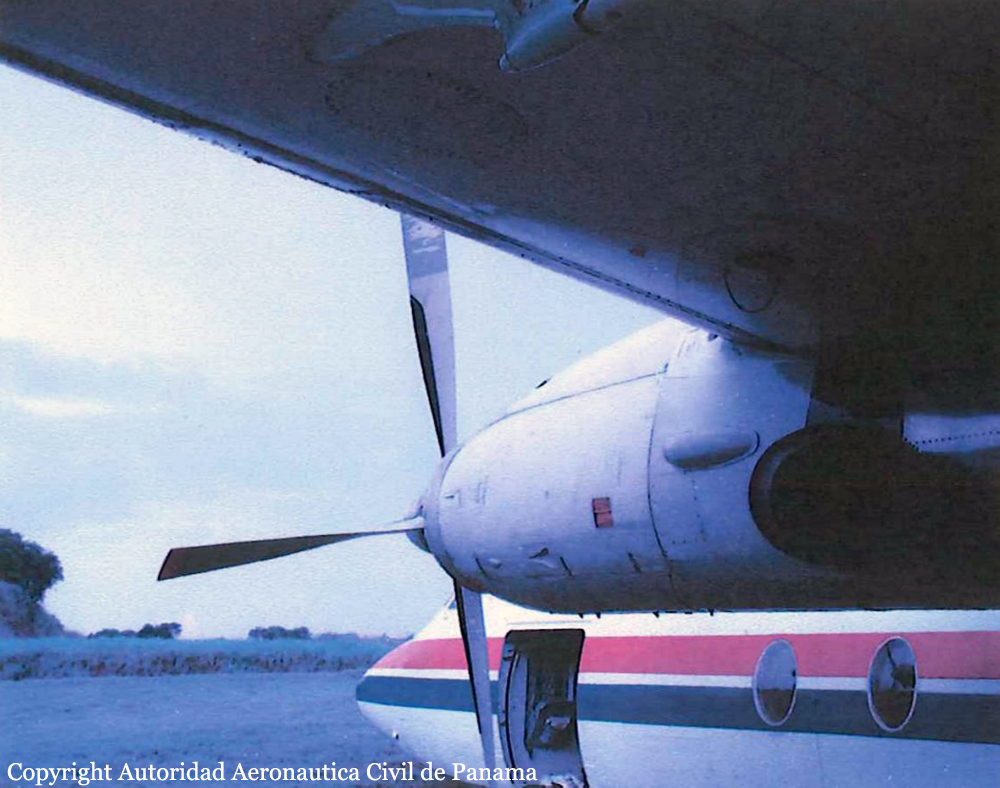
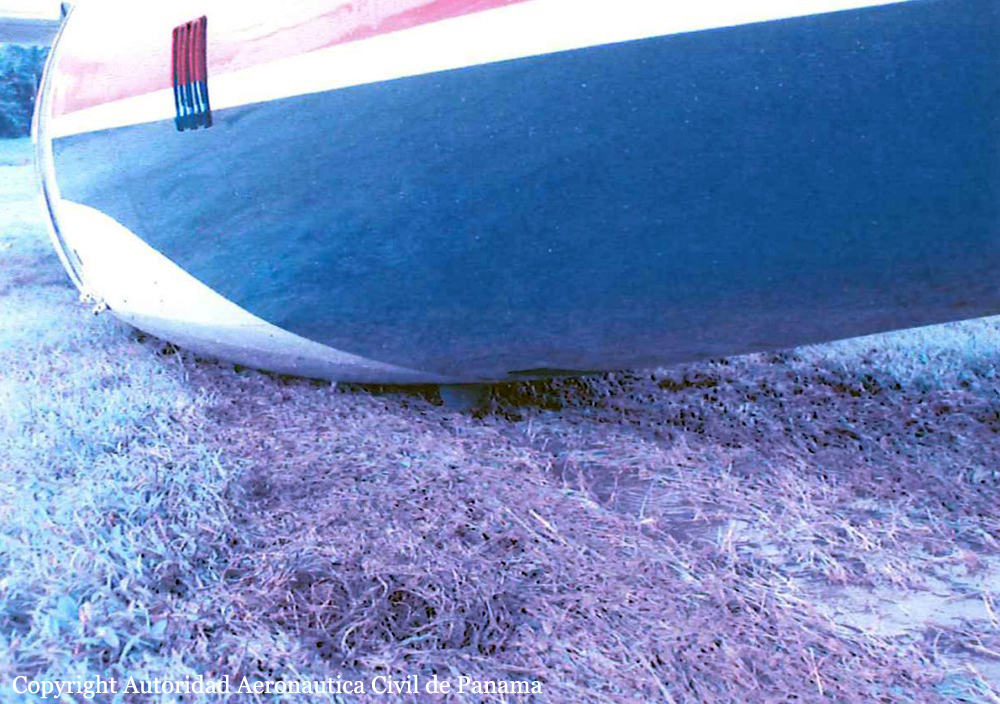
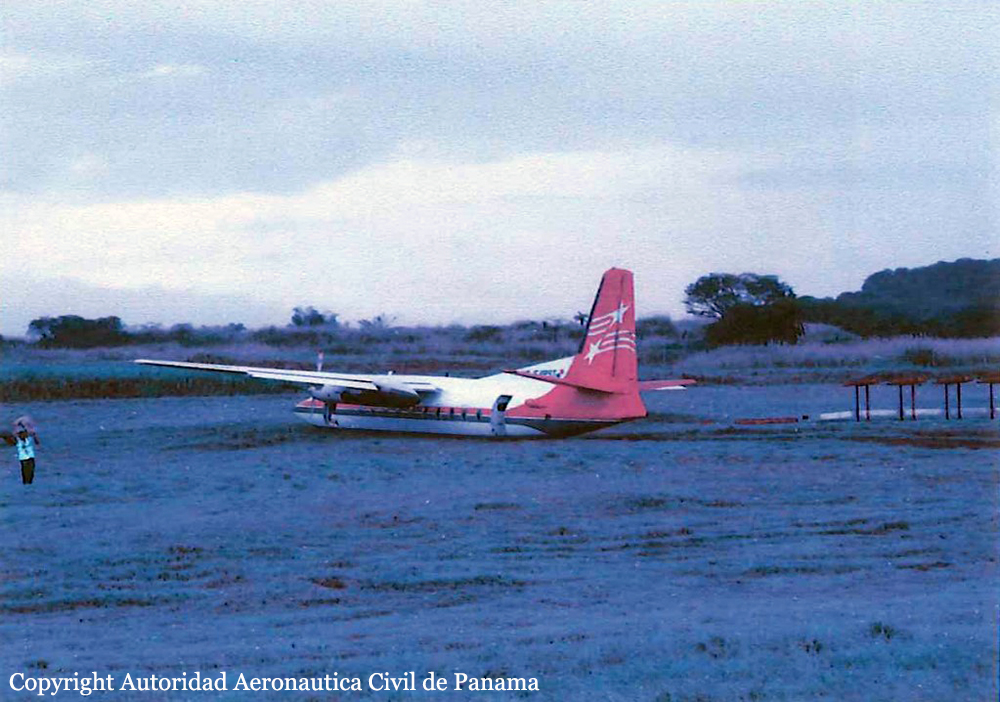
Crash of a Fokker F27 Friendship 200 in Panama City

Date & Time: Oct 31, 2007 at 1530 LT
Type of aircraft:
Operator:
Registration:
HP-1541PST
Flight Phase:
Survivors:
Yes
Schedule:
Panama City – Bocas del Toro
MSN:
10297
YOM:
1966
Flight number:
PST980
Country:
Crew on board:
4
Crew fatalities:
Pax on board:
9
Pax fatalities:
Other fatalities:
Total fatalities:
0
Captain / Total flying hours:
17806
Aircraft flight hours:
33398
Circumstances:
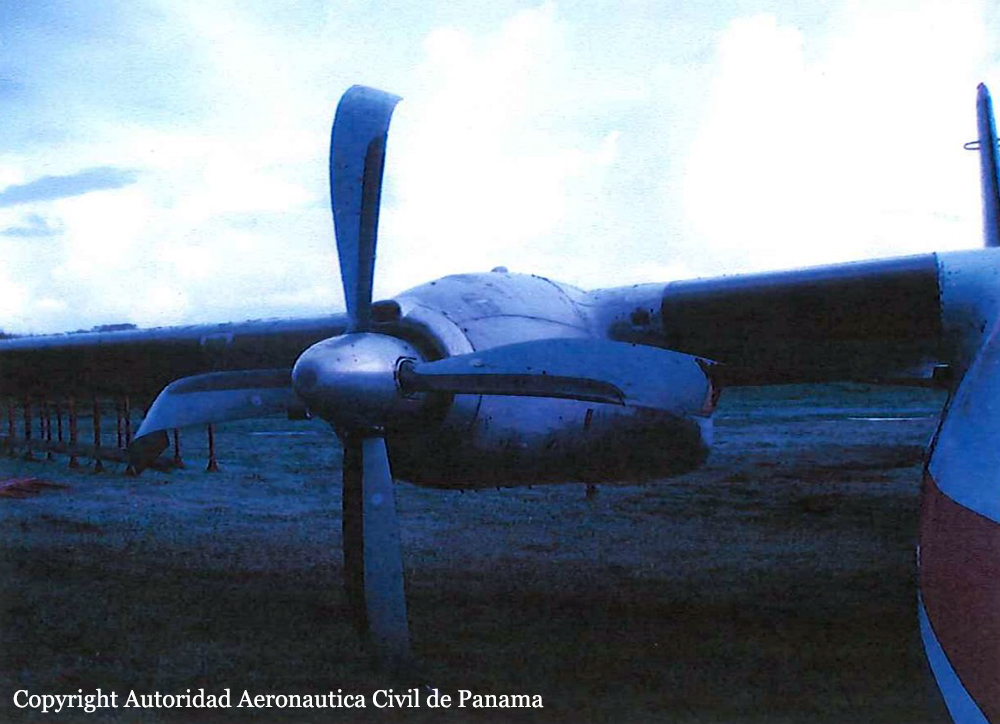
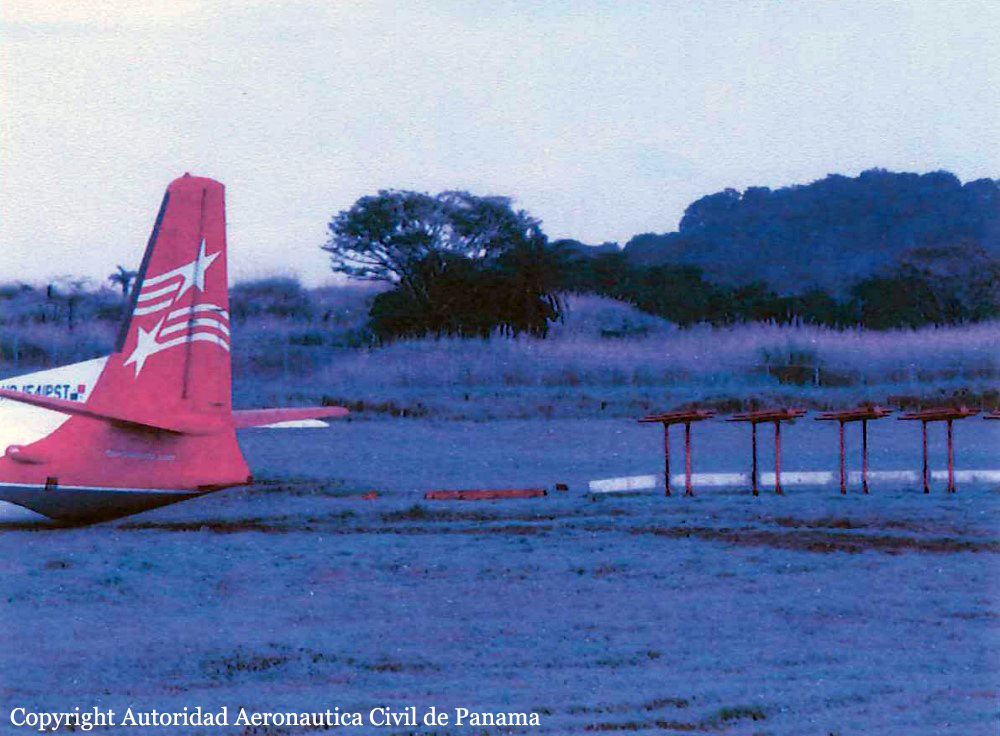
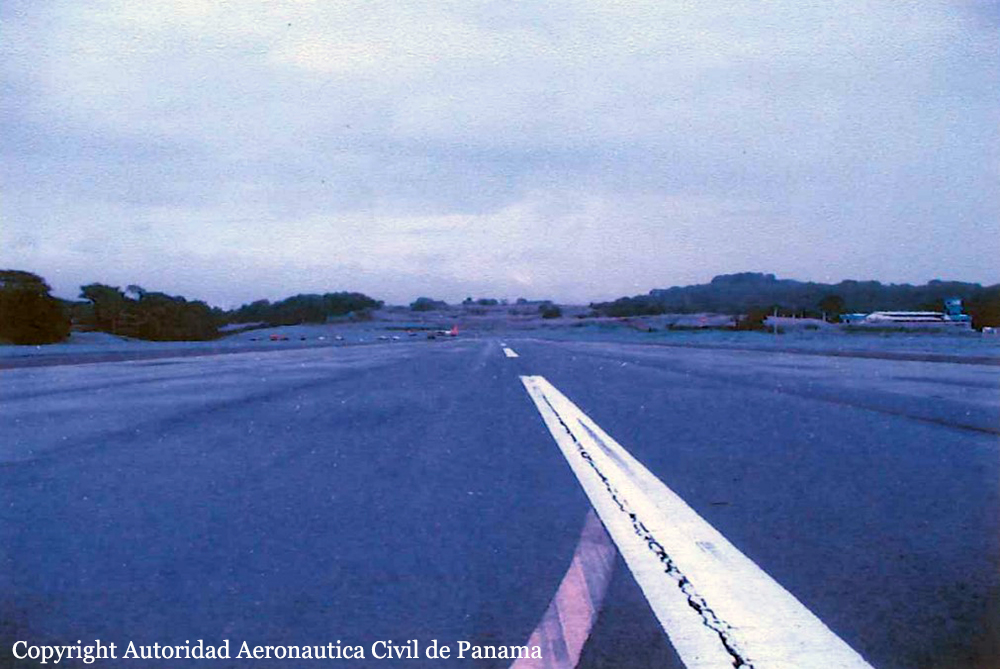
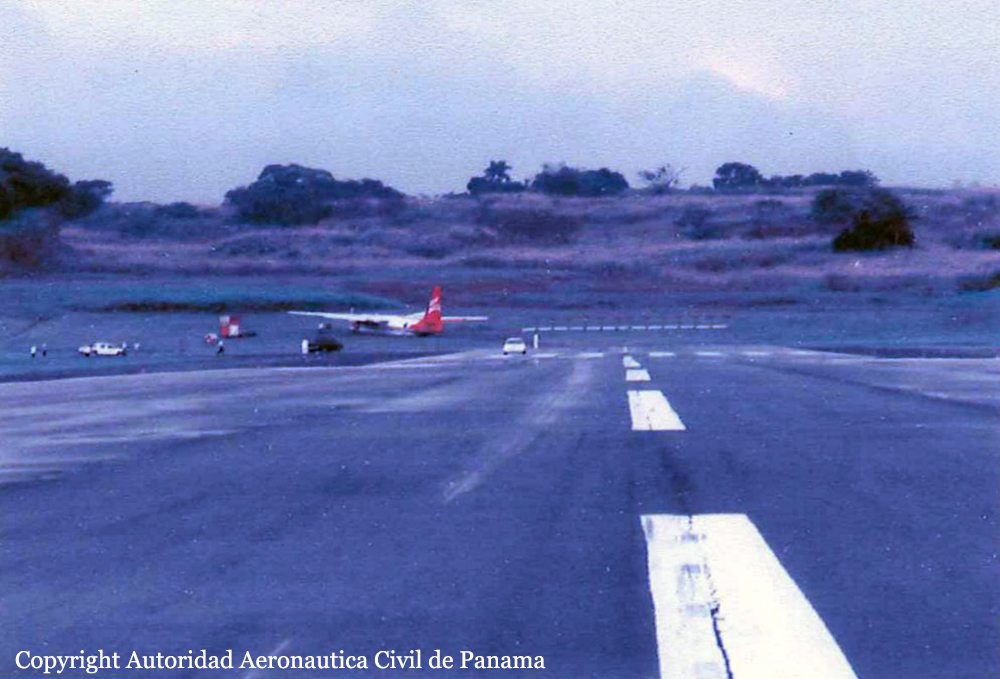
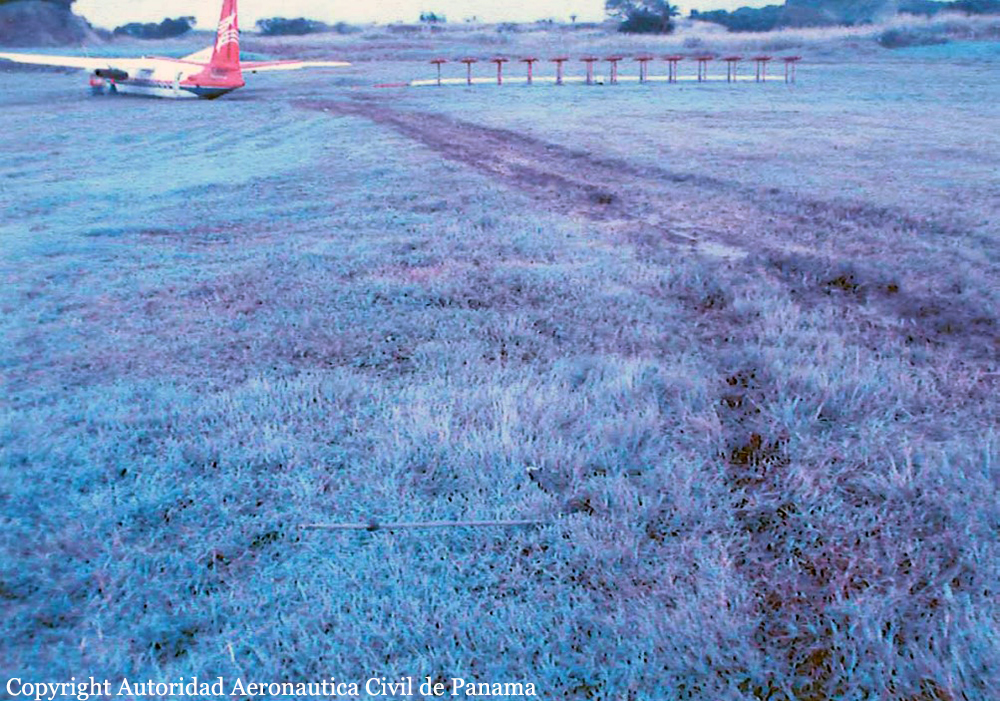
Shortly after takeoff from runway 36, while climbing to a height of 50 feet, the crew raised the landing gear when the aircraft stalled. It landed back on the runway about 380 metres from the runway end. It slid on all this distance, overran then turned to the left and came to rest in a grassy area about 60 metres past the runway end. All 13 occupants escaped uninjured while the aircraft was damaged beyond repair.
Probable cause:
The stall that occurred during the initial climb was the result of the copilot's confusion in interpreting the information transmitted by the captain which led him to initiate the rotation before reaching the speed of 95 knots (V1). The crew could not obtain sufficient power from both engines because they had not activated the methanol water system in view of the existing meteorological conditions, the wet runway and the takeoff weight, which remains a contributing factor.
Final Report:

Crash of an IAI-1124 Westwind in Panama City: 7 killed

Date & Time: Jul 2, 2004 at 1338 LT
Type of aircraft:
Operator:
Registration:
N280AT
Flight Phase:
Flight Type:
Survivors:
No
Schedule:
Quito – Panama City – Washington DC – Milan
MSN:
247
YOM:
1979
Country:
Crew on board:
2
Crew fatalities:
Pax on board:
4
Pax fatalities:
Other fatalities:
Total fatalities:
7
Captain / Total flying hours:
12262
Captain / Total hours on type:
869.00
Copilot / Total flying hours:
3818
Copilot / Total hours on type:
197
Aircraft flight hours:
9062
Aircraft flight cycles:
7743
Circumstances:
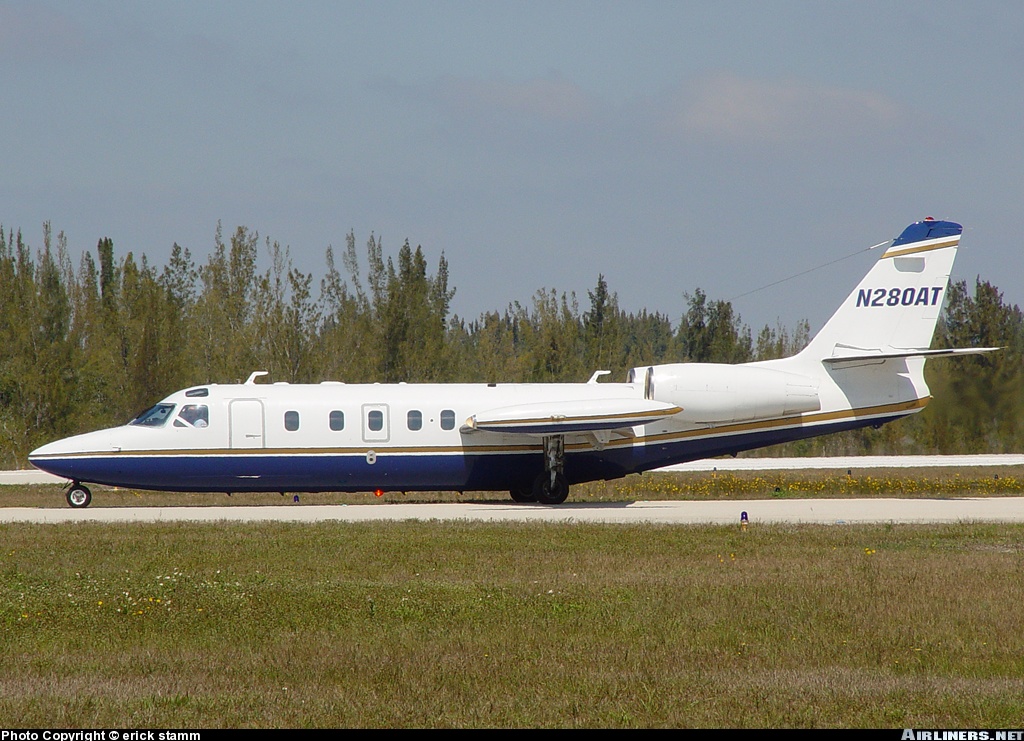
On July 2, 2004, at 1338 eastern standard time, a U.S. registered Westwind model 1124 corporate jet, N280AT, operated by Air Trek, Inc., as a Part 135 commercial air ambulance flight, impacted terrain and crashed into a building after departing from the Tocumen International Airport (MPTY), Tocumen, Panama. The airplane was destroyed by impact forces and post-crash fire. All six occupants on the airplane were fatally injured. A seventh person was also fatally injured on the ground. Visual meteorological conditions prevailed, and an instrument flight rules (IFR) flight plan was filed. The flight originated from Quito, Ecuador, and stopped in Tocumen for fuel. The flight was destined for Milan, Italy, via another fuel and crew-change stop at the Dulles International Airport, near Washington, DC. According to the operator, the airplane was flown with the two pilots and two flight nurses from Punta Gorda, Florida, to Guayaquil, Ecuador, on July 1, 2004. The airplane was refueled with 450 gallons of Jet A upon arrival, and remained overnight. On July 2, 2004, the airplane was fueled with an additional 150 gallons of Jet A, and subsequently departed for Quito, Ecuador. Upon arriving in Quito, two passengers were boarded, and the flight departed for Panama, where it would be refueled. The airplane was not fueled during the stop in Quito. According to the Panama Autoridad Aeronautica Civil, the flight landed in Panama uneventfully, and proceeded to the north ramp at the main terminal. The flight crew requested from ground service personnel that the airplane be refueled with 600 gallons of Jet A. The flight crew specifically requested that 500 gallons of fuel be added utilizing the pressure point fueling station, and 100 gallons be added to the auxiliary tank, utilizing a gravity filler port. After refueling, the airplane was started and taxied to runway 03L. An air traffic controller observed the airplane as it began to takeoff. He recalled that, "It pitched up vertically, the nose then lowered, and the wings rocked side to side. The airplane then veered to the right and descended out of view." A witness, who was located north of the accident site, observed the airplane veering to the right, before descending from his view. The airplane impacted the ground on taxiway Hotel, north of taxiway Bravo, and a fire ensued. The right wing and right engine separated from the fuselage and fragmented into multiple pieces. The vertical stabilizer impacted the ground, and separated from the fuselage. The main fuselage, left wing, and left engine continued across a grass field, where it struck an airport worker, and impacted a concrete wall. The airplane continued through the wall, and came to rest inverted inside a building. Airport crash fire and rescue responded to the accident, and contained the post crash fire within 3 minutes. The wreckage path was oriented on a heading of about 80 degrees. Ground scars on the taxiway were consistent with the right wing tip tank impacting the taxiway surface with the airplane in a nose high attitude, banked 90 degrees to the horizon. The scars continued forward, with the airplane rolling onto its back, collapsing the vertical stabilizer. About 35 feet beyond the vertical stabilizer impact point, scars were observed from the left tip tank. Debris from the cockpit and forward cabin area was observed in the grass area along the wreckage path.
Probable cause:
The probable cause of the accident was the loss of control during takeoff due to the lack of criteria and decision-making by the flight crew, not having followed the procedures established by the operator, aggravated by a center of gravity beyond the rear limit.
Final Report:
Crash of a Britten-Norman BN-2A Islander near Panama City

Date & Time: Aug 15, 1996 at 1200 LT
Type of aircraft:

Registration:
HP-839KN
Flight Phase:
Survivors:
Yes
MSN:
44
YOM:
1968
Country:
Crew on board:
0
Crew fatalities:
Pax on board:
0
Pax fatalities:
Other fatalities:
Total fatalities:
0
Circumstances:
Crashed in unknown circumstances near Panama City Airport. There were no casualties. The accident occurred somewhere in August 1996 (exact date unknown).

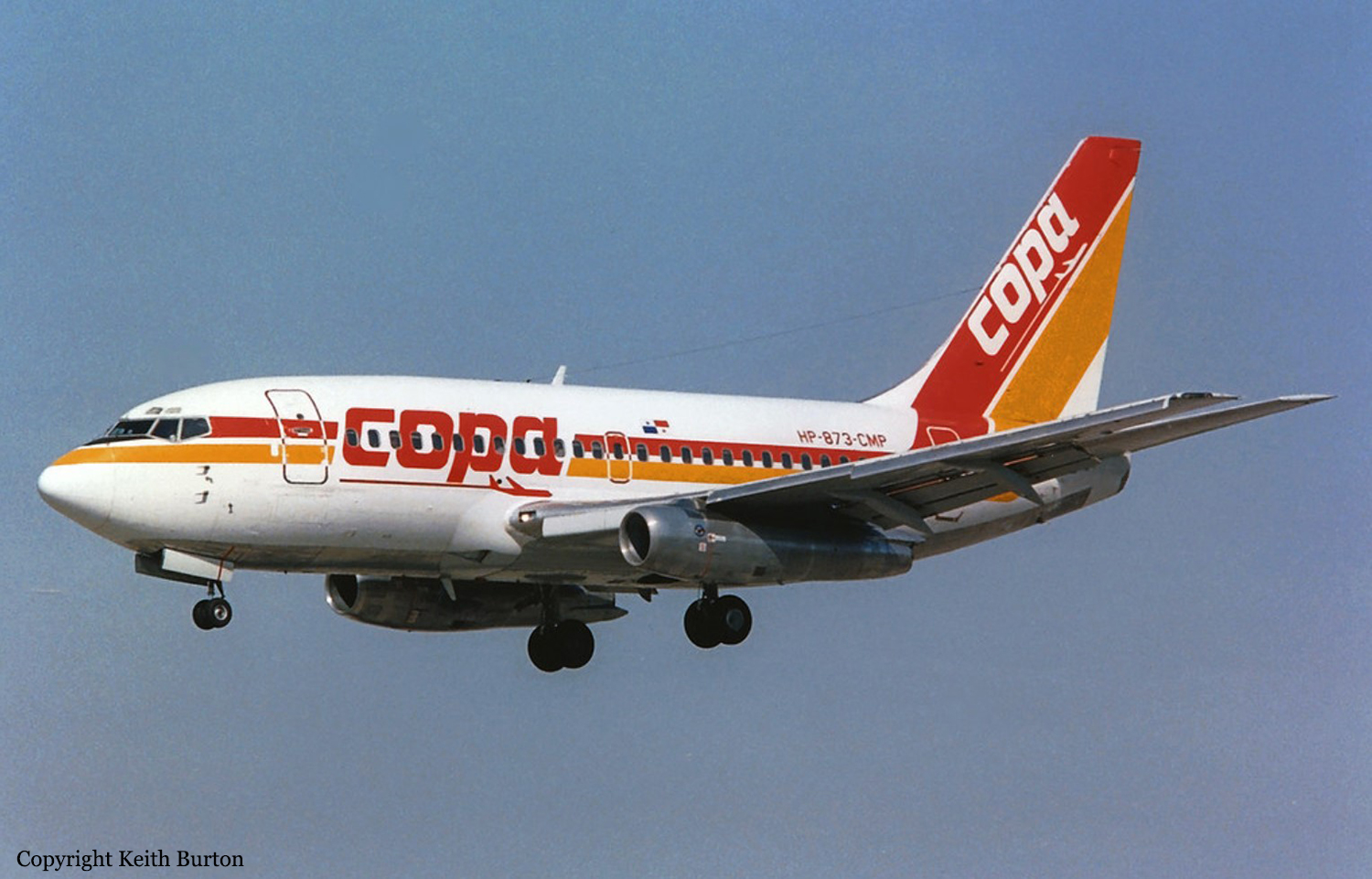
Crash of a Boeing 737-112 in Panama City

Date & Time: Nov 19, 1993 at 1919 LT
Type of aircraft:
Operator:
Registration:
HP-873CMP
Survivors:
Yes
Schedule:
Miami - Panama City
MSN:
19768
YOM:
1969
Flight number:
q
Country:
Crew on board:
6
Crew fatalities:
Pax on board:
86
Pax fatalities:
Other fatalities:
Total fatalities:
0
Circumstances:
Following an uneventful flight from Miami-Intl Airport, the crew started the descent to Panama City-Tocumen Airport. Actual weather conditions were poor with low clouds, rain falls and turbulences. On final, the aircraft was not properly aligned on runway 03R but the crew continued the approach. Too high on the glide, the aircraft landed 750 metres past the runway threshold and after a course of about 2,500 feet, it veered to the left and departed the runway. While contacting taxiway Hotel, the nose gear collapsed and the aircraft came to rest 450 metres further. All 92 occupants evacuated safely and the aircraft was damaged beyond repair.
Probable cause:
Wrong approach configuration on part of the crew who failed to initiate a go-around procedure while the aircraft was not properly aligned on runway 03R during an ILS approach. Poor crew coordination was a contributing factor.

Crash of a De Havilland DHC-6 Twin Otter 200 off Contadora Island: 20 killed

Date & Time: Apr 18, 1990
Operator:
Registration:
N187SA
Flight Phase:
Survivors:
Yes
Schedule:
Panama City – Contadora – San Miguel
MSN:
131
YOM:
1968
Country:
Crew on board:
3
Crew fatalities:
Pax on board:
19
Pax fatalities:
Other fatalities:
Total fatalities:
20
Circumstances:
After takeoff from Contadora Island Airport, while climbing, the aircraft collided with a flock of birds. Some birds struck the right engine that failed. The aircraft lost speed then rolled to the right and crashed in the sea some 1,500 meters offshore. Two passengers were rescued while 20 other occupants were killed.
Probable cause:
Failure of the right engine and subsequent loss of control during initial climb following a bird strike.

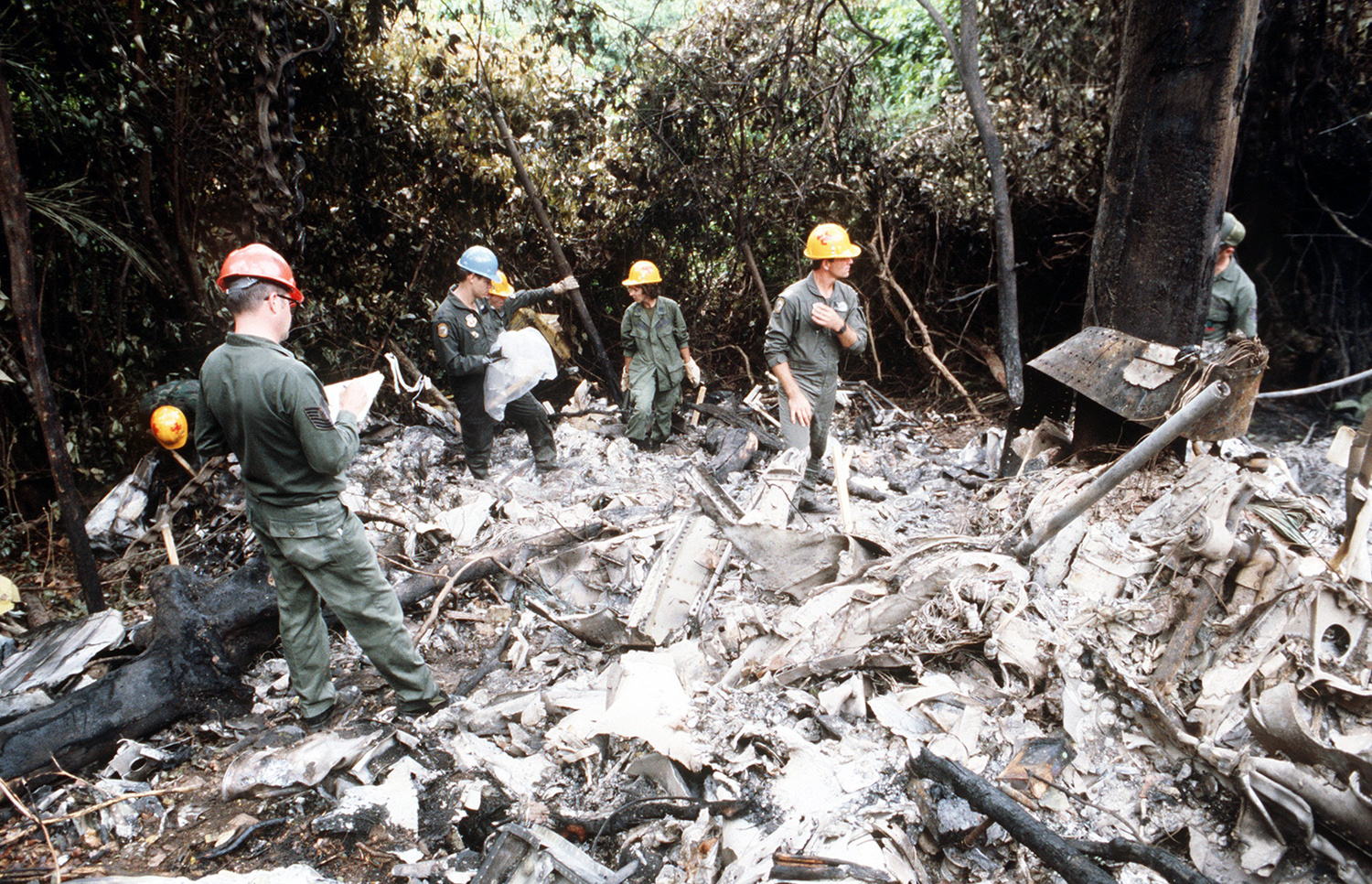
Crash of a Boeing KC-135A-BN at Howard AFB: 4 killed

Date & Time: Jun 17, 1986
Type of aircraft:
Operator:
Registration:
63-7983
Flight Type:
Survivors:
No
Schedule:
Grissom - Howard
MSN:
18600
YOM:
1963
Country:
Crew on board:
4
Crew fatalities:
Pax on board:
0
Pax fatalities:
Other fatalities:
Total fatalities:
4
Aircraft flight hours:
8041
Circumstances:
For unknown reasons, the four engine aircraft landed hard and bounced. It became airborne again and went out of control before crashing onto a hill. All four crew members were killed.