Crash of a Mitsubishi MU-2B-40 Solitaire in Parry Sound: 2 killed

Date & Time: May 24, 1999 at 2130 LT
Type of aircraft:
Registration:
N701K
Flight Phase:
Flight Type:
Survivors:
No
Schedule:
Parry Sound – Toronto
MSN:
410
YOM:
1979
Country:
Crew on board:
1
Crew fatalities:
Pax on board:
1
Pax fatalities:
Other fatalities:
Total fatalities:
2
Captain / Total flying hours:
5500
Captain / Total hours on type:
400.00
Circumstances:
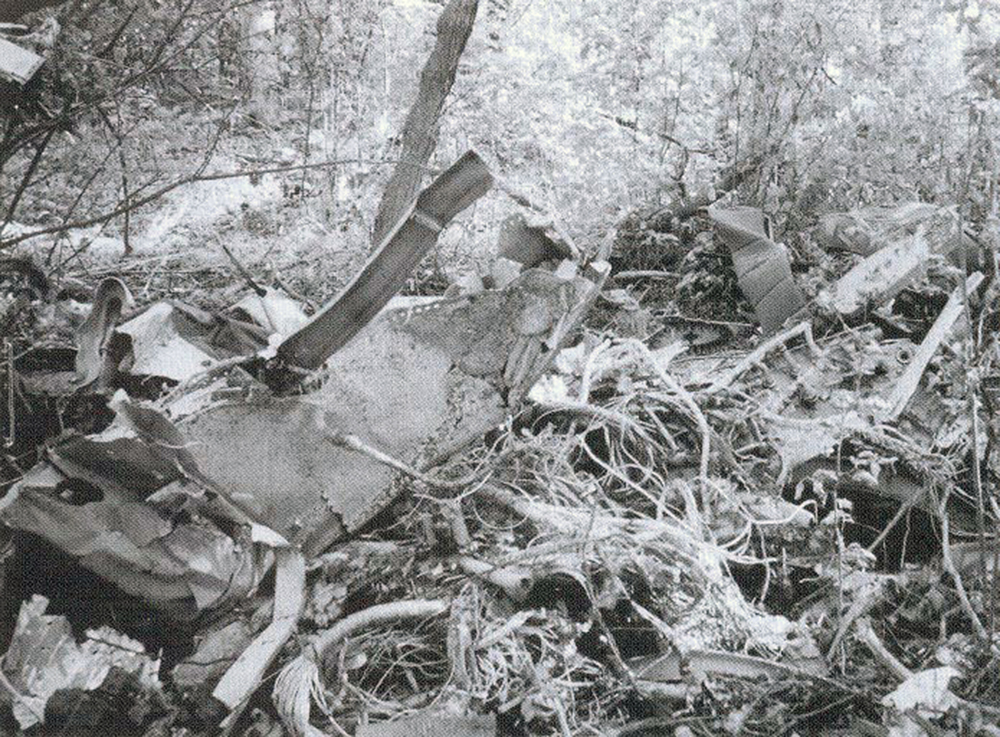
With one pilot and one passenger, the Mitsubishi MU-2B-40 Solitaire aircraft, serial number 410 S.A., departed on a night instrument flight rules flight from Parry Sound / Georgian Bay Airport, Ontario, destined for Toronto / Lester B. Pearson International Airport. Prior to departure, the pilot received his instrument flight rules clearance via telephone from the Sault Ste. Marie flight service station with a clearance valid time of 2118 eastern daylight time from Toronto Area Control Centre and a clearance cancel time of 2135. When the pilot did not establish communications with Toronto Area Control Centre within the clearance valid time, the Area Control Centre supervisor commenced a communication search. At 2151, he confirmed with Parry Sound / Georgian Bay Airport personnel that the aircraft had departed 10 to 15 minutes earlier. The aircraft was assumed missing and the Rescue Coordination Centre in Trenton, Ontario, was notified. Search and rescue was dispatched and three days later the aircraft wreckage was located one nautical mile west of the airport. Both of the aircraft occupants were fatally injured. The aircraft disintegrated as it cut a 306-foot swath through the poplar forest. The accident occurred at night in instrument meteorological conditions.
Probable cause:
Findings as to Causes and Contributing Factors:
1. The accident flight was conducted at night in IMC, and the pilot, whose private pilot licence was not endorsed with an instrument rating, was not certified for the IFR flight.
2. The pilot may have been subjected to somatogravic illusion and allowed the aircraft to descend into terrain after a night take-off in IMC.
3. The pilot did not completely report his medical conditions to the civil aviation medical examiner.
Other Findings
1. The pilot was not certified to fly this model of aircraft as his private pilot licence was not endorsed with the appropriate high-performance aircraft rating.
2. The pilot conducted a downwind take-off.
3. While the aircraft was turning left for the on-course track, the aircraft flaps were retracting.
4. The aircraft struck trees while in a shallow descent. The integrity of the aircraft was compromised as it rolled inverted and entered the impact zone at high speed.
5. The aircraft engine teardown examination revealed no pre-impact failures of any component parts or accessories in either the left or right engine that would have precluded normal engine operation.
6. The propeller teardown examination revealed that both propellers were in a normal operating range and were rotating with power at the time of impact.
7. The ELT did not function due to the impact damage sustained by its various components.
Final Report:
Crash of a Beechcraft King Air 100 in Muskoka

Date & Time: Feb 27, 1999 at 0920 LT
Type of aircraft:
Registration:
C-GBTS
Flight Type:
Survivors:
Yes
Schedule:
Kitchener - Muskoka
MSN:
BE-73
YOM:
1979
Location:
Country:
Crew on board:
1
Crew fatalities:
Pax on board:
1
Pax fatalities:
Other fatalities:
Total fatalities:
0
Circumstances:
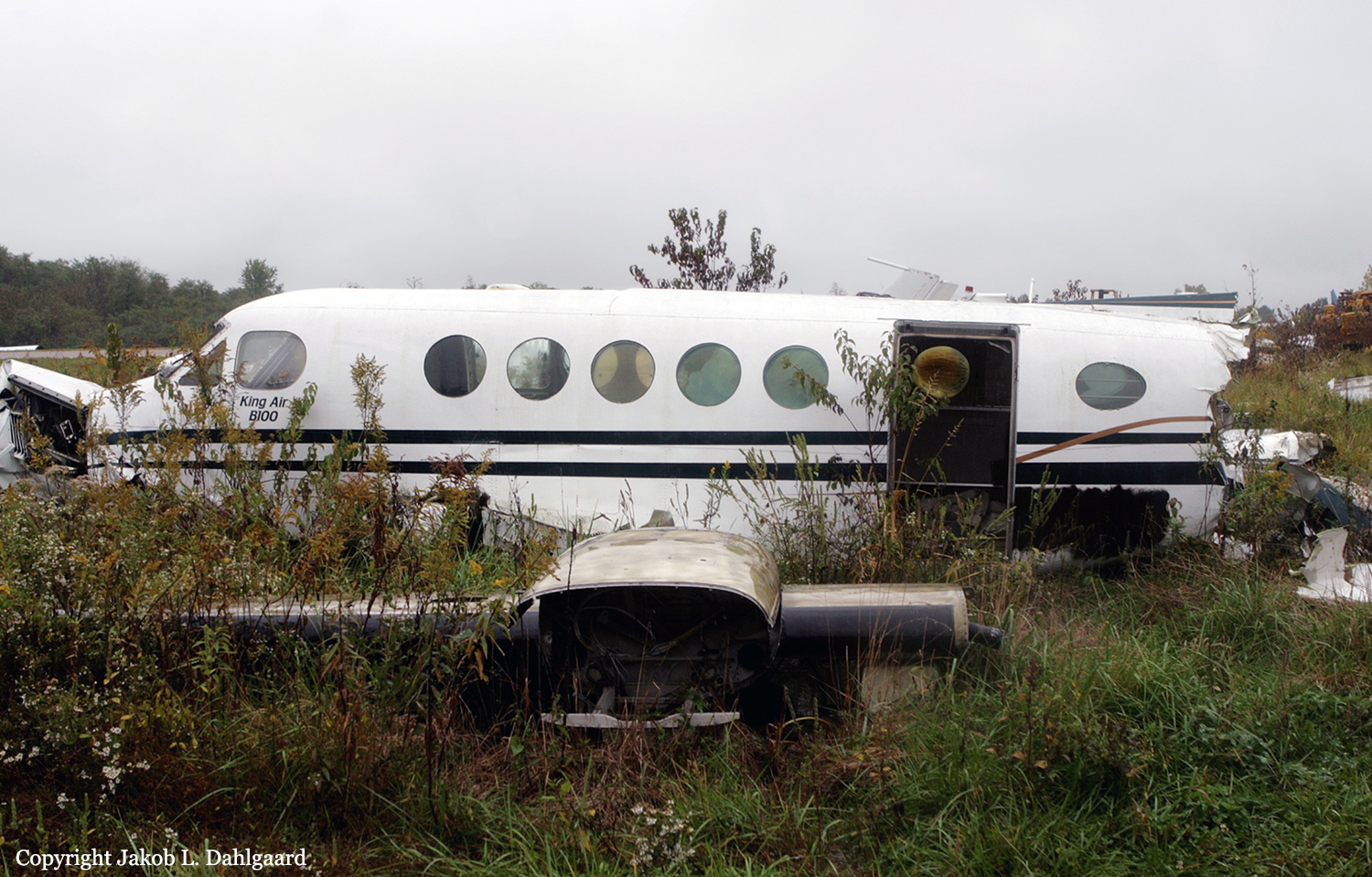
On final approach to Muskoka Airport, while on a cargo flight from Kitchener-Waterloo Airport, the twin engine aircraft descended too low in a slight nose down attitude when it collided with trees and crashed on the ground. Both occupants were seriously injured and the aircraft was damaged beyond repair. At the time of the accident, ceiling was at 1,000 feet with 10 km visibility and wind from 140 at 2 knots.

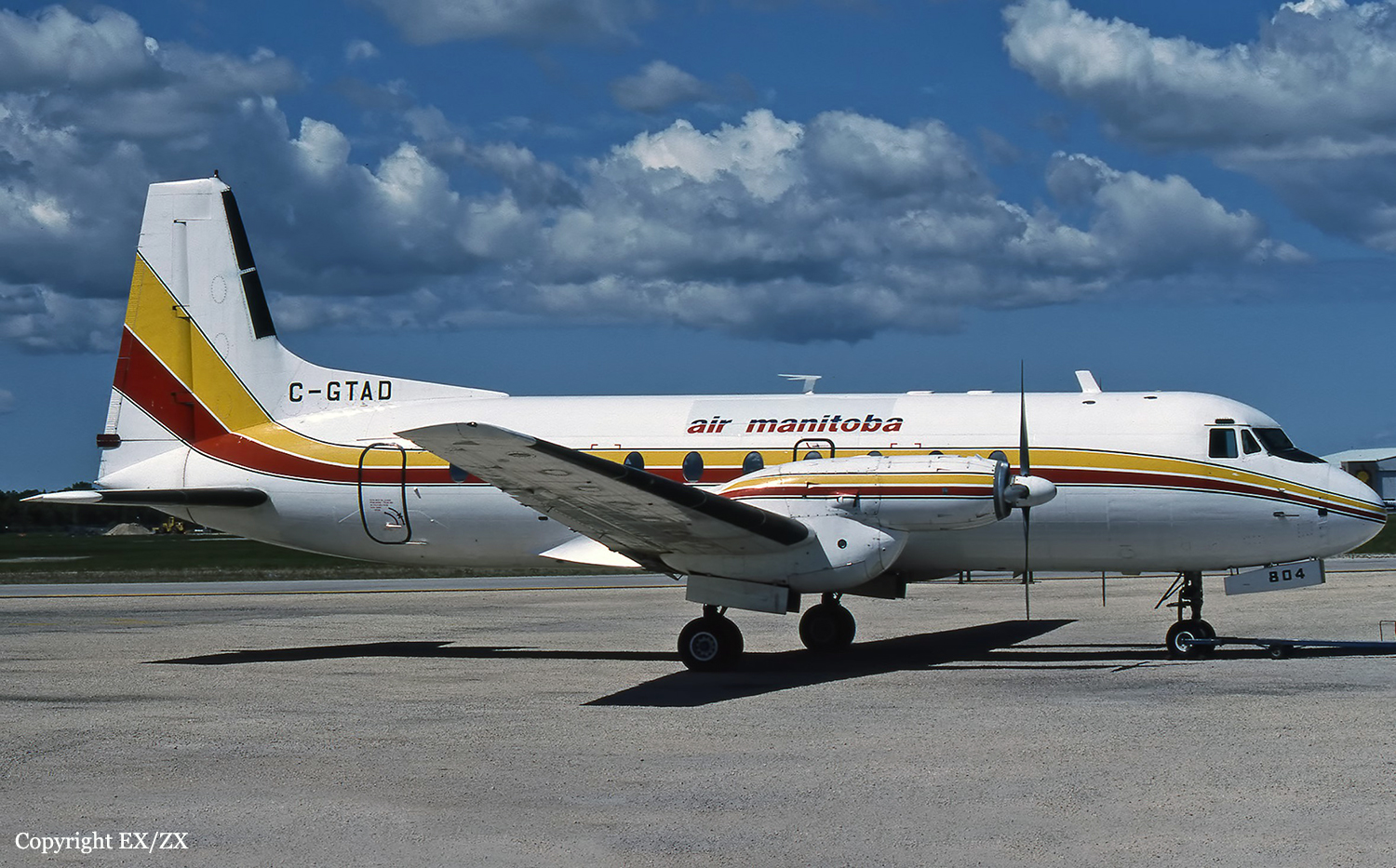
Crash of an Avro 748-310-2A LFD in Kasabonika

Date & Time: Aug 6, 1998 at 1600 LT
Type of aircraft:
Operator:
Registration:
C-GTAD
Flight Type:
Survivors:
Yes
Schedule:
Pickle Lake - Kasabonika
MSN:
1750
YOM:
1977
Flight number:
WSG804
Country:
Crew on board:
2
Crew fatalities:
Pax on board:
2
Pax fatalities:
Other fatalities:
Total fatalities:
0
Captain / Total flying hours:
20600
Captain / Total hours on type:
6000.00
Copilot / Total flying hours:
3000
Copilot / Total hours on type:
500
Aircraft flight hours:
12310
Circumstances:
Wasaya Airways Ltd. Flight 804, a Hawker Siddeley 748-2A, serial number 1750, landed at Kasabonika, Ontario, on a freight flight from Pickle Lake, Ontario. During the landing roll, the aircraft could not be stopped and overran the runway by about 450 feet. The captain, the first officer and one of the freight handlers suffered minor injuries; the other freight handler was not injured. The aircraft was destroyed.
Probable cause:
The aircraft was landed at a point from which it could not be stopped under the prevailing conditions. Contributing to the occurrence were the lack of immediate propeller ground fine pitch and the choice of runway 03 as the landing runway. A possible contributing factor was the inappropriate information in the then-current runway analysis manual.
Final Report:

Crash of a Beechcraft A100 King Air in Sioux Lookout

Date & Time: Dec 7, 1997 at 1505 LT
Type of aircraft:
Operator:
Registration:
C-GILM
Flight Type:
Survivors:
Yes
Schedule:
Winnipeg – Sioux Lookout
MSN:
B-124
YOM:
1972
Country:
Crew on board:
2
Crew fatalities:
Pax on board:
2
Pax fatalities:
Other fatalities:
Total fatalities:
0
Circumstances:
A Voyageur Airways Beechcraft A100 aircraft, C-GILM, was on a flight from Winnipeg International Airport Winnipeg International Airport, MB (YWG) to Sioux Lookout Airport, ON (YXL). The crew of two pilots and two paramedics had completed a medevac flight and were returning to Sioux Lookout without a patient on board. The weather was reported to be: wind 060 degrees at two knots, visibility three statute miles in freezing drizzle, and ceiling overcast at 400 feet AGL. The First Officer was at the controls as they attempted two full NDB approaches for runway 34, each of which resulted in a missed approach. The captain then took control of the aircraft and conducted a full NDB approach for runway 34. On final approach, the crew had the runway in sight and the aircraft was lined up, but the aircraft was high on the approach. The captain called for full flap and pushed the props up to help slow the aircraft down. The aircraft developed a high rate of descent that was not fully countered before the aircraft contacted the runway firmly with the left main landing gear. The aircraft was taxied part way to the company ramp before the aircraft began pulling to the left very noticeably. The scissors had failed and the main wheels were turned slightly off-line. While conducting a heavy-landing inspection, company maintenance and operational personnel determined that in addition to the damage to the scissors for the left main landing gear, the rear spar of the left wing had failed in the vicinity of a pass-through hole for the flap actuator. The damage is reported to be overload in nature and consistent with the effects of landing hard on the left main wheel. During the approaches, the aircraft was above cloud during the penetration turns and was only in cloud during the final approach phases. A small amount of ice accumulated on the aircraft while in cloud (about 1/8th to 1/4 inch on the spinner remained after landing) but the de-ice equipment was working and was used.

Crash of a Beechcraft 99 Airliner in Webequie

Date & Time: Dec 4, 1997 at 0200 LT
Type of aircraft:
Operator:
Registration:
C-GXBE
Survivors:
Yes
Schedule:
Fort Hope - Webequie
MSN:
U-160
YOM:
1974
Flight number:
BLS310
Country:
Crew on board:
2
Crew fatalities:
Pax on board:
8
Pax fatalities:
Other fatalities:
Total fatalities:
0
Circumstances:
Bearskin Flight 310, a Beech 99, was inbound to Webequie Airport (YWP) on a scheduled passenger flight from Fort Hope Airport (YFH). The flight crew completed an approach to Webequie based on visual cues, GPS and ADF. The flight crew lowered the landing gear about three miles from the runway and set full flap on final approach. The captain reportedly initiated the flare at about 50 feet and the nose of the aircraft came up, but the descent was not arrested before the aircraft struck the runway. The aircraft's wings and tail reportedly had a small amount of residual ice at landing. Winds on the surface were northwest at five to ten knots but the winds aloft were reported to be easterly at up to 50 knots. Examination of the aircraft at the terminal building led the crew to call company maintenance for an inspection. Inspection of the aircraft revealed that the left wing spar was broken, the left wing skin was wrinkled and the left engine was drooping. There were no injuries reported.