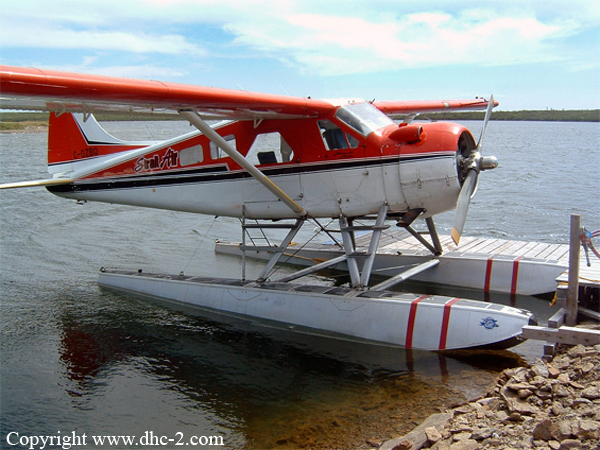
Crash of a De Havilland DHC-3 Otter in Jellicoe: 2 killed

Date & Time: Dec 16, 2003 at 1200 LT
Type of aircraft:
Operator:
Registration:
C-GOFF
Flight Phase:
Survivors:
Yes
MSN:
65
YOM:
1954
Country:
Crew on board:
1
Crew fatalities:
Pax on board:
2
Pax fatalities:
Other fatalities:
Total fatalities:
2
Captain / Total flying hours:
5016
Captain / Total hours on type:
540.00
Circumstances:
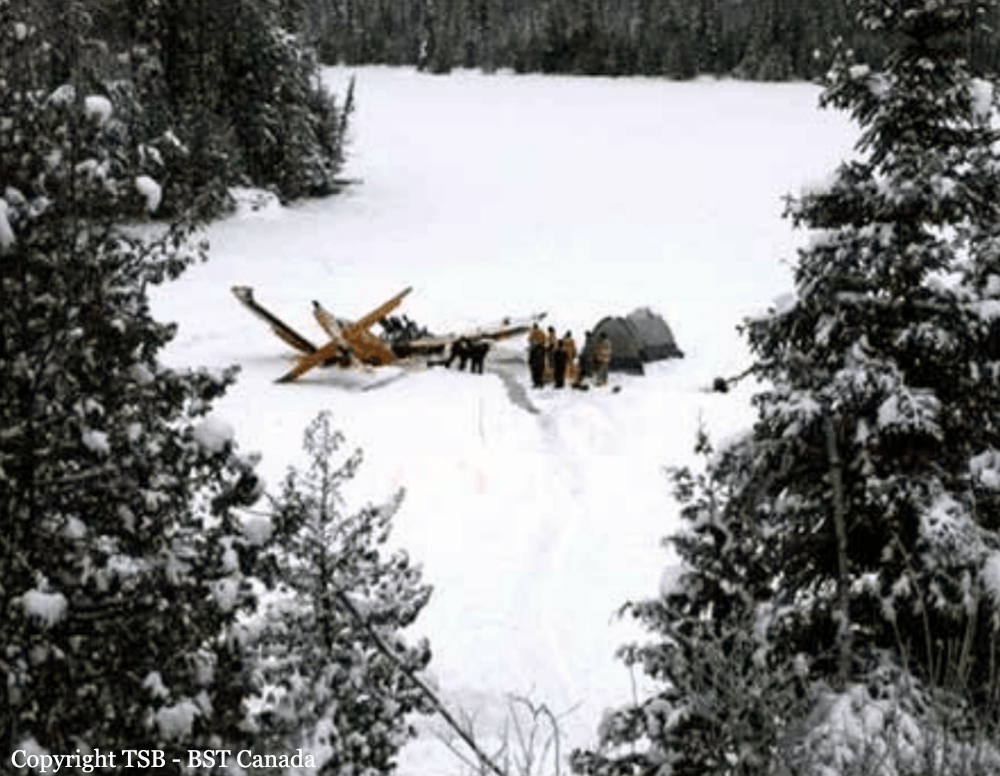
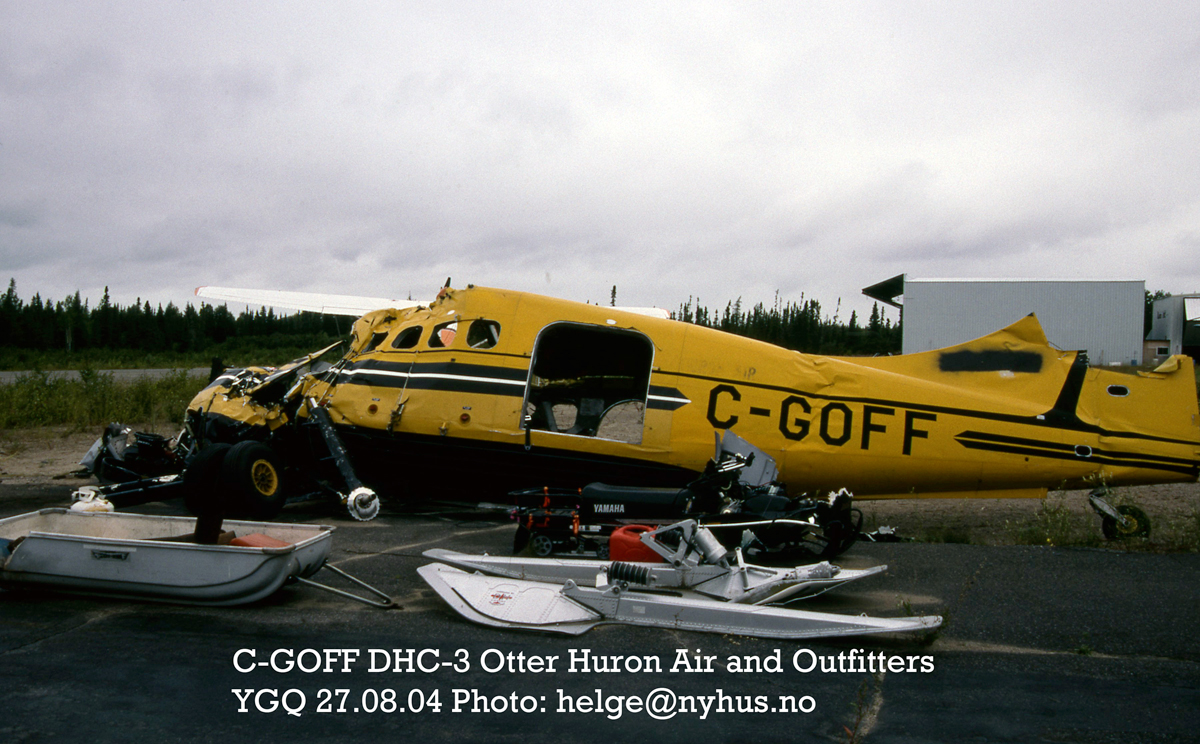
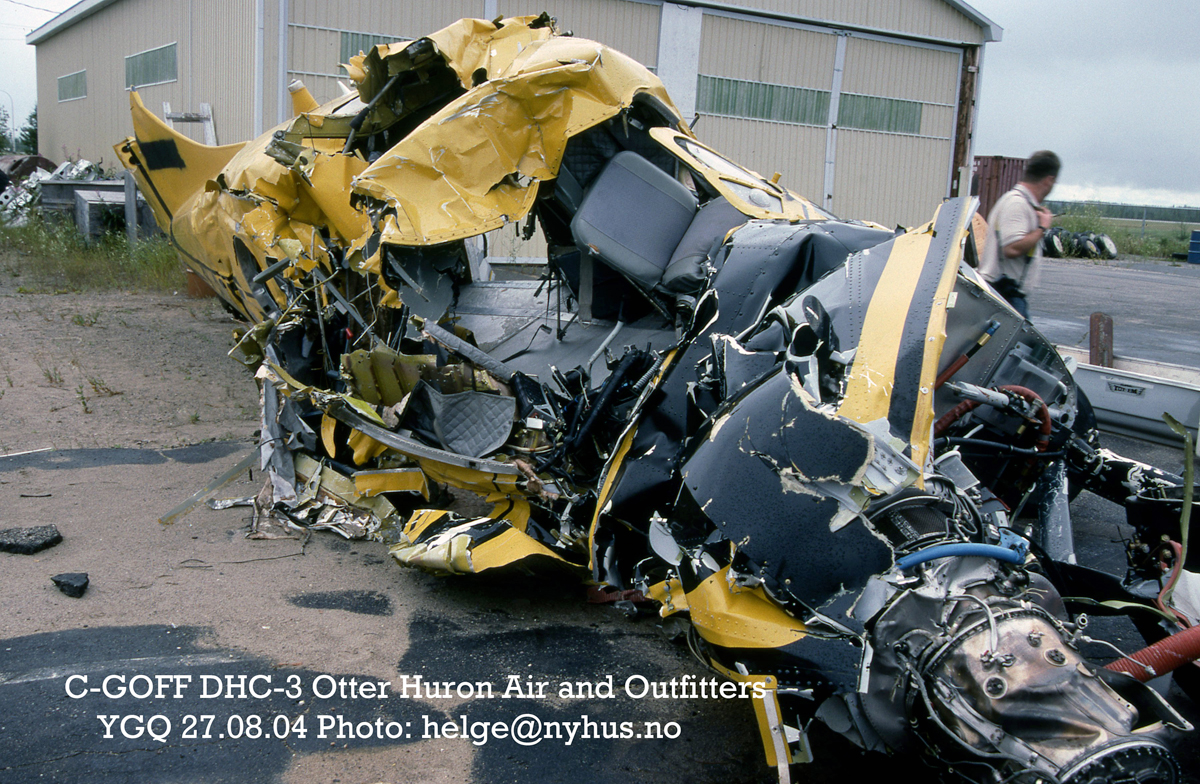
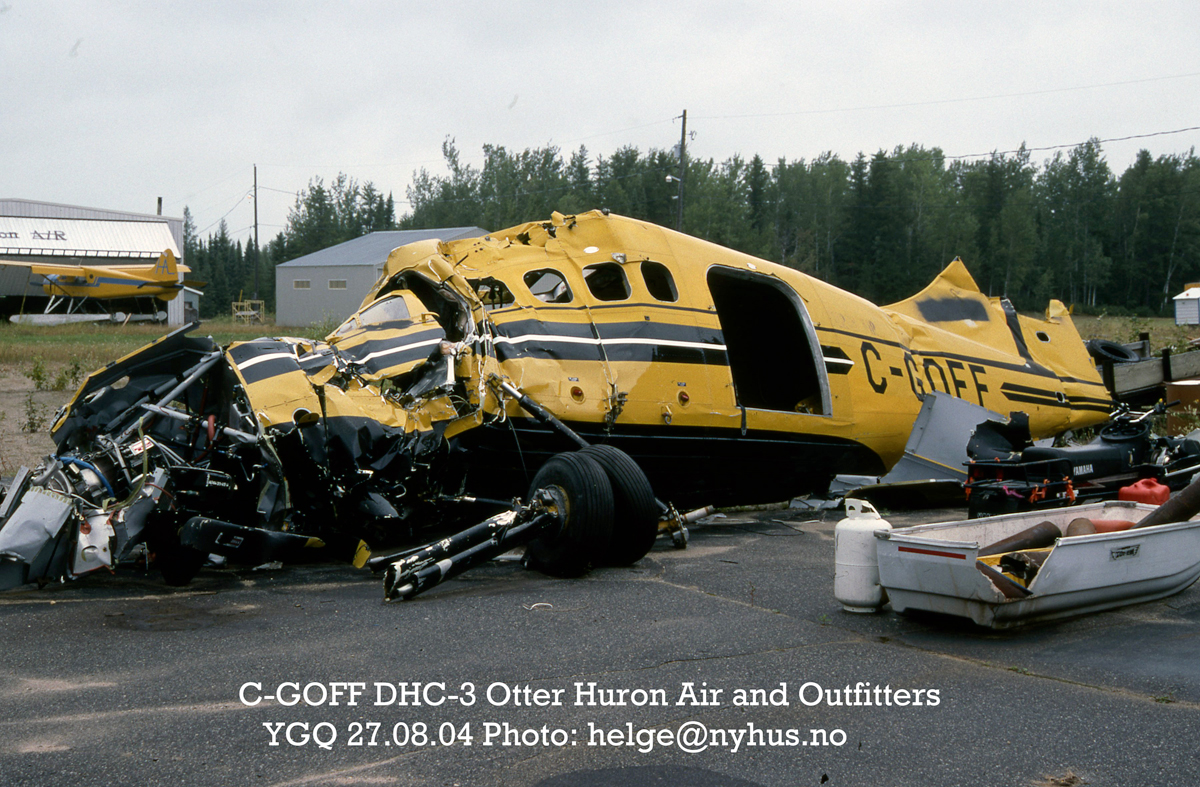
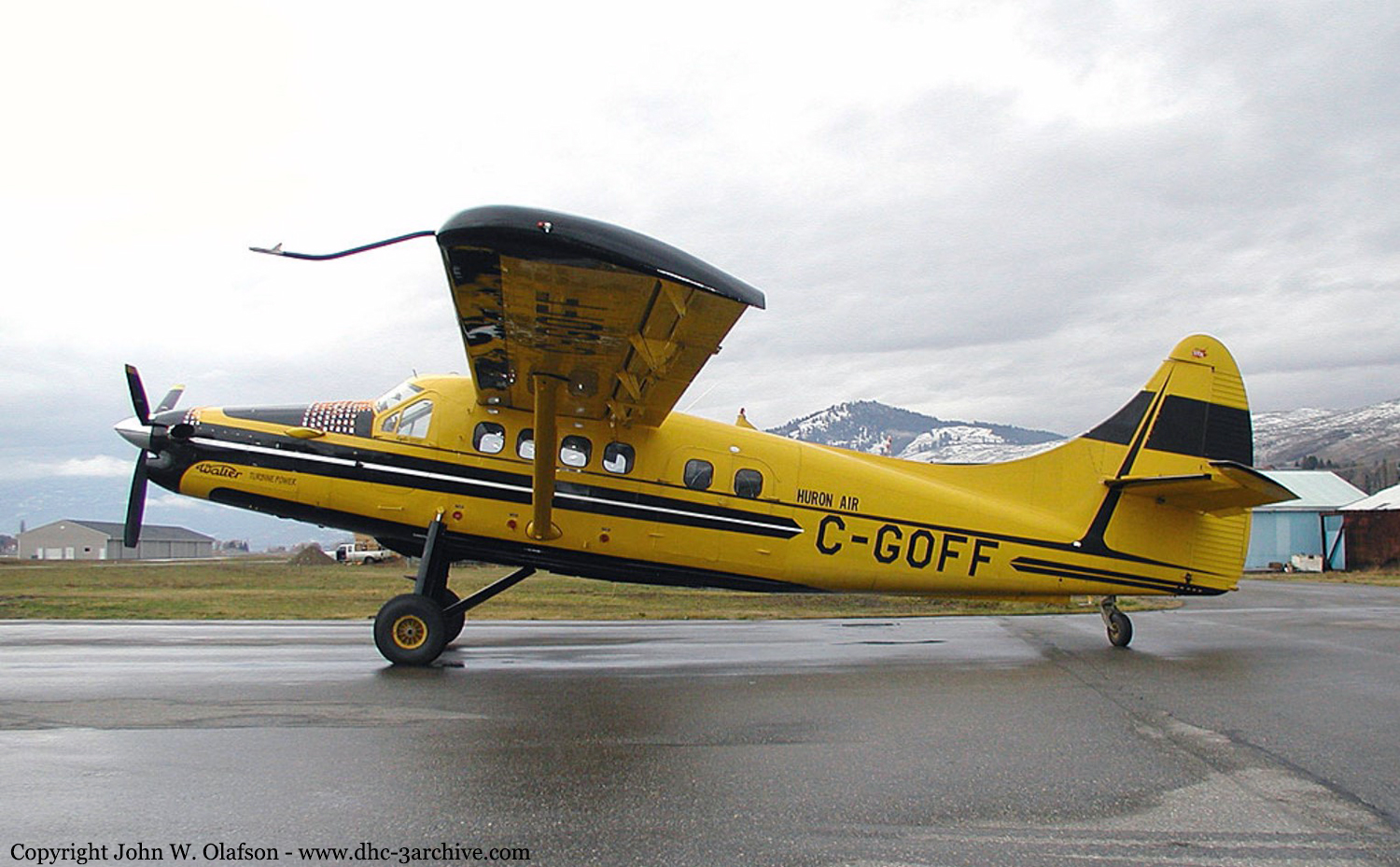
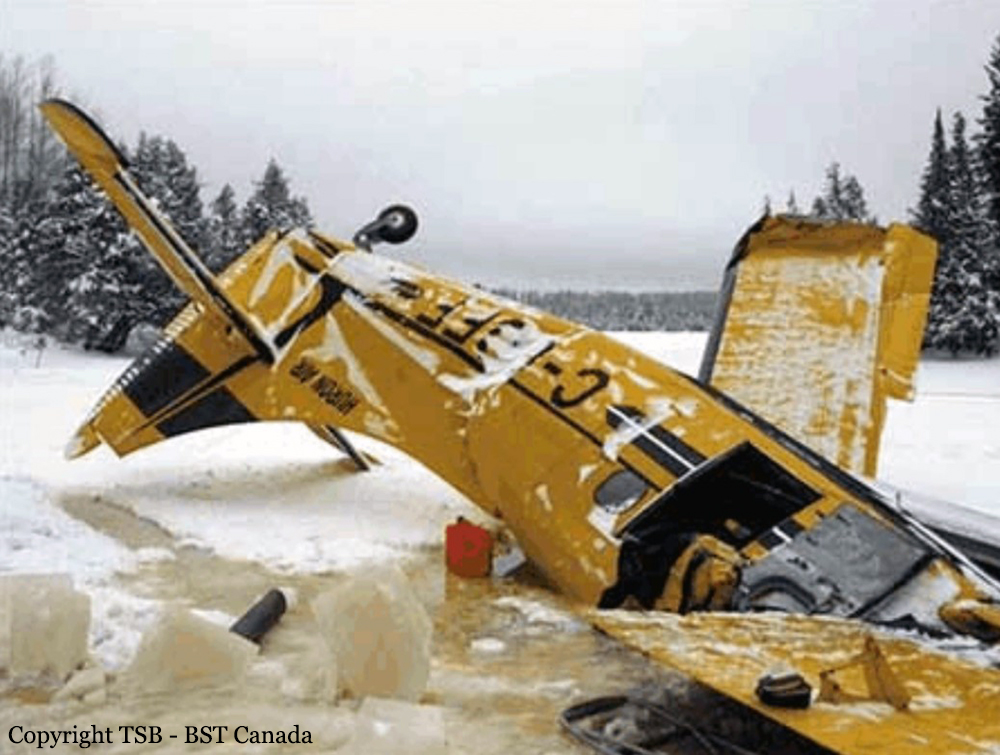
At approximately 0900 eastern standard time (EST), the pilot arrived at the airstrip and prepared the ski-equipped de Havilland DHC–3 (Otter) aircraft (registration C–GOFF, serial number 65) for the morning flight. This Otter was equipped with a turbine engine. Two passengers, with enough supplies for an extended period of time, including a snowmobile and camping gear, were to be flown to a remote location. The pilot loaded the aircraft and waited for the weather to improve. At approximately 1200 EST, the pilot and passengers boarded the aircraft and took off in an easterly direction. The aircraft got airborne near the departure end of the airstrip, and, shortly after take-off, the right wing struck a number of small bushes and the top of a birch tree. The aircraft descended and struck the frozen lake surface, approximately 70 feet below the airfield elevation in a steep, nose-down, right-wing-low attitude. When it came to rest, the aircraft was inverted and partially submerged, with only the aft section of the fuselage remaining above the ice. All of the occupants were wearing lap belts. The pilot and front seat passenger received fatal injuries. The rear seat passenger survived the impact and evacuated the aircraft with some difficulty due to leg injuries. The following morning, about 22 hours after the accident, a local air operator searching for the missing aircraft located and rescued the surviving passenger.
Probable cause:
Findings as to Causes and Contributing Factors:
1. The pilot attempted to take off from an airstrip that was covered with approximately 18 inches of snow, and the aircraft did not accelerate to take-off speed because of the drag; the aircraft was forced into the air and was unable to climb out of ground effect and clear the obstacles.
2. The pilot did not abort the take-off when it became apparent that the aircraft was not accelerating normally and before the aircraft became airborne.
Findings as to Risk:
1. Unidirectional G switches, which are found on many types of ELTs, do not always activate the unit when impact forces are not aligned with the usual direction of flight.
Other Findings:
1. The validity of the aircraft’s certificate of airworthiness was affected while it flew more flights than allowed by the ferry permit issued by Transport Canada.
2. The rear passenger seat was found to be installed incorrectly, contrary to de Havilland Alert Service Bulletin A3/49, dated 19 July 1991.
Final Report:
Crash of a Cessna 208B Grand Caravan near Summer Beaver: 8 killed

Date & Time: Sep 11, 2003 at 2130 LT
Type of aircraft:
Operator:
Registration:
C-FKAB
Survivors:
No
Schedule:
Pickle Lake - Summer Beaver
MSN:
208B-0305
YOM:
1992
Flight number:
WSG125
Country:
Crew on board:
1
Crew fatalities:
Pax on board:
7
Pax fatalities:
Other fatalities:
Total fatalities:
8
Captain / Total flying hours:
2351
Captain / Total hours on type:
946.00
Aircraft flight hours:
16770
Circumstances:
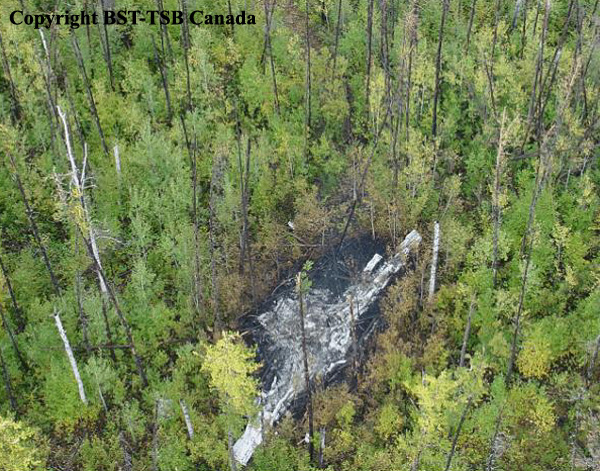
The aircraft departed Pickle Lake to Summer Beaver, Ontario, on a charter flight with seven passengers and one crew member. The flight proceeded on a direct routing to destination at 3500 feet above sea level under night visual flight conditions. On approaching Summer Beaver, the aircraft joined the circuit on a downwind leg for a landing on Runway 17. When the aircraft did not land, personnel at Summer Beaver contacted the Pickle Lake flight dispatch to inquire about the flight. The aircraft was declared missing following an unsuccessful radio search by the Pickle Lake flight dispatch staff. Search and rescue personnel found the wreckage in a wooded area three nautical miles northwest of Summer Beaver. The aircraft had been nearly consumed by a post-crash fire. All eight people on board had been fatally injured.
Probable cause:
Findings as to Causes and Contributing Factors:
The aircraft departed controlled flight and struck terrain for undetermined reasons.
Findings as to Risk:
The company's flight-following procedures for flights operating in remote areas were impractical and were not consistently applied; this could compromise timely search and rescue operations following an accident.
Other Findings:
The aircraft did not carry flight recorders. Lack of information about the cause of this accident affects TSB's ability to identify related safety deficiencies and to issue safety communications intended to prevent accidents that could occur under similar circumstances.
Final Report:

Crash of a De Havilland DHC-6 Twin Otter 300 in Lake Wicksteed

Date & Time: Jun 5, 2003 at 1800 LT
Operator:
Registration:
C-GOGC
Flight Type:
Survivors:
Yes
MSN:
750
YOM:
1981
Country:
Crew on board:
1
Crew fatalities:
Pax on board:
0
Pax fatalities:
Other fatalities:
Total fatalities:
0
Captain / Total flying hours:
22000
Captain / Total hours on type:
8500.00
Circumstances:
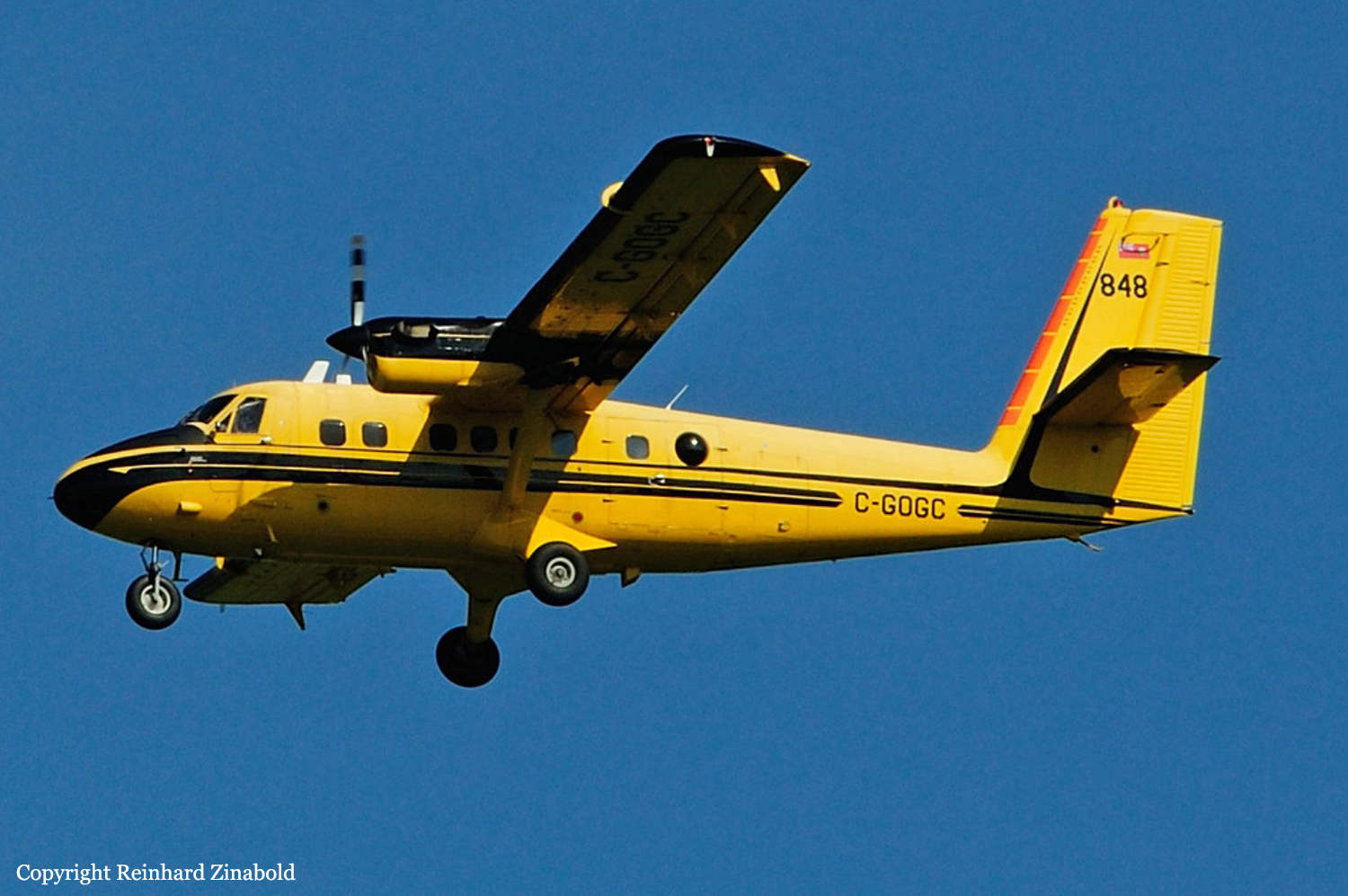
The aircraft with a single pilot on board was performing firefighting operations in the vicinity of Lake Wicksteed, approximately 10 nautical miles north of Hornepayne, Ontario. The aircraft was scooping water from Lake Wicksteed for the nearby fire. The lake is approximately 7300 feet in length with gentle rising terrain along its shoreline. This was the third scooping from the lake, and the approach was flown in an easterly direction in light wind conditions. The pilot performed the inbound checks, lowered the water probes to begin filling the float water tanks, and touched down on the lake. Within a short time, he observed water spraying from the overflow vents located on top of the floats, indicating that the tanks were filled to capacity. He pressed a button on the yoke to retract the probes, and the aircraft immediately nosed over into the lake in a wings-level attitude and began to sink. The accident occurred at approximately 1800 eastern daylight time. The pilot extricated himself from the aircraft and held on to the side of the partially submerged aircraft. A witness to the occurrence immediately boarded a powered, aluminum boat and went to assist the pilot, while a second witness travelled to Hornepayne to notify the authorities and emergency services. Once the pilot reached the shore, he was taken to a nearby cottage where he remained until emergency services arrived. The aircraft came to rest on the bottom of the shallow lake in an inverted attitude with the floats above the surface of the water.
Probable cause:
Findings as to Causes and Contributing Factors:
1. Ministry of Natural Resources DHC-6 SOPs were not followed, and the Vital Action checklist was not fully completed during the approach. As a result, the bomb door armed switch on the centre panel was not selected Off after the previous water bombing run and prior to the scooping operation.
2. After completing the water scooping operation, the pilot unintentionally selected the bomb door push button switch instead of the adjacent probe switch. Because the bomb door armed switch on the centre panel was left On, the bomb doors extended into the water. Drag from the doors and the water rushing into the door openings resulted in the aircraft nosing over in the water.
3. The hinged cover plate for the bomb door push button switch was not re-installed following maintenance to replace the push button switch. The push button was exposed, making an inadvertent selection more likely.
Final Report:

Crash of a De Havilland DHC-2 Beaver in Kasshabog Lake: 1 killed

Date & Time: Aug 24, 2002 at 1308 LT
Type of aircraft:
Registration:
C-GUNE
Survivors:
Yes
Schedule:
Holinshead Lake - Kasshabog Lake
MSN:
1403
YOM:
1959
Country:
Crew on board:
1
Crew fatalities:
Pax on board:
4
Pax fatalities:
Other fatalities:
Total fatalities:
1
Circumstances:
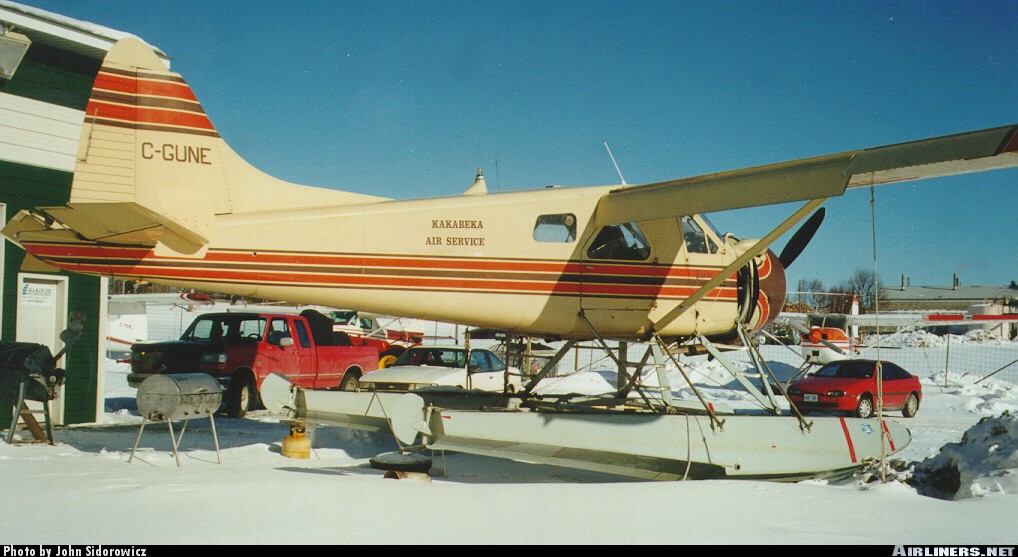
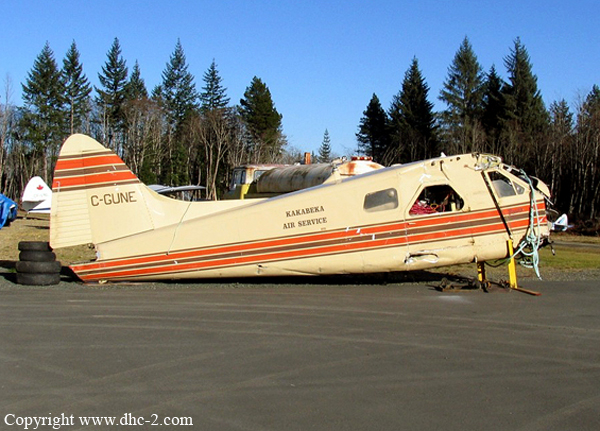
The aircraft was en route from Holinshead Lake to Kasshabog Lake when the pilot encountered deteriorating weather conditions. As the flight progressed, the ceiling became increasingly lower until it was nearly at tree top level. Shortly thereafter, the pilot located a cabin at the destination outpost camp. On final approach to the camp, the aircraft struck the water while in a turn, tearing off one float and it eventually sank. The pilot and four passengers exited the aircraft and attempted to swim ashore. While swimming, one of the passengers went missing and was not located. Ontario Provincial Police divers were dispatched to search for the missing passenger. Three people were slightly injured and one seriously.

Crash of a Rockwell Aero Commander 560F near London

Date & Time: Aug 20, 2002
Operator:
Registration:
N201KS
Flight Phase:
Flight Type:
Survivors:
Yes
MSN:
560-1066-22
YOM:
1961
Location:
Country:
Crew on board:
1
Crew fatalities:
Pax on board:
1
Pax fatalities:
Other fatalities:
Total fatalities:
0
Circumstances:
The pilot attempted to take off from a private grass airstrip (2,400 feet long) located at 22678 Purple Hill Road, about 13,5 km north of London Airport, Ontario. The aircraft failed to get airborne and eventually came to rest in a cornfield. The aircraft was damaged beyond repair and both occupants were injured. A witness observed smoke coming from the aircraft's wheels and the pilot suspected that the parking brake was not fully disengaged.

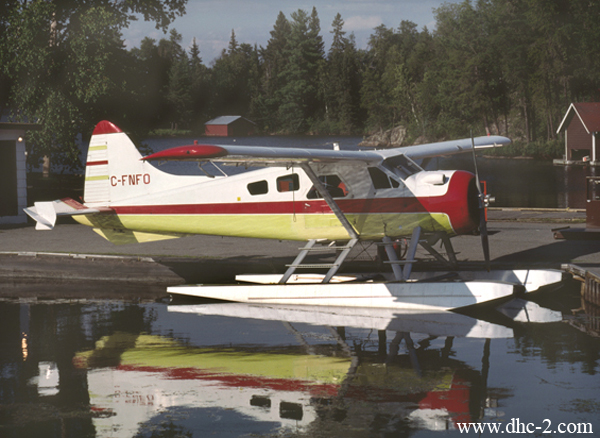
Crash of a De Havilland DHC-2 Beaver near Nestor Falls: 1 killed

Date & Time: Jul 7, 2001 at 1530 LT
Type of aircraft:
Registration:
C-FNFO
Flight Phase:
Survivors:
No
Schedule:
Kakabikitchiwan Lake - Aremis Lake
MSN:
819
YOM:
1955
Country:
Crew on board:
1
Crew fatalities:
Pax on board:
0
Pax fatalities:
Other fatalities:
Total fatalities:
1
Captain / Total flying hours:
1500
Captain / Total hours on type:
1300.00
Aircraft flight hours:
11843
Circumstances:
A de Havilland DHC-2 Beaver seaplane, registration C-FNFO, serial number 819, departed from Kakabikitchiwan Lake, Ontario, on a visual flight rules flight for Aremis Lake with only the pilot on board. Shortly after take-off, the aircraft was observed flying northbound at a very low altitude above Sabaskong Bay with the engine operating at a high power setting. The aircraft started to climb and bank to the left. The right wing struck the lower of two electrical wires strung across a channel between two islands. The aircraft was destroyed; the pilot sustained fatal injuries.
Probable cause:
Findings as to Causes and Contributing Factors:
1. The power line running overhead the channel was invisible, except at very short range, and was not marked to indicate its presence.
2. The pilot was flying at a very low altitude and likely did not see the power line.
Findings as to Risk:
1. The Standards Obstruction Markings Manual allows for discretion in deciding whether to assess obstructions, making it possible for some obstructions to not be assessed and, consequently, to not be marked.
Final Report:

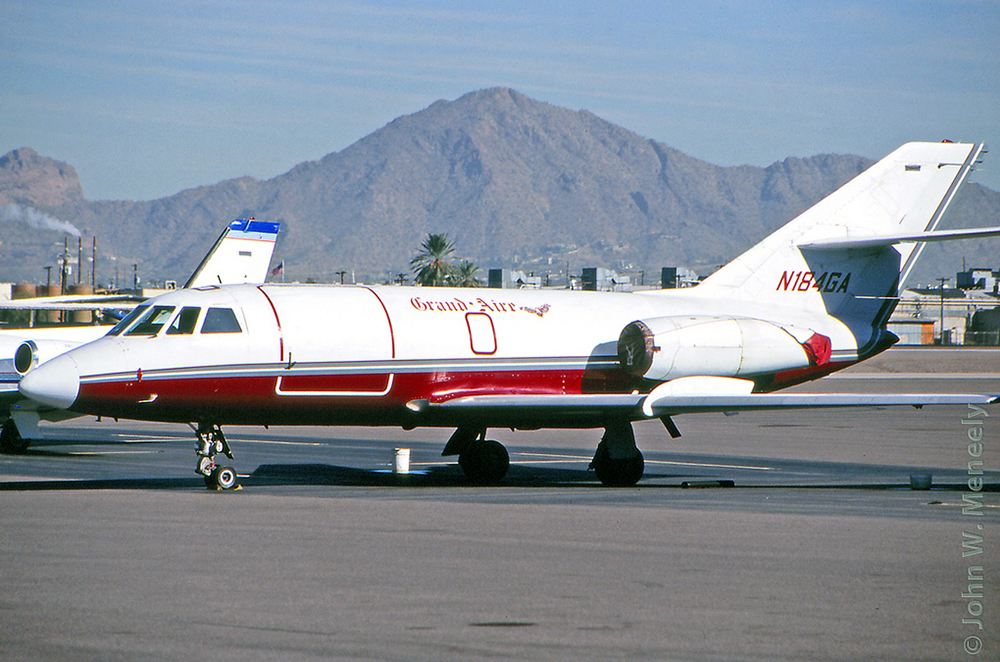
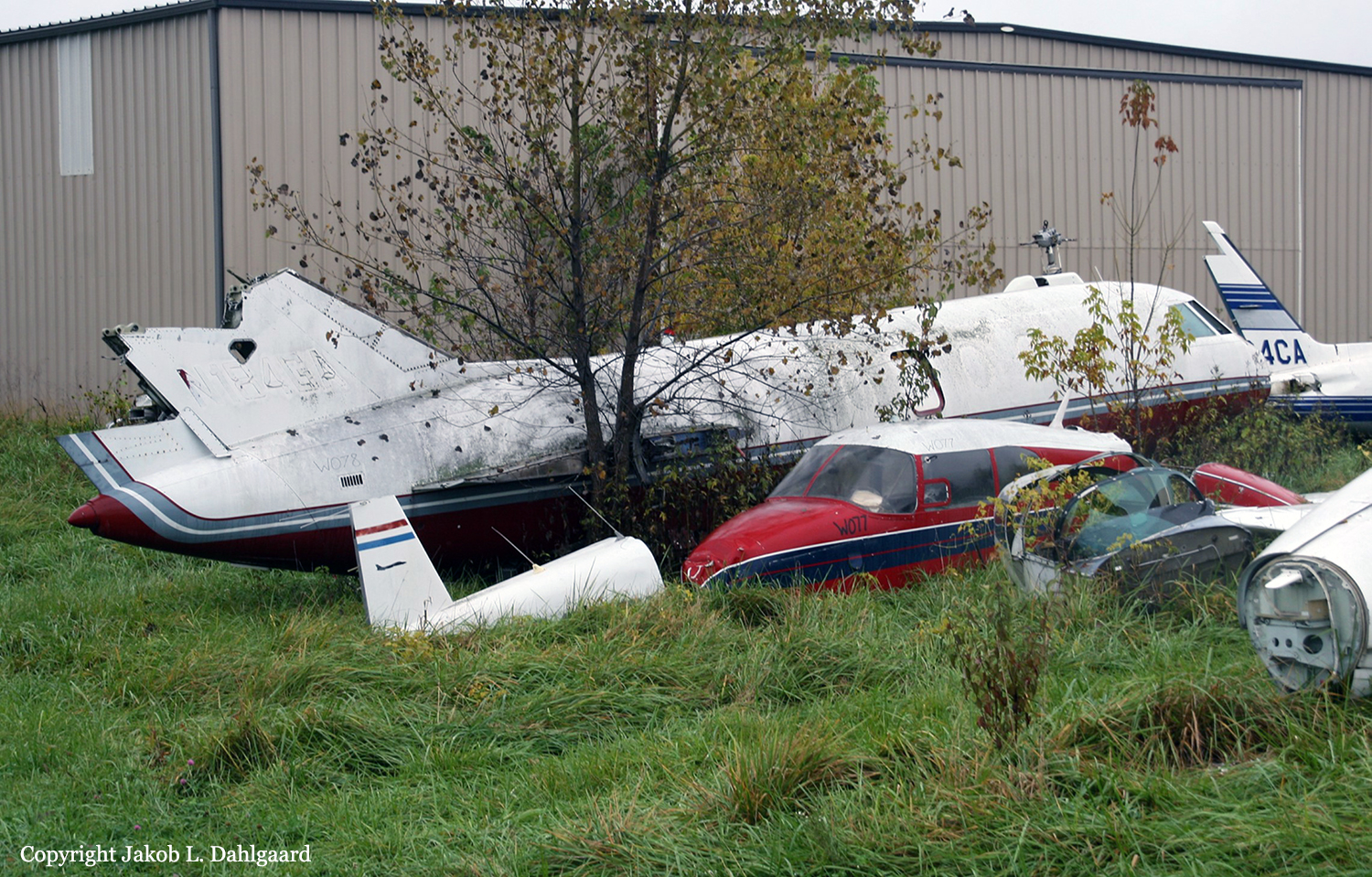
Crash of a Dassault Falcon 20E in Peterborough

Date & Time: Jun 13, 2000 at 2250 LT
Type of aircraft:
Operator:
Registration:
N184GA
Flight Type:
Survivors:
Yes
Schedule:
Louisville – Marion – Detroit – Peterborough
MSN:
266
YOM:
1972
Flight number:
GAE184
Country:
Crew on board:
2
Crew fatalities:
Pax on board:
0
Pax fatalities:
Other fatalities:
Total fatalities:
0
Captain / Total flying hours:
11800
Captain / Total hours on type:
9400.00
Copilot / Total flying hours:
2300
Copilot / Total hours on type:
150
Aircraft flight hours:
15798
Circumstances:
The Dassault-Breguet Falcon 20E aircraft was on an unscheduled charter cargo flight from Detroit Willow Run, Michigan, USA, to Peterborough, Ontario. The flight was being conducted at night and under instrument flight rules in instrument meteorological conditions. Nearing the destination, the flight crew received a clearance to conduct a non-directional beacon runway 09 approach at Peterborough Airport. The flight crew did not acquire the runway environment during this approach and conducted a missed approach procedure. They obtained another clearance for the same approach from Toronto Area Control Centre. During this approach, the flight crew acquired the runway environment and manoeuvred the aircraft for landing on runway 09. The aircraft touched down near the runway midpoint, and the captain, who was the pilot flying, elected to abort the landing. The captain then conducted a left visual circuit to attempt another landing. As the aircraft was turning onto the final leg, the approach became unstabilized, and the flight crew elected to overshoot; however, the aircraft pitched nose-down, banked left, and struck terrain. As it travelled 400 feet through a ploughed farm field, the aircraft struck a tree line and came to rest about 2000 feet before the threshold of runway 09, facing the opposite direction. The aircraft was substantially damaged. No serious injuries occurred.
Probable cause:
Findings as to Causes and Contributing Factors:
1. The captain's attempt to continue the landing during the second approach was contrary to company standard operating procedures and Federal Aviation Regulations, in that the approach was unstable and the aircraft was not in a position to land safely.
2. Following the aborted landing, the flight crew proceeded to conduct a circling approach to runway 09, rather than the missed approach procedure as briefed.
3. The pilot lost situational awareness during the overshoot after the third failed attempt to land, likely when he was subjected to somatogravic illusion.
4. Breakdown in crew coordination after the aborted landing, lack of planning and briefing for the subsequent approach, operating in a dark, instrument meteorological conditions environment with limited visual cues, and inadequate monitoring of flight instruments contributed to the loss of situational awareness.
Final Report:

Crash of a Cessna 208B Super Cargomaster in Ranger Lake

Date & Time: Oct 15, 1999 at 1225 LT
Type of aircraft:
Operator:
Registration:
C-FKSL
Flight Phase:
Flight Type:
Survivors:
Yes
Schedule:
Deer Lake - Red Lake
MSN:
208B-0129
YOM:
1988
Flight number:
WSG126
Country:
Crew on board:
1
Crew fatalities:
Pax on board:
0
Pax fatalities:
Other fatalities:
Total fatalities:
0
Circumstances:
While holding outside the control zone at Red Lake (YRL) pending a special VFR clearance, the pilot made a descending turn to avoid a flock of large birds. The right wing struck the water of Ranger Lake and the Cessna overturned. A military DHC-8 diverted to Red Lake and located the Cessna on the west side of Ranger Lake. The airplane was partially submerged and the pilot was on the wing. A floatplane (C-FVTU) subsequently picked up the pilot and returned him to Red Lake. The pilot suffered shoulder injuries, arm injuries, facial injuries and hypothermia.

Crash of a De Havilland DHC-2 Beaver near Pickle Lake

Date & Time: Oct 2, 1999 at 1430 LT
Type of aircraft:
Operator:
Registration:
C-GZBQ
Flight Phase:
Survivors:
Yes
Schedule:
Big Trout Lake - Geraldton
MSN:
919
YOM:
1956
Country:
Crew on board:
1
Crew fatalities:
Pax on board:
1
Pax fatalities:
Other fatalities:
Total fatalities:
0
Captain / Total flying hours:
1420
Captain / Total hours on type:
725.00
Aircraft flight hours:
13372
Circumstances:
The de Havilland DHC-2 Beaver seaplane departed from Big Trout Lake, Ontario, on a visual flight rules flight for Geraldton, Ontario, with a pilot and an aircraft maintenance engineer on board. After encountering adverse weather conditions en route to Geraldton, the pilot decided to divert to Pickle Lake, Ontario. At about 1430 central daylight time, the engine lost power at an altitude of about 300 feet above ground level while in the descent for Pickle Lake. The pilot turned the aircraft toward a nearby narrow river. In an attempt to restart the engine, the pilot confirmed that the fuel pressure was normal, the fuel selector was on the fullest tank (front), the throttle was at idle, the mixture was rich, and the ignition switch was on both, then he operated the wobble pump. When the engine did not restart, he switched to the centre fuel tank and operated the wobble pump again, but the engine still did not restart. He then switched back to the front tank and tried another restart, without success. He then landed the aircraft on the river at an estimated landing speed of about 40 to 45 mph. After the forced landing, the left wingtip collided with trees on the river bank, and the aircraft yawed to the left about 180 degrees and struck the river bank, breaking off the floats and the float struts. Impact with more trees on the river bank damaged the right wing and elevator. Both occupants were wearing lap belts with shoulder harnesses and were uninjured. The aircraft was substantially damaged. The pilot advised Thunder Bay flight service station by radio of the engine failure and crash and the crew were rescued two hours later.
Probable cause:
Findings as to Causes and Contributing Factors:
- The engine quit operating because the aircraft fuel system was contaminated with a large amount of water.
- The most likely source of the water contamination was the drums from which the aircraft was refuelled.
- A proper filter to prevent water contamination was not used when the aircraft was refuelled.
- The nose-level aircraft attitude when beached and the freezing of water probably prevented the water contamination from being drained from the front tank during the pilot's pre-flight checks.
Other Findings:
- The aircraft's maintenance records indicate that the aircraft was certified, equipped, and maintained in accordance with existing regulations and approved procedures.
- The use of the available shoulder harnesses probably prevented serious injury to the pilot and engineer.
Final Report:

Crash of a Beechcraft A100 King Air in Thunder Bay

Date & Time: Jun 14, 1999 at 1038 LT
Type of aircraft:
Operator:
Registration:
C-GASW
Flight Phase:
Survivors:
Yes
Schedule:
Thunder Bay – Red Lake
MSN:
B-108
YOM:
1972
Flight number:
THU103
Country:
Crew on board:
2
Crew fatalities:
Pax on board:
3
Pax fatalities:
Other fatalities:
Total fatalities:
0
Circumstances:
The Thunder Airlines Limited Beech A100 King Air aircraft, serial number B108, took off at 1034 eastern daylight saving time (EDT) on a charter flight from Thunder Bay, Ontario, for Red Lake, Ontario, with two pilots and three passengers on board. After getting airborne, the aircraft pitched up to approximately 70 degrees, reaching a height estimated to be between 500 and 700 feet above ground level. It then rolled to the left, pitched steeply nose-down, and descended to the ground within the confines of the airport. The aircraft contacted the soft, level ground in a relatively level attitude and covered a distance of about 500 feet before coming to rest in a wooded area immediately beyond an elevated railroad bed and track. The cabin remained intact during the crash sequence, and all occupants escaped without any injuries. The aircraft was damaged beyond repair. An ensuing fuel-fed fire was rapidly extinguished by airport emergency response services (ERS)
personnel.
Probable cause:
The flight crew lost pitch control of the aircraft on take-off when the stabilizer trim actuators became disconnected because they had not been properly reinstalled by the AME during maintenance work conducted before the flight. The crew chief responsible for the inspection did not ensure correct assembly of the stabilizer trim actuators, which contributed to the accident.
Final Report: