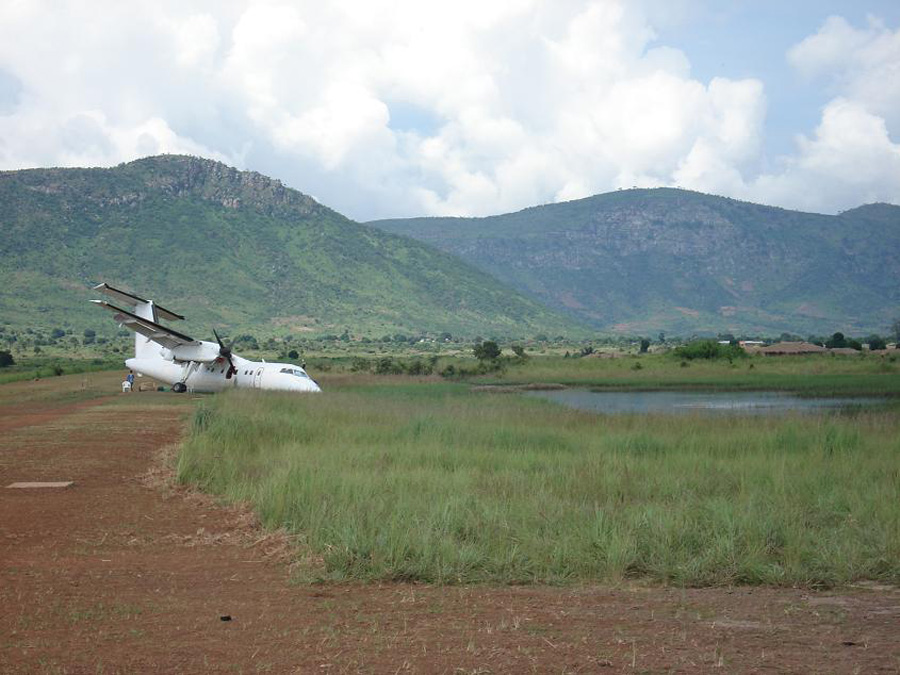
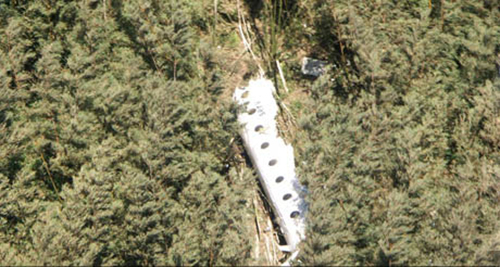
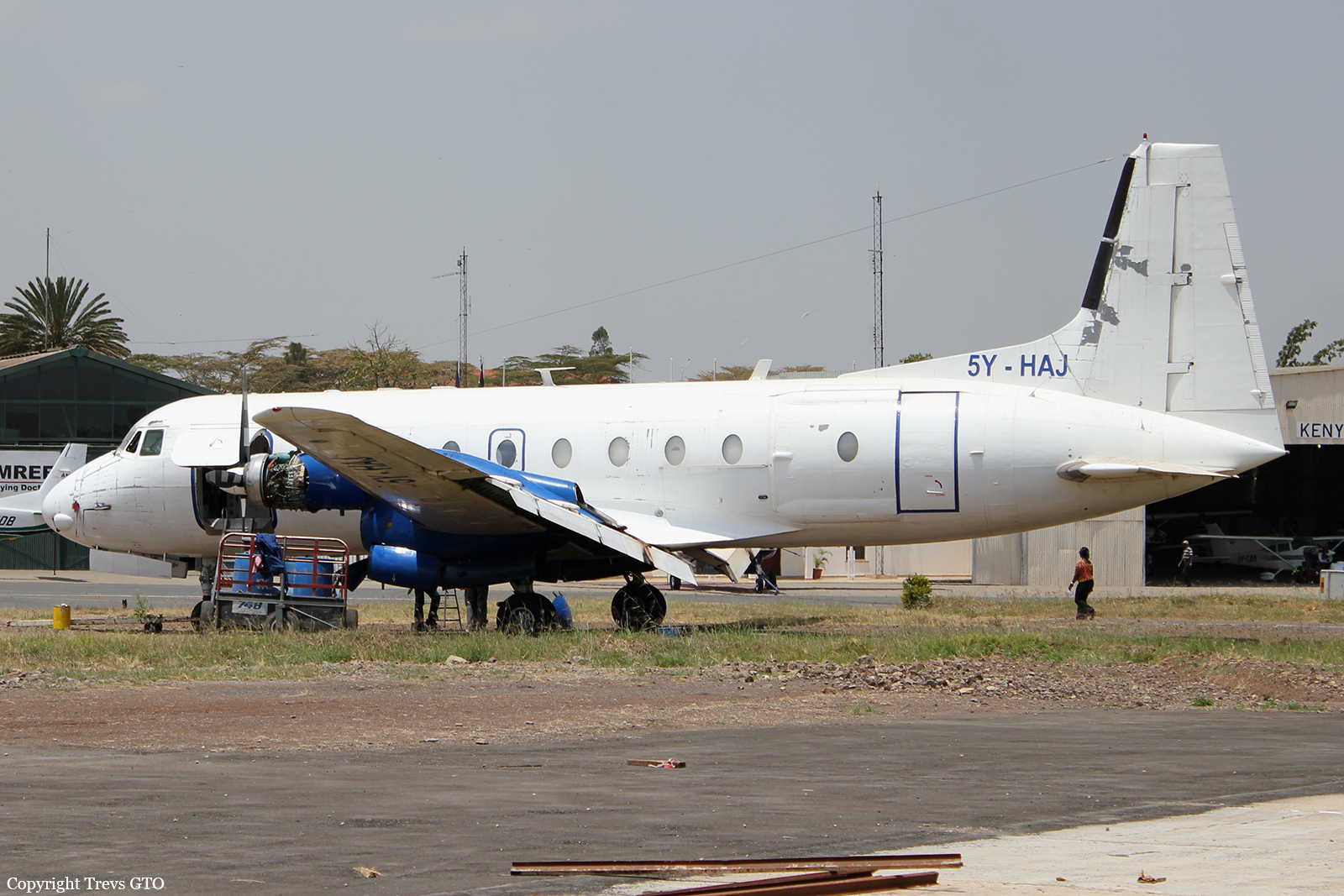
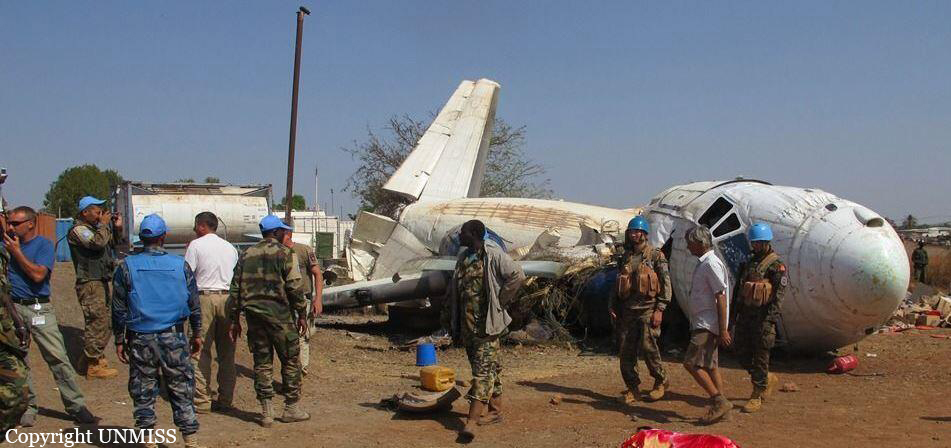
Crash of an Avro 748-371-2B in Rubkona: 1 killed

Date & Time: Feb 17, 2014 at 1445 LT
Type of aircraft:
Operator:
Registration:
5Y-HAJ
Flight Type:
Survivors:
Yes
Schedule:
Juba – Rubkona
MSN:
1776
YOM:
1980
Country:
Region:
Crew on board:
4
Crew fatalities:
Pax on board:
0
Pax fatalities:
Other fatalities:
Total fatalities:
1
Circumstances:
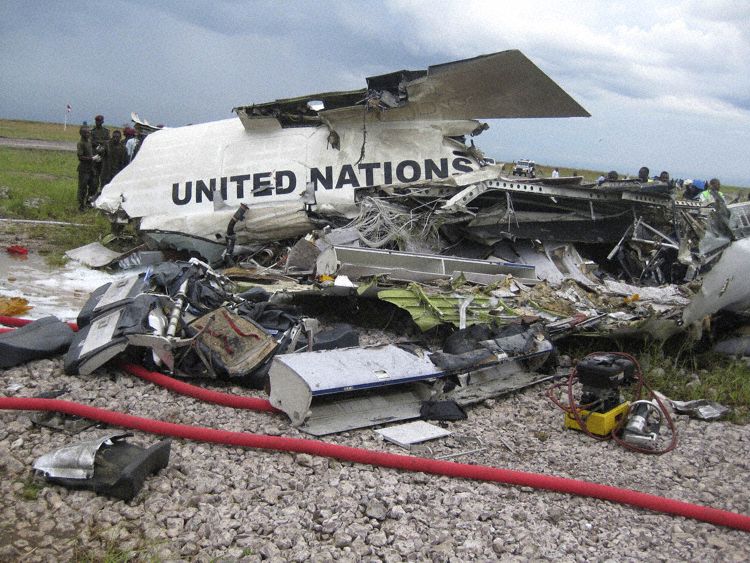
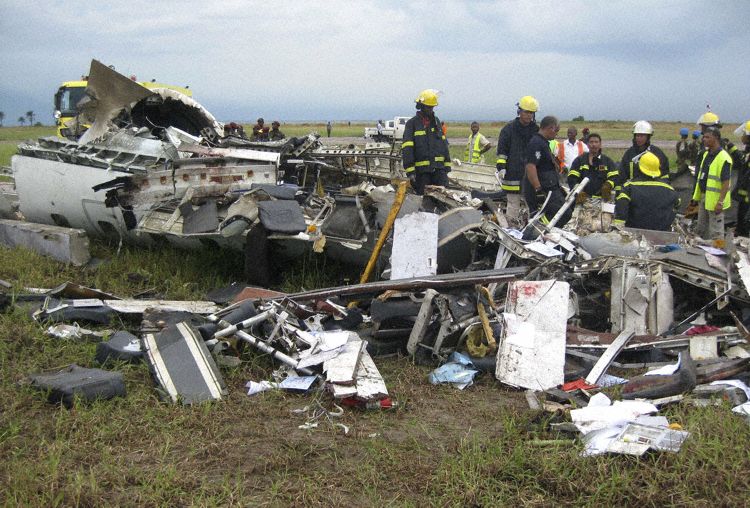
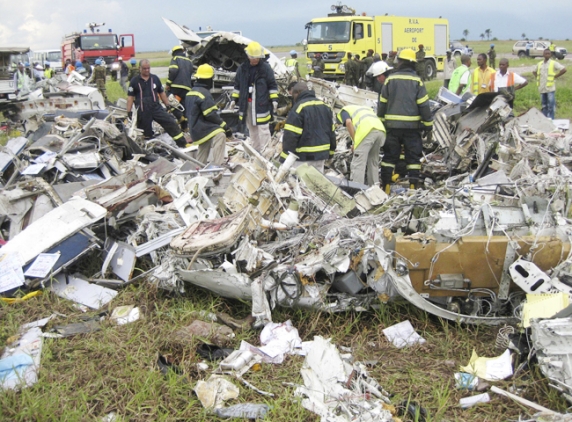
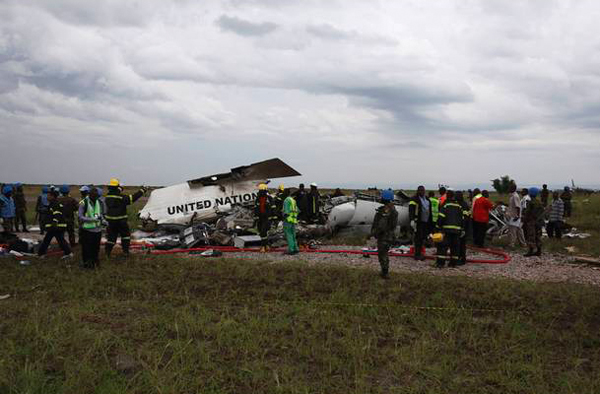
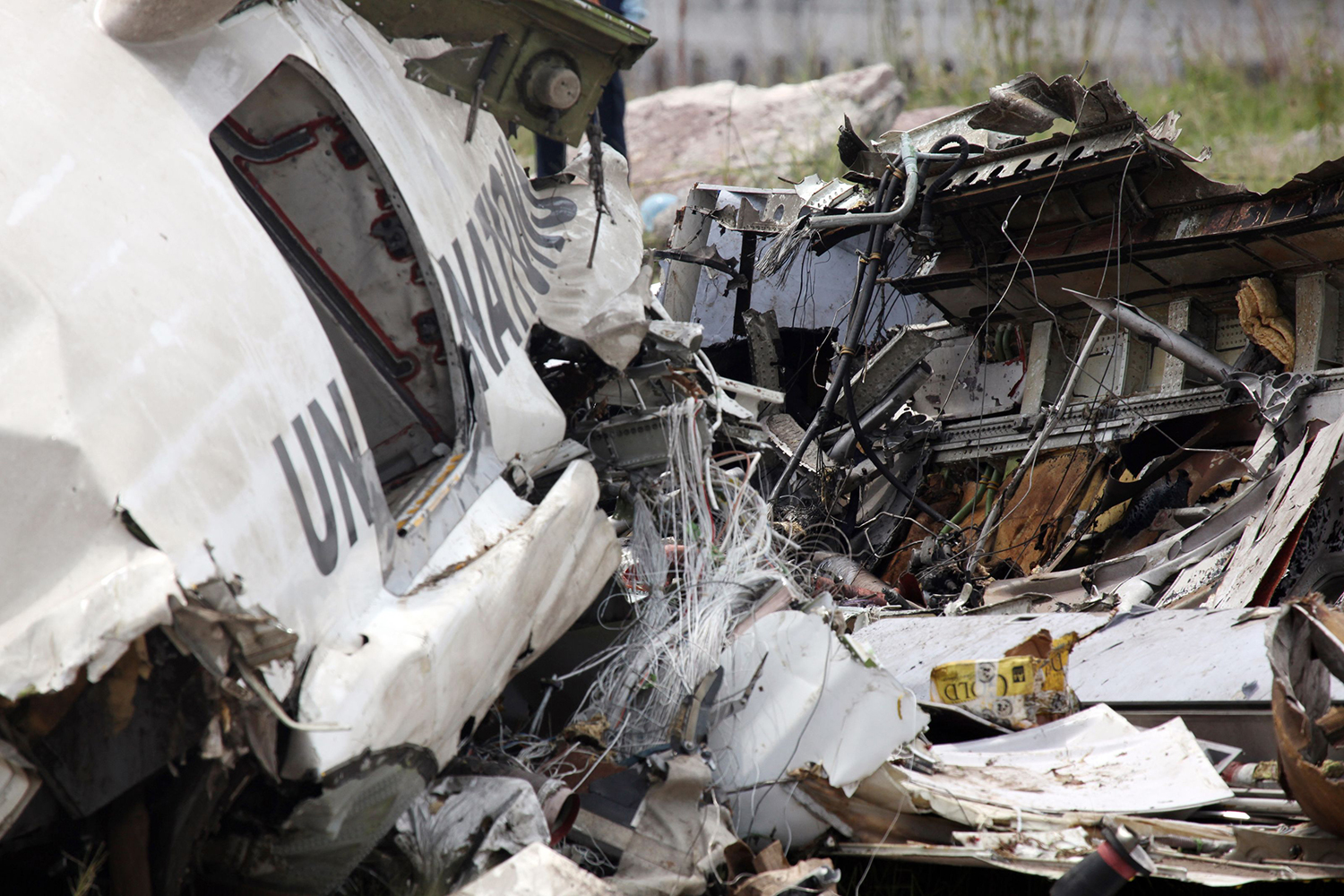
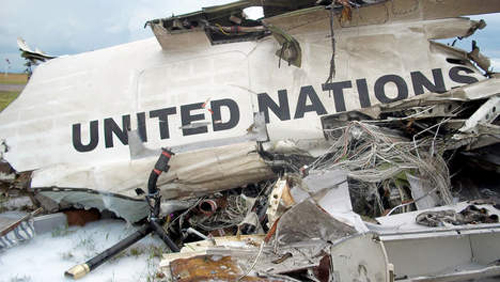
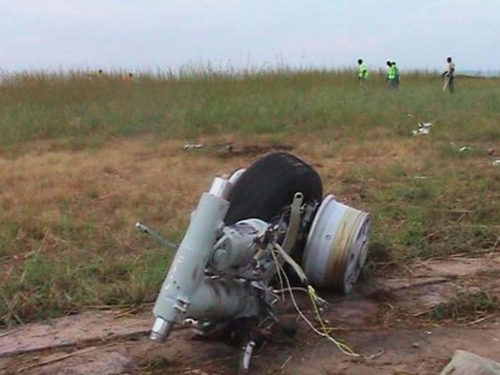
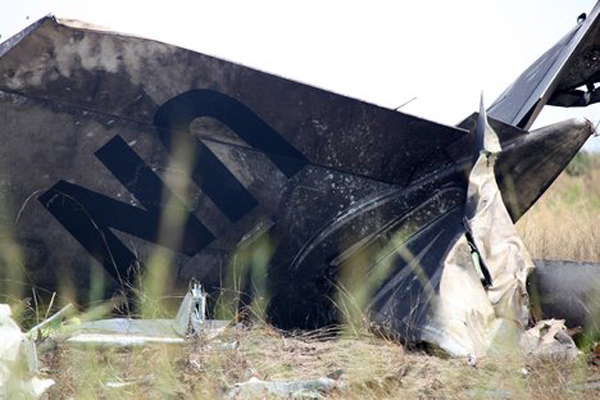
The crew was performing a humanitarian flight from Juba to Rubkona on behalf of the International Organisation for Migration, part of the UNMISS, the United Nations Mission in South Sudan. After landing, the aircraft was unstable and went out of control. It veered off runway, hit several cars and lost a wing before coming to rest partially upside down, bursting into flames. The flight engineer was killed while three other crew were seriously injured. The aircraft was destroyed.
Probable cause:
It is believed that the aircraft was approaching the airport at an excessive speed, too high and unstable.
Crash of an Antonov AN-26 in Doro

Date & Time: Apr 10, 2013
Type of aircraft:
Operator:
Registration:
EK-26407
Flight Type:
Survivors:
Yes
MSN:
64 07
YOM:
1978
Country:
Region:
Crew on board:
4
Crew fatalities:
Pax on board:
0
Pax fatalities:
Other fatalities:
Total fatalities:
0
Circumstances:
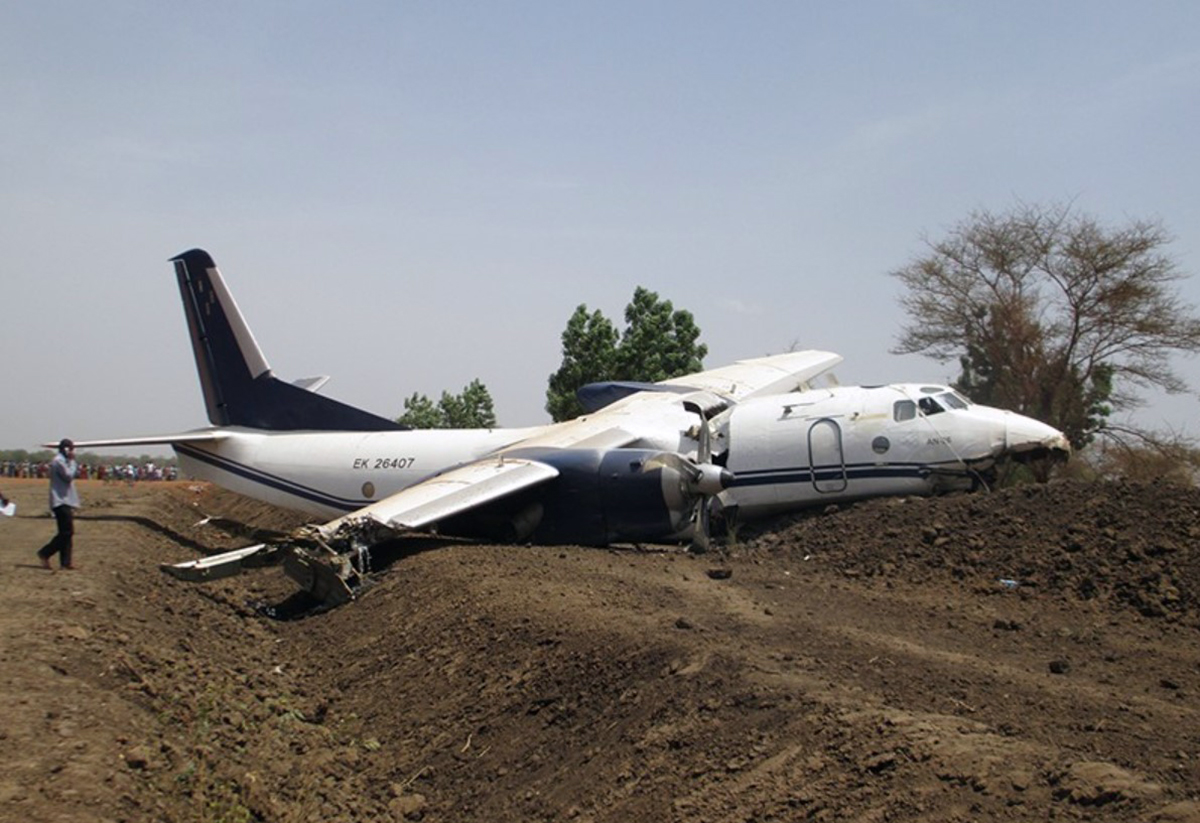
The aircraft was completing a humanitarian flight to Doro Airfield, South Sudan, carrying four crew members and a load consisting of food. After landing, the aircraft went out of control, veered off runway, struck a drainage ditch and came to rest against an earth mound. All four occupants escaped uninjured while the aircraft was destroyed.

Crash of a Let L-410UVP-E9 in Wau

Date & Time: Feb 28, 2013
Type of aircraft:
Operator:
Registration:
LZ-CCJ
Flight Type:
Survivors:
Yes
MSN:
02 26 34
YOM:
2002
Country:
Region:
Crew on board:
2
Crew fatalities:
Pax on board:
0
Pax fatalities:
Other fatalities:
Total fatalities:
0
Circumstances:
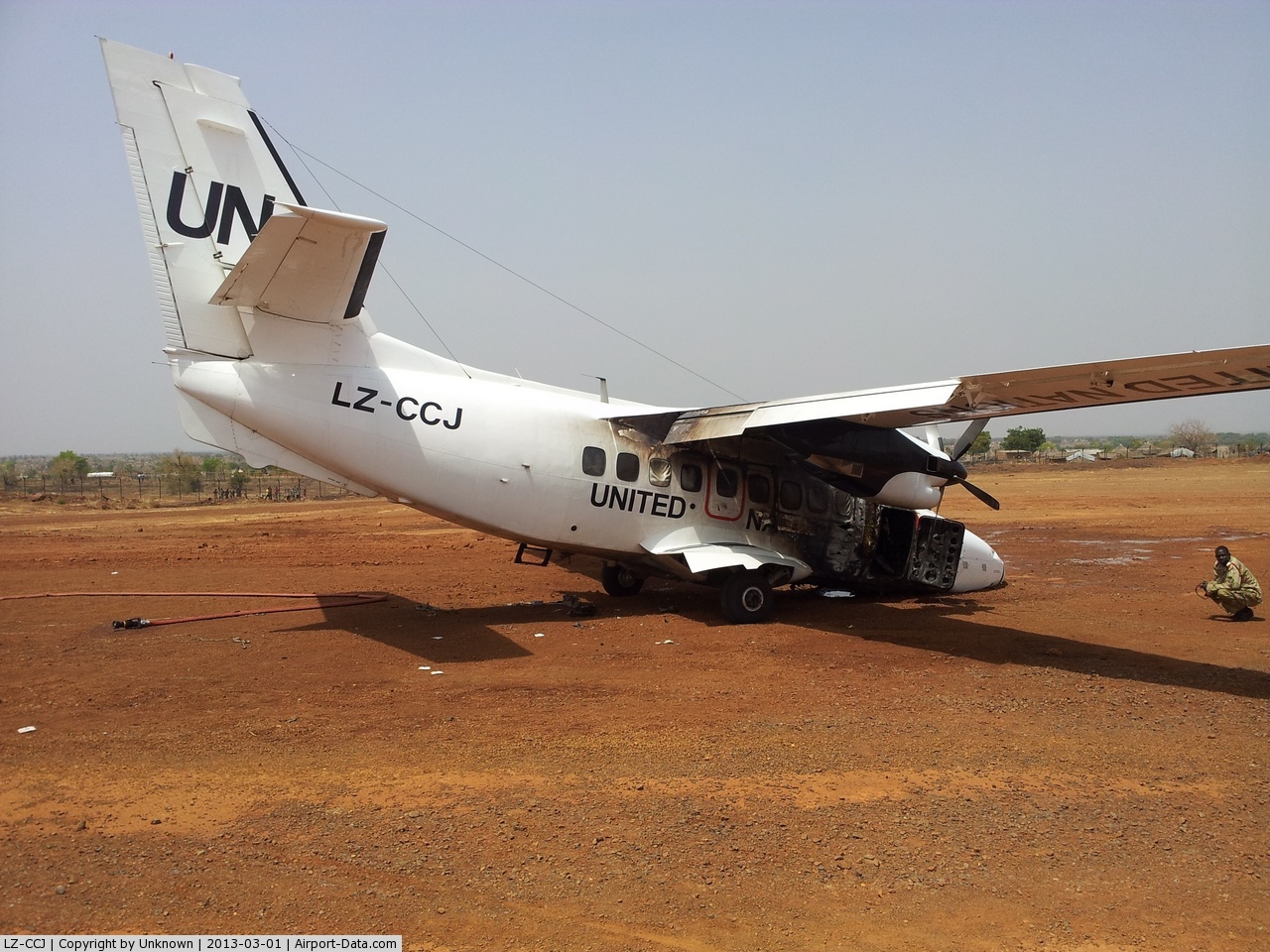
The crew was performing a humanitarian flight on behalf of the United Nations Organisation (UNO). Upon landing at Wau Airport, the nose gear collapsed. The aircraft slid on runway for few dozen metres before coming to rest, bursting into flames. Both pilots evacuated safely and the aircraft was partially destroyed by fire.

Crash of a Cessna 208B Grand Caravan in Yambio

Date & Time: May 2, 2012 at 1055 LT
Type of aircraft:
Operator:
Registration:
5Y-NGO
Flight Type:
Survivors:
Yes
Schedule:
Juba - Yambio
MSN:
208B-0322
YOM:
1992
Country:
Region:
Crew on board:
2
Crew fatalities:
Pax on board:
9
Pax fatalities:
Other fatalities:
Total fatalities:
0
Circumstances:
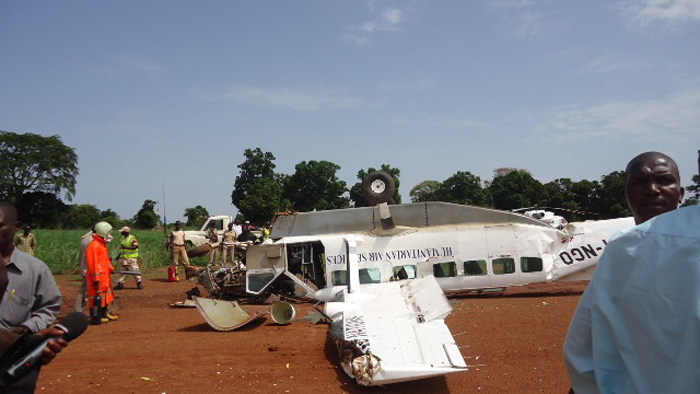
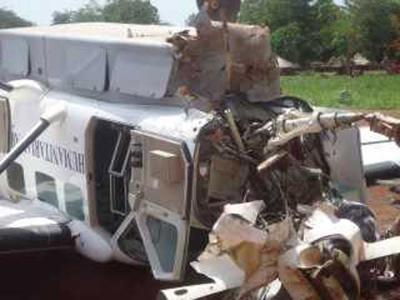
It was reported that the aircraft had taken-off from Juba for Yambio, Sothern Sudan with two crew members and nine passengers onboard. The flight was uneventful up to and until after touchdown, twenty metres after the threshold of runway 03, when it was noted that the aircraft steadily veered to the left. Efforts by the captain to prompt the pilot flying and intercession by taking control of the aircraft and initiating the necessary corrective measures by applying full right rudder yielded no positive results. The aircraft left wheel entered the trench at high speed, causing the aircraft to flip over and crash 200metrs from threshold of runway 03 and came rest in an inverted position. All persons exited safely on their own, except two passengers who were assisted by the captain to disembark. The captain used the portable fire extinguisher to put off the fire that flickered in the engine compartment. The flying pilot sustained injuries on his right foot, while the other passengers were reported to have hard minor injuries. The prevailing weather at the time of occurrence was reported as CAVOK (clear sky, and visibility better than 10Km) with calm North Easterly winds (030/05).
Final Report:

Crash of a Canadair RegionalJet CRJ-100ER in Kinshasa: 32 killed

Date & Time: Apr 4, 2011 at 1356 LT
Operator:
Registration:
4L-GAE
Flight Type:
Survivors:
Yes
Schedule:
Kisangani – Kinshasa
MSN:
7070
YOM:
1995
Flight number:
UNO834
Region:
Crew on board:
4
Crew fatalities:
Pax on board:
29
Pax fatalities:
Other fatalities:
Total fatalities:
32
Captain / Total flying hours:
2811
Captain / Total hours on type:
1622.00
Copilot / Total flying hours:
495
Copilot / Total hours on type:
344
Circumstances:
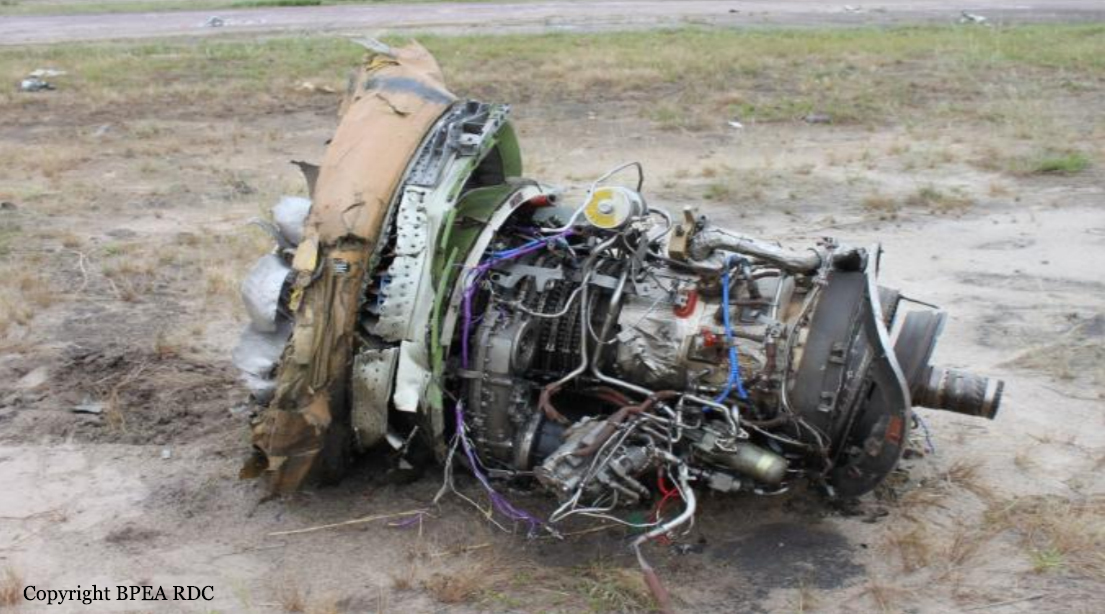
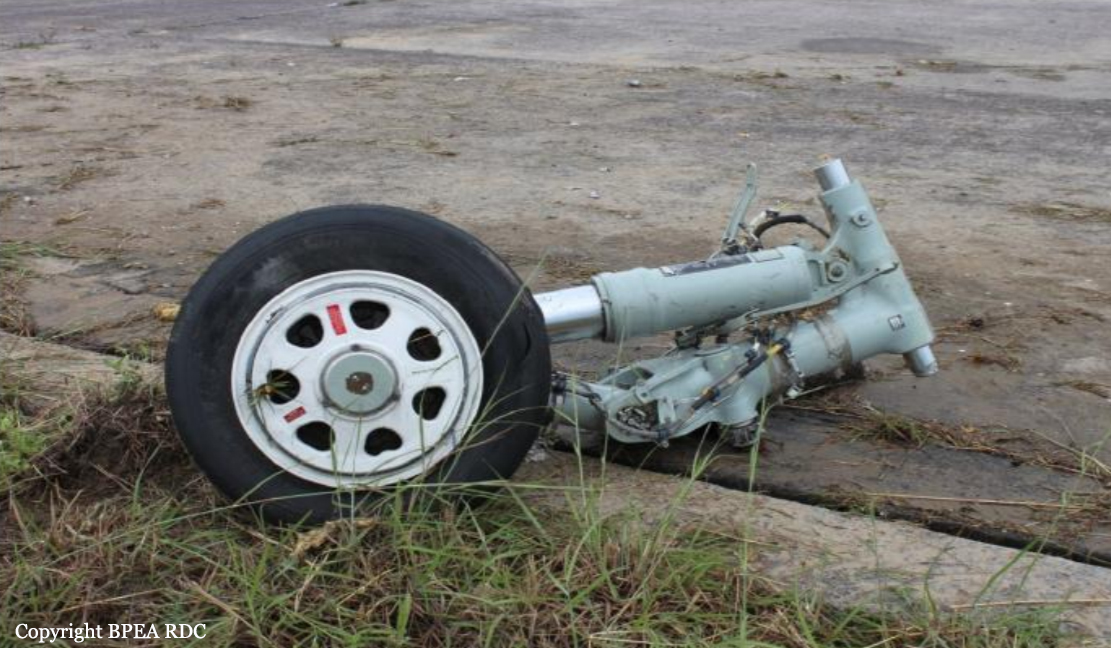
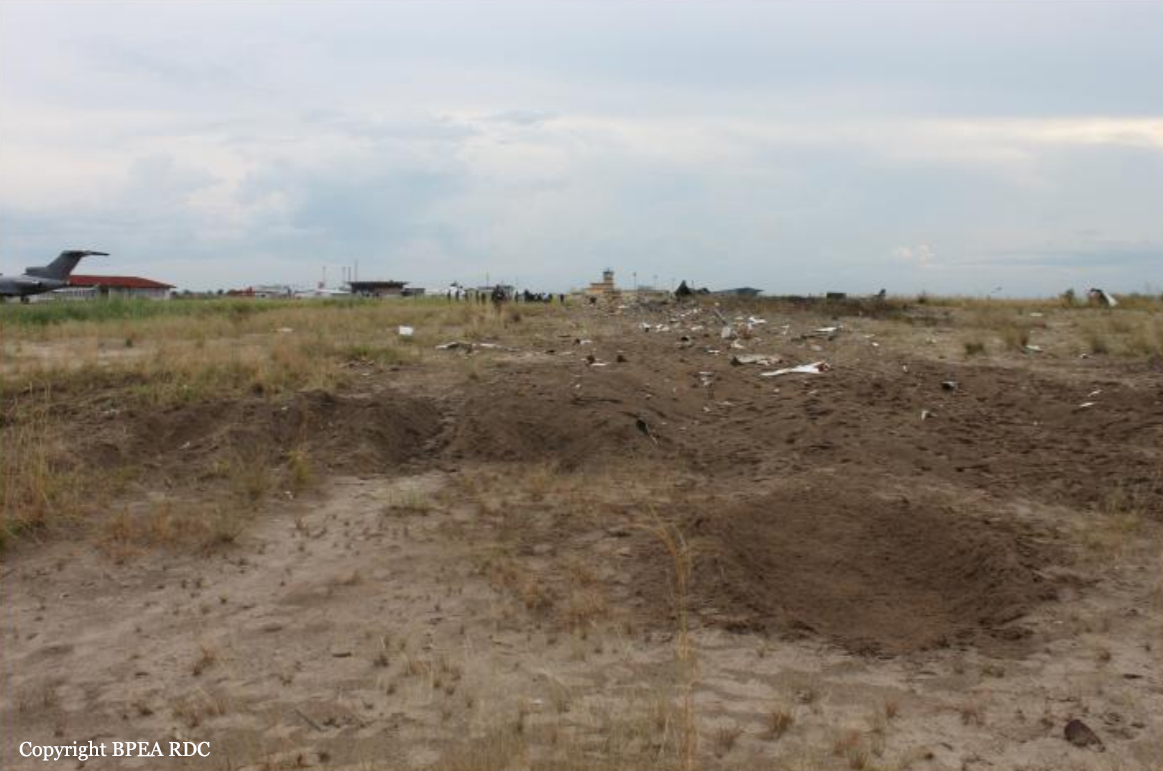
On final approach to Kinshasa-N'Djili Airport, the crew encountered very poor weather conditions and decided to make a go around. After a climb process of 12 seconds, the aircraft nosed down and at a speed of 180 knots, hit the ground 170 meters to the left of the displaced threshold of runway 24. The aircraft slid for 400 meters before coming to rest in flames upside down. Three passengers were seriously injured and evacuated but of them died from their injuries few hours later. Finally, only one passenger survived the accident. Aircraft was performing a special flight from Kisangani to Kinshasa on behalf of the United Nations Organization Stabilization Mission in the Democratic Republic of the Congo (MONUSCO). The only survivor reported that the aircraft suddenly plunged into the earth while on final approach. At the time of the accident, weather conditions were marginal with storm activity, heavy rain showers, scattered at 2,200 feet and cumulonimbus at 1,500 feet.
Probable cause:
Weather in Kinshasa was bad at the time of the accident, ATC failed to inform the crew about the degradation of the weather conditions and the runway in use was not closed to traffic while the visibility was below the minima. Despite this situation, the crew took the decision to continue the approach procedure while the aircraft was unstable and the approach speed was too high (180 knots). It is reported that the following factors contributed to the accident:
- the crew ignored the published approach procedures,
- improper crew resources management during the execution of the flight,
- during the go around process, the crew encountered adverse weather conditions with vertical wind gusts, downdrafts and a 'magenta' effect. This caused the aircraft to adopt nose down attitude while it was in the final stage of the flight, preventing the pilot to take over the control,
- the pilot training program was inadequate and did not include a proportionate number of flight in the simulator,
- the authority for civil aviation of Georgia has probably approved a small training program for upgrading the captain to his position,
- lack of oversight of the operator by the Georgian Civil Aviation Authority.
In conclusion, investigators believe that the most probable cause of the accident is the fact that the plane encountered a very dangerous meteorological phenomena similar to a microburst, to a very low level during the overshoot process. The dangerous vertical downdraft and gust caused a sudden and remarkable change in the attitude of the aircraft and a substantial loss of altitude. Flying at very low altitude, recovery of such disturbance was not possible.
Final Report:

Crash of a Piper PA-31 Turbo Navajo B in Concepción: 6 killed

Date & Time: Mar 1, 2010 at 1346 LT
Type of aircraft:
Operator:
Registration:
CC-PGY
Flight Type:
Survivors:
No
Schedule:
Tobalaba - Concepción
MSN:
31-7401257
YOM:
1974
Country:
Crew on board:
1
Crew fatalities:
Pax on board:
5
Pax fatalities:
Other fatalities:
Total fatalities:
6
Captain / Total flying hours:
760
Captain / Total hours on type:
81.00
Aircraft flight hours:
3167
Circumstances:
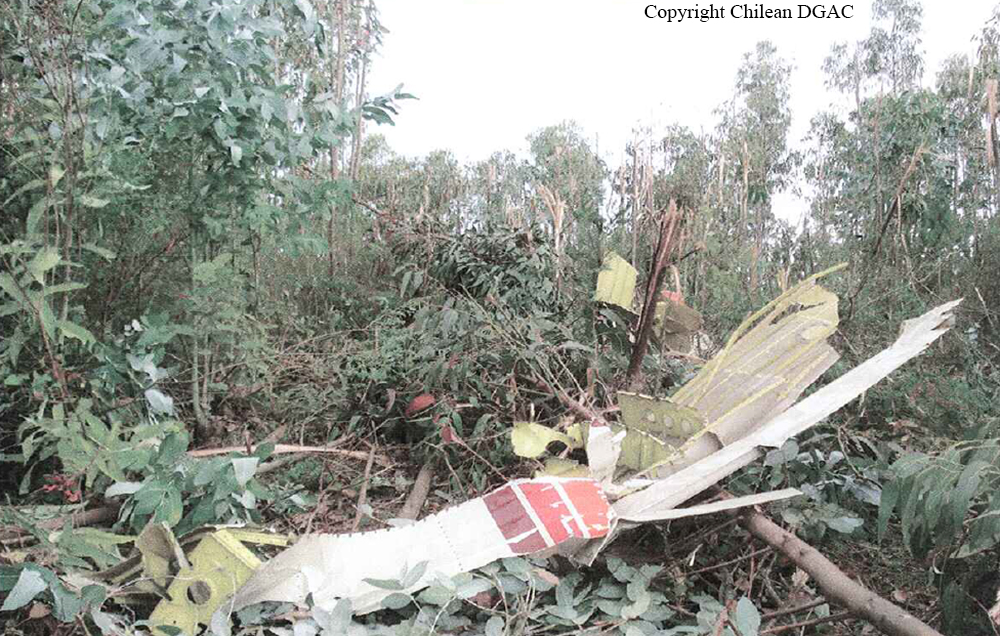
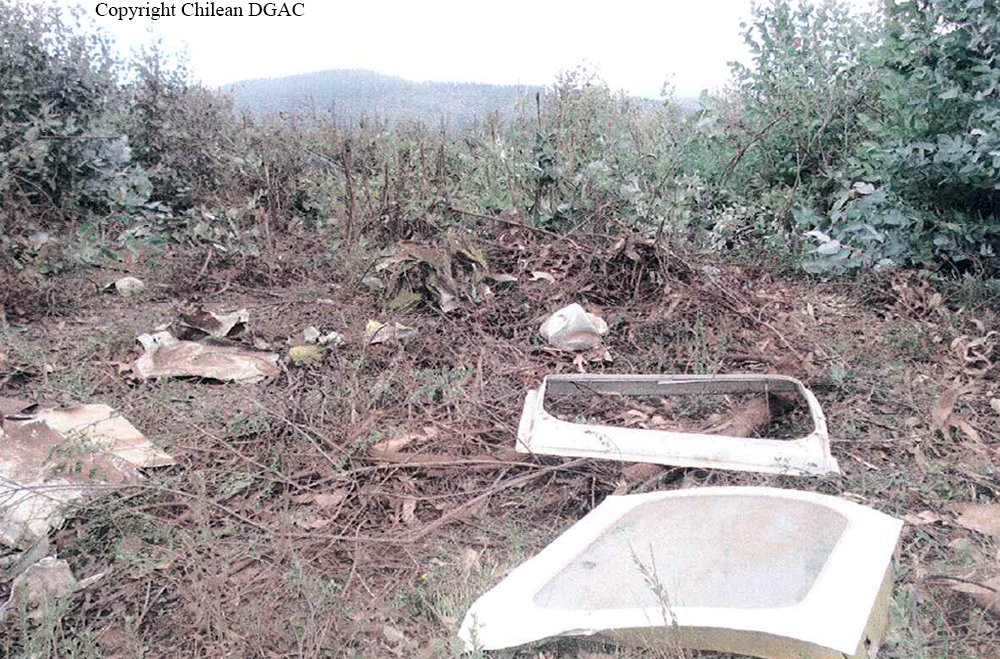
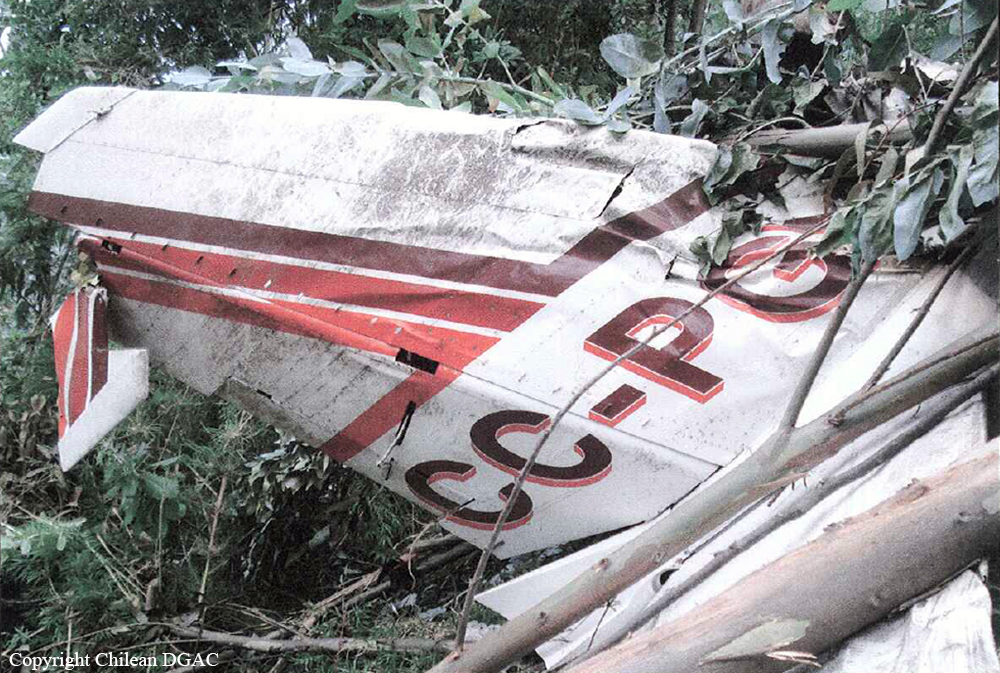
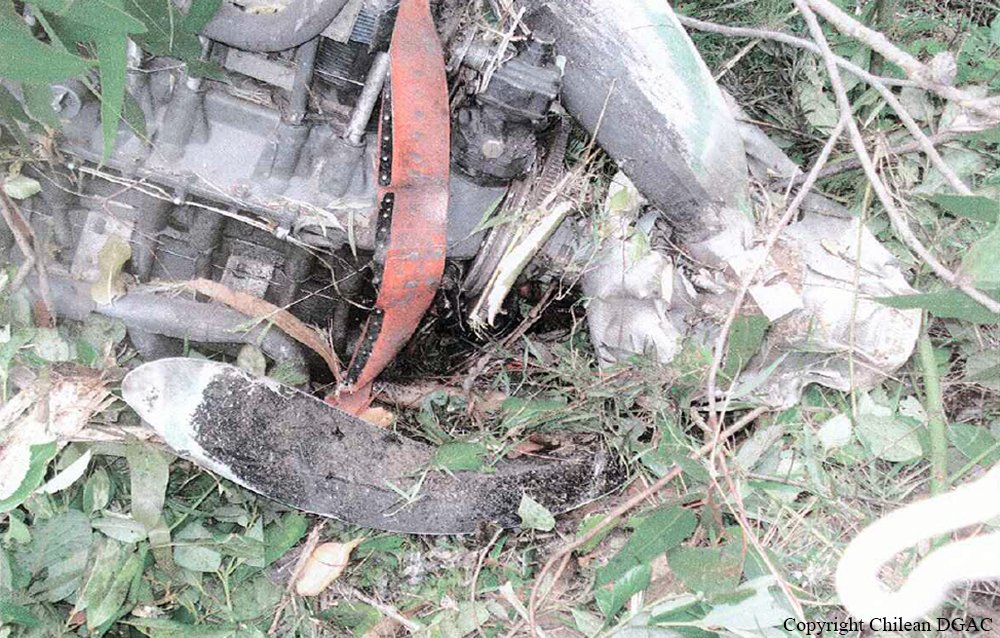
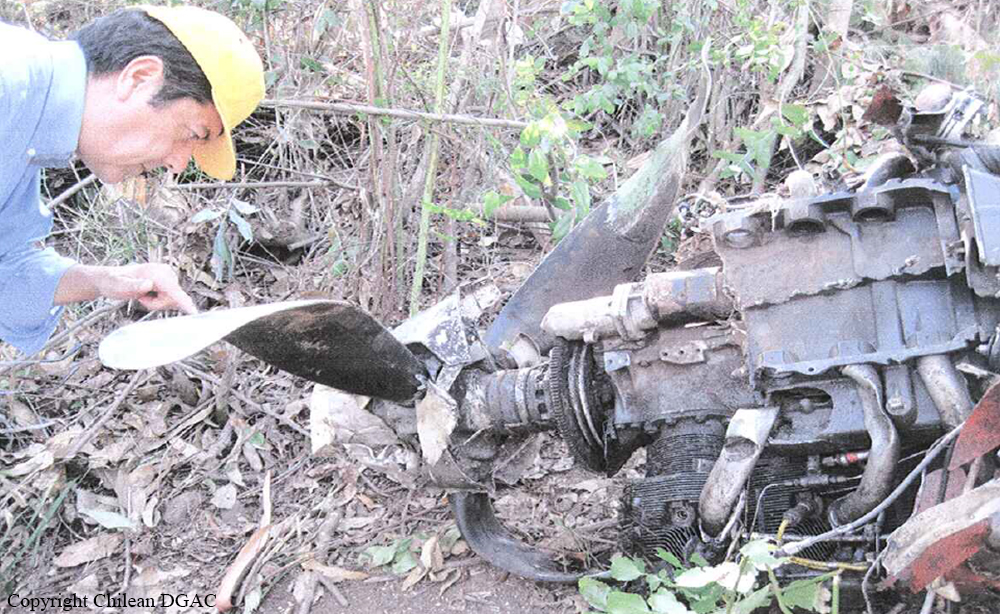
The twin engine aircraft was performing a special flight from Tobalaba to Concepción with a team of five experts from the Santo Tomás University. While descending to Concepción-Carriel Sur Airport in poor weather conditions, the twin engine aircraft hit tree tops and crashed in a wooded area located some 20 km north of the airport, near Tomé. All six occupants were killed. They should inspect installations in Concepción following the earthquake from 27FEB2010.
Pilot:
Marcelo Ruiz.
Passengers:
Ernesto Videla,
Pablo Desbordes,
Ignacio Fernández,
Rodolfo Becker,
Guillermo Moya.
Probable cause:
The pilot continued the approach in low visibility and let the aircraft descending below the minimum safe altitude. At the time of impact, the aircraft was 10° off track (017° radial) for a runway 20 approach in IMC. Consequently, investigators feel that the accident was caused by a controlled flight into terrain (CFIT). Poor efficiency in procedures execution on part of the pilot by executing an approach in IMC with a twin engine aircraft was considered as a contributory factor, and his relative low experience on type.

Final Report:

Crash of a De Havilland DHC-8-102 in Moba

Date & Time: Jan 13, 2010
Operator:
Registration:
5Y-EMD
Flight Type:
Survivors:
Yes
Schedule:
Nairobi - Moba
MSN:
110
YOM:
1988
Location:
Region:
Crew on board:
4
Crew fatalities:
Pax on board:
18
Pax fatalities:
Other fatalities:
Total fatalities:
0
Circumstances:
The aircraft departed Nairobi on a humanitarian mission to Moba, carrying 18 passengers and 4 crew members on behalf of the United Nations Organization. After touchdown, the left main gear collapsed. The aircraft veered off runway to the left and came to rest in a marsh field. All 22 occupants escaped uninjured and the aircraft was damaged beyond repair. It appears that the pilot-in-command was distracted during the last segment by pedestrians at the runway threshold and the aircraft landed hard.

Crash of a Cessna 208B Grand Caravan in Boma

Date & Time: Feb 11, 2009
Type of aircraft:
Operator:
Registration:
5Y-BUQ
Flight Type:
Survivors:
Yes
Schedule:
Juba – Boma
MSN:
208B-0366
YOM:
1993
Country:
Region:
Crew on board:
2
Crew fatalities:
Pax on board:
1
Pax fatalities:
Other fatalities:
Total fatalities:
0
Circumstances:
The single engine aircraft was completing a humanitarian flight from Juba to Boma on behalf of the World Food Program, carrying one passenger and two pilots. Upon landing at Boma Airstrip, one of the landing gear collapsed. The aircraft slid for few dozen metres before coming to rest, bursting into flames. All three occupants escaped uninjured while the aircraft was destroyed by fire.

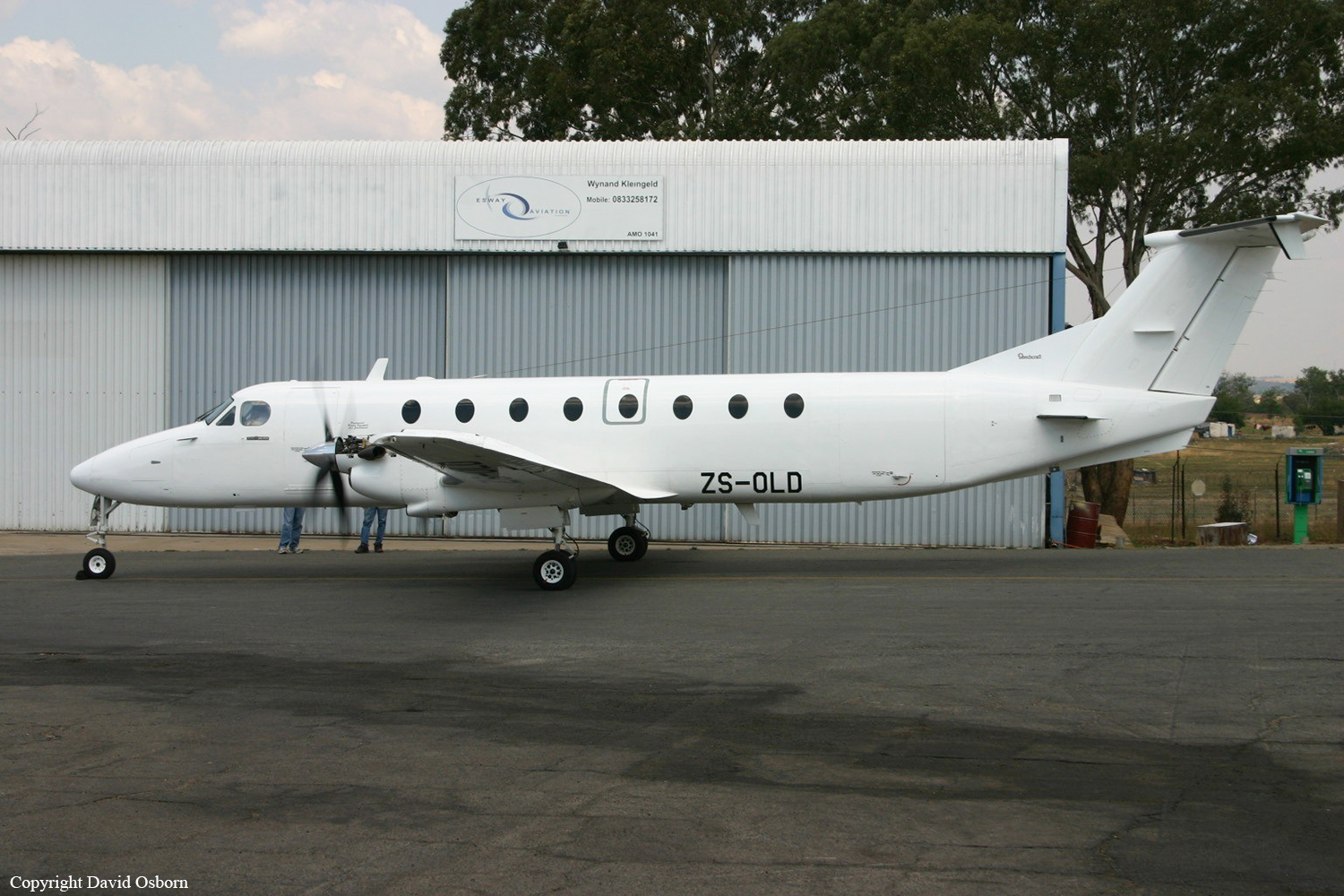
Crash of a Beechcraft 1900C-1 near Bukavu: 17 killed

Date & Time: Sep 1, 2008 at 1600 LT
Type of aircraft:
Operator:
Registration:
ZS-OLD
Flight Type:
Survivors:
No
Site:
Schedule:
Kinshasa - Mbandaka - Kisangani - Bukavu - Goma
MSN:
UC-137
YOM:
1900
Location:
Region:
Crew on board:
2
Crew fatalities:
Pax on board:
15
Pax fatalities:
Other fatalities:
Total fatalities:
17
Captain / Total flying hours:
2031
Circumstances:
The aircraft departed Kinshasa on a humanitarian flight to Goma with intermediate stops in Mbandaka, Kisangani and Bukavu. While approaching Bukavu-Kamembe Airport, the crew encountered poor visibility due to bad weather conditions. At an altitude of about 10,800 feet, the aircraft struck the slope of Mt Kahuzi located some 15 km northwest of Bukavu. The wreckage was found a day later in a wooded area. All 17 occupants were killed, among them emissaries.
Probable cause:
Controlled flight into terrain after the crew initiated the descent prematurely. The lack of visibility was a contributing factor.

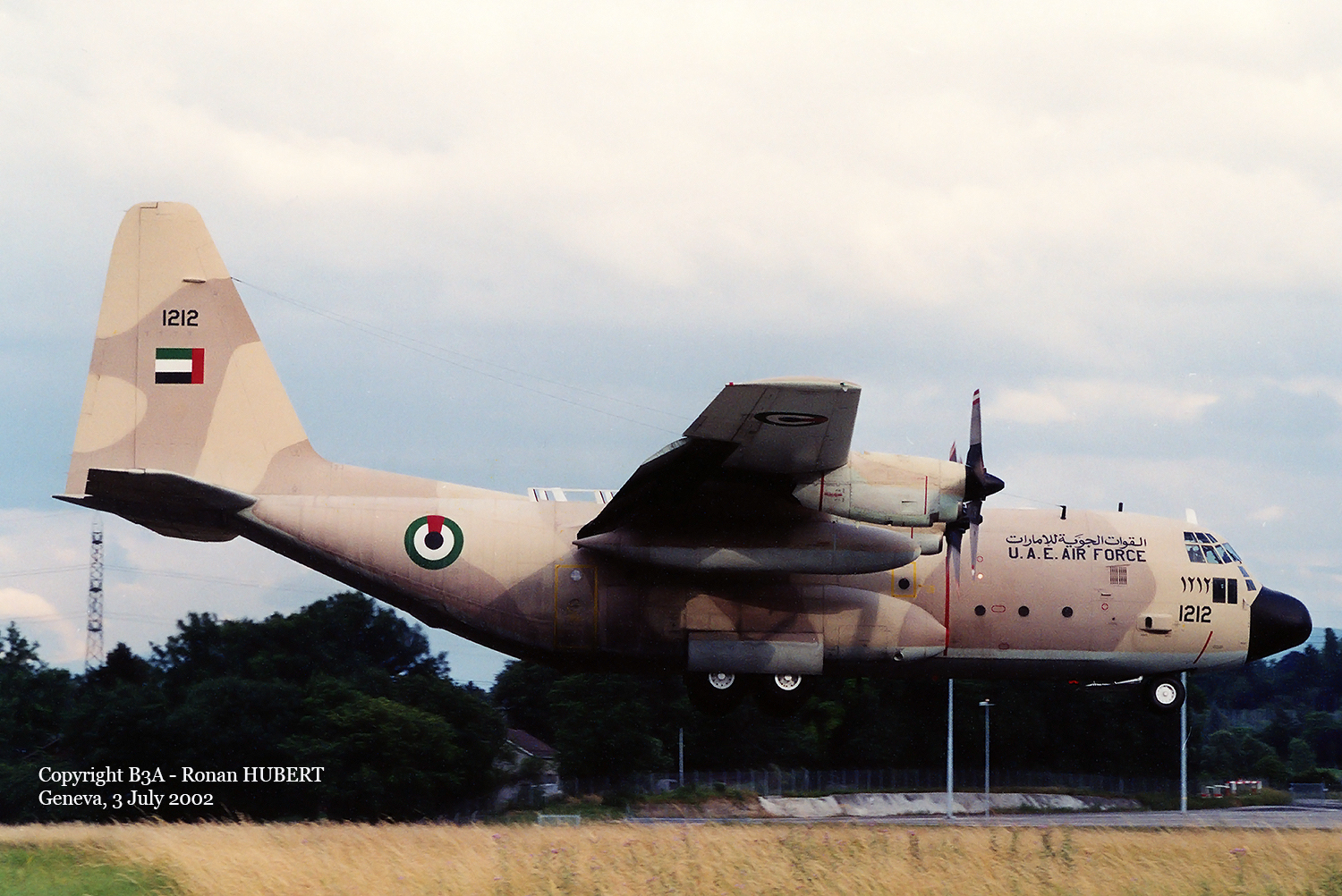
Crash of a Lockheed C-130H Hercules at Bagram AFB

Date & Time: Aug 5, 2008
Type of aircraft:
Operator:
Registration:
1212
Flight Type:
Survivors:
Yes
MSN:
4985
YOM:
1983
Country:
Region:
Crew on board:
0
Crew fatalities:
Pax on board:
0
Pax fatalities:
Other fatalities:
Total fatalities:
0
Circumstances:
The four engine aircraft was completing a humanitarian mission to Bagram AFB. After landing in poor weather conditions, the aircraft was unable to stop within the remaining distance. It overran, lost its undercarriage and came to rest, bursting into flames. There were no injuries among the crew but the aircraft was destroyed.