Zone
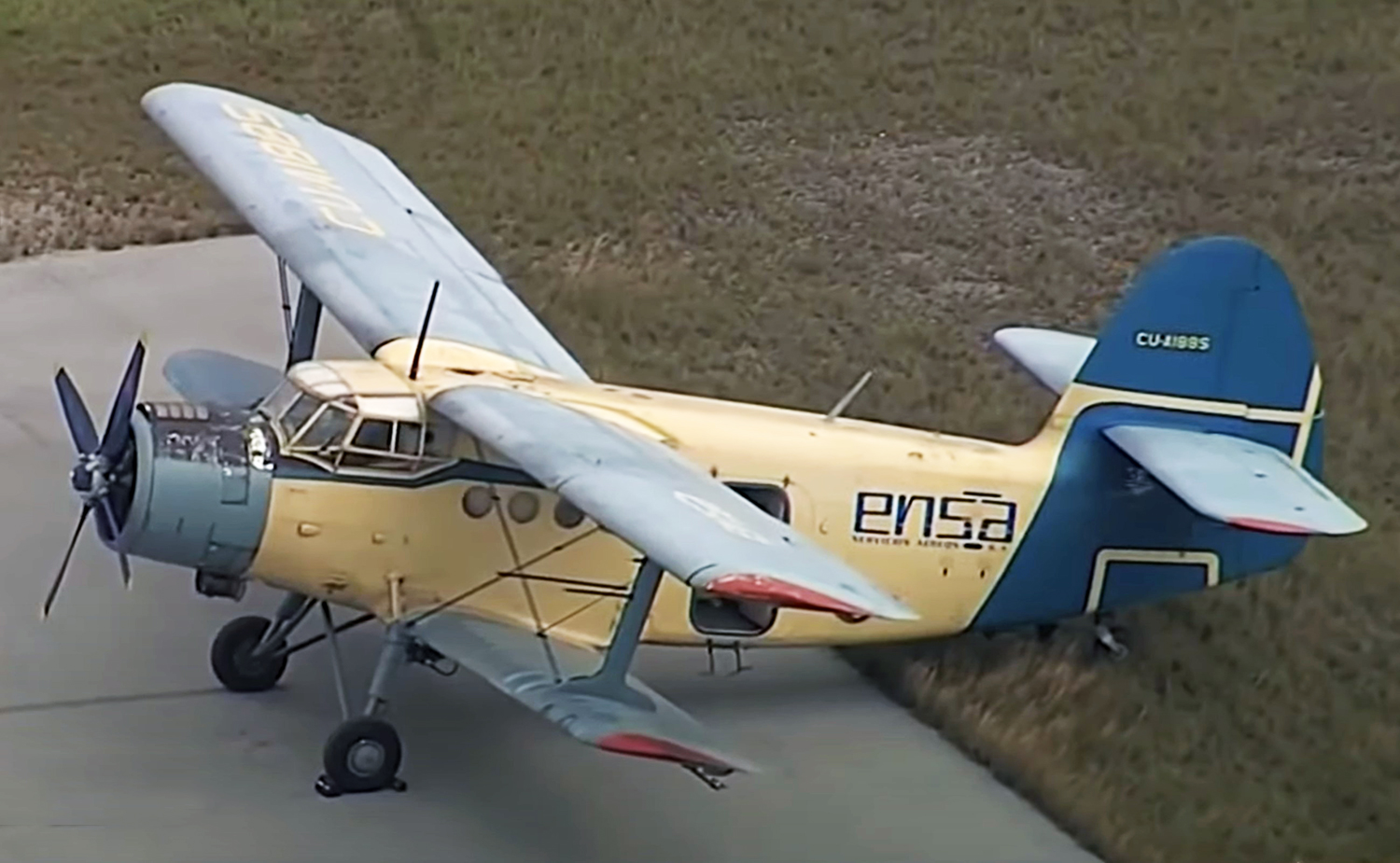
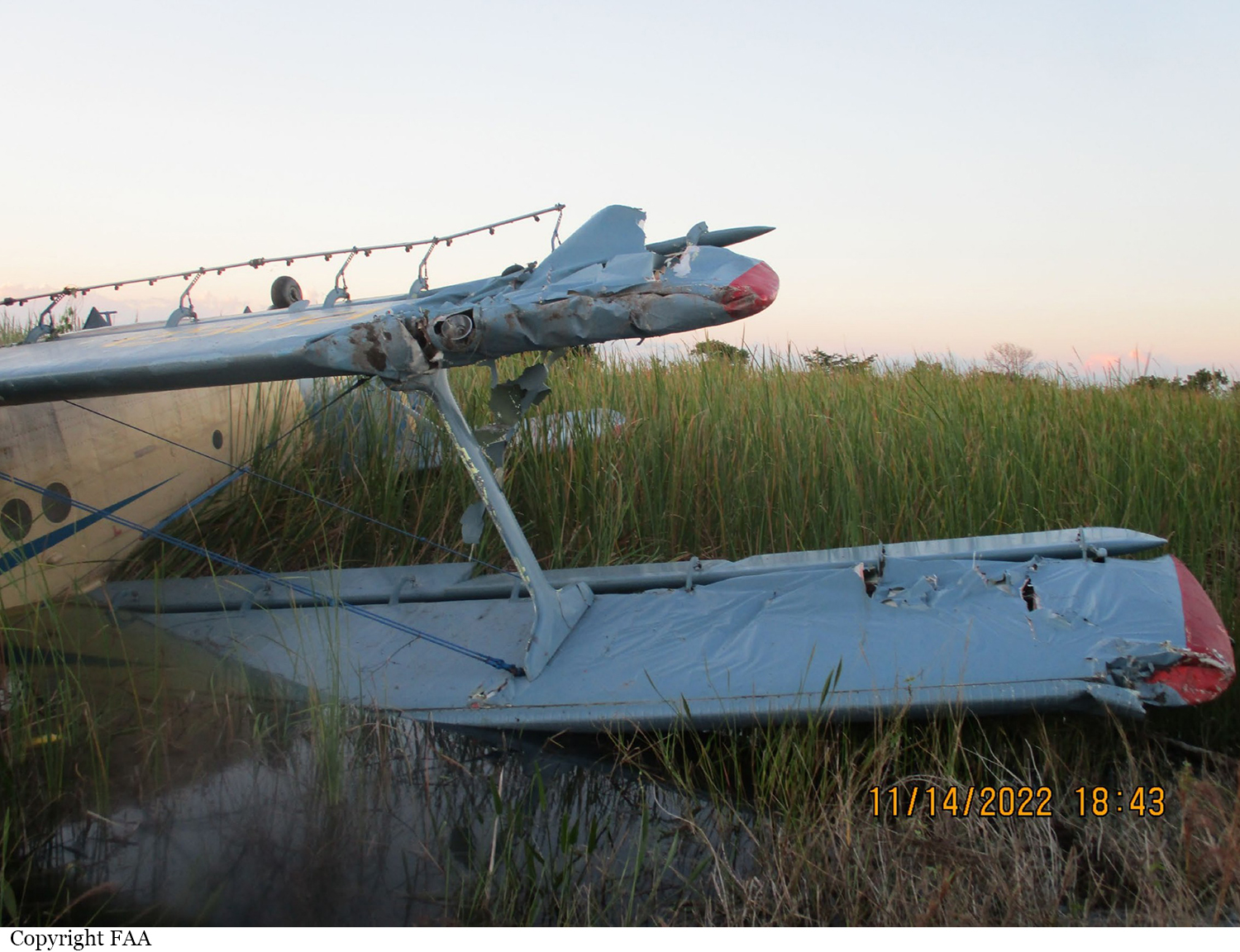
Crash of an Antonov AN-2 in the Everglades National Park
Date & Time:
Nov 14, 2022 at 1330 LT
Operator:

Registration:
CU-A1885
Survivors:
Yes
Schedule:
Dade-Collier - Miami-Opa Locka
MSN:
1G200-25
YOM:
1982
Crew on board:
2
Crew fatalities:
Pax on board:
0
Pax fatalities:
Other fatalities:
Total fatalities:
0
Captain / Total hours on type:
0.00
Copilot / Total hours on type:
0
Aircraft flight hours:
7190
Circumstances:
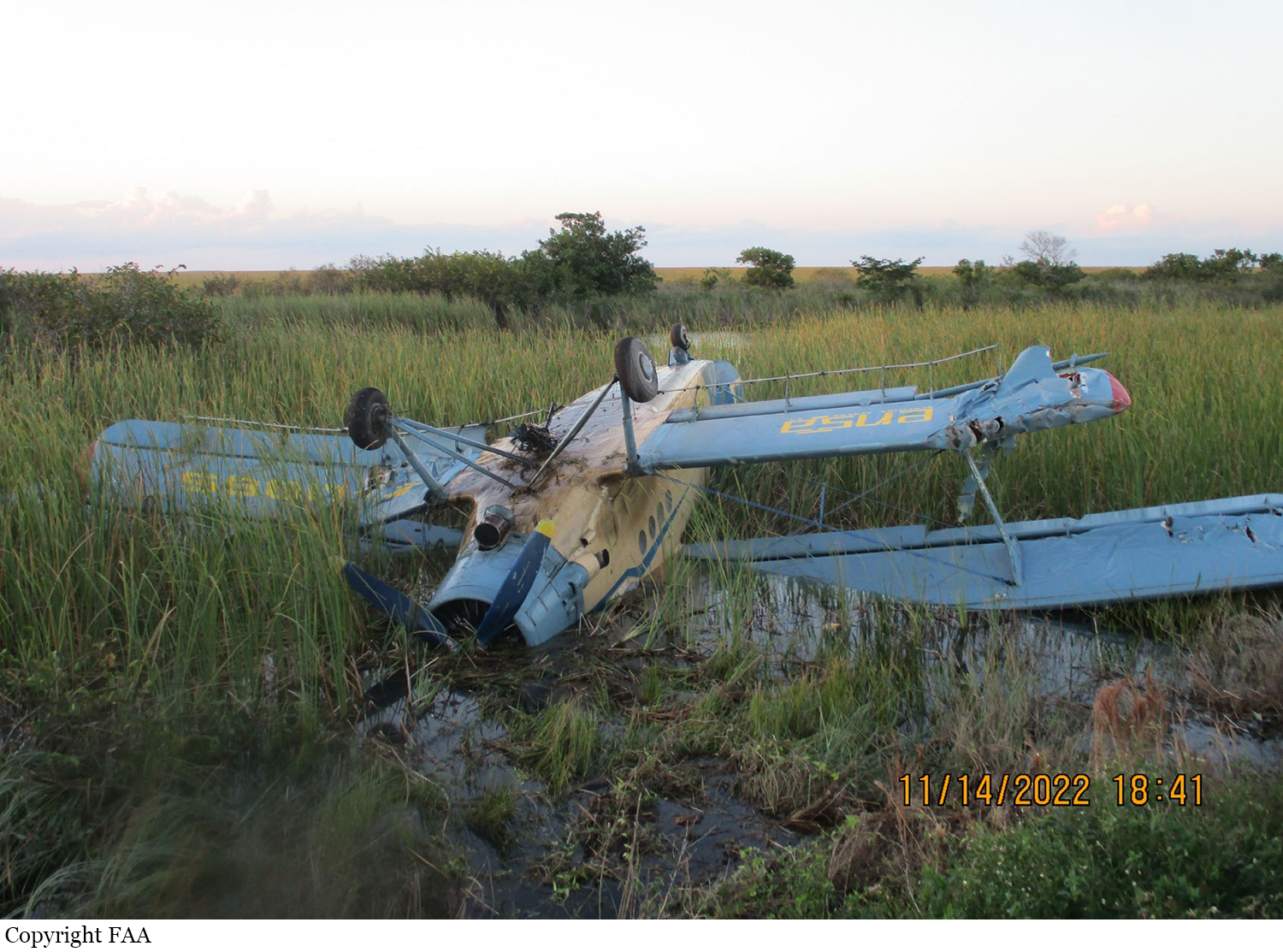
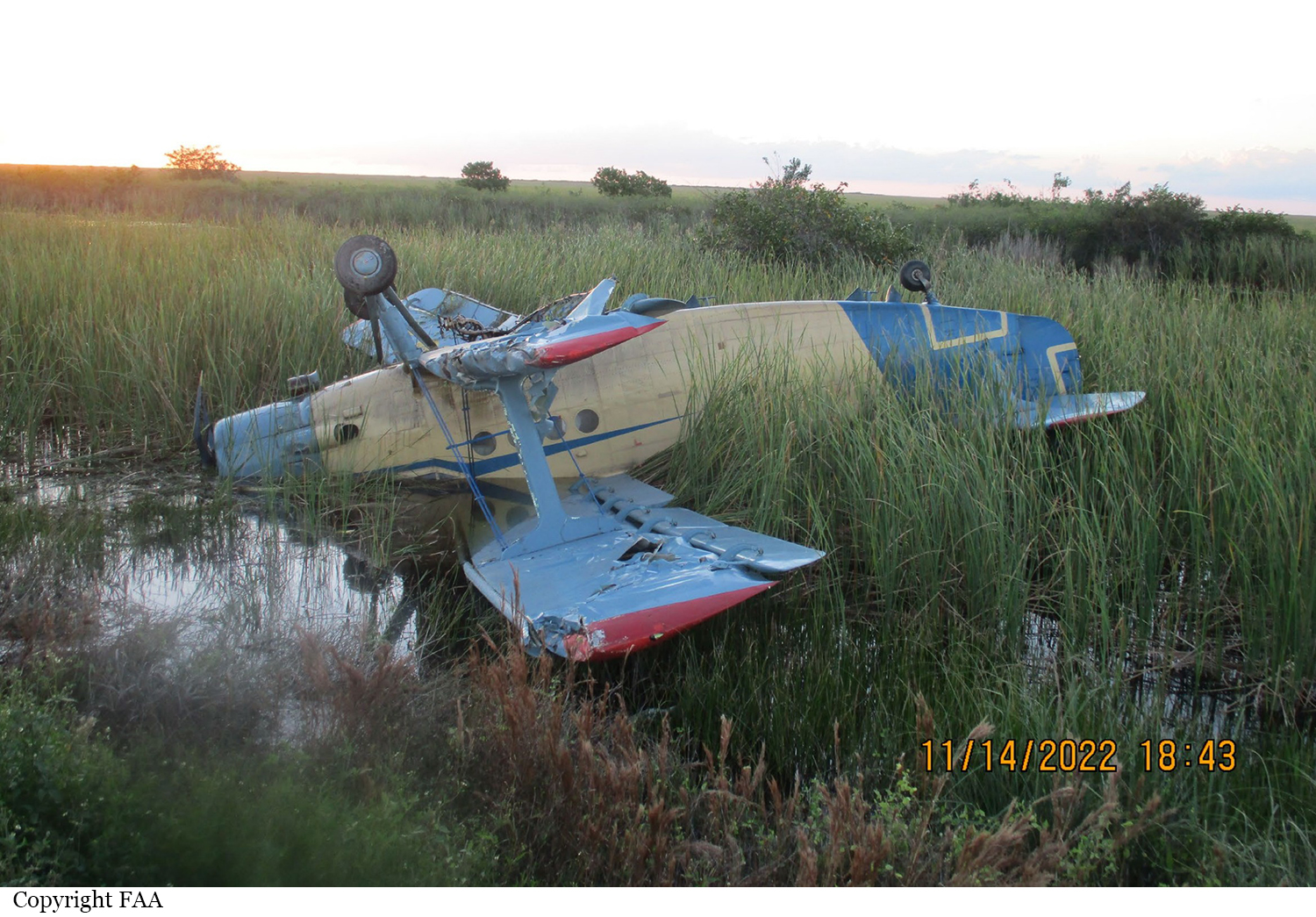
The single engine airplane landed last October at Dade-Collier Airport, in the center of the Everglades National Park, following a flight from Sancti Spíritus, Cuba. The pilot defected Cuba and landed safely in the US. On November 14, the pilot and copilot were hired to relocate the radial engine-equipped biplane as a public flight from Dade-Collier Airport to Miami-Opa Locka. The pilot stated that, while enroute, the airplane began to smoke and the engine lost power. The pilot performed a forced landing to a levee; however, the airplane’s main landing gear were wider than the levee, and after touchdown, the airplane traveled off the left side,
nosed over, and came to rest inverted, resulting in substantial damage. Both crew members were highly experienced but none of them have any flight hours in the accident airplane make and model.
nosed over, and came to rest inverted, resulting in substantial damage. Both crew members were highly experienced but none of them have any flight hours in the accident airplane make and model.
Probable cause:
The pilot's failure to properly configure the cowl flaps and oil cooler shutters, which resulted in a total loss of engine power due to overheating of the engine. Contributing to the accident was the pilot's decision to operate the airplane in with an inoperative cylinder head temperature gauge.
Final Report:
Crash of a Cirrus Vision SF50 in Kissimmee
Date & Time:
Sep 9, 2022 at 1502 LT
Registration:
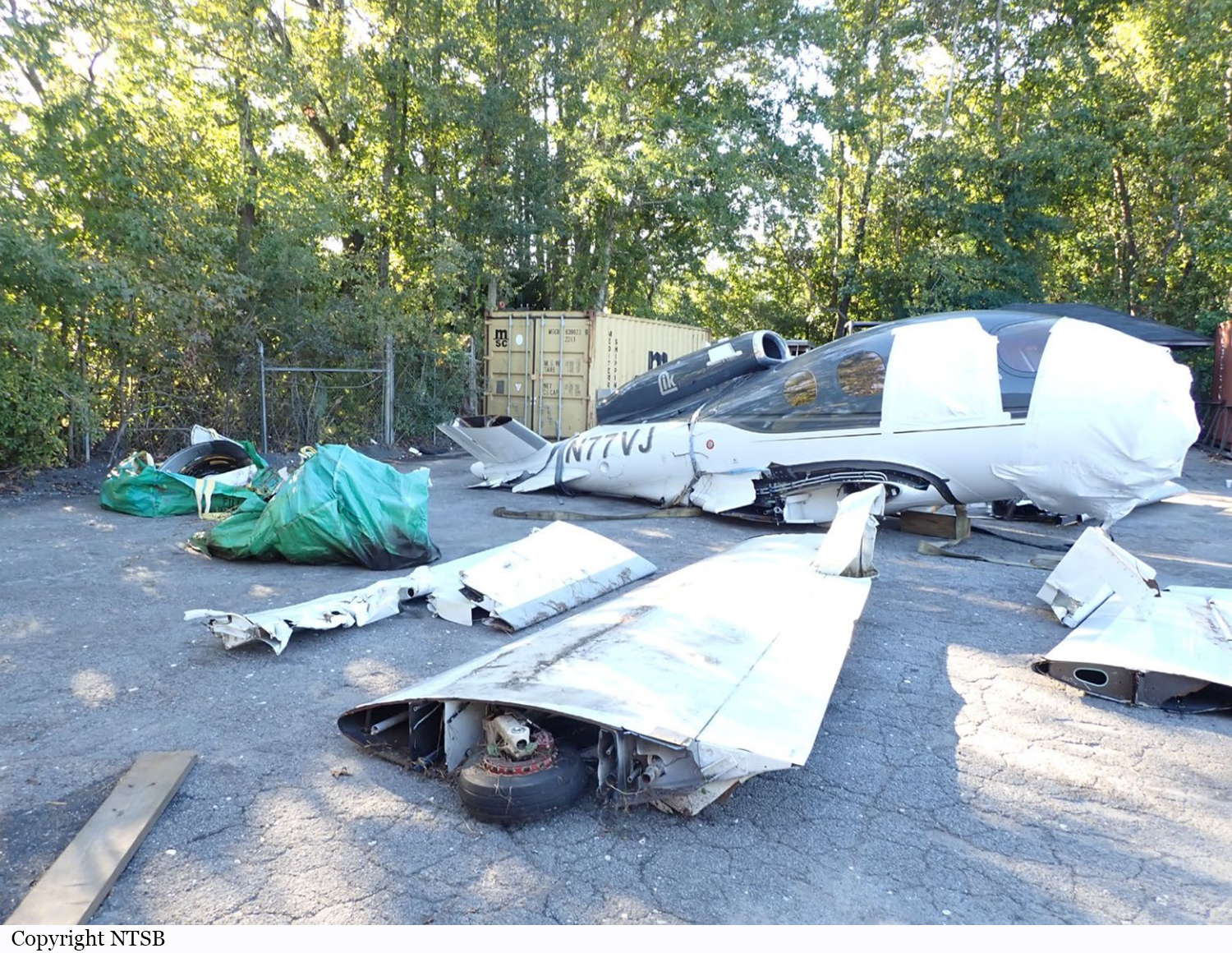
N77VJ
Survivors:
Yes
Schedule:
Miami - Kissimmee
MSN:
88
YOM:
2018
Crew on board:
1
Crew fatalities:
Pax on board:
2
Pax fatalities:
Other fatalities:
Total fatalities:
0
Captain / Total hours on type:
325.00
Aircraft flight hours:
645
Circumstances:
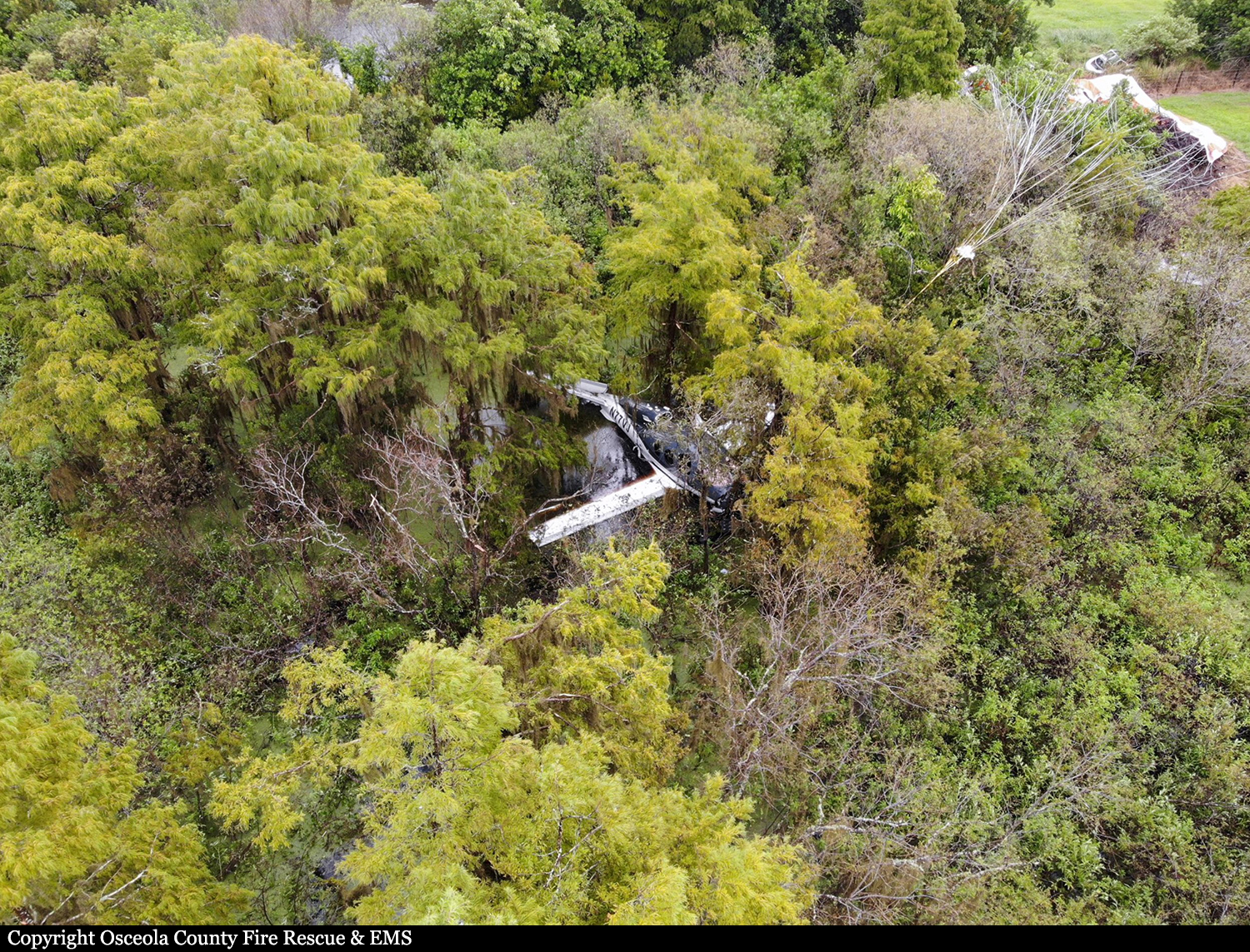
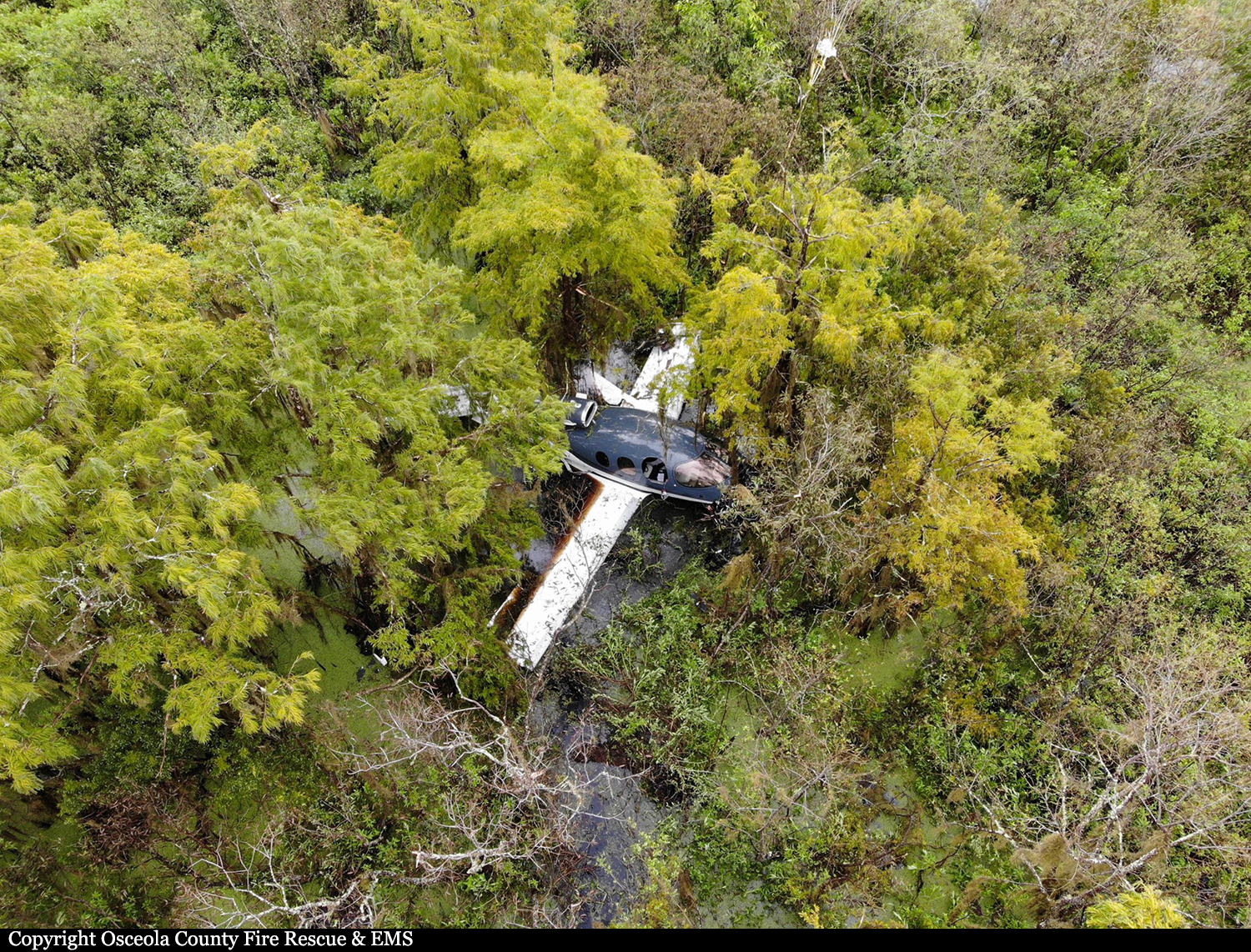
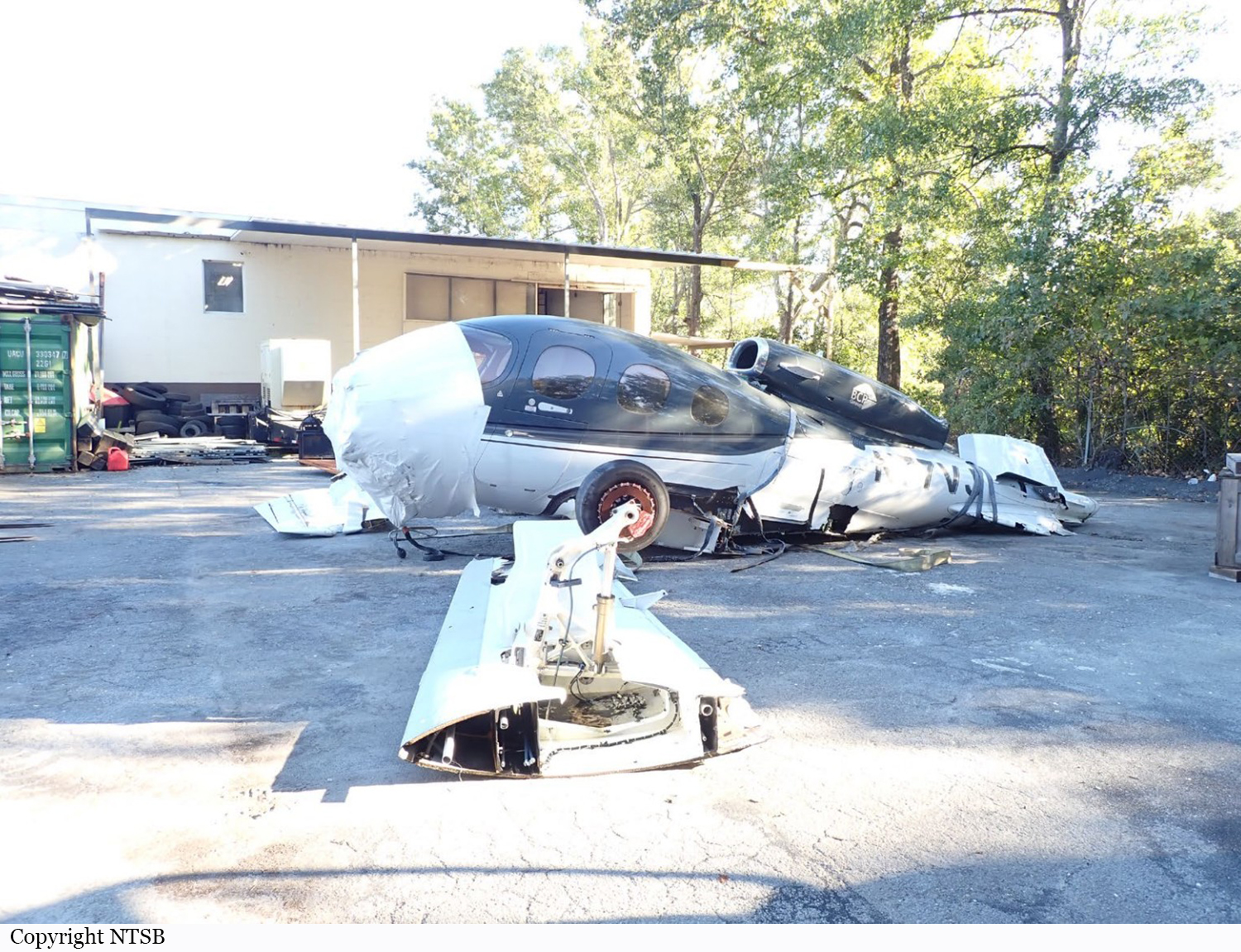
The pilot obtained multiple preflight weather briefings that resulted in him delaying the flight’s departure until the afternoon. After departure, while near his intended destination, the pilot was twice advised by air traffic controllers of adverse weather, including heavy to extreme precipitation along the intended final approach. While in visual meteorological conditions the pilot requested an RNAV approach to his destination airport. While flying towards the final approach fix at a low thrust setting the autopilot attempted to maintain 2,000 ft while pitching up and slowing to about 100 knots, causing an airspeed aural warning. The pilot applied partial thrust and while in instrument meteorological conditions the flight encountered extreme precipitation and turbulence associated with the previously reported thunderstorm. The pilot turned off the autopilot; the airplane then climbed at a rate that was well beyond the performance capability of the airplane, likely caused by updrafts from the mature thunderstorm and application of takeoff thrust. The High Electronic Stability & Protection (ESP) engaged, pitching the airplane nose-down coupled with the pilot pushing the control stick forward. The airplane then began descending followed by pitching up and climbing again. The pilot pulled the Cirrus Airframe Parachute System (CAPS) and descended under canopy into a marsh but the airplane was dragged a short distance from wind that inflated the CAPS canopy. Post accident examination of the recovered airplane revealed substantial damage to the front pressure bulkhead and to both sides of the fuselage immediately behind the front pressure bulkhead. There was no evidence of preimpact failure or malfunction of the flight controls for roll, pitch, or yaw. Data downloaded from the Recoverable Data Module (RDM) revealed no faults with the autopilot or stability protection systems until the CAPS system was activated, when those recorded faults would have been expected. Further, there were no discrepancies with the engine. Although the pilot perceived a malfunction of the autopilot at several times during the final portion of the flight, the perceived autopilot discrepancies were likely normal system responses based on the autopilot mode changes.
Probable cause:
The pilot’s continuation of the instrument approach into known extreme precipitation and turbulence associated with a thunderstorm, resulting in excessive altitude deviations that required him to activate the Cirrus Airframe Parachute System.
Final Report:
Crash of a Cessna 402B off Chub Cay
Date & Time:
Jan 5, 2022 at 0832 LT
Registration:
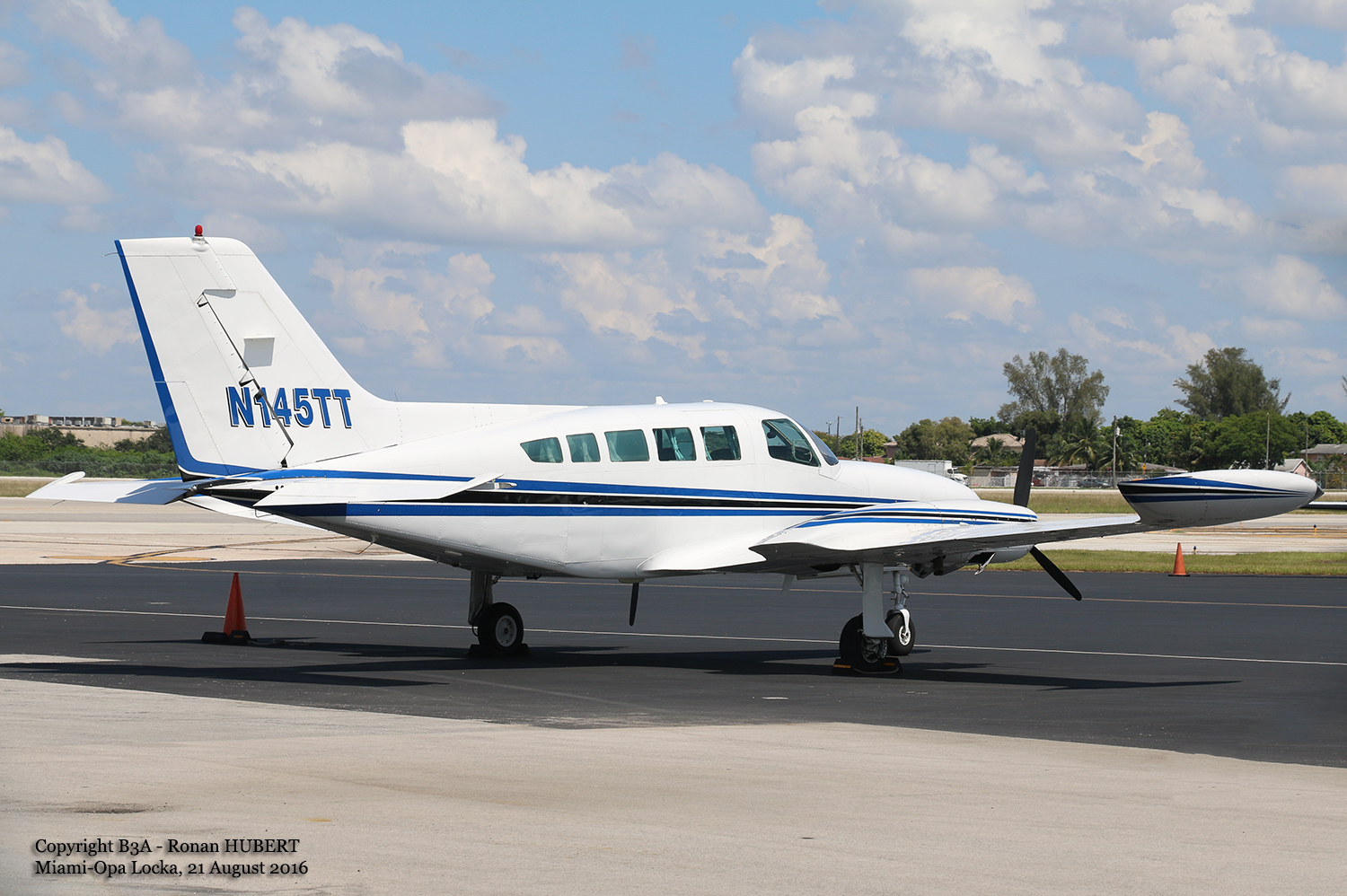
N145TT
Survivors:
Yes
Schedule:
Miami - Chub Cay
MSN:
402B-1333
YOM:
1978
Crew on board:
1
Crew fatalities:
Pax on board:
1
Pax fatalities:
Other fatalities:
Total fatalities:
0
Captain / Total hours on type:
350.00
Circumstances:
The aircraft departed the Opa Locka Executive Airport (KOPF), Opa Locka, Florida, USA at 7:52 AM EST (1252 UTC) with 2 persons on board enroute to the Chub Cay Int’l Airport. The aircraft was operated by Airway Air Charter INC (Venture Air Solutions INC), a Part 135 certificate holder under Title 14 US Code of Federal Regulations (CFR), Investigations revealed that the pilot in command arrived at the Opa Locka Airport at approximately 6:30 AM EST and conducted a pre-flight check of the aircraft, subsequently adding 66.5 gallons of 100LL avgas fuel to the main fuel tanks of the aircraft. No fuel was added to the auxiliary tanks. After completion of all pre-flight checks, and gaining clearance from Air Traffic Control, the aircraft departed at approximately 7:52 AM EST. Investigations revealed that the flight was uneventful, until descending into Chub Cay, at about 2,500 feet, when the left engine began to “sputter”. At this point the pilot executed the engine failure checklist, but shortly thereafter, the right engine began to “sputter” also. The pilot then contacted Miami air traffic center and advised of loss of power to both engines, which resulted in the aircraft crashing into waters. The United States Coast Guard along with the Royal Bahamas Defense Force (RBDF) and Police Force (RBPF) were alerted. Joint aerial and marine assets were dispatched and additional assistance was provided by local mariners and pilots flying in the area to conduct search and rescue. Both occupants were located and rescued. They were later airlifted to the United States to receive further medical attention for minor injuries. Image from Google Earth of accident site and distance from Chub Cay Airport The location where the aircraft crashed was identified at coordinates 25° 24.884’ N and 077° 58.030’ W, approximately 4.48 NM west of the Chub Cay International Airport (MYBC), Berry Islands, Bahamas.
Probable cause:
The AAIA has determined the probable cause of this accident to be dual system component failure – powerplant. A contributing factor was a loss of engine power as a result of mismanagement of available fuel.
Final Report:
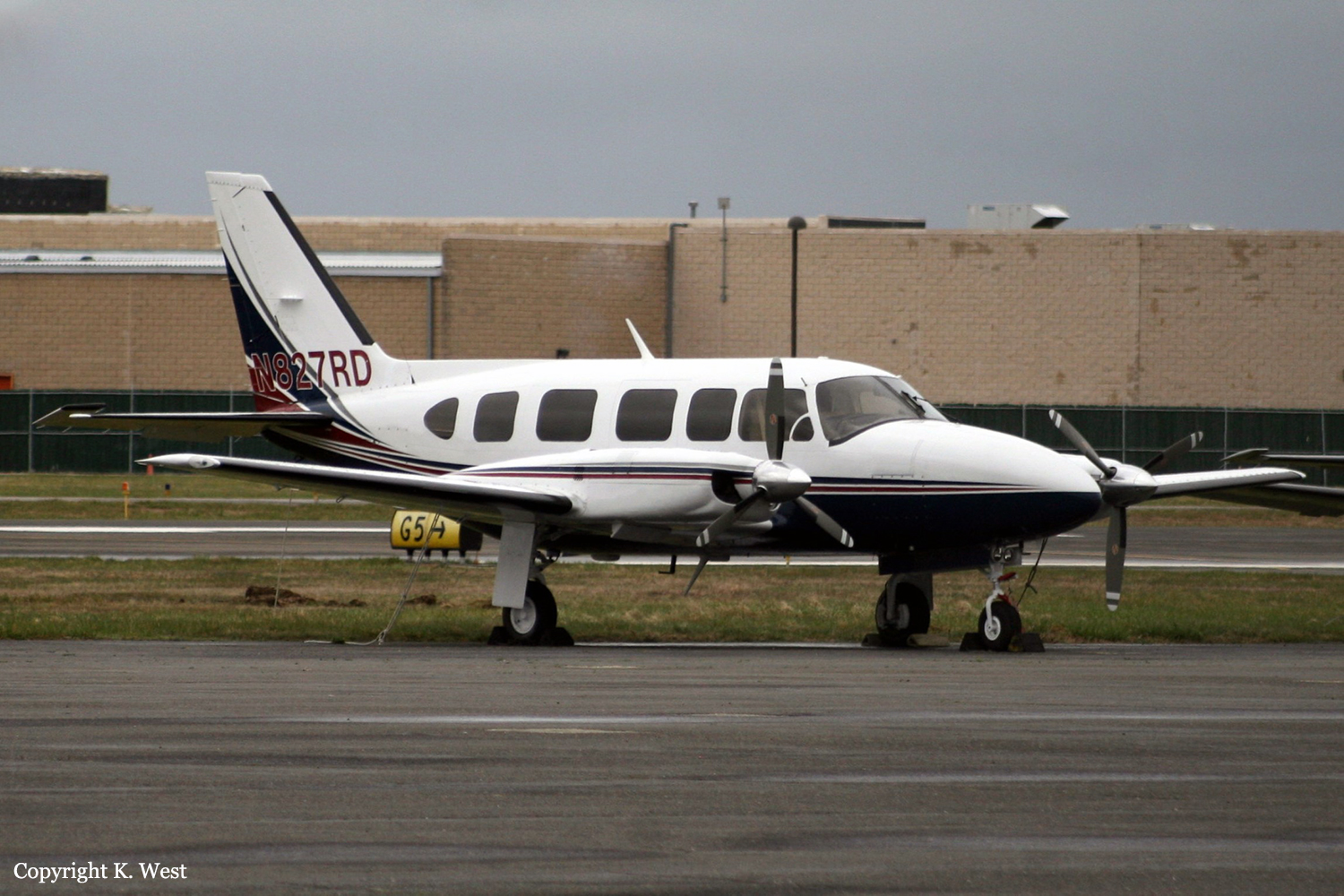
Crash of a Piper PA-31-350 Navajo Chieftain off South Bimini: 1 killed
Date & Time:
Apr 16, 2021 at 2142 LT
Registration:
N827RD
Survivors:
Yes
Schedule:
South Bimini – Miami-Opa Locka
MSN:
31-7652094
YOM:
1976
Crew on board:
1
Crew fatalities:
Pax on board:
1
Pax fatalities:
Other fatalities:
Total fatalities:
1
Aircraft flight hours:
7102
Circumstances:
The airplane crashed moments after takeoff from the South Bimini Int’l Airport (MYBS), Bimini, Bahamas. The private flight departed MYBS with intended final destination of Opa Locka Airport (KOPF), Opa Locka, Florida, USA. The pilot sustained serious injuries and after being seen by medical personnel in South Bimini, was flown to Nassau, Bahamas for further medical attention. The passenger who occupied the right seat of the aircraft, succumbed to injuries he sustained as a result of the initial impact and subsequent crash sequence and subsequent submersion in the waters at the end of the runway environment. The pilot was a US certified commercial pilot with ratings for airplane land, single and multi-engine as well as an instrument airplane rating. The pilot’s medical certificate was valid at the time of the accident. The passenger (pilot’s son) also held a valid US certified private pilot – single engine land – airplane certificate. It is unknown what role (if any) the passenger (son) played during the takeoff to crash sequence. The weather conditions at the time of the accident was night (instrument meteorological conditions). A weak high pressure ridging was forecasted to continue to dominate the weather over the Bahamas throughout the night. However, no significant weather was anticipated.
Probable cause:
The AAIA has determined the probable cause of this accident to be loss of control inflight (LOC-I), resulting in uncontrolled flight into terrain (ocean). The cause of this loss of control could not be determined.
Final Report: