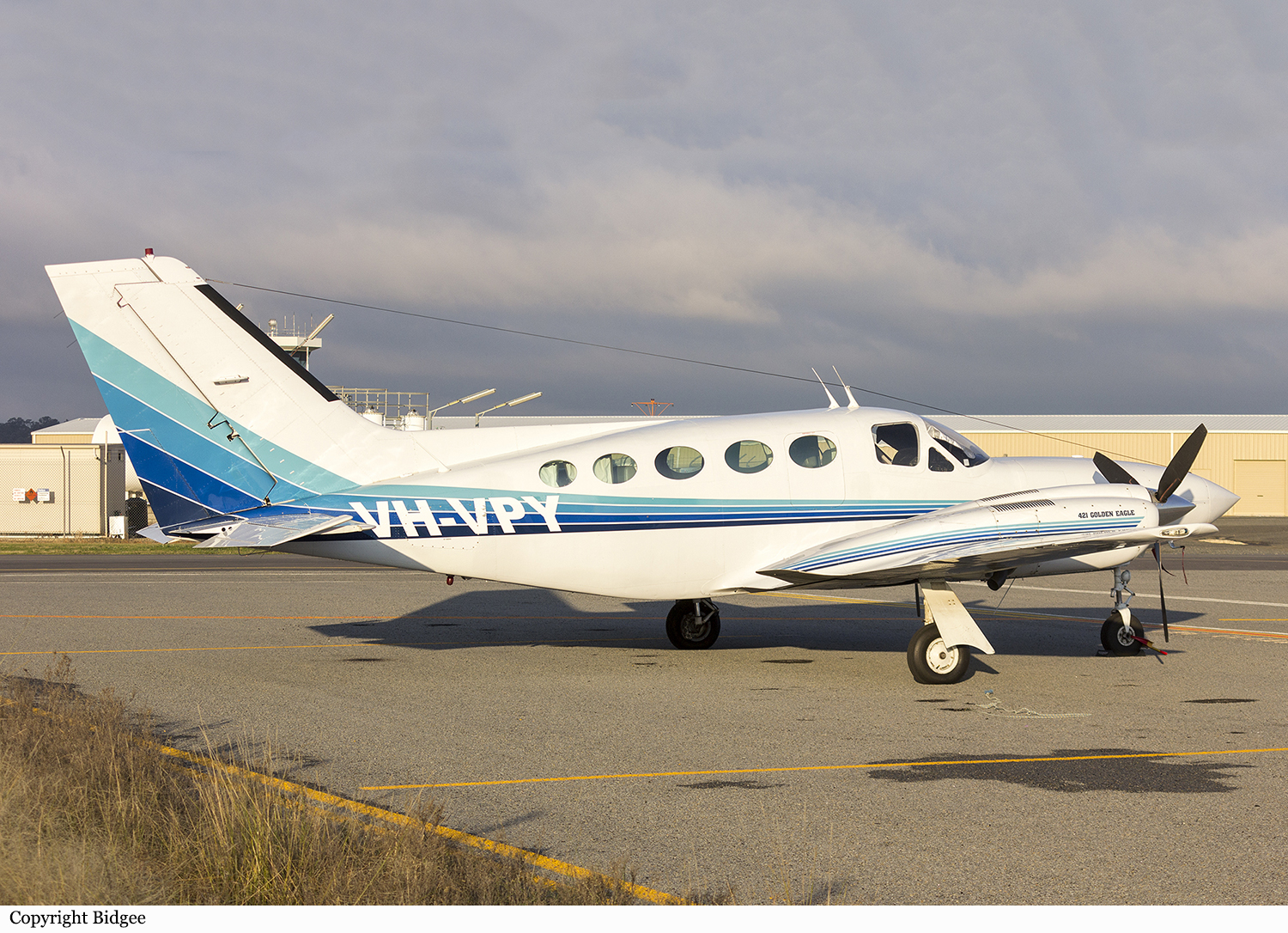
Crash of a Cessna 421C Golden Eagle III off Sunshine Coast

Date & Time: Nov 10, 2023 at 0907 LT
Operator:

Registration:
VH-VPY
Flight Phase:
Flight Type:
Survivors:
Yes
Schedule:
Sunshine Coast - Pago Pago
MSN:
421C-0688
YOM:
1979
Country:
Region:
Crew on board:
2
Crew fatalities:
Pax on board:
0
Pax fatalities:
Other fatalities:
Total fatalities:
0
Captain / Total flying hours:
4000
Copilot / Total flying hours:
1400
Copilot / Total hours on type:
100
Circumstances:
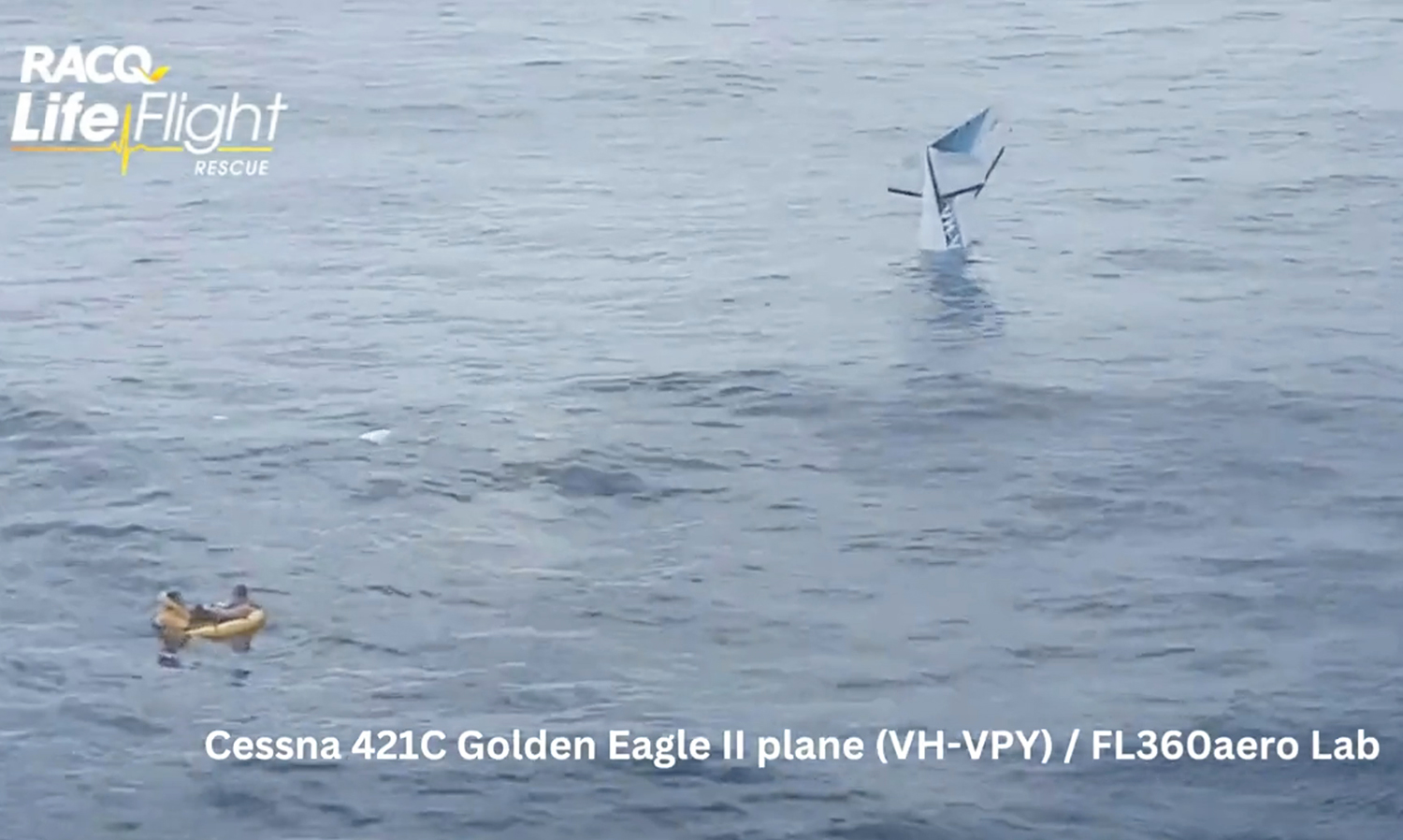
On the morning of 10 November 2023, a Cessna 421C, registered VH-VPY, departed the Sunshine Coast Airport, Queensland for a transpacific international ferry flight to Oakland, California in the United States. Two pilots were on board to conduct the flight, where the first leg was planned to stop at Pago Pago, American Samoa. The aircraft was configured with additional ferry fuel tanks to ensure sufficient fuel was available between the stops for the extended journey across the open ocean. Approximately 50 minutes after departure, the left engine failed and the pilots initiated a return to the Sunshine Coast. During the return leg the pilots identified that the aircraft was unable to maintain altitude and calculations based on the descent rate indicated they would be unable to reach the Sunshine Coast. The pilots notified air traffic control of their intention to ditch, who immediately engaged the national search and rescue service provider. After considering the configuration of the aircraft, the pilots elected not to follow the aircraft manufacturer’s guidance on ditching. They configured the aircraft to avoid a nose down attitude on touchdown and allowed their airspeed to slow before the aircraft contacted the water. Both occupants were uninjured and exited through the rear door. After deploying the emergency life raft, both pilots were retrieved by a rescue helicopter 32 minutes after ditching. The aircraft sank and was not recovered.
Probable cause:
Contributing factors:
- While flying over open water the left engine failed. The nature of the engine failure prevented the propeller from feathering and the excess drag from the windmilling propeller reduced the available performance of the aircraft.
- Following the engine failure, as it was not possible for the pilot to quickly jettison sufficient fuel from the ferry tank, the weight of that fuel further reduced aircraft performance, resulting in the aircraft ditching.
Other factor that increased risk:
- The aircraft was loaded in excess of the weight and balance limitations imposed by the special ferry flight permit, and in addition, an unapproved modification was made to the ferry fuel system. These actions removed the defences incorporated into the ferry permit approval process and increased the likelihood of an adverse outcome.
- Both pilots did not hold the appropriate approvals and ratings to conduct the ferry flight.
Other findings:
- The pilots were familiar with the survival equipment and were well prepared in the event of a ditching.
- While the pilot actions during the ditching were not consistent with the flight manual, the method utilized considered the aircraft configuration and its performance in the prevailing conditions. It could not be determined if this increased the likelihood of aircraft damage/breakup when compared to the manufacturer's procedure.
- Early communication between the pilots, air traffic control and the Australian Maritime Safety Authority’s Response Centre allowed rescue efforts to commence prior to ditching, increasing the chances of survival.
Final Report:
Crash of a Cessna 421C Golden Eagle III near Decatur: 1 killed

Date & Time: Nov 18, 2022 at 1510 LT
Registration:
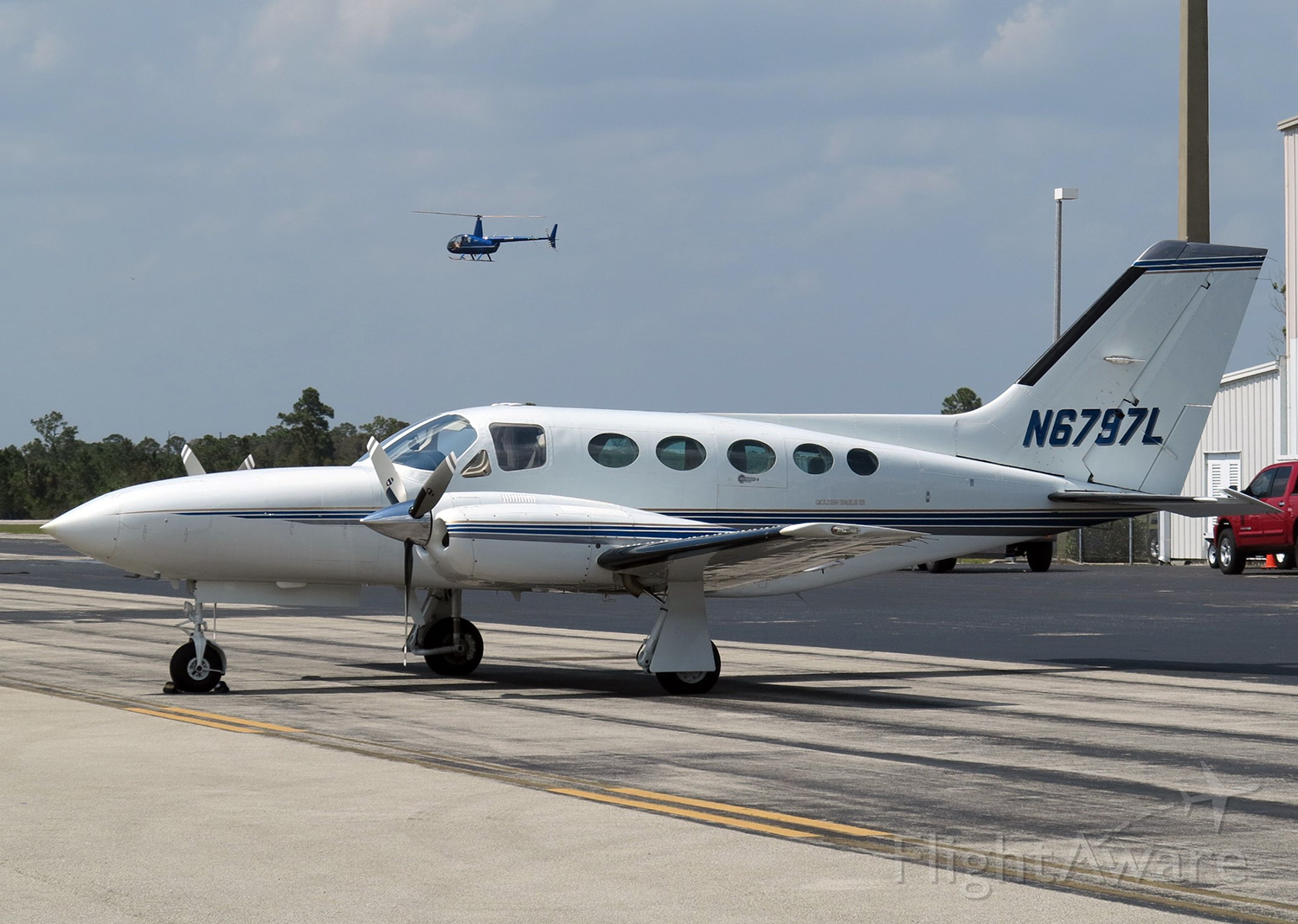
N6797L
Flight Phase:
Flight Type:
Survivors:
No
Schedule:
Denton – Bridgeport
MSN:
421C-1050
YOM:
1981
Location:
Crew on board:
1
Crew fatalities:
Pax on board:
0
Pax fatalities:
Other fatalities:
Total fatalities:
1
Captain / Total flying hours:
6891
Aircraft flight hours:
4805
Circumstances:
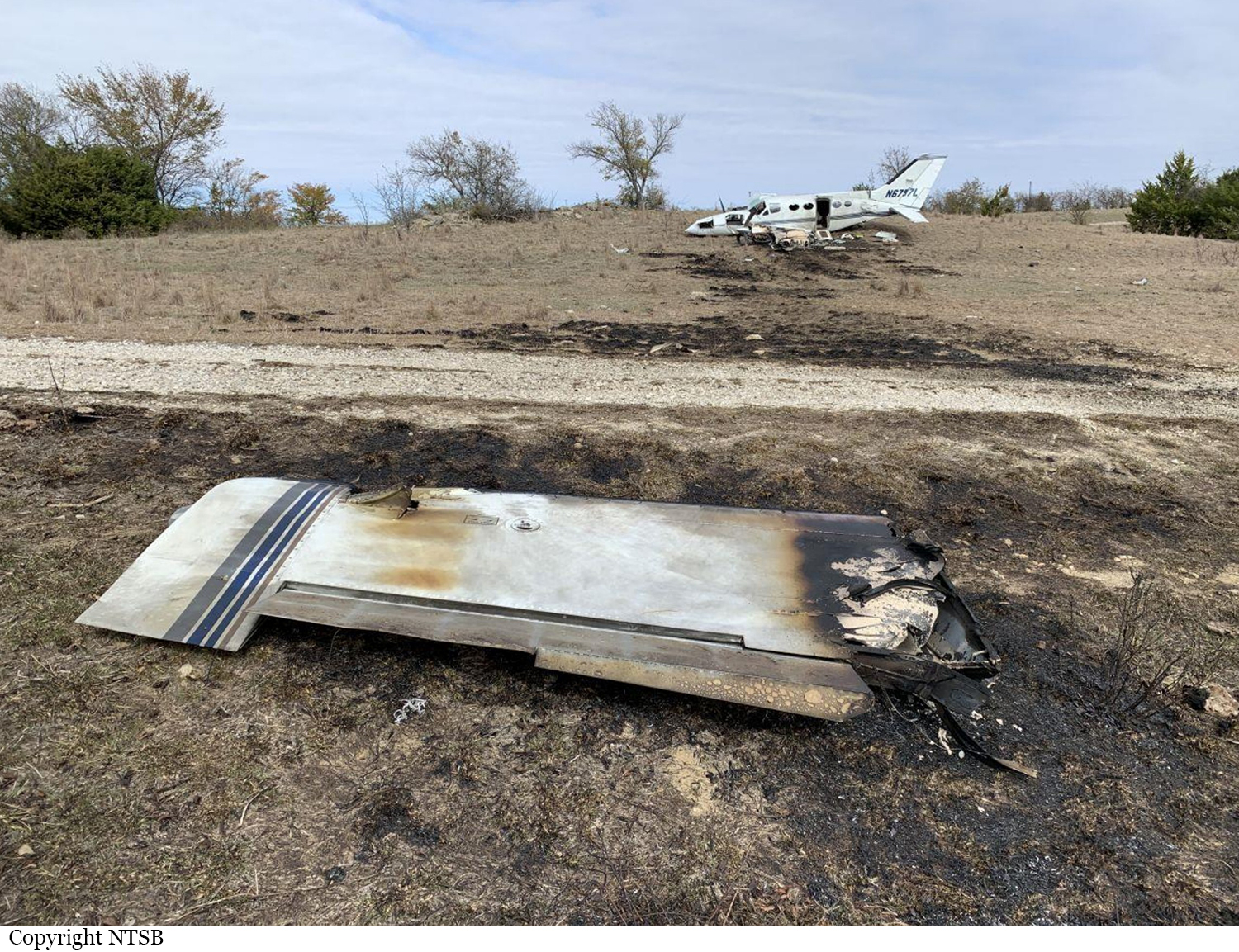
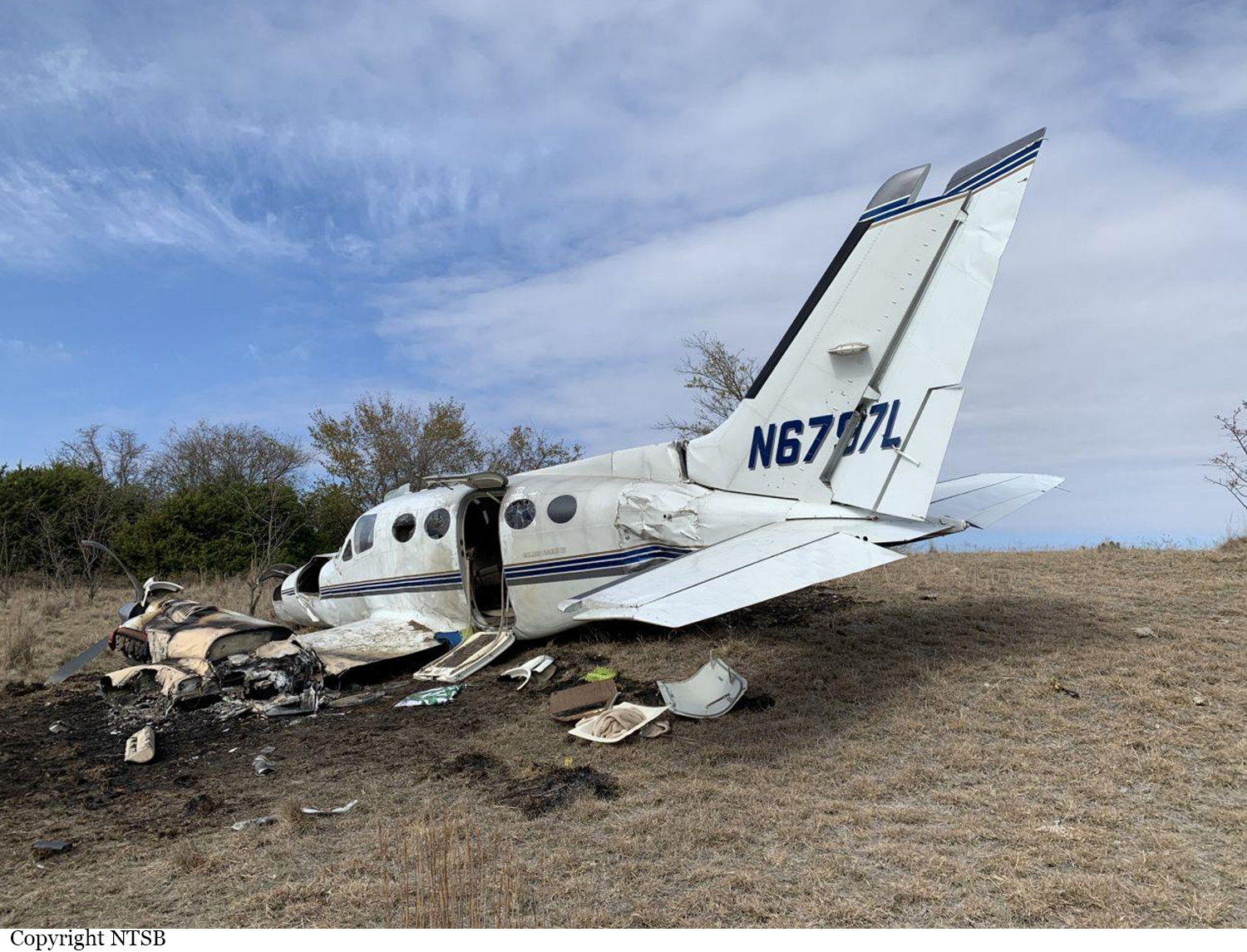
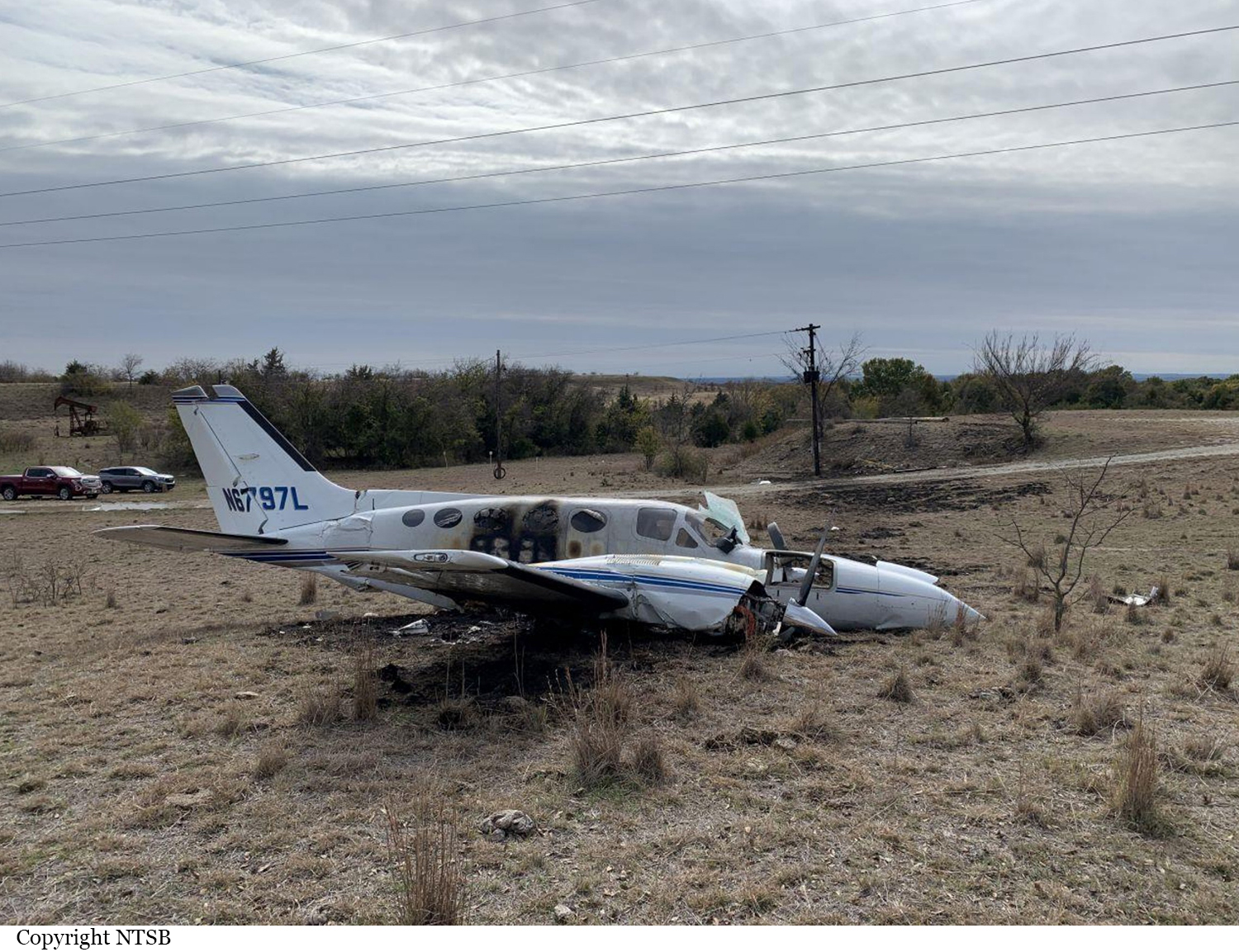
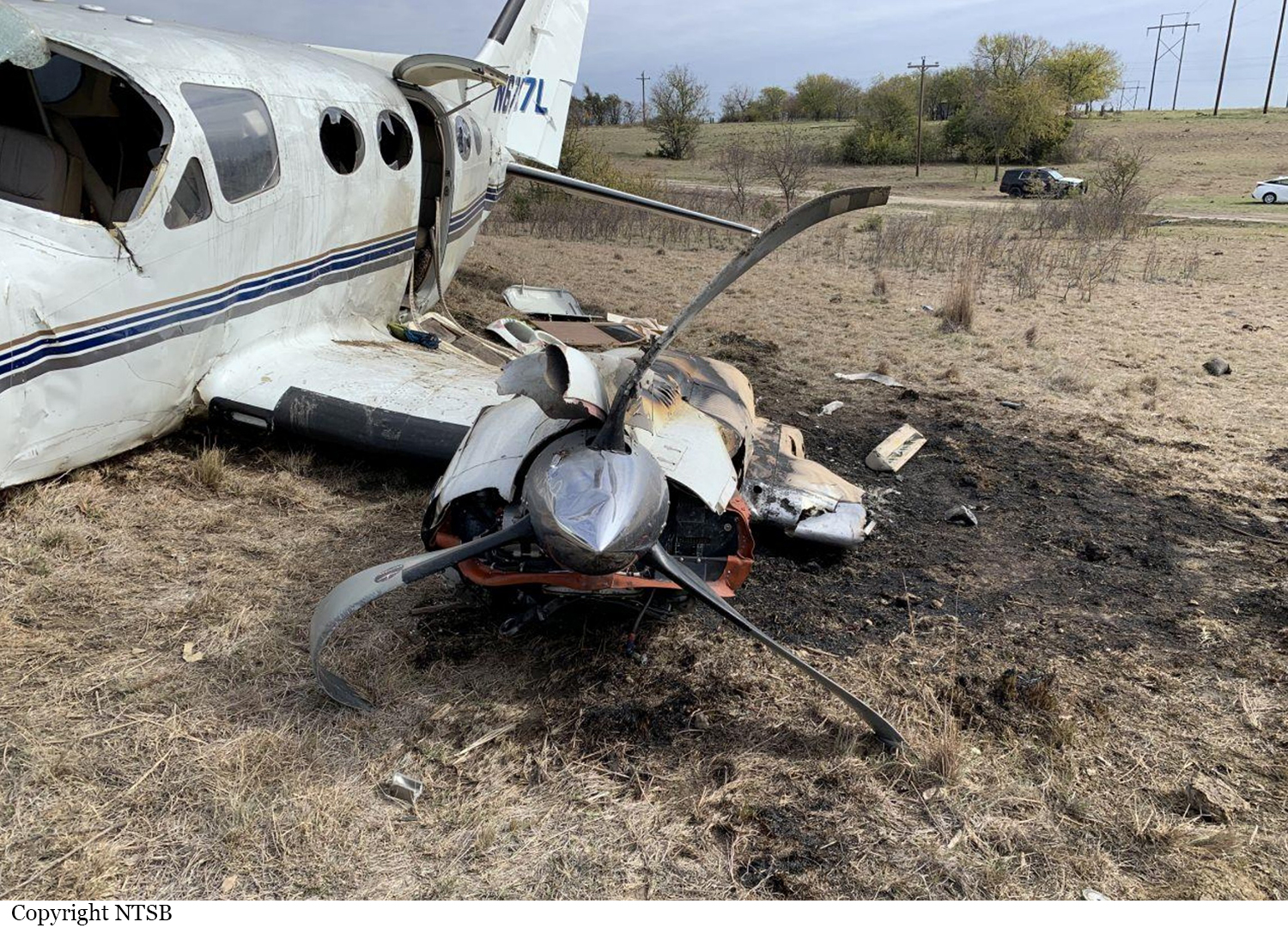
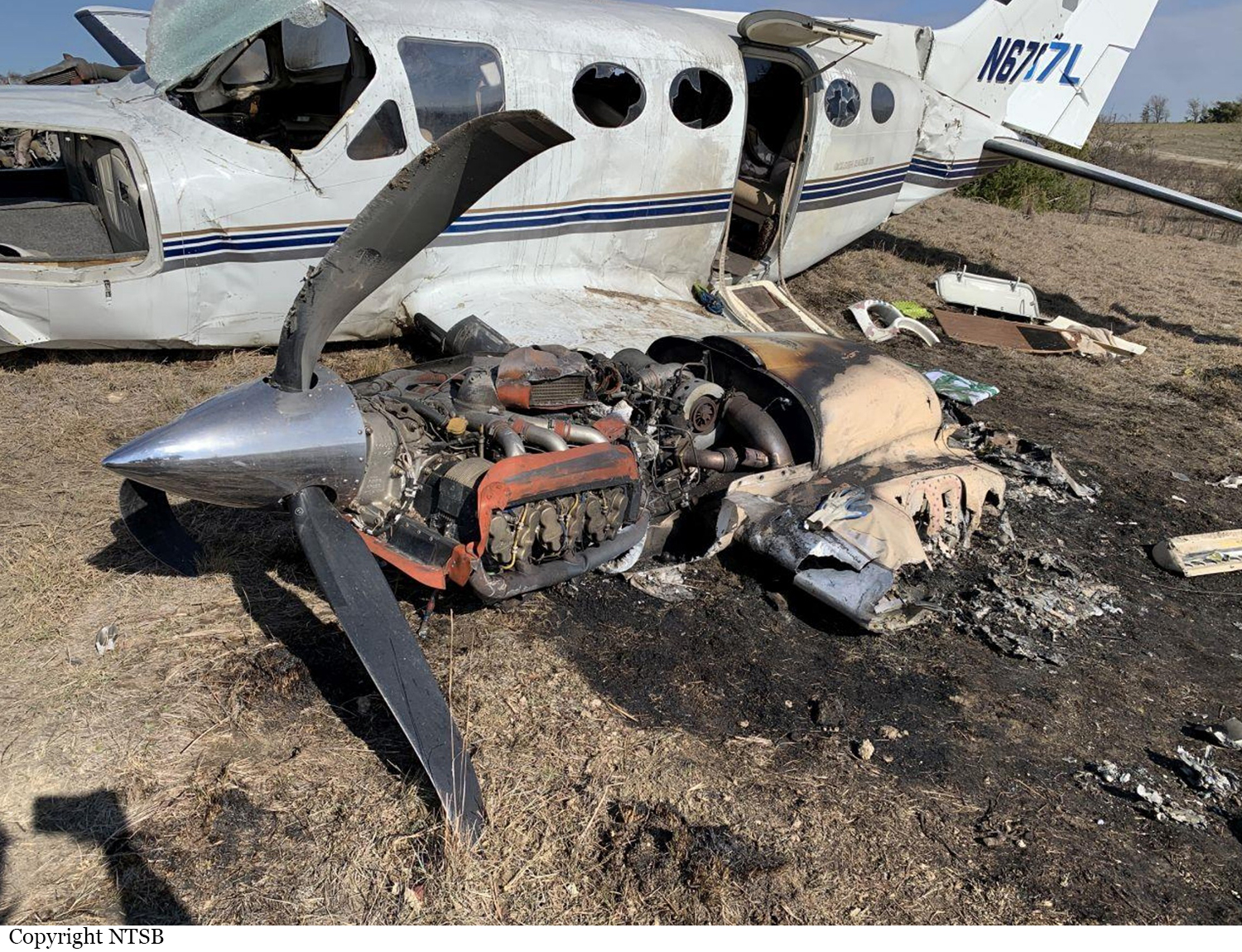
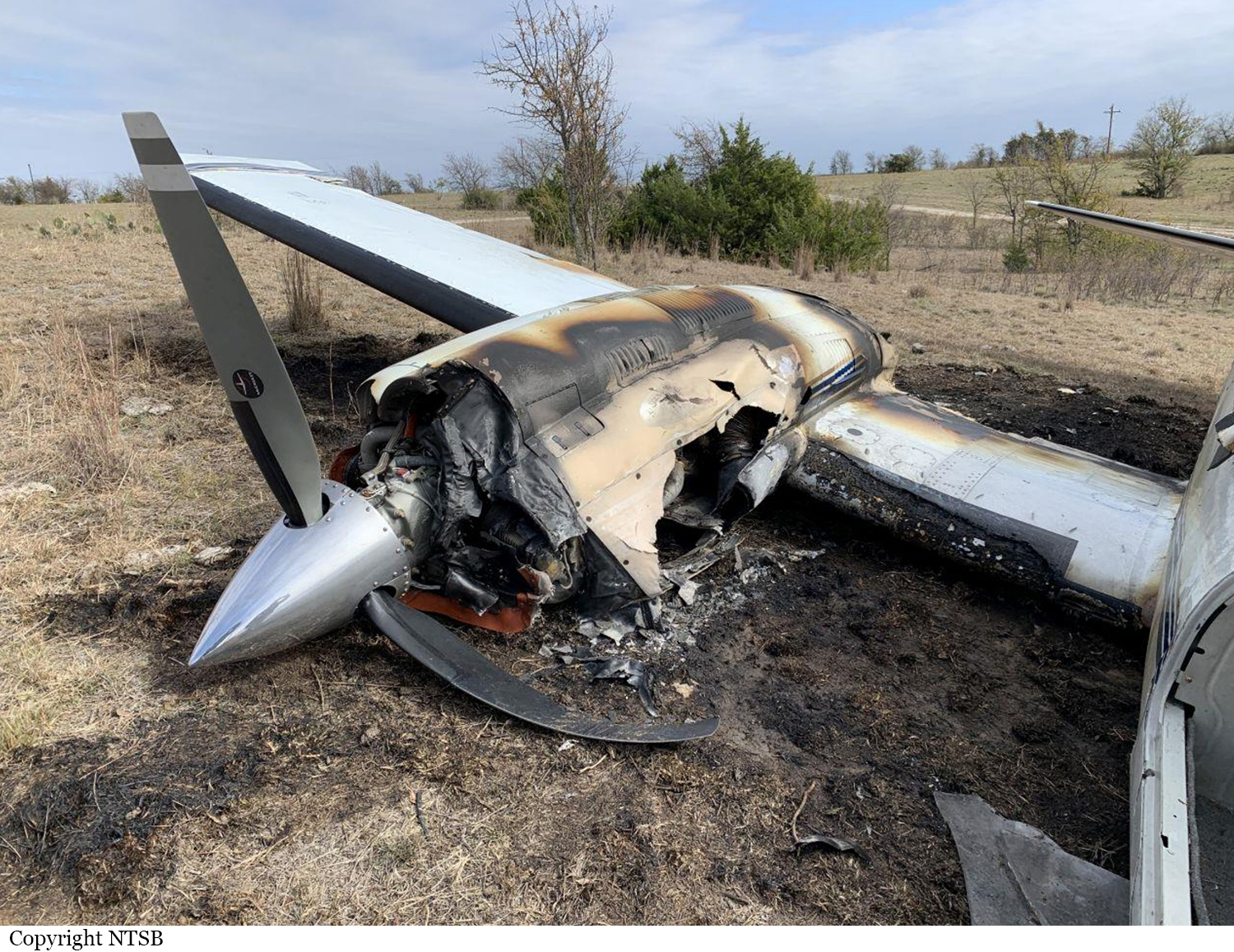
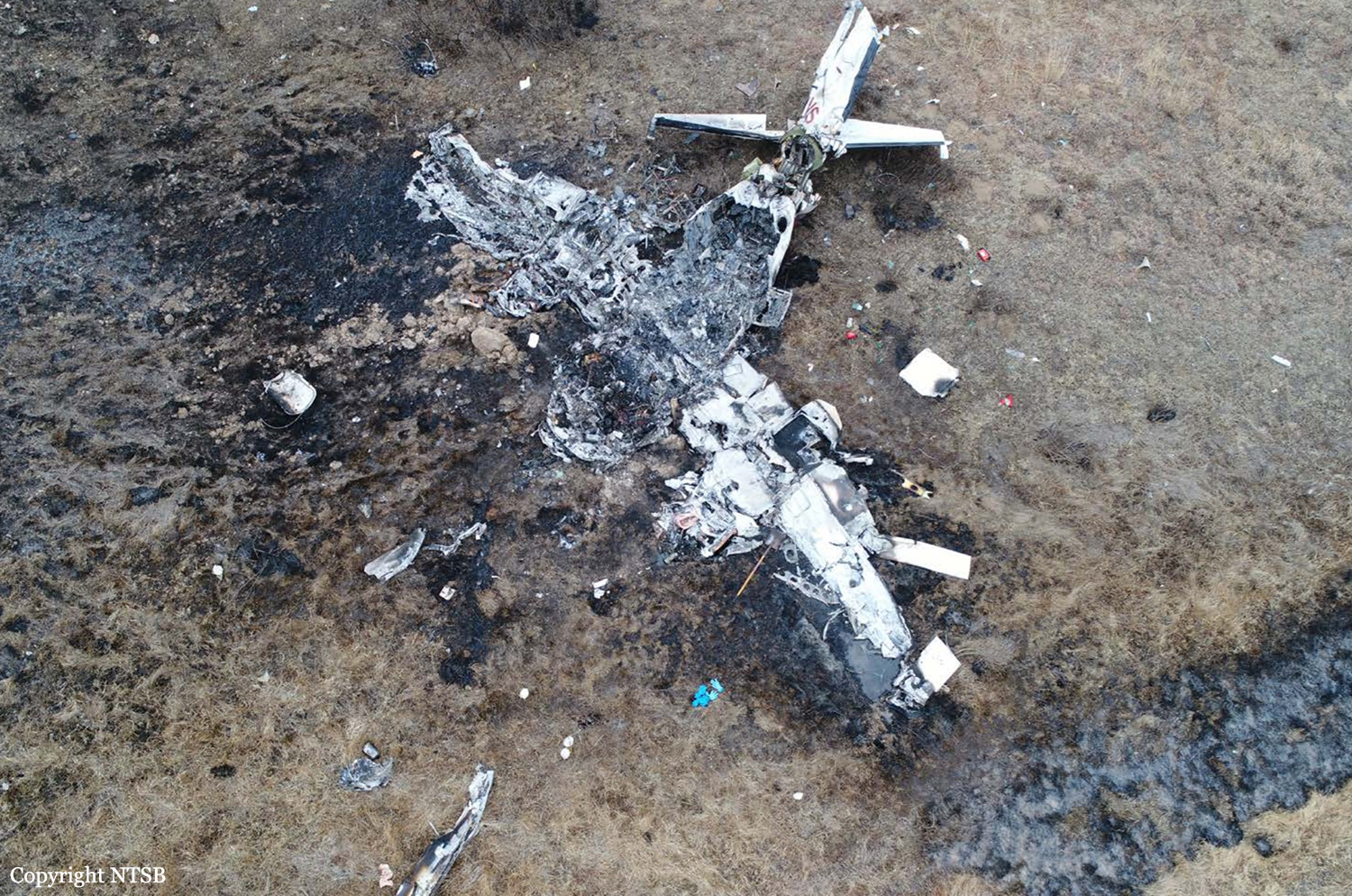
After takeoff, the pilot proceeded about 30 miles and climbed to an altitude of about 2,200 ft mean sea level (msl). About 8 minutes after takeoff, the airplane entered a descending left turn that continued until impact. A witness observed a twin-engine airplane at a low altitude and in a descent. After the airplane descended below the tree line, a fireball emerged followed by some smoke; however, the smoke was thin and dissipated quickly. A second witness observed the airplane at a low altitude and in a slow, descending turn. The flight path was steady and the wings “never dipped.” Shortly after the airplane descended out of sight, he observed an explosion. Both engines were on fire when he arrived at the accident site, and there was a fuel leak from the right engine toward the cockpit area. He used a fire extinguisher to keep the fire off the fuselage until first responders arrived. The airplane impacted a utility pole and terrain. Burned vegetation was present over portions of the accident site. The left wing was separated outboard of the engine and was located near the utility pole. A postaccident examination revealed that the left main fuel tank was partially consumed by the postimpact fire; therefore, the amount of fuel in the tank could not be determined. The left engine nacelle was discolored consistent with the postimpact fire. The left nacelle fuel tank appeared intact, and no fuel was visible in the left nacelle fuel tank. However, the amount of fuel in the left nacelle fuel tank at the time of impact could not be determined. The right main fuel tank appeared intact, and about 1 gallon of fuel was drained from the tank during recovery of the airplane. While the postimpact fire was consistent with fuel present onboard the airplane at the time of the accident, the lack of an extensive and sustained ground fire suggested that a limited amount of fuel was present. The left and right engine cockpit fuel selectors were both positioned to the “RIGHT MAIN” fuel tank. The left fuel selector valve, located in the engine nacelle, was in the “OFF” position at the time of the exam. The right fuel selector was in the “RIGHT” fuel tank position. A teardown examination of the left engine did not reveal any anomalies consistent with a preimpact failure or malfunction. A teardown examination of the right engine revealed damage consistent with oil starvation throughout the engine. A teardown examination of the left propeller assembly revealed indications that the blades were at or near the feather pitch stop position during the impact sequence. A teardown examination of the right propeller assembly revealed indications that the blades were on or near the low pitch stop position during the impact sequence. The fuel flow indicator displayed the total fuel remaining as 8.3 gallons when powered up on a test bench. However, the fuel quantity indications are dependent on the pilot properly configuring the device when the airplane is refueled. The fuel flow indicator does not directly provide fuel quantity information. According to the airplane flight manual, the total unusable fuel for the airplane, with one engine nacelle fuel tank installed, was 7.8 gallons. Engine performance data recovered from the onboard engine monitor revealed a reduction in right engine power to near idle power. About 1 minute later, the airplane entered a descending left turn which continued until impact. About 3 minutes after the reduction in right engine power, the left engine completely lost power. Immediately afterward, right engine power increased to near full (takeoff) power. However, about 30 seconds later the right engine completely lost power. The airplane impacted the pole and the terrain a few seconds later. The pilot likely detected an impending failure of the right engine and intentionally reduced power. However, shortly afterward, the left engine lost power due to fuel starvation. At that time, the pilot likely set the left engine to crossfeed from the right main fuel tank to restore power. Unsuccessful, the pilot then decided to feather the left propeller and attempted to use any available power from the right engine, but the right engine immediately lost power as well. Whether the right engine lost power at that moment due to fuel starvation or oil starvation could not be determined. The pilot was obese and had hypertension, high cholesterol, and an enlarged heart with left ventricular thickening. While these cardiovascular conditions placed him at an increased risk for a sudden incapacitating cardiac event, the autopsy did not show any acute or remote myocardial infarction, and the flight path suggests intentional actions until the crash. Thus, the pilot’s cardiovascular disease was not a factor in this accident. Toxicology testing detected the muscle relaxant cyclobenzaprine and its active metabolite norcyclobenzaprine in the pilot’s femoral blood at low therapeutic levels. The sedative-hypnotic medication zolpidem was detected at subtherapeutic levels. While these substances are associated with side effects such as drowsiness and dizziness, the operational findings of this accident do not suggest performance issues related to fatigue. Thus, it is unlikely that the effects from the pilot’s use of cyclobenzaprine and zolpidem were factors in this accident.
Probable cause:
A loss of power on the left engine due to fuel starvation and the subsequent loss of power on the right engine for undetermined reasons.
Final Report:
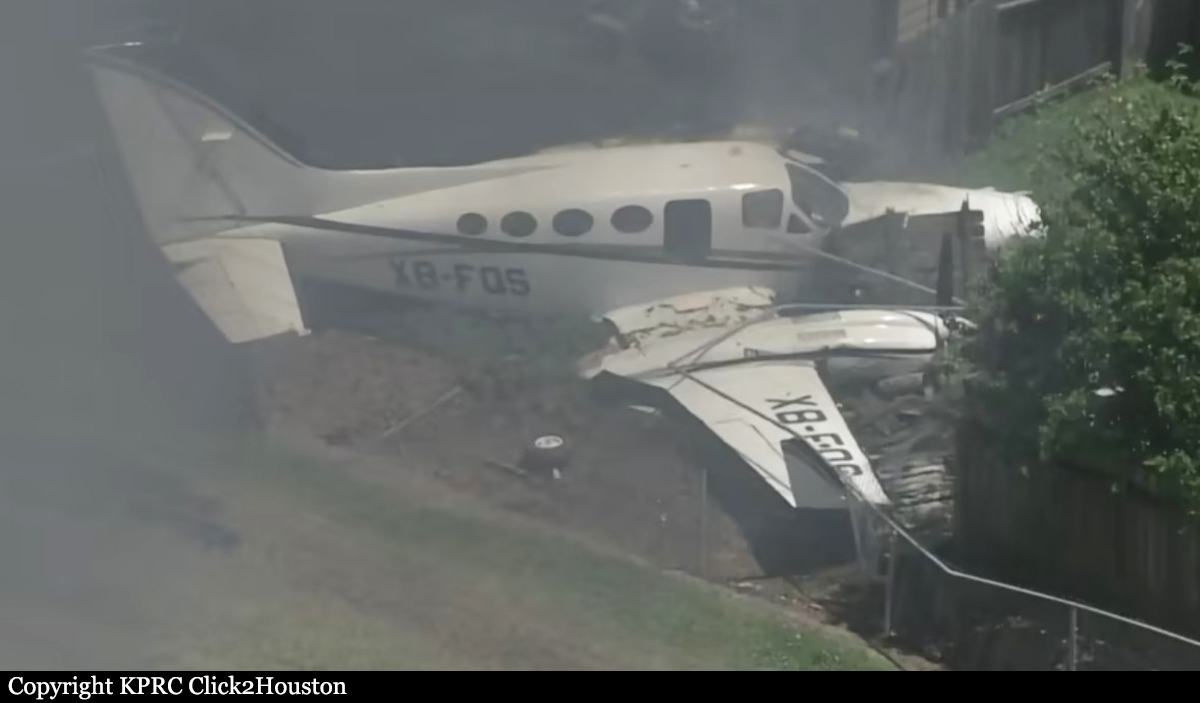
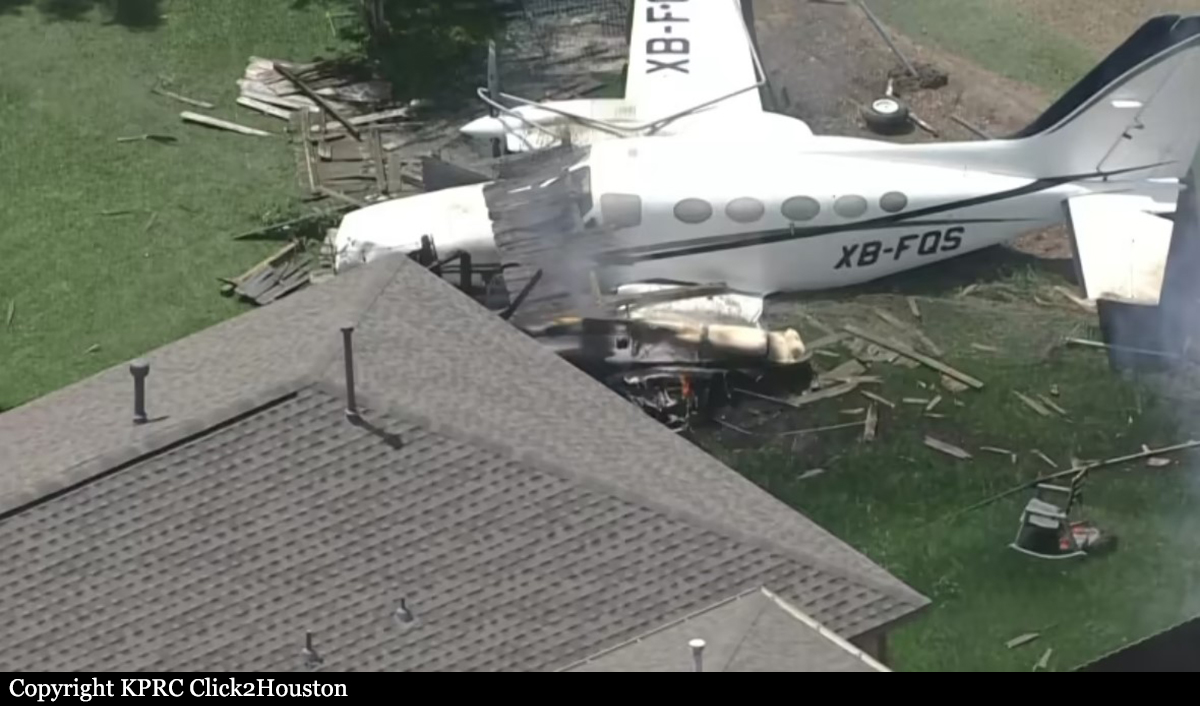
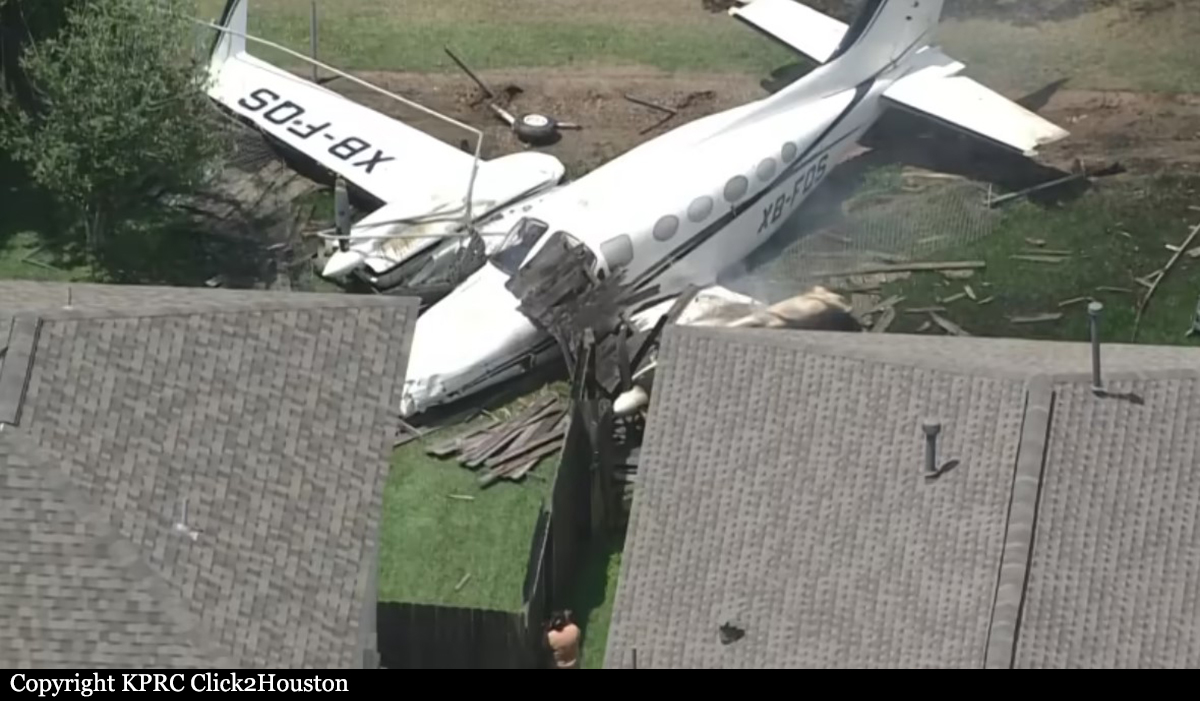
Crash of a Cessna 421C Golden Eagle III in Houston

Date & Time: May 6, 2022 at 1418 LT
Operator:
Registration:
XB-FQS
Flight Phase:
Flight Type:
Survivors:
Yes
Schedule:
Houston – San Antonio
MSN:
421C-0085
YOM:
1976
Crew on board:
1
Crew fatalities:
Pax on board:
3
Pax fatalities:
Other fatalities:
Total fatalities:
0
Captain / Total flying hours:
4025
Captain / Total hours on type:
951.00
Aircraft flight hours:
5197
Circumstances:
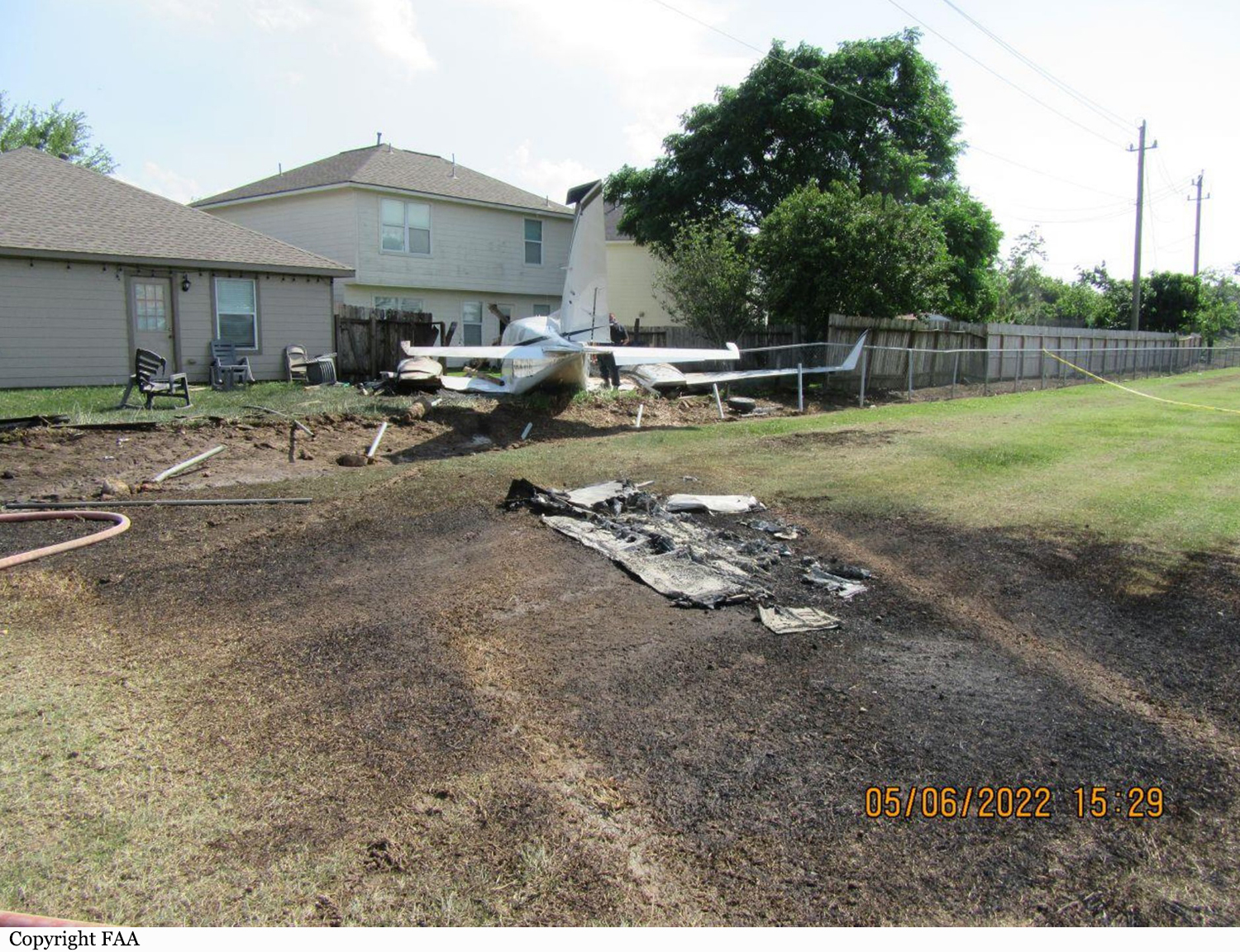
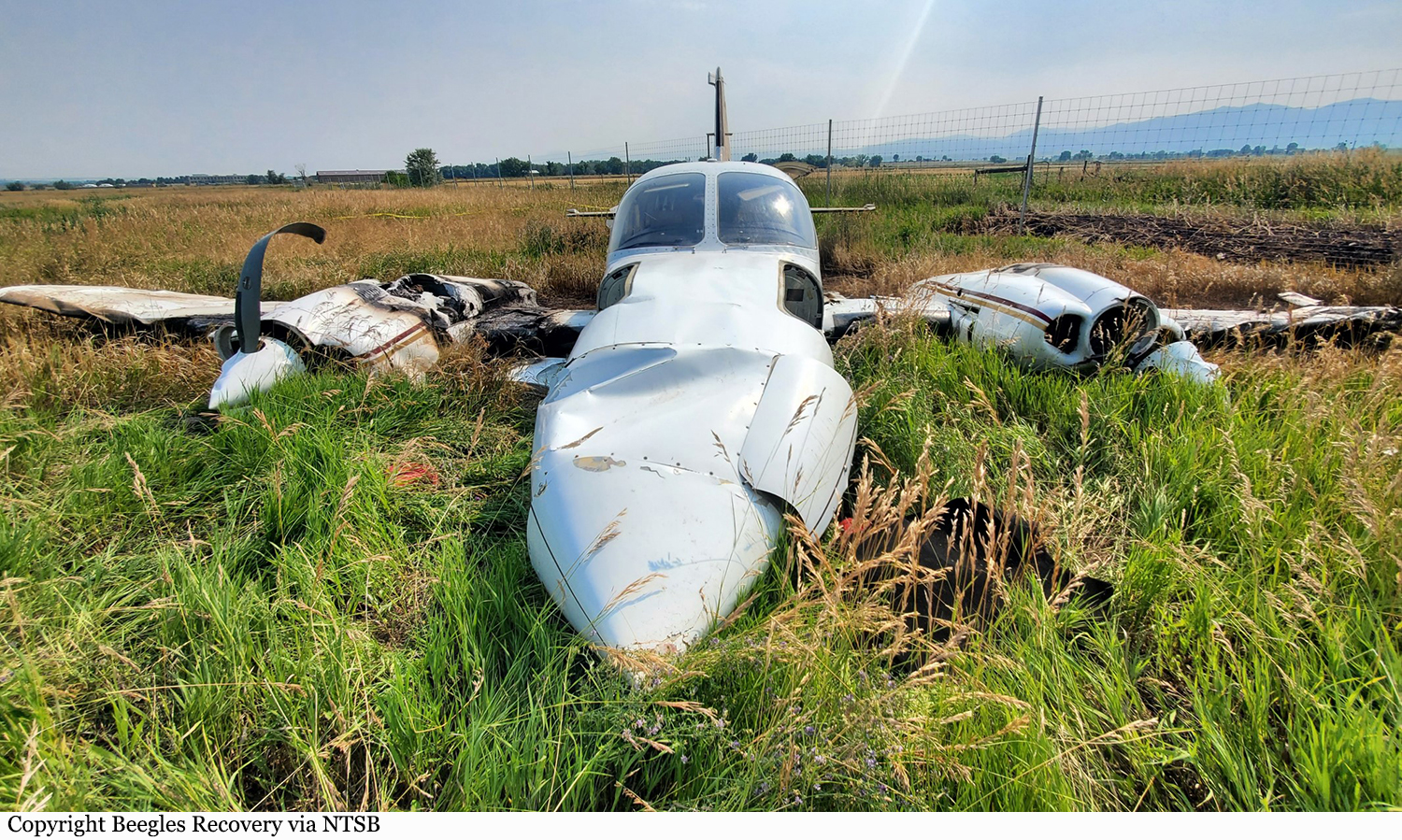
The pilot reported that, before the flight, the airplane was fueled with 140 gallons of Jet A fuel. Shortly after takeoff, both engines lost total power. Because the airplane had insufficient altitude to return to the airport, the pilot executed a forced landing to a field and the left wing sustained substantial damage. A postcrash fire ensued. The investigation determined that the airplane was inadvertently fueled with Jet A fuel rather than AVGAS, which was required for the airplane’s reciprocating engines. The line service worker who fueled the airplane reported that there were no decals at the airplane fuel ports; however, postaccident examination of the airplane found that a decal specifying AVGAS was present at the right-wing fuel port. The investigation could not determine whether the same or a similar decal was present at the left-wing fuel port because the left wing was partially consumed during the postimpact fire.
Probable cause:
The fixed-base operator’s incorrect fueling of the airplane, which resulted in a total loss of power in both engines.
Final Report:
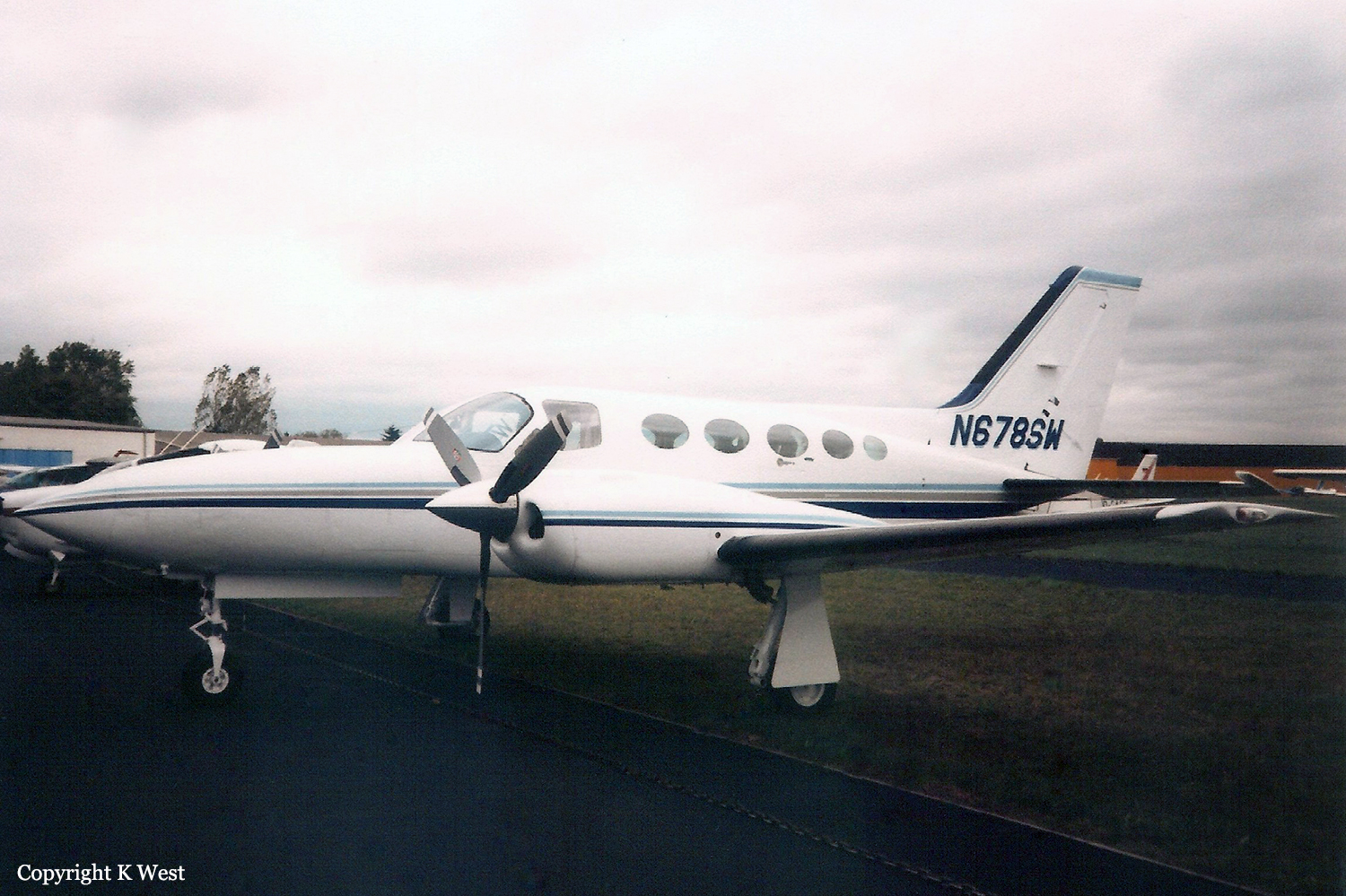
Crash of a Cessna 421C Golden Eagle III in Monterey: 1 killed

Date & Time: Jul 13, 2021 at 1042 LT
Operator:
Registration:
N678SW
Flight Phase:
Flight Type:
Survivors:
No
Site:
Schedule:
Monterey – Salinas
MSN:
421C-1023
YOM:
1981
Crew on board:
1
Crew fatalities:
Pax on board:
0
Pax fatalities:
Other fatalities:
Total fatalities:
1
Captain / Total flying hours:
9337
Aircraft flight hours:
5818
Circumstances:
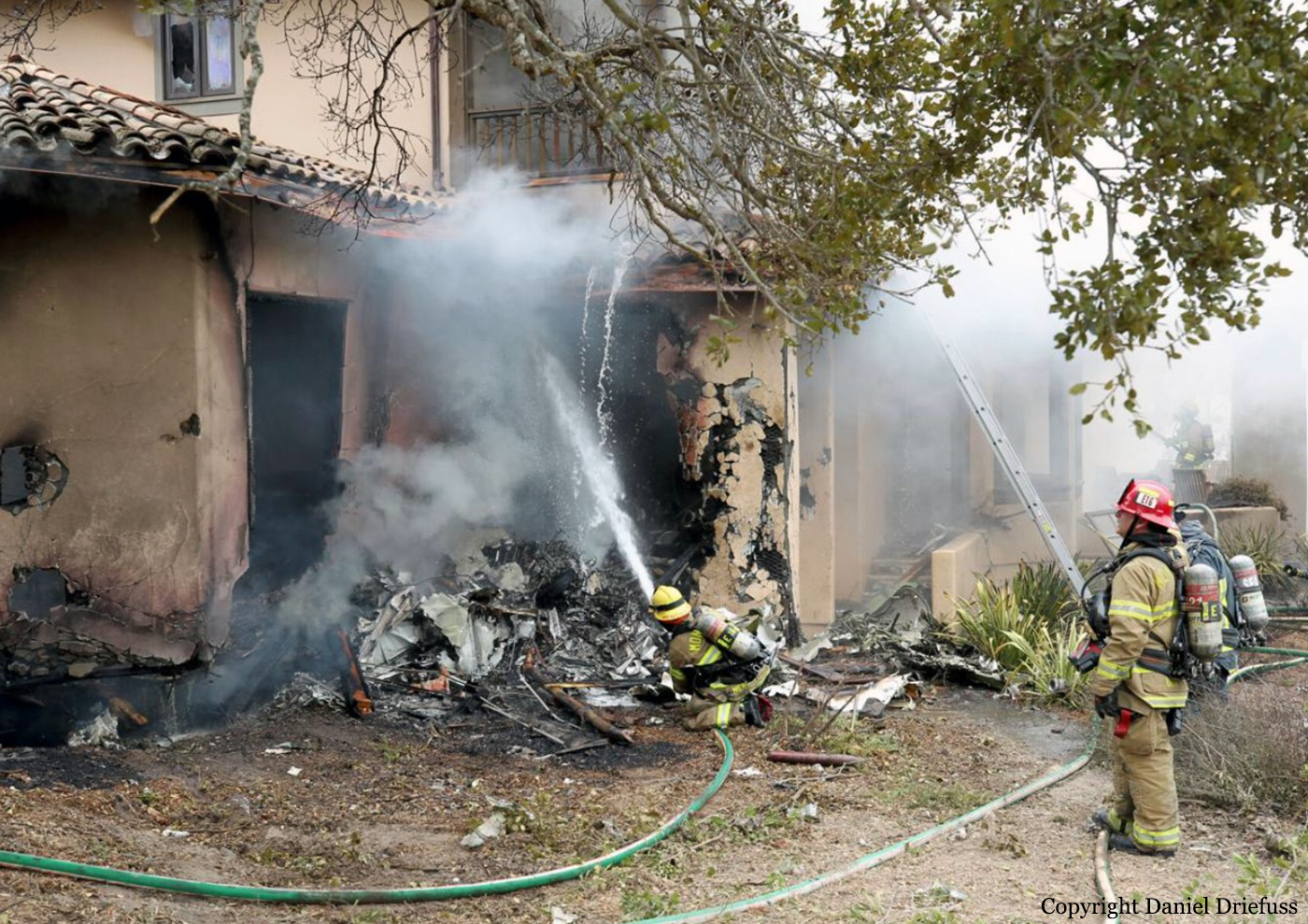
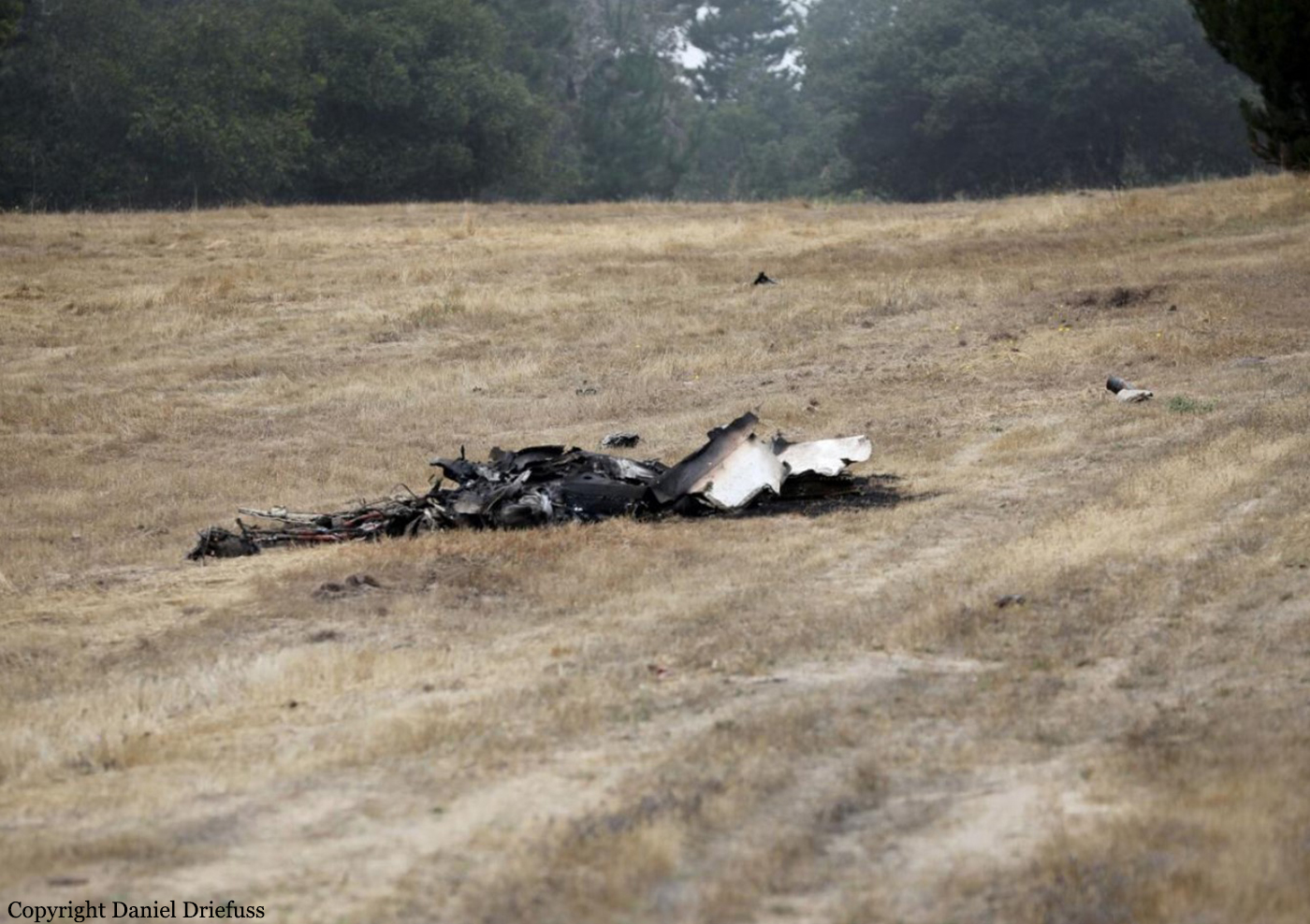
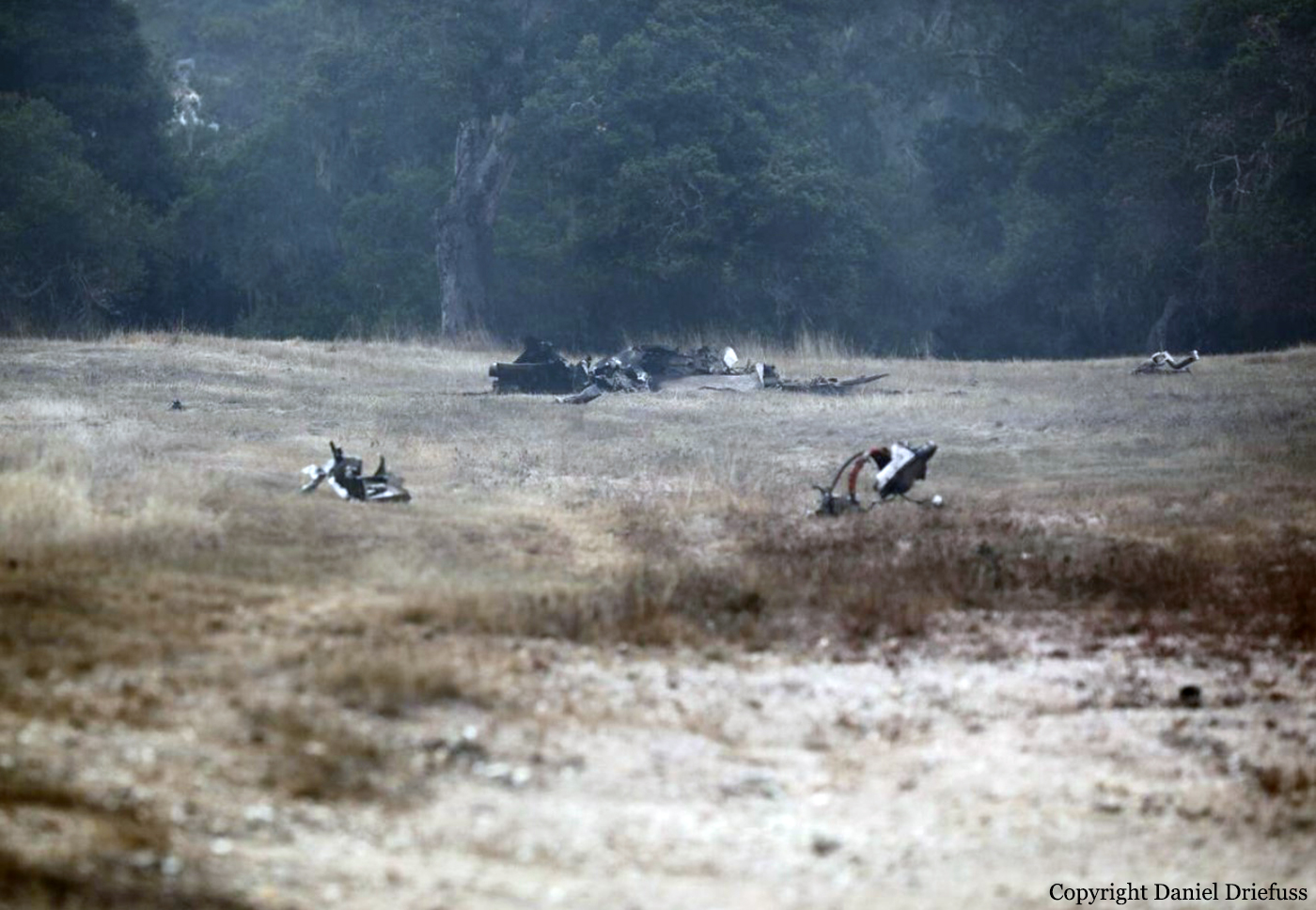
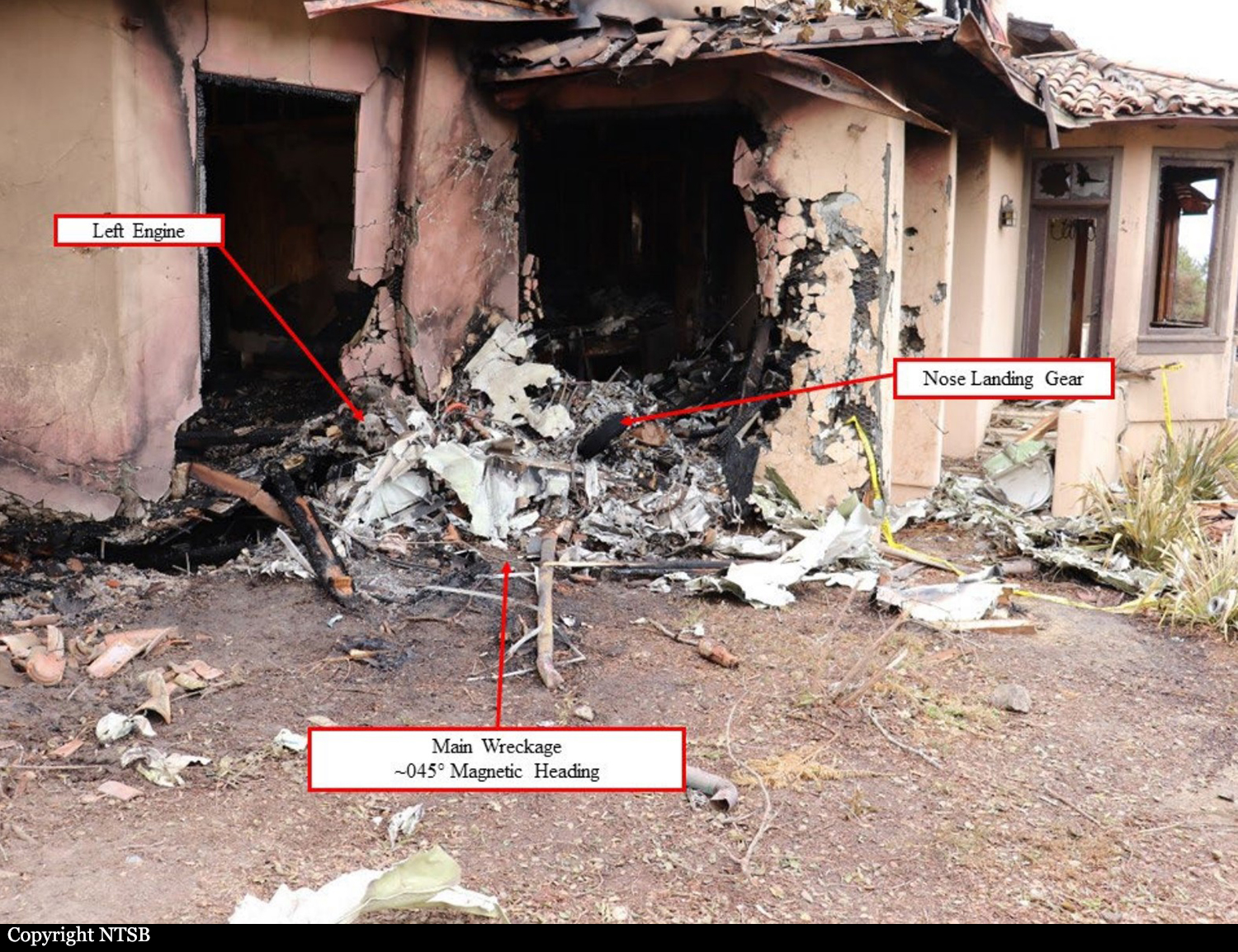
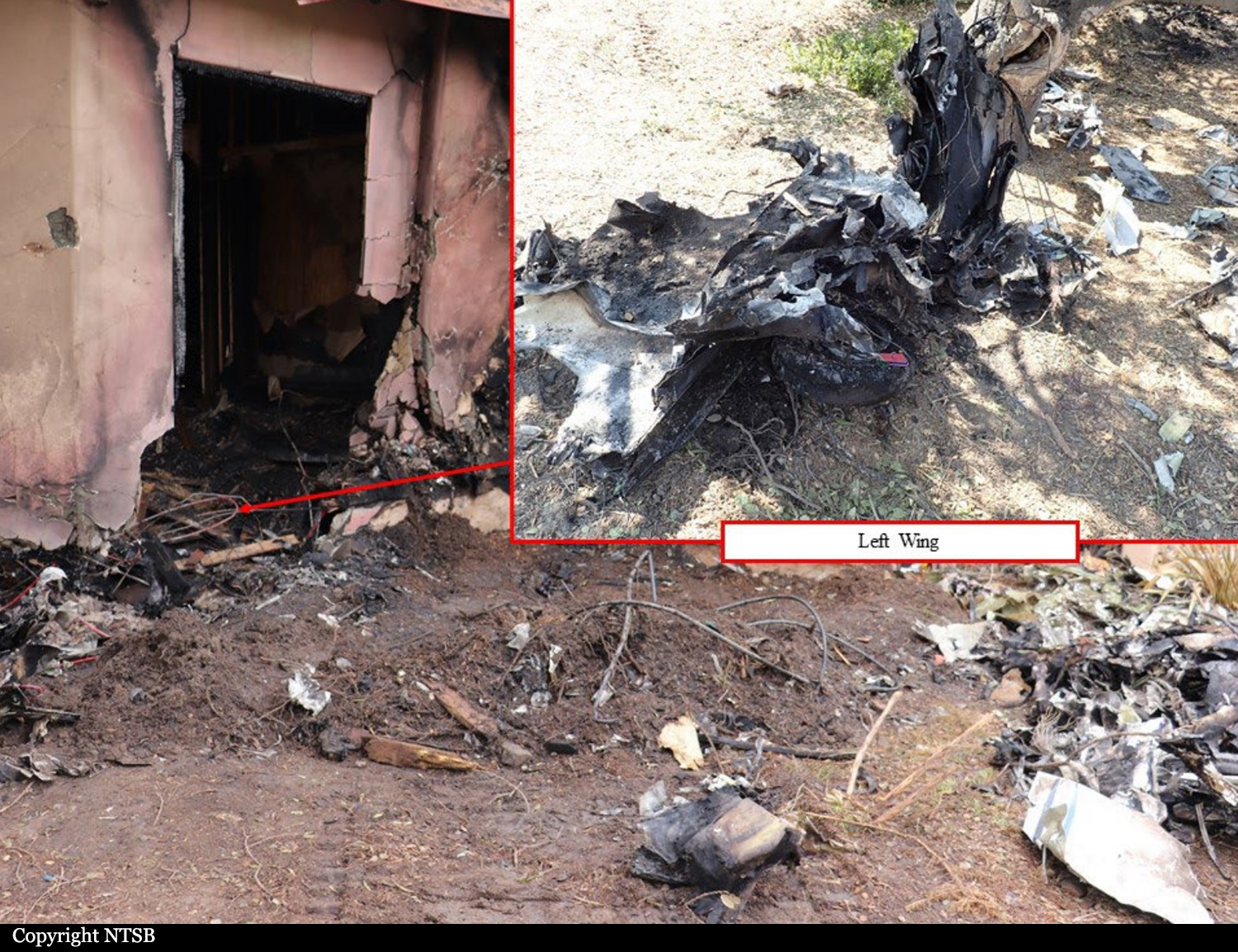
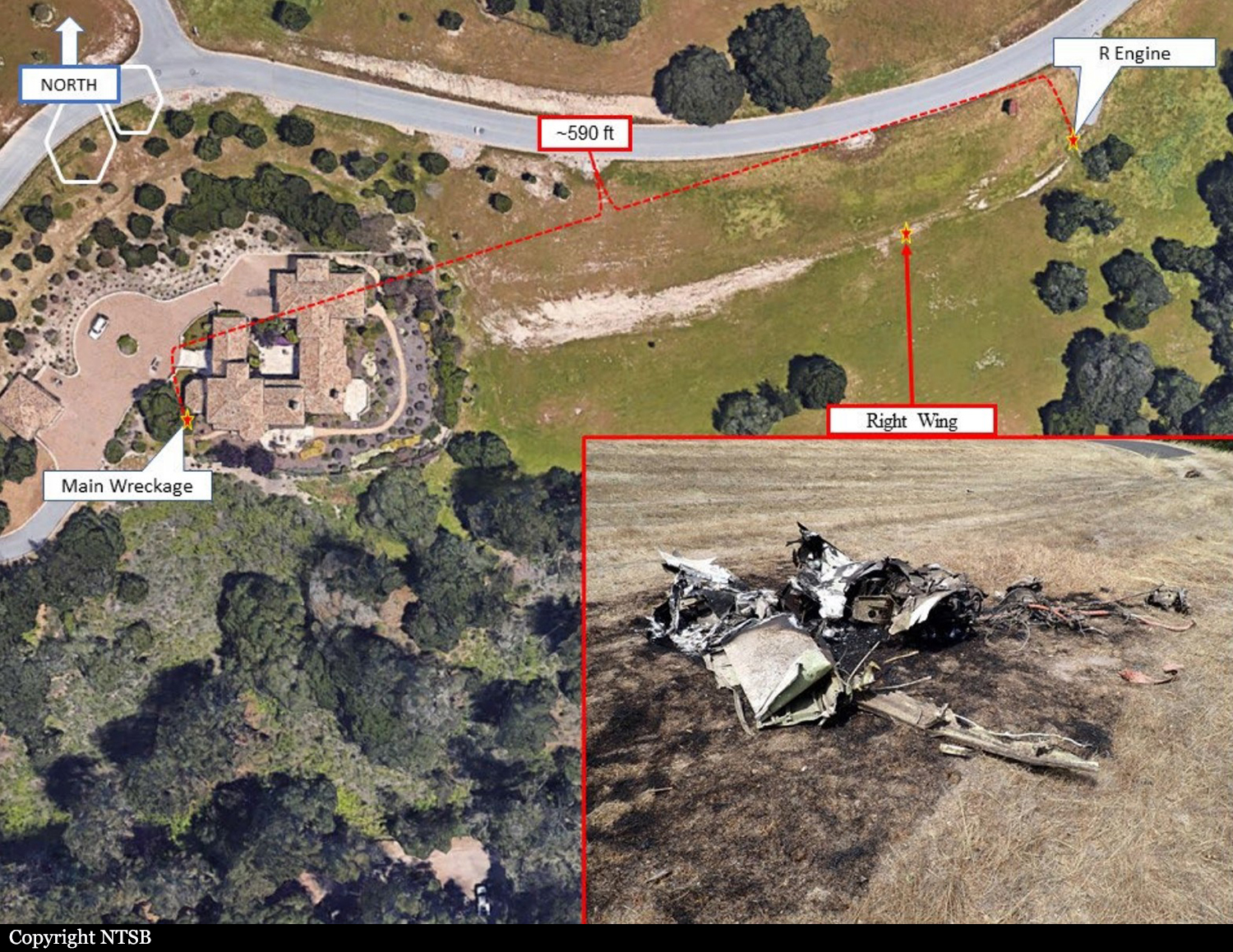
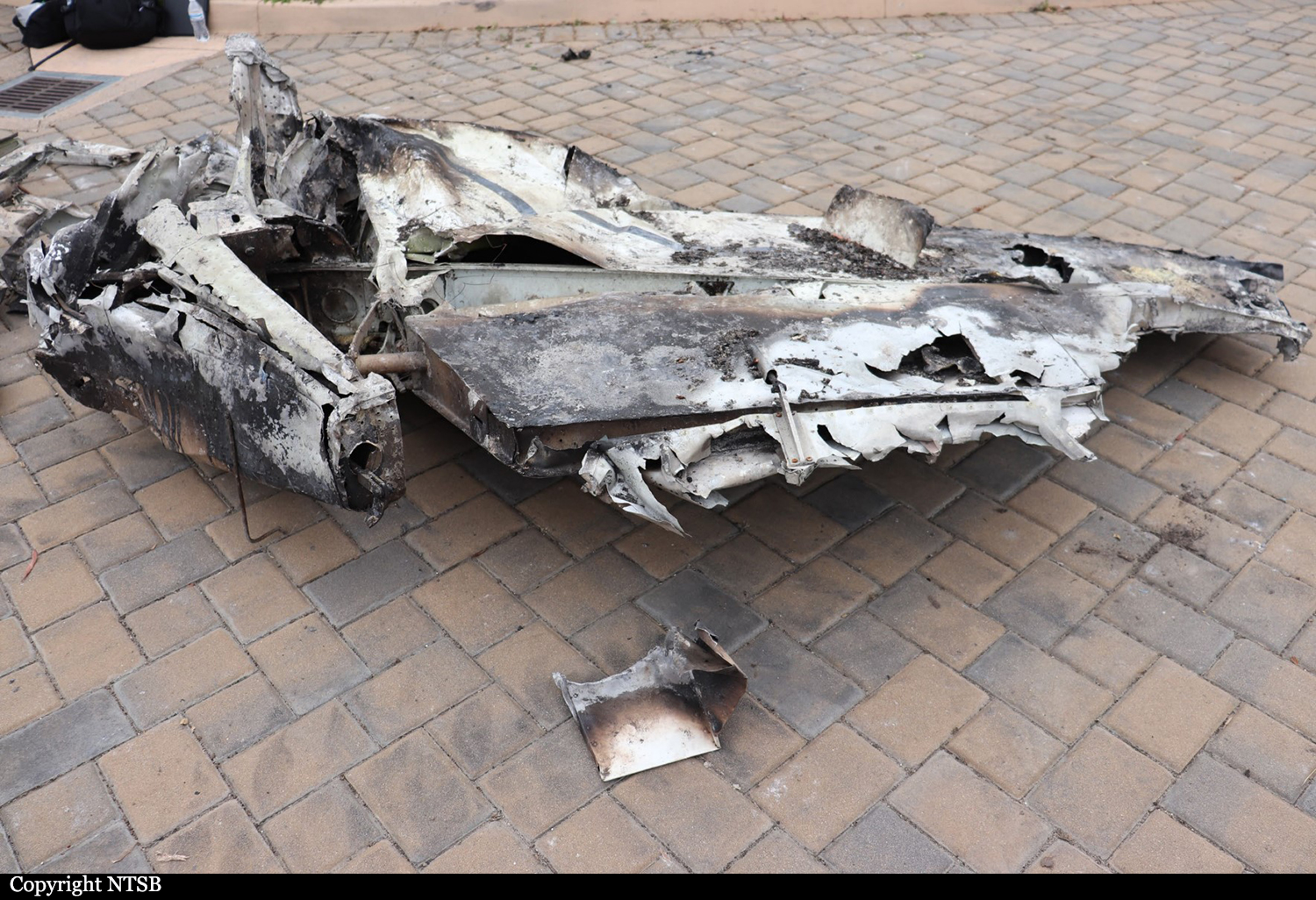
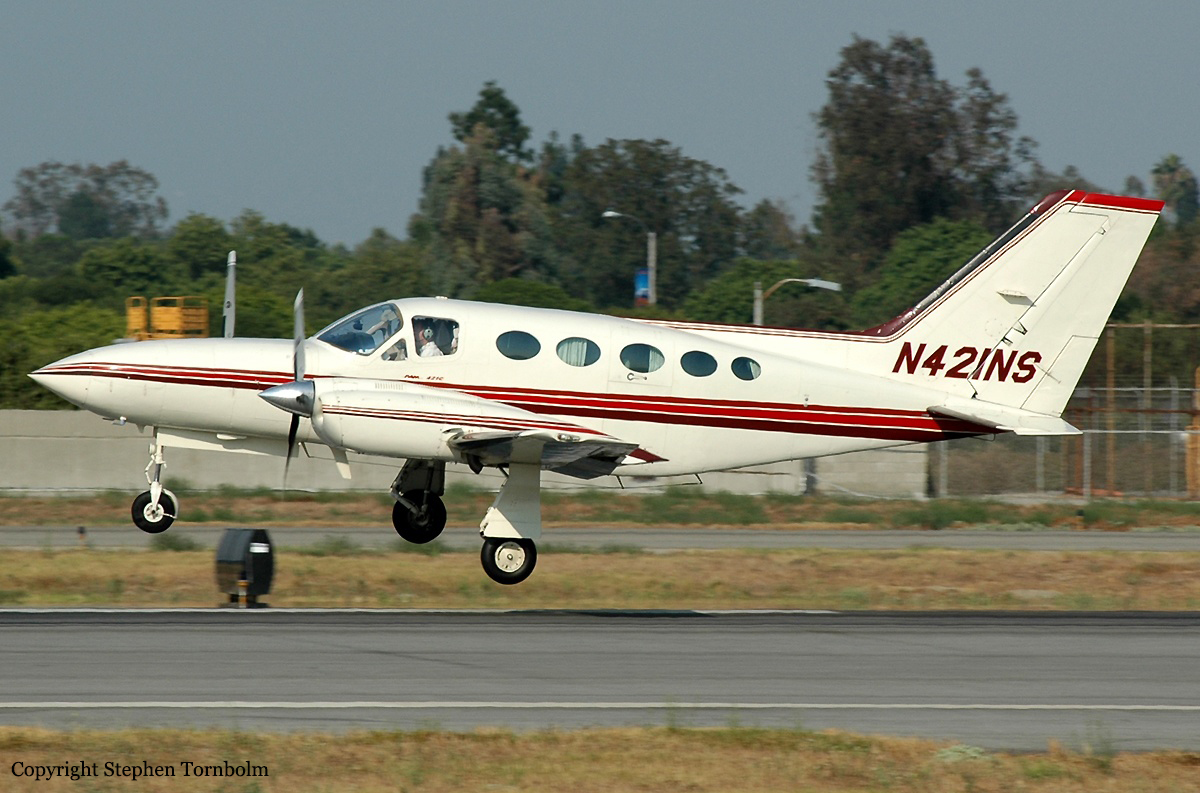
Before taking off, the pilot canceled an instrument flight rules (IFR) flight plan that she had filed and requested a visual flight rules (VFR) on-top clearance, which the controller issued via the Monterey Five departure procedure. The departure procedure included a left turn after takeoff. The pilot took off and climbed to about 818 ft then entered a right turn. The air traffic controller noticed that the airplane was in a right-hand turn rather than a left-hand turn and issued a heading correction to continue a right-hand turn to 030o , which the pilot acknowledged. The airplane continued the climbing turn for another 925 ft then entered a descent. The controller issued two low altitude alerts with no response from the pilot. No further radio communication with the pilot was received. The airplane continued the descent until it contacted trees, terrain, and a residence about 1 mile from the departure airport. Review of weather information indicated prevailing instrument meteorological conditions (IMC) in the area due to a low ceiling, with ceilings near 800 ft above ground level and tops near 2,000 ft msl. Examination of the airframe and engines did not reveal any anomalies that would have precluded normal operation. The airplane’s climbing right turn occurred shortly after the airplane entered IMC while the pilot was acknowledging a frequency change, contacting the next controller, and acknowledging the heading instruction. Track data show that as the right-hand turn continued, the airplane began descending, which was not consistent with its clearance. Review of the pilot’s logbook showed that the pilot had not met the instrument currency requirements and was likely not proficient at controlling the airplane on instruments. The pilot’s lack of recent experience operating in IMC combined with a momentary diversion of attention to manage the radio may have contributed to the development of spatial disorientation, resulting in a loss of airplane control.
Probable cause:
The pilot’s failure to maintain airplane control due to spatial disorientation during an instrument departure procedure in instrument meteorological conditions which resulted in a collision with terrain. Contributing to the accident was the pilot’s lack of recent instrument flying experience.
Final Report:
Crash of a Cessna 421C Golden Eagle III in Longmont

Date & Time: Jul 10, 2021 at 0845 LT
Operator:
Registration:
N66NC
Flight Phase:
Flight Type:
Survivors:
Yes
Schedule:
Longmont – Aspen
MSN:
421C-0519
YOM:
1978
Crew on board:
1
Crew fatalities:
Pax on board:
3
Pax fatalities:
Other fatalities:
Total fatalities:
0
Captain / Total flying hours:
2801
Captain / Total hours on type:
169.00
Aircraft flight hours:
5476
Circumstances:
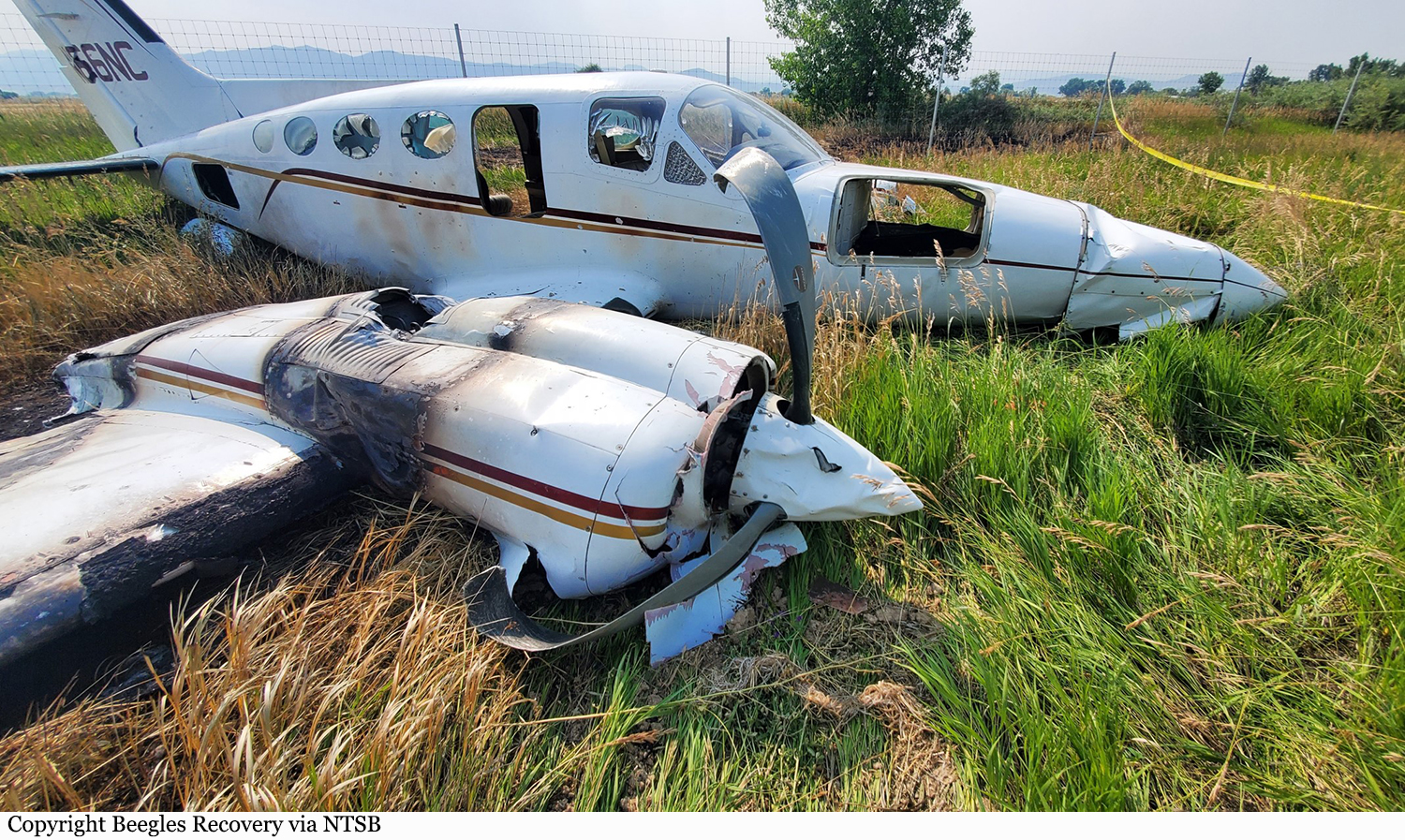
The pilot reported that he performed the “before starting engine” and “starting engine” checklists and everything was normal before taking off in the twin-engine airplane. He performed an engine runup and then started his takeoff roll. The pilot reported that about halfway down the runway the airplane was not accelerating as fast as it should. He attempted to rotate the airplane; however, “the airplane mushed off the runway.” The airplane settled back onto the runway, then exited the departure end of the runway, where it sustained substantial damage to the wings and fuselage. The airplane engine monitor data indicated the airplane’s engines were operating consistent with each other at takeoff power at the time of the accident. Density altitude at the time of the accident was 7,170 ft and according to performance charts, there was adequate runway for takeoff. The reason for the loss of performance could not be determined.
Probable cause:
The loss of performance for reasons that could not be determined.
Final Report:
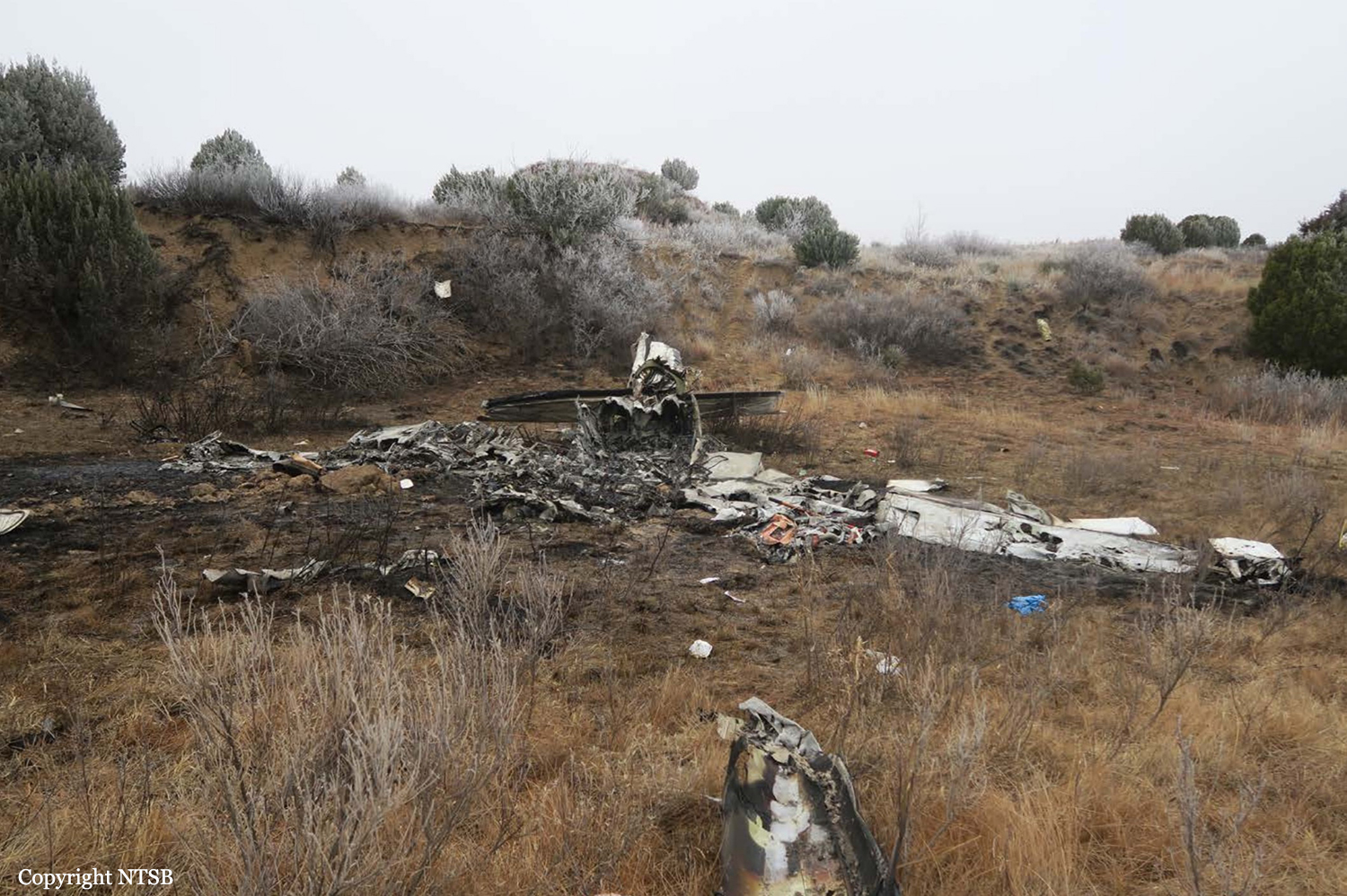
Crash of a Cessna 421C Golden Eagle III near Canadian: 2 killed

Date & Time: Feb 15, 2019 at 1000 LT
Registration:
N421NS
Flight Phase:
Flight Type:
Survivors:
No
Schedule:
Amarillo – Canadian
MSN:
421C-0874
YOM:
1980
Location:
Crew on board:
1
Crew fatalities:
Pax on board:
1
Pax fatalities:
Other fatalities:
Total fatalities:
2
Captain / Total flying hours:
5000
Aircraft flight hours:
6227
Circumstances:
The pilot was conducting a personal cross-country flight with one passenger in his twin-engine airplane. There was no record that the pilot received a weather briefing before the accident flight. While en route to the destination, the pilot was in contact with air traffic control and received visual flight rules flightfollowing services. About 18 miles from the destination airport, the radar service was terminated, as is typical in this geographic region due to insufficient radio and radar coverage below 7,000 ft. The airplane was heading northeast at 4,900 ft mean sea level (msl) (about 2,200 ft above ground level [agl]). About 4 minutes later, radar coverage resumed, and the airplane was 6 miles west of the airport at 4,100 ft msl (1,400 ft agl) and climbing to the north. The airplane climbed through 6,000 ft msl (3,300 ft agl), then began a shallow left turn and climbed to 6,600 ft msl (3,800 ft agl), then began to descend while continuing the shallow left turn ; the last radar data point showed the airplane was about 20 nm northwest of the airport, 5,100 ft msl (2,350 ft agl) on a southwest heading. The final recorded data was about 13 miles northwest of the accident site. A witness near the destination airport heard the pilot on the radio. He reported that the pilot asked about the cloud height and the witness responded that the clouds were 800 to 1,000 ft agl. In his final radio call, the pilot told the witness, "Ok, see you in a little bit." The witness did not see the airplane in the air. The airplane impacted terrain in a slightly nose-low and wings-level attitude with no evidence of forward movement, and a postimpact fire destroyed a majority of the wreckage. The damage to the airplane was consistent with a relatively flat spin to the left at the time of impact. A postaccident examination did not reveal any preimpact mechanical malfunctions or anomalies that would have precluded normal operation. A detailed examination of the cockpit instruments and other portions of the wreckage was not possible due to the fire damage. A cold front had advanced from the northeast and instrument meteorological conditions prevailed across the region surrounding the accident site and the destination airport; the cloud ceilings were 400 ft to 900 ft above ground level. The airplane likely experienced wind shear below 3,000 ft, and there was likely icing in the clouds. While moderate icing conditions were forecast for the accident site, about the time of the accident, investigators were unable to determine the amount and severity of icing the flight may have experienced. The weather conditions had deteriorated over the previous 1 to 2 hours. The conditions at the destination airport had been clear about 2 hours before accident, and visual flight rules conditions about 1 hour before accident, when the pilot departed. Based on the available evidence it is likely that the pilot was unable to maintain control of the airplane, which resulted in an aerodynamic stall and spin into terrain.
Probable cause:
The pilot's failure to maintain control of the airplane while in instrument meteorological conditions with icing conditions present, which resulted in an aerodynamic stall and spin into terrain.
Final Report:
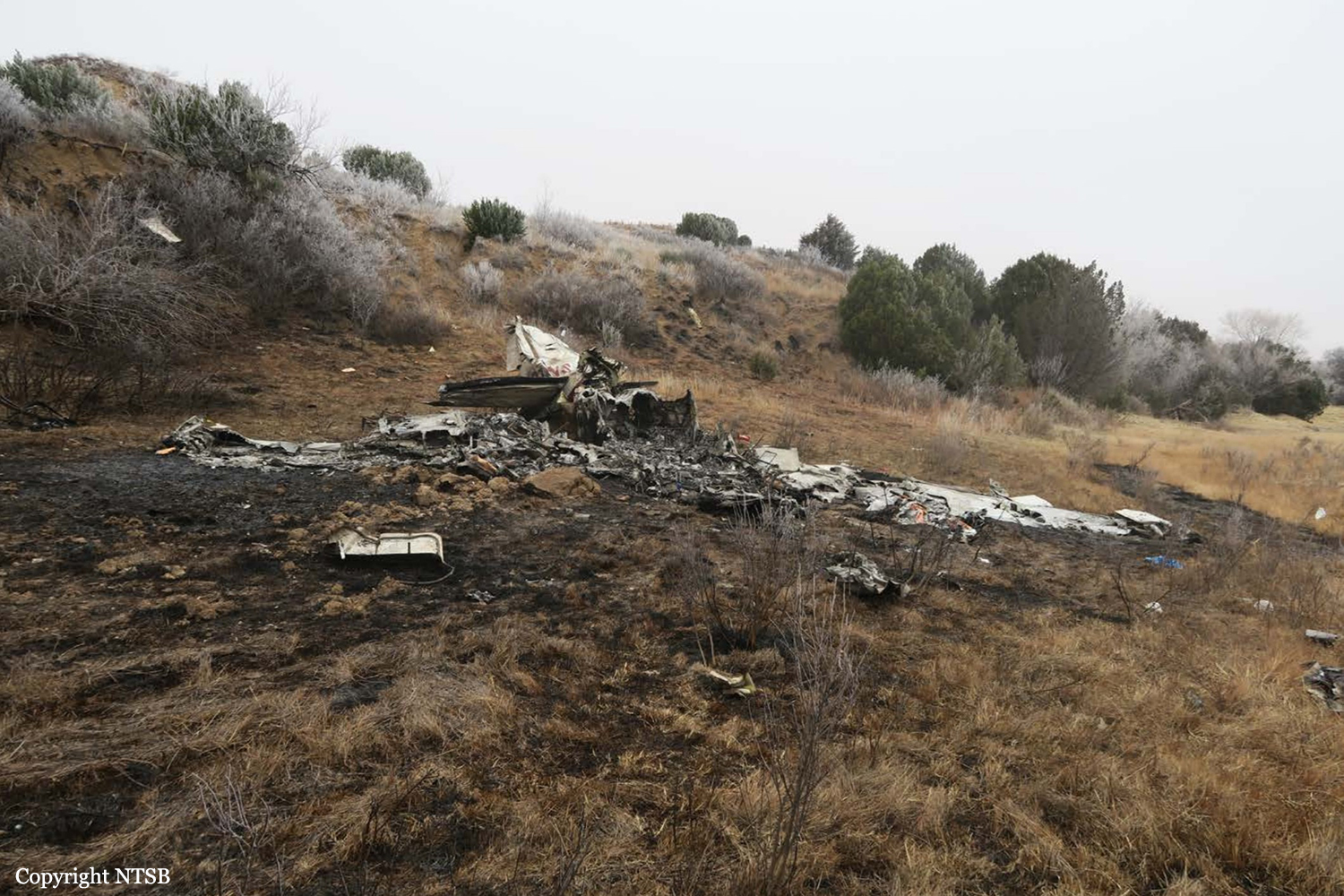
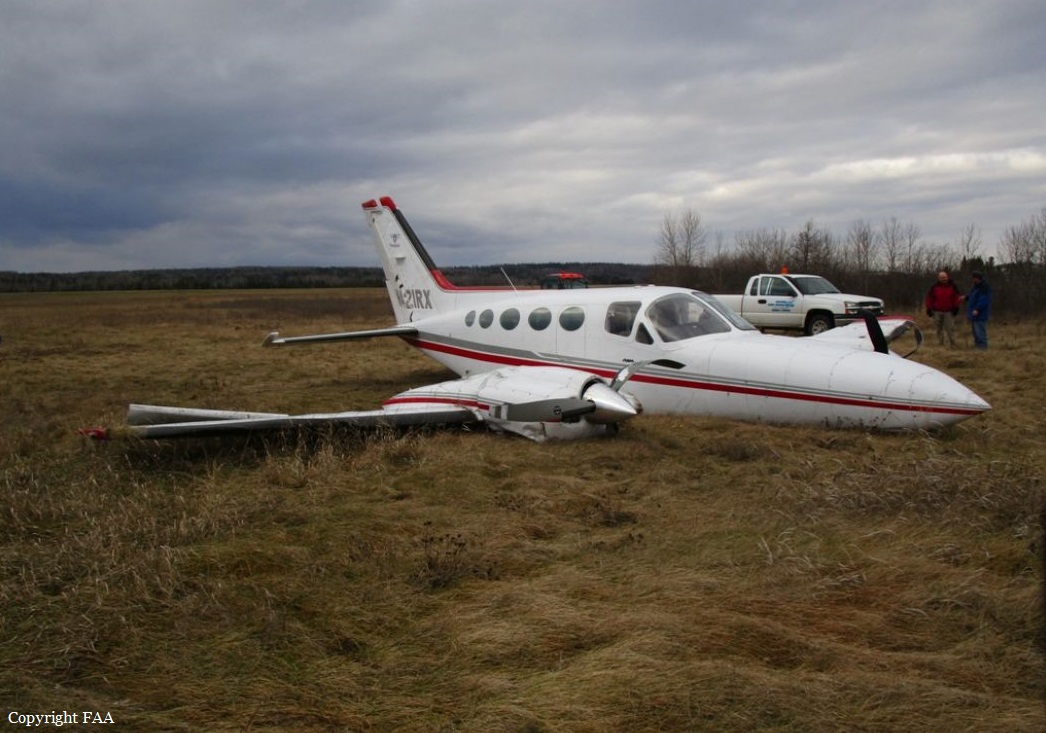
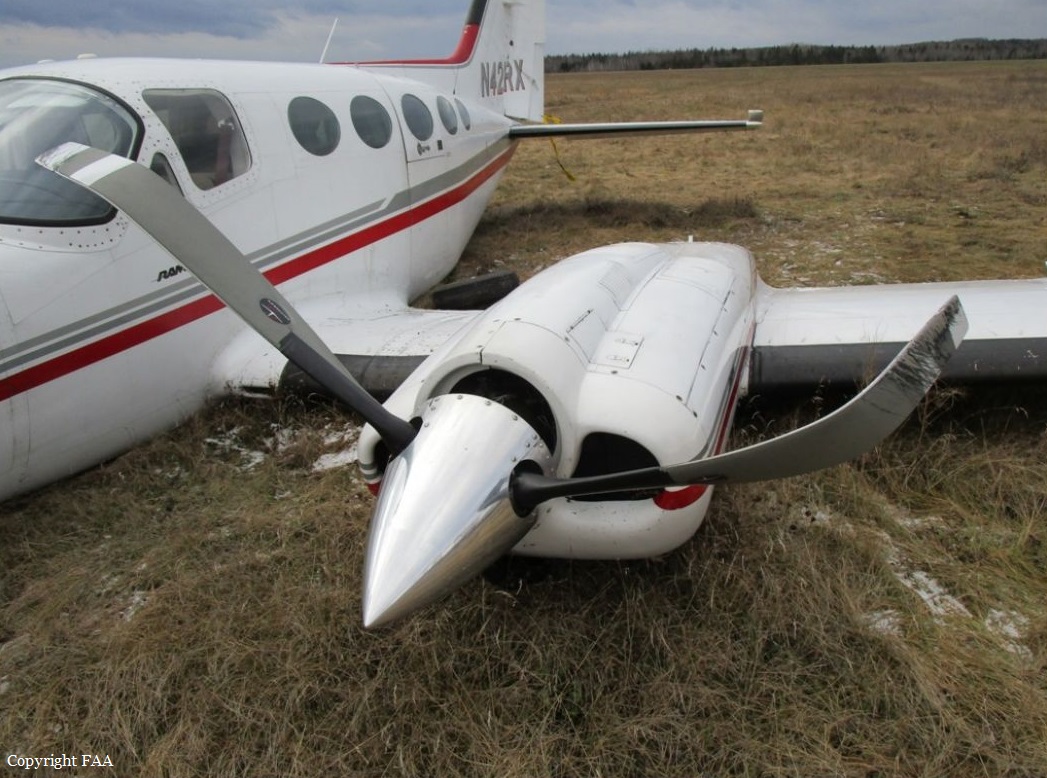
Crash of a Cessna 421C Golden Eagle III in Presque Isle

Date & Time: Nov 22, 2017 at 1845 LT
Operator:
Registration:
N421RX
Flight Phase:
Flight Type:
Survivors:
Yes
Schedule:
Presque Isle – Bangor
MSN:
421C-0264
YOM:
1977
Crew on board:
1
Crew fatalities:
Pax on board:
3
Pax fatalities:
Other fatalities:
Total fatalities:
0
Captain / Total flying hours:
4482
Captain / Total hours on type:
3620.00
Aircraft flight hours:
7473
Circumstances:
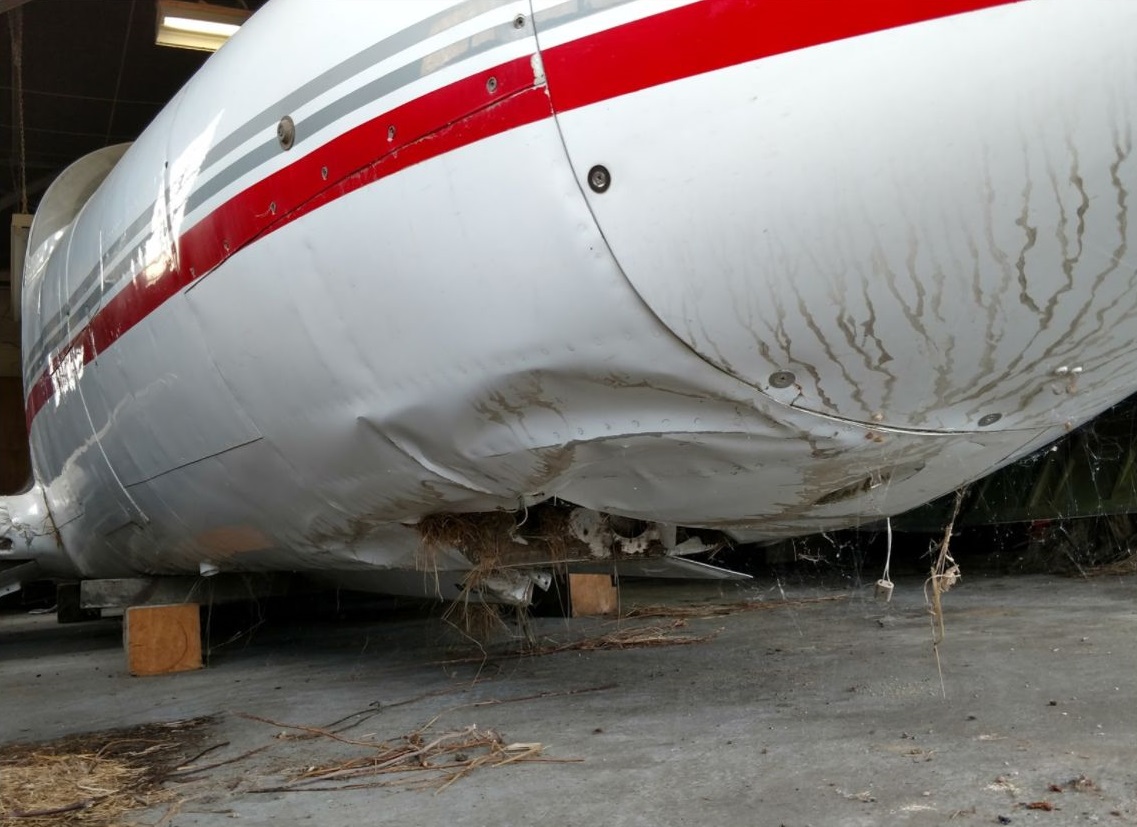
After takeoff, the commercial pilot saw flames coming from the left engine nacelle area. He retarded the throttle and turned off the fuel boost pump; however, the fire continued. He then feathered the propeller, shut down the engine, and maneuvered the airplane below the clouds to remain in the local traffic pattern. He attempted to keep the runway environment in sight while drifting in and out of clouds. He was unable to align the airplane for landing on the departure runway, so he attempted to land on another runway. When he realized that the airspeed was decreasing and that the airplane would not reach the runway, he landed it on an adjacent grass field. After touchdown, the landing gear separated, and the airplane came to a stop. The airframe sustained substantial damage to the wings and lower fuselage. Examination of the left engine revealed evidence of a fuel leak where the fuel mixture control shaft inserted into the fuel injector body, which likely resulted in fuel leaking onto the hot turbocharger in flight and the in-flight fire. A review of recent maintenance records did not reveal any entries regarding maintenance or repair of the fuel injection system. The pilot reported clouds as low as 500 ft with rain, snow, and reduced visibility at the time of the accident, which likely reduced his ability to see the runway and maneuver the airplane to land on it.
Probable cause:
The in-flight leakage of fuel from the fuel injection system's mixture shaft onto the hot turbocharger, which resulted in an in-flight fire, and the pilot's inability to see the runway due to reduced visibility conditions and conduct a successful landing.
Final Report: