Zone

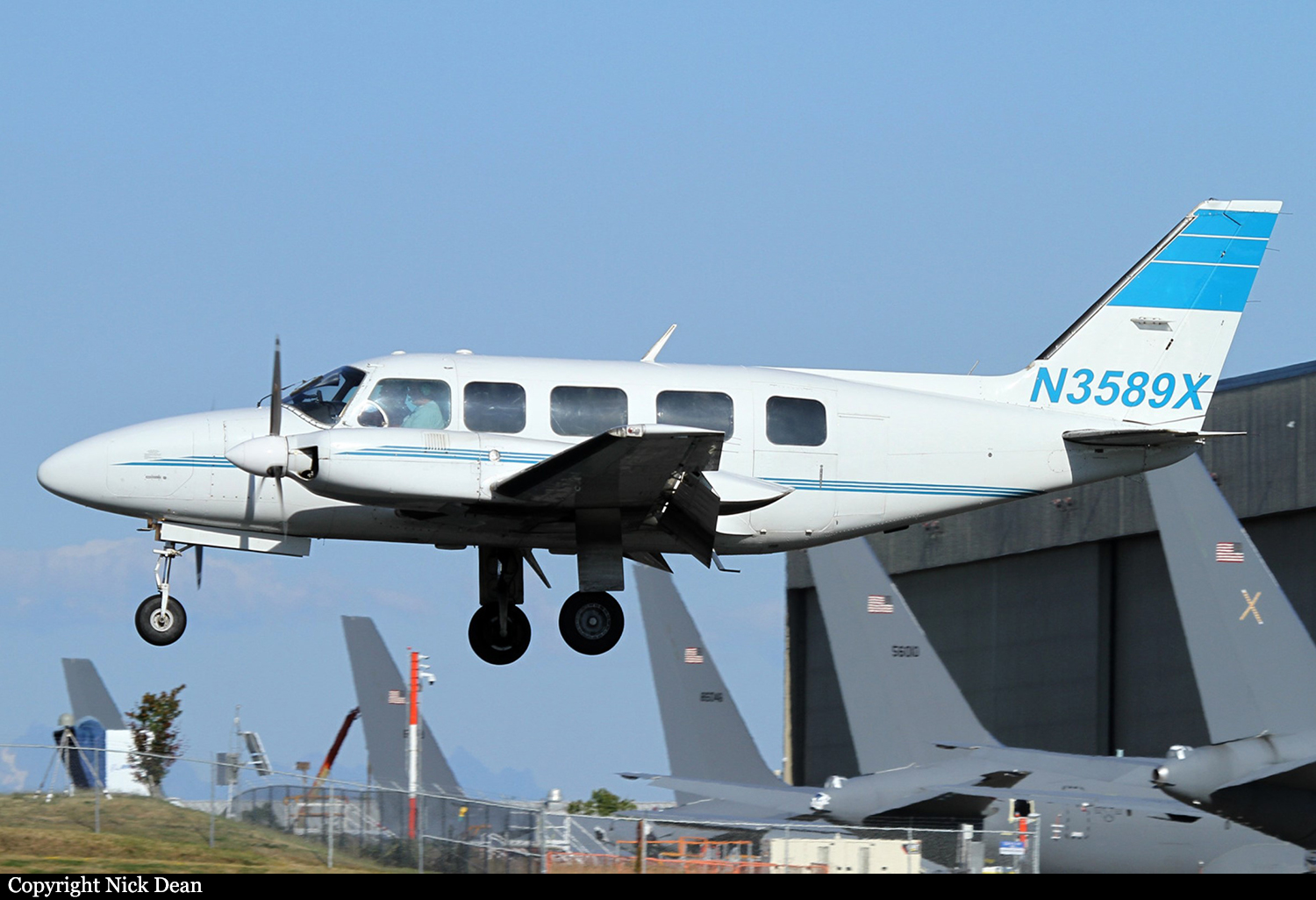
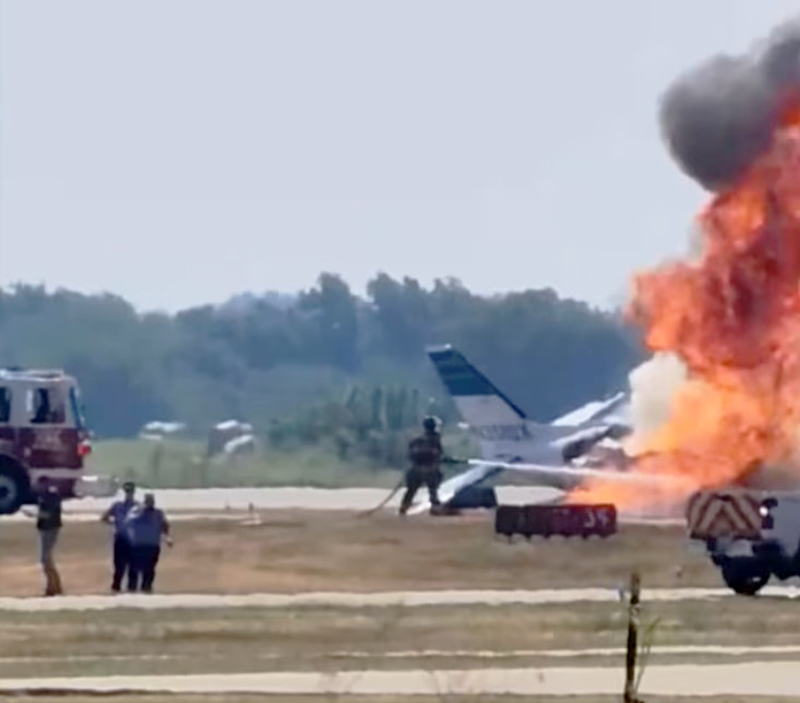
Crash of a Piper PA-31-350 Navajo Chieftain in Durant

Date & Time: Aug 21, 2023 at 1048 LT
Operator:

Registration:
N3589X
Survivors:
Yes
Schedule:
Tulsa - Tulsa
MSN:
31-8052138
YOM:
1980
Crew on board:
1
Crew fatalities:
Pax on board:
0
Pax fatalities:
Other fatalities:
Total fatalities:
0
Captain / Total flying hours:
3300
Captain / Total hours on type:
1400.00
Aircraft flight hours:
22698
Circumstances:
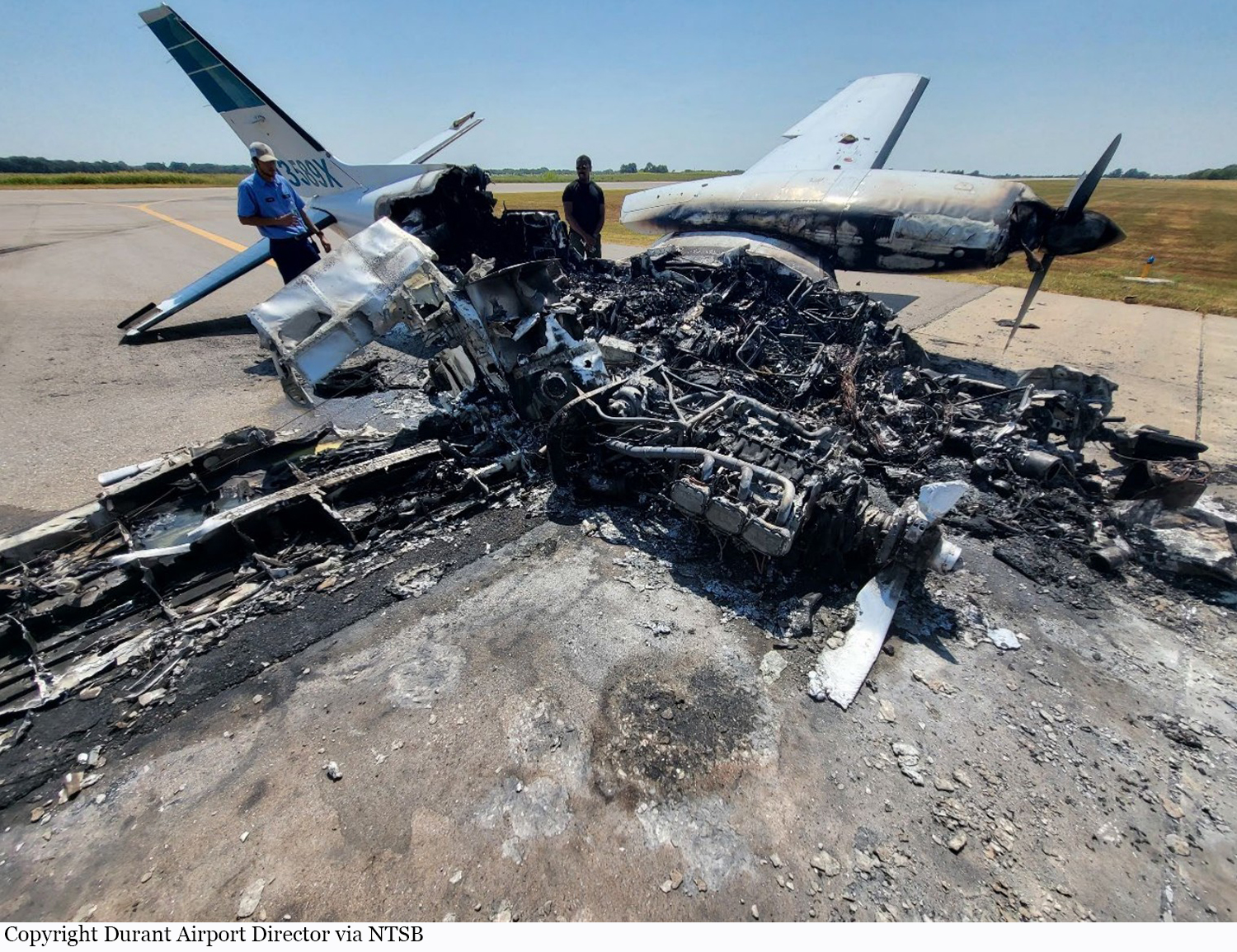
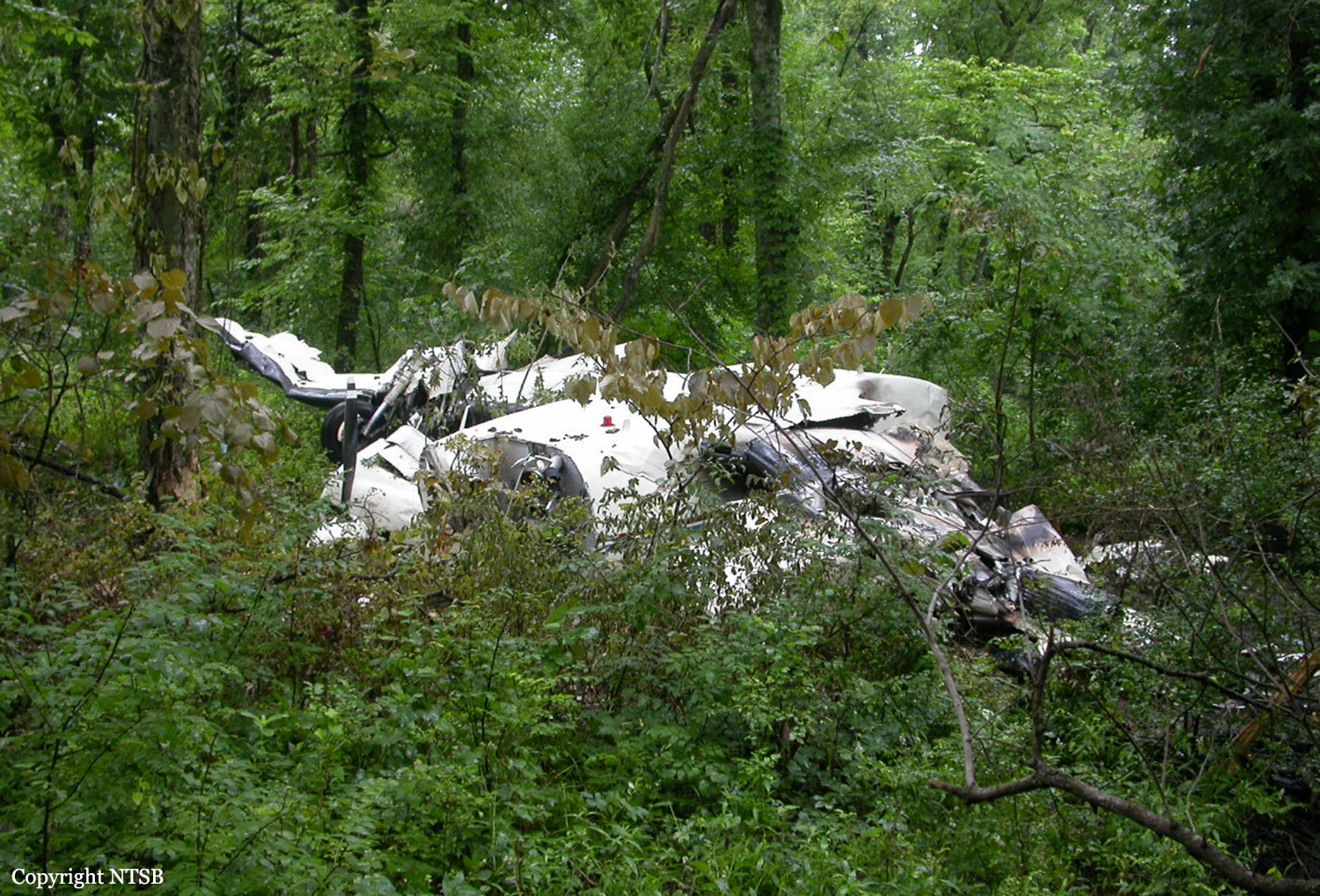
While in flight, the pilot heard and felt a bang from the right side of the airplane. He saw that the right engine nacelle had a hole in it and the engine was on fire. He secured the engine and diverted to a nearby airport. While on final approach for landing, the engine fire reignited. The pilot landed the airplane, taxied clear of the runway, shut down the left engine, and egressed. The engine fire continued to burn and consumed the right engine and a majority of the fuselage. Examination revealed that the right engine’s No. 2 cylinder was displaced from the engine case but remained attached via the injector manifold vent tube and injector lines. All eight of the No. 2 cylinder’s attach bolts were broken off at the case. The connecting rod cap was found lodged in the bottom of the piston. One connecting rod bolt was found broken off flush in the connecting rod; the top portion was not located. The other connecting rod bolt remained in the connecting rod cap with the nut also not located. One side of the lower connecting rod flange was bent back towards the piston, capturing the nut and remaining portion of the broken bolt. Neither bearing half could be identified in the remaining material. Numerous impact marks were noted on the piston, cylinder, and case. A review of maintenance records found that the engine was last overhauled about 4 ½ years before the accident and had accrued about 900 hours since the overhaul. Based on the available information, it is likely that the nut that secured one side of the connecting rod cap became loose, resulting the separation of the cap and subsequent damage to the No. 2 cylinder. Since the nut could not be located, the reason it did not remain secure could not be determined.
Probable cause:
The loosening of a connecting rod cap nut for reasons that could not be determined, which resulted in a mechanical failure of the engine and an in-flight fire.
Final Report:
Crash of a Cessna 401 near Chanute: 4 killed

Date & Time: May 11, 2012 at 1630 LT
Type of aircraft:
Operator:
Registration:
N9DM
Flight Phase:
Flight Type:
Survivors:
Yes
Schedule:
Tulsa - Council Bluffs
MSN:
401-0123
YOM:
1991
Location:
Crew on board:
1
Crew fatalities:
Pax on board:
4
Pax fatalities:
Other fatalities:
Total fatalities:
4
Captain / Total flying hours:
613
Captain / Total hours on type:
13.00
Aircraft flight hours:
2455
Circumstances:
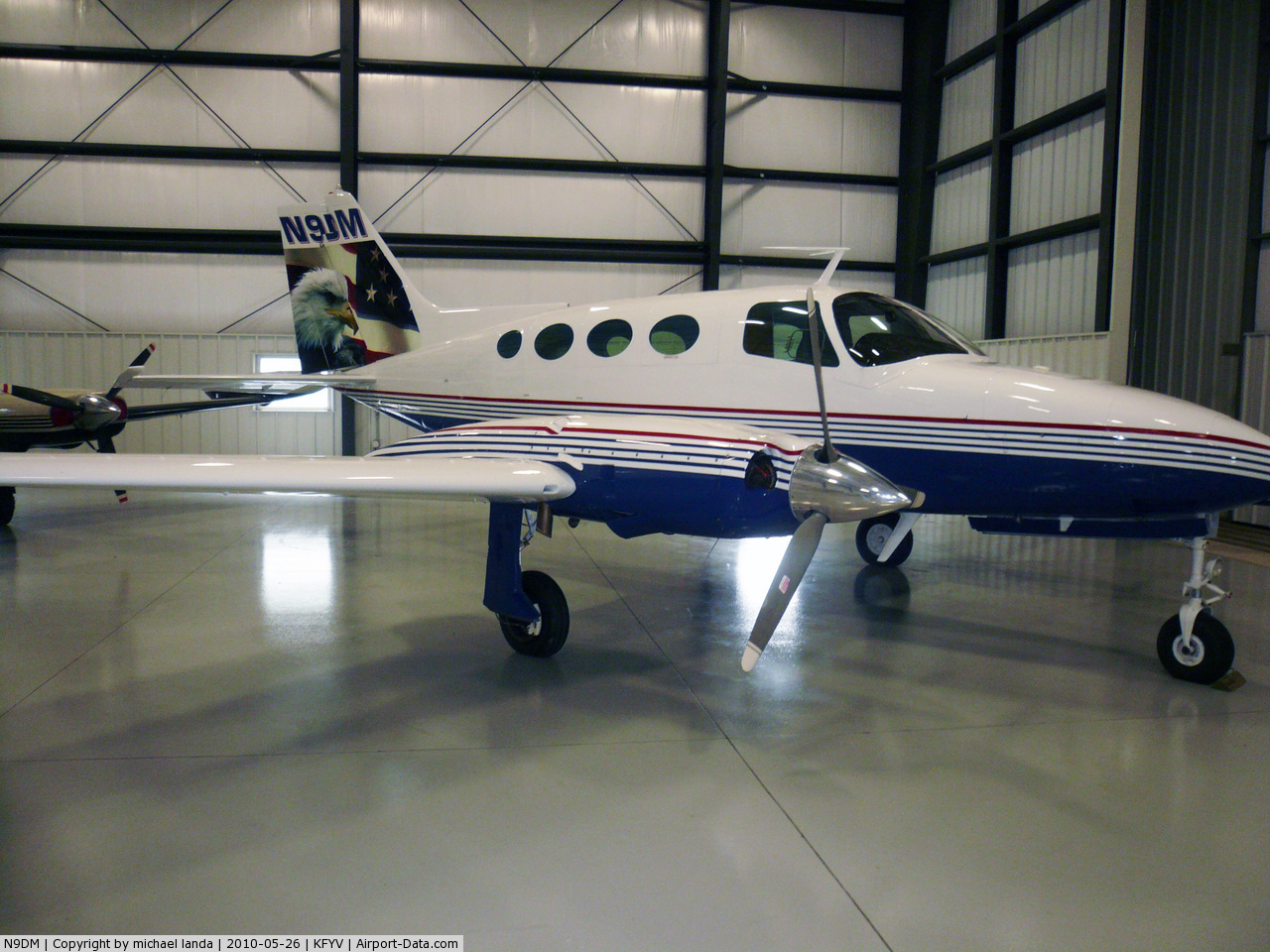
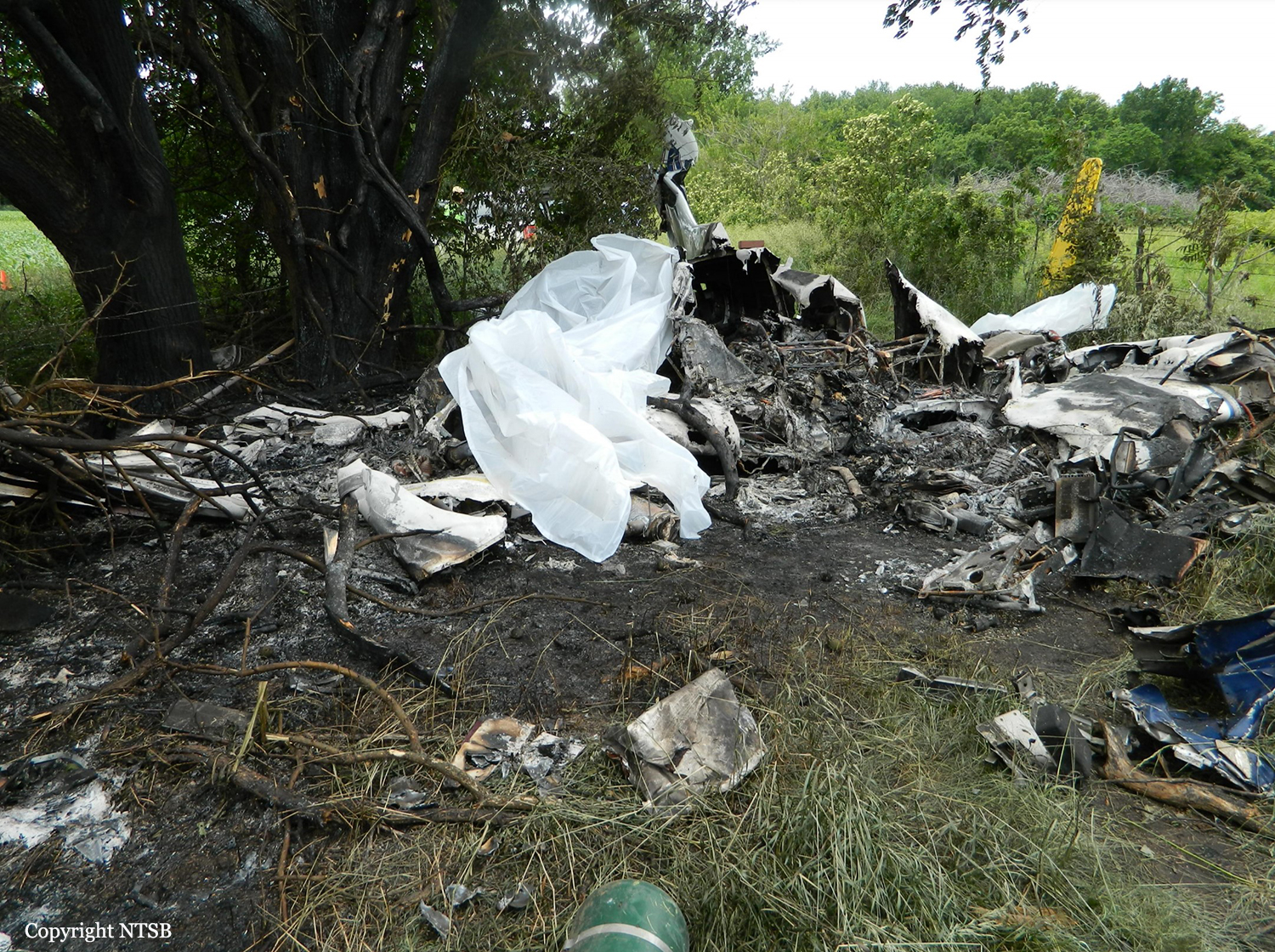
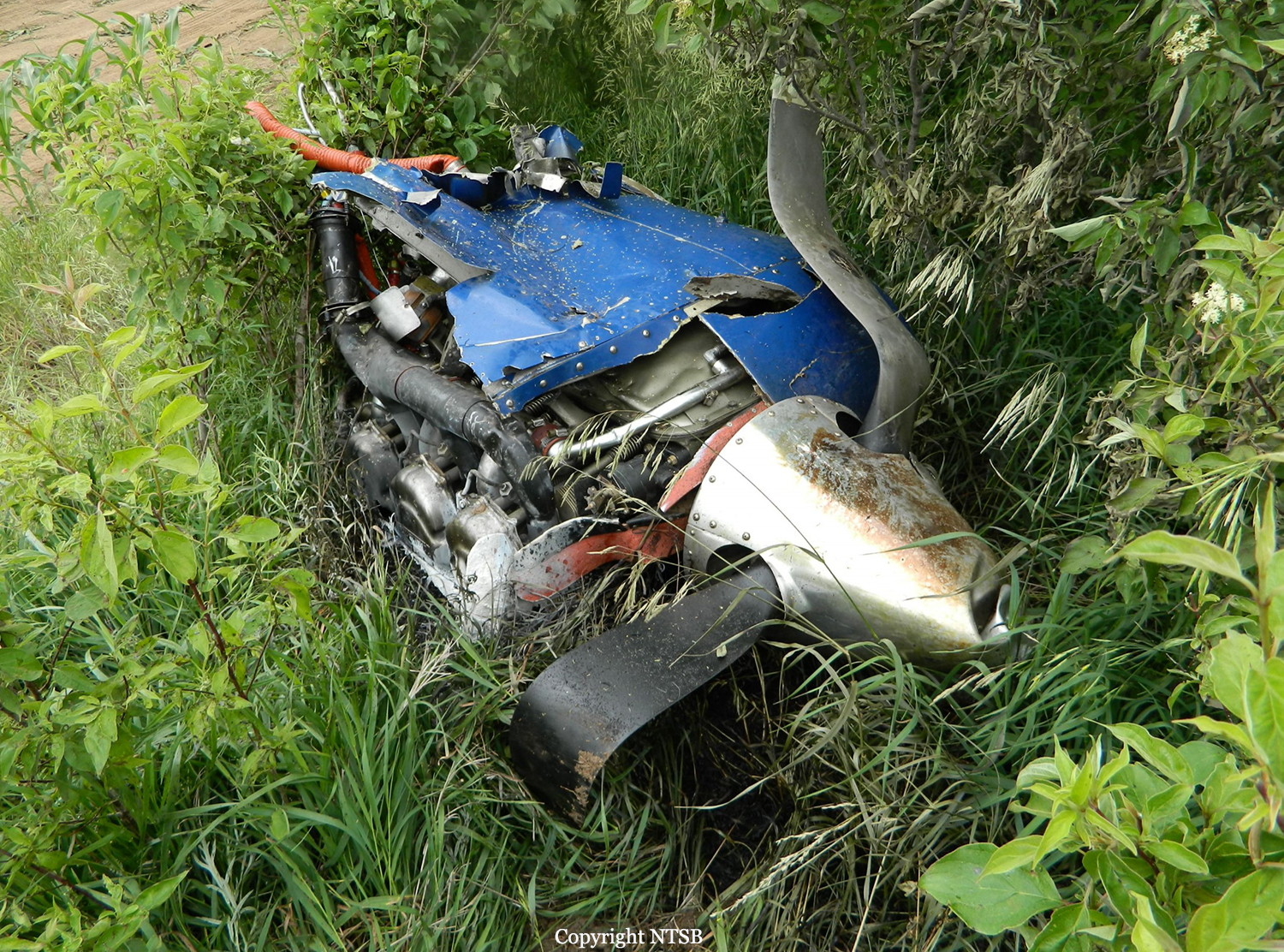
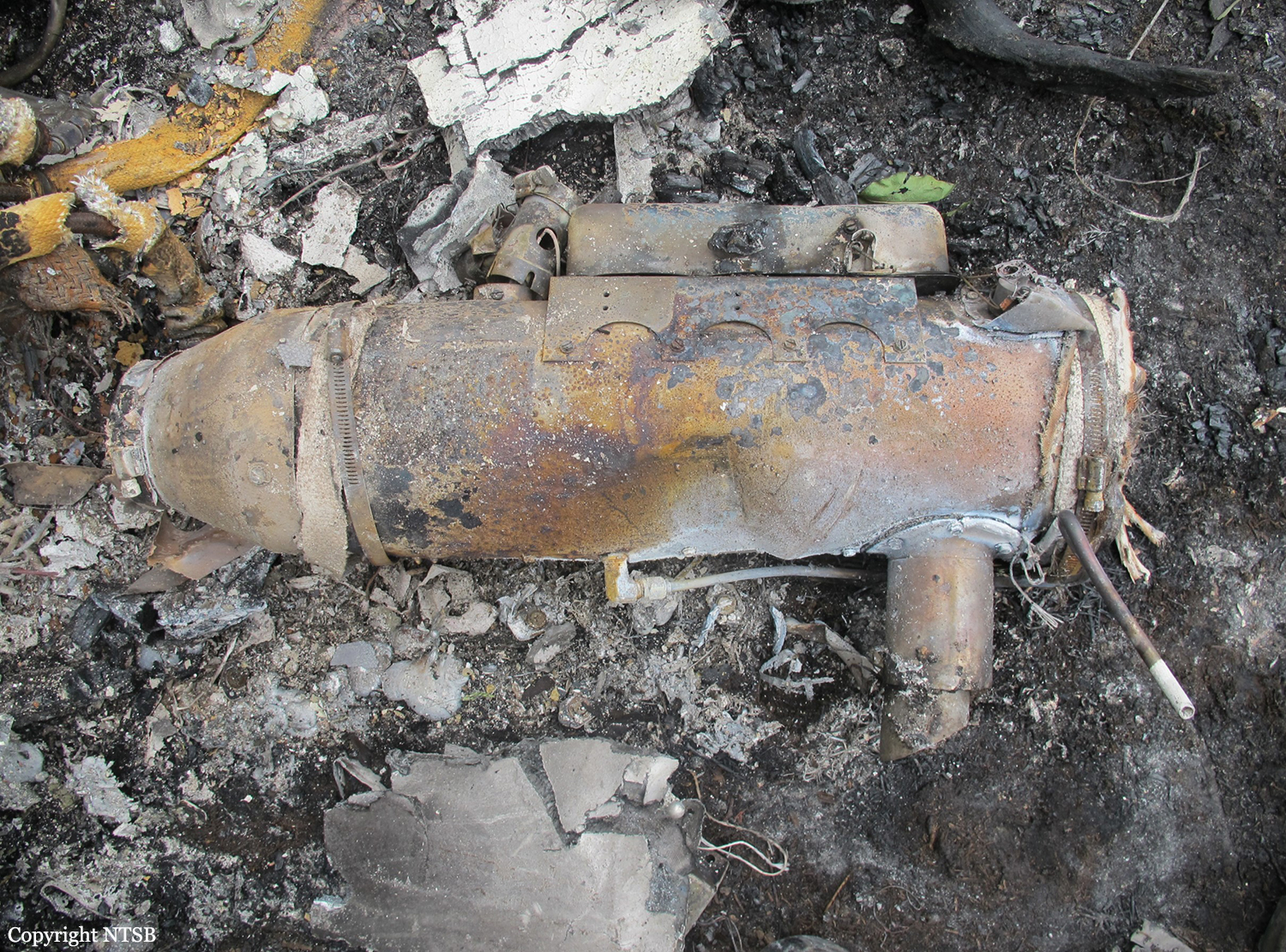
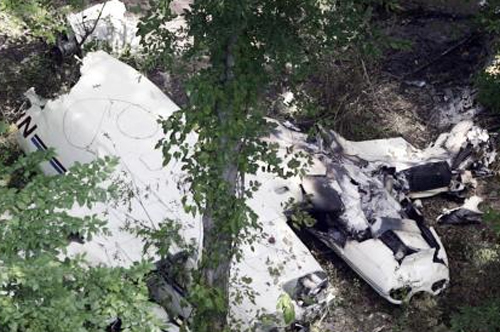
While en route to the destination airport, the pilot turned on the cabin heater and, afterward, an unusual smell was detected by the occupants and the ambient air temperature increased. When the pilot turned the heater off, dark smoke entered the cabin and obscured the occupants' vision. The smoke likely interfered with the pilot’s ability to identify a safe landing site. During the subsequent emergency landing attempt to a field, the airplane’s wing contacted the ground and the airplane cartwheeled. Examination of the airplane found several leaks around weld points on the combustion chamber of the heater unit. A review of logbook entries revealed that the heater was documented as inoperative during the most recent annual inspection. Although a work order indicated that maintenance work was completed at a later date, there was no logbook entry that returned the heater to service. There were no entries in the maintenance logbooks that documented any testing of the heater or tracking of the heater's hours of operation. A flight instructor who flew with the pilot previously stated that the pilot used the heater on the accident airplane at least once before the accident flight. The heater’s overheat warning light activated during that flight, and the heater shut down without incident. The flight instructor showed the pilot how to reset the overheat circuit breaker but did not follow up on its status during their instruction. There is no evidence that a mechanic examined the airplane before the accident flight. Regarding the overheat warning light, the airplane flight manual states that the heater “should be thoroughly checked to determine the reason for the malfunction” before the overheat switch is reset. The pilot’s use of the heater on the accident flight suggests that he did not understand its status and risk of its continued use without verifying that it had been thoroughly checked as outlined in the airplane flight manual. A review of applicable airworthiness directives found that, in comparison with similar combustion heater units, there is no calendar time limit that would require periodic inspection of the accident unit. In addition, there is no guidance or instruction to disable the heater such that it could no longer be activated in the airplane if the heater was not airworthy.
Probable cause:
The malfunction of the cabin heater, which resulted in an inflight fire and smoke in the airplane. Contributing to the accident was the pilot’s lack of understanding concerning the status of the airplane's heater system following and earlier overheat event and risk of its continued use. Also contributing were the inadequate inspection criteria for the cabin heater.
Final Report:

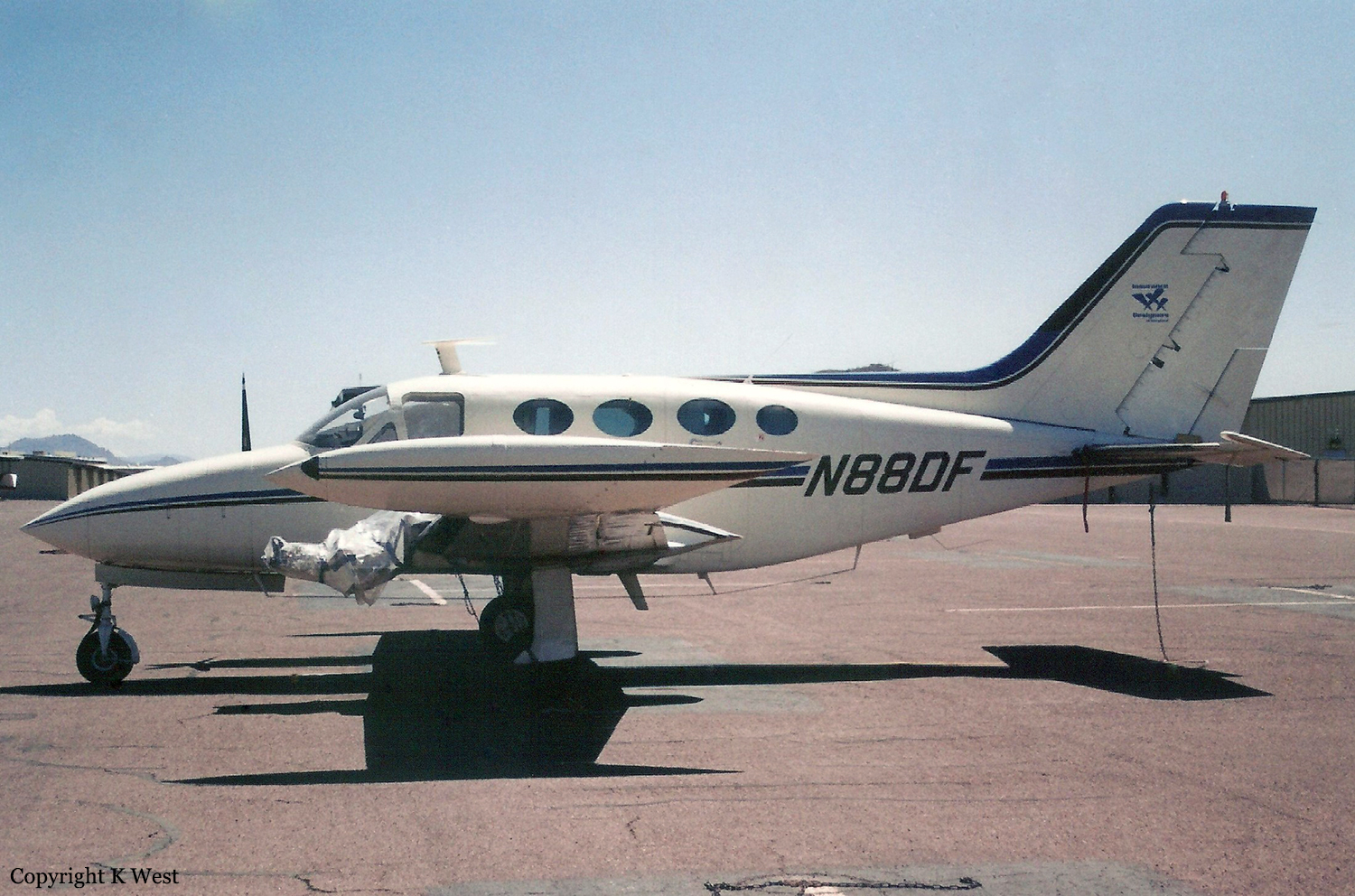
Crash of a Cessna 421A Golden I Eagle in Tulsa: 3 killed

Date & Time: Jul 10, 2010 at 2205 LT
Type of aircraft:
Operator:
Registration:
N88DF
Flight Type:
Survivors:
No
Schedule:
Pontiac – Tulsa
MSN:
421A-0084
YOM:
1968
Location:
Crew on board:
1
Crew fatalities:
Pax on board:
2
Pax fatalities:
Other fatalities:
Total fatalities:
3
Captain / Total flying hours:
592
Captain / Total hours on type:
67.00
Aircraft flight hours:
640
Circumstances:
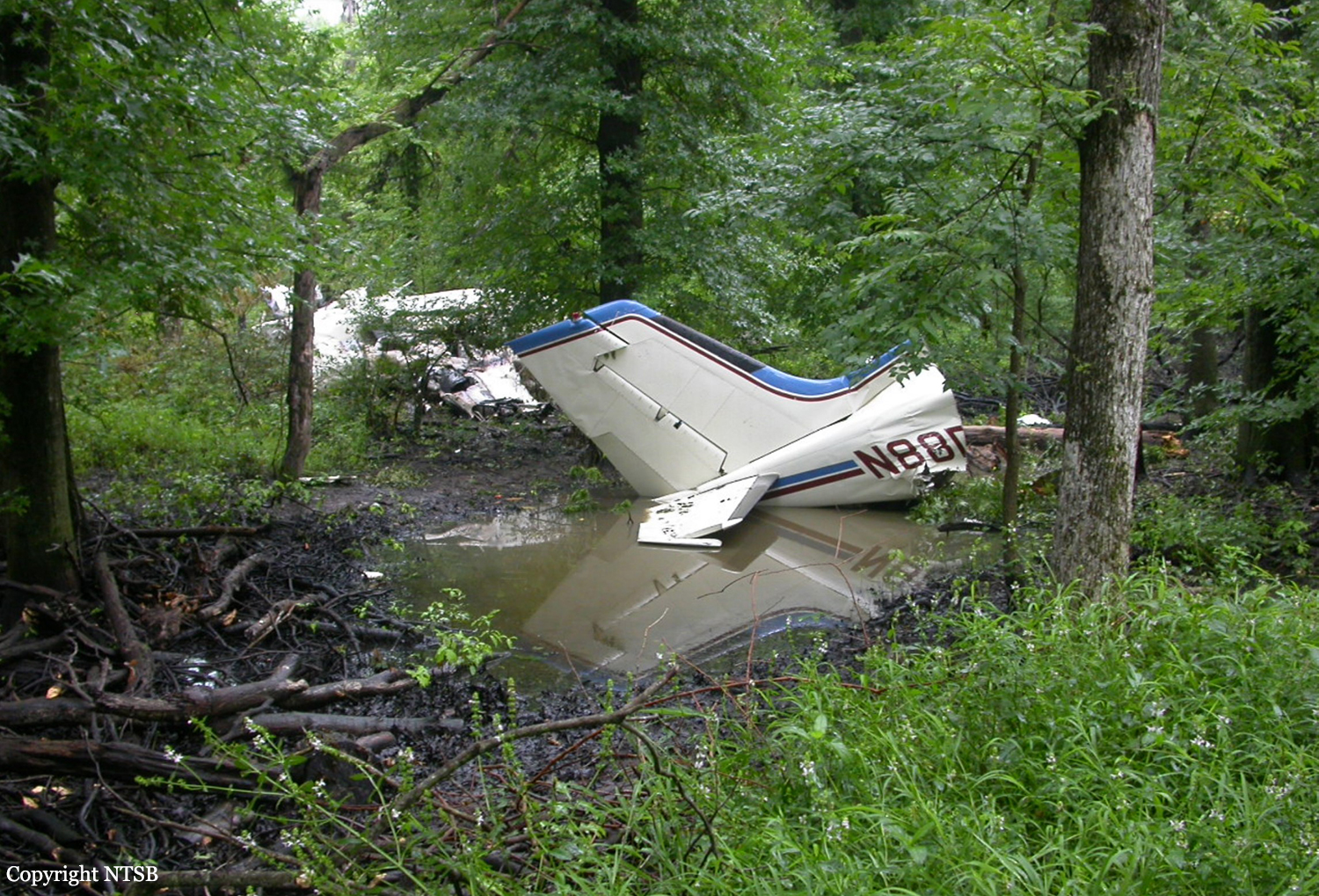
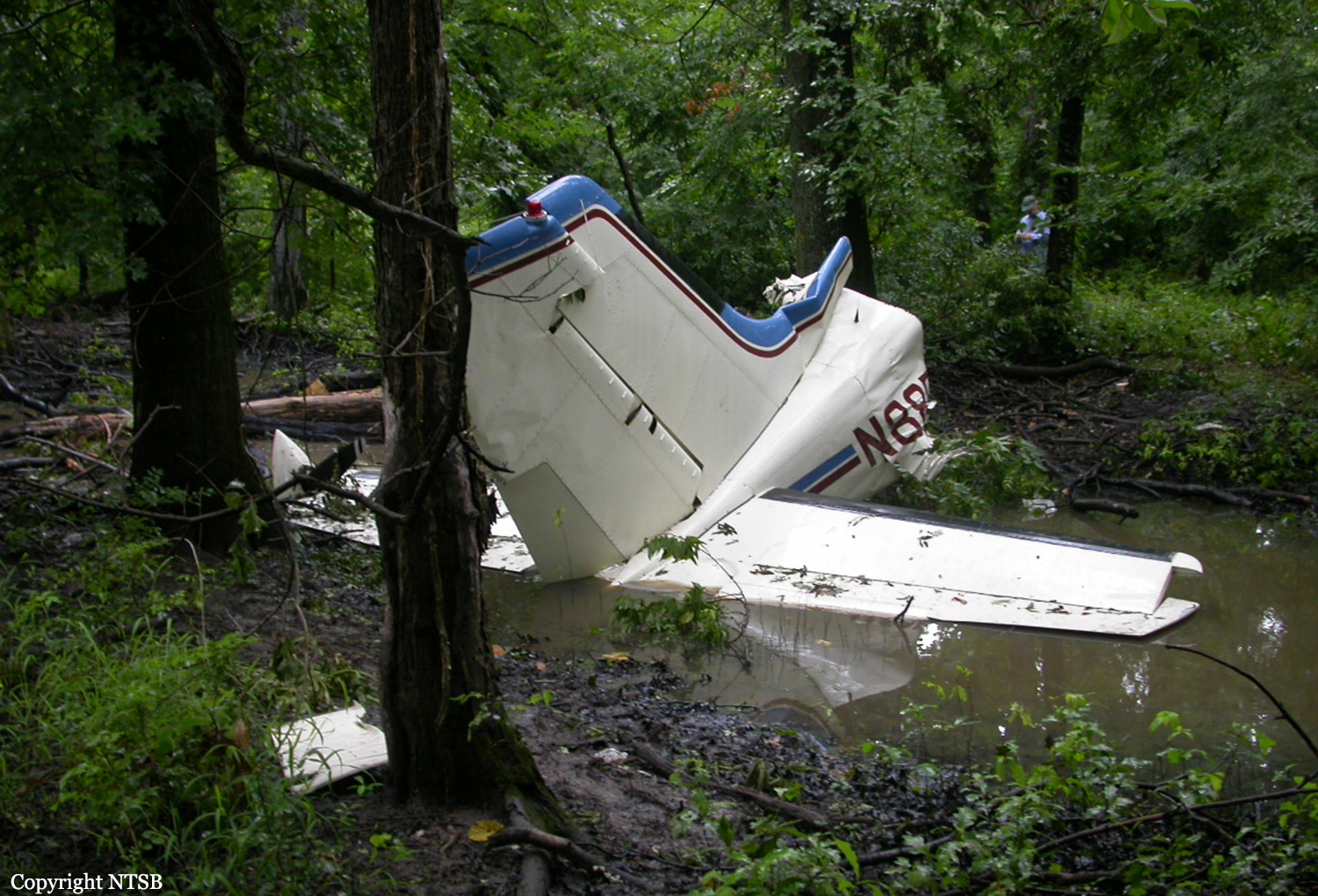
During the 3.5-hour flight preceding the accident flight, the airplane used about 156 gallons of the 196 gallons of usable fuel. After landing, the airplane was topped off with 156 gallons of fuel for the return flight. During the preflight inspection, a line serviceman at the fixed based operator observed the right main fuel tank sump become stuck in the open position. He estimated 5 to 6 gallons of fuel were lost before the sump seal was regained, but the exact amount of fuel lost could not be determined. The lost fuel was not replaced before the airplane departed. Data from an on board GPS unit indicate that the airplane flew the return leg at an altitude of about 4,500 feet mean sea level for about 4 hours. About 4 minutes after beginning the descent to the destination airport, the pilot requested to divert to a closer airport. The pilot was cleared for an approach to runway 18R at the new destination. While on approach to land, the pilot reported to the air traffic control tower controller, “we exhausted fuel.” The airplane descended and crashed into a forested area about 1/2 mile from the airport. Post accident examination of the right and left propellers noted no leading edge impact damage or signatures indicative of rotation at the time of impact. Examination of the airplane wreckage and engines found no malfunctions or failures that would have precluded normal operation. The pilot did not report any problems with the airplane or its fuel state before announcing the fuel was exhausted. His acceptance of the approach to runway 18R resulted in the airplane flying at least 1 mile further than if he had requested to land on runway 18L instead. If the pilot had declared an emergency and made an immediate approach to the closest runway when he realized the exhausted fuel state, he likely would have reached the airport. Toxicological testing revealed cyclobenzaprine and diphenhydramine in the pilot’s system at or above therapeutic levels. Both medications carry warnings that use may impair mental and/or physical abilities required for activities such as driving or operating heavy machinery. The airplane would have used about 186 gallons of fuel on the 4-hour return flight if the engines burned fuel at the same rate as the previous flight. The fuel lost during the preflight inspection and the additional 30 minutes of flight time on the return leg reduced the airplane’s usable fuel available to complete the planned flight, and the pilot likely did not recognize the low fuel state before the fuel was exhausted due to impairment by the medications he was taking.
Probable cause:
The pilot’s inadequate preflight fuel planning and management in-flight, which resulted in total loss of engine power due to fuel exhaustion. Contributing to the accident was the pilot’s use of performance-impairing medications.
Final Report:

Crash of a Dassault Falcon 20C in Jamestown

Date & Time: Dec 21, 2008 at 0100 LT
Type of aircraft:
Operator:
Registration:
N165TW
Flight Type:
Survivors:
Yes
Schedule:
Tulsa – Jamestown
MSN:
65
YOM:
1966
Crew on board:
2
Crew fatalities:
Pax on board:
0
Pax fatalities:
Other fatalities:
Total fatalities:
0
Captain / Total flying hours:
3028
Captain / Total hours on type:
1160.00
Copilot / Total flying hours:
2086
Copilot / Total hours on type:
80
Aircraft flight hours:
16360
Circumstances:
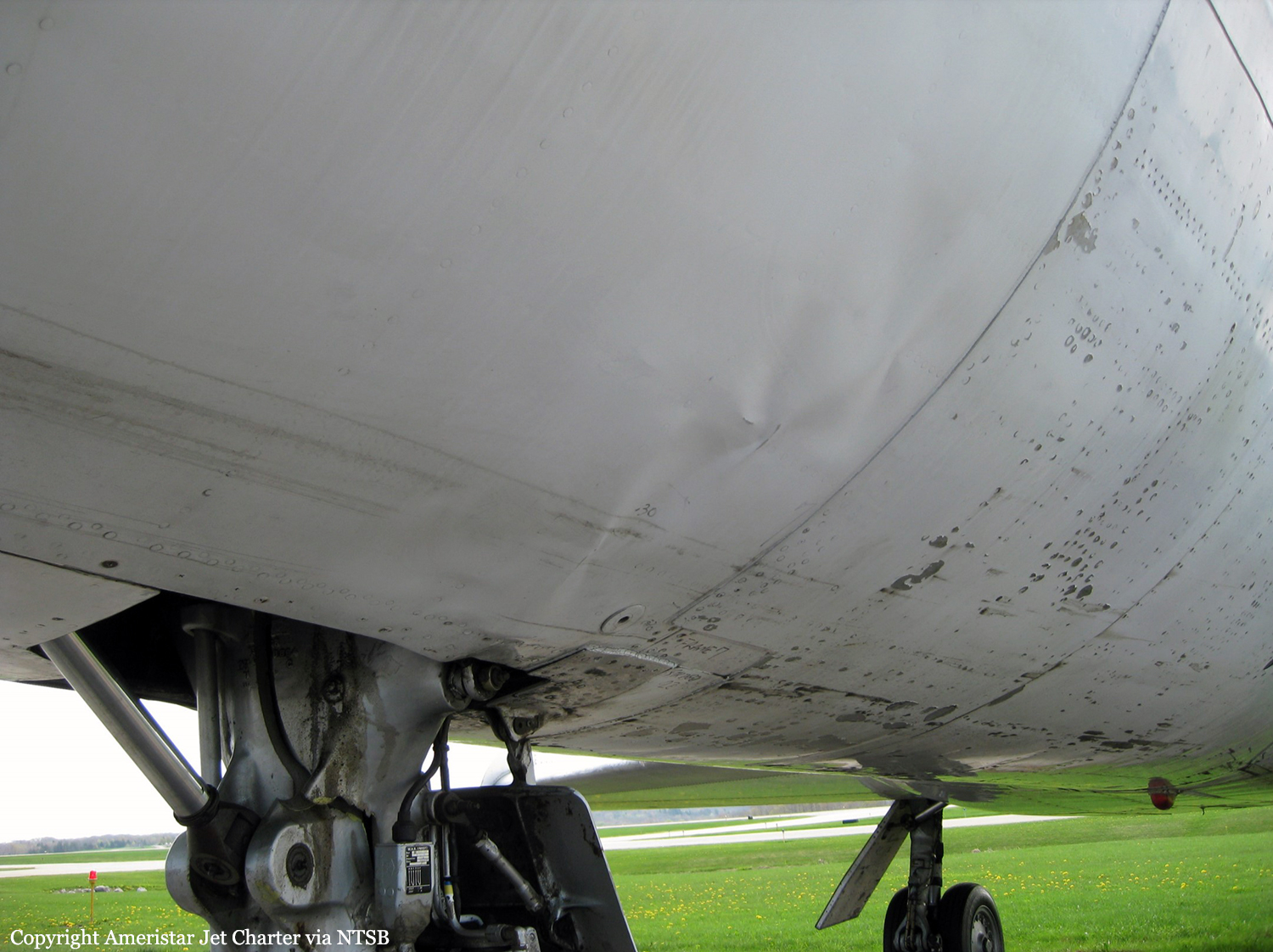
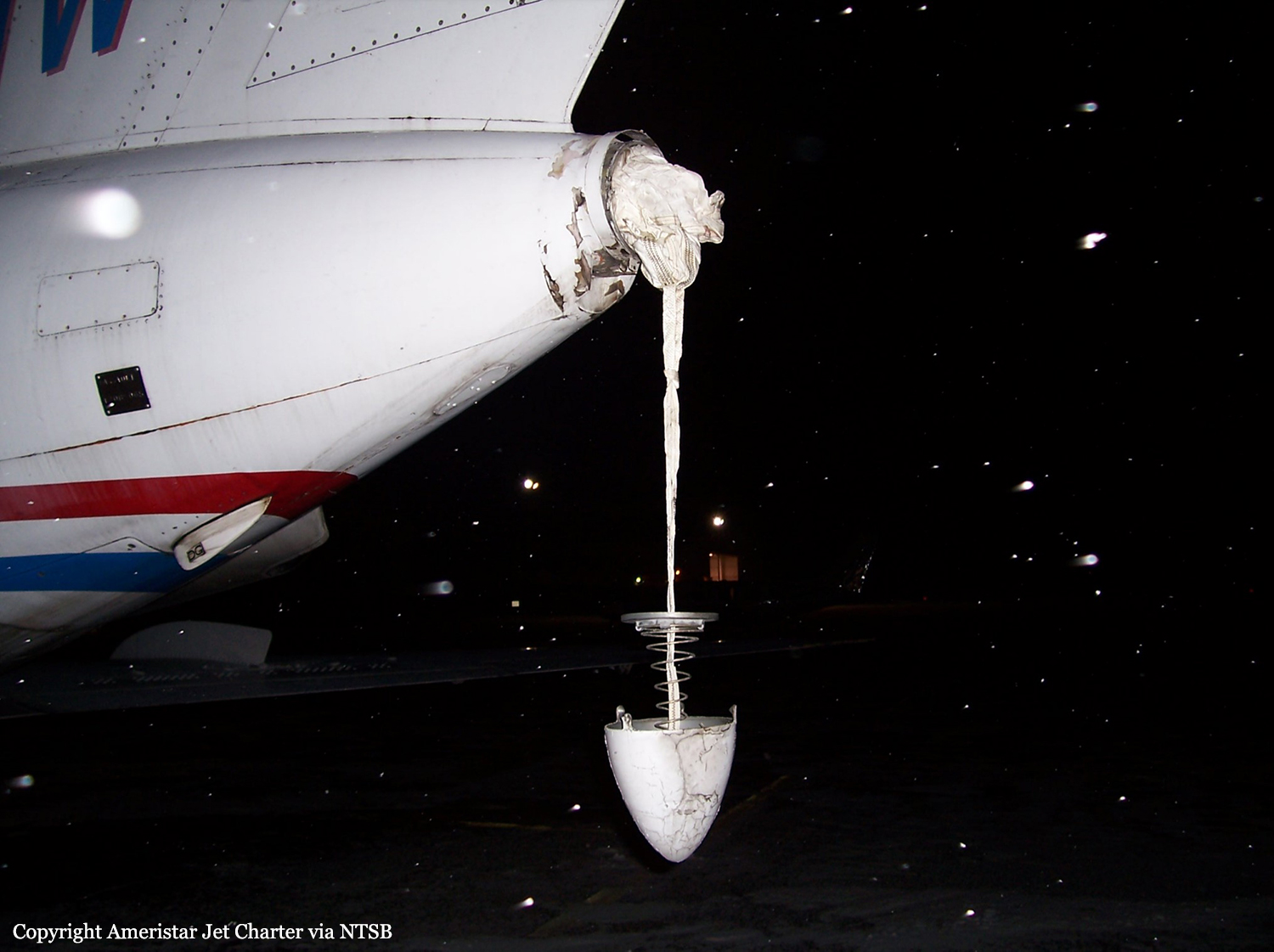
The co-pilot was performing a nighttime approach and landing to runway 25. No runway condition reports were received by the flight crew while airborne, and a NOTAM was in effect, stating, “thin loose snow over patchy thin ice.” After landing, the co-pilot called out that the airplane was sliding and the wheel brakes were ineffective. The captain took the controls, activated the air brakes, and instructed the co-pilot to deploy the drag chute. The crew could not stop the airplane in the remaining runway distance and the airplane overran the runway by approximately 100 feet. After departing the runway end, the landing gear contacted a snow berm that was the result of earlier plowing. The captain turned the airplane around and taxied to the ramp. Subsequent inspection of the airplane revealed a fractured nose gear strut and buckling of the fuselage. The spring-loaded drag chute extractor cap activated, but the parachute remained in its tail cone container. Both flight crewmembers reported that the runway was icy at the time of the accident and braking action was “nil.” The airport manager reported that when the airplane landed, no airport staff were on duty and had not been for several hours. He also reported that when the airport staff left for the evening, the runway conditions were adequate. The runway had been plowed and sanded approximately 20 hours prior to the accident, sanded two more times during the day, and no measurable precipitation was recorded within that time frame. The reason that the drag chute failed to deploy was not determined.
Probable cause:
The inability to stop the airplane on the remaining runway because of icy runway conditions. A factor was the failure of the drag chute to properly deploy.
Final Report:

Crash of a Piper PA-46-310P Malibu in Arlington: 2 killed

Date & Time: Feb 23, 2004 at 0849 LT
Registration:
N9103Z
Flight Phase:
Flight Type:
Survivors:
No
Schedule:
Panama City – Tulsa
MSN:
46-08028
YOM:
1986
Crew on board:
1
Crew fatalities:
Pax on board:
1
Pax fatalities:
Other fatalities:
Total fatalities:
2
Captain / Total flying hours:
5021
Captain / Total hours on type:
884.00
Aircraft flight hours:
2155
Circumstances:
The pilot received a preflight briefing from the Gainesville Automated Flight Service Station before departing on the instrument flight. The briefer advised the pilot of the potential for occasional moderate turbulence between 24,000 and 37,000 feet and on the current Convective SIGMET for embedded thunderstorms over southern Mississippi. The flight was in cruise flight at 24, 000 feet when the airplane encountered moderate to severe turbulence and heavy rain. The airplane descended from 24,000 feet to 3,100 feet in a descending right turn in 2 minutes and 10 seconds before radar contact was lost. The airplane was located 8 hours 26 minutes after the accident along a crash debris line that extended between 1.31 miles and 1.53 miles northwest of Arlington, Alabama. Airframe components recovered from the accident site were submitted to the NTSB Materials laboratory for examination. The examinations revealed all failures were consistent with overstress fracturing and there was no evidence of pre-existing conditions or fatigue damage. Examination of the airframe revealed that the airframe design limits were exceeded. The Pilot's Operating Handbook states the maximum structural cruising speed is 173 knots indicated airspeed or 170 knots calibrated airspeed. The co-pilot airspeed indicator at the crash site indicated 180 knots calibrated airspeed. The design maneuvering speed is 135 knots indicated airspeed or 133 knots calibrated airspeed.
Probable cause:
The pilots inadequate in-flight planning/decision and his failure to maintain aircraft control, resulting in an in-flight encounter with a thunderstorm and exceeding the design limits of the aircraft.
Final Report:

Crash of a Cessna 340A in Tomball: 1 killed

Date & Time: Dec 18, 1986 at 0621 LT
Type of aircraft:
Registration:
N8CD
Flight Phase:
Survivors:
No
Schedule:
Tomball - Tulsa
MSN:
340A-0727
YOM:
1979
Crew on board:
1
Crew fatalities:
Pax on board:
0
Pax fatalities:
Other fatalities:
Total fatalities:
1
Captain / Total flying hours:
2450
Captain / Total hours on type:
200.00
Aircraft flight hours:
2070
Circumstances:
The pilot took off in fog and light rain and climbed into clouds at about 300-400 feet above the ground while both landing lights were extended and illuminated. Also the airport's rotating beacon (located about a mile from the accident site) was flashing on the clouds according to a ground witness. Just after entering the clouds the pilot was issued a left turn from his present heading of 350° to a heading of 270° and told to contact departure control. He did not make this contact and he continued the left turn (now descending) to a heading of 210° at which time the aircraft collided with trees and a large electrical transmission line and then the ground. The engines were operating at a high power setting at the time of impact. All broken flight control cables revealed evidence of overstress separation. No evidence of preimpact mechanical failure or malfunction was found. The pilot, sole on board, was killed.
Probable cause:
Occurrence #1: in flight encounter with weather
Phase of operation: climb - to cruise
Findings
1. (c) directional control - not maintained - pilot in command
2. (f) equipment,other - improper use of - pilot in command
3. (c) proper altitude - not maintained - pilot in command
4. (c) spatial disorientation - pilot in command
5. (f) light condition - dark night
6. (f) weather condition - fog
7. (f) weather condition - rain
----------
Occurrence #2: in flight collision with object
Phase of operation: descent - uncontrolled
Findings
8. (f) object - wire, transmission (marked)
9. (f) object - tree(s)
----------
Occurrence #3: in flight collision with terrain/water
Phase of operation: descent - uncontrolled
----------
Occurrence #4: fire
Phase of operation: other
Final Report: