
Crash of a Douglas C-47B-10-DK in Caucasus: 23 killed

Date & Time: Mar 5, 1947 at 0953 LT
Operator:

Registration:
CCCP-L952
Flight Phase:
Survivors:
No
Site:
Schedule:
Tbilisi – Moscou-Vnoukovo
MSN:
14874/26319
YOM:
14
Flight number:
SU034
Country:
Region:
Crew on board:
4
Crew fatalities:
Pax on board:
19
Pax fatalities:
Other fatalities:
Total fatalities:
23
Aircraft flight hours:
2236
Circumstances:
About an hour and 13 minutes after departure from Tbilisi Airport, the crew decided to modify his route to save time. Few minutes later, while cruising vertical of the Caucasus Mountain Range, the crew encountered poor weather conditions when the aircraft hit the slope of a mountain. SAR operations were conducted but eventually suspended few days later as no trace of the aircraft nor the 23 occupants was found. The wreckage was found by walkers in an isolated and mountainous area of north Georgia on June 20, 1947.
Probable cause:
Wrong decision on part of the crew to change the itinerary, against all published procedures and navigational rules.

Crash of a Douglas C-47A-25-DL on Mt Guram: 6 killed

Date & Time: Apr 2, 1946
Operator:
Registration:
CCCP-L924
Flight Phase:
Survivors:
No
Site:
Schedule:
Tbilisi – Rostov-on-Don
MSN:
9429
YOM:
1943
Country:
Region:
Crew on board:
4
Crew fatalities:
Pax on board:
2
Pax fatalities:
Other fatalities:
Total fatalities:
6
Aircraft flight hours:
1864
Circumstances:
Few minutes after takeoff from Tbilisi Airport, the crew decided to modify his route without any coordination with ATC. Shortly later, while flying over the Caucasian mountains in poor weather conditions, the aircraft hit the slope of Mt Guram. As the aircraft failed to arrive in Rostov, SAR operations were conducted but eventually suspended few days later as no trace of the aircraft nor the crew was found. The wreckage was located by walkers on July 20, 1947, at an altitude of 3,000 meters.
Probable cause:
At the time of the accident, the aircraft was off track by 93 km relating to the flight plan that was filed. The accident resulted in a controlled flight into terrain as the crew was unable to distinguish the mountain range in poor visibility.

Crash of an Armstrong Whitworth AW.41 Albermale near Yevlakh

Date & Time: Jun 26, 1943
Operator:
Registration:
CCCP-L403
Flight Phase:
Survivors:
Yes
Schedule:
Moscow – Hajigabul – Tbilisi
MSN:
P1640
YOM:
1943
Location:
Country:
Region:
Crew on board:
4
Crew fatalities:
Pax on board:
3
Pax fatalities:
Other fatalities:
Total fatalities:
0
Circumstances:
On the leg from Hajigabul to Tbilisi of a route proving flight from Moscow-Vnukovo to Tbilisi when the crew decided to land at Yevlakh (Azerbaijan) due to an oil leak on the left engine. But the "Exactor" hydraulic control system of the propellers failed due to a design fault so that propeller pitch increased and the propeller thrust decreased, making it impossible to reach Yevlakh Airfield. The crew made a forced landing near Yevlakh and the aircraft was considered as damaged beyond repair as the tail broke off. All 4 crew members and 3 passengers were slightly injured.

Crash of a GVF PS-84 on Mt Ketan-Dag: 2 killed

Date & Time: Mar 2, 1943 at 1250 LT
Type of aircraft:
Operator:
Registration:
CCCP-L3495
Flight Phase:
Survivors:
Yes
Site:
Schedule:
Yerevan - Tbilisi
MSN:
184 11 04
YOM:
1941
Country:
Region:
Crew on board:
5
Crew fatalities:
Pax on board:
1
Pax fatalities:
Other fatalities:
Total fatalities:
2
Circumstances:
Because weather conditions deteriorated over Armenia, all flights were cancelled and airplane and crew were grounded. The captain refused to stay in Yerevan, disobeyed this ordered and took off at 1230LT with four other crew members and one passenger on board on a flight to Tbilisi. About 20 minutes into the flight, while cruising at an altitude of 2,300 metres, weather conditions worsened. In poor visibility, the airplane impacted the slope of Mt Ketan-Dag located some 45 km northeast of Yerevan. Four crew members were seriously injured. The mechanic and the passenger were killed.
Probable cause:
The captain knowingly made the decision to take off despite not being authorized to do so and despite weather conditions that did not permit a safe flight. Investigators said that the pilot demonstrated negligence, recklessness and imprudence. Furthermore, he continued the flight at an insufficient altitude despite being thoroughly familiar with the area. Controlled flight into terrain.

Crash of a Tupolev G-2 on Mt Hatis

Date & Time: Dec 10, 1942
Type of aircraft:
Operator:
Registration:
CCCP-L2009
Flight Phase:
Survivors:
Yes
Site:
Schedule:
Ashgabat – Krasnovodsk – Baku – Tbilisi – Yerevan
MSN:
22 164
YOM:
1937
Location:
Country:
Region:
Crew on board:
5
Crew fatalities:
Pax on board:
0
Pax fatalities:
Other fatalities:
Total fatalities:
0
Circumstances:
On December 9, the airplane departed Ashgabat on a flight to Yerevan with intermediate stops in Krasnovodsk, Baku and Tbilisi. The last sector to Yerevan was postponed to December 10 and the crew passed the overnight in Tbilisi. The airplane took off at 1140LT and weather conditions were considered as good. Approaching Lake Sevan at an altitude of 3,700 metres, weather conditions deteriorated with clouds and snow falls. The pilot attempted to return to Tbilisi but this was too late and as the airplane was flying over a mountainous area, the pilot finally decided to continue to Yerevan. Descending to the altitude of 2,500 metres in clouds, the airplane impacted the north slope of Mt Hatis (2,528 metres high) located 22 km northeast of Yerevan. The airplane was damaged beyond repair and all five crew members were rescued, among them four were injured.
Probable cause:
The main reason for the accident was the failure to report to Tbilisi a snowstorm coming from Yerevan, which had started at 1215LT over the Sevan area. According to available weather information, confirmed by forecasts, the pilot, after crossing a pass at an altitude of 3,700 metres, descended below fragmented clouds to an altitude of 2,700 metres, according to the altimeter. After flying for several minutes below the clouds, he encountered snowfall and was unable to return as the clouds had become compact.
The following factors were identified:
- The presence of a storm in the Sevan area and the associated low pressure area distorted the actual altitude readings.
- A spontaneous and unstudied short-term weather change.
- The telegraph operators at Sevan-Yerevan showed criminal negligence in transmitting the warning message. As a result, the message, received at 1220LT as scheduled, was transmitted to Yerevan at 1237LT, then to Tbilisi at 1347LT (1 hour and 10 minutes after receipt) and never reached Tbilisi. The absence of this information deprived the pilot of the opportunity to warn him of the storm in the Sevan region before approaching the pass.

Crash of a Tupolev PS-35bis near Shamakhi: 5 killed

Date & Time: Nov 11, 1942 at 1300 LT
Operator:
Registration:
CCCP-L2483
Flight Phase:
Survivors:
Yes
Site:
Schedule:
Baku – Tbilisi
MSN:
2/0
YOM:
1938
Country:
Region:
Crew on board:
5
Crew fatalities:
Pax on board:
1
Pax fatalities:
Other fatalities:
Total fatalities:
5
Circumstances:
The airplane departed Baku-Bina Airport at 1245LT on a special flight to Tbilisi. On board were five crew members and a technician from the Air Force. About 15 minutes into the flight, while cruising at an altitude of 800 metres in clouds, the airplane hit the slope of a mountain (900 metres high) located near the city of Shamakhi, just above the Dzheirankechmaz River. The passenger and the copilot were injured while four other crew members were killed. The copilot died the following day from injuries sustained.
Probable cause:
The accident was caused by the pilot's failure to follow a safe flight path. The flight took place over mountainous, cloud-covered terrain, instead of over flat ground where the cloud height would have allowed a visual flight. What's more, the route chosen by the pilot was not foreseen in the weather forecast he had been given. Controlled flight into terrain.

Crash of a Kalinin K-5 in Tbilisi

Date & Time: Sep 14, 1942
Type of aircraft:
Operator:
Registration:
CCCP-L566
Flight Type:
Survivors:
Yes
MSN:
57
YOM:
1930
Country:
Region:
Crew on board:
2
Crew fatalities:
Pax on board:
0
Pax fatalities:
Other fatalities:
Total fatalities:
0
Circumstances:
Upon landing at Tbilisi Airport, the airplane was caught by a strong gust of wind. It first veered off runway to the left then to the right and crashed. Both crew members were rescued.
Probable cause:
At the time of the accident, the wind component was up to 24 mps (86 km/h) which is above tolerated values. The airport authority did not take the appropriate decision and led the crew to land in such conditions.

Crash of a Tupolev ANT-40 (PS-41) on Mt Ninikas-Tsikhe: 3 killed

Date & Time: Jun 3, 1942 at 1253 LT
Operator:
Registration:
CCCP-L3527
Flight Phase:
Survivors:
No
Site:
Schedule:
Tbilisi – Ordzonikidze – Mineralnye Vody – Krasnodar
MSN:
20/214
YOM:
1939
Country:
Region:
Crew on board:
3
Crew fatalities:
Pax on board:
0
Pax fatalities:
Other fatalities:
Total fatalities:
3
Aircraft flight hours:
602
Circumstances:
The airplane departed Tbilisi Airport at 1233LT on a flight to Krasnodar with intermediate stops in Ordzonikidze (Vladikavkaz) and Mineralnye Vody. After departure, the crew climbed to an altitude of 2,500 metres then continued over the Caucasian Mountain Range. As weather conditions deteriorated, the pilot climbed to an altitude of 4,000 metres and realized it would not be possible to pass over the mountains so he decided to fly to the east, direction Baku. Shortly later, while flying at an altitude of 4,000 metres, the airplane caught fire in flight and crashed on the slope of Mt Ninikas-Tsikhe, bursting into flames. The airplane was destroyed and all three crew members were killed.
Probable cause:
The exact cause of the in-flight fire could not be determined with certainty.

Crash of a Polikarpov P-5 in Tbilisi

Date & Time: Oct 10, 1938
Type of aircraft:
Operator:
Registration:
CCCP-L1560
Flight Phase:
Survivors:
Yes
Schedule:
Tbilisi - Tbilisi
MSN:
8474
YOM:
1934
Country:
Region:
Crew on board:
1
Crew fatalities:
Pax on board:
1
Pax fatalities:
Other fatalities:
Total fatalities:
0
Circumstances:
The Director of the Civil Aviation Authority of Georgia and the Director of the Airport of Tbilisi departed Tbilisi that day on a P-5 to proceed to the north to try to locate a Tupolev ANT-40 (PS-40) that was missing since September 23. After takeoff, the airplane entered clouds and after few minutes, the pilot was able to climb and to continue over the cloud layer. Nevertheless, all surrounding mountains were shrouded in clouds so the pilot decided to return to Tbilisi. While descending through clouds, the pilot lost control of the airplane that dove into the ground and crashed in a wooded area near the airport. Both occupants were seriously injured.
Probable cause:
The crew failed to check the weather conditions prior to departure.

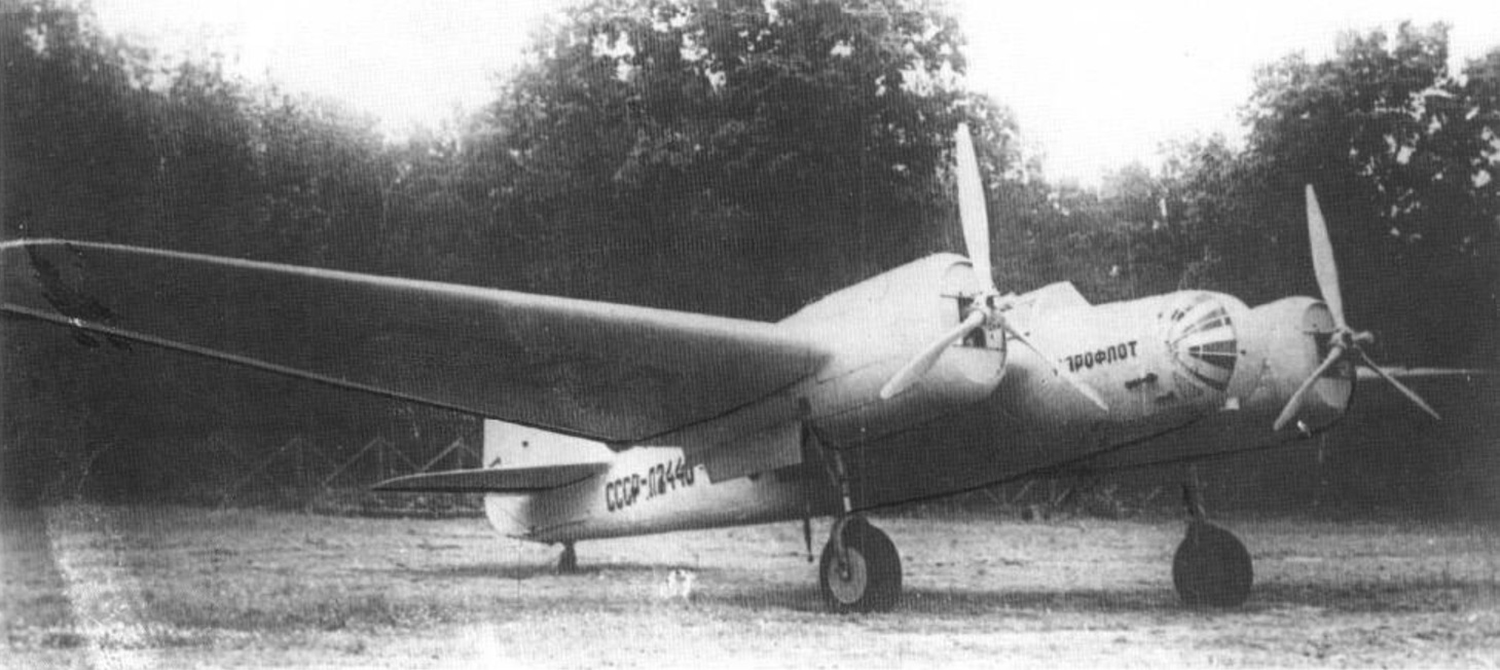
Crash of a Tupolev ANT-40 near Napareuli: 3 killed

Date & Time: Sep 23, 1938 at 0515 LT
Operator:
Registration:
CCCP-L2446
Flight Phase:
Flight Type:
Survivors:
No
Site:
Schedule:
Tbilisi – Rostov-on-Don – Moscow
MSN:
8/95
YOM:
1938
Country:
Region:
Crew on board:
3
Crew fatalities:
Pax on board:
0
Pax fatalities:
Other fatalities:
Total fatalities:
3
Circumstances:
The twin engine aircraft departed Tbilisi at 0442LT on a cargo flight to Moscow with an intermediate stop in Rostov with three crew members on board. 33 minutes into the flight, radio contact was lost after the airplane impacted the slope of a mountain located 22 km north-northeast of Napareuli. As the airplane failed to arrive in Rostov, SAR operations were initiated. On 28 October 1938, the wreckage was found by two locals in a ravine. All three crew members were killed.
Probable cause:
The direct cause of the accident was the pilot's violation of §53 of the Flight Manual (leaving the route). According to the conclusion of the Main Inspectorate of ATC, the main cause of the crash was Aeroflot's insistence on a one-day flight, which the Head of the Georgian ATC did not protest, not taking into account the time of year and overestimating the qualities of the pilot, who had insufficient training on this type of aircraft. The responsable of the accident is the Head of the Main Directorate of Civil Aviation, who organized the unnecessary high-speed flight and committed a number of violations of the Flight Manual. Another person responsible for the crash was the head of the Georgian Air Traffic Control Directorate, who had released the plane in unstable weather conditions and had no radio navigation equipment on the route. The detection of the aircraft near Telovo can be attributed to wind drift in the absence of radio navigation facilities, rather than being deliberate.