Zone

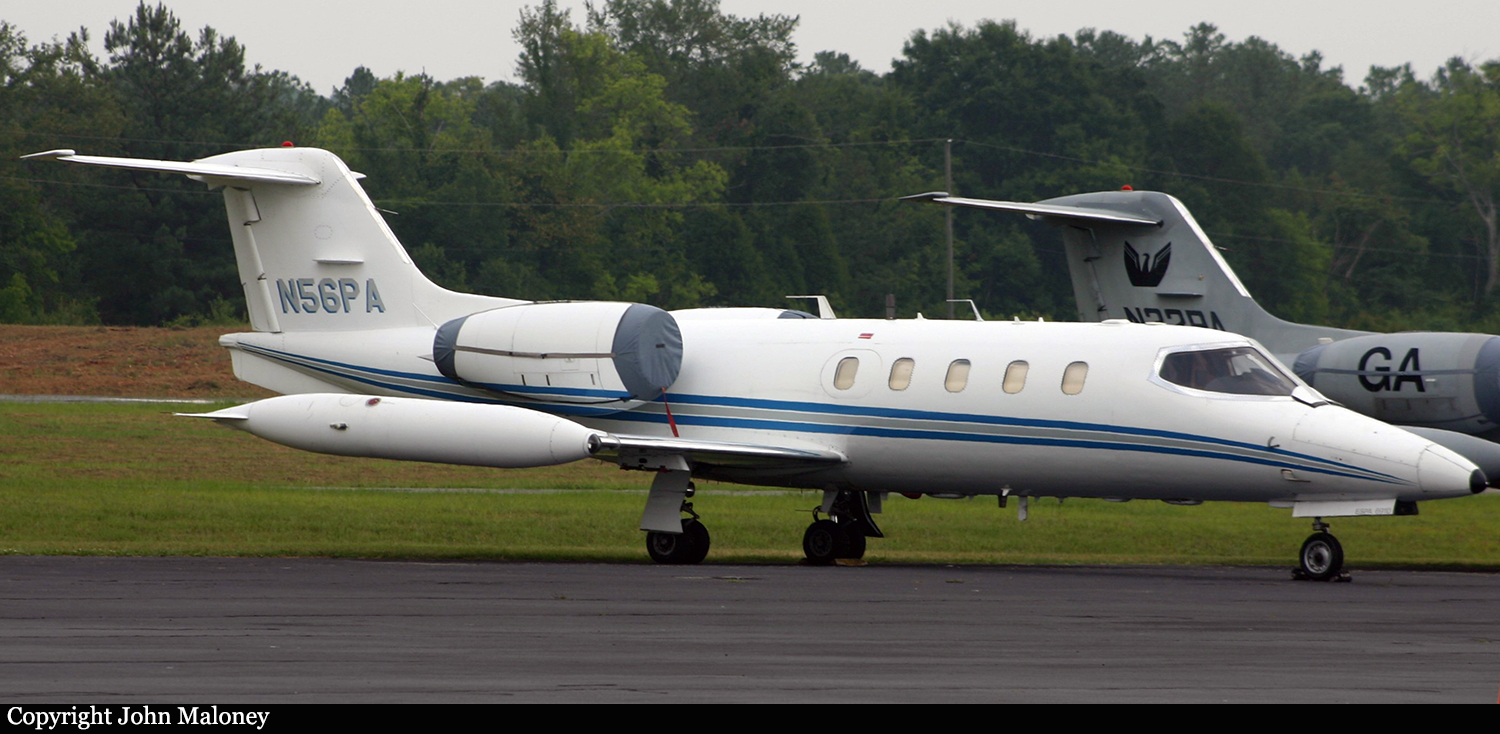
Crash of a Learjet 36A off San Clemente NAS: 3 killed

Date & Time: May 10, 2023 at 0749 LT
Type of aircraft:
Operator:
Registration:
N56PA
Flight Phase:
Flight Type:
Survivors:
No
Schedule:
Point Mugu - Point Mugu
MSN:
36-023
YOM:
1976
Flight number:
Fenix 01
Crew on board:
3
Crew fatalities:
Pax on board:
0
Pax fatalities:
Other fatalities:
Total fatalities:
3
Captain / Total flying hours:
10300
Captain / Total hours on type:
5700.00
Copilot / Total flying hours:
1013
Copilot / Total hours on type:
844
Aircraft flight hours:
18807
Circumstances:
The accident airplane took off as the lead airplane in formation with a second Lear Jet airplane flying as wingman in a close formation position. The purpose of the flight was to participate in an exercise with the United States Navy in an over-water training area. Shortly after entering the training area at 15,000 ft mean sea level (msl) the wingman positioned on the right side of the accident airplane, observed the flaps on the accident airplane were partially extended. They notified the pilot of the accident airplane who acknowledged the radio call. The wingman then observed the flaps retract and observed white or gray colored “smoke or gas” coming from the left aft side of the airplane. The pilot in the accident airplane then radioed that they detected an odor in the cabin. Seconds later, the wingman observed red fluid on the underside of the tail cone followed by flames coming from around the aft equipment bay (tail cone) access door. They informed the accident pilots that their airplane was on fire and the accident pilot declared an emergency along with their intentions to land at a nearby airfield on the island. The wingman took over leading the formation and maneuvered in front of the accident airplane. The wingman last observed and heard radio transmissions from the accident airplane a short time later as they descended through about 7000 ft msl. The flight was above an overcast cloud layer that obstructed the view of the island at that time. Recorded ADS-B data showed that the accident airplane subsequently made a series of descending turns before the data ended. The airplane wreckage was located underwater about 4 miles northwest of the last ADS-B data point. The wreckage was highly fragmented, and the debris field extended several hundred feet along the ocean floor. Salvage operations were able to recover about 40 percent of the airplane wreckage. Examination of the wreckage showed areas of smoke and fire damage in portions of the airplane from the center wing fuselage outboard through the left- and right-wing roots and aft throughout the empennage. The aft equipment bay forward bulkhead, which also served as the fuselage fuel tank aft bulkhead, exhibited damage on the upper left side consistent with exposure to a focused heat source such as a fire from a leak in a pressurized fuel or hydraulic line. Additional evidence of focused fire damage was identified in the left engine pylon, which was located outboard and adjacent to the aft equipment bay. The effected area of the pylon contained engine fire detection circuits. Examination of the hydraulic shutoff valves attached to the hydraulic reservoir found that the left hydraulic shutoff valve was closed and the right valve was in the open position. The position of the left hydraulic shutoff valve indicates the aircrew likely shut down the left engine due to a fire indication (A hydraulic valve will close if the FIRE PULL tee-handle switch is activated by the flight crew in the event an engine fire is detected). Investigators were unable to determine if the witnessed flap extension and retraction was initiated by activation of the flap selector switch or induced by fire damage. The aft equipment bay houses electrical equipment capable of providing an ignition source for a fire, and hydraulic and fuel system components capable of providing fuel for a fire in the event of a leak. The left fuel motive flow line was intact from the fuel pump up to the fuselage fitting, where the line passes through the fuselage skin into the aft equipment bay near the aft left engine mount. The fuselage fitting had the stainless-steel fuel line and b-nut attached on the outboard, engine side. The inboard, aft equipment bay side of the fitting did not have an aluminum b-nut attached or the line that connects the fitting to the motive flow valve. The left engine hydraulic pressure line and PT2 line, which pass through the fuselage into the aft equipment bay adjacent to the motive fuel line, each had aluminum b-nuts present on the interior side of their respective fuselage fittings and the interior lines for each was sheared at the fitting. The left fuel motive flow fuselage fitting and the hydraulic fluid return fitting were examined. No thermal damage was observed on the outboard nuts and attached portions of tubing. Examination of the threads on the inboard side of the motive flow fitting did not exhibit evidence of thread stripping and comparison between the two fittings did not reveal any physical differences to explain why one nut remained attached and the other did not. The reason the motive flow nut was missing from the fitting could not be determined. Observed fire and heat damage patterns indicate the fire likely started in proximity to the where the pressurized fuel motive flow line connected to the firewall fitting where the missing b-nut was located. A leak from the pressurized motive flow line would have sustained and allowed an uncontrollable fire to develop. The sustained fire likely affected controllability of the airplane and resulted in the pilots’ loss of control of the airplane.
Probable cause:
The pilots’ loss of airplane control following a catastrophic fire that started on the left side of the aft equipment bay (tail cone). The fire likely initiated from a leak from the left fuel motive flow line due to a b-nut that loosened for reasons that could not be determined based on available evidence.
Final Report:
Crash of a Boeing 707-321B at Point Mugu NAS

Date & Time: May 18, 2011 at 1727 LT
Type of aircraft:
Operator:
Registration:
N707AR
Flight Phase:
Flight Type:
Survivors:
Yes
Schedule:
Point Mugu NAS - Point Mugu NAS
MSN:
20029/790
YOM:
1969
Flight number:
OME70
Crew on board:
3
Crew fatalities:
Pax on board:
0
Pax fatalities:
Other fatalities:
Total fatalities:
0
Captain / Total flying hours:
5117
Captain / Total hours on type:
2730.00
Copilot / Total flying hours:
4052
Copilot / Total hours on type:
2900
Aircraft flight hours:
47856
Aircraft flight cycles:
15186
Circumstances:
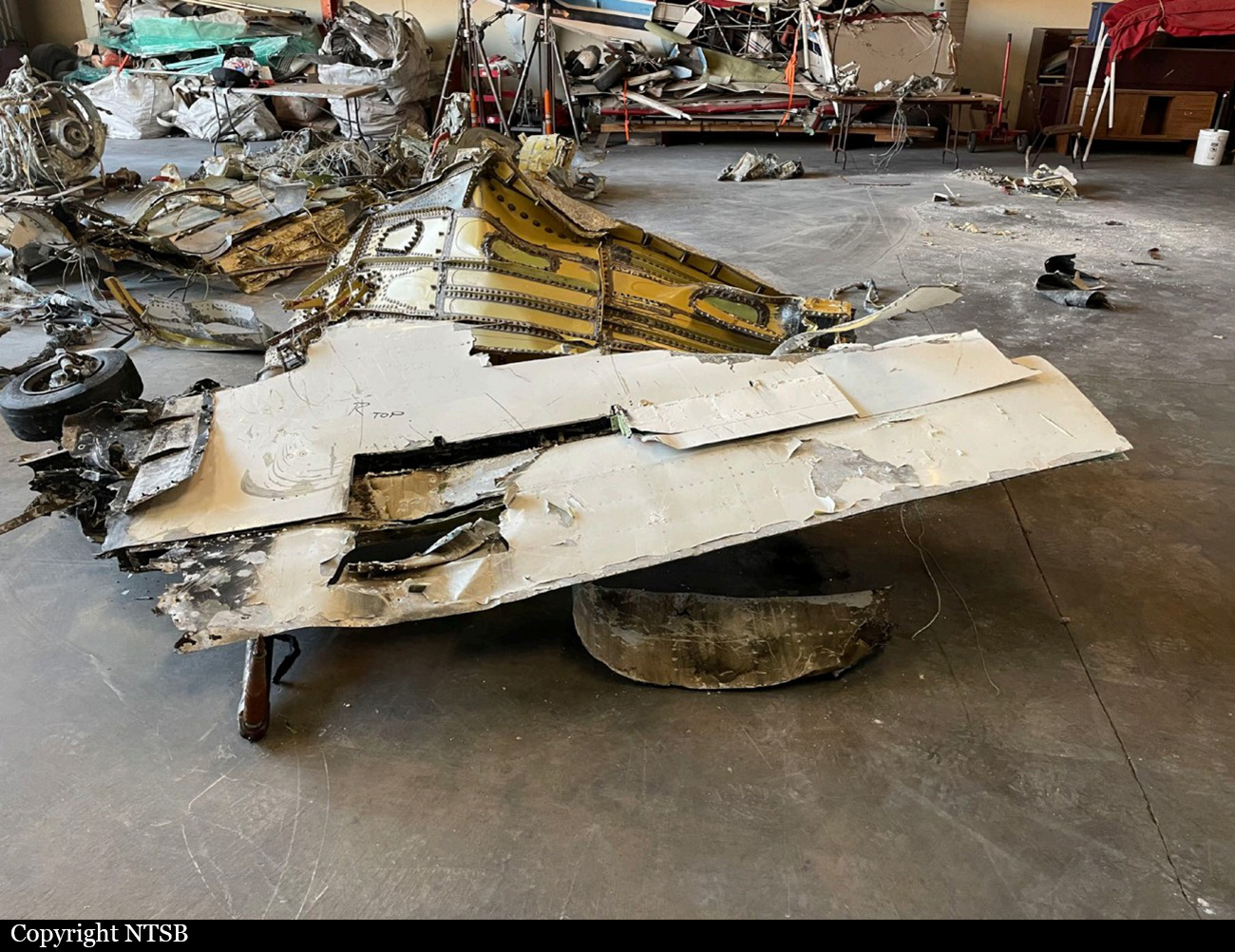
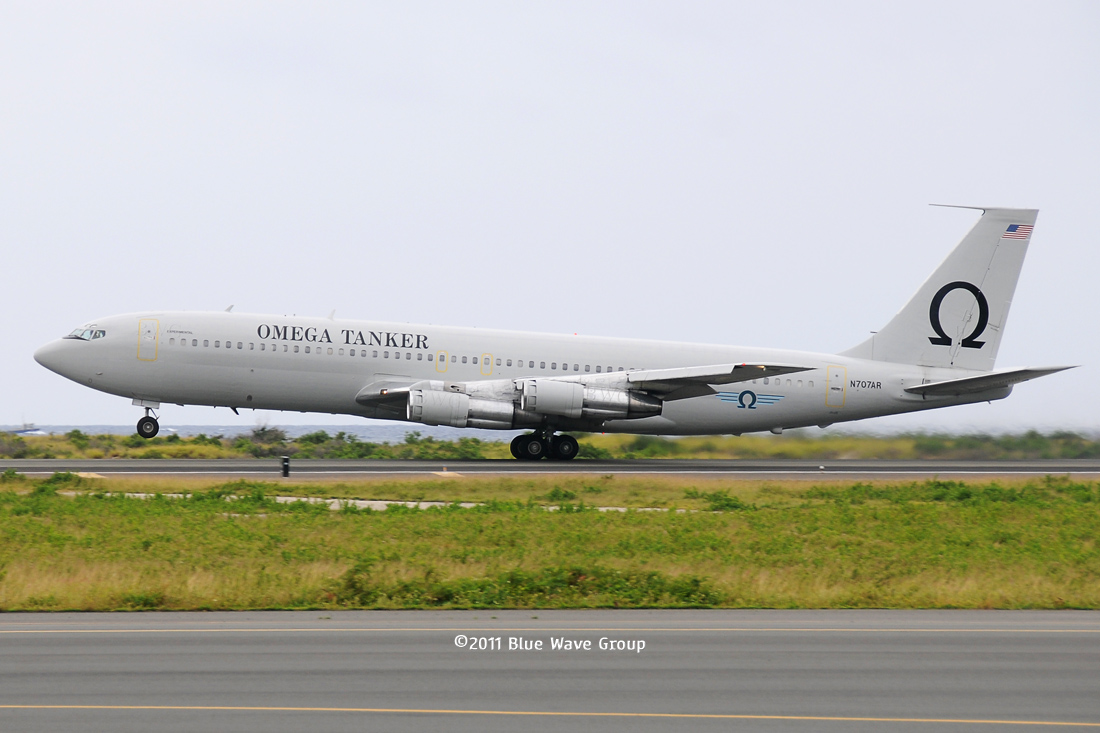
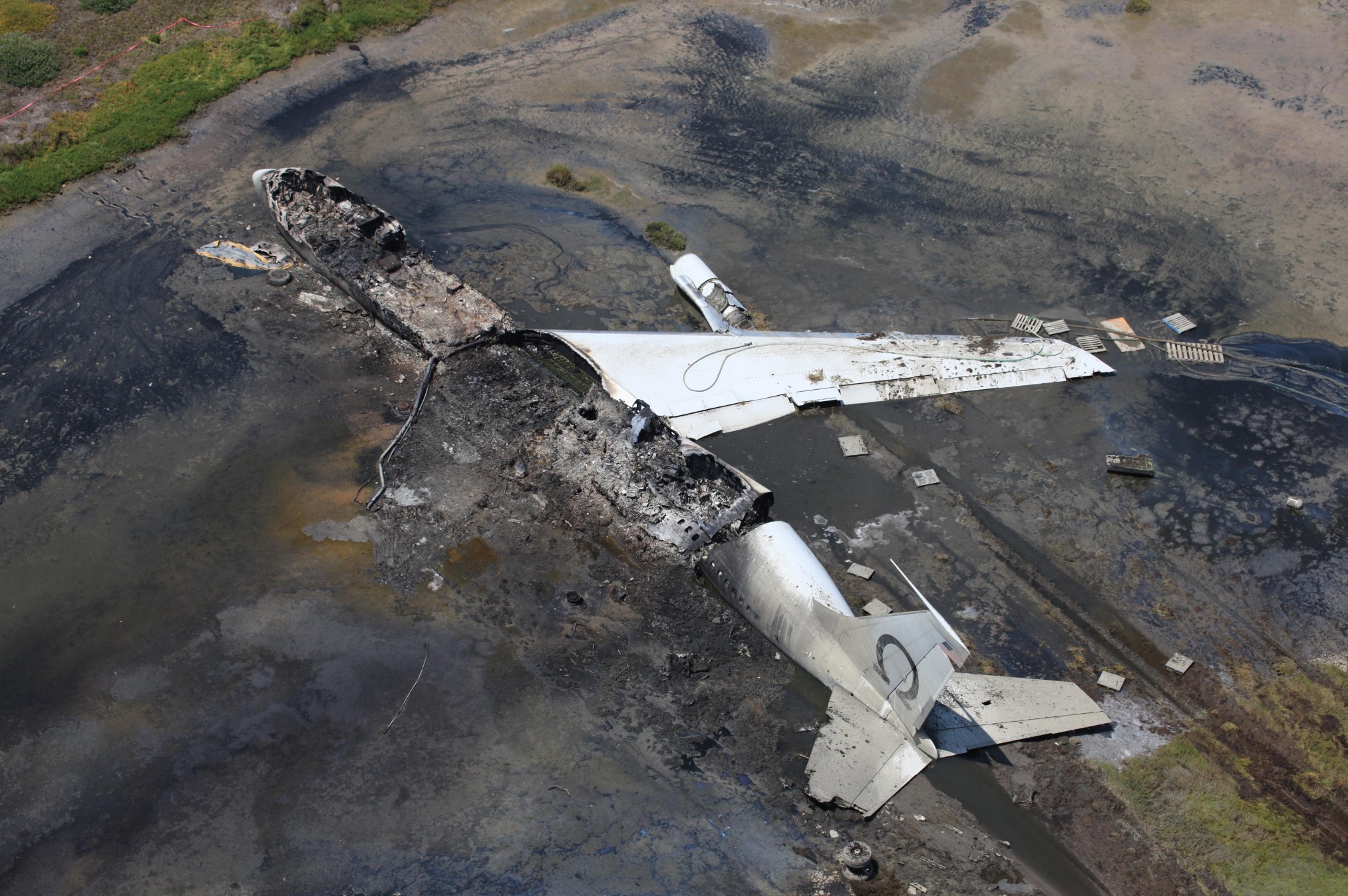
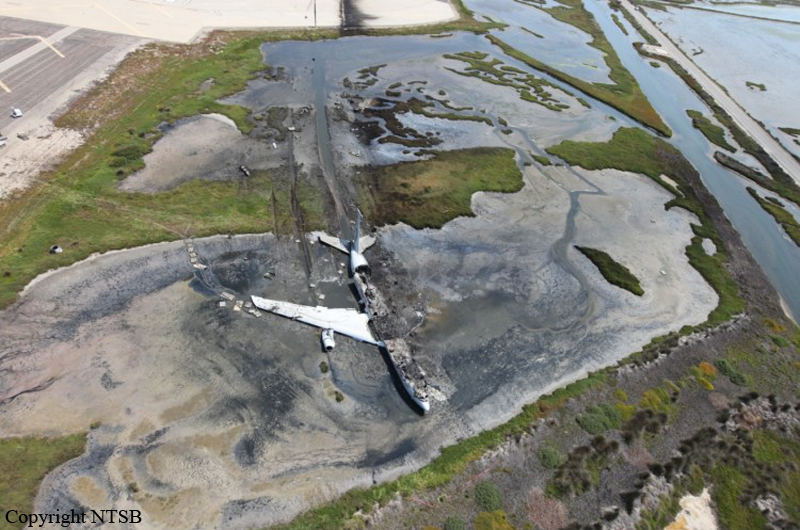
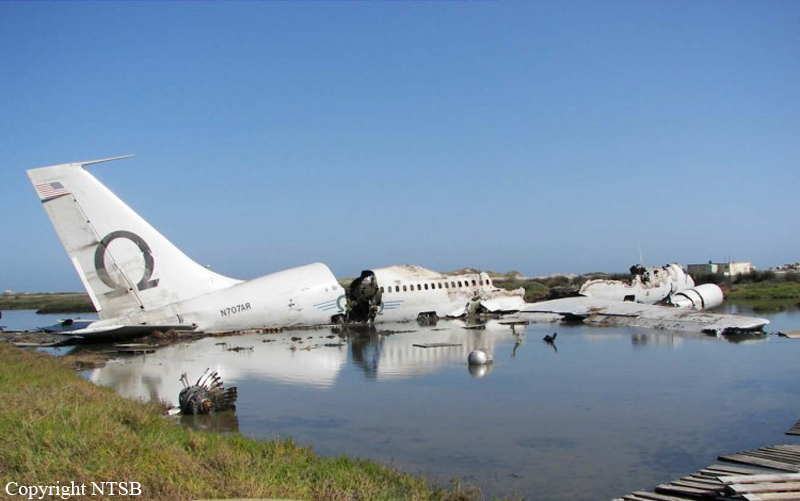
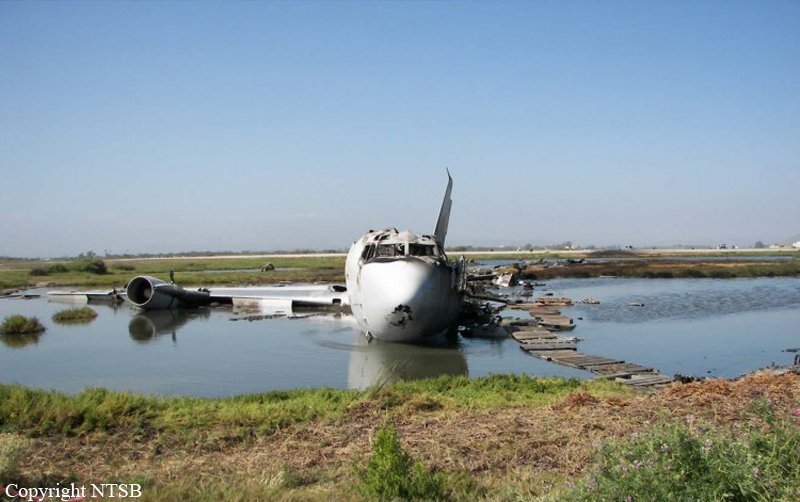
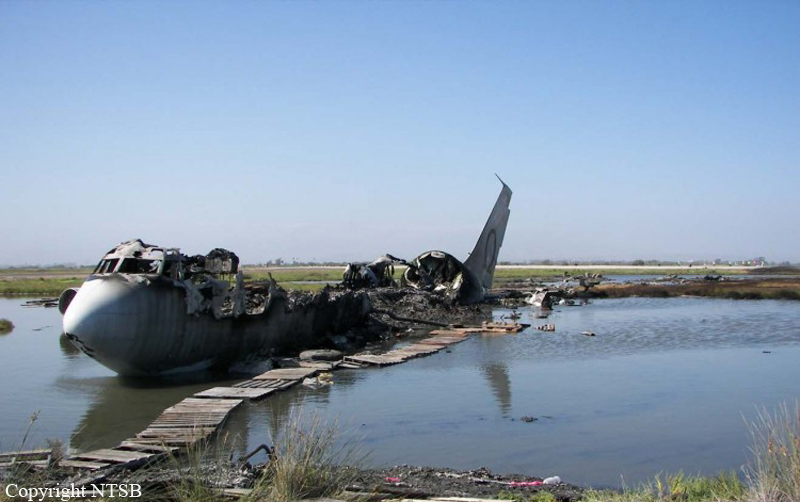
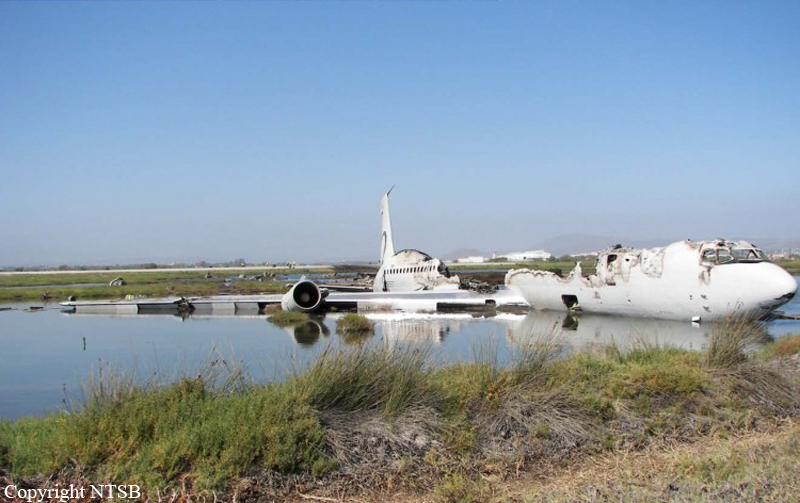
On May 18, 2011, about 1727 Pacific daylight time, a modified Boeing 707, registration N707AR, operating as Omega Aerial Refueling Services (Omega) flight 70 crashed on takeoff from runway 21 at Point Mugu Naval Air Station, California (KNTD). The airplane collided with a marsh area to the left side beyond the departure end of the runway and was substantially damaged by postimpact fire. The three flight crewmembers sustained minor injuries. The flight was conducted under the provisions of a contract between Omega and the US Naval Air Systems Command (NAVAIR) to provide aerial refueling of Navy F/A-18s in offshore warning area airspace. According to the Federal Aviation Administration (FAA), Omega, and the US Navy, the airplane was operating as a nonmilitary public aircraft under the provisions of 49 United States Code Sections 40102 and 40125. The accident flight crew consisted of a captain, first officer, and flight engineer who had flown with each other many times previously. The crewmembers reported conducting a normal preflight inspection. As the airplane taxied toward the runway, the reported wind was from 280º magnetic at 24 knots, gusting to 34 knots; the flight crew reported that the windsock showed very little change in the wind direction and a slight amount of gust. The crew had calculated a takeoff decision speed (V1) of 141 knots and a rotation speed (Vr) of 147 knots. The crew elected to add 5 knots to the rotation speed to compensate for the wind gusts and briefed a maximum power takeoff. The first officer, who was the pilot monitoring, stated that he advised the captain, who was the pilot flying, about advancing the power relatively smoothly to avoid a compressor stall with the crosswind, and the captain agreed. About 1723, air traffic control cleared the flight for takeoff from runway 21 and instructed the crew to turn left to a heading of 160º after departure. The captain applied takeoff thrust, and the first officer told investigators that, as the pilot in the right seat, he applied forward pressure on the yoke and right aileron input to compensate for the right crosswind. According to the crew, the takeoff roll was normal. At rotation speed, the captain rotated the airplane to an initial target pitch attitude of 11º airplane nose up. Shortly after liftoff, when the airplane was about 20 feet above the runway and about 7,000 feet down the runway, all three crewmembers heard a loud noise and observed the thrust lever for the No. 2 (left inboard) engine rapidly retard to the aft limit of the throttle quadrant. The captain stated that he applied full right rudder and near full right aileron to maintain directional control and level the wings, but the airplane continued to drift to the left. The captain reported that he perceived the airplane would not continue to climb and decided to “put it back on the ground.” Witnesses and a cell phone video from another Omega 707 crewmember observing the takeoff indicated that the No. 2 (left inboard) engine separated and traveled up above the left wing as the airplane was passing abeam taxiway A2. The inlet cowling for the No. 1 (left outboard) engine separated immediately thereafter, consistent with being struck by the No. 2 engine nacelle. The airplane began to descend with the remaining three engine power levers at maximum power, and the left wing dipped slightly (Pratt & Whitney indicated that loss of the inlet cowling on the No. 1 engine would increase drag, effectively resulting in less than zero thrust output). The captain said he lowered the nose and leveled the wings just as the airplane touched down on the runway between taxiway A2 and A1. The airplane made multiple contacts with the runway before drifting left and departing the runway surface before the airplane reached taxiway A1. The airplane crossed taxiway A and came to rest in the marsh area. According to the flight crewmembers, they observed flames in the cabin area and did not have time to perform an engine shutdown or evacuation checklist. The crew reported difficulty exiting the cockpit due to mud and debris blocking the cockpit door. All three crewmembers successfully evacuated through the left forward entrance via the escape slide.
Probable cause:
The NTSB determines that the probable cause of this accident was the failure of a midspar fitting, which was susceptible to fatigue cracking and should have been replaced with a newer, more fatigue-resistant version of the fitting as required by an airworthiness directive. Also causal was an erroneous maintenance entry made by a previous aircraft owner, which incorrectly reflected that the newer fitting had been installed.
Final Report:

Crash of a Grumman E-2C Hawkeye at Point Mugu NAS

Date & Time: May 9, 2000
Type of aircraft:
Operator:
Registration:
164354
Flight Phase:
Survivors:
Yes
Schedule:
Point Mugu NAS - Point Mugu NAS
MSN:
A147
Crew on board:
3
Crew fatalities:
Pax on board:
0
Pax fatalities:
Other fatalities:
Total fatalities:
0
Circumstances:
Shortly after liftoff from Point Mugu NAS, the aircraft collided with a flock of pelicans. The crew attempted an emergency landing and the aircraft belly landed before coming to rest. All three crew members escaped uninjured while the aircraft was damaged beyond repair.
Probable cause:
Forced belly landing following a collision with pelicans after takeoff.

Crash of a Douglas DC-3-454 at Point Mugu NAS

Date & Time: Aug 4, 1972 at 1545 LT
Type of aircraft:
Registration:
N31538
Flight Phase:
Flight Type:
Survivors:
Yes
Schedule:
Point Mugu - Burbank
MSN:
6317
YOM:
1942
Crew on board:
3
Crew fatalities:
Pax on board:
0
Pax fatalities:
Other fatalities:
Total fatalities:
0
Captain / Total flying hours:
16280
Captain / Total hours on type:
8370.00
Circumstances:
Shortly after takeoff from Point Mugu NAS, while in initial climb, the right engine lost power and caught fire. The crew elected to return for an emergency landing when control was lost and the airplane crash landed by the runway and came to rest. All three occupants were slightly injured and the aircraft was damaged beyond repair. For unknown reason, the fire extinguishing system was inoperative.
Probable cause:
Partial loss of power on one engine during initial climb due to material failure. The following factors were reported:
- Failure of the fuel system,
- Failure of the fire extinguishing system,
- Engine fire,
- Component failure of right engine fuel feed system,
- Failure of hydraulic line.
Final Report: