Country
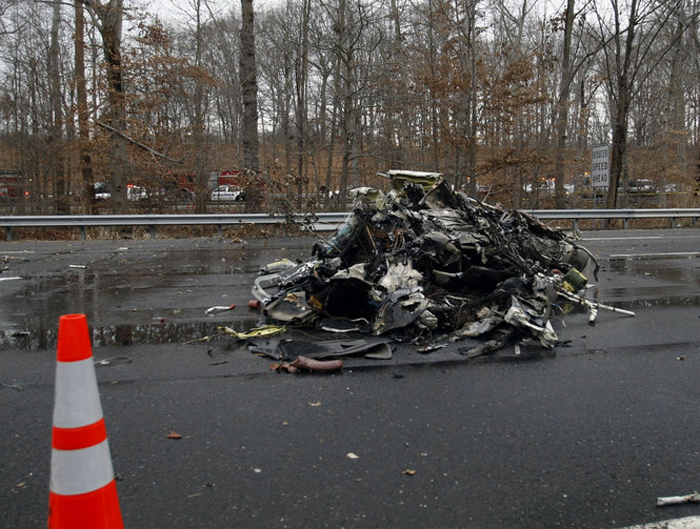
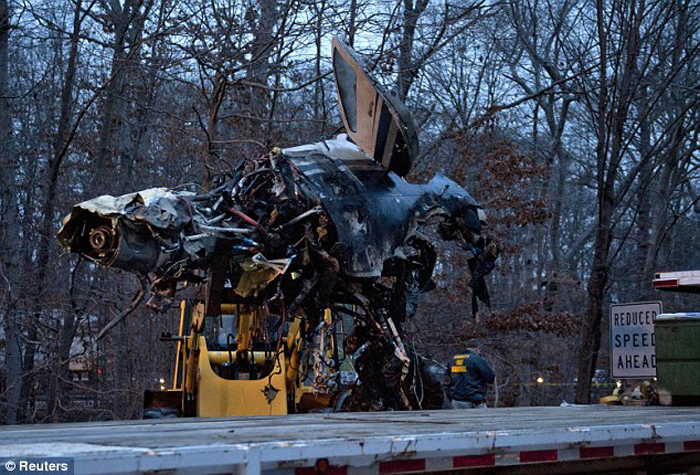
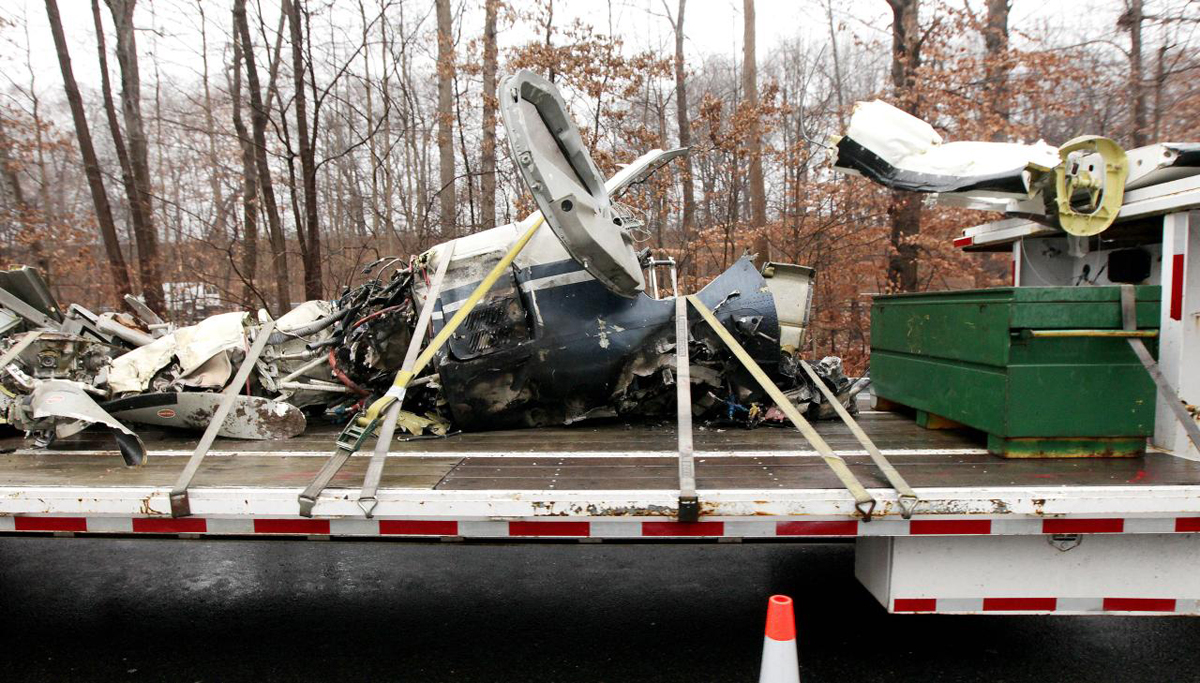
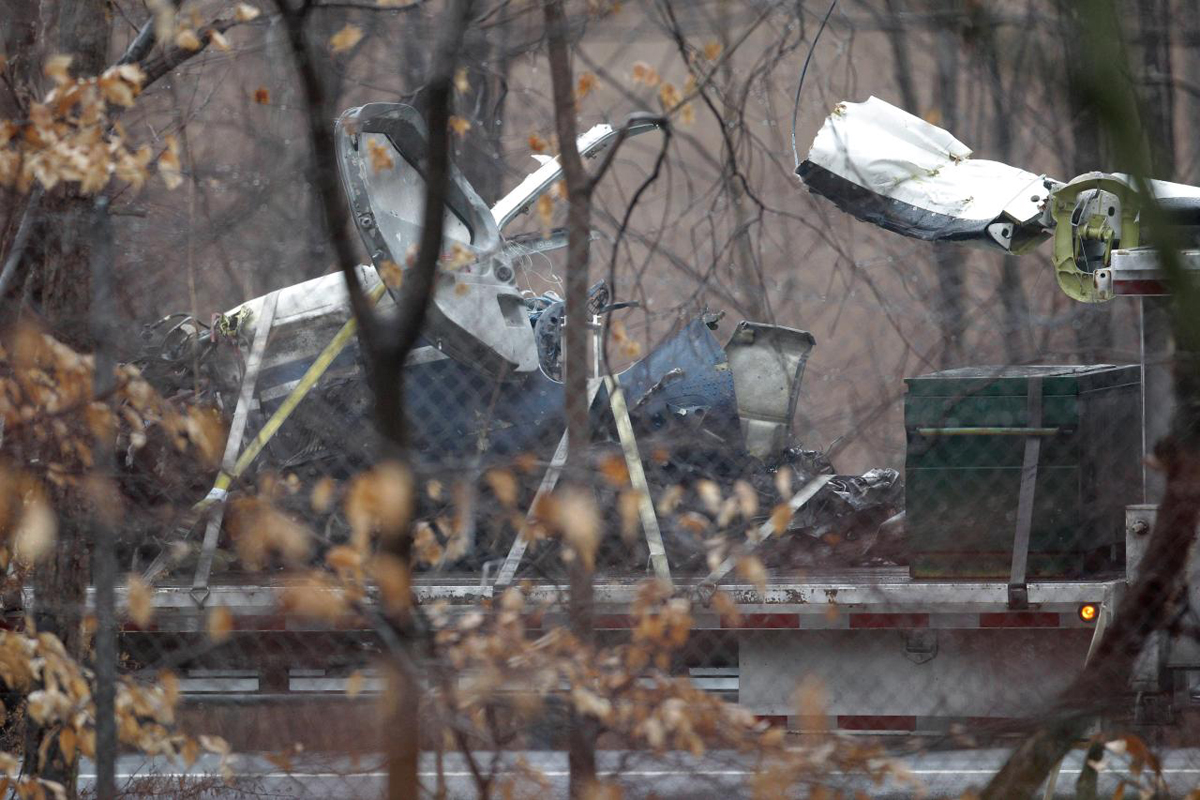
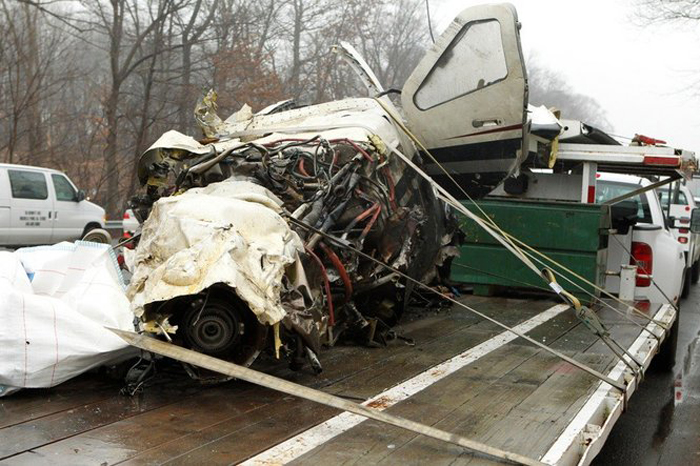
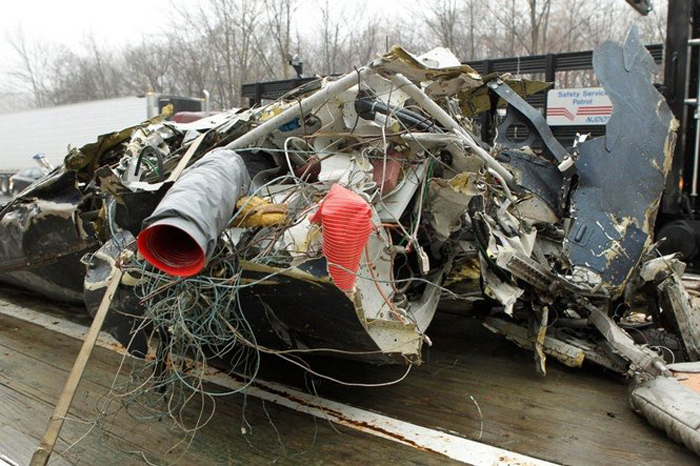
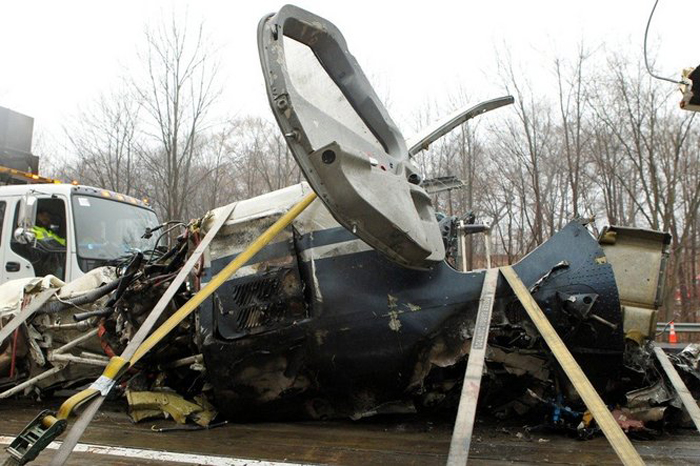
Crash of a Socata TBM-700 in Morristown: 5 killed
Date & Time:
Dec 20, 2011 at 1005 LT
Operator:

Registration:
N731CA
Survivors:
No
Schedule:
Teterboro - Atlanta
MSN:
332
YOM:
2005
Crew on board:
1
Crew fatalities:
Pax on board:
4
Pax fatalities:
Other fatalities:
Total fatalities:
5
Aircraft flight hours:
702
Circumstances:
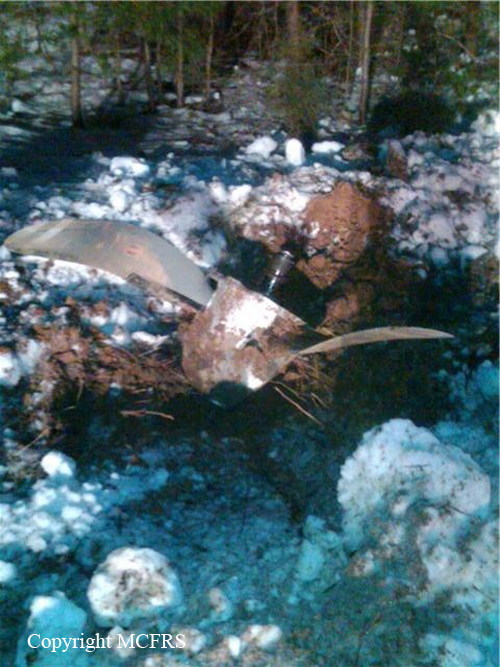
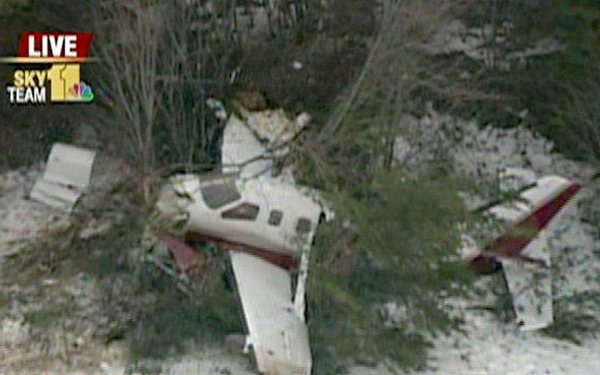
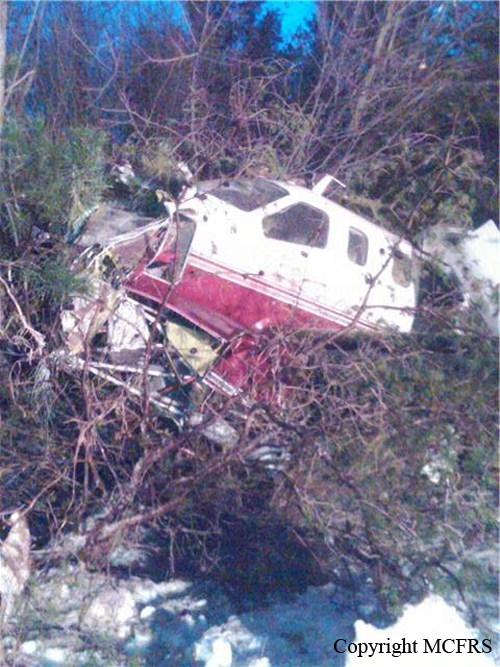
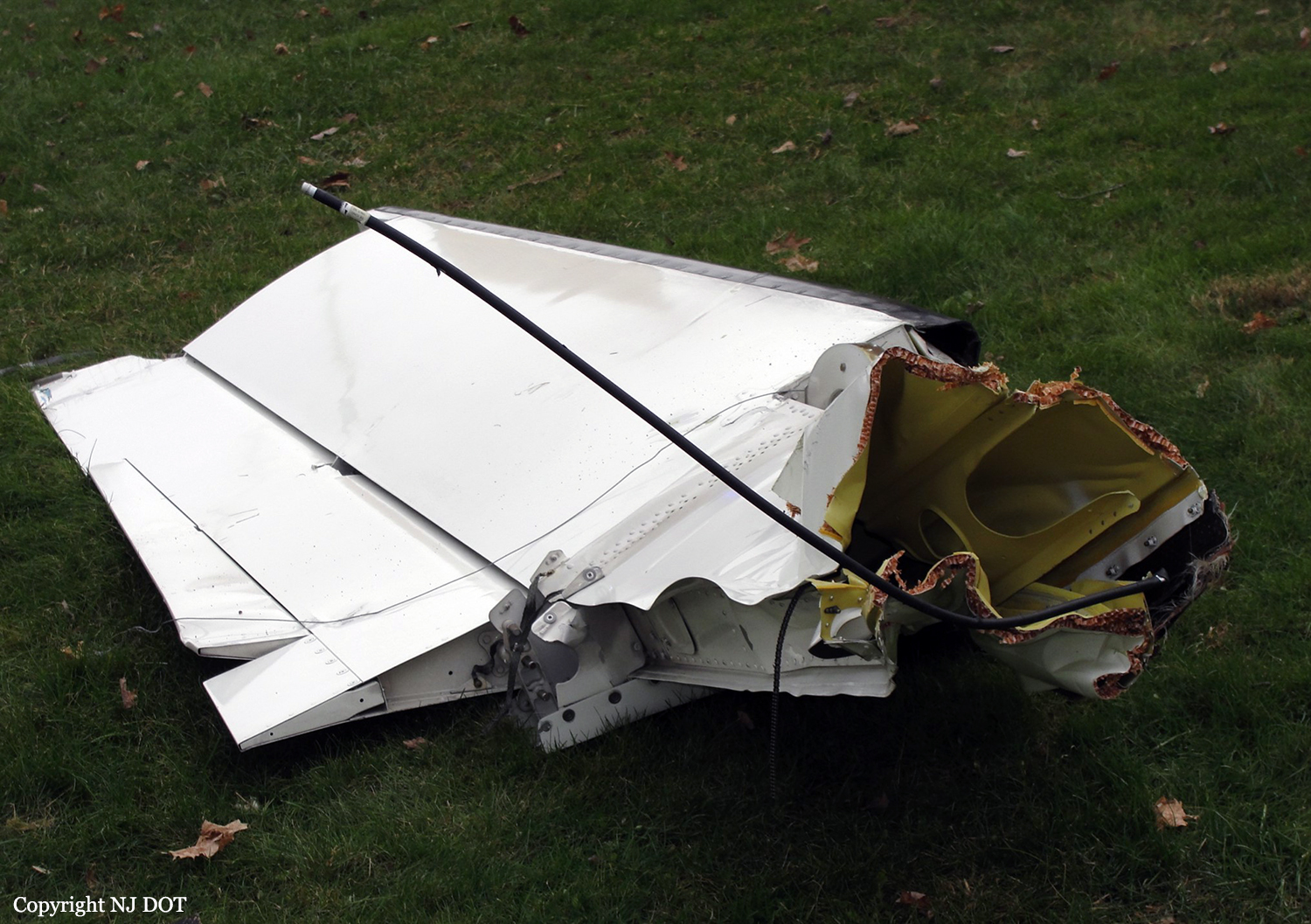
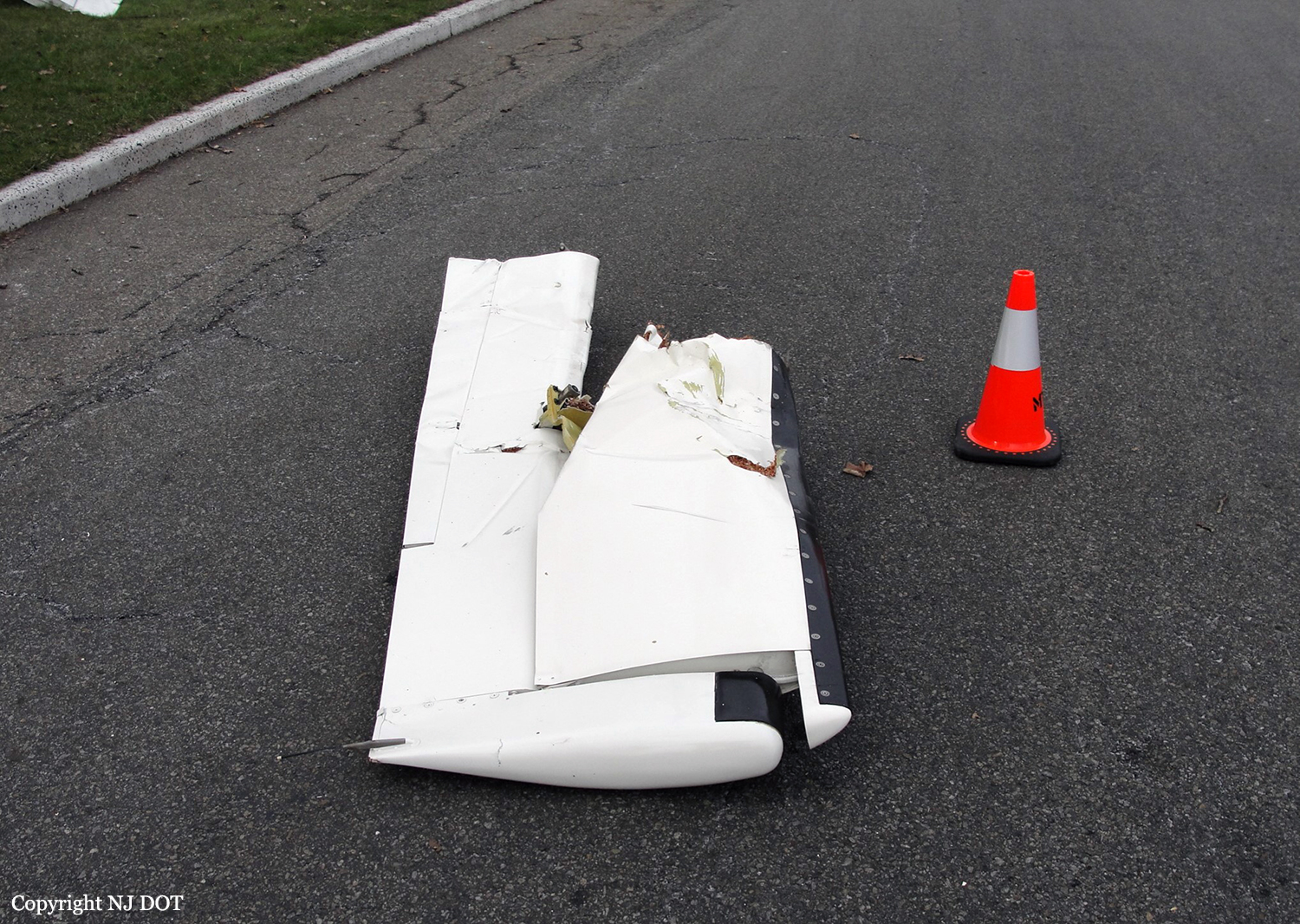
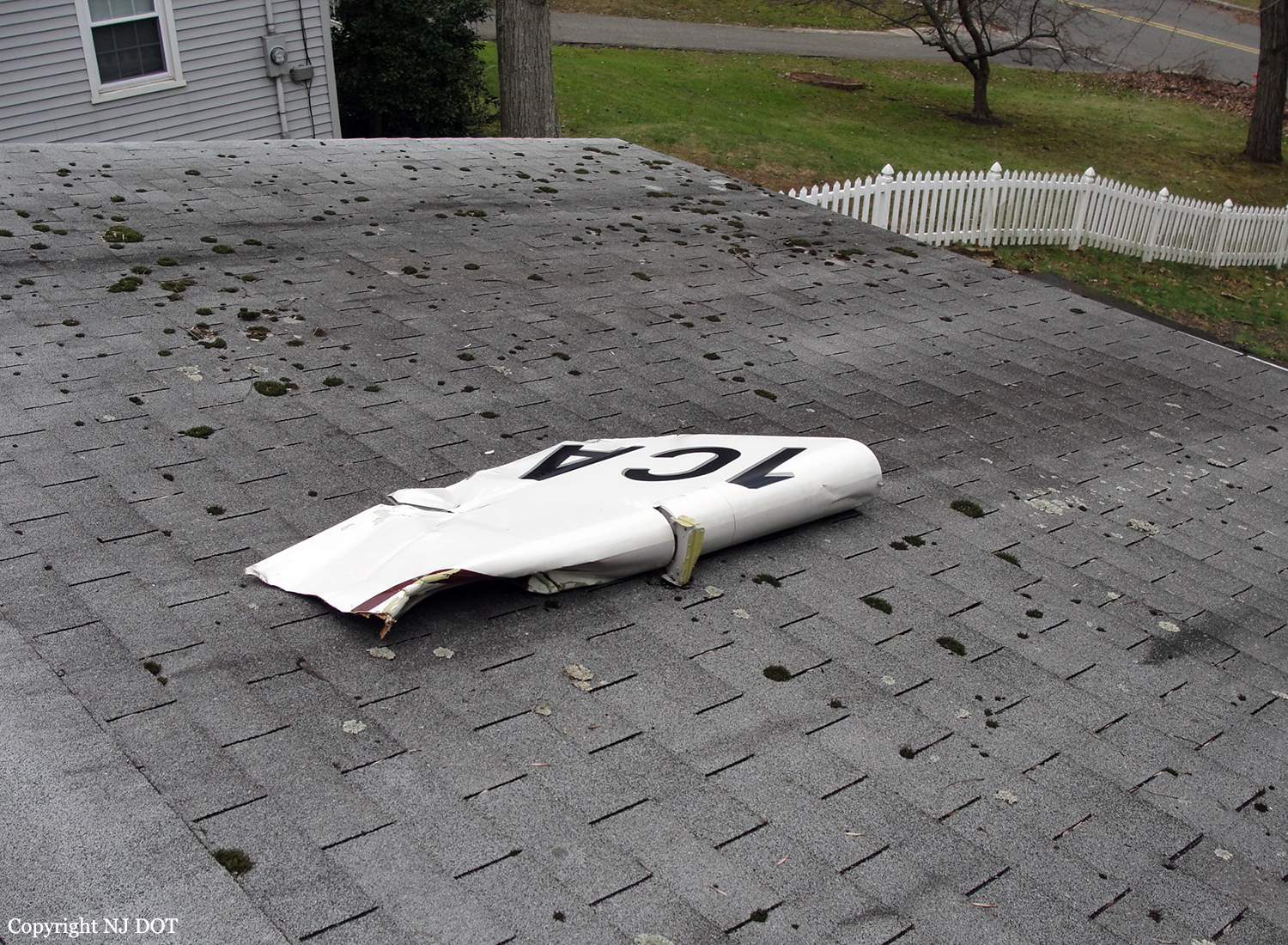
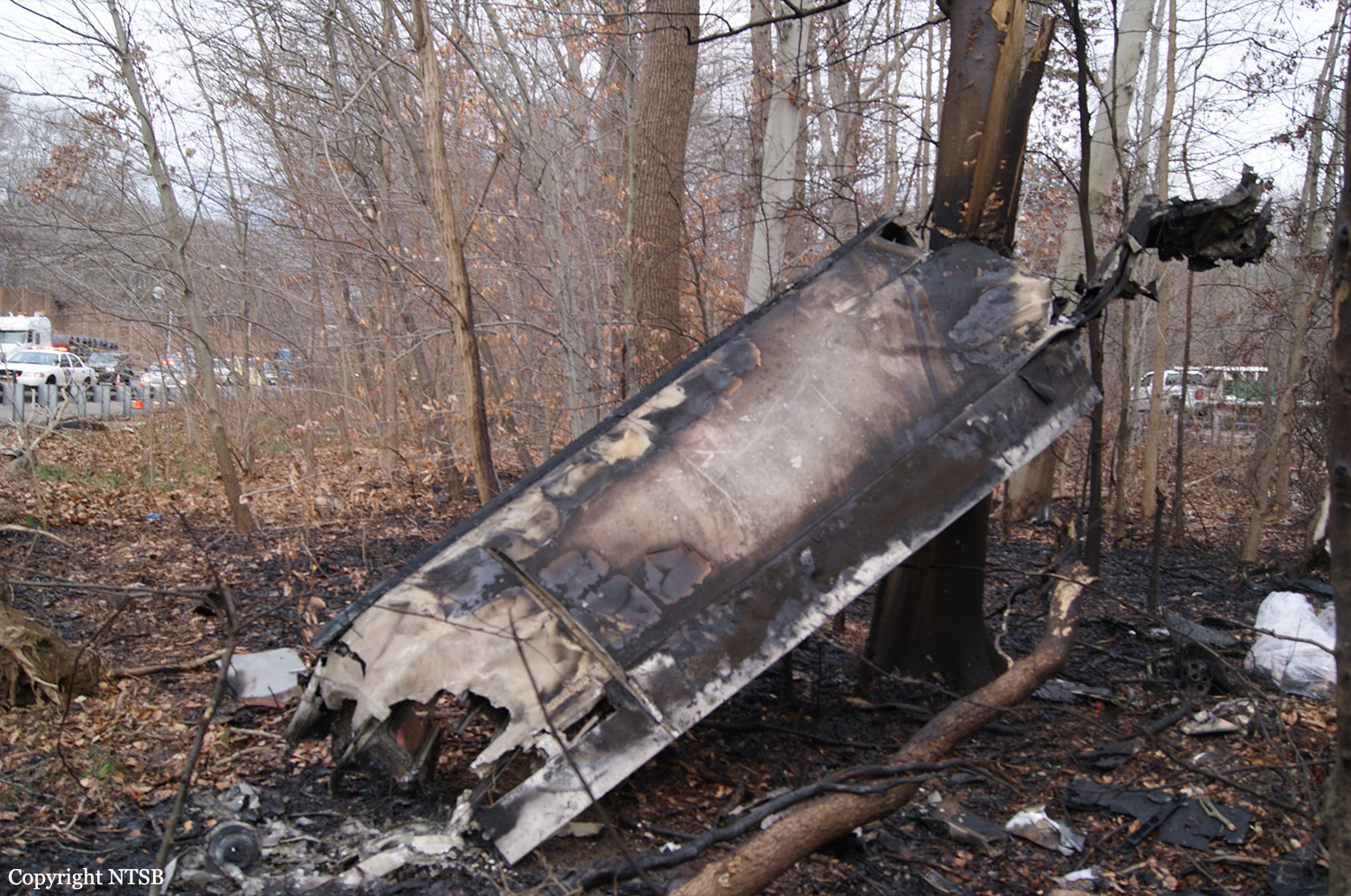
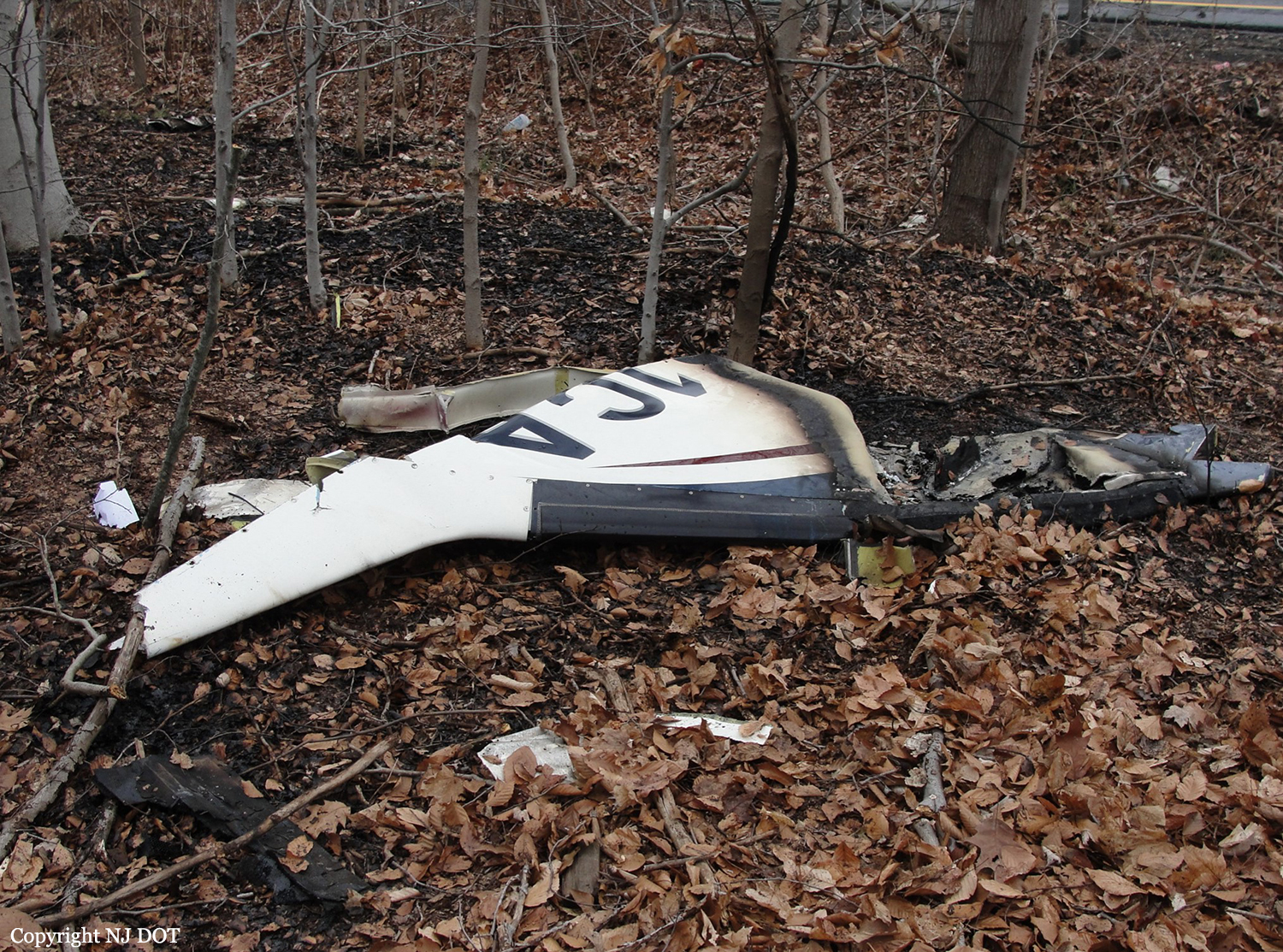
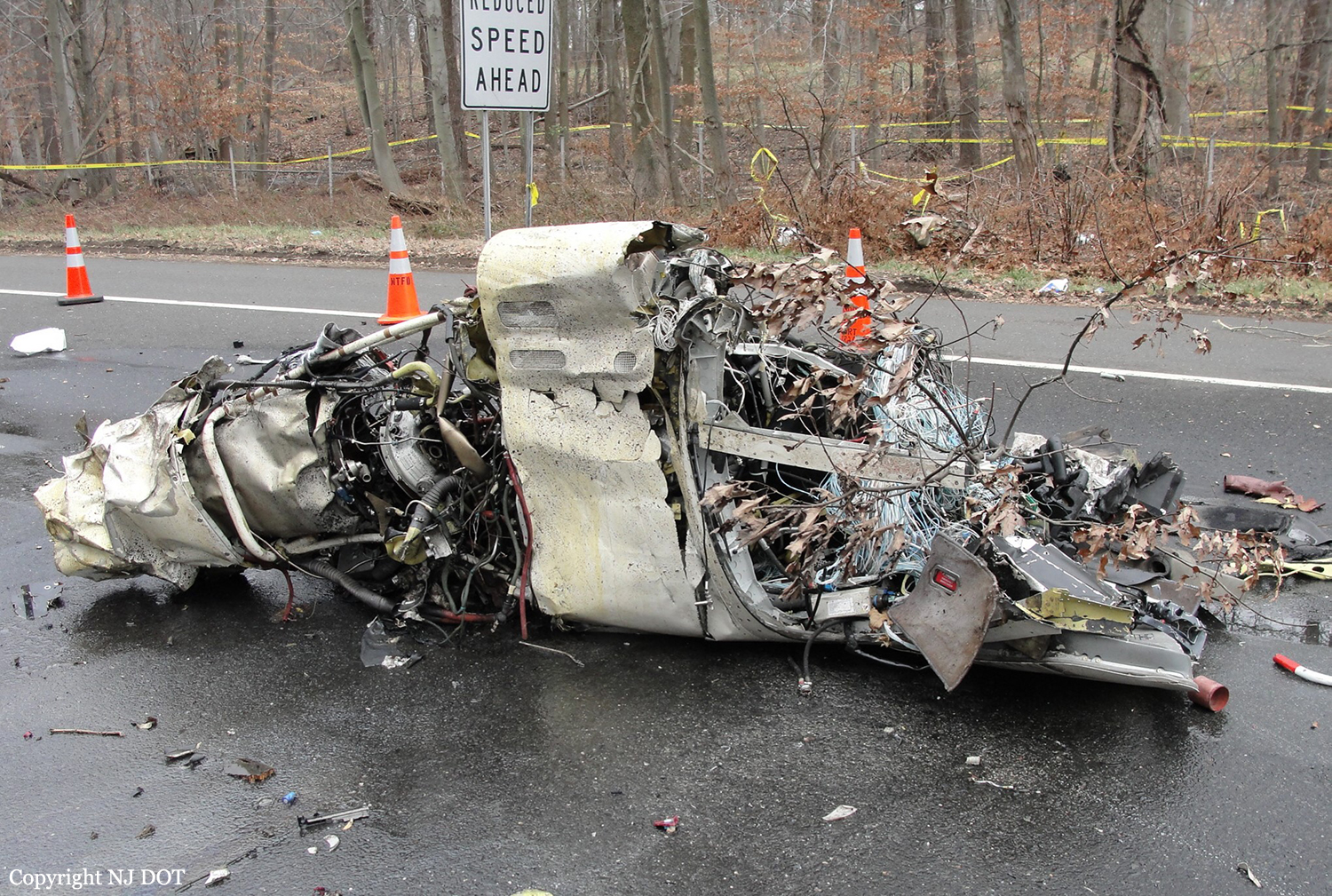
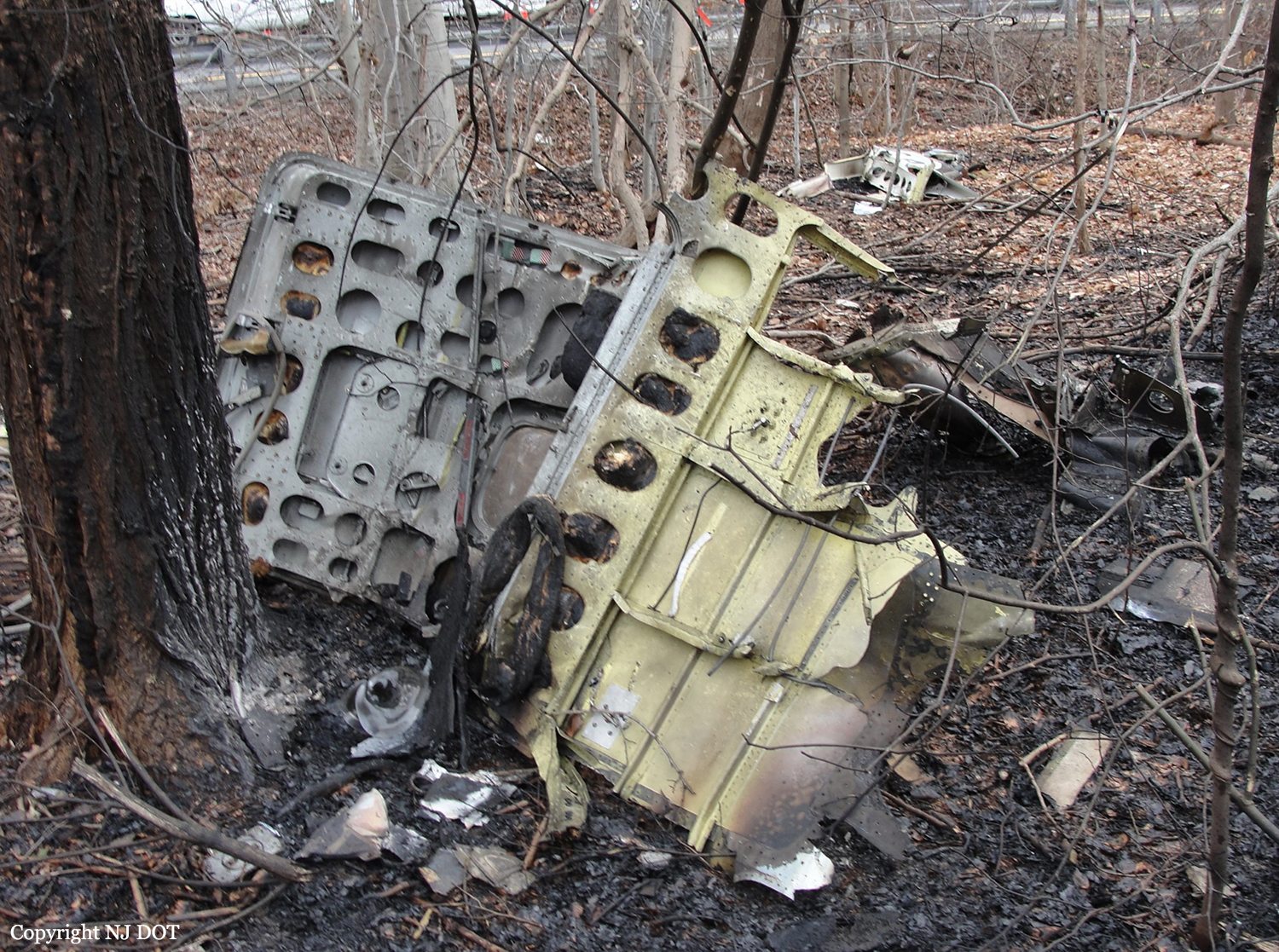
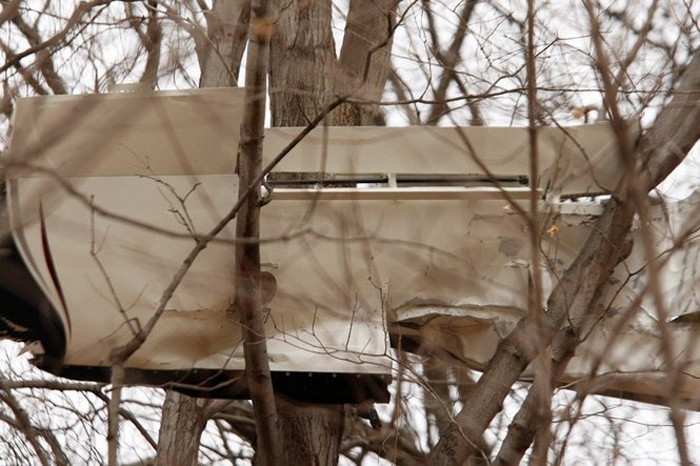
Although the pilot filed an instrument flight rules flight plan through the Direct User Access Terminal System (DUATS), no evidence of a weather briefing was found. The flight departed in visual meteorological conditions and entered instrument meteorological conditions while climbing through 12,800 feet. The air traffic controller advised the pilot of moderate rime icing from 15,000 feet through 17,000 feet, with light rime ice at 14,000 feet. The controller asked the pilot to advise him if the icing worsened, and the pilot responded that he would let them know and that it was no problem for him. The controller informed the pilot that he was coordinating for a higher altitude. The pilot confirmed that, while at 16,800 feet, "…light icing has been present for a little while and a higher altitude would be great." About 15 seconds later, the pilot stated that he was getting a little rattle and requested a higher altitude as soon as possible. About 25 seconds after that, the flight was cleared to flight level 200, and the pilot acknowledged. About one minute later, the airplane reached a peak altitude of 17,800 feet before turning sharply to the left and entering a descent. While descending through 17,400 feet, the pilot stated, "and N731CA's declaring…" No subsequent transmissions were received from the flight. The airplane impacted the paved surfaces and a wooded median on an interstate highway. A postaccident fire resulted. The outboard section of the right wing and several sections of the empennage, including the horizontal stabilizer, elevator, and rudder, were found about 1/4 mile southwest of the fuselage, in a residential area. Witnesses reported seeing pieces of the airplane separating during flight and the airplane in a rapid descent. Examination of the wreckage revealed that the outboard section of the right wing separated in flight, at a relatively low altitude, and then struck and severed portions of the empennage. There was no evidence of a preexisting mechanical anomaly that would have precluded normal operation of the airframe or engine. An examination of weather information revealed that numerous pilots reported icing conditions in the general area before and after the accident. At least three flight crews considered the icing "severe." Although severe icing was not forecasted, an Airmen's Meteorological Information (AIRMET) advisory included moderate icing at altitudes at which the accident pilot was flying. The pilot operating handbook warned that the airplane was not certificated for flight in severe icing conditions and that, if encountered, the pilot must exit severe icing immediately by changing altitude or routing. Although the pilot was coordinating for a higher altitude with the air traffic controller at the time of the icing encounter, it is likely that he either did not know the severity of the icing or he was reluctant to exercise his command authority in order to immediately exit the icing conditions.
Probable cause:
The airplane’s encounter with unforecasted severe icing conditions that were characterized by high ice accretion rates and the pilot's failure to use his command authority to depart the icing conditions in an expeditious manner, which resulted in a loss of airplane control.
Final Report:

Crash of a Socata TBM-700 in Lyon: 1 killed
Date & Time:
Nov 9, 2011 at 0912 LT
Registration:
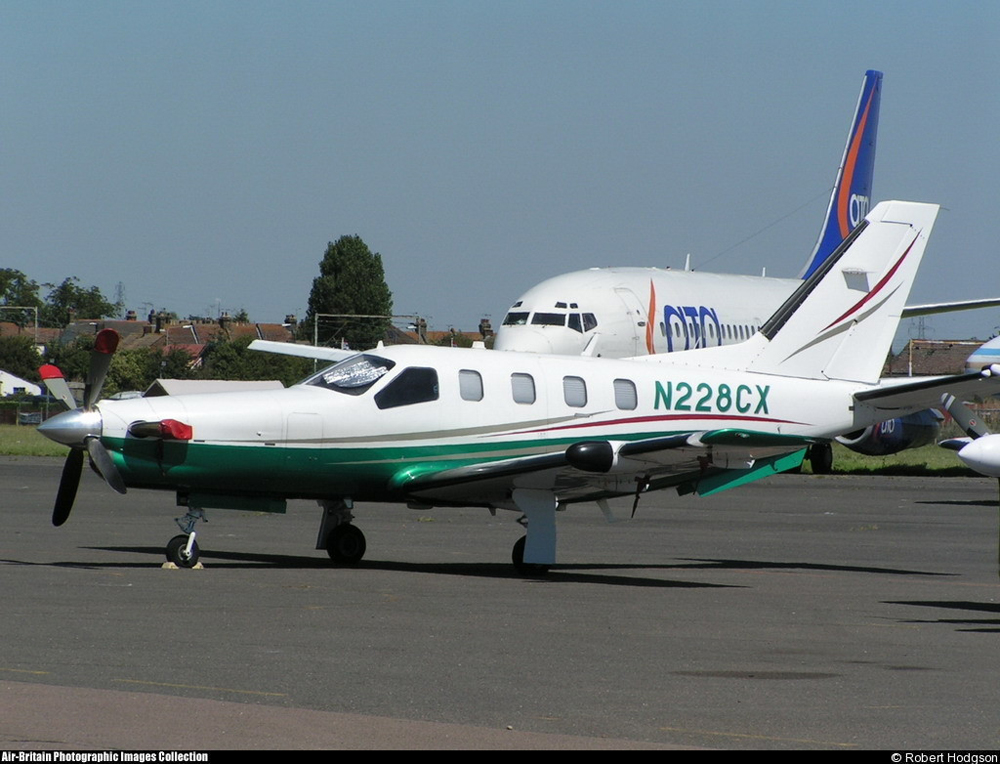
N228CX
Survivors:
No
Schedule:
Toussus-le-Noble - Lyon
MSN:
84
YOM:
1993
Crew on board:
1
Crew fatalities:
Pax on board:
0
Pax fatalities:
Other fatalities:
Total fatalities:
1
Circumstances:
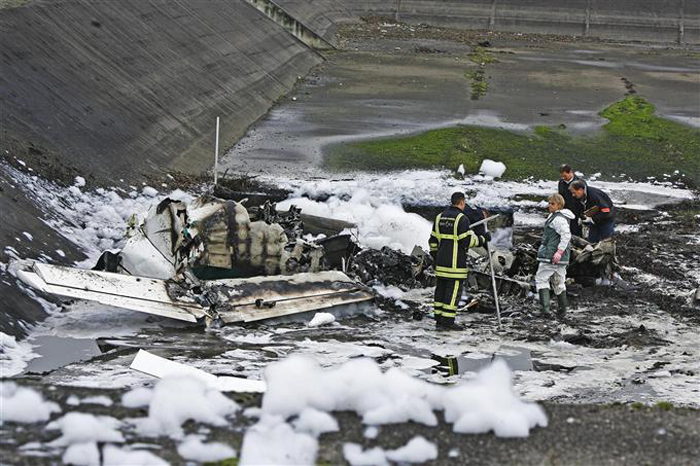
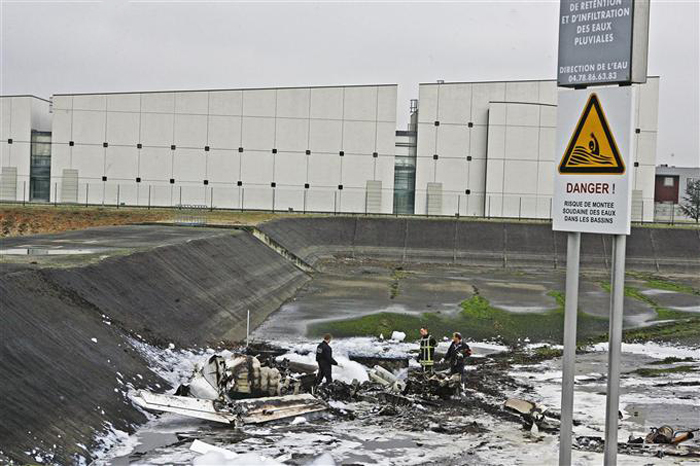
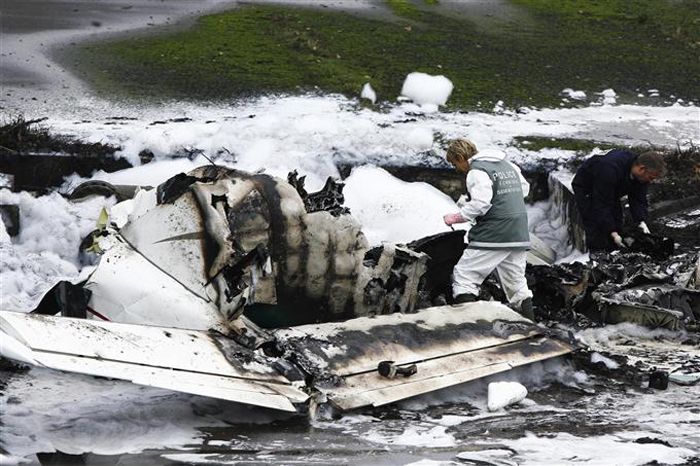
The pilot departed Toussus-le-Noble Airport at 0810LT on an IFR flight to Lyon. After contacting ATC, the pilot was vectored for a LOC DME approach to runway 16 at Lyon-Bron Airport. He reported being established on localizer at 0907LT, then was transferred to the tower and was cleared to land. At 0910LT, he reported he was initiating a go-around procedure and was instructed to climb to 3,000 feet maintaining a straight-in path. ATC requested twice the pilot to confirm the approach interruption but he failed to respond. A few moments later, the pilot reported 'Now, I'm not good at all'. The airplane crashed in a retention basin located 1,500 meters short of runway 16 threshold, bursting into flames. The aircraft was destroyed and the pilot, sole on board, was killed.
Probable cause:
Loss of control while approaching at a speed close to stall speed in clouds without any external visual references, in a phase of flight where the pilot encountered difficulties. Investigations were unable to determine the exact cause of the loss of control and the reason why the pilot was unable to regain control.
Final Report:
Crash of a Socata TBM-700 in Hollywood
Date & Time:
Oct 12, 2011 at 1334 LT
Operator:

Registration:
N37SV
Survivors:
Yes
Schedule:
North Perry - North Perry
MSN:
441
YOM:
2008
Flight number:
SC332
Crew on board:
2
Crew fatalities:
Pax on board:
0
Pax fatalities:
Other fatalities:
Total fatalities:
0
Captain / Total hours on type:
4053.00
Copilot / Total hours on type:
5
Aircraft flight hours:
593
Circumstances:
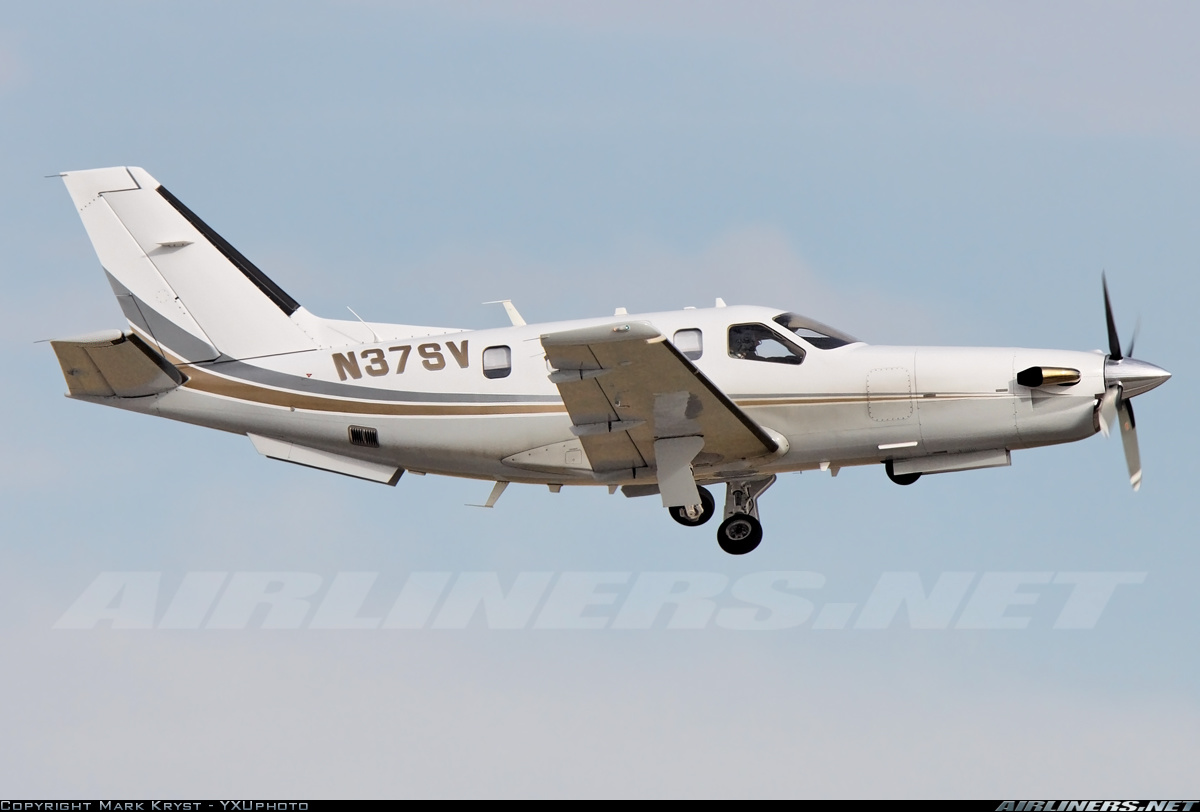
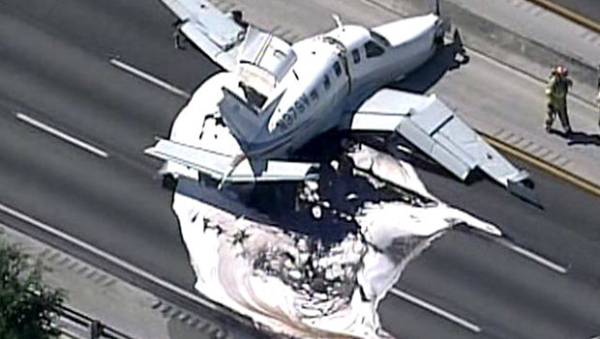
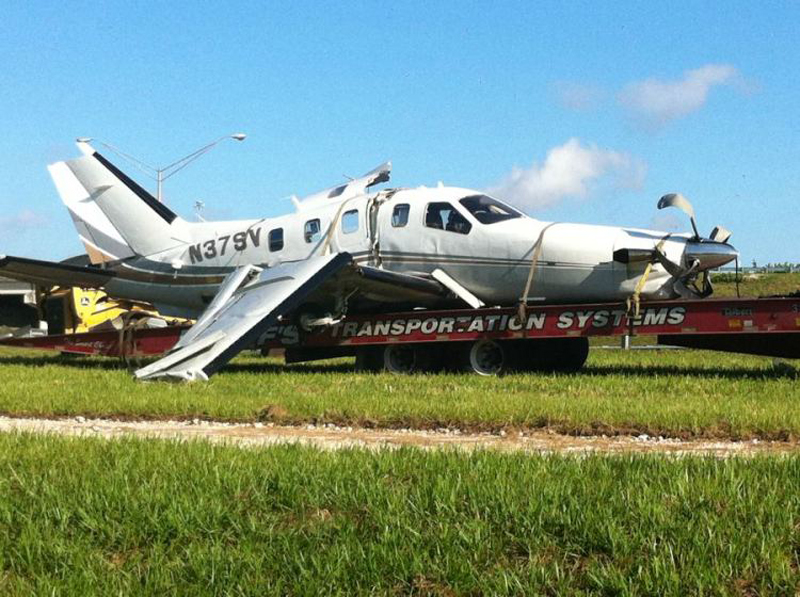
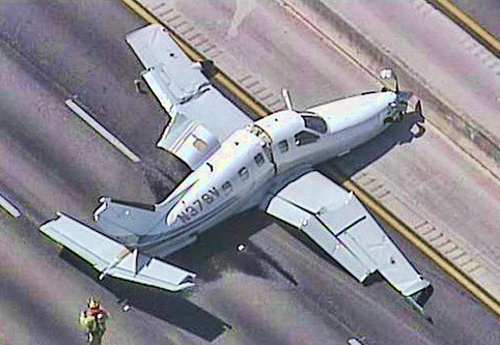
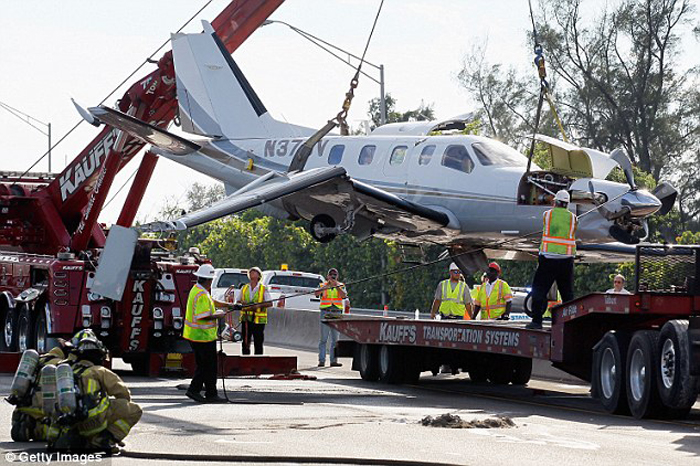
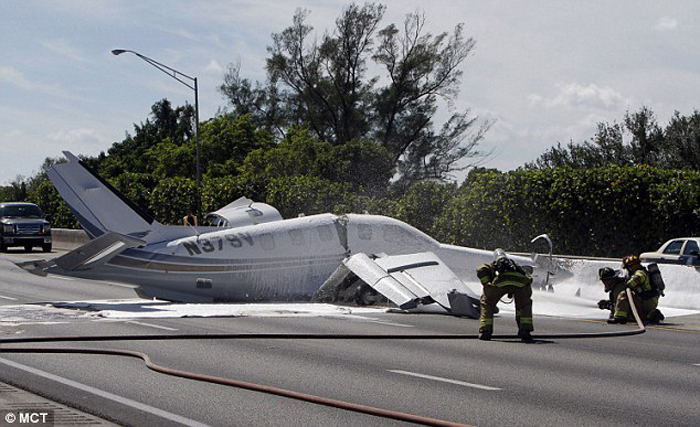
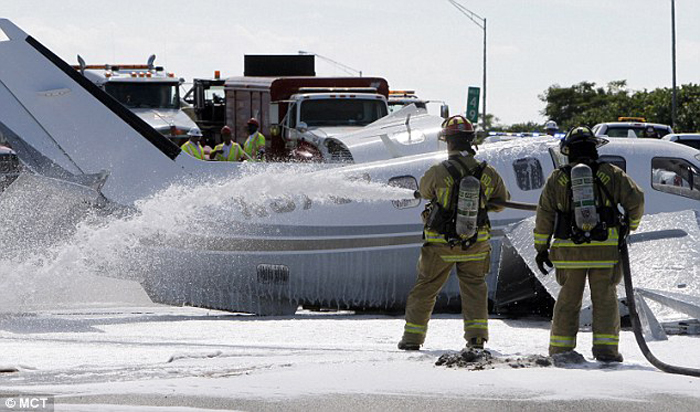
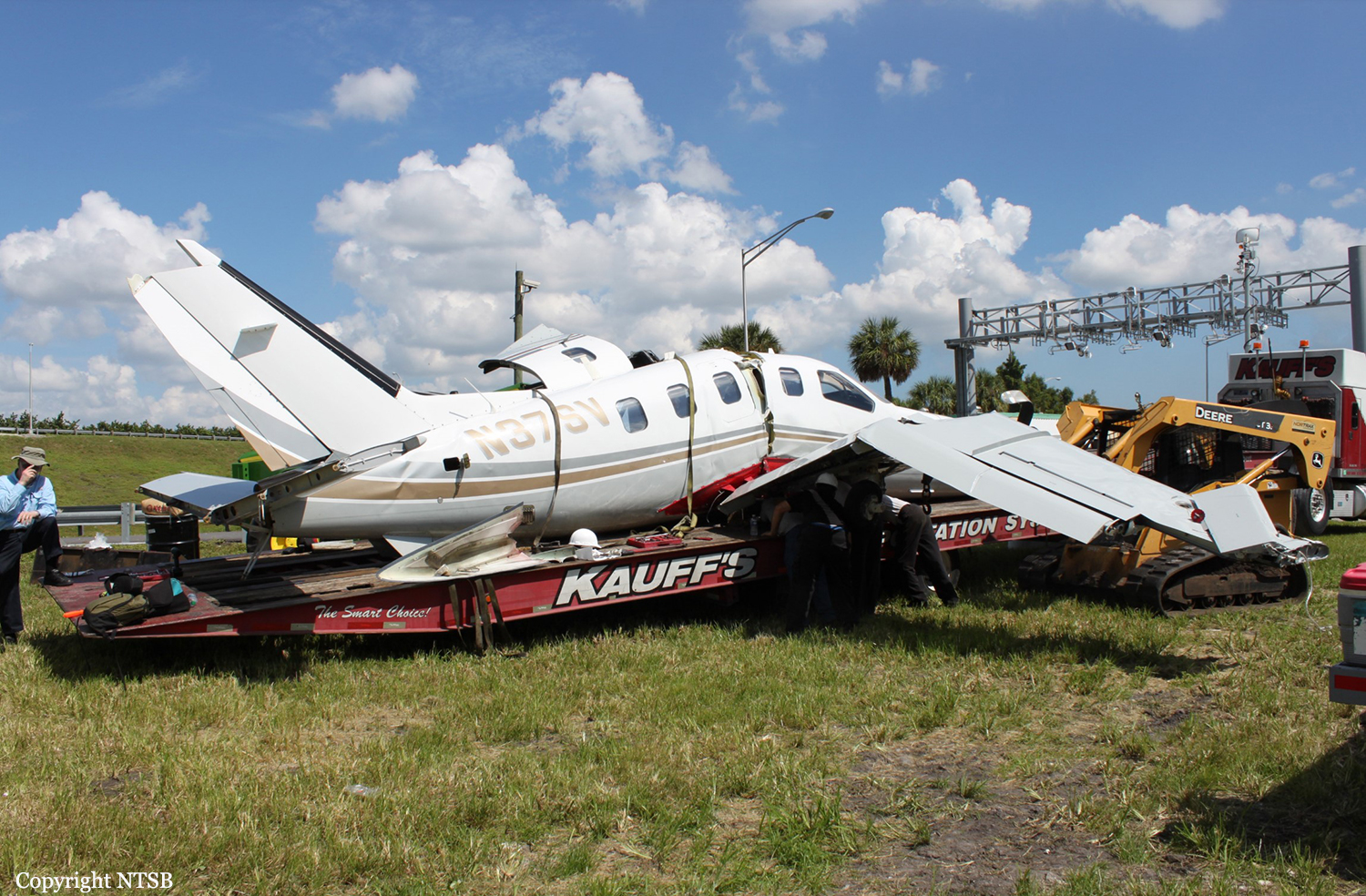
The airplane, registered to SV Leasing Company of Florida, operated by SOCATA North America, Inc., sustained substantial damage during a forced landing on a highway near Hollywood, Florida, following total loss of engine power. Visual meteorological conditions prevailed at the time and an instrument flight rules (IFR) flight plan was filed for the 14 Code of Federal Regulations (CFR) Part 91 maintenance test flight from North Perry Airport (HWO), Hollywood, Florida. The airline transport pilot and pilot-rated other crew member sustained minor injuries; there were no ground injuries. The flight originated from HWO about 1216. The purpose of the flight was a maintenance test flight following a 600 hour and annual inspection. According to the right front seat occupant, in anticipation of the flight, he checked the fuel load by applying electrical power and noted the G1000 indicated the left fuel tank had approximately 36 gallons while the right fuel tank had approximately 108 gallons. In an effort to balance the fuel load with the indication of the right fuel tank, he added 72.4 gallons of fuel to the left fuel tank. At the start of the data recorded by the G1000 for the accident flight, the recorded capacity in the left fuel tank was approximately 105 gallons while the amount in the right fuel tank was approximately 108 gallons. The PIC reported that because of the fuel load on-board, he could not see the level of fuel in the tanks; therefore, he did not visually check the fuel tanks. By cockpit indication, the left tank had approximately 105 gallons and the right tank had approximately 108 gallons. The flight departed HWO, but he could not recall the fuel selector position beneath the thrust lever quadrant. He further stated that the fuel selector switch on the overhead panel was in the "auto" position. After takeoff, the flight climbed to flight level (FL) 280, and levelled off at that altitude about 20 minutes after takeoff. While at that altitude they received a "Fuel Low R" amber warning CAS message on the G1000. He checked the right fuel gauge which indicated 98 gallons, and confirmed that the fuel selector automatically switched to the left tank. After about 10 seconds the amber warning CAS message went out. He attributed the annunciation to be associated with a failure or malfunction of the sensor, and told the mechanic to write this issue down so it could be replaced after the flight. The flight continued and they received an amber warning CAS message, "Fuel Unbalance" which the right fuel tank had more fuel so he switched the fuel selector to supply fuel from the right tank to the engine. The G1000 indicates they remained at that altitude for approximately 8 minutes. He then initiated a quick descent to 10,000 feet mean sea level (msl) and during the descent accelerated to Vmo to test the aural warning horn. They descended to and maintained 10,000 feet msl for about 15 minutes and at an unknown time, they received an amber warning CAS message "Fuel Low R." Once again he checked the right fuel gauge which indicated it had 92 gallons and confirmed that the fuel tank selector automatically switched to the left tank. After about 10 seconds the CAS message went out. Either just before or during descent to 4,000 feet, they received an amber CAS message "Fuel Unbalance." Because the right fuel gauge indicated the fullest tank was the right tank, he switched the fuel selector to supply fuel to the engine from the right tank. The flight proceeded to the Opa-Locka Executive Airport, where he executed an ILS approach which terminated with a low approach. The pilot cancelled the IFR clearance and proceeded VFR towards HWO. While in contact with the HWO air traffic control tower, the flight was cleared to join the left downwind for runway 27L. Upon entering the downwind leg they received another amber CAS message "Fuel Unbalance" and at this time the left fuel gauge indicated 55 gallons while the right fuel gauge indicated 74 gallons. Because he intended on landing within a few minutes, he put the fuel selector to the manual position and switched to the fullest (right) tank. Established on final approach to runway 27L at HWO with the gear down, flaps set to landing, and minimum speed requested by air traffic for separation (85 knots indicated airspeed). When the flight was at 800 feet, the red warning CAS message "Fuel Press" illuminated and the right seat occupant with his permission moved the auxiliary fuel boost pump switch from "Auto" to "On" while he, PIC manually moved the fuel selector to the left tank. In an effort to restore engine power he pushed the power lever and used the manual over-ride but with no change. Assured that the engine had quit, he put the condition lever to cutoff, the starter switch on, and then the condition lever to "Hi-Idle" attempting to perform an airstart. At 1332:42, a flight crew member of the airplane advised the HWO ATCT, "…just lost the engine"; however, the controller did not reply. The PIC stated that he looked to his left and noticed a clear area on part of the turnpike, so he banked left, and in anticipation of the forced landing, placed the power lever to idle, the condition lever to cutoff, the fuel tank selector to off, and put the electrical gang bar down to secure the airplane's electrical system. He elected to retract the landing gear in an effort to shorten the landing distance. The right front seat occupant reported that the airplane was landed in a southerly direction in the northbound lanes of the Florida Turnpike. There were no ground injuries.
Probable cause:
The pilot’s failure to terminate the flight after observing multiple conflicting errors associated with the inaccurate right fuel quantity indication. Contributing to the accident were the total loss of engine power due to fuel starvation from the right tank, the inadequate manufacturing of the right fuel gauge electrical harness, and failure of maintenance personnel to recognize and evaluate the reason for the changing fuel level in the right fuel tank.
Final Report:

Crash of a Socata TBM-700 in Gaithersburg
Date & Time:
Mar 1, 2010 at 1715 LT
Registration:
N700ZR
Survivors:
Yes
Schedule:
Chapel Hill - Gaithersburg
MSN:
87
YOM:
1993
Crew on board:
1
Crew fatalities:
Pax on board:
0
Pax fatalities:
Other fatalities:
Total fatalities:
0
Captain / Total hours on type:
1240.00
Circumstances:
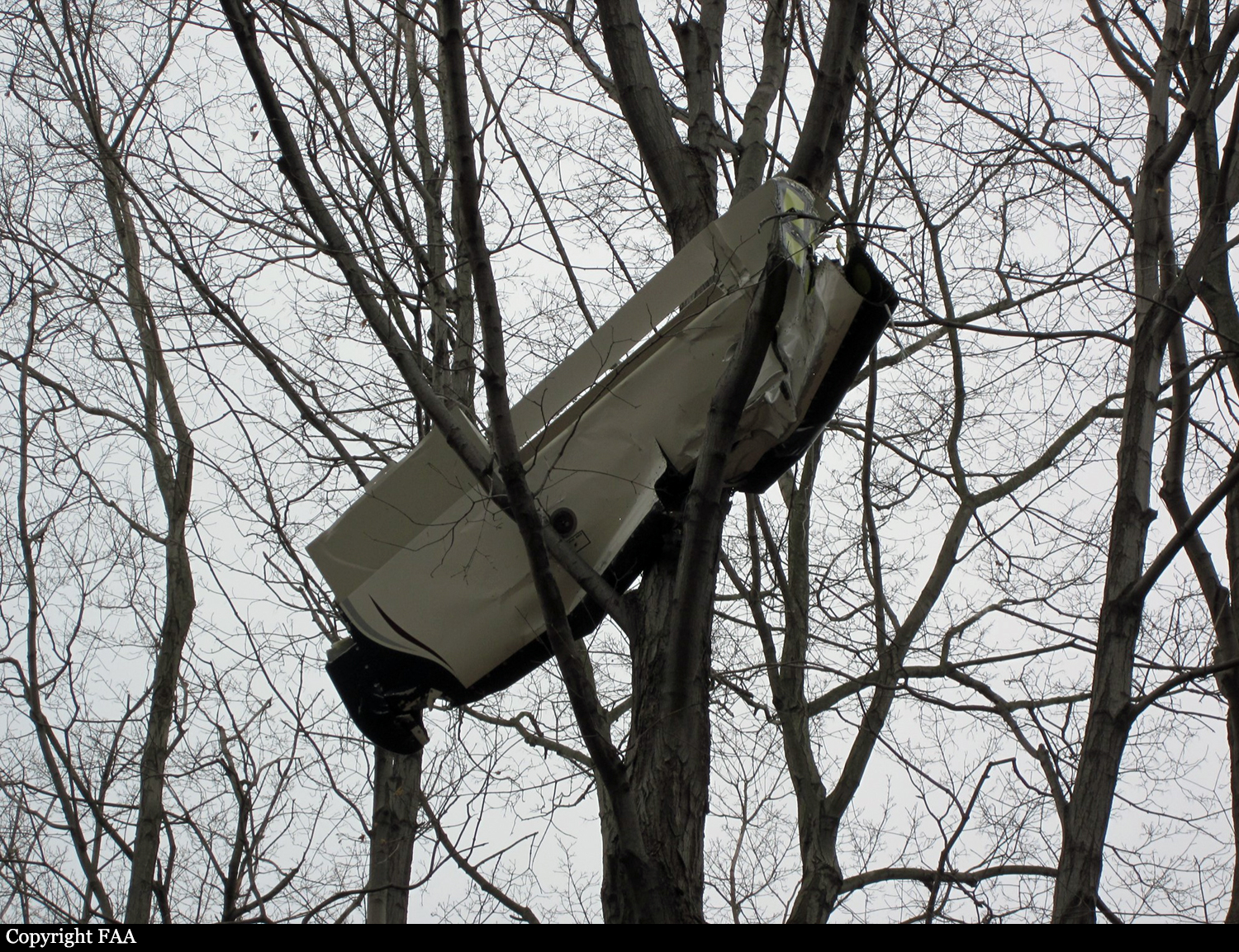
The pilot of the single-engine turboprop was on an instrument flight rules (IFR) flight and cancelled his IFR flight plan after being cleared for a visual approach to the destination airport. He flew a left traffic pattern for runway 32, a 4,202-foot-long, 75-foot-wide, asphalt runway. The pilot reported that the airplane crossed the runway threshold at 81 knots and touched down normally, with the stall warning horn sounding. The airplane subsequently drifted left and the pilot attempted to correct with right rudder input; however, the airplane continued to drift to the left side of the runway. The pilot then initiated a go-around and cognizant of risk of torque roll at low speeds did not apply full power. The airplane climbed to about 10 feet above the ground. At that time, the airplane was in a 20-degree left bank and the pilot applied full right aileron input to correct. The airplane then descended in a left turn, the pilot retarded the throttle, and braced for impact. A Federal Aviation Administration inspector reported that the airplane traveled about 100 feet off the left side of the runway, nosed down in mud, and came to rest in trees. Examination of the wreckage by the inspector did not reveal any preimpact mechanical malfunctions, nor did the pilot report any. The reported wind, about the time of the accident, was from 310 degrees at 10 knots, gusting to 15 knots.
Probable cause:
The pilot’s failure to maintain aircraft control while performing a go-around.
Final Report: