


Country
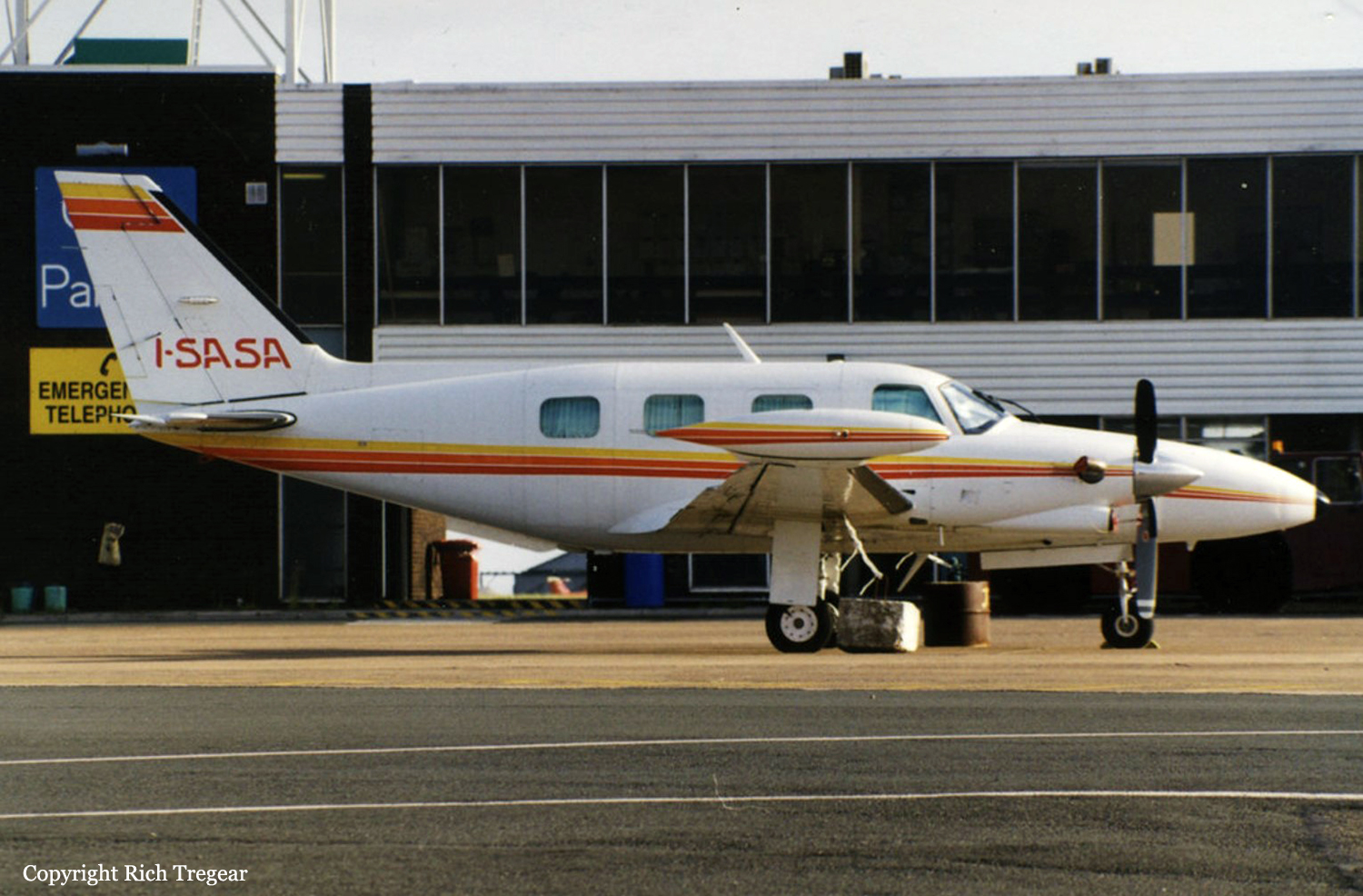
Crash of a Piper PA-31T Cheyenne I in Brescia
Date & Time:
Apr 12, 2002
Registration:
I-SASA
Survivors:
Yes
MSN:
31-8004021
YOM:
1980
Crew on board:
0
Crew fatalities:
Pax on board:
0
Pax fatalities:
Other fatalities:
Total fatalities:
0
Circumstances:
Crashed upon takeoff for unknown reasons. There were no casualties.
Crash of a Piper PA-31T Cheyenne II in Hobbs
Date & Time:
Feb 4, 2002 at 1907 LT
Registration:
N794CA
Survivors:
Yes
Schedule:
Las Vegas - Hobbs
MSN:
31-8120018
YOM:
1981
Crew on board:
1
Crew fatalities:
Pax on board:
0
Pax fatalities:
Other fatalities:
Total fatalities:
0
Captain / Total hours on type:
765.00
Aircraft flight hours:
4900
Circumstances:
At the conclusion of a dark night IMC cross-country flight, the pilot was being vectored onto the ILS approach. After stabilizing, the approach "was normal." At decision altitude, the pilot indicated that he could see the approach lights and the runway, but was not in a position to land so he executed a missed approach. After being vectored around for another approach, he stated that he was on the localizer but was "high" on the glide slope. After giving "a little" nose down pitch, he became distracted when the autopilot became "accidentally disengaged." The pilot stated that he "inadvertently descended through the glide slope and impacted the ground short of the runway." He further stated that the "first indication" that he was low was when the aircraft "struck the ground." The aircraft was destroyed on impact. A facility check conducted by the FAA of the ILS found all parameters within normal specifications.
Probable cause:
The pilot's failure to maintain the proper glidepath during the instrument approach. Contributing factors were the dark night light conditions and the pilot's diverted attention.
Final Report:
Crash of a Piper PA-31T Cheyenne in Graham: 4 killed
Date & Time:
Nov 12, 2001 at 2324 LT
Registration:
N6134A
Survivors:
No
Schedule:
Wharton – Graham
MSN:
31-7804006
YOM:
1978
Crew on board:
1
Crew fatalities:
Pax on board:
3
Pax fatalities:
Other fatalities:
Total fatalities:
4
Aircraft flight hours:
3240
Circumstances:
At 2144, the pilot contacted air traffic control and requested visual flight rules (VFR) flight following to his destination. The flight was the final leg of a four-leg trip, which the pilot had begun approximately 1120 that morning. At 2220, the flight began a slow descent toward the destination airport. Radar data confirmed that the airplane executed a steady descent, and flew a straight line course toward Graham. The final radar return occurred 37 minutes later at an altitude of 3,000 feet (radar coverage is not available below 3,000 feet), 8 miles southeast of the Graham Municipal Airport. Two minutes after the final radar return, the pilot reported to air traffic control that the flight was two miles out, and he canceled VFR flight following. No further communications or distress calls were received from the airplane. The pilot did not request or receive updated weather from the air traffic controllers during the flight. According to witnesses who lived near the accident site, they heard an airplane flying low, observed dense fog and heard the sounds of an airplane crashing. According to the nearest weather reporting station, near the time of the accident, the temperature- dew point spread was within 2 degrees, visibilities were reduced to between 3 and 4 miles in fog, and the ceiling was decreasing from 600 feet broken to 400 feet overcast. At the time of the accident, the pilot's duty day exceeded 12 hours. Examination of the airframe revealed no preimpact anomalies and that the gear was extended and the flaps were retracted. Examination of both engines revealed evidence of power at the time of impact.
Probable cause:
The pilot's failure to discontinue the approach after encountering instrument meteorological conditions, which resulted in controlled flight into terrain. Contributing factors were the dark night light condition, low ceiling, and reduced visibility due to fog.
Final Report:

