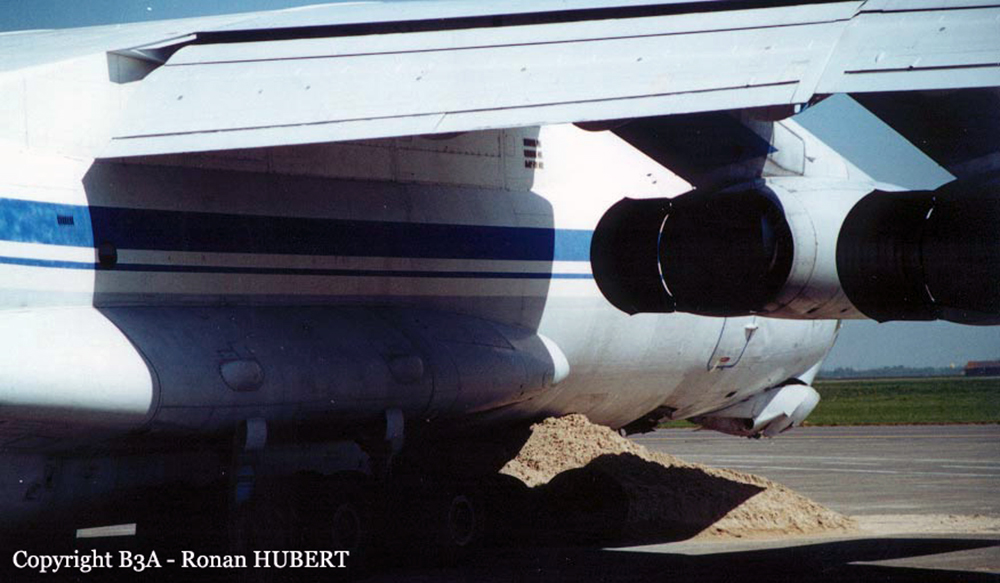
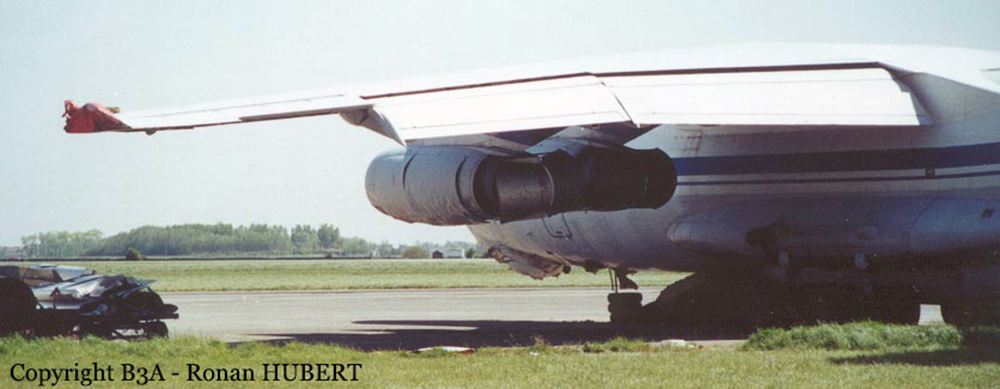
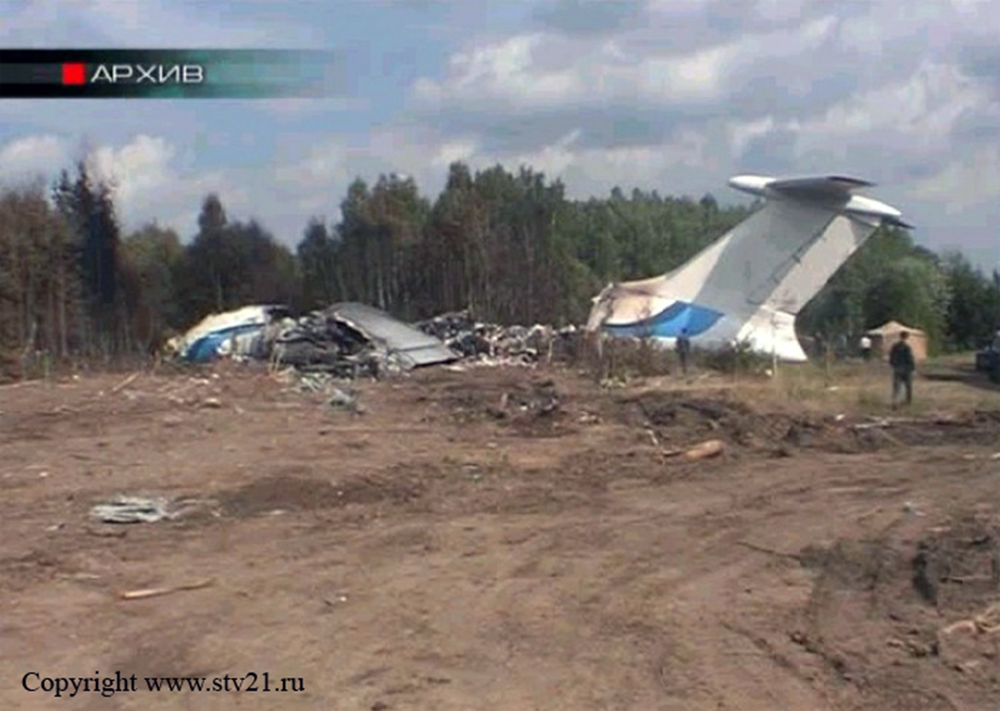
Crash of an Ilyushin II-76TD in Novaya Inya: 18 killed

Date & Time: Dec 2, 2001
Type of aircraft:
Registration:
RA-76839
Flight Phase:
Flight Type:
Survivors:
No
Schedule:
Moscow – Bratsk – Petropavlovsk-Kamchatsky
MSN:
10234 11375
YOM:
1992
Flight number:
9064
Country:
Region:
Crew on board:
9
Crew fatalities:
Pax on board:
9
Pax fatalities:
Other fatalities:
Total fatalities:
18
Circumstances:
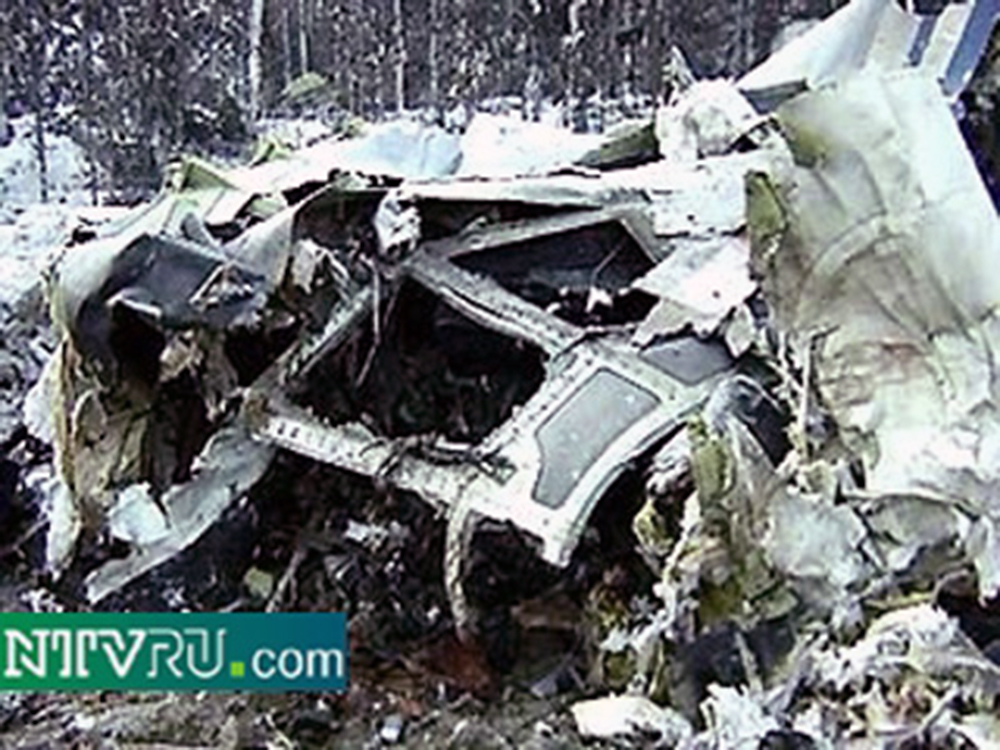
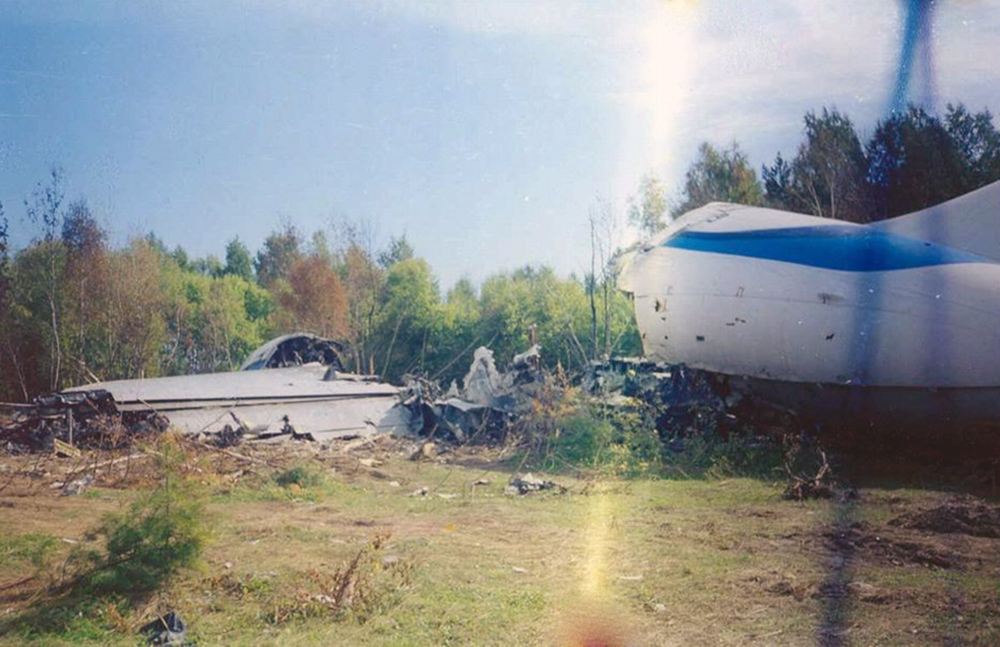
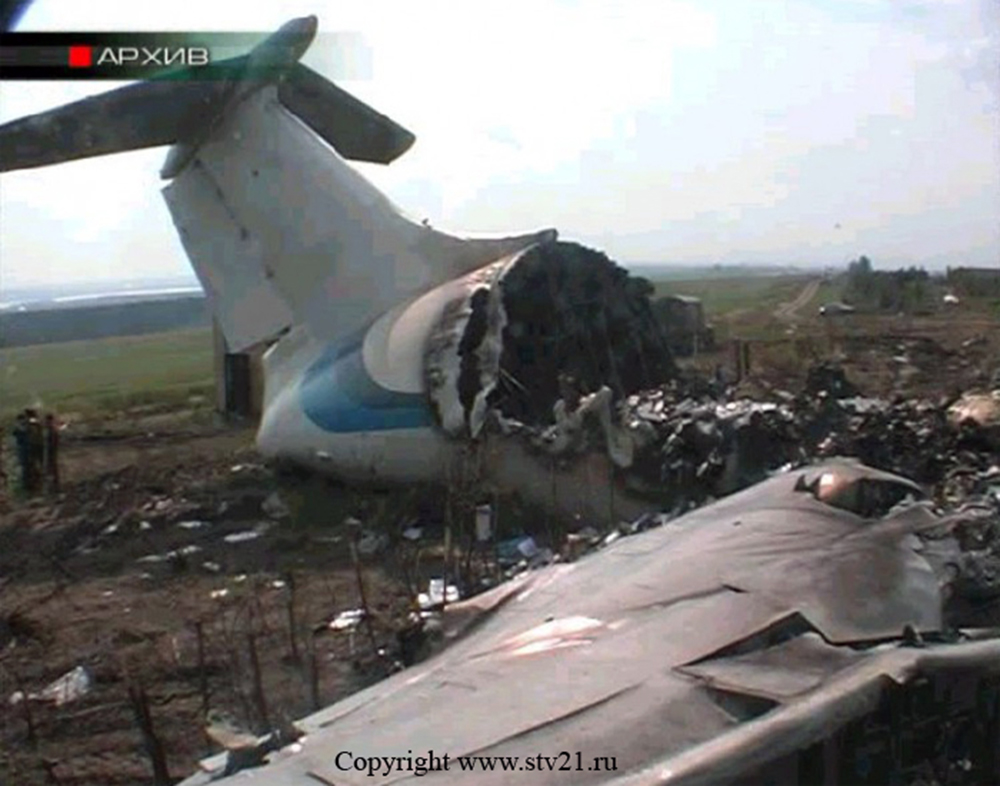
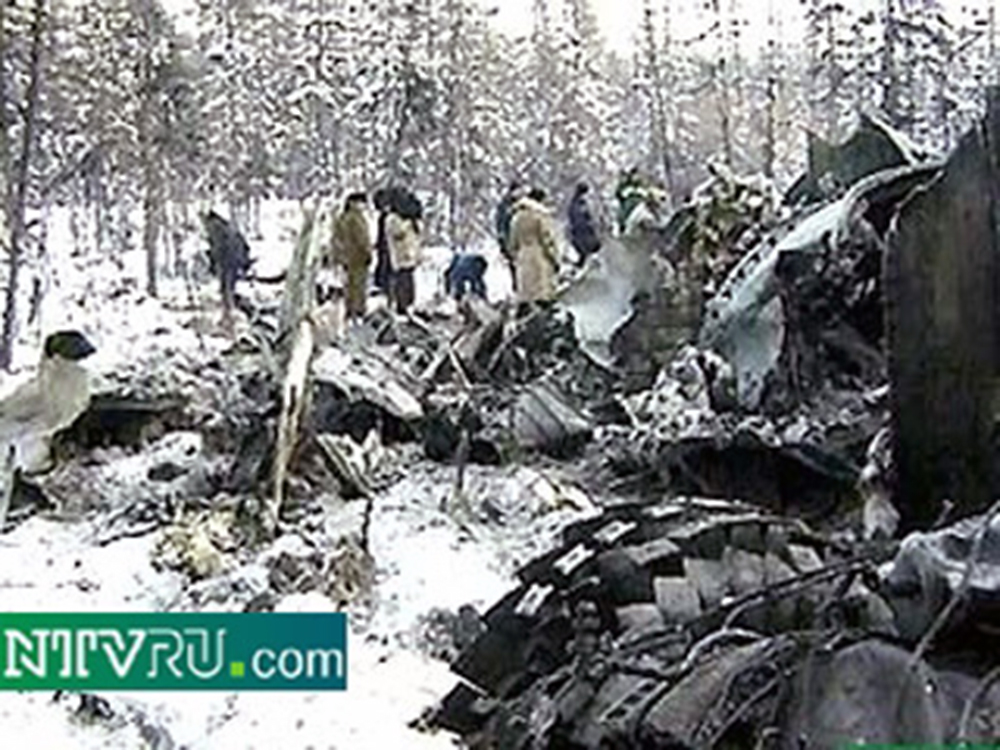
The aircraft departed Moscow on a cargo flight to Petropavlovsk-Kamchatsky with an intermediate stop in Bratsk, carrying nine passengers, nine crew members and a load of 36 tons of cargo including one aircraft engine and constructions materials. While cruising at an altitude of 9,600 metres, the crew declared an emergency and informed ATC about an in-flight fire. The crew initiated an emergency descent when, at an altitude of 7,000 metres, the aircraft broke into three and crashed in a wooded area located in Novaya Inya. The aircraft was totally destroyed and all 18 occupants were killed.
Probable cause:
In-flight fire for unknown reasons.
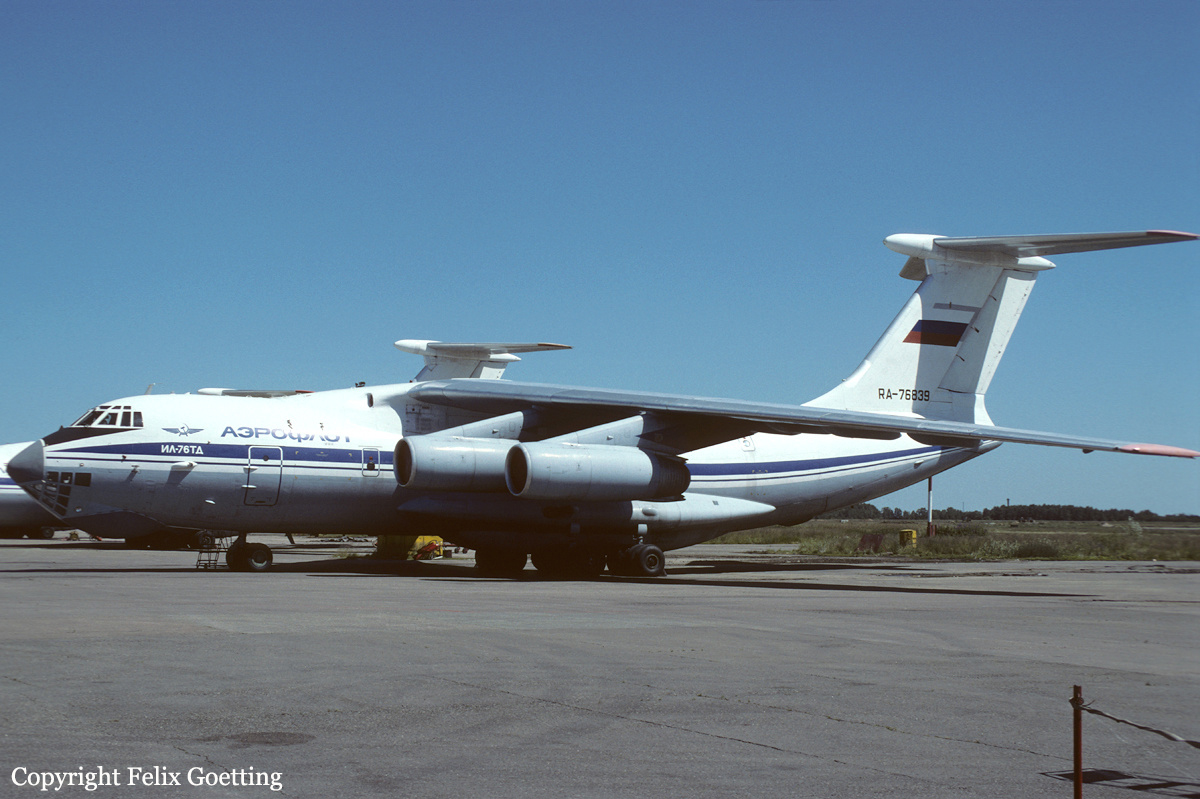
Crash of an Ilyushin II-76MD in Moscow: 10 killed

Date & Time: Jul 14, 2001 at 0853 LT
Type of aircraft:
Operator:
Registration:
RA-76588
Flight Phase:
Flight Type:
Survivors:
No
Schedule:
Moscow – Norilsk – Bratsk – Taiyuan
MSN:
00434 51530
YOM:
1984
Flight number:
RUR9633
Country:
Region:
Crew on board:
8
Crew fatalities:
Pax on board:
2
Pax fatalities:
Other fatalities:
Total fatalities:
10
Aircraft flight hours:
3523
Aircraft flight cycles:
1831
Circumstances:
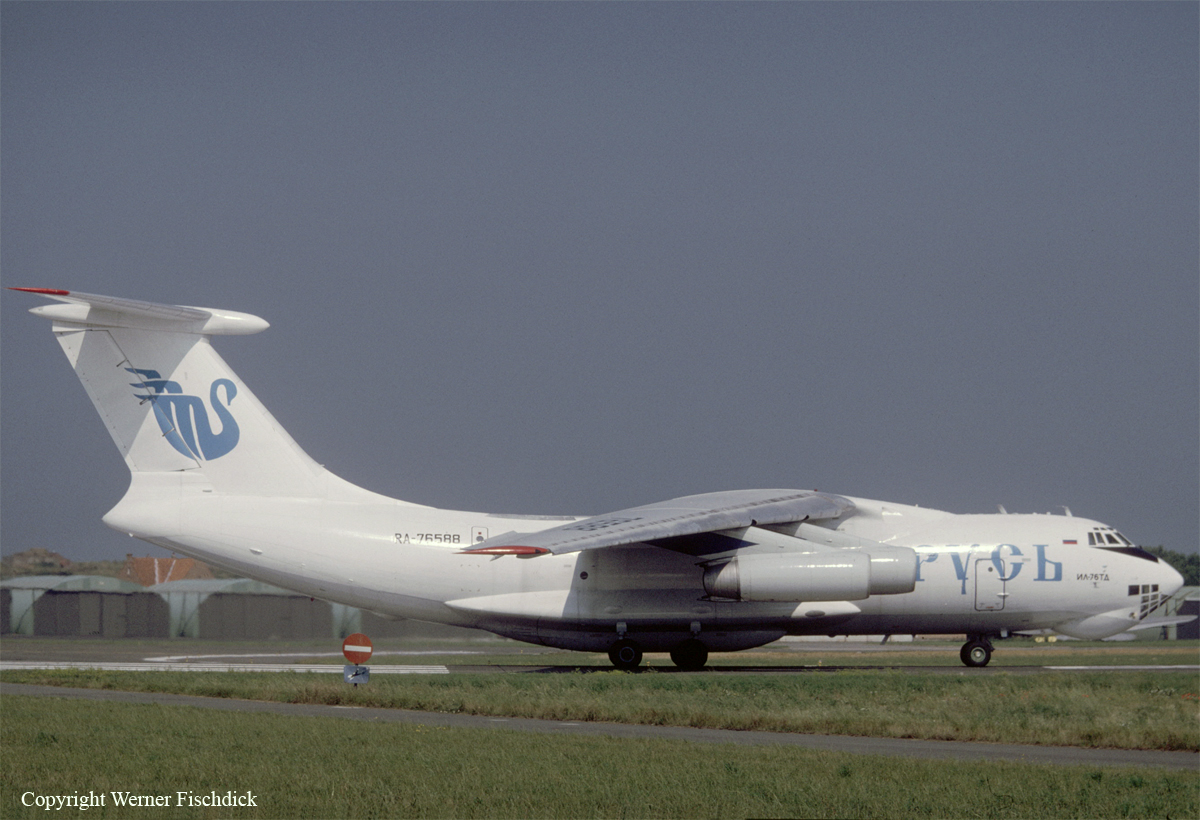
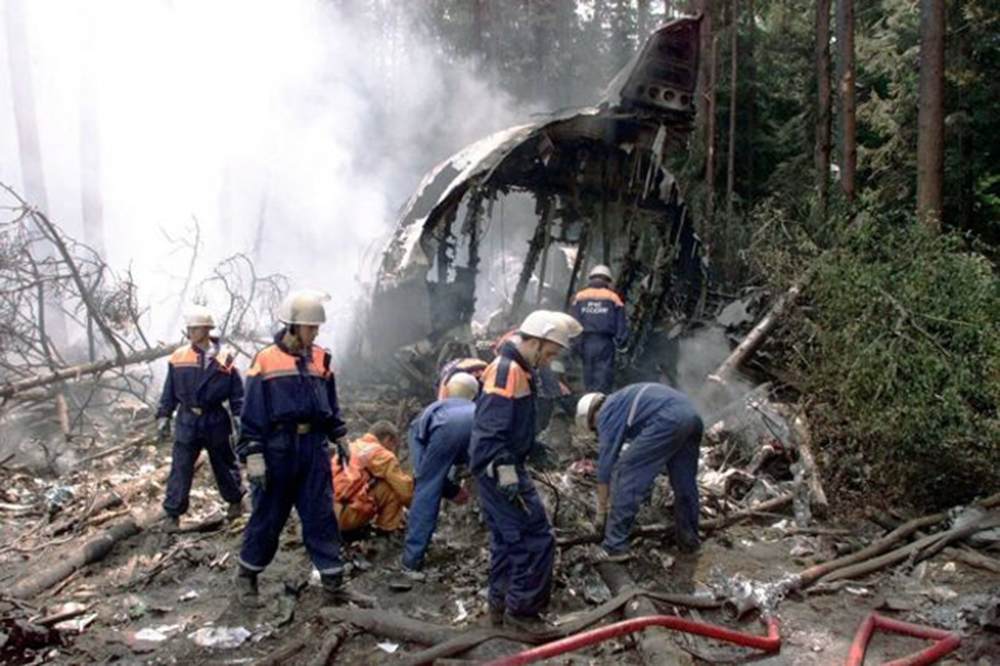
The aircraft was engaged in a cargo flight from Moscow to Taiyuan, China, with intermediate stops in Norilsk and Bratsk, carrying two passengers, eight crew members and a load of 40,2 tons of construction materials. Due to foggy conditions, the horizontal visibility was reduced to 500-900 metres and the vertical visibility was estimated to be 70-80 metres. Following a takeoff roll of about 2,700 metres, the captain started the rotation at a speed of 290 km/h (about 25 km/h above the recommended speed). At a height of about 10 metres, the pilot-in-command started a turn to the right of 7° in order to compensate a deviation to the left during the takeoff roll. At a height of 23-24 metres, the stabilizers' position changed from -5,4° to -3,9° and the aircraft started to lose altitude. One second prior to impact, the elevator were in a 11-12° pitch angle and at a height of 20-21 metres, both right engines n°3 and 4 collided with trees at a distance of 930 metres from the runway end and 47 metres to the right of its extended centerline. Upon impact, both engines were torn off and the aircraft crashed in a wooded area located 1,460 metres past the runway end, bursting into flames. The aircraft was totally destroyed and all 10 occupants were killed.
Probable cause:
The following contributing factors were identified:
- A series of negligences was noted in the operations of the company and the maintenance of the airplane,
- The flight was not properly prepared and the total weight of the aircraft was well above the MTOW,
- Due to the combination of the following factors, the pilots did not take the corrective actions to maintain a good climb path:
- Lack of seriousness and lack of documentation control during cargo loading at Chkalovsky Airport,
- Lack of rigor and non-compliance with standard operating procedures regarding the pre-takeoff check of the cargo, which led the ground personnel to load cargo with a total weight in excess of 13,6 to 14 tons,
- At takeoff, the total weight of the aircraft was estimated to be 204 tons while it was certified for a maximum weight of 191.9 tons taking into account all factors at the time of the accident,
- All crew members were unable to identify in due time the successive errors made by the captain (pilot-in-command), among others the stabilizers that were prematurely positioned in an angle of -3.9 ° while the trailing edge flaps were retracted, causing the lift to be insufficient,
- The coordination within the flight crew was ineffective and the copilot and the navigator did not pay sufficient attention to the altitude of the aircraft through flight conditions in reduced visibility,
- Lack of visibility caused by foggy conditions which did not allow the flight crew to distinguish in time the obstacles located past the runway end,
- As a result of this accident, the operator certificate was revoked.

Crash of an Ilyushin II-76MD in Ostend

Date & Time: Apr 18, 2001
Type of aircraft:
Operator:
Registration:
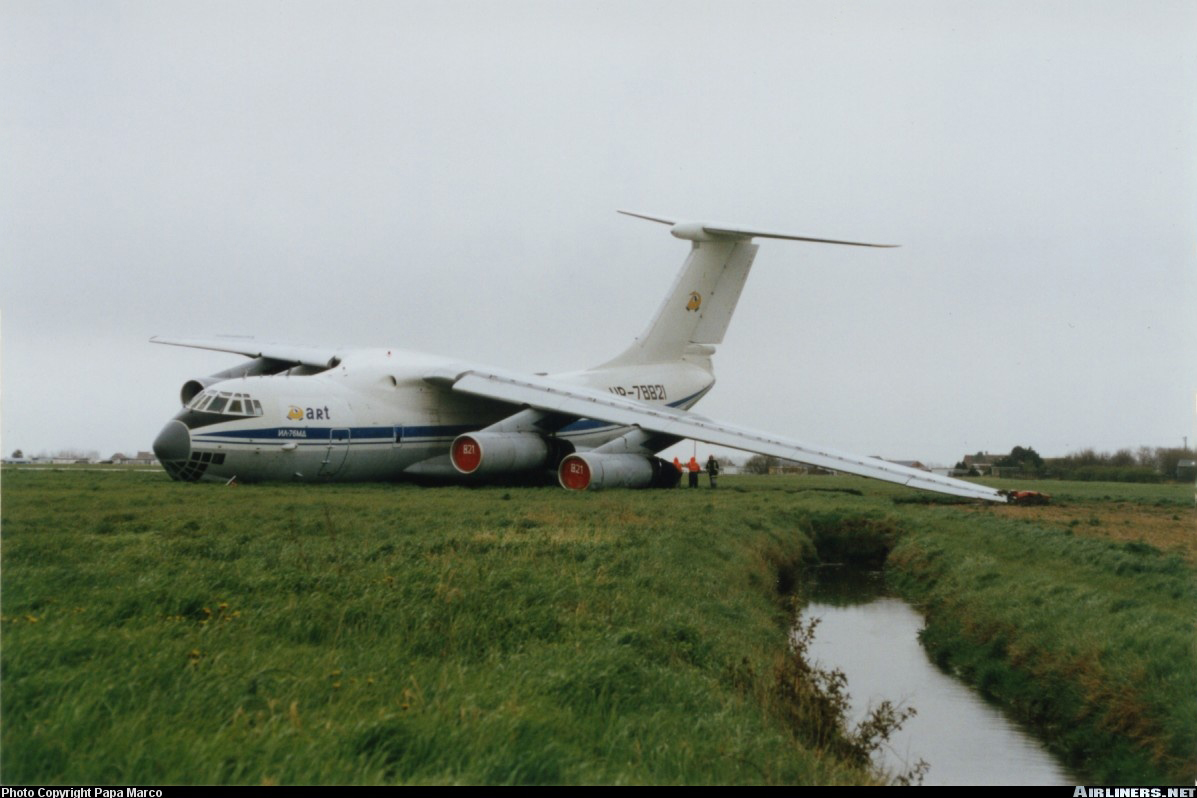
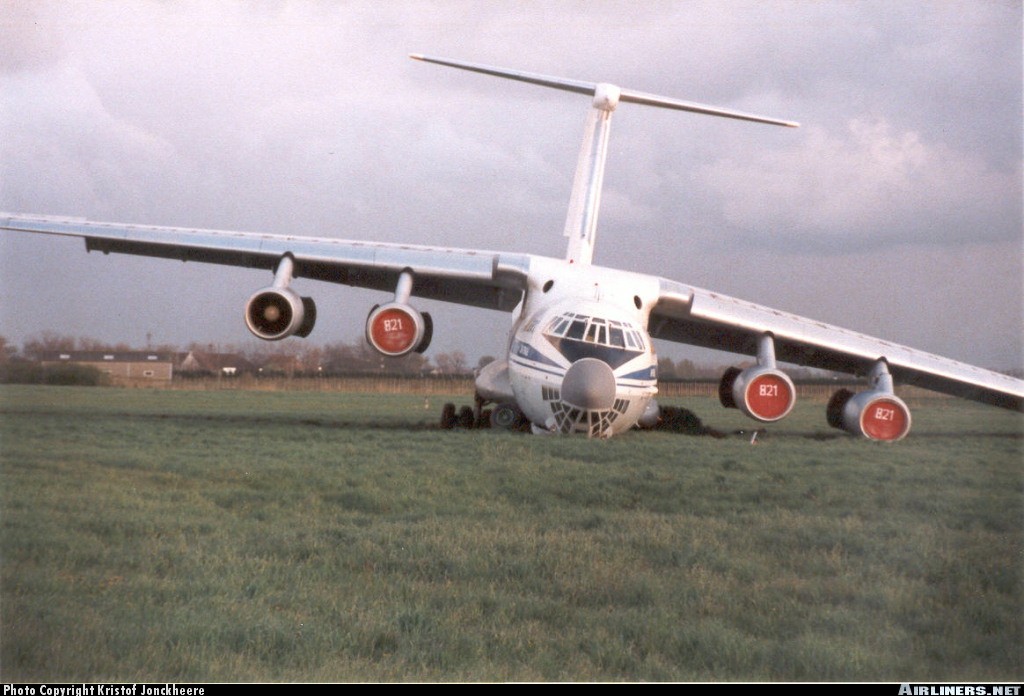
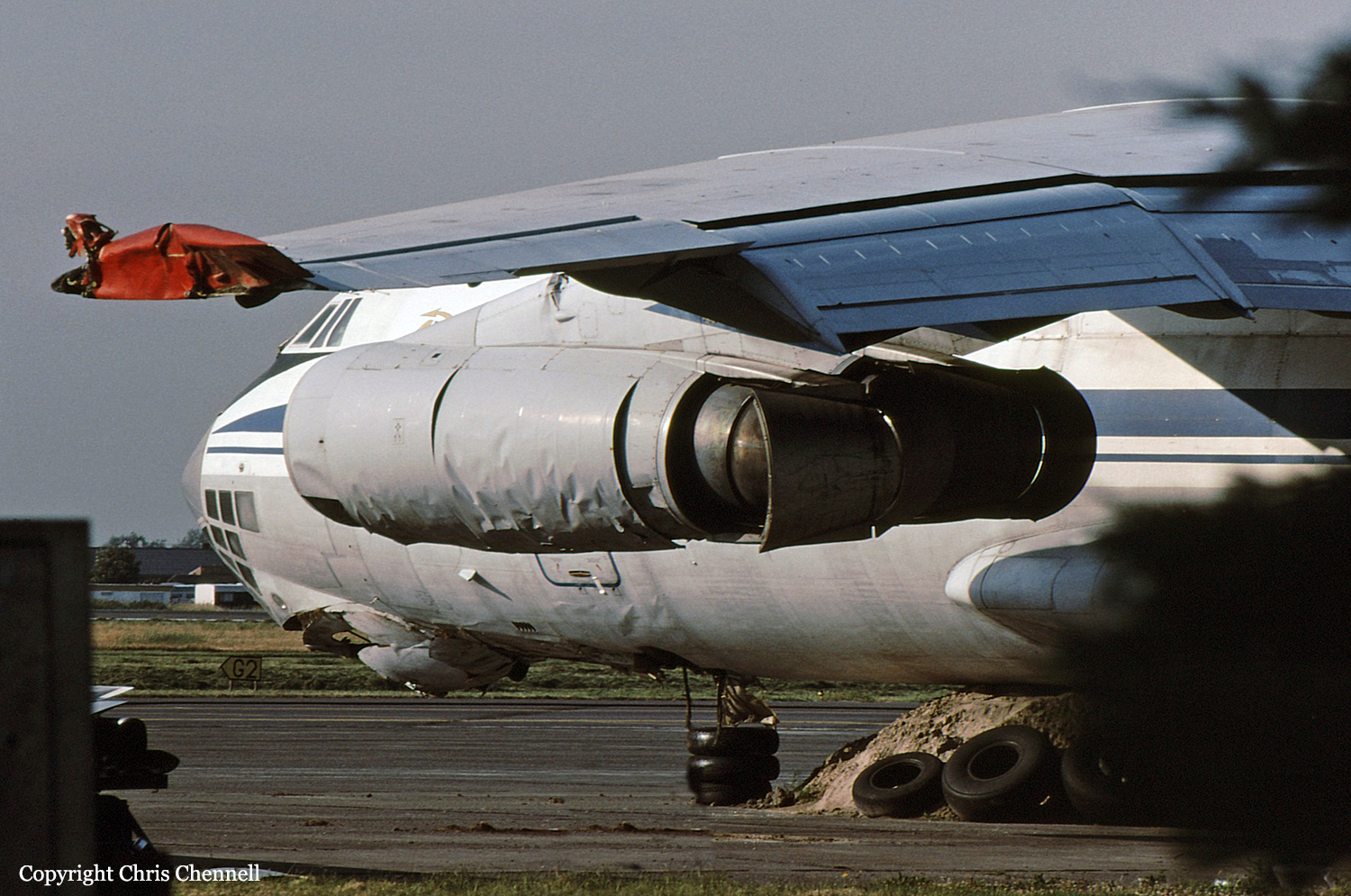
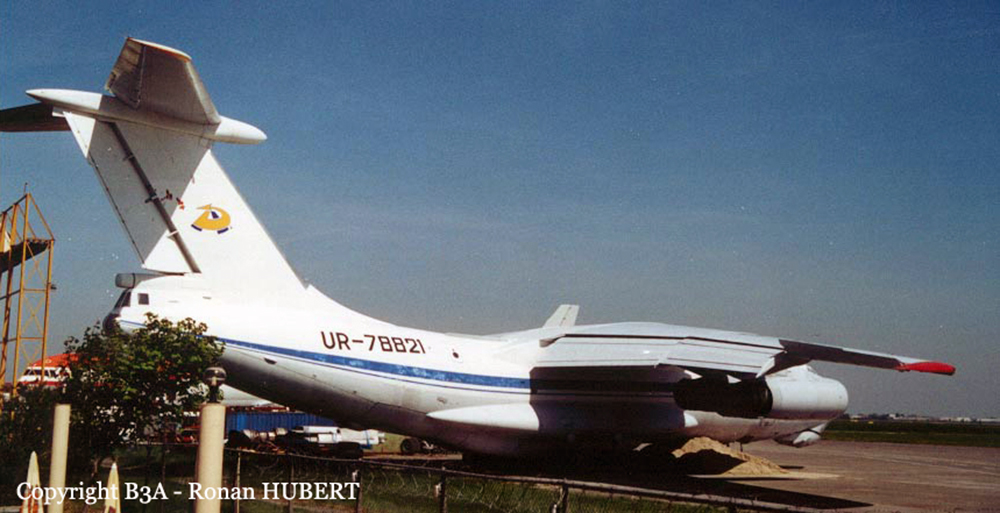
UR-78821
Flight Phase:
Flight Type:
Survivors:
Yes
Schedule:
Ostend - Algiers - Conakry
MSN:
00934 96914
YOM:
1989
Country:
Region:
Crew on board:
8
Crew fatalities:
Pax on board:
0
Pax fatalities:
Other fatalities:
Total fatalities:
0
Circumstances:
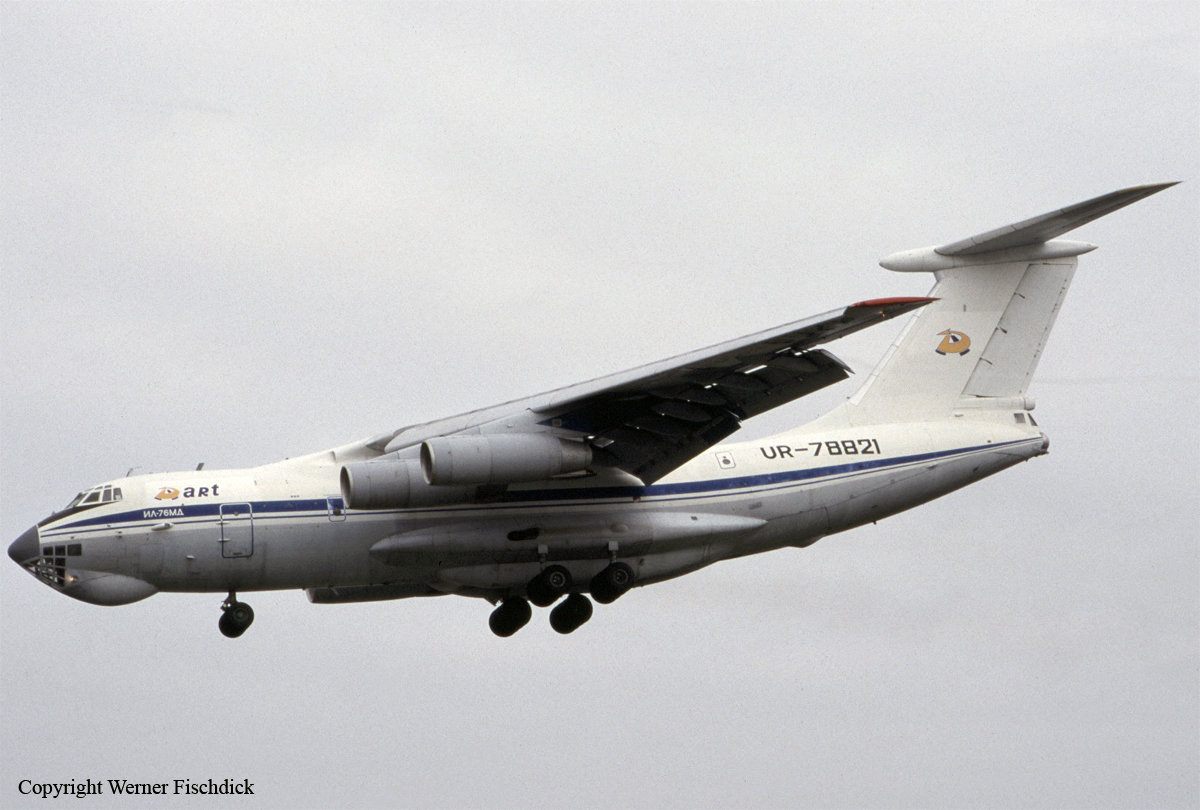
The four engine aircraft was engaged in a cargo flight from Ostend to Conakry with an intermediate stop in Algiers, carrying eight crew members and a load consisting of 32 tons of paint and medical supplies for the Guinean market. During the takeoff roll on runway 26 at Ostend Airport, an engine fire warning light came on in the cockpit panel. The captain decided to abandon the takeoff procedure and initiated an emergency braking maneuver. Unable to stop within the remaining distance, the aircraft overran for about 40 metres then lost its nose gear and came to rest on its left wing, damaging both left engine nacelles and the wingtip as well as the fuselage that was bent upward the cockpit area. All eight crew members escaped uninjured while the aircraft was damaged beyond repair.
Probable cause:
No technical anomalies were found on the aircraft and the engine fire warning light came on by error.

Crash of an Ilyushin II-76MD at Privolzhskiy AFB

Date & Time: Jun 20, 2000 at 1750 LT
Type of aircraft:
Operator:
Registration:
RA-76723
Flight Type:
Survivors:
Yes
Schedule:
Makhatchkala – Privolzhskiy – Vozzhayevka – Khabarovsk
MSN:
00734 75245
YOM:
1987
Country:
Region:
Crew on board:
7
Crew fatalities:
Pax on board:
221
Pax fatalities:
Other fatalities:
Total fatalities:
0
Circumstances:
The aircraft departed Makhachkala on a flight to Khabarovsk with intermediate stops at Privolzhskiy AFB and Vozzhayevka AFB, carrying 221 passengers and a crew of seven on behalf of the Russian Ministry of Defense. Some 23 minutes after takeoff from Privolzhskiy AFB, while cruising at an altitude of 6,100 metres, the crew encountered technical problems with the fuel system and was cleared to return for an emergency landing. While descending to Privolzhskiy AFB, the flaps could not be lowered and a fire erupted in the left wing. After touchdown, the aircraft was unable to stop within the remaining distance, overran, lost its undercarriage and came to rest 200 metres further, bursting into flames. All 232 occupants evacuated safely while the aircraft was destroyed by a post crash fire.
Probable cause:
An in-flight fire occurred in the area between the second and third flap tracks on the left wing, which led to a failure of the fuel lines, hydraulic systems and flap control systems. The most likely cause of the fire was a production flaw, causing electric wires to touch the hydraulic system pipeline, which led to a chafing of the insulation of the wires, their short circuit with subsequent piercing of the pipeline and ignition. The unsuitability of fire extinguishing means and the unpreparedness of the fire brigade of the Privolzhskiy AFB to extinguish fires on aircraft with a flight mass of more than 50 tons led to the destruction by fire of the aircraft on the ground.

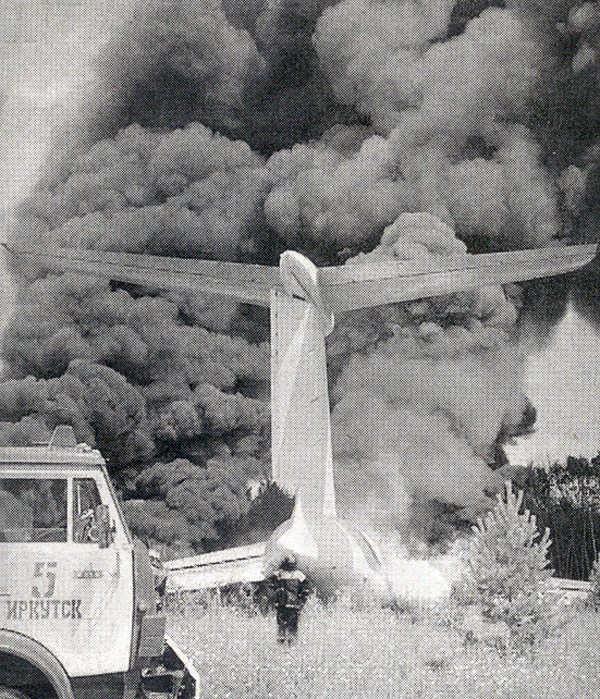
Crash of an Ilyushin II-76TD in Irkutsk

Date & Time: Jul 26, 1999 at 1346 LT
Type of aircraft:
Operator:
Registration:
RA-76819
Flight Phase:
Flight Type:
Survivors:
Yes
Schedule:
Tianjin – Irkutsk – Perm – Moscow
MSN:
10134 09274
YOM:
1991
Country:
Region:
Crew on board:
7
Crew fatalities:
Pax on board:
0
Pax fatalities:
Other fatalities:
Total fatalities:
0
Aircraft flight hours:
2882
Aircraft flight cycles:
1177
Circumstances:
The aircraft departed Tianjin on a cargo flight to Moscow with intermediate stops in Irkutsk and Perm, carrying a load of 49,750 kilos of various goods and seven crew members. At Irkutsk-Intl Airport, 38 tons of fuel were uplifted and the crew calculated 30,040 kilos for the cargo, giving a total weight of 170 tons, about 4 tons below the MTOW. During the takeoff roll, after a course of 2,000 metres, at a speed of 225 km/h, the captain started the rotation. The aircraft lifted up and flew for about 4 seconds when the captain requested gear up. At a speed of 250 km/h, the aircraft passed the runway end and adopted a 16° angle of attack. Then the aircraft' speed decreased when the flight engineer reduced the power on all four engines and activated the thrust reverser systems on both left engines n°1 and 2. The aircraft rolled to the left, collided with a building containing an electrical transformer and came to rest 1,476 metres past the runway end, bursting into flames. All seven occupants were injured, two seriously. The aircraft was destroyed.
Probable cause:
It was determined that the total weight of the aircraft at the time of the accident was 198-200 tons which means 24-26 tons above MTOW. The cargo manifest showed a total weight of 49,750 kilos of various goods upon departure from Tianjin Airport but only 30,040 kilos upon departure from Irkutsk Airport while no cargo was unloaded. The following contributing factors were identified:
- A miscalculation of the mass and balance,
- Poor flight planning,
- Poor crew coordination.